How to Decorate for Christmas With a Cat: Safe Cozy Tips
A cat looks at a Christmas tree and sees a tall climbing frame that someone kindly decorated with toys. You cannot train the wonder out of that first look, and honestly, you do not need to. The trick is building a tree and a room that can survive curiosity without turning December into a daily rescue mission.
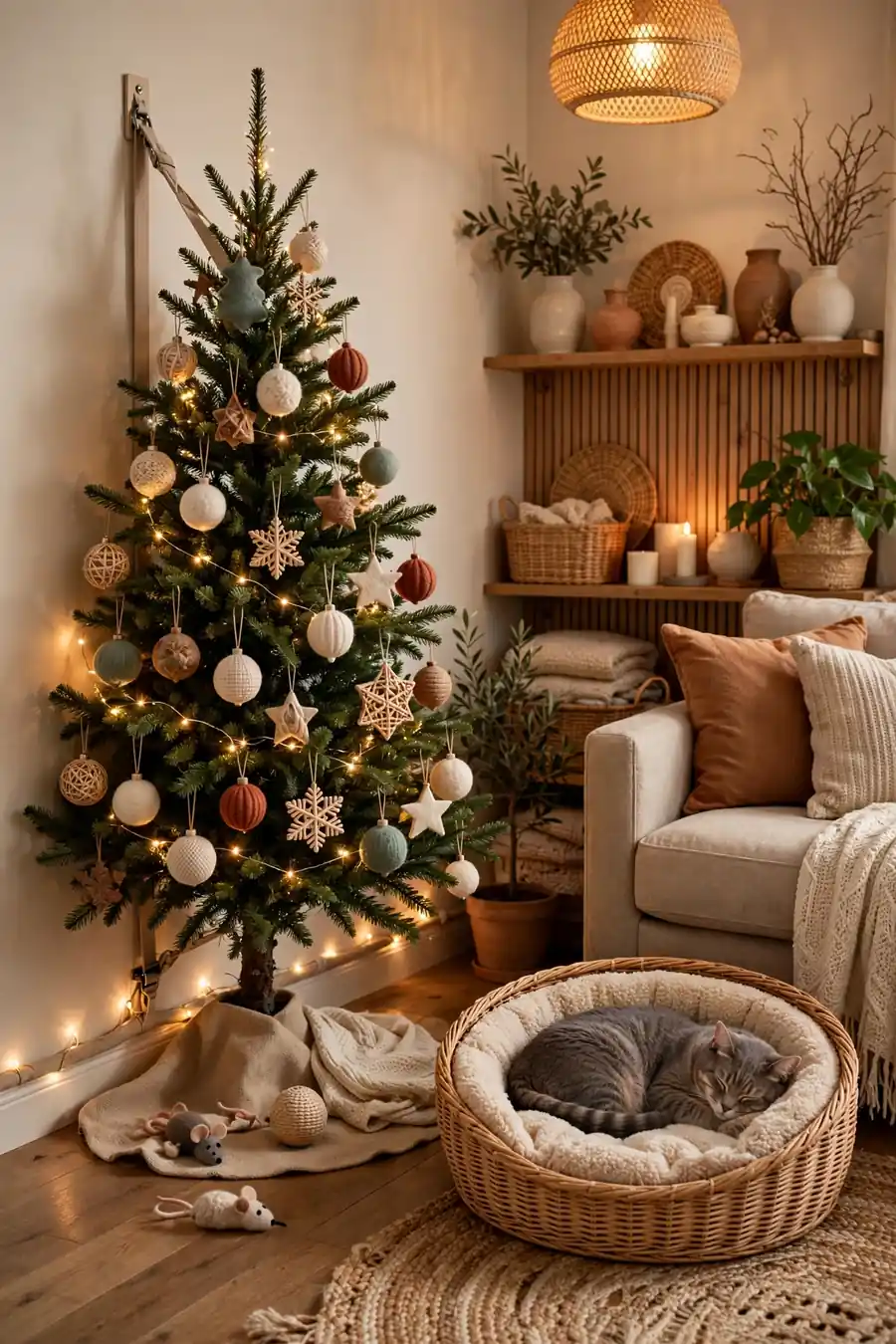
If you are working out how to decorate for christmas with a cat in a real home, start with safety before sparkle. A stable tree, chew-resistant cords, safe ornaments and a good watching spot for your cat will keep the room festive for you and far less tempting for the small supervisor on the sofa.
The prettiest cat-safe tree is not bare. It is simply edited: fewer fragile pieces at paw height, stronger choices where climbing happens, and the breakable treasures moved to shelves, mantels and closed cabinets where they can shine without being batted across the floor.
1. Choose a Tree Your Cat Cannot Easily Topple
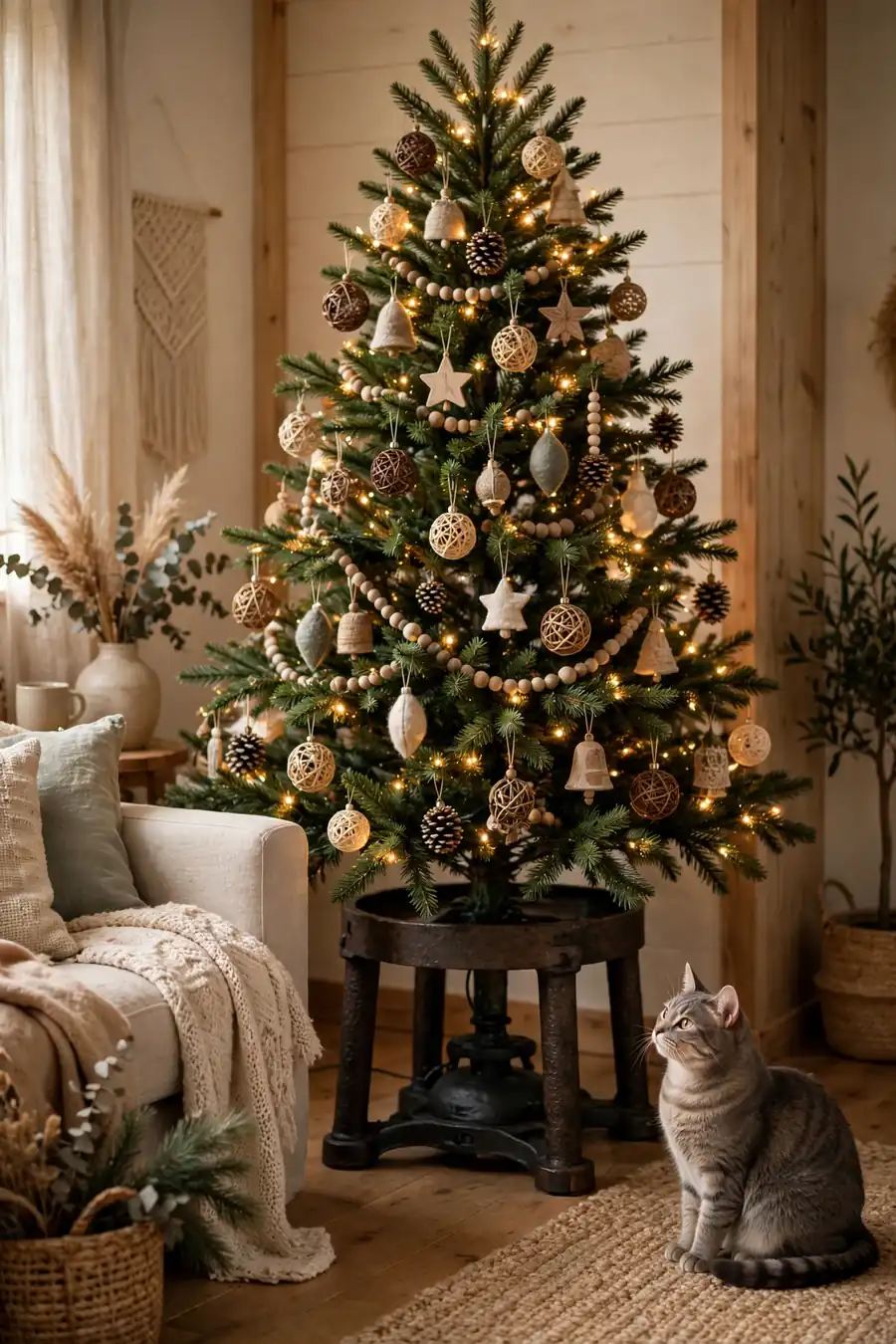
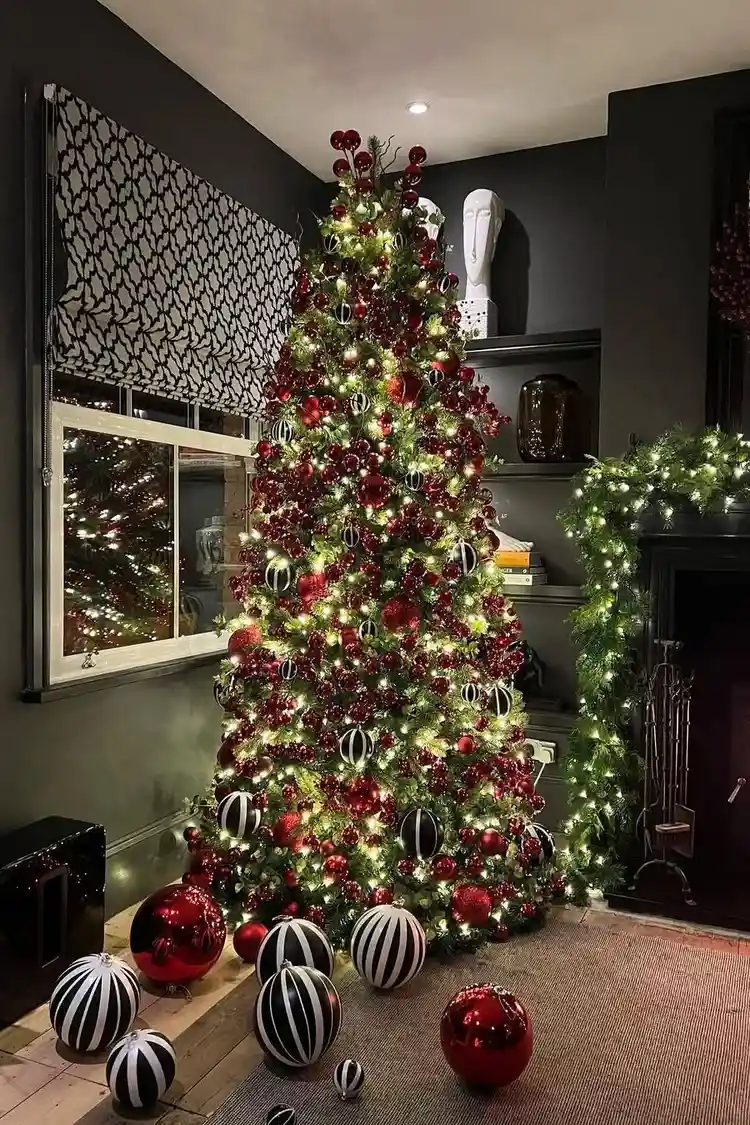
Start with the base, because every cat-safe plan fails if the tree is wobbly. A wide, heavy stand suits a real tree; for an artificial tree, choose a sturdy metal base and check that the trunk locks firmly. Slender apartment trees can look elegant, but they need extra anchoring if your cat likes to launch from the sofa arm.
Place the tree in a corner or against a wall rather than in the middle of a runway. Corners limit the swing if it gets bumped and give you two walls for discreet support. If your cat is a committed climber, a smaller tree on a stable table or a half-tree against the wall may be calmer than a tall tree everyone worries about.
Stability note: Test the tree before decorating. Push the trunk gently at cat height and at mid-height; if it rocks now, it will not improve once ornaments add uneven weight.
2. Anchor the Tree and Keep Climbing Temptations Low

Anchoring is invisible insurance. Use fishing line or thin wire from the upper trunk to a wall hook, picture hook or curtain bracket so the tree can be steadied without a visible rope. Keep the line high and taut enough to stop a tip, not so tight that it pulls the trunk out of shape.
Then reduce the invitation to climb. Leave the lowest branches less decorated for the first day, avoid dangling ornaments right at launch height, and move cat trees, stools and sofa arms a little farther away if you can. Some cats settle once the novelty fades; the first forty-eight hours are when most tree experiments happen.
Watch note: If your cat keeps testing the tree, add interest elsewhere before adding more rules. A cardboard box, scratching post and window perch near the tree often solve what scolding cannot.
You May Also Like: 25 Christmas Tree Ideas for 2026
3. Hang Unbreakable Ornaments High, Keep Fragile Ones Away

Divide ornaments into three groups: unbreakable for the lower tree, sturdy for the middle, and fragile keepsakes for anywhere else. Felt, wood, fabric, metal and shatterproof plastic can handle a fall; thin glass, porcelain and heirloom pieces should go on high shelves, inside a cabinet, or on a wreath and mantel where paws cannot reach.
Attach low ornaments securely. Twist ties, fabric ribbon loops and ornament locks hold better than loose hooks, which can drop onto the floor and become a hazard. Push ornaments a little deeper into the branches rather than balancing them on the tips where one curious tap sends them rolling.
Hook note: Pick up dropped ornament hooks the same day. Thin metal hooks are easy to miss in carpet and are not something you want a cat chewing or stepping on later.
4. Hide Cords and Skip Tinsel, Ribbon and Loose Snow
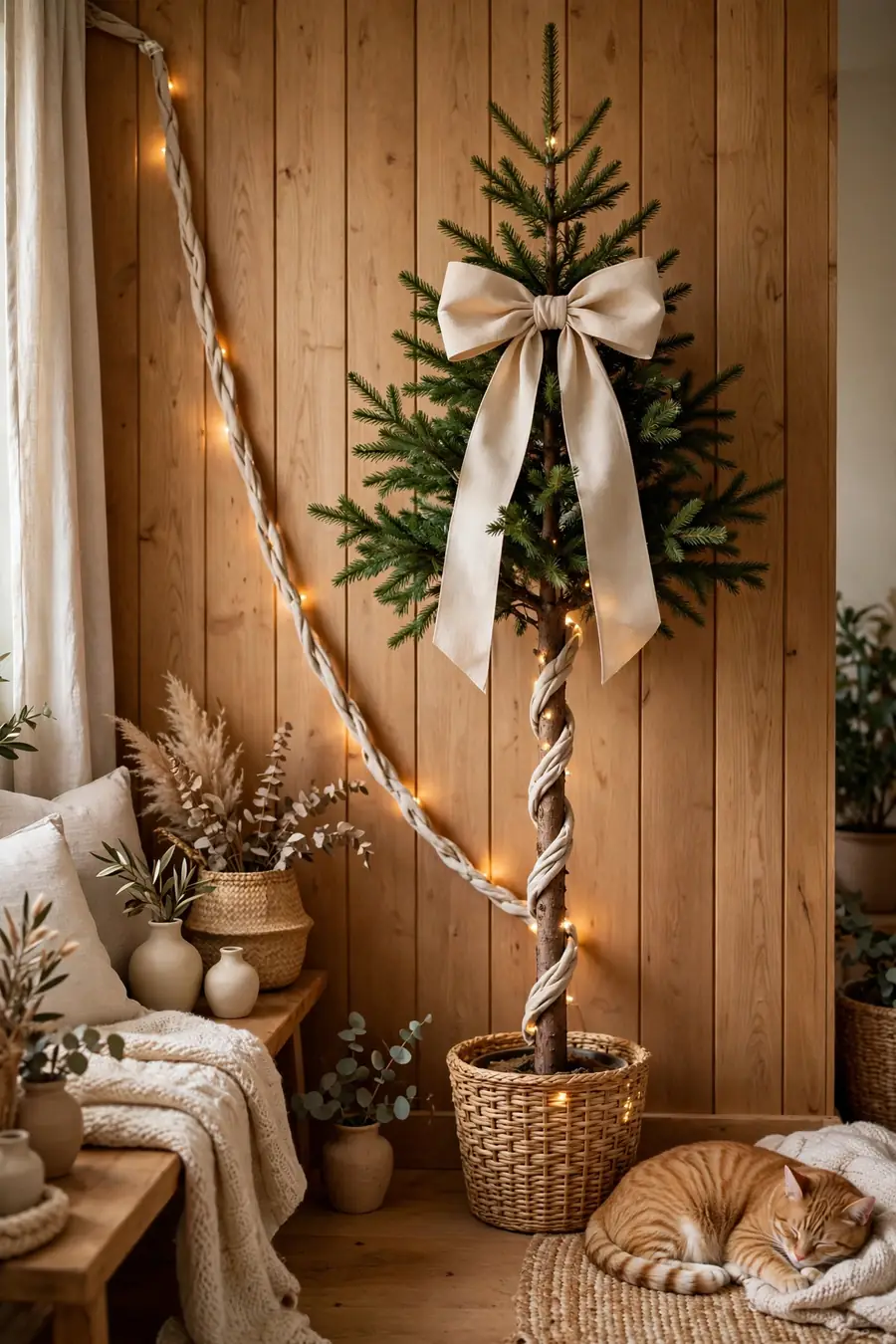
Electrical cords should disappear as much as possible. Run tree lights along the trunk, cover exposed cord with a cord protector or rug edge, and plug into a socket you can switch off at night or when you leave. Battery-operated lights on wreaths and garlands reduce the number of tempting cables crossing the room.
Skip tinsel, loose ribbon curls, angel hair and spray snow where a cat can reach them. String-like decorations are especially risky if swallowed, and shiny strands are exactly the sort of thing many cats want to chew. Use wide ribbon wired into a bow, chunky garland, and matte ornaments if you want texture without the danger.
Chew note: If your cat is a known cord chewer, unplug tree lights when nobody is in the room. A timer is useful, but supervision and covered cords are the safer pair.
You May Also Like: Classic Christmas Decor Ideas That Never Go Out of Style
5. Pick Safer Plants and Skip Toxic Holiday Greens
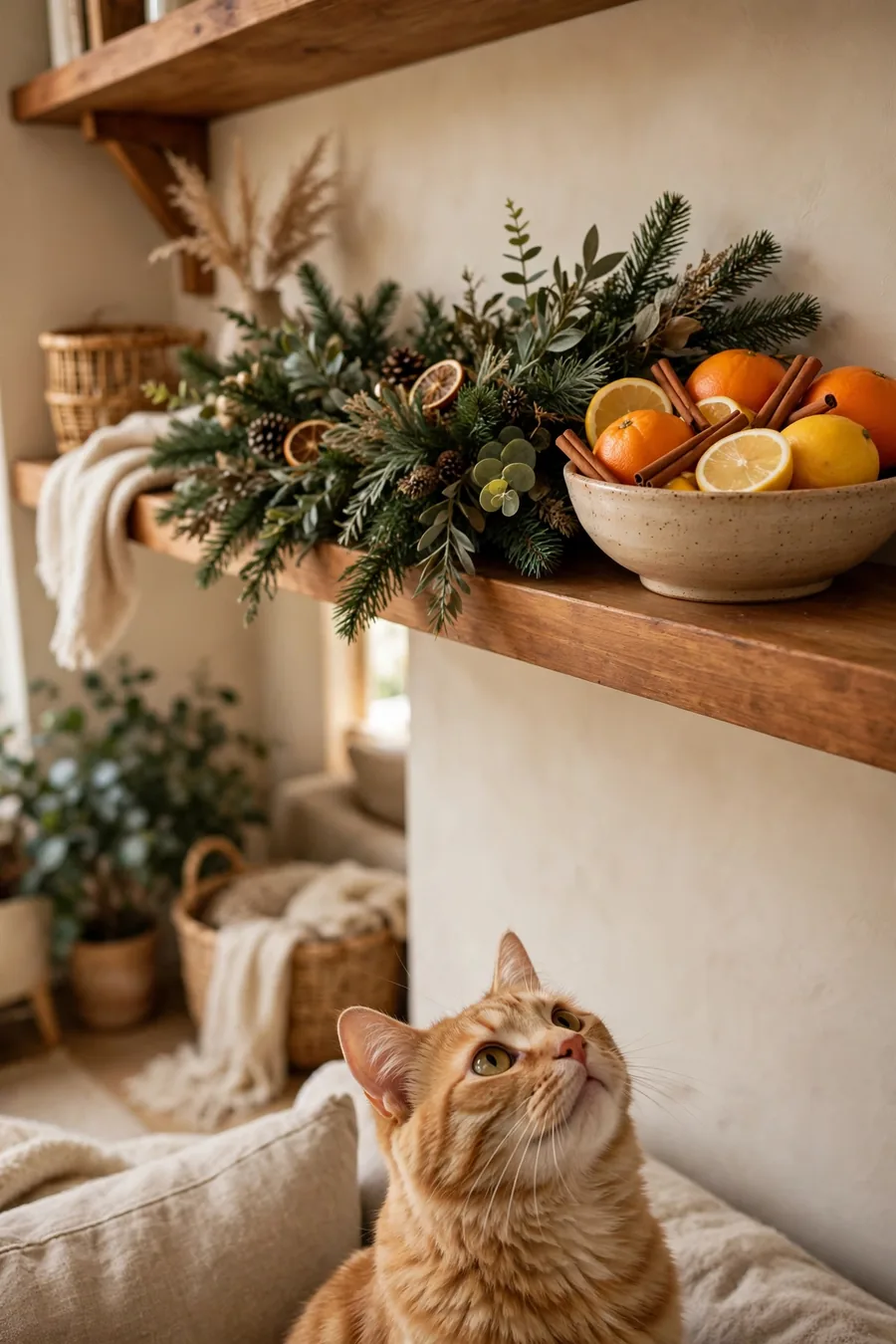
Holiday plants need a cat-first check. Lilies are extremely dangerous for cats and should not come into a cat home at all, including in bouquets. Poinsettia is usually a milder irritant rather than the deadly plant of legend, but it can still upset the stomach; mistletoe and holly are better skipped or kept completely out of reach.
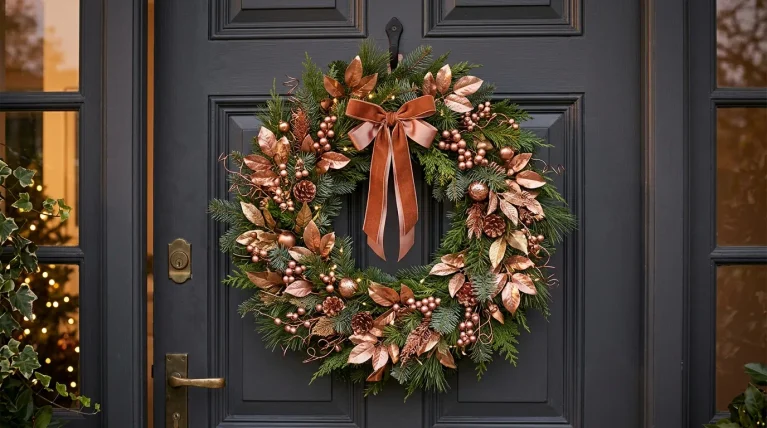
Faux greenery is often the calm choice for mantels, table runners and low garlands, especially if your cat likes to chew leaves. For real scent, use a small fir arrangement inside a closed terrarium-style jar, citrus and cinnamon in a bowl on a high shelf, or a wreath on the outside of the door.
Plant note: When in doubt, choose faux for anything at cat height and keep fresh arrangements behind a closed door. It is easier to enjoy the room when you are not monitoring every nibble.
6. Make a Cat-Friendly Watching Spot Nearby
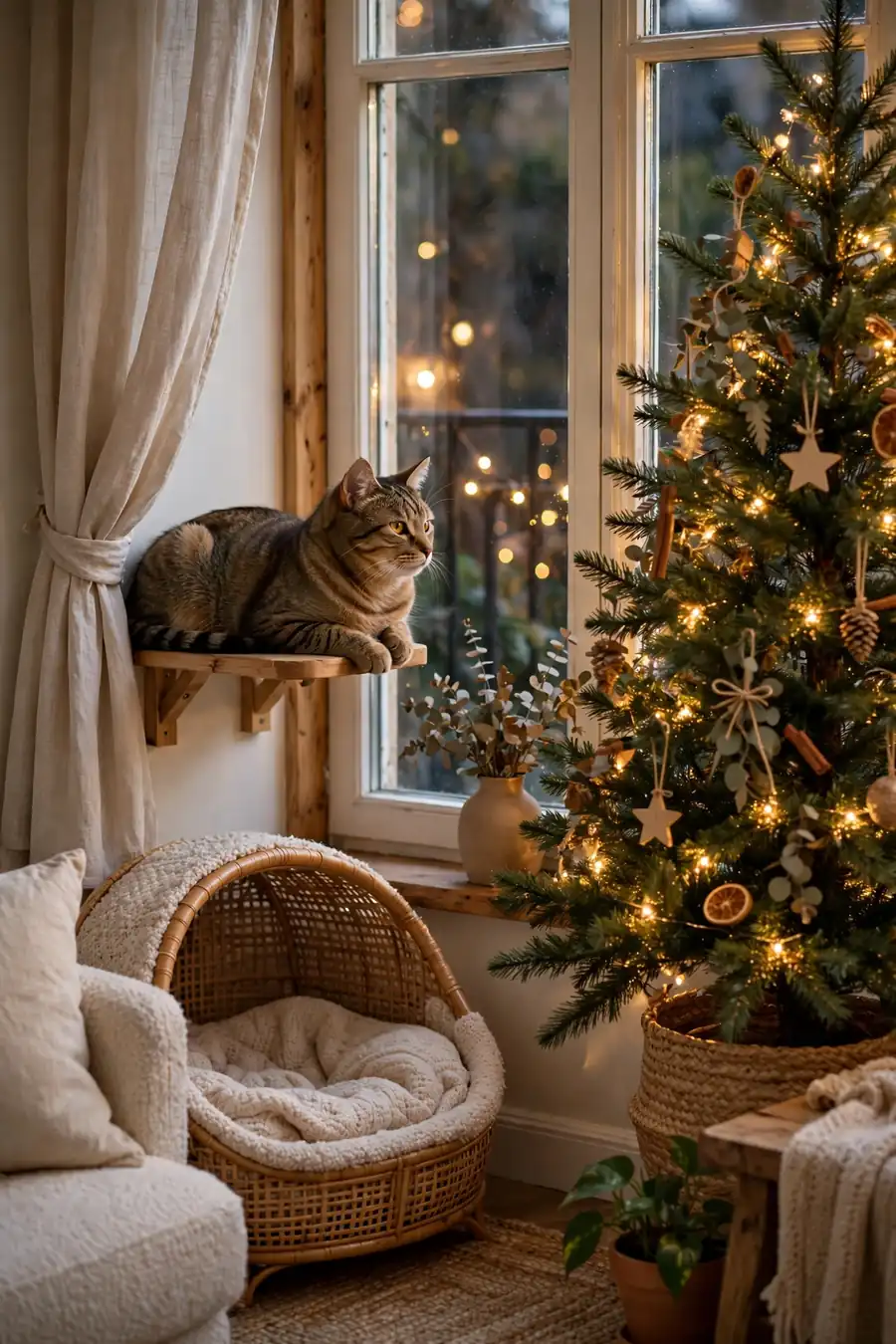
A cat who has a good seat is less likely to invent one inside the tree. Put a cushion, folded blanket or cat bed where your cat can watch the lights at a comfortable distance. Near a window is ideal: the tree sparkles on one side, the street entertains on the other, and you get a living room that feels arranged for everyone.
Add one legal toy to the setup. A catnip mouse, a cardboard scratcher or a wand toy used before guests arrive can burn off the exact energy that might otherwise go into ornament hockey. Rotate toys every few days so the watching spot stays more interesting than the lower branches.
Comfort note: Keep food and water bowls in their normal calm place, not beside the tree. A cat who has to pass the most exciting object in the house to eat will keep finding reasons to investigate it.
You May Also Like: 23 Christmas Decor Ideas for Living Room: Cozy & Chic
7. Keep Candles, Water and Tree Preservatives Out of Reach

Open flame and cats are a poor mix, especially around tails, whiskers and jumping routes. Use flameless candles on mantels and tables, or place real candles inside tall hurricanes where a passing tail cannot brush the flame. Never leave a real candle burning in a room where your cat can wander in alone.
If you choose a real tree, cover the water reservoir with a tree skirt, foil guard or fitted cover so your cat cannot drink from it, and avoid adding preservatives or chemicals to the water. Sweep fallen needles often; they are not a festive snack, and a clean floor makes the whole setup feel calmer.
Water note: A covered tree stand also keeps ornaments and light cords drier. Check the water level with your hand rather than leaving the reservoir open for convenience.
The Cat-Safe Christmas Cheat Sheet
| Risk | Safer swap | Where to put it |
|---|---|---|
| Wobbly tree | Heavy stand plus wall anchor | Corner or against a wall |
| Fragile glass baubles | Felt, wood, fabric or shatterproof ornaments | Low and middle branches |
| Heirloom ornaments | Display in cabinet, high shelf or wreath | Away from climbing routes |
| Loose tinsel and ribbon curls | Wide wired ribbon bows and chunky garland | High or firmly attached |
| Exposed light cords | Cord covers, trunk-wrapped lights, battery lights | Behind furniture and off the floor |
| Lilies and risky greens | Faux greenery, citrus, cinnamon, safe high arrangements | Closed or out-of-reach spots |
| Real candles | Flameless candles or hurricane-covered flames | Mantel and stable tables |
Frequently Asked Questions
How do I decide how to decorate for christmas with a cat in a tiny living room?
Use a smaller, well-anchored tree in a corner, unbreakable ornaments low down, covered cords, and one good cat bed nearby. In a tiny room, editing is the secret: fewer fragile items, safer materials, and a clear watching spot will feel more festive than a huge tree you have to guard.
Are artificial trees safer for cats than real trees?
They can be easier to anchor and do not have drinkable tree water, but cats may still chew branches or climb. Real trees need covered water and frequent needle sweeping. The safer choice is the one you can stabilise well and decorate with unbreakable pieces at paw height.
Which Christmas plants are most important to avoid with cats?
Keep lilies out completely, because they are extremely toxic to cats. Be cautious with mistletoe and holly, and keep poinsettia out of reach even though it is usually a milder stomach irritant. Faux greenery is the simplest safe option at cat height.
How can I stop my cat batting ornaments off the tree?
Use shatterproof ornaments low down, attach them with ties or locks, push them deeper into the branches, and give your cat a better target nearby. A bed, scratcher and short play session before evening guests arrive often reduce the midnight ornament games.
You Would Also Love
💬 Join Our Decor Community
Decor Fern | Home Decor Ideas & Inspiration — share your rooms, get ideas, and chat with fellow decor lovers.
Join the Facebook GroupFollow on Facebook