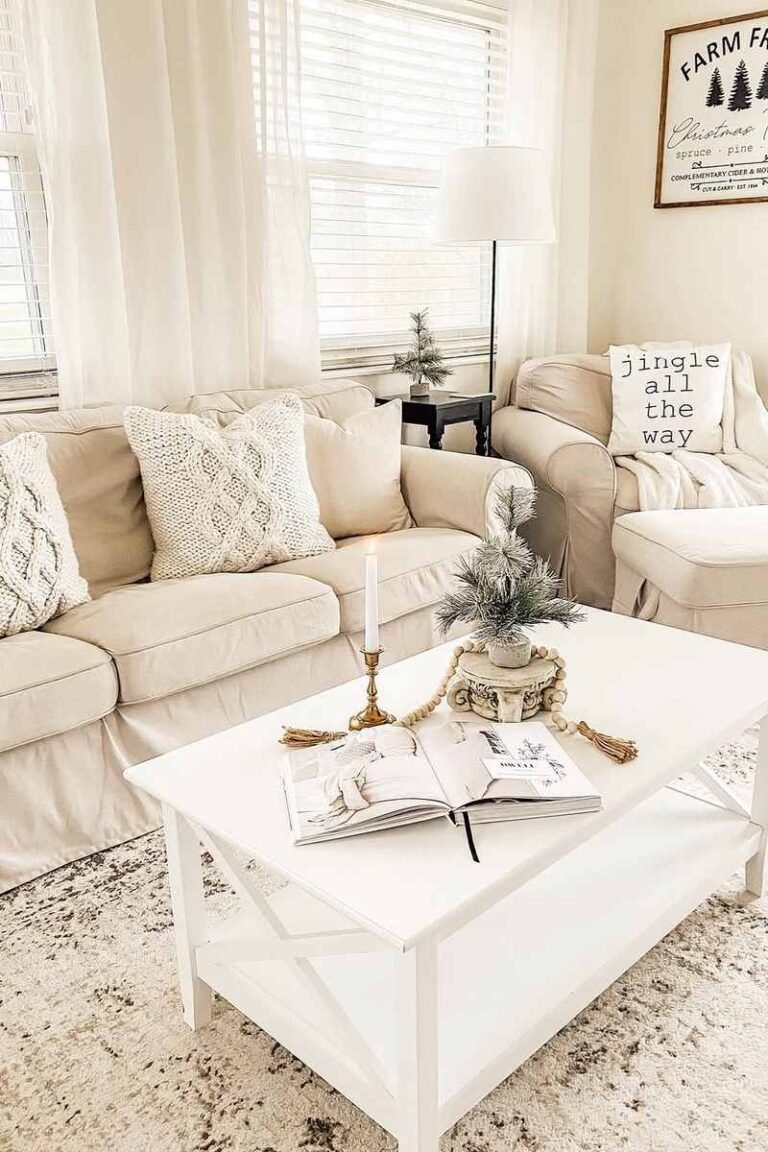
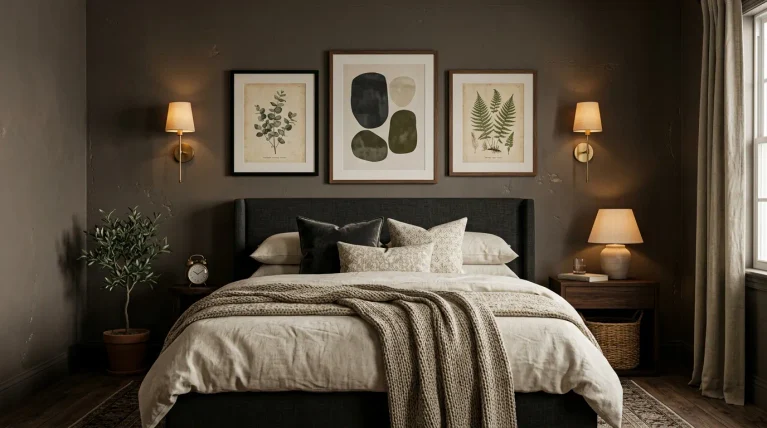
21 Statement Wall Ideas: Plaster, Molding, Color Drenching and Art
I have stared at a blank wall for longer than I care to admit, wondering why a room I liked never felt finished. The furniture was right, the rug was right, and still the room felt like a waiting room. Then I learned the thing every decorator knows: a room needs one wall that does the talking. A statement wall is not about being loud. It is about giving a room a focal point, while the rest of the room stays calm.

Photo: The Cary Cottage (@thecarycottage) on Instagram
These statement wall ideas are built for real homes, rented or owned, and they work in every room. Start with the treatment, plaster, molding, or color, then hang the art with intention, then finish the windows. Most cost less than a dinner out, and none needs a renovation.

Photo: The Cary Cottage (@thecarycottage) on Instagram
What Wall Treatments Turn a Plain Wall Into a Statement?
A statement starts with the wall itself, before a single picture is hung. Plaster, molding, and color give a wall depth that paint alone cannot. The seven ideas below cover the treatments that suit real homes best, and each one works on a single wall.

Photo: Okdeon (@okdeon) on Instagram
1. Try Venetian Plaster for a Soft, Polished Glow
Best For: living rooms and bedrooms where flat paint feels lifeless. Venetian plaster is a thin, polished plaster finish that catches the light like stone, with soft movement across the wall. It turns a plain wall into the most interesting surface in the house. How to Create It: hire a plasterer for one wall, or use a DIY venetian plaster kit on a small wall first, and keep the color pale, warm white, soft grey, or pale sage, so the texture does the talking. One plastered wall per room is enough.
2. Keep It Natural With a Lime or Clay Plaster Wall
Best For: homes that want warmth without color. Natural plaster, lime or clay, gives a wall a soft, matte, earthy surface with subtle variation. It suits bedrooms and reading corners best, because the texture is calming rather than dramatic. How to Create It: choose a clay plaster in a warm neutral, and apply it to the wall behind the bed or the sofa, the wall you face most. Keep the other walls plain white so the plaster reads as a feature. For a calm, earthy take on the same idea, see these sage green living room ideas.

Photo: Ant Anstead (@ant_anstead) on Instagram
3. Color-Drench a Small Room for a Jewel-Box Feel
Best For: small rooms that feel boxy and unfinished. Color drenching means the walls, the trim, and even the ceiling all wear the same color, and the effect is a jewel box, not a dark cave. Small rooms take deep color beautifully because there is so little wall, and the drenching erases the edges that make a room feel small. How to Create It: use a satin or eggshell finish so the walls wipe clean, and keep the art and the mirror in warm brass so they glow against the color. One white cushion is all the contrast the room needs.
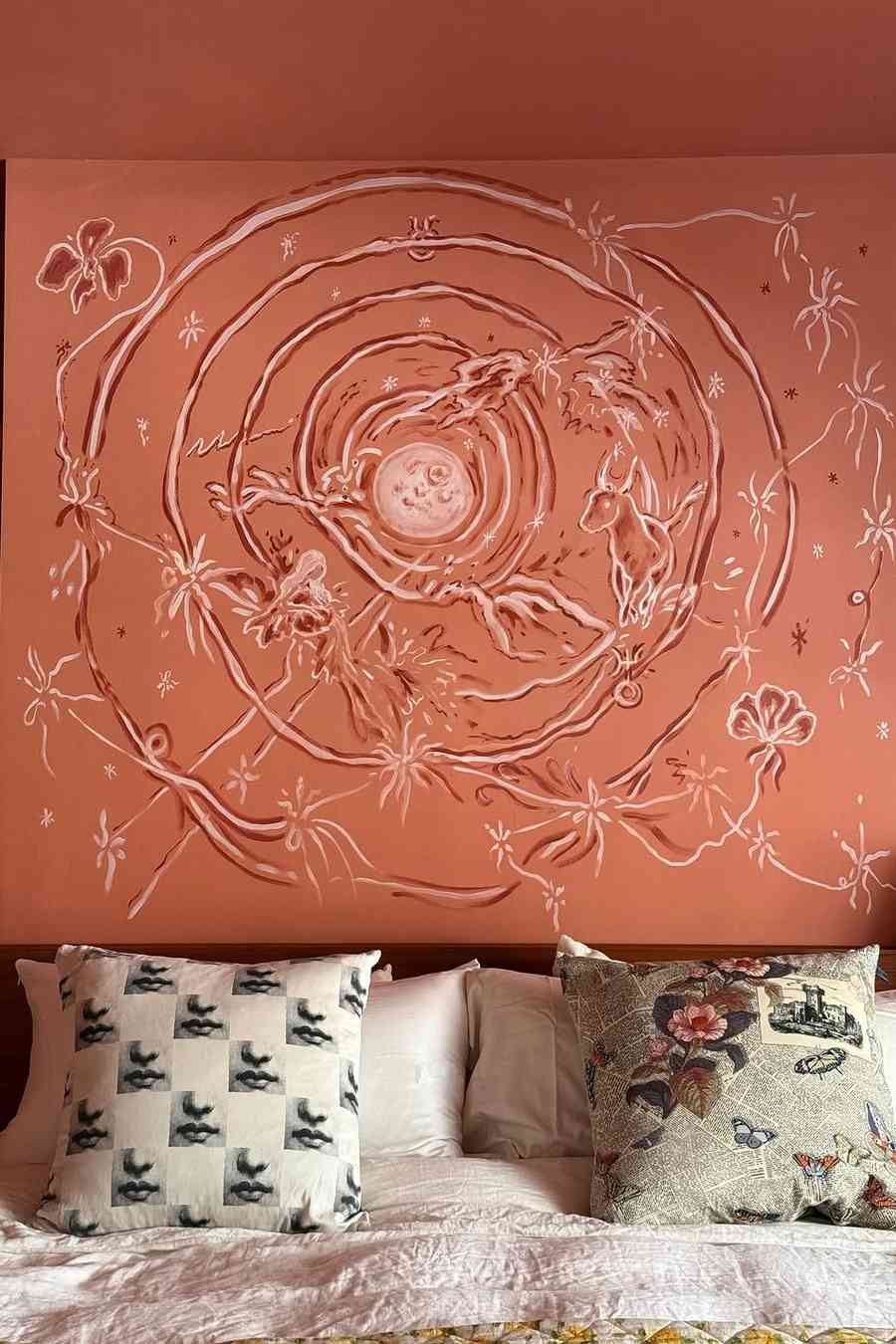
Photo: Sierra Tishgart (@sierratishgart) on Instagram
4. Add Wall Molding for Instant Architecture
Best For: flat, featureless walls in new-build homes. Wall molding, simple rectangular frames of thin trim, gives a plain wall the architecture it never had, and it costs a few dollars per frame. Painted the same color as the wall, it reads as texture. Painted in contrast, it reads as a feature. How to Create It: mark the frames with painter’s tape first, keep them the same size, and space them evenly, because uneven molding looks like a mistake. For more classic wall ideas, see these modern rustic living room ideas, which use the same molding logic in a warmer palette.

Photo: Pure Elisabeth (@pureelisabeth_) on Instagram
5. Lay a Checkerboard Pattern for Graphic Punch
Best For: hallways, powder rooms, and any wall that needs personality without clutter. A checkerboard pattern, painted in two tones or tiled in two colors, gives a wall instant graphic punch, and it suits farmhouse, traditional, and modern rooms alike. The pattern is bold, but because it lives on one wall, it never overwhelms the room. How to Create It: keep the squares large in a large room and small in a small one, and keep the rest of the room plain so the pattern carries the wall alone. Two tones only, never three.
6. Bring in Natural Texture With Grasscloth or Linen
Best For: bedrooms and living rooms that feel cold despite good furniture. Natural texture, grasscloth, linen, or woven fiber on one wall, warms a room in a way paint never can. It is the quietest statement on this list, and often the most expensive-looking. How to Create It: use the textured wall behind the bed or the sofa, and keep the bedding and cushions in natural linen tones so the whole wall reads as one calm decision. For a softer, layered version, see these cozy boho living room ideas.
7. Frame the Wall With a Painted Arch
Best For: renters and anyone who wants a statement without a single nail. A painted arch, a soft curve of color behind a bed, a sofa, or a reading chair, frames the furniture like a headboard and gives the wall a focal point for the price of a sample pot. It peels off with the next paint job, so it is the lowest-commitment statement there is. How to Create It: draw the arch with a pencil tied to a string, paint inside the line with a small roller, and keep the arch a few inches wider than the furniture it frames. One arch per room, in a color that already appears in the cushions.
How Do You Hang Art So It Actually Looks Like a Statement?
Once the wall has its treatment, the art is what makes it personal. The seven ideas below are about hanging art with intention: ledges, shadow boxes, and oversized pieces that anchor a sofa or a bed. The rule is the same throughout: art at eye level, spaced with breathing room.

Photo: Alicia S (@hello_alicia_s) on Instagram
8. Style a Picture Ledge You Can Change in Minutes
Best For: anyone who loves art but hates hammering nails. A picture ledge is a narrow shelf that holds framed art leaning against the wall, and it lets you swap pieces in minutes and layer frames in front of each other. Two ledges hold a whole collection without a single hole. How to Create It: hang the ledges at eye level and a foot apart, lean the largest frame at the back, and overlap the smaller ones in front. Keep the frames in two finishes only, black and wood, so the collection reads as one.

Photo: Aga Rusinek (@_aga.rusinek) on Instagram
9. Build a Shadow Box Wall of Small Memories
Best For: hallways and bedrooms where small objects deserve a home. A shadow box is a deep frame that holds objects, not just pictures: a ticket stub, a shell, a small toy, a dried flower. Three or four in a row turn a blank wall into a personal museum. How to Create It: keep the boxes the same size and the same depth, hang them in a straight line, and put one object per box, because one object reads as a treasure and five read as a drawer.
10. Hang Vintage Needlepoint for a Collected Feel
Best For: living rooms and bedrooms that need warmth and history. Vintage needlepoint, found at flea markets and thrift shops, brings color, texture, and a handmade feeling that no print can match. How to Create It: frame the needlepoint simply, in wood or gold, and hang it at eye level with plenty of empty wall around it. One piece is a statement. Five pieces in a row is a shop.
11. Choose Vintage Botanical Art for a Timeless Wall
Best For: dining rooms, bedrooms, and any wall that needs calm beauty. Vintage botanical prints, ferns, flowers, and leaves in soft greens and creams, are the most forgiving art there is: they suit every style, they never date, and they bring the outside in without a single plant to water. How to Create It: buy the prints as a set, frame them identically, and hang them in a straight line with two inches between frames. For more wall art ideas, see these shelf decorating ideas, which use the same grouping logic on a smaller scale.

Photo: The Cary Cottage (@thecarycottage) on Instagram
12. Pick One Canvas for the Bedroom Wall
Best For: bedrooms where the wall above the bed is blank and the room feels unfinished. One canvas, sized to about two-thirds of the bed’s width, finishes the bedroom in a single move. The canvas should be calm, soft colors and simple shapes, because the bedroom is for rest, not for drama. How to Create It: hang the canvas so its bottom edge sits six to eight inches above the headboard, and keep the bedding plain so the art gets the attention. For more bedroom wall ideas, see these boho style bedroom ideas.
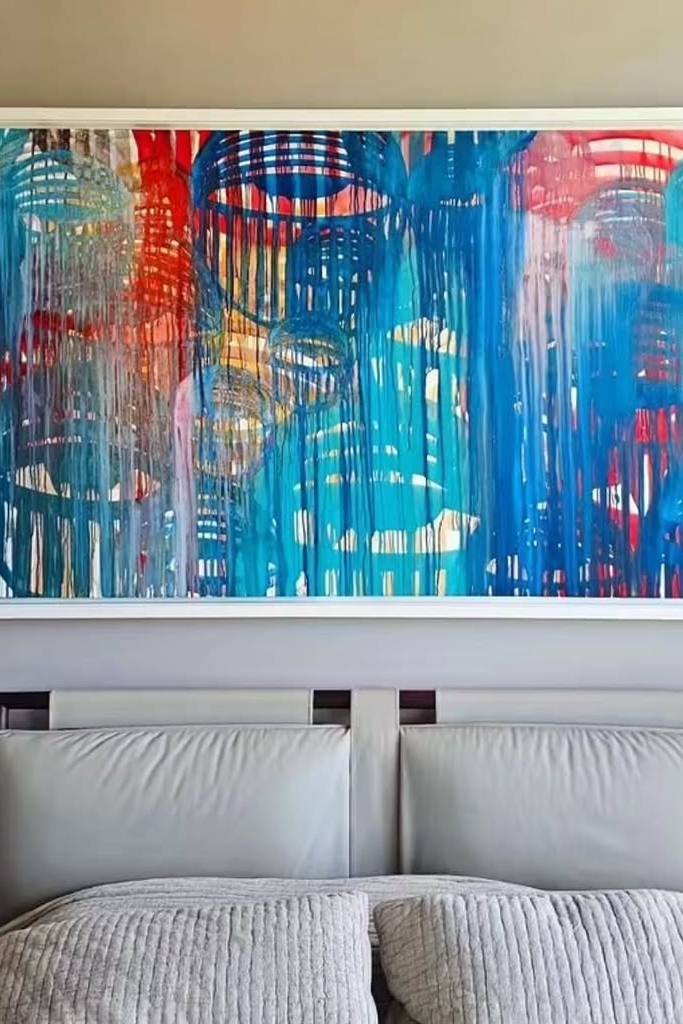
Photo: Aholsniffsglue (@aholsniffsglue) on Instagram
13. Go Oversized Above the Sofa
Best For: living rooms where small pictures get lost above a big sofa. One oversized piece, at least two-thirds as wide as the sofa, anchors the whole seating area and makes the room feel designed rather than decorated. How to Create It: hang the piece so its center sits at eye level when you are standing, and leave six to eight inches between the top of the sofa and the bottom of the frame. One big piece beats five small ones every time.
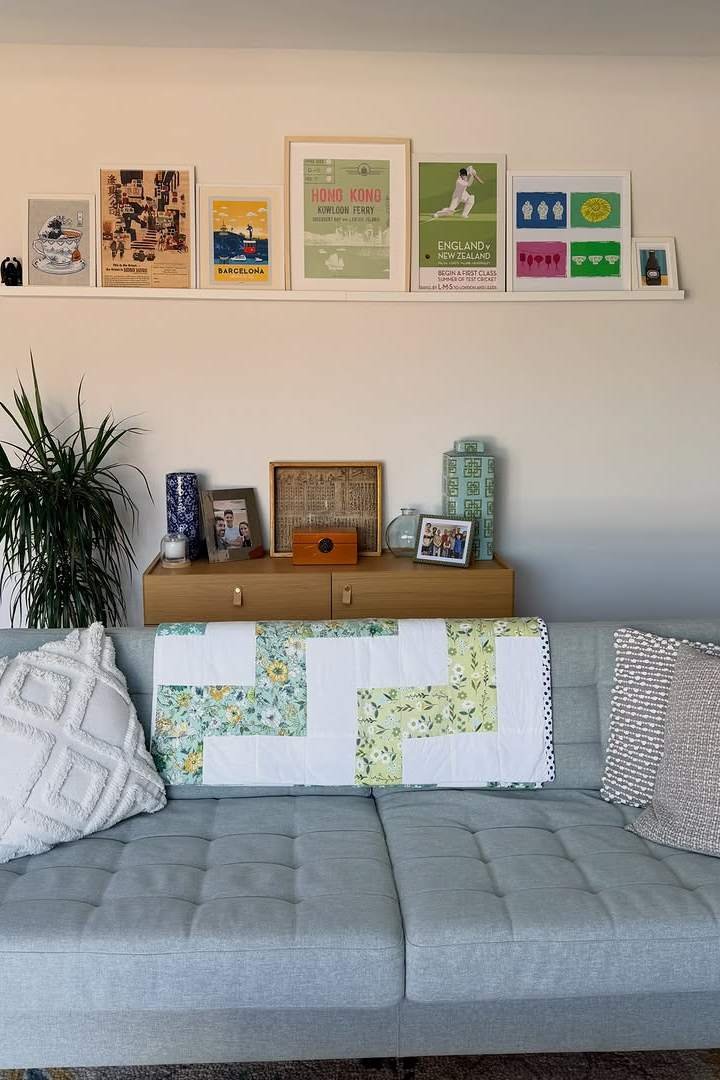
Photo: Jane Broderick (@jbrods_82) on Instagram
14. Add Vintage Brass Accents to Warm the Wall
Best For: walls that feel cold despite good art. Vintage brass, a small sconce, a brass-framed mirror, or a pair of brass candle holders, warms a wall the way jewelry warms an outfit. How to Create It: keep the brass to two or three pieces on one wall, and never mix brass with chrome in the same room. One metal per wall is the rule, and brass is the metal that makes a statement wall feel finished.
What Finishes a Statement Wall — Windows, Curtains and Small-Space Tricks?
A statement wall is not finished until the windows are part of it. Curtains frame the wall, window boxes bring it to life from outside, and small-space tricks keep it from overwhelming a tiny room.
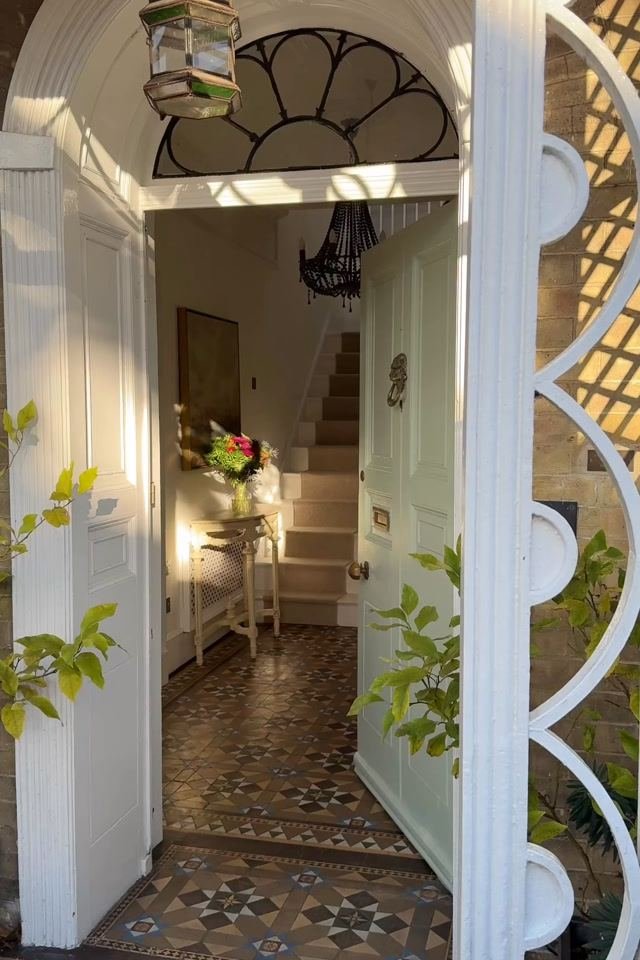
Photo: Kates Georgian Home (@katesgeorgianhome) on Instagram
15. Style the Wall Above the Bed Like a Headboard
Best For: bedrooms with no headboard or a plain one. The wall above the bed is the bedroom’s statement wall, and it deserves the same attention as a living room wall. A row of three framed prints, a woven wall hanging, or a painted arch behind the bed all work as a headboard. How to Create It: keep the styling the same width as the bed, no wider, and hang it low, just above the pillows, so it reads as part of the bed rather than floating above it.
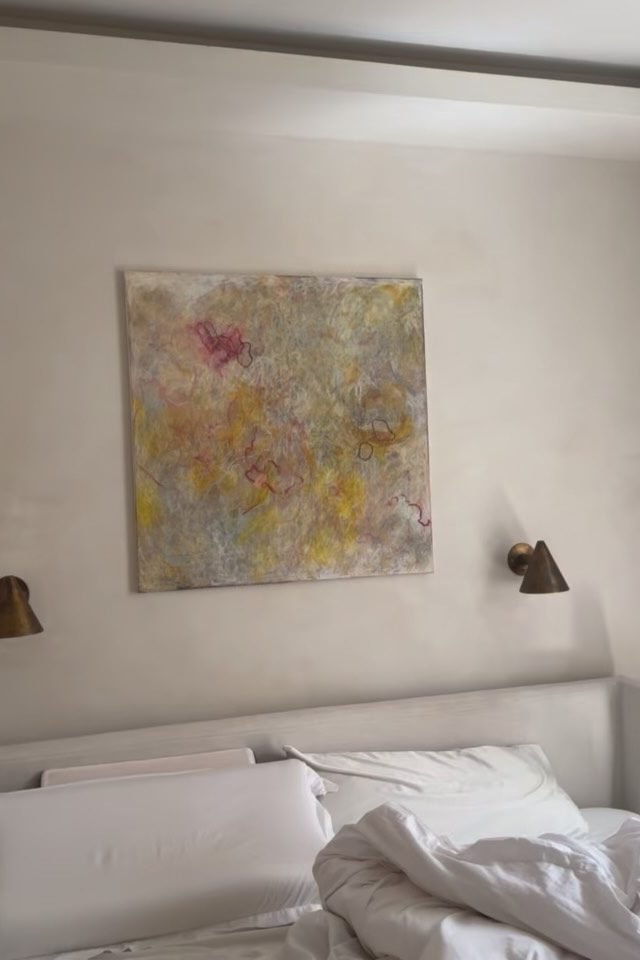
Photo: Chiru Weinstein (@chiruweinstein) on Instagram
16. Dress the Wall Above the Couch With a Mirror
Best For: living rooms where the wall above the couch is blank and the room feels dark. A large mirror above the couch does two jobs: it finishes the wall, and it doubles the light in the room. How to Create It: hang the mirror so its center sits at eye level, and keep the cushions plain so the mirror gets the attention. For more living room wall ideas, see these dark boho living room ideas.
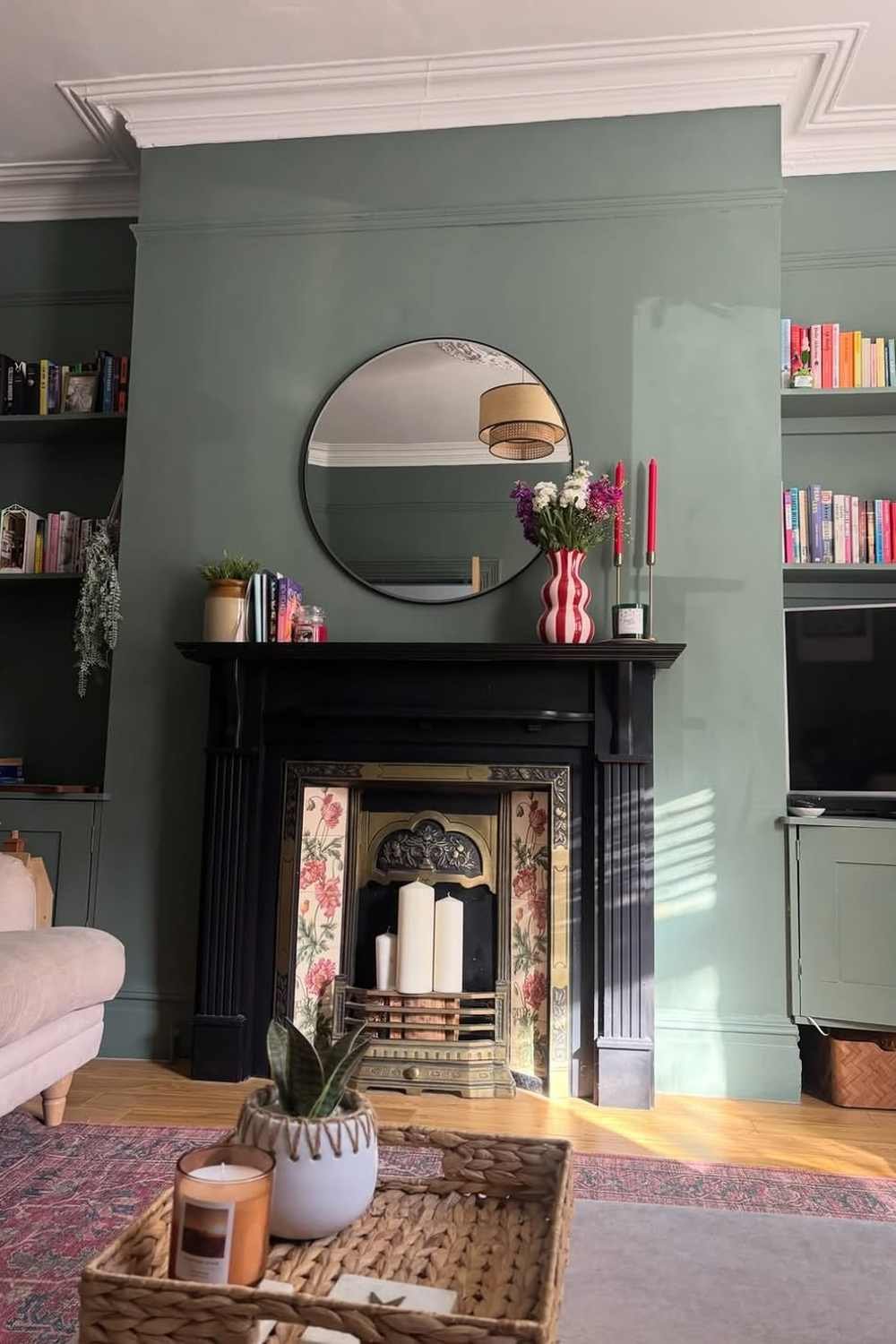
Photo: My Liverpool House Love (@myliverpoolhouselove) on Instagram
17. Keep a Boho Wall Light and Layered
Best For: living rooms and bedrooms that want a relaxed, collected feeling. A boho wall is layered, not matched: a woven hanging, a macrame piece, a framed print, and a small shelf with a plant, all in natural tones, with plenty of space between them. How to Create It: start with the largest piece, the woven hanging, and add the smaller pieces around it, keeping two inches between everything. Natural materials only, no plastic, no chrome.

Photo: Flow by Lara (@flowbylara) on Instagram
18. Make a Small-Space Wall Work Twice as Hard
Best For: small rooms where the wall has to be both beautiful and useful. In a small space, the statement wall earns its keep: a ledge that holds art and books, a mirror that doubles the light, and hooks that hold hats and bags, all on one wall. How to Create It: choose one wall, the one you face when you walk in, and put everything on it, leaving the other walls completely bare. One busy wall and three empty ones feels spacious. Four busy walls feels like a shop.
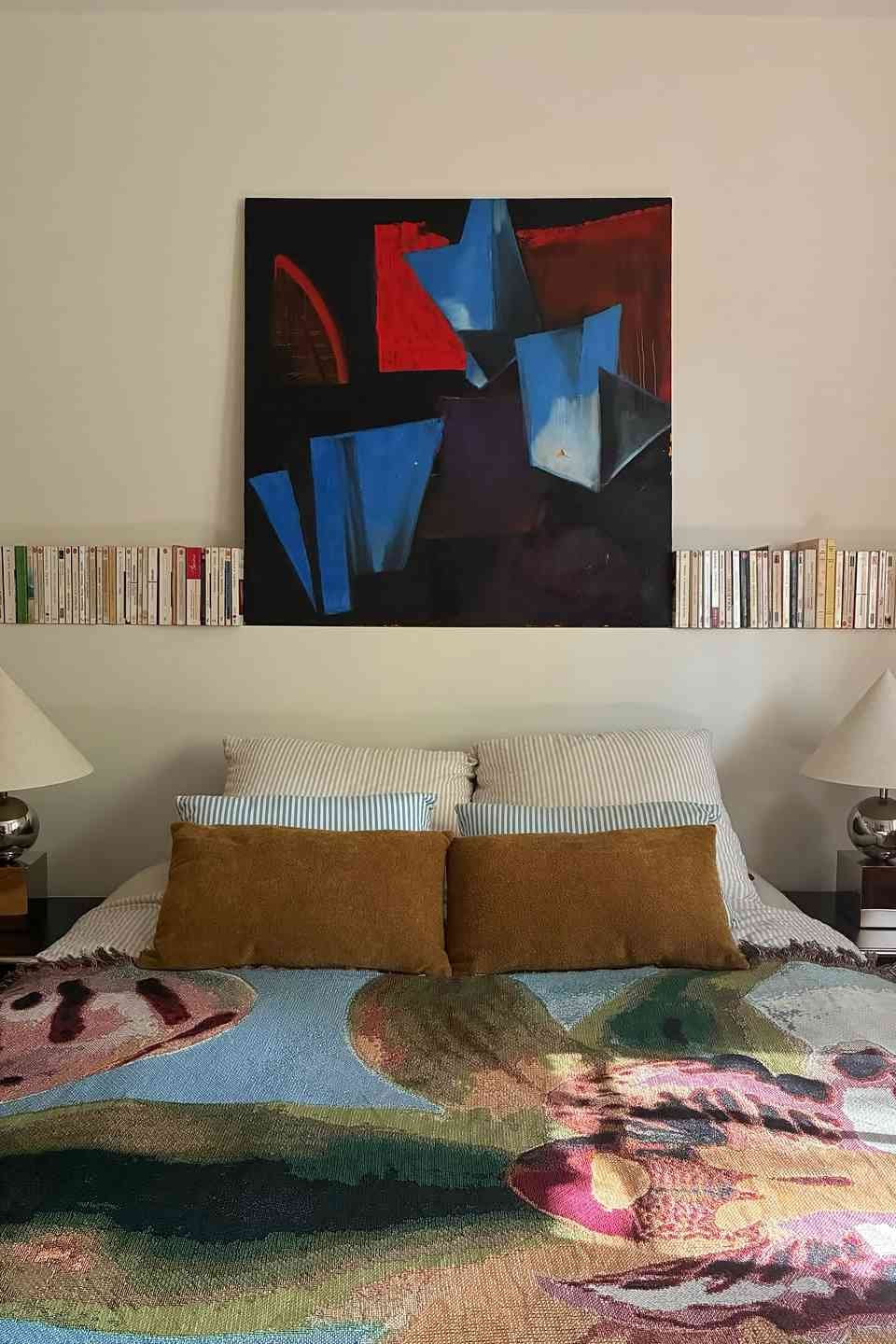
Photo: C L R (@c___l___r) on Instagram
19. Hang Curtains High to Make the Wall Taller
Best For: rooms with low ceilings or short windows. Curtains hung from just below the ceiling, rather than just above the window, make the whole wall look taller, because the eye follows the fabric from the ceiling to the floor. How to Create It: mount the rod four to six inches below the ceiling and let the curtains kiss the floor, never puddle and never hover. For more curtain ideas, see these spring mantel decor ideas, which use the same high-and-long logic on the mantel wall.
20. Choose Ready-Made Curtains in a Natural Fabric
Best For: anyone who wants beautiful curtains without a custom price. Ready-made curtains in linen-look or cotton, in a warm white or a soft natural tone, finish a statement wall for a fraction of the cost of custom drapes. How to Create It: buy the curtains two panels wider than the window, so they look full even when they are closed, and iron them before you hang them. Wrinkled curtains undo the whole wall.
21. Finish the Window With a Flower Box
Best For: exterior walls and any window that faces the street. A window box full of flowers, geraniums, petunias, or trailing ivy, is the statement wall’s finishing touch from the outside, and it makes the whole house look loved. How to Create It: plant tall flowers in the middle, trailing ones at the edges, and water the box every morning in summer. One box per window, all the same color, and the house reads as one deliberate decision.

Photo: Zsalsadil (@zsalsadil) on Instagram
A statement wall does not need a renovation or a big budget. It needs one wall, one treatment, one piece of art hung at eye level, and curtains that finish the job. Start this weekend with the wall everyone faces when they walk in. If you try one of these statement wall ideas, I would love to know which wall you chose.
Photo: Our Home In Making (@ourhomeinmaking) on Instagram
💬 Join Our Decor Community
Decor Fern | Home Decor Ideas & Inspiration — share your rooms, get ideas, and chat with fellow decor lovers.
Join the Facebook GroupFollow on Facebook