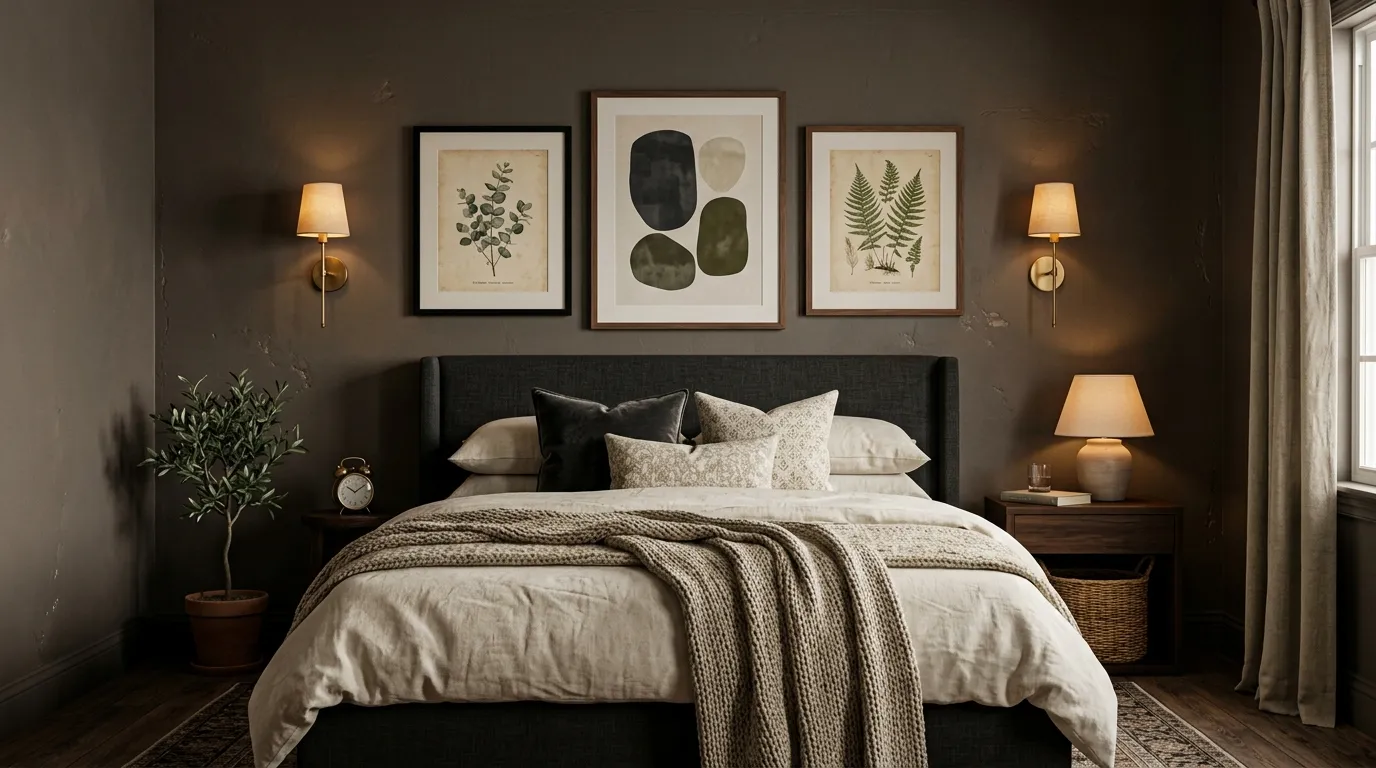
A dark bedroom can feel incredibly cozy when the right colors, textures, and lighting come together.
Ready to turn your bedroom into the warm retreat you’ve been saving on Pinterest?
These cozy moody bedroom ideas are designed to help you create a space that feels inviting, restful, and beautifully layered without making it feel too dark or crowded. From deep wall colors and plush bedding to warm lighting, natural wood, textured rugs, and simple decorative touches, each idea offers an easy way to change the mood of your room. In my experience, you don’t need a complete makeover to create a noticeable transformation. A few thoughtful updates can make an ordinary bedroom feel more personal, comfortable, and relaxing.
1. Deep Charcoal Walls
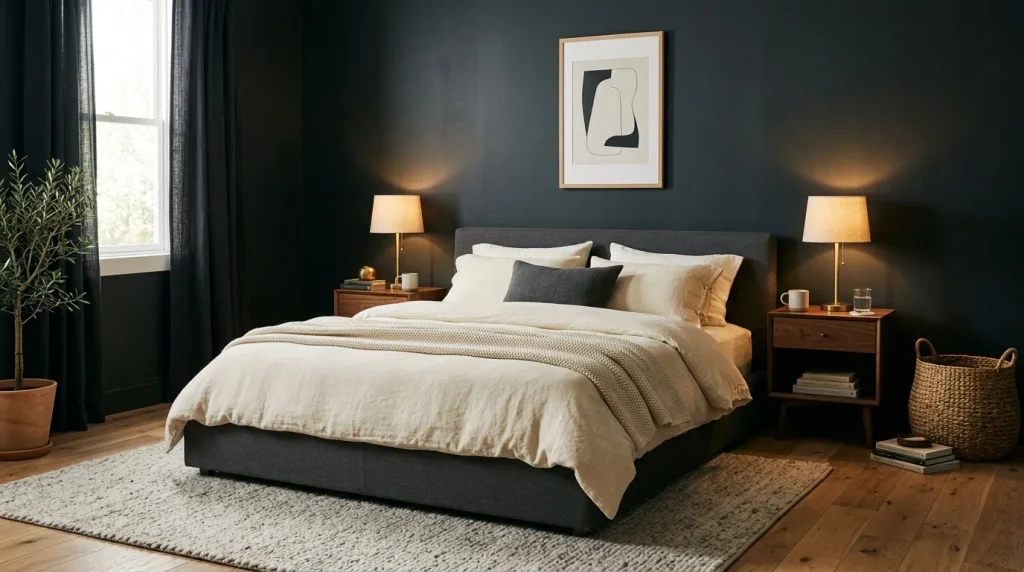
- Deep charcoal walls create an instant cocoon-like effect without needing lots of decoration.
- Balance dark paint with warm ivory bedding, natural wood, or woven accents.
- Choose a matte finish to reduce harsh reflections and make the room feel softer.
- Warm bedside lighting keeps the darker palette inviting after sunset.
A deep, cocoon-like color palette can instantly make a bedroom feel more intimate and restful. Paint the walls in charcoal, espresso, or deep olive, then soften the darkness with warm ivory bedding and natural wood accents. This combination gives the room depth without making it feel gloomy or cramped. In my experience, matte wall finishes work especially well because they absorb harsh reflections and create a calmer backdrop at night. Add one or two warm lamps rather than relying on a bright ceiling fixture. The result is a layered retreat that feels inviting from morning through bedtime.
Dark walls become much more welcoming when their surroundings include enough warmth and contrast. Choose creamy linens, walnut furniture, woven baskets, and small brass details to keep the palette balanced. A textured rug can also soften the floor while adding another visual layer under the bed. For cozy moody bedroom ideas, this approach is especially useful in rooms with ordinary furniture because color does most of the decorating work. Keep larger surfaces simple, then introduce depth through fabric and lighting. The finished space feels sophisticated, comfortable, and intentionally designed rather than simply painted dark.
Also Read : 24 Pot Painting Ideas for Creative Home Decor
2. Warm Layered Lighting
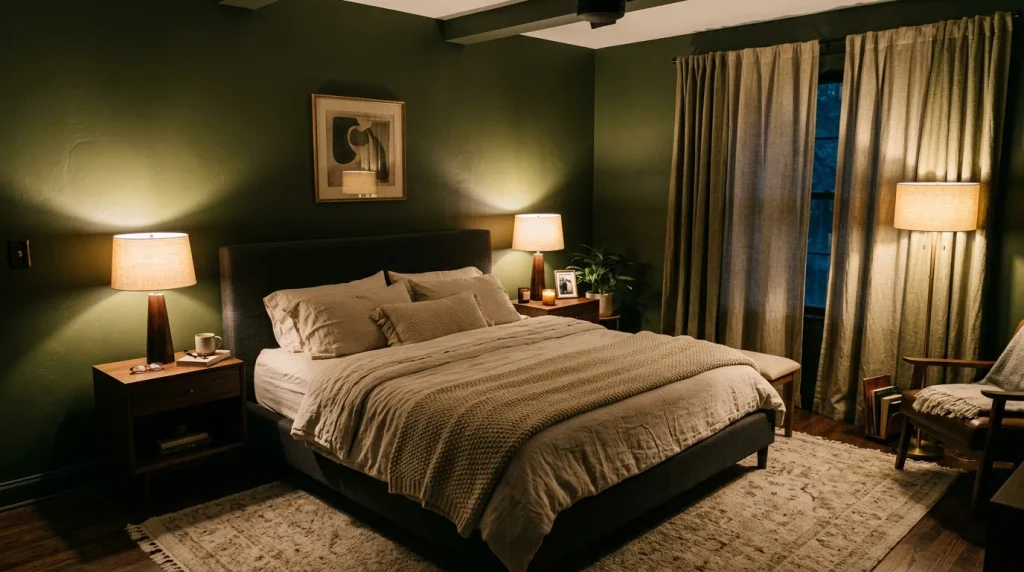
- Several small light sources create a softer effect than one bright ceiling fixture.
- Use amber-toned bulbs with fabric shades for a gentle evening glow.
- Position bedside lamps for both reading comfort and balanced visual symmetry.
- Dimmable lighting makes the room easier to adapt from daytime to bedtime.
Soft lighting can completely change how a bedroom feels after sunset, especially when the goal is a warm, restful atmosphere. Place matching bedside lamps on both sides of the bed, using amber-toned bulbs and fabric shades that diffuse the glow. Add a small wall sconce or dimmable floor lamp if the room needs another light source. The key is layering illumination instead of creating one bright focal point. I’ve noticed that warm pools of light make dark bedding and wood furniture look richer while reducing the harshness that often makes bedrooms feel less relaxing.
The best lighting arrangement feels gentle, balanced, and useful rather than overly decorative. Keep bedside lights close enough for reading, and position them slightly above mattress height so the light spreads across the nightstand without shining directly into your eyes. Warm white bulbs around 2200K to 2700K create a soft evening glow, while dimmers give you control throughout the day. Pair the lamps with dark walls, plush bedding, and subtle metallic accents for extra depth. This simple adjustment can make even a small bedroom feel more polished, intimate, and comfortable without requiring expensive furniture or major changes.
Also Read : 21 2026 Home Decor Trends to Refresh Your Space
3. Plush Upholstered Headboard
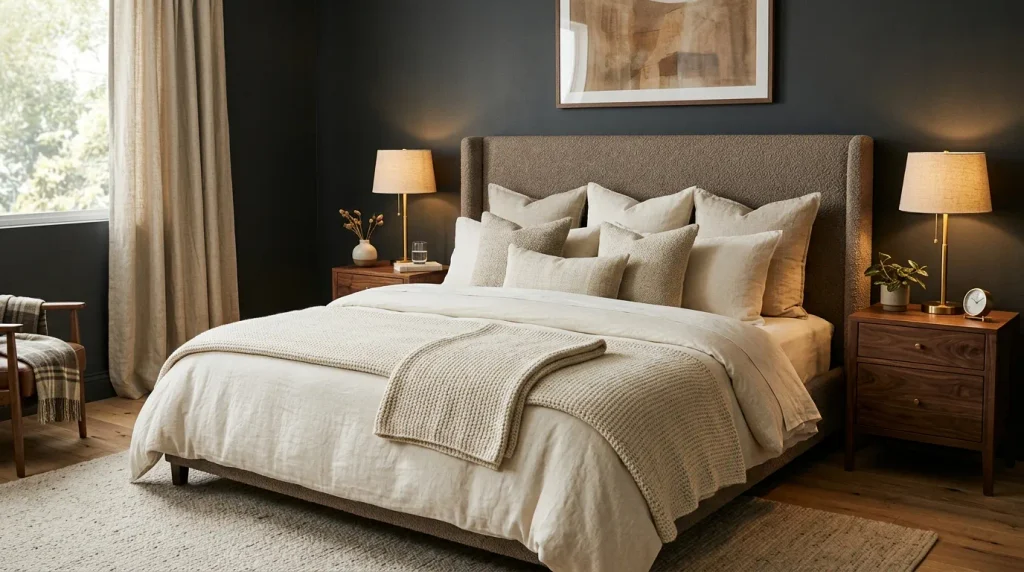
- A padded headboard makes the bed feel softer and more substantial.
- Velvet, linen, boucle, or textured fabric adds visual depth against dark walls.
- Choose muted shades such as taupe, mushroom, beige, or charcoal for a refined look.
- Layer pillows and throws to emphasize the comfortable, collected feel.
A plush upholstered bed creates an instant sense of softness while giving a dark bedroom a strong visual anchor. Choose a headboard in velvet, linen, boucle, or another tactile fabric, preferably in a muted shade such as taupe, mushroom, charcoal, or warm beige. Let the headboard extend slightly wider than the mattress to make the bed feel substantial and finished. Layer it with pillows in different textures rather than many competing patterns. The combination of soft fabric and deeper surrounding colors makes the sleeping area feel sheltered, comfortable, and visually rich without overwhelming the room.
A substantial headboard also helps solve a common bedroom problem: a bed can look unfinished when it sits against a plain wall. Upholstery fills that empty vertical space and introduces softness where the room needs it most. For a relaxed retreat, keep the bedding slightly lighter than the headboard so the layers remain visible in low light. Add a folded throw across the foot and a small rug beneath the bed to connect the textures. I’ve seen this work well in many homes because the change feels dramatic, yet the installation itself can be surprisingly simple.
Also Read :
4. Walnut Wood Accents
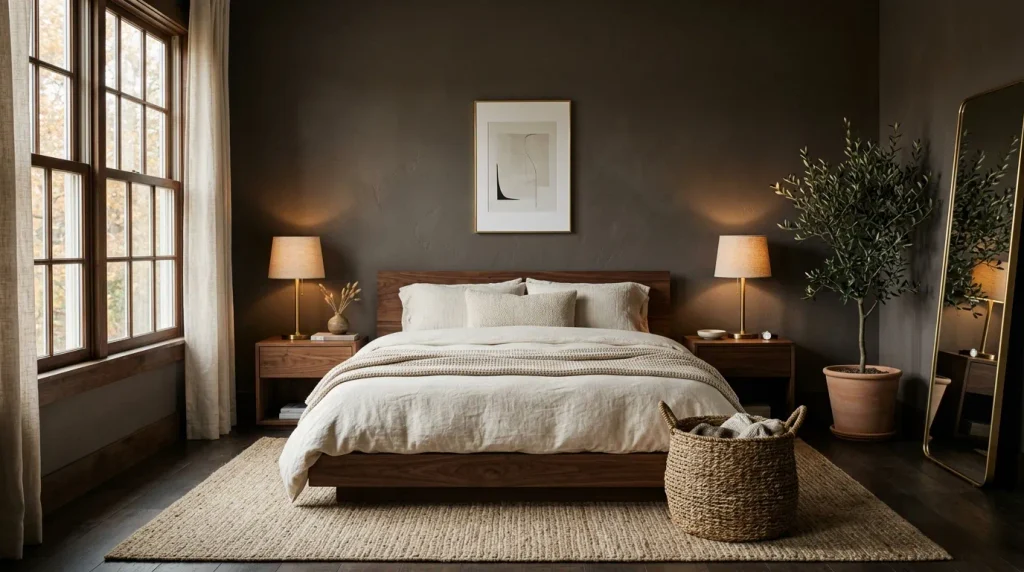
- Walnut furniture adds warmth and richness against deep bedroom colors.
- Choose matching or complementary wood tones for a more cohesive look.
- A simple nightstand can provide warmth without making the room feel crowded.
- Natural wood grain adds texture that works beautifully with soft bedding.
Few materials warm up a dark bedroom as naturally as walnut wood. Its rich brown tones create beautiful contrast against charcoal, deep green, navy, or chocolate-colored walls without feeling overly bright. Use walnut for the bed frame, nightstands, dresser, or even a small floating shelf. Keep the shapes simple so the natural grain becomes the main decorative feature. In my experience, one or two substantial wood pieces often make more impact than filling the room with smaller accessories. The result feels grounded, warm, and sophisticated while still maintaining that relaxed bedroom atmosphere.
If the room already contains several dark surfaces, choose walnut furniture with visible grain rather than a completely uniform finish. The subtle variations in the wood keep the space from looking flat. Pair it with cream linen bedding, woven baskets, aged brass lighting, and a neutral rug to create a balanced palette. You can also introduce a small wooden stool or bench at the foot of the bed for useful extra seating. These simple additions make the room feel thoughtfully layered while keeping the overall design uncluttered and easy to maintain.
Also Read : 25 Whimsical Bedrooms for Adults with Magical Cozy Style
5. Chocolate Brown Bedding
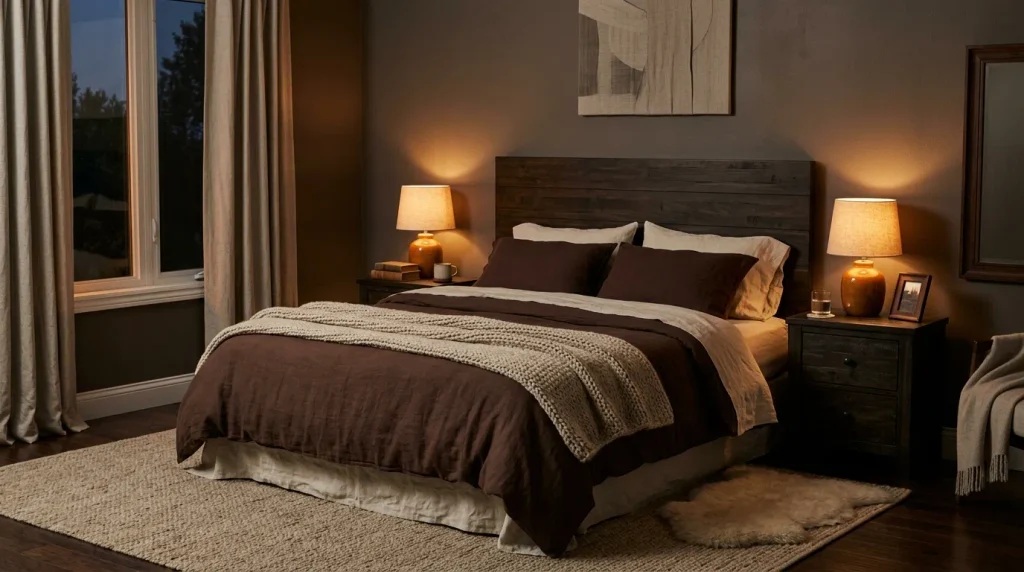
- Chocolate brown bedding creates a rich, enveloping layer around the bed.
- Mix cotton, linen, velvet, or quilted textures to prevent the color from looking flat.
- Pair dark bedding with cream or beige pillows for contrast.
- A lighter throw at the foot of the bed adds depth and visual balance.
Chocolate brown bedding brings instant richness to a bedroom and works especially well when you want the bed to feel warm and enveloping. Instead of using one flat shade, combine chocolate duvet covers with lighter mocha sheets, beige pillows, and an oatmeal throw. Different fabrics such as washed linen, cotton, quilted blankets, or velvet cushions keep the deep color visually interesting. This layered approach is one of the easiest cozy moody bedroom ideas to recreate because it changes the feeling of the room without requiring new paint or furniture.
The secret to making dark bedding feel inviting is contrast through texture and tone. Keep the main duvet rich and deep, then introduce cream, caramel, or warm taupe through smaller layers. A folded throw across the foot of the bed creates a relaxed, lived-in finish, while oversized pillows make the arrangement feel comfortable rather than overly styled. I’ve noticed that this palette looks particularly beautiful under warm bedside lighting because the brown tones become softer and more dimensional. It also hides everyday marks better than very pale bedding, making it practical for busy bedrooms.
Also Read : 23 Spring Front Porch Decor Ideas for a Fresh Welcome
6. Moody Olive Green
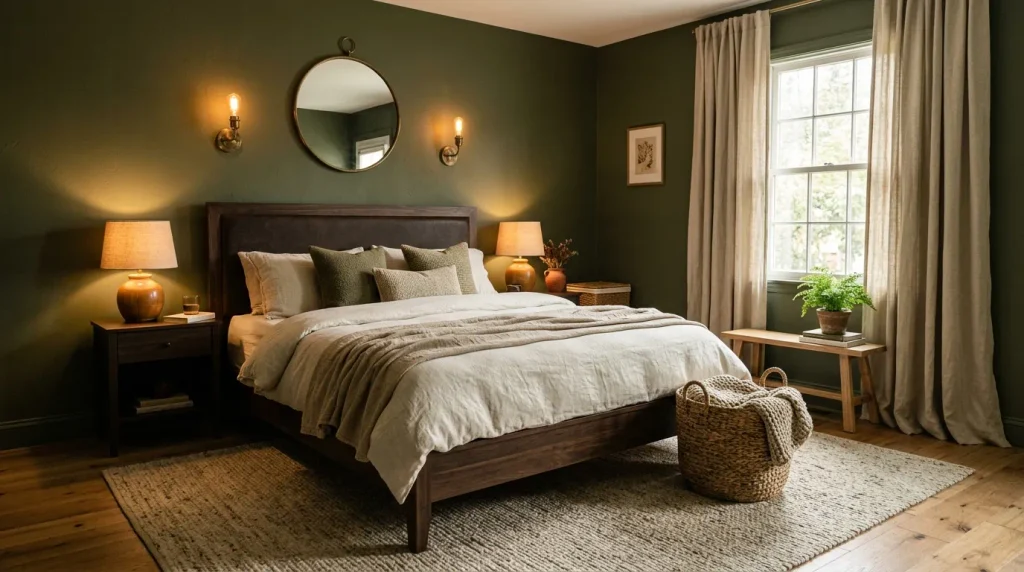
- Deep olive green adds color while keeping the bedroom grounded and natural.
- Use the shade on walls, bedding, curtains, or a single accent surface.
- Warm wood and creamy textiles soften the richness of the green.
- Brass or antique-gold details provide subtle contrast without overpowering the palette.
Deep olive green offers a beautiful alternative to black or charcoal when you want a bedroom to feel moody but still connected to nature. Use it across the walls for a dramatic effect, or introduce the shade through bedding and curtains if you prefer a smaller commitment. Warm walnut furniture and creamy textiles help balance the richness of the green. Keep accessories understated so the color remains the visual focus. The finished palette feels sophisticated during the day and especially cozy at night when illuminated with warm lamps.
Olive works because it sits comfortably between earthy and dramatic, making it easy to combine with materials already found in many homes. Try pairing it with linen, rattan, aged brass, and natural wood for a relaxed look rather than matching every item perfectly. If the room receives limited daylight, choose a slightly warmer olive with brown undertones instead of a cool green. A cream rug and pale bedding can also prevent the walls from feeling too heavy. This combination creates a calm retreat with enough color and contrast to remain visually interesting throughout the seasons.
Also Read : 22 Boho Maximalist Bedroom Ideas for a Bold Cozy Space
7. Linen Curtain Layers
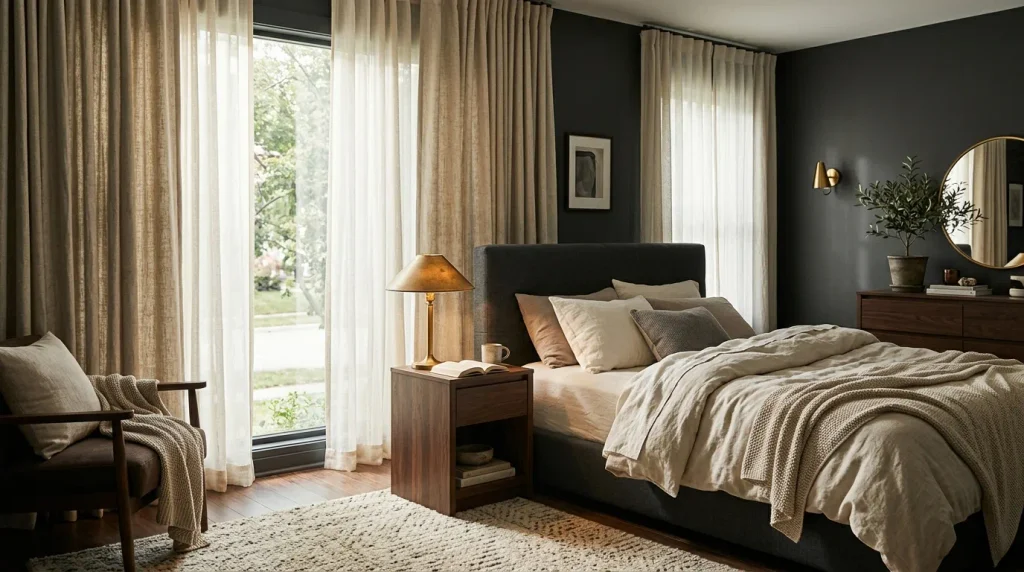
- Floor-length linen curtains soften dark walls and make windows feel more substantial.
- Choose oatmeal, beige, or warm ivory for gentle contrast.
- Layer sheer curtains underneath for privacy without blocking natural daylight.
- Let the fabric lightly pool or break at the floor for a relaxed finish.
Linen curtains can soften a dark bedroom while adding movement and texture around the windows. Choose floor-length panels in oatmeal, warm ivory, or muted beige so they gently contrast with deeper walls. If privacy is important, layer sheer panels behind the linen for flexibility throughout the day. The slightly uneven texture of natural linen keeps the room from looking too polished or formal. For cozy moody bedroom ideas, this small window treatment can make a surprisingly noticeable difference because it frames the room, softens hard surfaces, and adds warmth without introducing another strong color.
The way curtains hang can also change how large and comfortable the bedroom feels. Mount the curtain rod several inches above the window frame and extend it wider than the glass so the panels frame rather than cover the window when open. During the day, sheer fabric lets natural light filter through while maintaining softness. At night, heavier linen provides privacy and visual weight. I’ve noticed that this layered approach works particularly well in bedrooms with dark paint because the lighter fabric prevents the walls from feeling visually closed in while still preserving the moody character.
8. Antique Brass Details
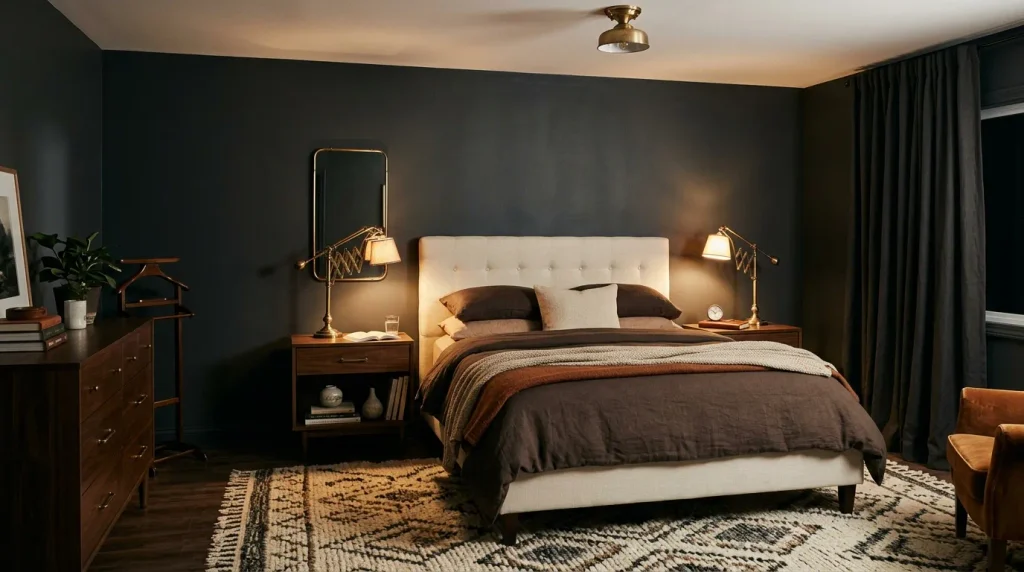
- Antique brass introduces warmth without the shine of polished gold.
- Use it sparingly on lamps, drawer pulls, mirrors, or small decorative pieces.
- Warm metal looks especially rich beside charcoal, olive, navy, and brown tones.
- Repeating the finish in two or three places creates subtle design continuity.
Antique brass details add just enough warmth to keep a dark bedroom from feeling visually cold. Instead of using bright, highly polished gold, choose aged or brushed brass for a softer appearance. A pair of bedside lamps, simple drawer pulls, a mirror frame, or a small tray can introduce the finish without making the room feel overly decorated. This works particularly well with charcoal, olive, navy, and chocolate tones. The warm metal catches low evening light beautifully, creating tiny points of glow that make the surrounding textures appear richer and more layered.
The easiest way to use brass successfully is to repeat it subtly rather than placing metallic pieces everywhere. For example, combine brass bedside lamps with matching drawer hardware and one small decorative object. Keep the remaining finishes natural, such as walnut wood, linen, stone, or woven fibers. This creates contrast while preserving a relaxed atmosphere. I’ve noticed that aged brass is especially useful when a dark room feels slightly flat because its warm undertone adds dimension without requiring another bold color. The overall effect feels collected, timeless, and comfortable rather than overly glamorous.
9. Textured Area Rug
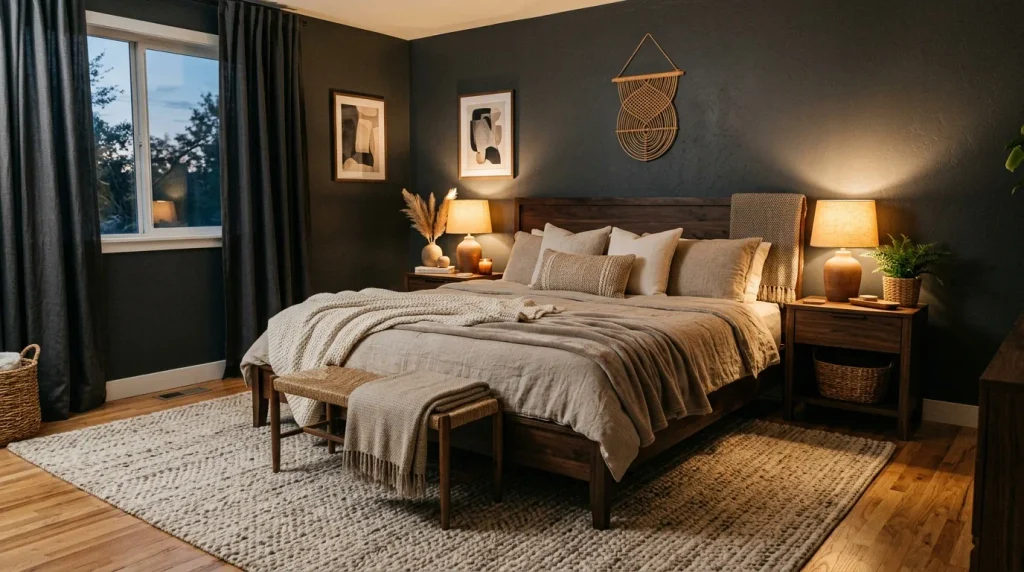
- A thick rug adds softness underfoot and visually anchors the entire bed area.
- Choose cream, taupe, mushroom, or warm gray against darker flooring.
- High-low textures create interest without adding busy patterns.
- Extend the rug beyond the sides of the bed for a more finished arrangement.
A textured area rug can make a dark bedroom feel noticeably softer from the moment you step inside. Place a large rug beneath the bed so it extends beyond both sides and reaches toward the footboard. Cream, taupe, mushroom, or warm gray shades provide enough contrast against deeper flooring and furniture without breaking the moody palette. Look for wool, woven, shag, or subtle high-low textures rather than busy patterns. The rug adds physical comfort underfoot while visually connecting the bed, nightstands, and surrounding furniture into one cohesive arrangement.
Rug placement matters almost as much as the material itself. If the room allows, choose a size that reaches beyond the nightstands or at least sits generously beneath the lower two-thirds of the bed. This creates a stronger foundation and prevents the furniture from appearing scattered. For smaller bedrooms, a runner on each side can provide similar softness without overwhelming the floor. I’ve found that neutral textured rugs are particularly practical because they complement seasonal bedding changes easily. They also introduce warmth and dimension while keeping the overall design calm and uncluttered.
10. Layered Neutral Bedding
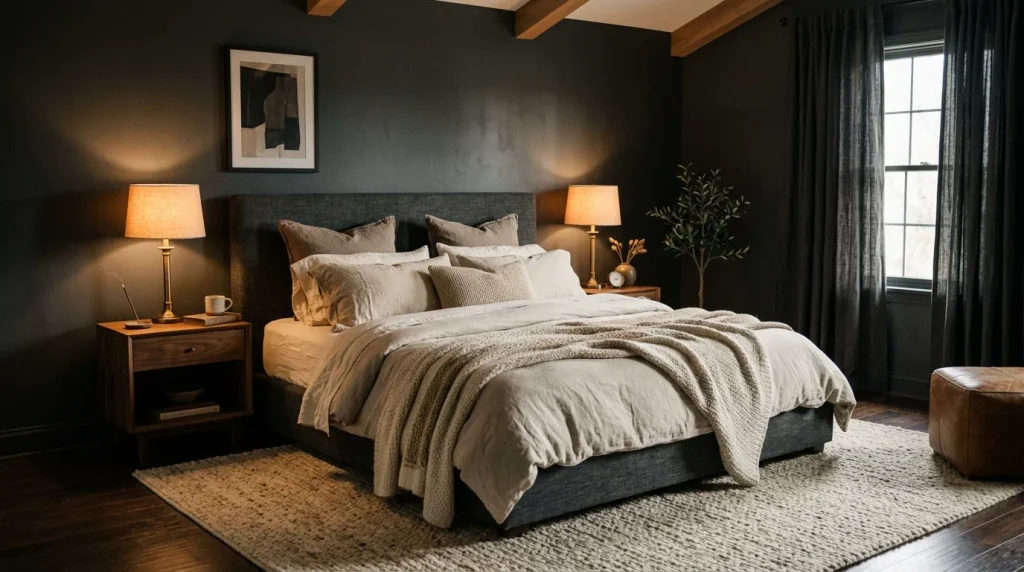
- Combine cream, beige, taupe, and oatmeal shades for a soft tonal palette.
- Mix linen, cotton, quilted, and knitted textures for depth.
- Keep the largest bedding pieces simple so smaller layers stand out.
- Add one darker cushion or throw to connect the bedding with the room.
Layered neutral bedding gives a dark bedroom softness without losing its sophisticated character. Start with cream or warm white sheets, then add a beige duvet, taupe quilt, and oatmeal throw in slightly different textures. The colors should sit close together rather than matching perfectly, creating subtle depth that looks natural and relaxed. This approach is especially effective when the walls or furniture are already dark because the lighter bedding becomes a gentle focal point. For cozy moody bedroom ideas, tonal layering also makes seasonal updates simple because individual blankets and cushions can be swapped without redesigning the room.
Texture is what keeps a neutral bed from looking plain. Combine crisp cotton sheets with relaxed linen, a quilted coverlet, chunky knit throw, or softly woven cushions. Avoid adding too many patterns because the goal is a calm visual rhythm. A single charcoal or brown pillow can connect the bedding to darker elements elsewhere in the room. In my experience, slightly rumpled linen often looks more inviting than perfectly pressed fabric, especially in a bedroom designed for relaxation. The finished bed feels comfortable, approachable, and naturally styled rather than overly staged.
11. Dark Wood Ceiling
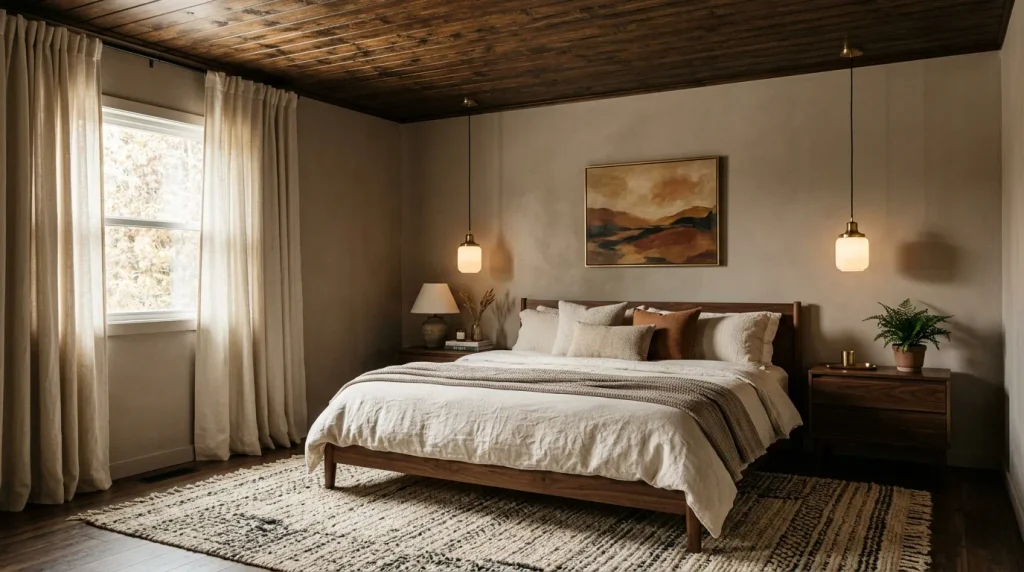
- A dark ceiling can make a large bedroom feel more intimate and grounded.
- Wood planks add natural warmth while creating architectural character.
- Keep the walls slightly lighter to prevent the room from feeling enclosed.
- Warm recessed lights or pendant fixtures highlight the ceiling texture beautifully.
A dark wood ceiling can transform an ordinary bedroom into a more intimate retreat by adding visual weight above the sleeping area. Choose stained wood planks in walnut, espresso, or smoked oak for warmth and character. Keep the walls a little lighter in taupe, mushroom, or warm gray so the ceiling feels dramatic without making the entire room seem enclosed. This design works especially well in rooms with higher ceilings because the darker surface visually lowers the space. The combination of natural wood and soft textiles creates a grounded atmosphere that feels comfortable rather than heavy.
Lighting becomes particularly important when the ceiling is dark. Use warm recessed fixtures, a simple pendant, or wall sconces to highlight the wood grain without creating harsh glare. Keep the bedding lighter so the bed remains visually separated from the ceiling above. If a full wood ceiling feels too ambitious, consider wood-look panels or applying the treatment to one ceiling section. That’s why many designers use ceiling finishes strategically: they add architectural interest without taking up any floor space. The result feels distinctive, layered, and surprisingly cozy while maintaining a clean overall layout.
12. Candlelit Bedside Glow
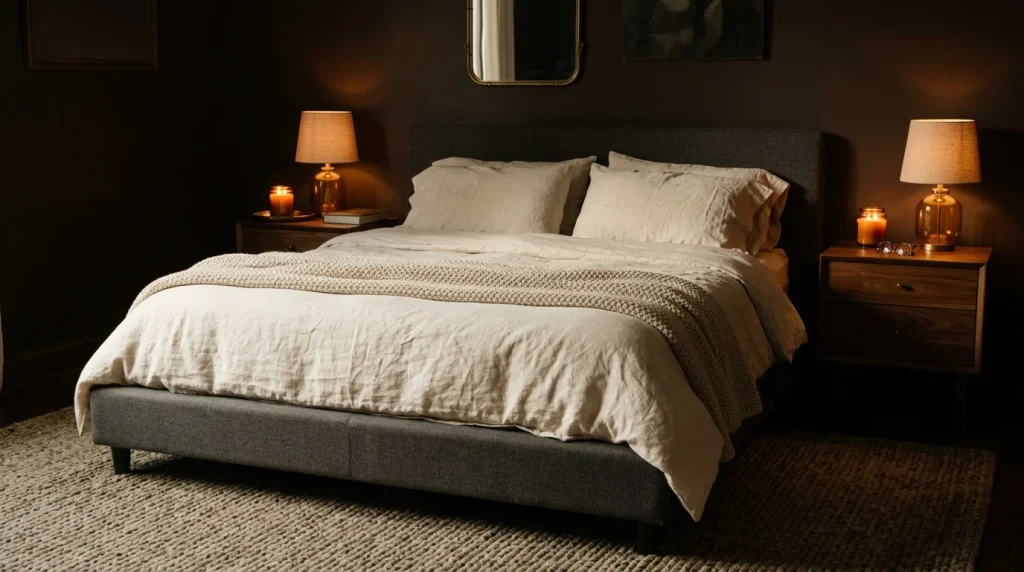
- Small candles create soft points of light that complement bedside lamps.
- Use sturdy holders or enclosed lanterns on stable surfaces.
- Choose unscented candles if strong fragrances interfere with sleep.
- Combine candlelight with warm textiles for a softer evening atmosphere.
A gentle candlelit glow can make a bedroom feel completely different after dark. Place one or two small candles in sturdy holders on a bedside table, dresser, or nearby shelf, keeping them away from bedding and curtains. The warm flicker adds movement to an otherwise still room and creates softer shadows across textured walls and fabrics. If open flames are inconvenient, realistic flameless candles can provide a similar visual effect. Pair the glow with warm bedside lamps rather than using candles as the main light source. The result feels intimate without needing additional decoration.
Safety should always come first when using real candles in a bedroom. Choose stable, heat-resistant holders and keep flames well away from fabrics, books, curtains, and anything that could be knocked over. Never leave a burning candle unattended, particularly while sleeping. For a low-maintenance alternative, rechargeable flameless candles with warm amber LEDs can create a surprisingly convincing effect. I’ve noticed that placing the light slightly below eye level makes the glow feel softer and more atmospheric. Combined with dark walls, natural wood, and layered bedding, this simple lighting detail can finish the room beautifully.
13. Plush Bench Seating
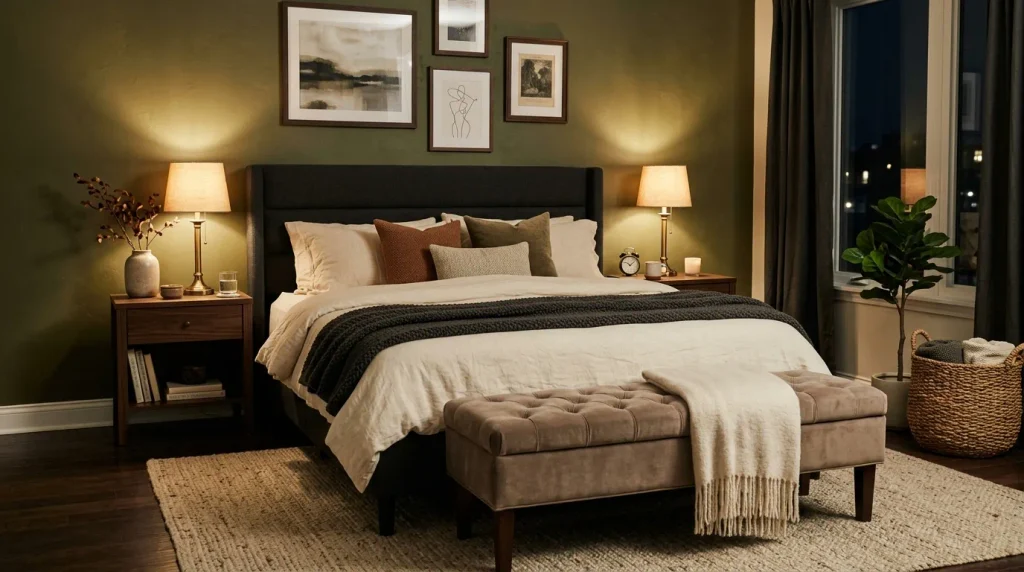
- A padded bench at the foot of the bed adds comfort and useful seating.
- Choose velvet, boucle, linen, or woven upholstery for extra texture.
- Keep the bench slightly narrower than the bed for balanced proportions.
- Use the surface for folded blankets or a small decorative cushion.
A plush bench at the foot of the bed can make a bedroom feel more finished while adding a practical place to sit. Choose a softly upholstered design in taupe, mushroom, beige, or muted brown to complement the darker surroundings. The bench should generally be slightly narrower than the mattress so the arrangement feels balanced rather than crowded. Use boucle, linen, velvet, or woven fabric to introduce another tactile layer. Beyond its decorative role, a bench is useful for putting on shoes, laying out tomorrow’s clothes, or simply sitting down with a book.
Keep the bench visually simple if the bedroom already contains several textures and accessories. A clean upholstered shape can provide enough contrast without competing with the headboard or bedding. If you have extra space, place a folded throw or one small cushion on the bench, but avoid turning it into storage overflow. I’ve seen this work particularly well in larger bedrooms where the space at the foot of the bed can otherwise feel empty. The added seating creates a natural transition between the sleeping area and the rest of the room.
14. Layered Wall Art
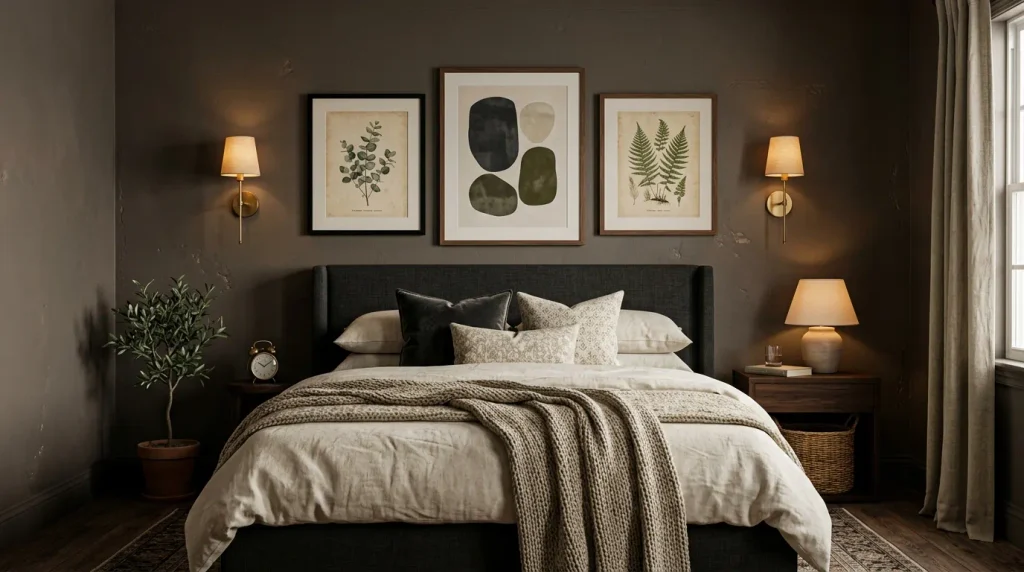
- Combine a few framed pieces instead of filling every wall with artwork.
- Choose earthy photography, abstract shapes, botanical prints, or muted landscapes.
- Use wood, black, or aged brass frames to connect with existing finishes.
- Keep artwork near the bed visually quiet for a more restful atmosphere.
Thoughtfully layered wall art can give a dark bedroom personality without making it feel visually busy. Choose two or three pieces that share a similar color family, such as earthy landscapes, muted botanical prints, abstract shapes, or soft black-and-white photography. Hang them above the bed or on an adjacent wall where they can become a natural focal point. Keep the artwork slightly quieter than the furniture so the room remains restful. For a cohesive look, repeat frame finishes already present in the space, such as walnut, matte black, or aged brass.
The arrangement does not need to be perfectly symmetrical to look intentional. Try combining different frame sizes while keeping consistent spacing between pieces. If the wall is already very dark, artwork with warm cream, beige, rust, or muted green details will stand out beautifully without feeling harsh. Avoid overcrowding the wall because negative space helps the room breathe. In my experience, three well-chosen pieces usually create more impact than a large collection of unrelated prints. The finished wall adds character while keeping the bedroom calm enough for everyday relaxation.
15. Woven Natural Textures
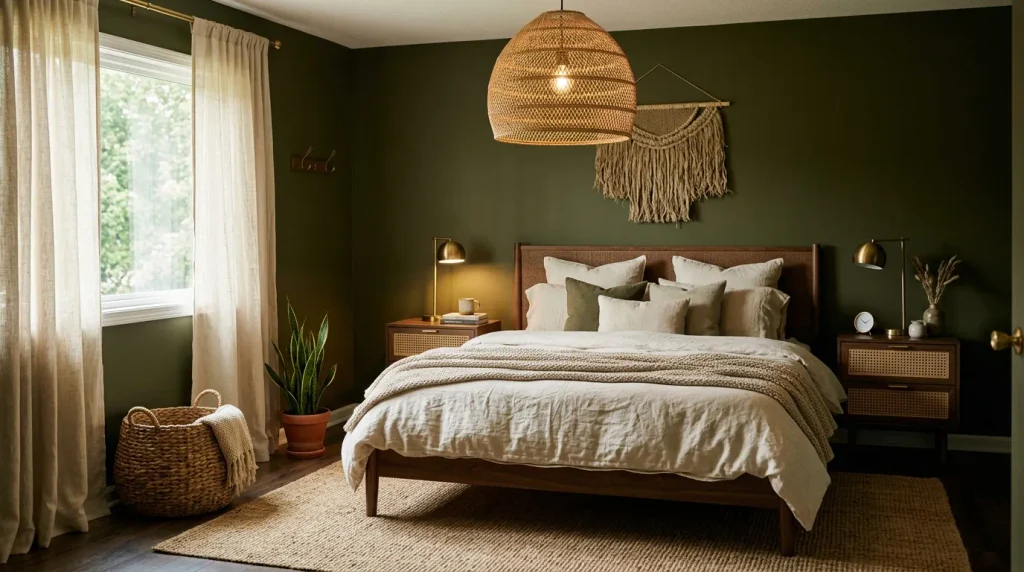
- Rattan, jute, cane, and seagrass add warmth to darker color palettes.
- Use woven baskets for practical storage and visual texture.
- A cane nightstand or rattan pendant can become a subtle focal point.
- Keep natural materials in a few strategic places for a balanced look.
Natural woven materials can soften a moody bedroom by introducing lighter textures without relying on bright colors. Try a rattan pendant, cane nightstand, seagrass basket, jute rug, or woven bench to bring organic detail into the room. These materials work especially well beside dark walls and rich wood because their natural fibers create contrast while keeping the overall palette warm. The key is restraint: a few carefully placed woven pieces can make the room feel layered, while too many can shift the design toward a completely different style.
Woven storage is particularly useful because it combines decoration with everyday function. Place a seagrass basket beside the dresser for extra blankets, near the bed for pillows, or beneath a bench for less frequently used items. The irregular texture hides small imperfections and adds visual interest to otherwise empty corners. Pair these pieces with linen curtains, cotton bedding, and wooden furniture to maintain a natural connection throughout the room. I’ve noticed that organic textures are an easy way to make darker bedrooms feel more relaxed because they soften the harder lines of furniture and painted walls.
16. Oversized Floor Mirror
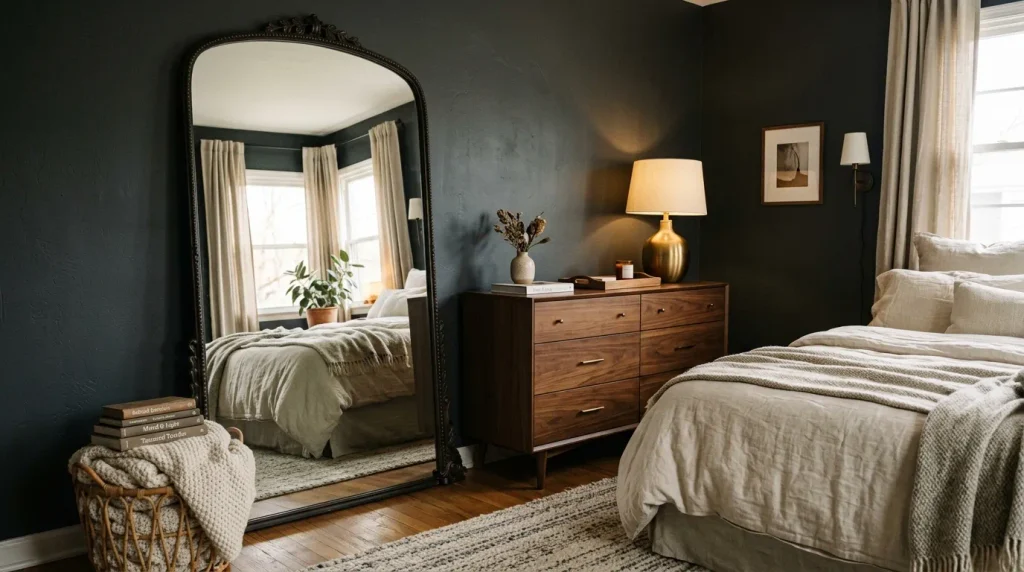
- A large mirror reflects available light and can make the room feel more spacious.
- Choose a wood, black, or aged-brass frame to complement the existing palette.
- Lean the mirror against a wall for a relaxed designer-inspired arrangement.
- Position it where it can reflect a window or attractive light source.
An oversized floor mirror can make a darker bedroom feel larger while adding a strong decorative element without taking up much visual space. Choose an arched, rounded, or softly rectangular design with a walnut, matte black, or aged-brass frame. Lean it against an empty wall near the dresser or opposite a window so it can reflect natural light. The reflection creates another layer within the room, making the surrounding furniture and textures feel more dimensional. This is especially helpful when the bedroom has limited floor space or few architectural features.
Placement makes the biggest difference with a large mirror. Avoid positioning it where it reflects clutter, an unattractive corner, or harsh artificial lighting. Instead, aim it toward a window, bedside lamp, artwork, or another visually pleasing feature. A slight lean against the wall gives the room a casual, collected appearance, while mounting it securely is better if children or pets are present. I’ve noticed that mirrors with warm wood frames feel particularly natural in darker bedrooms because they add brightness and texture without introducing a stark, modern contrast.
17. Canopy Bed Frame
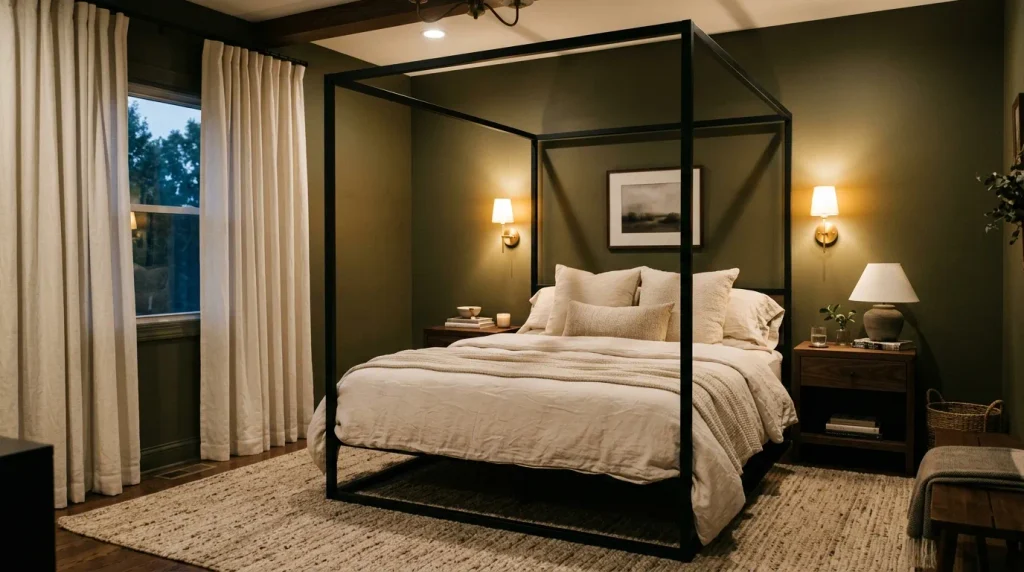
- A canopy frame adds height and architectural structure around the sleeping area.
- Dark wood or black metal works beautifully with deeper wall colors.
- Leave the frame open for a clean, modern interpretation.
- Add soft curtains only if you want extra privacy and visual softness.
A canopy bed can turn the sleeping area into a defined focal point while adding height and structure to the room. Choose a simple black metal or dark wood frame rather than an ornate design if you want a modern, relaxed appearance. The open framework keeps the bedroom from feeling enclosed while still giving the bed a strong architectural presence. Pair it with cream or oatmeal bedding so the dark frame stands out clearly. This approach works especially well in rooms with tall ceilings because the vertical structure draws attention upward.
You do not need to drape fabric around every side to achieve the effect. Leaving the frame completely open creates a cleaner look, while adding lightweight ivory or beige curtains can make the bed feel softer and more private. Keep the surrounding furniture relatively low so the canopy remains the tallest element. For smaller rooms, choose a slimmer frame with narrow posts to avoid overwhelming the space. The combination of dark structure, soft textiles, and warm lighting creates a comfortable retreat that feels intentional without becoming overly formal or dramatic.
18. Blackout Drapery
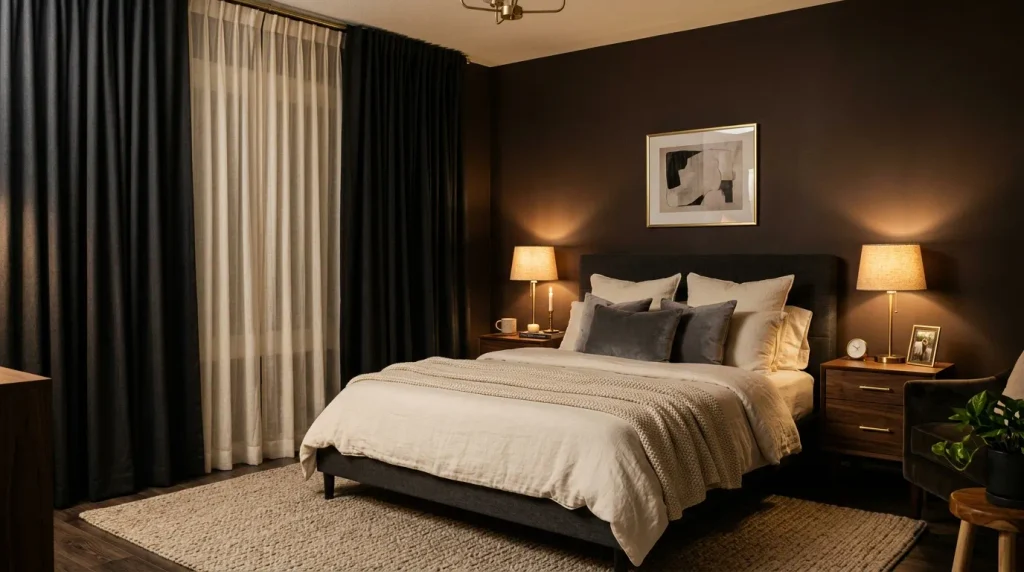
- Heavy curtains create a darker, quieter environment for better nighttime comfort.
- Choose chocolate, charcoal, deep olive, or warm taupe instead of flat black.
- Layer blackout panels with sheer curtains for daytime flexibility.
- Full-length drapery also helps windows feel larger and more polished.
Blackout drapery can make a bedroom feel more private, restful, and visually cocooned, especially when outside light or street activity makes the space feel exposed at night. Choose thick curtains in charcoal, chocolate brown, deep olive, or warm taupe to reinforce the darker palette without making the room look flat. Hang them from ceiling height when possible so the fabric frames the entire window area. Layering blackout panels over sheers gives you control during the day while maintaining a soft, elegant appearance when the curtains are open.
Good blackout curtains should also work visually when they are not closed. Look for fabric with enough weight to create smooth folds without appearing stiff. A slightly wider rod allows the panels to stack beside the window instead of blocking daylight when opened. I’ve noticed that full-length curtains can make ordinary windows feel much more substantial, which changes the proportions of the entire room. Combined with warm bedding, dark walls, and gentle bedside lighting, this window treatment creates a comfortable environment that feels especially inviting in the evening.
19. Deep Navy Accent Wall
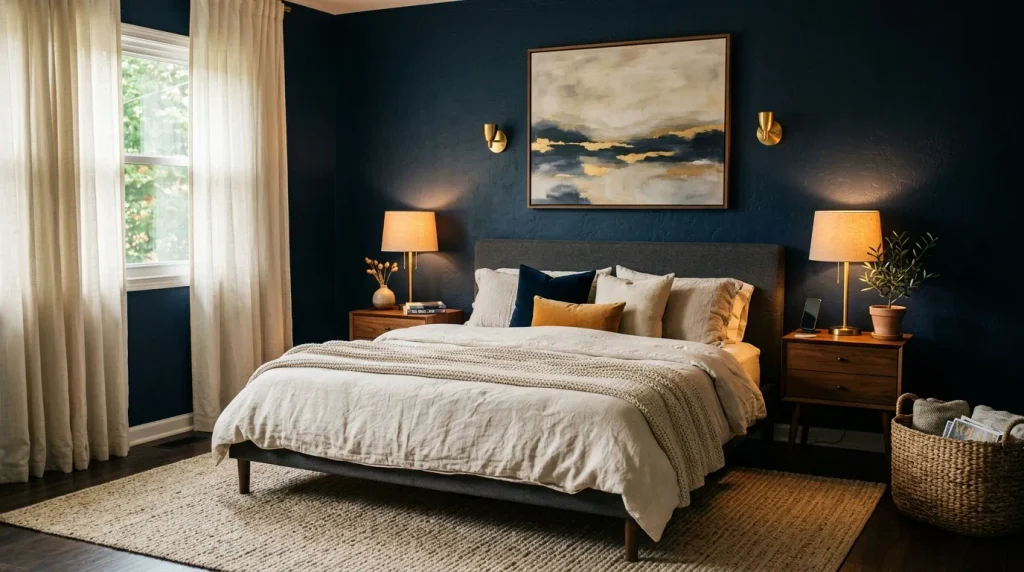
- A navy accent wall adds drama without the heaviness of pure black.
- Use it behind the bed to create a natural focal point.
- Balance deep blue with cream bedding and warm wood.
- Test paint samples in both daylight and evening lighting before committing.
A deep navy accent wall can give a bedroom dramatic depth while keeping the overall palette softer than black. Paint the wall behind the bed in a rich navy with slightly gray or green undertones, then balance it with cream bedding, warm wood, and muted brass. The darker backdrop naturally frames the bed and makes lighter textiles appear brighter. Keep the remaining walls neutral if the room is small, so the accent color feels intentional rather than overwhelming. For cozy moody bedroom ideas, this approach creates a strong focal point without requiring many decorative pieces or expensive furniture.
Navy works especially well when paired with materials that add warmth and texture. Choose linen bedding, a walnut nightstand, woven baskets, and a soft beige rug to keep the room from feeling too cool. If the wall receives limited daylight, test paint samples at different times before committing because navy can appear dramatically different under natural and artificial light. Add warm bulbs in bedside lamps to bring out its richer undertones after sunset. The finished room feels sophisticated and restful, with enough contrast to photograph beautifully while remaining comfortable for everyday living.
20. Curved Upholstered Headboard
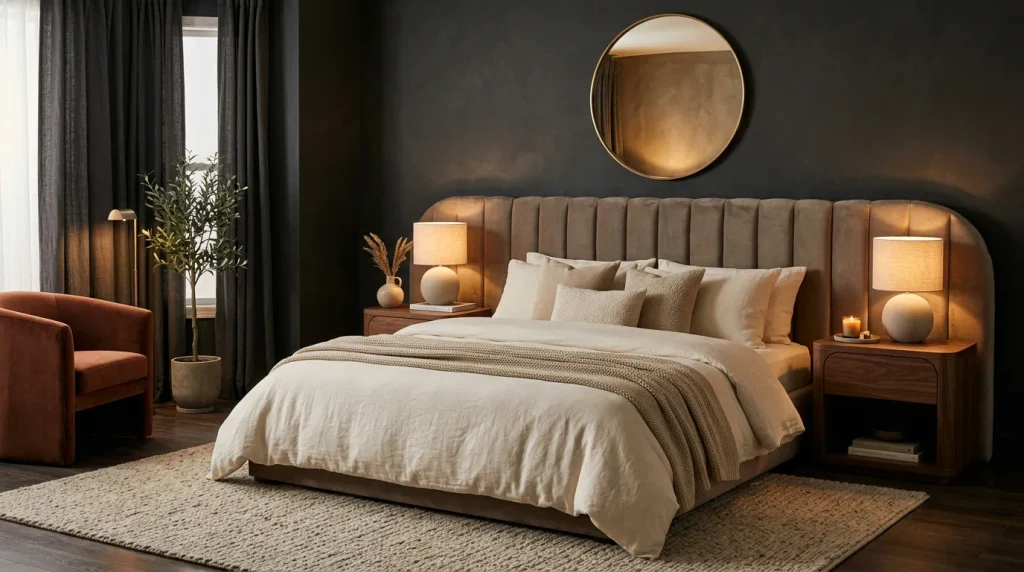
- Rounded upholstery softens the strong lines commonly found in bedrooms.
- Choose boucle, velvet, or linen for extra tactile appeal.
- Repeat curved shapes through mirrors, lamps, or small furniture pieces.
- Keep surrounding decor simple so the headboard remains the focal point.
A softly curved headboard can make a moody bedroom feel gentler and more inviting. Choose a rounded upholstered shape in taupe, cream, mushroom, or muted brown, then place it against a dark painted wall for clear contrast. Curved edges break up the strong horizontal and vertical lines created by the bed, nightstands, and walls. This makes the sleeping area feel less rigid and more relaxed. Keep surrounding furniture simple so the headboard remains the main feature. The result is especially appealing in bedrooms where you want a refined look without relying on ornate decoration.
The shape becomes even more effective when the rest of the room repeats its softness through rounded accessories. Try a circular mirror, curved bedside table, rounded lamp shade, or small boucle stool to create subtle visual connections. Avoid matching every piece exactly; repeating gentle shapes is enough to make the design feel cohesive. I’ve noticed that curved furniture can be particularly useful in compact rooms because it creates smoother pathways around the bed and reduces the feeling of sharp corners. Combine these forms with dark walls and warm lighting for a balanced, comfortable bedroom that feels polished but not formal.
21. Low Platform Bed
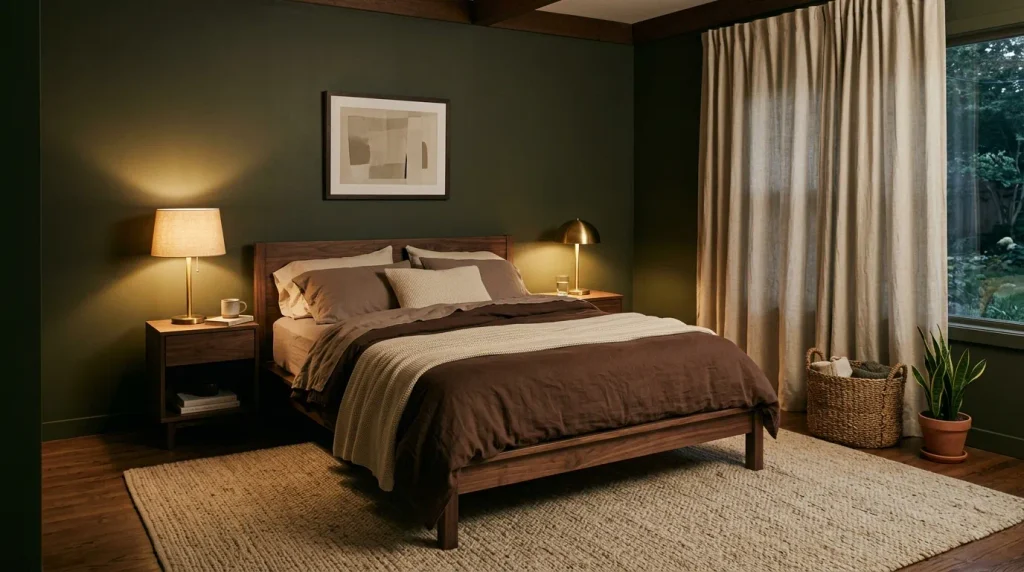
- A low bed creates a grounded, uncluttered appearance.
- Walnut, smoked oak, and matte black frames suit darker palettes beautifully.
- Keep bedside furniture close to mattress height for balanced proportions.
- Use a large rug to visually anchor the lower furniture arrangement.
A low platform bed can instantly give a dark bedroom a calm, grounded appearance. Choose a simple frame in walnut, smoked oak, or matte black, then keep the mattress and bedding visually low to emphasize the horizontal lines. This creates more open space above the bed, which can make the room feel uncluttered even when the walls are deeply colored. Layer cream, taupe, and brown textiles across the mattress to add softness. The restrained silhouette also lets other features, such as lighting, artwork, or textured walls, become supporting details instead of competing focal points.
Low furniture works especially well when you want the bedroom to feel relaxed rather than heavily furnished. Keep nightstands close to mattress height and choose lamps with compact proportions so the arrangement remains visually balanced. A large textured rug can define the sleeping zone without adding bulky pieces. If storage is needed, use drawers beneath the bed or one streamlined dresser against a side wall. This layout is practical for smaller rooms because it preserves more visible wall area and floor space. I’ve seen this approach make bedrooms feel noticeably quieter, airier, and easier to keep organized.
22. Moody Gallery Wall
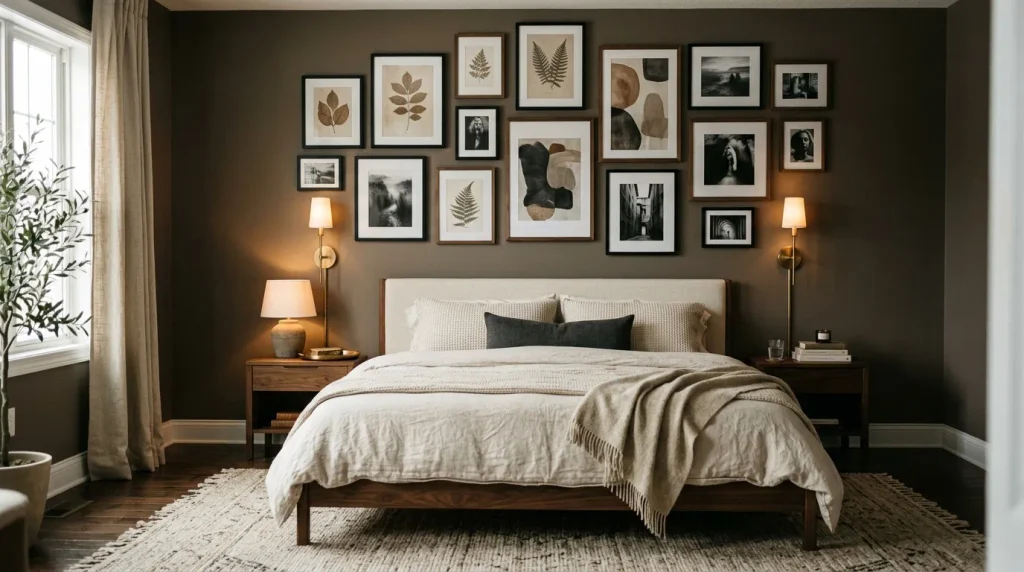
- A curated gallery wall gives an empty bedroom wall personality and depth.
- Mix photography, abstract prints, sketches, and botanical artwork in muted tones.
- Use consistent frame colors to keep different pieces visually connected.
- Leave enough wall space around the collection so it feels intentional, not crowded.
A curated gallery wall can turn a plain bedroom wall into a distinctive focal point without making the space feel overly decorated. Choose artwork in muted shades of cream, brown, charcoal, olive, and dusty beige so the collection complements the darker room. Mix botanical prints, abstract artwork, photography, or simple sketches for visual variety. Keeping the frames within one or two finishes helps everything feel connected. For cozy moody bedroom ideas, this approach works particularly well because artwork introduces personality while allowing the overall color palette to remain calm and sophisticated.
Before hanging anything, arrange the frames on the floor to test different combinations and spacing. Start with the largest piece, then build outward with smaller artwork while maintaining a comfortable amount of breathing room. Keep the center of the arrangement near eye level rather than pushing everything too high above the bed. I’ve noticed that slightly imperfect arrangements often feel more personal than perfectly symmetrical grids. Choose pieces you genuinely enjoy seeing every day rather than filling the wall simply for decoration. A thoughtful collection can make the bedroom feel finished without adding unnecessary furniture.
23. Warm Stone Accents
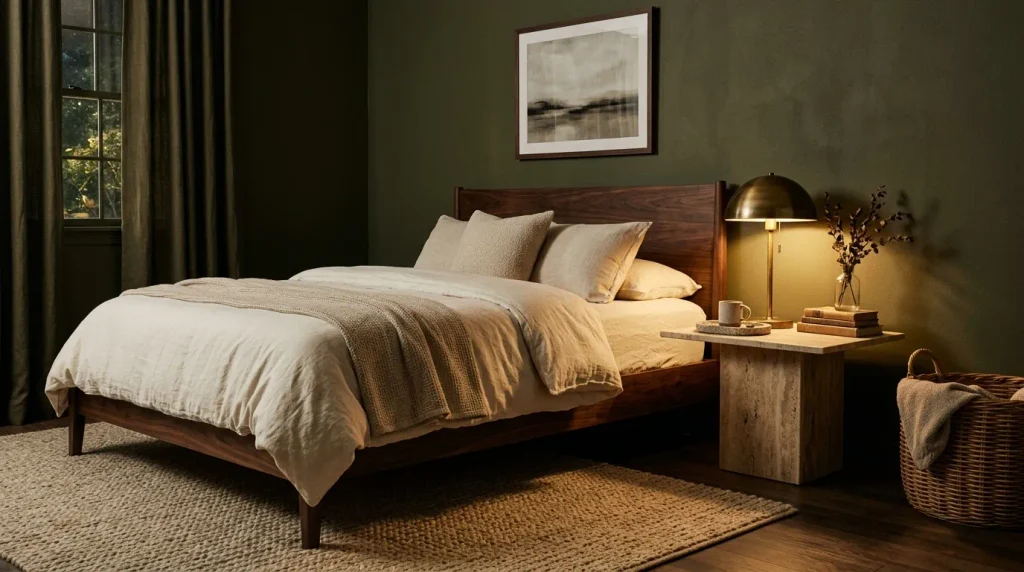
- Stone surfaces introduce an earthy, substantial texture to darker bedrooms.
- Use travertine, limestone, marble, or textured ceramic for small details.
- A stone lamp base or bedside tray can add quiet sophistication.
- Pair cool stone with warm wood and textiles to keep the room inviting.
Warm stone accents bring an earthy quality to a dark bedroom while adding texture that feels substantial and timeless. You do not need a large stone feature to create the effect. A travertine bedside table, limestone lamp base, marble tray, ceramic vase, or small stone sculpture can introduce natural variation without overwhelming the room. Choose stones with warm cream, beige, tan, or softly veined finishes rather than extremely cool surfaces. Against dark walls and rich wood, these lighter materials create subtle contrast and give the bedroom a more layered, considered appearance.
Stone looks especially inviting when balanced with soft materials and warm finishes. Pair a travertine nightstand with linen bedding, a woven basket, walnut furniture, and an aged-brass lamp rather than surrounding it with more hard surfaces. This combination prevents the room from feeling cold or overly minimalist. Natural imperfections in stone also make each piece visually interesting without relying on bold patterns. In my experience, small stone accessories are an easy way to introduce a more sophisticated material into a bedroom because they require little maintenance while adding weight, texture, and a quiet sense of luxury.
24. Cozy Reading Corner
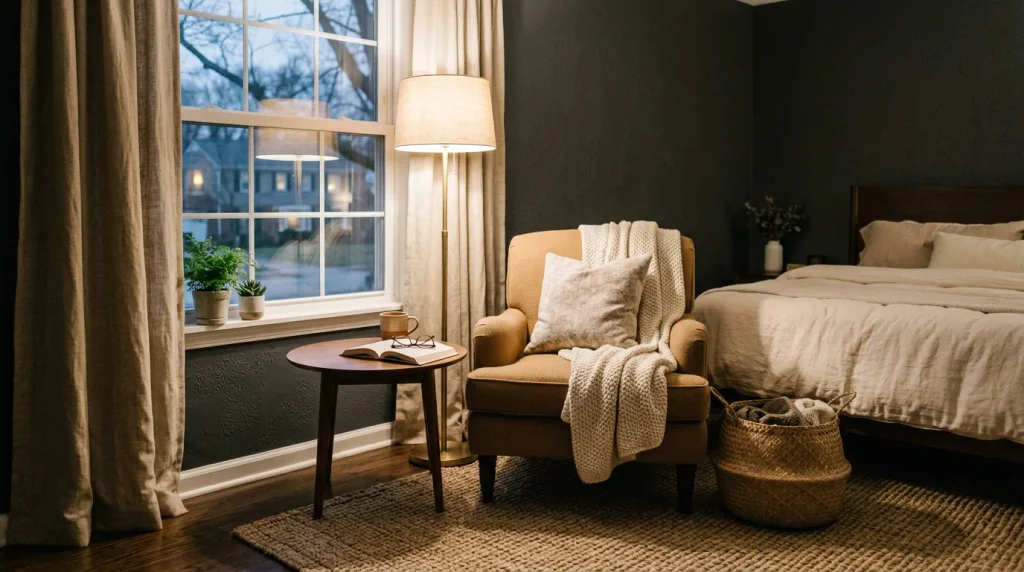
- A dedicated chair creates a useful spot for reading, relaxing, or enjoying morning coffee.
- Choose an upholstered chair in camel, cream, taupe, or deep brown.
- Add a small side table and warm floor lamp for practical lighting.
- Position the chair near a window when possible for comfortable daytime use.
A cozy reading corner gives the bedroom a purpose beyond sleeping while filling an unused corner with something genuinely useful. Start with a comfortable upholstered chair in camel, cream, taupe, or deep brown, then add a small wooden side table for books or a drink. Position a warm floor lamp beside the chair so the area remains functional after sunset. If possible, place the seating near a window to take advantage of natural daylight. This simple arrangement adds another layer to the room and creates a natural place to slow down without disturbing the bed.
Keep the corner visually connected to the rest of the bedroom by repeating one or two materials or colors. A walnut side table can echo the bed frame, while a cream cushion can connect with the bedding. Add a small woven basket for blankets or magazines if extra storage is useful. Avoid filling the corner with too many accessories because comfortable seating should remain the focus. A reading nook like this can make even a simple bedroom feel more complete, offering a practical retreat for quiet mornings, evening reading, or a few uninterrupted minutes during the day.
Conclusion
Creating a warm, moody bedroom is less about following one exact style and more about combining colors, textures, lighting, and materials that make the space feel comfortable to you. These cozy moody bedroom ideas can help you transform even a simple room into a relaxing retreat with character and warmth. Start with one change, such as darker walls, softer bedding, warmer lighting, or natural wood accents, then build from there. I’ve seen how small changes can completely transform a space. Save this post on Pinterest, try your favorite idea, and share it with someone planning their own cozy bedroom makeover.