A beautiful bedroom doesn’t need a traditional headboard to feel complete. Sometimes, the simplest wall, colors, textures, and thoughtful details create the biggest transformation.
If you’re looking for bed without headboard ideas, this collection brings together stylish ways to make the space above and around your bed feel intentional, cozy, and visually interesting. From painted accents and oversized artwork to wood slats, woven textures, floating shelves, and soft fabric backdrops, there are plenty of ways to create a finished look without adding bulky furniture.
In my experience, removing the headboard can actually make a bedroom feel more open and flexible. The key is giving the wall behind the bed a purpose. Whether you’re decorating a small bedroom, refreshing a rental, or simply craving a cleaner aesthetic, these ideas can help you create a space that feels personal, comfortable, and Pinterest-worthy.
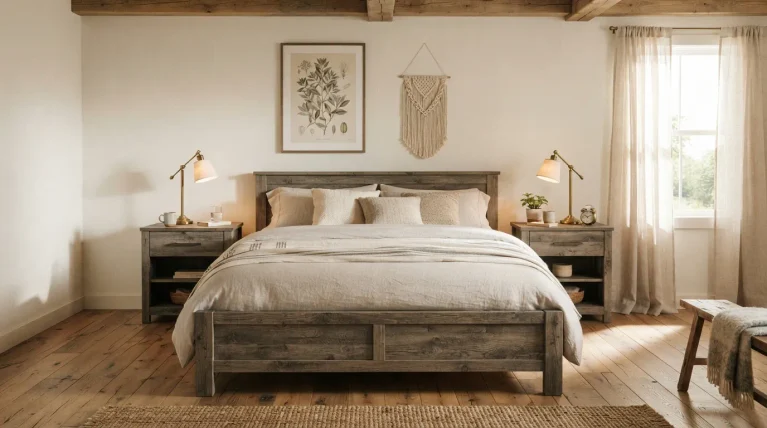
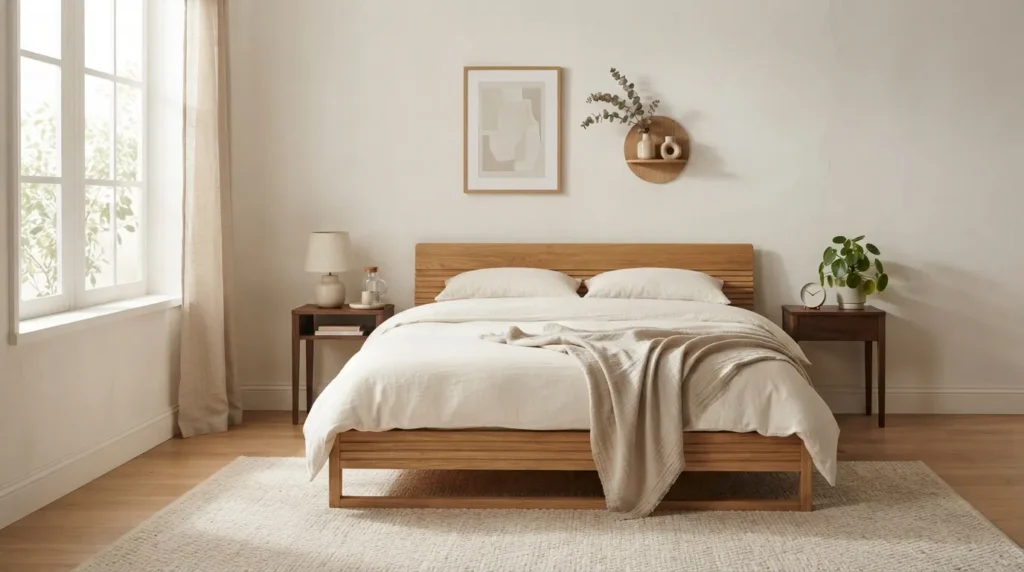
Low Wooden Platform
- A low wooden frame gives the room a warm, grounded foundation.
- The open wall keeps smaller bedrooms feeling spacious and uncluttered.
- Natural wood adds texture without needing heavy decorative furniture.
- Slim nightstands help maintain a clean, balanced layout.
A clean platform frame can make the bed feel intentional even without a headboard. Choose a low-profile wooden frame in oak, walnut, or light ash, then layer crisp bedding in warm neutrals for a calm foundation. The open wall above the mattress creates breathing room, which is especially useful in smaller bedrooms. In my experience, keeping the frame visually simple helps decorative pillows, throws, and nearby artwork stand out instead of competing for attention. Add a small bedside table on each side, and the whole arrangement feels balanced, modern, and easy to maintain without adding unnecessary visual weight.
For a softer finish, repeat the wood tone through a nearby bench, floating shelf, or bedside stool. A textured rug beneath the frame can also define the sleeping zone and make the room feel more finished. Keep wall decor slightly above mattress height so the composition feels connected without creating a substitute headboard. Natural daylight works beautifully here, especially when it enters from the side and highlights the grain of the wood. This approach suits apartments, guest rooms, and minimalist spaces because it delivers warmth and structure while leaving the wall flexible for future decorating changes.
Painted Platform Frame
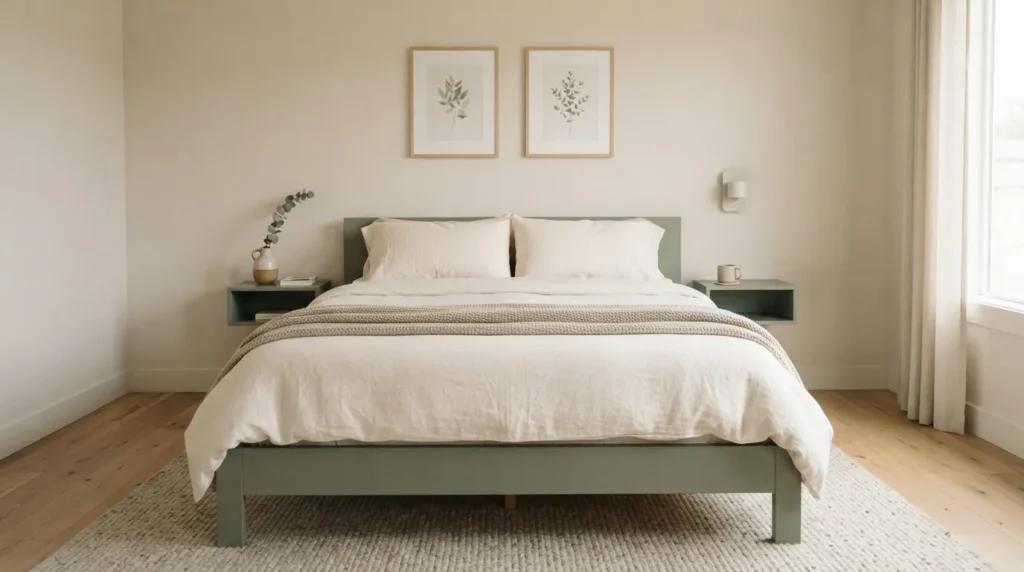
- A painted frame introduces color without overwhelming the bedroom.
- Soft shades can make the sleeping area feel more intentional.
- Repeating the frame color in accessories creates visual connection.
- Textured bedding prevents a simple setup from looking flat.
A painted platform frame gives the bedroom a polished look while keeping the wall behind the bed completely open. Try matte white, soft beige, charcoal, or muted sage depending on the room’s palette. Pair the frame with simple cotton bedding and one textured throw for contrast. I’ve noticed that a consistent color story makes a low bed feel more substantial, particularly when the surrounding walls are plain. The result is an uncluttered sleeping area that feels deliberate rather than unfinished. Add slim nightstands and matching lamps to create symmetry without introducing the visual bulk of traditional headboard furniture.
The strongest version of this setup comes from repeating the frame color in small details around the room. A ceramic vase, woven basket, lamp base, or picture frame can quietly connect the bed to the rest of the decor. If the room feels too flat, introduce texture through linen bedding, a wool rug, or lightly patterned curtains rather than adding another large piece. This is a practical choice for renters and budget makeovers because the bed itself becomes the anchor. You can change artwork, textiles, or accessories later without redesigning the entire sleeping space.
Wall Sconce Styling
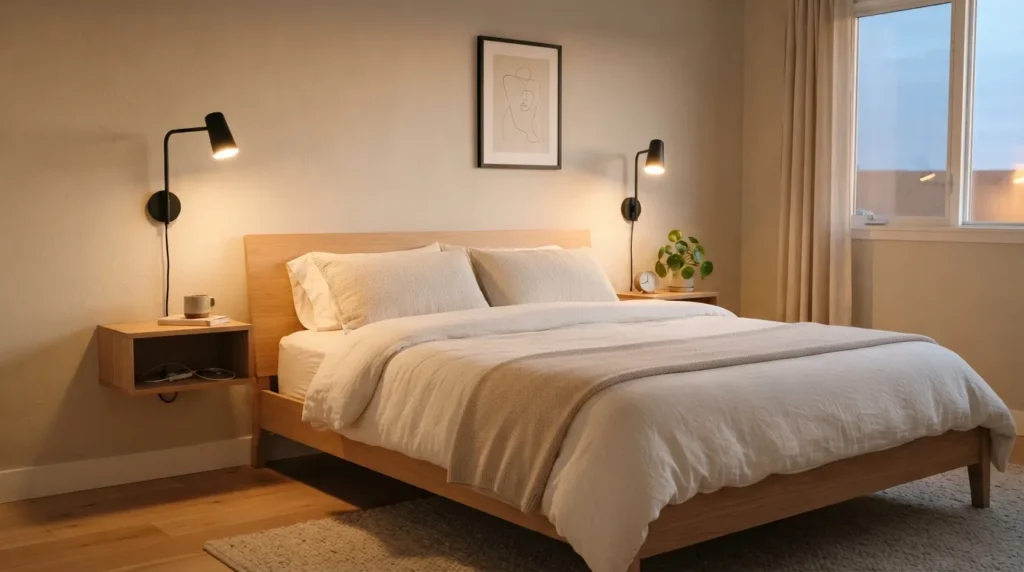
- Wall-mounted lights keep bedside surfaces open and functional.
- Symmetrical sconces create an instant focal point above the bed.
- Warm lighting adds depth to an otherwise simple wall.
- Different metal finishes can easily match existing bedroom decor.
Wall-mounted lighting keeps the area around the mattress open and gives a streamlined bed arrangement a useful upgrade. Choose warm white sconces with simple metal, glass, or ceramic finishes, then position them evenly on both sides of the bed. Soft illumination creates depth against an otherwise empty wall and makes nighttime reading easier without bulky bedside lamps. In smaller bedrooms, this can free valuable surface space for books, water, or decorative objects. The overall effect feels organized and airy, while the lighting adds enough personality to make the sleeping area look intentionally styled.
For the best visual balance, align each sconce with the outer edge of the mattress or slightly inside it, depending on the fixture size. Keep the bedding low and relaxed so the wall remains the main backdrop. Warm brass works well with creamy neutrals, black metal suits modern rooms, and white fixtures blend quietly into light walls. I’ve seen this setup work especially well when a bedroom lacks architectural features because the lighting creates a subtle focal point. Add one framed print between the sconces if the wall still feels empty, keeping the composition simple and proportional.
Floating Nightstands
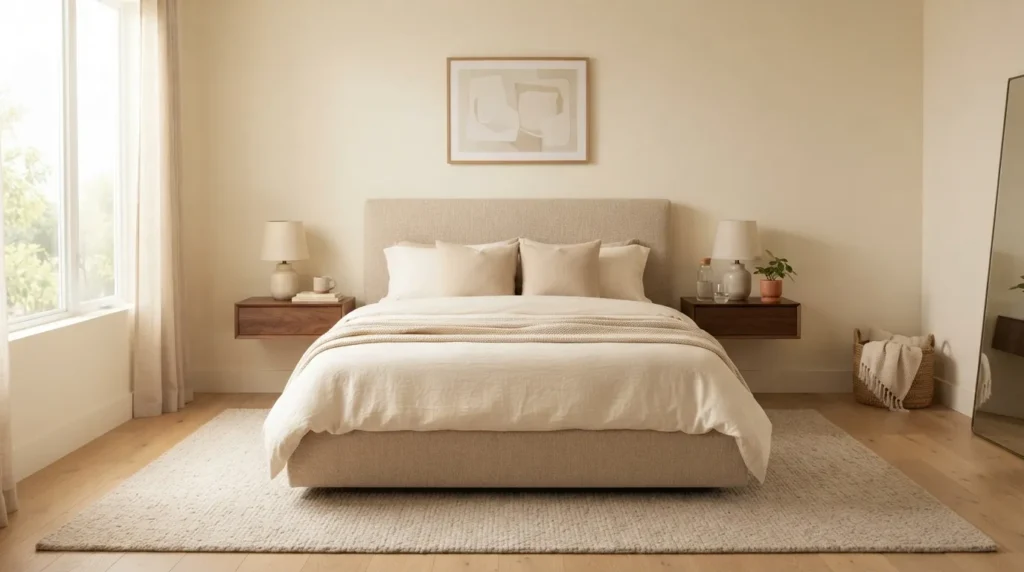
- Floating nightstands make the floor area feel more open.
- Wall-mounted storage keeps the bed arrangement visually lightweight.
- Hidden drawers provide useful space without bulky furniture.
- Matching wood tones add warmth and continuity.
A bed can look surprisingly polished when floating nightstands replace traditional bedside tables. Mount compact wooden shelves or drawer units directly onto the wall, leaving a visible gap beneath them. That small detail makes the entire sleeping area appear lighter and more spacious. Choose a finish that complements the bed frame, flooring, or nearby furniture for a connected look. The open space underneath also makes cleaning easier, especially in compact bedrooms. Instead of filling the area with furniture, you get practical storage while preserving the simple, airy appearance that makes headboard-free bedroom arrangements feel modern.
Keep the styling on each nightstand minimal so the wall remains visually calm. A small lamp, ceramic cup, book, or tiny plant is usually enough to make the space feel lived-in without creating clutter. If you need more storage, choose floating drawers rather than deeper cabinets that can make the bed area feel crowded. In my experience, this arrangement works particularly well in narrow rooms because the uninterrupted floor line creates an illusion of extra width. Pair the setup with neutral bedding, a textured rug, and one large piece of artwork for a balanced, comfortable finish.
Oversized Wall Art
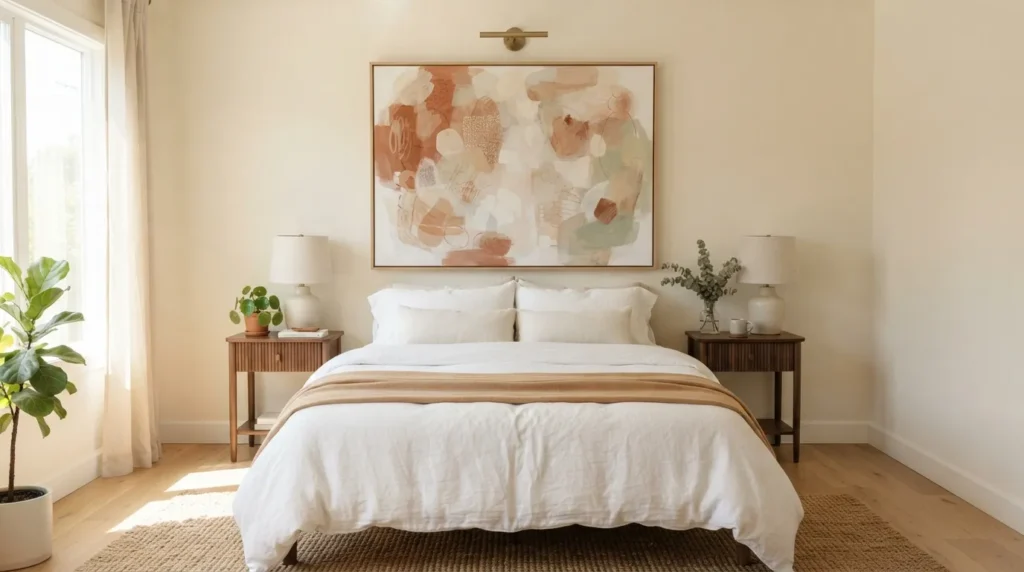
- One large artwork piece creates a strong focal point.
- The open wall becomes part of the bedroom design.
- Oversized artwork can replace the visual presence of a headboard.
- Simple bedding keeps attention on the artwork.
An oversized artwork piece can instantly give a headboard-free bed a finished appearance. Instead of filling the wall with several small frames, choose one large canvas or framed print that visually anchors the mattress below. Abstract shapes, botanical artwork, landscapes, or subtle geometric designs can all work beautifully. Keep the bedding relatively simple so the artwork remains the focal point. A warm neutral palette creates a relaxed look, while deeper colors can add contrast. This approach is especially useful when you want personality without adding another piece of furniture to an already compact bedroom.
Proportion matters more than price when choosing the artwork. A piece that is too small may look disconnected, while one that is slightly wider than the nightstand area can make the bed feel deliberately framed. Leave comfortable breathing room around the artwork rather than pushing it too close to the mattress. I’ve noticed that textured canvases and handmade-looking prints work particularly well because they add dimension without making the room feel busy. Repeat one or two artwork colors through pillows, throws, or a nearby rug to create a cohesive palette that feels thoughtfully designed.
ALSO READ: 27 Modern Rustic Living Room Ideas to Try Today
Layered Textile Backdrop
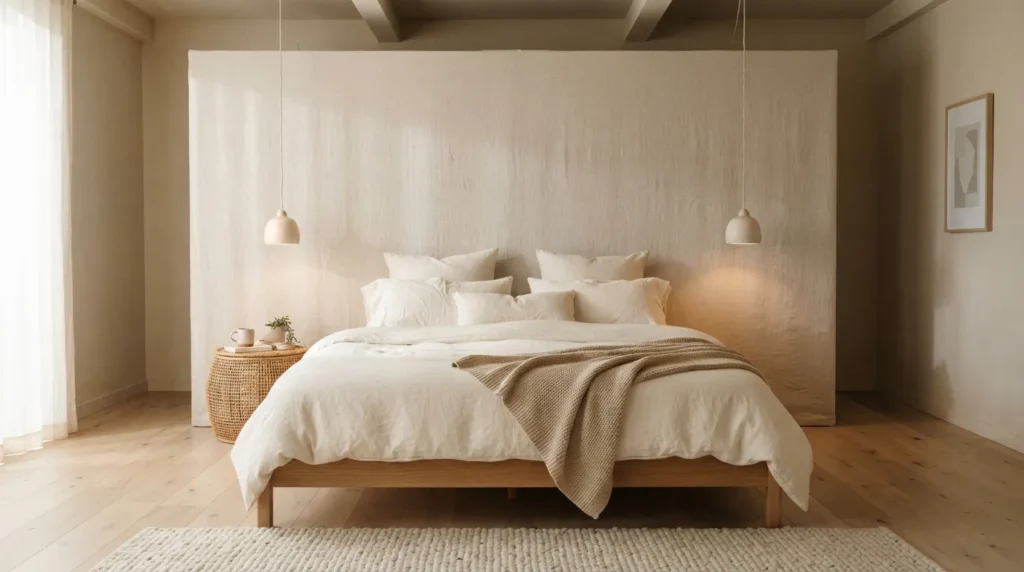
- Draped textiles soften an otherwise plain bedroom wall.
- Linen and cotton add warmth without bulky furniture.
- Vertical fabric lines can make the ceiling appear taller.
- Neutral colors keep the arrangement calm and versatile.
A layered fabric backdrop brings softness and texture to the wall behind the bed without using a traditional headboard. Hang a large linen panel, cotton textile, or lightweight woven fabric from a simple ceiling track or curtain rod, allowing it to fall naturally behind the mattress. Cream, oatmeal, taupe, and soft beige shades create an especially calming effect. The fabric absorbs some visual hardness from plain walls and introduces movement through its natural folds. This idea works beautifully in bedrooms where you want warmth and character but still prefer a relaxed, uncluttered decorating style.
For a more finished arrangement, choose fabric that extends slightly wider than the mattress and reaches close to the floor. That creates a gentle vertical frame while making the wall feel taller. Keep the rest of the furniture simple, using natural wood, woven baskets, and soft lighting to reinforce the relaxed atmosphere. In my experience, linen works especially well because its subtle wrinkles make the room feel lived-in rather than overly staged. If you rent, a removable curtain system can provide a similar effect while giving you flexibility to change the backdrop later.
Exposed Brick Wall
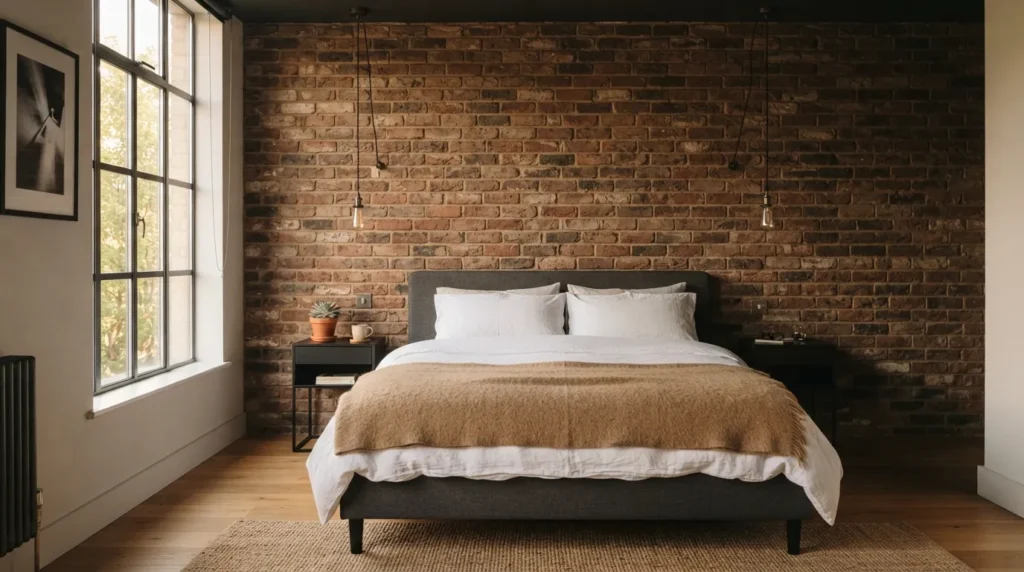
- Exposed brick adds instant character and architectural texture.
- Warm brick tones make simple bedding feel richer.
- The natural wall becomes the room’s main focal point.
- Minimal furniture keeps the industrial look balanced.
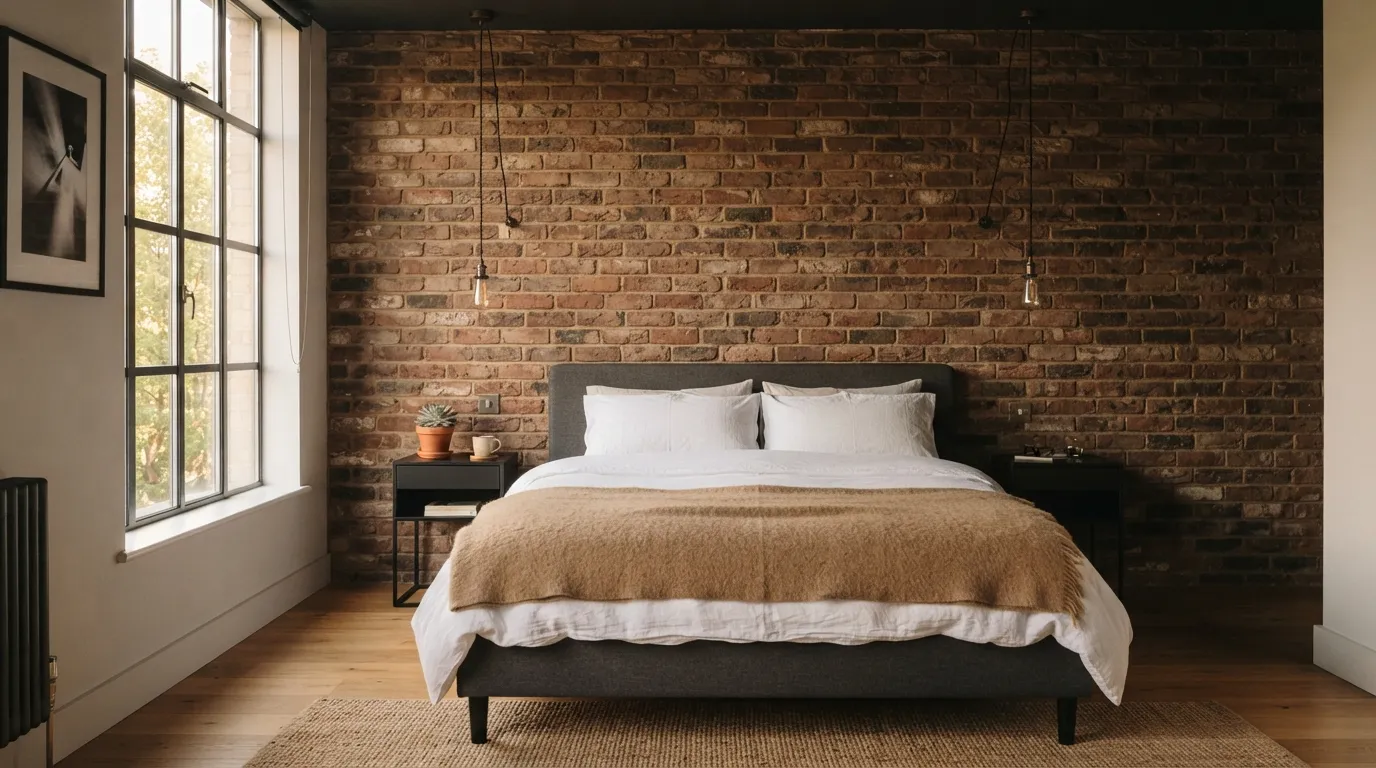
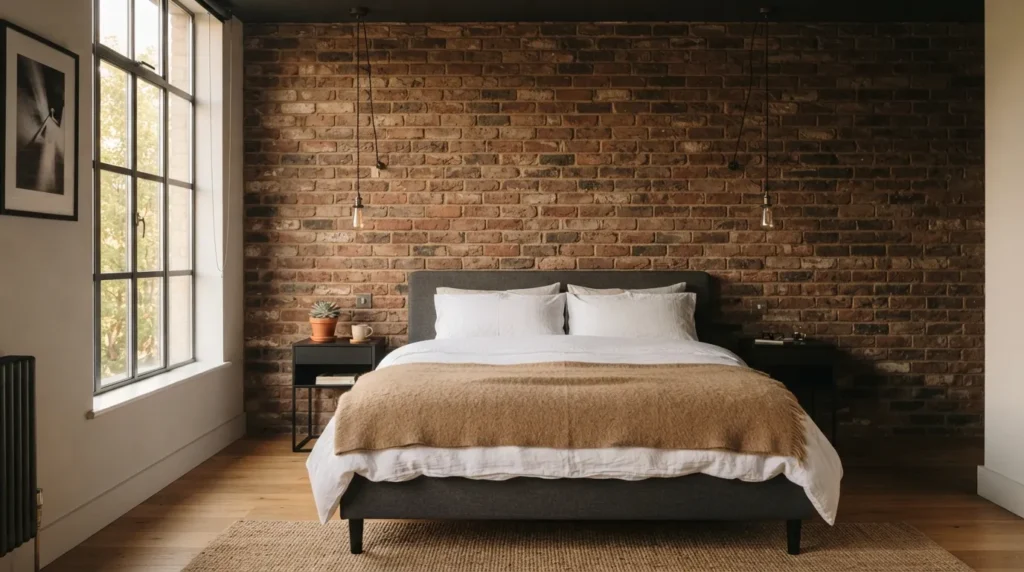
An exposed brick wall can turn a simple sleeping setup into a striking design feature. Instead of adding a bulky headboard, let the brick provide the texture, color, and architectural interest behind the mattress. White or cream bedding creates a beautiful contrast against red, brown, or painted brick. Black metal accents can reinforce an industrial feel, while warm wood furniture keeps the space from looking too cold. This approach works particularly well in lofts, converted rooms, and older homes where existing architectural details can become part of the decorating scheme instead of being covered.
If your brick wall feels visually heavy, balance it with lighter textiles and uncluttered furniture. A soft rug beneath the bed can introduce comfort, while warm lamps help bring out the natural variations in the brick. I’ve noticed that leaving some wall space visible around the bed makes the texture feel intentional rather than overwhelming. You can also soften the industrial character with linen curtains, woven baskets, or a small wooden bench. The finished room feels layered and personal while requiring fewer decorative pieces to create a strong focal point.
Arched Painted Accent
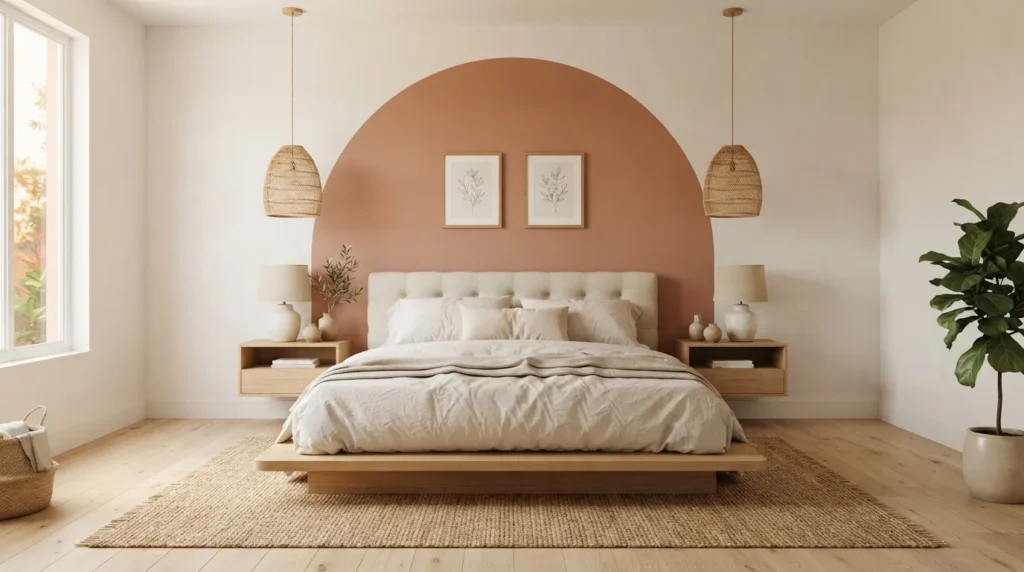
- A painted arch creates a soft visual frame around the bed.
- Curved lines contrast beautifully with rectangular furniture.
- Muted colors add personality without overwhelming the room.
- This technique can define the sleeping zone in open spaces.
A painted arch offers one of the simplest ways to visually frame a bed without adding furniture. Paint a large rounded shape behind the mattress, extending from slightly below the mattress height toward the ceiling. Terracotta, dusty rose, olive, beige, and muted blue can all create distinctive results. The curved outline softens the straight edges of the bed and surrounding furniture, giving the room a more intentional composition. For anyone searching for a stylish bed without headboard, this technique creates a strong focal point using little more than paint, careful measuring, and a weekend afternoon.
The trick is choosing a color that connects with existing details rather than standing alone. Repeat the arch shade through a throw blanket, artwork, cushion, or small decorative object for a cohesive finish. Keep the shape wide enough to visually cover the bed area, but leave enough surrounding wall visible to prevent the room from feeling enclosed. In my experience, matte paint gives the most sophisticated result because it absorbs light and makes the painted shape feel architectural. Pair it with natural materials and soft lighting for a relaxed, contemporary bedroom that photographs beautifully.
Natural Rattan Frame
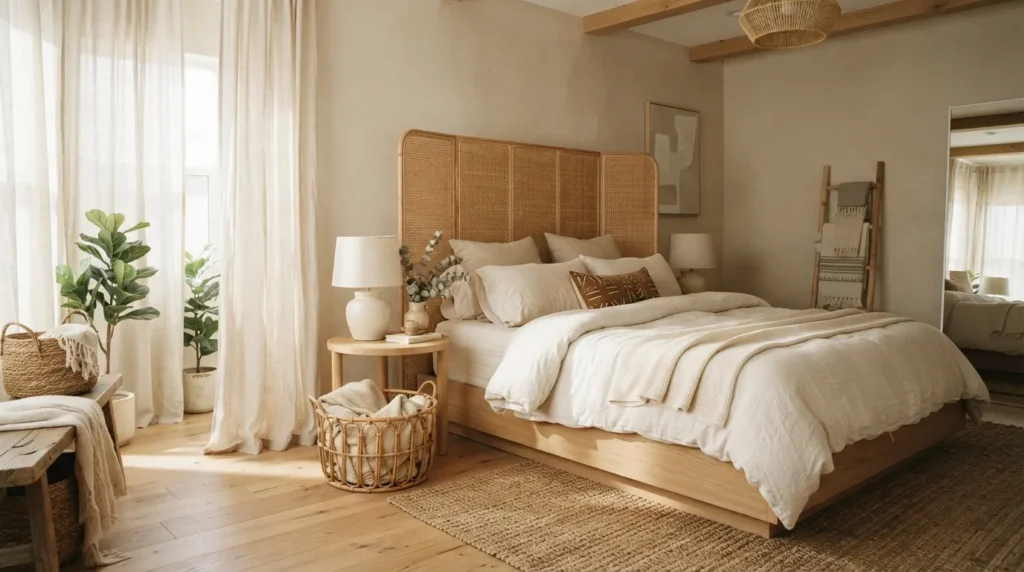
- Rattan introduces warmth and handmade texture.
- Natural materials make minimalist bedrooms feel more inviting.
- A slim frame adds definition without visual heaviness.
- Woven details pair easily with neutral bedding.
A slim rattan screen can create the appearance of a traditional bed frame while keeping the room light and breathable. Position a woven rattan panel directly behind the mattress, choosing a design with an open pattern rather than a solid surface. The natural fibers introduce warmth, texture, and subtle pattern without making the bedroom feel crowded. Pair the frame with ivory, cream, or sand-colored bedding for an organic palette. This setup is especially appealing in rooms where natural materials already appear through flooring, baskets, curtains, or wooden furniture.
For a cohesive look, repeat the rattan texture in just one or two smaller accessories rather than filling the room with matching pieces. A woven pendant, basket, or small stool can be enough. Keep the wall behind the screen relatively quiet so the open weave remains visible and visually interesting. I’ve seen this approach work particularly well in bedrooms that receive plenty of daylight because sunlight creates delicate shadows through the woven surface. Add layered linen bedding and a soft neutral rug, and the space gains texture without losing its airy, relaxed character.
Built-In Wall Shelf
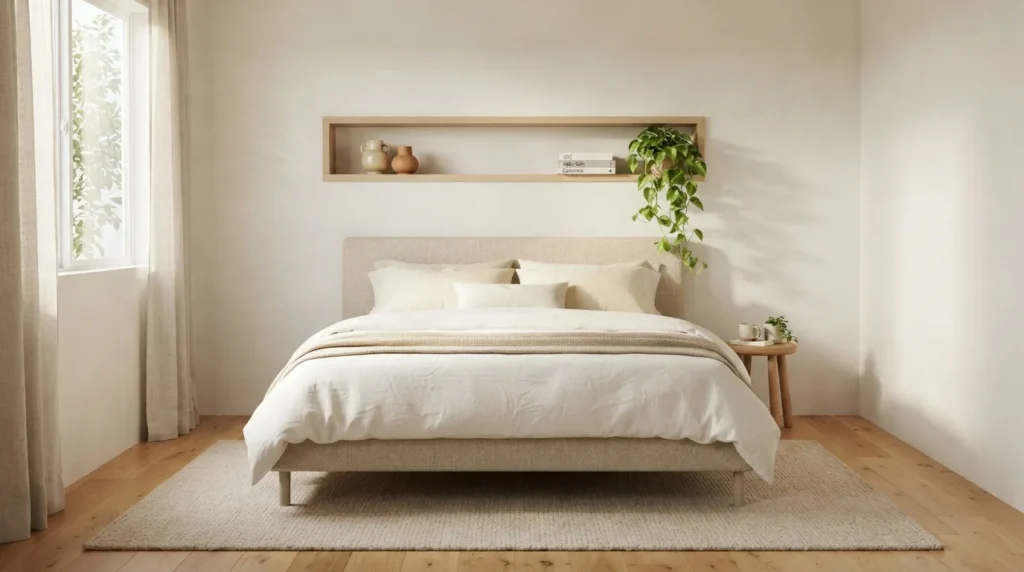
- A shallow shelf adds function without crowding the bed.
- Integrated storage keeps everyday essentials within easy reach.
- Decorative objects create a personalized focal point.
- Matching wall and shelf colors create a seamless look.
A built-in wall shelf can make the space above a bed feel useful instead of empty. Install a shallow shelf horizontally across the wall, leaving enough clearance above the mattress for comfortable movement. Use it for a few carefully selected items such as framed prints, small plants, books, or handmade ceramics. The shelf becomes a subtle architectural feature while keeping the floor completely clear. This is especially helpful in smaller bedrooms where every surface matters. Painting the shelf and wall in the same shade can also create a clean, integrated appearance that feels custom and intentional.
Avoid overcrowding the shelf because the open wall is part of the design. Group objects at different heights, leaving small gaps between them to maintain visual breathing room. If the shelf is deep enough, add hidden storage baskets for practical items you do not want visible. In my experience, warm wood shelves are particularly effective against creamy walls because they introduce just enough contrast without dominating the room. Pair the arrangement with soft bedding, natural flooring, and one larger artwork piece nearby to create a calm composition that feels both functional and decorative.
Minimalist Floor Bed
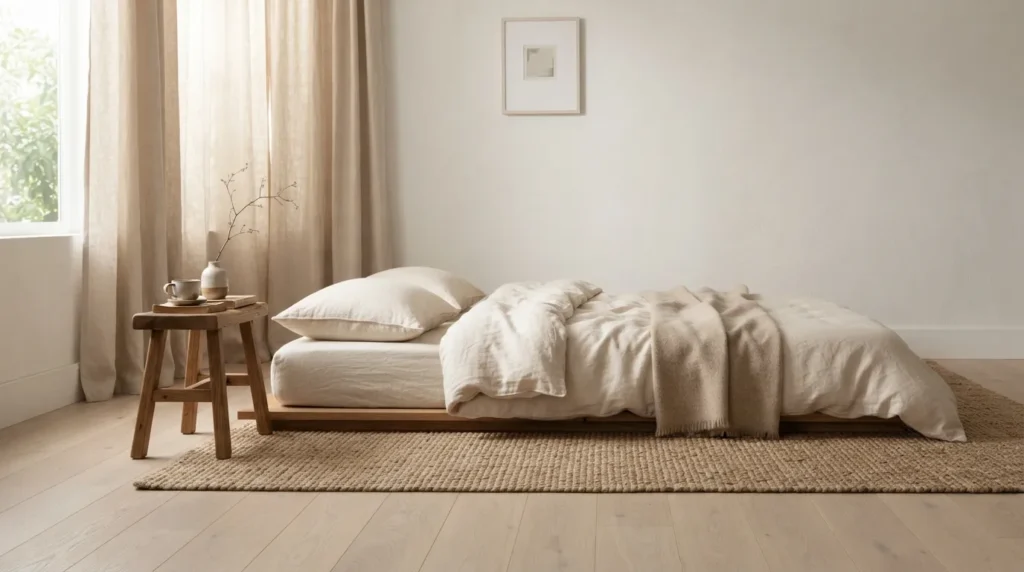
- A floor-level mattress creates an exceptionally simple silhouette.
- Open floor space makes the room feel calm and spacious.
- Low positioning works well with minimalist decorating.
- Layered textiles prevent the setup from feeling too stark.
A floor-level sleeping setup creates an intentionally simple bedroom with almost no visual bulk. Place a mattress on a very low platform or suitable floor-level base, then layer it with breathable linen bedding and a textured throw. The lower profile emphasizes the openness of the room and draws attention toward the surrounding walls, flooring, and natural light. This approach suits minimalist, Japanese-inspired, and relaxed interiors particularly well. It can also make a small bedroom feel less crowded because the bed occupies less visual space than a tall frame with substantial surrounding furniture.
Comfort and practicality should still guide the design. Choose supportive bedding materials and make sure the floor underneath remains clean, dry, and suitable for the setup. A low wooden stool can serve as a compact bedside surface, while a woven rug adds warmth around the sleeping area. Keep wall decoration minimal so the room retains its peaceful character. I’ve noticed that this style looks best when every visible item has a purpose. A simple ceramic lamp, folded blanket, and small plant can provide enough personality without taking away from the clean, grounded aesthetic.
Curtain Wall Backdrop
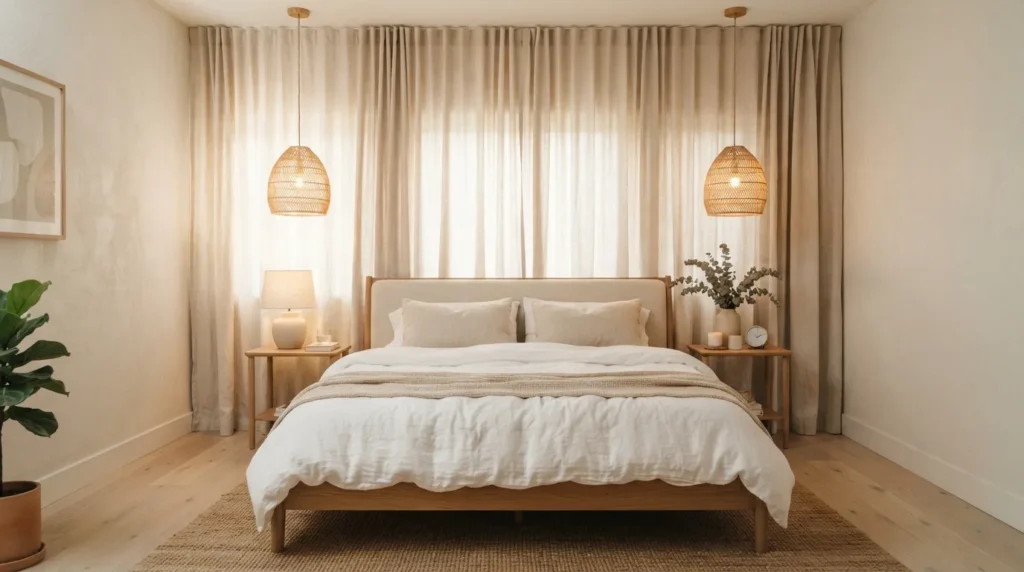
- Full-height curtains create softness and visual height.
- Fabric adds privacy and texture behind the sleeping area.
- Neutral curtains make the room feel warm and relaxed.
- Ceiling-mounted tracks create a cleaner, taller appearance.
Full-height curtains can transform an empty wall into a soft, elegant backdrop behind the bed. Mount the curtain track close to the ceiling and allow the fabric to fall all the way toward the floor. Linen, cotton, or linen-look curtains in cream, oatmeal, taupe, or warm gray create a relaxed atmosphere while adding vertical lines that can make the ceiling appear taller. The bed remains visually simple, but the fabric gives the sleeping area enough presence to feel complete. This solution is particularly useful for bedrooms with plain walls or awkward architectural features.
Choose curtains with enough width to create gentle folds rather than hanging them completely flat. If the room receives strong sunlight, a layered curtain system can combine a sheer panel with a heavier outer layer for better light control. Keep furniture in natural wood or neutral finishes so the fabric remains the dominant backdrop. In my experience, ceiling-mounted curtains make a surprisingly small bedroom feel more polished because they emphasize height instead of width. Add warm bedside lighting and textured bedding, and the result feels comfortable, sophisticated, and easy to update.
Wood Slat Accent
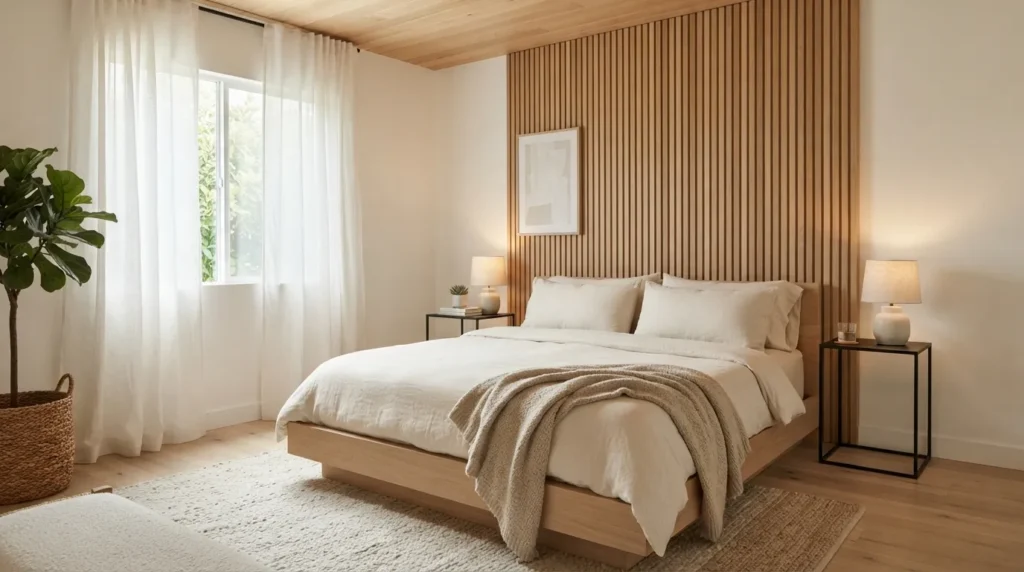
- Vertical wood slats add warmth and architectural detail.
- The narrow spacing creates attractive light and shadow.
- Natural timber works beautifully with neutral bedding.
- A partial slat wall keeps the room feeling open.
Vertical wood slats create a strong architectural backdrop without requiring a traditional headboard. Install evenly spaced timber strips behind the bed, either across the entire wall or within a defined section slightly wider than the mattress. The repeated lines add rhythm and make the ceiling appear taller, while the natural grain introduces warmth and texture. Light oak suits Scandinavian interiors, while darker walnut creates a richer modern look. This arrangement works especially well when the rest of the room is simple because the wall itself provides enough detail to anchor the sleeping area without excessive decoration.
Pay attention to spacing and color when planning the slats. Narrower gaps create a denser appearance, while wider spacing keeps more of the original wall visible and feels lighter. Add warm lighting from the sides so the wood grain and shadows become more noticeable in the evening. I’ve noticed that slatted walls look particularly polished when paired with plain bedding rather than busy patterns. A woven rug, simple artwork, and one or two natural accessories can complete the room without competing with the vertical texture. The result feels contemporary, warm, and thoughtfully designed.
Gallery Wall Display
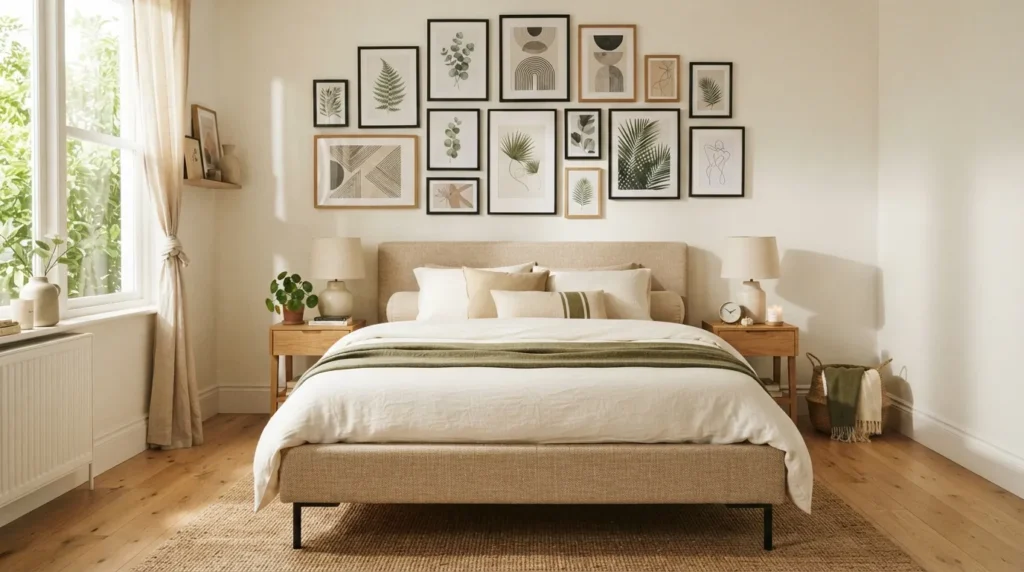
- Multiple smaller artworks create personality and visual movement.
- A coordinated frame collection keeps the arrangement organized.
- Different artwork sizes make the wall feel collected.
- Repeated colors connect the gallery to the bedding.
A curated gallery wall can give the empty space above a bed plenty of personality without adding a physical headboard. Combine botanical prints, abstract artwork, photography, or simple line drawings in frames that share a color or material. Arrange the largest piece near the center and build outward with smaller pieces, keeping the overall shape wider than it is tall. This creates a visual anchor while allowing the individual artwork to remain interesting. A carefully planned gallery also gives you an easy way to introduce accent colors that can be repeated through pillows, throws, or nearby accessories.
Before hanging anything, arrange the frames on the floor and photograph the composition from the same direction as the bed. This makes it easier to adjust spacing and avoid unnecessary holes in the wall. Keep the lower edge of the arrangement comfortably above the mattress so the artwork feels connected without becoming crowded. In my experience, using similar frame finishes makes even a collection of different prints look intentional. For a calmer bedroom, stick to three or four colors throughout the artwork, bedding, and accessories so the finished space feels cohesive rather than visually chaotic.
Woven Wall Hanging
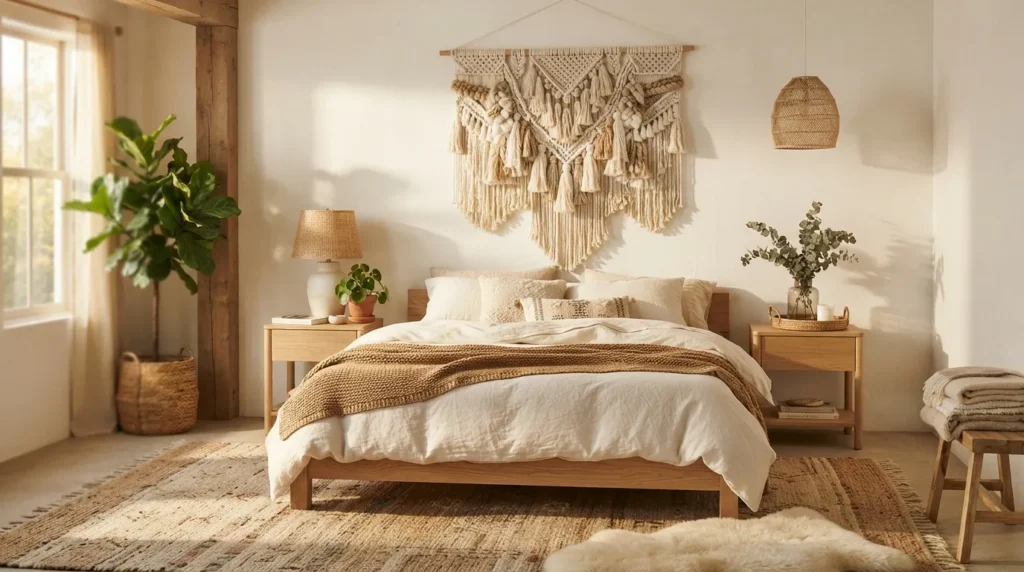
- Woven fibers add softness and handcrafted character.
- Natural texture breaks up large blank walls.
- Neutral tones create a relaxed bedroom atmosphere.
- Lightweight decor keeps the arrangement visually simple.
A large woven wall hanging can bring warmth and handmade character to a bedroom while keeping the bed itself visually simple. Choose a piece made from cotton, wool, jute, or similar natural fibers, preferably in cream, sand, beige, or soft earthy tones. The irregular texture adds depth to a plain wall and creates a gentle focal point above the mattress. Unlike a solid furniture piece, woven artwork maintains an airy feeling and works especially well with relaxed bedding. It is a simple way to make a minimalist sleeping area feel more personal, comfortable, and layered.
Scale is important because a tiny wall hanging can disappear above a large mattress. Choose a piece wide enough to visually connect with the bed while leaving some wall visible around its edges. Keep nearby furniture simple and repeat the natural fibers through a rug, basket, or small decorative piece. I’ve seen this work particularly well in bedrooms with lots of neutral colors because texture prevents the palette from becoming flat. Add warm lighting and loosely layered bedding to emphasize the handmade quality. The finished arrangement feels inviting without relying on excessive decoration or furniture.
Statement Floor Mirror
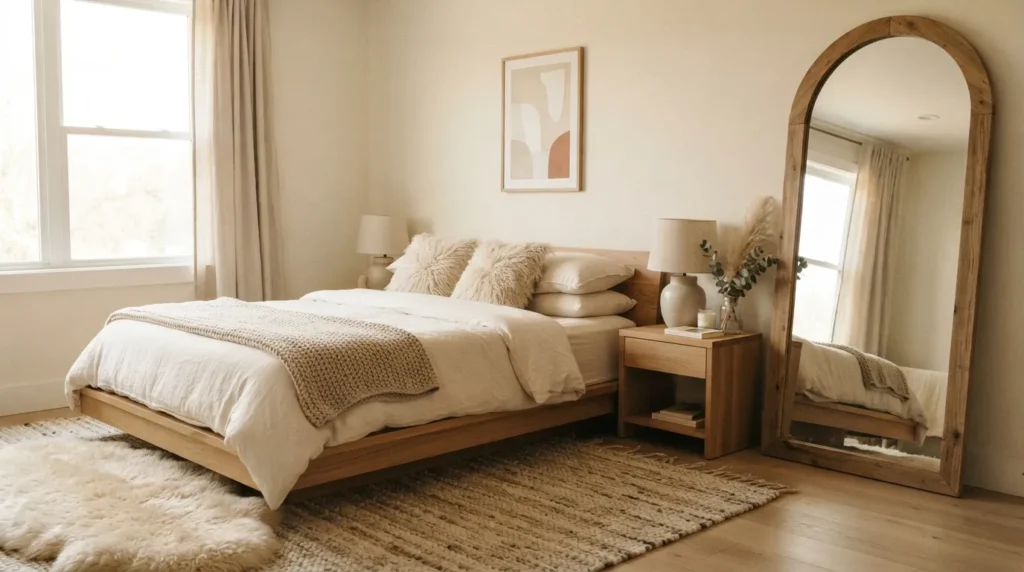
- A large mirror expands the sense of space around the bed.
- Reflective surfaces bring more light into darker bedrooms.
- Leaning placement keeps the arrangement relaxed and flexible.
- Warm wood frames add softness to minimalist spaces.
An oversized floor mirror can give a bed without headboard a more spacious and finished appearance. Position a tall mirror beside the mattress rather than directly above it, allowing the empty wall to remain clean and open. The reflection can bounce daylight deeper into the room while visually expanding a compact bedroom. Choose an arched shape for softness or a simple rectangular frame for a contemporary look. Natural wood, black metal, and antique brass are all versatile options. Keep the surrounding furniture minimal so the mirror remains useful without making the sleeping area feel crowded.
For the best result, angle the mirror slightly toward a window or attractive part of the room so its reflection adds something visually appealing. Avoid positioning it where it reflects clutter, exposed storage, or harsh overhead lighting. A woven rug and warm wood furniture can soften the reflective surface and keep the composition balanced. I’ve noticed that leaning a large mirror rather than mounting it creates a more relaxed appearance and makes future rearranging easier. Add neutral bedding and a small bedside table, and the bedroom gains depth, light, and a polished finishing detail.
Tonal Wall Panel
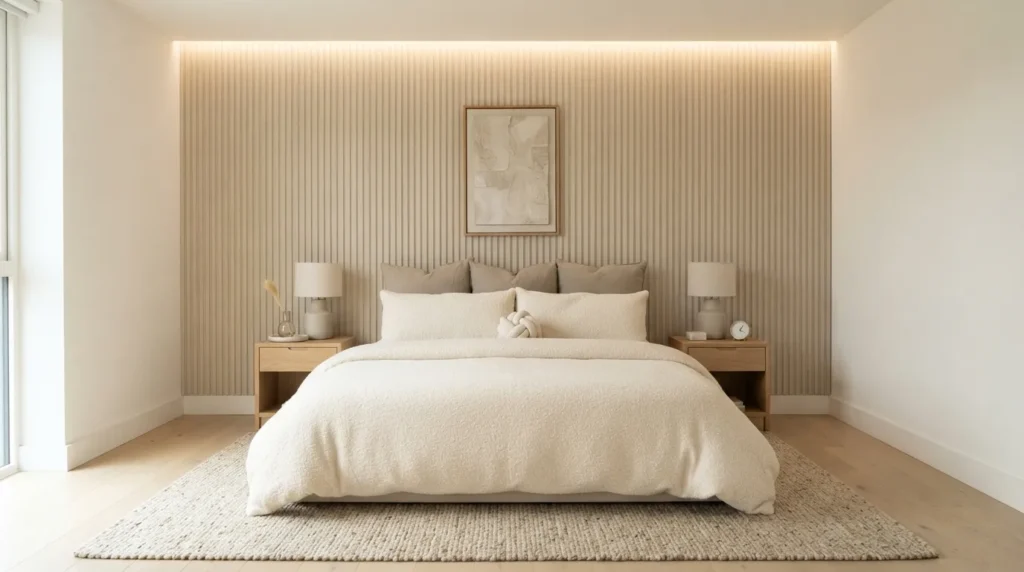
- Subtle wall panels add depth without overwhelming the room.
- Monochromatic colors create a sophisticated layered effect.
- Vertical or geometric textures can visually define the bed.
- Soft finishes keep the bedroom calm and comfortable.
A tonal wall panel creates a refined backdrop when you want the bed area to feel architectural without adding a traditional headboard. Choose fluted wood, upholstered panels, subtle molding, or textured wall boards in a shade close to the surrounding paint. The slight difference in texture creates depth while keeping the overall palette calm. This is especially effective for a bed without headboard because the wall treatment gives the mattress a defined visual boundary. In smaller rooms, staying within one color family prevents the feature from becoming visually heavy while still adding a custom-designed appearance.
Consider using vertical panels to emphasize ceiling height or a wide horizontal treatment to make the bed wall appear broader. Keep the bedding and nearby furniture within complementary neutral shades so the texture remains the main feature. Warm concealed lighting can highlight grooves and create gentle shadows after sunset. That’s why many designers recommend restrained color changes when using textured wall treatments: the surface itself provides enough visual interest. Add natural wood, soft textiles, and minimal accessories, and the finished bedroom feels sophisticated, comfortable, and intentionally layered without relying on a large piece of furniture.
Curved Upholstered Panel
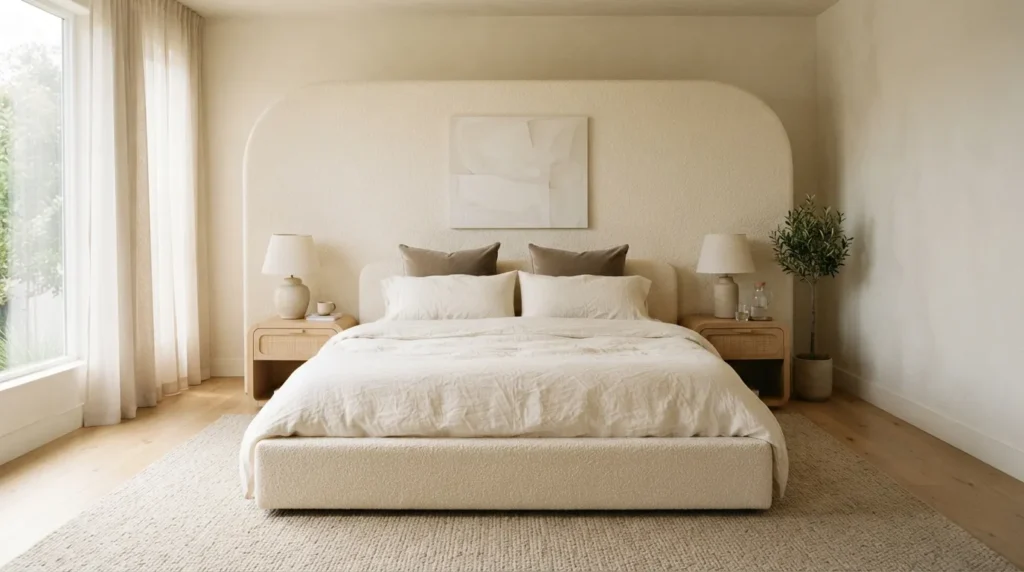
- A curved panel softens the straight lines around the bed.
- Bouclé or linen adds inviting tactile texture.
- Neutral upholstery keeps the room calm and versatile.
- The rounded shape creates a subtle focal point.
A curved upholstered panel creates a soft architectural backdrop while keeping the bedroom comfortable and understated. Choose a wide rounded panel in bouclé, linen, velvet, or another tactile fabric, positioning it centrally behind the mattress. Cream, oatmeal, taupe, and soft gray work particularly well because they add definition without creating harsh contrast. The curved edges introduce movement against rectangular furniture and can make the entire sleeping area feel more welcoming. This approach works beautifully in modern bedrooms where you want softness and texture without using a traditional bulky headboard.
Choose upholstery that complements the existing curtains, rug, or bedding rather than matching everything exactly. A subtle difference in texture is often enough to create visual depth. Keep bedside furniture compact and use warm lighting to emphasize the fabric’s surface after sunset. In my experience, bouclé and linen are especially effective for creating a relaxed designer feel because their texture remains interesting even when the color palette is simple. Add a few layered pillows and one soft throw, and the curved backdrop becomes the natural focal point without making the room feel overly decorated.
Half-Wall Molding
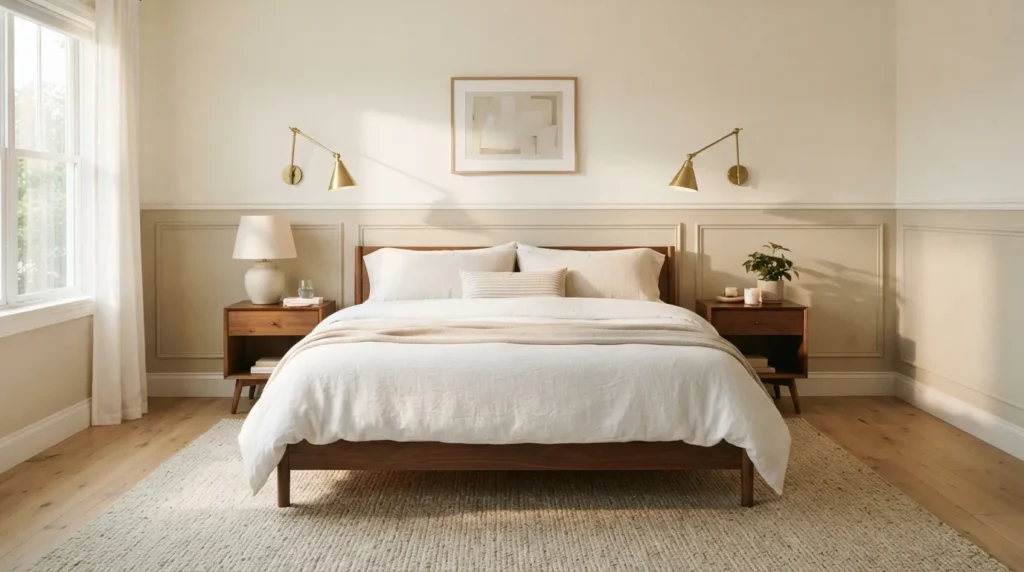
- Simple molding adds architectural detail to plain walls.
- Two-tone paint can visually frame the sleeping area.
- Clean horizontal lines create a polished appearance.
- This option works well with both classic and modern furniture.
Half-wall molding can give a plain bedroom wall a custom architectural appearance without adding substantial furniture. Install simple rectangular panels or narrow molding across the lower portion of the wall, then paint the upper and lower sections in closely related shades. Warm white with beige, cream with taupe, or pale gray with slightly deeper gray creates a subtle layered effect. The horizontal division helps visually organize the wall and gives the sleeping area more definition. This is a practical option when you want a polished result that feels permanent but remains relatively simple to decorate around.
For a more contemporary look, use clean rectangular molding with generous spacing and minimal decorative detail. Traditional rooms can handle more ornate profiles, especially when paired with brass lighting or classic wood furniture. Keep the bed linens uncomplicated so the wall treatment remains visible. I’ve noticed that tonal combinations are easier to live with than dramatic contrasts because they continue working when bedding or accessories change. Add a textured rug and warm bedside lighting, and the molding creates enough visual structure to make the entire bedroom feel finished without adding another large object behind the bed.
Oversized Floor Cushion
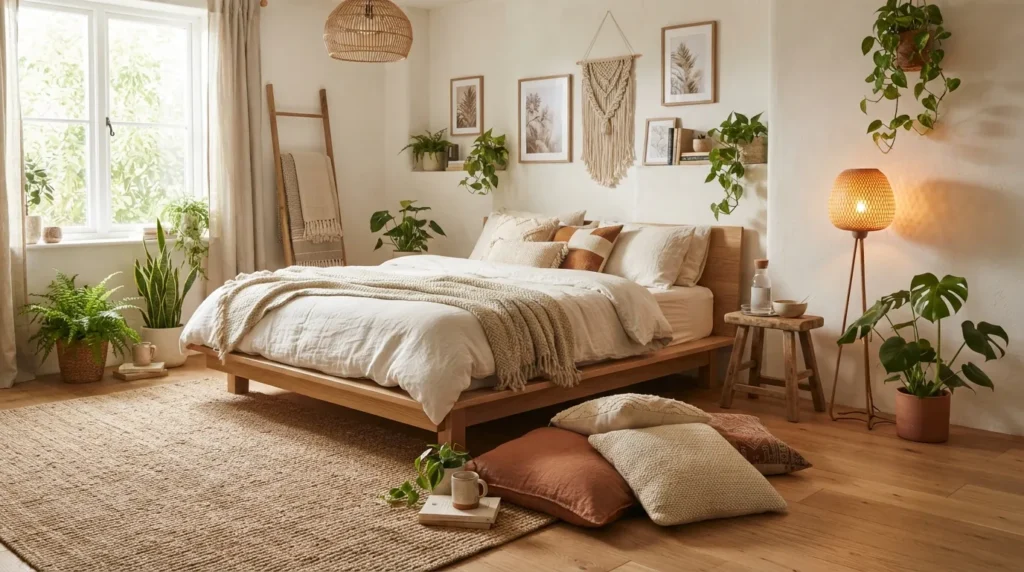
- Large floor cushions create a relaxed bedroom atmosphere.
- Layered textiles add softness around the sleeping area.
- Floor seating gives an otherwise simple room extra function.
- Earthy colors complement natural materials beautifully.
Oversized floor cushions can make a simple bedroom feel relaxed, layered, and intentionally casual. Arrange two or three large cushions near the side or foot of the bed, choosing linen, cotton, or woven covers in complementary shades. Rust, olive, caramel, cream, and warm beige create an earthy palette that works especially well with natural wood. The cushions provide informal seating for reading, getting dressed, or simply relaxing, while their low profile keeps the room visually open. This setup is particularly useful when you want personality and comfort without adding another tall furniture piece.
Keep the cushion arrangement loose rather than perfectly symmetrical so the room maintains a relaxed character. Mix one solid color with a subtle pattern or textured weave to prevent the textiles from looking too coordinated. A low wooden stool can hold a book or cup nearby, while a woven rug helps visually connect the cushions to the bed. In my experience, floor-level accessories work best when the rest of the room stays relatively uncluttered. Let the bedding, cushions, and rug provide most of the texture, then use warm lighting to make the entire arrangement feel inviting.
Vertical Paint Stripes
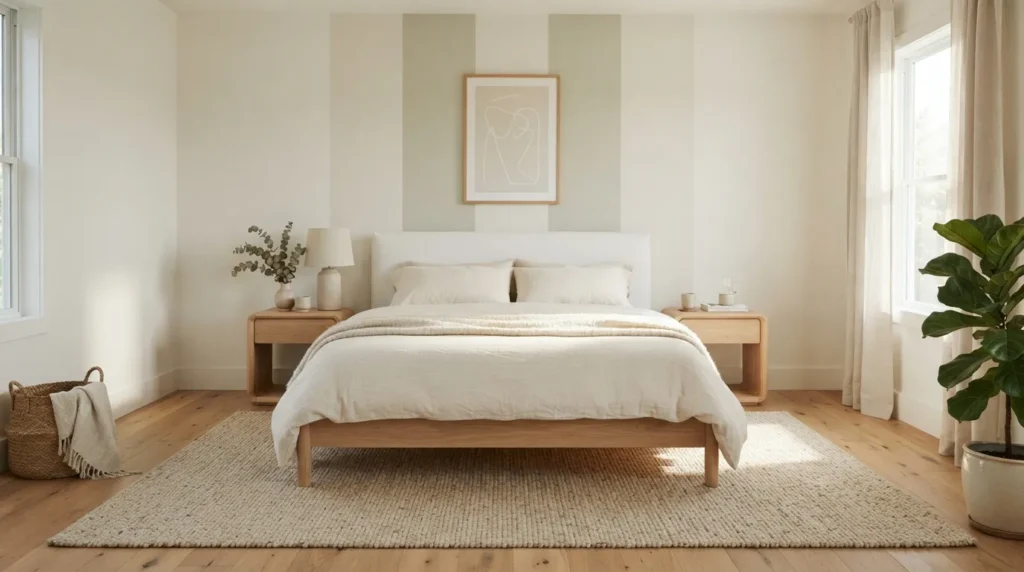
- Narrow painted stripes create a taller visual effect.
- Soft colors add pattern without overwhelming the bedroom.
- Vertical lines give the bed wall a defined backdrop.
- Repeating one accent color creates a cohesive finish.
Vertical paint stripes can turn a completely plain wall into a simple architectural feature behind the bed. Use two closely related colors, such as warm white and muted sage, beige and cream, or soft gray and white, to keep the effect sophisticated. The narrow lines naturally draw the eye upward, making the ceiling appear taller and giving the sleeping area a stronger visual presence. This is a particularly useful idea for small bedrooms where adding bulky furniture would make the space feel crowded. The result feels decorative while requiring very little physical space.
Before painting, measure the wall carefully and mark each stripe with painter’s tape to maintain consistent spacing. Wider stripes create a calmer appearance, while narrower ones produce more noticeable rhythm. Keep the bedding mostly solid so the wall pattern remains the main feature. A few natural wood accessories can soften the graphic effect and connect the colors throughout the room. I’ve noticed that muted tones are easier to style long-term than high-contrast stripes because they work with changing bedding and seasonal accessories. Finish with warm lighting and a textured rug for a comfortable, balanced bedroom.
Decorative Wall Tiles
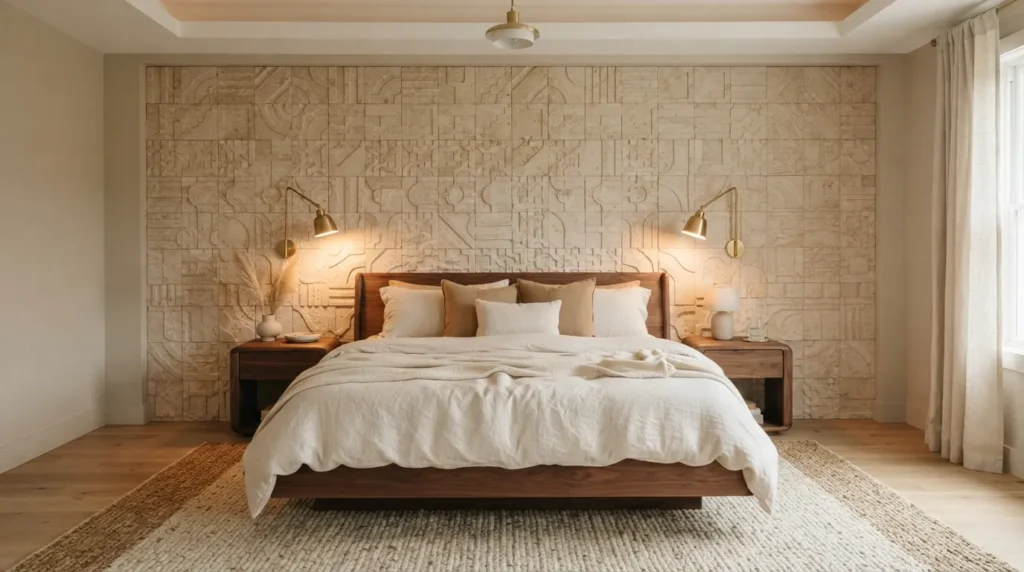
- Textured tiles create an instant architectural focal point.
- Wood-look finishes bring warmth without adding furniture.
- Geometric patterns can make the wall visually distinctive.
- Neutral tile colors keep the bedroom sophisticated.
Decorative wall tiles can give the space behind the bed a strong architectural identity without relying on a traditional headboard. Choose wood-look panels, stone-effect tiles, fluted surfaces, or subtle geometric designs depending on your decorating style. Neutral beige, warm gray, ivory, and natural brown finishes create a sophisticated backdrop that works with many bedding colors. Cover the entire wall for a dramatic effect or create a centered panel slightly wider than the mattress for a more restrained look. The textured surface adds depth and gives even simple bedding a more finished appearance.
Consider the scale of the tile pattern before committing to the installation. Large-format designs often feel calmer in smaller rooms, while smaller patterns can add detail to a spacious bedroom. Use warm side lighting to emphasize texture and create gentle shadows across the surface. In my experience, natural-looking finishes are easiest to style because they pair comfortably with wood, linen, woven materials, and neutral accessories. Keep the surrounding decor restrained so the wall remains the main feature. The finished bedroom feels polished and substantial while maintaining an uncluttered, contemporary atmosphere.
Conclusion
You don’t need a traditional headboard to create a bedroom that feels stylish, finished, and inviting. From simple paint treatments to natural textures, artwork, lighting, and architectural details, the right backdrop can completely change the character of your space. A bed without headboard can even make a room feel more open and easier to personalize. Save this post on Pinterest so you can revisit your favorite ideas when you’re ready for a bedroom refresh. Try one small change first, then build from there. I’ve seen how thoughtful details can transform an ordinary room into a space that truly feels like home.