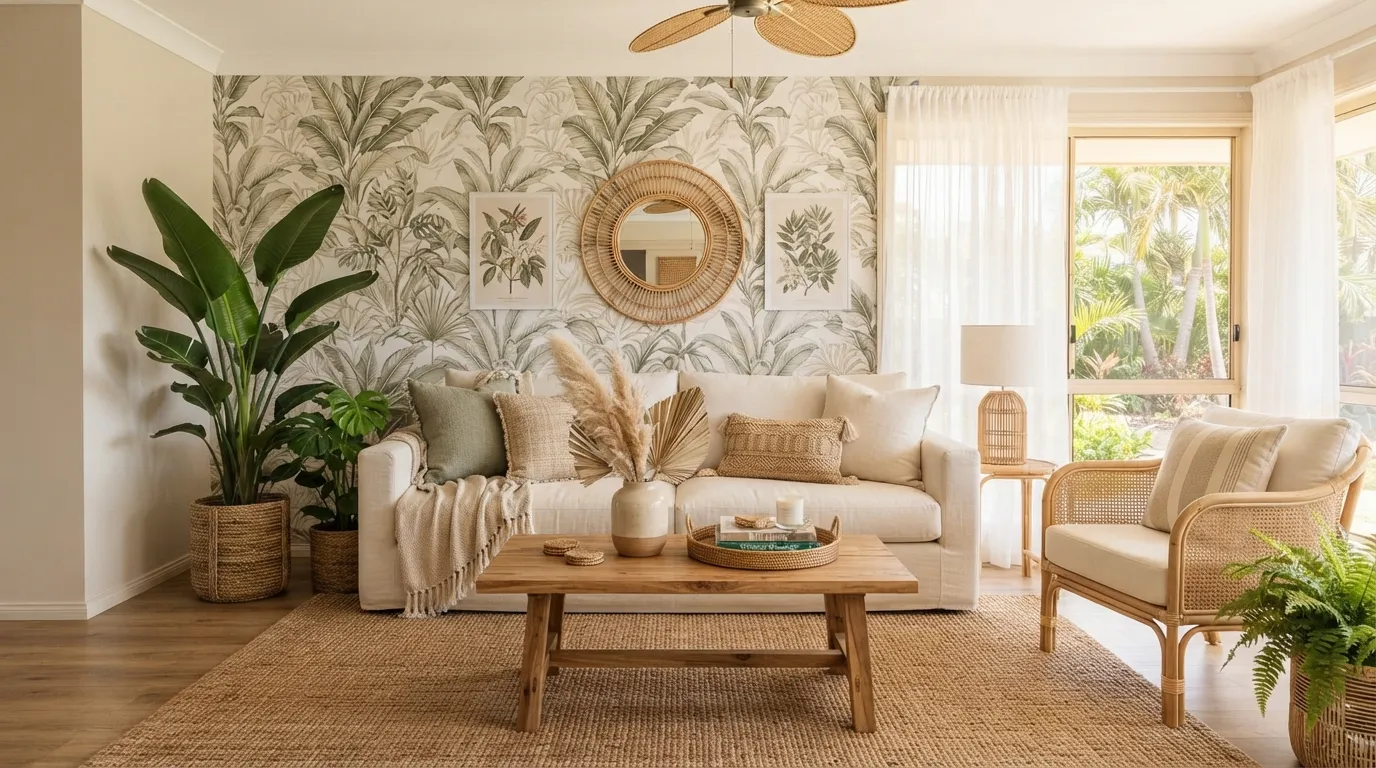
Want your living room to feel like a lush getaway without leaving home? A few thoughtful changes can turn an ordinary space into a fresh, leafy retreat. These tropical jungle living room ideas make it easier to bring that relaxed feeling indoors.
From oversized plants and botanical prints to rattan furniture, earthy colors, and natural wood, these ideas show how to create a room that feels warm, layered, and connected to nature. You’ll find options for both dramatic makeovers and simple updates, whether you have a spacious living area or a small corner that needs more personality. In my experience, combining greenery with natural textures creates the biggest transformation without requiring every piece of furniture to be replaced. Use these ideas to find a style that feels beautiful, comfortable, and genuinely livable.
1. Botanical Feature Wall
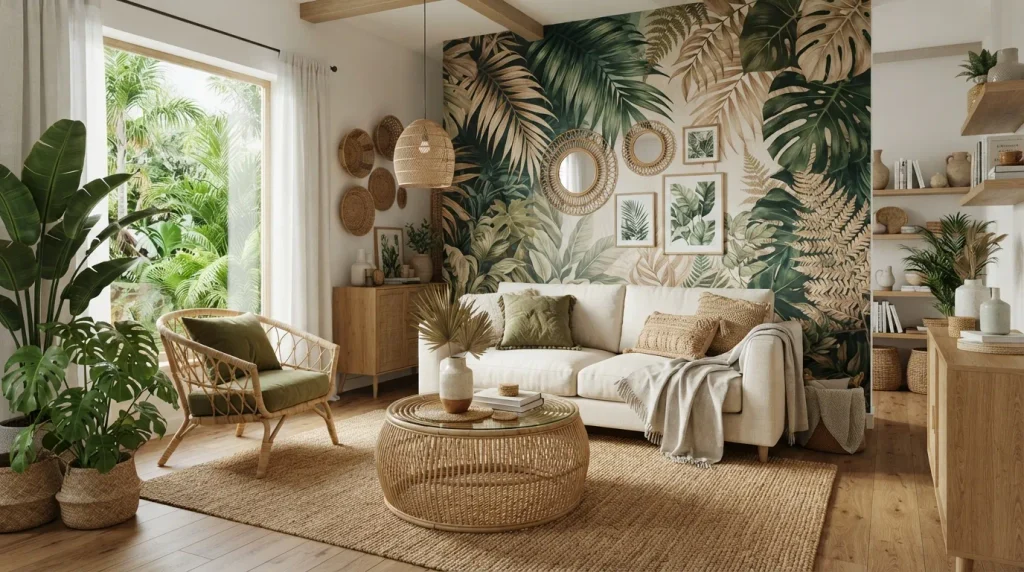
- Use one dramatic leafy wall to create an instant focal point.
- Choose deep greens with warm beige or cream for balance.
- Keep surrounding furniture simple so the botanical pattern stands out.
- Removable wallpaper is a practical option for renters or temporary makeovers.
Bring the jungle indoors with one unforgettable wall of greenery. A botanical feature wall gives a living room instant depth without filling every corner with plants. Choose a large-scale tropical wallpaper, mural, or leafy removable print in shades of deep green, olive, and soft beige. Keep nearby furniture simple so the pattern remains the star. In my experience, one strong botanical surface often feels more polished than several competing accents. Add a neutral sofa, woven coffee table, and a few natural textures to balance the dramatic foliage and keep the room comfortable.
A botanical wall can make even a compact living room feel layered, inviting, and connected to nature. Place the feature wall behind the sofa or television console to create a clear visual anchor, then repeat two or three colors from the pattern in cushions, artwork, or ceramics. Warm wood flooring works beautifully with leafy designs, while linen upholstery softens the overall look. For renters, removable wallpaper can create a similar effect without permanent changes. The result is a lush retreat that feels intentional rather than crowded, with enough calm space for everyday lounging and entertaining.
Also Read : 21 Bedroom Lighting Ideas for a Cozy Stylish Space
2. Oversized Tropical Plants
- Use tall foliage to fill empty corners and add natural height.
- Mix large and small plants for a more layered appearance.
- Choose containers made from rattan, terracotta, or natural ceramic.
- Check each plant’s light requirements before placing it near windows.
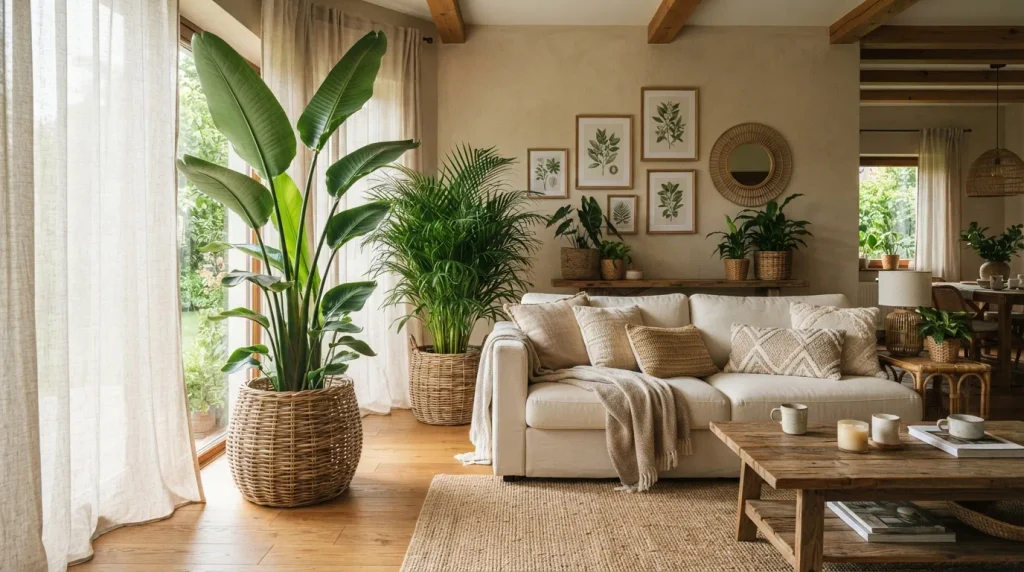
Nothing says tropical retreat quite like oversized foliage placed where the eye naturally lands. Large palms, bird of paradise plants, or banana-leaf varieties can turn an ordinary seating area into a fresh indoor garden. Use one tall plant beside the sofa, another near a window, and a lower leafy plant on a console to create height variation. I’ve noticed this works especially well when the containers share a material, such as terracotta, rattan, or matte ceramic. Keep pathways clear and choose plants suited to your room’s available light for a look that stays beautiful and practical.
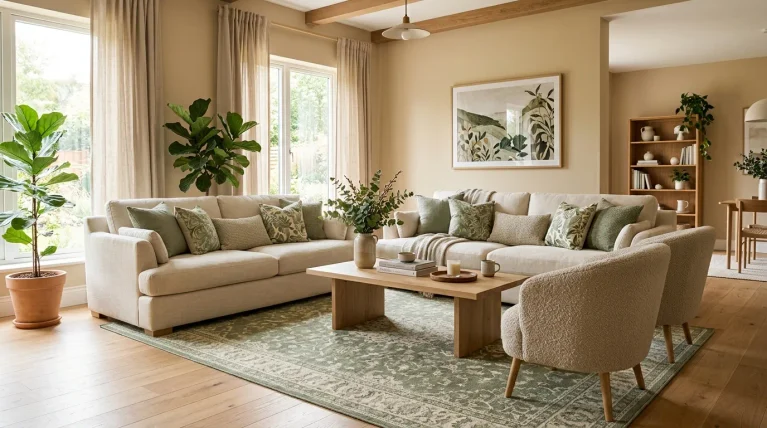
The key is to create a relaxed cluster rather than scattering plants randomly around the room. Position taller greenery in empty corners, then use smaller plants to soften shelves, side tables, or media units. Natural light will make broad leaves look richer, while sheer curtains can filter harsh afternoon sun. Pair the greenery with cream upholstery, warm timber, and woven accents so the foliage remains the focal point. This layered approach adds softness, texture, and freshness without requiring a major furniture change, making it one of the easiest ways to create a lush atmosphere in an everyday living space.
Also Read : 22 Stylish Bed Without Headboard Ideas for Bedrooms
3. Woven Natural Textures
- Add rattan or cane pieces to bring warmth and organic character.
- Use woven accessories to soften bold botanical patterns.
- Combine different textures instead of matching every natural material.
- Choose practical baskets, rugs, and side tables for everyday function.
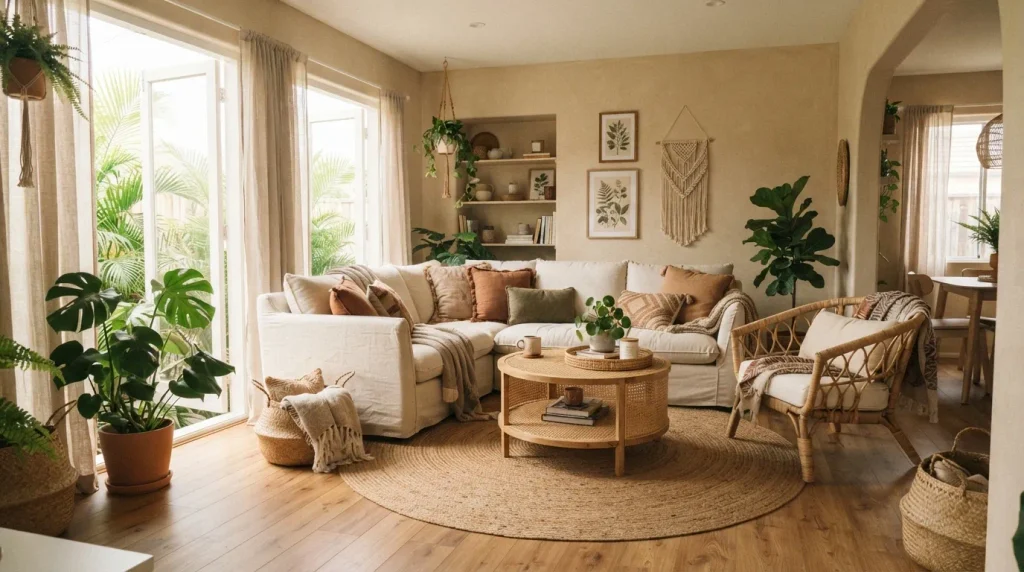
Turn a plain seating area into a relaxed tropical escape with natural rattan and woven textures. Choose a rattan lounge chair, cane-front cabinet, woven pendant, or jute rug to introduce warmth without making the room feel heavy. These materials work beautifully beside leafy plants because their organic texture echoes stems, baskets, and tree bark. Keep the main upholstery light, such as ivory, sand, or warm beige, then layer in olive cushions and earthy ceramics. In my experience, mixing two or three woven pieces feels richer than covering the entire room in one matching material.
Natural textures also help balance bold botanical patterns, especially when your walls or curtains already have strong visual detail. Try a woven rug under the seating group, a cane side table beside the sofa, and a textured basket for blankets or plant care supplies. Their irregular surfaces catch daylight gently and add dimension from every angle. If the room feels too polished or modern, these small swaps can introduce the relaxed character associated with tropical interiors. The finished space feels warm, breathable, and collected, while still offering practical surfaces and storage for everyday living.
Also Read : 22 Emerald Green Bedroom Ideas for a Rich Elegant Space
4. Green Velvet Seating
- Choose deep green upholstery to echo tropical foliage.
- Pair velvet with lighter natural materials to prevent heaviness.
- Add cream or tan cushions for a softer contrast.
- Keep surrounding patterns subtle so the seating remains the focal point.
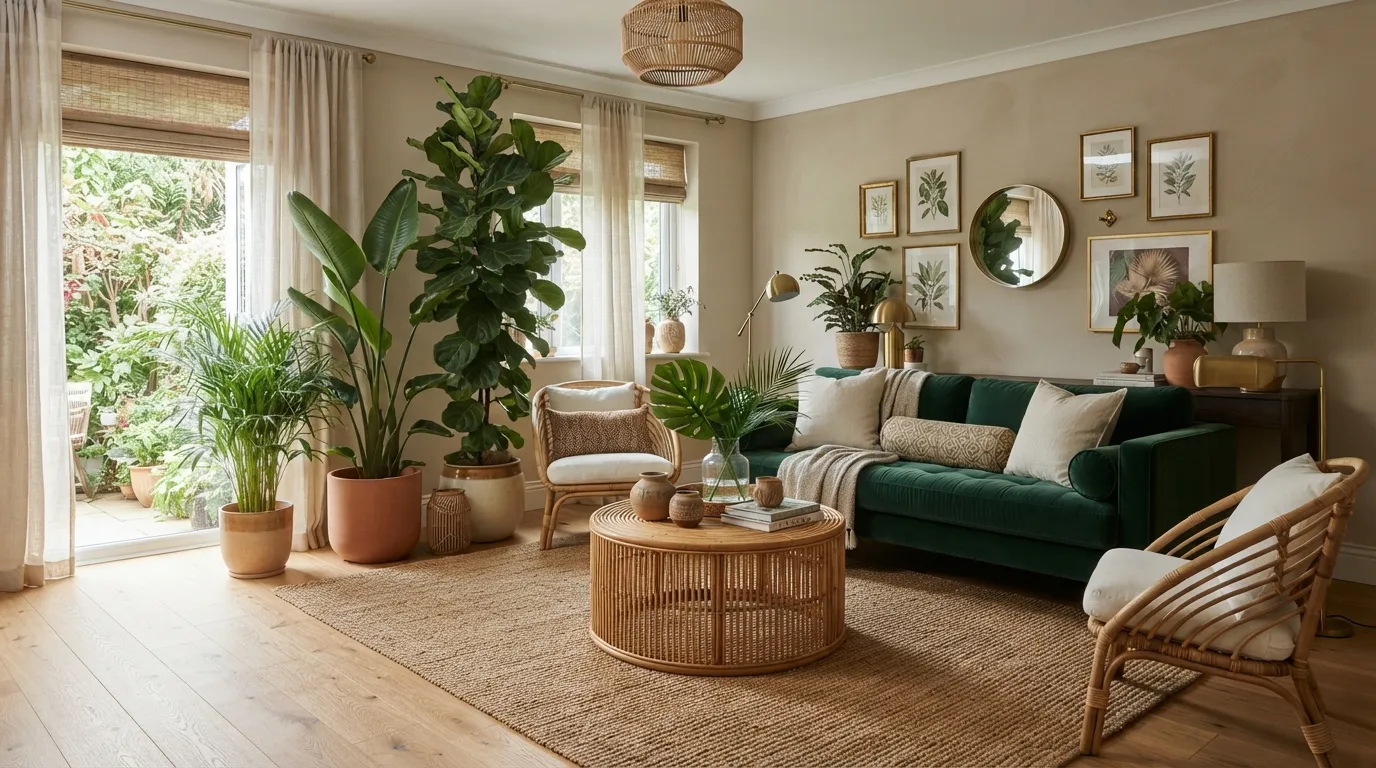
Deep green velvet can make a tropical living room feel instantly richer and more inviting. A forest, emerald, or moss-colored sofa creates a strong connection with surrounding plants while adding a touch of sophisticated comfort. Choose a simple silhouette so the lush fabric does not compete with botanical details. Pair it with cream cushions, a natural wood coffee table, and woven accessories for balance. The result is especially effective in rooms with plenty of daylight, where the velvet catches subtle highlights and gives the seating area a beautifully layered appearance without looking overly formal or traditional.
For a practical everyday setup, place the velvet sofa against a light wall or simple botanical backdrop and leave enough breathing room around it. Add one or two patterned cushions with restrained leaf motifs rather than covering the sofa with busy prints. A jute or flatwoven rug underneath can soften the contrast between rich upholstery and hard flooring. I’ve seen this combination work well because the deep green acts almost like a neutral while still providing personality. It creates a comfortable focal point that feels polished enough for guests but relaxed enough for everyday lounging.
Also Read : 27 Modern Rustic Living Room Ideas to Try Today
5. Palm Leaf Prints
- Use palm motifs on one major surface for a controlled statement.
- Balance busy prints with solid-colored furniture.
- Repeat small amounts of the print through cushions or artwork.
- Choose muted greens if you want a calmer, more timeless room.
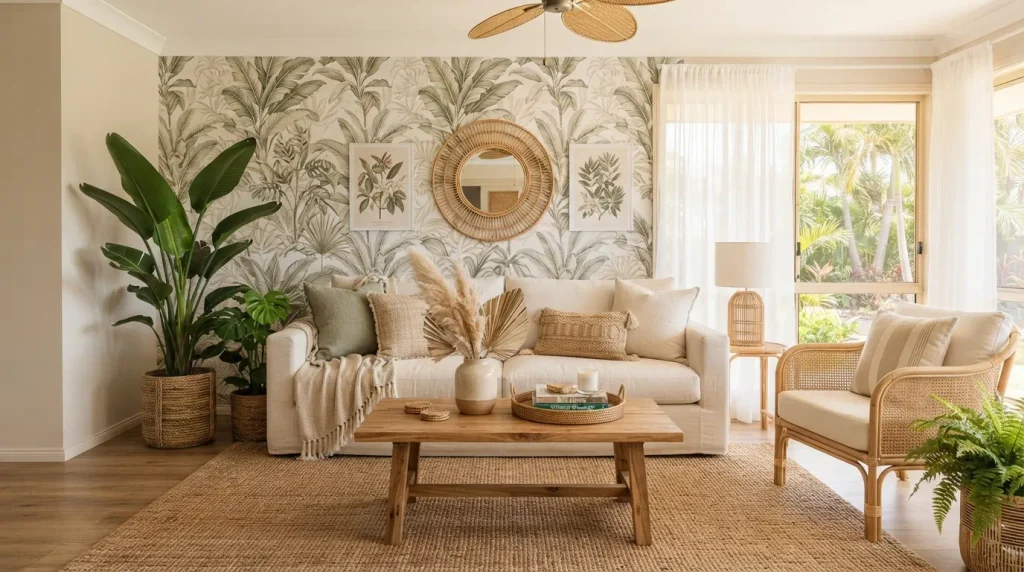
Bring a vacation-inspired feeling into the room with palm leaf prints used thoughtfully across walls, curtains, cushions, or artwork. Large palm motifs create movement and make plain surfaces feel instantly more interesting. For a balanced look, choose one dominant printed element and keep the rest of the furnishings relatively simple. Soft green, cream, beige, and muted brown create a natural palette that feels fresh without becoming overly bright. This approach is especially useful when you want tropical character but still prefer a sophisticated living room that can transition easily between seasons.
Palm prints work best when their colors appear elsewhere in small, intentional details. Pull a muted green from the wallpaper into one cushion, then repeat a warm beige through the rug or curtains. Avoid matching every accessory exactly, because slight variations make the space feel more collected and natural. If a full feature wall feels too bold, use palm-print cushions or framed botanical artwork instead. These smaller additions can transform a neutral sofa area while keeping the overall design flexible. The finished room feels lively and tropical, yet comfortable enough for everyday family routines.
Also Read : 25 Modern Mens Bedroom Ideas for a Stylish Cozy Retreat
6. Bamboo Accent Pieces
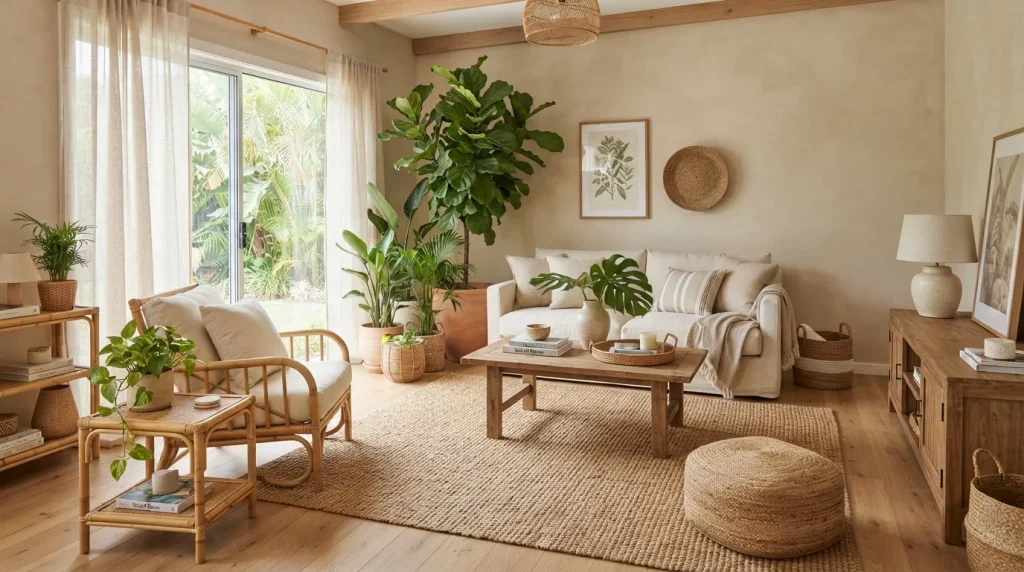
- Add bamboo furniture for lightweight tropical character.
- Use one or two accent pieces instead of overfilling the room.
- Combine bamboo with linen, cotton, and woven fabrics.
- Choose warm natural finishes that complement existing wood tones.
Bamboo accents bring an effortless tropical quality while keeping the room visually light. Try a bamboo armchair, side table, shelving unit, mirror frame, or decorative screen to introduce natural structure without overwhelming the seating area. Its warm honey and caramel tones pair beautifully with leafy greens and creamy upholstery. Place one statement piece near the sofa or window where its texture can be appreciated. Bamboo is particularly useful in smaller rooms because its open, airy construction allows light to move through the space, helping the room feel less crowded while still adding plenty of personality.
The strongest results usually come from combining bamboo with other breathable materials rather than using it everywhere. Pair a bamboo chair with a linen cushion, a woven rug, and a simple wooden coffee table for a layered but relaxed arrangement. If your existing furniture is dark, choose lighter bamboo to create contrast; if the room already has pale wood, a slightly deeper finish can add warmth. I’ve noticed that these small natural additions often make a space feel more connected to its surroundings without requiring a complete redesign, which makes them practical for gradual room updates.
Also Read : 24 Minimalist Japandi Bedroom Design Ideas for a Calm Retreat
7. Tropical Gallery Wall
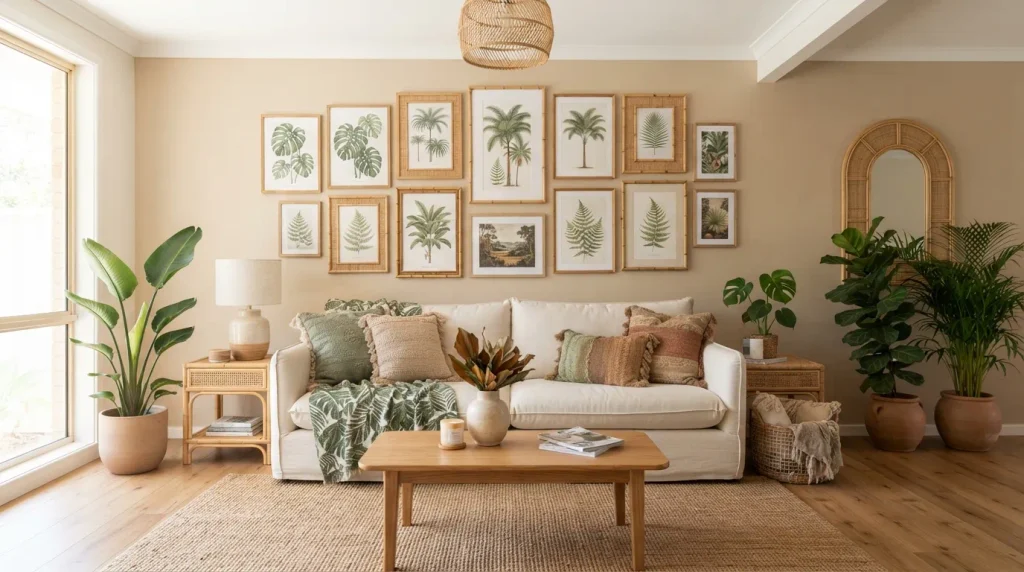
- Mix botanical prints with simple nature-inspired artwork.
- Use frames in wood, rattan, or natural neutral finishes.
- Keep a consistent color palette for a collected appearance.
- Leave enough space between pieces so the arrangement feels intentional.
A tropical gallery wall can turn a quiet living room wall into a colorful focal point without changing the furniture. Combine framed palm illustrations, oversized leaf prints, abstract botanical artwork, and subtle nature photography for variety. Choose artwork that shares a few recurring colors, such as leafy green, cream, tan, and muted terracotta. Arrange larger pieces first, then fill smaller gaps around them. This creates a balanced composition that feels collected rather than overly matched, while giving the eye plenty of detail to explore without competing with the room’s plants and natural textures.
For a polished arrangement, place the gallery above a sofa or on the largest uninterrupted wall, keeping the center around comfortable eye level. Natural wood and rattan frames reinforce the tropical theme while adding warmth to the artwork. If your furniture already has strong patterns, use simpler prints to keep the wall from feeling busy. I’ve noticed that repeating one frame material throughout the arrangement makes even inexpensive artwork look more cohesive. Add a small plant beneath the gallery wall to connect the artwork visually with the rest of the room.
8. Earthy Neutral Palette
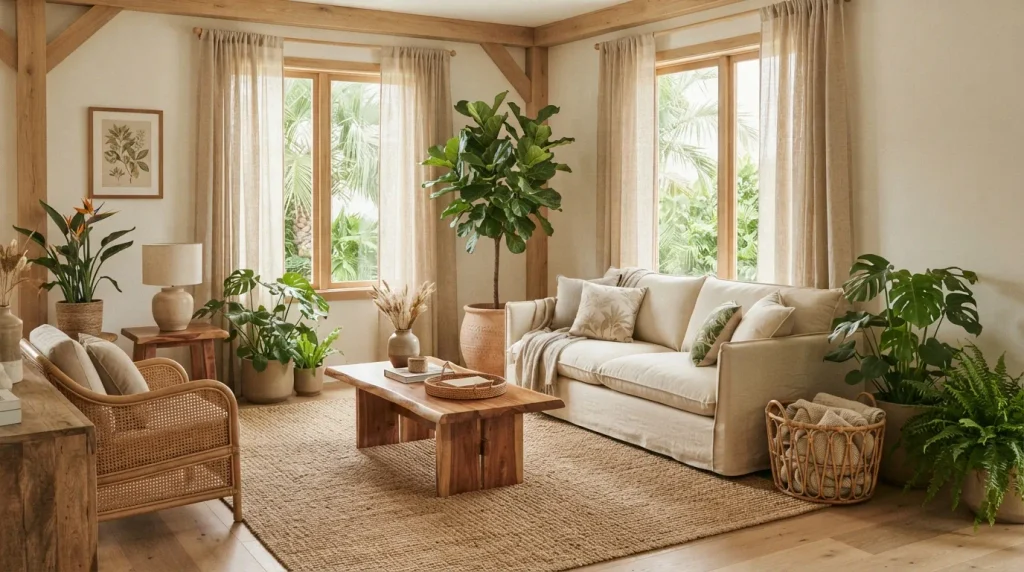
- Build the room around cream, sand, beige, and warm brown.
- Introduce green through plants instead of relying on bright decor.
- Use natural wood to add warmth and visual depth.
- Layer different fabrics so neutral colors never feel flat.
A soft earthy palette creates a calmer interpretation of tropical style while still feeling fresh and connected to nature. Start with cream walls, beige upholstery, warm taupe textiles, and natural wood furniture, then let real greenery provide the strongest color. This combination works especially well for homes where bright tropical patterns feel too intense. The restrained palette allows plants, woven materials, and organic shapes to become more noticeable. It also makes the room easier to update because cushions, throws, and artwork can change without requiring a complete redesign or replacing the main furniture pieces.
Layering is what keeps neutral tropical interiors from looking plain. Combine linen curtains with a textured rug, woven baskets, wooden furniture, and softly patterned cushions to create subtle visual contrast. Add different shades of beige rather than trying to match everything perfectly. Warm daylight will highlight the natural materials and make the room feel more inviting throughout the day. In my experience, this approach is especially practical for busy homes because neutral foundations hide small imperfections better and make everyday clutter less visually distracting. The overall effect feels relaxed, organic, and effortlessly sophisticated.
9. Statement Rattan Chair
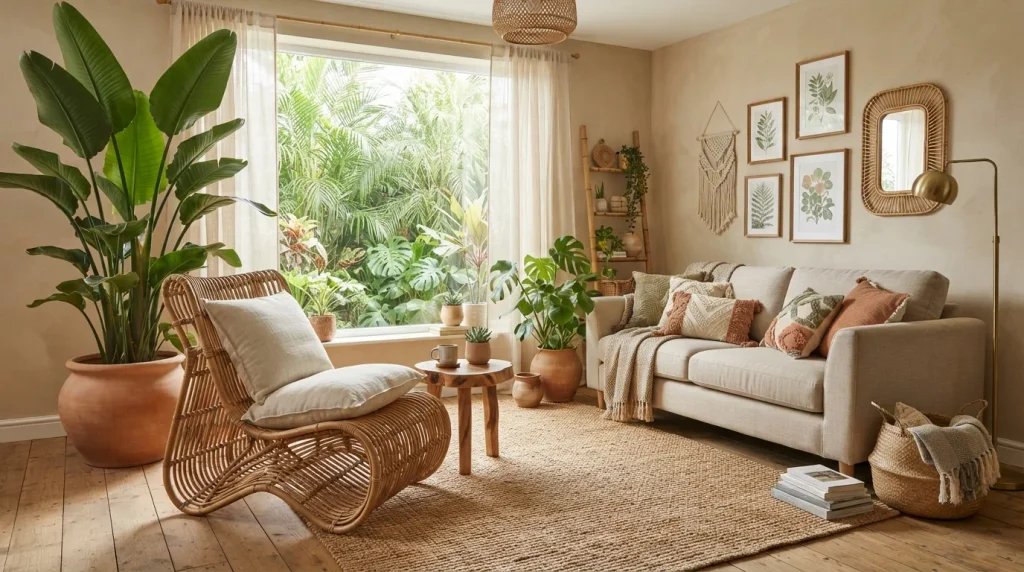
- Use one sculptural rattan chair as a distinctive seating accent.
- Add a thick linen or cotton cushion for everyday comfort.
- Position it near plants or a bright window.
- Repeat rattan subtly elsewhere to connect the room visually.
A statement rattan chair can instantly give a living room that relaxed resort feeling associated with tropical interiors. Choose a sculptural peacock chair, curved rattan lounge chair, or woven accent seat with an open frame that adds texture without visual heaviness. Place it beside a sofa, near a window, or in an unused corner surrounded by greenery. A cream or natural-colored cushion makes the chair more comfortable while keeping the palette soft. The combination of curved lines, woven texture, and leafy plants creates a welcoming focal point without requiring dramatic changes to the entire room.
Think of the chair as both functional seating and a decorative feature. Leave enough space around it so its shape remains visible, then add a small wooden side table or woven basket nearby for practical use. If the chair looks disconnected from the rest of the room, repeat its material through a mirror frame, pendant, or storage basket. That small connection can make the arrangement feel intentional. I’ve seen this work particularly well in awkward corners because the chair fills an empty area while creating a comfortable spot for reading, relaxing, or enjoying natural light.
10. Monstera Corner
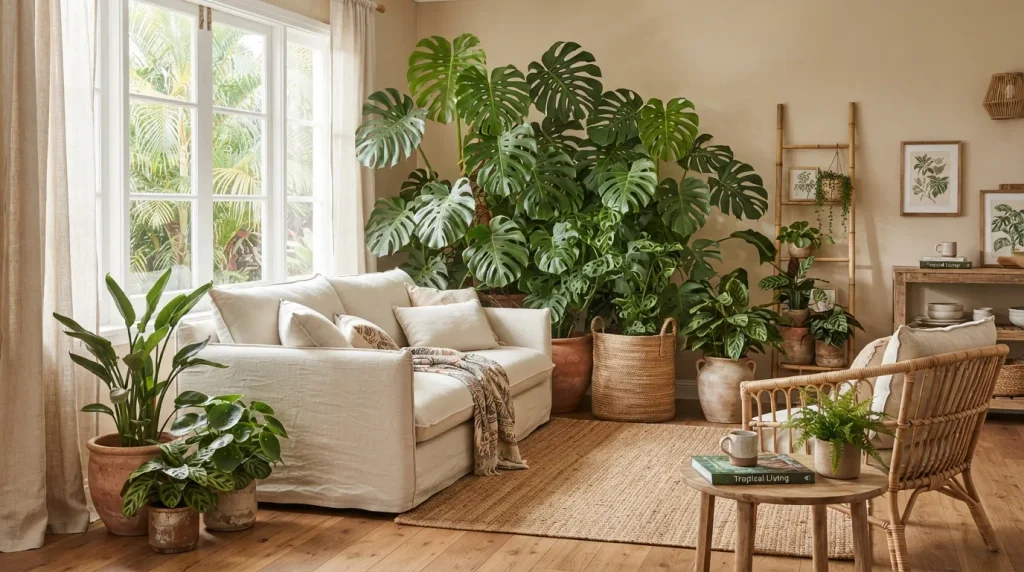
- Group broad-leaf plants in one corner to create a lush focal point.
- Use different plant heights for a fuller, layered effect.
- Choose simple planters so the foliage remains visually dominant.
- Keep larger leaves away from narrow walking paths.
Give an empty corner instant personality with a generous cluster of monstera plants. Their large, sculptural leaves create the bold tropical feeling that smaller houseplants often cannot achieve alone. Place one mature monstera in a tall floor planter, then layer smaller leafy plants around its base for natural height variation. A cream sofa and warm wood furniture keep the arrangement grounded. I’ve noticed that grouping plants together usually looks more intentional than placing one small pot in every corner, while also creating a stronger visual moment for photos and Pinterest inspiration.
Keep the plant grouping close to a bright window, but avoid harsh direct sunlight if the leaves are sensitive to it. Use terracotta, woven, or matte ceramic planters in related earthy shades to maintain a cohesive look. A small wooden stool can elevate one plant and create another level within the arrangement. This setup also helps soften hard architectural corners and makes the seating area feel more connected to nature. If the room already has several decorative pieces, let the monstera corner stay relatively simple so its dramatic foliage becomes the main attraction.
11. Natural Wood Furniture
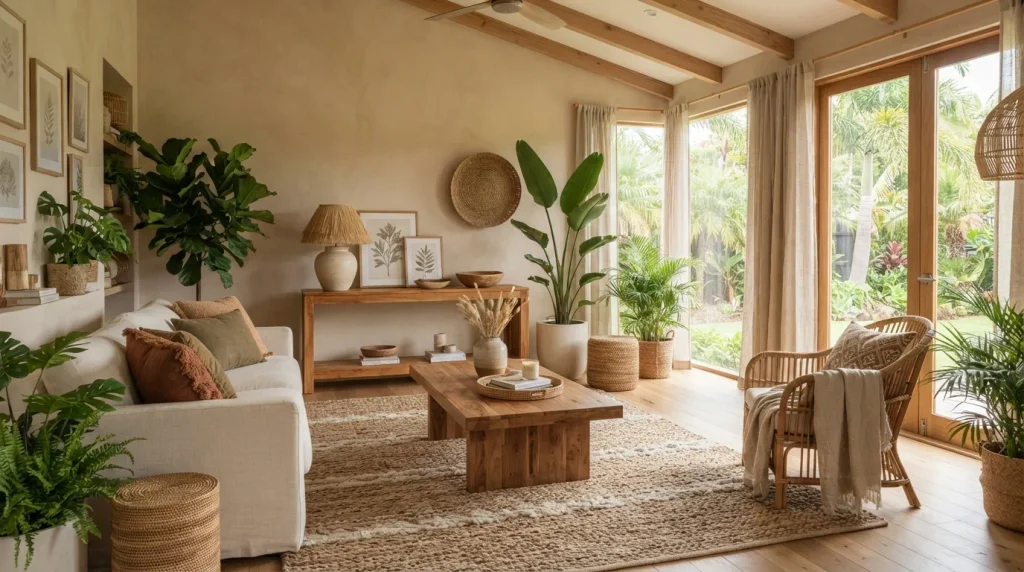
- Choose warm wood tones to bring organic depth into the room.
- Mix polished and rustic finishes for a relaxed appearance.
- Use wood coffee tables, consoles, or shelving for practical function.
- Repeat similar tones without making every piece identical.
Warm natural wood gives a tropical living room an earthy foundation that instantly feels welcoming. Choose a solid wood coffee table, console, shelving unit, or side table with visible grain and a warm honey, teak, or walnut finish. The natural variation in the wood adds texture without relying on busy patterns. Pair these pieces with cream upholstery, leafy plants, and woven accessories for a balanced retreat-inspired look. This combination works particularly well because wood introduces warmth while greenery brings freshness, creating contrast that feels organic rather than overly decorated or themed.
Avoid making every wooden piece exactly the same, because slight differences in grain, shape, and finish create a more relaxed and collected atmosphere. A simple timber coffee table can sit comfortably beside a cane chair and a darker wood console without looking mismatched. Add a textured rug underneath to visually connect the furniture group. In my experience, natural wood is one of the easiest ways to make tropical decor feel substantial and timeless. It also provides durable surfaces for everyday use, making the style practical for busy living rooms rather than purely decorative.
12. Layered Leafy Decor
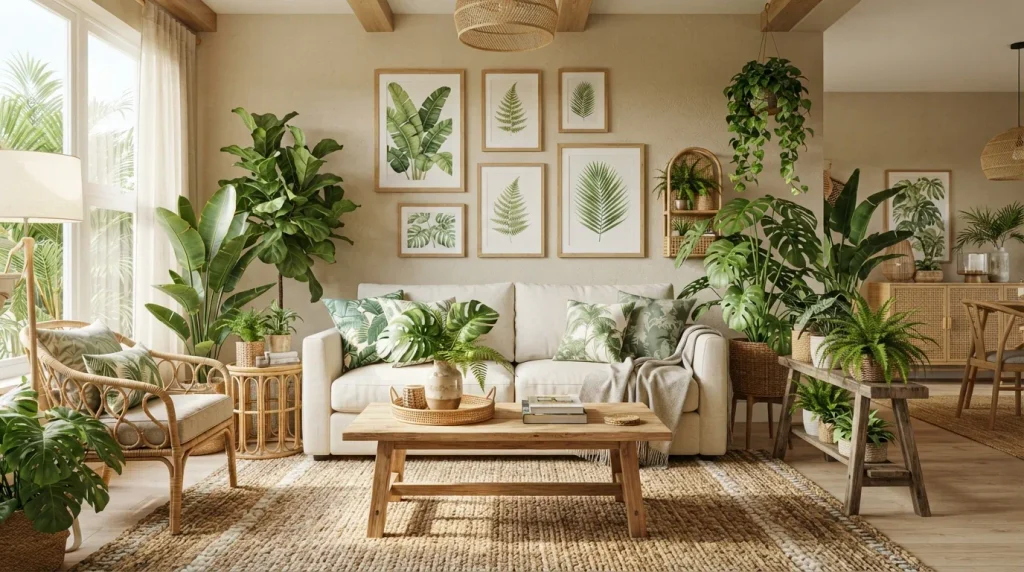
- Combine plants, botanical artwork, and subtle leaf patterns.
- Repeat green shades in small decorative details.
- Use different leaf sizes to create visual depth.
- Keep larger furniture pieces neutral to prevent overcrowding.
Layer several leafy details together to create a living room that feels immersed in greenery without depending on one dramatic feature. Combine real plants with botanical artwork, leaf-patterned cushions, and subtle foliage motifs across textiles or ceramics. Use different shades of green, from soft sage to deep forest, rather than choosing one exact tone. A neutral sofa creates a calm backdrop for these details, allowing the greenery to build visual richness. The result feels abundant and fresh while remaining approachable, especially when natural materials like wood, linen, and rattan are included.
The secret is varying scale and texture instead of repeating the same leaf pattern everywhere. Place a large leafy plant beside the sofa, use smaller botanical artwork above it, and add one or two cushions with restrained foliage designs. This creates a natural visual rhythm that draws attention around the room. Keep some surfaces intentionally clear so the arrangement has breathing space. That balance matters in real homes, where too many decorative elements can quickly become difficult to maintain. A carefully layered approach gives you the lush tropical atmosphere while preserving comfort, movement, and everyday functionality
13. Tropical Cane Cabinets
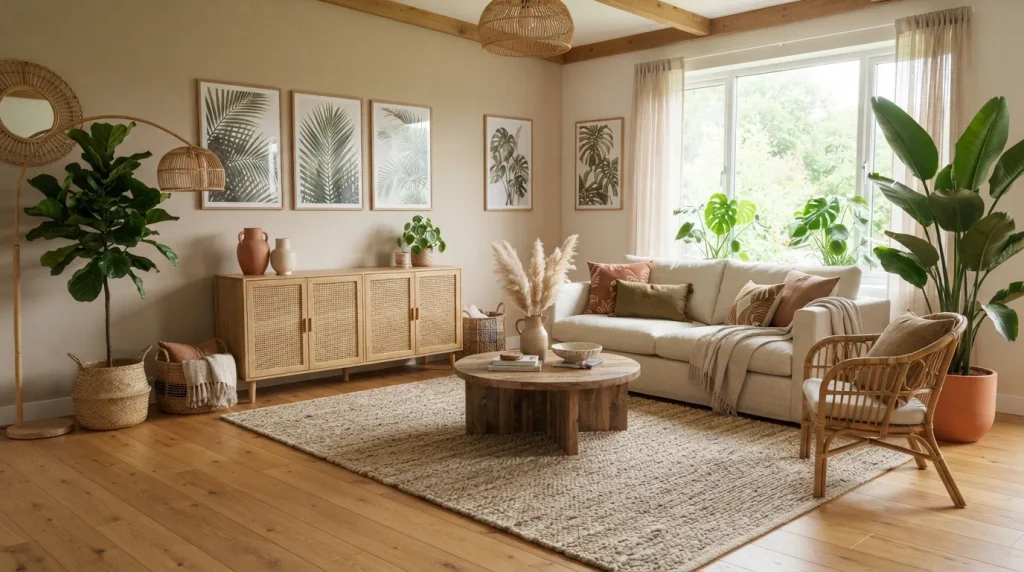
- Use cane-front storage to add texture without making the room feel heavy.
- Choose a low cabinet for a clean, practical media setup.
- Style the top with plants, ceramics, and simple botanical artwork.
- Keep storage closed to maintain a calm, uncluttered appearance.
Give everyday storage a tropical upgrade with a cane-front cabinet that combines function and natural texture. A low console works beautifully beneath artwork or a television, while a taller cabinet can fill an empty wall beside the seating area. Choose warm cane, light oak, or honey-toned wood to complement leafy plants and woven accessories. The textured doors add visual interest without introducing another bold pattern. This is especially useful in busy living rooms because closed storage keeps remotes, books, cables, and everyday items hidden while the furniture itself becomes part of the decorative scheme.
Style the cabinet lightly rather than covering its surface with accessories. A trailing plant, ceramic vase, small botanical print, or woven object can provide enough detail without creating visual clutter. Keep the cabinet proportional to the wall and leave comfortable clearance around nearby furniture. I’ve noticed that textured storage pieces can make a tropical room feel more finished because they add warmth while quietly solving practical storage needs. Pairing cane with cream upholstery, natural wood, and greenery creates a cohesive palette that feels relaxed, modern, and easy to maintain.
14. Botanical Linen Curtains
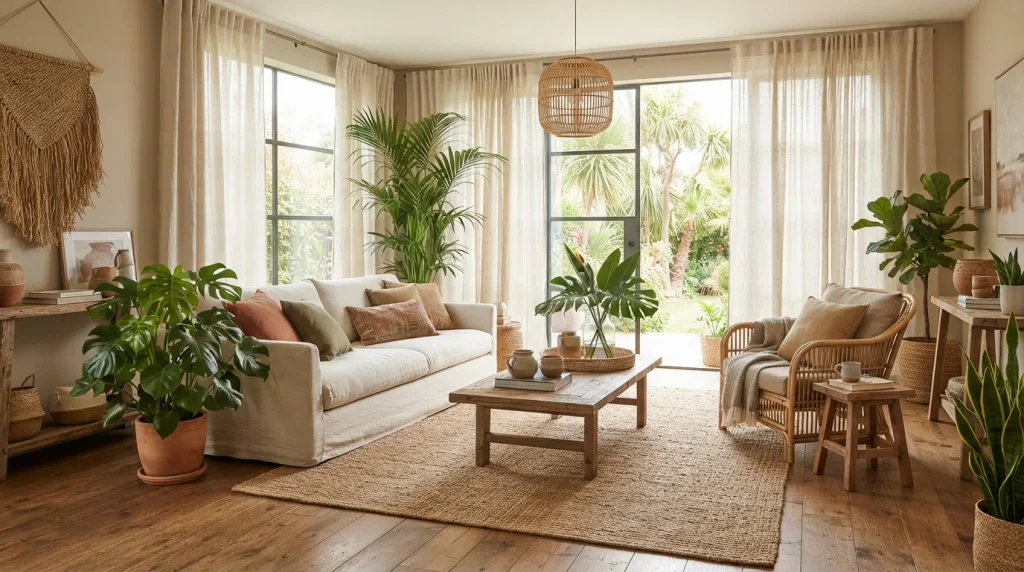
- Choose lightweight linen curtains to soften strong sunlight.
- Use cream, sand, or muted green for a natural palette.
- Let curtains extend from ceiling to floor for added height.
- Pair them with plants near the window for a layered effect.
Soft linen curtains can completely change the atmosphere of a tropical living room by filtering harsh sunlight into a gentle, warm glow. Choose cream, ivory, sand, or muted botanical green depending on the rest of your palette. Floor-length panels create a taller, more relaxed appearance, especially when mounted close to the ceiling. Their slightly irregular texture complements rattan, wood, and woven materials beautifully. Instead of blocking the connection with nature, sheer or lightweight linen allows daylight to remain part of the room, making plants and natural textures look softer throughout the day.
For the most inviting result, keep the window area relatively uncluttered and allow the fabric to frame the greenery outside or nearby indoor plants. If privacy is important, layer sheer linen beneath a slightly heavier curtain in a complementary neutral tone. This gives you flexibility while maintaining the airy tropical feeling. In my experience, curtains are one of the simplest ways to make a room feel more finished without adding visual clutter. The soft fabric also helps balance harder surfaces such as wood flooring, cane furniture, and ceramic planters.
15. Jungle Ceiling Detail
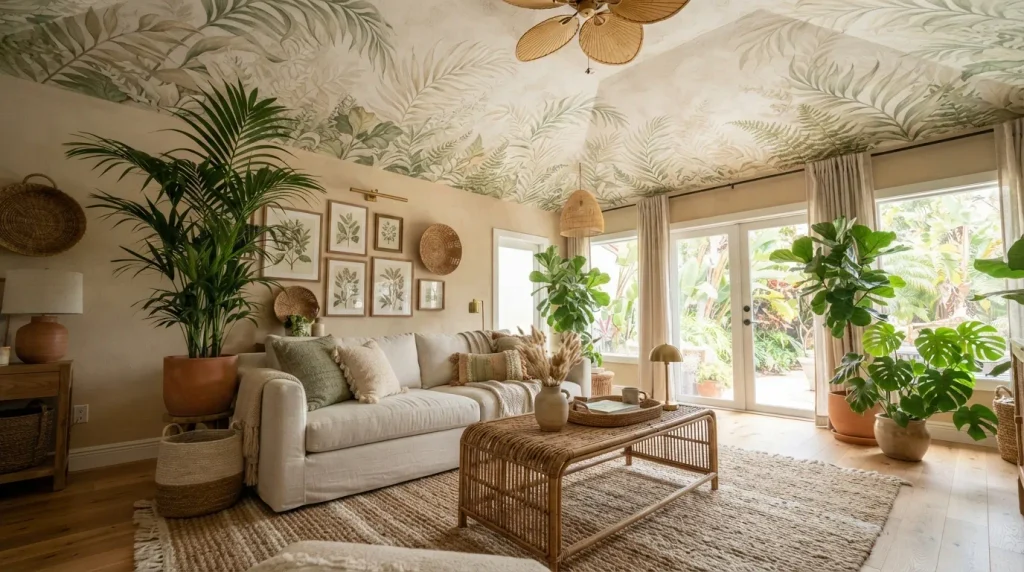
- Add a subtle botanical ceiling treatment for unexpected visual interest.
- Use leafy wallpaper or painted foliage above the seating area.
- Keep walls and furniture calmer to balance the overhead pattern.
- Consider removable wallpaper for an easier design update.
Look upward to create a tropical detail that feels unexpected and memorable. A leafy ceiling can transform a simple living room into a more immersive retreat, especially when the walls remain relatively calm. Choose botanical wallpaper with soft green foliage against a cream, beige, or muted background rather than an overly dark print. Keep the furniture simple so the ceiling becomes an accent instead of competing with every other surface. This approach works particularly well in rooms with generous ceiling height, where the overhead pattern adds character without making the space feel visually compressed.
A tropical ceiling does not need to cover the entire room to make an impact. You can apply the treatment above the main seating zone or use a subtle border around a central light fixture. Repeat one or two colors from the ceiling in cushions or artwork to create a visual connection. If you rent your home, removable wallpaper can offer a temporary alternative. I’ve seen bold overhead details work especially well when the rest of the room uses natural textures, because the ceiling provides personality while wood, linen, and greenery keep the atmosphere grounded.
16. Tropical Accent Wall
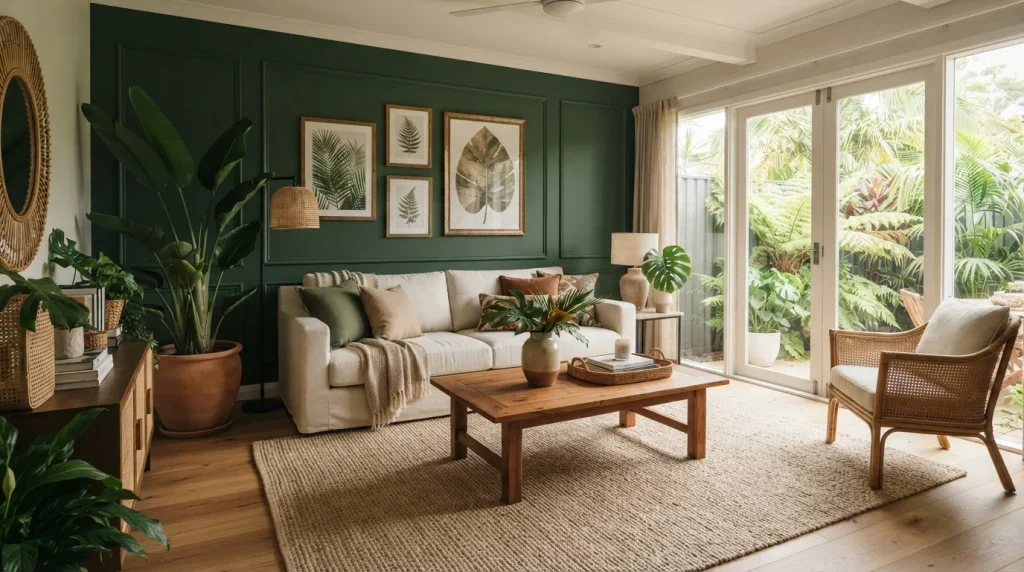
- Use a rich green wall to create instant depth.
- Choose paint with a soft matte finish for a natural look.
- Balance the darker wall with cream or beige furniture.
- Add plants nearby to blend the wall into the room.
A deep green accent wall can give a tropical living room instant depth without covering every surface in pattern. Choose shades such as forest, moss, olive, or rich fern green, depending on the amount of natural light available. A matte finish usually feels softer and more sophisticated than a glossy surface. Place the accent behind the sofa, fireplace, or media unit to create a clear visual anchor. Pair the darker backdrop with cream upholstery and warm wood so the room feels balanced rather than enclosed, especially when the space already contains plenty of leafy greenery.
Use the accent wall as a backdrop for natural textures rather than filling it with excessive decoration. A large woven mirror, simple botanical artwork, or slim wooden console can add dimension without competing with the color. If your room receives limited daylight, choose a softer olive or muted green instead of an extremely dark shade. In my experience, the right green can make plants appear even more vibrant while giving neutral furniture a richer appearance. The result is a cozy tropical atmosphere that feels intentional, grounded, and surprisingly easy to create with paint alone.
17. Coastal Jungle Blend
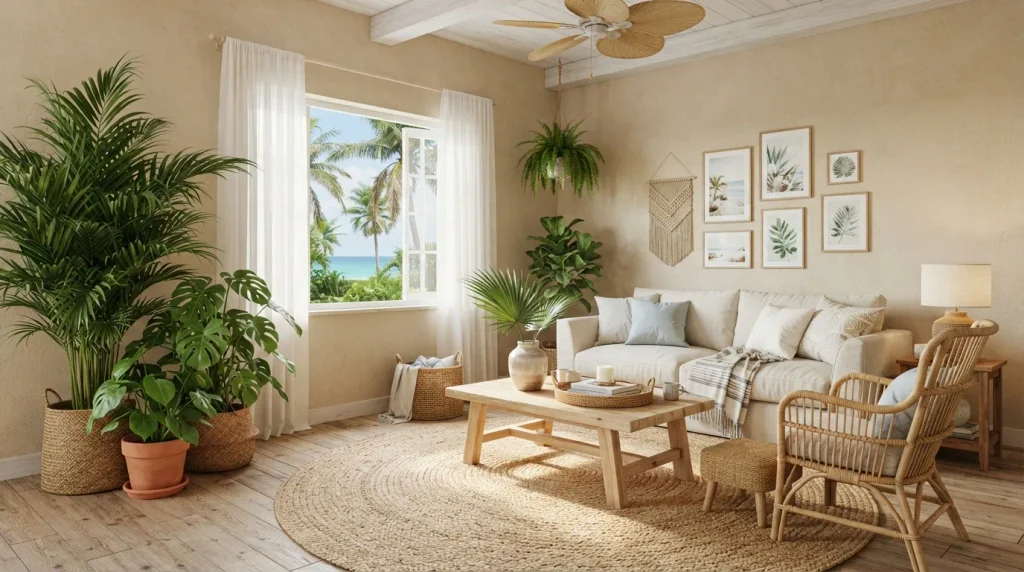
- Combine tropical greenery with soft coastal colors for a breezy atmosphere.
- Use pale blue sparingly alongside cream and natural wood.
- Add woven pieces to connect the two styles.
- Keep patterns light so the room remains relaxed.
Blend tropical greenery with relaxed coastal elements for a living room that feels fresh, airy, and sunlit. Start with cream upholstery, pale sandy tones, natural wood, and plenty of leafy plants, then introduce small touches of faded blue or seafoam. Rattan furniture and woven accessories help connect the coastal and jungle influences without making the room feel themed. This combination works especially well in bright spaces because the lighter palette reflects natural light while the greenery adds depth. The result is a comfortable retreat that feels casual enough for everyday living.
Keep the coastal influence subtle so the plants and natural materials remain central to the design. A pale blue cushion, striped throw, or simple ceramic vase can provide enough contrast without competing with botanical details. Choose light wood rather than heavily polished furniture to preserve the relaxed feeling. I’ve noticed that this blend works beautifully when the room has large windows because natural daylight enhances both the airy colors and rich green foliage. It creates a balanced look that feels refreshing throughout the year rather than being limited to one particular season.
18. Layered Floor Rugs
- Combine a larger natural rug with a smaller textured accent.
- Use neutral colors to keep the tropical palette balanced.
- Layer rugs beneath the main seating arrangement for definition.
- Choose durable materials suited to everyday foot traffic.
Layered rugs can make a tropical living room feel warmer, softer, and more thoughtfully designed. Start with a large natural jute, sisal, or flatwoven rug to define the seating area, then place a smaller patterned or textured rug over part of it. Choose subtle botanical, geometric, or earthy designs that complement the room without creating visual competition. This technique adds dimension beneath sofas and chairs while helping separate the conversation area from the rest of the room. It is especially useful in open-plan homes where furniture needs a clear visual boundary.
For everyday practicality, make sure the bottom rug extends comfortably beneath the main furniture pieces and that the top layer does not create a tripping edge. Keep the color relationship simple by pairing warm beige with muted green, brown, or cream. Natural fibers work beautifully with rattan, wood, and linen because they reinforce the organic character of the room. In my experience, layered rugs are an easy way to make a large seating arrangement feel more cohesive while adding softness underfoot and giving the space that relaxed, collected tropical appearance.
19. Hanging Plant Display
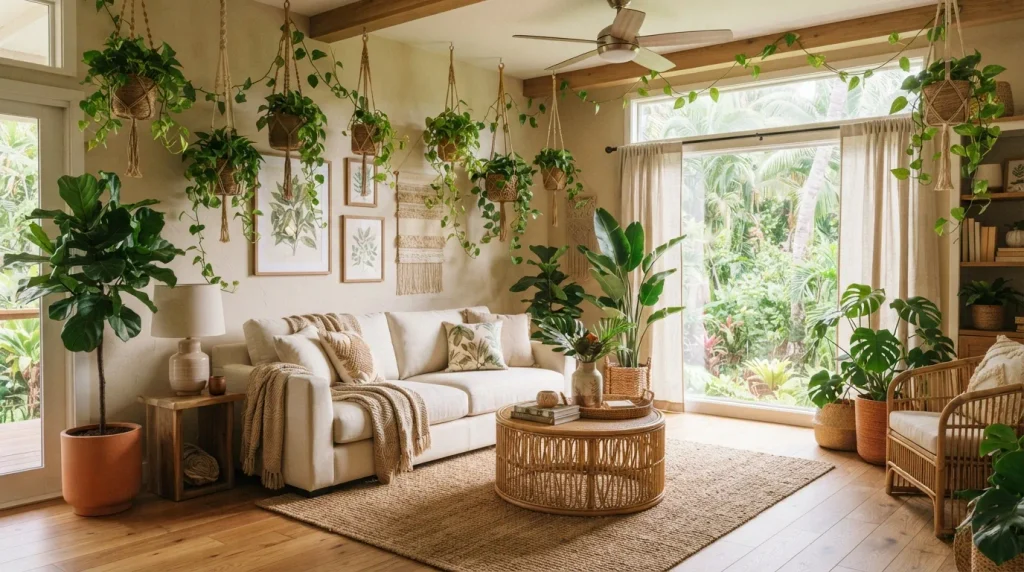
- Use hanging plants to bring greenery into unused vertical space.
- Choose trailing varieties for a softer, more natural effect.
- Hang planters at different heights for visual movement.
- Keep hooks secure and away from main walking paths.
Take your tropical greenery upward with a hanging plant display that adds life without taking up valuable floor space. Trailing pothos, spider plants, string plants, or similar foliage can soften shelves, windows, and empty corners while creating a beautiful vertical layer. Use woven baskets, ceramic planters, or simple hanging vessels in natural tones. Position them near a bright window where their leaves can receive suitable light. This idea works particularly well in smaller living rooms because it adds greenery at eye level and above without making the floor feel crowded.
For a balanced arrangement, hang two or three plants at slightly different heights rather than creating a perfectly symmetrical row. Let some vines trail freely while keeping others more compact to create varied shapes. Make sure ceiling hooks are properly secured and that plants will not interfere with doors, fans, or walkways. I’ve noticed that hanging greenery can make a room feel taller because it draws attention upward. Combined with cream furniture, natural wood, and woven textures, the display creates a layered tropical atmosphere while keeping everyday movement comfortable.
20. Tropical Reading Nook
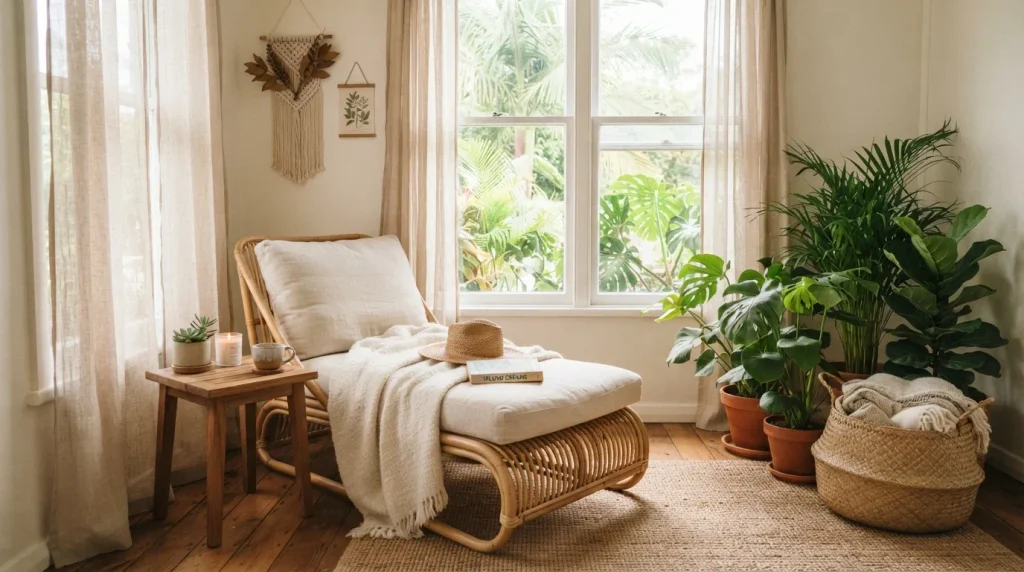
- Create a dedicated corner with one comfortable lounge chair.
- Place the seat beside a window for natural reading light.
- Add a small wooden table for books and drinks.
- Surround the area with greenery for a private retreat feel.
Turn an unused corner into a peaceful tropical reading nook with one comfortable chair, a small table, and plenty of greenery. Choose a rattan lounge chair, upholstered accent chair, or soft linen seat that fits the room’s existing palette. Position it near a window where natural light can provide comfortable daytime illumination. Add a small wooden side table for books, a drink, or a simple ceramic lamp. Surrounding the chair with palms or broad-leaf plants creates a gentle sense of privacy while keeping the nook visually connected to the main living area.
The best reading corners feel intentional without requiring much furniture. Add a soft throw, textured cushion, and small woven basket for practical storage, then keep the surrounding floor relatively clear. If the window receives strong afternoon sun, lightweight curtains can soften the light and protect fabrics. In my experience, a single-purpose nook can make a large living room feel more useful because it creates a second destination beyond the main sofa. The combination of greenery, natural materials, and comfortable seating makes the space inviting for reading, relaxing, or enjoying a quiet morning.
21. Dark Tropical Contrast
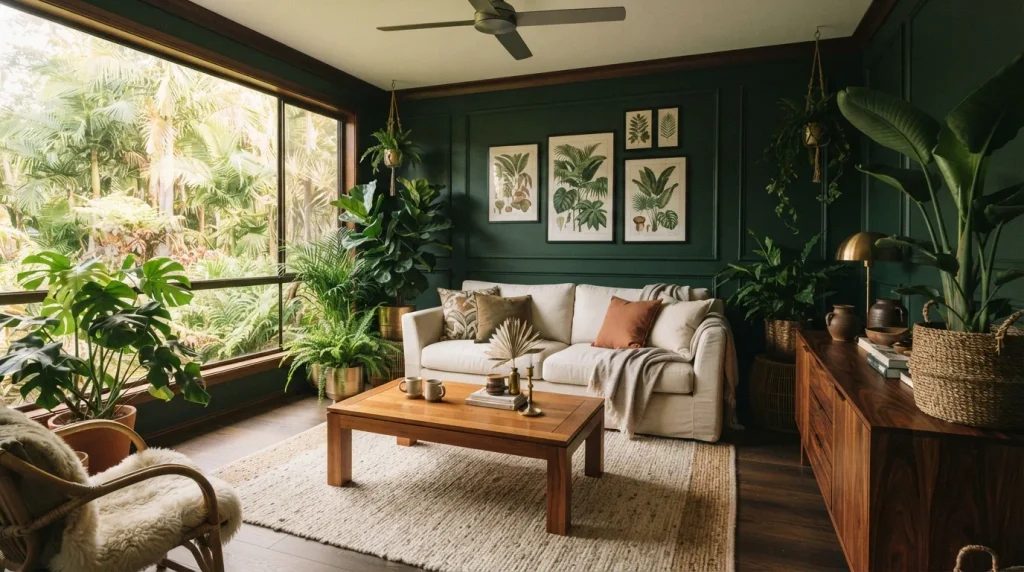
- Pair deep green tones with lighter furniture for dramatic contrast.
- Use black or charcoal accents sparingly for definition.
- Add warm wood to prevent the darker palette feeling cold.
- Let natural light highlight the room’s layered textures.
Create a richer tropical mood by combining deep greens with charcoal, black, or dark brown accents. A forest-green wall, dark wood console, or black-framed artwork can give the room stronger definition while keeping its connection to nature. Balance those darker elements with cream upholstery, pale woven rugs, and plenty of natural daylight. The contrast makes green foliage appear especially vibrant and gives simple furniture a more dramatic presence. This approach works beautifully when you want tropical style to feel sophisticated and moody rather than bright, playful, or heavily patterned.
The secret is controlling how much darkness enters the room. Choose one or two deeper surfaces, then use lighter textiles and natural wood to keep the overall space balanced. Brass or warm ceramic accents can introduce small highlights without making the room feel formal. If the living room has limited windows, consider using dark tones on smaller surfaces rather than an entire wall. I’ve seen this combination create a surprisingly cozy atmosphere because the darker background makes greenery stand out while warm textures keep the room inviting and comfortable.
22. Botanical Statement Sofa
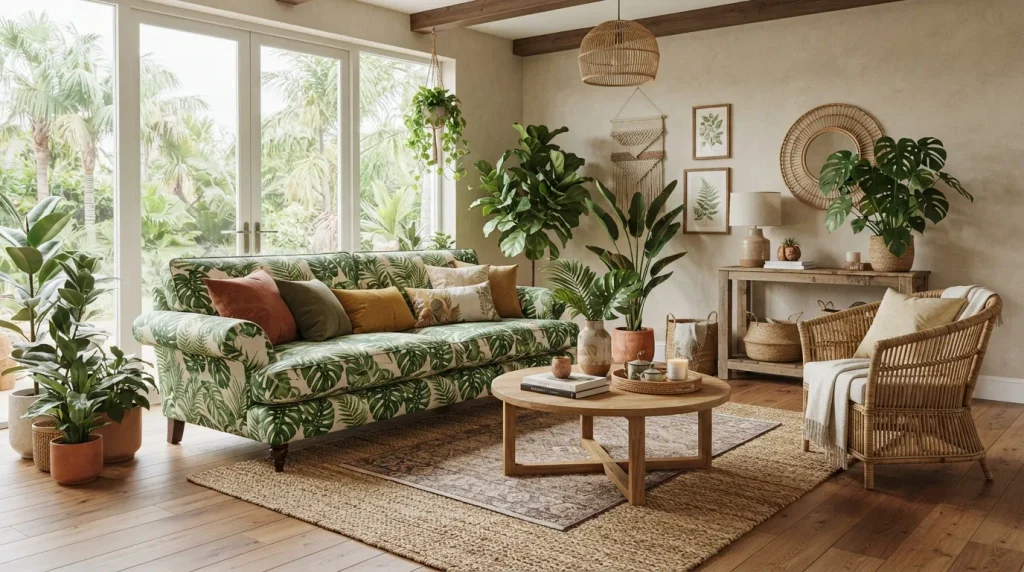
- Choose a bold botanical fabric for the main seating piece.
- Balance large-scale foliage with quiet neutral walls.
- Repeat one or two print colors in nearby accessories.
- Select durable upholstery if the sofa gets frequent daily use.
Make the sofa the star with a botanical upholstery pattern that instantly establishes a lush tropical mood. Choose oversized leaves, palms, or painterly foliage in rich greens mixed with cream, beige, or warm earthy tones. Keep the surrounding walls and larger furniture pieces relatively quiet so the pattern has room to breathe. This is one of the more expressive tropical jungle living room ideas because the seating itself becomes the main decorative feature. For busy households, look for performance fabrics that can handle regular use while still delivering that dramatic, Pinterest-worthy appearance.
A botanical sofa works best when the rest of the room gently supports its colors rather than trying to compete with them. Pull a muted shade from the upholstery into one cushion, rug detail, or ceramic accessory, then add natural wood and woven textures for warmth. Keep nearby plants slightly simpler so their leaves do not disappear into the upholstery pattern. I’ve noticed that using one memorable printed piece often creates more personality than decorating every surface with tropical motifs. The result feels coordinated, inviting, and visually rich without becoming overwhelming.
23. Indoor Jungle Layers
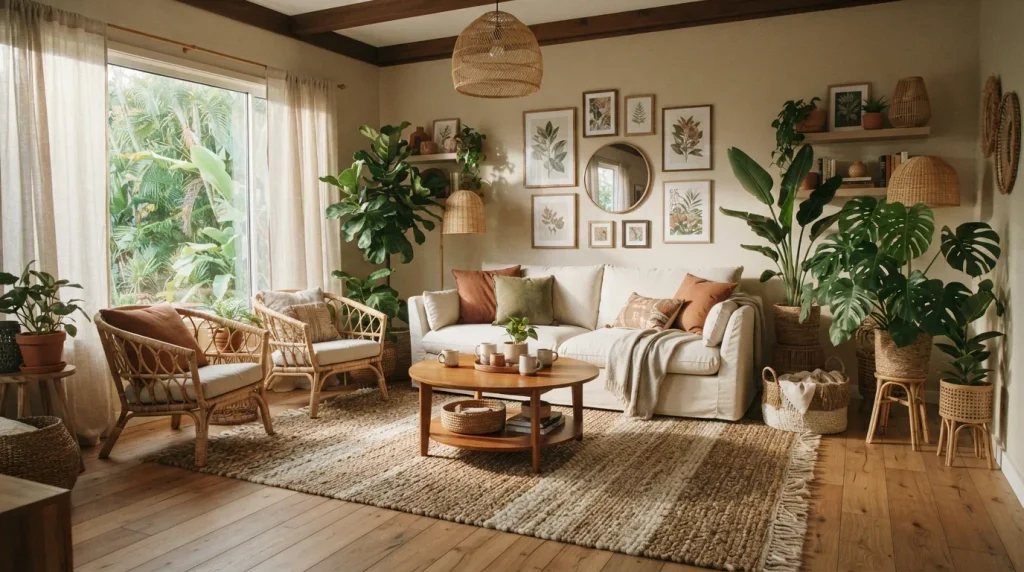
- Combine plants, natural materials, and subtle botanical details throughout the room.
- Vary plant heights to create a fuller visual landscape.
- Keep pathways open so the room remains practical.
- Repeat earthy colors across furniture and accessories for cohesion.
Bring everything together with an indoor jungle arrangement that combines lush plants, natural textures, earthy colors, and subtle botanical accents. Use tall palms or bird of paradise plants behind the seating, medium foliage beside the sofa, and smaller plants across shelves or tables. Layer rattan, linen, wood, and woven fibers throughout the space to reinforce the organic feeling. The strongest tropical jungle living room ideas usually feel abundant without becoming chaotic, so leave open areas between furniture and greenery. This creates a retreat-like atmosphere while keeping the room comfortable for everyday movement.
Think of the room as a collection of connected layers rather than a single decorating theme. Repeat deep greens through foliage, cushions, and artwork, then use cream, sand, and warm wood to create visual breathing space. Natural light should remain unobstructed wherever possible because it brings out the different textures and makes greenery appear more vibrant. In my experience, the most convincing indoor jungle rooms are not necessarily the ones with the most plants; they are the ones where every material feels connected. That balance makes the finished space lush, welcoming, and genuinely livable.
Conclusion
Creating a lush living room doesn’t require a complete renovation. Start with one idea that fits your space, then build gradually with greenery, natural textures, warm wood, and calming colors. The right tropical jungle living room ideas can make your home feel fresher, cozier, and more connected to nature. I’ve seen how small changes, such as adding a statement plant or woven accent, can completely shift the atmosphere of a room. Save this post on Pinterest so you can revisit your favorite looks, try an idea in your own space, and share it with someone who loves tropical-inspired interiors. Let your room grow beautifully, one layer at a time.