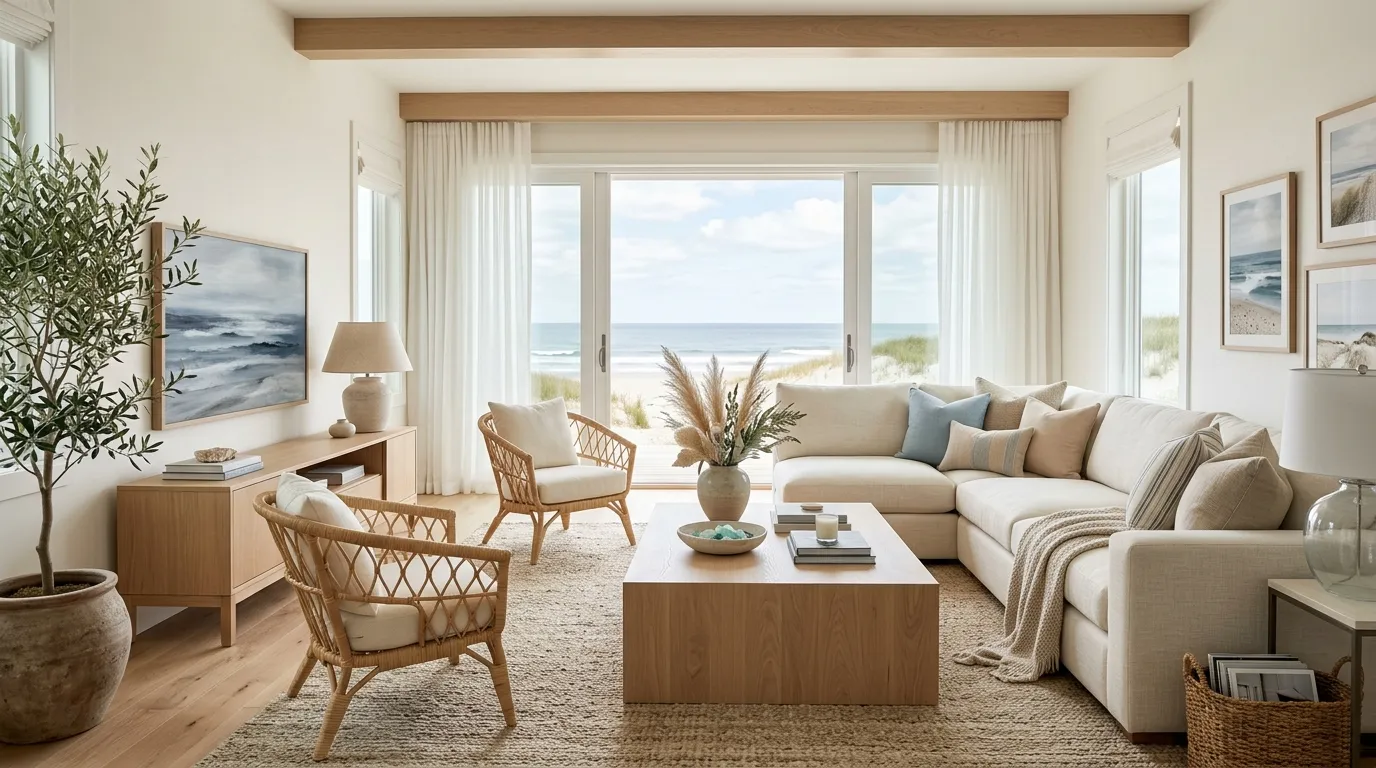
Your living room can feel like a breath of fresh coastal air without looking like a beach theme.
Think soft colors, natural textures, curved furniture, and plenty of light.
These contemporary coastal living room ideas show how to create a space that feels fresh, comfortable, and beautifully modern while still capturing the relaxed character of coastal design. If your room currently feels plain, too dark, overly formal, or difficult to style, small changes can make a noticeable difference. From linen sofas and pale wood to woven rugs, soft blue accents, natural stone, greenery, and oversized artwork, these ideas offer practical ways to transform the space. In my experience, the most successful coastal rooms rely on balance rather than decoration overload. You’ll find inspiration for creating that airy, welcoming look while keeping your home personal and easy to live in.
1. Soft Sand Palette
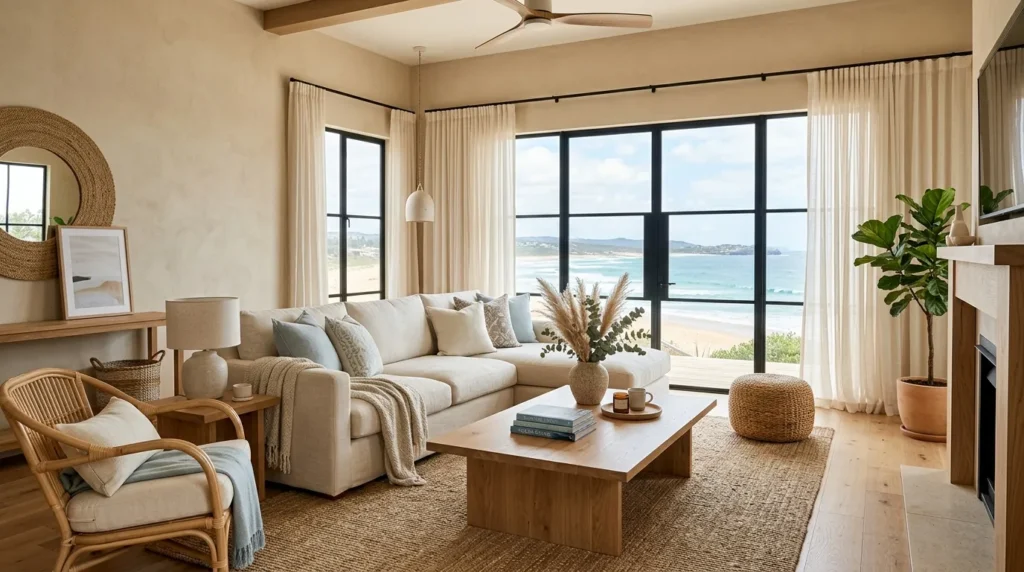
- Sandy beige tones create a relaxed coastal foundation.
- Cream upholstery keeps the room bright without feeling stark.
- Natural textures add depth to a soft monochromatic scheme.
- Blue accents can be introduced in small, flexible doses.
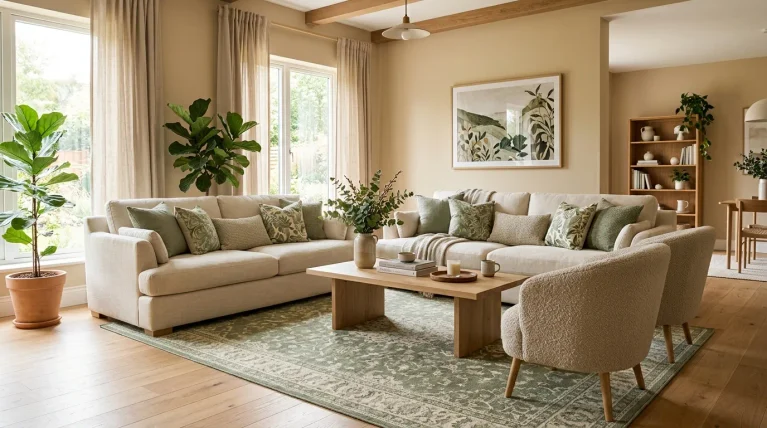
A soft sand palette instantly gives a living room that relaxed coastal feeling without relying on obvious beach decorations. Start with warm beige walls, a cream sofa, and natural wood furniture, then layer ivory, oatmeal, and light tan textiles. The colors work together quietly, making the room feel brighter and more spacious. In my experience, this approach is especially useful when you want coastal style to feel sophisticated rather than themed. Instead of seashells or nautical patterns, the atmosphere comes from warm neutrals, sunlight, natural fibers, and comfortable furniture that feels easy to live with every day.
The key is adding enough tonal variation to keep the room from looking flat. Combine smooth linen cushions with a chunky woven throw, a textured rug, and a lightly weathered wood coffee table. Small touches of faded blue can bring in a coastal reference without taking over the palette. Keep window treatments light and flowing so natural light remains part of the design. This combination works beautifully in both large and compact rooms because the pale colors reflect light and visually open the space. The finished room feels calm, polished, welcoming, and effortlessly connected to coastal influences.
2. Linen Slipcovered Sofa
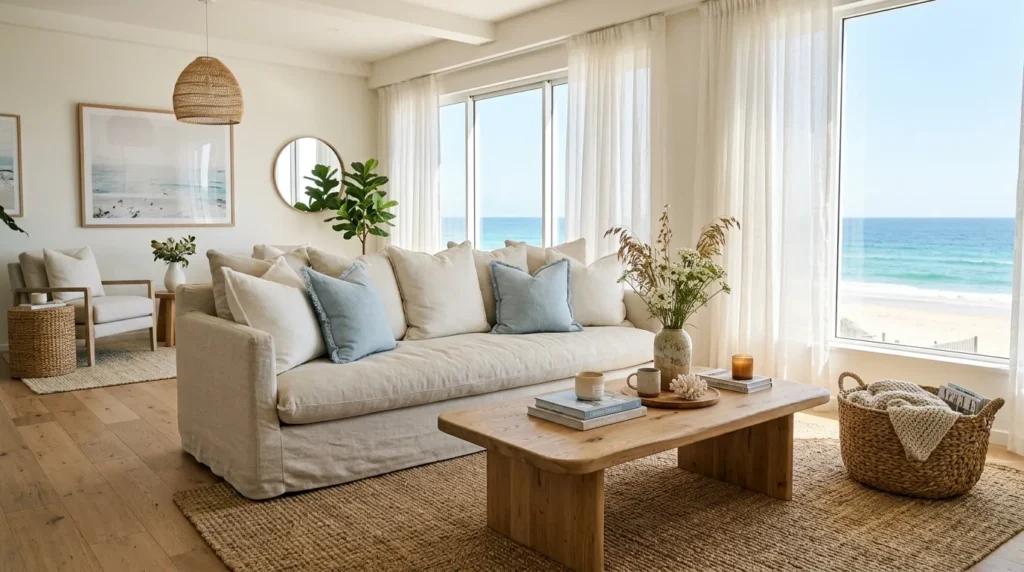
- A linen sofa gives the room an instantly relaxed texture.
- Slipcovers are practical for everyday family living.
- Soft white and oatmeal shades keep the seating area airy.
- Layered cushions add comfort without creating clutter.
A linen slipcovered sofa can become the perfect foundation for a relaxed coastal seating area. Choose an oversized silhouette in white, oatmeal, flax, or soft beige, then add cushions in subtle blue and natural textures. The slightly rumpled fabric keeps the room from feeling overly formal, while the generous shape encourages lounging. This style works particularly well for busy households because removable covers are easier to clean or refresh than delicate upholstery. I’ve noticed that linen also photographs beautifully in natural light, making the room feel bright, textured, and inviting without requiring lots of decorative accessories.
Balance the softness of the sofa with harder natural materials around it. A pale oak coffee table, woven basket, jute rug, or rattan side table can introduce structure while maintaining the relaxed coastal character. Avoid filling every cushion with patterns; two or three coordinated designs are usually enough. Keep the surrounding colors restrained so the linen remains the visual anchor. If the room feels too pale, introduce a weathered blue throw or darker wood accent for contrast. The result is comfortable and practical, with a polished appearance that still feels genuinely lived-in.
3. Pale Blue Accents
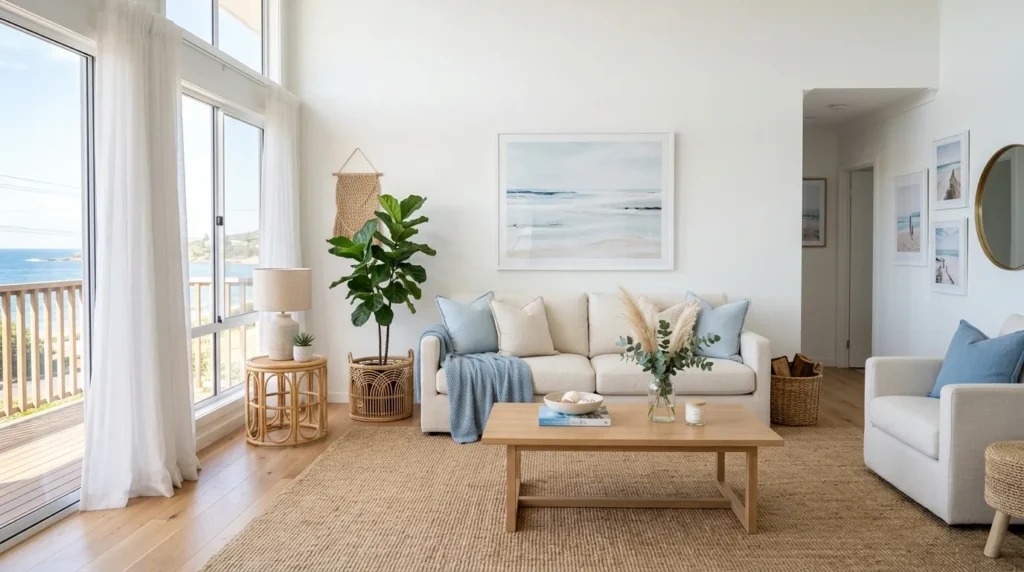
- Soft blue accents bring a fresh coastal touch.
- Small color moments are easy to update seasonally.
- Blue works beautifully with warm whites and natural wood.
- Layering different blue shades adds subtle visual depth.
Pale blue accents can bring the freshness of the coast into a living room without making the design feel overly themed. Start with a neutral foundation, then introduce dusty blue through cushions, throws, artwork, or a small ceramic piece. Soft shades such as powder blue, misty blue, and faded aqua work especially well with cream walls and light wood. The beauty of this approach is flexibility: you can add or remove blue pieces without changing the entire room. A contemporary coastal living room often feels most refined when blue appears as a subtle accent rather than the dominant color.
For a layered effect, combine two or three blue tones instead of using one exact shade everywhere. A pale blue cushion beside a slightly deeper throw can create depth while remaining understated. Natural wood, woven fibers, and warm white upholstery help prevent cooler blues from making the space feel sterile. I’ve seen this work well in rooms with large windows because daylight brings out the softness of the colors throughout the day. Finish with simple artwork and uncluttered surfaces, allowing the blue details to provide freshness while the neutral foundation keeps everything calm.
4. Rattan Coffee Table
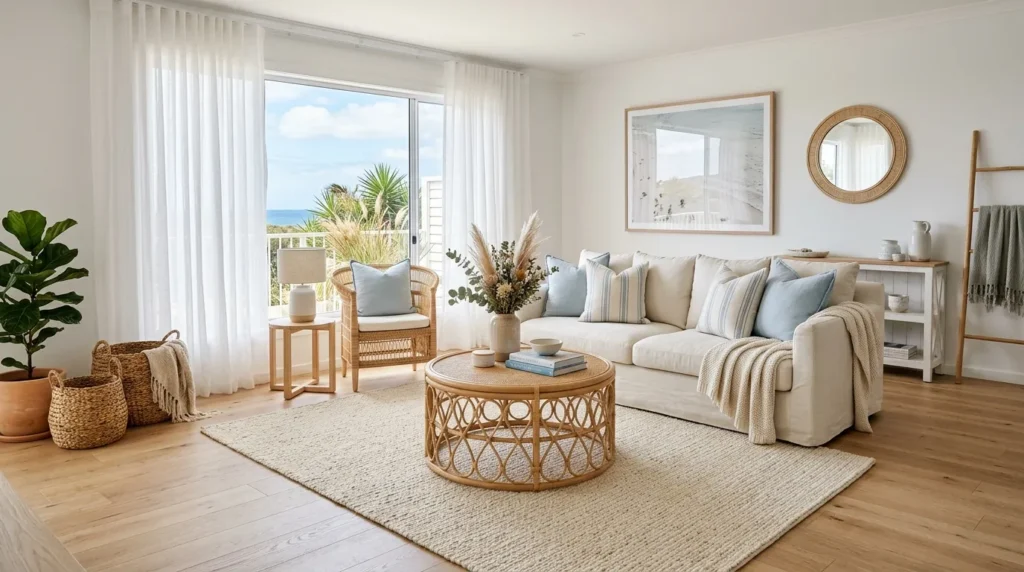
- Rattan adds natural texture without making the room feel heavy.
- Open-weave designs keep the center of the room visually light.
- Rounded shapes soften the clean lines of contemporary furniture.
- A simple tabletop provides useful everyday surface space.
A rattan coffee table can instantly introduce warmth and texture while keeping a coastal living room feeling contemporary. Choose a rounded or gently curved design with an open woven base, then pair it with a streamlined linen sofa and simple side chairs. The natural fibers soften modern furniture without making the space look overly rustic. A light wood or glass tabletop can keep the piece practical while preserving its airy appearance. This combination works especially well when the rest of the room uses pale neutrals, because the woven texture creates contrast without relying on strong colors or patterns.
Keep the tabletop intentionally simple so the rattan remains visible as part of the room’s texture story. A shallow ceramic bowl, a few books, or one small vase is enough for everyday styling. Place the table over a natural jute or wool rug to visually connect it with the seating area. In my experience, rounded coffee tables are particularly useful in smaller living rooms because they create easier walking paths than sharp rectangular corners. Pairing one with light upholstery, warm wood, and subtle blue accents creates a balanced space that feels relaxed without losing its contemporary character.
5. Whitewashed Wood Details
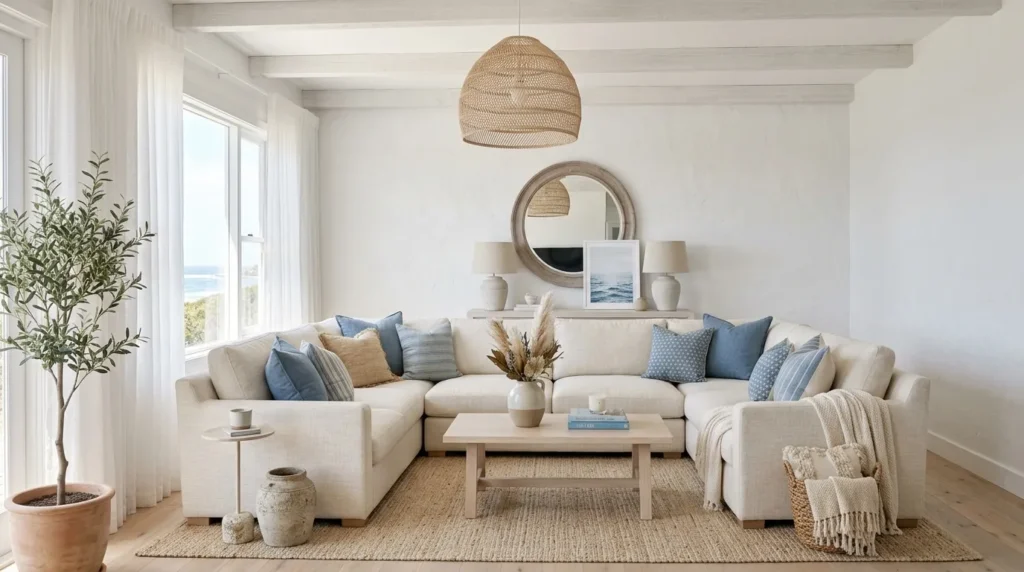
- Whitewashed wood brightens the room while adding natural character.
- Weathered finishes create subtle texture without looking dated.
- Pale timber pairs beautifully with blue and neutral textiles.
- Small wood accents can connect different furniture pieces.
Whitewashed wood details create a bright, relaxed foundation while adding the natural texture associated with coastal interiors. Use pale timber through a coffee table, console, shelving, or occasional chair rather than covering every surface in the same finish. The slightly chalky appearance of whitewashed wood works beautifully with cream upholstery, soft blue textiles, and warm beige rugs. Unlike glossy white furniture, it introduces visible grain and character, helping the room feel more layered. A few carefully chosen pieces are enough to establish the look without making the space feel like a themed beach house.
Choose finishes with subtle variation instead of perfectly uniform white paint. Natural grain, small knots, and lightly weathered surfaces add authenticity and prevent the palette from looking flat. I’ve noticed that whitewashed wood works especially well in rooms with plenty of sunlight because the texture becomes more noticeable as light moves across the surfaces. Balance the pale furniture with one or two darker accents, such as a charcoal lamp or aged brass frame. This keeps the room contemporary and gives the lighter materials enough contrast to remain visually interesting throughout the day.
ALSO READ: 27 Modern Rustic Living Room Ideas to Try Today
6. Textured Jute Rug
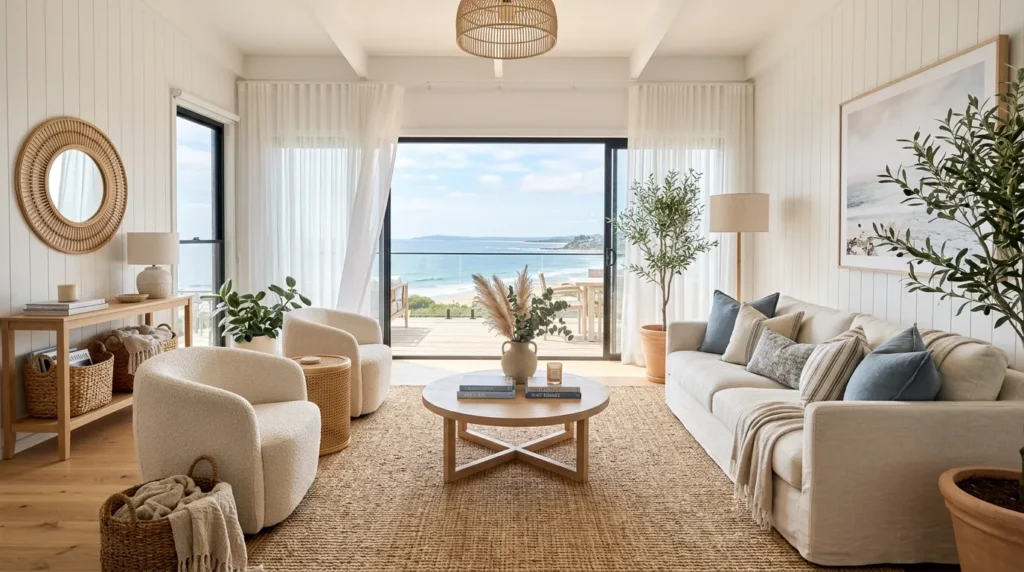
- Jute introduces warmth beneath sleek contemporary furniture.
- Natural texture helps soften a pale color palette.
- Large rugs visually connect separate seating pieces.
- Durable fibers suit casual, everyday living spaces.
A large jute rug can instantly ground a light coastal living room and make the seating arrangement feel complete. Choose a natural tan or honey-colored weave that extends beneath the sofa and front legs of nearby chairs. The rougher texture adds contrast against smooth linen upholstery and polished wood surfaces, giving the room more visual depth. Jute also brings warmth to pale interiors without introducing a strong color. For a contemporary coastal living room, this balance is useful because the rug connects natural materials with cleaner modern silhouettes while keeping the overall atmosphere relaxed and comfortable.
When choosing the size, make sure the rug is large enough to visually connect the main seating pieces rather than sitting like a small island beneath the coffee table. Layering a low-pile rug over jute can add softness if extra comfort is needed. Keep the surrounding furniture streamlined so the woven texture remains noticeable without overwhelming the room. In my experience, natural rugs are particularly effective in open-plan spaces because they help define the living area without requiring a physical divider. Finish with light curtains, neutral upholstery, and a few coastal blue accents for an easy, cohesive look.
7. Arched Floor Lamp
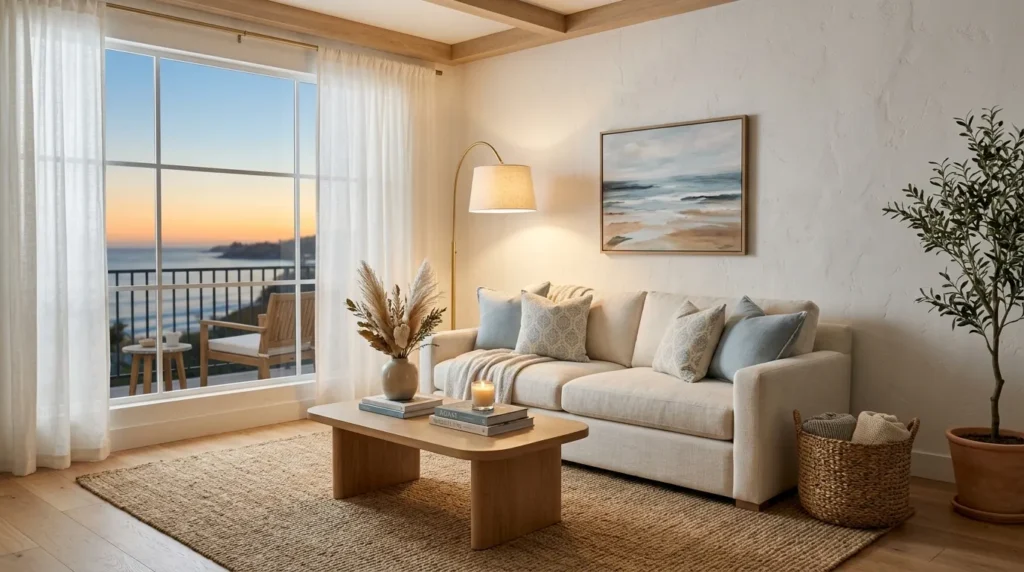
- A curved lamp adds height and sculptural interest.
- The arched shape softens straight furniture lines.
- Warm lighting makes evenings feel more inviting.
- A slim base preserves valuable floor space.
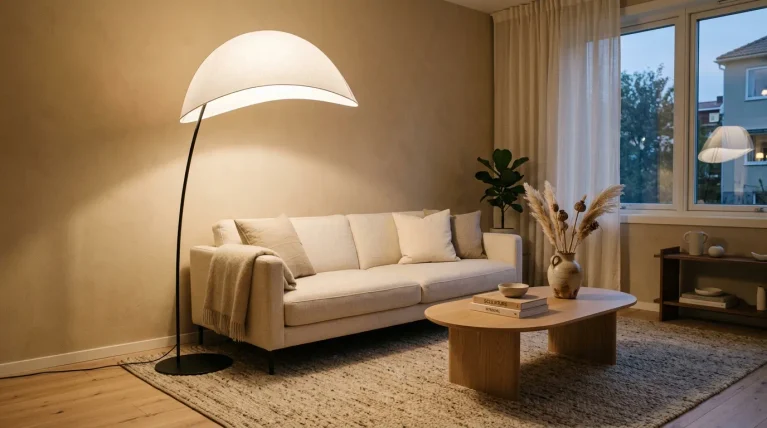
An arched floor lamp can add a graceful vertical element without making a coastal living room feel crowded. Place the slim base beside the sofa and allow the curved arm to extend over the seating area, creating a practical reading light and a sculptural focal point. Brushed brass, matte black, or natural wood finishes can work depending on the existing palette. The gentle curve contrasts with rectangular sofas and tables, giving the room a softer contemporary appearance. It is especially useful when you want more lighting without filling a small side table with another lamp.
Choose a warm LED bulb to create a comfortable glow after sunset, particularly if the room already receives plenty of daylight. Keep the shade simple so the lamp feels modern rather than ornate. I’ve noticed that an arched fixture can also visually connect the sofa with taller architectural elements, such as curtains or shelving. Position it where the curved arm does not obstruct walking paths or television viewing. Combined with natural rugs, linen upholstery, pale wood, and restrained blue accents, the lamp adds function and height while preserving the relaxed coastal atmosphere.
8. Organic Shaped Mirror
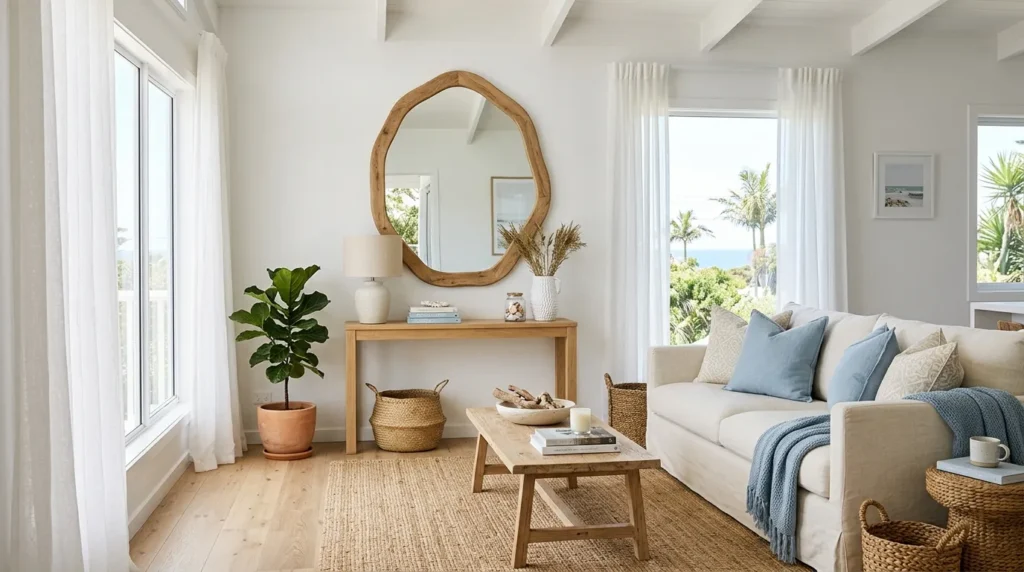
- Organic curves soften the clean geometry of modern furniture.
- A large mirror helps reflect natural daylight.
- Natural frames reinforce the room’s earthy materials.
- Reflective surfaces can make compact spaces feel larger.
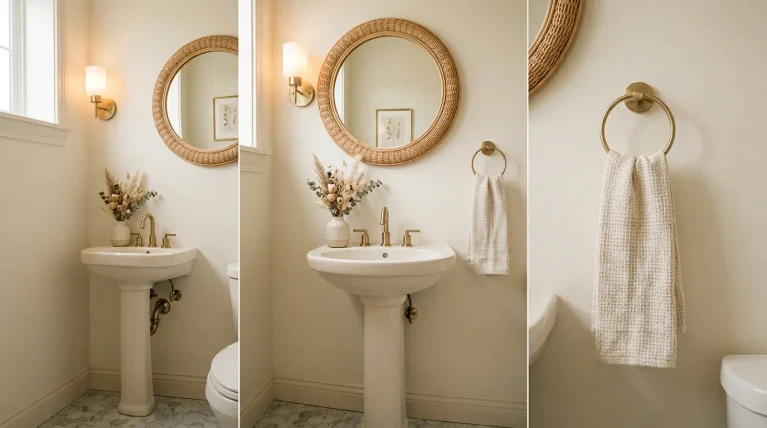
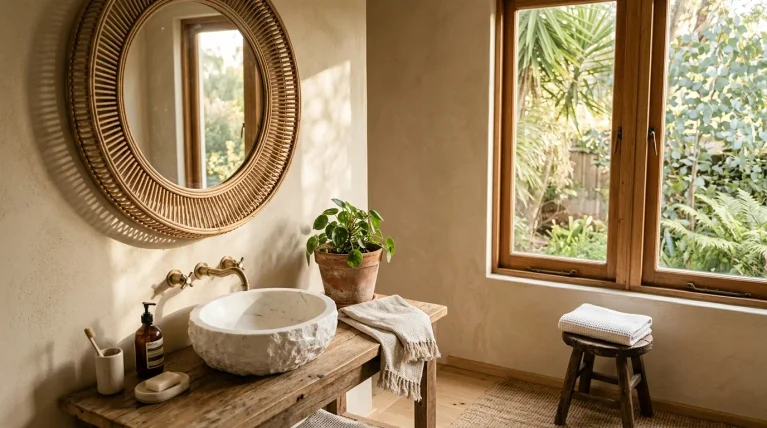
An organic-shaped mirror can become a subtle statement piece while making a bright living room feel even more spacious. Look for irregular, softly curved, or pebble-inspired shapes rather than perfectly rectangular designs. Place the mirror above a slim console or on a prominent wall where it can reflect a window, artwork, or another attractive part of the room. Natural oak, rattan, or light wood frames reinforce the coastal influence. The unusual silhouette adds personality without introducing strong color, making it easy to combine with cream upholstery, pale blue accents, and other natural materials.
Think carefully about what the mirror will reflect before hanging it. A beautiful window or textured wall can make the room appear brighter and deeper, while reflecting clutter can have the opposite effect. Keep the console styling restrained with one vase, a small lamp, or a few books. In my experience, oversized mirrors work particularly well in apartments and narrow living rooms because they visually extend the space. Pair the mirror with soft curtains and warm-toned flooring, and the reflective surface becomes both a functional piece and a sophisticated coastal-inspired design feature.
9. Blue Stripe Cushions
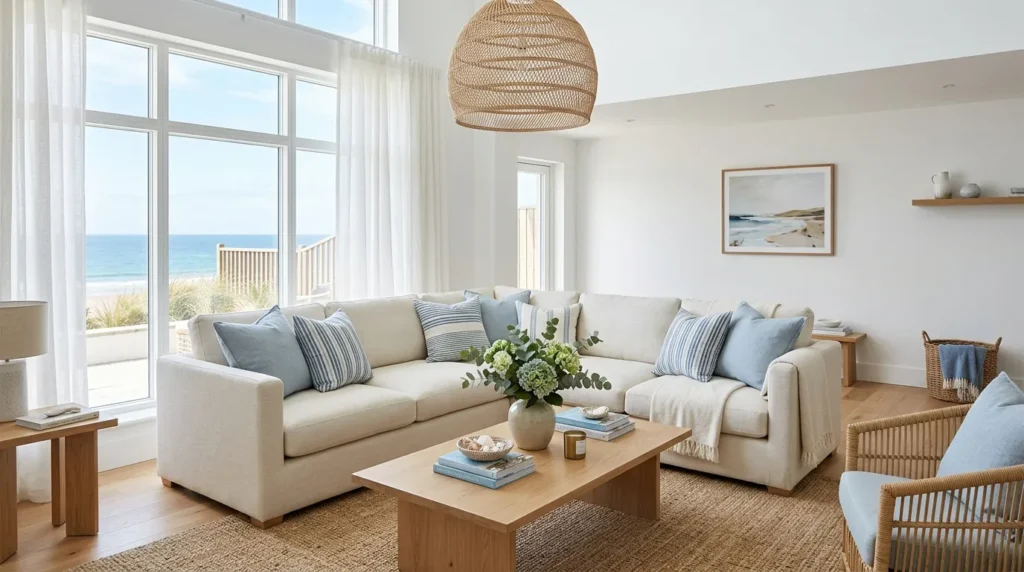
- Subtle stripes add classic coastal character.
- Narrow patterns prevent the seating from looking overly nautical.
- Blue and white create a naturally fresh combination.
- Mixing stripes with solids keeps the sofa balanced.
Blue stripe cushions are an easy way to introduce recognizable coastal character while keeping the overall room contemporary. Choose narrow or medium stripes in navy, faded blue, or soft denim against a cream or white background. Place them alongside solid neutral cushions so the pattern feels intentional rather than overwhelming. The simple linear design adds visual rhythm to a plain sofa and creates a connection with classic seaside interiors. This is also one of the easiest updates to change seasonally, making it useful when you want a fresh look without replacing larger furniture pieces.
For a polished arrangement, vary the cushion sizes while keeping the color palette consistent. A striped lumbar cushion can sit in front of a larger solid pillow, while a textured blue cushion adds another layer without introducing another pattern. I’ve seen many rooms look more sophisticated when only a few cushions carry the stripe, leaving the rest of the sofa quiet. Pair them with pale wood, woven textures, and warm white walls to soften the contrast. The result feels fresh and coastal but still refined enough for a modern everyday living room.
10. Natural Wood Ceiling
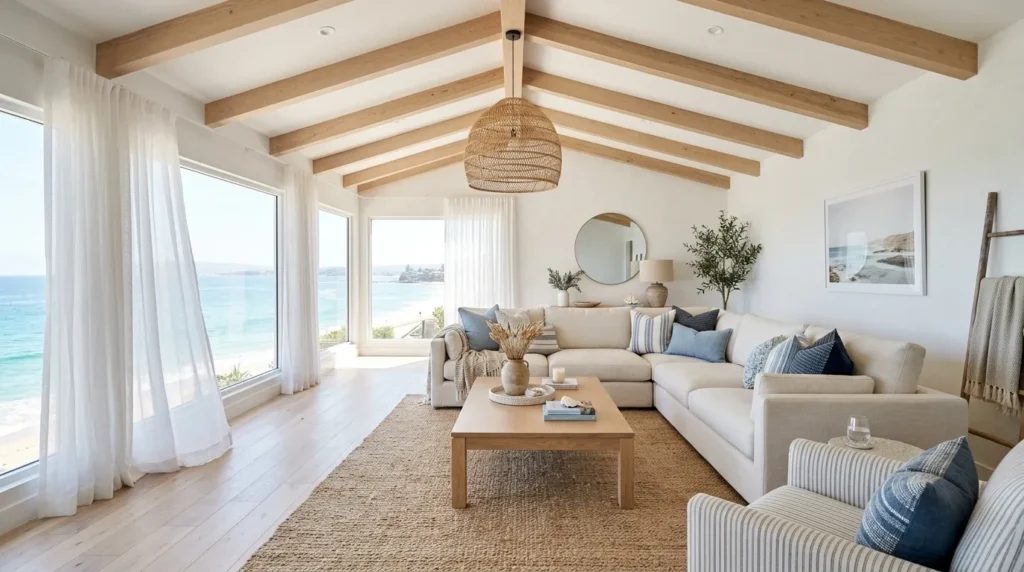
- Exposed wood adds warmth above a light seating area.
- Ceiling texture gives the room architectural character.
- Pale timber keeps the space bright and contemporary.
- Natural grain complements rattan and linen beautifully.
A natural wood ceiling can completely change the atmosphere of a bright living room by adding warmth from above. Use pale oak planks, lightly finished beams, or subtle timber paneling to introduce texture without making the space feel dark. Keep the walls and larger furniture pieces light so the ceiling becomes a natural architectural feature. Cream linen, woven accessories, and soft blue accents work especially well against warm wood. The result feels connected to coastal landscapes while maintaining clean contemporary lines. It is particularly effective in rooms with high ceilings where the upper surface needs more visual interest.
Choose a wood finish with visible grain and a relatively light tone to preserve the airy quality associated with coastal interiors. Avoid combining too many competing wood colors because the ceiling should feel like part of the room’s foundation. In my experience, repeating the ceiling wood through a coffee table or console creates a much more cohesive appearance. Add a large woven pendant for another natural texture, then keep wall decor simple. With generous daylight and neutral upholstery, the ceiling provides warmth and dimension while the rest of the room remains fresh and uncluttered.
ALSO READ: 22 Stylish Bed Without Headboard Ideas for Bedrooms
11. Sculptural Accent Chair
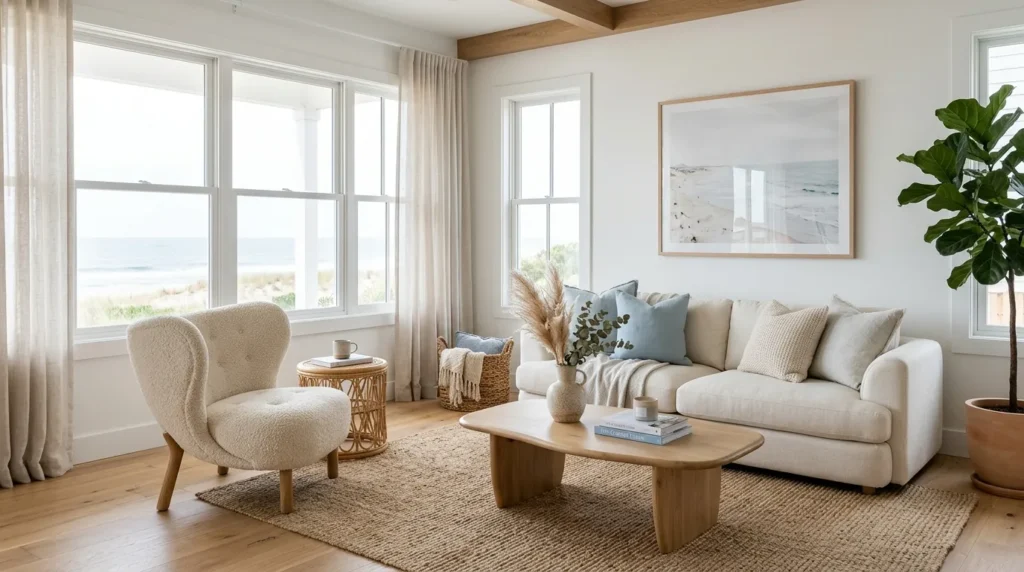
- A curved chair adds personality without overwhelming the room.
- Bouclé or linen upholstery introduces soft tactile contrast.
- Sculptural shapes make a simple seating arrangement feel designed.
- Neutral colors keep the chair easy to style.
A sculptural accent chair can give a coastal living room a modern designer touch while keeping the overall palette relaxed. Look for rounded backs, curved arms, or gently sculpted silhouettes in cream, oatmeal, pale beige, or muted blue upholstery. Position the chair slightly angled toward the sofa to create a natural conversation area rather than lining every seat against the walls. The curved shape introduces softness beside rectangular tables and shelving. This works particularly well when the rest of the room uses simple furniture because one distinctive chair can provide personality without requiring numerous decorative pieces.
Choose an upholstery texture that supports the relaxed coastal mood. Bouclé adds softness, while linen feels lighter and more casual. Keep the chair visually connected to the room by repeating one of its colors in nearby cushions or artwork. A small woven side table beside it can provide a practical surface without competing with the chair’s shape. I’ve noticed that one sculptural piece often has more impact than several small accessories. Finish the arrangement with a natural rug and soft daylight, creating a comfortable seating corner that feels contemporary, useful, and visually memorable.
12. Minimal Coastal Fireplace
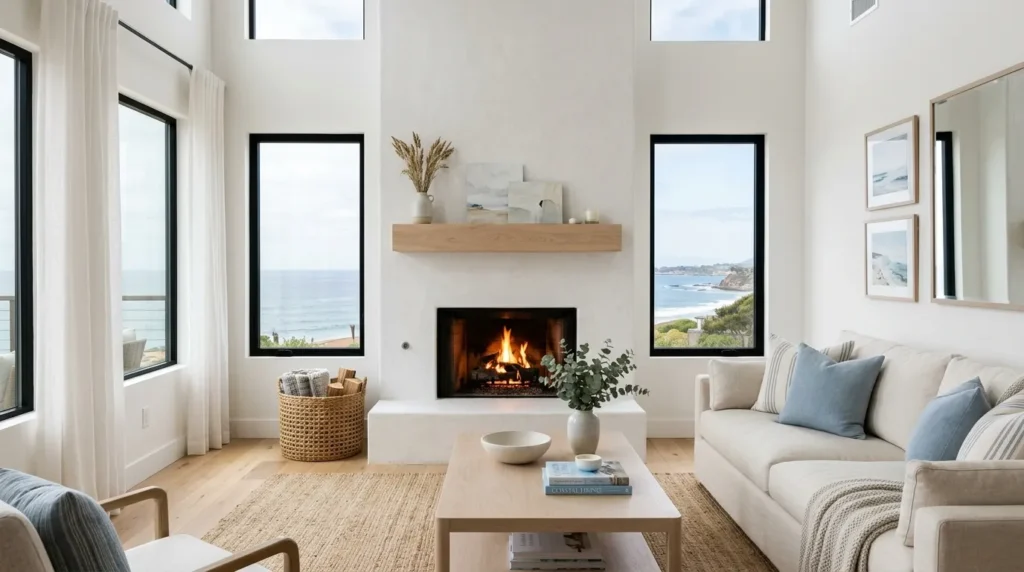
- A streamlined fireplace creates a strong architectural anchor.
- Pale finishes keep the feature bright and contemporary.
- Natural materials prevent the fireplace from feeling overly sleek.
- Simple styling lets the architecture remain the focus.
A minimalist fireplace can become the architectural centerpiece of a coastal living room without making the design feel traditional. Choose a clean plaster surround, pale stone finish, or simple white built-in form with very little ornamentation. A light oak mantel can introduce warmth, while a few natural accessories soften the hard surface. Arrange the sofa and chairs toward the fireplace to create a comfortable gathering zone. The simple structure provides visual focus, allowing the rest of the room to remain light and uncluttered. This approach works especially well in contemporary homes with clean architectural lines.
Keep the mantel styling restrained because the fireplace itself already provides enough visual weight. One ceramic vase, a small piece of artwork, or a natural branch can be sufficient. If the fireplace is functional, choose materials and finishes appropriate for heat exposure and follow local installation requirements. I’ve seen this approach work beautifully when the surrounding room uses linen, pale wood, and woven textures because those softer elements balance the fireplace’s solid structure. Add subtle blue accents and warm evening lighting, and the result feels sophisticated, comfortable, and connected to a relaxed coastal aesthetic.
13. Sheer Linen Curtains
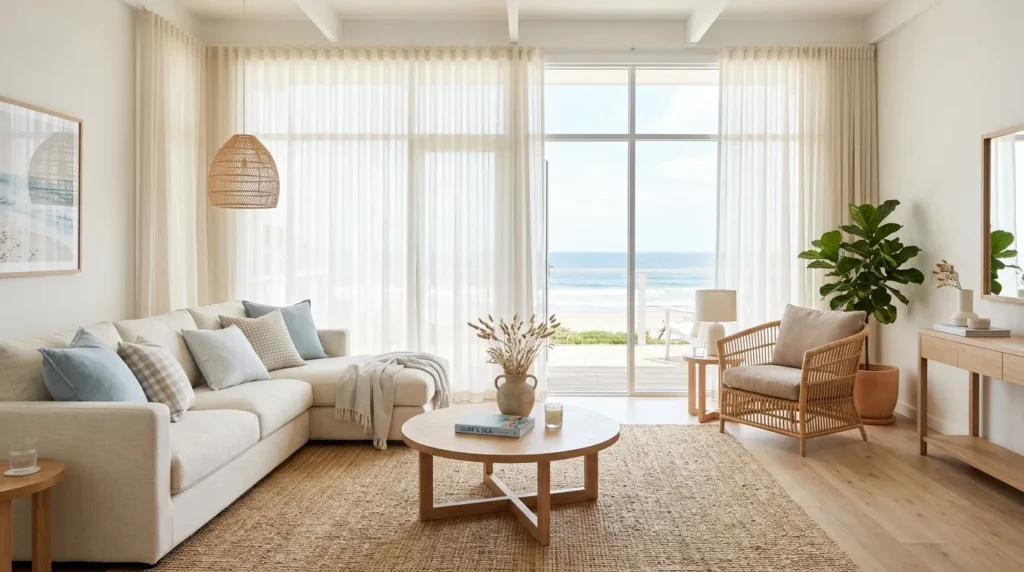
- Sheer curtains keep the room bright and breezy.
- Floor-length fabric adds softness and visual height.
- Natural linen texture complements wood and rattan.
- Layered panels provide flexibility for stronger sunlight.
Sheer linen curtains can make a living room feel instantly lighter, softer, and more connected to natural daylight. Choose floor-length panels in ivory, warm white, or soft oatmeal, and mount the rod close to the ceiling to emphasize height. The loosely woven fabric filters sunlight without blocking it completely, creating a gentle glow across pale walls and natural furniture. This treatment works especially well in coastal-inspired rooms because it introduces movement and texture while keeping the overall look clean. It also provides privacy without sacrificing the bright, open atmosphere that makes these interiors feel welcoming.
For a more flexible setup, layer sheer panels with simple woven or blackout curtains that can close when stronger afternoon sunlight becomes uncomfortable. Keep the curtain color close to the wall tone so the windows feel taller and the fabric does not compete with furniture. I’ve noticed that linen-look curtains are especially useful when genuine linen feels impractical because they can offer a similar relaxed texture with easier maintenance. Pair them with pale wood, cream upholstery, and woven accessories, and the windows become a soft architectural element that completes the room without adding visual heaviness.
14. Weathered Wood Console
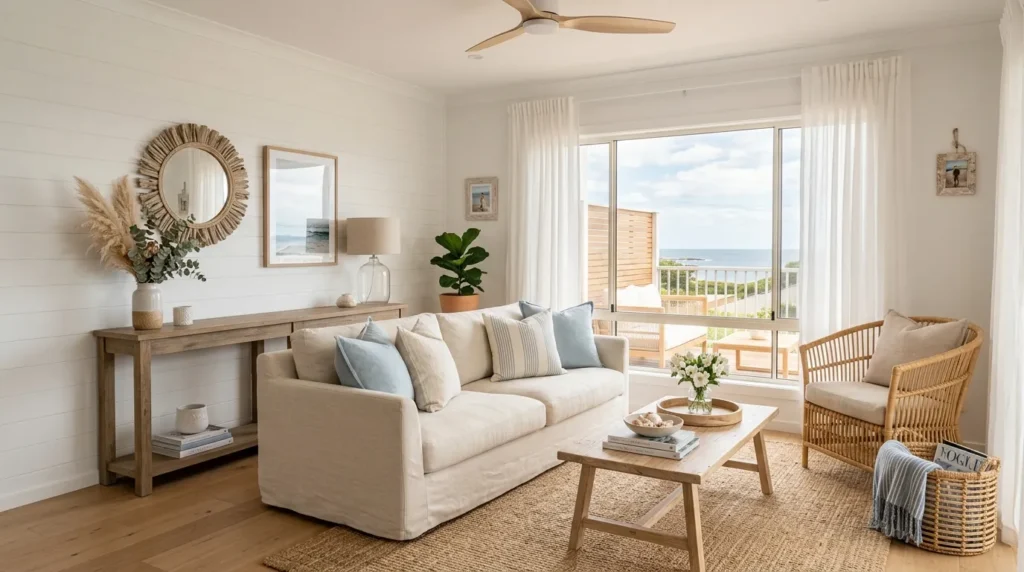
- Weathered timber adds character beside contemporary furniture.
- A slim console provides useful storage and display space.
- Distressed finishes bring subtle coastal texture.
- Neutral styling keeps the piece looking sophisticated.
A weathered wood console can bring character and warmth to a contemporary coastal living room without making it feel rustic. Choose a slim design with visible grain, a lightly distressed finish, or softly bleached coloring. Place it behind a sofa or along an open wall where it can provide a practical surface for lamps, ceramics, books, or artwork. The aged texture contrasts beautifully with clean-lined contemporary furniture. Rather than looking old-fashioned, carefully chosen weathered timber can make the room feel more collected and relaxed while still maintaining the polished simplicity associated with modern coastal interiors.
Keep the console styling deliberately edited. A pair of ceramic vessels, one table lamp, and a small stack of books can create enough interest without filling the surface. If the room already contains several wood pieces, choose a finish that sits within the same warm family rather than trying to match every grain exactly. In my experience, slight variations between natural wood tones make a space feel more authentic. Add woven baskets underneath for hidden storage, then pair the console with pale walls and linen curtains so its weathered texture becomes a subtle focal point rather than overwhelming the room.
15. Layered Neutral Textures
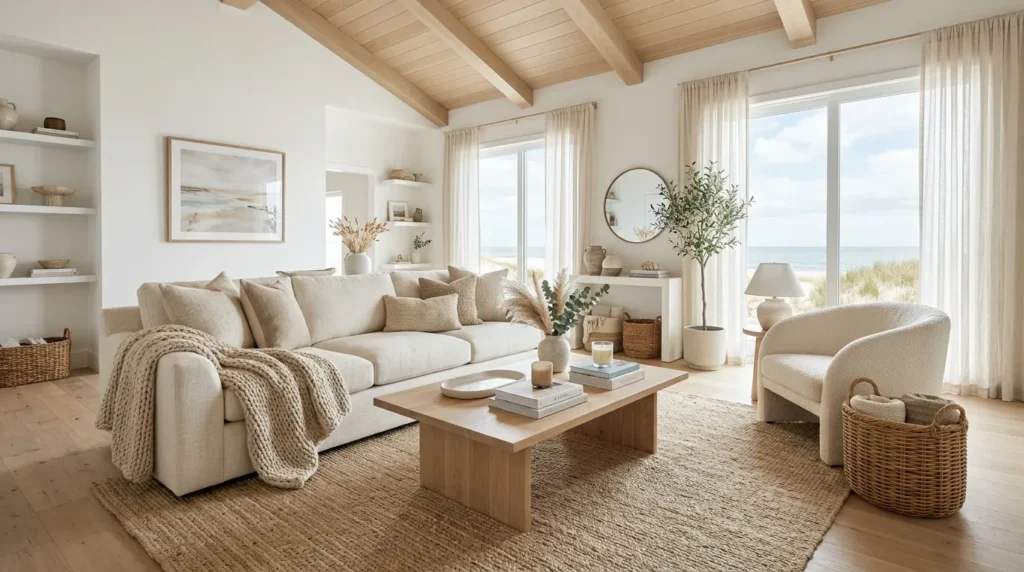
- Multiple textures create depth without relying on bold colors.
- Linen, wool, jute, and rattan work naturally together.
- Tonal layering keeps a neutral room visually interesting.
- Different surfaces make the space feel more comfortable and lived-in.
Layering neutral textures is one of the easiest ways to make a coastal living room feel rich without adding strong colors. Start with a cream or ivory sofa, then introduce linen cushions, a chunky wool throw, a jute rug, woven baskets, and pale wood furniture. Each material catches light differently, creating subtle variation even when the colors remain within the same family. This keeps the room calm while preventing it from looking flat. The approach works especially well for contemporary interiors because the clean palette preserves a modern appearance while natural surfaces bring warmth and comfort.
Think about texture from floor to ceiling rather than adding everything at the same height. A woven rug grounds the seating, linen upholstery softens the furniture, and a rattan pendant can add interest overhead. Keep patterns minimal and let the materials provide most of the visual detail. I’ve noticed that this strategy is especially helpful when decorating rental spaces because texture can create personality without permanent changes. Add a few muted blue accents if you want a subtle coastal reference, then allow natural daylight and warm evening lamps to highlight the different surfaces throughout the room.
16. Curved Bouclé Sofa
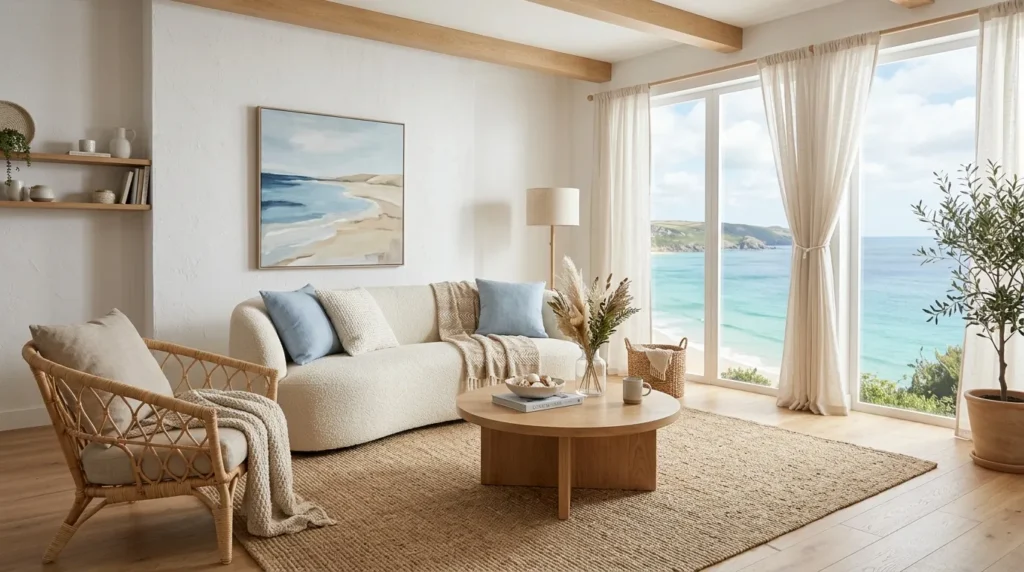
- Rounded upholstery creates a softer contemporary silhouette.
- Bouclé adds cozy texture without heavy visual weight.
- Cream tones keep the seating area bright and versatile.
- Curved seating encourages a more conversational layout.
A curved bouclé sofa can give a coastal living room a fresh contemporary shape while keeping the atmosphere soft and inviting. Choose a rounded silhouette in cream, ivory, or warm beige, then pair it with pale blue cushions and natural wood furniture. The curved profile breaks up the straight lines commonly found in modern interiors and creates a more relaxed seating arrangement. Bouclé adds tactile interest without requiring bold patterns or colors. This combination works especially well when you want the room to feel sophisticated but still comfortable enough for everyday lounging, conversation, and casual gatherings.
Give the sofa enough breathing room so its shape remains visible from across the room. A round coffee table can reinforce the curved lines, while a rectangular rug can provide contrast and visually anchor the seating zone. In my experience, rounded furniture works particularly well in open-plan spaces because it creates softer transitions between different areas. Keep nearby accessories simple, using woven baskets, pale timber, and ceramic pieces to maintain balance. Add sheer curtains for filtered daylight, and the combination of soft upholstery, natural textures, and gentle curves creates a polished yet relaxed coastal atmosphere.
17. Limewash Accent Wall
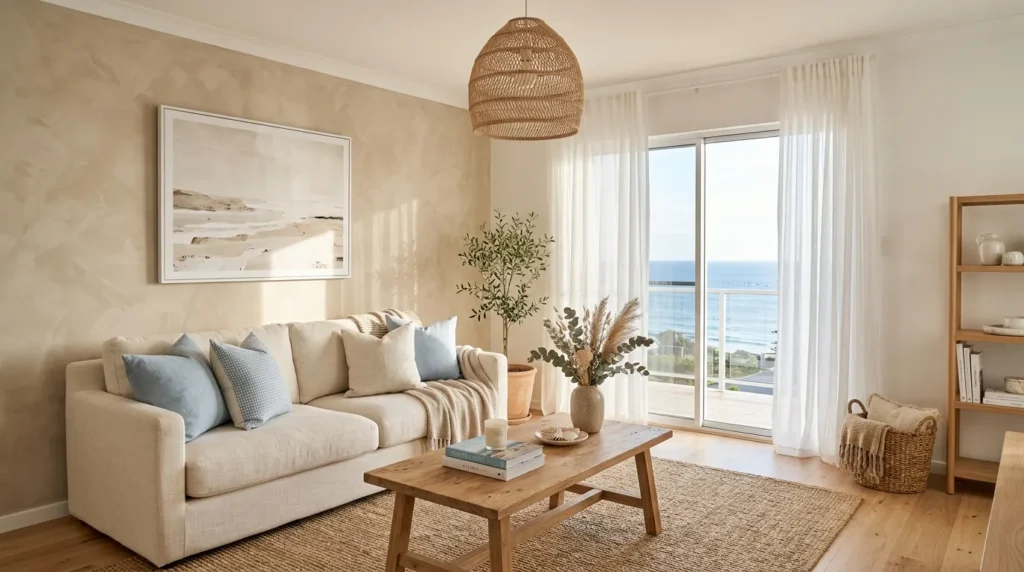
- Limewash creates subtle movement across an otherwise plain wall.
- Soft beige tones add warmth without strong contrast.
- The organic finish works beautifully with natural materials.
- Uneven texture gives the room a handcrafted appearance.
A limewash accent wall can give a coastal living room depth through color variation rather than bold decoration. Choose a warm white, sandy beige, pale taupe, or muted blue-gray finish, then apply it with visible but subtle movement across the surface. The soft cloudy effect creates an organic backdrop for contemporary furniture and natural materials. Unlike a flat painted wall, limewash changes gently as daylight moves across the room, making the surface feel more dimensional. It is an excellent choice when you want architectural interest without installing panels, wallpaper, or other permanent decorative features.
Keep the surrounding furniture relatively simple so the wall texture remains noticeable. Cream linen, pale oak, woven fibers, and muted blue accessories complement the irregular finish without competing with it. Before applying the product, test the color and technique on a small section because limewash can appear different depending on lighting and wall texture. I’ve noticed that warm neutral limewash is particularly versatile because it works across different seasons and decor changes. Add soft curtains and natural rugs, and the wall becomes a quiet focal point that gives the room warmth, depth, and personality.
18. Oversized Coastal Artwork
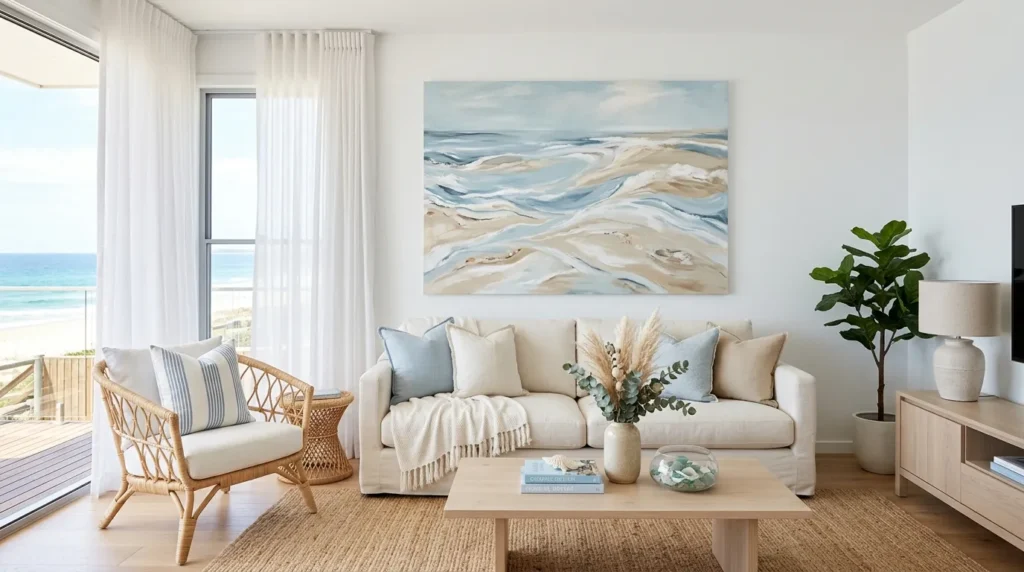
- One large artwork piece creates an instant focal point.
- Ocean-inspired colors reinforce the coastal connection subtly.
- Oversized proportions help balance large sofas.
- Abstract designs keep the room contemporary and sophisticated.
Oversized artwork can transform a simple living room wall into a memorable focal point without filling the space with small decorations. Choose an abstract piece inspired by ocean colors, sandy landscapes, soft horizons, or flowing natural forms. Look for muted blue, ivory, beige, and warm gray rather than overly bright nautical imagery. A large canvas works especially well above a substantial sofa because its scale balances the furniture and gives the wall enough presence. The result feels distinctly coastal while remaining artistic and contemporary, making the room look curated rather than decorated around a specific theme.
Choose artwork that repeats one or two existing colors from the room so the piece feels connected to the overall palette. Leave enough breathing space around the canvas instead of surrounding it with numerous smaller frames. A simple wood frame can add warmth, while a frameless canvas creates a cleaner modern appearance. I’ve seen large abstract artwork work particularly well in open-plan homes because it can visually anchor the living area from a distance. Pair it with linen seating, natural wood, woven textures, and soft lighting, and the artwork becomes the finishing element that brings the entire coastal scheme together.
19. Natural Stone Fireplace
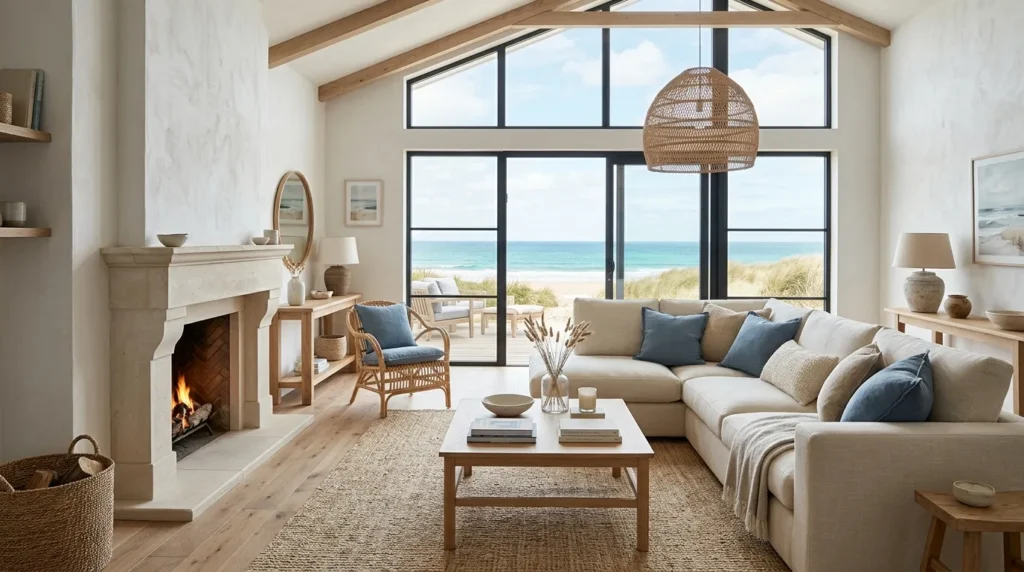
- Natural stone adds organic texture and architectural weight.
- Light stone keeps the room feeling bright and airy.
- A simple fireplace creates a strong visual anchor.
- Wood and linen soften the harder stone surface.
A natural stone fireplace can give a coastal living room a grounded architectural focal point while keeping the overall design contemporary. Choose pale limestone, travertine, or softly textured stone in warm cream, ivory, or beige tones. The organic surface introduces subtle variation that pairs beautifully with smooth linen upholstery and pale wood furniture. Keep the fireplace shape simple and streamlined so the material provides most of the visual interest. This approach works particularly well in spacious rooms because the fireplace creates a strong anchor without relying on dark colors or heavy traditional detailing.
Balance the stone with softer materials throughout the seating area. A linen sofa, woven rug, rattan basket, and light oak table can prevent the fireplace from feeling too solid or formal. Keep the mantel styling minimal with one ceramic vessel or a small piece of natural artwork. In my experience, pale stone looks especially beautiful when daylight moves across its surface because the natural variations become more noticeable. Add warm lighting for evenings, and the fireplace becomes both a practical gathering point and a refined architectural feature that complements a relaxed coastal color palette.
20. Coastal Greenery
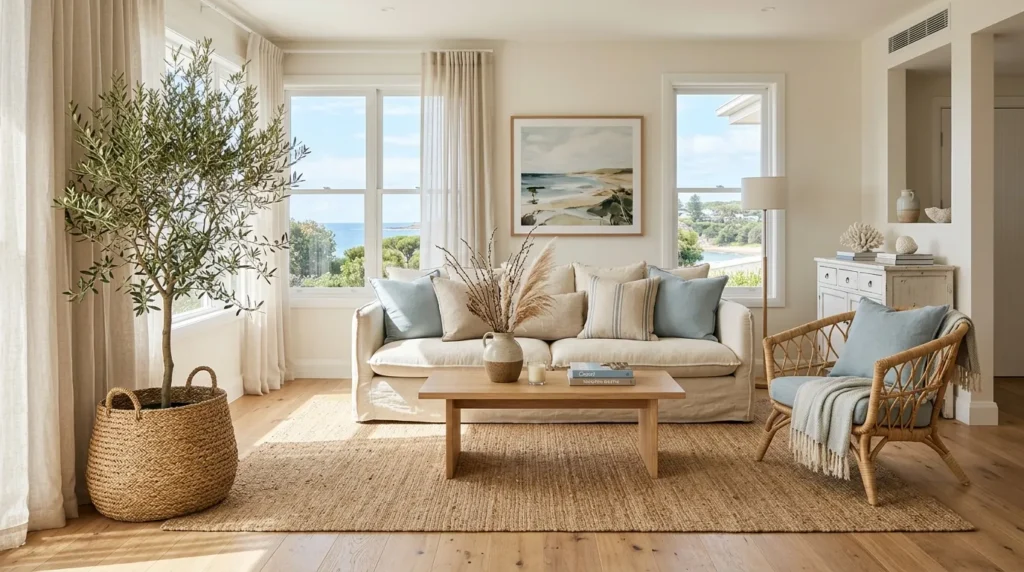
- Green plants bring natural life into the seating area.
- Leafy shapes complement coastal materials beautifully.
- Large plants can fill empty corners without clutter.
- Natural planters reinforce the organic color palette.
Coastal greenery can bring a fresh, natural layer to a contemporary living room without relying on obvious seaside accessories. Place a tall olive tree, bird of paradise, or similar sculptural plant beside the sofa or in an empty corner. Choose woven baskets, ceramic pots, or light stone planters that complement the existing materials. Green foliage adds color while remaining softer than bold painted accents. It also helps break up large areas of cream, beige, and white, giving the room a more lived-in appearance. A single substantial plant can often make a bigger impact than several tiny decorative pieces.
Choose plants according to the actual light conditions rather than selecting purely for appearance. A bright room with filtered sunlight can support many options, while darker corners may need more shade-tolerant varieties. Keep planters proportional to the furniture so the greenery feels intentional rather than crowded. I’ve noticed that one tall plant beside a large sofa can visually balance the room and soften hard corners. Combine the greenery with pale wood, linen, jute, and woven accents, then keep the rest of the accessories restrained. The result feels fresh, relaxed, and naturally connected to coastal surroundings.
21. Contemporary Coastal Gallery
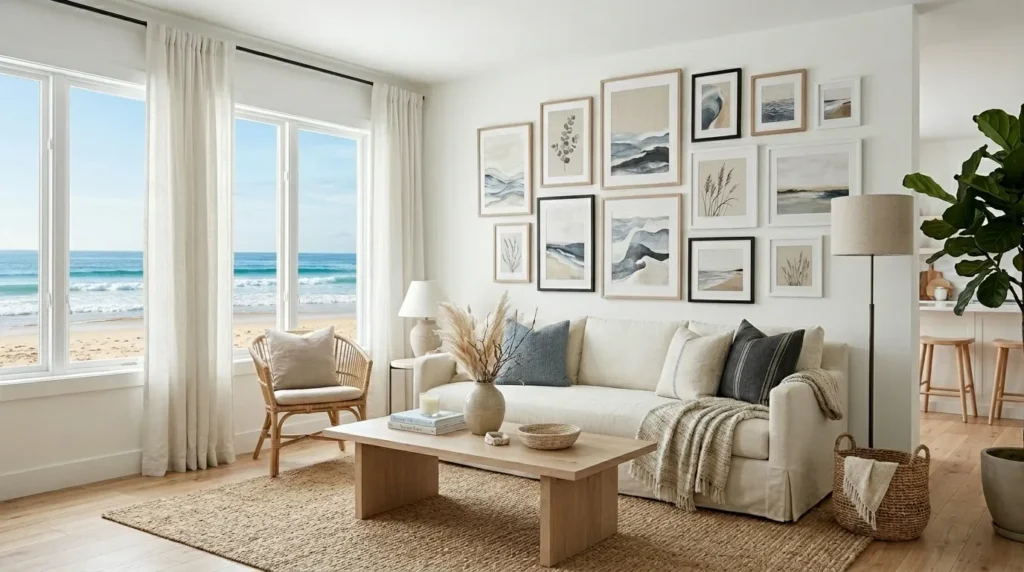
- A curated gallery adds personality without overwhelming the room.
- Coastal colors can appear through artwork rather than accessories.
- Mixed frames create a collected, contemporary appearance.
- Repeated tones help connect different pieces visually.
A curated gallery wall can bring personality to a contemporary coastal living room while keeping the design sophisticated and personal. Mix abstract ocean-inspired artwork with botanical prints, minimalist landscapes, and simple line drawings in shades of sand, ivory, faded blue, and charcoal. Use a combination of natural wood, white, and slim black frames to create variety without visual chaos. Arrange the collection above a sofa or along a prominent wall, keeping the overall composition balanced. This approach allows coastal influences to appear through art rather than predictable nautical decorations, giving the room a more modern identity.
Plan the arrangement on the floor before hanging the frames so you can adjust spacing and proportions easily. Start with the largest artwork and build around it using smaller pieces, leaving consistent gaps between each frame. In my experience, repeating two or three colors throughout a gallery makes very different artworks feel connected. Avoid filling every available section of the wall because negative space helps the collection breathe. Pair the gallery with linen furniture, natural wood, woven textures, and soft lighting, creating a room that feels collected, comfortable, and distinctly coastal without becoming overly themed.
Conclusion
A coastal-inspired living room doesn’t have to be filled with nautical decorations to feel fresh and inviting. The right combination of natural materials, soft colors, comfortable furniture, texture, greenery, and thoughtful lighting can create a space that feels both contemporary and relaxed. A contemporary coastal living room can work beautifully in different home sizes and styles, whether you prefer subtle neutral tones or gentle blue accents. Save this post on Pinterest so you can revisit your favorite ideas when decorating. Try one change at a time, and share these ideas with someone planning a living room refresh. Small updates can create a surprisingly beautiful transformation.