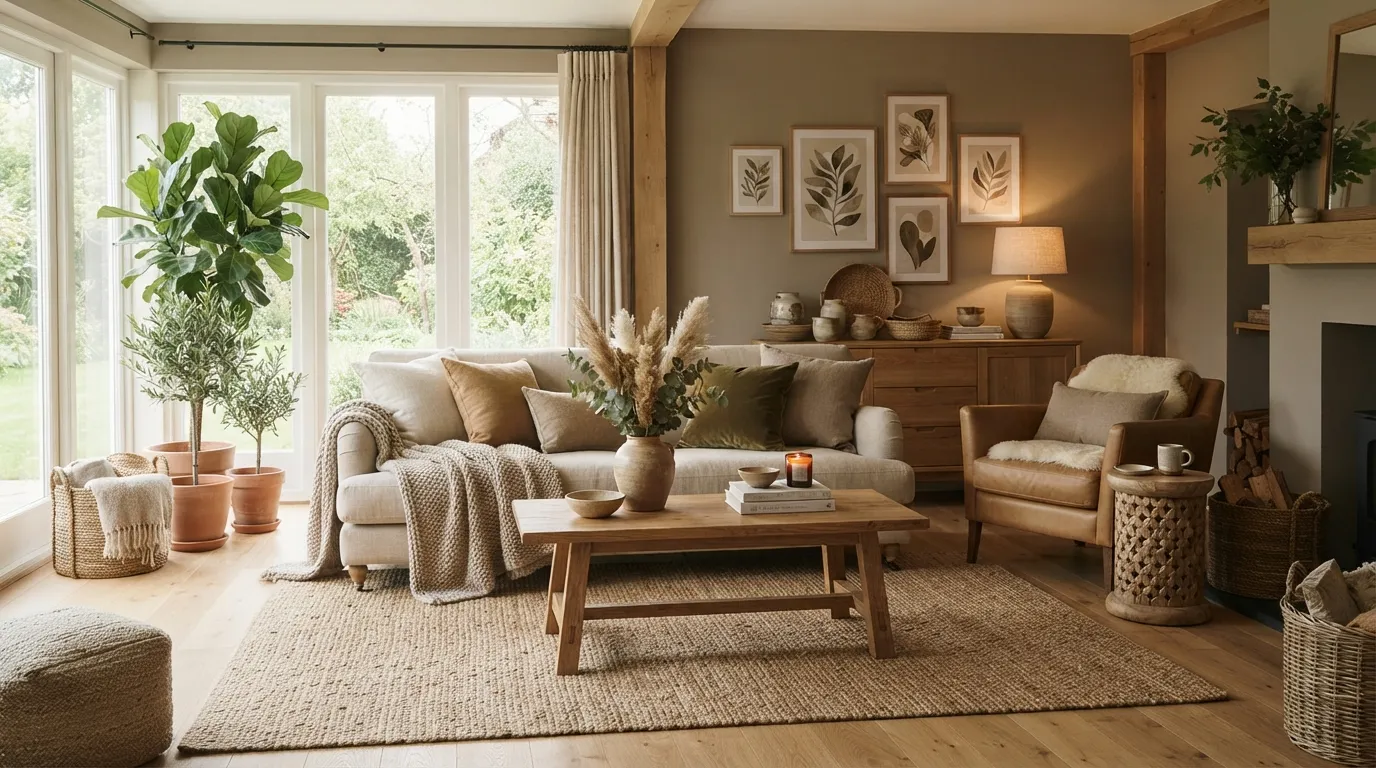
Your living room can feel warm, natural, and inviting without a complete makeover. Sometimes, a few thoughtful changes are all it takes to make the space feel like home.
These cozy earthy living room ideas are designed to help you create a room filled with natural textures, warm colors, comfortable furniture, and relaxed character. From woven rugs and linen seating to clay accents, wood tones, greenery, and soft lighting, each idea offers an easy way to bring more warmth into your space. If your room currently feels plain, cold, or unfinished, you’ll find practical inspiration here. In my experience, combining just a few natural materials can completely change how a room feels without requiring expensive furniture or major renovations. Save your favorite ideas and start with the change that feels easiest.
- Layered Jute Rug
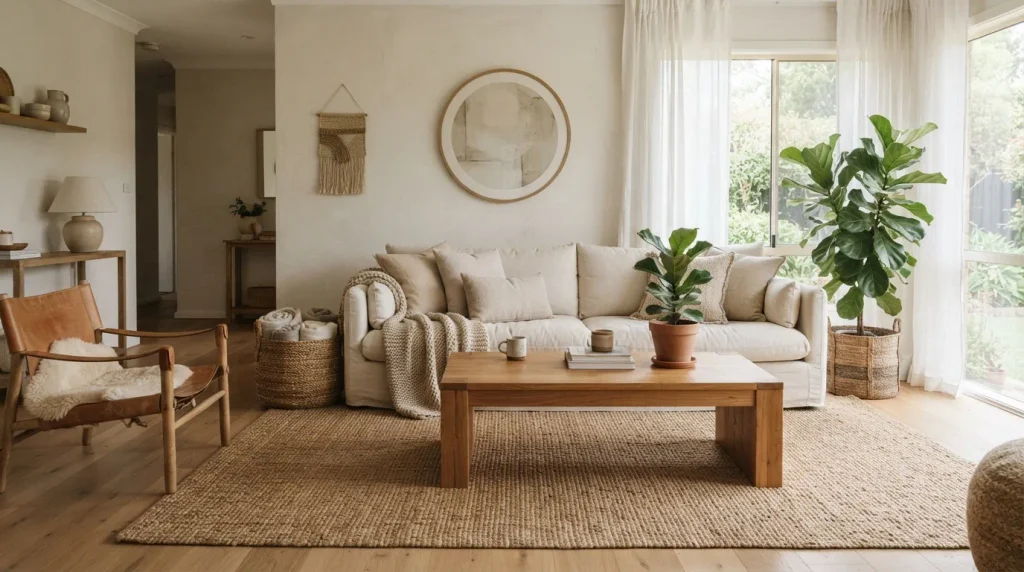
- A woven jute rug instantly adds warmth and texture underfoot.
- Choose a larger size to visually connect the seating area.
- Keep the rug pattern subtle when the room already has layered decor.
- Pair rough fibers with soft linen or cotton for balance.
Earthy warmth starts with the floor, and a natural jute rug can instantly anchor a living room without making it feel heavy. Choose a woven rug in oatmeal, sand, or muted tan, then layer it beneath a cream sofa and warm wood coffee table. The texture adds softness while keeping the palette grounded and relaxed. In my experience, a rug with visible fibers also makes simple furniture look more intentional. Keep the pattern subtle, especially in smaller rooms, so the flooring becomes a calm foundation rather than another competing focal point.
A jute rug works especially well when you want cozy earthy living room ideas that feel practical rather than overly styled. Place the rug large enough for at least the front legs of the sofa and nearby chairs to sit on it, which visually connects the seating area. Add a low wooden table, linen cushions, and one or two ceramic pieces for balance. Natural daylight will highlight the woven texture beautifully, while a warm floor lamp keeps the room inviting after sunset. The result feels layered, comfortable, and naturally collected.
Also Read : 24 Boho Patio Decor Ideas for a Cozy Outdoor Retreat
- Warm Wood Accents
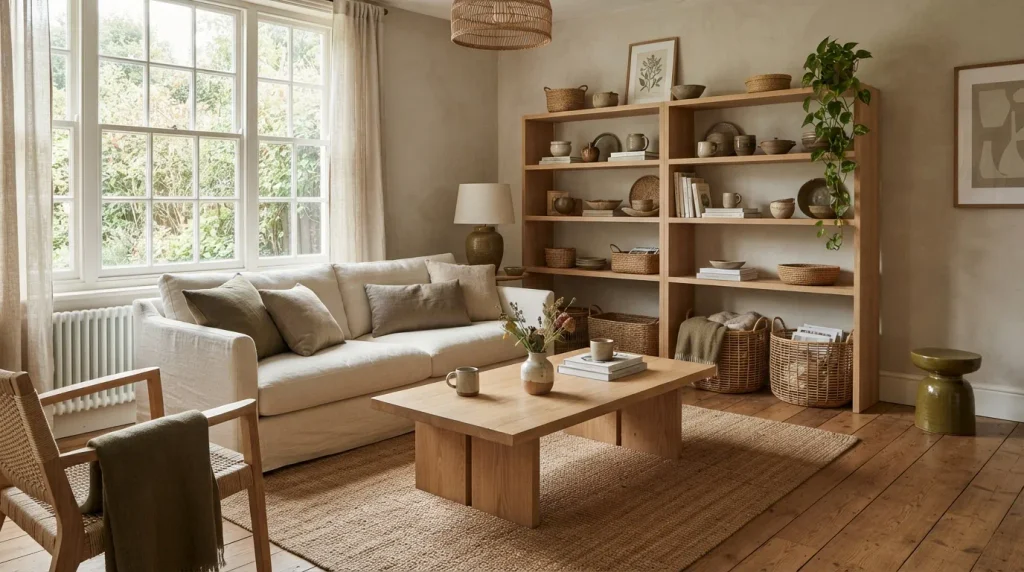
- Wood furniture brings natural character without requiring bold decoration.
- Mix two or three complementary wood tones for a collected look.
- Rounded wooden pieces can soften sharp furniture lines.
- Use shelves to display books, baskets, plants, and ceramics.
Warm wood has a quiet way of making a living room feel settled, especially when the rest of the decor stays simple. Bring in a light or medium-toned oak coffee table, exposed wood shelving, or a vintage wooden bench to introduce organic character. Pair those pieces with soft beige upholstery and creamy textiles so the room does not become visually hard. I’ve noticed that mixing two or three wood tones can look richer than matching everything perfectly. Small variations in grain and finish help the space feel personal instead of showroom-like.
The best earthy interiors usually balance wood with softer surfaces, so let timber pieces provide structure while fabrics bring comfort. A wooden coffee table with rounded edges can soften a boxy seating arrangement, while open shelves give you room for books, baskets, plants, and handmade ceramics. Keep the surrounding colors muted—think clay, mushroom, olive, and warm white. This approach suits both modern and traditional homes because the materials do most of the decorating. It also creates a flexible base, making seasonal updates easy without replacing your main furniture.
Also Read : 24 Easter Flower Arrangements for a Beautiful Spring Home
- Clay Accent Wall
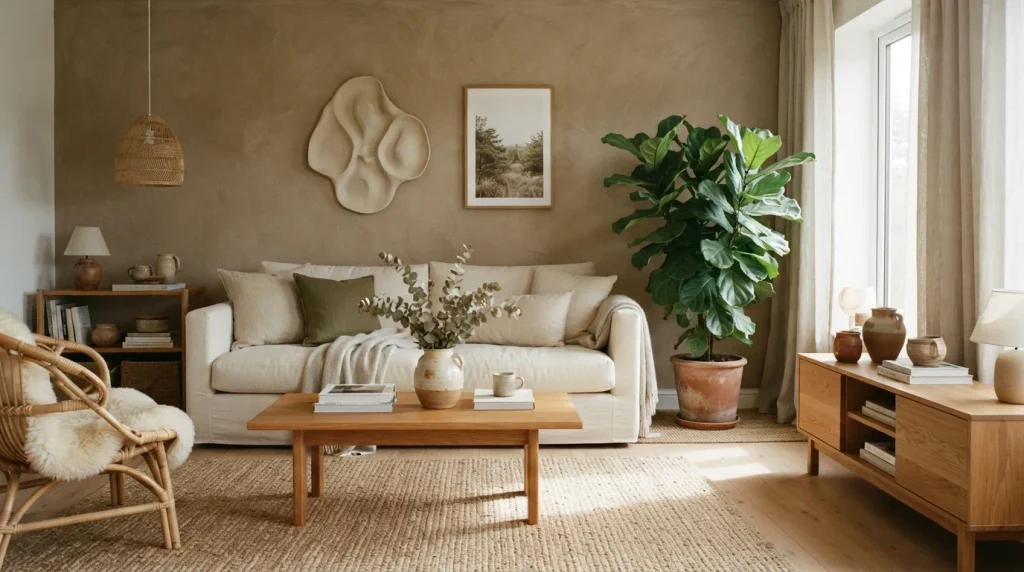
- A muted clay wall adds depth without overwhelming the room.
- Terracotta, adobe, and dusty cinnamon shades work beautifully with wood.
- Repeat the wall color through small accessories for visual balance.
- Keep surrounding textures natural and understated.
A soft clay-colored wall can change the entire character of a living room with surprisingly little effort. Choose a muted terracotta, dusty cinnamon, or warm adobe shade rather than a bright orange, then balance it with ivory upholstery and natural wood. The color adds depth without overwhelming the room, especially when used across one feature wall. For a more seamless look, repeat the clay tone through a small vase, cushion, or artwork. That quiet repetition helps the room feel coordinated while preserving the relaxed, natural quality you want from an earthy space.
If your living room feels flat despite having comfortable furniture, a clay accent wall can provide the missing visual anchor. Use it behind the sofa, fireplace, or main seating area so the color naturally frames the room’s focal point. Soft daylight will reveal warm undertones, while lamps with warm bulbs create a deeper evening glow. Keep accessories restrained and choose materials such as linen, rattan, stoneware, and unfinished wood. The finished space feels warmer and more dimensional without relying on busy patterns or excessive decoration.
Also Read : 22 Classic Southern Home Decor Ideas for a Timeless Space
- Olive Green Sofa
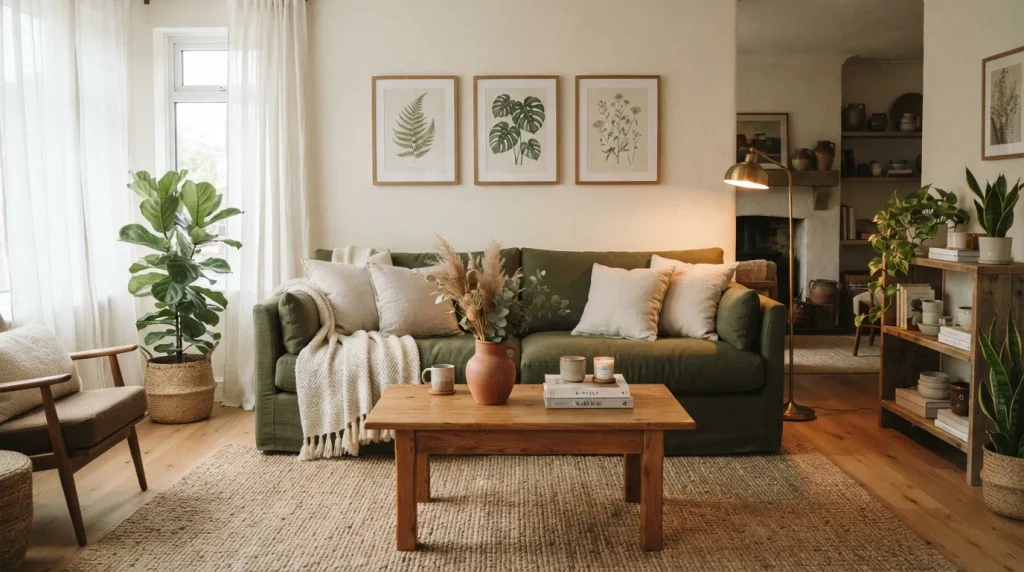
- A muted olive sofa adds color without overpowering the room.
- Pair green upholstery with cream, beige, and warm wood.
- Repeat small touches of olive for a cohesive look.
- Choose textured fabrics to make the seating feel inviting.
A deep olive sofa can become the grounding piece your living room has been missing. Choose a muted moss, sage, or forest-olive upholstery and surround it with warm neutrals rather than stark white. Cream cushions, a woven throw, and a light oak table soften the stronger color while keeping the room connected to nature. I’ve seen this work well in homes where beige furniture felt too predictable. The green adds personality without becoming loud, and its earthy undertone pairs naturally with terracotta pottery, dried branches, wool textures, and other organic materials.
For a balanced arrangement, let the green sofa remain the main color statement and repeat tiny hints of the same shade elsewhere. A botanical print, ceramic vase, or patterned cushion is enough to create continuity without making the room feel themed. Keep the walls warm white, ivory, or soft beige, and use natural flooring whenever possible. During the day, sunlight brings out subtle variations in the upholstery, while warm lamps make the color feel richer at night. The result is comfortable, grounded, and easy to refresh as your style changes.
Also Read : 21 Contemporary Coastal Living Room Ideas to Try
- Linen Seating
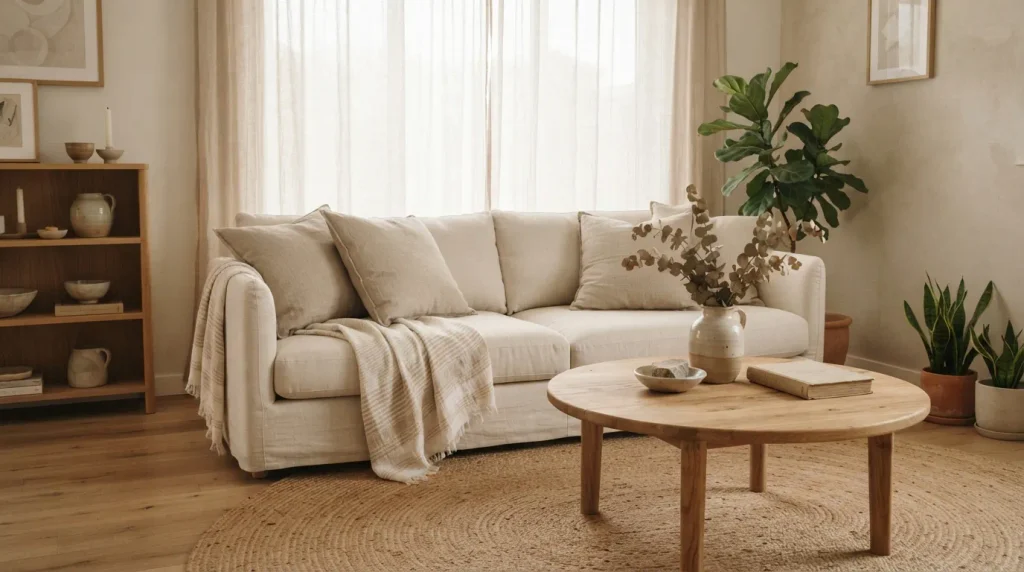
- Linen seating creates an instantly relaxed, lived-in appearance.
- Mix cream, flax, beige, and warm gray for subtle depth.
- Add woven textiles to make the seating feel softer.
- Slightly rumpled linen can look more natural than perfectly pressed fabric.
Soft linen is one of the easiest ways to make a living room feel relaxed without adding visual clutter. Start with a cream or oatmeal linen sofa, then add loose cushions, a lightweight throw, and simple window panels in related neutral shades. The slightly rumpled texture gives the furniture a lived-in quality that polished fabrics often lack. In my experience, linen also helps a neutral room feel more interesting because its natural weave catches light differently throughout the day. Pair it with wood, jute, and handmade ceramics for a beautifully understated foundation.
The key to making linen feel cozy rather than plain is layering different textures around it. Add a chunky woven throw over one sofa arm, a nubby cushion beside a smoother cotton pillow, and a textured rug underneath the seating group. These small contrasts create depth while keeping the color palette calm. Avoid making every textile perfectly coordinated; slight variations in cream, flax, beige, and warm gray feel more natural. This approach works especially well in busy homes because the materials are forgiving, comfortable, and visually soft without demanding constant styling or maintenance.
Also Read : 24 Wildflower Tablescape Ideas for a Fresh Natural Table
- Plaster Fireplace
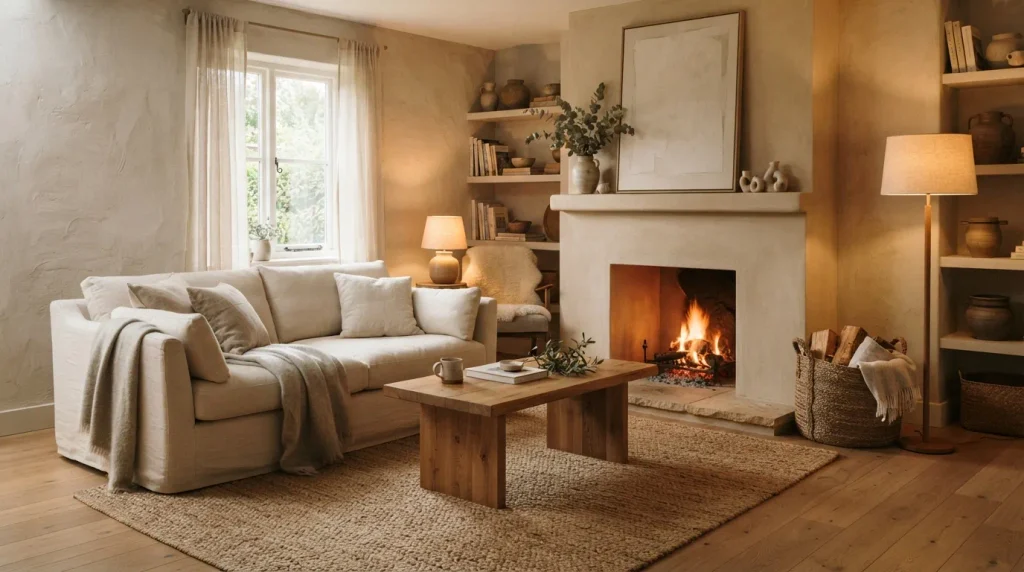
- A plaster fireplace creates a calm architectural focal point.
- Warm beige and sand tones keep the feature connected to nature.
- Use minimal mantel decor so the material remains visible.
- Add a basket and stool nearby for useful cozy touches.
A low-profile fireplace can give an earthy living room a strong architectural focal point while keeping the overall design calm. Frame it with warm plaster, limewash, or natural stone in shades of sand, mushroom, or soft beige. Keep the mantel simple with one ceramic vessel, a small branch, or a textured object rather than a crowded collection. The low horizontal shape encourages a relaxed seating arrangement around it. That makes the room feel connected and welcoming, especially when a large rug and deep sofa reinforce the fireplace as the natural center.
If a full fireplace renovation is not practical, you can create a similar visual effect with a simple electric insert or a freestanding stove-style feature. Surround it with natural-looking materials and keep nearby furniture comfortably spaced for easy movement. Warm lighting becomes especially important here because it enhances the texture of stone or plaster after sunset. Add a woven basket for throws and one sturdy wooden stool nearby for function. The finished corner feels intentional without becoming formal, proving that a cozy focal point can work even in a modest living room.
Also Read : 22 Japandi Kitchen Ideas for a Calm Modern Space
- Woven Pendant Light
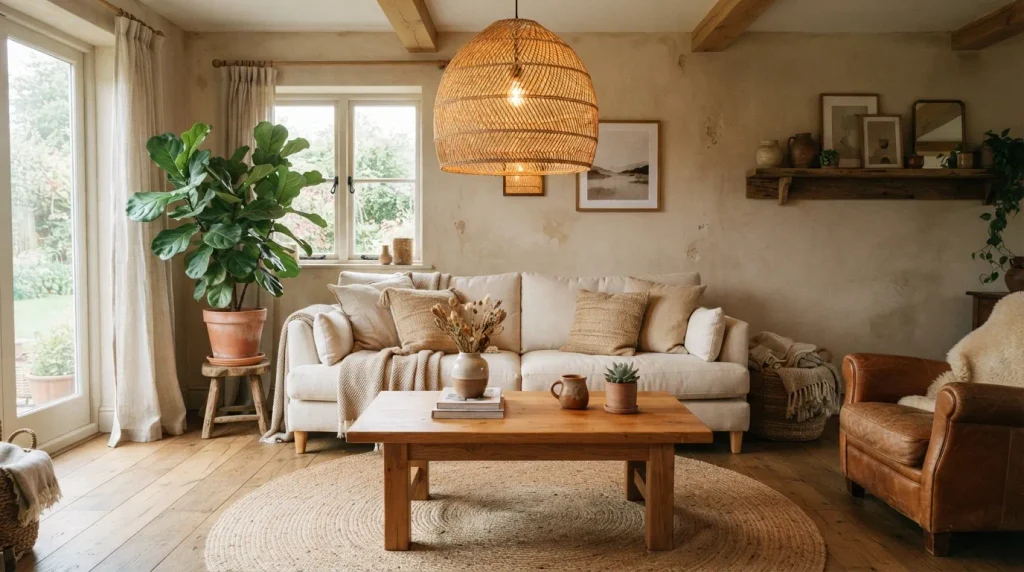
- A woven pendant adds texture overhead without taking up floor space.
- Choose natural rattan, seagrass, or bamboo for an organic finish.
- Keep the shape simple if the room already has layered textures.
- Use a warm bulb to create a softer evening atmosphere.
Look upward when a living room feels unfinished, because the ceiling is often an overlooked place to add warmth. A woven pendant light introduces natural texture while giving the seating area a clear visual anchor. Rattan, seagrass, bamboo, and cane shades all work beautifully with cream upholstery and warm wood. Choose a generous size that suits the room rather than a tiny fixture that disappears overhead. The open weave also creates delicate shadows when illuminated, adding movement and depth without introducing another strong color or complicated pattern.
For the best effect, center the pendant over the coffee table or main seating arrangement and hang it at a comfortable height that does not obstruct conversation. Use a warm white bulb rather than a cool daylight bulb to preserve the relaxed atmosphere after sunset. If the room already contains several woven pieces, select a cleaner pendant shape to prevent the textures from competing. I’ve noticed that one well-scaled light can make simple furniture feel much more intentional, especially in rooms with high ceilings or open-plan layouts.
- Stone Coffee Table
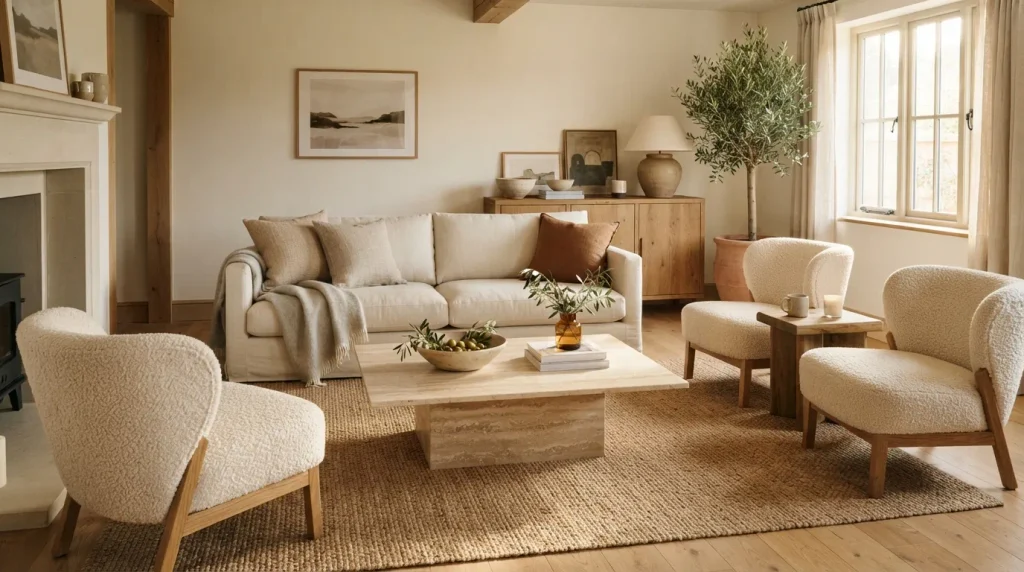
- A stone table adds weight and natural character to soft furnishings.
- Travertine, limestone, and honed stone suit warm neutral palettes.
- Choose rounded edges for a softer, more relaxed appearance.
- Keep tabletop styling minimal so the stone remains the focal point.
A natural stone coffee table can bring the grounding quality of the outdoors into your living room without making the space feel rustic. Travertine, limestone, and softly honed finishes work especially well with linen, jute, oak, and woven accents. Choose a low table with rounded edges if you want the room to feel relaxed and approachable. The subtle veining gives the eye something interesting to discover while remaining quieter than a bold patterned surface. This is especially useful when your sofa and walls already use several layers of soft neutral texture.
Stone furniture also adds a useful sense of permanence to a room filled with lighter materials. Place the table on a textured rug and leave enough breathing room around it for comfortable movement. A shallow ceramic bowl, a small stack of books, or a simple branch arrangement is usually enough for styling. Avoid covering the entire surface because the natural stone should remain visible. In smaller spaces, choose a compact oval or round design; its softer silhouette can improve circulation while maintaining the same grounded, organic effect.
- Earth-Tone Gallery Wall
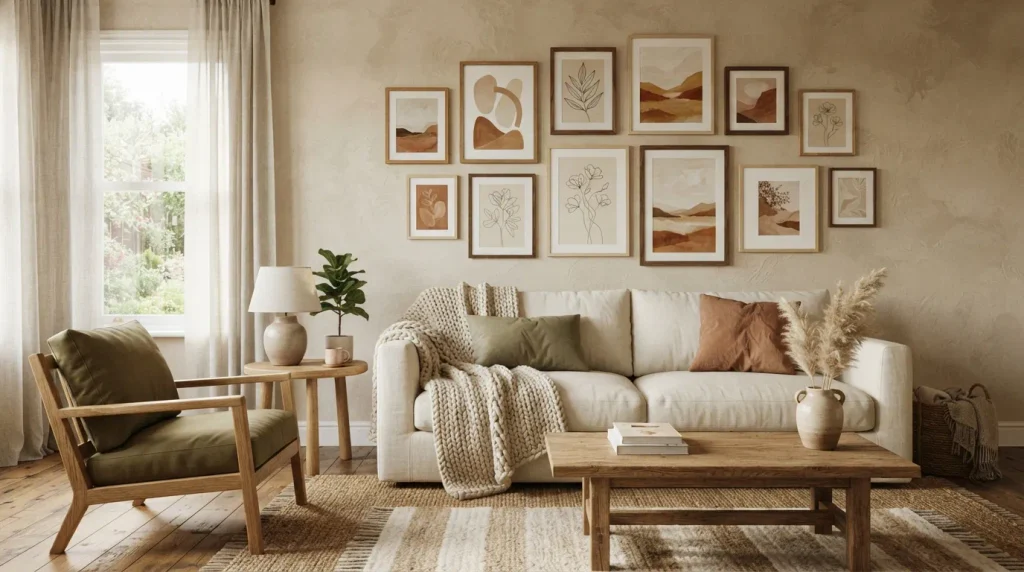
- Earth-toned artwork adds personality without breaking a calm palette.
- Mix landscapes, botanical prints, and abstract pieces for variety.
- Natural wood frames reinforce the room’s organic materials.
- Keep spacing consistent for a polished but relaxed display.
A carefully chosen gallery wall can turn an ordinary seating area into a personal focal point while keeping the color scheme beautifully grounded. Look for artwork featuring landscapes, botanical forms, abstract shapes, or handmade textures in clay, olive, sand, cream, and muted brown. Natural wood frames help connect the artwork with existing furniture. Instead of buying matching prints, choose pieces that share a similar palette but have different subjects. This creates the collected feeling people love on Pinterest while still looking believable in a real, lived-in home.
Before hanging anything, arrange the frames on the floor and photograph the layout so you can adjust the spacing easily. Center the overall arrangement above the sofa rather than aligning every piece individually, and leave enough breathing room around the collection. If your wall is small, three or five pieces may look stronger than a crowded grid. I’ve noticed that including one handmade-looking piece, such as a textured textile or ceramic wall plate, adds dimension that framed prints alone cannot provide. The result feels thoughtful, warm, and distinctly personal.
- Rattan Storage Baskets
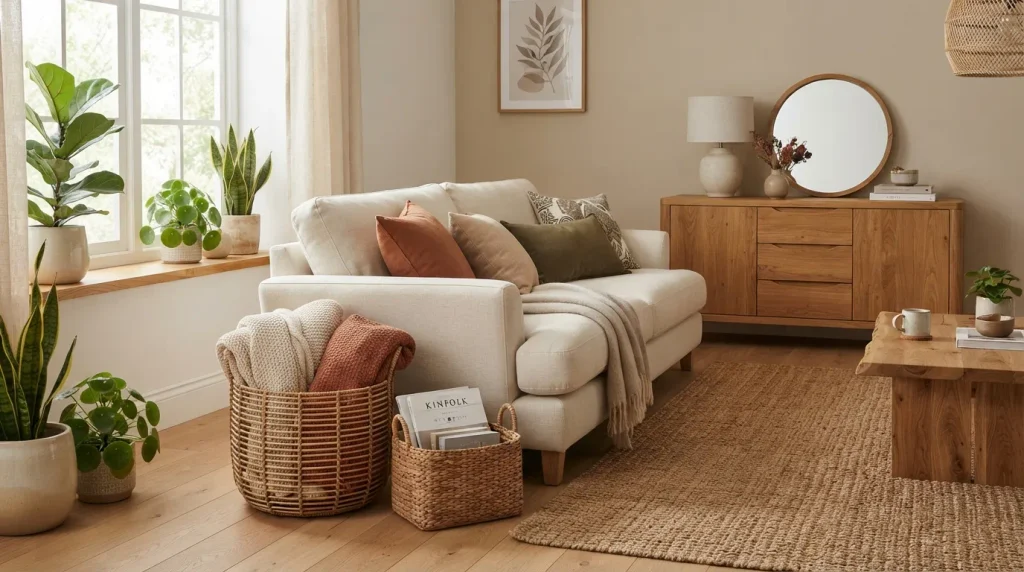
- Rattan baskets hide everyday clutter while adding natural texture.
- Use different sizes to create a more collected arrangement.
- Place one near the sofa for easy blanket storage.
- Choose natural finishes that complement existing wood furniture.
A few well-placed rattan baskets can make a living room feel both warmer and more organized. Use them to store blankets, magazines, toys, remote controls, or other everyday items that tend to collect around the seating area. Natural cane and rattan bring texture without demanding much visual attention, making them especially useful in neutral rooms. Place a large basket beside the sofa and smaller versions beneath a console or open shelf. The practical storage keeps surfaces cleaner, while the woven material reinforces the room’s relaxed, nature-inspired character.
Storage works best when it looks intentional rather than hidden, so choose baskets that complement your existing furniture and floor tones. A honey-colored weave can warm pale interiors, while a lighter natural finish works beautifully with oak and cream upholstery. Avoid filling every corner with baskets; two or three thoughtfully positioned pieces usually provide enough texture. In my experience, keeping a blanket basket within arm’s reach also makes the room more inviting because comfort becomes easy to access. The space stays visually calm while still supporting real everyday living.
- Natural Stone Hearth
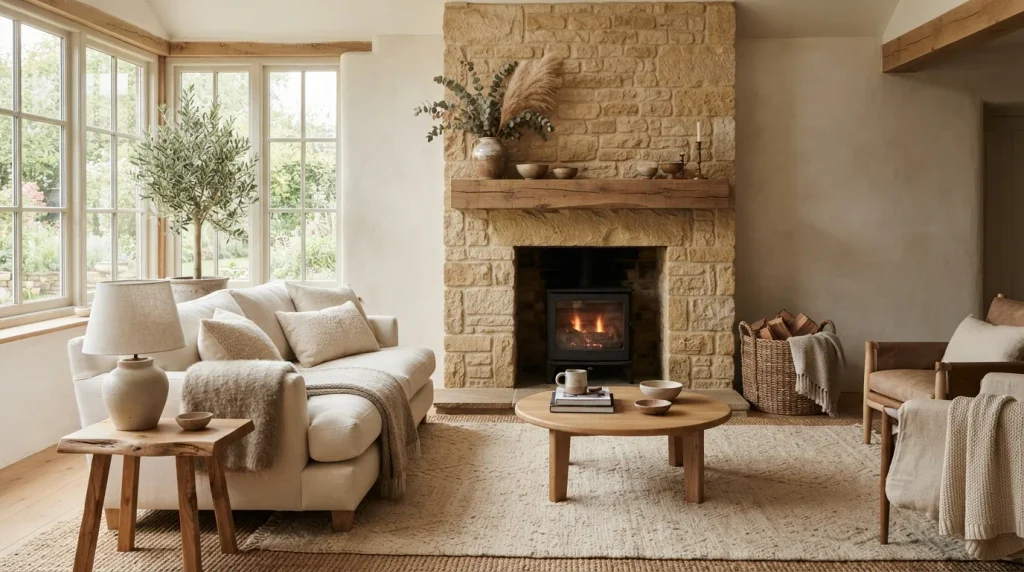
- Natural stone gives the fireplace a grounded architectural presence.
- Limestone and sandstone create softer warmth than polished dark stone.
- Pair rough stone with smooth linen for pleasing contrast.
- Keep surrounding decor simple to highlight the material.
A natural stone hearth gives a living room the kind of grounded character that is difficult to recreate with decorative accessories alone. Limestone, sandstone, and lightly textured travertine work beautifully when you want warmth without a heavy rustic appearance. Let the stone remain visible around the fireplace instead of covering it with excessive objects. Its natural variations become part of the room’s visual interest. Pair the hearth with a cream sofa, warm wood mantel, and woven basket to soften the harder surface and create a comfortable balance between structure and texture.
The surrounding layout should give the hearth enough space to act as a focal point without making the room feel formal. Position seating toward the fireplace while keeping a clear walkway through the room. A neutral rug can connect the furniture, and a few handmade ceramics can echo the irregular character of the stone. Use warm lighting in the evening to emphasize the hearth’s texture and subtle color changes. That combination creates a naturally inviting atmosphere while giving the room a timeless foundation that works across changing furniture and decorating styles.
- Botanical Corner
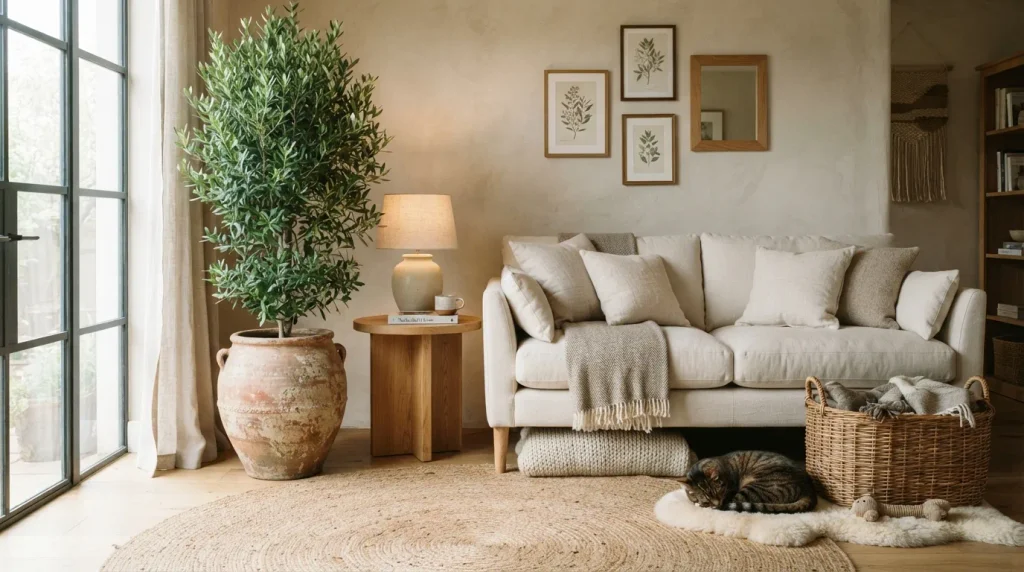
- One large plant can soften an empty living room corner.
- Olive, rubber, or fiddle-leaf trees suit earthy interiors beautifully.
- Use a textured ceramic or terracotta planter for added depth.
- Choose plants according to the room’s actual light conditions.
A leafy plant can completely soften a living room corner that otherwise feels empty or unfinished. Choose one substantial plant rather than filling every surface with small pots, especially if you want a clean, Pinterest-friendly look. Olive trees, rubber plants, and fiddle-leaf figs can all work beautifully when their light requirements match the room. Place the plant beside a sofa, reading chair, or window and use a ceramic, terracotta, or woven planter to reinforce the natural palette. The greenery introduces a fresh color that makes surrounding beige and brown tones feel more alive.
Consider the plant’s mature size before choosing its position, because a tiny corner plant can quickly become crowded as it grows. Keep enough space around the leaves so the silhouette remains visible and does not disappear behind furniture. I’ve noticed that placing greenery near a window also helps connect the interior visually with the outdoors, particularly when the room has natural wood and linen finishes. If natural plants are difficult to maintain, a high-quality faux option can still provide the same visual structure when selected with realistic leaves and proportions.
- Cream Bouclé Chair
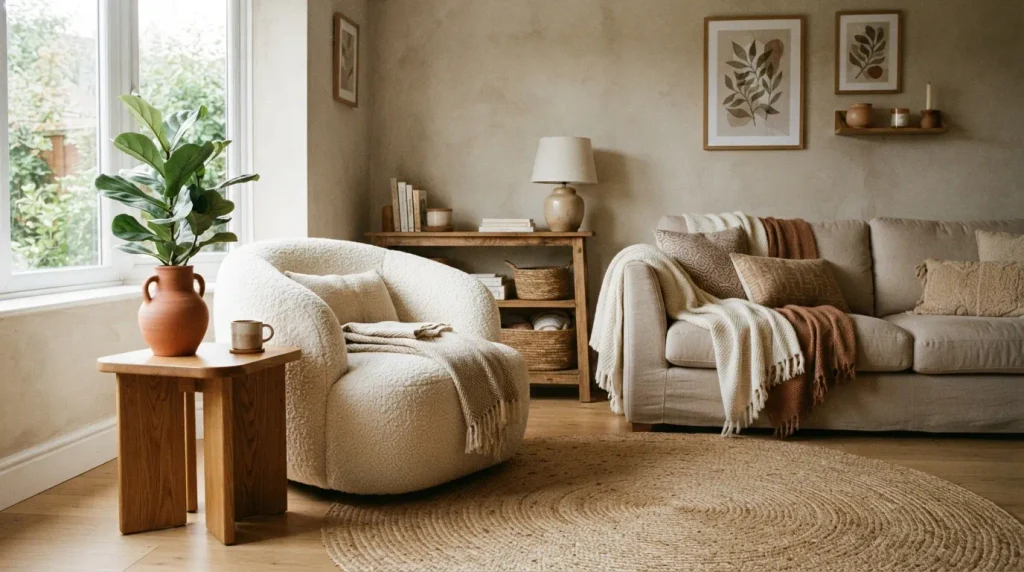
- A bouclé chair adds softness without introducing another strong color.
- Rounded furniture shapes make the room feel more relaxed.
- Position the chair near a window or reading lamp for function.
- Balance plush upholstery with rougher natural materials like jute and wood.
A cream bouclé chair can add an inviting layer of softness while keeping the room firmly within a warm, natural palette. Look for rounded arms, curved backs, or a compact sculptural shape that contrasts gently with a straight sofa. The nubby fabric catches light and creates texture without needing a busy pattern. Place it beside a wooden side table, floor lamp, or leafy plant to create a small reading spot. This simple addition can make a larger seating arrangement feel more complete while giving one person a comfortable place to relax.
When using plush upholstery, balance it with materials that have more visible texture so the room does not feel overly soft. A jute rug, oak table, woven basket, or handmade ceramic piece can provide that contrast. Keep the chair in a warm ivory or oatmeal shade if your walls are beige or cream, creating subtle tonal layering instead of a stark color break. I’ve noticed that rounded chairs are particularly useful in compact rooms because their softer silhouettes allow the furniture arrangement to feel less crowded while still providing practical extra seating.
- Terracotta Decor
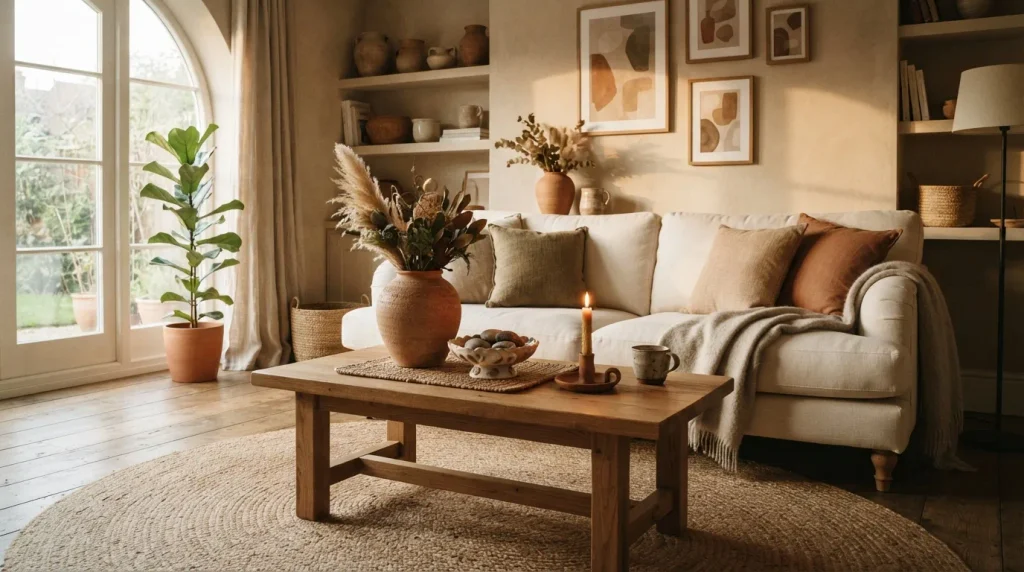
- Terracotta accessories introduce warmth without changing the entire room.
- Use different shapes and sizes for a natural collected appearance.
- Repeat clay tones in cushions or artwork for subtle cohesion.
- Handmade finishes add character that perfectly polished pieces often lack.
Terracotta accessories can warm up a neutral living room in minutes, making them one of the easiest ways to introduce earthy color without repainting walls or replacing furniture. Start with one large clay vase on a console or coffee table, then add smaller pieces such as candleholders, bowls, or planters. Choose muted rust, burnt sienna, or dusty terracotta rather than highly saturated orange. The subtle variation feels connected to natural soil and stone, while the handmade appearance adds personality. Keep some pieces empty to preserve a clean, uncluttered composition.
The trick is to distribute terracotta rather than gathering every clay object in one corner. Repeat the color lightly through artwork, a cushion, or a small planter so the room feels coordinated. Pair the warm tones with cream linen, light oak, olive green, and woven textures to create contrast without losing harmony. If your living room receives strong sunlight, matte ceramic finishes can be especially effective because they soften reflections. This approach works in both modern and traditional spaces and makes seasonal decorating simple because the earthy accessories remain versatile year-round.
- Layered Neutral Textiles
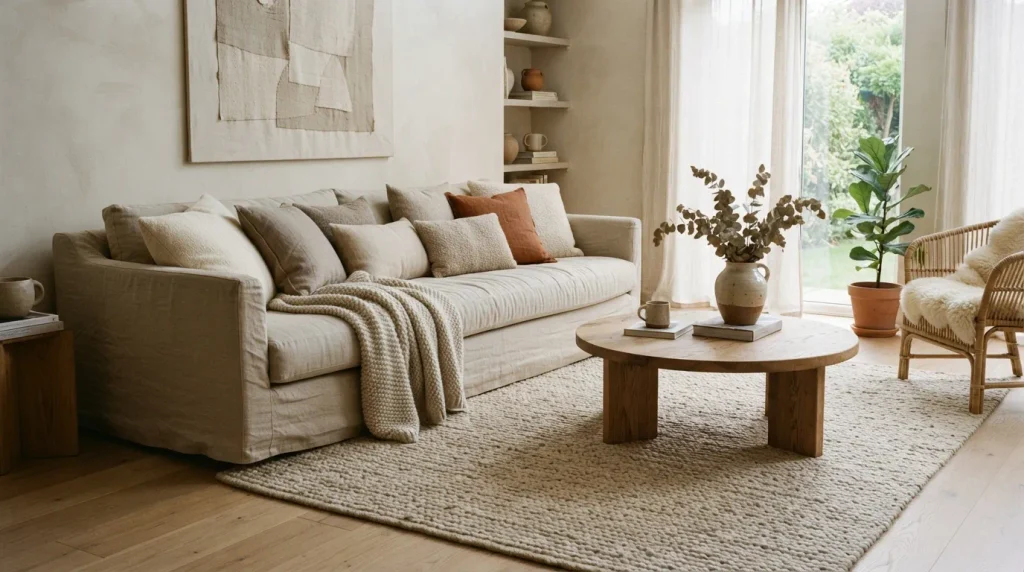
- Combine several neutral shades instead of relying on one beige.
- Mix linen, cotton, wool, and woven fabrics for visible texture.
- Add a throw casually over the sofa for practical comfort.
- Keep patterns subtle so the layered materials remain the focus.
Neutral colors become much more interesting when you layer them through different fabrics and textures. Instead of using one shade of beige everywhere, combine cream, oatmeal, taupe, flax, and warm gray across cushions, throws, curtains, and rugs. The small differences create depth while maintaining a peaceful palette. Mix linen with cotton, wool, boucle, or chunky knits so the eye can notice each surface. A casually folded throw across the sofa can also make the room feel genuinely lived in rather than perfectly staged, which is especially appealing for relaxed everyday spaces.
Start with larger textile layers first, such as the rug and curtains, then build toward smaller cushions and throws. This prevents the room from becoming visually busy and makes it easier to judge how much texture you actually need. In my experience, odd numbers of cushions with slightly different sizes often look more natural than perfectly symmetrical arrangements. Keep the strongest texture near the seating area and leave some surfaces quiet. The result is soft, warm, and inviting while remaining flexible enough to work with wood, stone, greenery, and handmade accessories.
- Limewash Walls
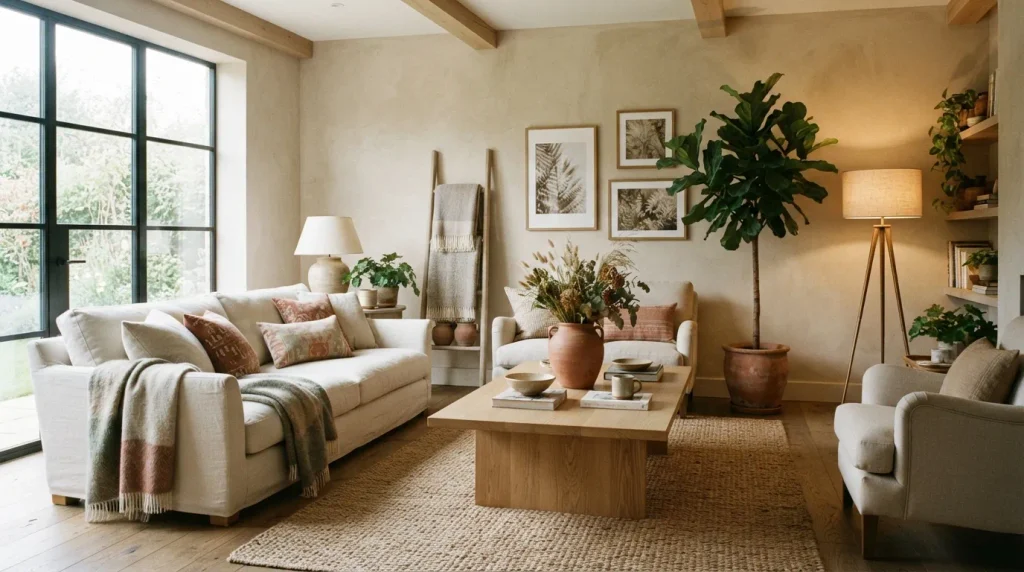
- Limewash creates soft movement across otherwise plain walls.
- Warm beige, mushroom, and sand tones suit earthy furniture beautifully.
- The imperfect finish adds character without needing wall art.
- Sample the color first because lighting can change its appearance.
Limewash walls bring subtle depth to a living room without relying on bold patterns or dramatic paint colors. The softly mottled finish creates gentle movement across the surface, making warm neutrals feel more dimensional and natural. Choose shades such as sand, mushroom, warm ivory, or muted taupe, then pair them with linen upholstery and light wood. The result feels softer than a perfectly flat painted wall. For homeowners who prefer understated decor, this finish can become the background detail that makes simple furniture, ceramics, and plants look more considered.
Before applying limewash throughout the room, test a sample on the actual wall because natural and artificial lighting can change the color considerably. The finish often looks lighter during bright daylight and richer when illuminated by warm lamps at night. Keep the rest of the decor relatively simple so the subtle wall variation remains visible. A woven rug, wooden table, and handmade pottery can provide enough contrast without competing with the finish. This is particularly effective in rooms where you want texture but do not want shelves or artwork covering the walls.
- Oversized Floor Lamp
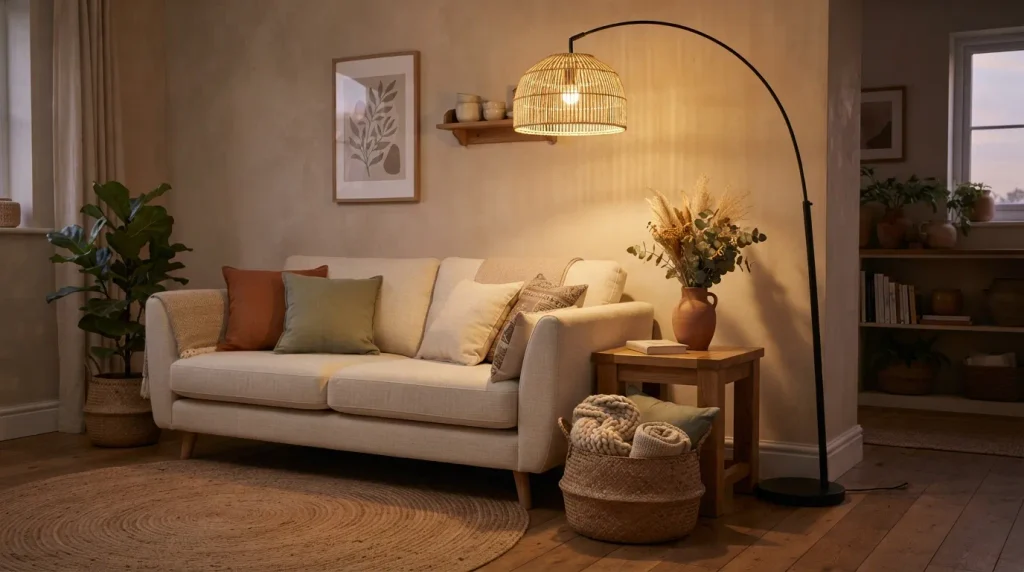
- A tall lamp fills an empty corner while improving evening lighting.
- Choose linen or woven shades for softer natural texture.
- Position the light beside a sofa or reading chair.
- Use a warm bulb to preserve the cozy earthy palette.
An oversized floor lamp can transform an unused corner into a useful and visually balanced part of the living room. Choose a tall arched design, sculptural wooden lamp, or simple linen-shaded fixture that complements the existing furniture. Position it beside a sofa or reading chair so the light serves a practical purpose instead of becoming decoration alone. A generously sized lamp also adds vertical interest, which can help rooms with low furniture feel more complete. Warm materials and soft illumination make the entire seating area feel noticeably more inviting after sunset.
Lighting becomes especially important when your room uses earthy neutrals because the wrong bulb can make beige and brown tones look dull or gray. Choose a warm white bulb and direct the light toward the seating area rather than creating harsh overhead brightness. If the lamp has a linen or woven shade, the material will soften the glow further. I’ve noticed that one strong floor lamp often does more for evening atmosphere than several tiny decorative lights. Combine it with a table lamp or wall light if you need layered illumination for reading and entertaining.
- Low Profile Sofa
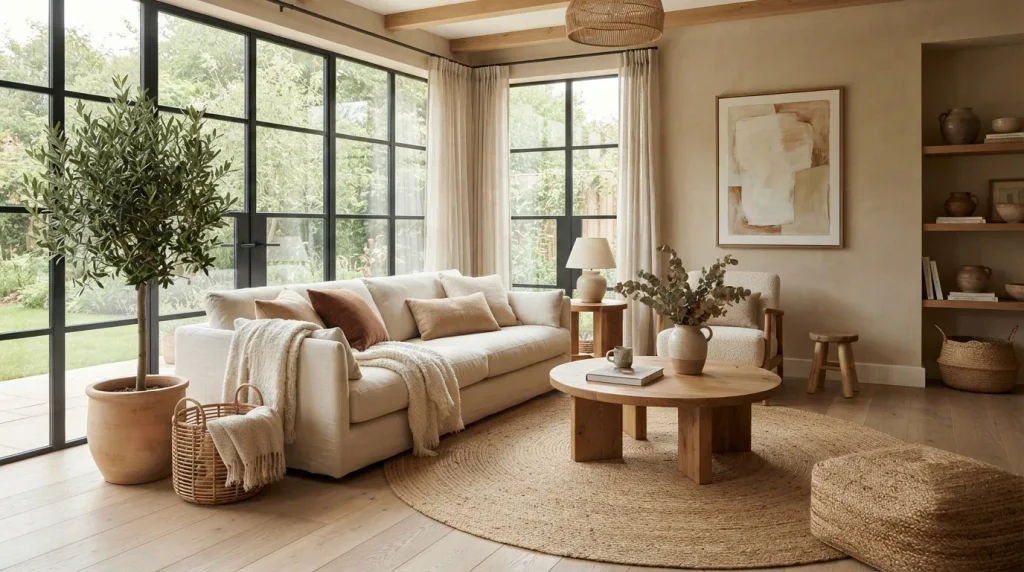
- A low sofa makes the room feel relaxed and visually open.
- Choose deep cushions for comfort without adding visual bulk.
- Pair low seating with a substantial rug to define the area.
- Keep nearby tables slightly lower for balanced proportions.
A low-profile sofa can make a living room feel instantly more relaxed by creating a closer connection between the furniture and floor. Choose a design with deep cushions, broad proportions, and a simple silhouette in cream, oatmeal, or warm beige. Pair it with a substantial textured rug so the seating area feels grounded rather than visually disconnected. Low furniture works particularly well beside large windows because it keeps sightlines open and allows more daylight to travel through the room. The overall effect is calm, spacious, and comfortably informal.
Proportion matters when choosing low seating, especially if you already own standard-height furniture. A coffee table that is slightly lower than the sofa cushions usually creates a more cohesive arrangement, while oversized cushions add comfort without requiring additional bulky pieces. Avoid filling the surrounding floor with too many accessories; the open space is part of the design. In smaller homes, this approach can make the room appear less crowded, while larger rooms benefit from the relaxed lounge-like feeling. Add a woven basket and soft throw nearby for practical texture.
- Arched Wood Shelves
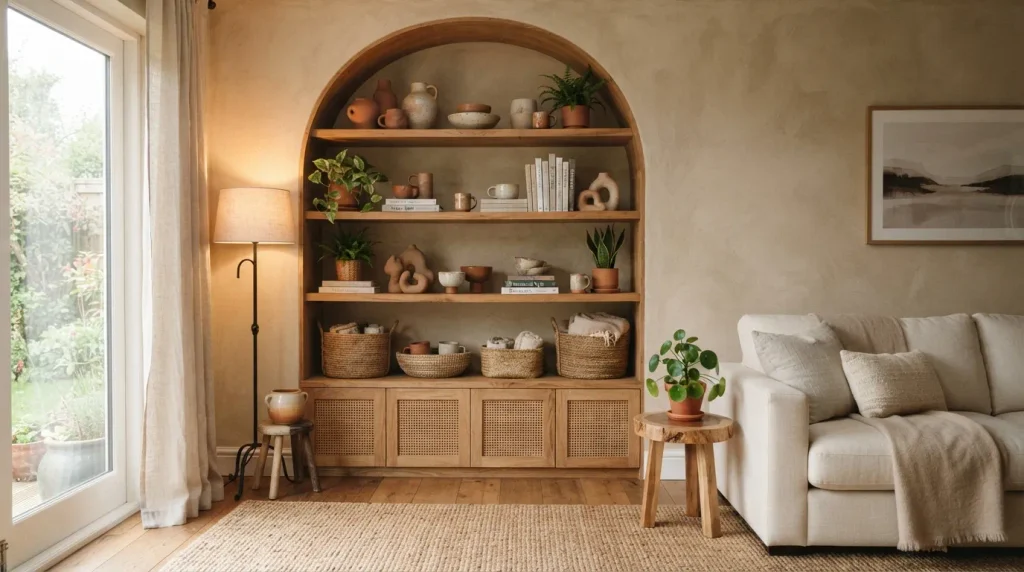
- Arched shelves soften the straight lines of modern furniture.
- Use warm wood to introduce natural color and texture.
- Mix practical storage with a few decorative objects.
- Leave open space between pieces so the shelves feel airy.
Arched wooden shelves can turn an ordinary wall into a warm architectural feature without overwhelming the room. The curved openings soften the straight edges of sofas, tables, and cabinets, while natural wood introduces the earthy character many neutral spaces need. Use the shelves for a relaxed mix of books, handmade ceramics, small plants, and woven baskets rather than filling every opening. The negative space matters just as much as the objects. Keeping some shelves partially empty makes the arrangement feel lighter, more intentional, and easier to maintain in a busy home.
For a balanced display, place larger objects on the lower shelves and lighter decorative pieces higher up. Repeat colors already present in the room, such as cream, clay, olive, tan, and warm brown, so the shelving feels connected rather than added afterward. If built-ins are not possible, a freestanding wooden shelving unit can create a similar effect. I’ve noticed that combining useful storage with decorative styling makes open shelving much easier to live with. It gives everyday items a designated place while still creating a strong visual feature.
- Vintage Leather Chair
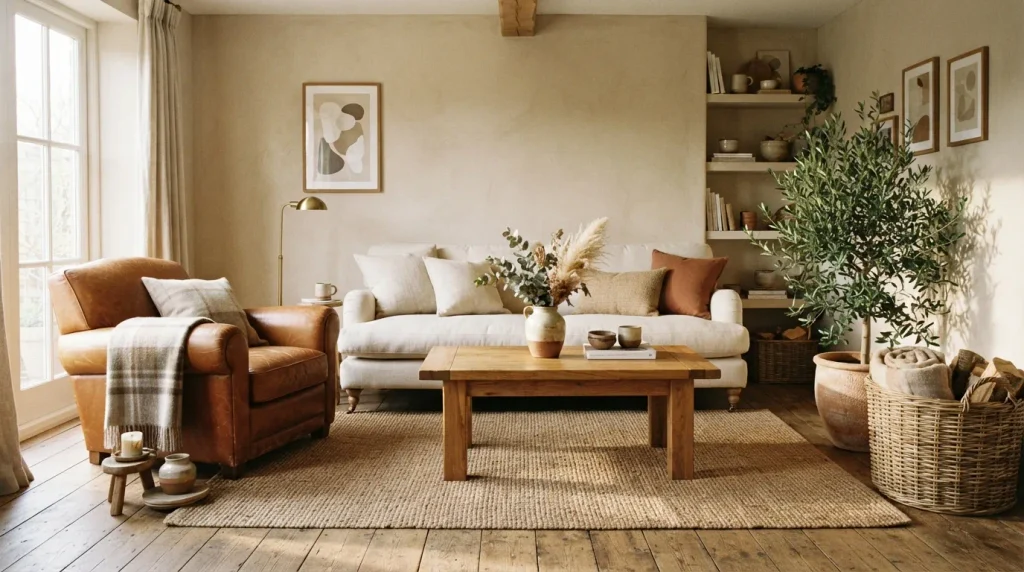
- A caramel leather chair adds warmth and contrast to pale upholstery.
- Look for aged finishes with visible character rather than glossy surfaces.
- Pair leather with linen and woven textures to soften its appearance.
- Position the chair at an angle to create a relaxed conversation area.
A vintage leather chair can give a soft neutral living room a much-needed touch of character and depth. Look for caramel, cognac, tobacco, or warm chestnut leather with a naturally aged finish rather than a highly polished surface. The subtle patina becomes more beautiful over time and pairs especially well with cream linen, oak, jute, and handmade ceramics. Place the chair slightly angled toward the sofa to create a welcoming conversation area. Its deeper color provides contrast while still staying within the warm, nature-inspired palette of the room.
Leather can feel visually heavier than linen or cotton, so balance it with lighter materials throughout the surrounding space. A cream throw across the chair, woven basket nearby, or pale rug underneath can soften the contrast. Avoid placing several dark furniture pieces together unless the room has plenty of natural light. In my experience, one well-chosen vintage chair often feels more distinctive than a matching set because its imperfections add personality. It can also become a practical reading seat when paired with a floor lamp and small wooden side table.
- Indoor Olive Tree
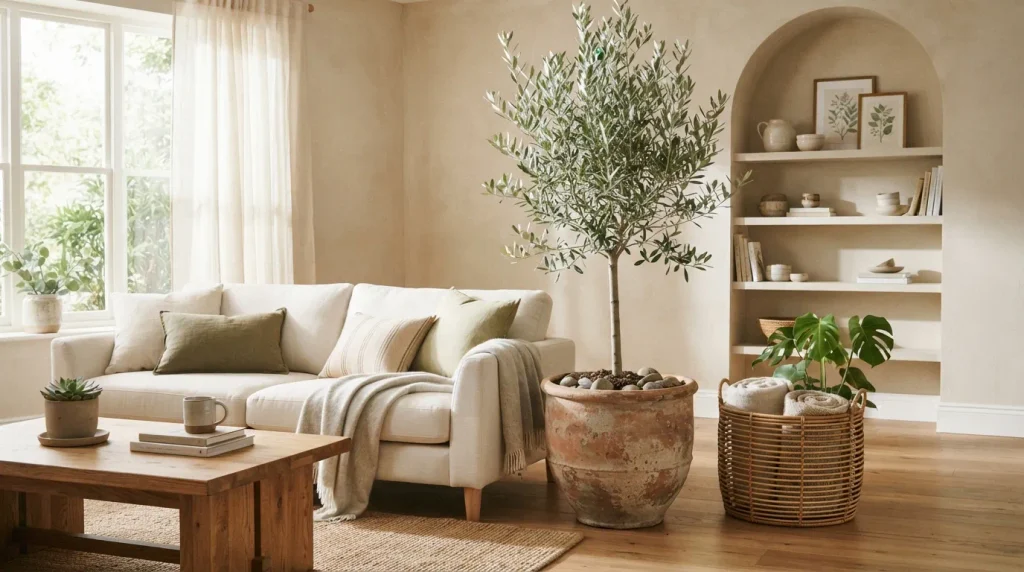
- An olive tree adds height and a soft natural silhouette.
- Use a large planter to give the tree visual stability.
- Place it near bright natural light when conditions suit the plant.
- Let the branches remain open instead of crowding them with decor.
A tall indoor olive tree can become a beautiful living sculpture, especially when placed beside simple furniture and warm neutral walls. Its slender trunk and silvery leaves add height without creating a dense visual block, making it ideal for an empty corner near a window. Choose a substantial terracotta or textured ceramic planter so the tree feels grounded and intentional. The muted green foliage works naturally with cream, beige, oak, and clay tones. Instead of adding several small plants, one well-positioned tree can provide the organic focal point the room needs.
Before choosing an olive tree, check the light levels and care requirements of your particular space because these plants generally prefer plenty of bright light. Give the branches enough room to spread naturally and avoid placing the pot directly behind bulky furniture. A simple woven basket nearby can reinforce the texture without distracting from the foliage. If your home does not provide suitable conditions, another tall plant with similar proportions may work better. The goal is a graceful vertical element that connects the earthy interior visually with the natural world outside.
- Textured Stone Walls
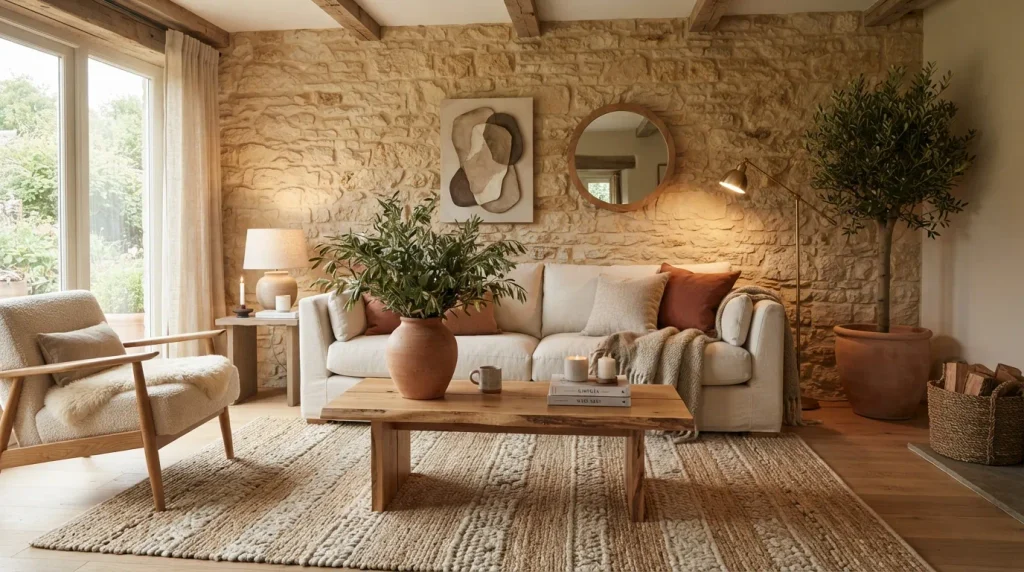
- Natural stone adds depth without relying on decorative clutter.
- Warm limestone and sandstone create a softer visual effect.
- Balance rough walls with smooth linen and rounded furniture.
- Keep accessories simple so the stone remains visually important.
Textured stone walls can give a living room an earthy foundation that feels both substantial and timeless. Choose limestone, sandstone, or a similar warm material with natural variation rather than highly polished stone. The irregular surface catches daylight differently across the wall, creating subtle shadows and depth throughout the day. Pair it with a cream linen sofa, warm oak furniture, and woven flooring so the harder texture feels balanced. The result is especially effective when the wall acts as a backdrop for simple furniture instead of competing with a crowded collection of accessories.
If a full stone installation is outside your budget, consider a textured stone-look finish or a carefully selected feature section behind the sofa or fireplace. Keeping the treatment focused can create the same visual impact without making the room feel enclosed. Use warm lamps at night to emphasize the surface variation, and introduce softer materials nearby through cushions, throws, and curtains. I’ve noticed that natural-looking walls work best when their imperfections remain visible; those small variations give the room character and prevent an earthy interior from feeling overly manufactured.
- Warm Neutral Palette
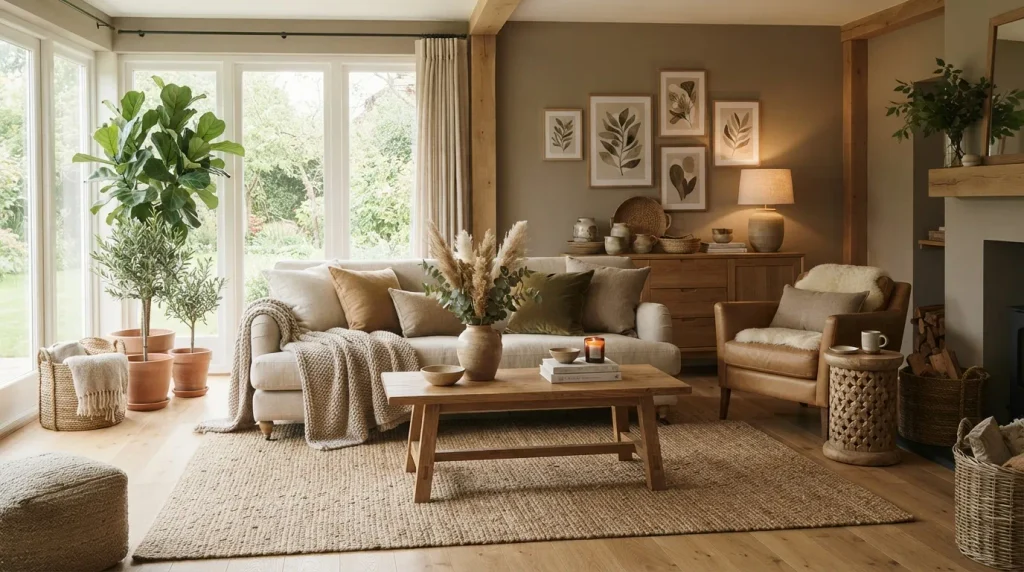
- Layer several warm neutrals instead of relying on one beige shade.
- Add small olive or clay accents for gentle color contrast.
- Combine wood, linen, jute, ceramic, and woven textures.
- Keep the largest furniture pieces within the calmest tones.
A warm neutral palette creates the foundation for cozy earthy living room ideas that feel timeless, flexible, and easy to personalize. Start with cream or warm white for the largest surfaces, then layer beige, taupe, camel, soft brown, and muted olive through furniture and accessories. This prevents the room from looking flat while keeping the overall atmosphere calm. Natural materials make the palette even richer because wood grain, linen weave, jute fibers, and handmade ceramics each introduce subtle variation. The finished space feels warm without depending on bold colors or excessive decoration.
The most successful neutral rooms usually rely on contrast in texture and tone rather than dramatic color changes. Let the sofa and walls remain light, then use darker wood, woven baskets, clay pieces, and greenery to create visual anchors. Repeat a few shades throughout the room so everything feels connected without looking perfectly matched. This approach also makes seasonal updates simple: swap cushions, throws, or small accessories while keeping the main furniture unchanged. The result is a comfortable, natural space that feels considered today but remains adaptable as your decorating style evolves.
Conclusion
Creating a warm, natural living room does not have to mean starting from scratch. The right combination of earthy colors, natural materials, layered textures, greenery, and comfortable furniture can make an ordinary space feel beautifully inviting. These cozy earthy living room ideas give you plenty of inspiration to create a look that feels personal and practical. I’ve seen how small changes, such as adding a textured rug or warm wood accent, can completely transform a room. Save this post on Pinterest, try one or two ideas in your own space, and share it with someone who needs fresh decorating inspiration.