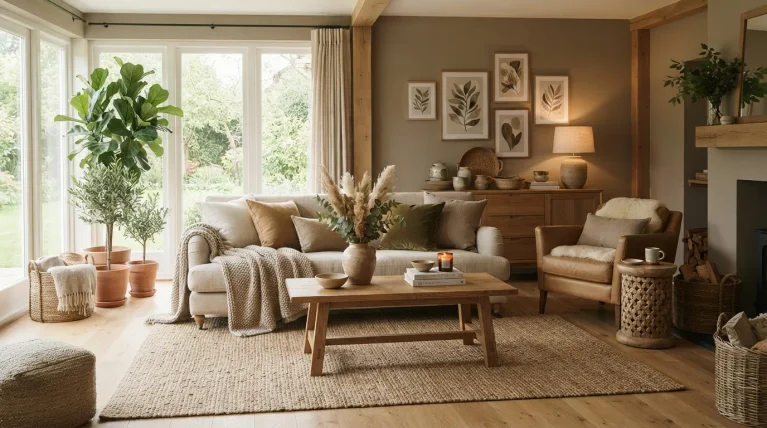
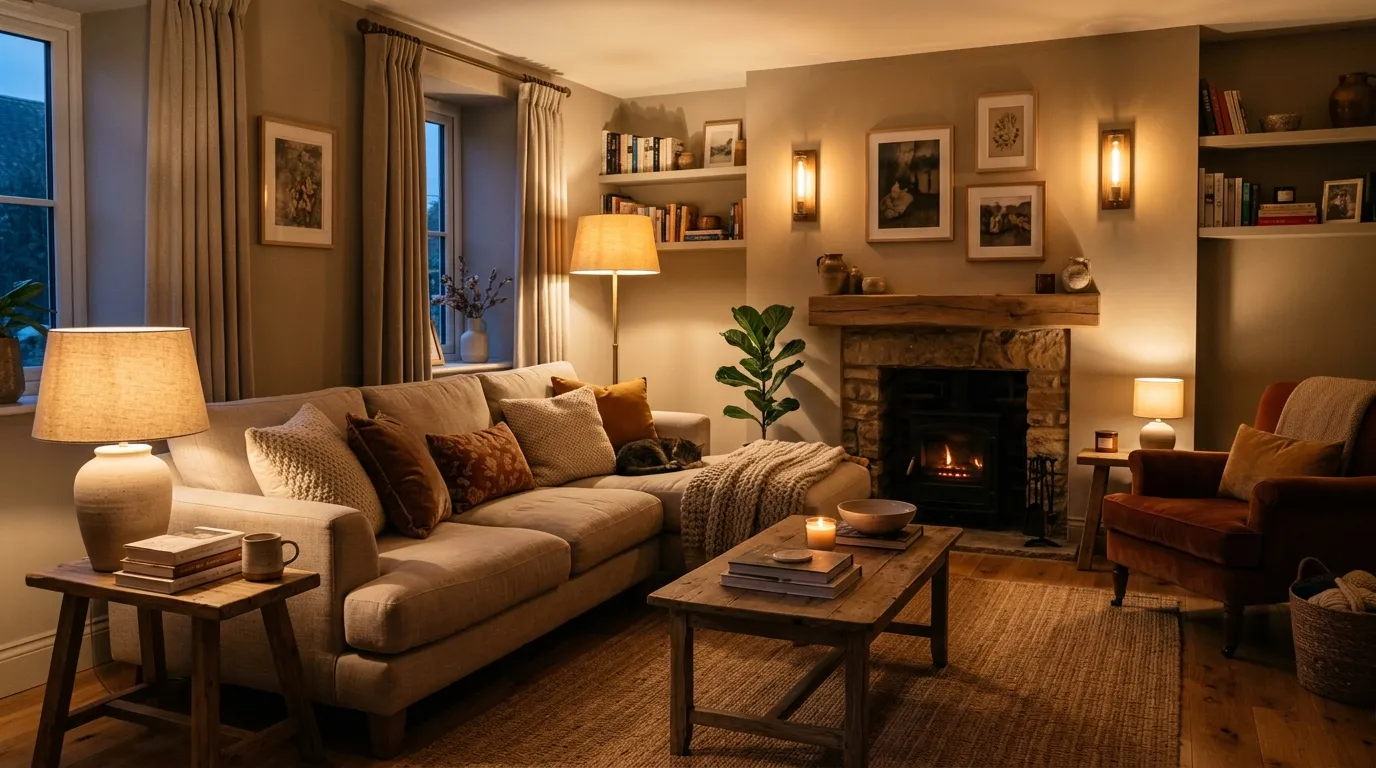
Your bedroom should feel like a place where the day naturally slows down. Imagine warm wood, soft linen, earthy colors, and gentle natural light working together to create that feeling. These earthy minimalist bedroom ideas show how simple materials and thoughtful styling can transform an ordinary room into a calm natural retreat without making it feel empty or overly decorated.
Whether your space is large, small, modern, or a little dated, these ideas focus on practical changes you can actually use. From low wooden beds and woven textures to clay accents, greenery, neutral bedding, and soft lighting, each detail adds warmth while keeping visual clutter under control. I’ve noticed that the most relaxing bedrooms often rely on fewer, better-chosen pieces rather than layers of unnecessary decor. As you explore these ideas, you’ll find easy ways to make your bedroom feel warmer, more grounded, comfortable, and connected to nature.
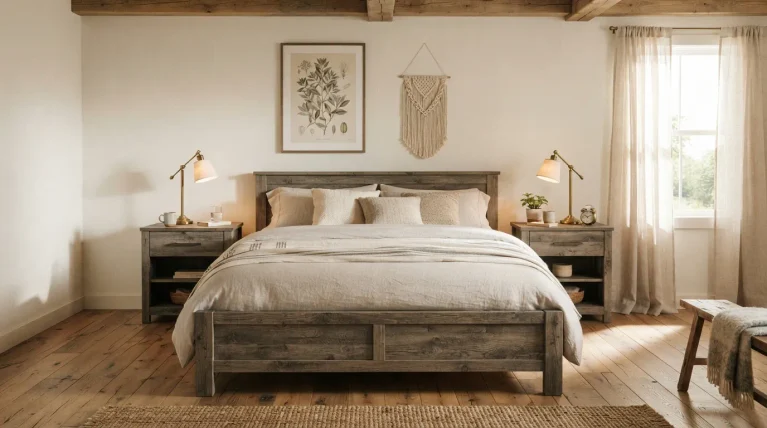
1. Warm Wood Foundation
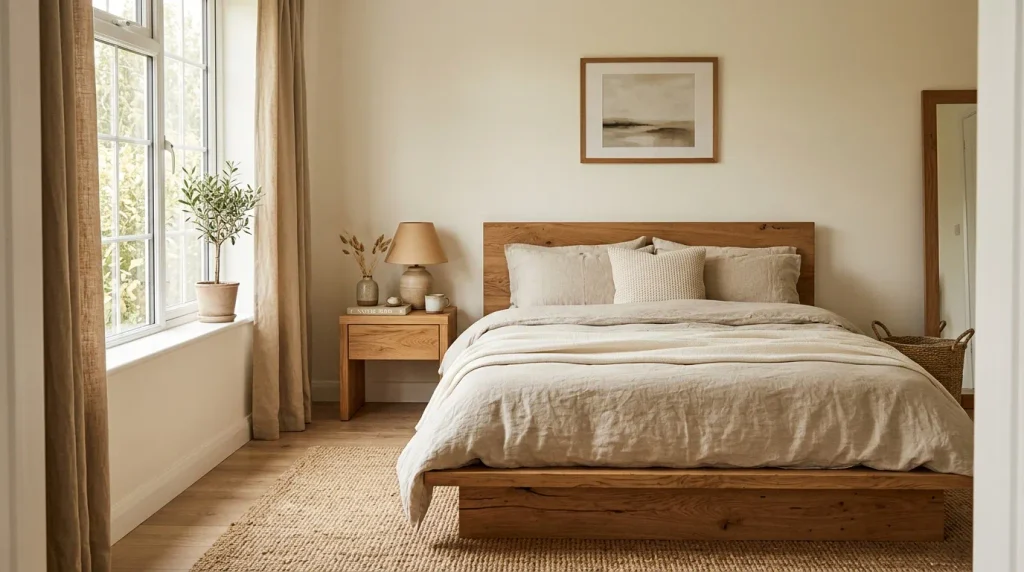
- A low-profile wood bed creates a grounded, airy foundation.
- Oatmeal linen adds softness without introducing visual clutter.
- A jute rug brings natural texture beneath the bed.
- Repeating one wood tone keeps the room cohesive and calm.
A quiet bedroom can feel instantly warmer when natural materials take center stage. Choose a low-profile oak bed with visible grain, then layer it with linen bedding in oatmeal, cream, and muted taupe. Keep the surrounding furniture simple so the wood becomes the visual anchor. In my experience, this approach makes smaller rooms feel grounded without looking heavy. Add a woven rug beneath the bed and one ceramic lamp on a compact nightstand. The result is soft, uncluttered, and inviting, with enough texture to keep the neutral palette from feeling flat.
Natural wood brings warmth without sacrificing the clean lines that define a minimalist room. Pair pale oak or warm walnut with creamy walls, soft linen curtains, and restrained accessories for a balanced earthy bedroom. The key is repetition: echo the wood tone in a bench, frame, or small shelf rather than introducing several competing finishes. This creates visual continuity and makes the room feel thoughtfully designed. I’ve noticed that homes with limited square footage benefit especially from this strategy because the simple palette keeps surfaces open while the grain adds character and depth.
Also Read : 23 Solarpunk Architecture Ideas for a Futuristic Green Home
2. Muted Clay Walls
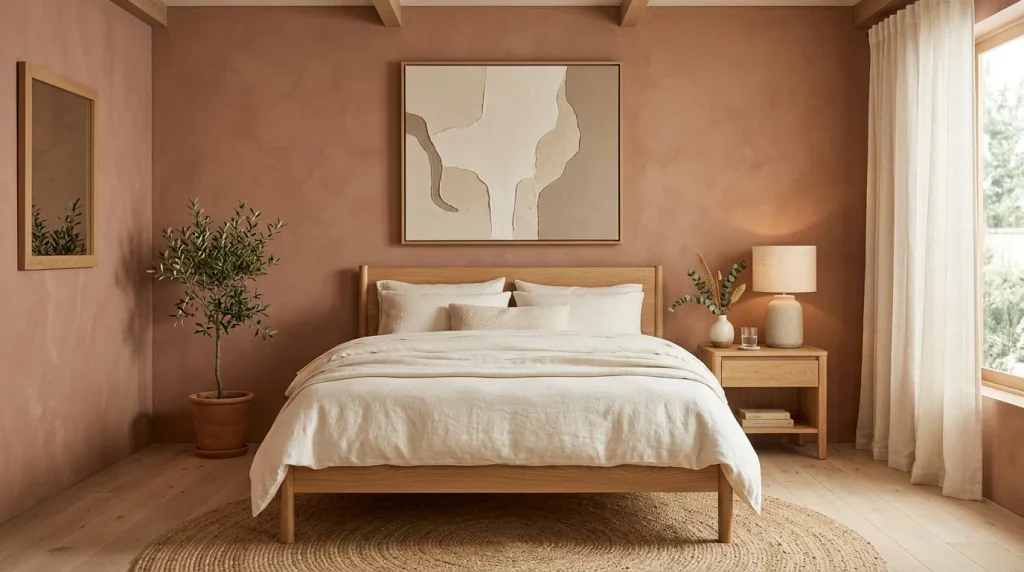
- Muted clay walls add warmth without overwhelming the room.
- Ivory bedding keeps the deeper wall color feeling balanced.
- Matte finishes create a softer, more natural appearance.
- One large artwork prevents the walls from looking overly busy.
Soft clay tones can turn a plain bedroom into a calming retreat without adding visual clutter. Paint the walls a muted terracotta or dusty clay shade, then balance it with ivory bedding, light oak furniture, and a textured jute rug. Choose matte finishes so the color feels natural rather than overly polished. A simple woven pendant and a few handmade ceramics reinforce the organic look. This palette works beautifully with morning sunlight because the warm undertones become gentle and dimensional. Keep artwork minimal, using one large neutral piece instead of several small decorations competing for attention.
A clay-inspired palette adds warmth while keeping an earthy minimalist bedroom visually restrained. Start with one dominant wall color and let the furniture, textiles, and accessories stay quiet around it. Linen in sand, cream, or warm white softens the stronger wall tone, while wood introduces natural contrast. In my experience, this combination works especially well when a room feels cold or overly white, because the clay shade gives it personality without requiring much decoration. For a polished finish, repeat the same warm undertone in a lamp, throw, or ceramic accent so everything feels connected.
Also Read : 23 Indoor Pond Ideas for a Peaceful Home Oasis
3. Layered Greenery
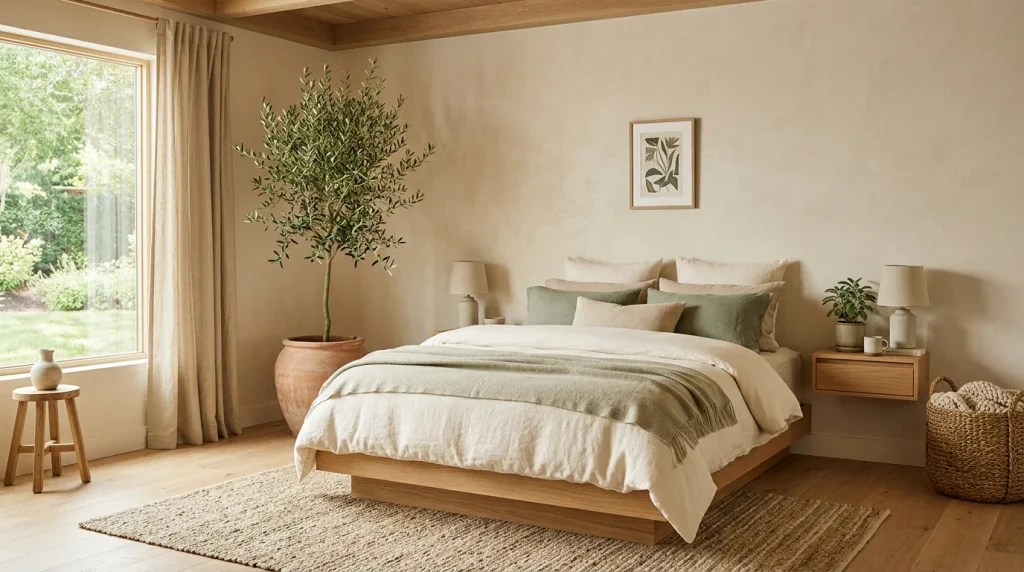
- One tall plant can fill an empty corner beautifully.
- Small greenery adds life without making surfaces feel crowded.
- Terracotta and woven planters reinforce the natural palette.
- Choose plants according to the room’s available light.
Bring the outdoors closer with a restrained collection of greenery and natural textures. Place one tall olive tree or leafy plant beside the bed, then add a small potted plant on the nightstand for a layered but uncluttered effect. Use terracotta, stoneware, and woven baskets to repeat earthy materials without overcrowding the room. This is one of those earthy minimalist bedroom ideas that feels especially refreshing in apartments where outdoor space is limited. Keep the plant selection intentional rather than filling every corner, and choose simple pots in sand, beige, or warm brown for a cohesive finish.
A few well-placed plants can soften sharp furniture lines and make a minimalist bedroom feel more connected to nature. Choose plants with simple silhouettes, such as an olive tree, snake plant, or trailing pothos, depending on the available light. Position taller greenery near an empty corner and smaller foliage where it can be enjoyed without blocking movement. I’ve seen this work well in many homes because greenery adds color without introducing a busy pattern. Pair the plants with linen, wood, and stone accents to create a calm palette that feels fresh, organic, and easy to maintain.
Also Read : 21 1950 Bathroom Ideas for a Vintage Retro-Inspired Space
4. Soft Linen Layers
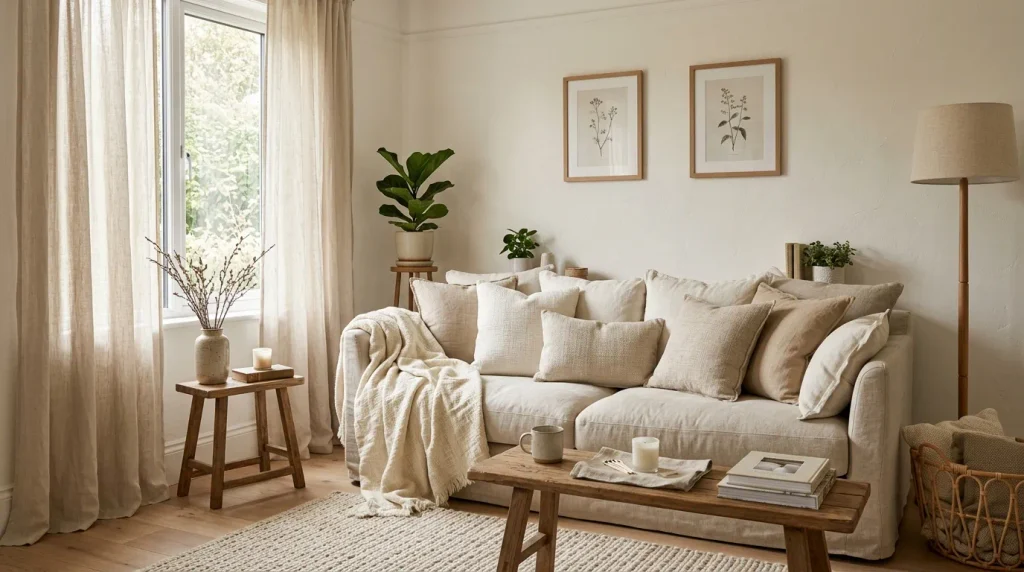
- Warm linen bedding creates softness without adding visual clutter.
- Oatmeal, ivory, and mushroom tones keep the palette naturally cohesive.
- Different fabric textures add depth without relying on bold patterns.
- A relaxed duvet creates an inviting, lived-in appearance.
A soft linen palette can make a bedroom feel instantly lighter, quieter, and more inviting. Choose bedding in warm ivory, oatmeal, or mushroom tones, then layer two or three slightly different textures instead of adding bold patterns. A linen duvet, relaxed pillowcases, and a nubby throw create depth while preserving the clean look. Keep the bed frame simple, preferably in pale oak or natural wood. This combination works especially well in rooms with limited decoration because the subtle texture becomes the visual interest. Morning light will emphasize every layer, giving the bed a relaxed, naturally finished appearance.
Linen works beautifully in a minimalist bedroom because it looks refined without feeling overly formal. Start with one neutral base and introduce variation through weave, weight, and gentle tonal shifts rather than strong colors. A warm white duvet can sit beside taupe pillows and a beige throw, creating a soft gradient that feels considered. I’ve noticed that this approach is particularly useful when a room already has simple furniture, because the bedding adds personality without creating clutter. Choose breathable natural fabrics where possible, and leave the top layer slightly relaxed instead of perfectly tucked for an effortless, lived-in finish.
Also Read : 25 Covered Patio Design Ideas for Stylish Outdoor Living
5. Warm Ambient Lighting
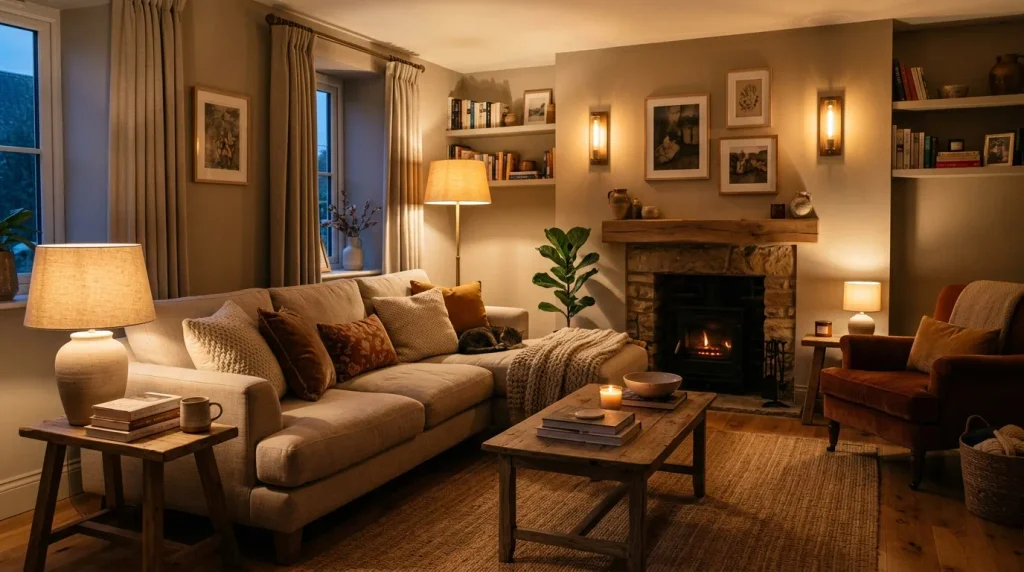
- Warm lighting makes natural materials look richer after sunset.
- Ceramic or woven lamps add texture without unnecessary decoration.
- Layered light creates a softer alternative to harsh overhead lighting.
- Position bedside lighting for both atmosphere and practical nighttime use.
Warm lighting can completely change how an earthy bedroom feels after sunset. Replace harsh overhead bulbs with a bedside lamp that casts a soft amber glow across linen, wood, and textured walls. Choose a ceramic, stone, or woven shade to keep the fixture connected to the natural palette. Add a second low light source on the opposite side if the room feels unevenly lit. This layered approach creates gentle pools of light instead of one bright wash. In my experience, softer lighting makes minimalist spaces feel much more comfortable at night while preserving their clean, uncluttered character.
Lighting should feel as intentional as the furniture in a calm bedroom. Use warm-white bulbs, ideally around 2700K, and position lamps where their glow supports bedtime routines without shining directly into your eyes. A small table lamp beside the bed can provide focused reading light, while a dim floor lamp can illuminate a darker corner. Keep fixtures visually simple, using finishes such as aged brass, matte ceramic, or natural wood. The combination of warm illumination and earthy materials creates depth after dark, making the room feel cozy without relying on extra accessories or decorative clutter.
Also Read : 24 Cherry Red Bedroom Ideas for a Bold Stylish Retreat
6. Natural Wood Flooring
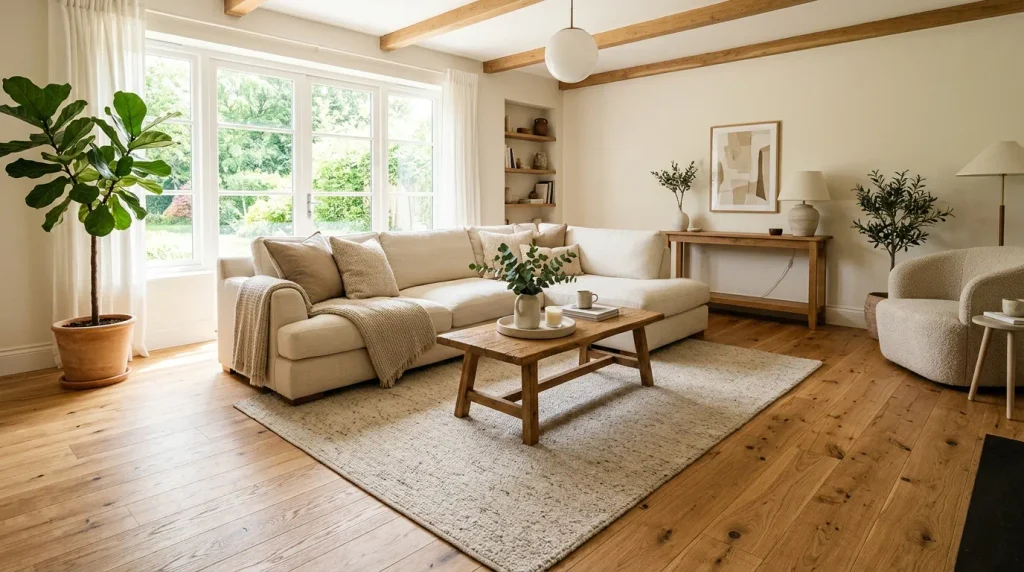
- Natural flooring adds warmth while keeping the foundation visually simple.
- Light oak works beautifully with cream, beige, and muted clay tones.
- A woven rug can recreate natural texture when changing flooring is impractical.
- Extending the rug beyond the bed creates a comfortable, defined sleeping zone.
A natural floor can quietly tie the entire bedroom together while making the space feel warmer underfoot. Light oak, honey-toned wood, or a matte natural finish works especially well with cream bedding, clay accents, and woven textiles. If replacing flooring is not practical, use a large jute, sisal, or flatwoven rug to introduce similar texture. Position the rug so it extends beyond the sides and lower edge of the bed, creating a defined sleeping zone. This simple change can also soften footsteps and add comfort, especially in bedrooms with hard surfaces and sparse furniture.
Natural flooring can quietly tie the entire bedroom together while making the space feel warmer underfoot. Light oak, honey-toned wood, or a matte natural finish works especially well with cream bedding, clay accents, and woven textiles. If replacing flooring is not practical, use a large jute, sisal, or flatwoven rug to introduce similar texture. Position the rug so it extends beyond the sides and lower edge of the bed, creating a defined sleeping zone. This simple change can also soften footsteps and add comfort, especially in bedrooms with hard surfaces and sparse furniture.
I’ve noticed that natural flooring becomes especially effective when the rest of the room stays restrained. Instead of covering the floor with several small rugs, choose one substantial piece that complements the bed and surrounding furniture. Pale wood pairs beautifully with warm white walls, while deeper flooring can be balanced with lighter textiles and simple decor. Leave some floor visible around the rug so the room maintains an airy appearance. The combination of organic grain, soft fabric, and open floor space creates the relaxed foundation that makes earthy minimalist bedroom ideas feel intentional rather than overly decorated.
Also Read : 22 Maximalist Home Office Decor Ideas for a Bold Workspace
7. Woven Bedside Accents
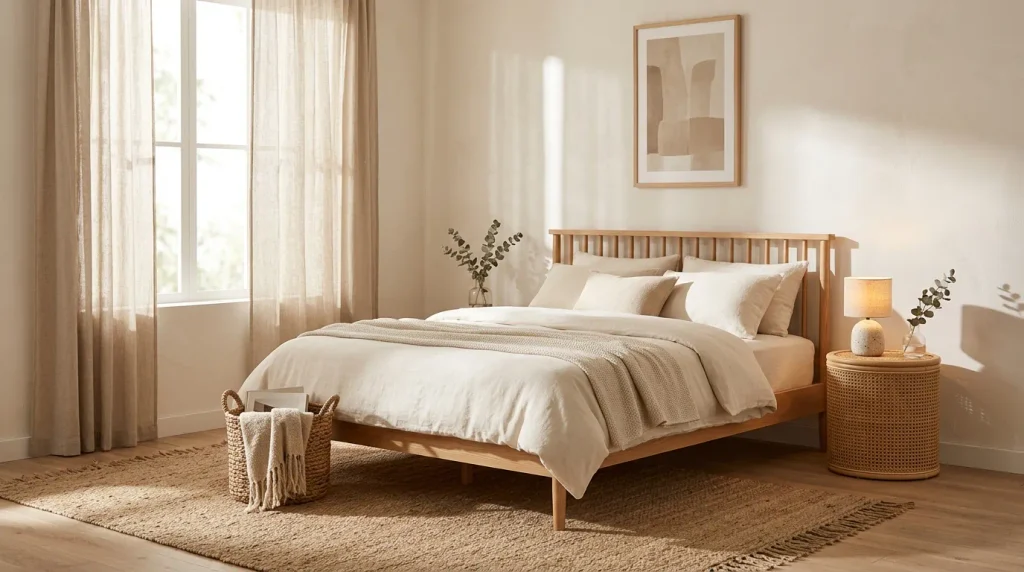
- A woven nightstand adds texture without making the room feel busy.
- Rattan and jute create natural contrast against smooth wood.
- Keep bedside surfaces limited to one lamp and a small object.
- Matching woven details can make the room feel more cohesive.
A woven bedside piece can add instant warmth to a simple bedroom without taking away from its minimalist character. Choose a rattan nightstand, cane cabinet, or small woven stool beside the bed, then keep its surface intentionally sparse. Pair it with a ceramic lamp, a small stoneware dish, or one simple book. The contrast between woven fibers, smooth linen, and natural wood creates subtle visual interest. This approach works particularly well when the room already has neutral colors but feels slightly plain. The texture gives the space personality while maintaining a calm, uncluttered appearance.
Natural woven materials also help soften the harder edges commonly found in minimalist furniture. Rattan, cane, seagrass, and jute each bring slightly different textures, so choose one or two rather than mixing too many. I’ve noticed that a woven nightstand looks especially balanced beside a low wooden bed because both materials feel organic and grounded. Keep the surrounding decor simple, allowing the weave itself to become the detail. A neutral basket underneath can provide useful storage for blankets or books while keeping everyday items hidden and preserving the clean visual flow of the bedroom.
8. Stoneware Decor
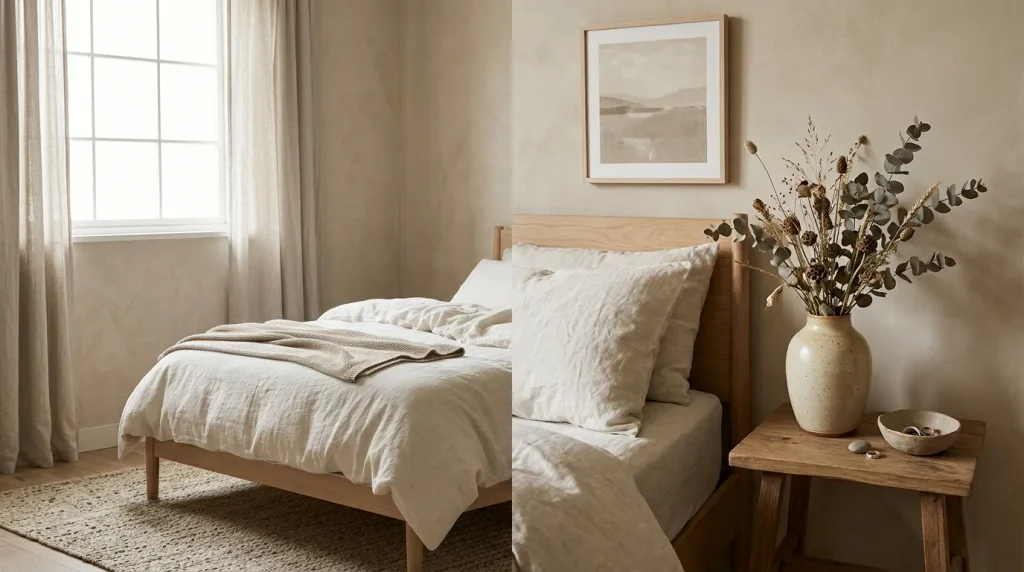
- Handmade ceramics introduce organic shapes and subtle imperfections.
- Matte stoneware works beautifully against soft linen and natural wood.
- One or two pieces are enough to create a finished look.
- Use vessels for both decoration and practical bedside storage.
Small stoneware pieces can make a minimalist bedroom feel finished without introducing unnecessary decoration. Place a handmade ceramic vase on the nightstand, add a shallow clay bowl for small essentials, or use a sculptural vessel on a dresser. Choose matte finishes in cream, sand, taupe, or muted brown so the pieces blend naturally with the surrounding palette. Their irregular shapes and subtle imperfections provide character that manufactured decor often lacks. In my experience, one carefully chosen ceramic object can have more visual impact than a collection of small accessories competing for attention.
The beauty of stoneware comes from its quiet texture and natural variation. Look for pieces with slightly uneven edges, speckled finishes, or softly rounded silhouettes that complement rather than dominate the furniture. Keep colors within the same warm neutral family so the room maintains visual continuity. A ceramic vase filled with dried grasses can also introduce height without adding bright color. These small details work particularly well with earthy minimalist bedroom ideas because they reinforce the connection to handmade materials. The result feels personal and collected while still maintaining the simplicity that makes the bedroom restful.
9. Earth-Tone Bedding
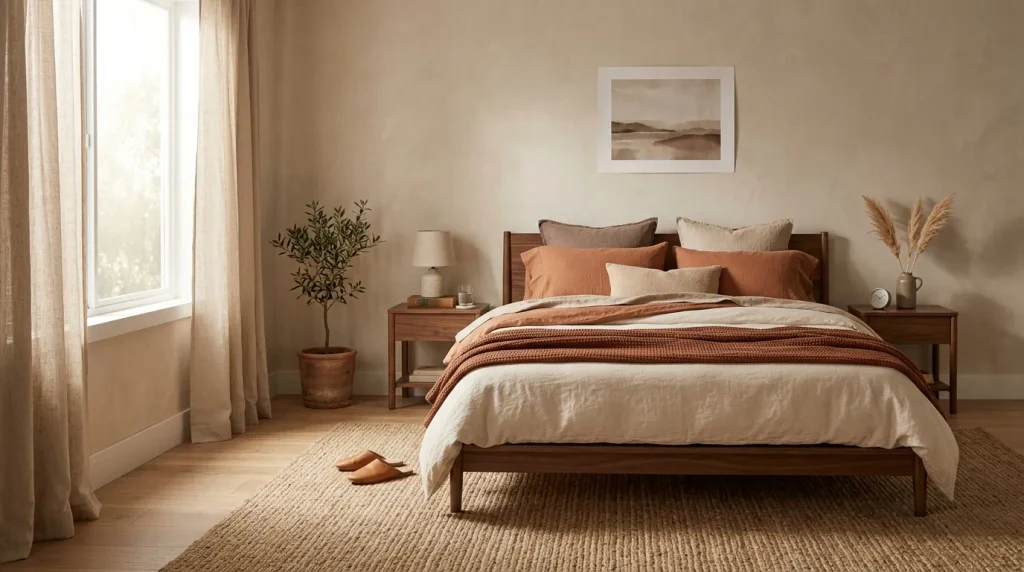
- Earth-tone bedding adds color while keeping the room visually quiet.
- Terracotta and sand work beautifully with cream and natural wood.
- Layer similar shades instead of introducing several unrelated colors.
- A textured throw can create depth without adding a busy pattern.
Earth-tone bedding gives a neutral bedroom more personality while keeping the overall look soft and grounded. Try a sand-colored duvet with terracotta cushions, a muted brown throw, or olive-toned accent pillows for gentle contrast. Keep the bed frame and larger furniture pieces natural so the textiles remain the main source of color. The trick is choosing shades that look slightly softened rather than highly saturated. This makes the palette feel connected to clay, soil, stone, and dried grasses. The result is cozy enough for everyday living while remaining clean enough for a minimalist space.
Layering earthy shades works best when each color has a clear relationship with the next. Start with a quiet base such as cream or oatmeal, then introduce one warmer shade and one deeper accent. For example, sand, muted terracotta, and walnut create a naturally balanced combination. I’ve seen this work well in bedrooms that feel too monochromatic because the gentle color variation adds dimension without visual noise. Avoid matching every accessory exactly; instead, repeat tones loosely through a cushion, rug, artwork, or ceramic piece. This creates a relaxed, collected appearance that feels natural rather than overly coordinated.
10. Textured Accent Wall
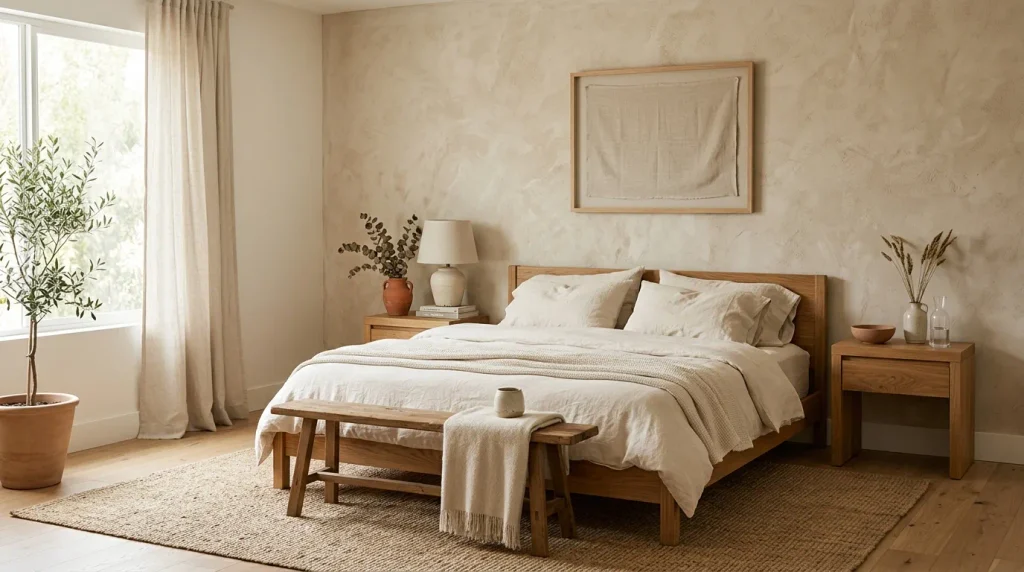
- A textured wall creates depth without adding artwork or busy patterns.
- Limewash or plaster finishes give walls a soft organic character.
- Keep surrounding furniture simple so the texture remains the focal point.
- Warm beige and mushroom tones pair naturally with wood and linen.
A softly textured accent wall can transform a plain bedroom without requiring more furniture or decoration. Try limewash, mineral paint, or a subtle plaster-inspired finish behind the bed to create depth through gentle variation rather than strong color. Keep the shade within warm beige, mushroom, or muted taupe so it complements natural wood and linen. The texture becomes especially noticeable as daylight moves across the wall, creating delicate shadows throughout the day. This is a practical way to add personality while preserving the uncluttered appearance that makes a minimalist bedroom feel spacious.
The best accent walls do not need dramatic patterns or intense colors to make an impression. A matte, slightly uneven finish can provide enough visual interest on its own, especially when paired with a simple wooden bed and restrained bedding. In my experience, textured walls work beautifully in rooms where artwork feels unnecessary or where too many accessories would make the space feel crowded. Keep the remaining walls quiet and repeat the accent tone through a cushion, ceramic piece, or rug. That small connection helps the entire room feel intentional, balanced, and naturally cohesive.
11. Low Platform Bed
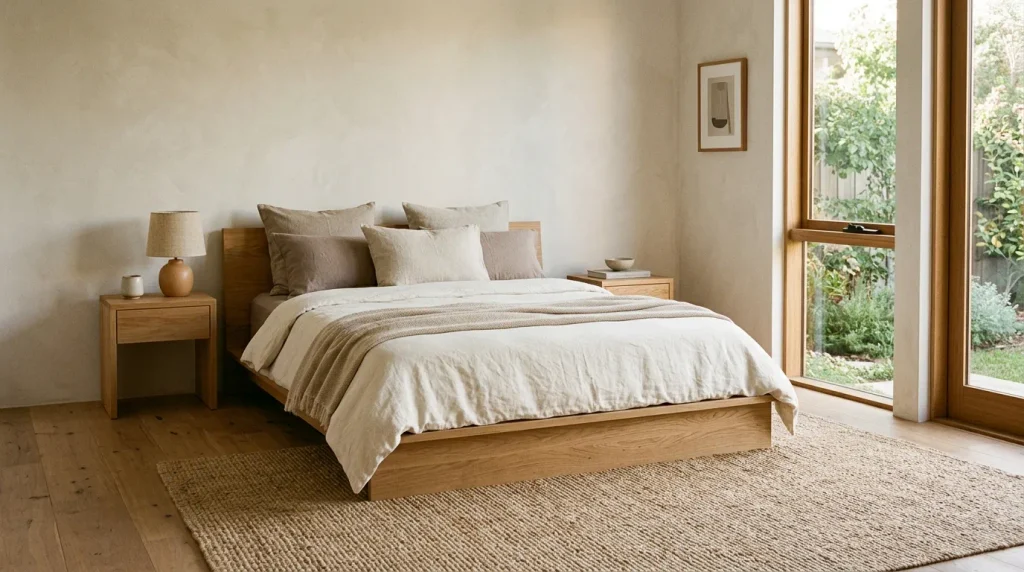
- A low bed visually opens the room and emphasizes floor space.
- Natural wood keeps the simple silhouette warm and inviting.
- Lower furniture creates a grounded connection with earthy materials.
- Keep bedding relaxed to soften the clean architectural lines.
A low platform bed can make an ordinary bedroom feel noticeably calmer and more spacious. Its streamlined profile leaves more visual space around the walls and floor, allowing natural materials and soft textures to stand out. Choose oak, walnut, or another warm wood finish, then pair it with relaxed linen bedding in cream, beige, or muted brown. Avoid bulky headboards and oversized frames that can dominate a small room. The lower silhouette also creates a grounded feeling that works naturally with woven rugs, ceramic accents, and simple nightstands.
This setup is especially useful when you want the bedroom to feel open without removing essential furniture. Because the bed sits closer to the floor, the ceiling can appear taller and the overall composition less crowded. I’ve noticed that pairing a low bed with long linen curtains enhances this effect by creating a strong vertical contrast. Keep the area underneath visually clean rather than using it for storage, since visible boxes can interrupt the peaceful appearance. Add one textured rug and a small bedside lamp, and let the uncomplicated structure of the bed carry the design.
12. Organic Shaped Mirror
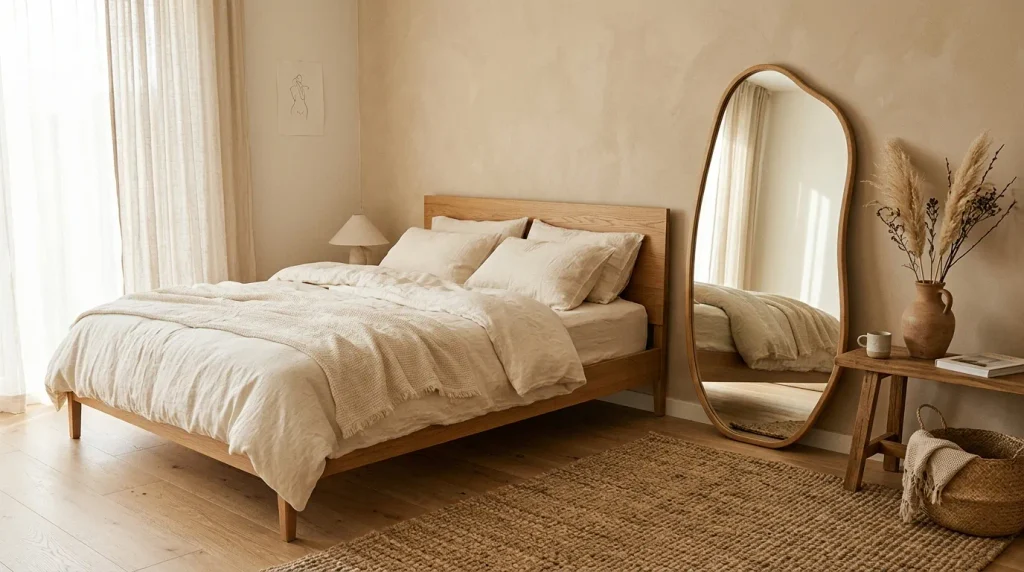
- An irregular mirror adds shape without requiring bold artwork.
- Rounded edges soften straight furniture lines.
- A leaning mirror can make the room feel taller and brighter.
- Choose a simple frame in wood, black, or muted natural tones.
An organic-shaped mirror can bring softness and light into a minimalist bedroom while doubling as a practical feature. Choose an asymmetrical, arched, or softly rounded design and position it near a window or opposite a light-colored wall. The reflection can make the room appear brighter and more spacious without adding another decorative object. A simple wood-framed mirror works particularly well with natural furniture, while a thin dark frame can provide subtle contrast. Keep the surrounding area open so the unusual silhouette remains visible and does not compete with other accessories.
Rounded shapes are useful when a bedroom contains several straight lines from the bed, nightstands, shelves, and flooring. The curved outline creates visual balance and gives the space a softer appearance without introducing a complicated pattern. For smaller bedrooms, place a full-length mirror where it can reflect daylight rather than a cluttered storage area. I’ve seen this small adjustment make rooms feel significantly more open. Choose a mirror with a restrained finish and let its shape provide the interest. Combined with linen, wood, and muted earth tones, it becomes both functional and decorative without overwhelming the room.
13. Jute Layered Rug
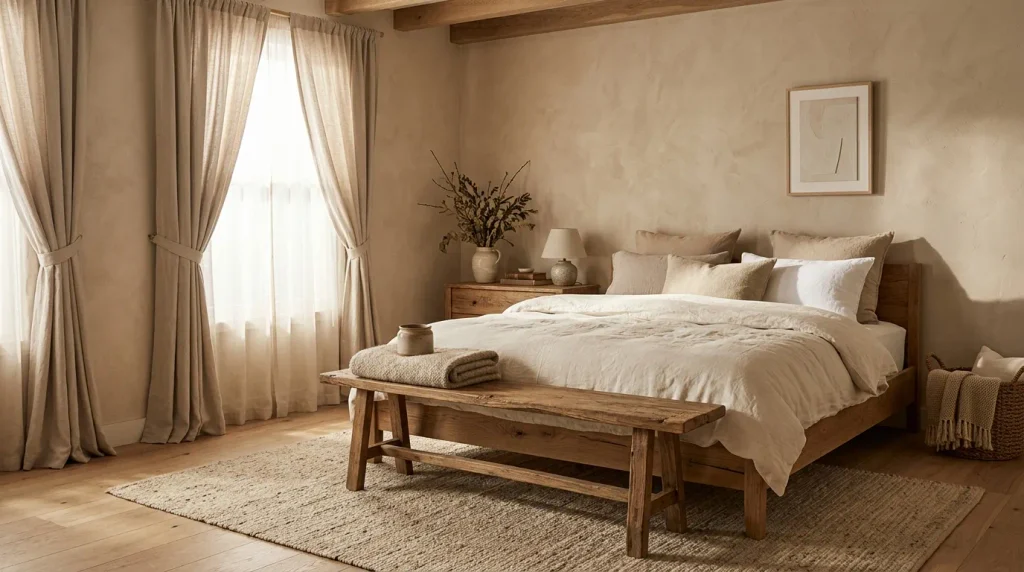
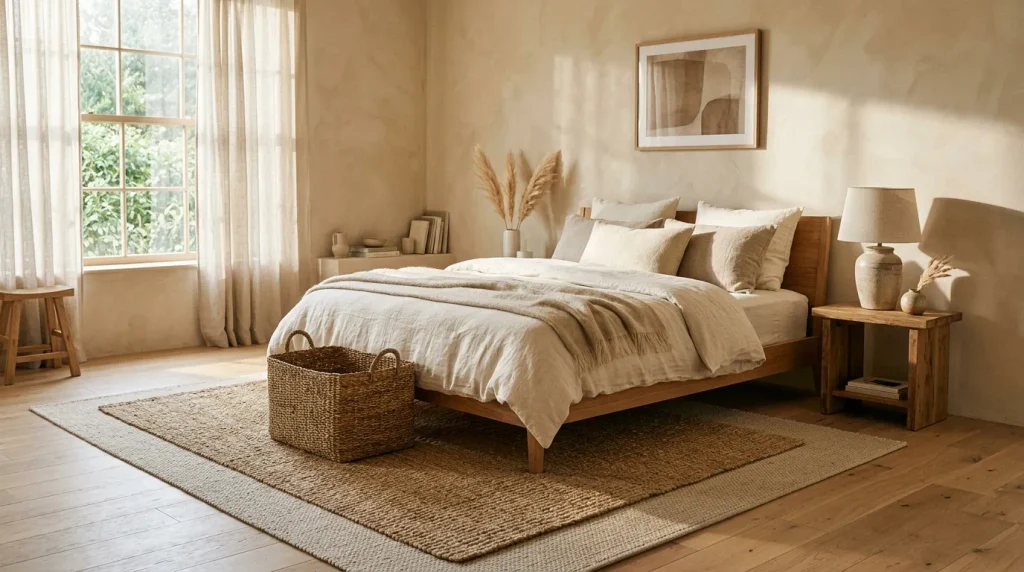
- Layering rugs adds warmth and dimension beneath a simple bed.
- Jute introduces natural texture without relying on bold patterns.
- A larger neutral base rug can soften rougher woven fibers.
- Keep both rugs within closely related earthy tones for harmony.
A layered rug arrangement can make a minimalist bedroom feel warmer, softer, and more finished without adding unnecessary furniture. Start with a large neutral flatweave rug, then place a slightly smaller jute rug over it beneath the bed. The combination creates subtle depth through texture rather than color. Choose natural beige, sand, oatmeal, or honey tones so the flooring remains visually calm. This works especially well in bedrooms with wood or tile floors because the rugs soften the harder surfaces. Leave enough flooring visible around the edges to preserve an airy, spacious appearance.
The key to successful rug layering is keeping the colors quiet and the proportions intentional. A large base rug should define the sleeping area, while the jute layer adds tactile interest around the bed. I’ve noticed that this arrangement is particularly helpful when a room has minimal furniture because the floor gains visual richness without becoming busy. Choose rugs with low or medium piles so furniture remains stable and doors open easily. If you prefer a simpler look, one oversized jute rug can create a similar effect while keeping the room easy to maintain.
14. Earthy Window Treatments
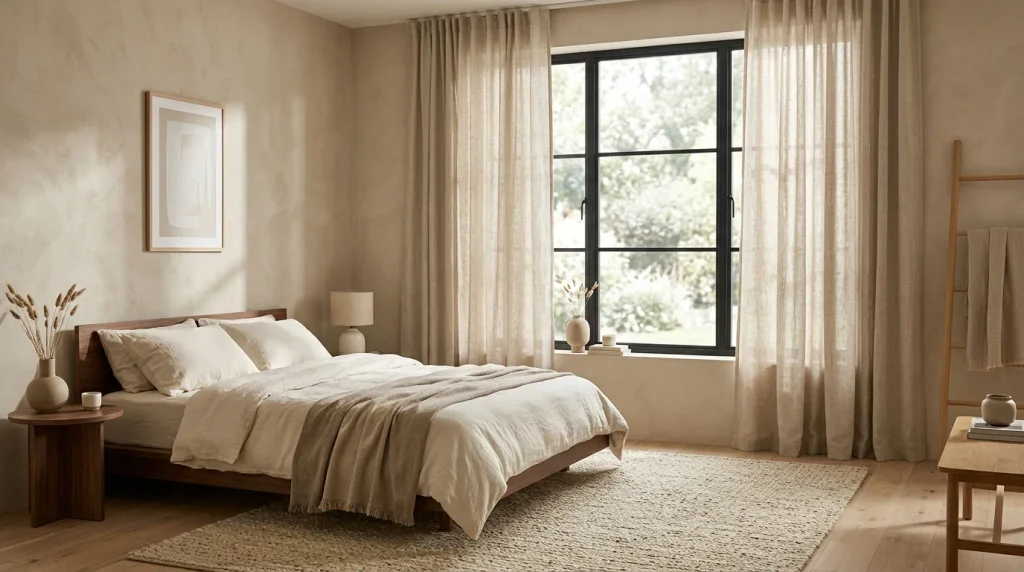
- Full-length linen curtains soften windows while adding natural texture.
- Oatmeal and flax tones work beautifully with warm neutral interiors.
- Hang curtains close to the ceiling to emphasize vertical height.
- Choose lightly filtered fabric when you want gentle daylight indoors.
Soft window treatments can change the entire atmosphere of a minimalist bedroom by controlling light while adding another layer of natural texture. Choose full-length linen or linen-look curtains in oatmeal, flax, warm white, or muted taupe. Hang them close to the ceiling and let them fall generously toward the floor to create a taller, more relaxed appearance. Light-filtering fabric works especially well because it keeps the room bright while reducing harsh glare. The gentle folds also soften the clean geometry of wooden furniture, making the overall space feel more comfortable and naturally layered.
Window treatments should support the room rather than become a separate focal point. Avoid strong prints and shiny fabrics, which can interrupt the understated quality of an earthy palette. Instead, choose a slightly textured material that changes subtly as daylight moves across it. In my experience, linen curtains are especially effective when paired with natural wood because both materials have a relaxed, imperfect quality. If privacy is important, combine light-filtering curtains with discreet blinds or shades underneath. This gives you practical control while preserving the soft, sunlit appearance that makes the bedroom feel peaceful.
15. Rustic Wood Bench
- A wooden bench adds useful seating without visually filling the room.
- Rustic grain introduces character beside smoother linen and plaster surfaces.
- Place the bench at the foot of the bed for a balanced layout.
- Use it for seating, folded blankets, or a simple decorative accent.
A rustic wood bench at the foot of the bed can add function and character without disrupting a minimalist layout. Choose a simple design with visible grain, gently rounded edges, or a naturally aged finish. Keep the shape uncomplicated so it complements rather than competes with the bed. The bench can provide a convenient place to sit while dressing, fold a blanket at night, or temporarily place a book. Pairing warm wood with cream linen and a woven rug creates a layered natural look that feels practical, comfortable, and visually grounded.
The best bench for an earthy bedroom is one that looks useful rather than purely decorative. Leave enough space between the bench and nearby furniture to maintain an easy walking path, especially in smaller rooms. A slightly weathered finish can introduce rustic character, while pale unfinished wood keeps the room feeling lighter. I’ve seen this work well in bedrooms where storage furniture would make the layout feel crowded. Instead of adding another cabinet, the bench provides a small functional surface while allowing the floor and surrounding materials to remain visible and uncluttered.
16. Clay Accent Pieces
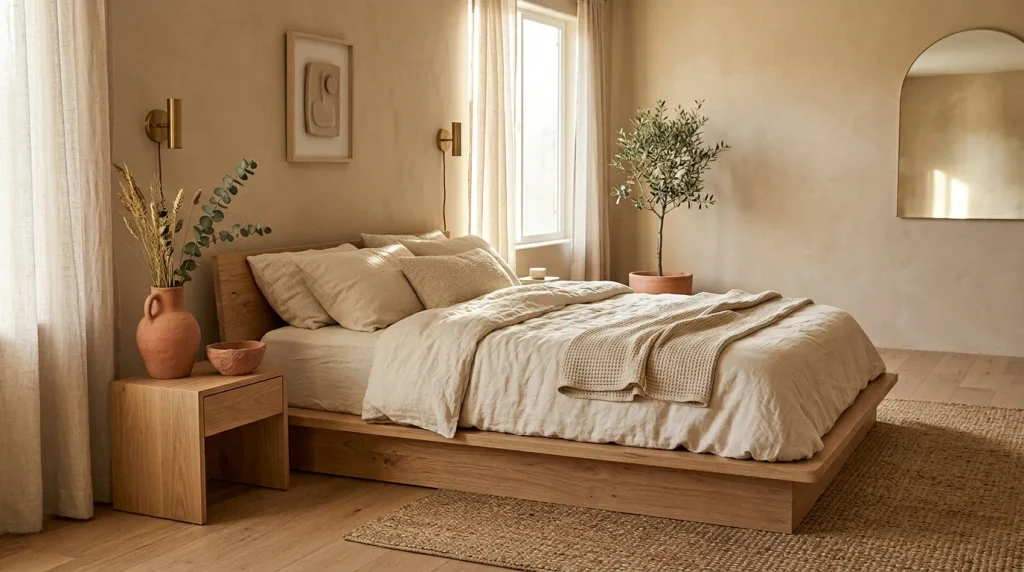
- Terracotta accents introduce warmth without overwhelming neutral surroundings.
- Matte clay finishes add handmade character and tactile interest.
- Use a few small pieces instead of filling every surface.
- Repeat the clay tone subtly through bedding or artwork for cohesion.
Clay accents can bring a beautiful sense of warmth to an otherwise neutral bedroom. A terracotta vase, handmade bowl, or small sculptural piece adds earthy color while keeping the overall arrangement restrained. Place one statement piece on a nightstand or dresser and leave the surrounding surface mostly open. Soft clay shades work especially well with cream linen, pale oak, and beige walls because they create contrast without feeling dramatic. This simple addition can make the room look more collected while preserving the relaxed quality of a naturally inspired minimalist interior.
The appeal of clay comes from its imperfect texture and warm, grounded color. Choose matte pieces with rounded silhouettes, subtle speckles, or gently uneven surfaces to complement other organic materials. I’ve noticed that terracotta looks especially balanced when it appears in only a few locations rather than being repeated everywhere. A vase beside the bed, for example, can echo a small clay bowl on a dresser without creating a themed appearance. Keep the remaining accessories neutral, allowing the earthy accent to stand out naturally while reinforcing the connection between the bedroom and the outdoors.
17. Neutral Gallery Art
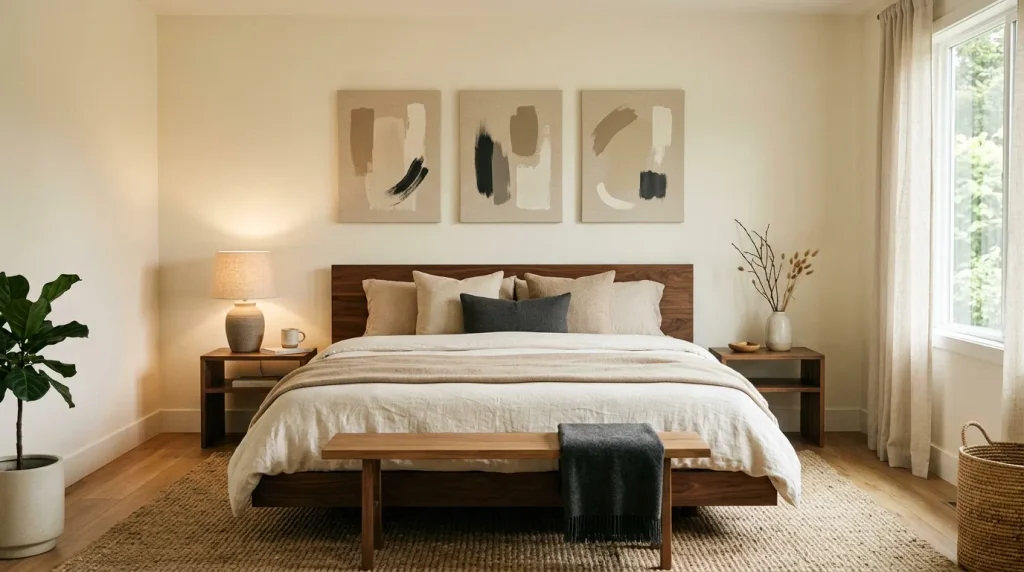
- Neutral artwork adds personality without introducing strong visual noise.
- Abstract organic shapes complement natural materials and earthy colors.
- Use a small collection with consistent tones and simple frames.
- Leave generous wall space around artwork for a cleaner appearance.
A small collection of neutral artwork can personalize a minimalist bedroom without making the walls feel crowded. Choose two or three abstract prints featuring soft lines, organic shapes, charcoal marks, or muted earthy tones. Keep the frames simple, using natural wood, black, or warm neutral finishes that complement the furniture. Hang the pieces above the bed with even spacing and enough breathing room around them. This gives the room a finished focal point while allowing the bedding, wood grain, and textured surfaces to remain part of the overall composition.
Artwork works best here when it supports the natural palette rather than competing with it. Look for pieces featuring sand, cream, taupe, muted brown, olive, or soft charcoal instead of bright colors. The goal is not perfect matching but visual connection. In my experience, a limited gallery arrangement feels more sophisticated when the frames share a similar finish, even if the artwork itself varies slightly. If the bedroom is small, choose fewer larger pieces rather than many tiny prints. This keeps the wall visually calm and prevents the room from losing its minimalist character.
18. Minimalist Storage Bench
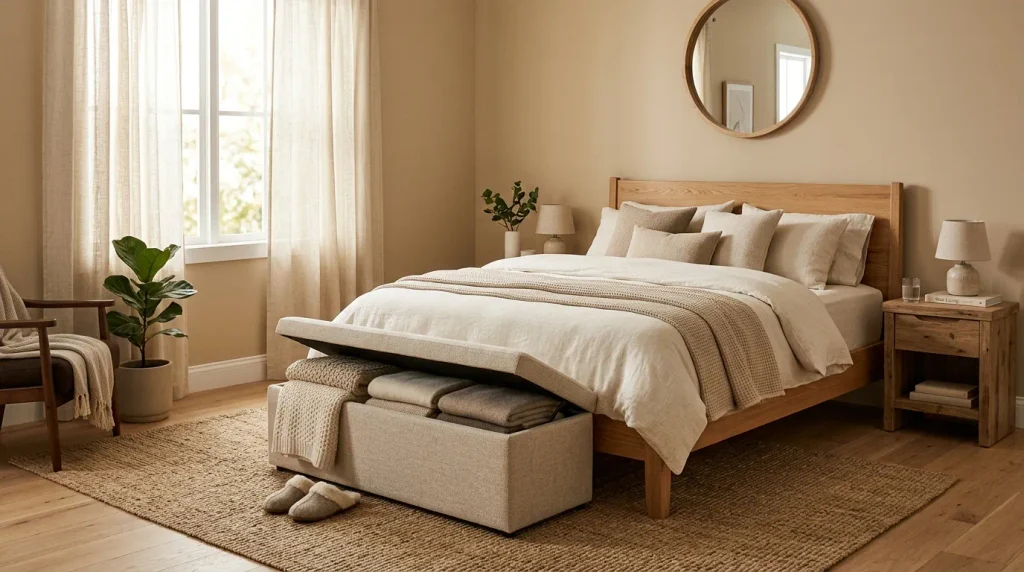
- A storage bench adds hidden function without introducing bulky cabinetry.
- Upholstered neutral fabric softens the harder lines of wooden furniture.
- Use concealed storage for blankets, pillows, or seasonal bedding.
- Choose a low profile so the room maintains an open visual flow.
A minimalist storage bench can solve everyday clutter while keeping the bedroom visually peaceful. Place a low-profile bench at the foot of the bed and use its concealed compartment for extra blankets, pillows, or seasonal bedding. Choose oatmeal, beige, or warm taupe upholstery if you want softness, or natural wood if you prefer a more rustic finish. Because the storage remains hidden, the room stays visually clean even when everyday essentials need a home. This practical feature is especially valuable in smaller bedrooms where adding another cabinet could make movement feel restricted.
Function becomes especially important when creating a calm bedroom because visible clutter can quickly undermine the design. A storage bench provides useful capacity without requiring tall furniture that draws attention upward. Choose a design that sits comfortably below the visual height of the mattress so the bed remains the dominant feature. I’ve seen this work particularly well in compact rooms where every piece needs to serve a purpose. Keep the bench surface mostly clear, perhaps with one folded throw, and allow the surrounding floor space to remain open for a lighter, more spacious appearance.
19. Dried Botanical Stems
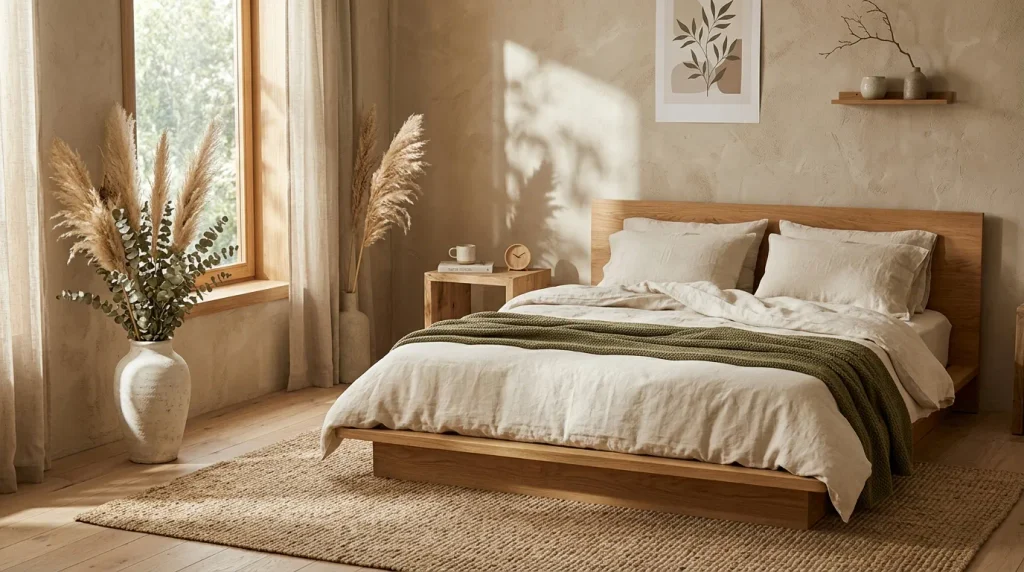
- Dried stems add height without introducing bright, distracting color.
- A simple ceramic vase keeps the arrangement grounded and understated.
- Choose soft grasses or eucalyptus for natural texture.
- One tall arrangement can fill an otherwise empty corner beautifully.
Dried botanical stems bring height, texture, and natural character to a minimalist bedroom without demanding much maintenance. Place a few pampas grass, eucalyptus, wheat, or dried reed stems in a tall ceramic vase beside the bed or near an empty corner. Choose muted beige, olive, cream, or soft brown tones so the arrangement blends with the rest of the room. Keep the vase simple and let the stems remain slightly loose rather than tightly arranged. This creates an effortless focal point that adds dimension while keeping the bedroom visually calm.
The most successful dried arrangements feel organic rather than overly styled. Choose only a few varieties and avoid filling the vase with too many colors or textures. A handmade clay or stoneware vessel can reinforce the natural character while adding a subtle sculptural element. I’ve noticed that tall stems work especially well in rooms with low furniture because they introduce vertical interest without making the floor feel crowded. Place the arrangement where it will not interfere with movement, and dust it regularly so the natural materials continue looking fresh, clean, and intentional.
20. Soft Earthy Layers
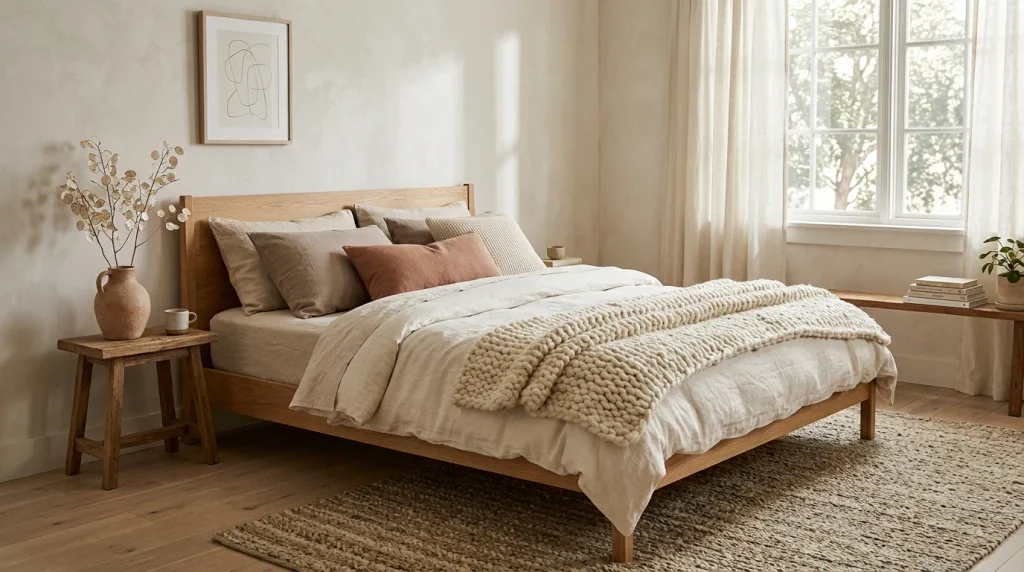
- Layering neutral textures creates depth without relying on bold patterns.
- Combine linen, cotton, wool, and woven fibers for tactile contrast.
- Keep colors within a narrow earthy range for visual calm.
- A single chunky throw can make the bed feel warmer and more inviting.
Soft layers can make a minimalist bedroom feel cozy without turning it into a heavily decorated space. Start with cream linen bedding, then add a taupe cushion, a woven throw, and one textured blanket in a muted earthy shade. The goal is to create contrast through fabric rather than strong patterns or excessive accessories. Keep the colors close together so the bed looks layered but still peaceful. Natural wood furniture and a simple woven rug complete the arrangement, giving the room enough texture to feel welcoming while preserving plenty of open visual space.
The secret to successful layering is restraint. Instead of adding many decorative pillows or blankets, choose a few pieces with noticeably different textures and similar colors. Linen provides relaxed softness, wool adds warmth, and a woven throw introduces tactile variation. In my experience, this approach works particularly well during seasonal changes because individual layers can be removed or added without redesigning the room. Let one blanket drape naturally across the lower portion of the bed, and keep nearby surfaces clear. The result feels comfortable, practical, and thoughtfully styled without looking overly arranged.
21. Nature-Inspired Simplicity
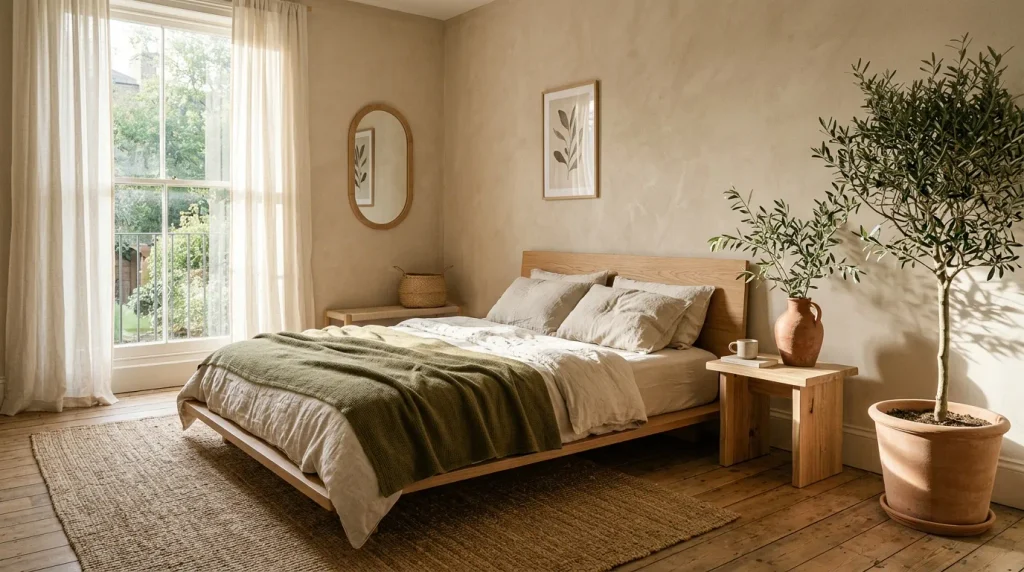
- Natural materials create the strongest connection to an outdoor-inspired aesthetic.
- Keep furniture functional and decorative pieces intentionally limited.
- Repeat earthy colors softly through textiles, plants, and ceramics.
- Leave open space around major furniture for a lighter appearance.
The most inviting natural bedrooms often rely on fewer elements, not more. Build the room around warm wood, breathable linen, woven fibers, soft plaster tones, and a small amount of greenery. Choose furniture with simple silhouettes and allow each material to remain visible rather than covering every surface with accessories. This balance is at the heart of earthy minimalist bedroom ideas because it creates a retreat that feels connected to nature while remaining practical for everyday life. The finished room should feel warm and personal, yet spacious enough to breathe.
A calm bedroom becomes easier to maintain when every piece has a clear purpose. Choose a comfortable bed, useful bedside storage, soft lighting, one or two natural decorative accents, and textiles that feel good in daily use. I’ve seen this approach work especially well in homes where people want a peaceful retreat without constantly rearranging decor. Let sunlight, wood grain, woven texture, and subtle earth tones provide most of the visual interest. When the room feels finished but not crowded, it becomes easier to relax, reset, and enjoy the natural simplicity of the space.
Conclusion
Creating a calm bedroom doesn’t require a complete makeover. A few thoughtful changes—natural wood, soft linen, earthy colors, woven textures, greenery, and warm lighting—can completely shift how the space feels. These earthy minimalist bedroom ideas give you simple ways to create a room that feels peaceful, welcoming, and naturally beautiful. I’ve seen how small changes like replacing harsh lighting or adding one textured piece can make a noticeable difference. Save this post on Pinterest so you can revisit your favorite ideas, try one in your own space, and share the inspiration with someone who wants a calmer bedroom too. Start small, keep it natural, and let your space breathe.