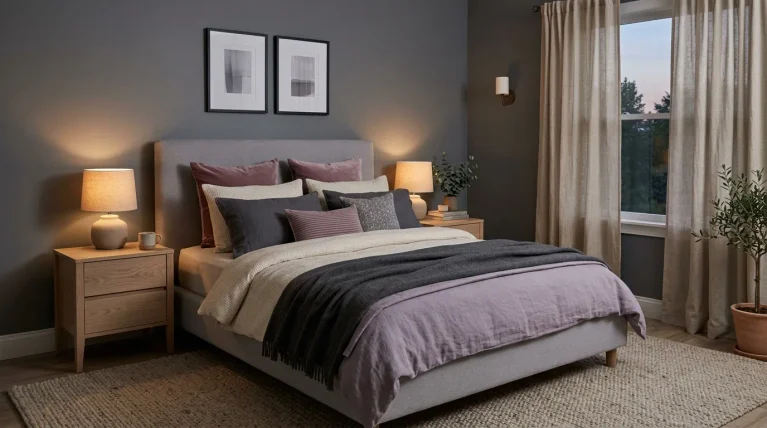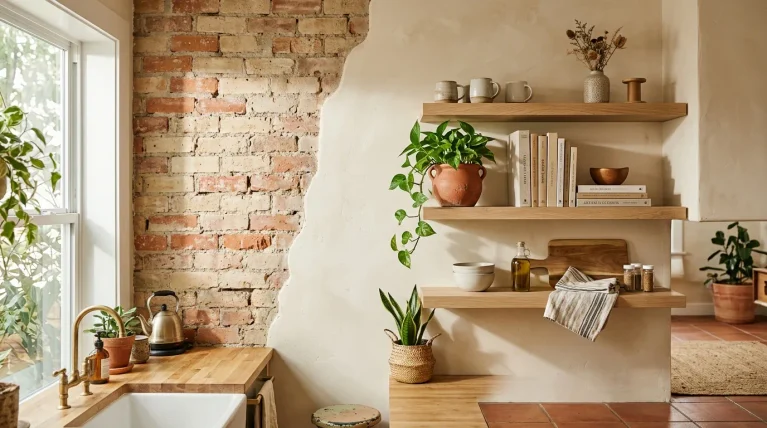
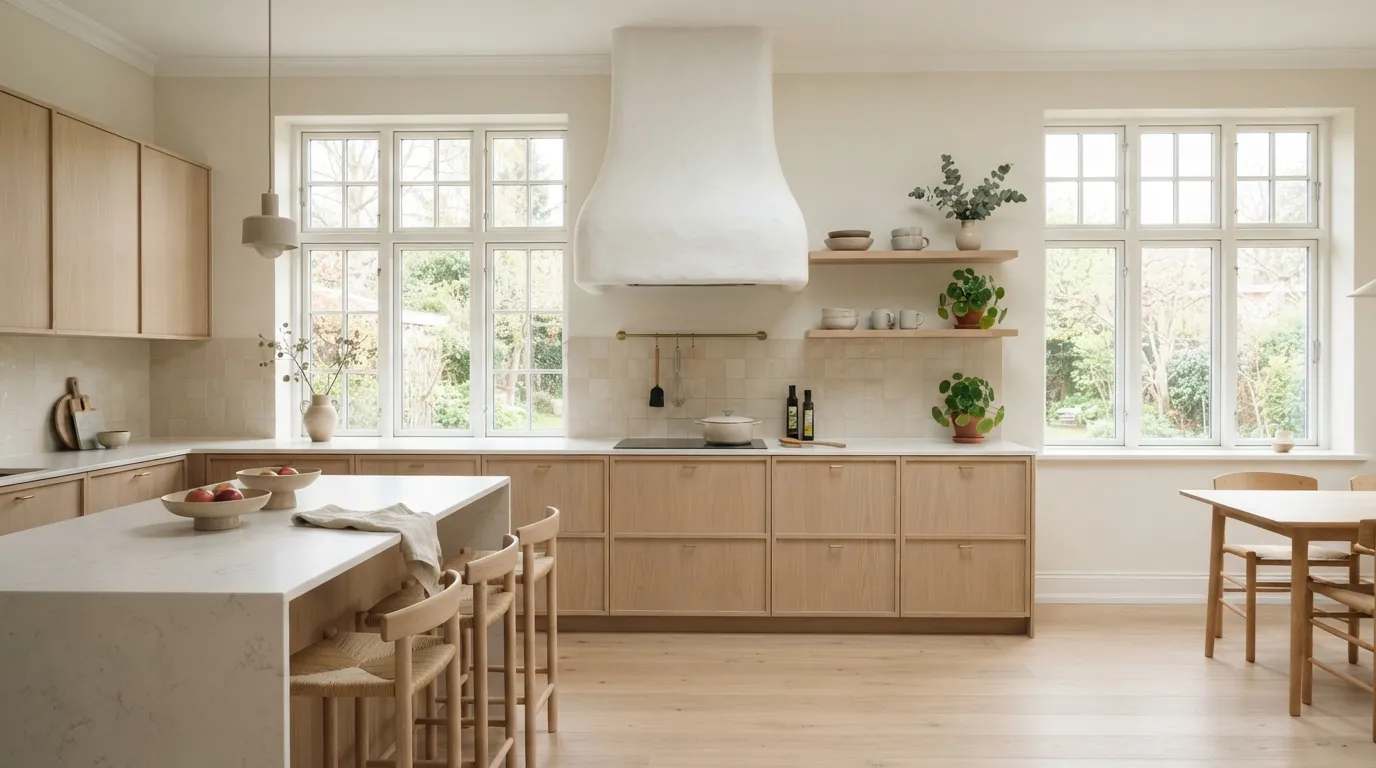
A bright, calm kitchen can make the whole home feel better. ✨ These Scandinavian kitchen ideas can help you create that fresh, inviting look without making the space feel cold or overly minimal.
This collection explores simple ways to bring together pale wood, soft neutrals, natural textures, clean cabinetry, thoughtful lighting, greenery, and practical layouts. Whether you are planning a complete kitchen makeover or simply want a few easy changes, you’ll find ideas that can work in both spacious homes and compact kitchens. The goal is not to copy one perfect room, but to understand which details make a Scandinavian-inspired space feel warm, functional, and effortlessly beautiful.
In my experience, small changes often create the biggest visual difference. Swapping harsh lighting, adding natural wood, clearing crowded counters, or introducing a little greenery can completely change how a kitchen feels. As you explore these ideas, notice the details that fit your home, lifestyle, and budget best. You may find one simple update that gives your kitchen the brighter, more welcoming atmosphere you’ve been looking for.
1. Pale Oak Cabinets
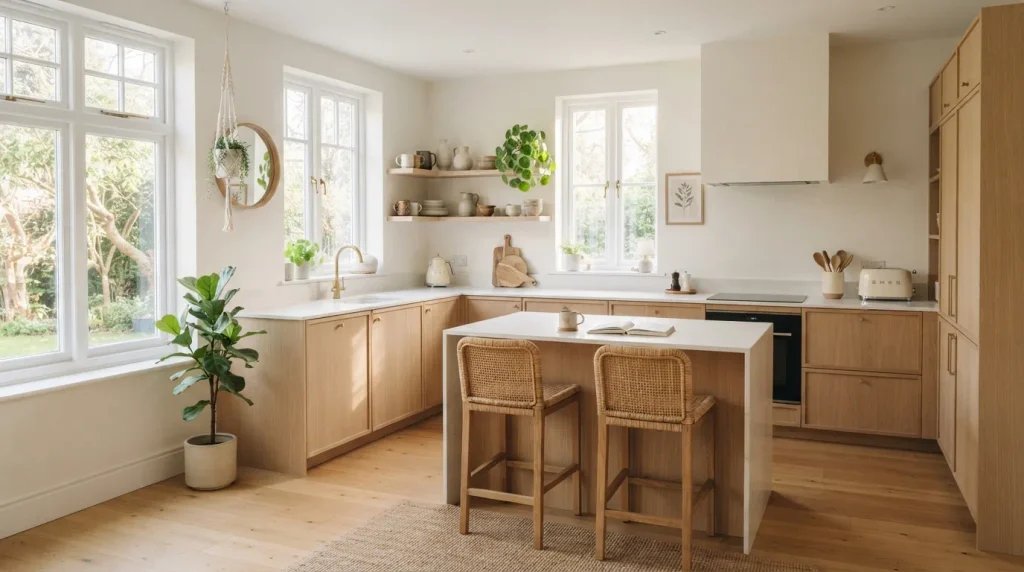
- Warm oak instantly adds softness to a bright kitchen.
- White walls help natural light travel across the room.
- Matte finishes keep the space calm and understated.
- Woven textures and greenery add an easy, lived-in touch.
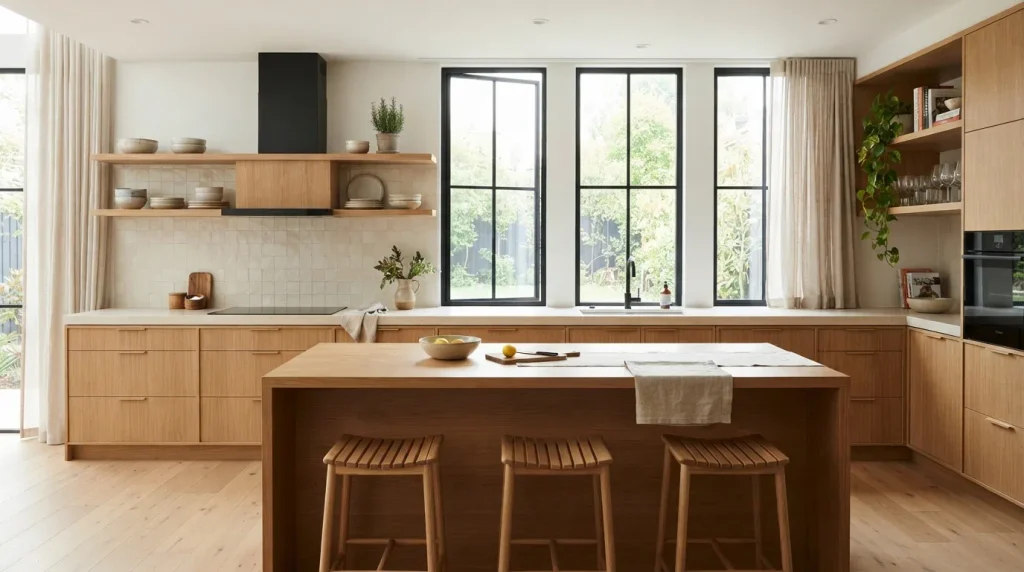
A pale wood kitchen instantly makes a home feel lighter, calmer, and more spacious. Pairing warm oak cabinetry with white walls creates the clean foundation that defines many Scandinavian interiors without making the room feel cold. In real homes, this combination works especially well when daylight is limited because light surfaces bounce brightness around the space. I’ve noticed that matte finishes also help keep the look relaxed and natural, while simple hardware prevents visual clutter. Add a few woven textures, ceramic pieces, or leafy plants to soften the streamlined cabinetry and create an inviting everyday kitchen.
Natural wood brings warmth to a bright kitchen, especially when the surrounding palette stays simple. Choose flat-front oak cabinets, a pale stone countertop, and understated white backsplash tiles for a balanced look that feels modern but comfortable. This approach is practical because wood tones hide small signs of daily use better than an entirely white scheme, while still keeping the room visually open. Scandinavian kitchen ideas often rely on this quiet contrast rather than dramatic color. For extra character, introduce linen curtains, wooden stools, or a small cutting board display, keeping each accessory useful as well as attractive.
Also Read : 21 Fantasy Medieval Bedroom Ideas for a Magical Royal Space
2. Warm Neutral Palette
- Creamy whites feel softer than stark, pure white.
- Pale beige adds warmth without making the room heavy.
- Light oak flooring creates gentle visual continuity.
- Brushed metal details provide subtle modern contrast.
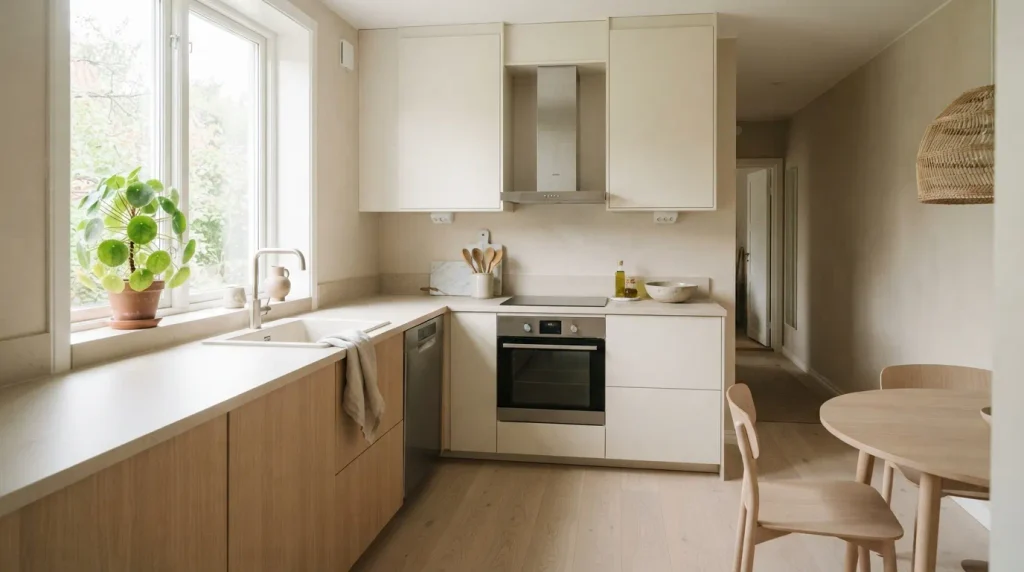
A soft neutral palette can make a small kitchen appear noticeably more open without relying on major renovations. Think creamy white walls, light beige cabinetry, pale oak flooring, and brushed metal details that catch daylight gently. The key is choosing slightly different shades instead of making every surface identical, which gives the room depth while preserving a calm visual flow. I’ve seen this work well in compact homes where bulky decoration would quickly feel overwhelming. Keep countertops mostly clear, use one or two sculptural pieces, and let natural materials provide the subtle variation that makes the space feel finished.
A warm neutral scheme also makes it easier to change your kitchen’s look over time without replacing major elements. Beige linen, natural wood, woven baskets, and handmade ceramics can add character while staying within the same gentle palette. If the room receives strong sunlight, warmer whites prevent the space from looking harsh; in darker kitchens, lighter cream and soft beige can help reflect available light. Keep larger surfaces simple and use texture for interest instead of bold patterns. The finished room feels cohesive, comfortable, and timeless, while still delivering the clean appearance associated with modern Nordic interiors.
Also Read : 23 Masculine Home Office Ideas for a Stylish Workspace
3. Soft White Kitchen
- Layered whites make the room feel fresh without looking flat.
- Pale wood introduces warmth against bright surfaces.
- Minimal decor keeps countertops visually peaceful.
- One leafy plant adds an organic finishing touch.
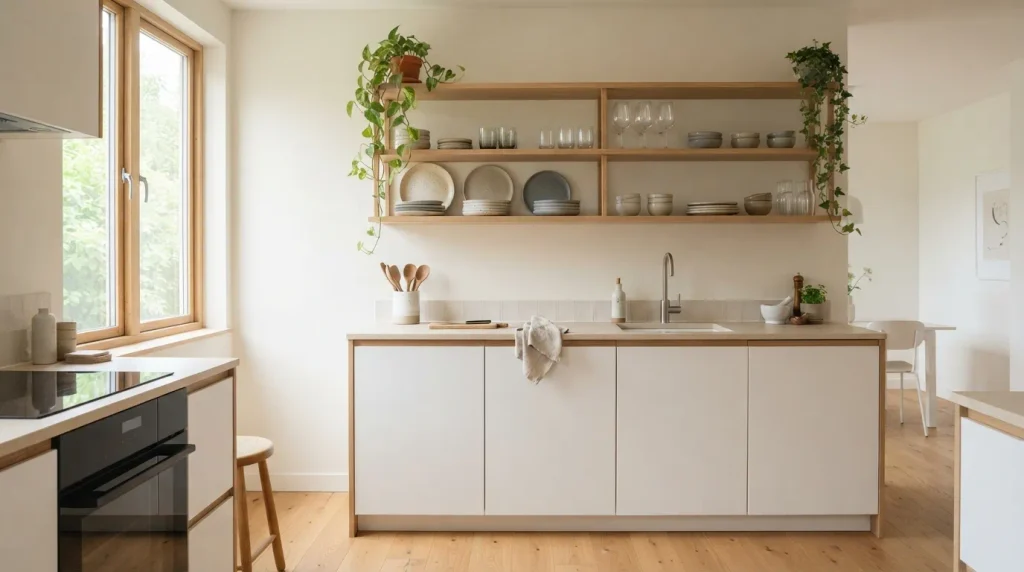
A bright white kitchen becomes much more inviting when its surfaces have subtle texture and tonal variation. Use creamy cabinetry with a simple backsplash, pale wood flooring, and a lightly veined countertop to create depth without visual noise. The result feels clean while still having enough warmth for everyday living. Keep decorative objects intentional, such as a handmade ceramic vase or wooden tray, rather than filling open surfaces. This layered approach is particularly useful in smaller homes because it preserves an airy appearance. Natural daylight becomes part of the design, making the entire kitchen feel larger and more connected.
White does not have to mean plain, especially when you layer different materials throughout the room. Combine painted cabinets with textured backsplash tiles, a softly veined countertop, pale timber, and natural linen for a richer finish. I’ve noticed that adding one or two organic elements, such as a leafy plant or wooden stool, can make an all-white kitchen feel considerably more welcoming. Avoid introducing too many decorative colors because they can interrupt the peaceful effect. Instead, let subtle differences in texture and finish create interest. This keeps the kitchen bright, practical, and easy to personalize over time.
Also Read : 25 Modern Farmhouse Fireplace Ideas for a Cozy Living Room
4. Open Wood Shelving
- Open shelves make everyday dishes part of the decor.
- Pale wood adds warmth without visually closing the room.
- Keeping shelves lightly styled prevents a cluttered appearance.
- Everyday essentials stay easy to reach and display.
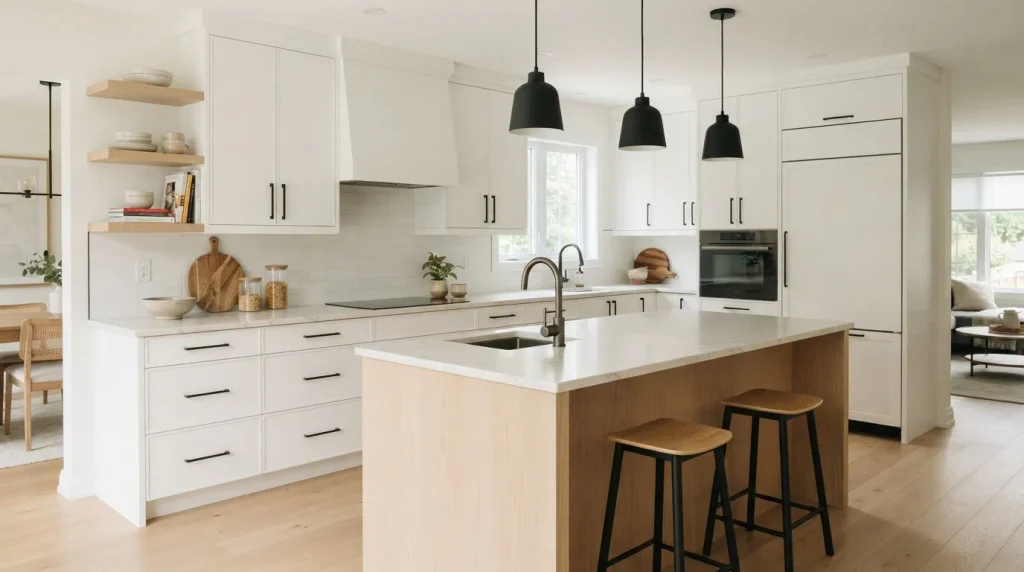
Open wood shelving can make a kitchen feel instantly lighter while giving everyday objects a useful decorative role. Instead of hiding every dish behind cabinet doors, display a small collection of neutral plates, mugs, bowls, and glassware on sturdy oak shelves. The warm wood breaks up white walls and adds texture without making the room feel busy. In my experience, the biggest difference comes from leaving some shelf space empty rather than filling every inch. This simple balance keeps the kitchen practical and visually calm, while making frequently used items easy to grab during busy mornings.
The best Scandinavian kitchen ideas often combine beauty with everyday convenience, and open shelving does exactly that when styled thoughtfully. Choose shelves that match your cabinetry or flooring for a cohesive look, then repeat a few materials such as ceramic, glass, and wood. Avoid too many colors because visual consistency helps the space feel organized. If you cook frequently, place useful items on the lowest shelf and reserve higher shelves for less-used pieces. A small plant or framed print can add personality, but the goal is still function first. The finished kitchen should feel collected, not staged.
Also Read : 23 Dark Blue Bedrooms Ideas for a Moody Stylish Retreat
5. Minimal Black Accents
- Black hardware adds definition to pale surfaces.
- Slim fixtures create contrast without overwhelming the room.
- Repeating one dark tone makes the design feel intentional.
- Matte finishes keep the contrast sophisticated and understated.
A few black accents can give a light kitchen the crisp definition it needs without sacrificing its soft Scandinavian character. Try matte black cabinet pulls, a streamlined faucet, slim pendant lights, or simple window hardware against white cabinetry and pale wood. The contrast helps important architectural details stand out, making the room look more polished and structured. The trick is repetition: use the same dark finish in several small places instead of introducing many unrelated colors. This creates visual rhythm and makes even a basic kitchen feel thoughtfully designed without requiring expensive decorative upgrades.
If your kitchen already feels bright but slightly bland, small dark details can provide the missing layer of contrast. Choose finishes with a soft matte texture rather than glossy black, especially if you want a relaxed Nordic appearance. A black faucet paired with matching cabinet handles and one simple pendant can be enough. I’ve noticed that repeating a single accent color helps open kitchens look more intentional because the eye naturally connects those details. Keep the rest of the palette quiet with white, beige, oak, and soft gray. This combination creates a modern space that still feels warm and livable.
Also Read : 23 Boho Coastal Bedroom Ideas for a Breezy Relaxed Retreat
6. Light Stone Countertops
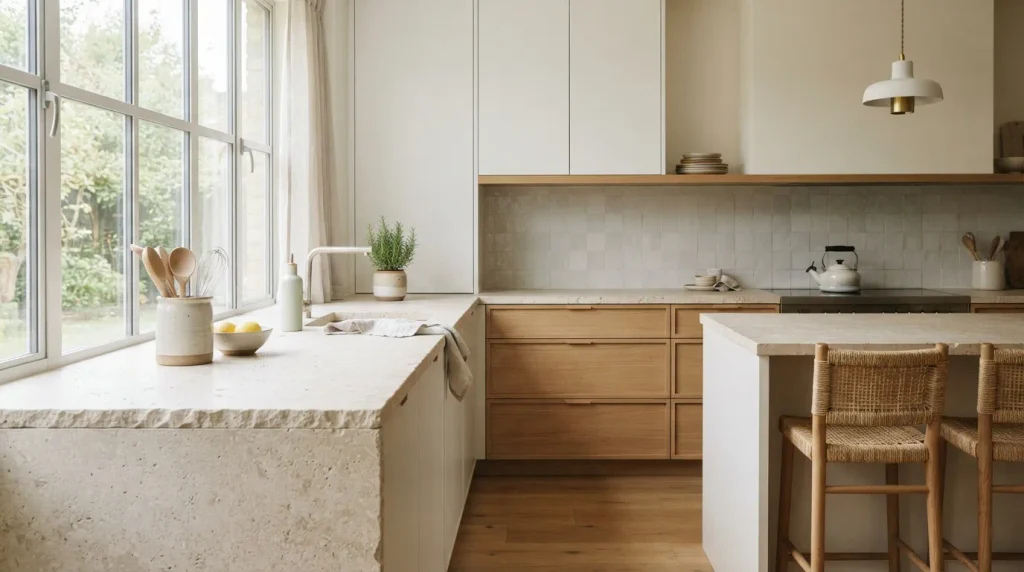
- Pale stone keeps the workspace visually bright.
- Subtle veining adds texture without creating visual clutter.
- Durable surfaces make the kitchen easier to maintain.
- Warm wood nearby prevents the stone from feeling too cold.
Light stone countertops create a clean, spacious foundation that works beautifully with pale cabinetry and natural wood. Choose white, ivory, or soft gray stone with gentle veining rather than dramatic patterns if you want the kitchen to maintain a quiet Nordic feel. The subtle movement adds interest while keeping the overall palette cohesive. This surface choice also gives practical areas such as islands and preparation zones a crisp appearance. When paired with warm oak, linen, and ceramic accents, the stone feels less stark and more welcoming, making the kitchen suitable for both everyday cooking and relaxed gatherings.
For a polished but approachable result, let the countertop become one of the room’s quiet background elements rather than its main attraction. A lightly textured stone surface can visually connect white cabinets with warmer materials, especially when the backsplash uses a similar tone. Keep countertop accessories limited to useful pieces such as a wooden board, ceramic utensil holder, or small plant. That restraint makes the work surface easier to clean and keeps the kitchen looking spacious. Scandinavian kitchen ideas work best when practical choices also contribute to the aesthetic, and a pale stone counter delivers both function and visual simplicity.
Also Read : 24 Cozy Reading Nook Ideas for a Warm Relaxing Retreat
7. Minimal Pendant Lighting
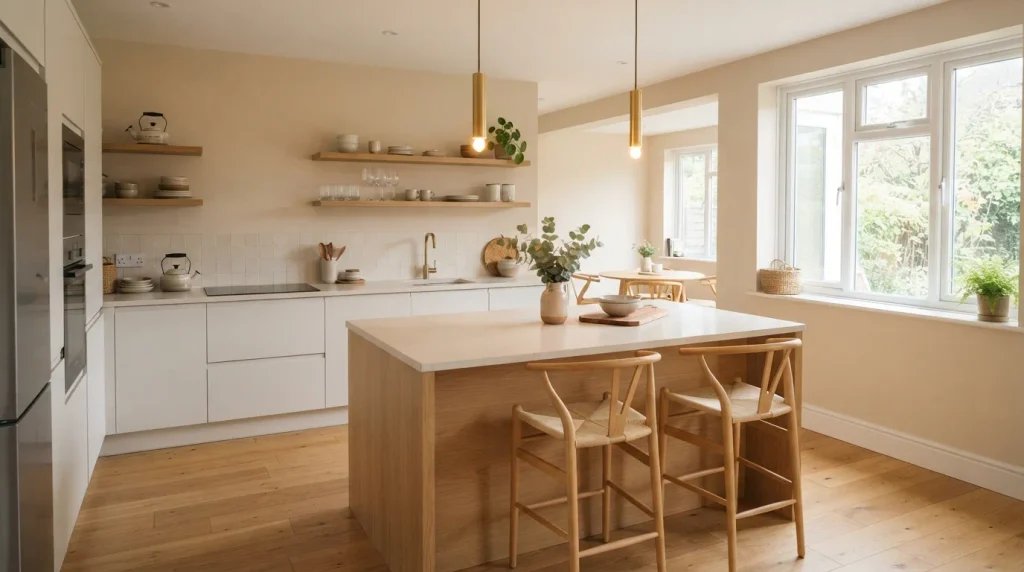
- Slim pendant lights add a clean focal point above the island.
- Soft bulbs create warmth after natural daylight fades.
- Simple shapes keep the ceiling visually uncluttered.
- Matching finishes can connect lighting with cabinet hardware.
A pair of simple pendant lights can completely change how a bright kitchen feels after sunset. Choose slim fixtures in matte white, warm metal, or understated black, then hang them evenly above a central island or breakfast counter. Their clean shapes complement flat-front cabinetry without competing with other details. In my experience, warm bulbs make pale wood and creamy surfaces feel especially inviting in the evening. Keep the fixtures proportional to the island so they feel intentional rather than oversized. The result is practical task lighting that also gives the kitchen a polished Scandinavian finishing touch.
Lighting becomes even more effective when it works with the room’s natural layout instead of simply filling an empty ceiling. Position pendants where they illuminate food preparation, casual meals, or conversation areas without blocking sightlines. Choose frosted or softly diffused bulbs if you prefer a gentle glow rather than harsh overhead light. Scandinavian kitchen ideas often emphasize function, so decorative lighting should still serve a useful purpose. Pairing warm illumination with pale cabinetry, oak surfaces, and simple hardware creates a comfortable transition from bright daytime cooking to relaxed evenings while keeping the overall design visually restrained.
8. Integrated Appliances
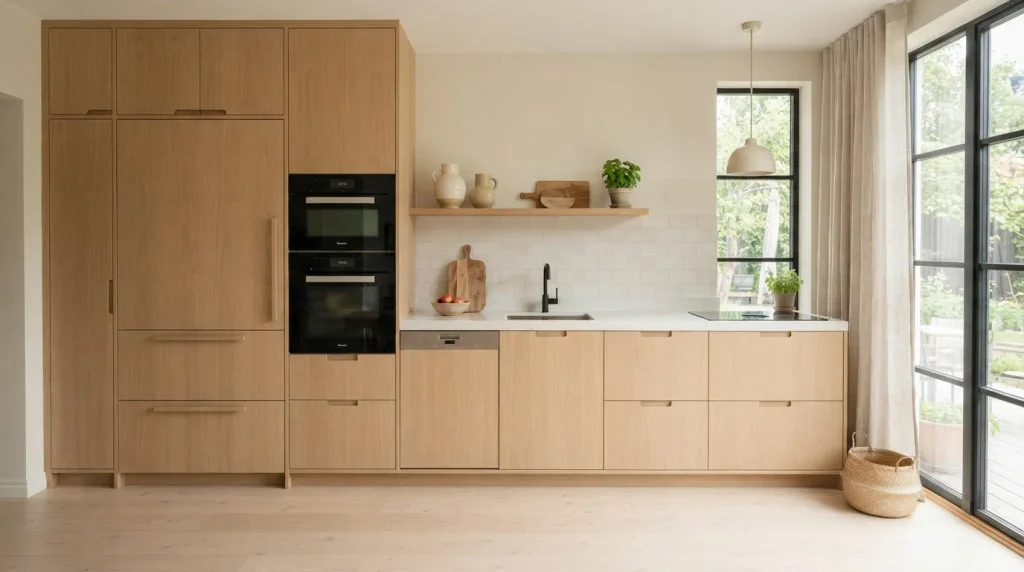
- Hidden appliances create a smoother visual flow.
- Matching cabinet fronts make the kitchen feel more spacious.
- Built-in designs reduce the appearance of bulky equipment.
- Clean surfaces make everyday organization easier.
Integrated appliances create one of the cleanest visual effects in a modern Scandinavian kitchen because large machines disappear into the cabinetry. A refrigerator, dishwasher, or oven can sit behind matching panels, allowing the eye to move smoothly across the room instead of stopping at different appliance finishes. This is particularly useful in open-plan homes where the kitchen is visible from the living area. The streamlined appearance also makes a compact room feel less crowded. If a full built-in setup is outside your budget, start with one appliance, such as the dishwasher, and keep other visible finishes consistent.
The goal is not to hide every functional element but to create visual consistency around the pieces you use most. Choose appliances with finishes that coordinate with cabinetry when integration is not possible, and avoid mixing several competing metallic tones. Built-in ovens can also be positioned at a comfortable height, making everyday cooking easier for many households. I’ve noticed that reducing visual interruptions makes even an ordinary kitchen feel more organized. Pair seamless fronts with uncluttered counters, simple handles, and warm natural materials to achieve that understated Nordic look without adding unnecessary decoration.
9. Natural Wood Island
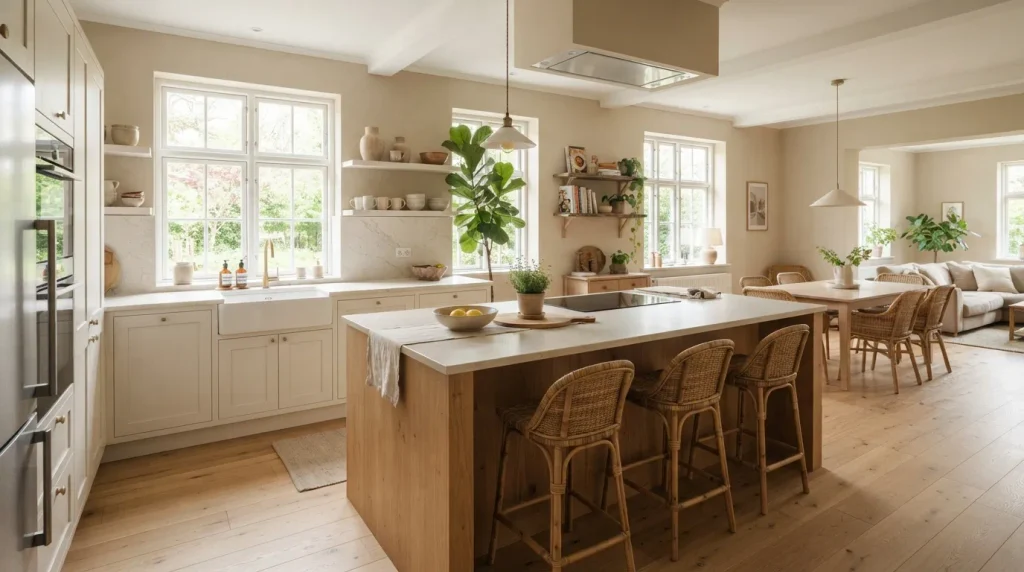
- A wood island adds warmth to an otherwise pale kitchen.
- Open space beneath the counter can provide useful storage.
- Rounded edges soften a room filled with straight lines.
- Wood surfaces create a natural gathering point for family and guests.
A natural wood island can become the warm visual anchor that brings a pale kitchen together. Choose light oak or ash with visible grain, then pair it with a white or softly veined stone countertop for gentle contrast. The island can provide preparation space, casual seating, or additional storage without making the room feel overly designed. In open-plan homes, it also creates a natural boundary between cooking and living areas while keeping the spaces connected. Add two simple wooden or upholstered stools, and leave enough surrounding clearance for comfortable movement during everyday cooking.
A Scandinavian-style island works best when it feels useful rather than purely decorative. Use deep drawers for cookware, a practical overhang for quick breakfasts, or open shelving for baskets and frequently used serving pieces. Keep the surrounding cabinetry quieter so the island can stand out without competing for attention. If the kitchen is small, choose a compact island with slim proportions instead of forcing a large centerpiece into the room. The combination of pale cabinetry, natural wood, and soft lighting creates a welcoming atmosphere that feels equally suited to morning coffee, meal preparation, and relaxed conversations.
10. Cozy Breakfast Nook
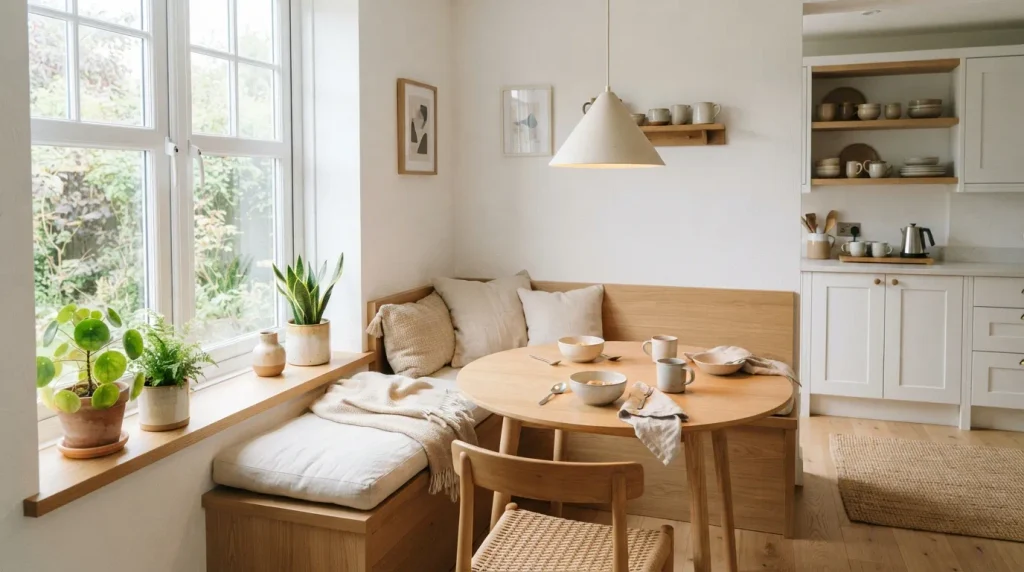
- A small dining corner makes unused space more functional.
- Built-in seating can provide hidden storage underneath.
- Pale upholstery keeps the nook visually light.
- A simple pendant creates a welcoming focal point.
A cozy breakfast nook can turn an overlooked kitchen corner into one of the most useful spots in the home. A small round table, pale wooden bench, and comfortable cushions create an easy place for morning coffee, quick meals, or homework without requiring a full dining room. In smaller kitchens, built-in seating can make better use of awkward corners while keeping walkways open. Choose upholstery in cream, beige, or soft gray to maintain a light appearance. A nearby window is ideal because natural daylight makes the nook feel connected to the kitchen and gives the entire area a cheerful, spacious quality.
Keep the styling simple so the nook feels like part of the kitchen rather than a separate room. A compact pendant above the table can define the area, while one small plant or ceramic vase adds personality without creating clutter. If storage is limited, use drawers beneath a built-in bench for table linens, cookbooks, or rarely used serving pieces. I’ve noticed that round tables are especially practical in compact layouts because they soften corners and make movement easier. This setup combines comfort and function, giving a Scandinavian-inspired kitchen a natural gathering place for everyday moments.
11. Soft Gray Cabinetry
- Soft gray adds depth while keeping the room bright.
- Warm wood prevents gray from feeling too cool.
- White countertops create a crisp visual balance.
- Matte cabinet fronts keep the finish understated.
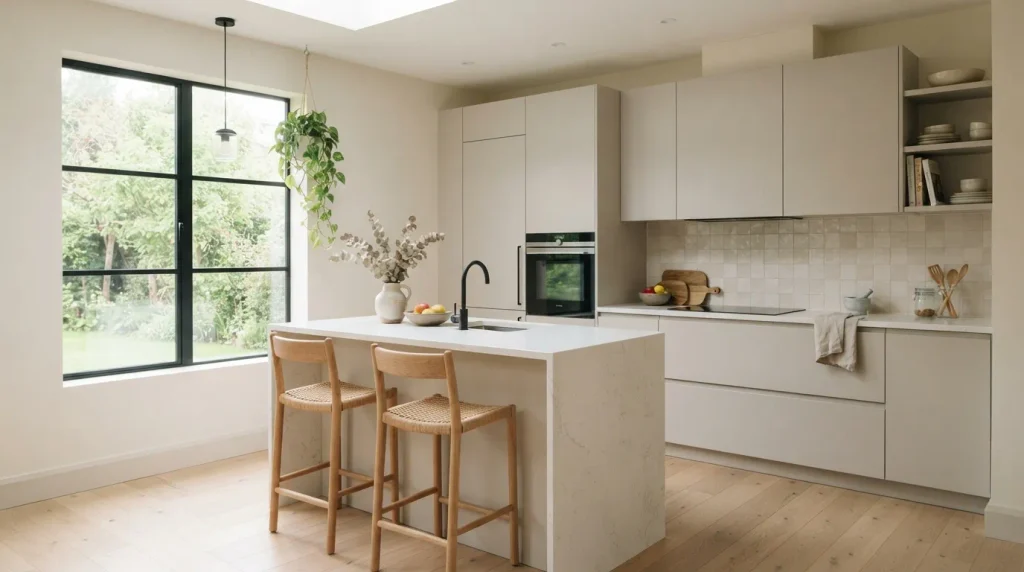
Soft gray cabinetry offers a gentle alternative to both stark white and darker painted kitchens. Choose a warm gray with beige or taupe undertones so the cabinets remain welcoming rather than cold. Pair them with white stone countertops, pale wood flooring, and simple oak accessories to create contrast without overwhelming the room. This combination works particularly well in kitchens with plenty of natural daylight because the gray adds depth while the lighter surfaces maintain brightness. The result feels sophisticated but relaxed, giving the space enough color to look finished without sacrificing the clean simplicity associated with Nordic interiors.
Gray cabinetry is also practical when you want a kitchen that feels calm but has more visual definition than an all-white scheme. Matte doors can soften reflections and make everyday marks less noticeable, while slim hardware keeps the design streamlined. Add warmth through wooden stools, woven baskets, linen curtains, or a small cutting board collection. In my experience, repeating the same warm wood tone in several places helps gray cabinetry feel much more inviting. Keep the backsplash and counters relatively quiet, allowing the cabinet color to become the main visual feature without making the room feel heavy.
12. White Tile Backsplash
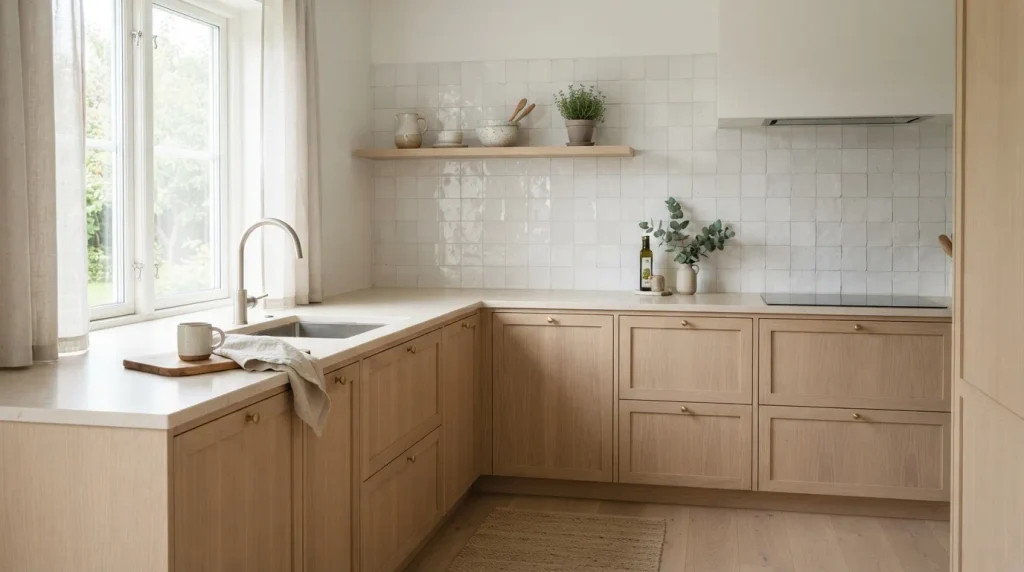
- Simple tiles create a bright, timeless backdrop.
- Subtle texture adds interest without visual clutter.
- Light grout keeps the wall feeling continuous.
- Easy-to-clean surfaces make busy kitchens more practical.
A white tile backsplash gives a Scandinavian kitchen a fresh foundation while adding just enough texture to keep pale surfaces from looking flat. Choose small rectangular tiles, softly irregular handmade styles, or simple square formats with understated grout lines. The backsplash can visually connect white cabinetry with a pale countertop, creating a continuous light backdrop that makes the kitchen appear more spacious. It is also a practical choice because the surface protects walls from cooking splashes and can be cleaned easily. Keep surrounding finishes simple so the tile texture remains subtle rather than becoming another competing focal point.
For a softer Nordic appearance, consider warm white tiles instead of a bright blue-toned white. Slight variations in shape or glaze can add handcrafted character while still keeping the overall design minimal. Pair the backsplash with pale oak, brushed metal, and natural linen to create a balanced material palette. If you have a small kitchen, carrying the same tile behind open shelves can make the wall feel visually connected and less fragmented. This simple update can refresh an existing space without changing the cabinets, proving that small surface details can have a surprisingly strong effect.
13. Natural Linen Textiles
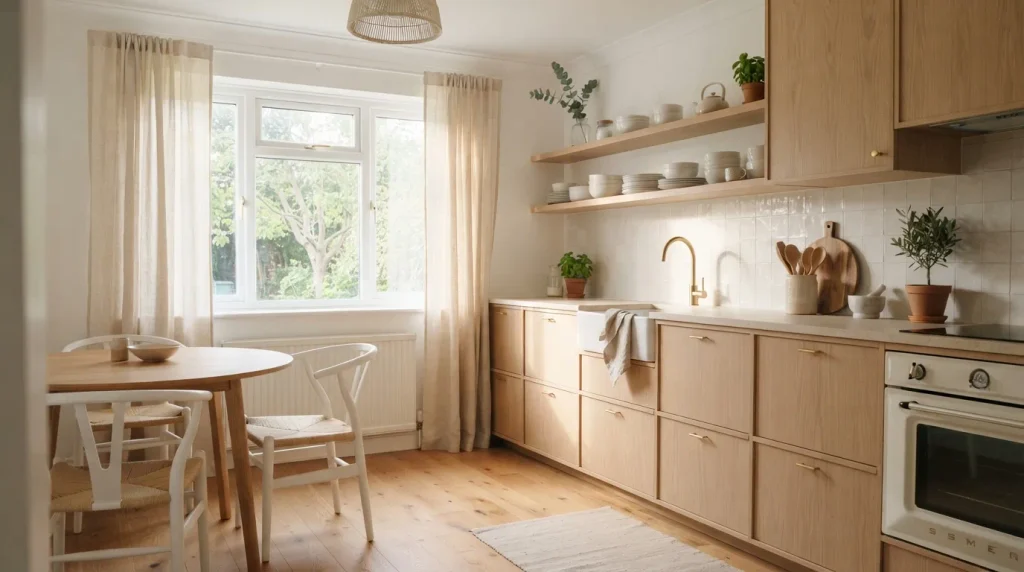
- Linen curtains soften hard kitchen surfaces.
- Neutral textiles add warmth without introducing visual clutter.
- Natural fibers complement pale wood beautifully.
- Simple fabric details make the room feel more lived-in.
Natural linen textiles can make a streamlined kitchen feel noticeably softer and more comfortable. Add lightweight linen curtains near a window, neutral seat cushions around a breakfast table, or a simple runner across a wooden dining surface. Cream, oatmeal, and warm beige shades work especially well because they complement pale cabinetry without competing with the room’s natural light. The slightly uneven texture of linen also adds visual depth to smooth materials such as stone, painted cabinets, and glass. In my experience, small fabric additions can make a minimalist kitchen feel much more personal without making it look decorated.
Keep textile choices practical by selecting washable fabrics and simple shapes that suit everyday kitchen use. Floor-length curtains can soften a large window, while a small linen runner can define a dining area without taking over the table. Avoid heavy patterns if you want the room to retain its calm Scandinavian character. Instead, let texture do the work. Combine linen with pale oak, woven baskets, ceramic pieces, and soft lighting for a layered result. These natural details help balance clean architectural lines, making the kitchen feel warm enough for daily family life while remaining fresh and visually uncluttered.
14. Scandinavian Bar Seating
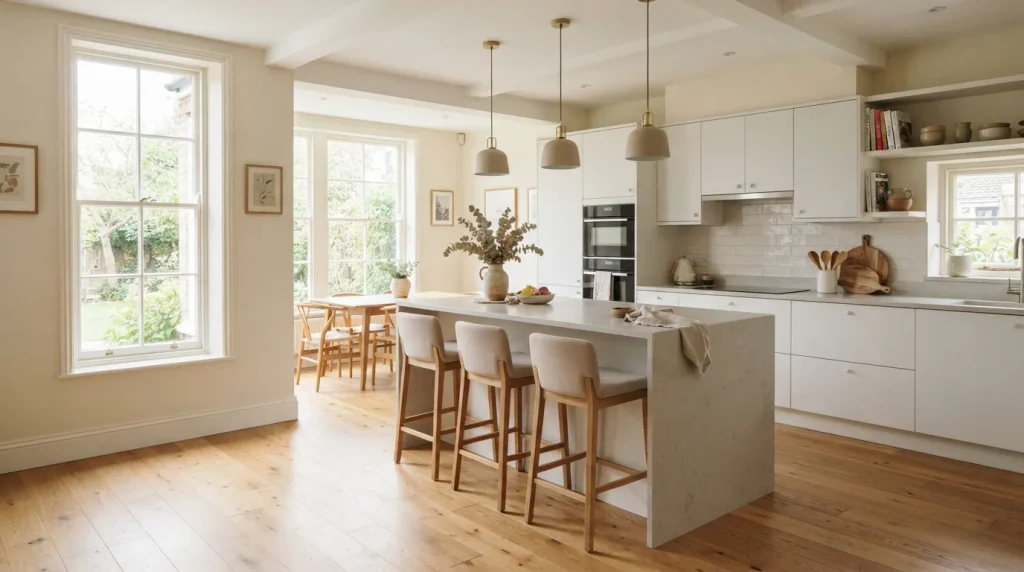
- Slim stools create casual seating without crowding the room.
- Pale wood keeps the arrangement visually light.
- Simple upholstery adds comfort for longer meals.
- Matching materials connect stools with the kitchen island.
Simple bar seating can make a kitchen island feel more useful without adding unnecessary visual weight. Choose slim wooden stools with clean lines, or select lightly upholstered seats in cream, beige, or soft gray for extra comfort. The right proportions matter: stools should slide comfortably beneath the counter and leave enough space for people to sit without blocking nearby walkways. Pale oak works particularly well because it connects naturally with other wood elements in a Scandinavian interior. This small addition turns an island into a practical place for breakfast, quick meals, conversation, or helping children with homework.
When choosing stools, think about how your household actually uses the kitchen rather than selecting them purely for appearance. A backless stool works well for occasional seating and can disappear beneath the counter, while a supportive backrest is better for longer meals. I’ve noticed that matching the stool material with existing wood tones makes the whole kitchen feel more cohesive. Keep the number of seats proportional to the island length and avoid squeezing too many together. With comfortable spacing, simple shapes, and natural finishes, bar seating adds function while preserving the open, uncluttered feel of a Nordic kitchen.
15. Indoor Herb Garden
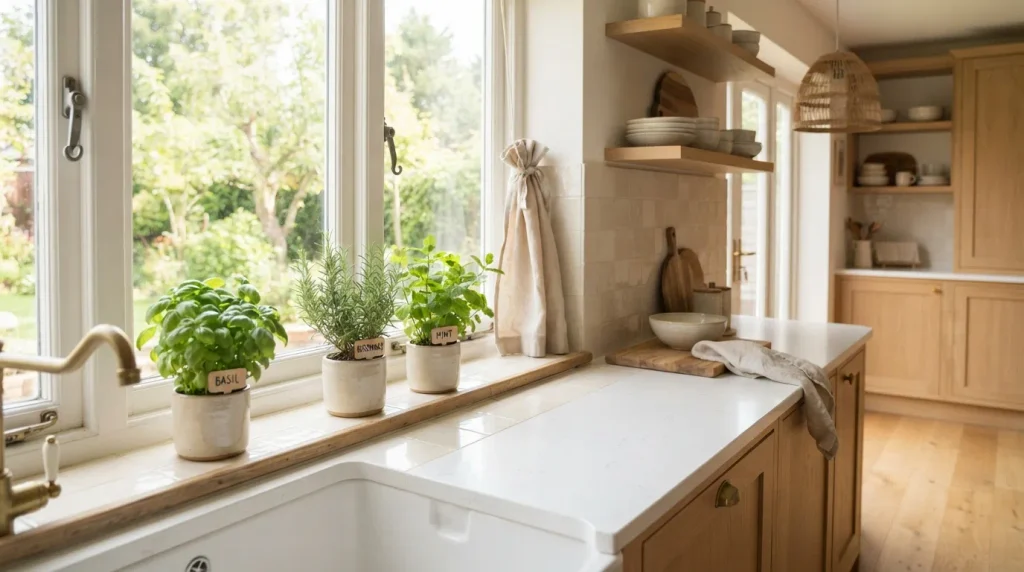
- Fresh herbs add natural color to a neutral kitchen.
- Small pots fit easily on shelves or windowsills.
- Useful plants combine decoration with everyday cooking.
- Green foliage brings softness to clean architectural lines.
An indoor herb garden brings a small touch of nature into a bright kitchen while giving you something genuinely useful to enjoy. Place basil, mint, rosemary, or thyme in simple ceramic pots along a sunny windowsill, open shelf, or narrow counter ledge. Green leaves create a refreshing contrast against white cabinetry and pale wood without disrupting the neutral palette. This idea works especially well in smaller spaces because several herbs can fit into a compact arrangement. Keep the pots visually consistent for a cleaner look, and choose a location where the plants receive suitable light and remain easy to water.
The best kitchen greenery should feel connected to everyday routines rather than added simply as decoration. Position herbs near the preparation area so you can quickly snip fresh leaves while cooking, but avoid placing them where heat, steam, or frequent splashes could damage them. A small wooden tray can keep several pots organized and protect the countertop. Scandinavian kitchen ideas often use greenery to soften minimalist spaces, and edible herbs take that concept a step further by combining beauty with function. The result is a kitchen that feels fresher, more welcoming, and naturally connected to daily cooking.
16. Light Wood Flooring
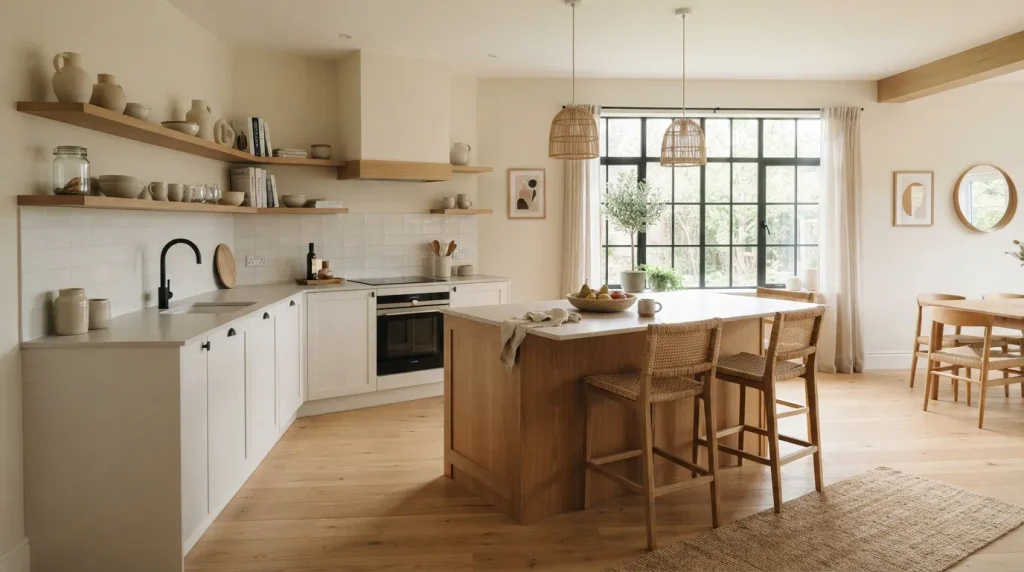
- Pale flooring makes the kitchen feel more open.
- Natural grain adds warmth beneath white cabinetry.
- Matte finishes create a relaxed, understated look.
- Consistent wood tones help connect different kitchen zones.
Light wood flooring can visually stretch a kitchen and make the entire room feel brighter from the ground up. Pale oak, ash, or similarly toned timber works beautifully with white cabinetry because the natural grain introduces warmth without adding heavy color. Choose a matte or low-sheen finish for a softer appearance that feels relaxed rather than overly polished. In open-plan homes, matching the flooring with nearby living areas can also create a seamless visual transition. The result is a kitchen that feels connected, spacious, and naturally welcoming, even when the actual footprint is relatively compact.
Flooring is easy to overlook, but it has a major influence on how all the other materials appear together. If your cabinets are already white or cream, a pale wood floor can prevent the room from feeling sterile while keeping the overall palette light. I’ve noticed that repeating the same wood tone in stools, shelving, or an island makes the kitchen feel especially cohesive. For busy households, choose a durable finish that can handle everyday foot traffic and occasional spills. Keep rugs minimal and strategically placed so they add comfort without interrupting the clean visual flow.
17. Floating Base Cabinets
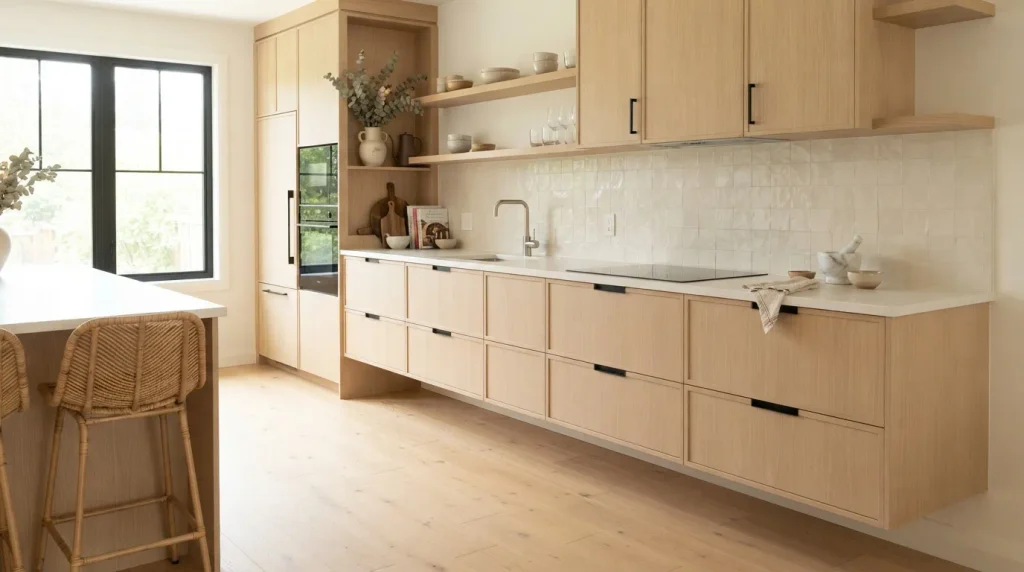
- Raised cabinetry creates a lighter visual footprint.
- Open space underneath makes the floor more visible.
- Clean lines emphasize modern Nordic simplicity.
- The design works especially well in compact kitchens.
Floating base cabinets create an airy effect by lifting storage visually away from the floor. The open gap underneath exposes more flooring, which can make a compact kitchen appear less crowded and easier to visually navigate. Pair pale oak or soft white cabinetry with a simple stone countertop and minimal hardware for a clean Nordic appearance. This approach works particularly well in modern apartments where every visual inch matters. The elevated design also draws attention to beautiful flooring materials, allowing the room to feel lighter without removing essential storage or compromising the kitchen’s everyday functionality.
While floating cabinetry looks beautiful, practical planning matters before choosing it. Heavy appliances, plumbing, and storage needs may make a fully floating arrangement unsuitable for every kitchen, so consider where weight and services will be supported. A partially raised design can provide a similar visual effect while keeping conventional storage below. Use the open area thoughtfully and keep it clean because visible flooring becomes part of the design. In my experience, this style works best when the rest of the room is equally restrained, with simple surfaces, natural materials, and minimal accessories reinforcing the sense of openness.
18. Compact Kitchen Layout
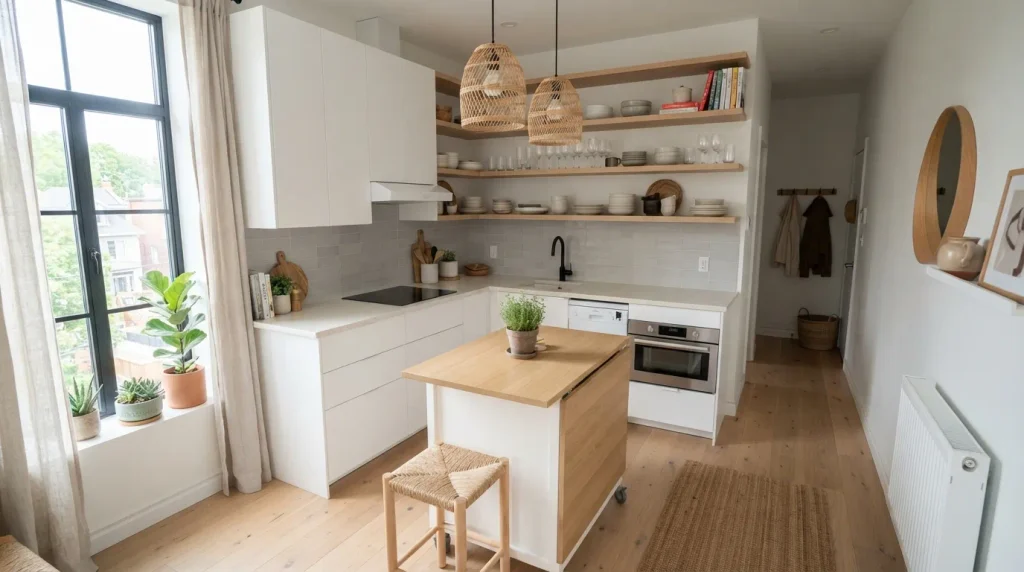
- Efficient placement keeps small kitchens comfortable to use.
- Vertical storage makes better use of limited wall space.
- Light finishes visually expand narrow rooms.
- Clear pathways make cooking and cleaning easier.
A compact kitchen can feel surprisingly spacious when every element has a clear purpose and the layout supports easy movement. Keep frequently used appliances close to the main preparation area, use vertical cabinetry for storage, and avoid oversized islands that interrupt the walkway. Light cabinetry, pale flooring, and reflective surfaces can help the room feel visually larger, while open shelving provides accessible storage without creating a heavy wall of doors. These choices are especially useful in apartments and smaller homes where efficient planning matters as much as appearance. The finished space should feel organized rather than tightly packed.
Before adding decorative pieces, focus on how you move through the kitchen during a normal day. Leave comfortable clearance around doors, drawers, appliances, and preparation zones, then assign storage according to frequency of use. Everyday cookware should stay within easy reach, while occasional serving pieces can move higher or farther away. Scandinavian kitchen ideas often prioritize simplicity because clutter quickly makes a small room feel smaller. I’ve noticed that removing even a few unnecessary countertop items can create a dramatic visual difference. Combine thoughtful storage with a restrained palette, and the kitchen can feel calm, functional, and considerably more open.
19. Statement Range Hood
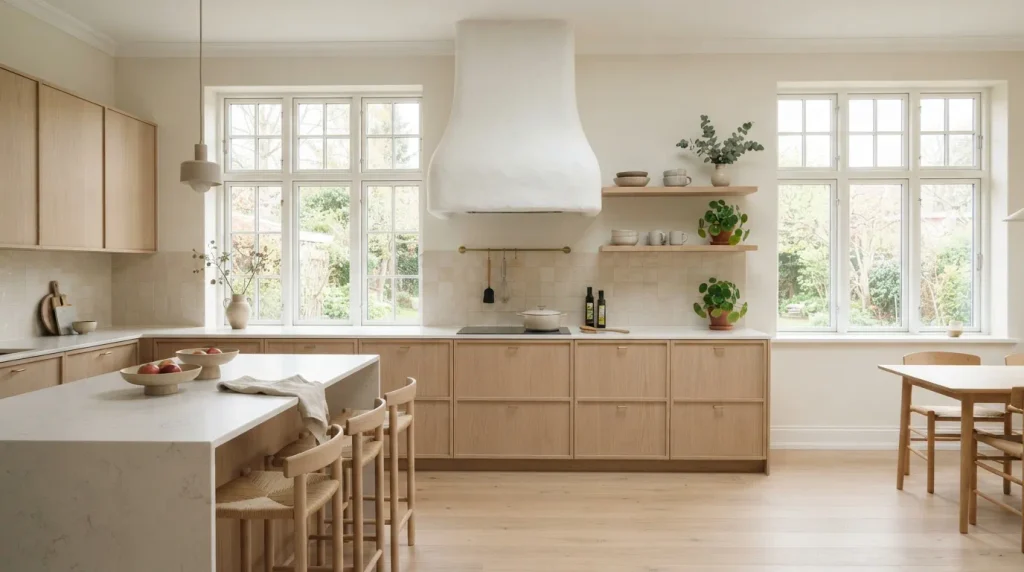
- A sculptural hood can become a subtle architectural focal point.
- White or plaster finishes keep the look soft and cohesive.
- Simple cabinetry lets the hood stand out naturally.
- Clean lines prevent a functional feature from feeling bulky.
A sculptural range hood can give a simple kitchen a strong architectural focal point without relying on bold colors or excessive decoration. Choose a smooth plaster, painted, or softly curved hood that blends with the surrounding walls and cabinetry. The shape creates interest while keeping the palette calm, especially when paired with pale oak, creamy whites, and light stone. This approach works well in open-plan kitchens because the hood can define the cooking area while still feeling connected to the rest of the home. The result is practical, polished, and visually balanced rather than overly dramatic.
When selecting a statement hood, consider proportion first because an oversized feature can quickly dominate a compact room. Keep nearby cabinets and backsplash materials relatively simple so the hood has room to breathe visually. A softly textured finish can add character without requiring additional decoration, while concealed ventilation keeps the overall profile clean. I’ve noticed that architectural features often feel more timeless when their colors stay neutral and their shapes remain simple. Pair the hood with understated lighting, natural wood, and uncluttered countertops for a kitchen that feels thoughtfully designed without looking overly styled.
20. Ceramic Displayware
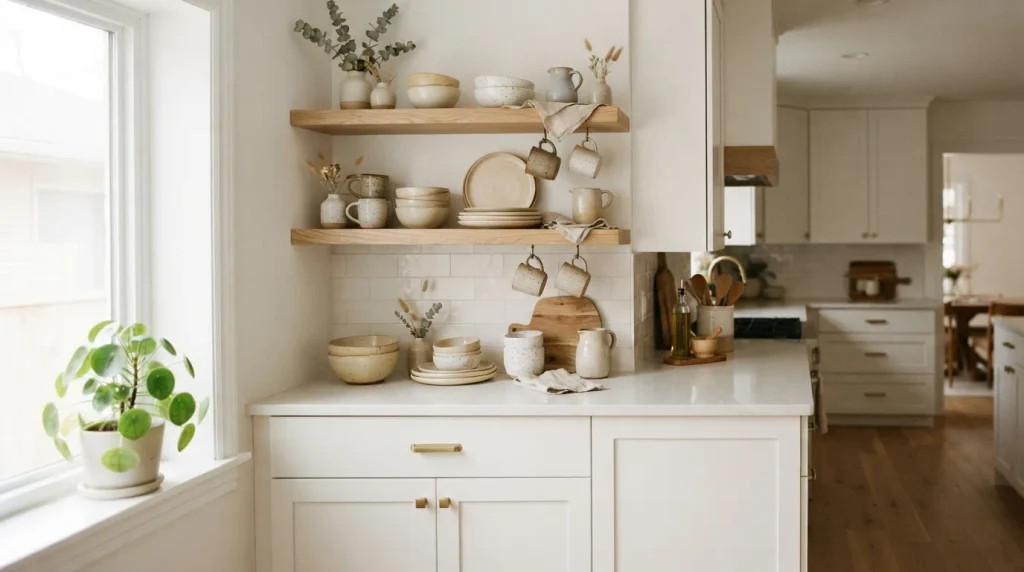
- Handmade ceramics add personality to minimalist spaces.
- Soft neutral colors maintain a cohesive palette.
- Open shelving makes beautiful everyday pieces visible.
- Different shapes create interest without adding visual clutter.
Ceramic displayware can bring warmth and personality to a minimalist kitchen without disturbing its clean appearance. Choose handmade-looking bowls, mugs, plates, and small vases in shades of cream, white, beige, or soft gray. Slight differences in shape and texture make the arrangement feel collected rather than perfectly matched. Display a few favorite pieces on open shelving, a countertop ledge, or a glass-front cabinet while keeping the remaining surfaces clear. This approach adds visual interest through material and form instead of strong color, making it particularly suitable for homes that favor a quiet, natural Scandinavian aesthetic.
The key to styling ceramics successfully is restraint. Start with a small group of pieces in complementary tones, then vary their heights and shapes so the arrangement has gentle movement. Avoid filling every shelf because empty space allows each object to remain visible and prevents the kitchen from feeling crowded. I’ve noticed that matte stoneware works especially well beside pale oak because the two materials create a natural contrast. Choose pieces you actually use whenever possible, such as favorite coffee cups or serving bowls. That way, the display remains practical while giving the kitchen an authentic, lived-in quality.
21. Soft Pendant Glow
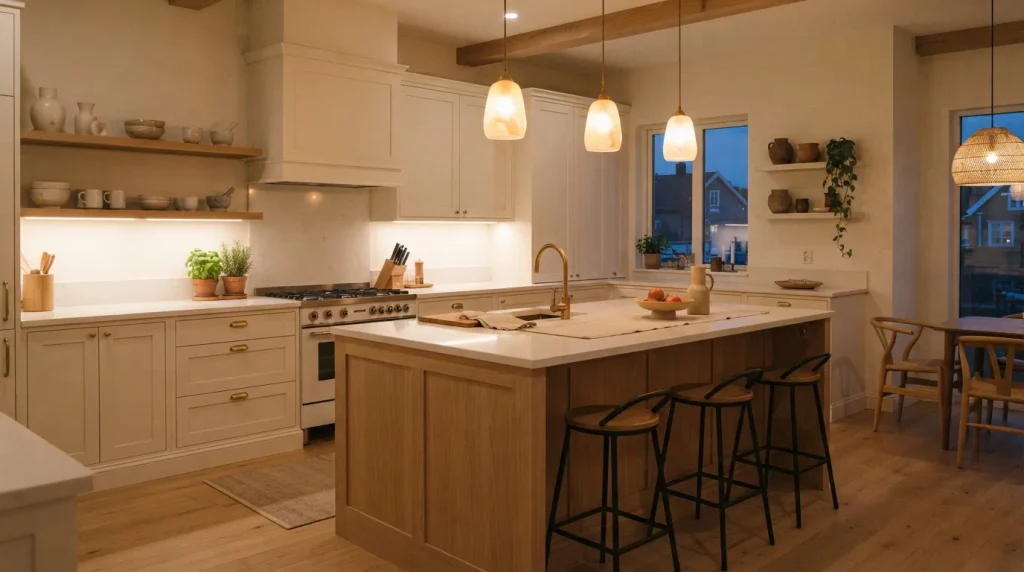
- Warm lighting makes pale materials feel more inviting at night.
- Frosted shades create a gentle, comfortable glow.
- Low visual contrast keeps the evening atmosphere peaceful.
- Layered lighting makes different kitchen zones more functional.
Soft pendant lighting can transform the atmosphere of a bright kitchen once the sun goes down. Choose fixtures with frosted glass, linen shades, or softly diffused bulbs to create a warm glow above an island or dining area. Instead of relying on one strong ceiling light, combine pendants with discreet under-cabinet illumination for a more comfortable layered effect. The gentle light highlights natural wood, creamy cabinetry, and textured ceramics beautifully. This makes the kitchen feel less like a purely functional workspace and more like a welcoming part of the home where people naturally linger after dinner.
Think about lighting temperature as carefully as fixture style because very cool bulbs can make pale interiors feel harsh in the evening. Warm white illumination generally works well with oak, beige, cream, and soft gray finishes. Keep pendant shapes simple and allow enough clearance above the island for comfortable conversation and movement. In my experience, layered lighting makes one kitchen feel like several spaces at different times of day: bright and practical for cooking, then softer and more relaxed for meals. A few carefully chosen fixtures can therefore improve both the mood and everyday usability of the room.
22. Fresh Greenery
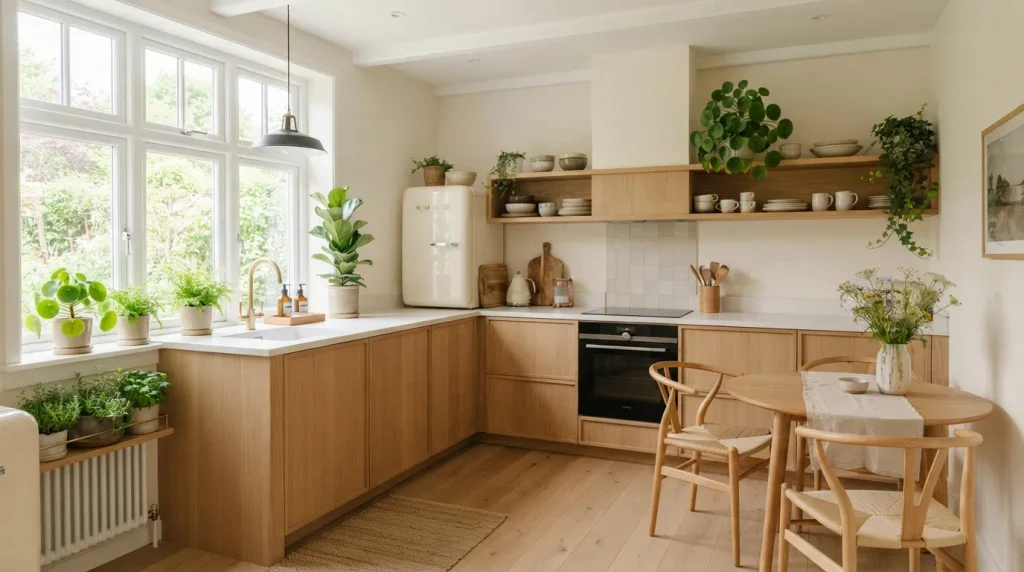
- Green plants bring natural color into a neutral kitchen.
- Simple pots keep the look clean and cohesive.
- Larger leaves soften straight cabinetry and hard surfaces.
- Plants can fill empty corners without adding clutter.
Fresh greenery can make a pale kitchen feel instantly more alive without changing its carefully balanced neutral palette. Place a leafy plant beside a window, add a small herb pot near the preparation area, or use trailing greenery on an open shelf. Natural green tones create a gentle contrast against white cabinetry, pale oak, and cream surfaces while adding softness to straight architectural lines. Choose simple ceramic or woven planters that complement the existing materials rather than introducing another strong color. The result feels relaxed and lived-in, proving that even one thoughtfully placed plant can noticeably refresh a kitchen.
Choose plants according to the actual conditions in your kitchen rather than selecting them only for appearance. Bright windows can support herbs and many sun-loving varieties, while lower-light corners may need more suitable foliage. Keep plants away from excessive heat and cooking splashes, and use trays underneath pots to protect wood or stone surfaces. I’ve noticed that grouping two or three plants at different heights creates more visual impact than scattering many small pots around the room. Keep the rest of the decor restrained, allowing greenery, natural wood, and soft daylight to complete the fresh Scandinavian look.
Conclusion
A beautiful Scandinavian kitchen does not require a complete renovation or a huge budget. Small choices like pale wood, warm neutrals, simple lighting, natural textures, thoughtful storage, and fresh greenery can create a brighter and more comfortable space. The best Scandinavian kitchen ideas are the ones that make everyday life easier while still looking effortlessly inviting. I’ve seen how small changes like these can completely transform a room. Save this article to Pinterest for your next decorating project, try one or two ideas in your own kitchen, and share it with someone who would love a fresh, modern space. Your dream kitchen can start with one simple change.