21 Overlooked Decorating Details: Ceilings, Mirrors, Rugs, Tile and Lighting
You can buy the sofa, hang the art, fluff the cushions — and still walk into a room that feels unfinished. I have stood in that room, convinced the answer was new furniture. It almost never is. The gap is usually a detail nobody thinks to decorate: the ceiling over your head, the mirror leaning in the corner, the rug under your feet, the tile behind the sink, the light in the hallway. These overlooked decorating details are small and cheap, and once you notice them, you cannot unsee them.
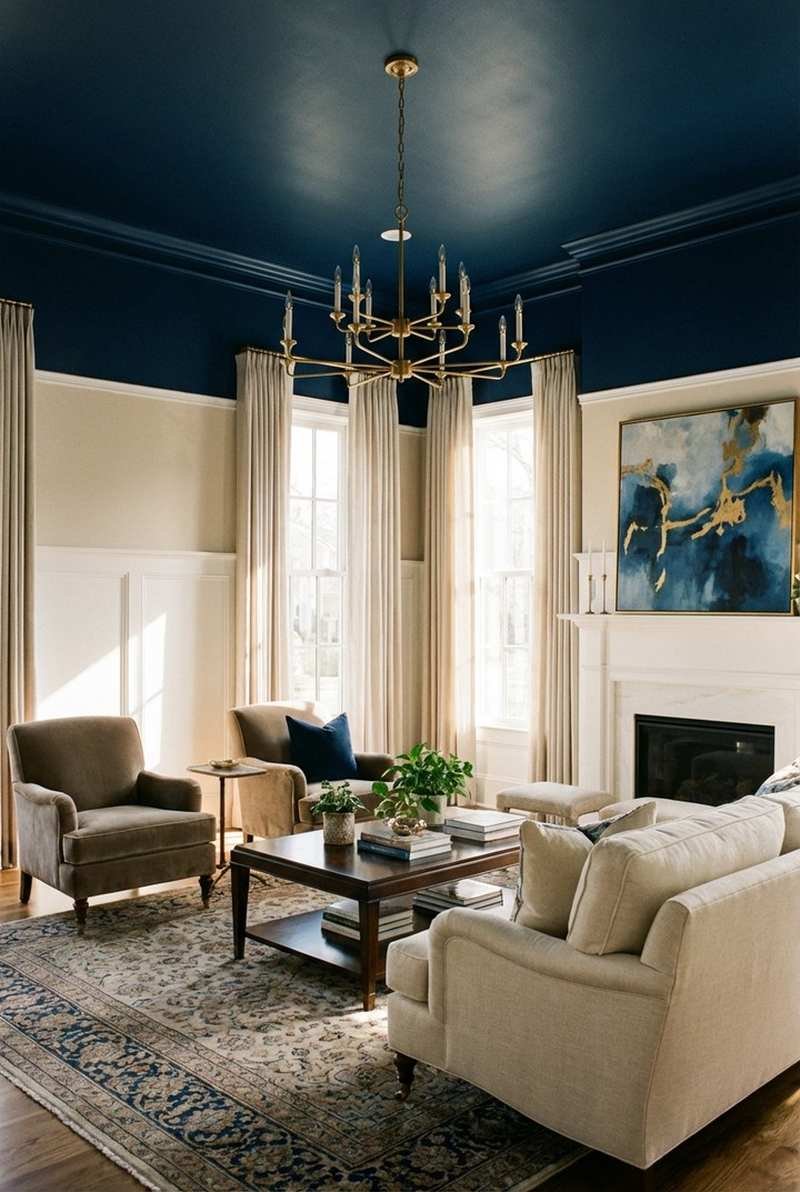
Photo: Peccole House (@peccolehouse) on Instagram
This guide collects 21 of them, grouped into the five places they hide: ceilings, full-length mirrors, braided and vintage rugs, hand-painted tile, and hallway lighting. Nothing here needs a builder or a big budget. Most of it is paint, fabric, a second-hand mirror, or a rug you already own, moved to a better spot. Every idea is renter-friendly where it can be, and all of them work in a small home, where details show up most.
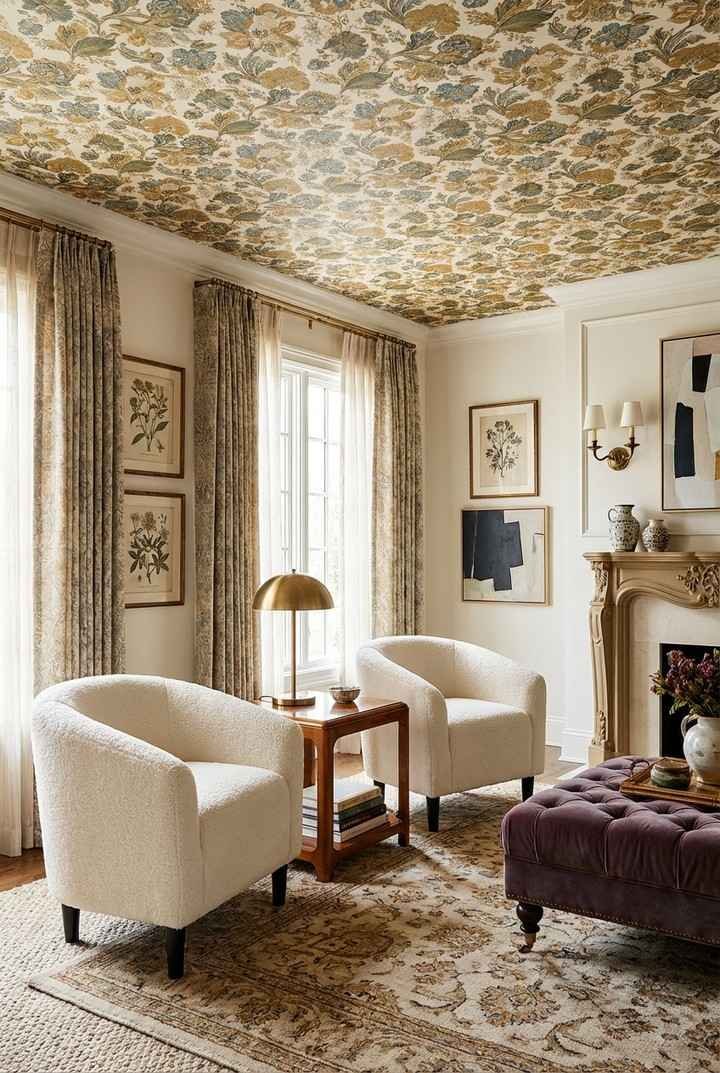
Photo: Peccole House (@peccolehouse) on Instagram
What Can You Do With a Ceiling Nobody Ever Looks At? Overlooked Decorating Details for the Fifth Wall
The ceiling is the biggest blank surface in every room, and most of us leave it white out of habit. Treat it as a fifth wall and the whole room changes: a dark ceiling makes a tall room feel cosy, a patterned one gives a plain room a focal point, and a draped one softens a hard, boxy space. Start with one room, and start with paint.

Photo: Peccole House (@peccolehouse) on Instagram
1. Paint It a Deep Colour and Let the Walls Go Pale
Best For: bedrooms and living rooms with high ceilings that feel cold or echoey. A deep green, navy, or charcoal ceiling pulls the room down to human height and makes everything below it feel intentional. How to Create It: keep the walls pale and warm, paint the ceiling two or three shades deeper than the wall colour — or go all the way to a full deep tone, as here — and repeat the ceiling colour in one cushion or throw. It is the same cocooning move that makes a dark boho living room feel like a hug, and it costs one tin of paint.

Photo: Peccole House (@peccolehouse) on Instagram
2. Try a Pressed-Tin Ceiling for Instant Pattern
Best For: living rooms and dining rooms with a plain flat ceiling and traditional furniture. Pressed tin — or the paintable foam panels that copy it — adds pattern overhead without touching the walls. How to Create It: choose a panel with a fan or geometric repeat, fit it across the whole ceiling, and paint it in a warm metallic or a soft cream. Keep the walls quiet so the ceiling does the talking, and let one metallic accent below, a brass lamp or a gold frame, echo the tone.
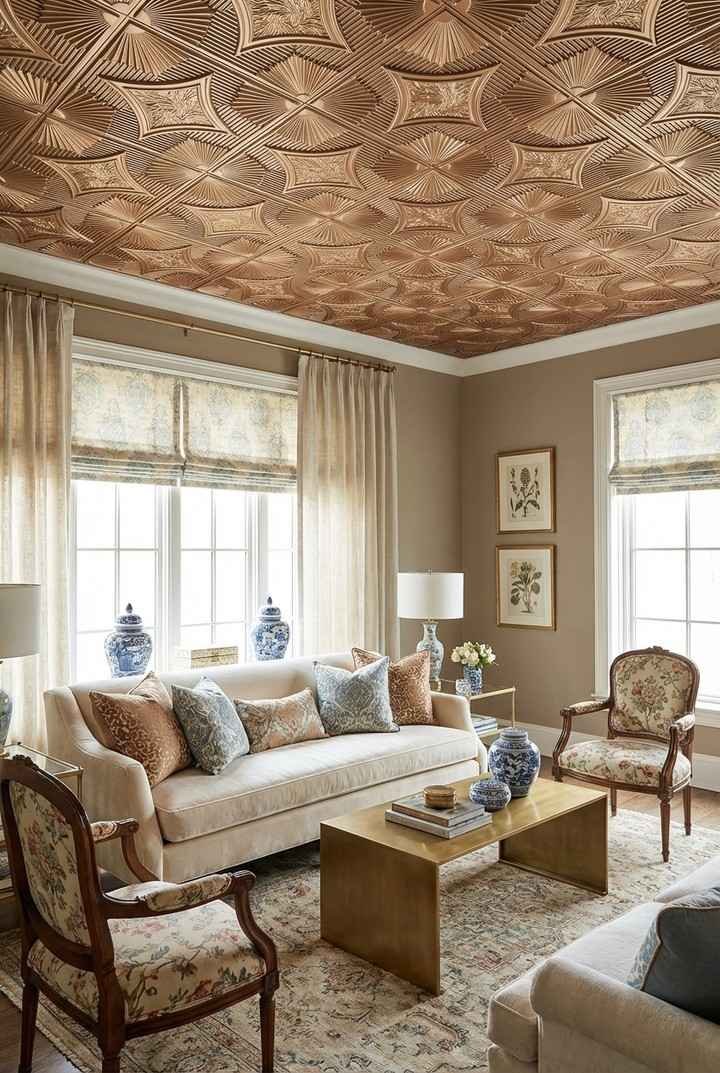
Photo: Peccole House (@peccolehouse) on Instagram
3. Paint a Coffered Ceiling Black
Best For: home offices, dining rooms, and libraries — rooms where a little drama helps you concentrate or linger. Black coffers with pale inset panels give a ceiling architecture it never had. How to Create It: if the room already has beams or a coffered grid, paint the beams and the grid black and leave the panels white or cream. Add one warm light so the black reads rich, not gloomy, and keep the rug pale.

Photo: Peccole House (@peccolehouse) on Instagram
4. Drape Fabric Across the Ceiling Like a Tent
Best For: bedrooms with a skylight or a high ceiling that feels bare. Sheer fabric panels, gathered from the edges to a central point, turn a flat ceiling into a tent and soften hard daylight. How to Create It: fix slim rods or hooks around the ceiling perimeter, hang lightweight sheer panels, and gather them at the centre around a small chandelier or a ceiling rose. Choose a fabric close to the wall colour so the effect is soft, not theatrical, and keep the bedding plain so the ceiling stays the star.

Photo: Vivi Allen (@_viviallen) on Instagram
5. Make a Starburst of Sheer Fabric and Fairy Lights
Best For: a cosy corner, a reading nook, or a bedroom that needs warmth at night — and for renters, because it all comes down with the hooks. How to Create It: gather sheer panels around a ceiling medallion or a small chandelier, let them fall outward to the walls in a starburst, and weave warm-white fairy lights through the folds. Use battery lights on a timer — no trailing wires — and keep the fabric light.

Photo: Terri Moss (@terrimoss5) on Instagram
6. Dress the Ceiling Fan Like a Chandelier
Best For: bedrooms where the fan is ugly but non-negotiable. Instead of hiding it, dress it. How to Create It: attach lightweight faux flowers, pearl strands, and a few crystal drops around the motor housing only — never on the blades — and keep everything balanced so the fan still spins true. Balance the weight with the fan off first, keep drops short enough to clear heads, and let the light below do the glowing. It is unapologetically romantic, and it costs less than replacing the fan.

Photo: orchifd (@orchifd) on Instagram
7. Paint the Fan Itself
Best For: vintage or plain white fans that look like an afterthought. A painted fan stops being an appliance and starts being a feature. How to Create It: paint the motor housing and the blade arms in a soft colour — mint, sage, dusty blue — and leave the blades white or pale so the fan reads light when it spins. Match the colour to one thing already in the room, a cushion or a painted piece of furniture, and keep the pull chains simple. For the rest of the room, see our bedroom lighting ideas for fixtures that work with a fan instead of fighting it.

Photo: Robert Hart (@lostincrystalcanyons) on Instagram
Where Should a Full-Length Mirror Actually Go? Overlooked Decorating Details for Small Spaces
A full-length mirror is the cheapest light and the cheapest space in the house. It doubles a window, brightens a hallway, and lets you check an outfit without a dedicated dressing room. The trick is placement: a mirror flat on a wall is a decoration, but a mirror leaned at a slight angle, opposite a light source, is a tool — especially in a pale minimalist living room, where the doubled light has somewhere clean to land.

Photo: Ann Dennis (@annmdennis) on Instagram
8. Use the Mirror as the Room’s Only Art
Best For: entryways and living rooms where the wall is too small for art but big enough for a mirror. An ornate mirror over a console does the job of a painting and a lamp at once. How to Create It: hang a gold or black framed mirror over a dark wood console, add two blue-and-white vases, and keep everything else off the wall. The mirror reflects the room, so the art changes every time you move.

Photo: Beth (@lifeattheholmes) on Instagram
9. Lean an Arched Mirror in the Bedroom Corner
Best For: bedrooms with a bare corner and a bed that blocks the wall. An arched floor mirror softens the corner, reflects the window, and gives you a full-length check without drilling a single hole. How to Create It: lean the mirror at a slight angle — top touching the wall, base a few inches out — and anchor it to the wall with a discreet strap if you have children or pets. Add a wicker basket beside it for texture, and keep the bedding pale so the mirror has something bright to reflect.

Photo: Deevayahome (@deevayahome) on Instagram
10. Double the Entryway Light With a Black-Framed Floor Mirror
Best For: entryways and hallways with a floating console and a pendant light. A large black-framed floor mirror doubles the pendant and the daylight, and it makes a narrow entry feel twice as wide. How to Create It: lean the mirror against the wall beside the console, not behind it, so it reflects the pendant and the door. Keep the console nearly empty — one vase, one tray — so the mirror reflects calm, not clutter. For the console itself, see our modern rustic living room styling for the same warm wood and black metal pairing.

Photo: Angela Ruhnke (@agkennedy90) on Instagram
11. Put a Gold Arched Mirror Where the Morning Light Lands
Best For: bedrooms with a window that gets morning sun and a corner that needs softening. A gold arched mirror catches the first light and throws it across the bed, and the arch shape echoes a window. How to Create It: place the mirror where the morning light hits it, add a vase of white magnolia or eucalyptus beside it, and keep a boucle pouf or a soft throw nearby. The gold frame warms the whole corner — no paint needed.
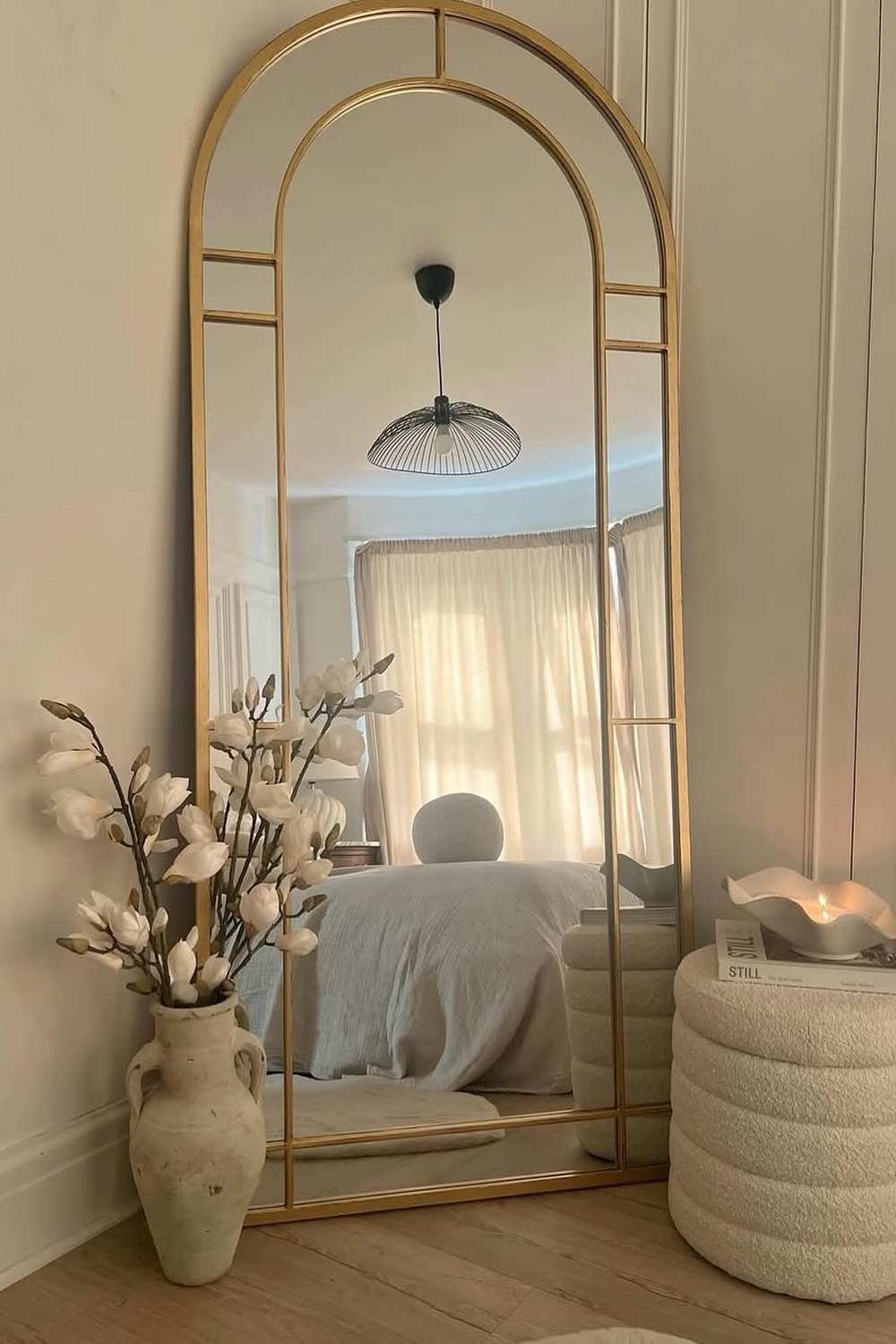
Photo: Olabisi Akingbade (@thefirstladyomorewa) on Instagram
Can a Braided Rug Really Change a Room? Overlooked Decorating Details Underfoot
Braided rugs are the workhorses nobody photographs on purpose — and that is the point. They add texture, warmth, and a handmade feel to a room without demanding attention, and they hide wear better than any flatweave. The trick is letting one braided rug be the only braided thing in the room, and keeping the rest of the floor quiet.

Photo: Gerry Laura Terry (@sewlaura70) on Instagram
12. Layer a Braided Rug Over Carpet for Instant Warmth
Best For: bedrooms with wall-to-wall carpet that feels flat and cold. A braided rug over carpet adds pattern, colour, and a soft border that defines the bed. How to Create It: choose an oval braided rug in muted blues and greys, place it beside the bed so your feet land on it first thing, and keep the bedding white so the rug is the only pattern. The rug does the decorating; the carpet just holds it up.
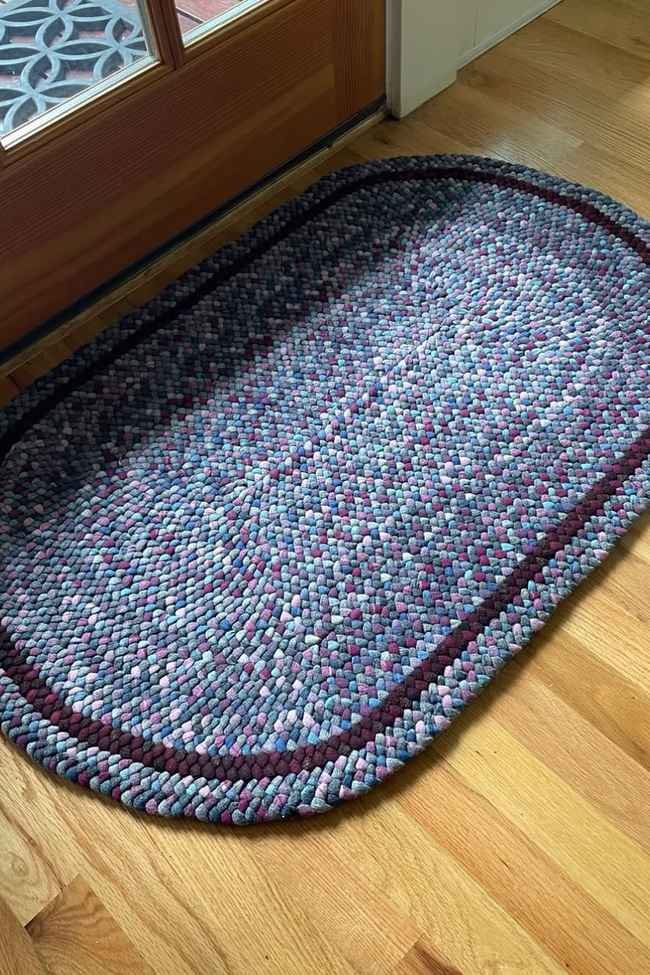
Photo: Katie Drake (@katiedrake2494) on Instagram
13. Use a Round Braided Rug to Soften a Square Room
Best For: square living rooms and dining rooms with hard edges and painted wood floors. A round braided rug breaks the grid and gives the eye somewhere soft to land. How to Create It: choose a round rug with warm rings — red, tan, mustard, olive — and centre it under a small table or in the middle of the room. Keep the furniture straight and the rug round; the contrast is the whole trick. For the rest of the room, see our scandinavian kitchen ideas for the same pale wood and warm accent pairing, scaled to a kitchen.
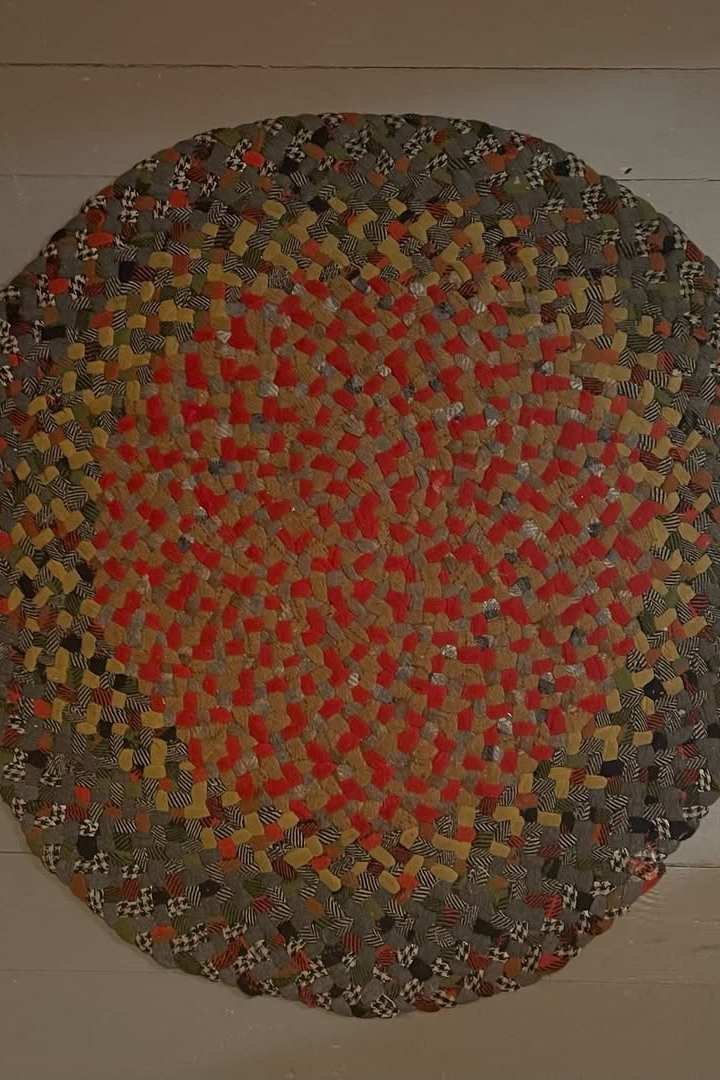
Photo: Thom Heyer (@thom.heyer.nyc) on Instagram
14. Go Bold With a Two-Tone Braided Rug
Best For: rooms with a plain wood floor and plain furniture that need one confident pattern. A two-tone braided rug — mustard and navy, cream and charcoal — is a pattern that never argues with the furniture. How to Create It: pick two colours already in the room, choose an oval rug that puts them in wide bands, and let the rug be the only pattern at floor level. Keep the walls pale and the cushions solid so the rug carries the room.
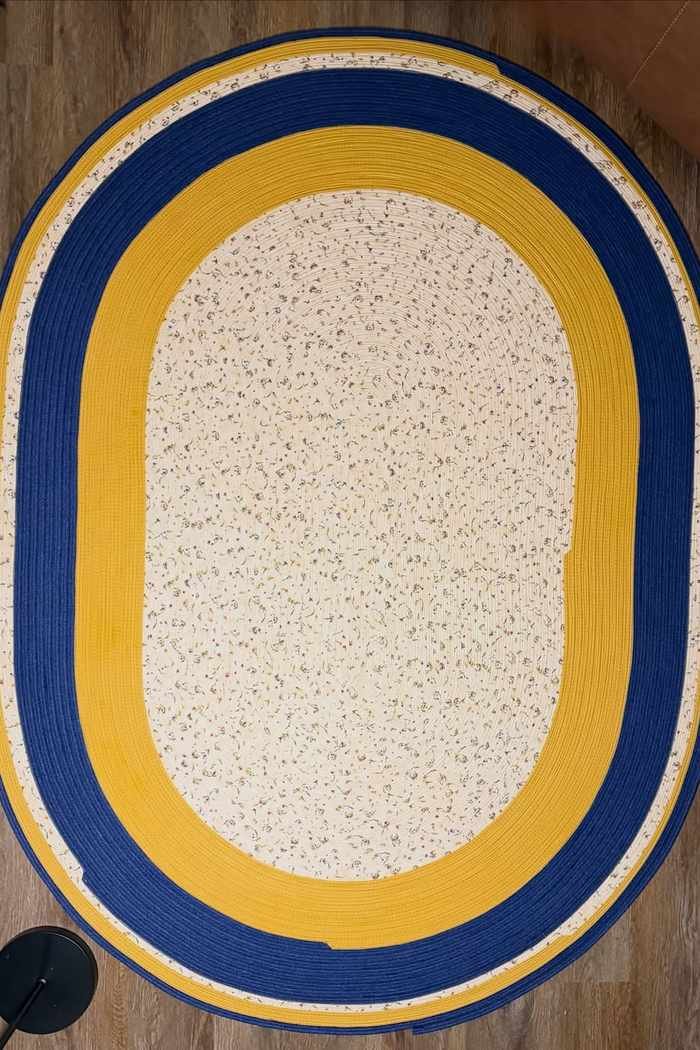
Photo: Mandi Reilly (@handmadebymandi26) on Instagram
15. Anchor a Big Room With One Oversized Braided Rug
Best For: large living rooms where the furniture floats and nothing ties it together. One oversized braided rug in dark green, cream, and tan anchors the whole seating group. How to Create It: size the rug so the front legs of every seat sit on it, choose wide stripes in colours the room already has, and keep the rug flat — no layering on top of it. The rug becomes the room’s foundation, and everything else sits on it.
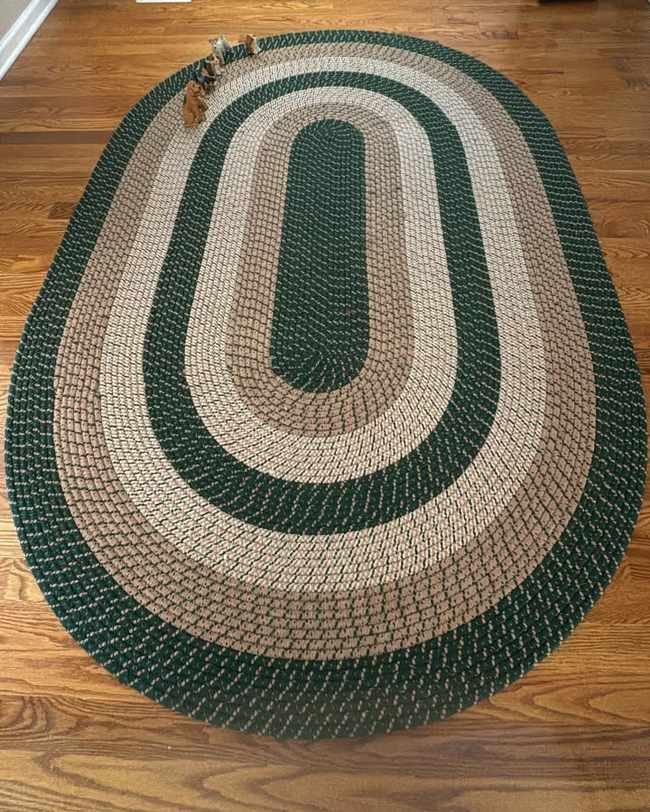
Photo: Paula Hester Miller (@paulamiller49) on Instagram
Where Does Hand-Painted Tile Belong If Not on the Whole Wall? Overlooked Decorating Details in the Kitchen and Bath
Hand-painted tile is the jewellery of the house — it works best in small doses, where you can actually see the painting. A whole wall of it is expensive and busy; eight tiles behind a sink, one panel by the stove, or a tiled island top is the whole point. Give it one job and let it do it well.

Photo: Celeste Wren (@bycelestewren) on Instagram
16. Tile the Sink, Not the Wall
Best For: kitchens and bathrooms where the sink is the focal point and the wall is plain. A mosaic tile basin and an iris-patterned backsplash turn the sink into art. How to Create It: choose a hand-painted tile with one strong colour — blue, green, terracotta — and use it only around the sink. Keep the rest of the wall plain plaster or paint, and let the tap be simple brass or black so the tile stays the star. For more kitchen tile ideas, see our mermaid tile bathroom ideas for the same hand-painted look in a bathroom.

Photo: Mallory Nikolaus (@mallorynikolaushome) on Instagram
17. Make One Small Tile Mural the Whole Backsplash
Best For: kitchens with a plain white or cream backsplash that needs one focal point. A single hand-painted mural panel — eight tiles, one scene — is cheaper than retiling and more memorable than a whole patterned wall. How to Create It: pick a mural panel in the colours the kitchen already has, fit it above the hob or the sink, and keep the surrounding tiles plain white. The mural becomes the kitchen’s painting, and the plain tiles frame it.

Photo: Moira Hahn (@moirahahnart) on Instagram
18. Tile the Island Top and Let the Rest of the Kitchen Stay Plain
Best For: colourful kitchens where the island is the centrepiece and the walls are already busy. A dark blue island topped with patterned tiles is a statement that needs no other decoration. How to Create It: tile the island top in a bold pattern, keep the cabinets plain, and add amber pendant lights above it so the tile glows. The island becomes the kitchen’s art, and the rest of the room can stay quiet.
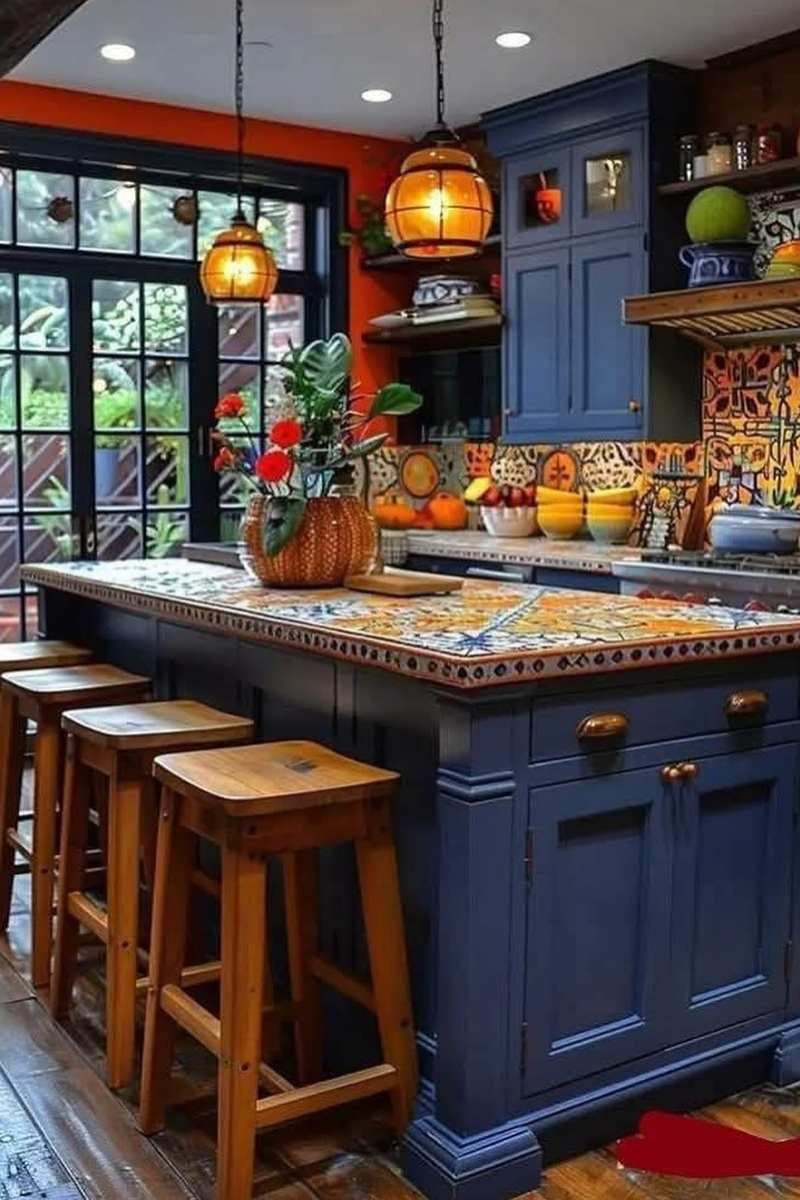
Photo: Juanell Williams (@darling.debbie56) on Instagram
Why Does Your Hallway Still Feel Unfinished? Overlooked Decorating Details for the Darkest Room in the House
The hallway is the room you walk through a dozen times a day and never look at — which is why it stays unfinished. It has no furniture to hide behind and no window to borrow light from, so the lighting has to do all the work. Three fixes — pairs of sconces, two pendants, and a lit stairwell — turn a dark passage into a room.

Photo: Clarissa Burke (@clarissashome) on Instagram
19. Pair Sconces and Let the Hallway Glow
Best For: hallways with a console table and a large painting or mirror that need evening light. Two lit brass sconces flanking the art turn a passage into a gallery. How to Create It: mount one sconce on each side of the painting, at eye level, and use warm bulbs on a dimmer. Keep the console nearly empty so the sconces light the art, not the clutter, and let the glow spill down the hall.
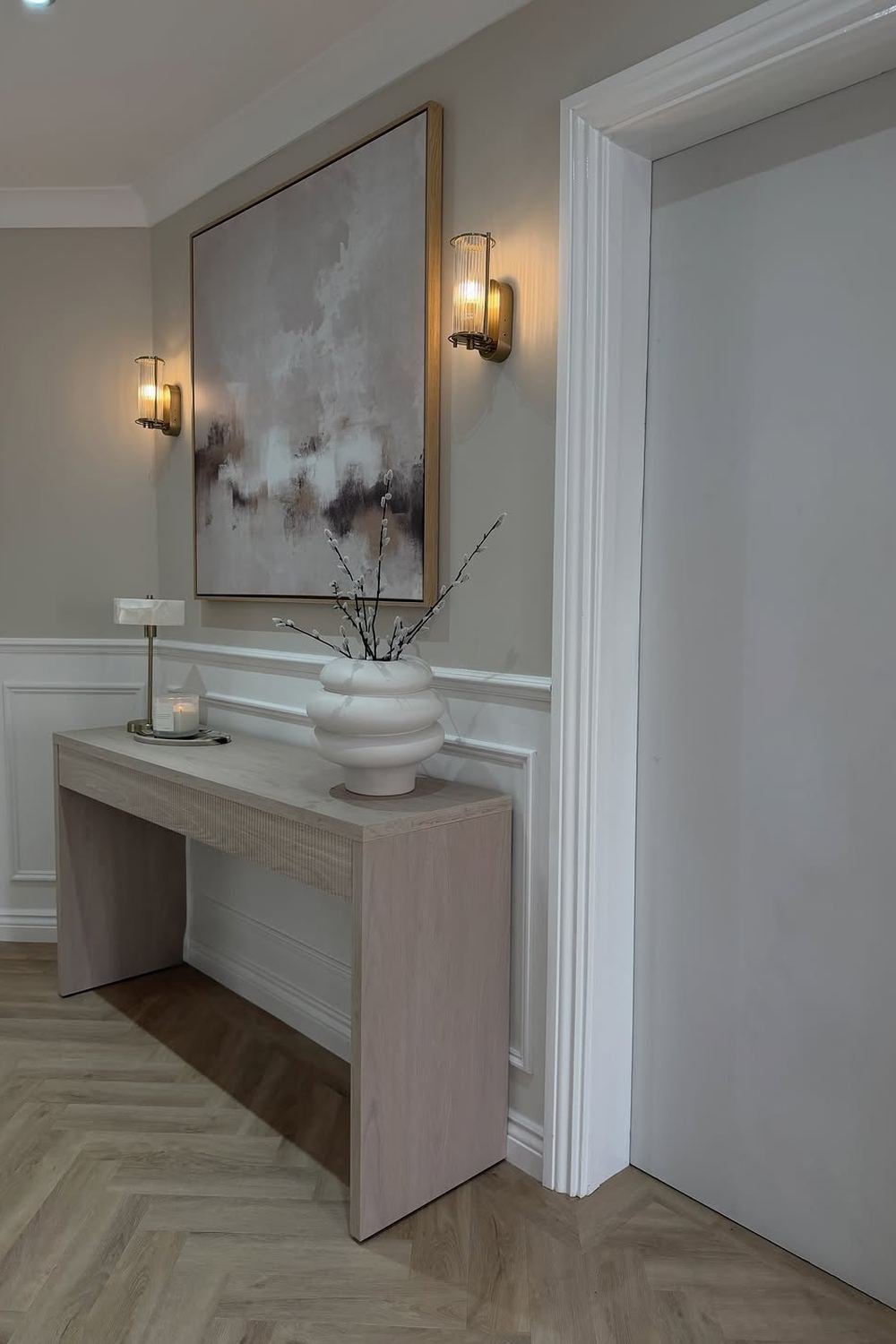
Photo: Our Oaktree Home (@ouroaktreehome) on Instagram
20. Hang Two Pendants in the Entryway, Not One
Best For: entryways with a console table and a vintage rug that need light at both ends of the hall. Two geometric brass pendants, hung at the same height, make the entry feel balanced and intentional. How to Create It: hang the pendants over the console and the rug, keep the walls deep — navy or green — so the brass glows against them, and use warm bulbs. One pendant leaves half the hall dark; two finish the job. For more entryway ideas, see our christmas hallway decor ideas for the same console and pendant pairing dressed for the season.
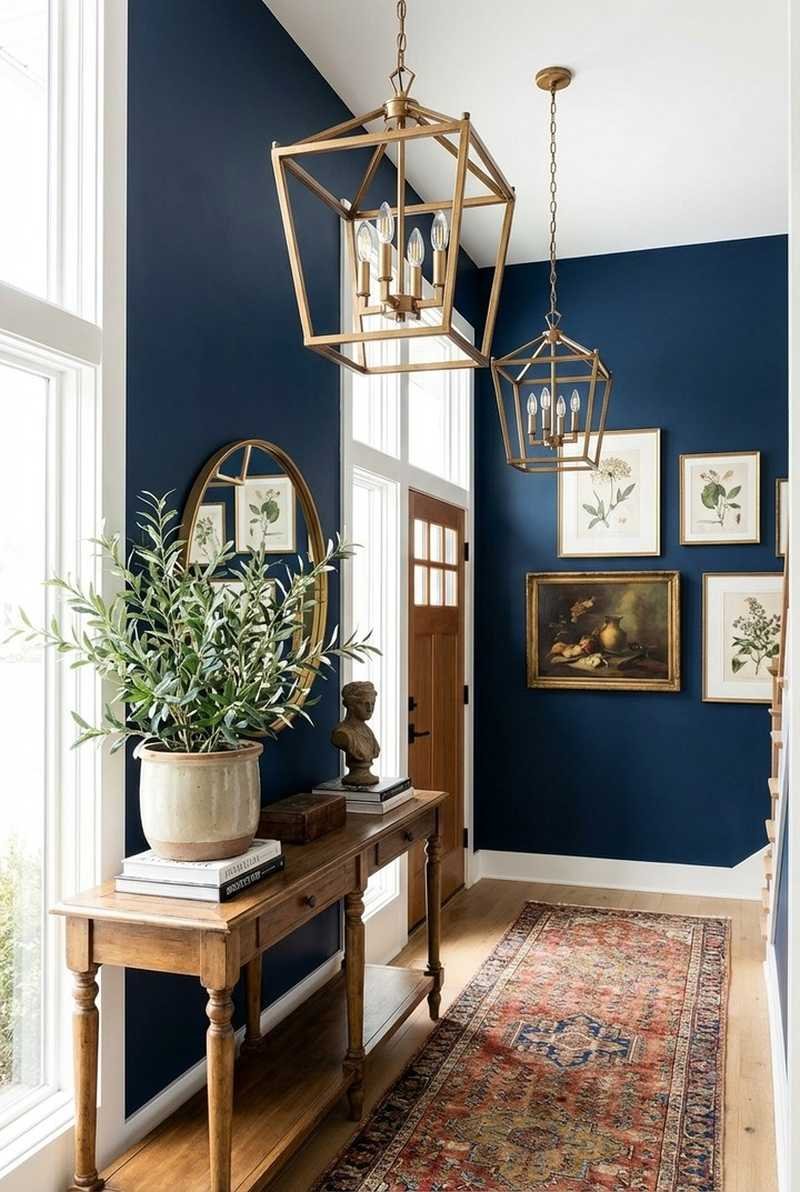
Photo: Peccole House (@peccolehouse) on Instagram
21. Light the Stairwell Like a Room, Not a Passage
Best For: stairwells with panelled walls and carpeted stairs that feel dark even in daylight. A large circular pendant, hung low enough to light the stairs, turns the stairwell into a room of its own. How to Create It: hang one oversized pendant in the centre of the stairwell, keep the walls pale so the light bounces, and let the pendant be the only decoration. The stairs become a feature, not a passage.

Photo: Our Oaktree Home (@ouroaktreehome) on Instagram

A finished home is rarely the one with the most furniture. It is the one where somebody noticed the ceiling, the mirror, the rug, the tile, and the hallway light — the overlooked decorating details that quietly do the work. Pick one from this list, do it this weekend, and see how the room changes. That small finished feeling is the whole point, and it is how a house starts to feel like a home.
💬 Join Our Decor Community
Decor Fern | Home Decor Ideas & Inspiration — share your rooms, get ideas, and chat with fellow decor lovers.
Join the Facebook GroupFollow on Facebook

One Comment