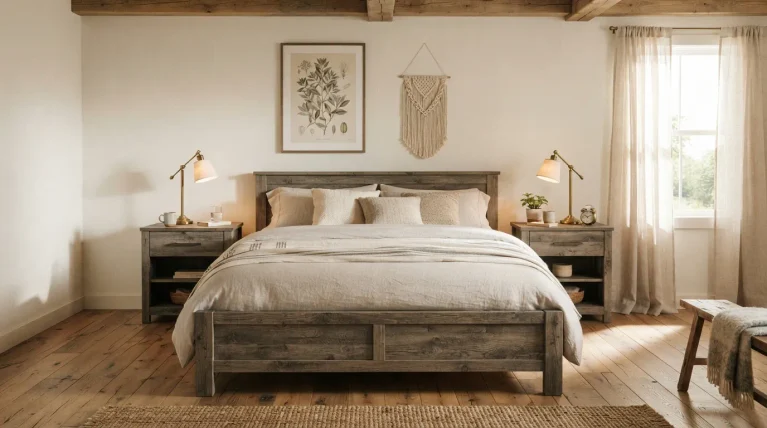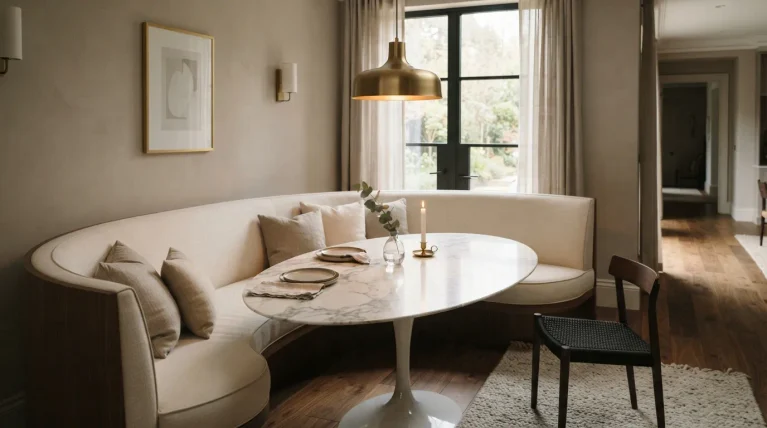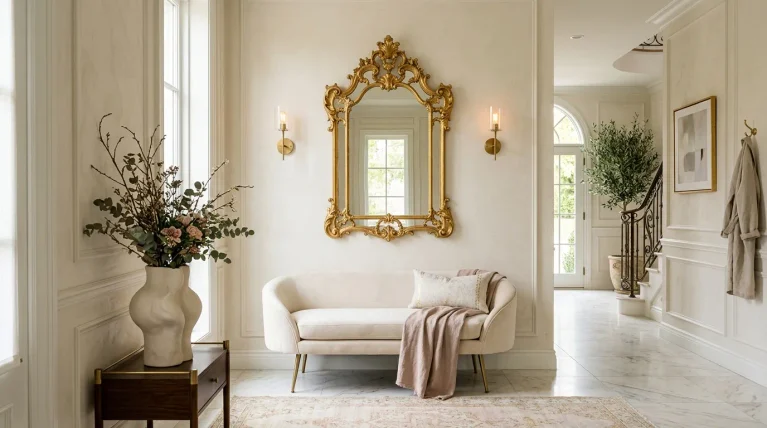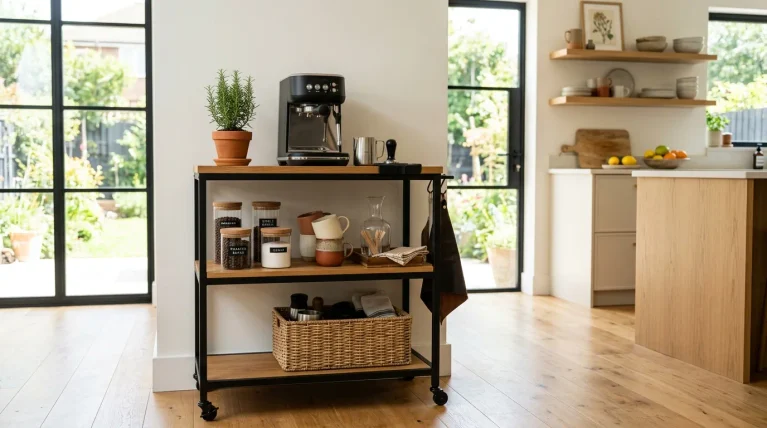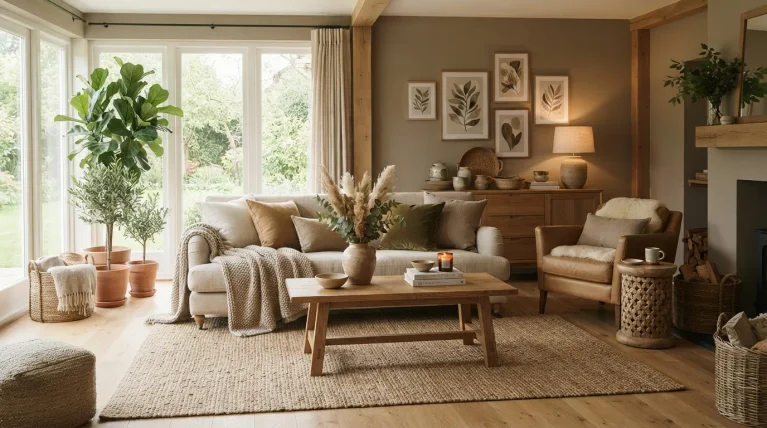
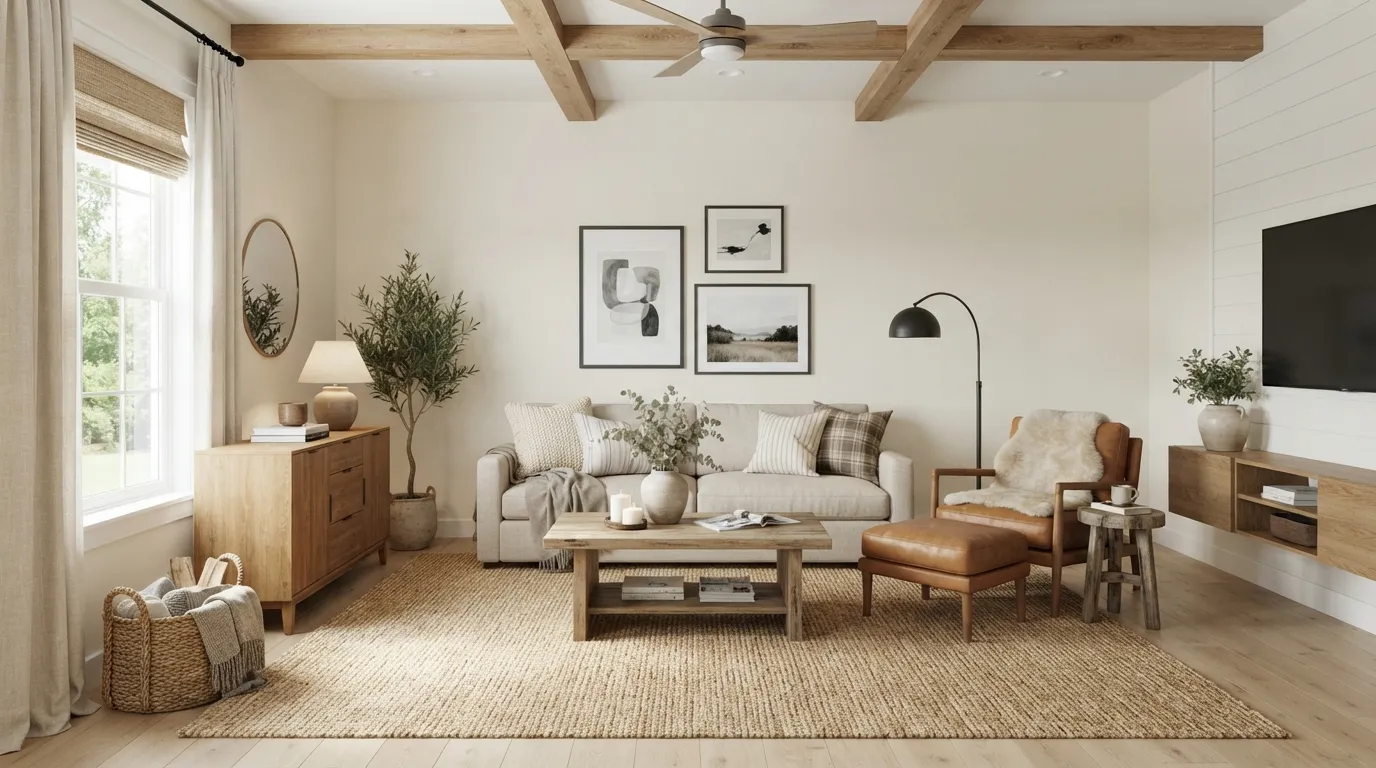
Your living room can feel warm, stylish, and beautifully lived-in without a complete makeover. These cozy modern farmhouse living room ideas make it easier to create that welcoming feeling.
If your space feels too plain, too cluttered, or somewhere between modern and rustic, small changes can make a surprisingly big difference. Think creamy neutrals, weathered wood, soft linen, woven textures, natural greenery, warm lighting, and a few carefully chosen accents. These ideas are designed to help you create a room that looks polished but still feels comfortable enough for everyday life. In my experience, the most successful spaces balance beauty with practicality. You do not need to copy every detail; choose the ideas that fit your room, lifestyle, and budget, then build your look gradually.
1. Soft Neutral Layers
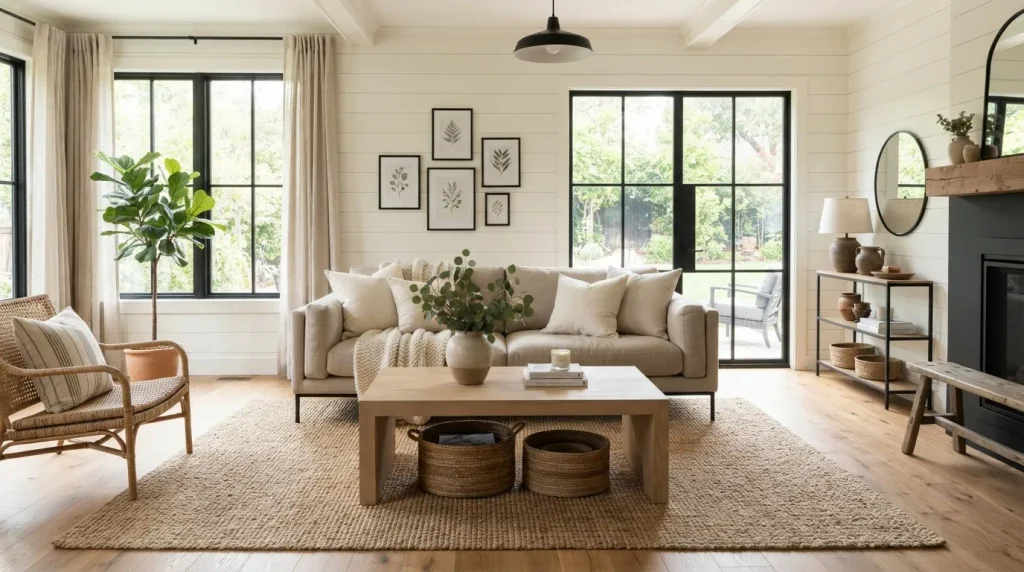
- Creamy tones make the room feel brighter and more spacious.
- Linen, jute, and woven textures add warmth without visual clutter.
- Pale wood keeps the farmhouse character natural and relaxed.
- A small amount of darker decor adds definition.
- This palette makes seasonal decorating especially easy.
A warm neutral palette can make a farmhouse living room feel instantly calmer and more polished. Layer creamy walls, a soft beige sofa, and natural wood accents to create a backdrop that feels relaxed without looking plain. Add woven baskets, linen pillows, and a textured area rug for subtle dimension. In my experience, this combination works especially well in smaller rooms because light colors keep the space visually open. Choose one deeper accent, such as charcoal or aged bronze, to ground the room and give the soft palette enough contrast for a modern finish.
The beauty of a neutral foundation is how easily it adapts as your style changes. Start with larger pieces in timeless shades, then bring personality through removable layers such as throw blankets, artwork, ceramic vases, and seasonal greenery. A natural oak coffee table can warm the room while black metal legs add a clean contemporary edge. Keep patterns restrained and vary textures instead: boucle, cotton, jute, and lightly weathered wood create interest without clutter. The result is a cozy modern farmhouse living room that feels collected, practical, and comfortable enough for everyday family life.
Also Read : 22 Scandinavian Kitchen Ideas for a Bright Modern Home
2. Black Window Accents
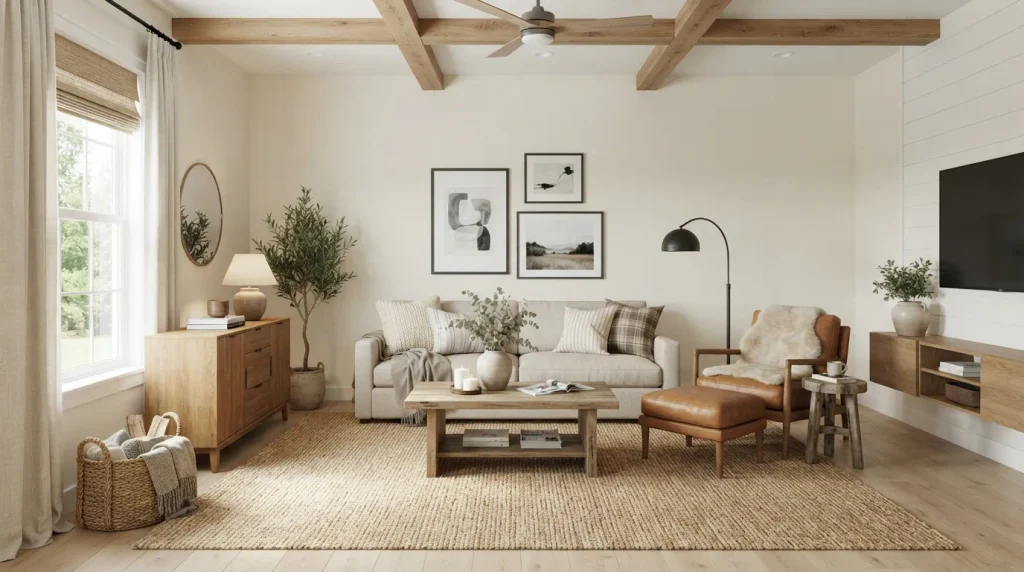
- Black details give pale rooms a crisp visual outline.
- Curtain rods are an easy upgrade with noticeable impact.
- Repeating dark accents helps the room feel thoughtfully connected.
- Warm wood prevents the contrast from becoming too stark.
- Matte finishes keep the look soft and sophisticated.
A few black accents can sharpen a soft farmhouse room without making it feel harsh. Try slim black curtain rods, a simple metal floor lamp, or framed artwork with dark edging against creamy walls. These small touches create visual anchors and help modern furniture feel intentional beside rustic materials. I’ve noticed this approach is especially useful when a room already has plenty of beige, ivory, or pale wood. Keep the dark elements repeated in two or three places so the eye moves naturally around the space instead of stopping at one heavy focal point.
For a balanced look, pair black details with warm materials rather than cool gray finishes. A caramel leather chair, oak side table, woven basket, or natural jute rug can soften the contrast and keep the room inviting. Choose matte black instead of glossy finishes when you want a quieter, more sophisticated effect. The combination also photographs beautifully because dark accents add definition around lighter furniture and walls. In a cozy modern farmhouse living room, this simple contrast can make the entire space look more structured while preserving the casual, welcoming character that makes farmhouse design so appealing.
Also Read : 21 Moody Dining Room Ideas for a Dramatic Cozy Space
3. Weathered Wood Table
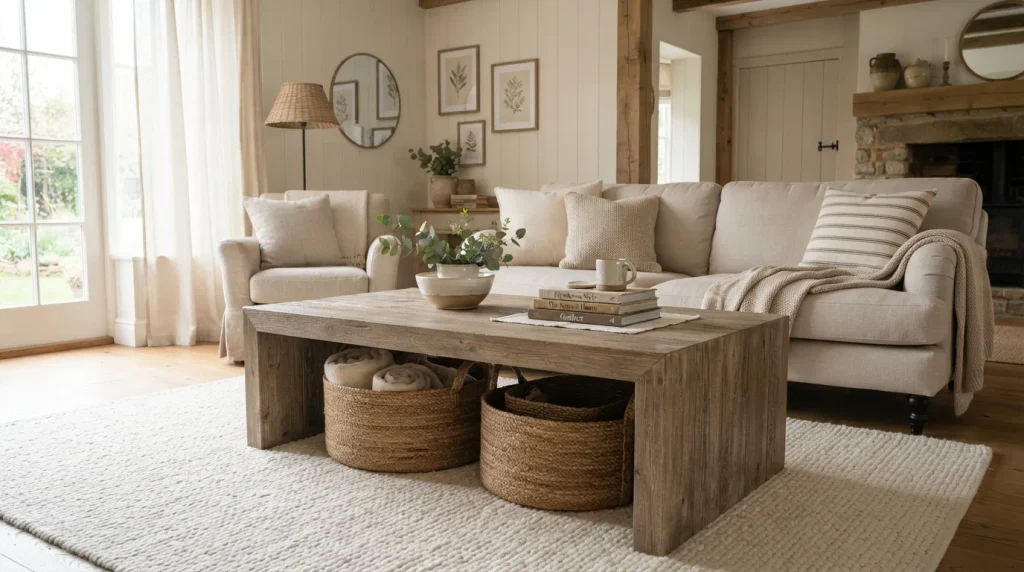
- Weathered wood instantly adds farmhouse warmth and character.
- Clean lines keep rustic furniture from looking overly traditional.
- The substantial surface provides practical space for daily use.
- Simple tabletop styling keeps the room visually calm.
- A textured rug helps anchor the seating arrangement.
Nothing warms a farmhouse seating area quite like the texture of aged wood. A substantial coffee table with a softly distressed oak or reclaimed-wood finish can become the room’s natural centerpiece while adding useful everyday surface space. Look for simple lines rather than ornate farmhouse detailing, especially if your sofa and chairs have modern shapes. A lower rectangular table works well in larger rooms, while a round design can improve movement in tighter layouts. I’ve seen this work well in many homes because the weathered finish hides small marks and still looks better as the room is lived in.
Style the tabletop with restraint so the wood remains visible and visually important. A shallow ceramic bowl, one stacked book, and a small vase with fresh or dried stems are usually enough. Leave generous empty space around those pieces so the table feels functional instead of staged. Pairing rustic wood with a clean-lined sofa creates the contrast that defines modern farmhouse decorating: comfortable, familiar materials balanced by uncluttered silhouettes. Add a textured rug underneath to connect the table with the seating area, soften the flooring, and create a finished foundation that feels warm from every angle.
Also Read : 24 Cozy Reading Nook Ideas for a Warm Relaxing Retreat
4. Linen Slipcovered Sofa
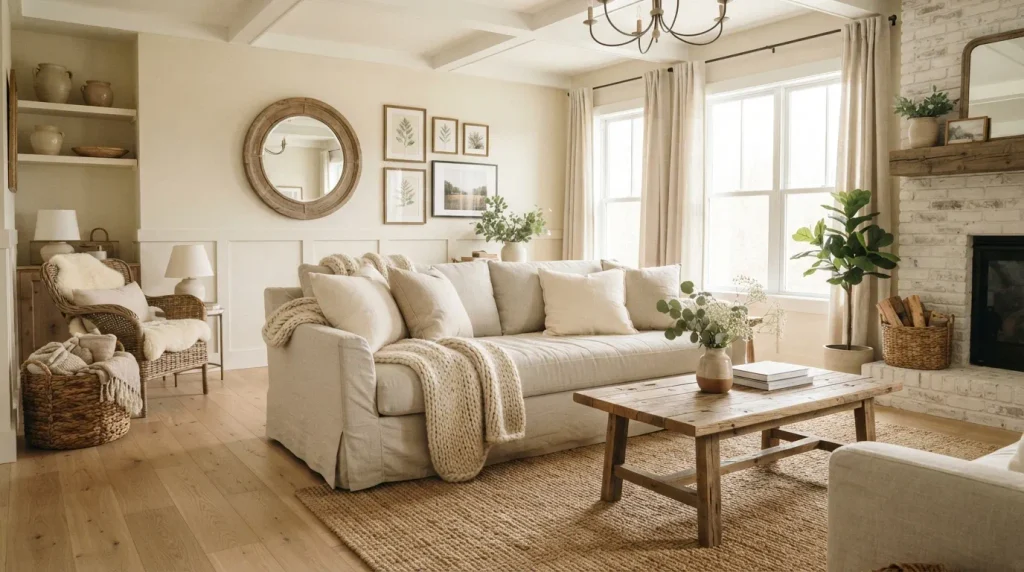
- Linen upholstery makes the seating area feel relaxed and breathable.
- A slipcovered design is practical for busy everyday homes.
- Oatmeal tones add warmth without making the room feel dark.
- Layered pillows create comfort without excessive decoration.
- Light wood accents reinforce the natural farmhouse palette.
A comfortable sofa can completely change how a farmhouse living room feels, and linen is one of the easiest ways to create that relaxed look. Choose an oatmeal, cream, or warm beige slipcovered sofa with a simple silhouette that feels modern rather than overly rustic. The slightly rumpled texture adds character without needing much decoration. In my experience, slipcovers are especially helpful in homes where the living room gets used every day because they are easier to refresh when life gets messy. Add a few soft pillows and one casually folded throw for an inviting finish.
Keep the rest of the room relatively simple so the sofa remains the comfortable visual anchor. A light oak coffee table, woven storage basket, and textured neutral rug can build around the linen without competing with it. If the room feels too pale, introduce one darker element, such as a black floor lamp or charcoal cushion. This creates definition while preserving the airy atmosphere. The finished space feels welcoming rather than formal, with enough softness for relaxing and enough clean structure to suit contemporary farmhouse interiors. It is a practical combination that looks beautiful without feeling precious.
Also Read : 24 Modern Fireplace Ideas for a Stylish Cozy Home
5. Layered Jute Rug
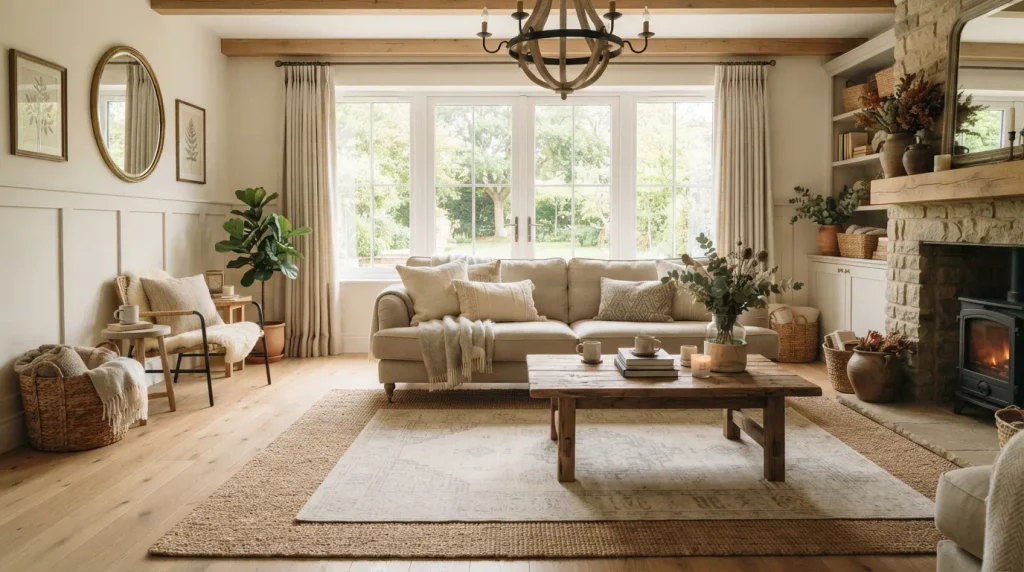
- Layering rugs adds depth when a room feels visually flat.
- Natural jute brings earthy texture beneath softer textiles.
- A smaller patterned rug can define the main seating zone.
- Neutral colors keep multiple textures from becoming overwhelming.
- This setup works especially well in open-plan spaces.
A layered rug arrangement can make a large living room feel much more finished and comfortable. Start with a generously sized natural jute rug to establish an earthy base, then place a smaller cream or subtly patterned rug over the center of the seating area. The combination introduces texture and helps define furniture placement without adding walls or bulky partitions. I’ve noticed that this technique works particularly well in open-plan homes because the rugs visually separate the living zone from nearby dining or kitchen areas. Keep the furniture legs anchored on the larger rug for a cohesive layout.
When choosing the two rugs, focus on contrast through texture rather than loud color. A chunky woven base paired with a soft flatweave or low-pile top layer creates dimension while keeping the palette calm. Leave enough of the jute rug visible around the edges so both materials are easy to appreciate. Secure the layers with an appropriate rug pad to prevent shifting, especially in busy rooms. Finish with a simple wood coffee table and soft neutral seating. The result feels grounded, cozy, and naturally styled while still maintaining the clean lines expected in modern farmhouse decorating.
Also Read : 23 Boho Coastal Bedroom Ideas for a Breezy Relaxed Retreat
6. Oversized Farmhouse Art
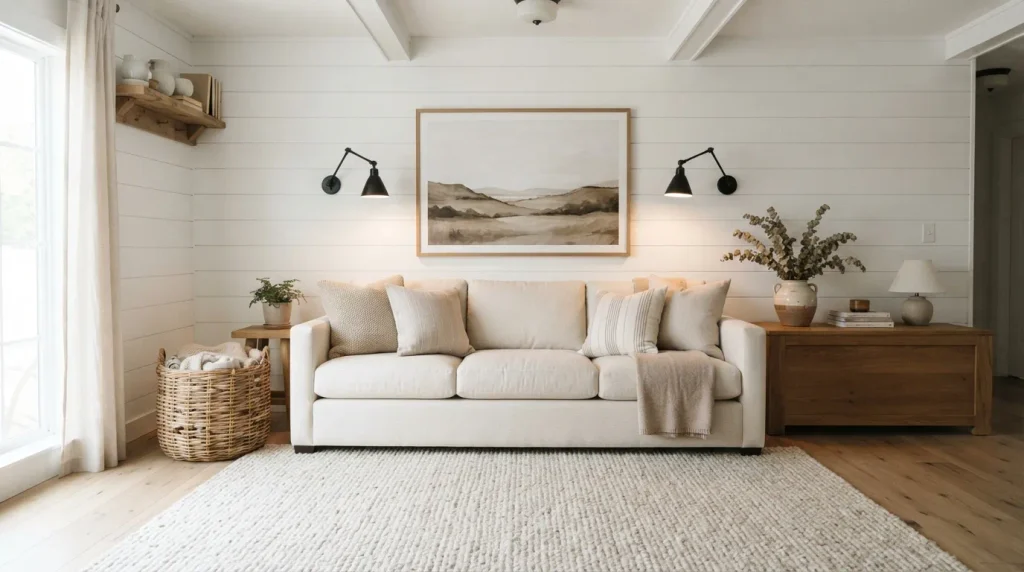
- One large artwork can create stronger impact than many small pieces.
- Neutral landscapes complement farmhouse materials beautifully.
- Oversized art fills an empty wall without adding visual clutter.
- A simple frame keeps the display contemporary.
- Centering the artwork above the sofa creates an instant focal point.
An oversized piece of artwork can solve an empty-wall problem in one simple move. Instead of filling the wall with many small frames, choose one large landscape, abstract neutral, or vintage-inspired print that echoes the room’s earthy palette. Hang it centered above the sofa, leaving enough breathing room around the frame. This approach gives the living room a clear focal point while keeping the overall design uncluttered. In my experience, large-scale art often makes a room look more intentional because it provides visual weight that smaller decorative pieces cannot achieve as easily.
Choose artwork with colors that already appear elsewhere in the room, such as warm beige, muted green, charcoal, cream, or soft brown. This creates a subtle connection between the walls, furniture, and accessories without making everything match perfectly. A thin black or aged wood frame can reinforce the modern farmhouse balance of clean structure and natural warmth. Avoid hanging the artwork too high; the center should feel connected to the sofa rather than floating above it. Add minimal accessories nearby so the artwork remains the main visual feature and the room feels polished without becoming busy.
Also Read : 25 Modern Farmhouse Fireplace Ideas for a Cozy Living Room
7. Cozy Fireplace Center
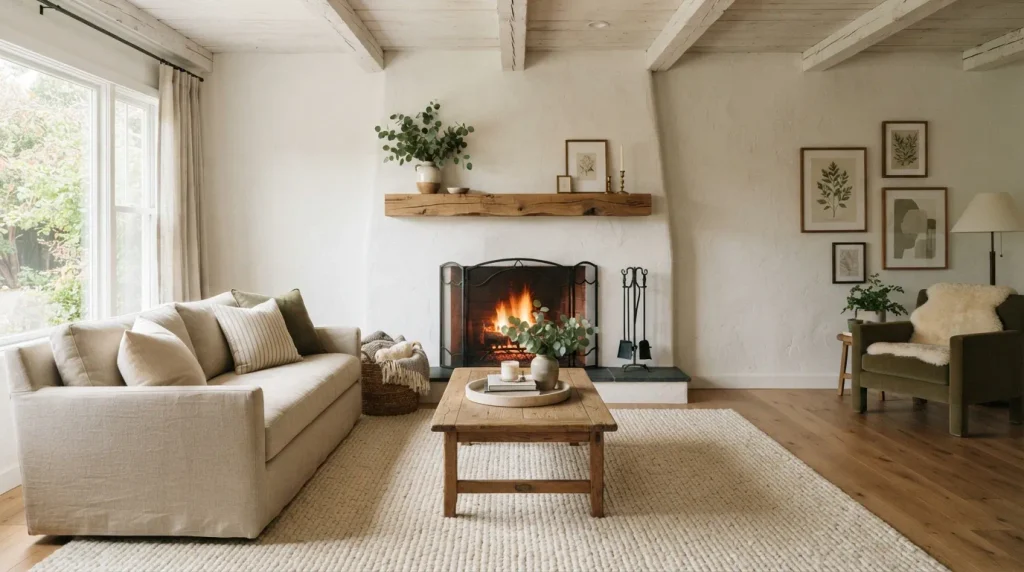
- A fireplace naturally gives the seating area a strong focal point.
- White plaster keeps the feature bright and contemporary.
- A chunky wood mantel adds farmhouse warmth and texture.
- Simple mantel decor prevents the fireplace from feeling crowded.
- Arrange seating toward the fireplace to make the room feel connected.
A fireplace can instantly give a living room a stronger sense of comfort and structure. For a modern farmhouse look, pair a simple white plaster or painted surround with a chunky natural wood mantel. The contrast between smooth walls and visible wood grain creates warmth without making the space feel overly rustic. Position the sofa and chairs so they naturally face or frame the fireplace, creating a practical conversation area. I’ve noticed that even a non-working fireplace can provide this same visual benefit when styled with baskets, candles, or neatly stacked firewood.
Keep the mantel styling intentionally light so the architectural feature remains the star. A ceramic vase, small framed artwork, or a few organic branches can add personality without competing with the fireplace. Below, use a woven basket for blankets or logs to introduce another useful texture. A neutral rug can then visually connect the fireplace with the seating area. The combination of warm wood, creamy upholstery, textured fabrics, and soft lighting creates a cozy modern farmhouse living room that feels welcoming during quiet evenings while still looking clean and sophisticated during the day.
8. Warm Leather Chair
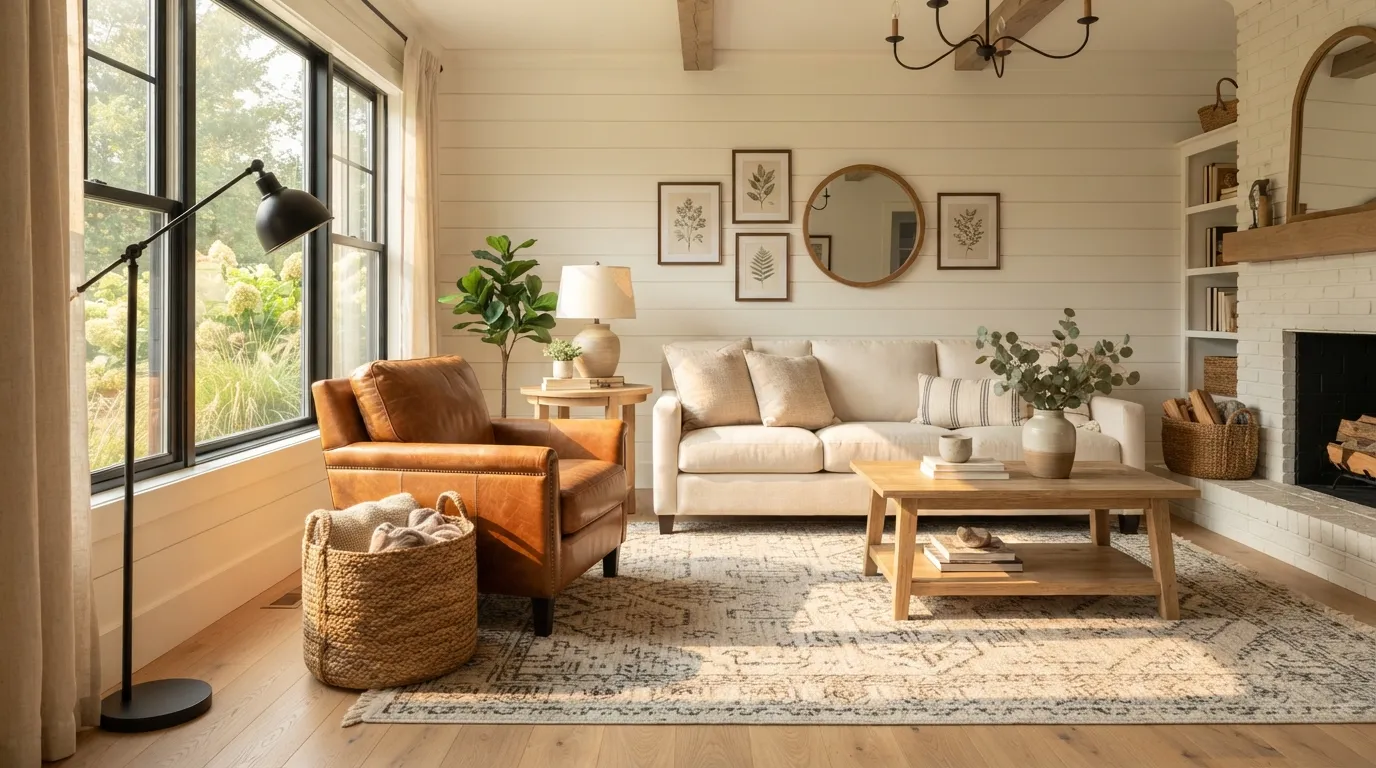
- Caramel leather adds warmth to an otherwise neutral seating arrangement.
- An accent chair provides extra seating without overwhelming the room.
- Natural leather develops character as it ages.
- Pairing leather with linen creates appealing material contrast.
- Position the chair near a lamp for a practical reading spot.
A single leather chair can bring just the right amount of warmth to a pale farmhouse living room. Look for caramel, cognac, or medium brown leather with a simple frame rather than heavy traditional detailing. Place it beside a linen sofa or across from the main seating to create balance and an extra conversation spot. The smooth leather contrasts beautifully with woven baskets, cotton pillows, and textured rugs. In my experience, one substantial leather piece is usually enough to warm a neutral room without making the design feel dark or overly traditional.
Make the chair even more inviting by adding a small side table and floor lamp nearby. This creates a useful reading corner instead of leaving the accent chair as purely decorative furniture. Light oak or reclaimed wood works especially well beside warm leather because both materials have natural variation. Keep nearby accessories simple, perhaps a ceramic mug, small plant, or folded throw. The result is a relaxed mix of soft textiles, warm wood, and durable leather. It gives the room visual contrast while maintaining the comfortable, lived-in character people love about farmhouse-inspired interiors.
9. Woven Storage Baskets
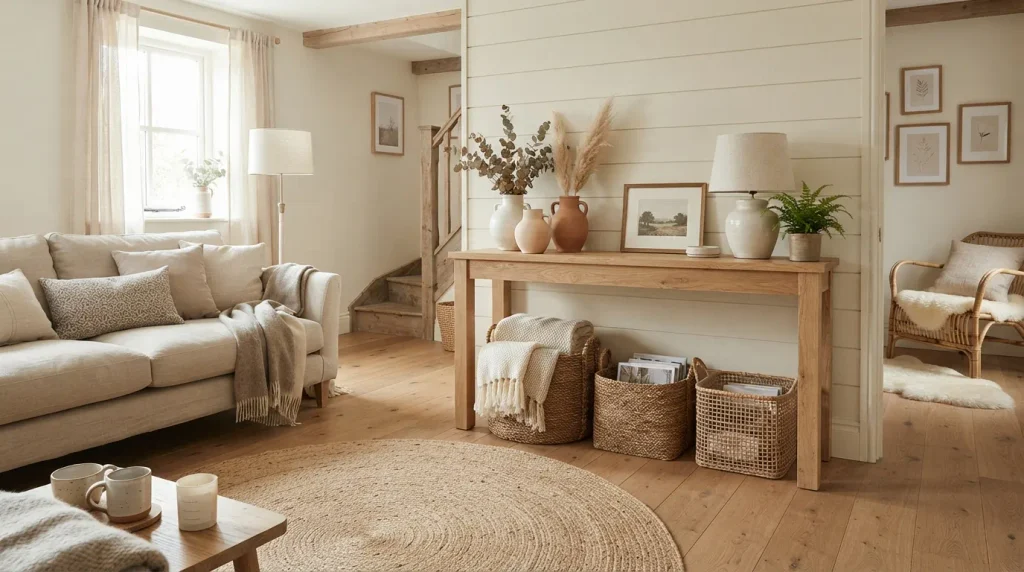
- Woven baskets hide everyday clutter while adding natural texture.
- Different basket sizes can organize blankets, toys, and magazines.
- Placing baskets near seating makes storage easy to use.
- Natural fibers soften rooms filled with smooth furniture.
- Open baskets encourage quick, realistic tidying.
Beautiful storage can make a living room feel calmer without sacrificing personality. Natural woven baskets are especially useful because they combine practical organization with the relaxed texture associated with farmhouse decorating. Use a tall basket beside the sofa for blankets, a smaller basket under a console for loose items, or a sturdy lidded version for toys and household clutter. This keeps everyday necessities within reach while making the room look more organized. I’ve noticed that accessible storage is much easier to maintain than solutions that require opening drawers or moving furniture.
Choose baskets in slightly different shapes and sizes, but keep their materials and colors within the same natural family. Seagrass, rattan, jute, and woven water hyacinth can work beautifully alongside light oak and neutral upholstery. Avoid filling every visible corner with storage; two or three thoughtfully placed baskets are usually enough. Leave some negative space around each piece so the room continues to feel airy. This simple upgrade works especially well in family spaces because it makes tidying faster while adding the handmade texture that gives modern farmhouse rooms their inviting character.
10. Soft Plaid Pillows
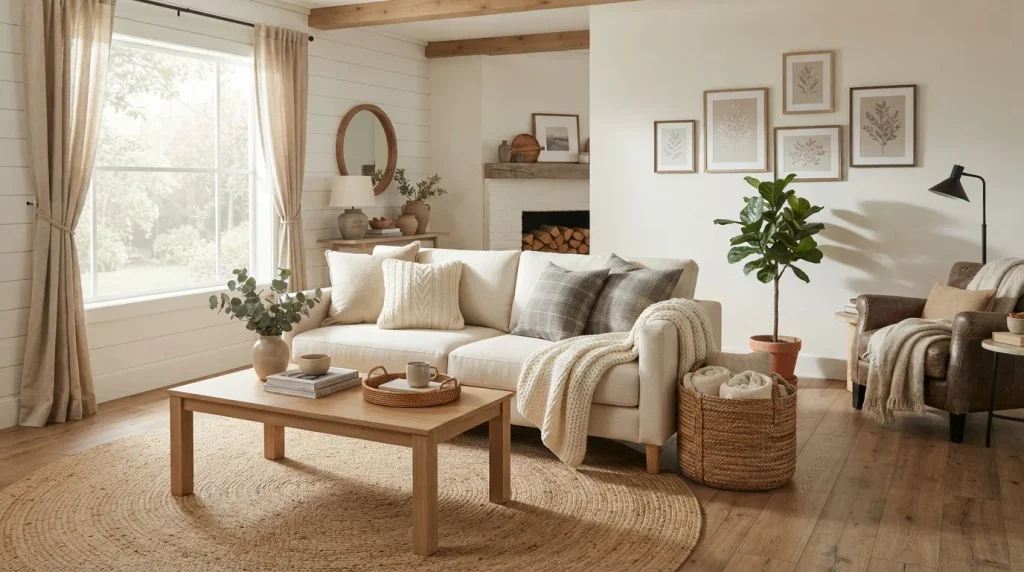
- Soft plaid adds classic farmhouse character without looking dated.
- Neutral patterns keep the seating area calm and versatile.
- Mixing pillow sizes creates a fuller, more comfortable sofa.
- A chunky throw adds another layer of tactile warmth.
- Muted patterns work well with modern furniture silhouettes.
A few carefully chosen plaid pillows can make a neutral sofa feel instantly more inviting. Choose soft patterns in beige, cream, taupe, charcoal, or muted green rather than bold country checks. Layer two larger pillows at the back, add medium cushions in front, and finish with one smaller textured accent. This creates depth without making the sofa look overloaded. In my experience, subtle plaid works especially well when the rest of the room is simple because it introduces farmhouse personality while keeping the overall design polished, relaxed, and easy to update.
Balance the pattern with solid-colored textiles and natural materials throughout the room. A chunky knitted throw can soften the sofa, while a jute rug and light oak table reinforce the earthy palette. If you already have patterned curtains or artwork, keep the pillow design quieter so the room does not feel visually crowded. Look for fabrics that feel comfortable rather than overly stiff or decorative. The goal is a seating area that looks beautiful in photographs but still feels natural for everyday use. Small textile changes like these can refresh the entire room without replacing expensive furniture.
11. Rustic Floating Shelves
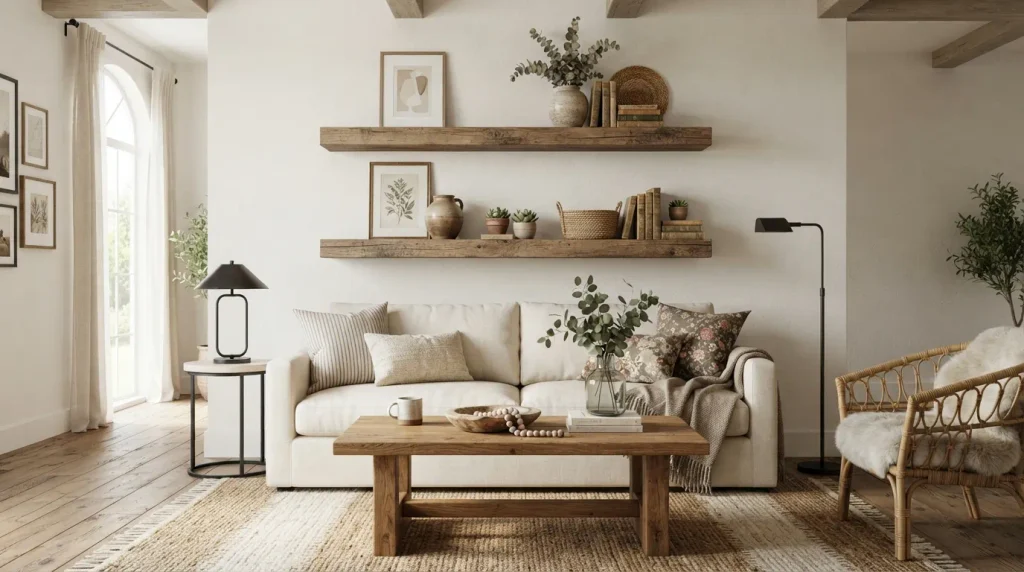
- Floating shelves use vertical wall space without adding bulky furniture.
- Reclaimed wood introduces natural farmhouse texture.
- Small objects can add personality without filling the entire room.
- Open shelving works well beside fireplaces or sofas.
- Leave empty spaces between objects for a cleaner appearance.
Floating shelves can turn an unused wall into a useful decorative feature without making the room feel heavy. Choose natural or lightly weathered wood with simple brackets or concealed supports for a cleaner modern appearance. Two or three shelves are usually enough to create height and interest. Style them with a small collection of ceramic vessels, framed prints, greenery, and a few favorite books. The key is leaving intentional empty space between objects so the shelves feel curated rather than crowded. This approach gives your living room personality while keeping the footprint surprisingly small.
For a cohesive display, repeat materials already found elsewhere in the room. If your seating area includes light oak, woven baskets, and black metal accents, bring small versions of those elements onto the shelves. Vary object heights to create movement, but avoid arranging everything at exactly the same distance. I’ve noticed that shelves look more natural when useful pieces are mixed with decorative ones instead of displaying only accessories. Keep heavier objects on lower shelves and secure the installation properly to the wall type. The finished arrangement adds farmhouse charm while maintaining a clean contemporary feel.
12. Arched Floor Lamp
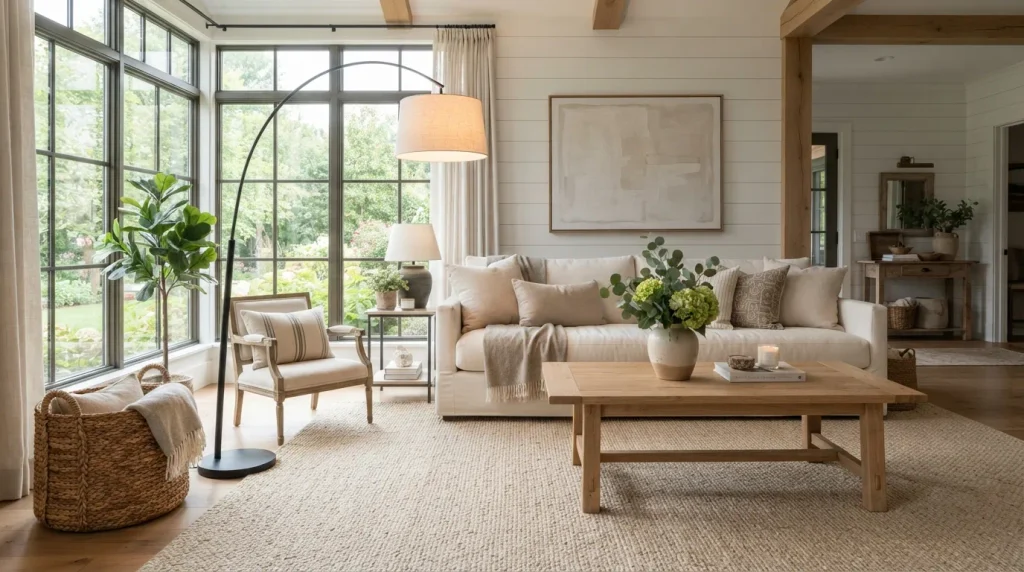
- An arched lamp adds height without requiring wall installation.
- Matte black creates a crisp contrast against pale furniture.
- The curved silhouette softens rooms filled with straight lines.
- Positioning the light over a coffee table improves evening ambiance.
- A simple shade keeps the fixture visually lightweight.
An arched floor lamp can add both function and sculptural shape to a farmhouse living room. Place the base beside the sofa and allow the curved arm to extend over the seating or coffee table. This creates a practical pool of light while introducing a graceful line that contrasts with rectangular furniture. Matte black is an especially versatile choice because it provides definition against cream walls and neutral upholstery. Choose a slim design if the room is small so the lamp adds height without taking up too much floor space.
Think of lighting as part of the room’s overall layering rather than something added at the end. During the day, the lamp can act as a simple architectural accent, while in the evening it provides a softer atmosphere than overhead lighting. Pair it with warm-toned bulbs and a fabric or frosted shade for a gentle glow. Keep nearby decor restrained so the curved silhouette remains visible. In a modern farmhouse setting, the combination of black metal, natural wood, linen, and warm illumination creates a polished look that still feels relaxed and comfortable.
13. Natural Greenery
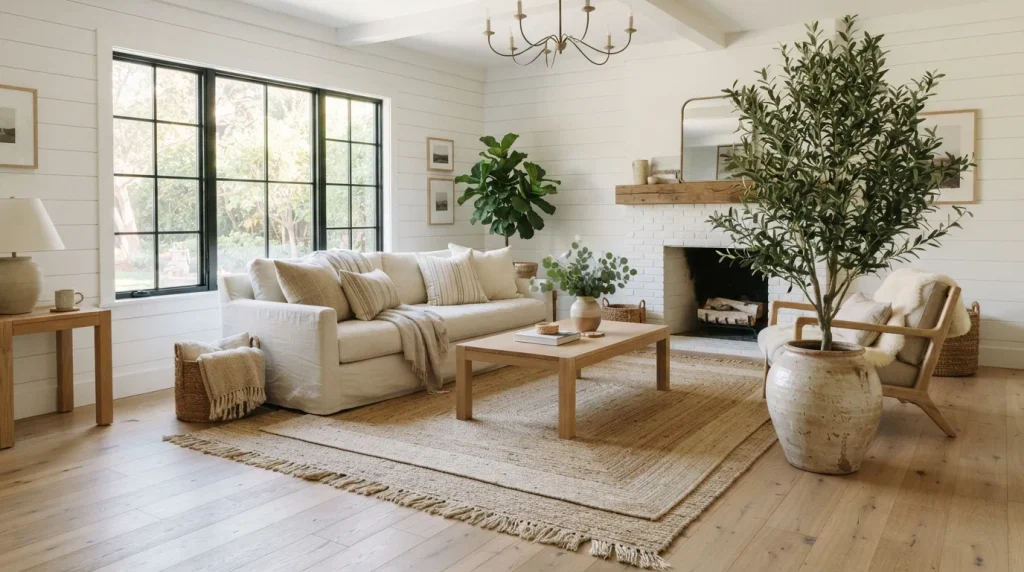
- Greenery adds life to a neutral room without introducing strong color.
- A tall plant can fill an empty corner beautifully.
- Olive branches and eucalyptus suit the farmhouse palette naturally.
- Textured planters add another layer of earthy material.
- Use realistic faux greenery when natural light is limited.
A touch of greenery can make a neutral living room feel fresher, softer, and more connected to nature. Try placing a tall olive tree or leafy plant in an empty corner where the room needs height. Smaller eucalyptus stems can add a lighter touch on a coffee table, mantel, or console. Choose simple ceramic, terracotta, or woven planters that complement the existing materials. In my experience, greenery works best when it looks slightly effortless rather than perfectly arranged. One larger plant often creates more impact than several tiny pots scattered across every surface.
Think about placement as carefully as the plant itself. A tall tree beside a sofa can soften an empty vertical area, while a small arrangement on a coffee table adds freshness at eye level. Avoid blocking walkways or crowding windows where plants could interfere with natural light. If caring for live plants is difficult, realistic faux branches can still provide the desired visual effect. Pair green foliage with cream upholstery, warm wood, and woven textures for a naturally balanced palette. The result is a welcoming space that feels organic, relaxed, and comfortably connected to modern farmhouse style.
14. Built-In Bookcase Styling
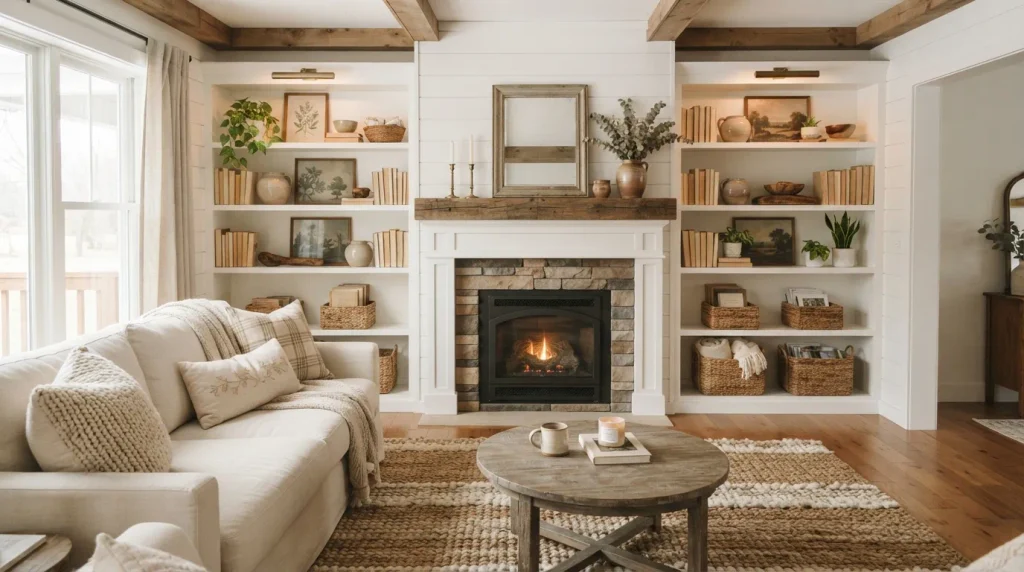
- Built-in shelves provide storage while creating a strong architectural feature.
- Books add personality and make the room feel lived-in.
- Baskets hide practical items behind a softer visual layer.
- Ceramic pieces add handcrafted texture to the display.
- Leaving open areas prevents the shelves from feeling crowded.
Built-in bookcases can make a living room feel more established while giving you valuable space for books, storage, and meaningful decor. Keep the larger pieces simple and neutral so the shelving feels connected to the room rather than visually overwhelming it. Mix books with ceramic vessels, framed artwork, woven baskets, and small plants to create variation. Instead of filling every shelf completely, leave several open areas where the wall backing can show through. This negative space makes the arrangement feel lighter and gives individual objects room to stand out.
For a modern farmhouse effect, repeat a few materials from the rest of the room throughout the shelves. Light wood, aged ceramics, woven fibers, and muted greenery create a natural connection with farmhouse furniture. Arrange books both vertically and horizontally to vary the shapes, then place one small object on selected stacks. I’ve noticed that displays look more authentic when they include useful or meaningful items instead of accessories chosen only for decoration. Keep heavier baskets and books on lower shelves for visual balance. The finished bookcase becomes practical storage and a beautiful focal point.
15. Cozy Reading Corner
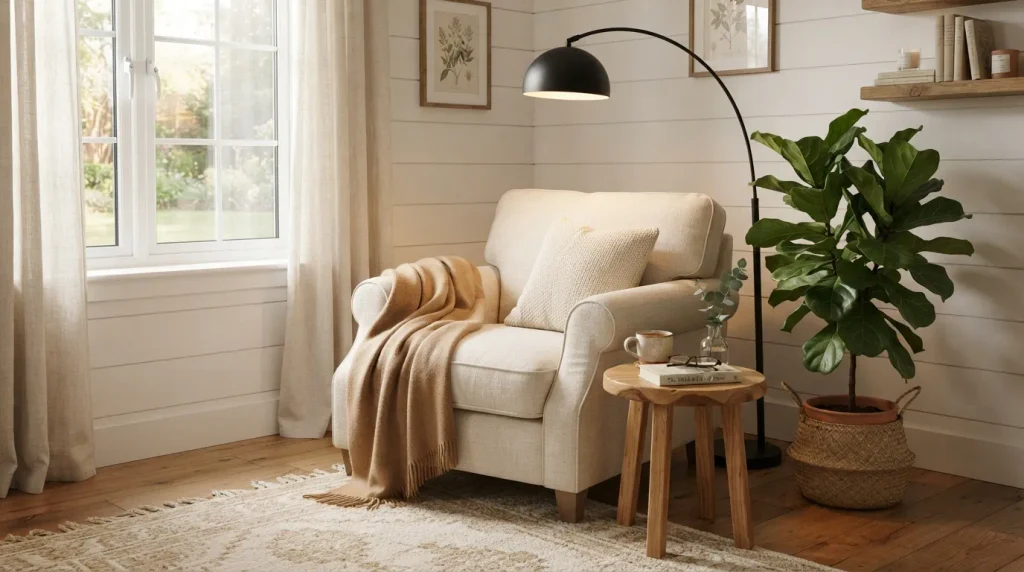
- A reading corner gives unused floor space a clear purpose.
- An upholstered chair creates a comfortable secondary seating zone.
- A small table keeps books and drinks within easy reach.
- A floor lamp provides focused evening light.
- A nearby basket makes blanket storage simple and attractive.
An unused corner can become one of the most inviting parts of the room with just a few thoughtful pieces. Start with a comfortable upholstered chair positioned near a window, then add a small round wood table for books, coffee, or a lamp. A nearby basket can hold extra blankets, while a floor lamp makes the space useful after sunset. This setup creates a quiet secondary seating area without requiring a large furniture investment. In my experience, corners feel much more intentional when every piece has a clear purpose rather than being filled with random decoration.
Choose materials that echo the main living area so the corner feels connected instead of separate. A cream chair can coordinate with a linen sofa, while warm oak and woven textures repeat the natural materials used elsewhere. Add one soft throw in caramel, taupe, or muted green for color and comfort. Keep the surrounding floor relatively open to preserve easy movement through the room. This small arrangement can make a large living room feel more complete while giving you a dedicated place to read, enjoy morning coffee, or simply step away from the main seating area.
16. Layered Throw Blankets
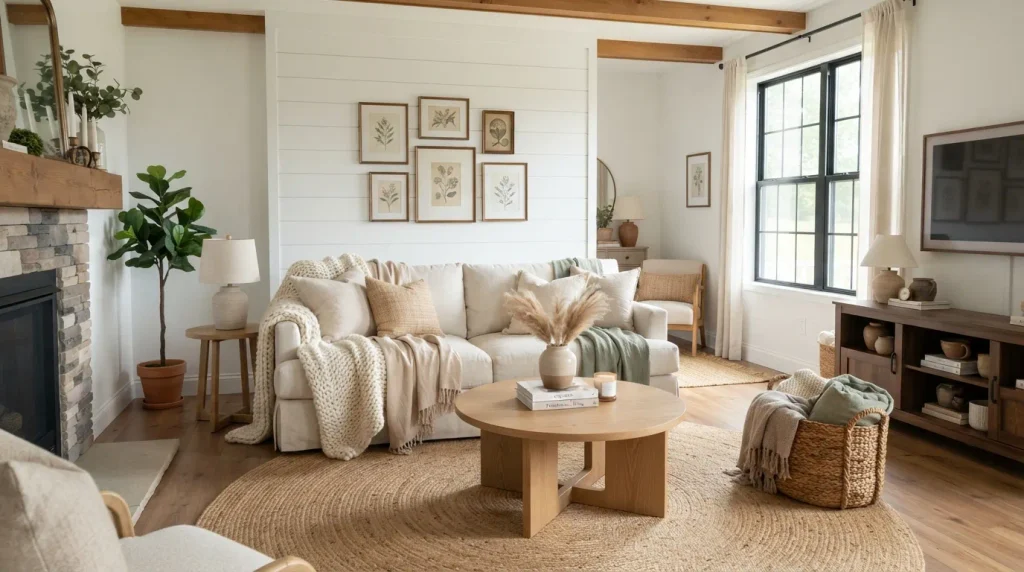
- Layered throws make the sofa look softer and more inviting.
- Different fabric weights add depth without adding clutter.
- Neutral colors keep the arrangement calm and versatile.
- A nearby basket makes blankets easy to store.
- Casual placement creates a relaxed lived-in appearance.
A few beautifully layered throws can make a neutral sofa feel instantly warmer and more inviting. Choose two different textures, such as chunky knit and soft cotton, then keep their colors within a calm palette of cream, beige, taupe, or muted sage. Instead of folding every blanket perfectly, drape one loosely over an arm or corner of the sofa. This creates the relaxed appearance that makes farmhouse rooms feel comfortable rather than staged. I’ve noticed that texture often adds more visual interest than extra color, especially when the larger furniture pieces are neutral.
Keep blanket placement practical so the room remains easy to use. One throw can stay within reach on the sofa, while extras can be stored in a large woven basket nearby. Choose fabrics that are washable or durable if the room is used frequently by children or pets. A light oak coffee table and textured rug can reinforce the warm, natural palette without competing with the textiles. The finished arrangement adds softness, depth, and everyday comfort. It also gives you an inexpensive way to refresh the room seasonally without changing the major furniture or overall decorating style.
17. Vintage Accent Decor
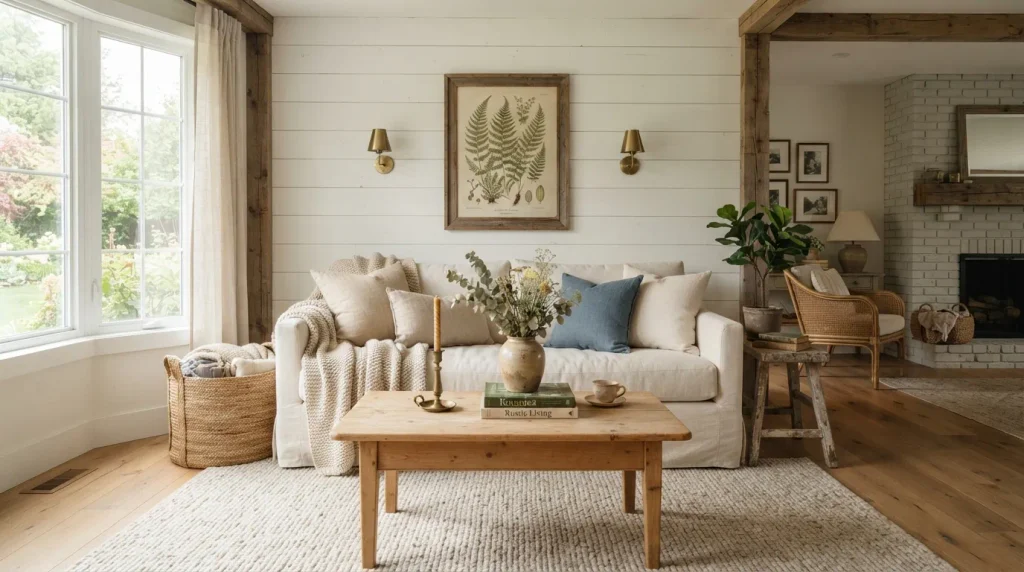
- Vintage accents add character without requiring a fully traditional room.
- A few aged pieces create more personality than many accessories.
- Brass, ceramic, and weathered wood work naturally with farmhouse materials.
- Mixing old and new keeps the room feeling current.
- Choose meaningful-looking pieces instead of obvious themed decorations.
A few vintage-inspired accents can give a modern farmhouse living room the collected character that makes it feel personal. Look for aged brass candlesticks, old-style ceramic vessels, botanical prints, wooden stools, or gently weathered accessories. You do not need an entire room of antique furniture; two or three distinctive pieces can create enough contrast. Pair these details with a streamlined sofa and contemporary lighting so the space feels current. This balance prevents farmhouse decorating from becoming overly themed while still giving the room a sense of history and individuality.
When selecting vintage pieces, focus on texture, proportion, and usefulness rather than simply choosing anything that looks old. A small wooden stool can work as a side table, while a ceramic vessel can hold greenery or dried branches. Repeating one aged finish, such as warm brass or distressed wood, helps the pieces feel intentional. I’ve seen this approach work particularly well when homeowners want character without sacrificing a clean aesthetic. Keep the surrounding surfaces relatively simple so each vintage accent has room to stand out. The result feels collected gradually rather than decorated all at once.
18. Soft Black Fireplace
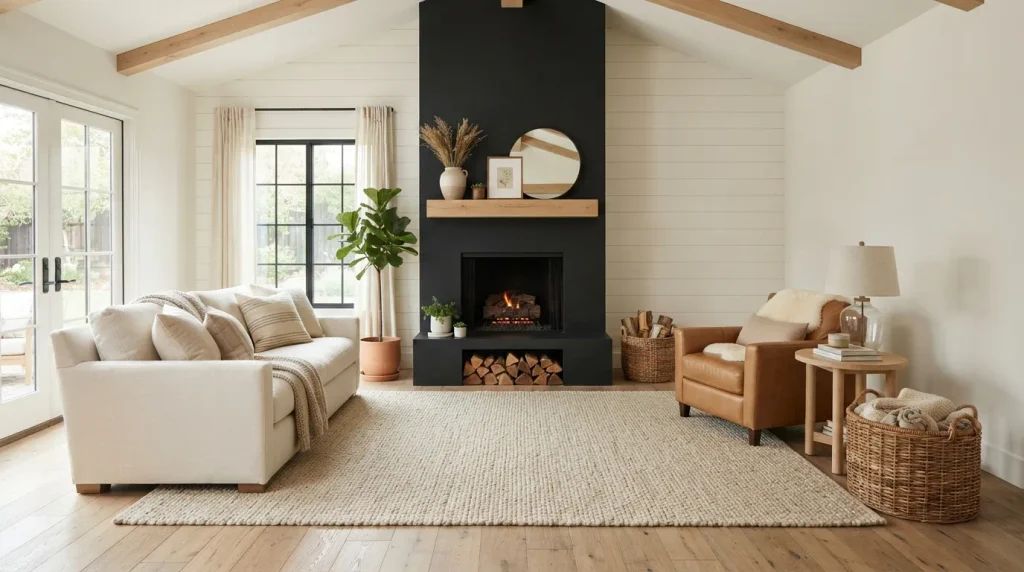
- A black fireplace creates a strong focal point in a pale room.
- Matte finishes feel softer and more sophisticated than glossy surfaces.
- Light wood balances the darker architectural feature.
- Cream furniture prevents the room from feeling visually heavy.
- Repeat small black accents elsewhere for a cohesive finish.
A matte black fireplace can give a light farmhouse living room an instant architectural focal point. Against warm white or creamy walls, the dark surround creates crisp contrast while allowing lighter furniture and natural materials to stand out. Keep the shape simple and avoid excessive decorative trim if you want a contemporary finish. A light oak mantel can soften the darker color and connect the fireplace with the room’s other wood elements. The result is dramatic enough to catch attention but still comfortable enough for an everyday family living space.
Balance the fireplace by repeating small black details elsewhere in the room. A slim floor lamp, picture frame, curtain rod, or table base can create visual continuity without making the space feel overly dark. Keep larger upholstery pieces in cream, oatmeal, or warm beige to maintain brightness. Natural textures such as jute, linen, leather, and woven fibers can further soften the contrast. In a cozy modern farmhouse living room, this combination creates a polished focal point while preserving the relaxed atmosphere associated with farmhouse interiors. It is especially effective when the room needs stronger definition without adding busy patterns.
19. Round Coffee Table
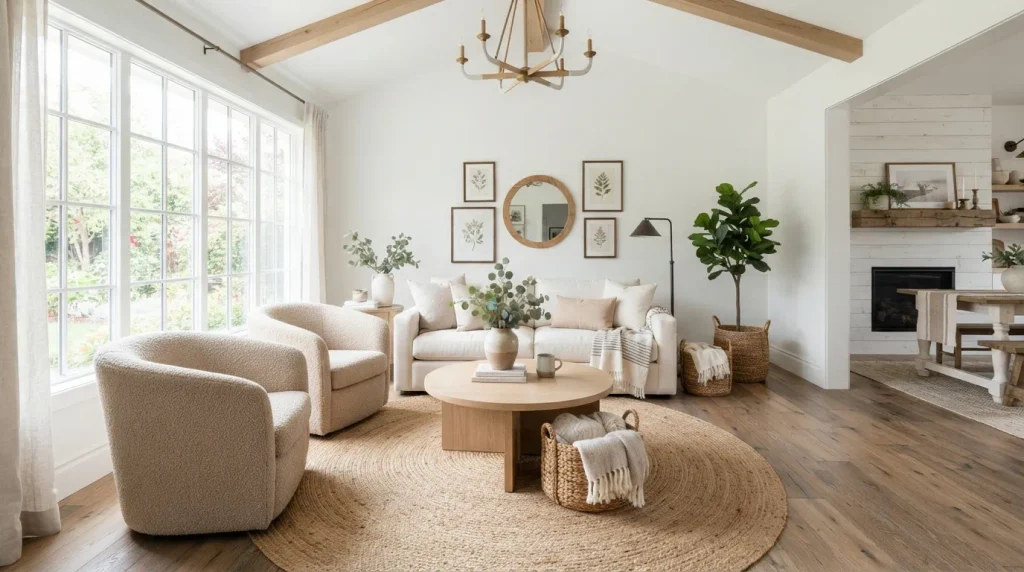
- A round table softens rooms filled with straight furniture lines.
- Curved edges improve movement around the seating area.
- Light oak keeps the room warm and visually open.
- A rounded shape works especially well in smaller layouts.
- Simple tabletop styling preserves useful everyday surface space.
A round coffee table can make a farmhouse seating area feel softer and easier to move around. Its curved shape breaks up the straight lines of sofas, cabinets, and rectangular rugs while creating a more relaxed visual rhythm. Choose light oak, reclaimed wood, or another warm natural finish to keep the table connected with the rest of the room. A round design is also practical when several people regularly move through the space because there are no sharp corners to navigate. I’ve noticed this shape works especially well in compact living rooms where every inch of walking space matters.
Keep the tabletop simple with a shallow ceramic bowl, a small vase, or one neatly stacked book. Avoid placing too many accessories in the center because the open surface is useful for drinks, games, and everyday items. A round table looks particularly balanced when paired with a large rectangular rug underneath, creating a pleasing contrast between shapes. Surround it with soft neutral seating and natural textures such as linen, jute, and woven fibers. This combination gives the room a polished yet comfortable appearance while making the layout feel less rigid and more naturally connected.
20. Open Floor Layout
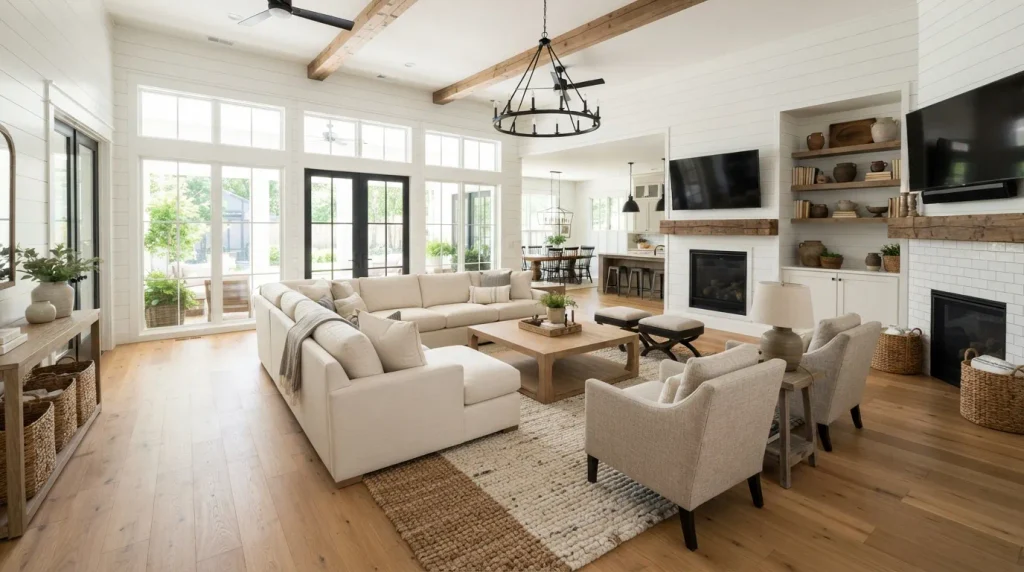
- Open layouts make smaller homes feel more spacious and connected.
- Clear pathways help the room function better every day.
- A large rug visually defines the seating zone.
- Furniture placement can separate areas without adding walls.
- Keeping accessories minimal makes the space feel more breathable.
An open floor plan can make a farmhouse living room feel larger, brighter, and more connected to the rest of the home. Instead of pushing every piece of furniture against the walls, create a defined seating zone with a large rug and carefully positioned sofa and chairs. Leave clear pathways between the living area, kitchen, and other frequently used spaces. This approach makes the room easier to navigate while giving the furniture a stronger sense of purpose. In my experience, floating key pieces slightly away from the walls often makes an open room feel more intentional.
Use the rug as a visual boundary rather than relying on physical dividers. Place the front legs of the main seating pieces on the rug so the arrangement reads as one connected area. A coffee table should sit comfortably within reach without blocking walking paths. Keep taller furniture toward the edges and maintain open sightlines wherever possible. Light walls, pale wood, and neutral upholstery will reinforce the spacious feeling. Add a few woven baskets and simple plants for texture, but resist filling every empty area. The result feels organized, airy, and comfortable without losing warmth.
21. Farmhouse Gallery Wall
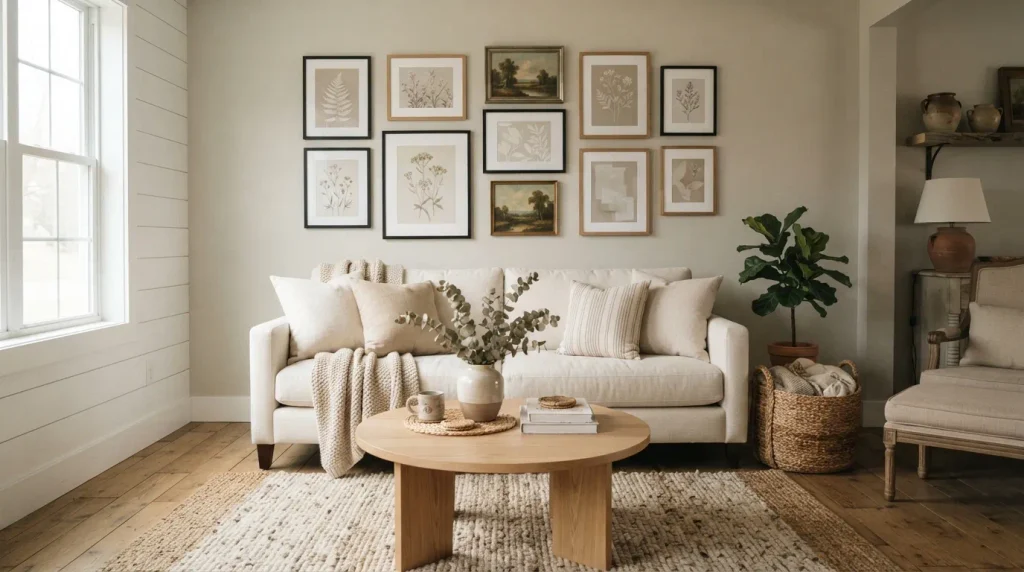
- A gallery wall gives an empty wall more personality.
- Mixing frame finishes creates a collected farmhouse appearance.
- Botanical and landscape prints complement natural materials.
- Keeping artwork within a muted palette prevents visual chaos.
- Consistent spacing makes mixed pieces look intentionally arranged.
A curated gallery wall can turn a plain living room wall into a meaningful focal point without overwhelming the rest of the design. Choose a mix of botanical prints, quiet landscapes, line drawings, or vintage-style artwork in a restrained palette of cream, beige, charcoal, olive, and muted brown. Mix simple black frames with natural wood for subtle variation. Before hanging anything, arrange the pieces on the floor to test spacing and proportions. This small planning step can save time and helps create a composition that feels balanced above the sofa or console.
The most successful farmhouse gallery walls usually have some visual connection between the pieces, even when they are not part of one matching set. Repeat one or two colors throughout the artwork, then vary the frame sizes to keep the arrangement interesting. Keep the outer edges relatively balanced and leave enough breathing room around the collection. I’ve noticed that slightly imperfect combinations often feel warmer than perfectly matched sets because they create a collected-over-time appearance. Pair the gallery wall with simple furniture and natural textures so the artwork adds personality without competing with the room’s overall calm atmosphere.
22. Cozy Window Seat
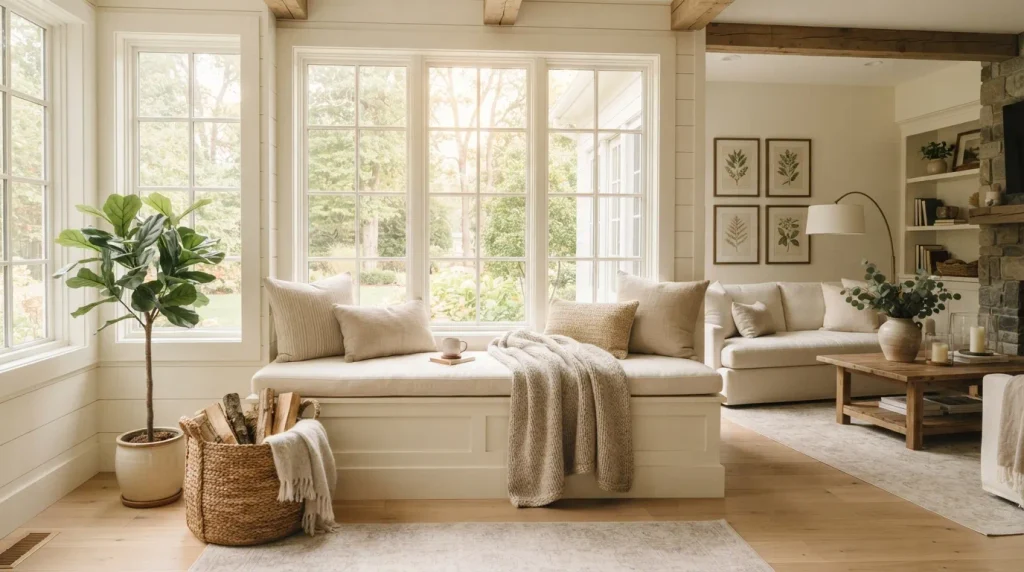
- A window seat turns unused space into practical seating.
- Layered cushions make the area comfortable for relaxing.
- Natural daylight makes neutral fabrics look especially warm.
- A woven basket provides convenient blanket storage nearby.
- Simple styling keeps the window area bright and uncluttered.
A window seat can transform an overlooked section of the living room into one of its most useful and inviting features. If you have a wide window or recessed area, add a cushioned bench with washable linen or cotton covers, then layer it with two or three soft pillows. Natural daylight will make the neutral fabrics feel especially bright and welcoming. A small basket beside the seat can hold blankets or books, keeping everything within reach. In my experience, these tucked-away spots often become favorite places for reading, morning coffee, or quiet downtime.
Keep the design simple so the window remains the main source of visual interest. Choose warm white, oatmeal, beige, or muted sage textiles that complement the rest of the seating area. If the room already contains plenty of furniture, use the window seat as a lighter alternative to another bulky chair. Add a narrow cushion for back support and avoid overfilling the bench with decorative pillows. Light wood flooring, woven textures, and subtle greenery can reinforce the natural palette. The result is a practical little retreat that makes the entire living room feel more thoughtful and complete.
23. Minimal Farmhouse Styling
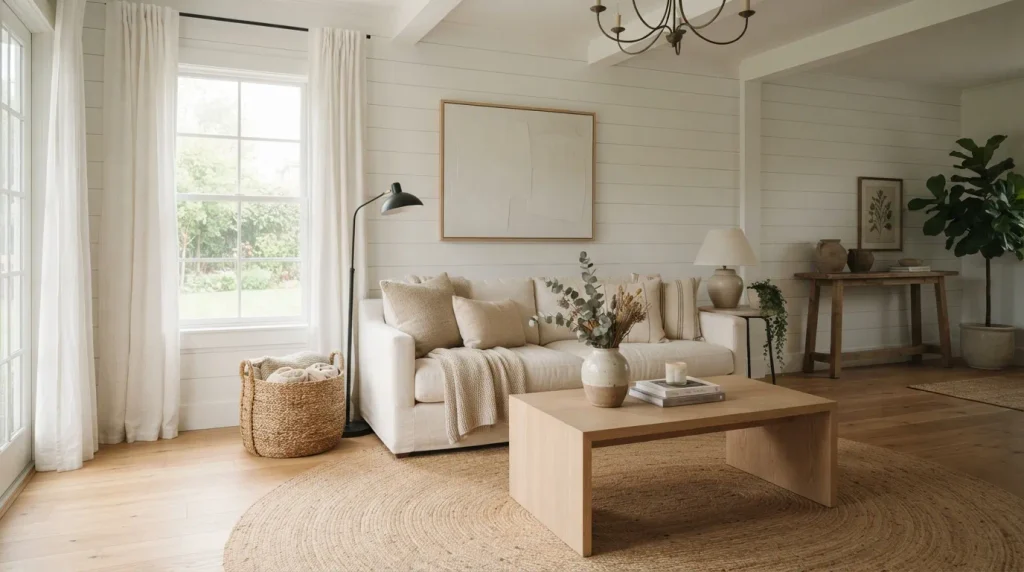
- Fewer accessories make the room feel calmer and more spacious.
- Natural materials provide interest without excessive decoration.
- A restrained palette keeps the furniture visually connected.
- Open surfaces are easier to clean and maintain.
- Simple styling lets architectural features and textures stand out.
Sometimes the most effective farmhouse room is the one that knows when to stop. Instead of filling shelves, tables, and corners with accessories, choose a few useful pieces with strong texture and simple shapes. A cream sofa, pale oak table, woven basket, ceramic vase, and one piece of artwork can be enough to create a complete look. This restrained approach keeps the room feeling bright and breathable while allowing natural materials to become the visual focus. A cozy modern farmhouse living room does not need layers of decoration to feel warm; thoughtful proportions and tactile details often do more.
Start by removing anything that does not serve a practical or visual purpose, then add back only the pieces that genuinely improve the space. Keep colors within a small range of warm whites, beige, natural wood, soft brown, and muted greenery. Vary textures instead of adding more objects: linen, jute, ceramic, leather, and woven fibers can create plenty of depth. I’ve noticed that this approach is also easier to maintain because surfaces stay usable and cleaning takes less time. The finished room feels calm, functional, welcoming, and effortlessly modern without losing its farmhouse character.
Conclusion
Creating a warm farmhouse-inspired living room does not require replacing everything you own. Start with one simple change, such as softer textiles, natural wood, better lighting, or a thoughtfully styled corner. These details can turn an ordinary space into a room that feels calm, welcoming, and personal. A cozy modern farmhouse living room works best when comfort and character come together naturally. I’ve seen how small changes like these can completely transform a space without making it feel overly decorated. Save this post on Pinterest for your next decorating project, try your favorite ideas at home, and share it with someone who needs fresh inspiration.