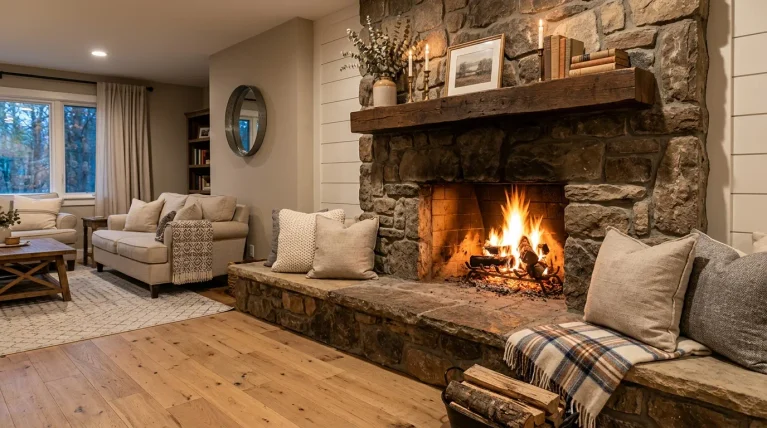
A fireplace can completely change the feeling of a living room. The right design adds warmth, character, and a beautiful focal point without making the space feel crowded.
These modern fireplace ideas explore stylish ways to create a cozy home while keeping the overall look clean, fresh, and contemporary. From sleek black frames and textured stone surrounds to built-in shelving, wood details, and double-sided designs, there is inspiration for different layouts, styles, and room sizes. Whether you are renovating an existing fireplace or planning a new feature wall, these ideas can help you choose finishes and layouts that work in real homes. In my experience, combining warm textures with simple architectural lines creates a space that feels both polished and comfortable.
1. Linear Fireplace Wall
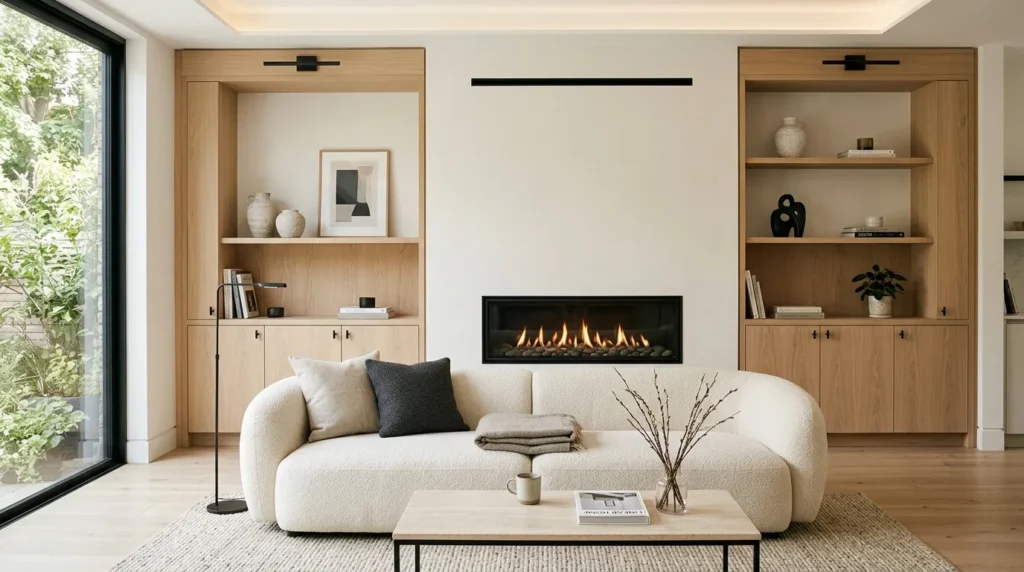
- A long horizontal firebox creates a clean focal point.
- Built-in cabinetry keeps the surrounding wall organized.
- Neutral materials make the room feel warm rather than stark.
- Recessed lighting adds a soft evening glow.
A long, horizontal fireplace can instantly make a living room feel more polished and spacious. The low profile draws the eye across the wall instead of making the ceiling feel visually crowded. Pair the firebox with a smooth plaster or painted wall, then add pale oak cabinetry on either side for warmth and storage. A cream sofa, textured rug, and simple black accents complete the look without competing for attention. In my experience, this arrangement works especially well in open-plan rooms because its wide shape creates a strong focal point without overwhelming nearby furniture.
For the most balanced result, center the firebox carefully and keep the surrounding finishes simple. A narrow mantel is often unnecessary because the horizontal proportions already provide visual interest. Add recessed lighting above the cabinetry or subtle wall lights to highlight the textures after sunset. If the room has limited natural light, choose warm whites and light wood rather than heavy dark finishes. The result is a cozy but uncluttered setting that feels contemporary throughout the year. It also gives you a flexible backdrop for seasonal accessories, artwork, or simple greenery without requiring a complete room redesign.
2. Stone Surround
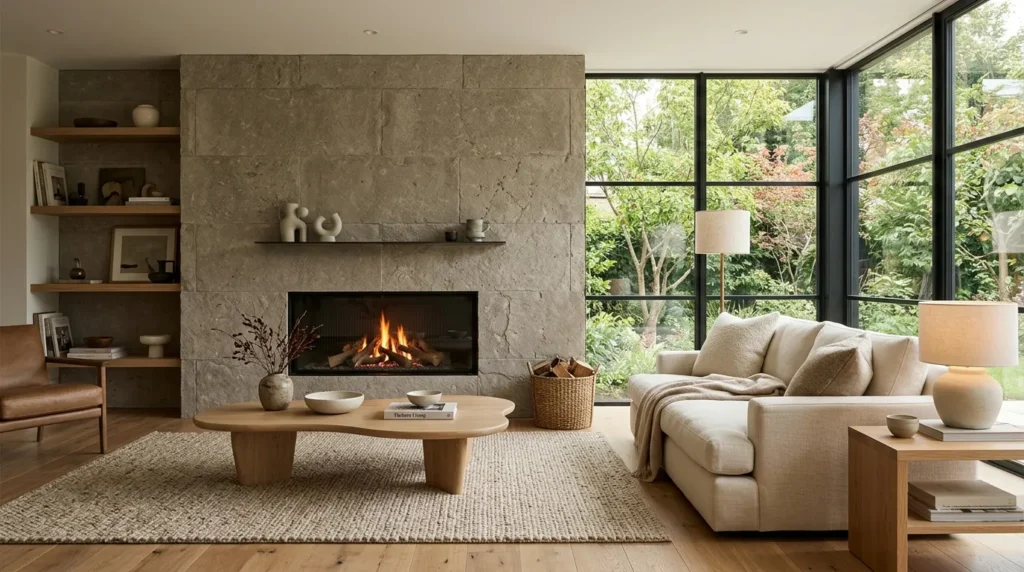
- Large stone slabs create an impressive architectural feature.
- Warm gray tones soften the contemporary design.
- Natural wood balances the harder fireplace surface.
- Minimal accessories let the stone remain the focal point.
Stone can bring instant depth and character to a contemporary fireplace without making the room feel traditional. Large-format limestone, travertine, or porcelain slabs create fewer visual breaks, giving the surround a streamlined architectural appearance. Choose warm gray, taupe, or creamy stone to keep the space inviting. Pair it with natural oak flooring, a low-profile sofa, and a simple textured rug. The combination of organic stone and clean furniture creates contrast that feels sophisticated but comfortable. This approach is particularly effective when you want the fireplace wall to become the room’s strongest design feature.
Pay close attention to the stone’s undertones before choosing other finishes. A beige stone can look beautifully warm beside oak, while cooler gray stone pairs better with charcoal or muted black accents. I’ve noticed that large-format surfaces are especially useful in smaller rooms because fewer grout lines create a calmer visual field. Keep decorations around the fireplace restrained so the natural pattern remains visible. Add soft lighting from nearby lamps or recessed fixtures to emphasize the stone texture at night. With thoughtful material pairing, the fireplace becomes both a practical heat source and a lasting architectural centerpiece.
3. Floating Fireplace
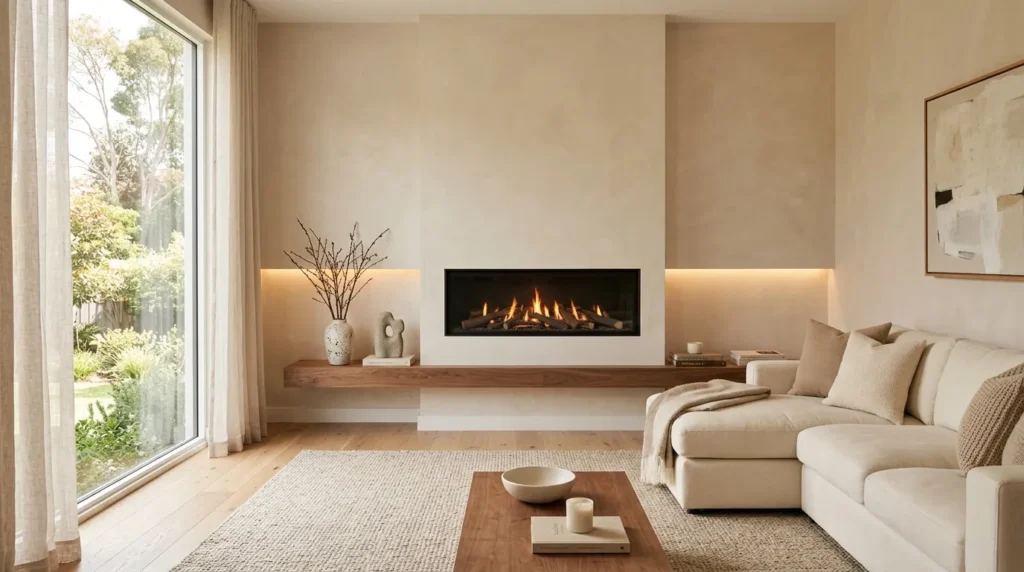
- A wall-mounted design creates an airy appearance.
- Open floor space makes the room feel larger.
- Walnut introduces warmth against a pale wall.
- Hidden lighting emphasizes the floating effect.
A floating fireplace creates an airy, architectural look by keeping the floor underneath visually open. Mount a sleek firebox several inches above the floor and place a slim walnut or oak console beneath it for practical storage. The open gap makes the fireplace appear lighter while giving the room a more spacious feeling. Pair the arrangement with a low sectional, soft rug, and understated accessories. This setup works particularly well in contemporary apartments or compact living rooms where bulky furniture can quickly make the space feel crowded.
The key is maintaining consistent horizontal lines throughout the wall. Keep the console slightly narrower than the fireplace so the firebox remains the dominant element, and avoid filling the open area with too many decorative pieces. In my experience, leaving some negative space beneath a wall-mounted unit makes a noticeable difference in how clean the room feels. Warm LED lighting can emphasize the floating effect after dark, while pale walls and natural wood keep the overall palette welcoming. The finished space feels modern, functional, and cozy without sacrificing the visual openness that makes contemporary interiors appealing.
4. Black Marble Surround
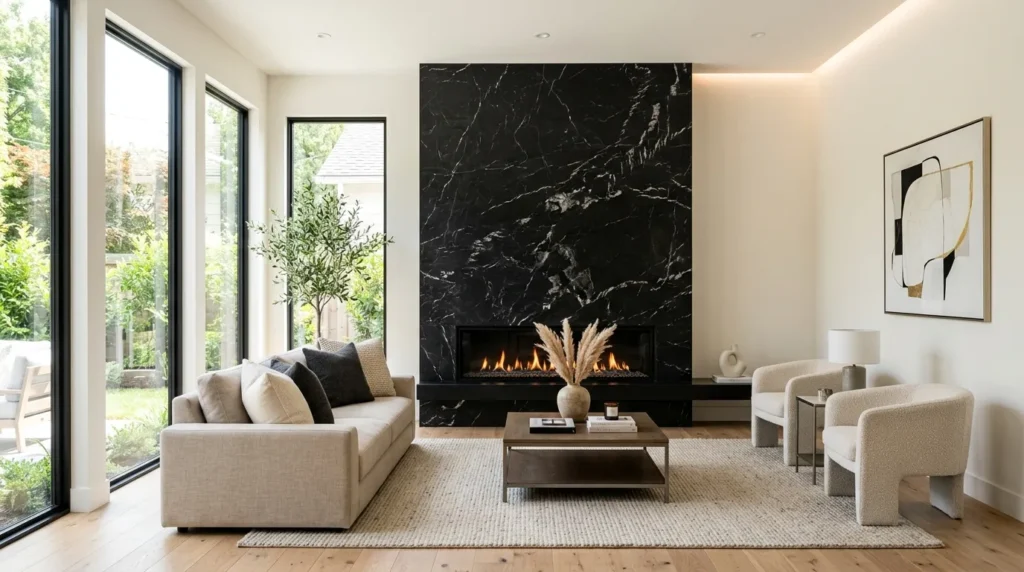
- Black marble creates a bold architectural focal point.
- White veining adds natural visual movement.
- Cream upholstery softens the darker fireplace finish.
- Brass details provide a subtle polished accent.
A black marble fireplace can give a living room instant drama while still feeling refined and welcoming. Choose a slab with soft white or gray veining and let it extend vertically around the firebox for a strong architectural effect. Balance the darker surface with cream upholstery, warm wood, and a neutral rug. This contrast prevents the room from feeling too heavy. The polished stone catches natural and artificial light beautifully, creating subtle reflections that change throughout the day. It is an excellent choice when you want one statement feature to anchor an otherwise understated contemporary interior.
Keep the rest of the room visually calm so the marble remains the star. A walnut coffee table or oak flooring can introduce warmth, while brushed brass accessories add just enough shine without competing with the stone. I’ve noticed that darker fireplace surrounds look especially balanced when paired with several lighter textures nearby, such as boucle, linen, or wool. Avoid using too many glossy finishes because they can make the space feel cold. Instead, layer matte fabrics and soft lighting around the seating area to create a comfortable atmosphere with a distinctly sophisticated edge.
5. Wood Slat Wall
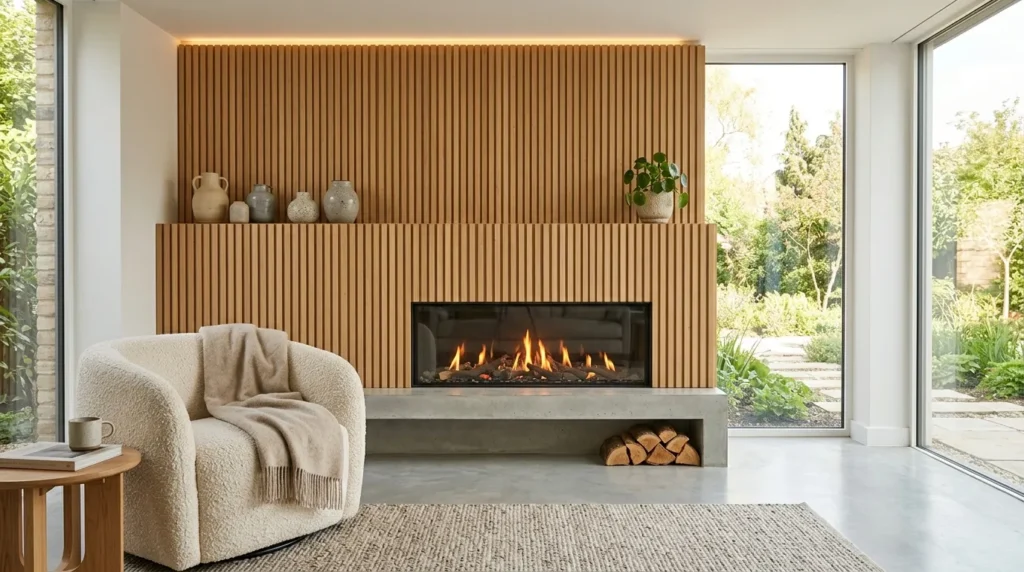
- Vertical wood slats add warmth and architectural texture.
- The narrow spacing creates subtle visual rhythm.
- Black accents sharpen the natural wood tones.
- Soft furnishings keep the room comfortable and inviting.
Wood slats can completely change a plain fireplace wall by adding warmth, rhythm, and architectural interest. Install vertical oak or walnut slats around the firebox to create a textured backdrop without relying on heavy decoration. The repeated lines naturally draw the eye upward, which can make the ceiling appear taller. Pair the wall with a cream sectional, neutral rug, and simple black lighting fixtures for balanced contrast. This treatment works especially well in homes where a painted fireplace wall feels too flat but a full stone surround would feel too heavy.
Choose slat spacing carefully because very tight spacing creates a busier appearance, while wider gaps produce a lighter, more relaxed effect. I’ve seen this work well in open-plan spaces because the wood wall can visually define the seating area without creating a physical barrier. Keep nearby furniture streamlined and let the natural grain provide most of the decorative detail. Warm recessed lighting can emphasize the vertical texture after sunset. The result is a cozy contemporary setting that combines clean architectural lines with the natural character of timber.
Also Read: 22 Year Round Mantle Decor Ideas for Every Season
6. Concrete Fireplace
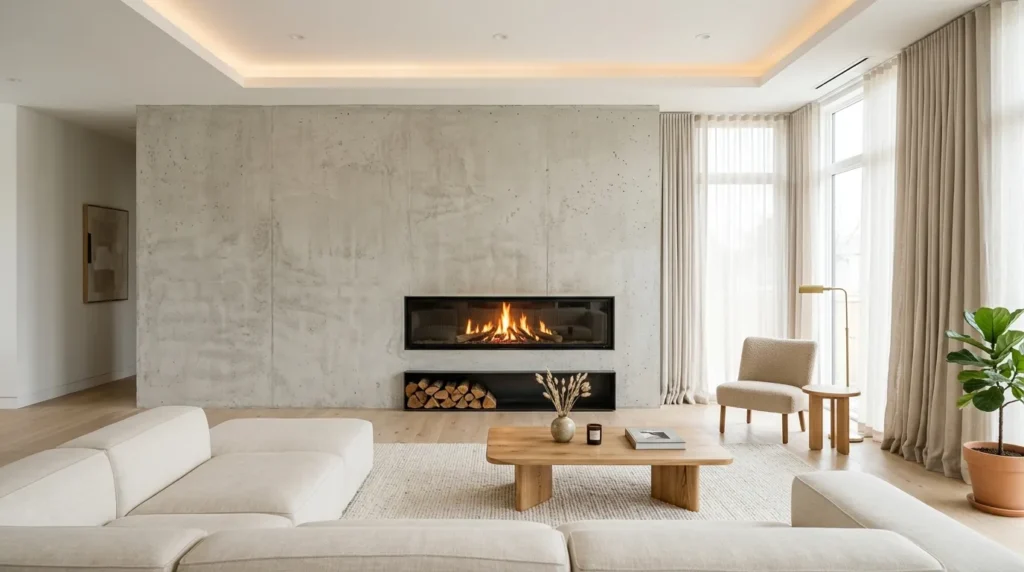
- Smooth concrete gives the fireplace an architectural presence.
- Warm gray tones create a calm neutral foundation.
- Light wood prevents the space from feeling industrial.
- Simple decor keeps the finish visually prominent.
A concrete fireplace creates a strong contemporary statement with very little decorative effort. Its smooth gray surface provides natural texture and a slightly architectural character, making it ideal for minimalist or modern interiors. Pair the surround with light oak flooring, an ivory sofa, and a textured cream rug to soften the harder material. Black metal accents can add definition without introducing unnecessary color. The beauty of this approach is its simplicity: the fireplace becomes the focal point through material and proportion rather than layers of accessories.
For a warmer result, choose concrete with beige or taupe undertones instead of a cold blue-gray finish. I’ve noticed that natural textiles make a significant difference when working with concrete because they balance its solid appearance with softness. Add linen cushions, wool throws, or a woven rug around the seating area. Keep decorative objects limited to a few sculptural pieces so the wall remains clean. Good lighting is equally important; warm recessed lights or floor lamps can bring out subtle variations in the concrete surface and make the room feel inviting after dark.
7. Built-In Fireplace Nook
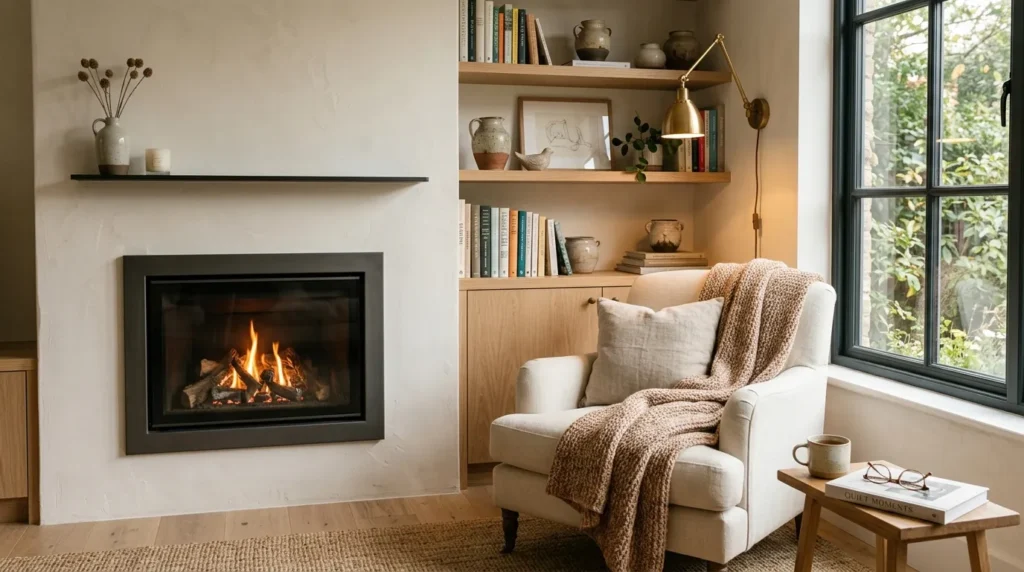
- Built-ins turn unused wall space into useful storage.
- Open shelving provides room for simple decorative accents.
- Closed cabinets hide everyday clutter.
- Warm wood keeps the fireplace wall inviting.
A built-in fireplace nook can make an ordinary living room feel intentionally designed from floor to ceiling. Recess the firebox into a custom wall and surround it with open shelves and closed cabinets for a practical combination of display and storage. Pale oak brings warmth, while a slim black firebox adds contrast. Keep the shelves lightly styled with ceramics, books, greenery, and a few framed pieces. This setup works especially well in family rooms because it gives everyday items a dedicated place while keeping the main seating area visually organized.
Think about storage needs before finalizing the built-in dimensions. Deeper lower cabinets can hide electronics, blankets, and games, while narrower shelves are ideal for decorative objects. In my experience, leaving some shelves partially empty makes built-ins feel much more sophisticated than filling every available space. Use warm integrated lighting to highlight favorite pieces and create a soft glow around the fireplace in the evening. Choose cabinet hardware that matches other metal finishes in the room for continuity. The finished wall combines comfort, organization, and architectural character without making the room feel overly decorated.
8. Fluted Fireplace Wall
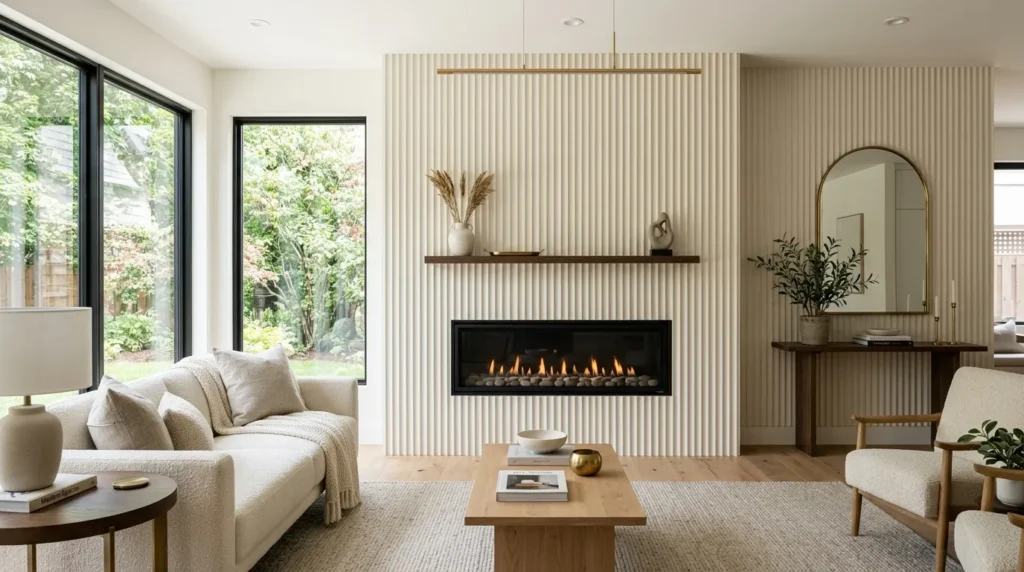
- Fluted panels introduce texture without visual clutter.
- Vertical lines create a taller-looking fireplace wall.
- Curved furniture softens the structured surface.
- Warm ivory keeps the room bright and calm.
Fluted surfaces give a fireplace wall subtle dimension while maintaining a clean contemporary appearance. Use vertical fluted panels in warm ivory, soft beige, or light taupe around a slim firebox to create a refined architectural backdrop. The repeated grooves catch light and shadow throughout the day, adding movement without bold patterns. Pair the wall with a curved cream sofa, pale oak flooring, and a textured neutral rug. This combination feels sophisticated but comfortable, making it suitable for both relaxed family rooms and more polished entertaining spaces.
The scale of the fluting matters because overly narrow grooves can make a large wall feel busy. Choose a pattern that complements the room’s size and keep surrounding furniture relatively simple. I’ve noticed that curved pieces work beautifully with vertical textures because their softer silhouettes prevent the room from becoming too rigid. Add warm recessed lighting to emphasize the grooves after sunset, especially if the wall receives limited daylight. Avoid covering too much of the surface with artwork or accessories. Let the texture itself provide the visual interest and allow the fireplace to remain the natural focal point.
9. Double-Sided Fireplace
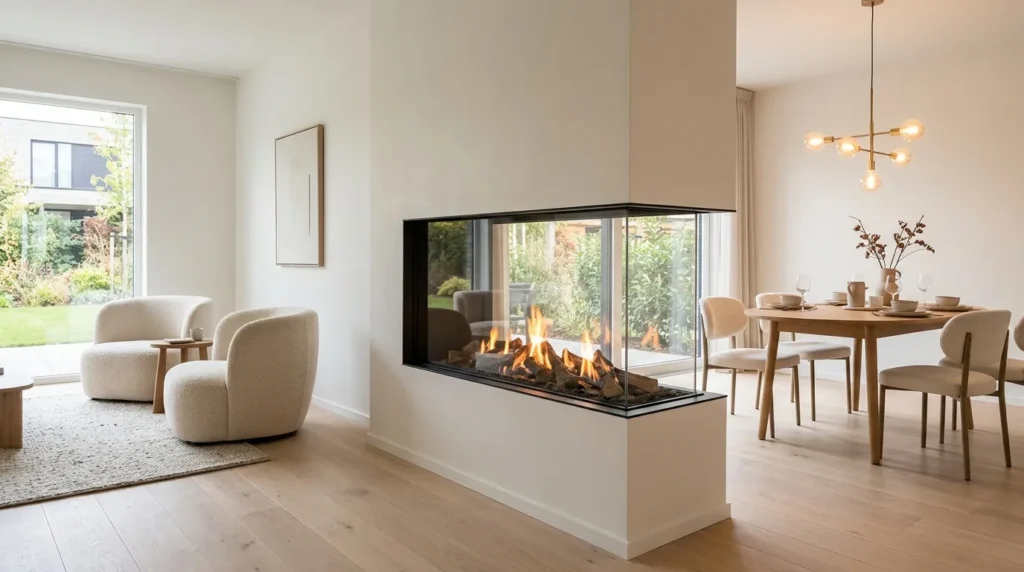
- Two-sided flames connect separate living zones.
- Open glass creates visual continuity between spaces.
- A shared fireplace saves wall space.
- Neutral finishes keep the open plan cohesive.
A double-sided fireplace can connect two areas while giving each space a distinct sense of purpose. Position the firebox within a partial dividing wall so the flames remain visible from both the living and dining areas. A black glass surround provides a crisp contemporary contrast against warm plaster, stone, or wood finishes. On the living-room side, pair it with a low cream sectional, while the opposite side can frame a dining table or reading area. The result creates separation without sacrificing the openness that makes modern floor plans appealing.
This arrangement works best when both sides of the fireplace are considered during the planning stage. Make sure furniture placement leaves comfortable walking paths around the divider and that the firebox remains visible from the main seating positions. In my experience, a shared fireplace can make an open room feel much more intentional because it visually links spaces that might otherwise feel disconnected. Use similar flooring and complementary neutral colors on both sides for continuity. Add layered lighting around each zone so the fireplace remains atmospheric even when the flames are not being used.
10. Curved Fireplace Wall
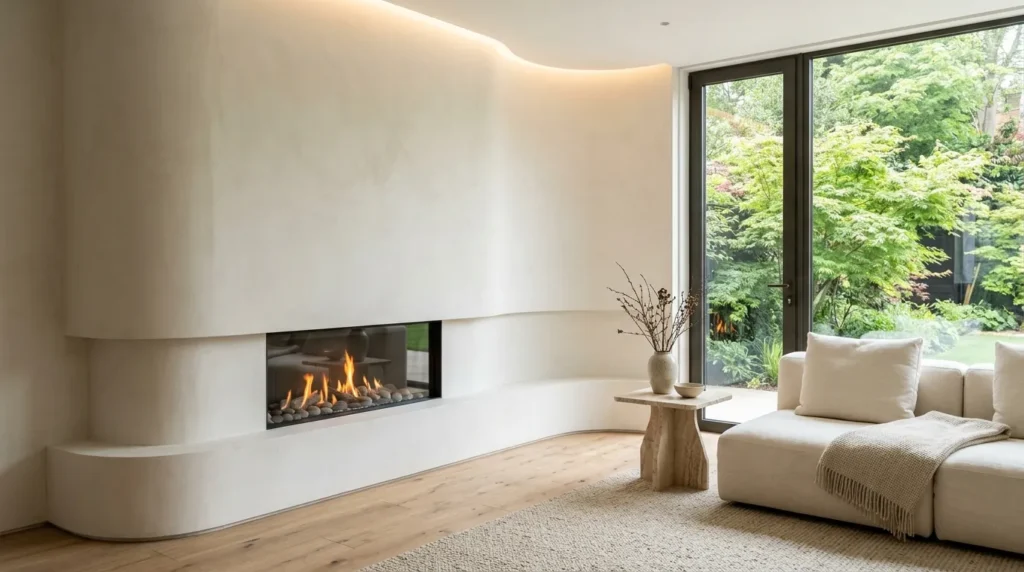
- Curved edges soften the strong lines of a fireplace.
- Plaster creates a seamless architectural finish.
- Rounded furniture reinforces the gentle silhouette.
- Warm neutrals keep the space relaxed and inviting.
A curved fireplace wall can make a contemporary room feel softer without losing its architectural impact. Instead of a sharp rectangular surround, shape the wall with a gentle curve around the firebox and finish it in smooth plaster. The rounded form works beautifully with cream upholstery, light oak flooring, and organic accessories. It also helps soften rooms filled with straight-edged furniture, creating a more balanced visual composition. This approach is especially useful when you want a statement fireplace that feels distinctive but still calm enough for everyday living.
Keep the curve relatively subtle so it complements rather than dominates the room. Choose furniture with rounded corners, curved backs, or soft silhouettes to echo the architectural shape. I’ve noticed that repeating one curved element elsewhere in the room makes the fireplace feel integrated rather than isolated. Warm ivory, beige, and natural wood finishes help maintain a peaceful palette, while recessed lighting can highlight the wall’s contours after sunset. Avoid excessive decoration around the firebox because the curved architecture already provides plenty of visual interest. The result is a cozy focal point with a polished, sculptural quality.
11. Minimalist Black Firebox
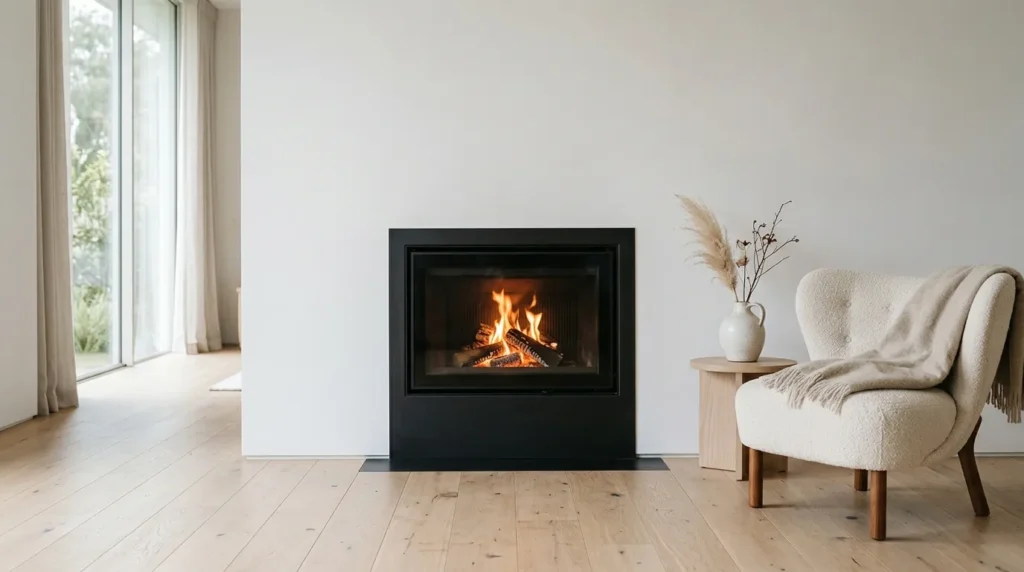
- A simple black firebox creates crisp contrast.
- The plain wall keeps attention on the flames.
- Light furniture prevents the room from feeling heavy.
- Minimal accessories preserve a clean appearance.
Sometimes the strongest fireplace design is the simplest one. A slim black firebox recessed into a smooth white or warm-neutral wall creates a crisp focal point without requiring an elaborate surround. The dark opening provides instant contrast, while the surrounding wall keeps the overall composition light and uncluttered. Pair it with a low cream sofa, pale oak flooring, and a neutral wool rug for warmth. This approach is ideal for minimalist homes where clean proportions and carefully chosen materials matter more than decorative layers.
The surrounding wall should remain as uninterrupted as possible so the firebox retains its visual impact. Keep artwork and accessories nearby to a minimum, choosing only a few pieces with simple shapes and natural finishes. I’ve noticed that this restrained approach makes a room feel larger because there are fewer competing visual elements. Add warm lighting from floor lamps or recessed fixtures to prevent the black surround from appearing too stark in the evening. The finished space feels modern and sophisticated while still offering the comfort and warmth expected from a welcoming living room.
12. Fireplace With TV
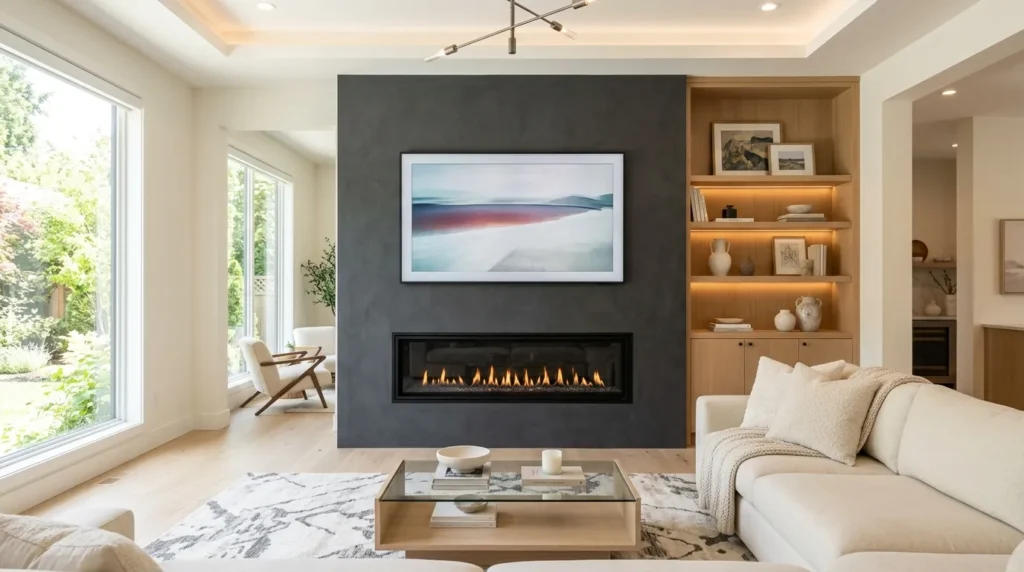
- A shared media wall keeps the room visually organized.
- The fireplace creates a natural anchor beneath the screen.
- Built-in storage hides cables and electronics.
- Neutral finishes prevent the wall from feeling too busy.
Combining a fireplace and television on one wall can create a practical focal point for everyday living. A slim linear firebox positioned beneath a wall-mounted screen gives the arrangement a clear vertical hierarchy while keeping furniture placement simple. Surround the components with warm plaster, pale oak cabinetry, or smooth stone for a cohesive finish. Closed storage can conceal gaming equipment, remotes, and cables, while open shelving provides limited space for decorative pieces. This setup works especially well when the living room needs to support relaxing, entertaining, and media viewing without multiple competing focal points.
Pay attention to the proportions between the television, firebox, and surrounding cabinetry. The screen should not feel crowded, while the fireplace should remain visually substantial enough to balance it. In my experience, a wide horizontal firebox usually creates a more harmonious composition beneath a modern television than a narrow traditional fireplace. Keep the finishes restrained and use cable management during installation so the wall remains clean. Add warm ambient lighting around the seating area rather than directly behind the screen. The result is a streamlined entertainment wall that combines technology, comfort, and contemporary architectural style.
13. Vertical Tile Surround
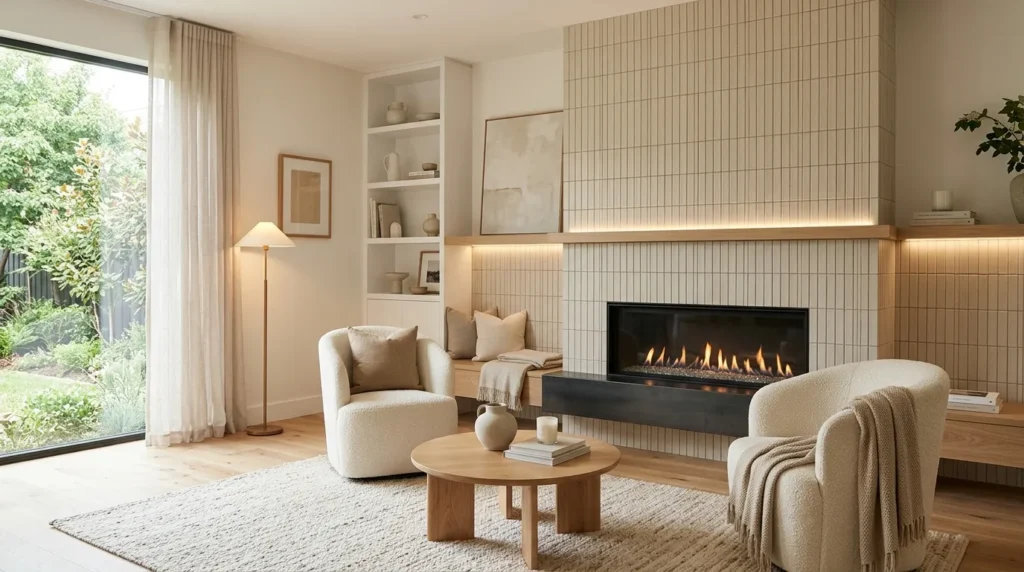
- Vertical tiles make the fireplace feel taller.
- Slim lines add texture without overwhelming the room.
- Ivory tones keep the space bright and warm.
- Natural wood balances the structured surface.
A vertical tile surround can give a fireplace more height and visual presence while keeping the overall design clean. Choose slim rectangular tiles in ivory, warm white, or soft beige and arrange them vertically around the firebox. The repeated lines naturally draw the eye upward, making the ceiling feel higher. Pair the surround with pale oak flooring, cream upholstery, and a textured neutral rug for warmth. This approach works particularly well when a room has a lower ceiling or a fireplace that currently feels visually short.
Tile selection makes a major difference in the finished effect. Matte or lightly textured surfaces usually create a softer appearance than highly glossy tiles, especially in rooms with plenty of natural light. I’ve noticed that vertical tile patterns look most balanced when the rest of the wall remains relatively simple. Keep accessories minimal and allow the lines to provide the decorative detail. Warm recessed lighting can emphasize the tile texture in the evening, while natural wood and woven fabrics prevent the room from feeling overly structured. The finished fireplace feels taller, brighter, and more architectural.
14. Warm Wood Mantel
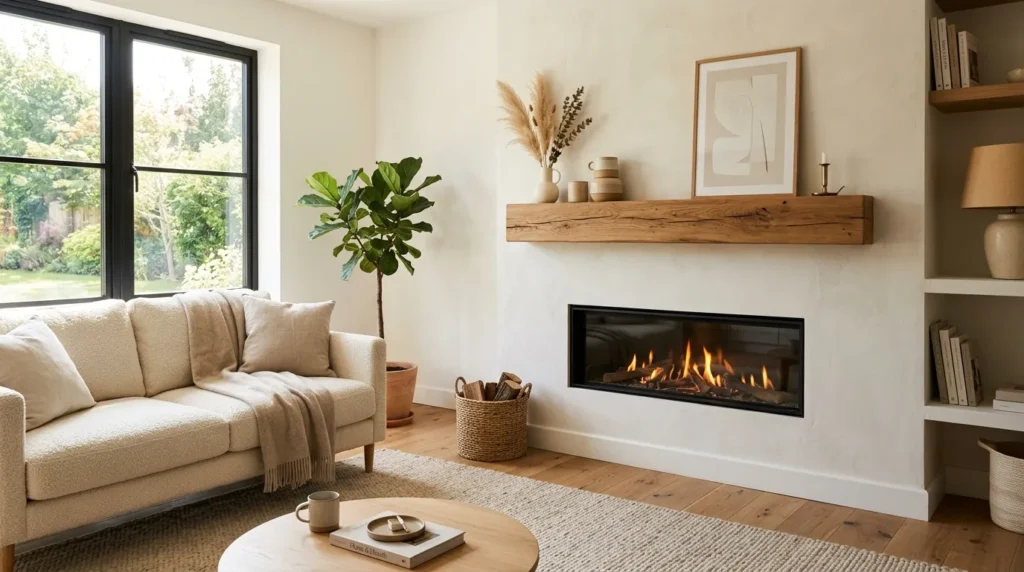
- A wood mantel adds warmth to a sleek fireplace.
- Cream plaster keeps the surround visually light.
- Natural grain introduces organic character.
- Simple styling prevents the mantel from becoming cluttered.
A warm wood mantel can soften a sleek fireplace and bring natural character into a contemporary living room. Use a simple oak or walnut shelf above a smooth plaster or stone surround, keeping the profile relatively slim. The wood adds warmth against neutral walls while creating a practical surface for a few carefully selected accessories. Style it with a ceramic vase, small artwork, or subtle greenery rather than filling the entire shelf. This combination works beautifully when you want modern architecture to feel comfortable and lived-in rather than overly formal.
Choose the mantel wood according to the other timber tones already present in the room. Matching it closely with flooring or cabinetry creates continuity, while a slightly contrasting tone can add depth. In my experience, natural wood looks especially appealing beside cream plaster because both materials have warmth without competing for attention. Keep decorative objects varied in height but limited in number, leaving plenty of empty space. Add a soft rug, linen cushions, and warm lighting nearby to reinforce the cozy atmosphere. The result is a balanced fireplace design that feels contemporary, practical, and inviting.
15. Sculptural Fireplace
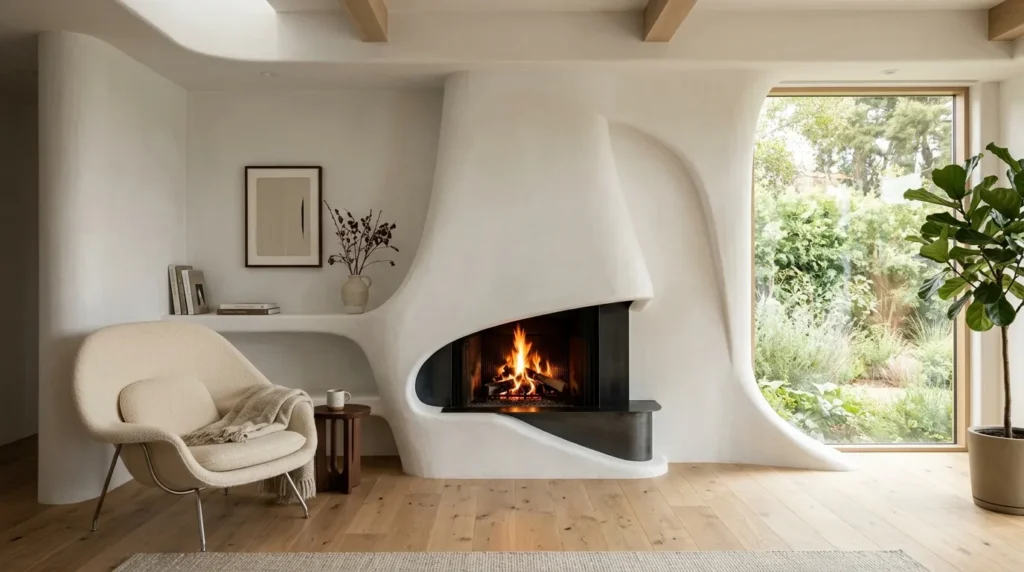
- A sculptural form makes the fireplace a statement piece.
- Rounded edges create a softer contemporary silhouette.
- Neutral finishes keep the design sophisticated.
- Minimal furniture lets the fireplace command attention.
Make the fireplace itself the artwork with a sculptural design that breaks away from traditional rectangular shapes. A freestanding or built-in model with a rounded ivory, taupe, or soft gray body can become the defining feature of the room. Pair it with curved seating, pale oak flooring, and a textured neutral rug to reinforce the organic silhouette. Because the fireplace already has a strong shape, you can keep surrounding decorations minimal. This approach works especially well in spacious rooms where a conventional wall-mounted firebox might feel too predictable.
Think carefully about the fireplace’s proportions before adding other statement pieces. I’ve noticed that sculptural designs look most effective when they have enough breathing room around them to be appreciated from different angles. Choose simple furniture with rounded edges and avoid placing tall accessories directly beside the unit. Warm lighting can emphasize the curves after dark, while natural daylight reveals subtle differences in the finish. Keep the palette restrained with ivory, beige, wood, and muted black accents. The finished space feels artistic and contemporary while remaining comfortable enough for everyday relaxation.
16. Marble Slab Fireplace
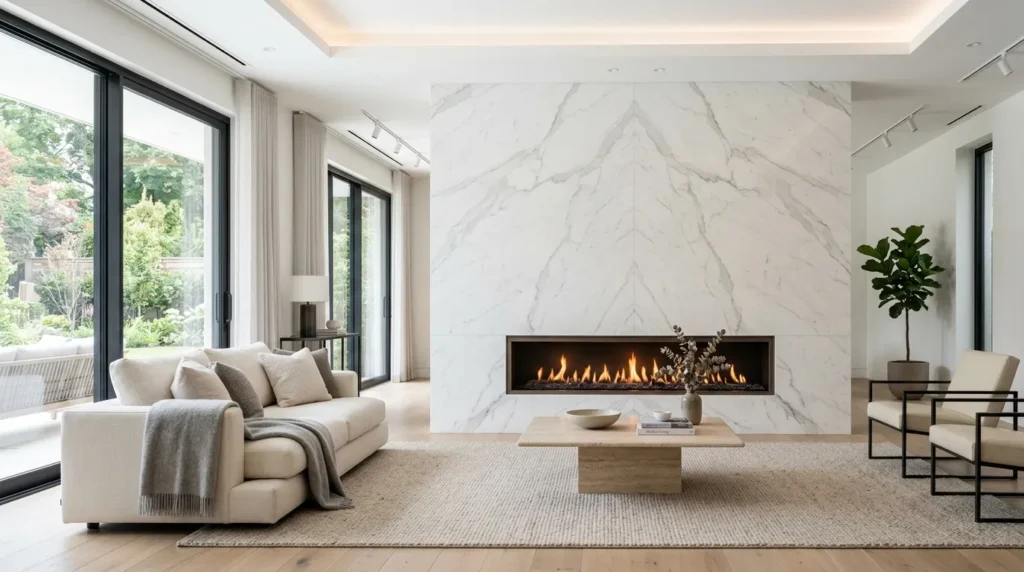
- Floor-to-ceiling marble creates strong visual height.
- Subtle veining adds natural movement.
- Cream tones keep the stone feeling warm.
- Walnut and brass introduce balanced contrast.
A floor-to-ceiling marble surround can turn a simple fireplace into a refined architectural centerpiece. Choose large slabs in creamy white, warm beige, or soft gray with subtle veining, then extend the material vertically to emphasize the room’s height. A slim black firebox provides crisp contrast against the lighter stone. Pair the surround with walnut furniture, cream upholstery, and a neutral rug for a warm contemporary palette. The uninterrupted stone surface feels luxurious while remaining visually clean, making it particularly effective in rooms that need one strong focal feature.
Before choosing the slab, view a full-size sample in the actual room’s lighting because marble undertones can change noticeably throughout the day. I’ve noticed that quieter veining generally creates a more timeless appearance, especially when the surrounding furniture already has visible texture. Keep accessories simple and allow the natural stone pattern to remain visible. Warm recessed lights can highlight the veining at night without creating harsh reflections. Add soft fabrics and natural wood nearby to balance the stone’s polished character. The result is a fireplace wall that feels sophisticated, substantial, and surprisingly inviting.
17. Inset Fireplace
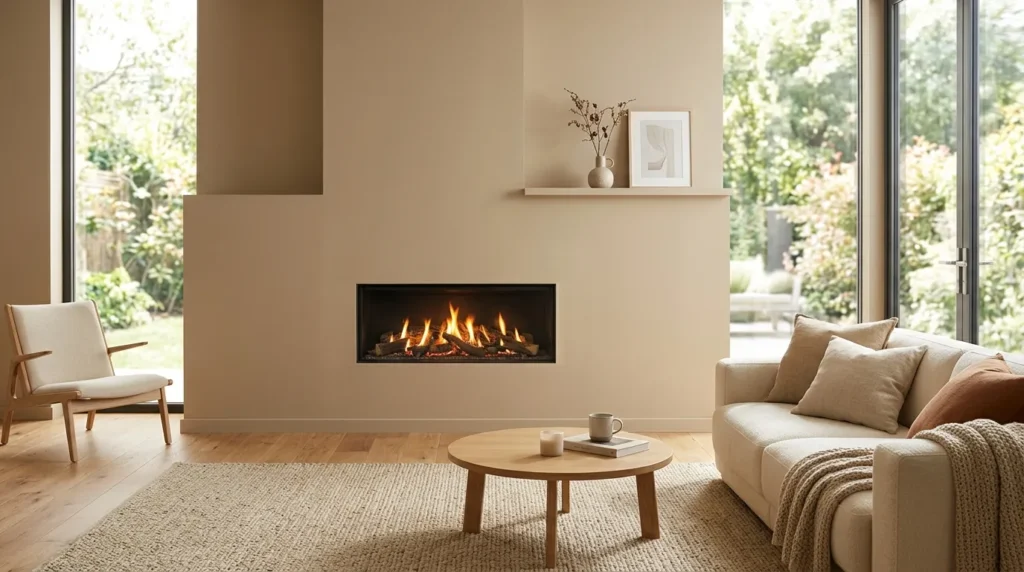
- Recessing the firebox creates a seamless wall.
- A flush design keeps the room visually uncluttered.
- Warm plaster softens the black opening.
- Integrated cabinetry adds practical storage nearby.
An inset fireplace creates one of the cleanest possible looks because the firebox sits flush within the surrounding wall. Instead of projecting into the room, the unit becomes part of the architecture, making it ideal for streamlined contemporary interiors. Use warm plaster, smooth stone, or painted drywall around the opening, then pair it with simple cabinetry if additional storage is needed. The uninterrupted surface helps the room feel organized and spacious. It is especially useful when you want the warmth of a fireplace without adding another bulky element to the floor plan.
Accurate installation and careful proportions are important because the minimal design leaves little room for visual distractions. Keep the surrounding wall simple and choose a firebox with a slim, understated frame. In my experience, warm neutral finishes work particularly well because they prevent the black opening from appearing too stark. Add soft textiles, natural wood, and layered lighting throughout the seating area to create balance. Avoid placing too many objects around the fireplace itself. With thoughtful planning, an inset design can provide warmth and architectural interest while preserving a remarkably clean and uncluttered room.
18. Corner Fireplace
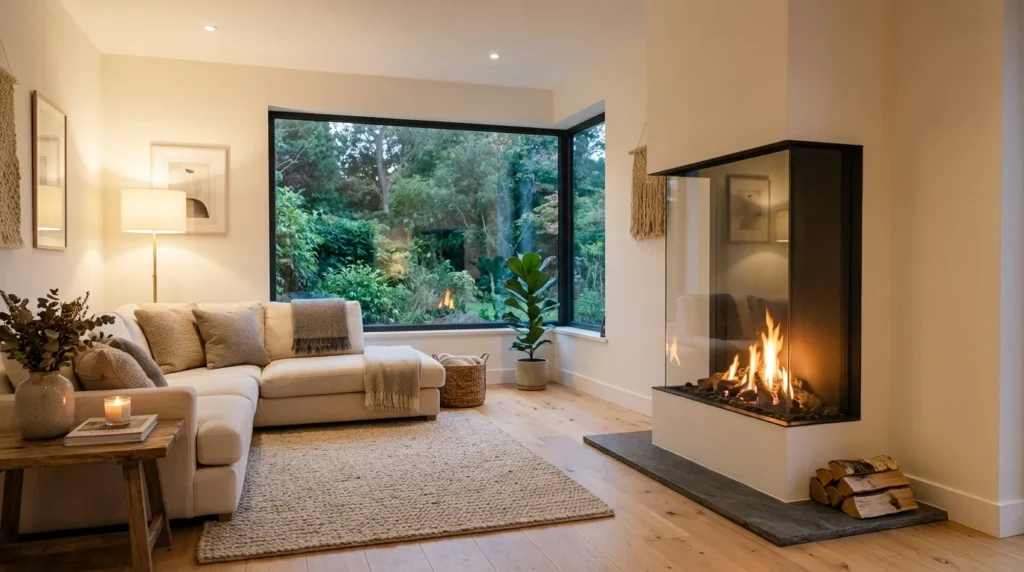
- A corner placement makes use of an awkward wall.
- Sectional seating naturally frames the fireplace.
- Light finishes keep the corner feeling open.
- Minimal styling prevents the area from becoming crowded.
A corner fireplace can transform an overlooked part of the living room into a purposeful focal point. Position a slim firebox within a softly finished corner wall and arrange an L-shaped sectional around it to create a natural conversation area. Warm ivory walls, pale oak flooring, and beige textiles keep the composition light while a walnut coffee table adds contrast. This layout is especially useful in rooms where a centered fireplace would interfere with windows, doors, or existing furniture. Instead of treating the corner as a limitation, make it an intentional architectural feature.
Furniture placement is the key to making this arrangement feel balanced. Keep the sectional close enough to visually connect with the fire but leave comfortable walking space around the seating area. I’ve noticed that corner fireplaces work particularly well when the surrounding palette remains simple because the unusual placement already creates visual interest. Add a textured rug to define the seating zone and use warm floor or table lamps for evening ambiance. A few carefully chosen accessories can complete the space without competing with the firebox. The result is a cozy, functional layout that makes better use of available room.
19. Fireplace With Shelving
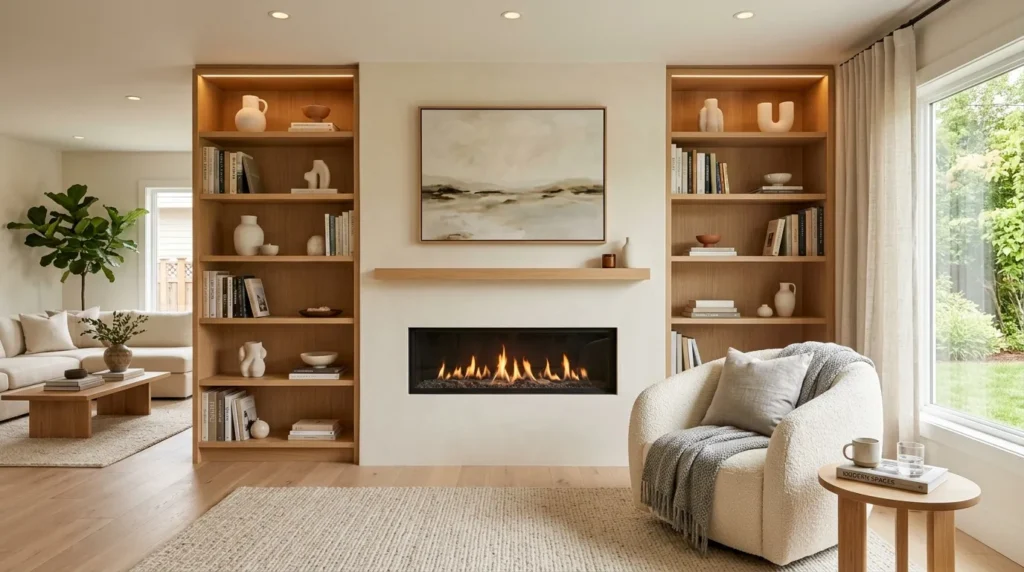
- Symmetrical shelving creates a balanced fireplace wall.
- Open shelves provide flexible display space.
- Warm wood adds contrast to the pale wall.
- Integrated lighting highlights favorite objects after dark.
Pairing a fireplace with built-in shelving creates a balanced wall that combines warmth, storage, and display space. Center the firebox between two symmetrical shelving units and use pale oak or walnut to add natural contrast. Keep the shelves lightly styled with books, ceramics, framed art, and small plants rather than filling every compartment. The fireplace becomes the central anchor while the shelving extends the composition outward. This arrangement works especially well in larger living rooms where a single fireplace wall might otherwise feel too empty or disconnected from the seating area.
For a polished appearance, repeat a few materials and colors throughout the shelving. Use cream ceramics, natural wood, muted black accents, and touches of greenery to create continuity. I’ve noticed that asymmetrical object placement can actually make symmetrical built-ins feel more relaxed and personal. Leave some negative space between decorative pieces so the shelves can breathe. Integrated warm lighting is useful for highlighting special objects and creating a cozy glow in the evening. Keep lower cabinets closed if you need hidden storage for electronics or household items. The result is organized, practical, and visually cohesive.
20. Plaster Fireplace
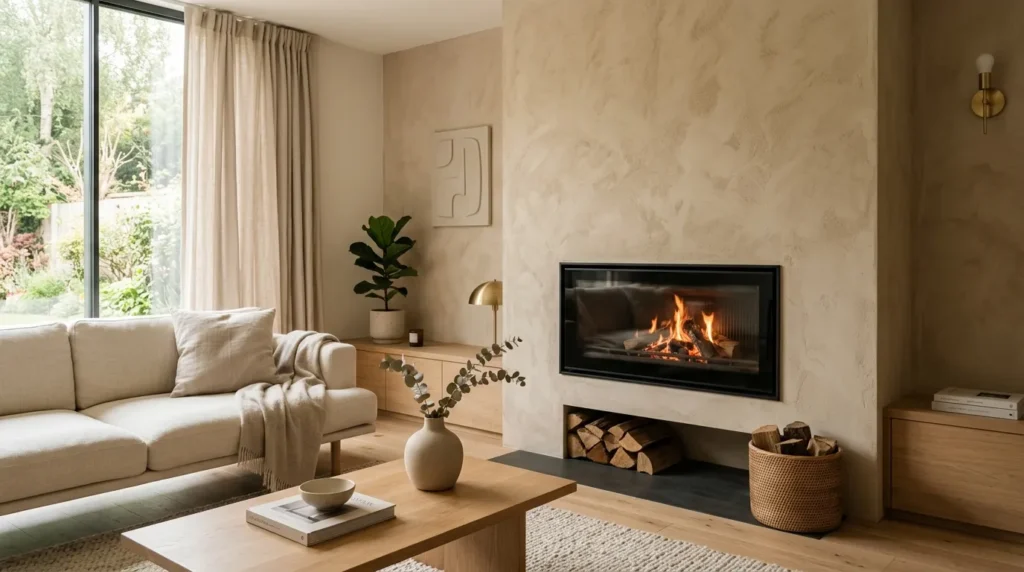
- Plaster creates a soft, seamless architectural finish.
- Warm white keeps the fireplace visually light.
- Subtle texture adds depth without strong patterns.
- Curved furniture complements the smooth surface.
A plaster fireplace brings softness and subtle texture to a contemporary living room. Cover the surround and surrounding wall in warm white, cream, or pale beige plaster to create a seamless architectural appearance. The handcrafted surface can have gentle variations that catch natural light without introducing a strong pattern. Pair it with a curved cream sofa, pale oak flooring, and a textured wool rug to reinforce the calm material palette. This approach is ideal when you want a fireplace to feel integrated into the architecture rather than added as a separate decorative feature.
Choose a durable fireplace-rated plaster finish appropriate for the installation, especially around the firebox. I’ve noticed that slightly imperfect plaster surfaces often feel more inviting than completely flat painted walls because they provide quiet visual depth. Keep accessories simple and rely on natural materials such as linen, wool, wood, and ceramic. Warm lighting can emphasize the plaster texture after sunset and make the fireplace wall feel especially cozy. Avoid combining too many competing finishes because the beauty of this design comes from its restraint. The finished room feels serene, modern, and comfortably lived-in.
21. Vertical Fireplace
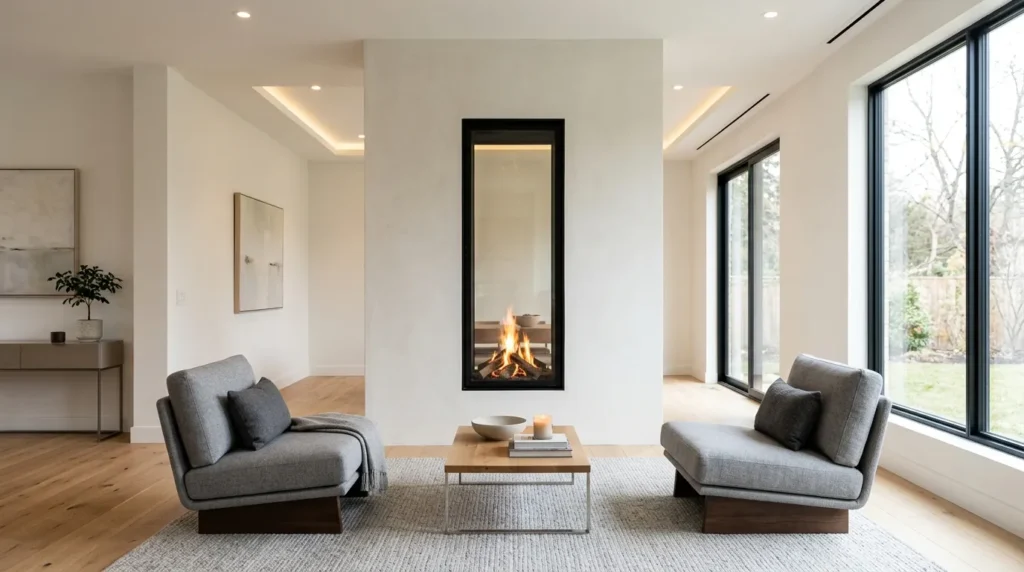
- A tall profile draws attention upward.
- Vertical proportions can emphasize high ceilings.
- Warm plaster keeps the design approachable.
- Minimal furniture balances the strong architectural shape.
A tall fireplace can create an impressive focal point when the room has generous ceiling height or a narrow vertical wall. Instead of a wide firebox, choose a slimmer design that emphasizes height and gives the wall a strong architectural presence. Surround it with warm plaster or large-format stone, then balance the vertical shape with low furniture such as a cream sofa and simple coffee table. This approach works especially well in rooms where horizontal fireplace designs would compete with wide windows or existing built-ins.
Keep the surrounding decoration restrained because the height already provides plenty of visual impact. I’ve noticed that low-profile furniture makes a tall fireplace feel even more dramatic by creating a deliberate contrast between horizontal and vertical lines. Use warm neutral finishes to prevent the wall from feeling too imposing, and add layered lighting around the seating area rather than covering the fireplace with accessories. A textured rug and natural wood details can soften the architecture. The finished room feels taller, more spacious, and visually sophisticated while maintaining the cozy atmosphere expected from a comfortable living area.
22. Floating Stone Hearth
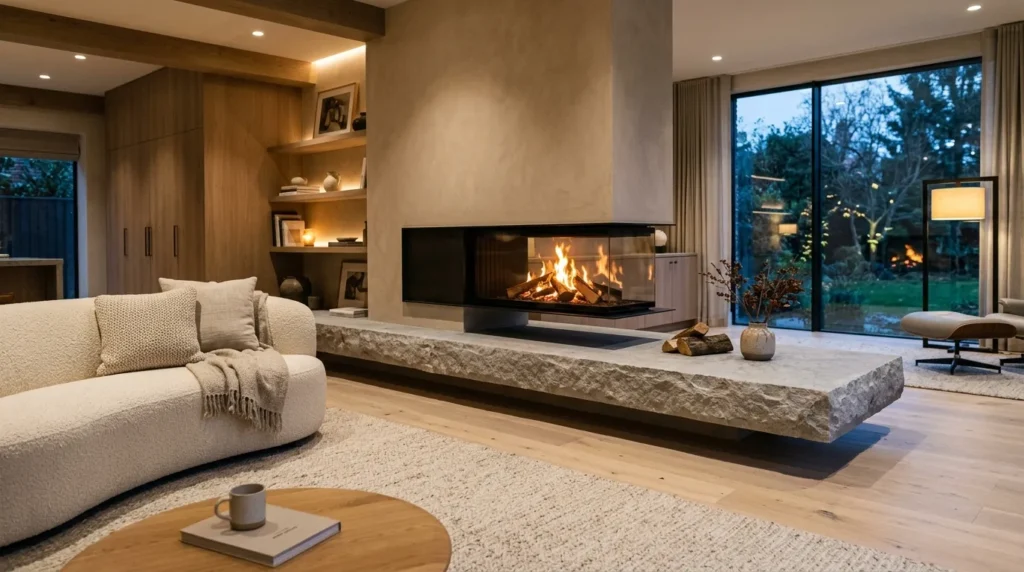
- A floating hearth adds depth without bulky construction.
- Natural stone introduces organic texture.
- Open space beneath keeps the wall visually light.
- Wood furniture adds warmth to the stone.
A floating stone hearth can add architectural character without making a fireplace feel heavy. Mount a slim limestone, travertine, or porcelain hearth beneath the firebox so it projects slightly from the wall while leaving open space underneath. The raised form creates a subtle shadow line that gives the fireplace more depth and dimension. Pair warm stone with an ivory wall, pale oak flooring, and a cream sectional for a balanced contemporary palette. This design is particularly effective when you want natural texture but prefer the clean appearance of a streamlined fireplace installation.
Choose a hearth with a simple edge profile so the stone remains modern rather than traditional. In my experience, warm limestone and travertine work especially well because their natural variations make a minimalist wall feel less sterile. Keep the area beneath the hearth open instead of using it for storage, allowing the floating effect to remain visible. Add soft lighting nearby to emphasize the shadow beneath the stone after sunset. A few woven textures and natural wood accents can complete the room. The result is understated, architectural, and cozy without unnecessary visual weight.
23. Fireplace Feature Cabinet
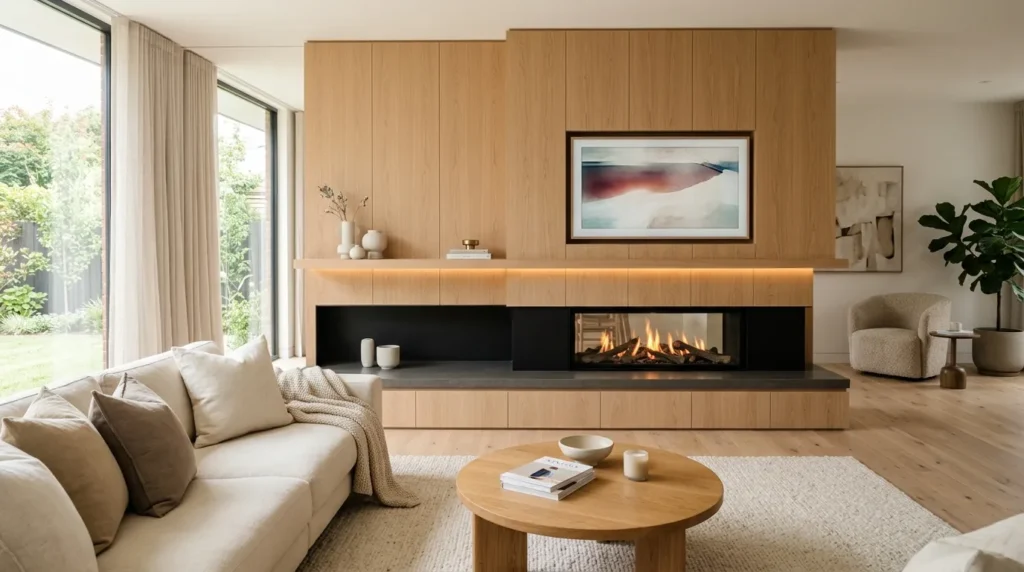
- Custom cabinetry combines the fireplace with useful storage.
- Walnut panels create warmth and depth.
- Closed compartments keep clutter hidden.
- Integrated lighting adds a polished evening glow.
A fireplace feature cabinet can turn one living room wall into a complete, highly functional design element. Integrate a slim firebox into warm walnut or oak cabinetry and use closed compartments to hide electronics, books, blankets, and everyday clutter. The wood panels create a rich backdrop while the dark firebox adds crisp contrast. Pair the wall with a cream sectional, neutral rug, and simple accessories so the cabinetry remains the visual anchor. This approach is ideal for busy households that want a polished room without sacrificing practical storage.
Plan the cabinet layout around how you actually use the room rather than focusing only on appearance. Keep frequently used electronics accessible while reserving higher or closed sections for less attractive items. I’ve noticed that combining open and closed storage makes a feature wall feel much more balanced than using either style alone. Add warm LED strips inside selected niches to highlight decorative objects and create ambient lighting. Choose hardware that complements existing fixtures, or use handleless doors for an even cleaner appearance. The finished fireplace wall feels organized, warm, and intentionally designed for everyday living.
24. Fireplace With Niches
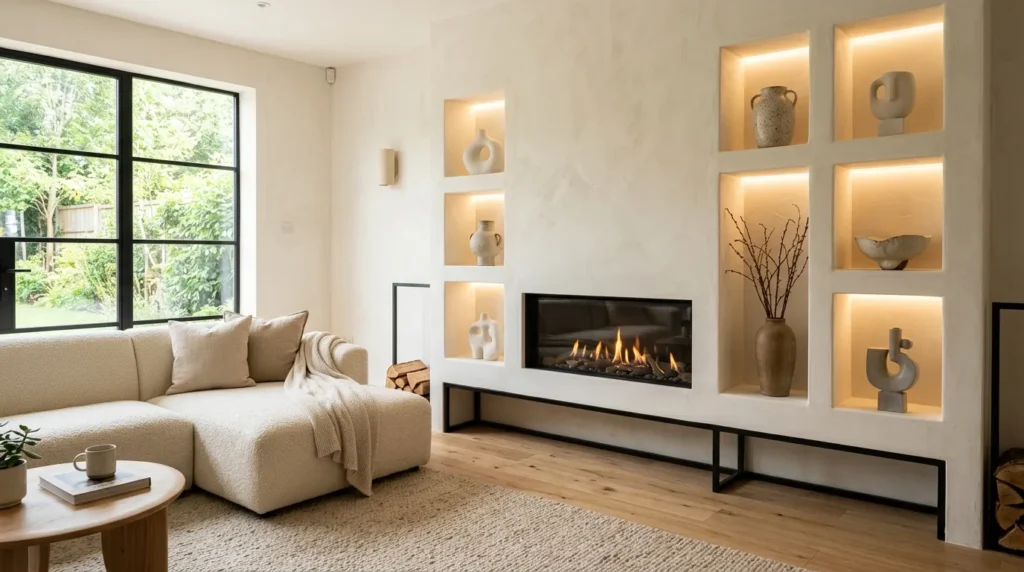
- Recessed niches add useful display space.
- Built-in lighting creates a soft evening glow.
- Neutral finishes keep the wall visually calm.
- Small decor pieces add personality without clutter.
Recessed niches can give a fireplace wall extra depth while keeping the overall design streamlined. Place narrow illuminated niches beside or above a slim firebox and style them with ceramic vessels, books, greenery, or small sculptural objects. Finish the surrounding wall in warm plaster or painted drywall, then introduce pale oak accents for subtle contrast. The niches create carefully controlled areas for decoration instead of relying on a traditional mantel. This approach works especially well when you want the fireplace to feel customized without covering the wall in excessive shelving.
Keep the niches relatively simple and avoid filling every compartment from edge to edge. I’ve noticed that a few thoughtfully chosen objects usually create a stronger visual effect than a crowded display. Use warm LED lighting inside selected niches to highlight texture and create depth after sunset. Repeat colors from the seating area, such as cream, beige, wood, and muted black, so the entire room feels connected. Make sure the fireplace remains the primary focal point by keeping the decorative pieces smaller than the firebox. The finished wall feels refined, practical, and distinctly contemporary.
Conclusion
A well-designed fireplace can become much more than a source of warmth—it can anchor the entire room and make everyday spaces feel more inviting. These modern fireplace ideas show how materials, lighting, storage, texture, and thoughtful furniture placement can create a stylish yet comfortable home. You do not need a complete renovation to get started; even changing the surround, adding warm lighting, or introducing natural textures can make a noticeable difference. Save this post on Pinterest for your next decorating project, try an idea that fits your space, and share it with someone looking for cozy home inspiration. Small changes can create a beautiful transformation