A beautiful laundry room can make one of the most routine chores feel surprisingly easier. Modern laundry room ideas can turn a cramped, cluttered area into a fresh, organized space you actually enjoy using.
In this article, you’ll discover practical ways to combine smart storage, clean design, useful layouts, and stylish details without sacrificing function. From streamlined cabinets and open shelving to clever folding areas and attractive baskets, each idea is designed to help your laundry room work harder while looking better.
I’ve noticed that even small changes—such as adding labeled storage or creating a dedicated folding surface—can make everyday laundry feel far less chaotic. Whether you’re updating a compact laundry nook or planning a complete makeover, these ideas offer inspiration you can realistically adapt to your home. Keep reading to find simple, beautiful solutions worth saving for your next project.
1. Streamlined Cabinetry
- Flat-panel cabinets instantly create a clean, contemporary look.
- Hidden storage keeps detergents, linens, and supplies out of sight.
- Pale finishes help compact rooms feel brighter and more spacious.
- A few woven baskets add warmth without creating visual clutter.
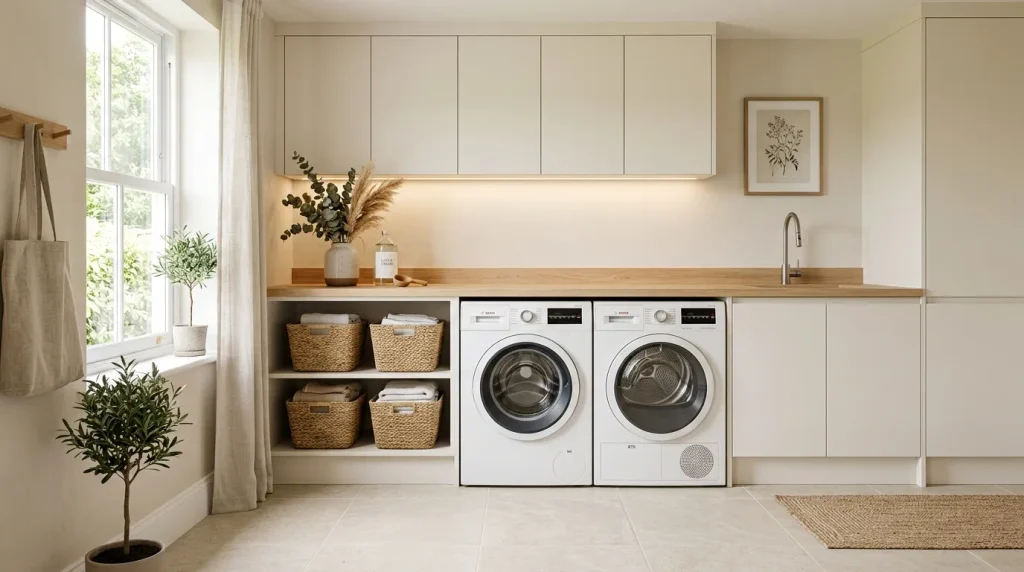
A clean white laundry room can feel instantly more polished when the appliances are framed by streamlined cabinetry. Choose flat-panel doors in warm white, soft gray, or pale oak, then keep handles simple and slim. This approach hides detergent bottles, cleaning supplies, and extra linens while preserving a calm visual rhythm. Open shelving can display only a few attractive baskets or folded towels, giving the room personality without making it feel busy. In my experience, built-in storage makes everyday laundry easier because everything has a defined home. The result is a practical room that looks intentional, bright, and beautifully uncluttered.
When storage disappears behind smooth cabinet fronts, even a compact laundry area can look surprisingly spacious. Place matching washer and dryer units beneath a continuous counter, then add tall cabinets beside them for bulky supplies and household tools. A pale wood accent keeps the white surfaces from feeling too sterile, while woven baskets soften the harder materials. Modern laundry room ideas often work best when beauty follows function, and this layout proves it. You gain folding space, hidden organization, and a consistent finish without sacrificing valuable floor area. It is especially useful for busy households where visual clutter returns quickly.
Also Read : 23 Summer Mantel Decor Ideas for a Fresh Seasonal Look
2. Floating Folding Counter
- A countertop above the machines creates an instant folding station.
- Quartz, laminate, or sealed wood offers a practical work surface.
- Keeping the counter mostly clear makes the room look calmer.
- Under-cabinet lighting adds useful illumination and a polished finish.
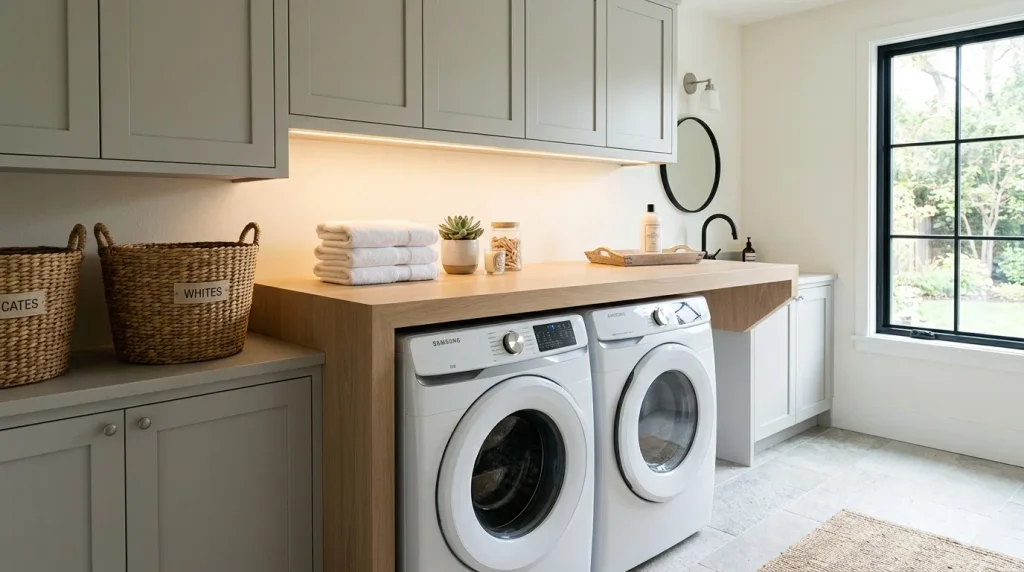
The smartest detail is often the counter above the machines, because it turns unused vertical space into a useful work surface. Select durable quartz, laminate, or sealed wood that coordinates with the cabinetry and flooring. Keep the surface mostly clear, leaving room for folding clothes or sorting baskets. Under-cabinet lighting adds a soft glow while making stain treatment and folding easier. I’ve noticed this combination creates a more finished appearance without requiring a major renovation. It gives the room a furniture-like quality, making laundry feel less like a chore and more like a designed part of the home.
A well-planned folding surface can also make laundry routines feel faster and more organized. Leave enough clearance around the machines for comfortable loading, then use the counter for sorting freshly washed clothing before it reaches the bedroom. Quartz works particularly well for households that want a low-maintenance surface, while natural or engineered wood brings warmth to an otherwise hard-working space. Add one attractive basket beneath the counter for small items, but avoid filling every available surface. The visual simplicity is part of the appeal, creating a modern utility room that feels orderly without becoming overly decorated.
Also Read : 24 Modern Fireplace Ideas for a Stylish Cozy Home
3. Vertical Utility Storage
- Tall cabinets make use of wall height instead of valuable floor space.
- Narrow shelves can hold detergents, sprays, brushes, and extra supplies.
- Closed storage keeps everyday utility items visually quiet.
- This setup works especially well in smaller laundry rooms.
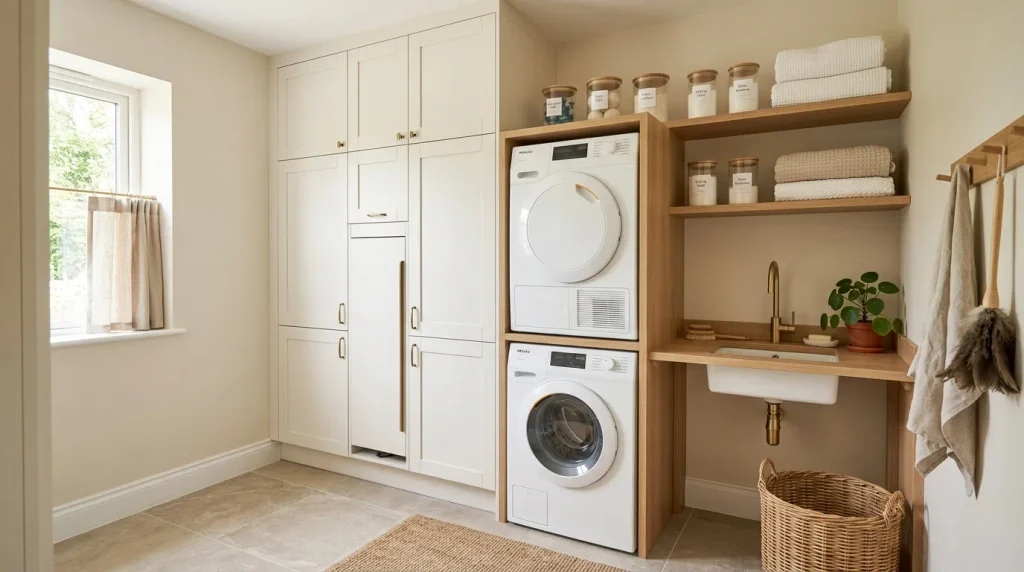
When floor space is limited, look upward and make the walls work harder. Tall utility cabinets use vertical space for detergent, cleaning products, spare towels, ironing supplies, and household tools without crowding the walkway. Choose cabinetry that reaches close to the ceiling for a built-in appearance, then reserve the easiest-to-reach shelves for items used every week. Lower sections can store less frequently needed supplies. I’ve seen this approach make narrow laundry rooms feel much calmer because loose bottles and baskets disappear behind doors. The room gains storage capacity while maintaining a clean, streamlined appearance from floor to ceiling.
For an especially practical setup, combine tall closed cabinets with one or two slim open shelves. The cabinets handle visual clutter, while the open area provides space for attractive baskets, folded towels, or a small plant. Keep frequently used products at waist or chest height so you are not constantly bending or reaching overhead. Neutral finishes such as warm white, greige, or light oak blend easily with modern interiors and reflect natural light. This storage strategy is especially useful when a laundry room must also hold cleaning equipment, seasonal linens, or household extras without looking overloaded.
Also Read : 21 Summer Front Porch Decor Ideas for a Welcoming Home
4. Warm Wood Accents
- Light wood instantly softens crisp cabinetry and appliances.
- A wood counter adds warmth without overwhelming a small room.
- Natural grain introduces texture and visual interest.
- Pairing wood with neutral finishes keeps the look contemporary.
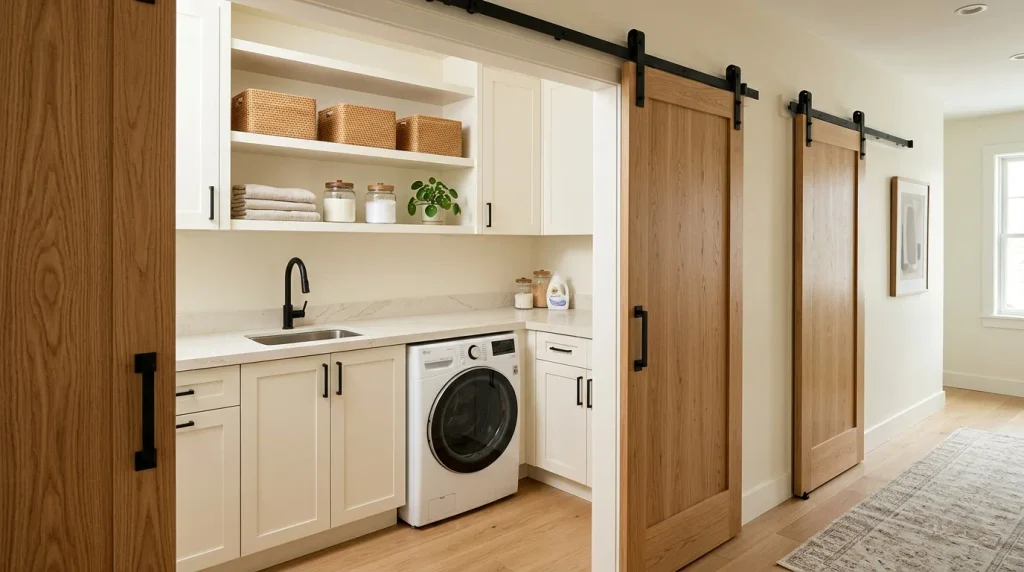
Warm wood can make a practical laundry room feel surprisingly inviting. Use light oak on cabinet doors, a folding counter, or floating shelves to soften white appliances and smooth surfaces. The natural grain adds texture without making the room look rustic or heavy. Pair it with cream, white, or soft gray walls for a balanced palette, then repeat the wood tone in one or two small accessories. In my experience, this simple contrast helps utility spaces feel connected to the rest of the home. The result is modern, comfortable, and polished without relying on excessive decoration or color.
The key is restraint, especially when the room is compact. Choose one dominant wood finish and let it become the warm visual anchor rather than mixing several competing tones. A pale oak counter above the machines can connect the cabinetry while creating a practical folding zone. Woven baskets, linen towels, or a small wooden stool can echo the same natural texture. Modern laundry room ideas become more welcoming when hard-working surfaces are balanced with organic materials. This approach also ages well, because wood tones can complement changing hardware, paint colors, and decorative accents without requiring a complete redesign.
Also Read : 22 Year Round Mantle Decor Ideas for Every Season
5. Open Laundry Shelves
- Open shelves keep everyday supplies within easy reach.
- Matching baskets prevent exposed storage from looking messy.
- Floating shelves create useful vertical storage without bulky cabinets.
- A few decorative touches make the utility area feel intentional.
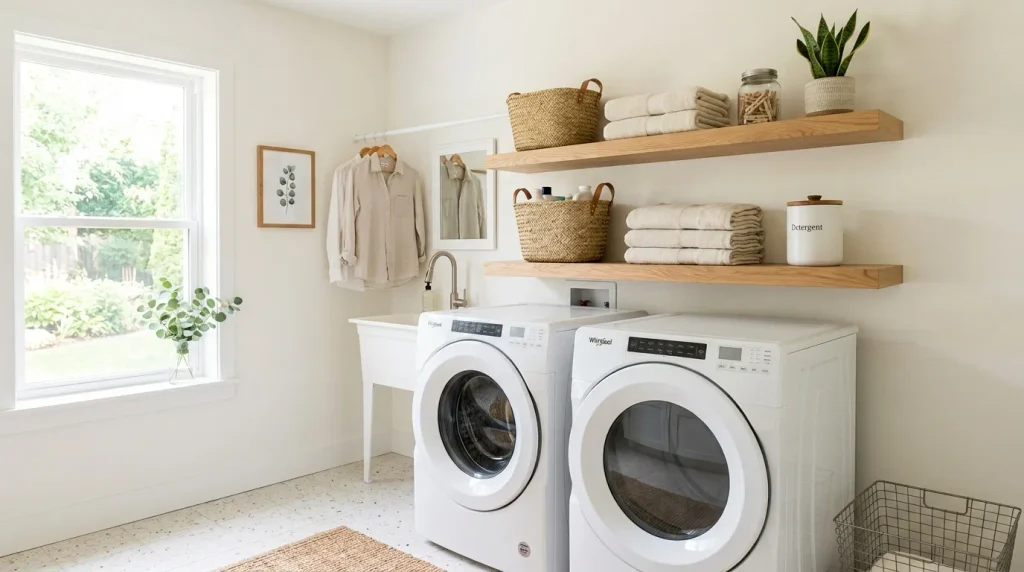
Open shelving gives a laundry room an airy appearance while keeping frequently used items easy to grab. Install two or three sturdy floating shelves above the machines, then organize detergents, towels, and accessories inside matching baskets or simple containers. Leave some empty space between groups so the shelves do not appear crowded. A small plant, framed print, or ceramic jar can add personality without competing with the room’s practical purpose. I’ve noticed that open storage works best when everyday items are grouped by function. That makes the shelves attractive at a glance while keeping laundry supplies genuinely convenient to access.
For a polished result, think of each shelf as a small composition rather than a place to store everything. Keep heavier products lower, reserve eye-level space for attractive baskets and neatly folded towels, and use the highest shelf for items you reach less often. Neutral woven textures work especially well against white walls and modern appliances because they introduce softness without visual noise. If your laundry area is narrow, floating shelves can provide useful storage while preserving valuable floor space. The combination feels light and practical, especially when natural light reaches the shelving and highlights the different textures.
Also Read : 24 Romantic Bedroom Ideas for Date Night at Home
6. Utility Sink Station
- A deep sink adds flexibility for messy household tasks.
- Counter space beside the basin makes soaking and sorting easier.
- Matte black or brushed metal fixtures add modern character.
- Closed storage underneath keeps cleaning supplies neatly contained.
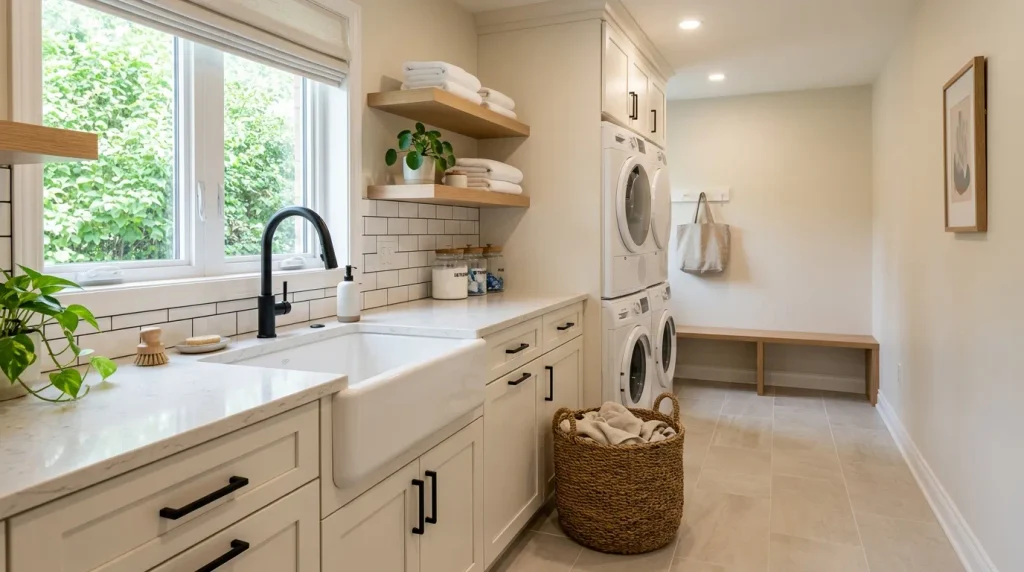
A utility sink can become one of the hardest-working features in a modern laundry room, especially when it has enough surrounding counter space. Choose a deep basin for soaking stained clothing, washing delicate items, rinsing muddy shoes, or handling messy household tasks. A simple undermount sink paired with a streamlined faucet keeps the design contemporary. Add drawers or cabinets below to hide cleaning supplies and extra cloths. In my experience, even households that rarely plan for a sink find unexpected uses for one. It provides a convenient work zone that keeps messier tasks away from kitchen and bathroom surfaces.
For the most functional layout, position the sink close to the washer while leaving enough counter space on one side for sorting or folding. A durable quartz surface is easy to maintain and visually connects the sink area with surrounding cabinetry. Matte black, brushed nickel, or brushed brass hardware can provide a small contrast against pale finishes. If space is tight, consider a compact basin rather than eliminating the feature completely. The goal is not to make the sink dominate the room, but to create a dedicated utility station that quietly handles tasks that would otherwise become inconvenient.
Also Read : 24 Moody Living Room Ideas for a Cozy Dramatic Retreat
7. Hidden Appliances
- Built-in panels can make appliances blend seamlessly with cabinetry.
- Concealed machines create a quieter, more cohesive visual effect.
- Matching cabinet fronts reduce the appearance of bulky equipment.
- This approach works beautifully in open-plan or highly visible laundry areas.
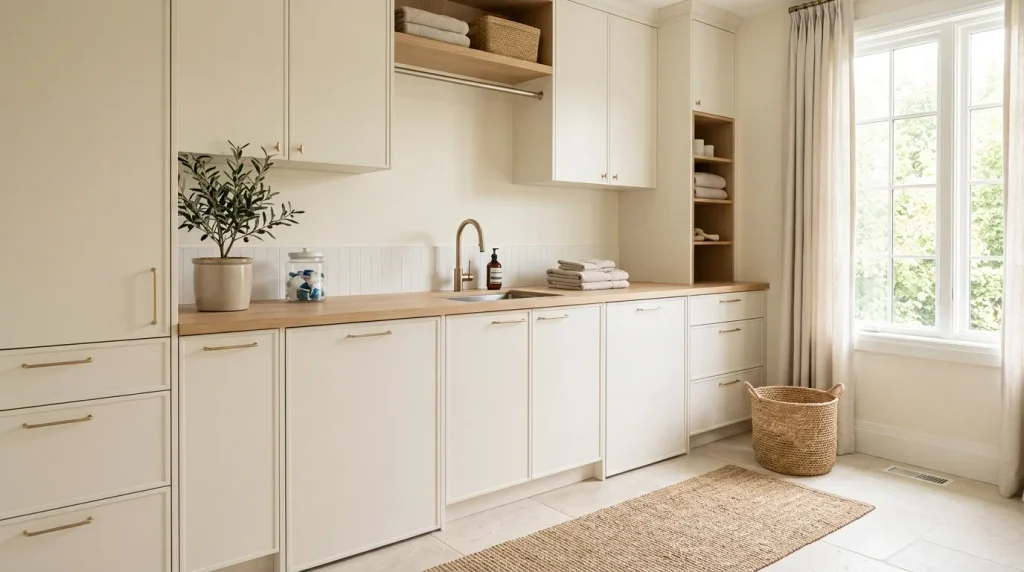
Hidden appliances create a beautifully seamless look when you want the laundry area to feel more like a finished room than a utility zone. Matching cabinet panels can visually reduce the bulk of large machines, especially when the room connects to a hallway, mudroom, or kitchen. Keep the surrounding cabinetry simple and use consistent materials across the entire wall. The effect is especially striking with warm white, taupe, or light wood finishes. I’ve noticed this technique works particularly well in smaller spaces because fewer visible appliance surfaces create a calmer, less fragmented appearance while preserving all the practical functions you need.
A concealed setup also gives you more freedom to decorate the surrounding area like any other room. Add a narrow runner, framed artwork, or a small woven basket without the appliances becoming the dominant visual feature. Make sure the cabinet design allows proper ventilation, access, and door clearance according to the appliance manufacturer’s requirements. For households that prefer a minimalist aesthetic, this approach offers an especially polished solution. The cabinetry becomes the main architectural feature while the machines quietly perform their job behind it. That balance can make an everyday laundry zone feel surprisingly sophisticated and intentional.
8. Patterned Floor Tile
- Patterned flooring adds personality without covering the walls.
- Geometric designs can visually define the laundry zone.
- Porcelain tile offers durability for a hardworking room.
- Keep cabinetry simple so the floor remains the focal point.
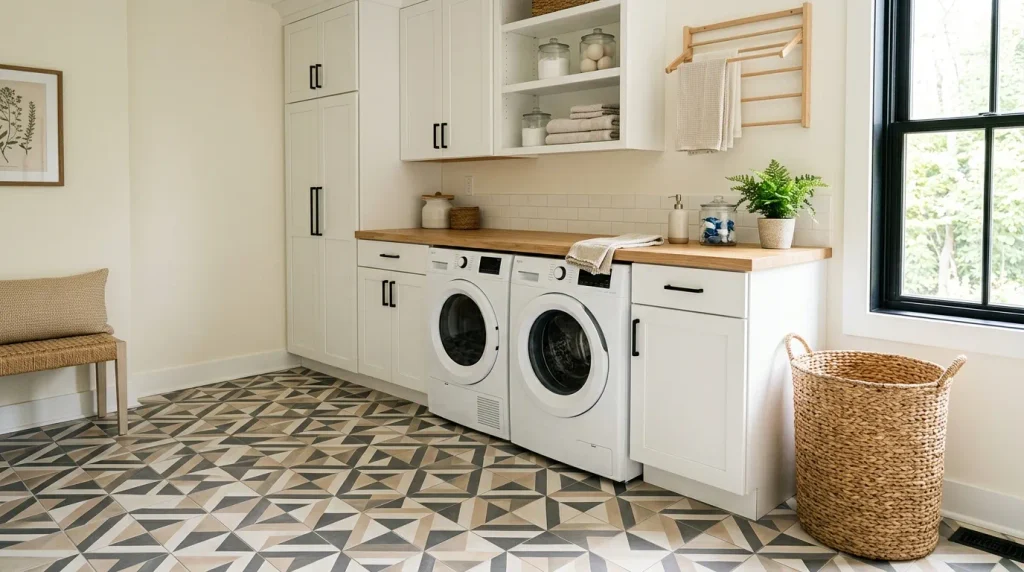
A patterned floor can completely change the personality of a laundry room without requiring dramatic wall treatments. Choose geometric porcelain tile in a restrained palette such as cream, charcoal, beige, or soft gray, then let the flooring become the room’s main decorative feature. Simple cabinetry keeps the pattern from feeling overwhelming, while a wood counter introduces warmth. The floor also provides a practical surface that handles moisture, dirt, and frequent foot traffic. In my experience, a small utility room is often the perfect place to experiment with pattern because a relatively small amount of tile can create a noticeable design statement.
The trick is choosing a pattern that complements rather than competes with the rest of the space. If the floor has strong geometry, use quieter cabinet fronts and solid-colored walls. Large-format patterns can make a compact room appear more continuous, while smaller motifs create a more decorative effect. Add one or two accessories that repeat a color from the tile for visual cohesion. This creates a room that feels thoughtfully designed rather than randomly decorated. With the right balance, patterned flooring can turn an ordinary laundry area into one of the most memorable small spaces in the home.
9. Minimalist Cabinetry
- Flat fronts create a sleek and uncluttered appearance.
- Handleless doors make the room feel visually quieter.
- Neutral colors allow appliances and accessories to blend naturally.
- Simple cabinetry makes small spaces appear more open.
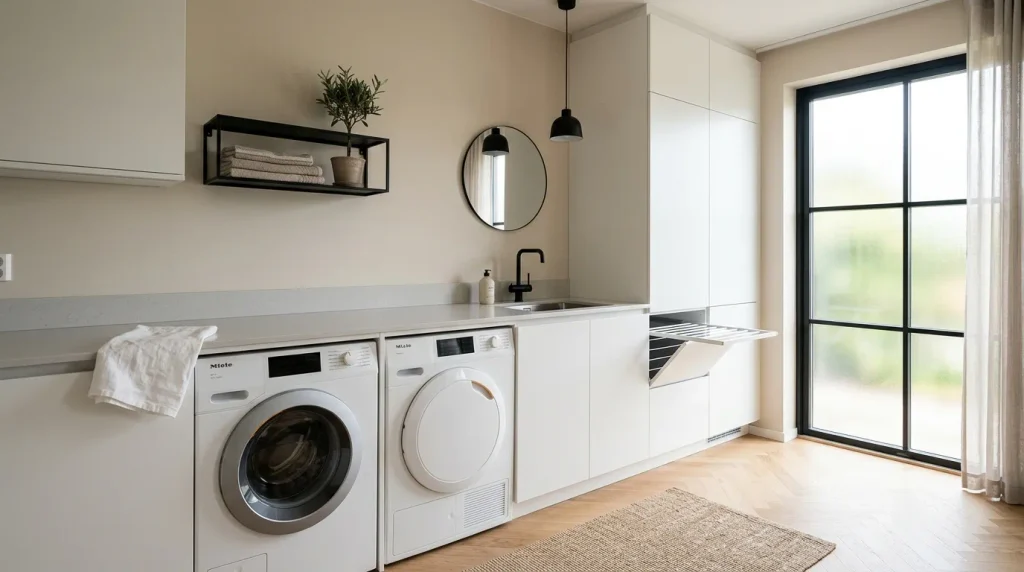
Few details can make as much visual difference as simple, uninterrupted cabinetry. Flat-front doors in white, greige, or soft taupe create a smooth backdrop that helps the entire laundry room feel organized. Handleless hardware takes the streamlined effect even further by removing small visual interruptions across the cabinets. Pair the cabinetry with a pale counter and one warm material, such as oak shelving or flooring, to prevent the room from feeling cold. In my experience, this restrained approach works especially well when the laundry area is small because clean surfaces make the available space feel more open.
Minimalist storage is also easier to maintain visually because there are fewer places for clutter to become part of the room’s everyday appearance. Keep detergent, stain removers, and cleaning tools behind closed doors, then leave the counter mostly clear. A single basket or folded stack of towels can provide enough decoration without making the room feel staged. Soft neutral colors reflect natural light and allow the appliances to blend into the overall design. This creates a calm, contemporary utility space that feels intentional rather than purely functional, while still providing enough hidden storage for busy household routines.
10. Stacked Washer Dryer
- Vertical appliance placement frees valuable floor space.
- The open area can become useful storage or folding space.
- Matching cabinetry creates a more integrated appearance.
- This layout is especially practical for narrow laundry rooms.
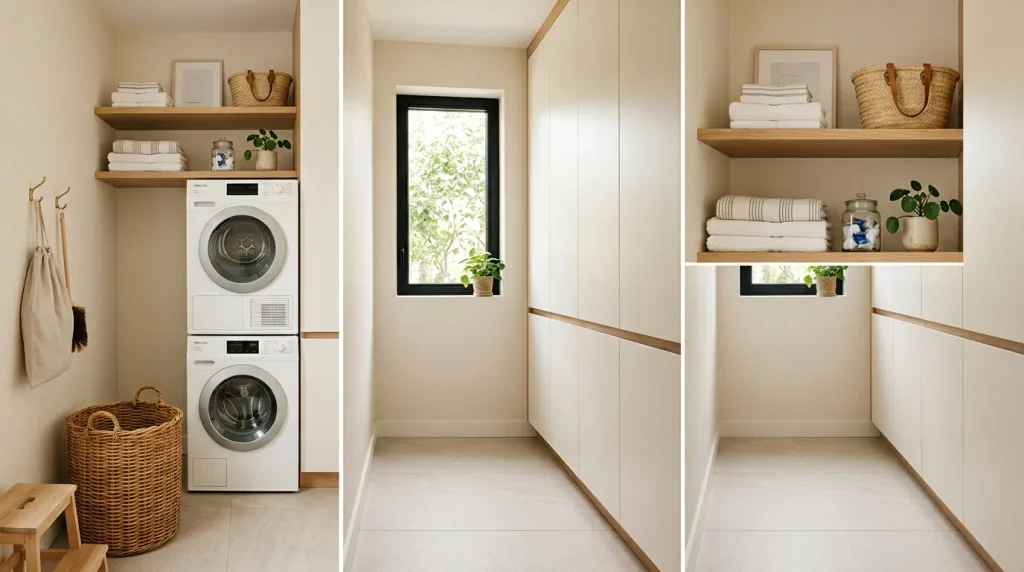
Stacking the washer and dryer is one of the easiest ways to reclaim valuable floor space in a narrow laundry room. Instead of spreading appliances across an entire wall, place them vertically and use the freed area for storage, shelving, or a slim folding station. Surround the machines with cabinetry so the arrangement feels intentional rather than purely utilitarian. A tall cabinet beside the stack can hold detergents, towels, and cleaning tools from floor to ceiling. This layout is especially useful in apartments, closets, and compact utility rooms where every inch matters and horizontal space is limited.
The vertical arrangement also creates a strong, streamlined shape that can make the room feel taller. Keep frequently used supplies within comfortable reach, and reserve higher shelves for seasonal or backup items. If the appliances are enclosed, follow the manufacturer’s installation requirements for ventilation, clearances, and stacking hardware. Add a narrow runner or woven basket to introduce softness without taking up much space. For homeowners working with a small footprint, this setup delivers a practical combination of capacity and organization. The room gains storage while maintaining a clear walkway and an uncluttered visual appearance.
11. Built-In Drying Rack
- A wall-mounted rack provides a dedicated place for air-drying clothes.
- Foldable designs disappear when the rack is not being used.
- Natural wood adds warmth against modern cabinetry.
- Positioning it near the washer makes the laundry routine more efficient.
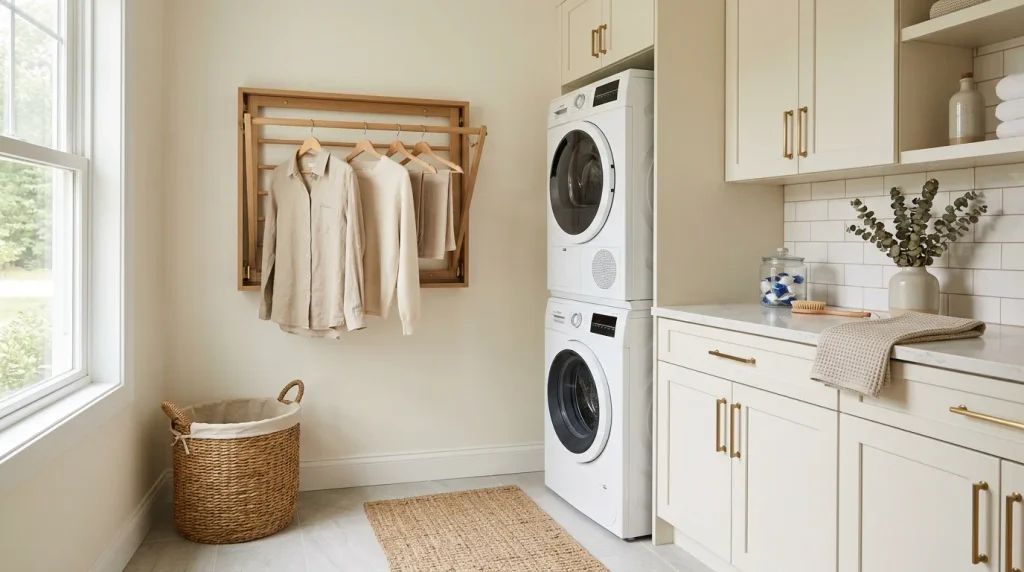
A built-in drying rack adds function without sacrificing the clean look of a modern laundry space. A fold-down wall-mounted design provides a dedicated spot for delicate clothing, sweaters, and items that should not go into the dryer. When it is no longer needed, the rack folds neatly against the wall and keeps the walkway clear. Position it close to the washer so wet clothing can move directly from one area to another. I’ve seen this work especially well in compact homes where a freestanding drying rack would otherwise create unnecessary clutter and take up valuable floor space.
Choose a finish that connects with the rest of the room for a more polished appearance. Natural oak works beautifully with warm white cabinets, while painted metal can blend into a minimalist design. Make sure the rack is securely installed and positioned where hanging clothes will not block cabinet doors or appliances. A small shelf nearby can hold clothespins or delicate laundry supplies for added convenience. This simple feature turns an unused wall into a practical work zone. It also helps the room stay organized because air-drying items have a permanent place instead of spreading across chairs or doorways.
12. Statement Lighting
- A decorative light fixture gives the room an intentional focal point.
- Warm lighting makes a practical space feel more inviting.
- Pendant lights work beautifully above folding counters or islands.
- Simple fixtures can add personality without creating visual clutter.
A striking light fixture can instantly make a laundry room feel more finished and thoughtfully designed. Instead of relying only on a basic ceiling light, consider a simple pendant, globe fixture, or modern flush mount with sculptural details. Warm illumination softens hard surfaces and makes folding, sorting, and stain treatment easier. Place decorative lighting above a folding counter or central work area to create a clear focal point. That’s why many designers recommend treating utility rooms like other living spaces. One well-chosen fixture can add personality while keeping the overall design clean, functional, and visually balanced.
The best lighting plan combines style with practical visibility. Use ambient ceiling lighting for the entire room, then add under-cabinet or task lighting where detailed work happens. If natural light enters through a window, choose fixtures that complement it rather than overpower it. Matte black, brushed brass, glass, or soft white finishes can coordinate easily with modern cabinetry and hardware. Keep the scale appropriate for the room so the fixture feels intentional instead of oversized. With the right balance, lighting can transform an ordinary laundry area into a polished space that feels brighter, warmer, and easier to use every day.
13. Brass Hardware
- Brushed brass adds warmth to neutral cabinetry.
- Small hardware changes can refresh the entire room.
- The finish pairs beautifully with white, greige, and natural wood.
- Matching faucets and handles create a cohesive appearance.
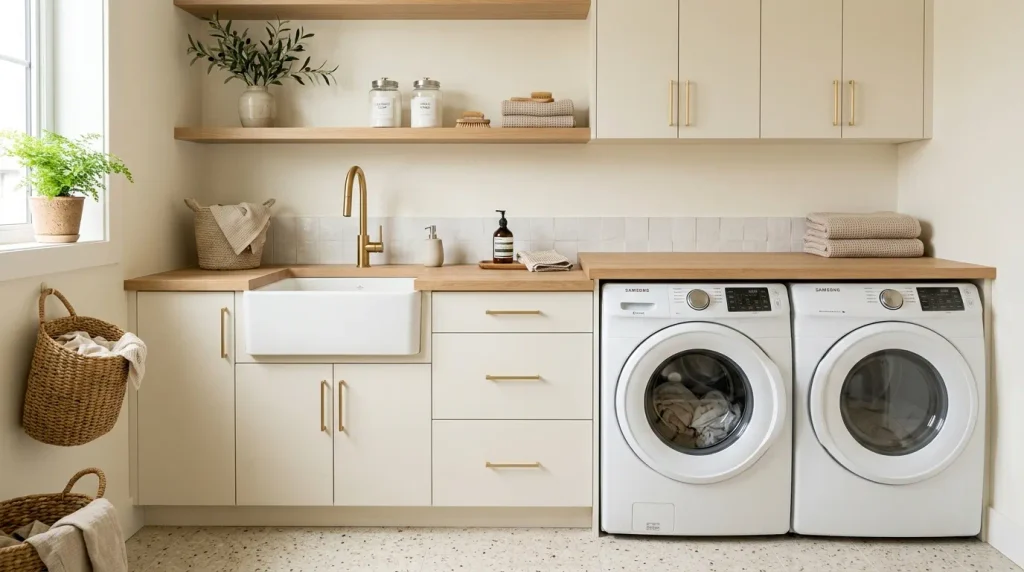
Brass hardware is a small upgrade that can make plain cabinetry feel noticeably more refined. Brushed finishes add warmth without the strong shine of polished metal, making them especially suitable for contemporary interiors. Use matching handles on cabinets and drawers, then repeat the finish on a faucet, light fixture, or small accessory for visual consistency. Against white or greige cabinetry, brass creates a soft contrast that feels elegant rather than dramatic. I’ve noticed that changing hardware is often one of the simplest ways to refresh a laundry room without replacing cabinets or making major structural changes.
For the most cohesive result, choose a restrained hardware style with clean shapes and comfortable proportions. Slim bar pulls suit flat-panel cabinets, while simple knobs can soften a more traditional cabinet profile. Avoid mixing too many competing metal finishes in a small room, since consistency helps the space feel calmer. Brass also pairs naturally with pale oak, woven textures, and creamy wall colors, creating a warm modern palette. This detail may seem minor, but repeated accents can tie the entire room together. The finished space feels more intentional, polished, and connected to the rest of the home.
14. Soft Neutral Palette
- Cream, beige, white, and greige create a calm foundation.
- Layered neutral tones add depth without making the room busy.
- Soft colors reflect light and help compact spaces feel larger.
- Natural textures keep a neutral room from feeling flat.
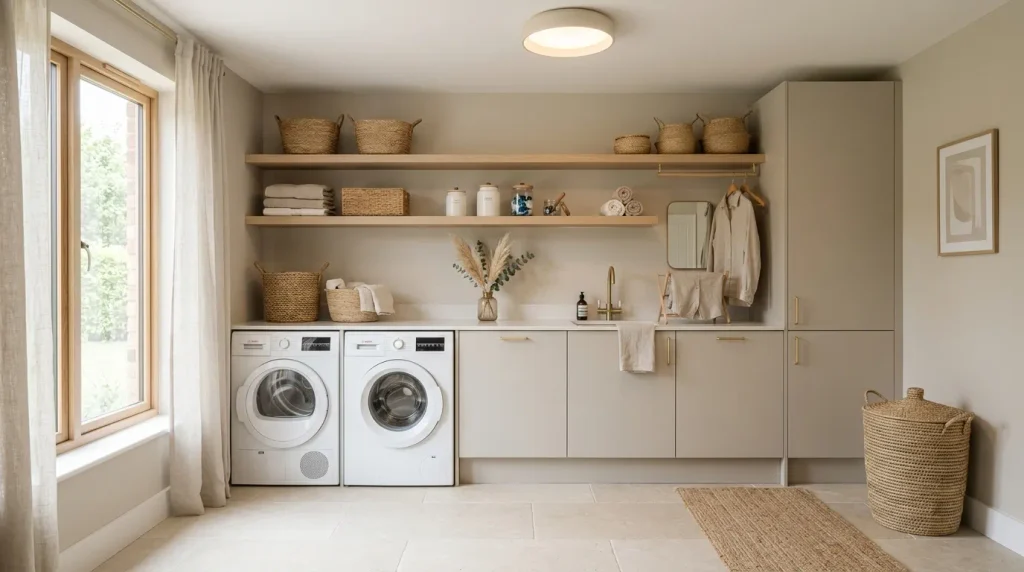
A soft neutral palette can make even the busiest laundry room feel calm and visually organized. Layer shades of cream, warm white, beige, and greige instead of using one flat color throughout the space. This creates depth while keeping the overall look peaceful and easy to coordinate. Pale cabinetry can blend with light flooring, while natural wood shelves or woven baskets introduce gentle texture. The result feels bright without appearing stark. Modern laundry room ideas often benefit from this approach because a quieter color scheme allows storage, appliances, and practical features to work together without competing for attention.
The secret to a successful neutral room is adding variation through materials and finishes. Combine smooth cabinet fronts with textured baskets, matte hardware, natural wood, or subtle stone surfaces to prevent the space from feeling plain. Soft colors also reflect available light, which can make a compact room appear more open. Keep decorative accessories minimal and choose items that support the palette rather than introducing unnecessary contrast. This flexible foundation can easily adapt as your style changes over time. A few updated towels, containers, or accessories can refresh the room without requiring a complete redesign.
15. Soft Green Cabinets
- Muted green adds color while keeping the room sophisticated.
- Sage and olive tones pair beautifully with warm wood.
- Painted cabinetry gives the laundry area a more custom appearance.
- Neutral walls keep the color balanced and easy to live with.
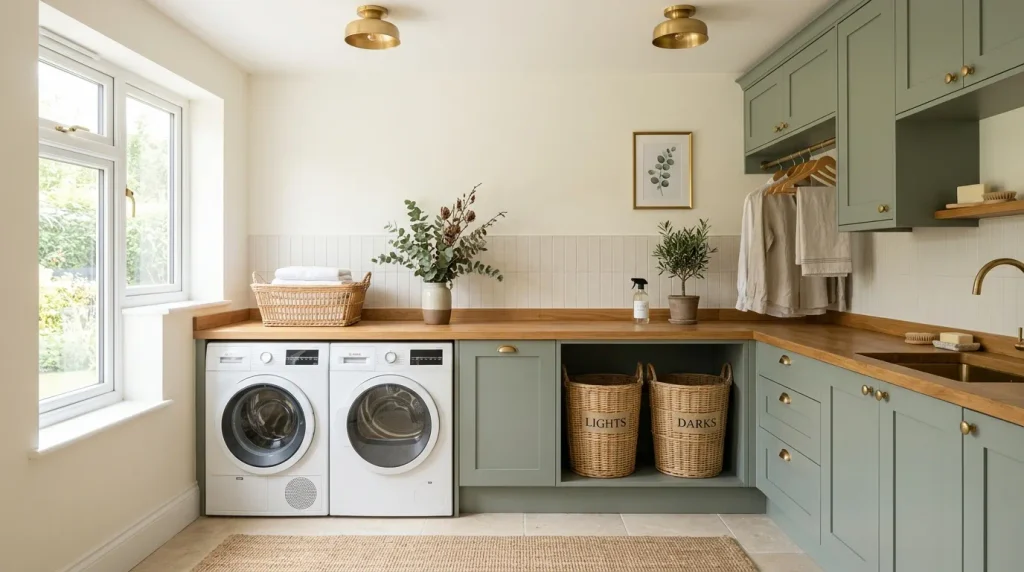
Soft green cabinetry brings personality to a laundry room without making the space feel overly colorful. Sage, eucalyptus, and muted olive shades work particularly well because they have a natural, calming quality that pairs beautifully with wood and warm neutrals. Keep the walls creamy white or light beige so the cabinets remain the main visual feature. Add brushed brass or aged bronze hardware for a subtle contrast. In my experience, muted green works especially well when homeowners want something more distinctive than white but still want a timeless look. The result feels fresh, welcoming, and thoughtfully customized.
Balance is important when using colored cabinetry in a small utility space. Let the green become the main statement, then repeat its softer undertones through a small rug, artwork, or storage basket. Warm oak counters can prevent the color from feeling too cool, while light flooring keeps the room visually open. Choose a matte or low-sheen cabinet finish for a more sophisticated appearance and easier visual blending. This combination creates a laundry room with character while preserving a practical atmosphere. It also gives the space a memorable Pinterest-worthy quality without relying on bold patterns or excessive decoration.
16. Laundry Room Island
- A compact island creates extra folding and sorting space.
- Drawers underneath provide convenient storage for everyday supplies.
- A wood or stone top adds a furniture-like focal point.
- Keep enough clearance around the island for comfortable movement.
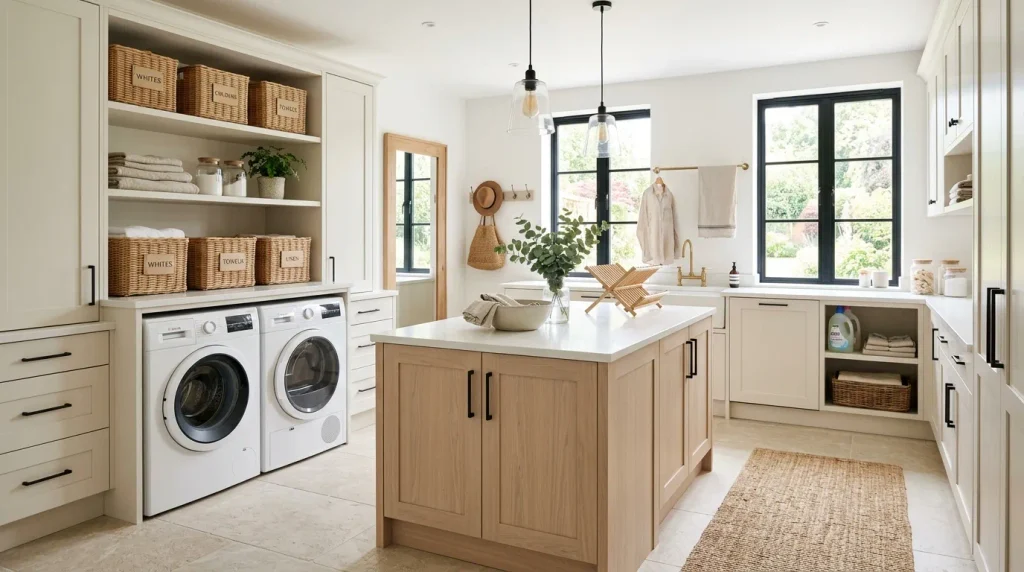
A laundry island can turn a larger utility room into a highly efficient workspace. The central surface provides generous room for folding, sorting, and organizing clothing, while drawers underneath can hold laundry accessories, linens, or everyday household supplies. Choose a countertop material that complements the surrounding cabinetry, such as pale oak, quartz, or durable stone. Keep the island proportionate to the room and allow comfortable walking space around every side. I’ve noticed that a well-sized island can make laundry routines feel much easier because several tasks can happen in one dedicated area instead of spreading across counters throughout the home.
The island should feel like part of the room rather than an obstacle placed in the center. Use matching cabinet colors or repeat the countertop material elsewhere to create a cohesive appearance. Deep drawers are especially useful because they provide easy access to baskets, cleaning cloths, and other supplies without requiring you to reach into narrow cabinets. If the room has enough ceiling height, a pendant light above the island can visually define the workspace. The combination of storage, surface area, and intentional lighting creates a polished utility room that feels functional enough for daily use and attractive enough to inspire.
17. Wall-Mounted Hooks
- Hooks turn unused wall space into practical everyday storage.
- They keep bags, hangers, and lightweight laundry items off counters.
- Wood or metal hooks can reinforce the room’s design style.
- A simple row creates organization without bulky furniture.
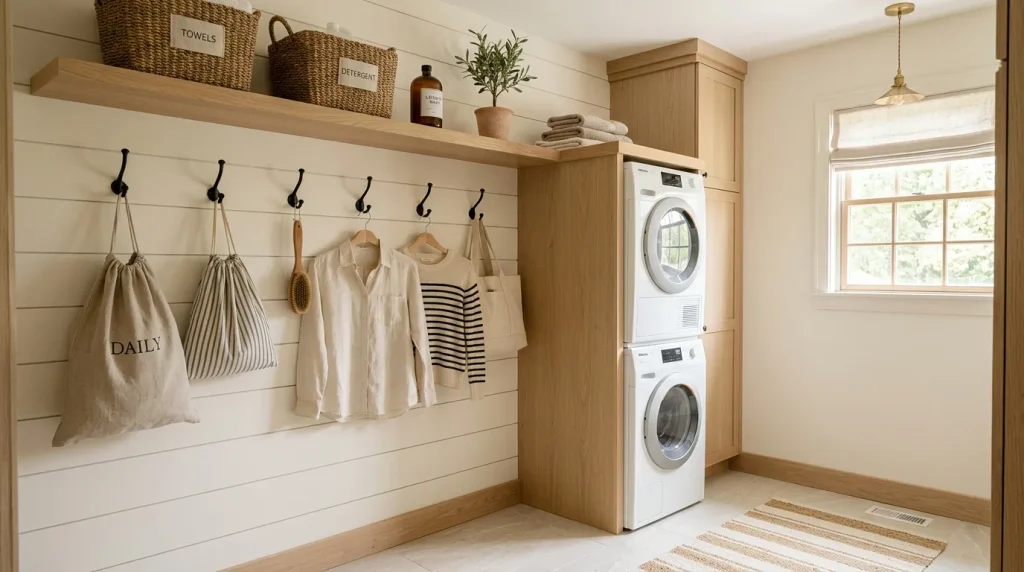
Wall-mounted hooks are a small addition with a surprisingly useful impact. Install a simple row near the washer or drying area for reusable laundry bags, hangers, cleaning cloths, or garments waiting to be pressed. This keeps lightweight items off countertops and prevents them from collecting on chairs or doors. Choose matte black hooks for a crisp contemporary look, brushed brass for warmth, or natural wood for a softer Scandinavian feel. I’ve noticed that hooks are particularly helpful in busy homes because they create an obvious place for items that are otherwise easy to drop wherever there is an empty surface.
For a more finished appearance, mount the hooks on a narrow wood rail, painted board, or simple section of wall paneling. Keep enough space between each hook so bags and clothing do not overlap excessively. A small shelf above the hooks can hold baskets or decorative objects while making the entire wall feel like a purposeful storage zone. This arrangement works especially well in narrow laundry rooms because it uses vertical space without reducing floor clearance. The result is simple, accessible organization that adds function while contributing a subtle decorative detail to the overall design.
18. Sliding Barn Doors
- Sliding doors hide the laundry area without using swing space.
- Frosted glass can bring light into an enclosed utility zone.
- Natural wood adds warmth and architectural character.
- This setup works especially well near kitchens, hallways, and mudrooms.
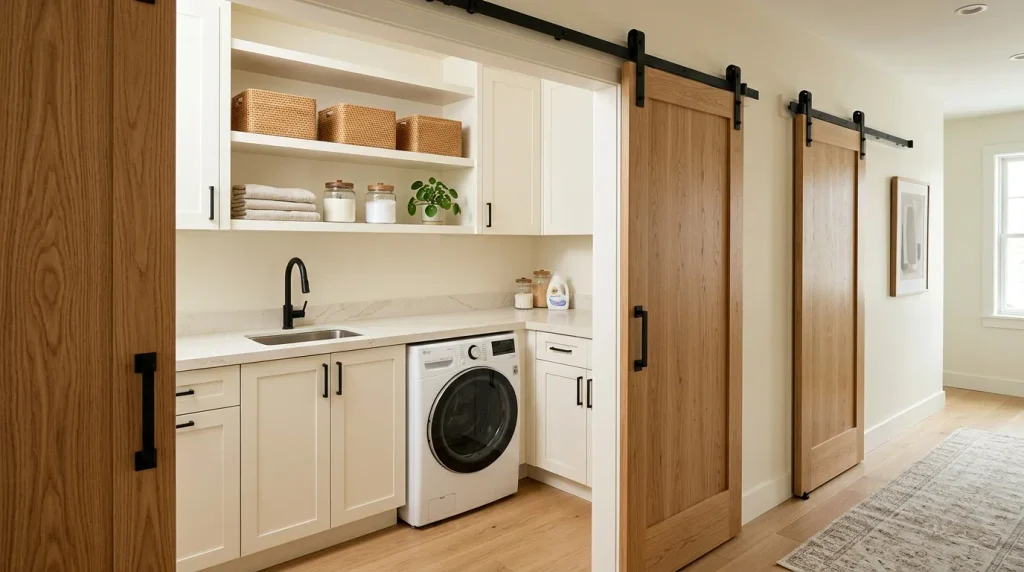
Sliding doors can make a laundry area feel more integrated with the rest of the home, especially when the machines sit inside a hallway, kitchen, or mudroom. Unlike traditional hinged doors, they do not require extra clearance when opened, leaving more usable floor space around the entrance. Choose natural oak for warmth, painted panels for a seamless look, or frosted glass when you want to allow some light through. In my experience, this solution is particularly helpful for compact homes because the doors can close away visual clutter without interfering with nearby furniture, cabinets, or walking paths.
The door itself can also become part of the room’s design rather than simply hiding the appliances. Simple black hardware gives wood doors a contemporary edge, while slim recessed pulls create a quieter appearance. Inside, keep the laundry area organized so opening the doors reveals a clean, functional workspace. If the room has limited natural light, consider a partially glazed or frosted option that allows brightness to pass through. This creates a practical balance between privacy and openness. When closed, the laundry disappears visually; when open, it becomes an efficient workspace that remains easy to access.
19. Countertop Hampers
- Built-in hampers keep dirty clothing hidden from view.
- Separate compartments make sorting easier before washing.
- Tilt-out designs use cabinet space efficiently.
- Matching cabinet fronts create a seamless, furniture-like appearance.
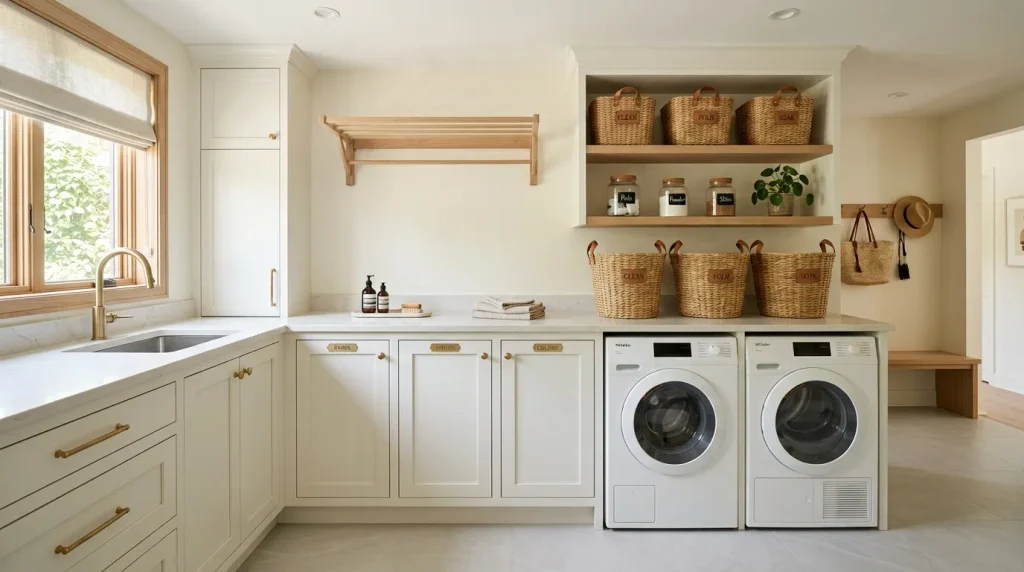
Built-in hampers can completely change how organized a laundry room feels because dirty clothing gets a dedicated home instead of collecting in loose baskets. Tilt-out cabinet hampers are especially useful because they hide laundry behind matching cabinet fronts while keeping sorting close to the washing machines. If space allows, use separate compartments for lights, darks, and delicate items. A countertop above the hampers can provide additional folding or sorting space, creating several functions within one compact cabinet run. I’ve noticed this arrangement works particularly well for families because it makes sorting easier before laundry day even begins.
Choose removable hamper bags or ventilated baskets so laundry can be carried easily to the machines when needed. Keep the cabinet fronts consistent with the rest of the room to create a seamless built-in appearance. Deep drawers nearby can store stain removers, dryer sheets, or reusable laundry accessories, while open shelves can hold folded towels. This approach keeps the floor clear and reduces the visual clutter created by multiple freestanding hampers. The finished room feels calmer and more efficient because dirty clothes have a defined place from the moment they enter the space.
20. Dedicated Folding Station
- A separate folding zone keeps clean clothing organized.
- A durable counter provides a comfortable surface for sorting.
- Drawers underneath can store baskets and laundry accessories.
- Clear separation between washing and folding improves workflow.
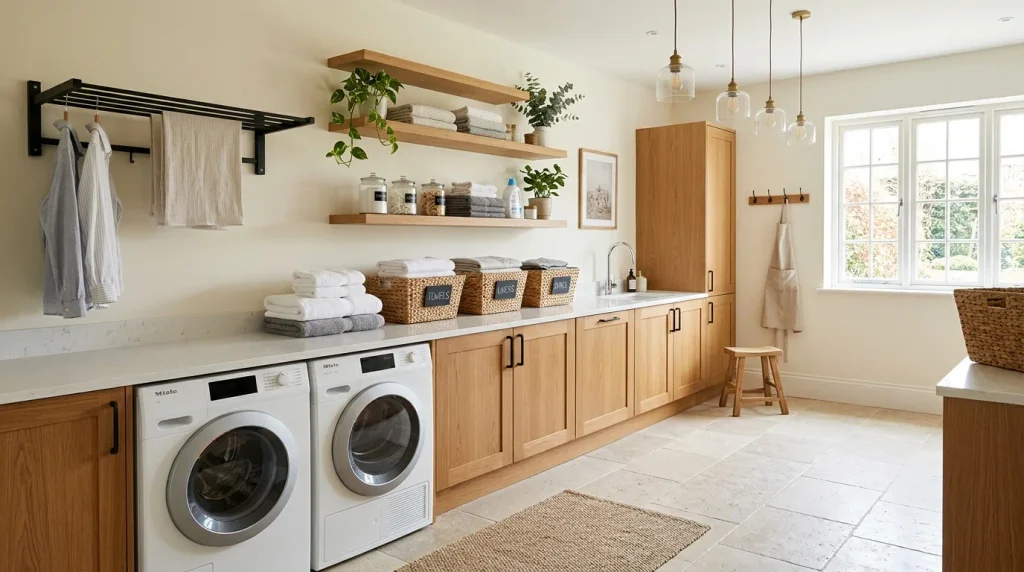
A dedicated folding station can make a laundry room feel dramatically more efficient because clean clothes have a specific place to be sorted and folded. A long countertop beside the machines provides enough surface area to handle several loads without constantly moving piles elsewhere. Add drawers underneath for laundry bags, clothespins, and small accessories, then keep one or two baskets nearby for items that need to be carried to another room. Modern laundry room ideas become especially practical when each stage of the laundry process has its own zone. This simple separation can make busy laundry days feel much less chaotic.
The folding area does not need to be large to be useful. Even a narrow counter can provide enough room for towels, shirts, and smaller loads, while a wall-mounted shelf above can hold neatly folded linens. Choose a durable surface that is easy to wipe clean, and keep the surrounding finishes simple so the station remains visually calm. If possible, position it directly beside the washer and dryer to minimize unnecessary movement. The result is a purposeful workspace that improves everyday flow while giving the laundry room the polished, built-in appearance often seen in professionally designed homes.
21. Hidden Ironing Station
- A concealed ironing board keeps bulky equipment out of sight.
- Wall-mounted or pull-out designs save valuable floor space.
- Nearby shelves can hold irons, sprays, and pressing accessories.
- Matching cabinetry keeps the entire setup visually seamless.
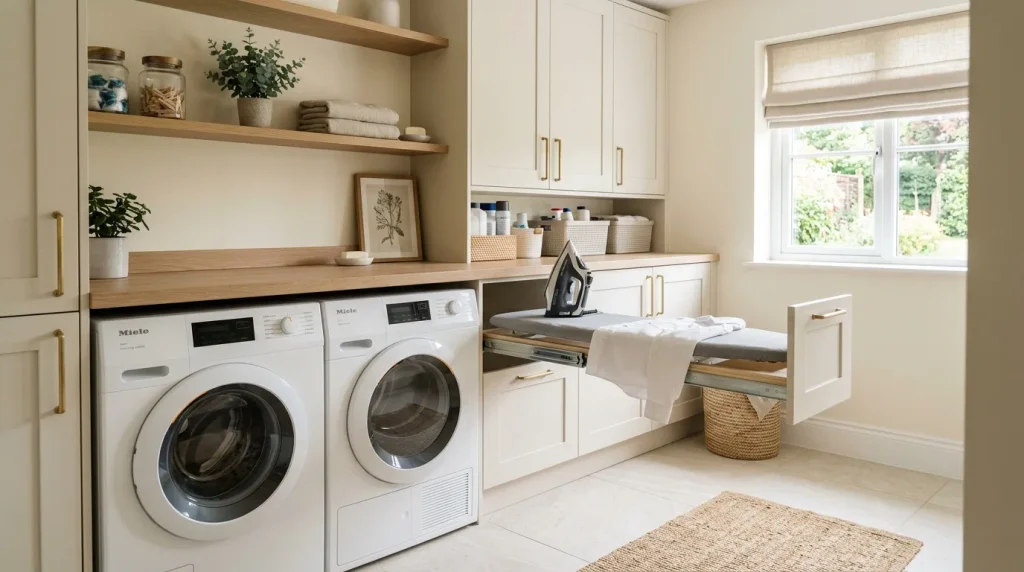
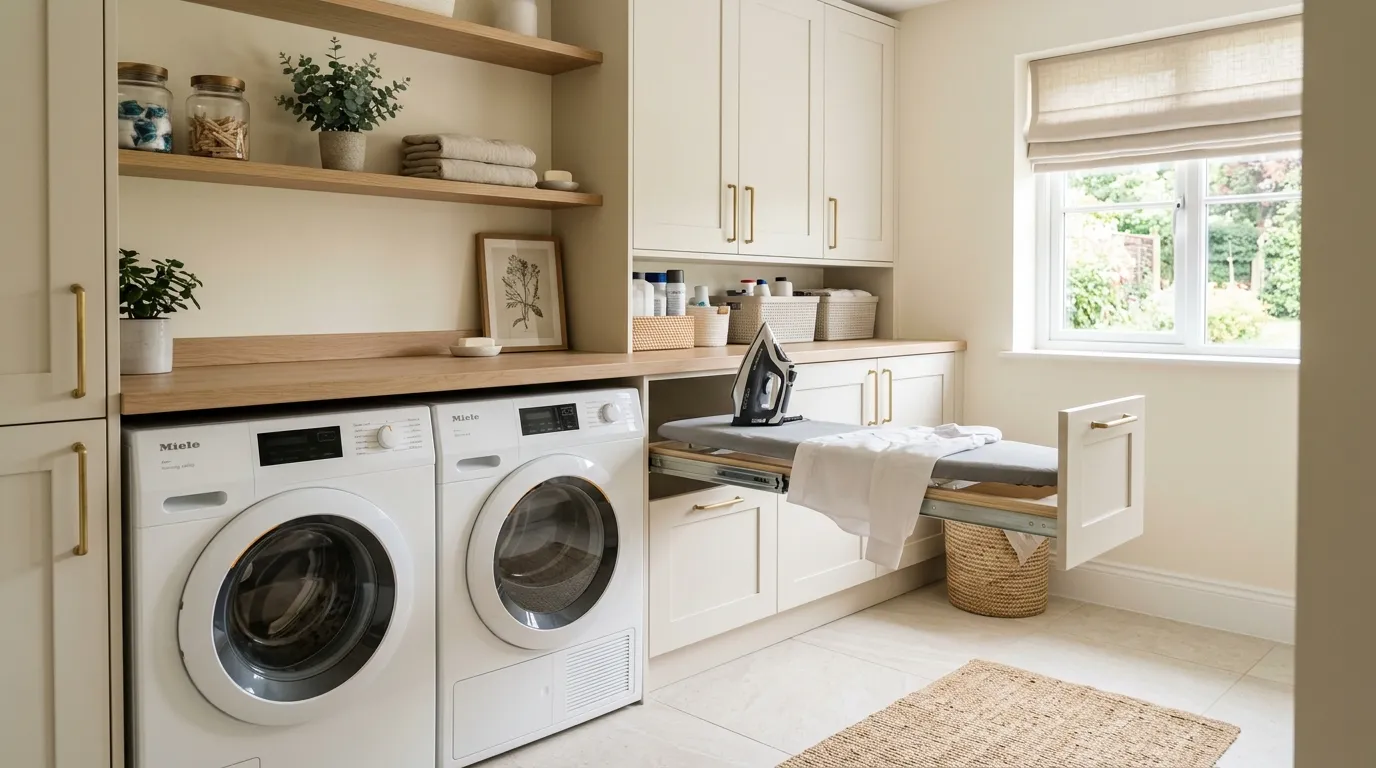
A hidden ironing station gives the laundry room one more useful function without allowing bulky equipment to dominate the space. A pull-out board can be fitted inside a cabinet or mounted discreetly against the wall, then folded away immediately after use. Place it near the dryer or folding counter so freshly dried clothing can move smoothly from one task to the next. Keep the iron, pressing cloth, and spray bottle in a nearby drawer or narrow cabinet. In my experience, concealed ironing storage works especially well because equipment stays accessible without creating another permanent obstacle.
For a cohesive appearance, match the station’s cabinet finish to the surrounding storage so it disappears when closed. A shallow vertical cabinet can hold the ironing board, iron, and other pressing accessories without taking much floor space. If the room is especially compact, a fold-down wall-mounted board can provide the same function with an even smaller footprint. Keep the area near the board clear so it can be opened comfortably and used safely. This practical feature completes a well-organized laundry workflow, giving clothing a dedicated finishing area while preserving the clean, modern appearance of the room.
Conclusion
A well-designed laundry room doesn’t need to be large or expensive to feel organized and inviting. These modern laundry room ideas show how thoughtful storage, practical layouts, and stylish details can completely transform an everyday space. Choose one or two ideas that fit your needs, then build from there with colors, baskets, shelving, or cabinetry you love. I’ve seen how small changes can make a room feel dramatically more functional and enjoyable. Save this post on Pinterest for your next home project, try your favorite idea, and share it with someone who could use a little laundry-room inspiration. Create a space that works beautifully for you!