New Year Home Organization Ideas for a Tidy Fresh Home
January organization almost always fails in one predictable way: people buy pretty boxes before they make any real decisions. The order that actually works is the reverse — decide what stays, give it a home an arm's reach from where it is used, and only then let a basket anywhere near it.
These new year home organization ideas build small systems room by room: a drop zone that catches the day, labels that end the guessing, counters that stay clear because everything under them has a job.
Set up one system at a time and live with it for a full honest week. Systems that survive real life beat perfect cupboards that quietly collapse by February.
1. Build an Entryway Drop Zone That Catches the Day
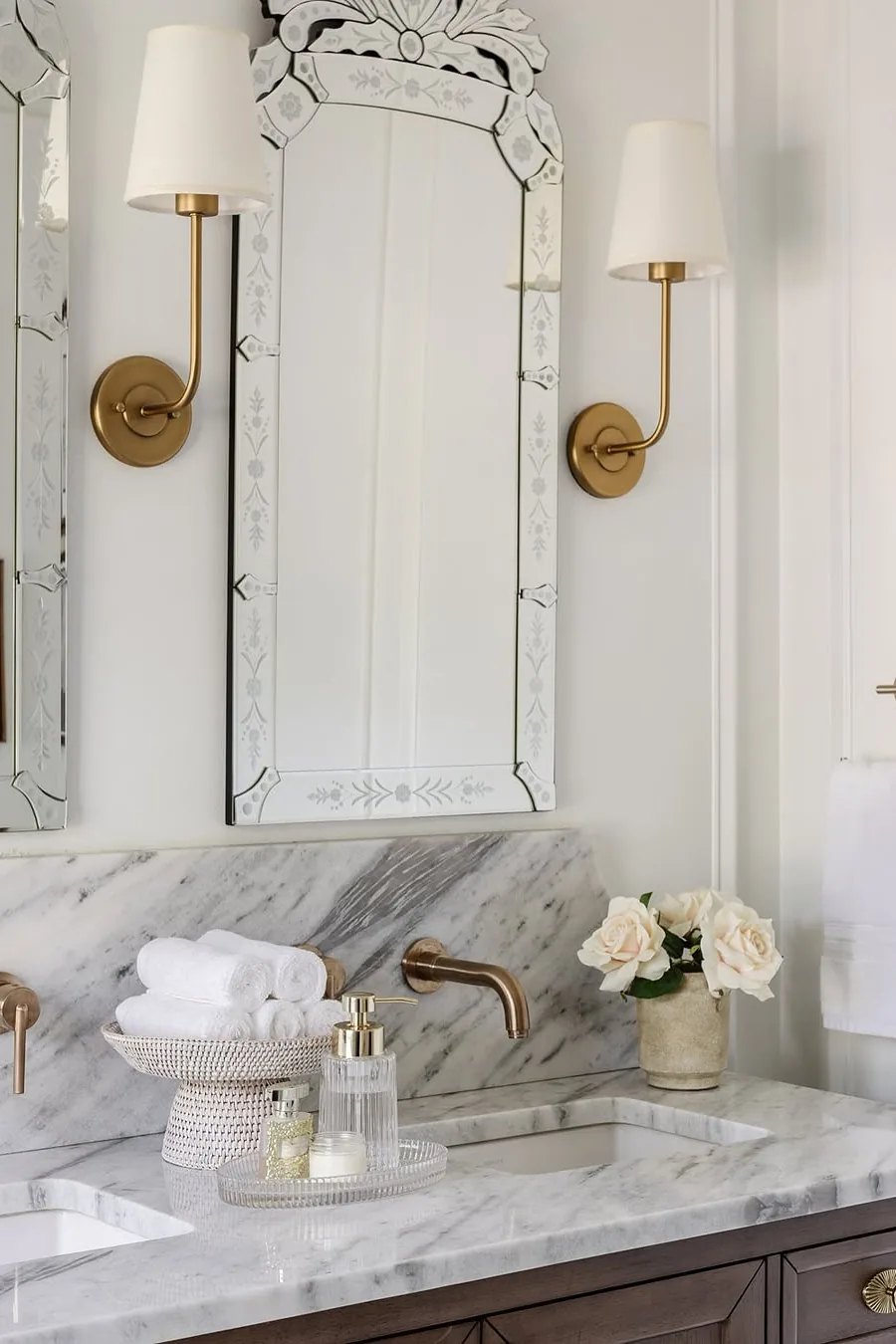
Photo credit: @blesserhouse on Instagram
Every home has a drop zone — the only question is whether it is designed or accidental. Choose the wall or corner by the door and give it four things: hooks at two heights, a tray or shallow bowl for keys and post, one basket per person for gloves and bits, and a defined shoe spot. Everything that enters the house now has an address.
Size it honestly to your household. Two people need a tray; a family needs the basket system. What it cannot be is optional — the zone only works when it is easier to use than the floor.
Placement note: Put the drop zone where the door actually swings and people actually stand, not where it photographs best. Systems fight human paths at their peril, and human paths always win.
Give the zone a one-week trial before you drill or commit. Live with the hooks where your hands naturally want them, notice where bags actually land, and adjust heights and baskets to the evidence. A drop zone tuned to real behaviour keeps working in month six; one installed from a catalogue quietly becomes a very organised place that nobody uses.
2. Give Every Basket and Box a Label
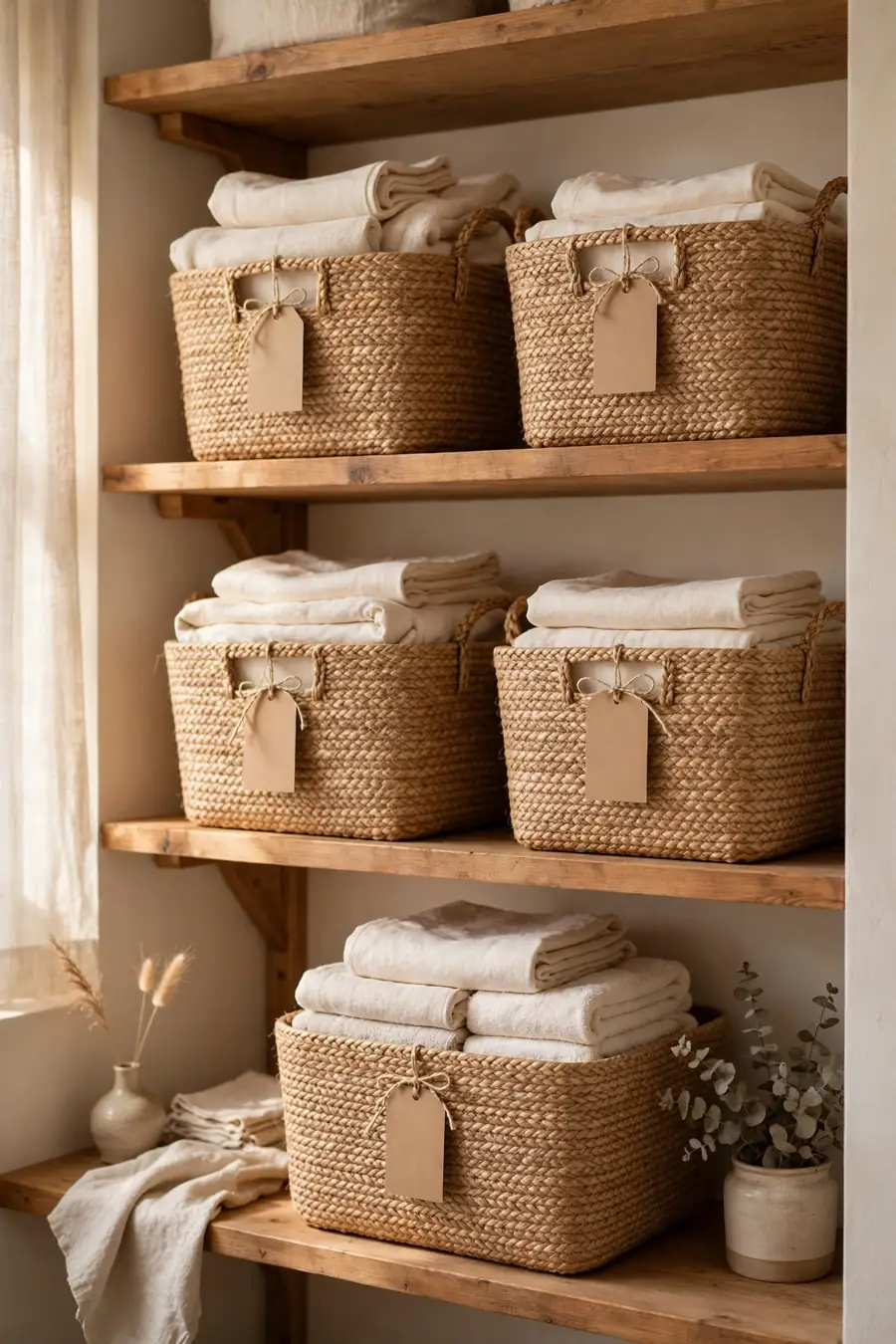
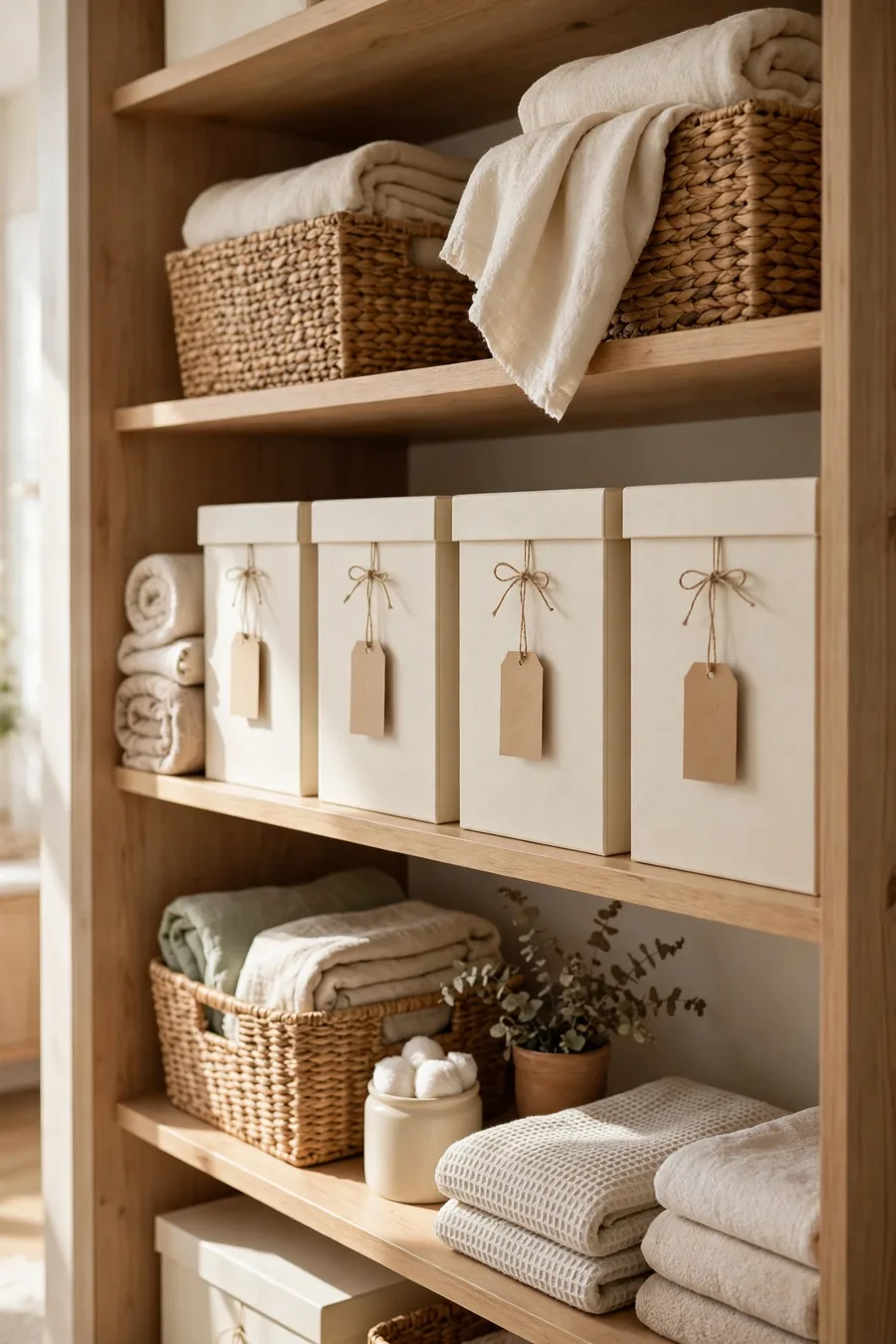
Unlabelled storage is just tidy-looking guessing. A label — chalk tag, kraft card, printed strip — turns "somewhere in the basket" into a system the whole household can maintain without asking you. Label the category, not the poetry: Batteries. Lightbulbs. Dog things. Tape and scissors.
Labels also edit for you. The moment you cannot name what a box holds, the box holds candidates for the charity bag. And when everything is labelled, putting things away becomes a thirty-second job a child can do correctly.
Style note: One label style everywhere — same tags, same handwriting or font — makes open storage look deliberately styled instead of apologetic, even on the busiest shelf.
You May Also Like: Sparkly Winter Decor Ideas for a Cozy Bright Home Look
3. Clear Kitchen Counters Back to Working Space
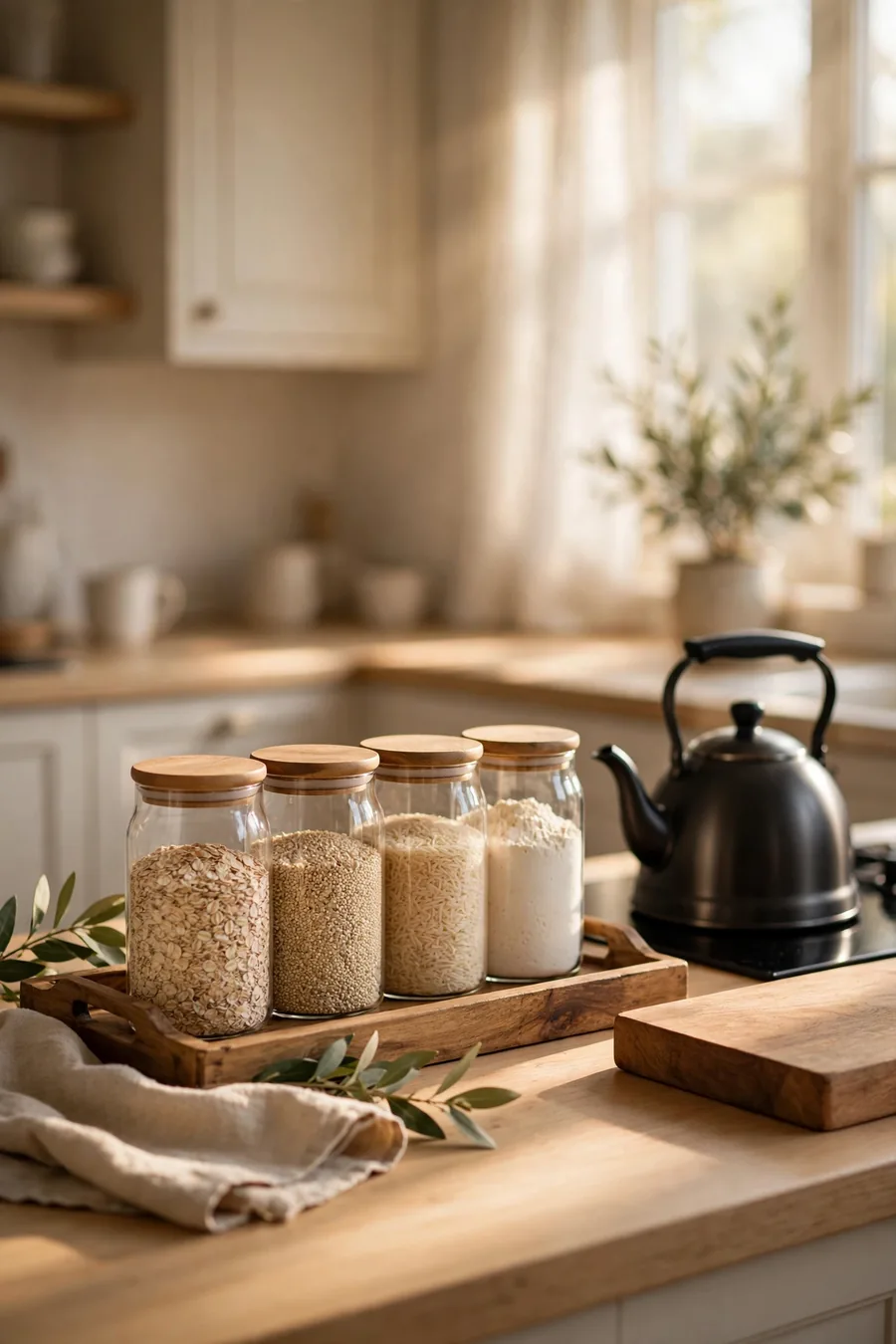
A tidy kitchen is mostly empty counters with a few beautiful workers left out. Keep only what you use daily — kettle, board, oil, the jar of utensils you actually reach for — and give everything else a cupboard home. Decant the daily dry goods into matching jars and the counter you keep will style itself.
Group what remains: a tray under the coffee things, a board under the oils, one rail or crock for tools. Grouped items look intentional; scattered ones look unfinished even in a clean kitchen. One cleared stretch of counter is also a gift to whoever cooks: prep space is the difference between a kitchen that hosts happily and one where dinner starts with moving things out of the way. In organization, empty is not wasted — empty is ready.
Daily note: Counters re-clutter at the speed of post and groceries. A two-minute nightly return — everything to its home — is the difference between a system and a photograph.
4. Sort Linens and Blankets Into Reachable Order
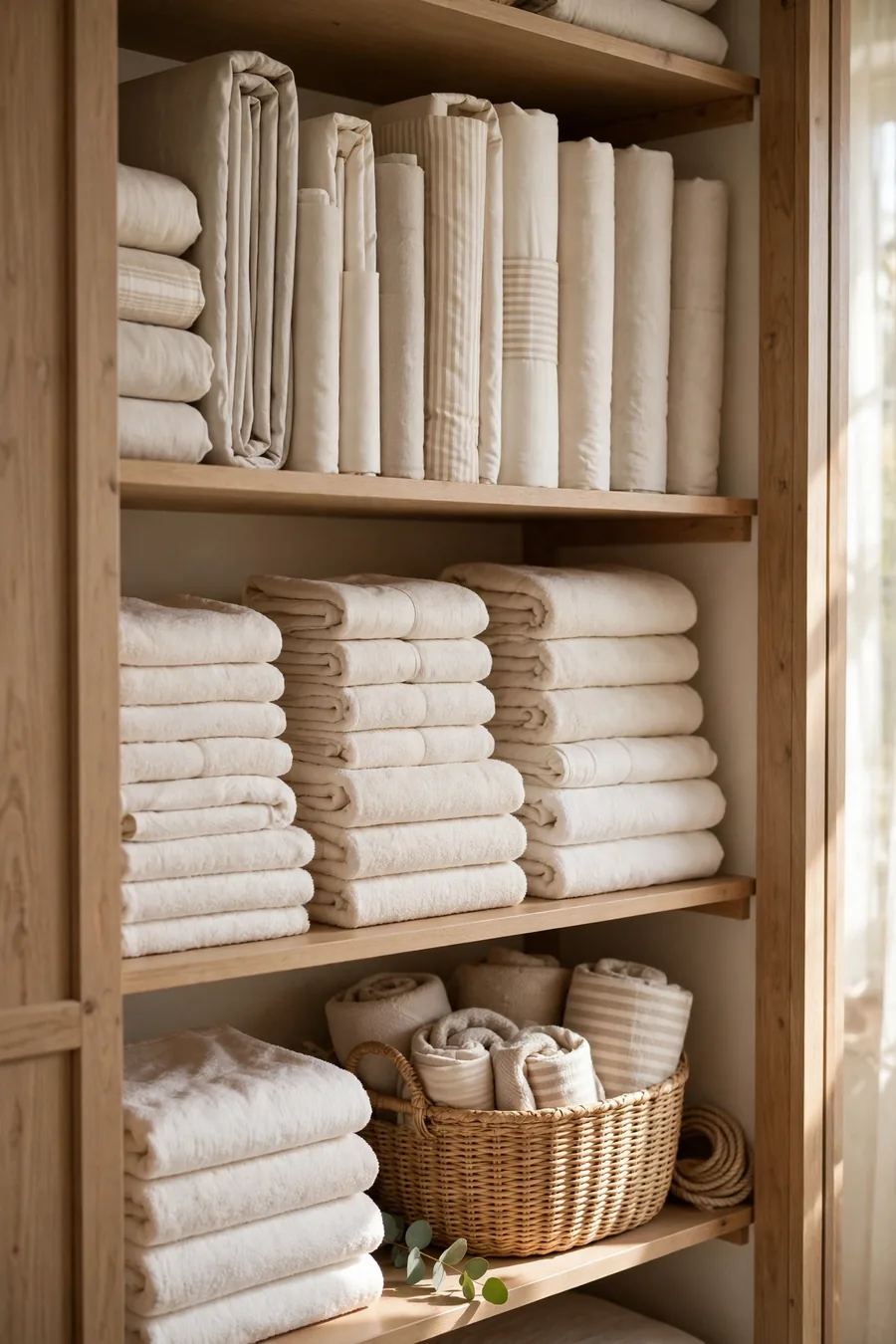
Linen storage fails when the thing you need lives at the bottom of a teetering pile. Fold by set — sheet, cases, and duvet cover together, ideally inside one of the pillowcases — and stack sets upright like files where possible. Throws get the same treatment: folded, on one shelf or in one basket, in season order.
Store by frequency. Everyday bedding at hand height, guest and seasonal at the top, the deep spares at the back. January is the perfect audit: anything scratchy, stained, or never chosen is quietly retired now.
Folding note: File-folding towels and linens — standing them in rows instead of stacks — lets you pull one without avalanching five. It takes ten extra seconds per fold and saves ten minutes per week.
You May Also Like: 21 Modern Laundry Room Ideas for a Stylish Organized Space
5. Tame the Paper Piles and Cord Corners
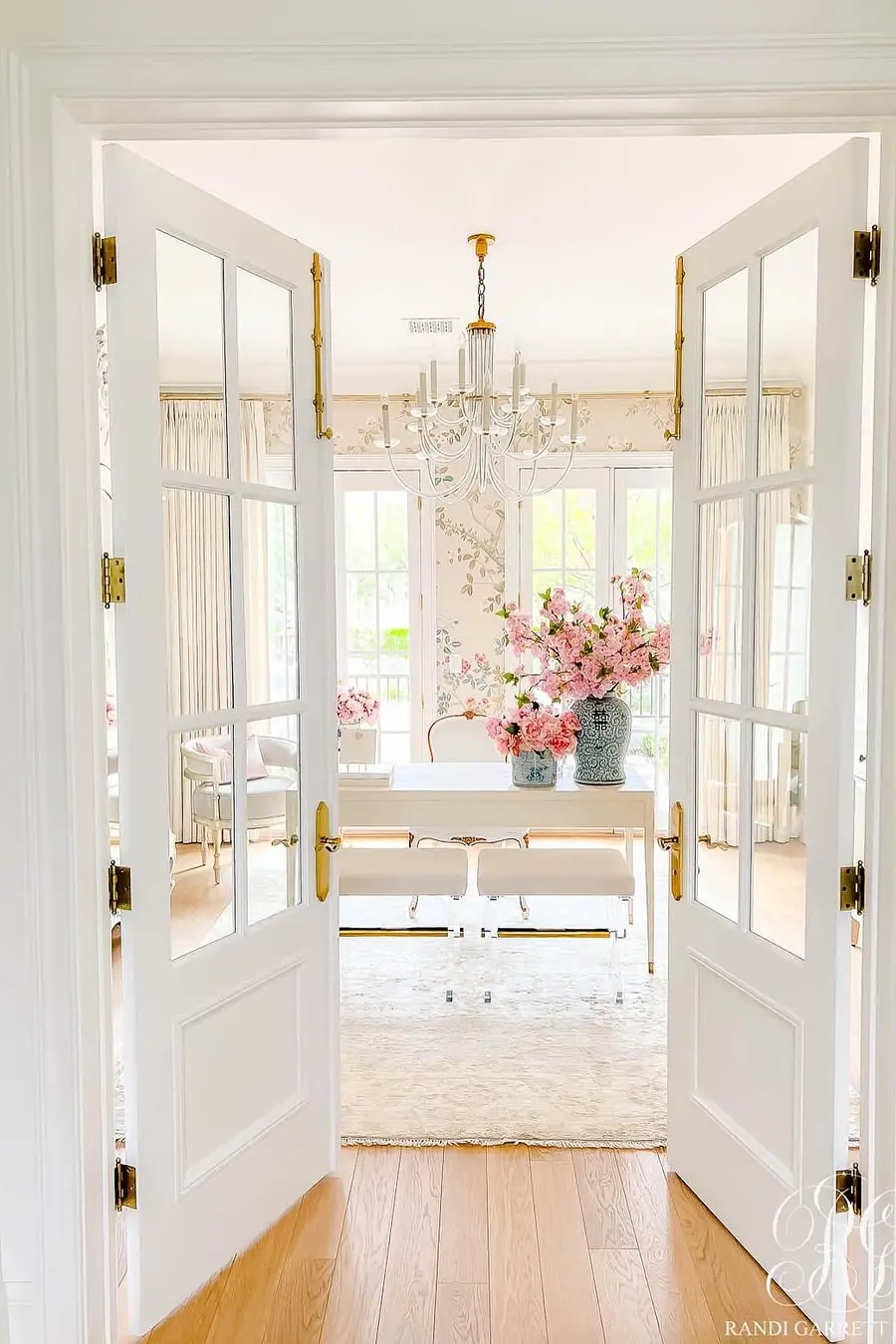
Photo credit: @randigarrettdesign on Instagram
Every home has two chaos magnets: paper and cords. Give paper one — only one — inbound tray, and sort it the day it lands: act, file, recycle. A small upright file for the act pile keeps January's paperwork from annexing the kitchen counter by March.
Cords get a basket or a box with a lid wherever charging happens, cables clipped or tied, and the power strip off the floor. One charging home per floor ends the nightly cable safari and the mysterious disappearing charger entirely.
Rule note: Systems need a verb, not just a container. The tray works because "sort it the day it lands" is attached to it. Name the habit when you set the box down.
6. Use Walls and Vertical Space You Already Own
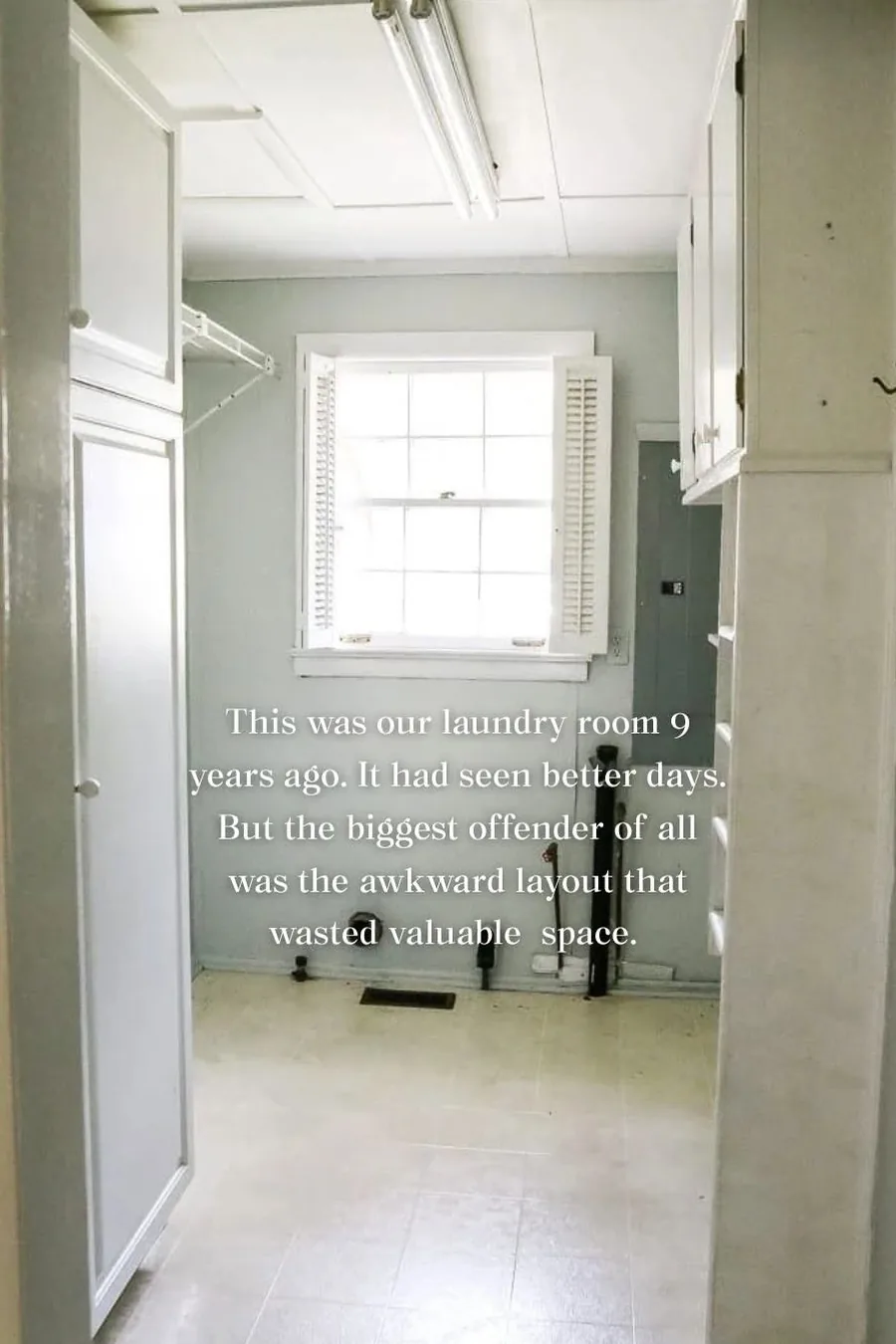
Photo credit: @blesserhouse on Instagram
When floor and cupboard run out, the walls are still empty. Rails with hooks in the kitchen, a peg rail in the entryway, shelves above desks and doors, hooks inside cupboard doors — vertical storage keeps daily things visible, reachable, and off the counters you just cleared.
Style it like decor and it behaves like decor: matching hooks, baskets in one material, nothing hung that is not genuinely used. A rail of copper pans or a row of woven baskets organizes and decorates in the same square foot.
Renting note: Adhesive hooks rated for real weight, tension rods inside cupboards, and over-door rails give you vertical systems with zero holes to fill when you leave.
You May Also Like: 22 Minimalist Living Room Ideas for a Calm Modern Space
7. Install the Ten-Minute Nightly Reset
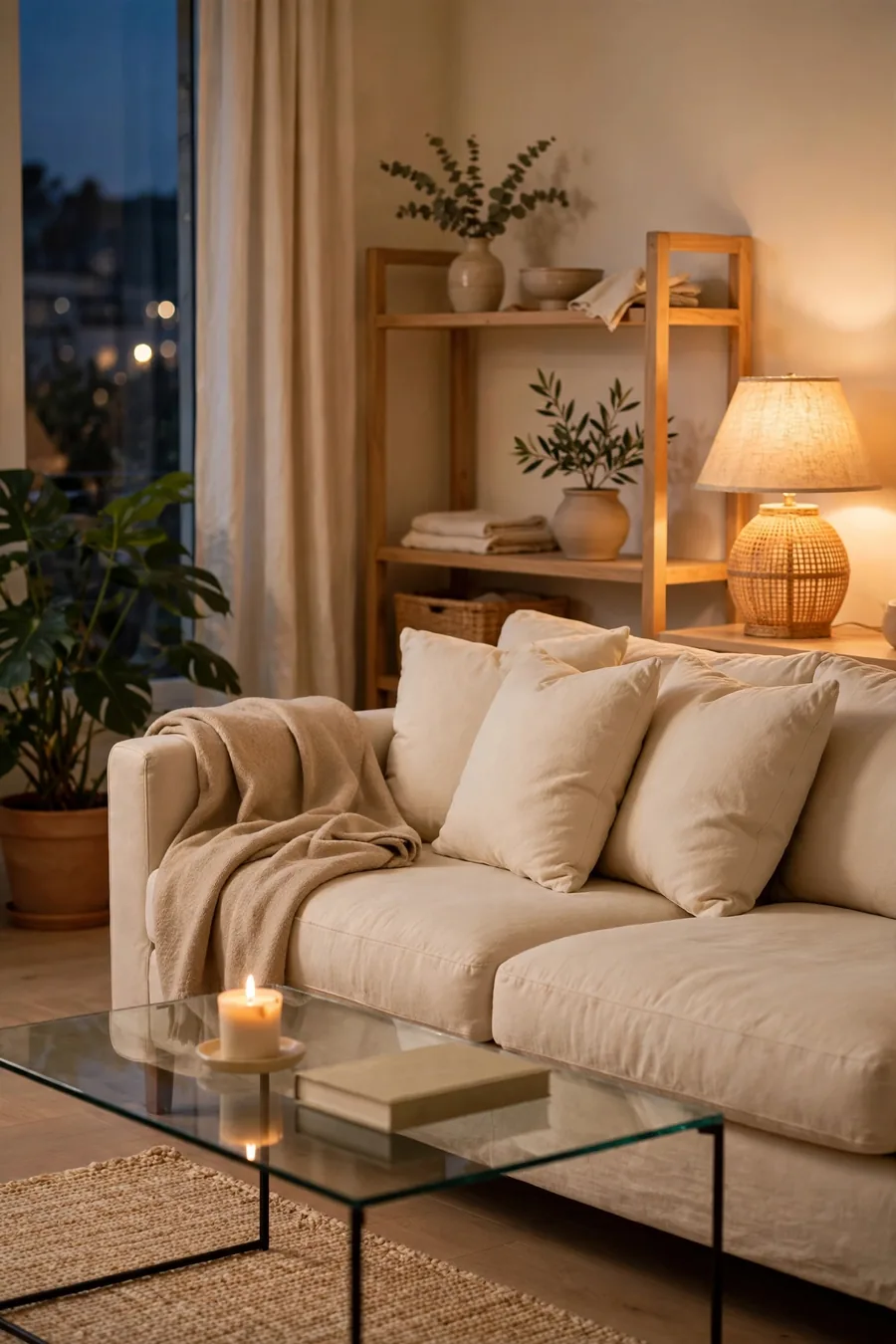
Organization is not a January event; it is a ten-minute evening habit. Walk one loop of the home with a basket: things out of place ride along and get dropped at their homes, surfaces get one wipe, cushions get a plump, the drop zone gets emptied of strays. That is the whole system, and it is why tidy homes stay tidy.
Attach it to something immovable — after dinner dishes, before the evening show — and make it everyone's job in miniature. Ten shared minutes nightly outperforms a heroic monthly purge in every measurable way.
Realistic note: Some nights the reset will be four minutes and slightly theatrical. Do it anyway. Systems survive on "mostly, always" far better than on "perfectly, sometimes."
New Year Organization Cheat Sheet
| Zone | The system | The habit that keeps it alive |
|---|---|---|
| Entryway | Hooks, tray, basket per person | Everything lands in the zone |
| Storage | One label style everywhere | Name it or it leaves |
| Kitchen | Clear counters, tray-grouped workers | Two-minute nightly return |
| Paper and cords | One inbound tray, one charging basket | Sort paper the day it lands |
| Whole home | Ten-minute nightly reset loop | Attach it to dinner dishes |
Frequently Asked Questions
What are the best new year home organization ideas to start with?
Start at the door and the kitchen counter. A working entryway drop zone and clear, tray-grouped kitchen counters change daily life immediately and build the motivation — and the habits — for every cupboard that follows.
How do I organize a small home with no storage space?
Go vertical and go labelled: rails, peg hooks, shelves above doors, and baskets that all match. Then shrink what needs storing by category until each thing you own fits the home it has. Small homes stay tidy by editing volume, not by hiding it.
What should I buy first for home organization?
Nothing, until each category has a decided home. Then buy containers in one style, one material, sized to the shelf they will live on — and labels before lids. Most organization money is wasted on beautiful boxes solving the wrong problem beautifully.
How do I stop my organization systems from collapsing?
Attach a small habit to every container: sort daily, return nightly, reset in ten minutes. Systems fail from missing habits, not missing boxes. Keep systems where life happens and make using them easier than not using them.




One Comment