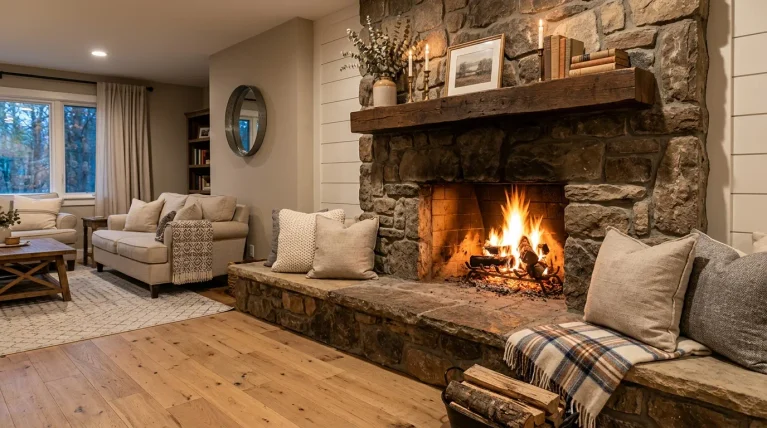
Your fireplace can look beautiful in every season without a complete decorating makeover. ✨
A few thoughtful changes can turn an ordinary mantel into your favorite corner of the room.
If you’re searching for year round mantle decor, you’re in the right place.
This collection brings together 22 versatile mantel ideas designed to work beyond a single holiday or season. You’ll find simple ways to layer greenery, pottery, mirrors, artwork, natural wood, candles, woven textures, and soft colors for a display that feels warm and intentional. The goal is not to fill every inch of your mantel, but to create a balanced focal point that works with your everyday home. In my experience, the easiest decorating routines start with a few timeless pieces and use small accents for seasonal updates. As you explore these ideas, you’ll find plenty of inspiration to create a mantel that feels personal, polished, and easy to refresh
1. Layered Neutral Mantel
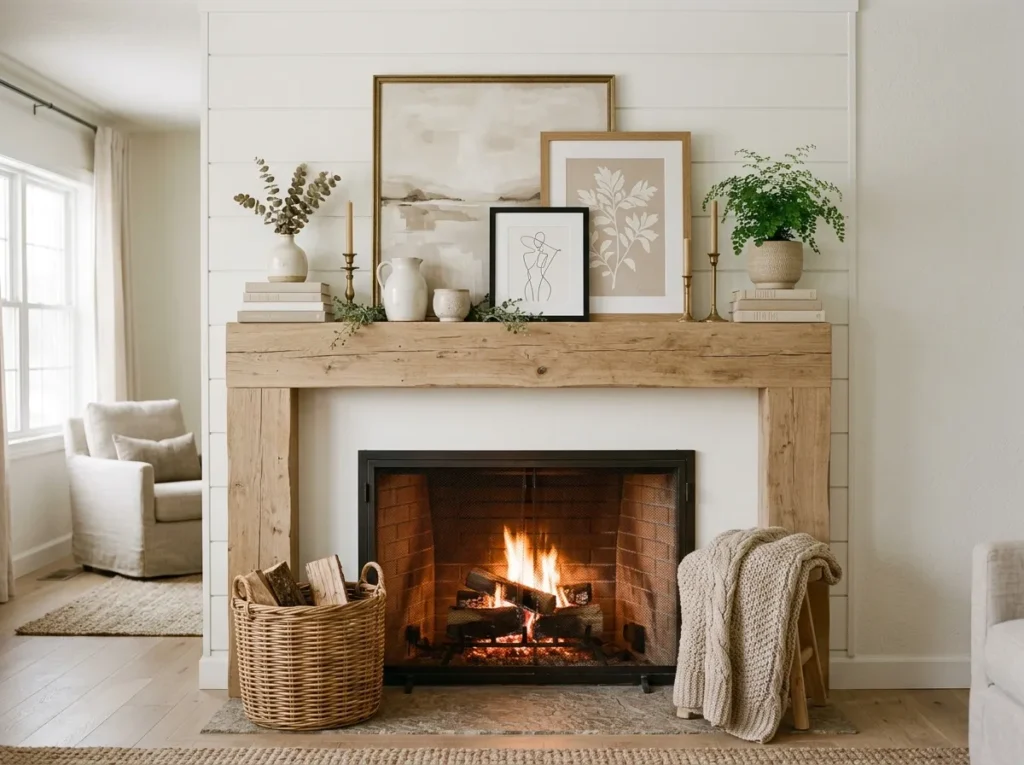
- Layer different heights to make the mantel feel thoughtfully styled.
- Combine ceramics, frames, and greenery for texture without clutter.
- Keep the palette neutral so it works across every season.
- Add one larger focal piece to anchor the arrangement.
A neutral mantel can become the most versatile feature in your living room. Layering cream pottery, soft greenery, framed artwork, and natural wood creates a polished look without relying on seasonal colors. This approach works especially well when you want year round mantle decor that feels fresh without constant redecorating. In my experience, varying the height of each object makes even a narrow mantel look more intentional. Start with one larger piece at the back, then overlap smaller accents in front. The finished display feels warm, balanced, and easy to refresh with one or two simple seasonal touches.
Natural wood brings warmth to a mantel without making the space feel tied to one decorating season. A wooden frame, carved bowl, small riser, or simple branch arrangement can add organic texture while keeping the display relaxed. I’ve noticed this combination works particularly well in rooms with white walls because wood creates gentle contrast without looking harsh. Mix two related wood finishes, then soften the arrangement with cream ceramics or muted greenery. The result feels welcoming in spring, cozy in winter, and equally appropriate when you simply want an everyday living room centerpiece.
2. Natural Wood Accents
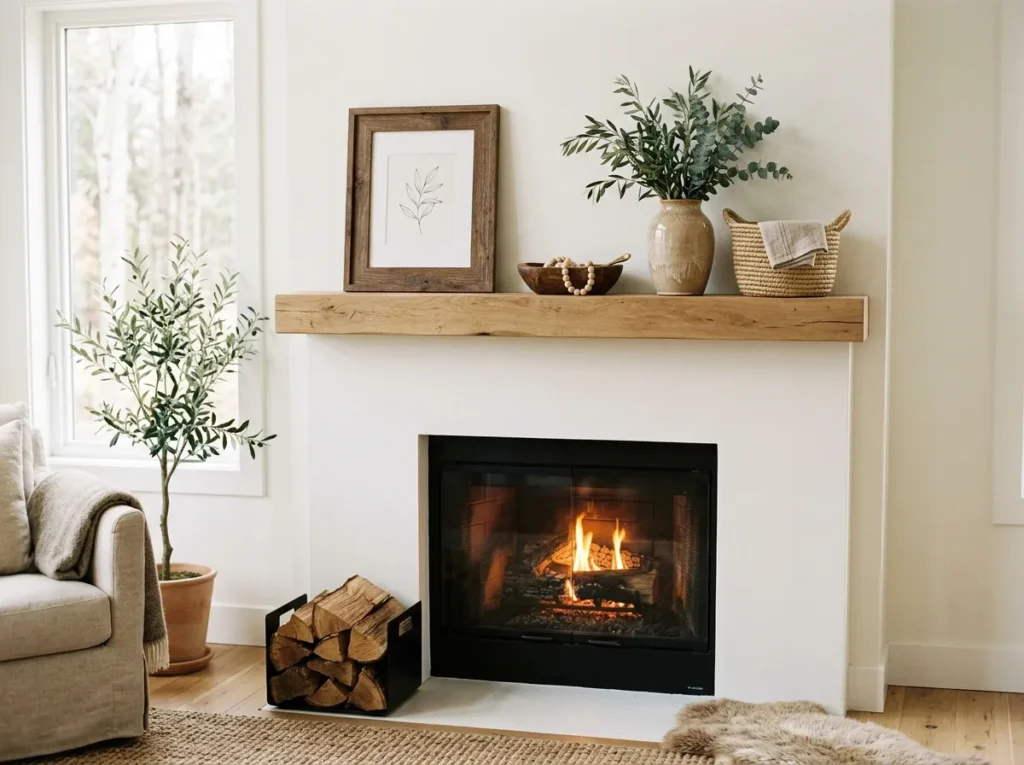
- Natural wood instantly adds warmth to a plain fireplace.
- Pair wooden pieces with ceramics to prevent the display from feeling heavy.
- Choose finishes that complement nearby furniture and flooring.
- Use small greenery for a fresh contrast against warm wood tones.
Natural wood brings warmth to a mantel without making the space feel tied to one decorating season. A wooden frame, carved bowl, small riser, or simple branch arrangement can add organic texture while keeping the display relaxed. I’ve noticed this combination works particularly well in rooms with white walls because wood creates gentle contrast without looking harsh. Mix two related wood finishes, then soften the arrangement with cream ceramics or muted greenery. The result feels welcoming in spring, cozy in winter, and equally appropriate when you simply want an everyday living room centerpiece.
Wooden accents also make it easier to connect the fireplace with the rest of the room. If your flooring, coffee table, or shelves already feature natural wood, repeating that material on the mantel creates visual continuity. Keep the shapes varied so everything does not look overly matched. A round bowl beside a rectangular frame can provide an easy balance. For smaller fireplaces, use lighter wood pieces and fewer accessories to avoid a crowded appearance. This simple approach adds warmth, texture, and character while keeping the mantel flexible enough to complement changing colors, furniture, and seasonal details.
3. Evergreen Mantel Styling
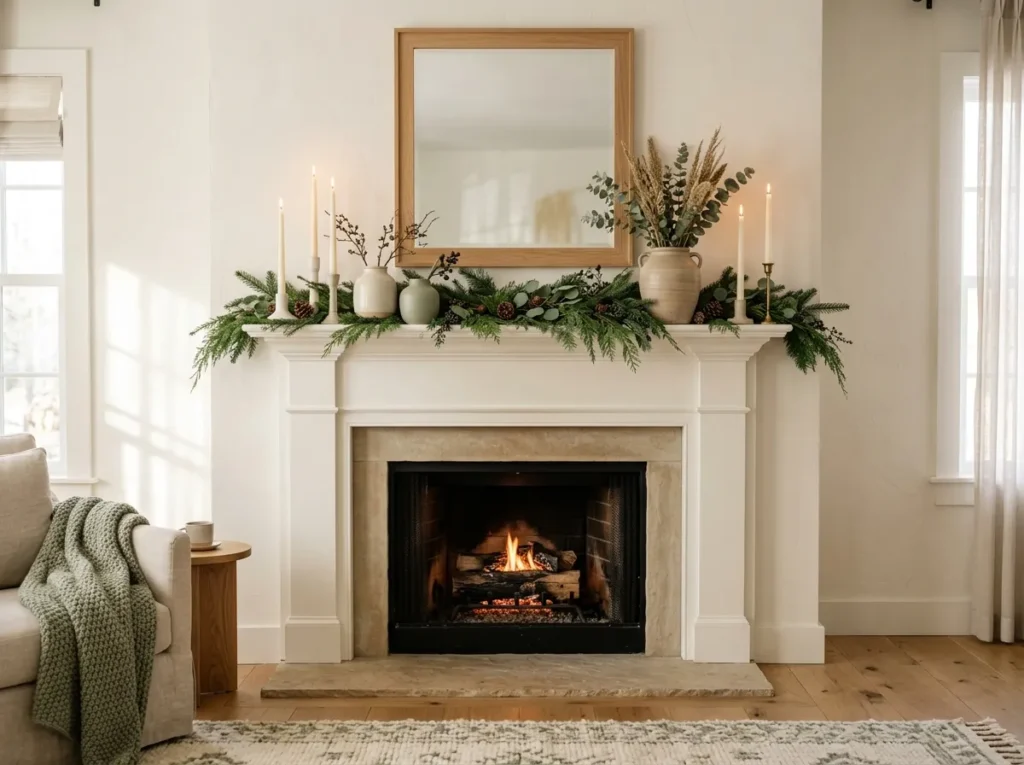
- Evergreen branches create a fresh look that works beyond the holidays.
- Use muted greenery instead of bright seasonal decorations for versatility.
- Add candles or ceramics to balance the natural foliage.
- Let a few branches extend naturally for a relaxed, organic finish.
Evergreen branches are an easy way to bring natural color and texture to the fireplace throughout the year. Instead of using heavily decorated holiday garlands, choose simple eucalyptus, olive branches, pine stems, or muted greenery that feels timeless. This makes the arrangement useful long after winter decorations are packed away. Place the foliage loosely across the mantel and balance it with neutral pottery, candles, or a framed mirror. The greenery adds softness to hard fireplace materials while creating a calm focal point. For year round mantle decor, this is one of the simplest options to maintain and refresh.
The key is choosing greenery that feels decorative rather than strongly tied to a specific holiday. Soft eucalyptus can suit a spring-inspired room, while olive branches work beautifully with warm neutral interiors. During colder months, fuller evergreen stems can add cozy texture without requiring a complete makeover. I’ve seen this work especially well when the foliage is slightly asymmetrical, allowing the mantel to feel natural instead of overly staged. Keep the surrounding accessories simple, and let the greenery provide the main visual interest. This creates a fresh, relaxed display that remains attractive through changing seasons.
4. Oversized Mirror Centerpiece
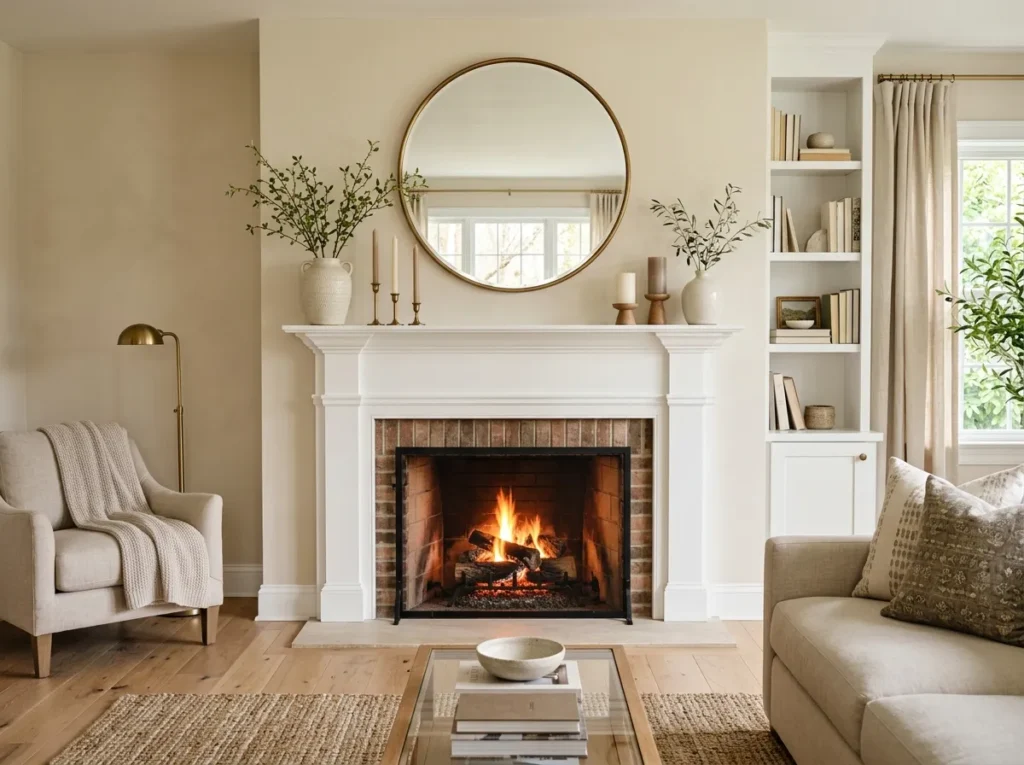
- A large mirror instantly creates a strong focal point.
- Reflective glass helps make smaller rooms feel brighter and more open.
- Keep accessories low so the mirror remains the main feature.
- Choose a frame that complements existing metals and furniture.
An oversized mirror can make a fireplace feel larger, brighter, and more finished with very little effort. Centering a round or softly arched mirror above the mantel creates an immediate focal point while reflecting natural light around the room. This works especially well in smaller living spaces where heavy artwork might feel overwhelming. Keep the accessories underneath simple, such as two ceramic vessels, a candle, or a small branch arrangement. The result feels polished without being formal. I’ve noticed that rounded mirrors also soften fireplaces with strong rectangular lines, creating a more balanced and welcoming room.
The mirror can remain in place while smaller accessories change throughout the year, making this setup especially practical for an everyday display. In spring, add fresh greenery; during autumn, introduce warm pottery; and in winter, bring in subtle candlelight. You do not need to redecorate the entire mantel to create a seasonal shift. Pay attention to the reflection too, because the mirror should ideally face an attractive part of the room rather than a cluttered corner. When positioned thoughtfully, it doubles the visual impact of your styling while making the surrounding space feel more open.
5. Ceramic Vase Collection
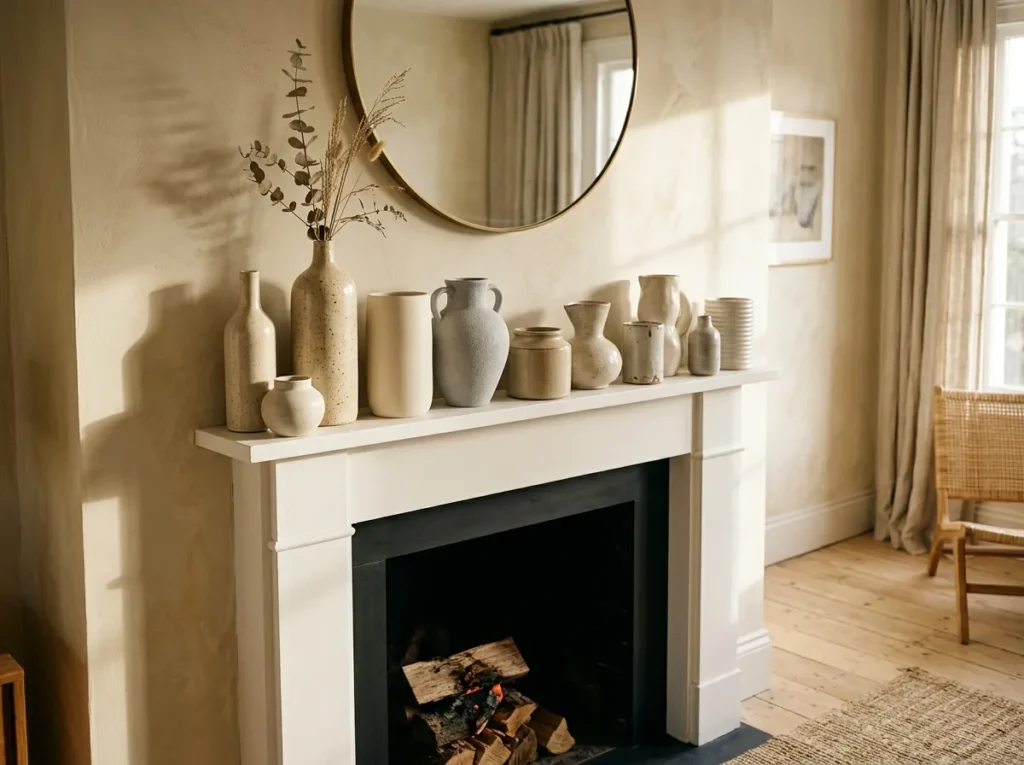
- Mix several vase shapes while keeping the color palette connected.
- Use different heights to create an effortless layered arrangement.
- Leave small areas of empty space so the collection can breathe.
- Add a few stems for height without overcrowding the display.
A collection of ceramic vases gives a mantel texture and personality while remaining easy to adapt throughout the year. Choose pieces in different shapes, sizes, and finishes, then group them together instead of spreading them evenly across the entire surface. This creates a collected appearance that feels more natural than a perfectly matched set. Neutral ceramics are particularly versatile because they work with colorful artwork, natural greenery, and changing seasonal accents. In my experience, combining matte and lightly textured finishes adds enough visual interest without making the arrangement feel busy or difficult to maintain.
You can make the collection feel completely different simply by changing what sits inside the vessels. Leave some empty for sculptural interest, add delicate branches in spring, or use dried stems when you want warmer texture. Keep the tallest vase toward the back and place shorter pieces slightly forward to create depth. If the mantel is narrow, choose fewer vessels rather than squeezing everything together. This styling technique also works beautifully with existing decor because ceramic tones tend to blend naturally with wood, stone, woven materials, and soft textiles already found in comfortable living rooms.
Also Read: 24 Modern Fireplace Ideas for a Stylish Cozy Home
6. Framed Art Layers
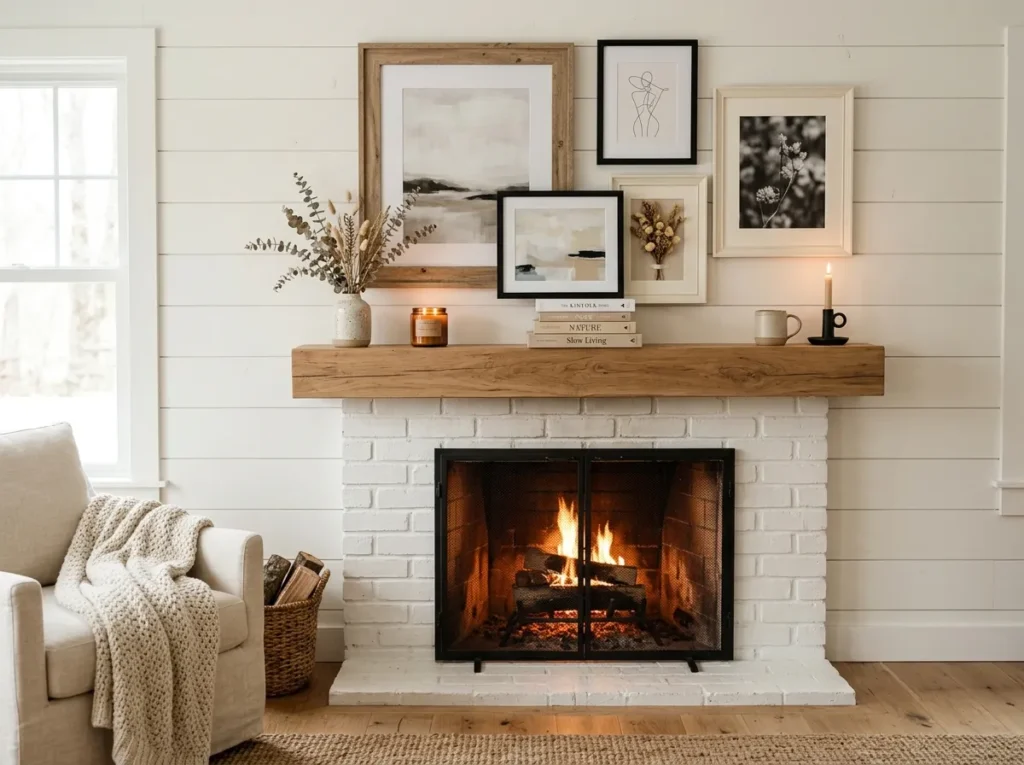
- Layer frames instead of hanging every piece separately.
- Mix artwork sizes to create depth and visual movement.
- Use similar colors to keep multiple prints from looking chaotic.
- Lean smaller frames against larger artwork for an effortless finish.
Layered artwork can turn a simple fireplace into a personal focal point without requiring permanent wall changes. Start with one larger framed print, then lean a smaller frame slightly in front of it. Add a ceramic object or small vase beside the artwork to break up the rectangular shapes. This arrangement feels relaxed because the pieces are not perfectly aligned. Choose prints that share one or two colors so the display remains cohesive. I’ve noticed that leaning artwork also makes seasonal updates much easier because you can swap one print without rebuilding the entire mantel.
The beauty of this arrangement is its flexibility. Botanical prints can create a fresh spring feeling, abstract artwork can suit a modern room, and vintage-inspired pieces can add warmth during cooler months. You can also mix frame materials, such as natural wood with thin black or brass edges, as long as the overall palette stays controlled. Leave a little breathing room around each object so the mantel does not become visually crowded. When the artwork, accessories, and surrounding furniture share a few repeating tones, the entire living room feels connected and intentionally styled.
7. Woven Texture Layers
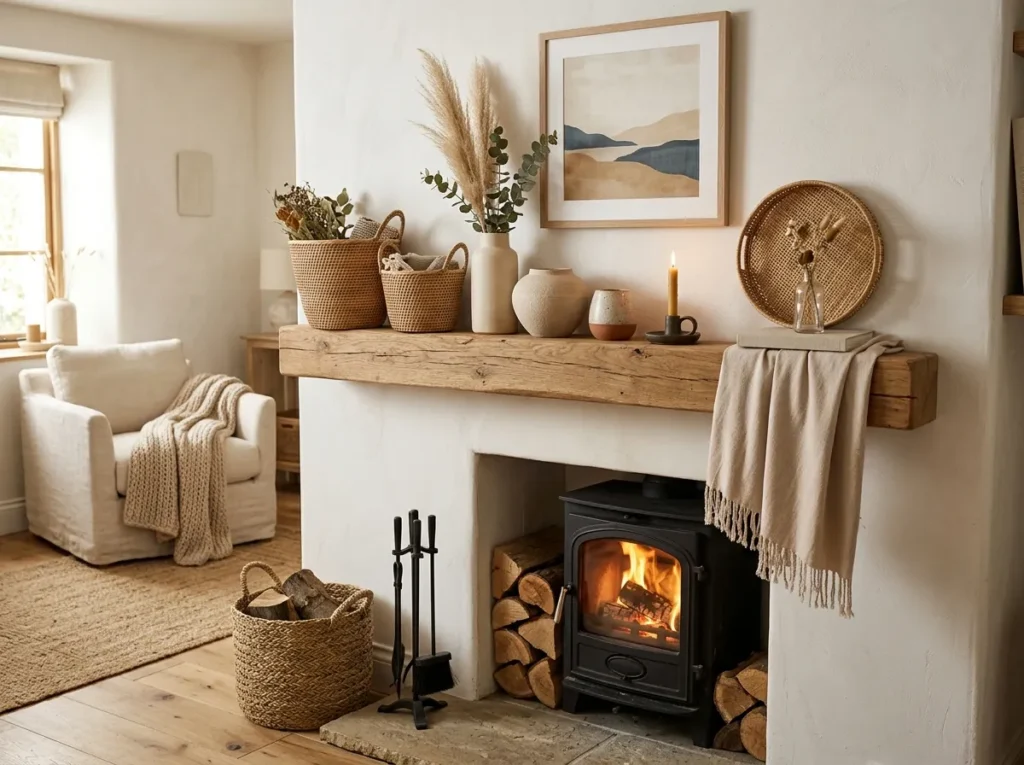
- Woven materials add warmth and natural texture to a plain mantel.
- Combine rattan with ceramics for an attractive material contrast.
- Use one larger woven piece as the visual anchor.
- Keep the color palette soft for an adaptable everyday display.
Woven textures can instantly make a fireplace feel warmer and more inviting without adding bright seasonal colors. A small rattan basket, woven tray, or natural fiber accent introduces depth while keeping the arrangement relaxed. This style works especially well with neutral furniture because the texture provides visual interest where color is intentionally limited. Place one larger woven piece near the center or slightly off-center, then balance it with ceramic vessels or a simple frame. The combination feels casual but finished, making it easy to keep in place through changing seasons.
Texture becomes even more effective when you avoid using too many similar woven pieces together. One basket paired with smooth pottery, natural wood, and a small amount of greenery creates a more layered appearance. If your fireplace already has stone, brick, or textured plaster, woven accents can soften those harder surfaces. I’ve noticed that warm natural fibers also help minimalist rooms feel less stark. Choose pieces with slightly different patterns or weaves, but keep their colors close. That small variation gives the mantel character while preserving a calm, cohesive appearance.
8. Black and White Balance
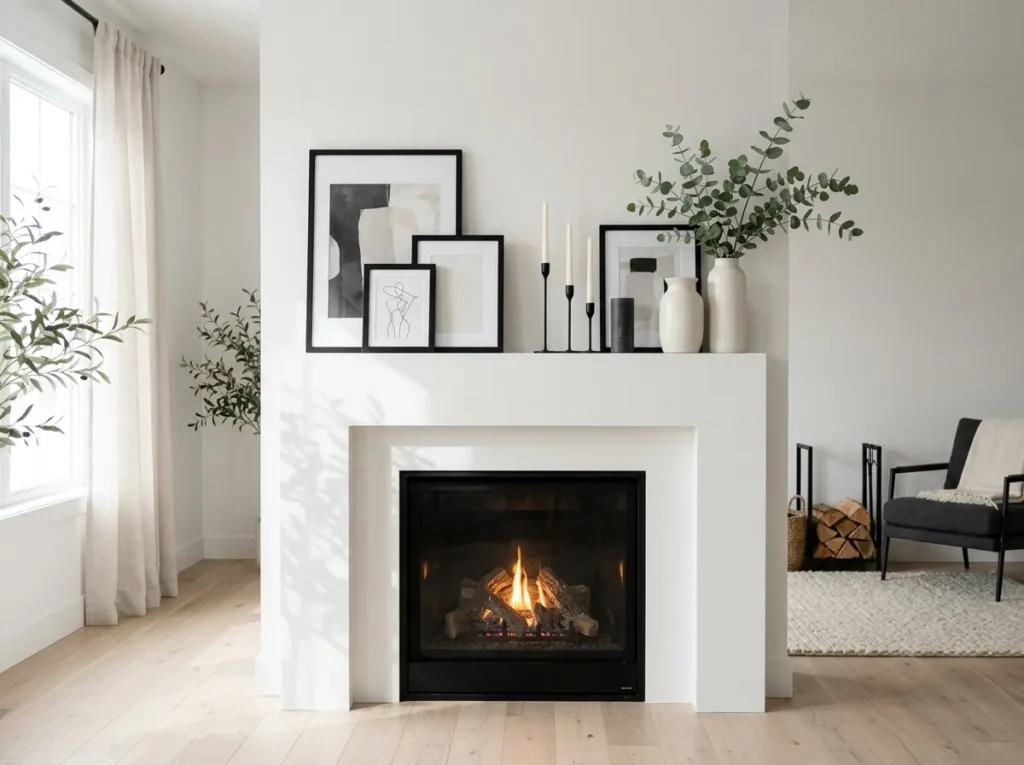
- Black accents create definition against a light fireplace.
- Keep most pieces neutral so darker details do not dominate.
- Repeat black elsewhere in the room for visual connection.
- Mix rounded and rectangular shapes to soften the contrast.
Black and white styling creates a crisp mantel that feels sophisticated in every season. Use a mostly light palette of ivory, cream, and white, then introduce a few black details through frames, candleholders, or small decorative objects. The contrast gives the fireplace stronger definition without requiring colorful accessories. This approach is especially useful when your room already has black window frames, lighting fixtures, or furniture legs. Repeating the darker tone in small doses helps the mantel feel connected to the rest of the room instead of looking like an isolated display.
The secret is controlling the amount of contrast. Too many black pieces can make a small mantel feel heavy, while one or three carefully placed accents can create a polished effect. Try combining a rectangular black frame with rounded ceramic vessels or curved candleholders to soften the look. A small branch arrangement can add a natural element without disrupting the palette. This setup is also easy to update because seasonal accessories can be introduced through texture rather than color. Think linen in warmer months, woven materials during transitional seasons, and soft candlelight when the room feels cooler.
9. Soft Candle Arrangement
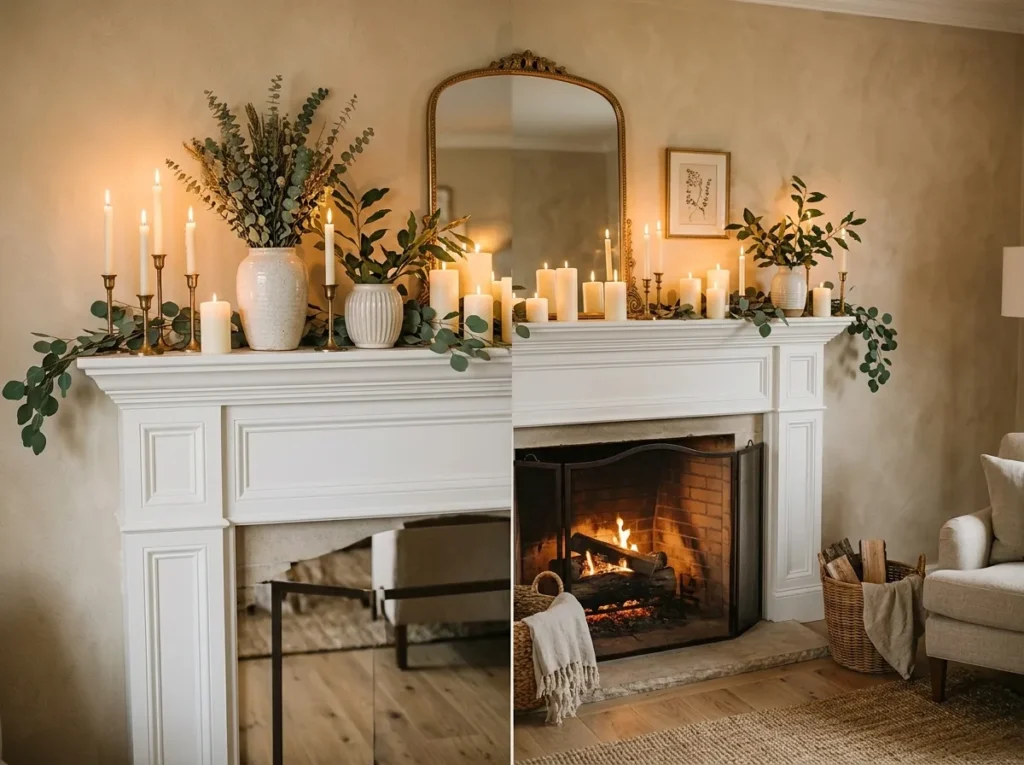
- Group candles at different heights for a softer visual rhythm.
- Use flameless candles when the mantel is close to children or pets.
- Combine candles with ceramics to avoid a repetitive display.
- Choose warm ivory tones for a timeless, calming appearance.
A soft candle arrangement can give your mantel an inviting glow while keeping the overall styling simple. Instead of lining identical candles across the surface, group several heights together and combine them with ceramic vessels or a small branch arrangement. This creates layers that look intentional during the day and especially beautiful in the evening. Warm ivory candles work with almost any decorating palette, so they can remain part of your everyday display instead of being limited to holidays. For practical homes, flameless candles offer a similar atmosphere without an open flame.
Placement matters when creating a candle-focused mantel. Keep taller pieces toward the back and shorter candles toward the front, leaving enough space between groups to prevent the display from feeling crowded. If the fireplace is frequently used, check that every decorative item remains safely away from heat and flames according to the fireplace manufacturer’s guidance. I’ve seen simple candle groupings work particularly well in rooms with darker evenings because the warm glow becomes part of the room’s atmosphere. Pairing them with soft textiles nearby can make the entire seating area feel more comfortable and welcoming.
10. Seasonal Color Swaps
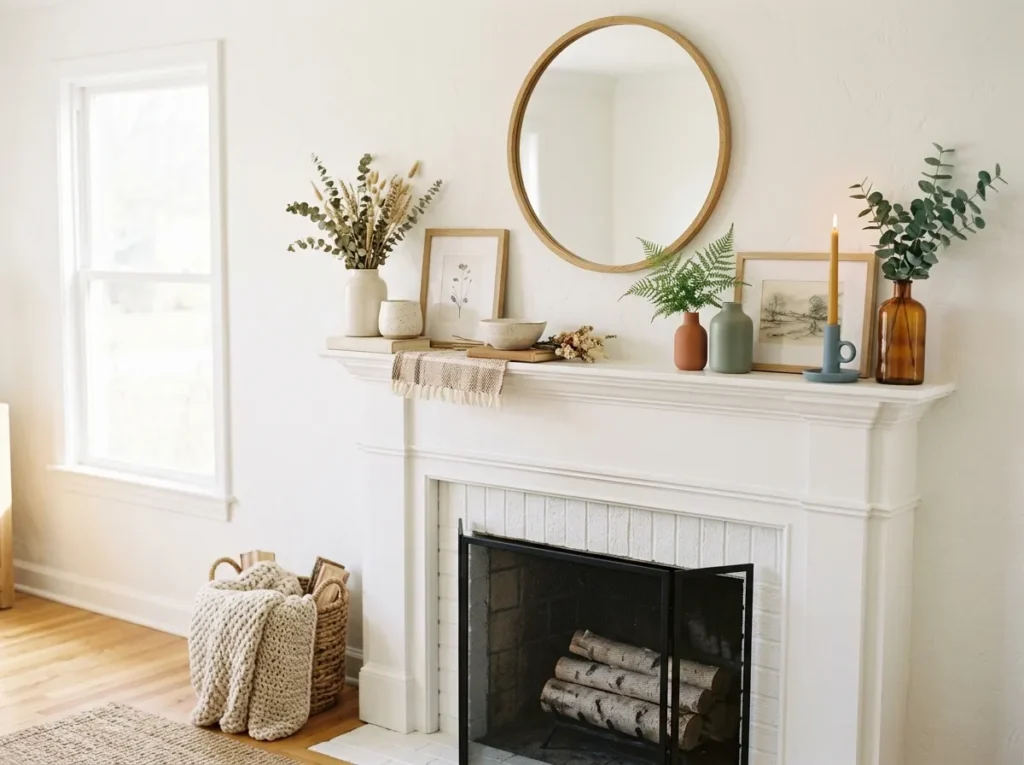
- Keep the main pieces neutral so seasonal changes stay simple.
- Swap only a few accents instead of restyling the entire mantel.
- Use muted seasonal colors for a sophisticated appearance.
- Store small accessories together for faster decorating changes.
Seasonal color swaps make decorating feel fresh without turning every change into a major project. Start with a neutral foundation of ceramics, wood, greenery, and simple artwork, then introduce a few removable accents throughout the year. Sage and soft yellow can brighten spring, dusty blue can work beautifully in summer, while terracotta and warm amber bring autumn character. During winter, deeper greens or burgundy can create a cozy finish. This strategy keeps your everyday arrangement intact while giving it enough variation to feel intentionally updated as the seasons change.
The easiest way to make this work is to focus on small accessories rather than large statement pieces. Replace a vase, candle, framed print, or decorative bowl while leaving your main mirror or artwork in place. In my experience, limiting each seasonal update to two or three color changes prevents the mantel from looking overdecorated. It also reduces storage needs because you only need a small collection of interchangeable accents. When the base remains consistent, every new color feels connected to the room. This creates a practical decorating routine that looks refreshed without requiring constant shopping.
11. Vintage Book Stack
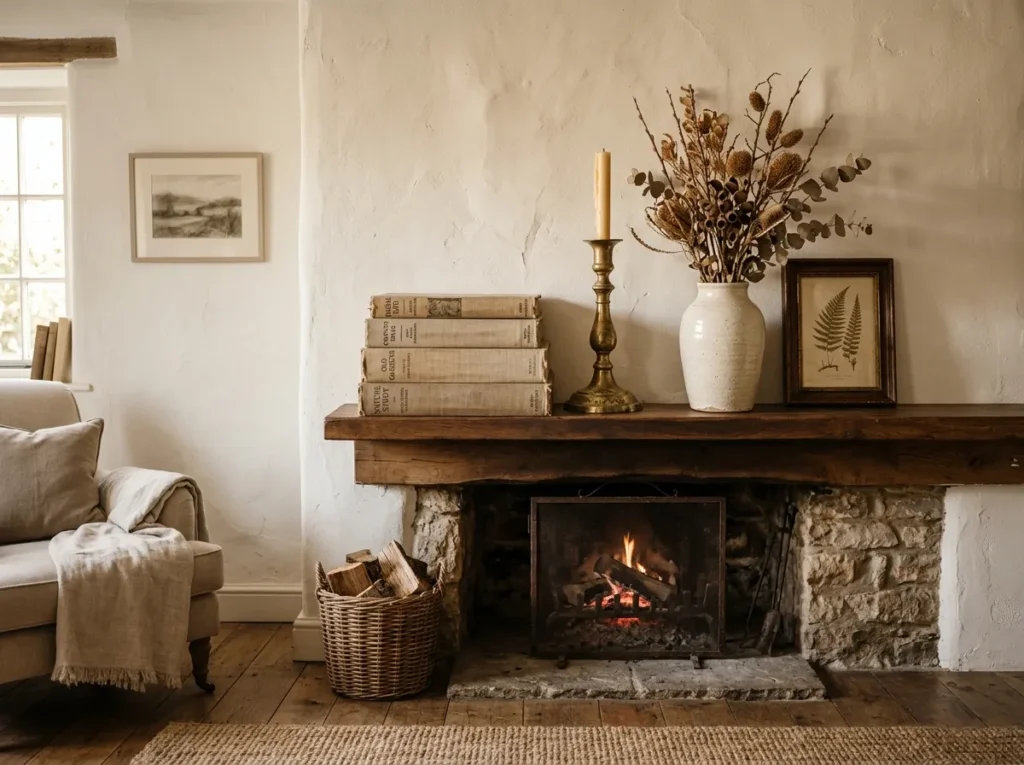
- Stacked books add height to shorter decorative pieces.
- Choose neutral or muted covers for a cohesive appearance.
- Use books to create different levels within the arrangement.
- Combine vintage textures with modern ceramics for contrast.
A small stack of vintage books can add height, warmth, and personality to a mantel without taking over the display. Choose books with muted covers, natural aging, or colors that already appear elsewhere in your room. Stack two or three horizontally, then place a ceramic vase, candle, or small sculpture on top. This creates an easy visual layer while giving shorter accessories more presence. Books also make a mantel feel lived-in rather than overly styled, which is useful when you want a display that looks attractive but still feels connected to everyday home life.
You do not need rare or expensive books to recreate this look. Thrifted books, old hardcover editions, or attractive neutral books from your existing collection can work beautifully. Remove overly bright dust jackets if the colors clash with your room, but keep interesting textures when they add character. Place the stack slightly off-center and balance it with a taller object on the opposite side. I’ve noticed that this simple height trick makes asymmetrical arrangements much easier to build. The books can remain year-round while other small pieces change around them, keeping the mantel fresh without starting over.
12. Minimal Greenery Lineup
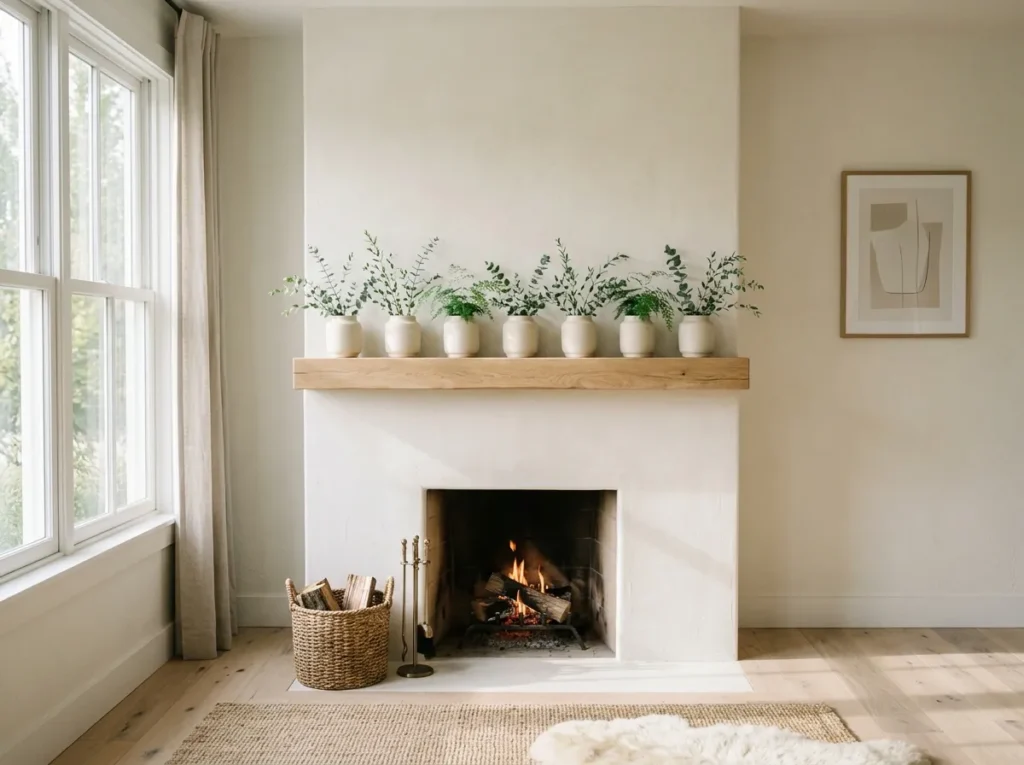
- Repeating small plants creates a clean and organized appearance.
- Use matching or closely related pots for visual consistency.
- Keep the greenery delicate so the mantel does not feel crowded.
- Leave small gaps between each piece for a lighter arrangement.
A simple lineup of greenery can give a mantel a fresh, organized appearance without adding visual clutter. Place three to five small ceramic pots along the surface, keeping their shapes or colors similar while allowing the plants to vary slightly. This repetition creates rhythm and makes a long mantel feel balanced. Choose delicate greenery rather than oversized plants so the arrangement stays low and does not compete with artwork or mirrors above it. The result is especially effective in minimalist or Scandinavian-inspired rooms where clean lines and natural materials are central to the overall design.
This arrangement also works well when you prefer decorating that requires very little decision-making. Once the pots are positioned, you can leave them in place and simply replace individual stems when needed. Faux greenery can be useful if the mantel receives limited natural light, while small live plants can work when conditions are suitable. Keep the pots in a related color family, such as cream, beige, or soft gray, so the greenery remains the main accent. The repeated shapes create visual consistency, while the natural foliage prevents the display from feeling too rigid or sterile.
13. Arched Mirror Styling
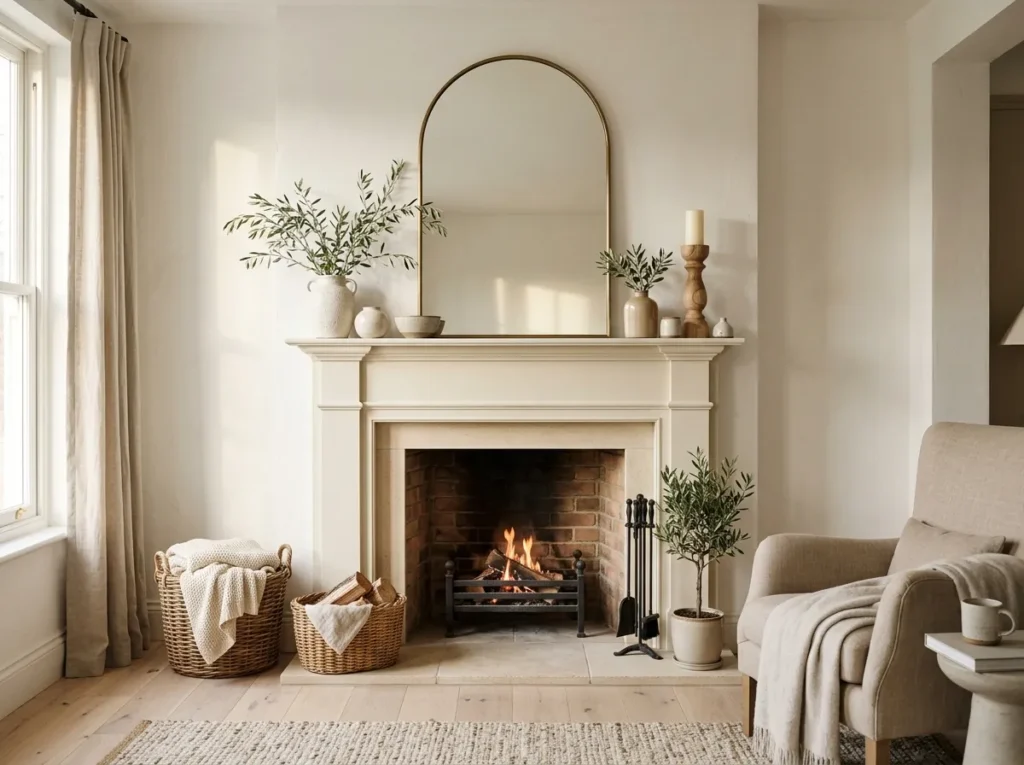
- An arched mirror softens the straight lines of a fireplace.
- Keep surrounding accessories simple so the curved shape stands out.
- Repeat warm wood or brass tones for a connected look.
- Use greenery to add a natural contrast around the frame.
An arched mirror can give a fireplace a softer, more refined appearance while making the room feel visually taller. The curved top contrasts beautifully with the straight lines of a mantel and surrounding furniture. Center the mirror above the fireplace, then add a few low accessories around its base rather than covering the entire surface. Cream ceramics, natural wood, and delicate greenery work especially well here. This arrangement creates a strong focal point without relying on seasonal decorations. It is a particularly useful choice when you want everyday styling that feels elegant but remains relaxed.
The shape of the mirror does most of the decorating work, so resist the temptation to overcrowd the mantel. Leave some open space around the frame and use only a few supporting pieces. If the room has brass hardware, choose a brass-framed mirror for continuity; natural wood works beautifully in warmer interiors. I’ve noticed that arched mirrors are also helpful above smaller fireplaces because their vertical shape draws the eye upward. Add seasonal interest through small accessories rather than changing the mirror itself. That keeps the main composition stable while allowing easy updates throughout the year.
14. Earthy Pottery Mix
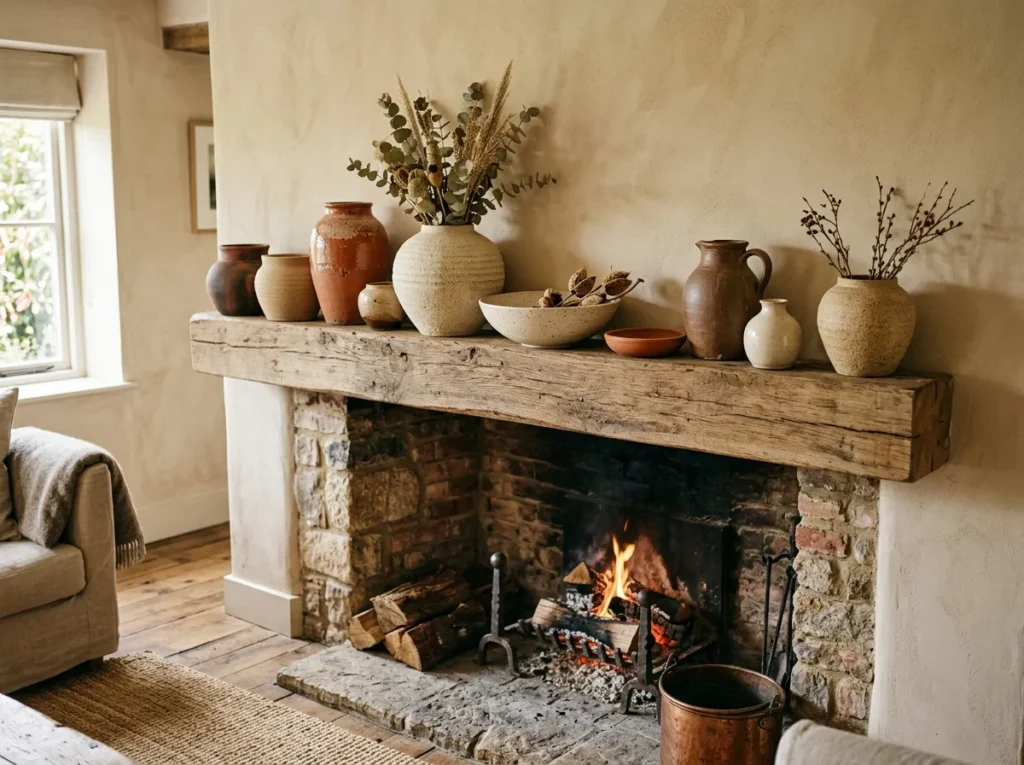
- Earthy pottery adds warmth without relying on bright seasonal colors.
- Mix smooth and textured finishes for more visual depth.
- Use varied shapes to keep the arrangement interesting.
- Repeat one pottery tone elsewhere in the room for cohesion.
Earthy pottery gives a mantel warmth and character while creating a connection with natural materials throughout the home. Choose handmade-looking vases, shallow bowls, and sculptural ceramics in terracotta, sand, cream, and muted brown tones. Instead of arranging everything symmetrically, vary the heights and shapes to create a collected appearance. The slightly imperfect finish of handmade-style pottery also prevents the display from feeling too formal. This approach works beautifully with wood, stone, woven materials, and neutral upholstery, making it easy to maintain as a comfortable everyday arrangement through every season.
A useful trick is to combine pottery with different surface finishes rather than choosing pieces that all look identical. A matte vase beside a lightly speckled bowl can create subtle contrast without introducing another color. Keep the tallest piece toward the back and use smaller objects to build a gentle visual slope. In my experience, earthy tones look especially attractive when natural light hits their uneven surfaces because the shadows reveal additional texture. You can add fresh branches in spring, dried stems in autumn, or candles in winter while keeping the pottery collection exactly where it is.
15. Simple Symmetrical Styling
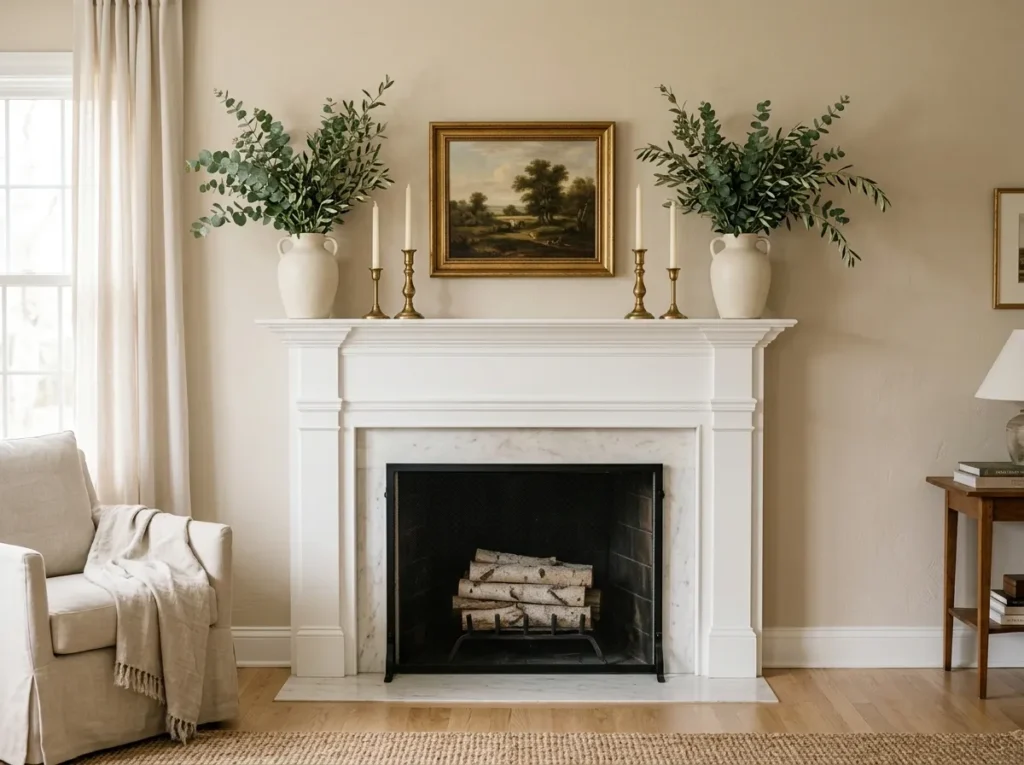
- Symmetry makes a mantel look organized and instantly polished.
- Matching pairs work especially well around a central artwork.
- Keep both sides visually similar without making every detail identical.
- Use symmetry when decorating feels overwhelming or difficult to balance.
Symmetrical styling is one of the easiest ways to make a fireplace look polished when you are unsure where to begin. Place a central mirror or artwork above the mantel, then create similar arrangements on both sides using matching vases, candleholders, or small plants. The repeated shapes naturally guide the eye across the display and make the room feel organized. This method works particularly well in traditional, transitional, and farmhouse interiors where balanced arrangements feel natural. It also provides a reliable foundation for year round mantle decor because the structure can remain unchanged.
Perfect symmetry does not mean every object has to be identical. You can use matching containers with slightly different greenery or similar accessories in related colors. The goal is to create equal visual weight on both sides rather than an exact mirror image. If your mantel is narrow, choose smaller pairs so the surface remains open. That’s why many designers recommend starting with symmetry when a space feels visually confusing. Once the basic balance is established, you can introduce small personal details without losing the clean structure that makes the entire fireplace feel intentional.
16. Brass Accent Details
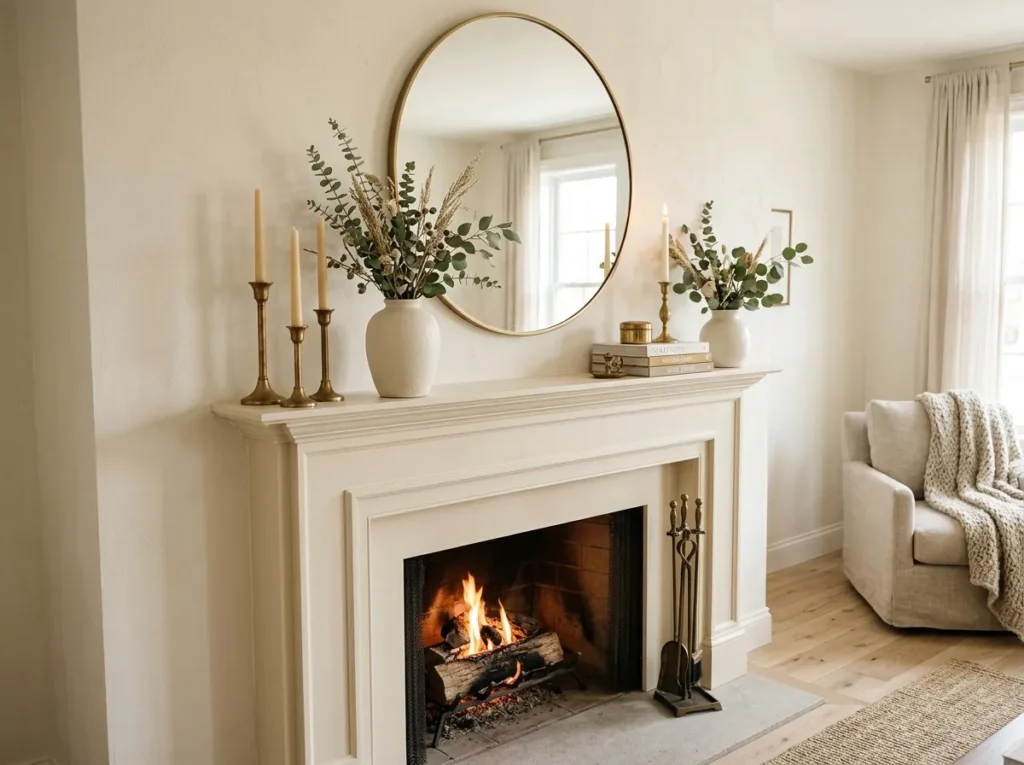
- Brass adds warmth and a subtle polished finish.
- Repeat small metallic details instead of using one oversized piece.
- Pair brass with cream, wood, and greenery for a softer look.
- Choose aged or brushed finishes for a more timeless appearance.
A few brass accents can make an everyday fireplace feel warmer and more sophisticated without turning it formal. Try a pair of slim brass candleholders, a small decorative bowl, or a brass-framed mirror surrounded by neutral ceramics. Warm metallic tones reflect light beautifully, especially during late afternoons or evenings. The key is keeping the amount controlled so the metal acts as a detail rather than the main attraction. This approach works across decorating styles, from modern farmhouse to transitional spaces, because brass naturally bridges warm wood tones and soft neutral colors.
Brass also pairs surprisingly well with natural textures, which helps prevent the mantel from looking too polished. Combine it with linen, woven materials, handmade pottery, or simple greenery for a more relaxed finish. If shiny brass feels too formal, choose brushed or aged finishes instead. I’ve noticed that repeating the same metal in two or three small places creates stronger visual continuity than using many unrelated finishes. Keep your main pieces neutral, then let the brass catch small amounts of light throughout the day. The result feels refined while remaining practical enough for everyday living.
17. Dried Botanical Display
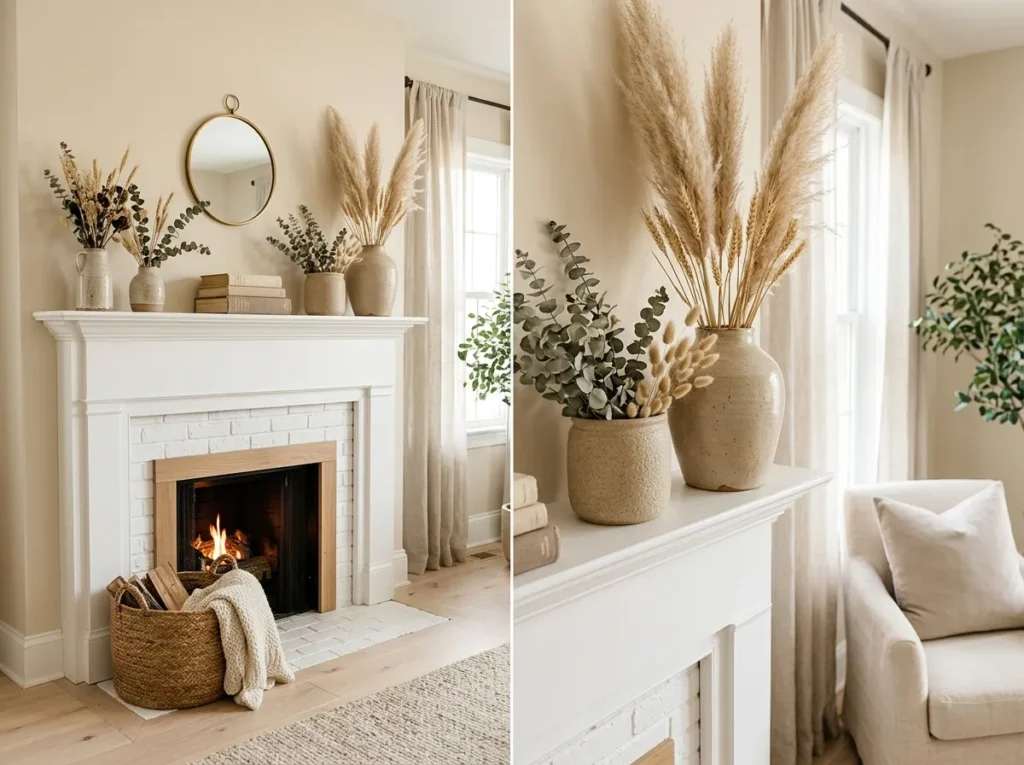
- Dried stems bring natural texture without requiring regular maintenance.
- Use different stem shapes for a more organic arrangement.
- Neutral dried botanicals can complement almost any room palette.
- Choose a tall vessel to add vertical interest above the mantel.
Dried botanicals bring height, movement, and natural texture to a mantel while requiring very little maintenance. Pampas grass, wheat stems, eucalyptus, bunny tails, and other dried branches can create an airy display that feels appropriate throughout the year. Place the tallest stems in a simple ceramic or glass vessel, then balance them with lower objects such as books or small bowls. Their muted colors blend easily with neutral interiors, making this setup especially useful when you prefer decoration that stays attractive without frequent watering, trimming, or replacement.
The best arrangements usually combine several stem shapes rather than relying on one type of dried flower. Fine grasses can soften larger branches, while eucalyptus leaves add a little visual density. Keep the colors within a natural range of cream, beige, tan, and muted green for maximum flexibility. If the display begins to look too tall or busy, trim a few stems rather than replacing everything. I’ve noticed dried arrangements work particularly well in rooms with wood floors and woven furniture because they repeat those organic textures. They create an effortless focal point without making the mantel feel crowded.
18. Farmhouse Basket Display
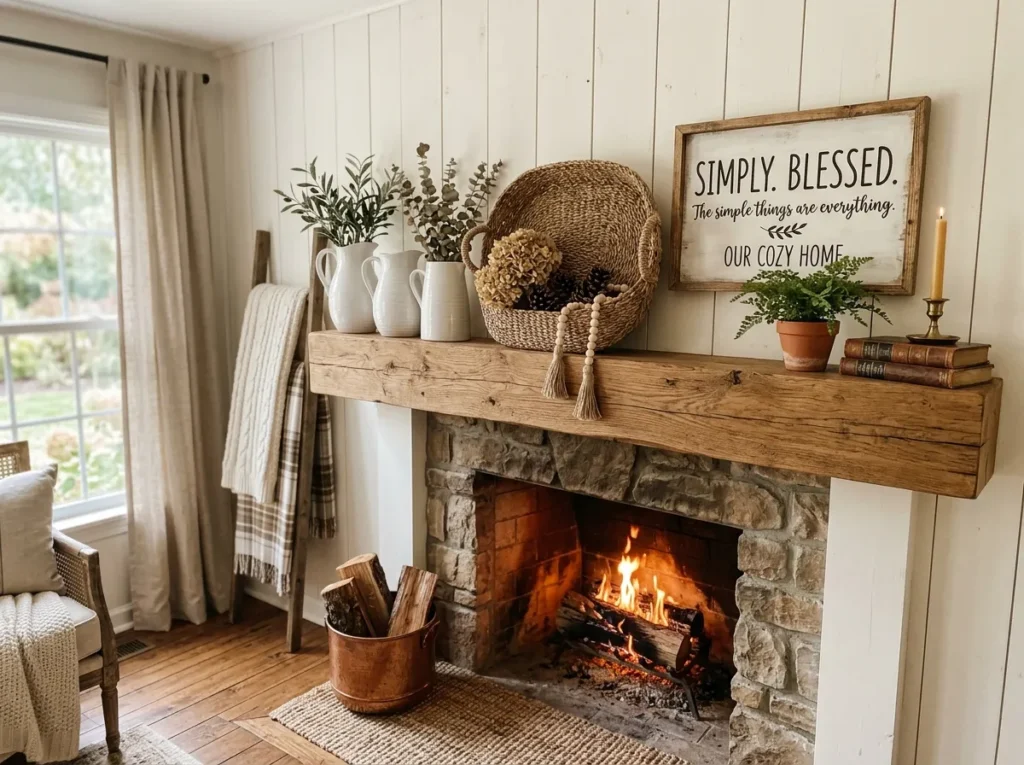
- A shallow basket adds texture while filling empty mantel space.
- Combine woven materials with white ceramics for classic farmhouse contrast.
- Use greenery to soften the basket’s structured shape.
- Choose one larger basket rather than several competing pieces.
A woven basket can turn an empty section of the mantel into a warm, textured focal point. Choose a shallow basket with a natural finish and lean it against the wall behind smaller accessories. Pair it with white pottery, a simple frame, or a few green stems to create the relaxed character associated with farmhouse decorating. The basket provides a larger visual shape without introducing a strong color, making it easy to keep in place through different seasons. This simple combination works especially well when the surrounding room already includes wood furniture or woven accents.
Basket styling does not have to look strictly rustic. A finely woven rattan piece can feel modern, while a chunky natural-fiber basket creates a more casual cottage appearance. Keep the accessories in front relatively low so the basket remains visible rather than becoming hidden behind clutter. If your mantel is short, choose a wider basket instead of a very tall one to maintain comfortable proportions. For year round mantle decor, this type of anchor is especially useful because the surrounding pieces can change while the main woven element continues providing warmth, texture, and structure.
19. Coastal Blue Accents
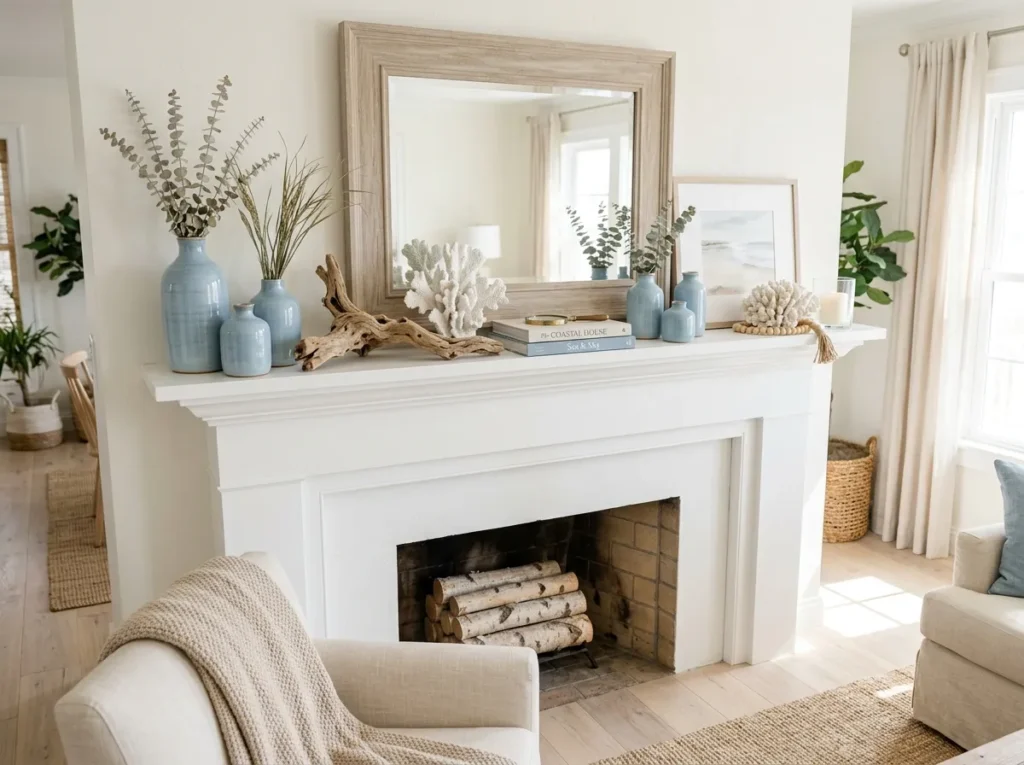
- Soft blue adds freshness without making the mantel feel overly seasonal.
- Combine blue with white and natural wood for a relaxed coastal look.
- Choose muted shades instead of bright turquoise for greater versatility.
- Add woven or driftwood textures to strengthen the coastal feeling.
Soft blue accents can bring a fresh, airy feeling to the fireplace while remaining subtle enough for everyday decorating. Choose dusty blue vases, pale blue artwork, or small ceramic accessories, then combine them with white, beige, and natural wood. The result feels inspired by the coast without becoming overly themed. This color combination works especially well in rooms with plenty of natural light because the lighter shades help maintain an open appearance. A few carefully placed blue pieces can also create a noticeable seasonal refresh without requiring a complete change to your existing mantel arrangement.
For a more sophisticated coastal look, avoid filling the mantel with obvious nautical decorations. Instead, focus on color, texture, and natural materials. A weathered wood frame, woven basket, white ceramic vessel, or delicate greenery can provide the coastal character without anchors or seashells everywhere. I’ve noticed muted blue works particularly well when repeated in another part of the room, such as a cushion or artwork. Keep the main mantel pieces neutral and introduce blue through two or three smaller accents. This creates a calm, balanced display that can remain attractive well beyond summer.
20. Moody Contrast Layers
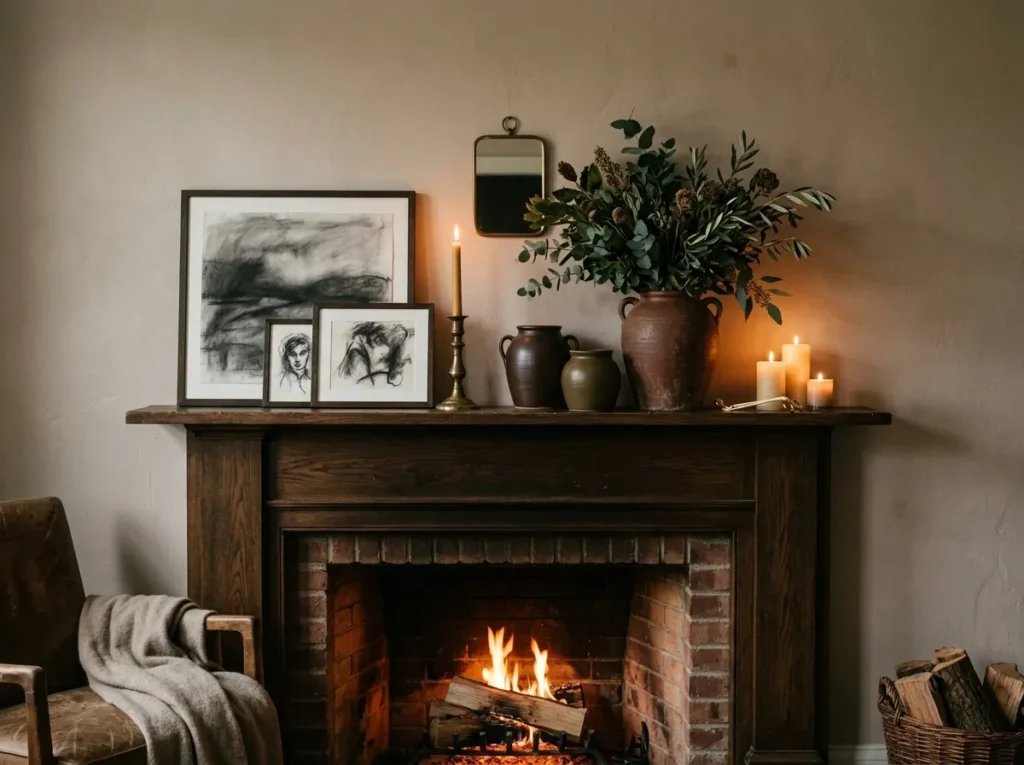
- Dark accents create depth against lighter fireplace surroundings.
- Warm metals help soften charcoal and deep brown tones.
- Use greenery to introduce a natural contrast.
- Keep darker pieces concentrated in small areas for visual balance.
Moody accents can give a neutral fireplace more depth and character without making the entire room feel dark. Introduce charcoal artwork, deep brown pottery, dark green foliage, or aged brass accessories against a lighter wall. The contrast creates a stronger focal point and works particularly well in rooms with warm wood floors or neutral upholstery. Instead of changing everything, concentrate darker pieces in a few carefully chosen areas. This keeps the mantel visually interesting while preserving enough lightness for an inviting everyday atmosphere.
Balance is especially important when using deeper colors. If you place a dark frame in the center, repeat a smaller dark accent toward one side or near the opposite end to distribute the visual weight. Warm lighting can also make charcoal, olive, and brown tones feel softer in the evening. I’ve seen this approach work beautifully in homes where an all-neutral palette feels slightly flat. Add texture through pottery, wood, or woven materials rather than introducing many more colors. The result feels layered, sophisticated, and comfortable without becoming overly dramatic.
21. Textured Neutral Layers
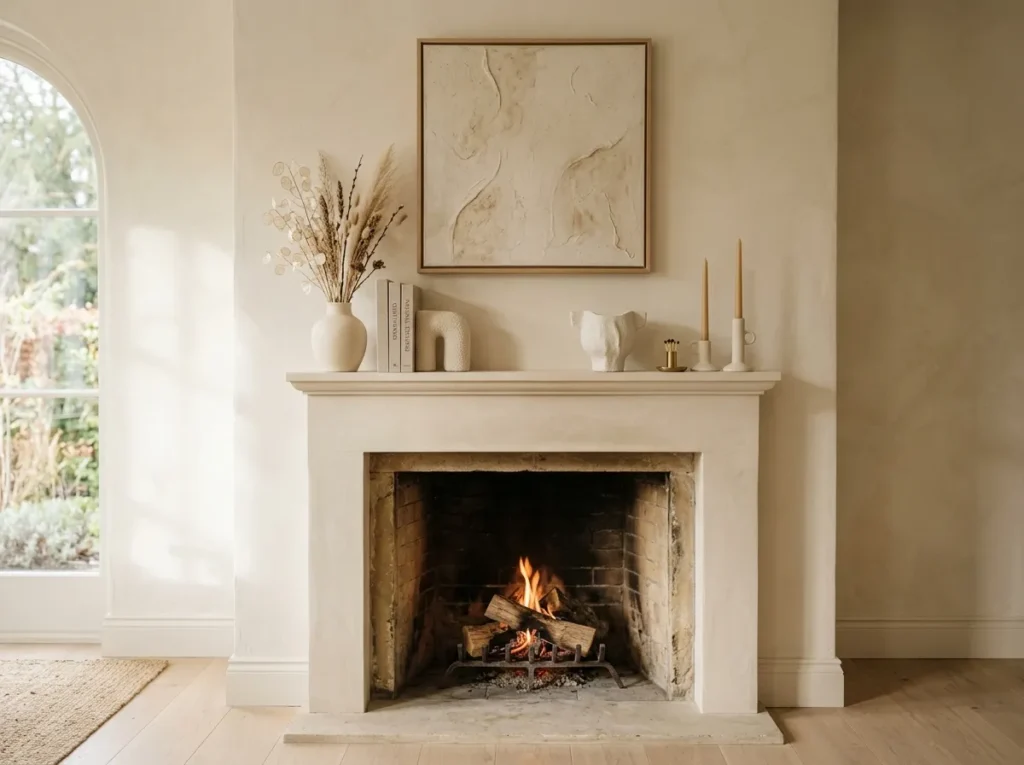
- Texture keeps a neutral mantel from looking plain or unfinished.
- Mix smooth ceramics with linen, wood, and woven materials.
- Stay within one color family for a calm visual effect.
- Use small textured pieces to add depth without clutter.
A neutral color palette becomes much more interesting when several textures are layered together. Combine smooth ceramic vessels with linen-covered books, natural wood, woven accents, and lightly textured artwork. Because the colors remain close, the differences in surface and shape become the main source of visual interest. This creates a calm mantel that feels sophisticated without depending on bold decoration. It is especially useful when you love minimalist interiors but still want the fireplace to feel warm, finished, and inviting rather than empty or overly plain.
The easiest way to build texture is to choose materials that already appear elsewhere in your room. If your sofa has boucle upholstery, repeat a soft textile detail on the mantel. If your flooring is oak, add a small wooden frame or bowl. These repeated materials make the entire space feel connected. Keep the arrangement relatively simple and allow each texture enough room to be noticed. In my experience, neutral styling looks most expensive when it avoids excessive accessories. A few thoughtfully selected pieces can create considerably more impact than filling every available inch of the mantel.
22. Timeless Layered Greenery
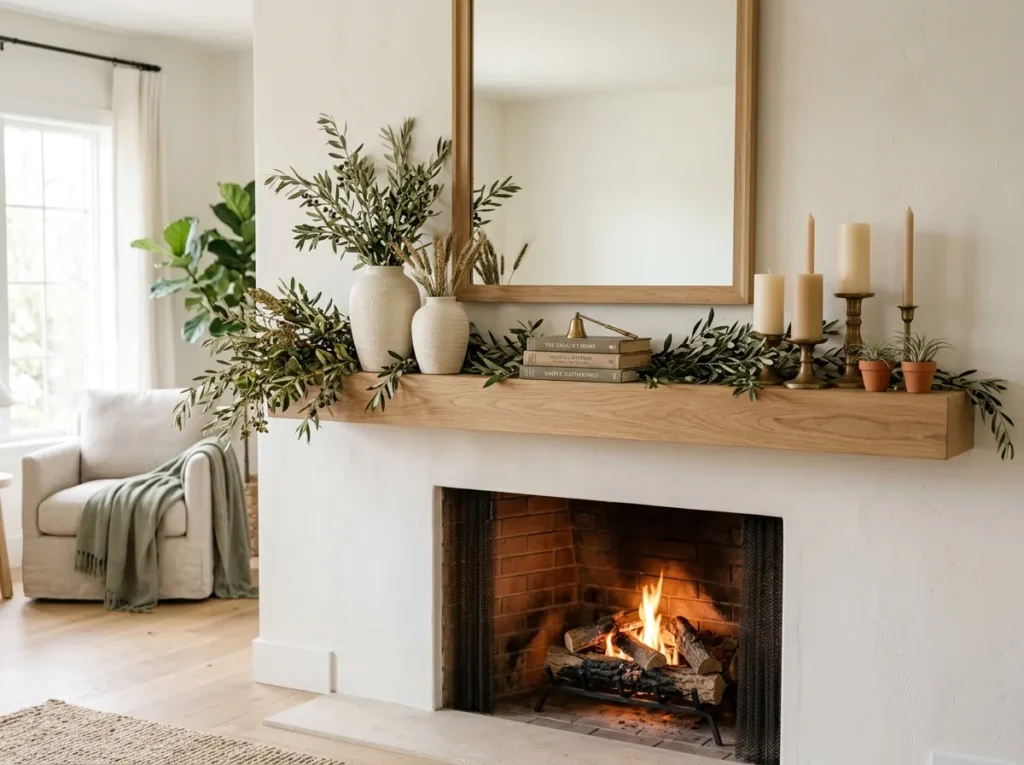
- Layer greenery with neutral accessories for a timeless finish.
- Use branches of different lengths to create natural movement.
- Keep the main colors soft so the display works year-round.
- Change only small accents when you want a seasonal refresh.
Timeless greenery creates a finished fireplace display that can stay in place through every season. Combine olive branches, eucalyptus, or other soft foliage with cream ceramics, natural wood, candles, and a simple framed piece. The greenery adds color without overwhelming the room, while the neutral accessories provide structure and balance. This combination is especially useful when you want year round mantle decor that requires minimal maintenance and few seasonal changes. Start with one taller branch arrangement, then layer shorter objects in front to create depth while keeping the overall display relaxed and uncluttered.
The beauty of this setup is how easily it adapts to changing seasons without losing its original character. Add soft florals during spring, lighter ceramics in summer, warm-toned accents in autumn, or candles and deeper greenery during winter. The main arrangement can remain untouched while only a few small pieces change. I’ve noticed this approach works particularly well for busy households because it looks intentional without requiring constant styling. Keep the palette connected to your room’s existing colors, and choose materials that feel natural together. The result is a welcoming focal point that stays attractive throughout the year.
Conclusion
A beautiful mantel does not need to change completely with every season. The right combination of timeless pieces, natural textures, greenery, and flexible accents can keep your fireplace feeling fresh all year. These year round mantle decor ideas give you practical ways to create a space that feels warm, balanced, and uniquely yours. I’ve seen how small changes can completely transform a room without requiring a big decorating budget. Save this post on Pinterest so you can return to your favorite ideas, try one in your own space, and share the inspiration with someone who loves decorating. Your perfect mantel can start with one simple change today.