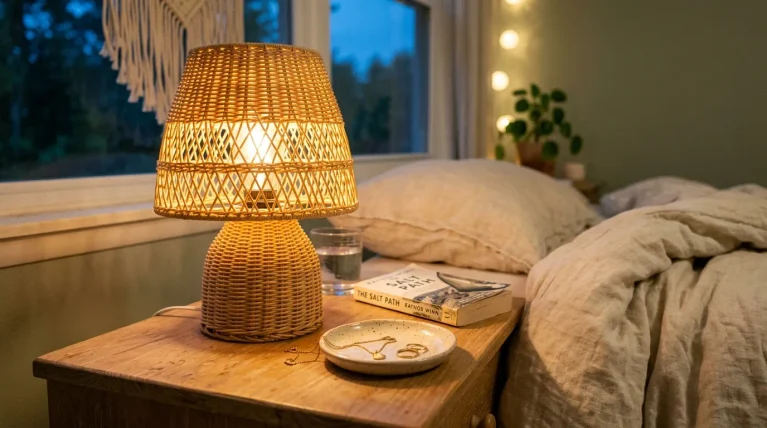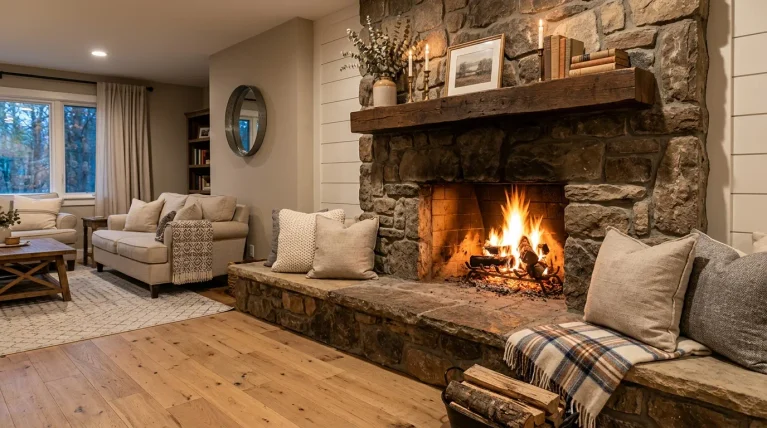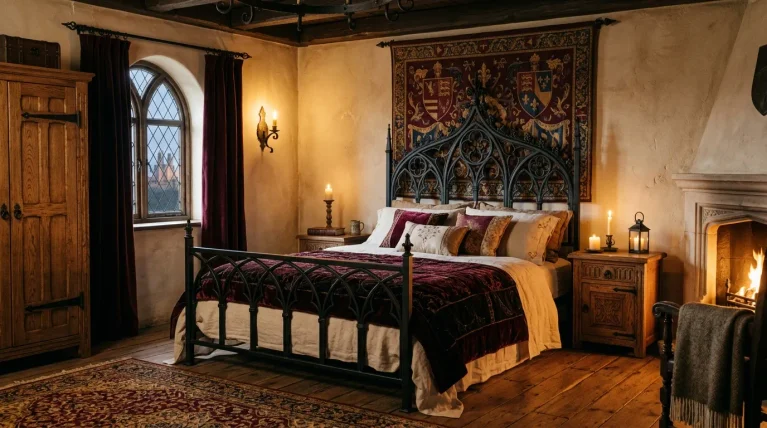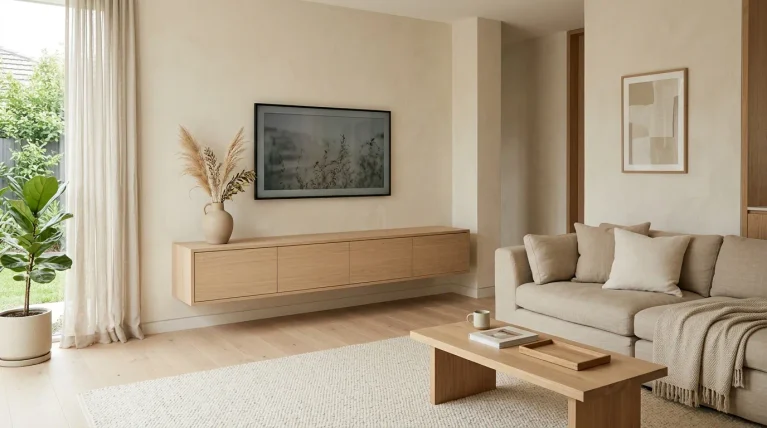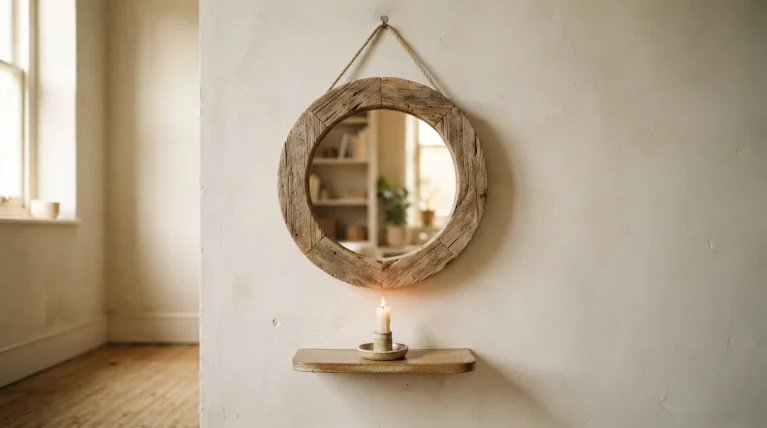
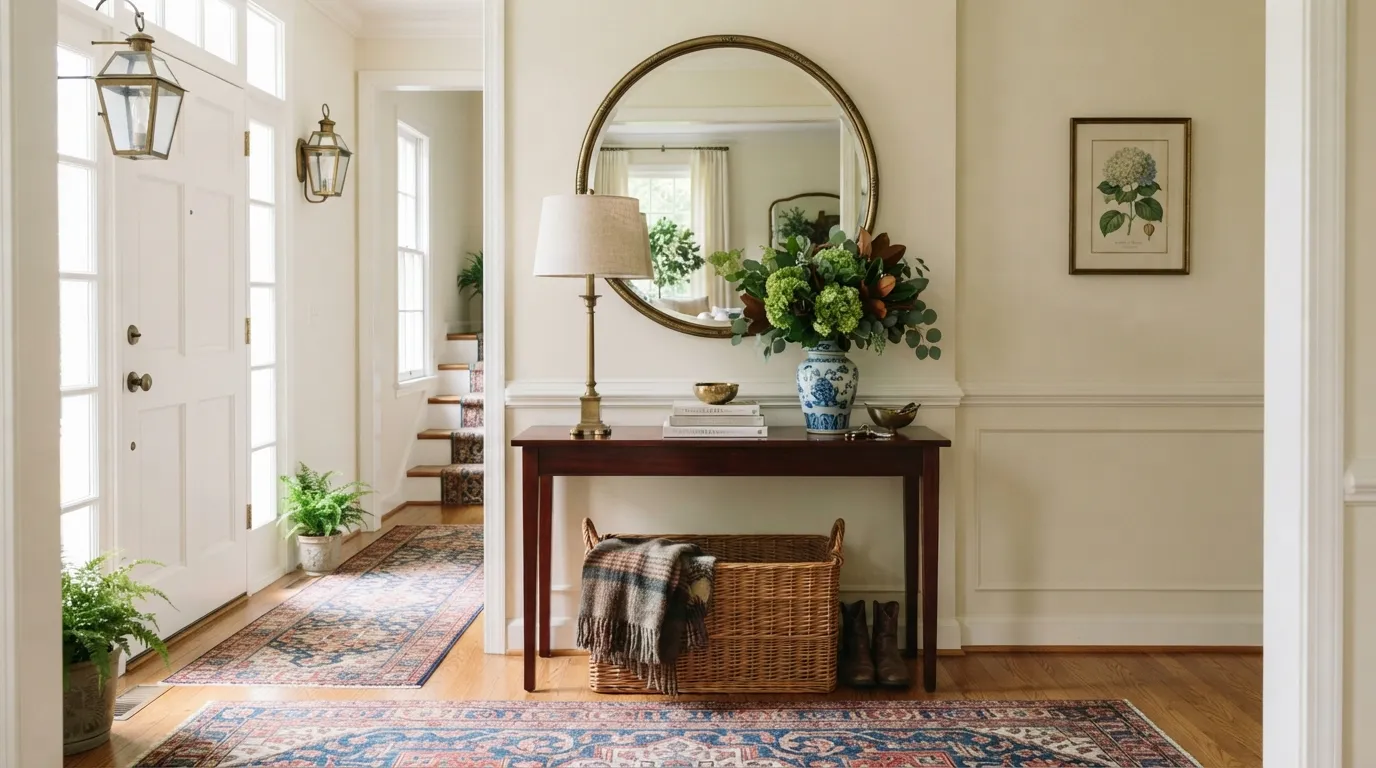
A timeless home does not need to feel formal, expensive, or perfectly styled. Sometimes, the smallest details create the warmest rooms.
Classic southern home decor is all about creating spaces that feel welcoming, collected, comfortable, and beautiful for everyday life. Think soft linen curtains, warm wood furniture, antique accents, graceful lighting, floral patterns, cozy reading corners, and thoughtful layers that make a room feel lived in. If your home feels a little plain, disconnected, or too focused on current trends, these ideas can help you bring back character without starting from scratch. In my experience, combining just a few traditional details with practical modern pieces can completely change how a space feels. Use these ideas as inspiration, then choose the ones that naturally fit your home, lifestyle, and personality.
1. Wraparound Front Porch
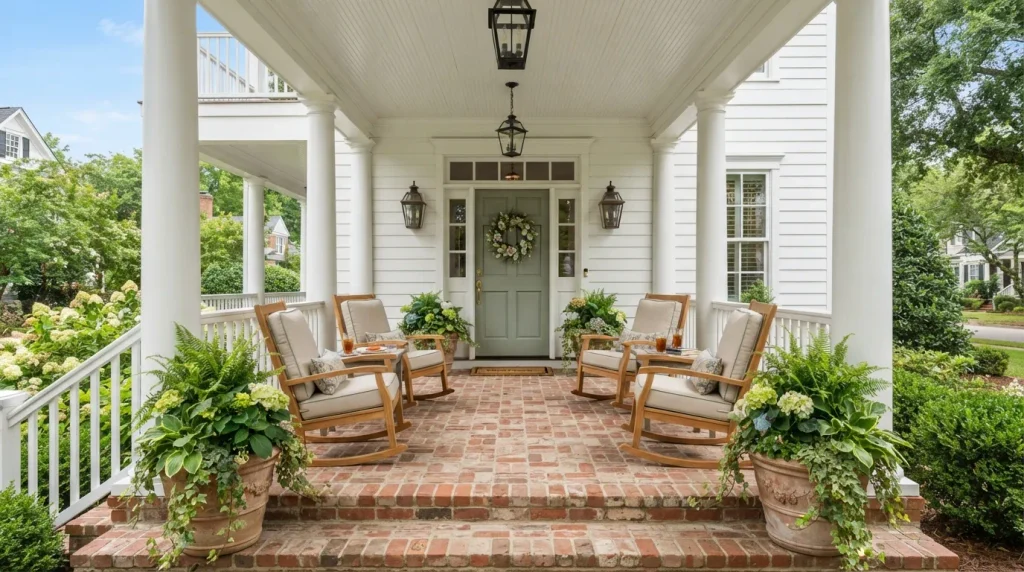
- A pair of rocking chairs instantly makes the entrance feel more welcoming.
- Soft cushions and a small side table add comfort without clutter.
- Brick or painted wood flooring gives the porch lasting traditional character.
- Matching planters create symmetry and make the entry look more finished.
Few details create a Southern welcome quite like a graceful front porch. A wide porch with classic columns, comfortable seating, and layered textiles gives the front of the home an inviting sense of permanence. Choose a pair of rocking chairs or woven armchairs, then add a small side table for drinks and seasonal flowers. Soft white, warm beige, muted green, and natural wood keep the palette timeless rather than trendy. In my experience, even a modest porch feels more polished when seating is arranged symmetrically. The result is charming, practical, and instantly recognizable as classic Southern home decor.
A welcoming porch should look beautiful from the street and work comfortably for everyday life. Start with durable flooring such as painted wood or brick, then anchor the seating with a simple outdoor rug in a traditional pattern. Add linen cushions, a lantern, and one generous planter instead of crowding every corner. This approach creates visual balance while leaving enough room to walk easily. I’ve noticed that repeating two or three colors across the chairs, pillows, and greenery makes a small entry feel intentional. It also creates a polished first impression without making the space feel overly formal or staged.
Also Read : 24 White Brick Fireplace Ideas for a Bright Cozy Home
2. Soft Southern Palette
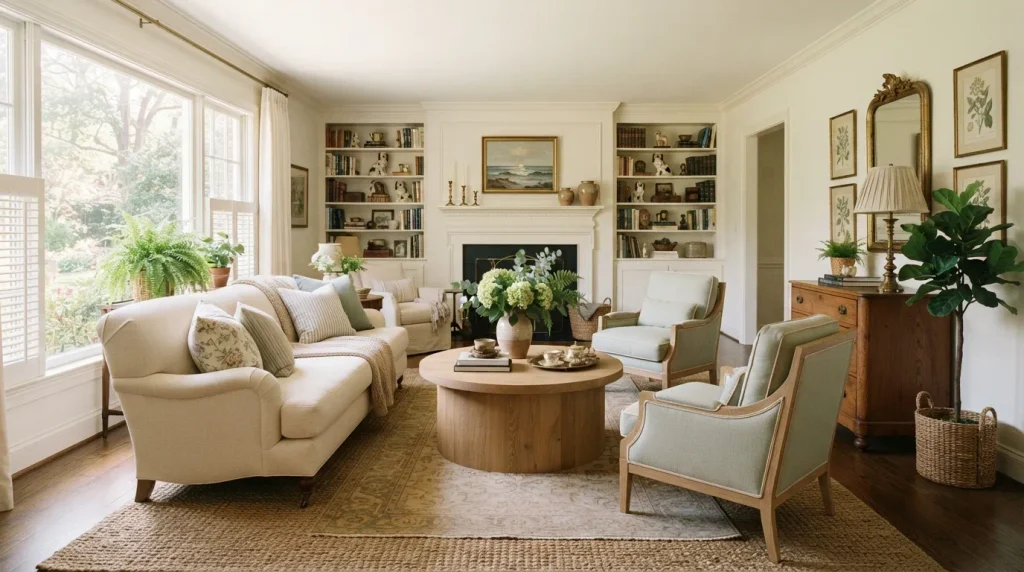
- Creamy walls make natural daylight feel brighter and softer.
- Pale sage adds color while keeping the room calm and traditional.
- Natural wood introduces warmth and prevents light colors from feeling cold.
- Small floral accents can bring personality without overwhelming the palette.
A soft color palette can make traditional rooms feel fresh without losing their character. Think creamy white walls, warm ivory upholstery, pale sage accents, and natural wood tones that echo the relaxed elegance of Southern interiors. These shades reflect daylight beautifully and give artwork, antique pieces, and patterned fabrics room to stand out. Keep the strongest color accents low and layered through cushions, lamps, books, or greenery rather than covering large surfaces. That restraint helps the room age gracefully as decorating tastes change. The finished space feels bright, collected, and comfortable, with enough warmth to avoid looking stark or overly modern.
The right palette also makes decorating easier because individual pieces can change without disrupting the entire room. Start with one dependable neutral, then introduce two supporting shades through upholstery, curtains, rugs, or accessories. Warm brass, aged wood, and woven materials work especially well with this combination because they add depth without demanding attention. For a smaller room, lighter walls and fabrics can visually open the space, while darker wood furniture provides grounding. This layered approach creates the relaxed polish associated with traditional Southern interiors while remaining practical enough for family rooms, guest spaces, and everyday living areas.
Also Read : 24 Stone Fireplace Ideas for a Warm Rustic Living Room
3. Balanced Traditional Symmetry
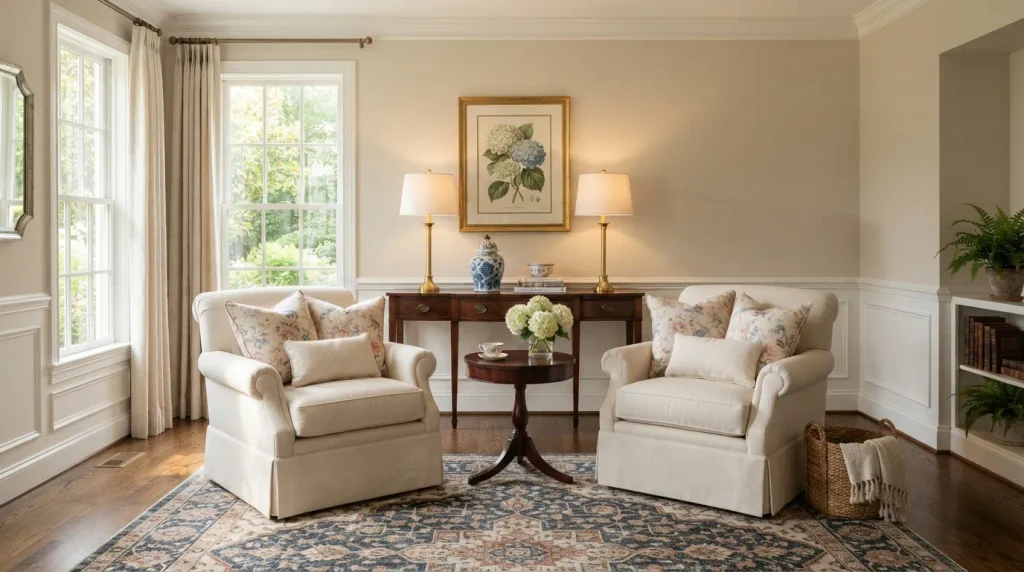
- Matching chairs or lamps instantly create a more organized appearance.
- Centering artwork above a console gives the wall a clear focal point.
- Symmetry works especially well around fireplaces, windows, and entry tables.
- Keep one or two elements slightly relaxed so the room still feels lived-in.
Symmetry is one of the simplest ways to make a traditional room look polished without adding more decoration. Place matching chairs on opposite sides of a coffee table, flank a sofa with similar lamps, or position identical planters beside an entry door. These repeated shapes create visual rhythm and make furniture feel intentionally arranged. A centered artwork piece or mirror can strengthen the composition even further. In my experience, symmetry works particularly well in rooms with fireplaces, large windows, or strong architectural features. It gives the eye an easy path through the space while making classic furnishings feel more cohesive and refined.
Perfect matching is not necessary, especially when you want the room to feel collected rather than showroom-perfect. Pair similar materials, heights, or colors instead of buying identical pieces. For example, two different lamps can still look balanced when their proportions and finishes are close. Leave comfortable walking space between furniture, and avoid pushing every piece tightly against a wall. This small adjustment improves both appearance and function. The result is a room that feels orderly but welcoming, with traditional structure softened by practical choices. That balance is a key reason symmetrical arrangements remain popular in timeless Southern decorating.
Also Read : 21 Moody Dining Room Ideas for a Dramatic Cozy Space
4. Rich Wood Dining Table
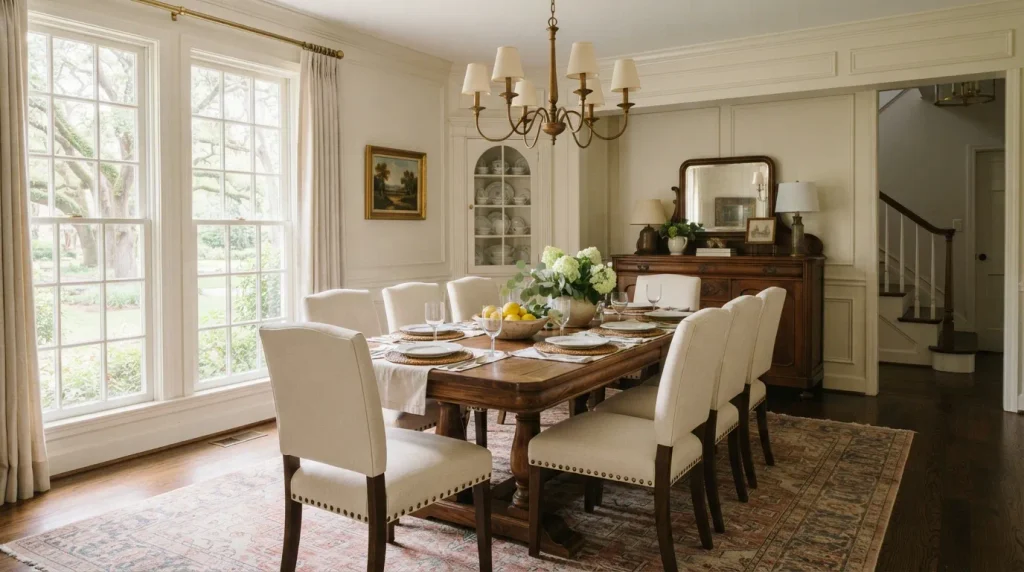
- A substantial wood table gives the dining room warmth and visual weight.
- Visible grain adds natural texture without needing extra decoration.
- Cream or woven chairs soften darker wood finishes.
- Keep the centerpiece low so conversation and table space remain practical.
A traditional dining room can feel richer when a substantial wood table becomes the visual anchor. Choose a rectangular table with visible grain, turned legs, or a gently aged finish, then surround it with comfortable upholstered or woven chairs. Keep the tabletop simple with a ceramic bowl, low floral arrangement, or pair of candlesticks so the wood remains noticeable. Dark walnut, warm oak, and medium brown finishes work beautifully with cream walls and soft textiles. The key is choosing a table that feels sturdy for everyday meals while carrying the graceful character associated with timeless Southern interiors.
A large dining table should invite people to sit down, not make the room feel like a formal showroom. Leave enough clearance around each side for chairs to pull out comfortably, and choose a rug that extends beyond the table and chairs. If the room is narrow, a rectangular shape usually keeps movement easier than an oversized round design. Add woven placemats, linen napkins, or simple glassware for texture without unnecessary decoration. I’ve noticed that a few well-chosen tabletop layers often look more sophisticated than a crowded centerpiece, especially when the table itself has beautiful natural character and craftsmanship.
Also Read : 21 Sage Green Bedroom Ideas for a Calm Relaxing Retreat
5. Collected Antique Accents
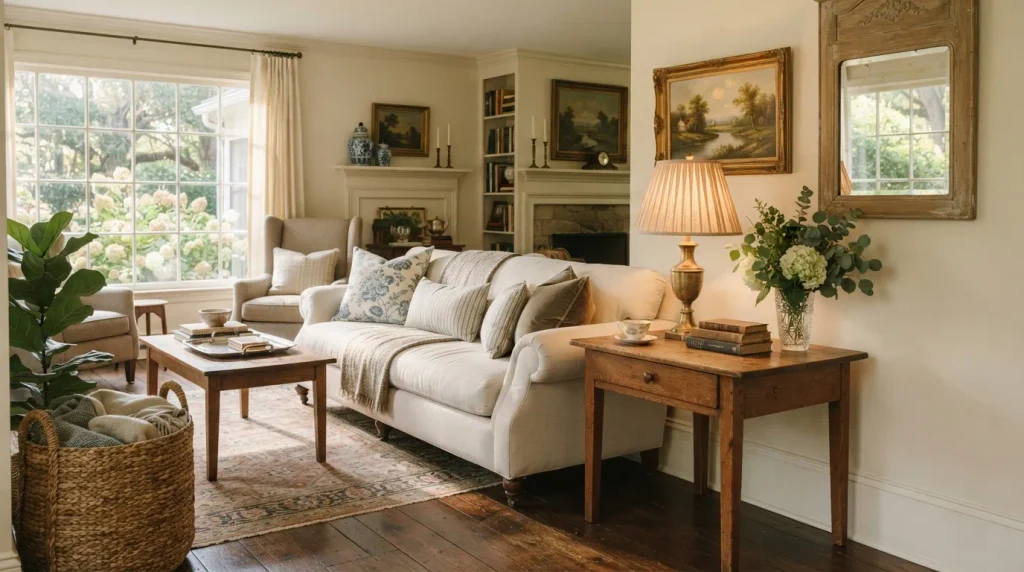
- One meaningful antique can give a room instant character.
- Worn wood and aged brass add warmth beside newer furnishings.
- Choose useful vintage pieces when possible to combine beauty with function.
- Small imperfections can make the space feel authentic rather than staged.
Few details make a traditional room feel more established than a thoughtfully chosen antique accent. A vintage mirror, small chest, framed landscape, or aged side table can introduce history without requiring a complete makeover. Look for pieces with warm wood, softly worn finishes, brass hardware, or gentle imperfections that suggest they have been enjoyed over time. These details pair naturally with fresh upholstery and clean walls, creating contrast between old and new. The goal is not to fill the room with antiques, but to give contemporary necessities a sense of history. One meaningful piece can accomplish more than several decorative objects.
When adding older pieces, choose items that serve a purpose rather than collecting objects simply because they look traditional. An antique chest can provide storage, while an old mirror can brighten a dark hallway and make the area feel larger. A vintage frame can also give family photographs or artwork a more established presence. Mix these pieces with comfortable modern seating, fresh flowers, or simple lamps so the room remains practical. Small imperfections are often part of the charm. Instead of hiding every scratch or variation, let those signs of age contribute warmth and personality to the overall decorating scheme.
Also Read : 25 Jewel Tone Bedroom Ideas for a Rich Luxurious Look
6. Layered Mantel Display
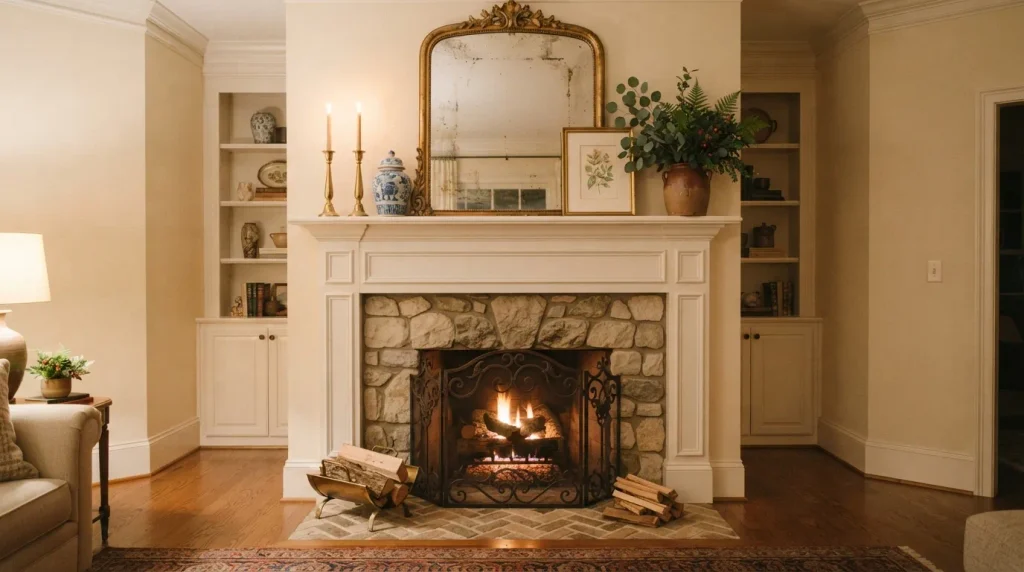
- A centered mirror or artwork piece creates an immediate focal point.
- Varying accessory heights keep the mantel visually interesting.
- Greenery adds softness against wood, stone, or painted surfaces.
- Leave open space so the fireplace architecture remains visible.
A fireplace becomes more striking when its mantel is treated as a carefully balanced focal point. Start with a substantial mirror or traditional artwork centered above the mantel, then layer a few objects at different heights below it. Brass candlesticks, ceramic vessels, framed photographs, and fresh greenery work well because they add texture without competing with the architecture. Keep the arrangement restrained so the fireplace remains the star. Warm wood, painted trim, and natural stone or brick can reinforce traditional character. The finished mantel should look collected and polished, but never so crowded that the eye loses the room’s main architectural feature.
The best mantel arrangements combine height, texture, and breathing room instead of filling every available inch. Place the tallest element near the center or slightly off-center, then balance it with lower objects and a small organic accent. If the fireplace already has strong stone, brick, or wood detailing, use fewer accessories so those materials remain visible. Seasonal changes can be simple too: swap greenery, flowers, or a few ceramics rather than replacing the entire display. That flexibility keeps the focal point fresh throughout the year while preserving the classic structure that makes traditional Southern rooms feel grounded and welcoming.
Also Read : 22 Year Round Mantle Decor Ideas for Every Season
7. Linen Window Treatments
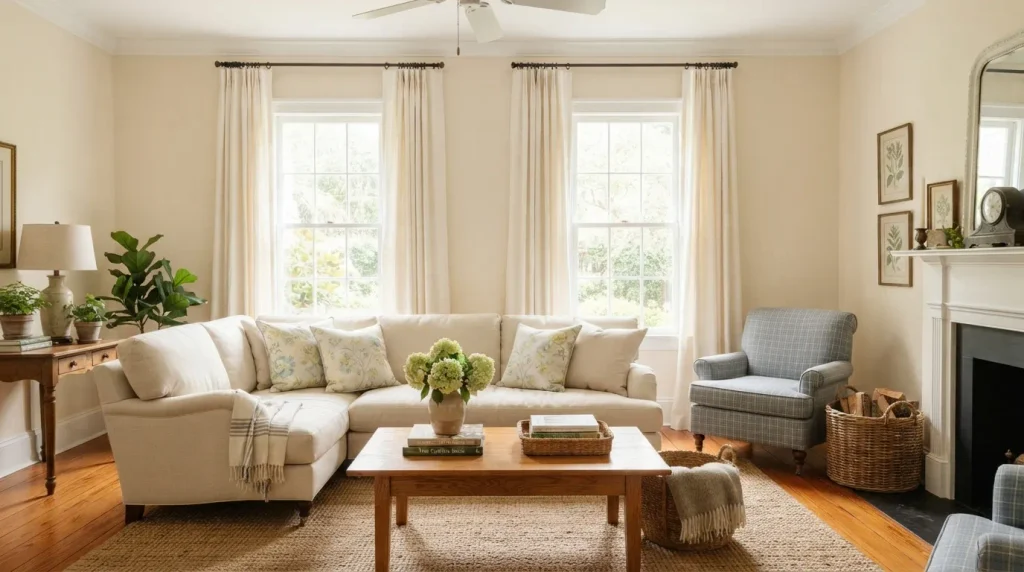
- Floor-length curtains make windows look taller and more graceful.
- Linen adds softness while allowing gentle daylight into the room.
- Neutral panels work beautifully with wood furniture and traditional patterns.
- Hang curtain rods slightly above the window frame for a more polished look.
Few window updates change a room as quickly as beautiful linen curtains. Choose floor-length panels in ivory, oatmeal, or soft white to frame the windows without making them feel heavy. Natural linen has a subtle texture that adds warmth while still allowing filtered daylight to brighten the room. Hang the panels slightly above the window frame and let them fall close to the floor for a graceful, finished appearance. This simple treatment works especially well with traditional furniture, natural wood, and floral accents. In my experience, longer curtains can also make modest windows appear larger and the entire room feel more spacious.
Keep the window treatment simple if the room already contains patterned upholstery or detailed architectural trim. Solid linen panels create a quiet backdrop that lets furniture and artwork take center stage. For privacy, consider adding woven shades underneath the curtains, especially in bedrooms or street-facing living spaces. Choose hardware in aged brass, bronze, or dark wood to connect the windows with other finishes throughout the room. Avoid overly stiff fabrics or complicated layers unless the architecture calls for them. The goal is a relaxed drape that feels elegant during the day and cozy when the curtains are closed at night.
8. Brass Lighting Fixtures
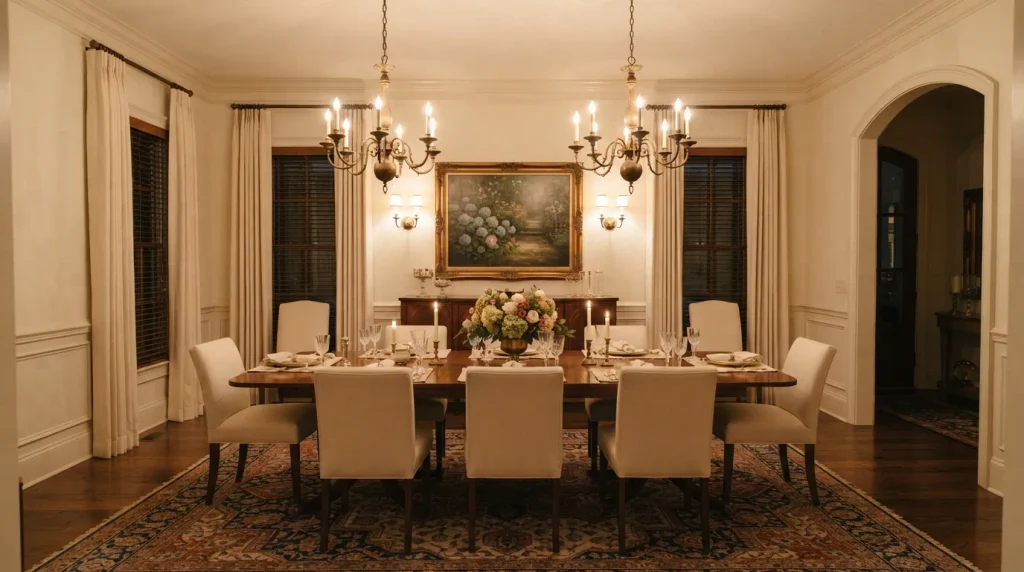
- A brass chandelier adds warmth without overwhelming traditional furniture.
- Aged finishes feel softer and more established than highly polished metal.
- Match lighting finishes across the room for visual continuity.
- Choose fixtures with shades or bulbs that create comfortable, warm illumination.
Warm lighting can completely change how traditional furniture and finishes look after sunset. Aged brass chandeliers, sconces, and table lamps bring a gentle glow that complements walnut, oak, cream upholstery, and natural fabrics. Look for fixtures with classic silhouettes rather than overly ornate designs, especially if the room already has detailed furniture. In dining rooms, a centered chandelier can define the table and strengthen the room’s symmetry. In living spaces, a pair of brass lamps can create balance around a sofa or console. The result is a welcoming layer of light that makes the space feel polished without appearing overly formal.
Lighting should be beautiful at eye level but also comfortable enough for everyday use. Choose warm bulbs rather than harsh cool-white lighting, and combine overhead fixtures with table lamps or wall sconces where possible. This layered approach prevents dark corners and gives you more control over the mood. If your existing furniture is mostly wood and neutral upholstery, brass provides a subtle contrast that keeps the room from looking flat. I’ve noticed that repeating the same metal finish in small doses, such as a lamp, picture frame, and hardware, helps separate pieces feel connected without making everything look deliberately matched.
9. Floral Upholstery
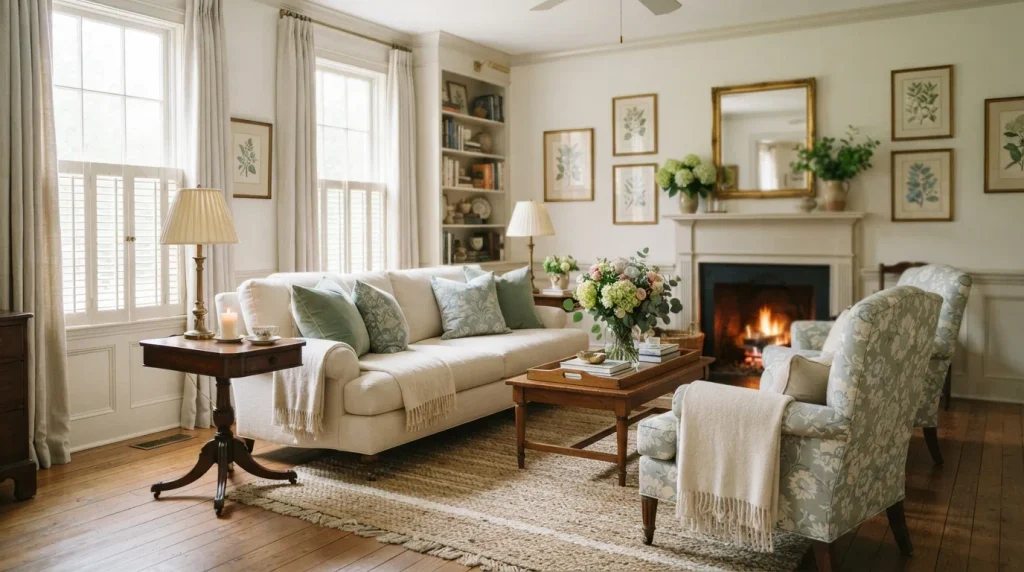
- Floral chairs can introduce pattern without covering the entire room.
- Small-scale botanical prints feel especially timeless in traditional spaces.
- Repeat one or two floral colors through pillows or artwork.
- Balance patterned upholstery with solid curtains and neutral walls.
Floral upholstery brings an unmistakable sense of softness and tradition to a Southern-inspired room. Instead of covering every piece in pattern, start with one or two accent chairs featuring a botanical print in muted sage, dusty blue, cream, or warm rose. Keep the larger sofa and curtains relatively simple so the pattern has room to breathe. A floral chair can also connect otherwise unrelated colors across the room, especially when its tones appear again in artwork, pillows, or fresh flowers. This creates a layered look that feels intentional while preserving the comfortable, collected quality that makes traditional decorating so inviting.
The scale of the pattern matters as much as the color. Smaller botanical motifs can feel delicate and timeless, while oversized florals create a stronger focal point. If you are decorating a busy family room, choose a durable performance fabric that can handle everyday use while maintaining the traditional appearance you want. Pair patterned chairs with solid cushions, natural wood, and woven textures to prevent visual overload. Classic Southern home decor often works best when pattern is treated as an accent rather than a backdrop. A single beautiful print can make a neutral room feel finished, personal, and much more memorable.
10. Woven Natural Textures
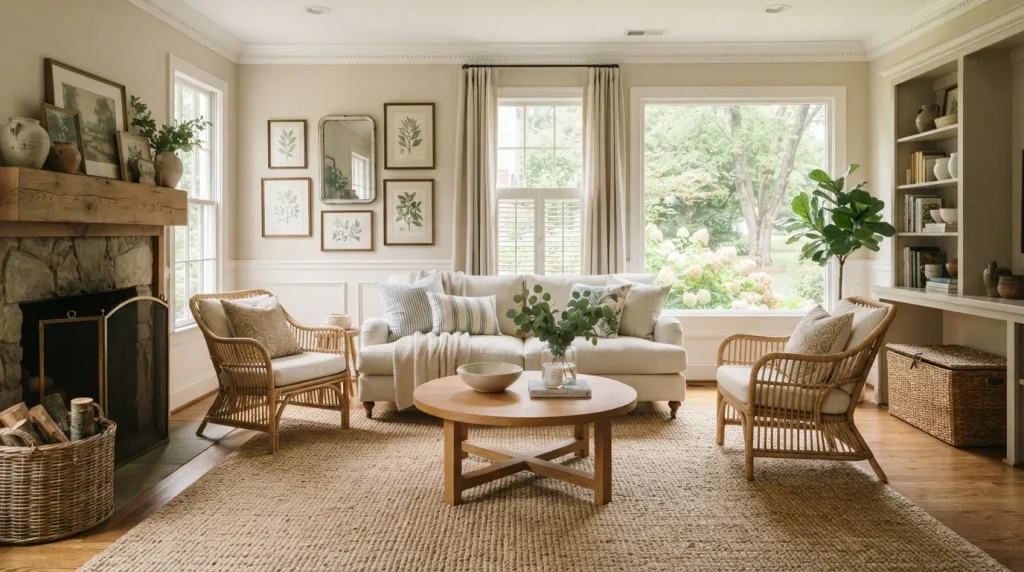
- Woven materials add warmth without making the room feel visually heavy.
- Rattan chairs and baskets bring relaxed texture beside polished wood furniture.
- Jute rugs help ground light upholstery with natural depth.
- Mix several textures instead of repeating the same woven material everywhere.
Natural textures keep traditional rooms from feeling too formal or overly polished. Woven rattan chairs, wicker baskets, jute rugs, cane details, and textured linen can soften heavier wood furniture while adding useful layers. These materials work particularly well with cream upholstery, painted walls, and muted botanical colors because they introduce warmth without demanding attention. Try placing a woven basket beside a fireplace, adding a jute rug beneath a seating arrangement, or choosing a cane-front cabinet for practical storage. I’ve noticed that even one or two natural pieces can make a traditional room feel more relaxed and comfortable for everyday living.
The trick is to mix textures rather than turning the entire room into one matching collection. Pair a rough jute rug with smooth cotton cushions, woven chairs with polished wood tables, or a cane cabinet with an aged brass lamp. This contrast gives the eye different surfaces to notice while keeping the color palette calm. Natural materials are also practical in busy homes because baskets can hide blankets, toys, and everyday clutter. When used thoughtfully, woven accents create the easygoing side of Southern style without losing the refined proportions and classic furnishings that give the room its timeless foundation.
11. Painted Interior Doors
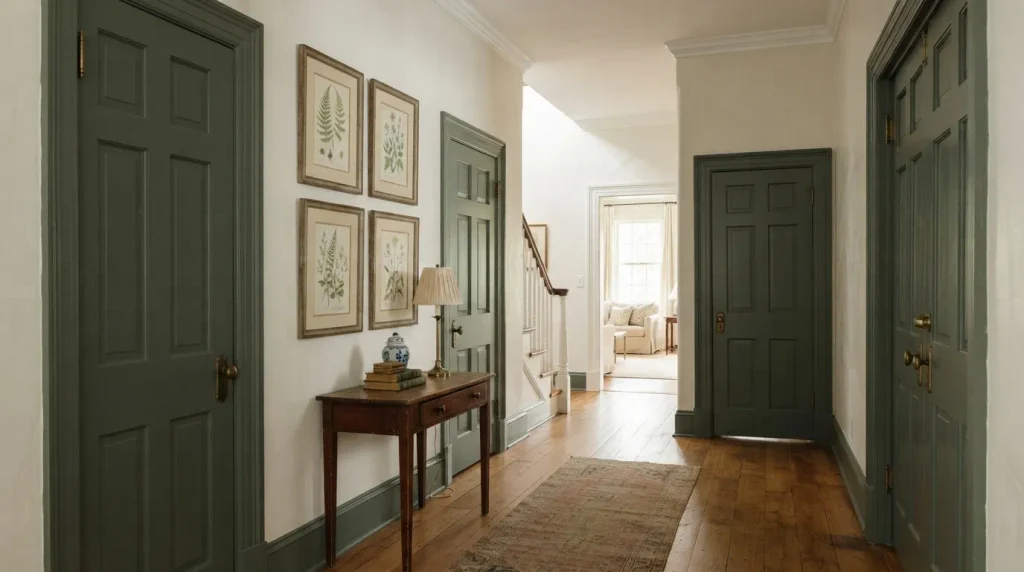
- A painted door can add personality without changing the entire room.
- Deep green, charcoal, navy, and warm gray work beautifully with creamy trim.
- Traditional hardware gives the update a more established appearance.
- Keep surrounding walls neutral so the door remains the focal point.
A painted interior door is a small change that can give an ordinary hallway surprising character. Choose a deep muted green, soft navy, warm charcoal, or earthy gray, then surround it with crisp cream or white trim. The contrast highlights the architecture and gives plain doors a more intentional presence. Traditional brass or dark metal hardware can strengthen the effect without requiring expensive replacements. This works especially well in entryways, offices, pantries, and bedrooms where a single painted surface can create a memorable detail. The result feels tailored and established while remaining simple enough for a beginner decorating project.
Before choosing a color, look at the finishes already visible around the doorway. Wood floors, nearby furniture, artwork, and metal hardware can help determine whether a warm or cool shade will feel most natural. Use a durable interior paint with a washable finish, particularly on doors that receive frequent fingerprints. If you have several doors in one hallway, painting all of them can create stronger architectural rhythm, while a single accent door creates a quieter statement. That flexibility makes this idea useful for both traditional houses and newer homes that need a little more visual character.
12. Classic Checkered Floors
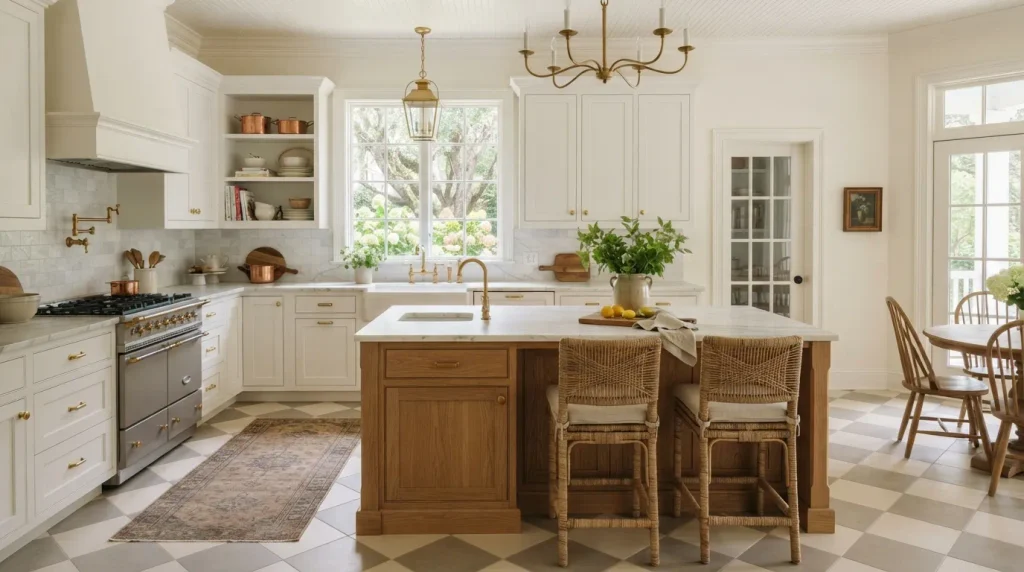
- A checkered floor adds pattern without requiring patterned furniture.
- Soft cream and muted charcoal feel more timeless than stark black and white.
- Keep cabinets simple so the flooring remains visually balanced.
- A small runner can introduce the look without committing to a full floor makeover.
Few flooring patterns create instant traditional character like a simple checkered design. Cream paired with muted charcoal, warm gray, or soft taupe feels gentler and more timeless than a stark high-contrast combination. The pattern works beautifully in kitchens, entryways, mudrooms, and bathrooms because it adds visual interest across a large surface while keeping the walls and furniture relatively simple. Pair the floor with painted cabinetry, natural wood, brass hardware, and woven accents for a balanced look. This is one of those classic Southern home decor details that can make a newer space feel more established without adding unnecessary ornament.
If replacing flooring is not practical, you can recreate the effect with a checkered runner or patterned area rug. Keep the surrounding colors quiet so the geometry does not compete with artwork, upholstery, or countertops. In a kitchen, warm wood cabinetry can soften the pattern, while white cabinets create a brighter, more traditional contrast. I’ve seen this approach work especially well in smaller rooms because a consistent two-tone floor can make the space feel deliberately designed. The key is choosing softened colors and repeating one of them elsewhere so the pattern feels connected to the room rather than added as an afterthought
13. Statement Entry Console
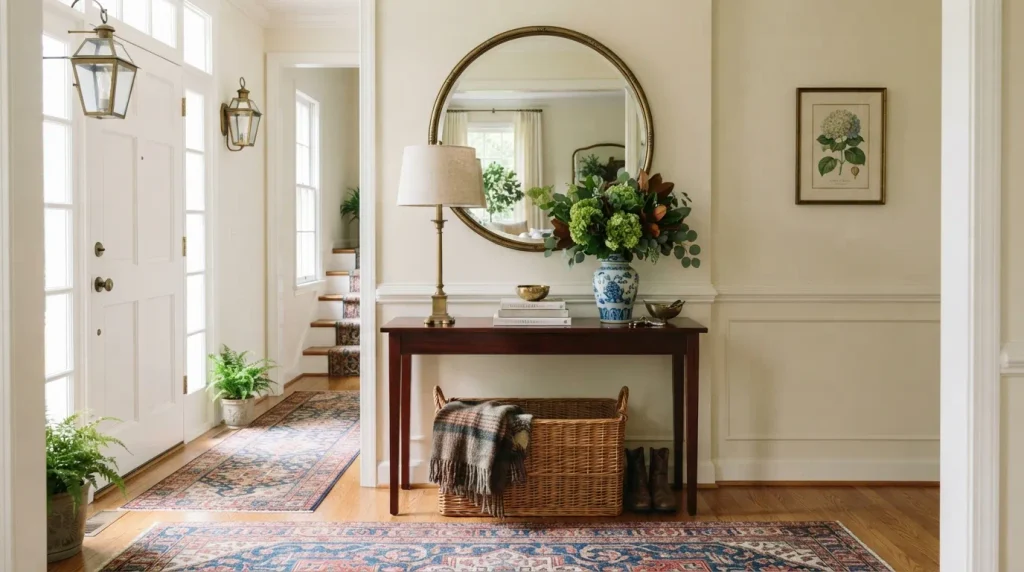
- A narrow console adds function without crowding the entryway.
- A large mirror reflects light and makes the space feel more open.
- One lamp creates a warm glow after sunset.
- A small arrangement of greenery adds freshness without visual clutter.
A beautiful entryway sets the tone before anyone reaches the living room. A slim wood console beneath a large mirror creates an easy focal point while providing a useful place for keys, mail, and everyday essentials. Choose a traditional silhouette with turned legs, simple drawers, or warm natural grain, then add one brass lamp and a small arrangement of greenery. Keep the surface mostly open so the furniture remains visible. This combination brings the graceful character of classic Southern interiors into even a narrow hallway. The result feels welcoming, organized, and thoughtfully finished without requiring a large decorating budget.
Function matters just as much as appearance in an entryway, especially in homes where people come and go throughout the day. Use a small tray to contain keys and sunglasses, then place a basket underneath for shoes, umbrellas, or bags. A mirror positioned above the console can bounce daylight into the hallway and provide a practical last glance before leaving. If the space is tight, choose furniture with shallow depth and rounded edges where possible. I’ve noticed that keeping the entry surface intentionally simple makes the whole home feel calmer because there is an obvious place for everyday items instead of a growing pile near the door.
14. Four-Poster Bed
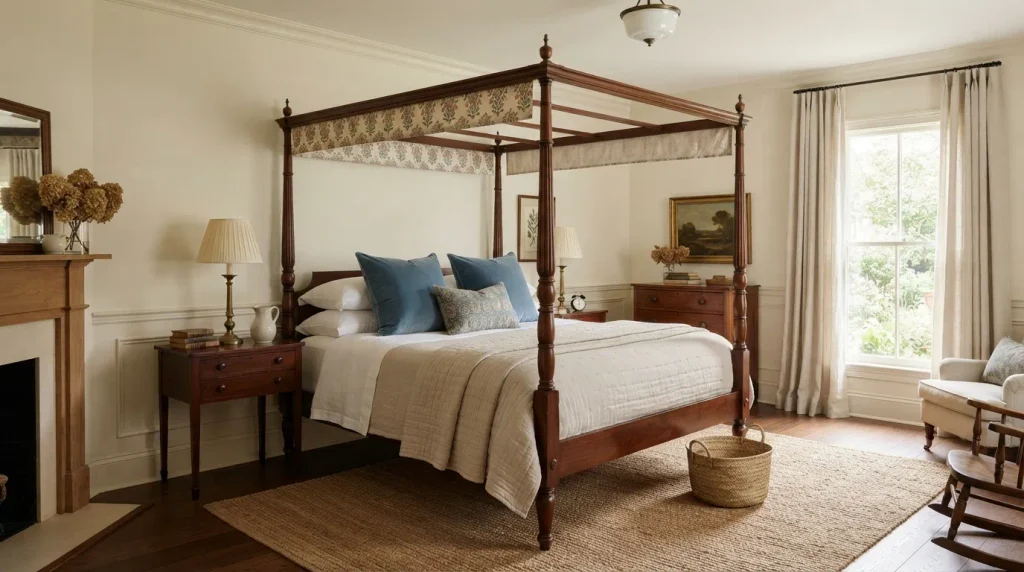
- A four-poster bed creates an instant architectural focal point.
- Crisp white bedding keeps the substantial frame from feeling heavy.
- Soft blue or sage pillows add gentle color and traditional charm.
- Matching bedside lamps strengthen the room’s balanced appearance.
A four-poster bed can give a bedroom the architectural presence of a beautifully furnished Southern retreat. Choose a wood frame in walnut, oak, or a softly painted finish, then keep the bedding light with white linen, cream quilts, and muted blue or sage pillows. The tall posts naturally draw the eye upward, making the ceiling feel more prominent and giving the room a sense of proportion. Pair the bed with simple bedside tables and warm brass lamps rather than excessive decoration. The combination feels substantial but restful, creating a bedroom that looks refined while still being comfortable enough for everyday use.
The beauty of a four-poster bed is that it does much of the decorating work itself. Keep the surrounding pieces quieter so the frame remains the main feature. A textured rug under the bed can soften the floor, while linen curtains add another layer without competing with the posts. If your bedroom is small, choose a streamlined frame with less ornamentation and maintain generous walking space around it. Traditional Southern bedrooms often benefit from this restrained approach because the furniture provides structure while soft fabrics bring comfort. The result is classic, peaceful, and easy to refresh with seasonal pillows or throws.
15. Traditional Dining Chairs
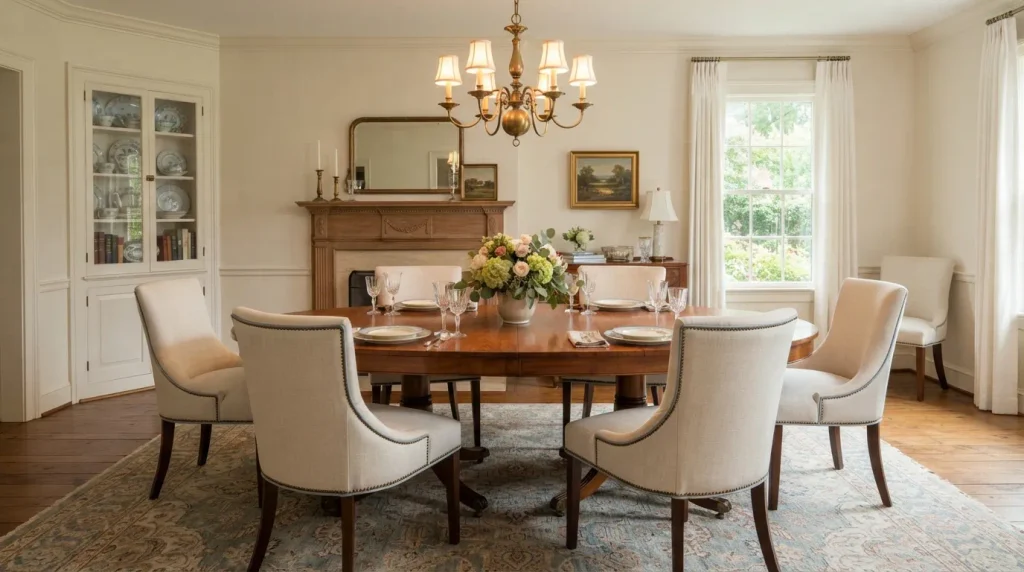
- Upholstered chairs make long dinners more comfortable.
- Cream, beige, or muted patterned fabrics keep the look versatile.
- Traditional chair backs add character without overwhelming the table.
- Leave consistent space between chairs for a balanced dining arrangement.
The right dining chairs can make a traditional table feel far more inviting. Upholstered seats in cream, beige, muted blue, or subtle botanical patterns bring softness to a substantial wood table, while classic backs add architectural detail without overwhelming the room. Look for comfortable proportions and supportive backs rather than choosing chairs based only on appearance. A slightly curved silhouette can soften a rectangular table and make the entire arrangement feel more welcoming. This simple combination works beautifully for family dinners, holiday gatherings, and everyday meals because it balances traditional elegance with the comfort people actually need when sitting for an hour or longer.
When selecting fabric, think about how the dining room is really used. Performance upholstery can be a smart choice for families, pets, or frequent entertaining because it offers easier maintenance without sacrificing a traditional appearance. Keep chair spacing consistent so the table feels orderly, and make sure each chair can pull back comfortably without hitting nearby furniture. If you prefer more variety, use matching host chairs at the ends and simpler chairs along the sides. That small contrast can add interest while preserving symmetry. In my experience, comfortable chairs are one of the easiest ways to make a formal dining room feel genuinely lived-in.
16. Shaker Kitchen Cabinets
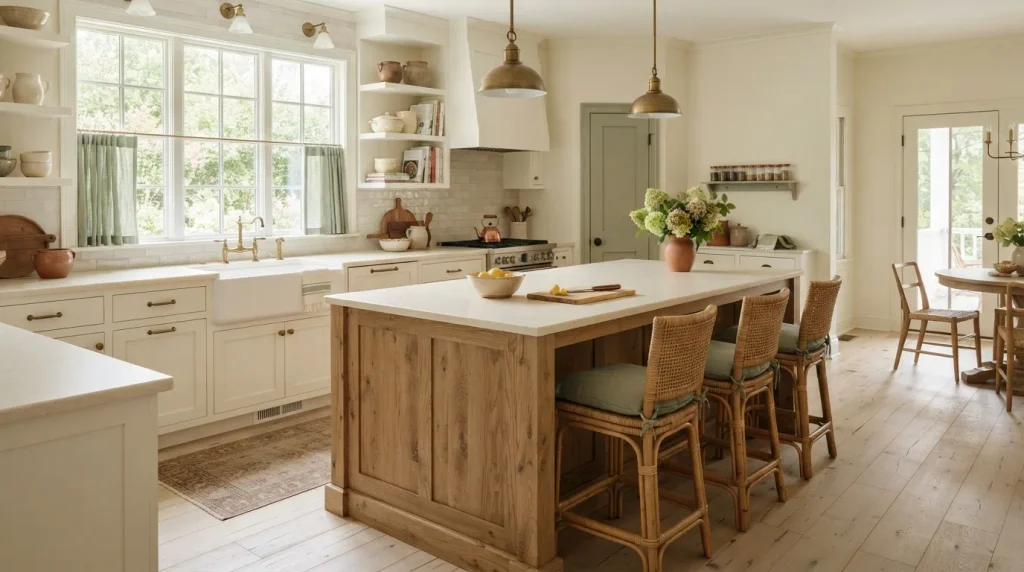
- Shaker doors keep the kitchen classic without looking overly ornate.
- Warm white cabinetry makes natural light feel brighter and softer.
- Brass hardware adds a small touch of traditional character.
- A wood island can prevent an all-white kitchen from feeling too cold.
Simple cabinetry can give a kitchen lasting appeal without making it feel plain. Shaker-style doors work especially well because their clean recessed panels feel traditional while remaining versatile enough for changing accessories and finishes. Choose warm white or creamy cabinetry, then introduce natural oak through an island, stools, or open shelving. A farmhouse sink and aged brass hardware can reinforce the traditional character without turning the room into a themed space. This combination creates a practical foundation for everyday cooking while capturing the welcoming simplicity often associated with classic Southern kitchens and family-centered homes.
A timeless kitchen also needs to handle real routines, from quick breakfasts to messy baking projects. Choose cabinet hardware that feels comfortable in your hand, durable countertops that tolerate daily use, and flooring that can withstand frequent traffic. Keep decorative objects limited to pieces that serve a purpose, such as wooden cutting boards, ceramic pitchers, or woven baskets. This prevents the counters from becoming crowded while still giving the room personality. I’ve noticed that warm wood is particularly useful in white kitchens because it introduces visual depth and keeps the space from feeling sterile, especially when paired with soft lighting and natural textiles.
17. Cozy Reading Nook
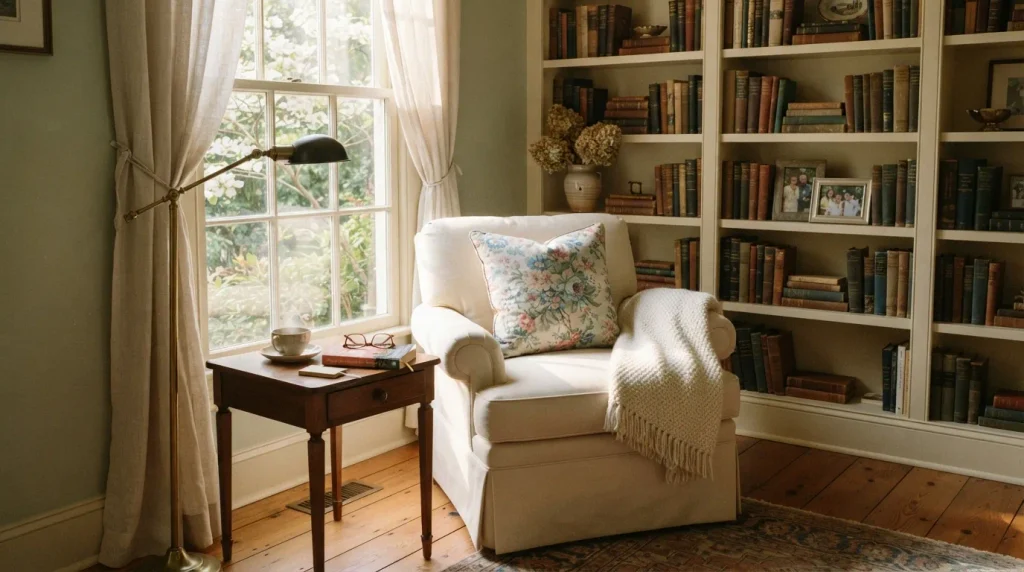
- A comfortable chair can turn an unused corner into a useful retreat.
- A small table keeps books, tea, and reading glasses within reach.
- Warm lighting makes the nook useful after daylight fades.
- A single floral cushion adds pattern without overwhelming the small space.
An unused corner can become one of the most charming spaces in the house with just a comfortable chair and thoughtful lighting. Choose an upholstered armchair in cream, oatmeal, or muted botanical fabric, then position it near a window where natural light is strongest. Add a small wood side table for books and a warm brass reading lamp for evening use. A woven throw and one patterned cushion provide softness without clutter. This kind of corner adds personality to classic Southern home decor because it shows how traditional rooms can support quiet everyday rituals rather than existing only for appearance.
The best reading nook is comfortable enough that you actually want to use it. Check that the chair has proper back support, enough room to move your arms, and a nearby surface for a drink or book. If there is no natural light, place a floor or table lamp behind your shoulder to reduce glare while reading. A small rug can define the area and visually separate it from the rest of the room. I’ve seen this simple setup work especially well in bedrooms, home offices, and wide hallways because it transforms leftover space into something useful without requiring major furniture changes.
18. Library Wall Shelving
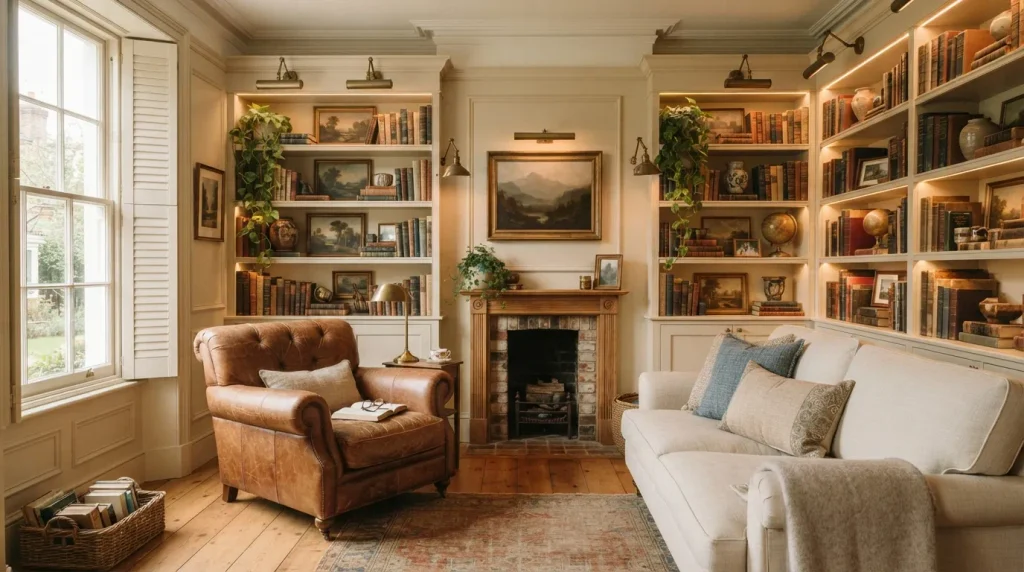
- Floor-to-ceiling shelving makes unused wall space highly functional.
- Mix books with ceramics, framed artwork, and small plants for variety.
- Matching shelf colors create a calmer, more architectural appearance.
- Leave some open space so the display does not feel overcrowded.
Built-in shelving can bring both personality and architectural depth to a traditional home. Floor-to-ceiling shelves painted in cream, warm white, muted green, or deep navy can frame a room while providing generous space for books, photographs, ceramics, and collected objects. Arrange books in a mix of vertical and horizontal stacks, then leave small areas of open shelf between groupings. This prevents the wall from looking overly busy. A comfortable leather or linen chair nearby completes the setting and makes the shelves feel connected to everyday life. The result is useful storage that also creates a strong visual anchor.
A successful bookshelf display needs breathing room just as much as it needs interesting objects. Start by placing larger books or baskets first, then add smaller pieces around them rather than filling every shelf evenly. Repeat a few materials, such as wood, brass, ceramic, and glass, to create continuity. Keep valuable or delicate pieces higher up and everyday items within easy reach. If built-ins are not possible, freestanding bookcases can create a similar effect when several units are aligned carefully. The finished wall should feel collected over time, with enough practical storage to remain useful as your library and personal collections grow.
19. Brick Fireplace Surround
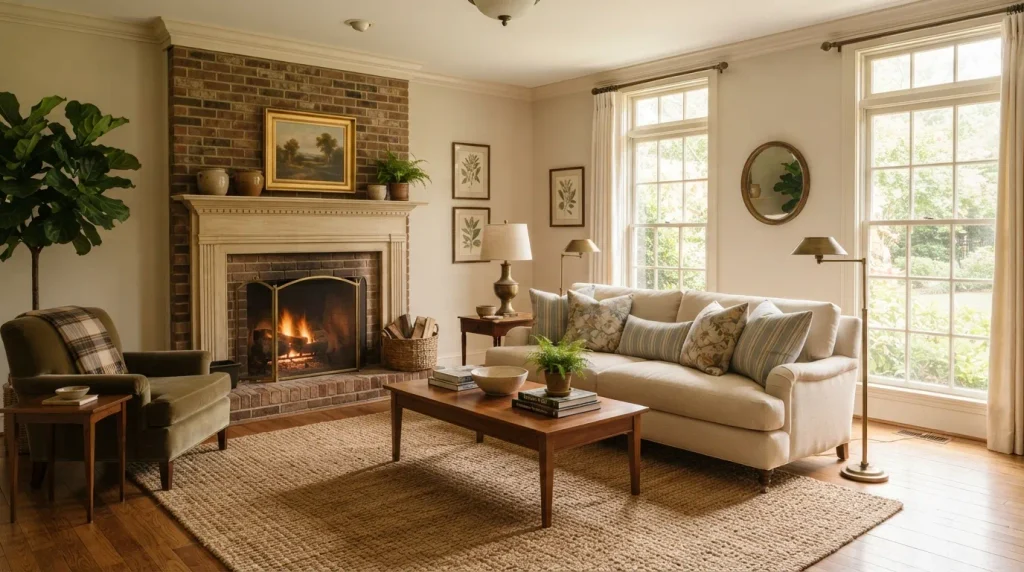
- Exposed brick adds texture and architectural character instantly.
- Creamy trim can soften darker red or brown brick.
- Keep mantel accessories simple so the masonry remains visible.
- Natural wood furniture pairs beautifully with warm brick tones.
A brick fireplace can give a living room the grounded character that makes traditional interiors feel established and welcoming. Warm red, brown, or softly aged brick works especially well with cream upholstery, natural wood, brass lighting, and muted botanical patterns. Let the masonry remain visible rather than covering it with excessive accessories, then use the mantel for one mirror, artwork piece, or restrained arrangement. The texture becomes part of the room’s visual identity while adding warmth to an otherwise neutral palette. This approach works beautifully in older homes and can also bring character to newer construction lacking strong architectural details.
The surrounding furniture should complement the fireplace instead of competing with it. Position seating so the fireplace remains visible from the main conversation area, and use a rug to connect the chairs and sofa into one comfortable grouping. If the brick is visually strong, choose quieter upholstery and curtains in cream, beige, or soft green. A wood coffee table can echo the natural warmth of the masonry, while aged brass adds a subtle polished element. In my experience, leaving some empty wall space around a brick fireplace helps the entire room feel more spacious and allows the texture to become a deliberate architectural feature.
20. Heritage Wallpaper
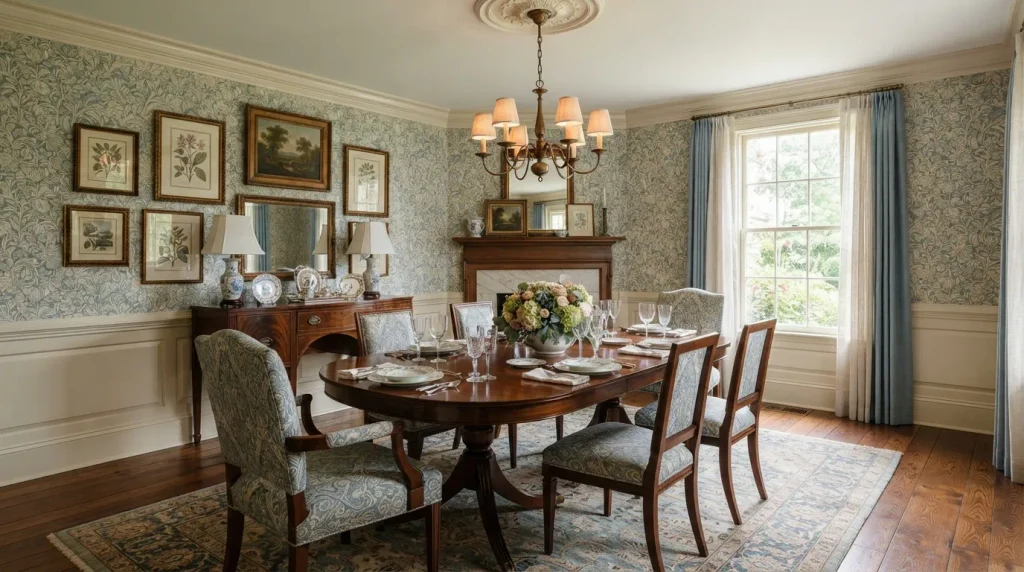
- Small botanical patterns add personality without overwhelming the room.
- Wallpaper can make a dining room or powder room feel more finished.
- Muted colors keep traditional patterns looking sophisticated and versatile.
- Pair patterned walls with simpler furniture for visual balance.
Wallpaper can bring an entire room together when the pattern feels connected to the home’s traditional character. Botanical prints, delicate vines, small florals, and subtle geometric designs work particularly well in dining rooms, powder rooms, bedrooms, and entryways. Choose a palette of cream, muted sage, dusty blue, soft taupe, or warm rose instead of extremely bright colors for a more timeless result. The pattern provides visual depth where plain paint might feel flat, while traditional furniture keeps the overall look grounded. A well-chosen print can make even a simple room feel thoughtfully layered and more distinctive.
Before committing to wallpaper, test a large sample in the actual room and observe it at different times of day. Natural and artificial light can change how both the background and pattern appear. If the print is detailed, keep nearby furniture relatively simple and repeat one or two wallpaper colors through upholstery or accessories. For smaller rooms, using wallpaper on all walls can create a surprisingly cohesive effect because there are fewer competing surfaces. I’ve noticed that traditional patterns often feel most sophisticated when their colors are slightly softened, allowing the architecture, furniture, and natural light to share attention rather than compete.
21. Layered Area Rugs
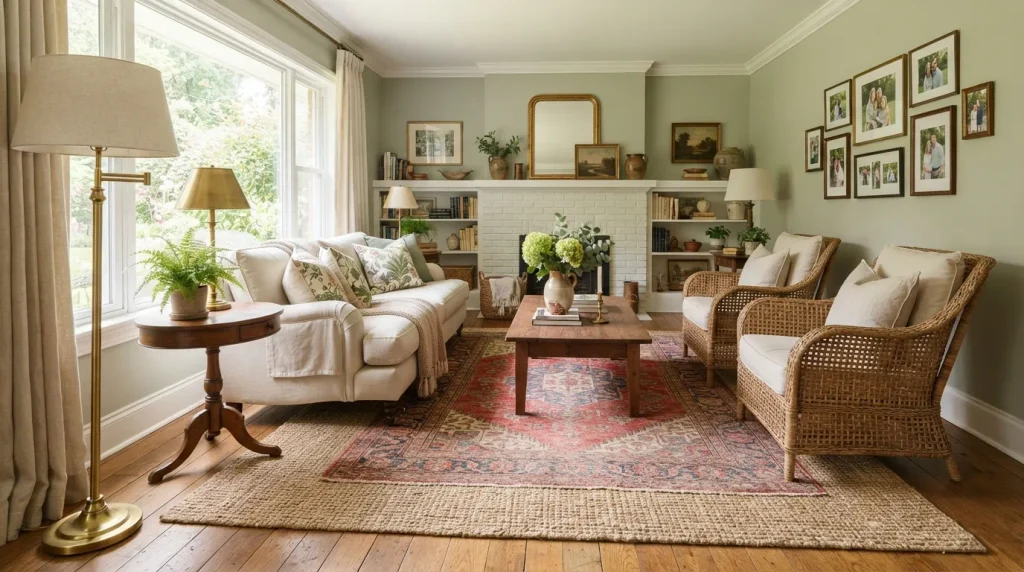
- Layering rugs adds depth without requiring new furniture.
- A neutral base rug helps anchor a smaller patterned rug.
- Traditional motifs introduce color while keeping the room visually grounded.
- Make sure the rug edges sit securely to reduce slipping and movement.
Layered rugs can make a large room feel warmer, more collected, and visually complete. Start with a neutral jute, sisal, or flatweave rug large enough to define the seating area, then place a smaller traditional patterned rug on top. Persian-inspired motifs, muted florals, and faded geometric designs work particularly well because they add color without becoming too dominant. The combination brings together natural texture and classic pattern, two elements that complement traditional Southern interiors beautifully. It is also a practical way to introduce pattern when you are not ready to commit to patterned upholstery, wallpaper, or larger decorative changes.
Scale is important when layering rugs because the wrong proportions can make the arrangement feel accidental. The bottom rug should extend clearly beyond the furniture grouping, while the smaller rug should leave a visible border around its edges. Use a quality rug pad underneath to keep both layers stable and protect the flooring. Repeat one color from the patterned rug in nearby cushions, artwork, or curtains to create visual connection. This technique works especially well in open-plan spaces because the larger rug establishes the zone while the smaller patterned layer adds personality. The result feels comfortable, intentional, and naturally collected.
22. Southern Gallery Wall
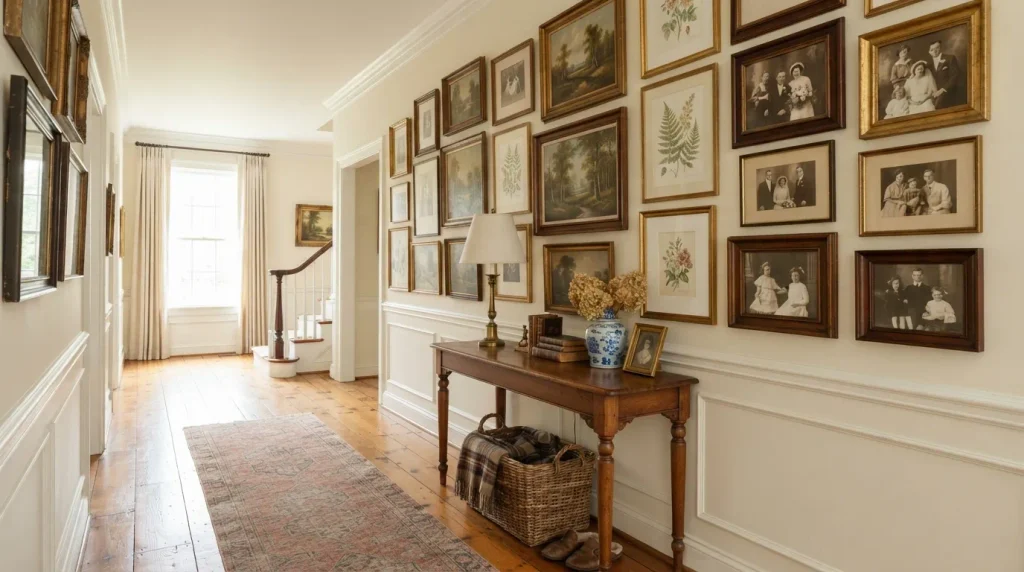
- Mix artwork, family photographs, and botanical prints for a personal display.
- Use wood, brass, and painted frames to create subtle visual variety.
- Keep a consistent color palette so different pieces feel connected.
- Arrange the collection on the floor first to test spacing and balance.
A thoughtful gallery wall can make a hallway, staircase, or living room feel personal rather than simply decorated. Combine landscape paintings, botanical prints, family photographs, and small sketches in frames with related colors or finishes. Antique wood, aged brass, and soft painted frames create a collected appearance without requiring every piece to match. Keep the artwork connected through a calm palette of cream, green, blue, brown, and muted gold. This final layer brings personality into classic Southern home decor while giving meaningful pieces a place to be seen. The result feels established, warm, and distinctly connected to the people who live there.
Start by arranging the frames on the floor before putting anything on the wall. This makes it easier to adjust spacing, balance large and small pieces, and decide where the strongest artwork should sit. For a staircase, follow the angle of the steps while keeping consistent visual spacing. In a hallway, a centered arrangement can create a stronger sense of order. Avoid filling every empty area simply because space is available. I’ve noticed that a little breathing room around artwork makes individual pieces easier to appreciate and helps the entire collection look intentional rather than crowded.
Conclusion
Creating a timeless home is less about following a perfect decorating formula and more about choosing pieces that feel warm, useful, and personal. From layered rugs and antique accents to soft fabrics, traditional furniture, and welcoming architectural details, classic southern home decor can make everyday spaces feel more inviting and thoughtfully finished. Start with one small change, such as updating your lighting, adding a floral accent, or styling an entry console. I’ve seen how small changes like these can completely transform a space. Save this article on Pinterest, try your favorite ideas, and share it with someone who loves timeless decorating.