There’s something about a table scattered with fresh blooms that makes people slow down the moment they walk in. If you’ve ever wanted your table to feel like it was pulled straight from a summer garden, these wildflower tablescape ideas will show you exactly how. Whether you’re hosting a small dinner or a full celebration, the right mix of flowers, texture, and color can completely change how a space feels. In my experience, it’s rarely the biggest arrangement that gets noticed first, it’s the small, thoughtful details scattered throughout the whole setting. This list covers both, so you’ll find inspiration no matter your style or budget.
1. Loose Wildflower Runner
- Adds a soft, romantic focal point without formal arranging
- Works with any table shape, long or round
- Costs little since loose stems go further than tight bouquets
- Easy to refresh mid-meal if flowers wilt
- Feels effortless, not overly styled
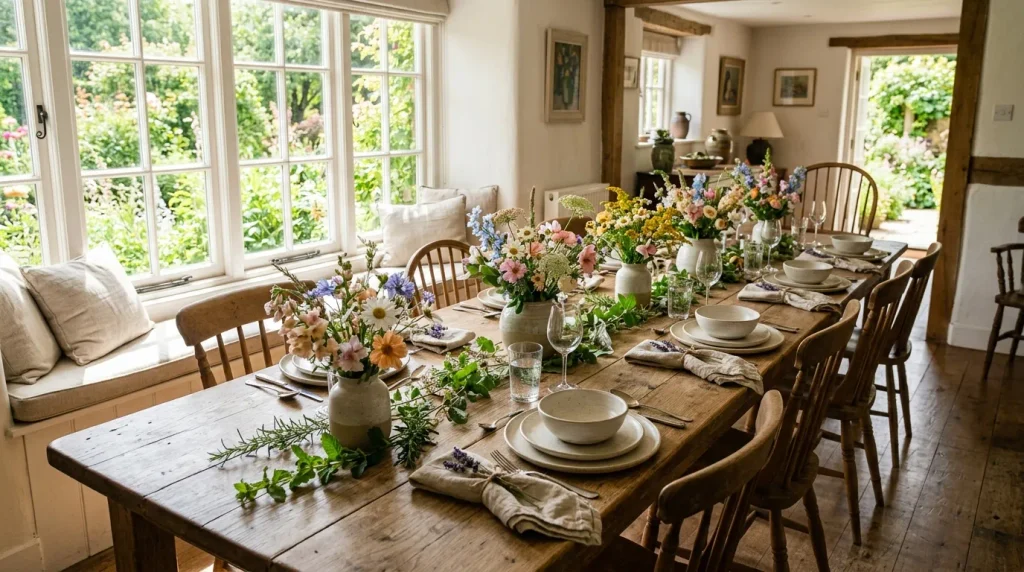
Nothing says a relaxed gathering like flowers scattered right across the table instead of squeezed into a single vase. A loose wildflower runner lets color spill down the center of the table, filling empty space without looking overdone. This works especially well for garden parties, bridal showers, or casual family dinners where you want charm without stiffness. In my experience, mixing stem lengths and colors creates a wilder, more natural look than symmetrical arrangements ever could. Guests notice the difference immediately, and it photographs beautifully from every angle, which makes it a favorite for sharing online.
Setting up this look takes minutes, which is exactly why it works so well for busy hosts. Start by laying flowers directly on the table linen, alternating colors and heights as you go rather than grouping them tightly together. Add a few sprigs of greenery to fill gaps and soften hard edges near plates or candles. I’ve noticed that leaving small imperfect gaps actually makes the display feel more genuine and less staged. By the end, the table feels like it grew flowers naturally rather than having them arranged, giving guests a warm first impression the moment they sit down.
Also Read : 23 Dark Blue Bedrooms Ideas for a Moody Stylish Retreat
2. Mismatched Vintage Jars
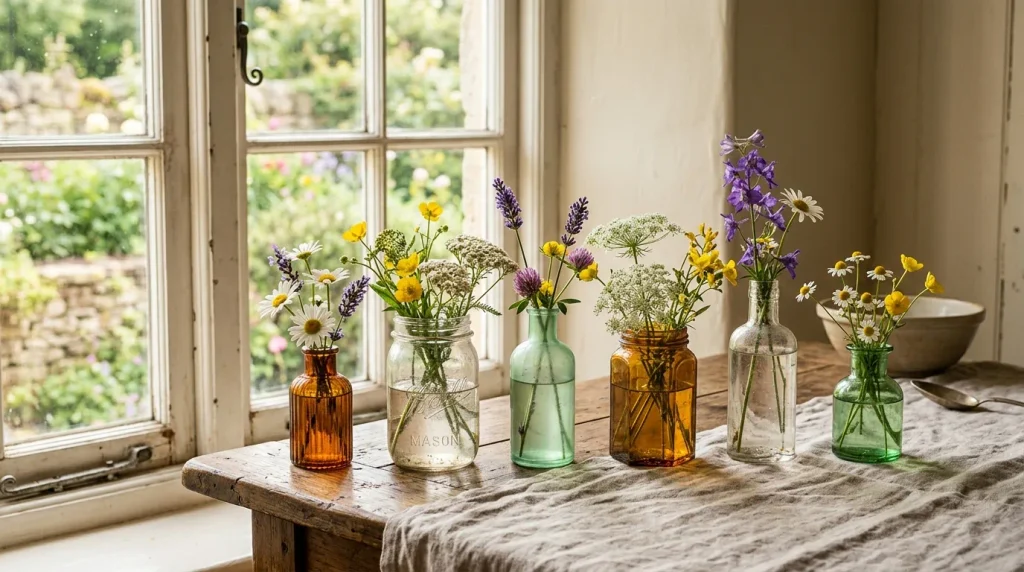
- Turns leftover kitchen jars into charming vases
- Adds visual texture through varied glass shapes and heights
- Lets each flower type stand out instead of blending together
- Perfect for eclectic or vintage-style tablescapes
- Inexpensive since jars are often already on hand
Mismatched jars turn ordinary flowers into a collected, curated moment on the table. Instead of one large centerpiece, several small jars scattered across the surface create rhythm and movement, drawing the eye from one grouping to the next. This idea works beautifully for bridal showers, garden brunches, or any wildflower tablescape idea built around a relaxed, storybook feel. I’ve tried this with jars saved from jam and pickles, and the result always looks intentional rather than thrown together. Guests often ask where the jars came from, which makes for easy, natural conversation around the table.
Filling these jars takes almost no planning, which makes the look easy to repeat for any occasion. Simply snip a few stems per jar, keeping each one loose rather than tightly bunched, then cluster three or four jars together at varying heights. That’s why many designers recommend uneven groupings over perfectly matched rows, since it mimics how flowers actually grow in a field. The mix of glass textures catches light beautifully throughout the day, adding sparkle without needing candles. By evening, the jars still hold their shape well, keeping the table looking fresh through dessert and lingering conversation.
Also Read : 21 Contemporary Coastal Living Room Ideas to Try
3. Wooden Charger Base
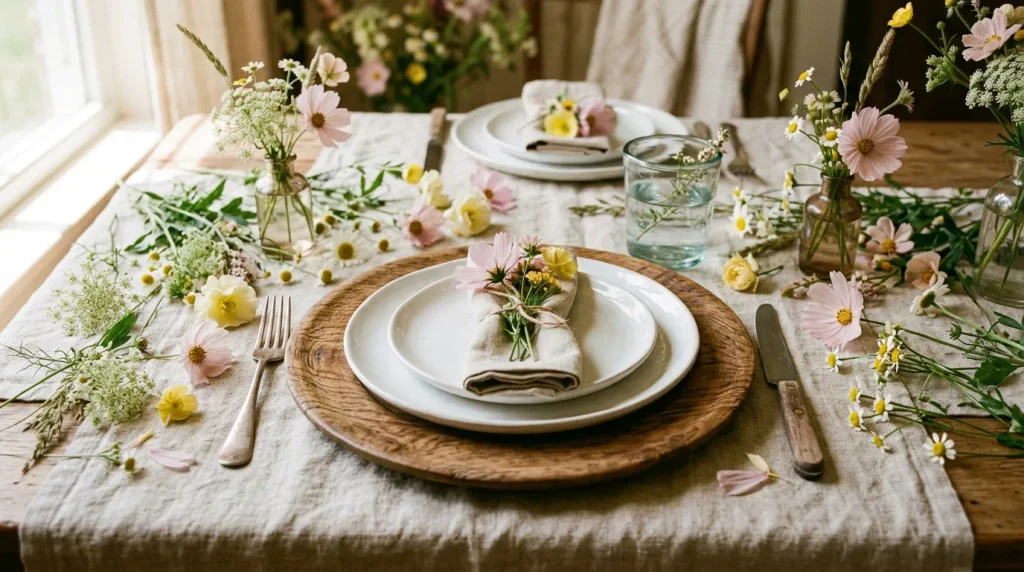
- Grounds each place setting with natural texture
- Adds warmth against white or pastel dinnerware
- Bridges rustic and elegant styling in one piece
- Reusable across seasons, not just spring tablescapes
- Simple upgrade that needs no extra styling skill
A plain white plate can look flat on its own, but setting it over a wooden charger instantly adds depth and warmth. The natural grain brings an organic texture that pairs perfectly with loose wildflowers and linen napkins, tying the whole table together without extra effort. I’ve noticed that even budget dinnerware looks more elevated once it sits on a wood base, since the contrast between smooth ceramic and rough wood grain naturally catches the eye. This small layering trick works for everyday dinners too, not only special occasions, making it a practical habit worth building into your table setup.
Layering a charger under each plate takes only seconds but changes how the whole table reads from a distance. Choose a slightly larger charger so an inch of wood peeks out around the plate edge, giving each setting visual weight without overwhelming the flowers nearby. This works especially well when the color palette leans neutral, since the wood adds warmth that white dishes alone cannot provide. Over time, I’ve seen this work well in both casual brunches and formal dinners, proving it adapts to nearly any theme. It’s a small detail, but guests always notice the finished, styled result.
Also Read : 23 Corner Fireplace Ideas for a Cozy Stylish Living Room
4. Trailing Greenery Edge
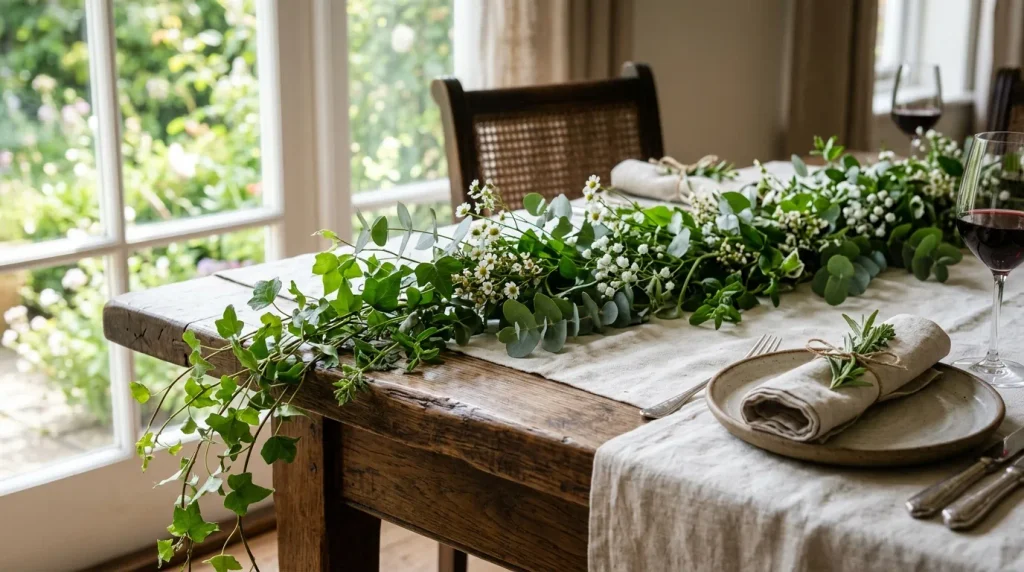
- Softens hard table edges with natural movement
- Adds fullness without needing many flowers
- Creates a garden-grown, undone feel
- Works well for long banquet-style tables
- Draws the eye along the entire table length
Letting greenery spill just past the table edge gives a wildflower tablescape a soft, grown-in feel that flat centerpieces rarely achieve. Trailing vines and eucalyptus create gentle movement, as if the table itself is part of a garden rather than separate from it. This idea is especially effective for long tables at outdoor events, where guests view the setting from the side as much as from above. I’ve tried this with simple grocery-store eucalyptus, and the trailing effect alone made the table look far more expensive than it actually was, which is a nice bonus for anyone working with a tighter budget.
Achieving this look just means letting a few stems hang slightly past the runner or tablecloth edge instead of keeping everything perfectly contained. Tuck the greenery loosely among your flowers so it drapes naturally rather than lying flat and stiff. I’ve seen this work well at outdoor weddings, where a light breeze makes the trailing vines sway gently, adding subtle motion to still photographs. Even indoors, the cascading edge softens the table’s straight lines and makes the whole setting feel less rigid. It’s a detail people notice without quite knowing why the table feels so inviting.
Also Read : 24 Easter Flower Arrangements for a Beautiful Spring Home
5. Single Stem Place Settings
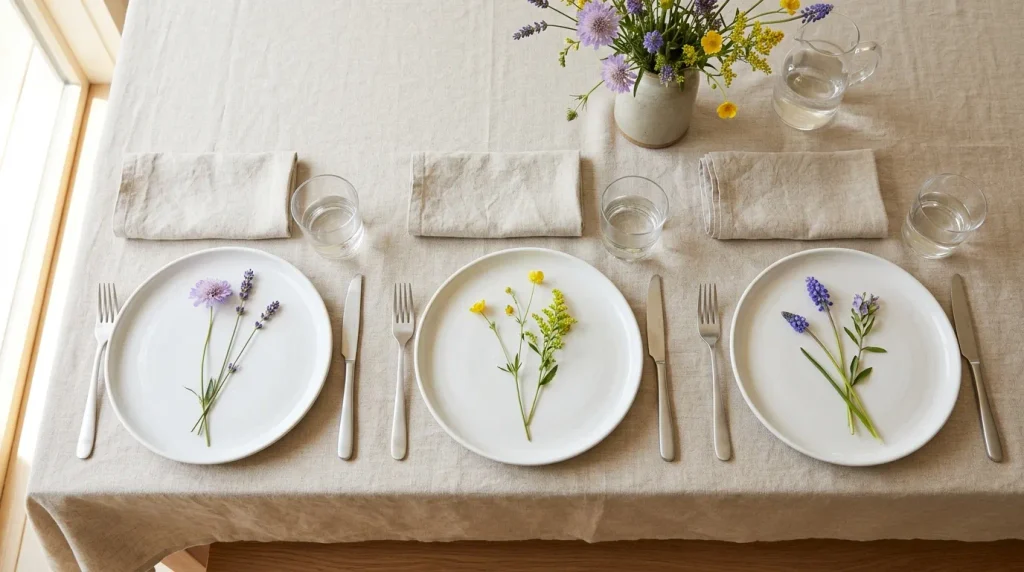
- Personalizes each seat without extra centerpiece cost
- Adds color directly where guests will look first
- Feels modern and minimal, not overly floral
- Doubles as a small take-home favor
- Easy to prepare in bulk for larger gatherings
Sometimes the smallest gesture makes the biggest impression, and a single flower stem across each plate does exactly that. Rather than filling the whole table with arrangements, this idea puts a personal touch right at eye level for every guest. It works particularly well for weddings, bridal showers, or dinner parties where a wildflower tablescape idea needs to feel intimate rather than overwhelming. In my experience, guests often pick up the stem to admire it before the meal even starts, which naturally sparks conversation and makes the table feel more personal from the very first moment.
Preparing this look is simple, even for large guest counts, since each setting only needs one carefully chosen stem. Lay the flower diagonally across the plate rim, angled slightly toward the center for a relaxed, natural look rather than a rigid straight line. Choose stems with sturdy petals so they hold their shape through the meal without wilting too quickly. That’s why many designers recommend pairing this idea with minimal centerpieces elsewhere on the table, letting the place settings carry the floral detail instead. The result feels curated and thoughtful without requiring hours of arranging beforehand.
Also Read : 21 Sage Green Bedroom Ideas for a Calm Relaxing Retreat
6. Low Terracotta Pots
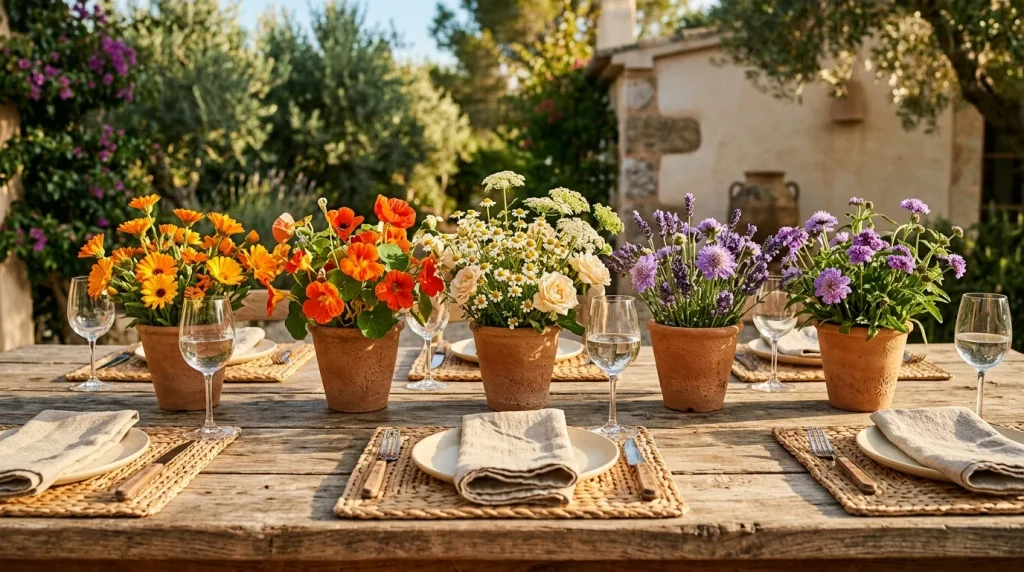
- Keeps sightlines open for easy conversation across the table
- Adds earthy warmth through natural clay texture
- Complements warm color palettes like orange and cream
- Sturdy option that won’t tip easily like tall vases
- Doubles as a planter after the event ends
Terracotta pots bring a sun-baked, Mediterranean warmth to a wildflower table that glass vases simply cannot match. Their low height keeps sightlines open, so guests can actually see and talk to each other across the table, which taller arrangements often block. The reddish-orange clay also pairs beautifully with warm flower tones like marigold, rust, and cream, tying the whole palette together naturally. I’ve noticed this option works especially well for outdoor summer gatherings, where the earthy material feels right at home next to wooden tables, woven textiles, and warm afternoon light streaming across the setting.
Filling these pots requires only a small bunch of stems, since the wide clay opening makes even a few flowers look full and clustered. Space three or four pots evenly along the table’s centerline, alternating flower colors between each one to avoid a repetitive look. I’ve seen this work well at both casual lunches and rustic weddings, proving its versatility across event types. Once the gathering ends, the pots can be replanted and reused, making this one of the more sustainable choices on this list. It’s a practical, budget-friendly option that never looks like an afterthought.
Also Read : 24 Stone Fireplace Ideas for a Warm Rustic Living Room
7. Dried Wildflower Mix
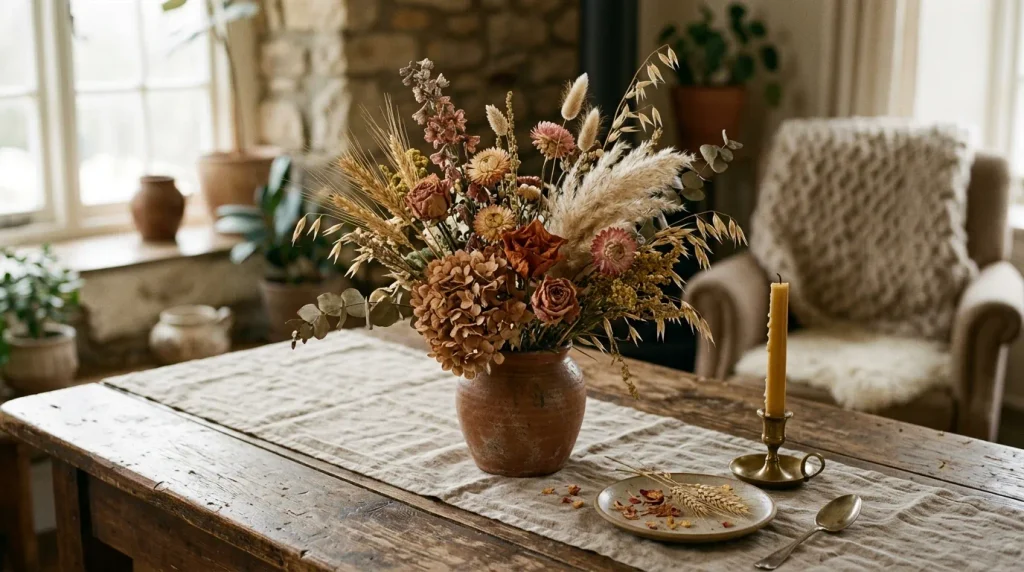
- Lasts through the entire event without wilting
- Adds warm, muted color that suits fall or boho themes
- Reusable as home decor after the gathering
- Requires zero water or maintenance during setup
- Pairs well with neutral or earthy tablecloths
Fresh flowers are lovely, but dried wildflowers solve a problem every host quietly worries about: wilting before the meal even starts. Their muted, faded tones bring a softer, more textured look than fresh blooms, which makes them a favorite for boho or autumn-themed tables. Wheat stalks and pampas grass mixed in add height and movement without needing water or careful timing. I’ve tried this approach for outdoor events where flowers would have wilted in an hour, and the dried mix still looked full and beautiful by the time dessert was served, hours after the first guest sat down.
Arranging dried wildflowers works much like fresh ones, only with far more forgiveness for timing and temperature. Group stems loosely along the table rather than in tight bunches, letting some pieces lean and overlap naturally for a relaxed, gathered look. I’ve noticed that mixing textures, like adding a few wheat stalks among the flowers, keeps the arrangement from feeling flat or one-dimensional. Because nothing here needs water, setup can happen a day or two in advance without any risk to how the table looks. It’s a practical choice for anyone juggling a long list of last-minute details.
8. Botanical Name Cards
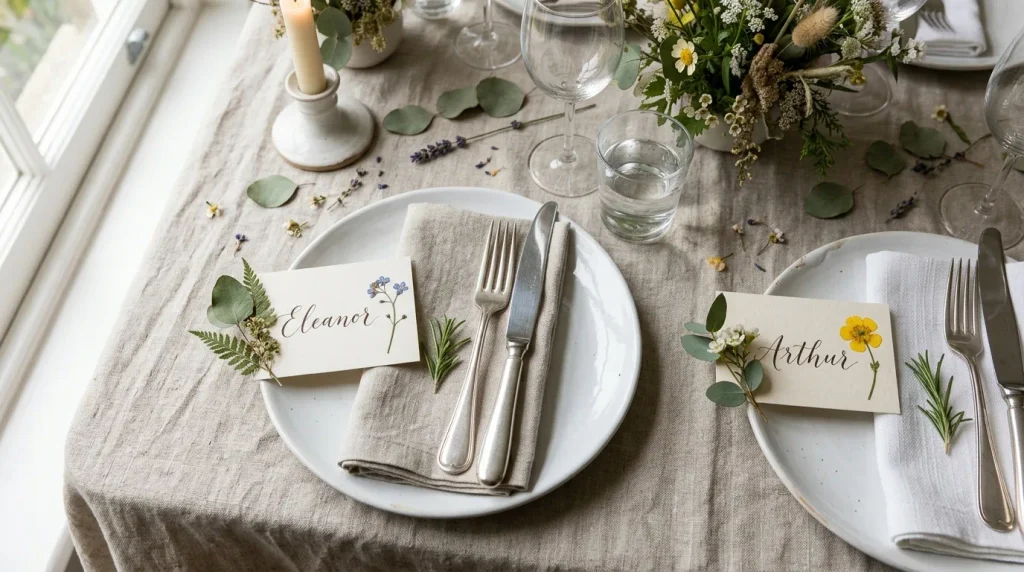
- Combines function with a decorative floral touch
- Adds a personal, thoughtful detail for each guest
- Works for weddings, showers, or holiday dinners alike
- Small pressed flowers keep the detail lightweight and simple
- Elevates plain place settings without added clutter
Guests always appreciate finding their name at a seat, and pairing that card with a tiny pressed flower turns a practical detail into something memorable. This idea suits any wildflower tablescape idea where personalization matters, from weddings to holiday dinners. The small botanical touch beside each name feels intentional without demanding much time or budget. I’ve seen this work well even with flowers pressed just days before the event, since they only need to look delicate, not perfectly preserved. It’s a detail small enough to skip, yet noticeable enough that guests often mention it during the meal.
Making these cards is simpler than it looks, especially with pre-pressed or air-dried petals kept on hand. Write each name on cream or kraft cardstock, then tuck a single pressed flower or small sprig beside it, securing lightly with glue if needed. In my experience, choosing flowers that match the table’s main color palette keeps the whole setting feeling cohesive rather than scattered. Place the cards just above each plate or folded napkin so they’re the first thing guests notice when they sit down, setting a warm, personal tone before the meal even begins.
9. Woven Table Runner Base
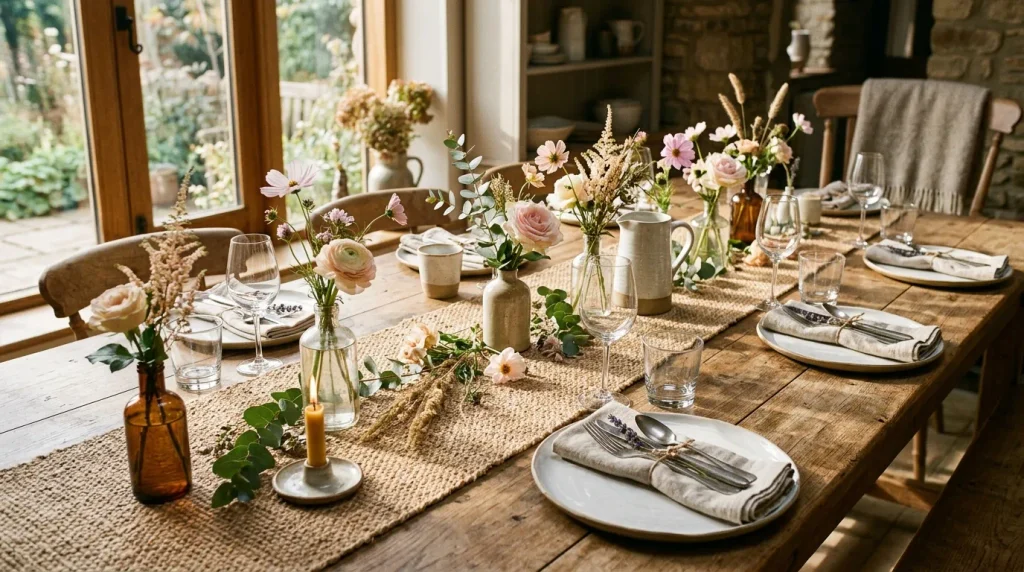
- Adds texture beneath flowers without competing for attention
- Warms up plain wooden or glass tables instantly
- Affordable base layer that suits many color palettes
- Hides table imperfections or mismatched wood tones
- Easy to reuse for future gatherings
A woven runner does quiet, important work on a wildflower table: it grounds the whole setting and gives flowers a soft surface to rest against instead of bare wood or glass. The natural jute texture adds warmth without pulling focus from the blooms scattered across it, which is exactly the balance a good base layer should strike. I’ve noticed tables look noticeably more finished the moment a runner goes down, even before any flowers or place settings are added. It’s one of those foundational choices that makes every other detail on the table look more intentional and pulled together.
Laying the runner down first gives you a clear guide for where to scatter flowers and place settings afterward, keeping everything visually centered. Choose a woven texture over a flat fabric one, since the natural fibers catch light differently and add subtle depth to photos. That’s why many designers recommend starting table styling with the base layer before adding a single flower, since it shapes how everything else will sit. Once in place, this runner also hides minor scratches or mismatched wood tones underneath, giving budget tables a much more polished, cohesive final look.
10. Floating Candle Accents
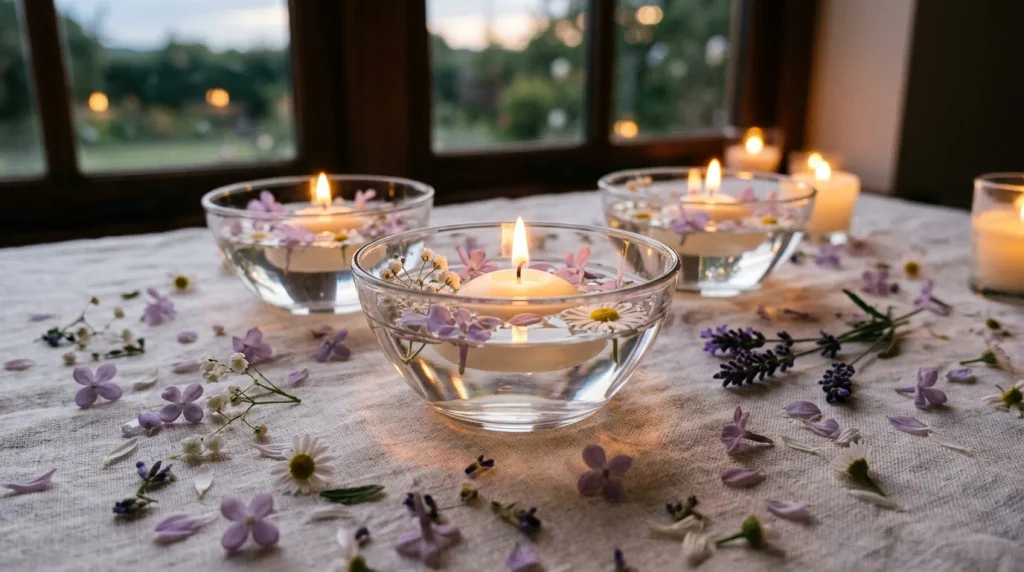
- Adds warm glow without tall candlesticks blocking views
- Petals floating in water double as mini decor
- Works beautifully for evening or dusk gatherings
- Simple to prepare with items already on hand
- Creates soft light that flatters food and faces alike
As daylight fades, floating candles bring a warm, romantic glow that scattered petals alone cannot achieve after dark. Placing a few petals directly in the water alongside the candle ties the look back to the rest of the wildflower tablescape idea running across the table. Because the bowls sit low, they never block sightlines the way tall candlesticks can, keeping conversation easy even as the evening goes on. I’ve tried this for dinners that stretched past sunset, and the soft candlelight consistently drew compliments, especially once paired with the natural textures already scattered across the table.
Setting these up takes only a few minutes right before guests arrive, since the water and petals stay fresh for hours. Fill a shallow glass bowl about halfway, add one floating candle, then scatter a few loose petals around its edge rather than crowding them together. I’ve noticed spacing several small bowls along the table works better than one large centerpiece, since the light spreads more evenly across every seat. By the time dessert is served, the glow has usually settled into a warm, ambient light that flatters both the food and the guests seated around it.
11. Mixed Height Bud Vases
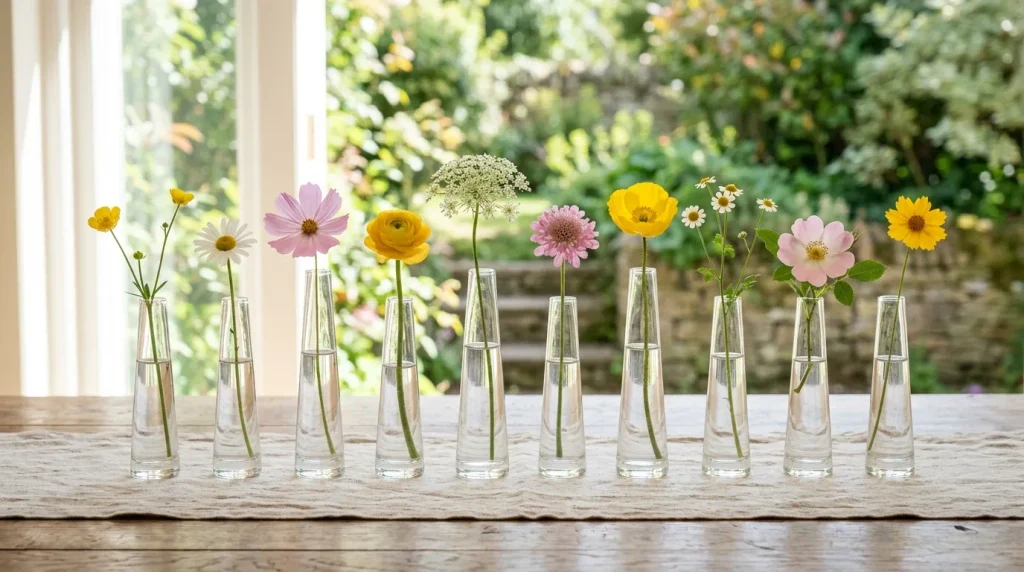
- Creates visual rhythm through varied vase heights
- Keeps the look light and airy, not heavy
- Uses fewer flowers while still filling table space
- Suits modern, minimal, or garden-party themes
- Easy to rearrange for different table lengths
A single tall vase can feel stiff, but a row of bud vases at different heights adds movement and rhythm down the entire table. Each vase holding just one or two stems keeps the overall look light and airy rather than dense or heavy, which suits more modern or minimalist styling. This approach also stretches a small flower budget further, since bud vases need far fewer stems than one large arrangement would require. I’ve noticed guests often comment on how effortless this look feels, even though the varied heights are carefully considered rather than random.
Arranging these vases works best when you resist the urge to line them up in a perfectly even row. Instead, stagger the heights so the eye moves naturally up and down the table as it travels along the centerline. I’ve seen this work well for both narrow apartment tables and long outdoor banquet setups, since vases can be added or removed to match the available space. Clear glass keeps the focus on the flowers themselves, letting each stem’s color stand out clearly against the neutral backdrop of the table linen.
12. Fresh Herb Accents
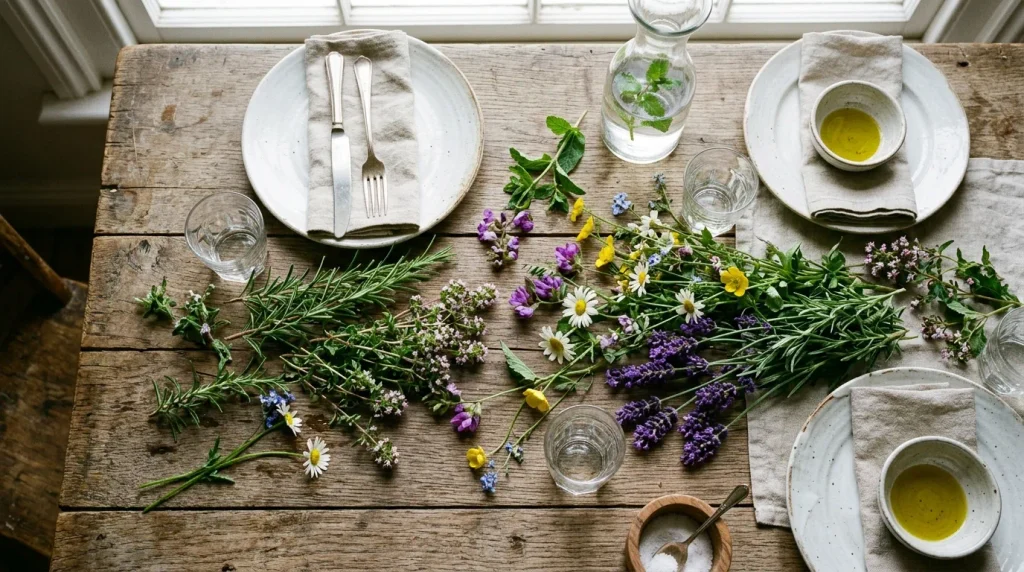
- Adds fragrance that flowers alone can’t provide
- Introduces texture variety beyond typical petals and leaves
- Suits rustic, garden, or Mediterranean-themed tables
- Doubles as a fresh ingredient for the kitchen afterward
- Inexpensive addition using herbs already on hand
Fresh herbs bring something flowers can’t: a subtle fragrance that lingers over the table as guests settle into their seats. Tucking rosemary or lavender sprigs among the wildflowers adds a textured, layered look while also making the whole table smell faintly of a summer garden. This idea works especially well for rustic or Mediterranean-inspired gatherings, where herbs feel like a natural extension of the meal itself rather than a separate decoration. I’ve noticed guests often reach out to touch or smell the herbs, which adds a small sensory moment that flowers alone rarely create at the table.
Adding herbs is as simple as tucking a few sprigs directly into your existing flower arrangement, no separate vase required. Rosemary and lavender hold their shape and scent well without water for several hours, making them ideal for events without much setup time beforehand. I’ve tried mixing thyme in as well, and its smaller leaves filled gaps between larger blooms nicely. Once the gathering ends, any leftover herbs can go straight into the kitchen for cooking, giving this idea a practical second life well beyond its role on the table.
13. Linen Napkin Wraps
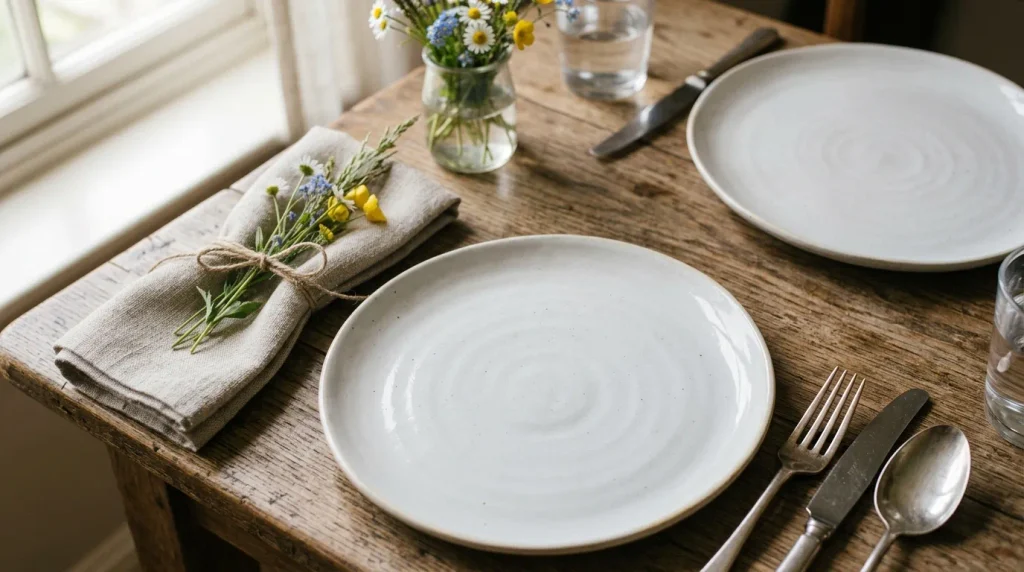
- Turns a basic napkin into a small styled detail
- Twine and flowers add texture without much effort
- Suits rustic, farmhouse, or garden-themed tables
- Inexpensive way to elevate simple table linens
- Works for both casual and formal gatherings
A folded napkin tied with twine and a single flower sprig turns something purely functional into a small, styled moment at each seat. This detail bridges the gap between casual and formal, making it flexible enough for both a backyard lunch and a more polished dinner party. Because the focus stays small and simple, it never competes with the rest of the wildflower tablescape idea happening elsewhere on the table. I’ve noticed this wrap works particularly well when the napkin color contrasts gently with the flower, since the small pop of color draws the eye without overwhelming the place setting.
Putting this together takes only a minute per napkin, which makes it manageable even for larger guest lists. Fold the linen into thirds, wrap twine around the center twice, then tuck a single stem beneath the knot before tying it off. I’ve seen this work well with everything from lavender sprigs to tiny daisies, so the flower choice can shift easily with the season or color scheme. Once tied, the napkin holds its shape through the meal, keeping the small floral detail visible and intact from the first course to the last.
14. Layered Neutral Linens
- Adds depth through subtle color and texture layering
- Keeps the palette neutral so flowers stand out
- Suits minimal, elegant, or Scandinavian-inspired themes
- Hides table imperfections beneath soft fabric folds
- Simple styling trick that photographs beautifully
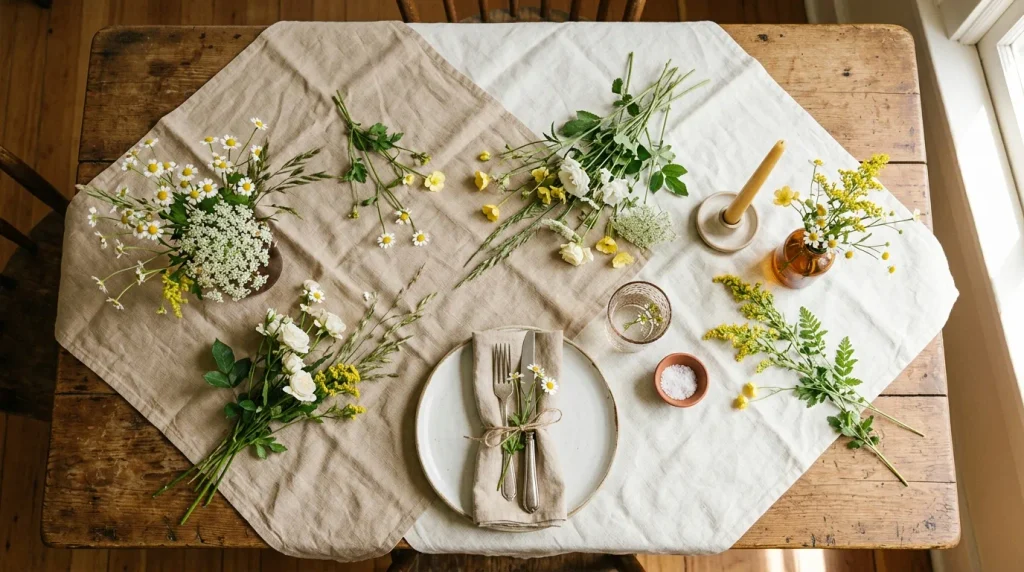
Layering two linens in close, neutral tones creates quiet depth on a table without introducing any competing colors. This trick works especially well when the wildflowers themselves carry the boldest color on the table, letting soft ivory and beige fabric act as a gentle backdrop rather than a distraction. I’ve tried this layering technique for tables that felt slightly flat with a single cloth, and adding a second layer, draped diagonally, instantly gave the setting more visual interest. It’s a subtle change, but one that consistently reads as more considered and styled once photographed from above.
Achieving this look starts with laying the base cloth straight, then draping a second linen diagonally across the top so both colors remain visible at the corners. I’ve noticed keeping both fabrics in the same warm tonal family, rather than contrasting shades, is what makes this look elegant instead of busy. Smooth out the folds gently rather than pressing them flat, since soft creases add texture that photographs well in natural light. This layered base gives scattered flowers and place settings a soft, cohesive surface to rest against throughout the meal.
15. Citrus and Floral Mix
- Adds unexpected color and texture beyond flowers alone
- Suits bright, summery, or citrus-themed gatherings
- Inexpensive filler using produce already in the kitchen
- Creates a fresh, edible-feeling centerpiece
- Doubles as garnish for drinks after styling
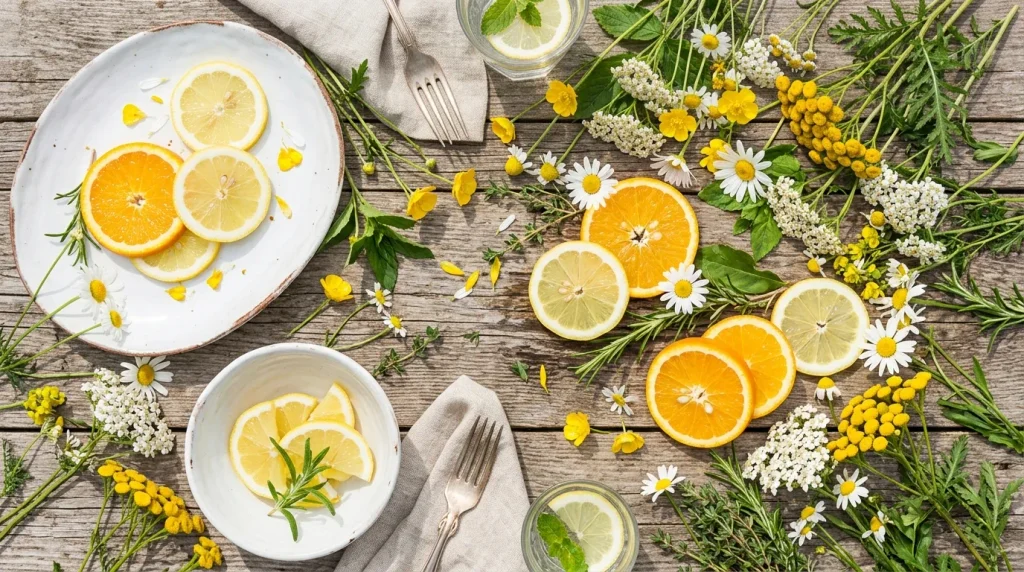
Mixing sliced citrus in with wildflowers adds a burst of color and shine that petals alone don’t provide, especially under bright daylight. The glossy cut surfaces of lemons and oranges catch light beautifully, adding a fresh, almost edible quality to the table that feels perfect for summer gatherings. This combination also keeps costs low, since citrus is inexpensive and often already on hand for drinks or cooking. I’ve noticed this pairing works particularly well for brunches, where the bright yellow and green tones echo the meal itself, tying the table setting and the food together in a way that feels unplanned but cohesive.
Scattering citrus slices among the flowers takes only a few extra minutes once the main arrangement is in place. Tuck a few slices between flower clusters rather than piling them in one spot, letting the color repeat gently down the table’s length. I’ve seen this work well alongside pitchers of lemonade or iced tea, since leftover citrus can go straight into the drinks afterward. This small overlap between decor and food gives the table a relaxed, garden-party feel without requiring any extra shopping beyond what’s already needed for the menu.
16. Wildflower Crown Centerpiece
- Creates a striking focal point without a tall vase
- Circular shape suits round or square tables equally well
- Feels whimsical and suits garden or bridal themes
- Can double as a photo prop after the meal
- Made from affordable, easy-to-source stems
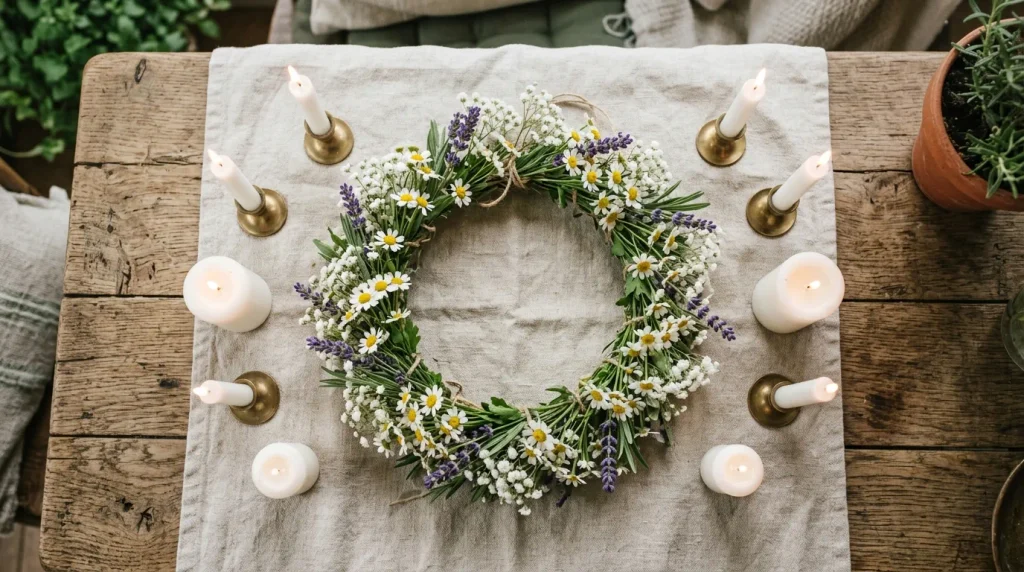
A wildflower crown laid flat at the center of the table brings a whimsical, storybook quality that upright arrangements rarely achieve. Its circular shape works beautifully on both round and square tables, framing a cluster of candles or a small dish at its center without blocking sightlines across the table. This idea suits bridal showers and garden parties especially well, where a soft, romantic mood matters as much as the flowers themselves. I’ve noticed this centerpiece photographs beautifully from directly above, making it a favorite for anyone planning to share the table setting online after the event ends.
Making the crown is simpler than it looks, especially using a basic wire or vine base wrapped with floral tape. Attach small clusters of daisies, lavender, and baby’s breath around the ring, alternating textures so no single section feels too heavy. I’ve tried laying the finished crown flat rather than upright, and this orientation consistently reads as softer and more relaxed on camera. Once placed, add a few candles or a low dish inside the ring to complete the centerpiece, giving the table a soft, gathered focal point everyone notices immediately.
17. Painted Clay Pots
- Adds a handmade, personal touch to the table
- Pastel colors suit spring or bridal shower themes
- Easy DIY project guests can help prepare beforehand
- Sturdy base that won’t tip like glass vases
- Doubles as a party favor guests take home
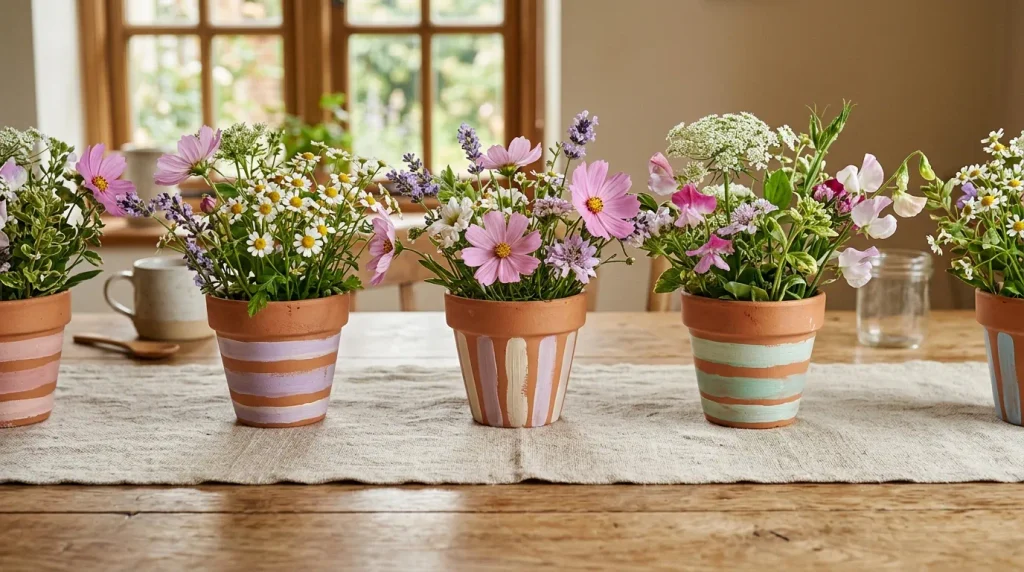
Hand-painted pots add a playful, personal layer to a wildflower table that store-bought vases simply can’t replicate. The soft pastel stripes bring a handmade charm that feels especially fitting for spring gatherings or bridal showers, where a lighthearted, DIY touch adds warmth to the whole event. Because these pots are sturdy and low to the ground, they hold up well throughout a long meal without tipping, unlike taller glass options. I’ve tried this idea as a group activity before a party, and guests genuinely enjoyed painting their own pots ahead of time, which made the finished table feel even more meaningful.
Painting the pots takes minimal supplies, just basic acrylic paint and a few hours of drying time before the event. Keep the stripes loose and slightly imperfect, since a handcrafted, uneven look suits this style far better than sharp, precise lines. I’ve seen this work well as a take-home favor too, with guests carrying their painted pot home after the meal, plant and all. This small detail extends the table’s charm beyond the event itself, giving guests a lasting reminder of the gathering long after the flowers have faded.
18. Wildflower Garland Drape
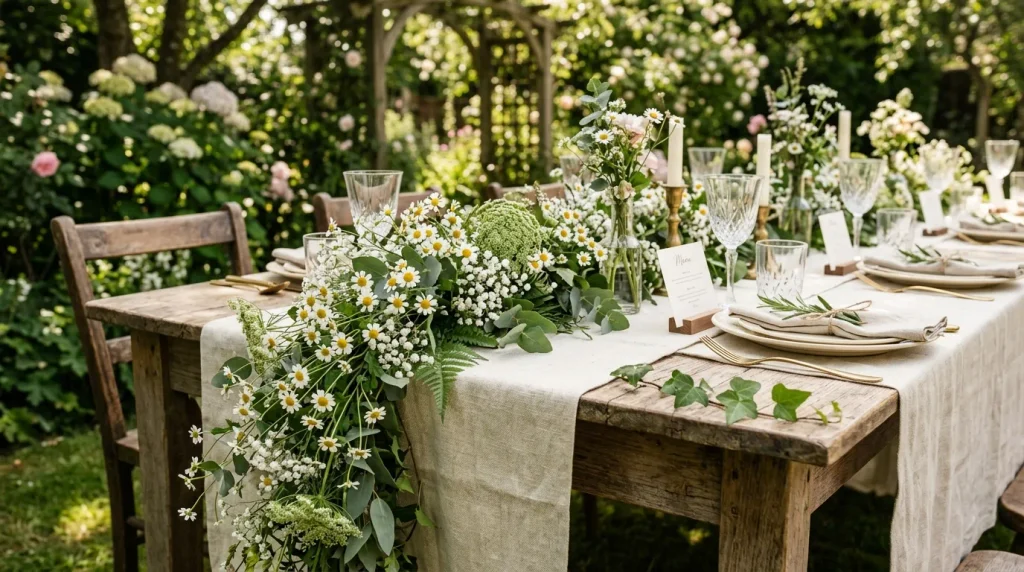
- Adds continuous color down the entire table length
- Draping at corners softens sharp table edges
- Suits long banquet tables better than isolated centerpieces
- Creates a cohesive look without repeating arrangements
- Works well for both indoor and outdoor settings
A garland draping along the table’s edge creates one continuous line of color, which reads very differently than several separate arrangements placed apart. This unbroken flow suits long banquet-style tables particularly well, since it guides the eye down the entire length rather than pulling attention to isolated points. Letting the garland dip slightly at each corner softens the table’s straight lines, adding a relaxed, flowing quality that feels especially fitting for outdoor garden parties. I’ve noticed this idea works beautifully for weddings, where the continuous drape photographs as one cohesive design rather than a collection of separate decorative choices.
Building a garland this long usually means working in shorter sections, then wiring or tying them together once laid across the table. I’ve tried spacing baby’s breath evenly between larger blooms, and this filler kept the garland from looking too dense or heavy in any one spot. Let the ends drape gently over each corner rather than stopping abruptly at the table’s edge, since this small detail is what makes the garland feel intentional. Once in place, this look requires no further adjustment throughout the event, holding its shape from the first course to the last.
19. Rustic Wood Slice Base
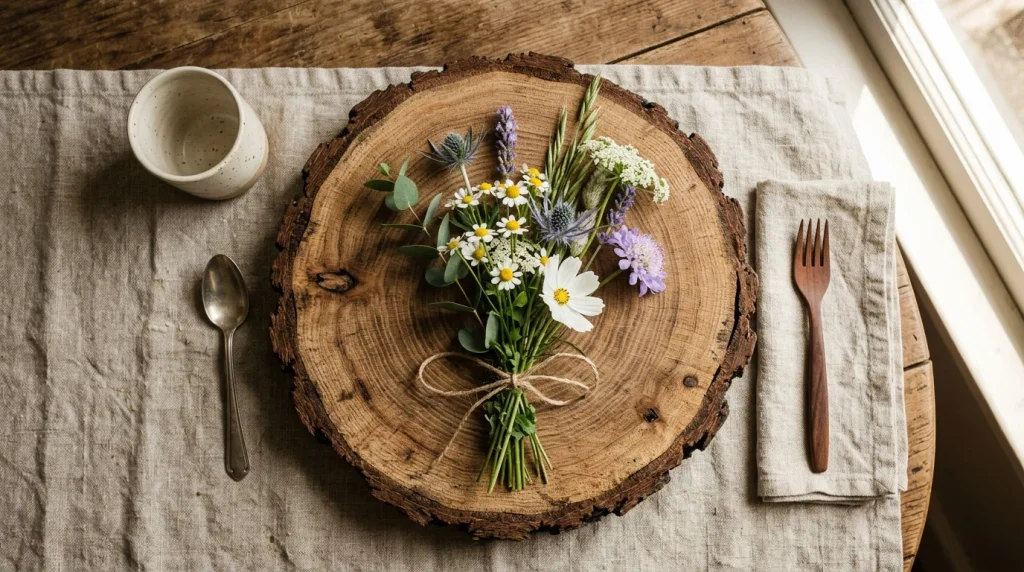
- Adds raw, natural texture beneath floral clusters
- Bark edges bring an authentic, woodland feel
- Works well as a base for candles or small vases
- Protects linens from water or floral debris
- Suits rustic, woodland, or cabin-style themes
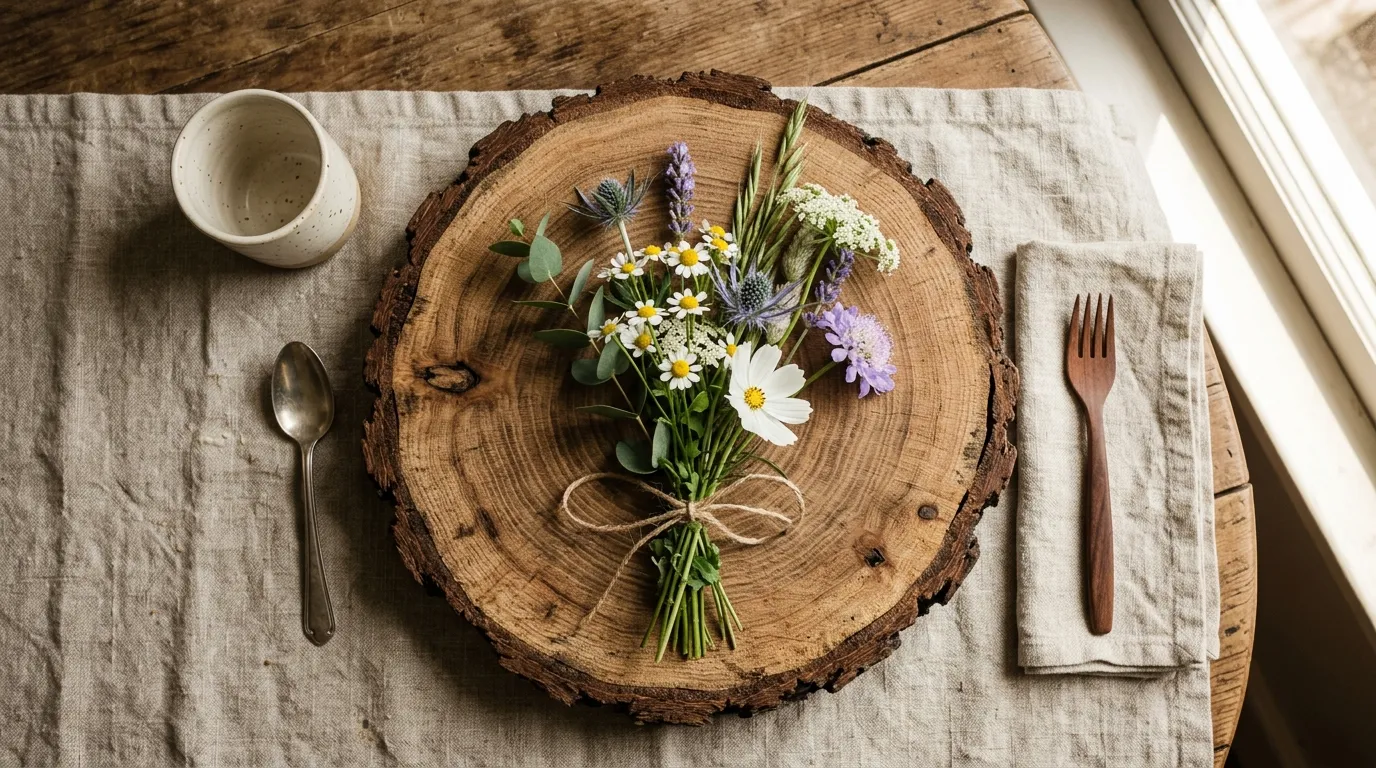
A wood slice placed beneath flowers grounds the arrangement with raw, natural texture that manufactured trays or plates can’t quite match. The visible bark edge brings a woodland quality to the table, making it a natural fit for rustic or cabin-inspired gatherings where authenticity matters more than polish. Beyond looks, this base also serves a practical purpose, catching stray water drops or fallen petals before they reach the linen underneath. I’ve noticed this small addition often becomes a talking point on its own, since guests are drawn to touch the textured bark edge before even noticing the flowers resting on top of it.
Sourcing a wood slice is easier than it sounds, since many craft stores sell them pre-cut and sanded smooth on top. Place the slice directly on the table or runner, then set a small jar or loose cluster of flowers at its center rather than covering the entire surface. I’ve tried using several smaller slices spaced along a long table, and this repetition created a cohesive rhythm without needing one oversized piece. Once positioned, the wood base requires no further styling, holding its rustic charm steady throughout the entire event without shifting or wearing down.
20. Soft Pastel Color Palette
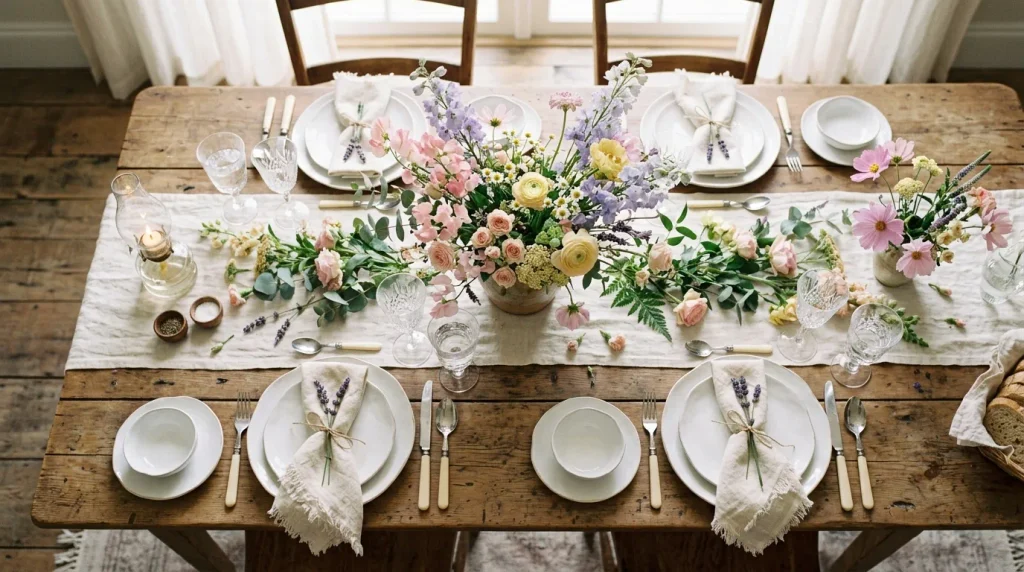
- Creates a cohesive look across every element on the table
- Softens the overall mood for daytime or spring events
- Pairs naturally with most neutral linens and dinnerware
- Avoids harsh contrast that can feel too formal
- Flatters photos taken in natural daylight
Choosing a soft pastel palette from the start makes every other decision on the table easier, since flowers, linens, and dinnerware all need to work within the same gentle color family. This approach suits daytime events especially well, where natural light enhances soft pinks and lavenders far more than it does bold, saturated colors. Rather than treating each element separately, a pastel palette ties the whole wildflower tablescape idea together into one cohesive visual story. I’ve noticed tables built around this kind of restrained color scheme photograph more consistently well, regardless of the time of day or the angle the photo is taken from.
Building this palette starts with picking two or three core colors, then choosing flowers, linens, and even candles within that narrow range. I’ve seen this work well when hosts resist the urge to add one bold accent color, since even a single bright bloom can disrupt the otherwise soft, unified look. Stick with cream, blush, and pale yellow as anchor tones, letting greenery provide the only real contrast across the table. This restraint might feel limiting at first, but it consistently produces a calmer, more polished result than mixing too many competing colors together.
21. Grazing Board Centerpiece
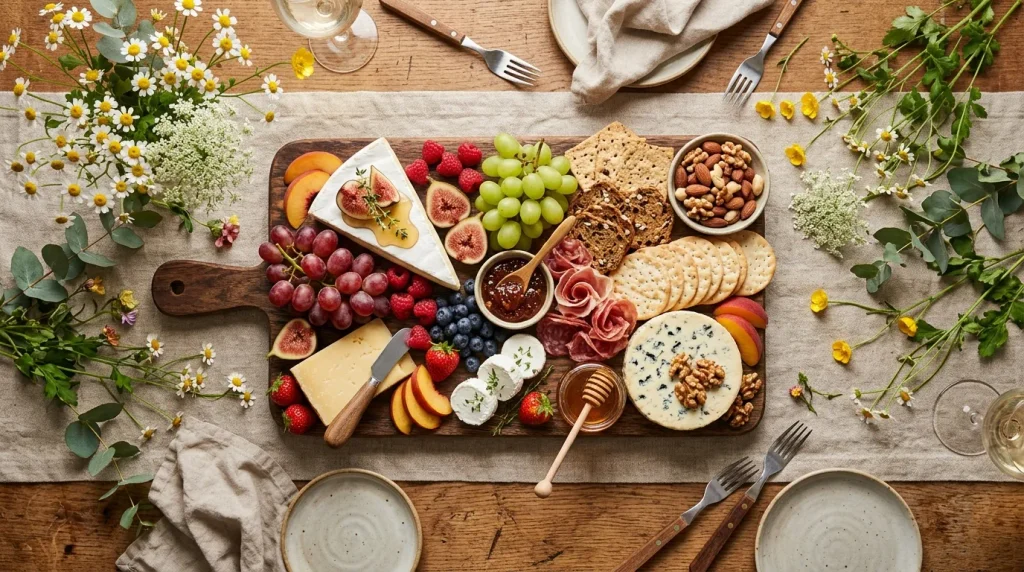
- Combines decor and food into one shared centerpiece
- Reduces the need for separate floral arrangements
- Encourages guests to interact and serve themselves
- Adds natural color and texture through fresh produce
- Practical choice for casual, communal-style gatherings
A grazing board at the center of the table does double duty, serving as both food and decoration without needing a separate floral centerpiece. Scattering a few wildflowers around its edges softens the board’s practical purpose, blending food styling with the rest of the table’s natural, garden-inspired theme. This idea suits casual, communal gatherings particularly well, where guests are meant to reach in, serve themselves, and linger over conversation rather than sit through a formal, plated meal. I’ve tried this setup for smaller dinner parties, and it consistently reduces both the floral budget and the time spent on separate centerpiece styling.
Building this look starts with arranging the food first, grouping cheeses, fruit, and crackers into small clusters across the board rather than spreading everything evenly. I’ve noticed tucking a few flowers directly into empty gaps between food groupings ties the whole board back into the wildflower theme without needing a separate vase. Leave a little visual breathing room between clusters so the board doesn’t feel overcrowded once guests start serving themselves. This combined approach keeps the table looking abundant and inviting from the very first course through to the final round of refills.
22. Vintage Lace Table Overlay
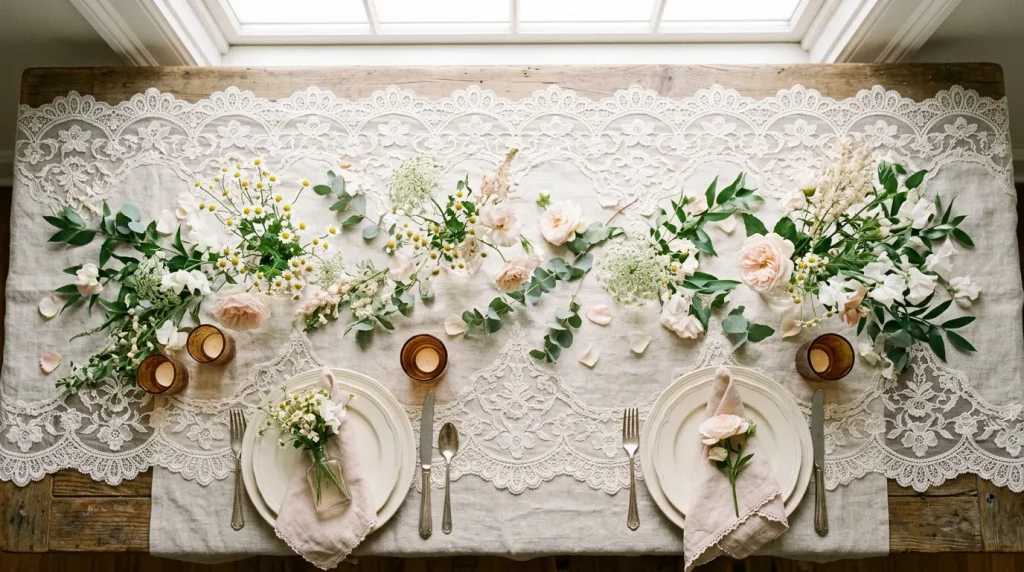
- Adds intricate texture without introducing extra color
- Suits vintage, romantic, or heirloom-inspired themes
- Layers beautifully over a solid base linen
- Brings heirloom charm without needing actual antiques
- Softens the table’s overall visual weight
A lace overlay brings intricate texture to the table without adding any extra color, letting the pattern itself do the visual work. This layered approach suits vintage or heirloom-inspired gatherings especially well, evoking a sense of history even when the lace itself is newly purchased. Placed over a solid linen base, the lace’s delicate pattern catches natural light beautifully, adding subtle shadow and depth across the table’s surface. I’ve noticed this combination works particularly well for bridal showers or anniversary dinners, where a romantic, nostalgic mood matters just as much as the wildflowers scattered across the finished table setting.
Layering the lace is straightforward, though centering it carefully makes a noticeable difference in the finished look. Lay the solid linen first, then drape the lace overlay so its pattern falls evenly across the table’s visible surface, adjusting corners until the drop looks even on all sides. I’ve tried this with both new and secondhand lace, and slightly imperfect, aged-looking lace often reads as more authentic than a crisp, new piece. Once positioned, scatter flowers lightly across the top, letting the lace pattern peek through between blooms rather than covering it completely.
23. Copper and Brass Accents
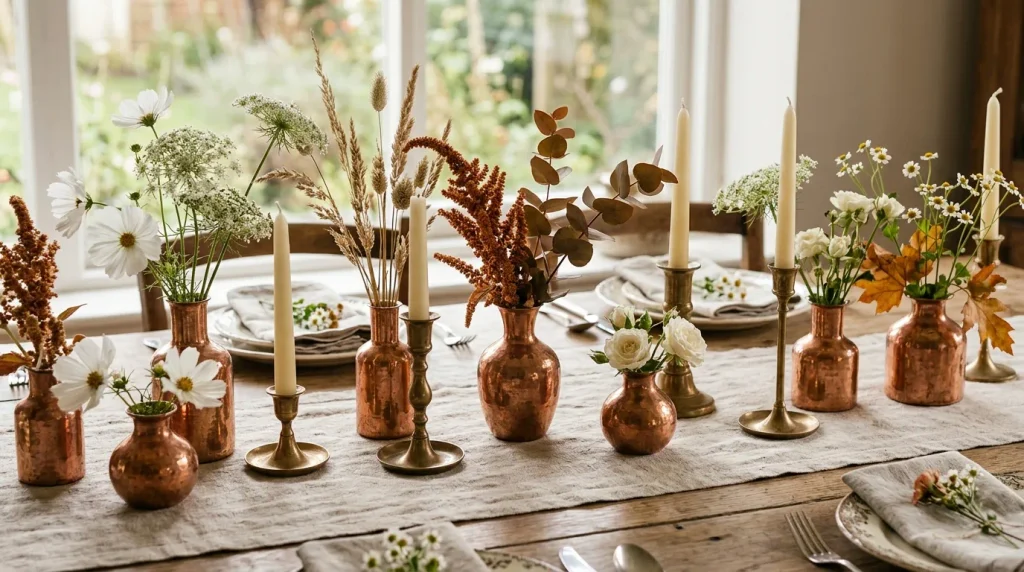
- Adds warm metallic shine that glass or ceramic lacks
- Complements rust, cream, and warm floral tones
- Reflects candlelight beautifully during evening gatherings
- Introduces a touch of elegance without feeling formal
- Mixes well with rustic wood and linen textures
Metallic accents in copper or brass bring a warm shine to the table that glass and ceramic simply can’t replicate, especially once candles are lit. These tones pair naturally with rust, cream, and warm floral colors, adding a subtle elegance without tipping the table into overly formal territory. I’ve noticed that even one or two small brass pieces, tucked among the flowers, catch enough light to add noticeable warmth to photos taken later in the day. This idea works well alongside rustic wood and linen textures too, proving that metallic accents don’t have to feel out of place in an otherwise natural, garden-inspired setting.
Adding these accents means resisting the urge to overdo it, since a few well-placed pieces read as intentional while too many can feel cluttered. Place one or two small copper vases among the flowers, then add a single brass candle holder nearby to tie the metallic tones together. I’ve tried mixing copper and brass rather than sticking to one metal exclusively, and the slight tonal variation actually added more depth than matching pieces would have. As evening falls, these metallic surfaces catch candlelight beautifully, extending the table’s warm glow well past sunset.
24. Wildflower Napkin Rings
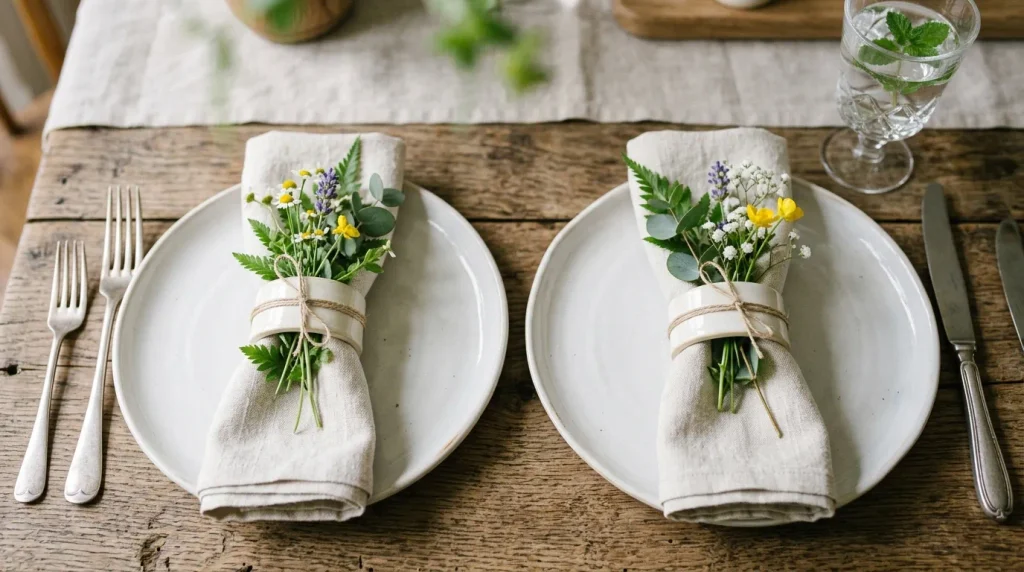
- Adds a finishing floral touch at each individual seat
- Small scale keeps the detail from feeling excessive
- Easy to prepare ahead of the event
- Ties place settings back to the table’s overall theme
- Simple upgrade that requires very little material
A napkin ring wrapped with a small floral sprig gives each place setting its own quiet connection to the table’s overall wildflower tablescape idea. Because the scale stays small, this detail never competes with larger centerpieces elsewhere on the table, instead working as a final, finishing touch at each individual seat. I’ve noticed this idea works particularly well for events where budget is tight, since a single small sprig per napkin uses far less material than any centerpiece would require. It’s a detail that consistently gets noticed despite its size, precisely because it sits right in front of each guest.
Assembling these rings ahead of time makes event-day setup much faster, since each one only takes a minute or two to prepare. Wrap a plain ivory ring with wire or twine, then tuck a small flower sprig beneath the wrap so it sits securely without falling loose during the meal. I’ve tried preparing these the day before, and the flowers held their shape well even after sitting overnight in a cool space. Sliding the finished ring onto each folded napkin completes the place setting, giving the table one final layer of cohesive, botanical detail before guests arrive.
Conclusion
A beautiful table doesn’t need to be complicated to feel special. These wildflower tablescape ideas prove that a few loose stems, natural textures, and small personal touches can transform an ordinary meal into something guests remember. I’ve seen how small changes like these can completely shift the mood of a gathering, often more than any expensive centerpiece could. Pick one or two ideas that feel right for your next table, try them out, and watch how much warmth they add. Save this post for your next event, and share it with anyone who could use a little natural, effortless inspiration for their own table.