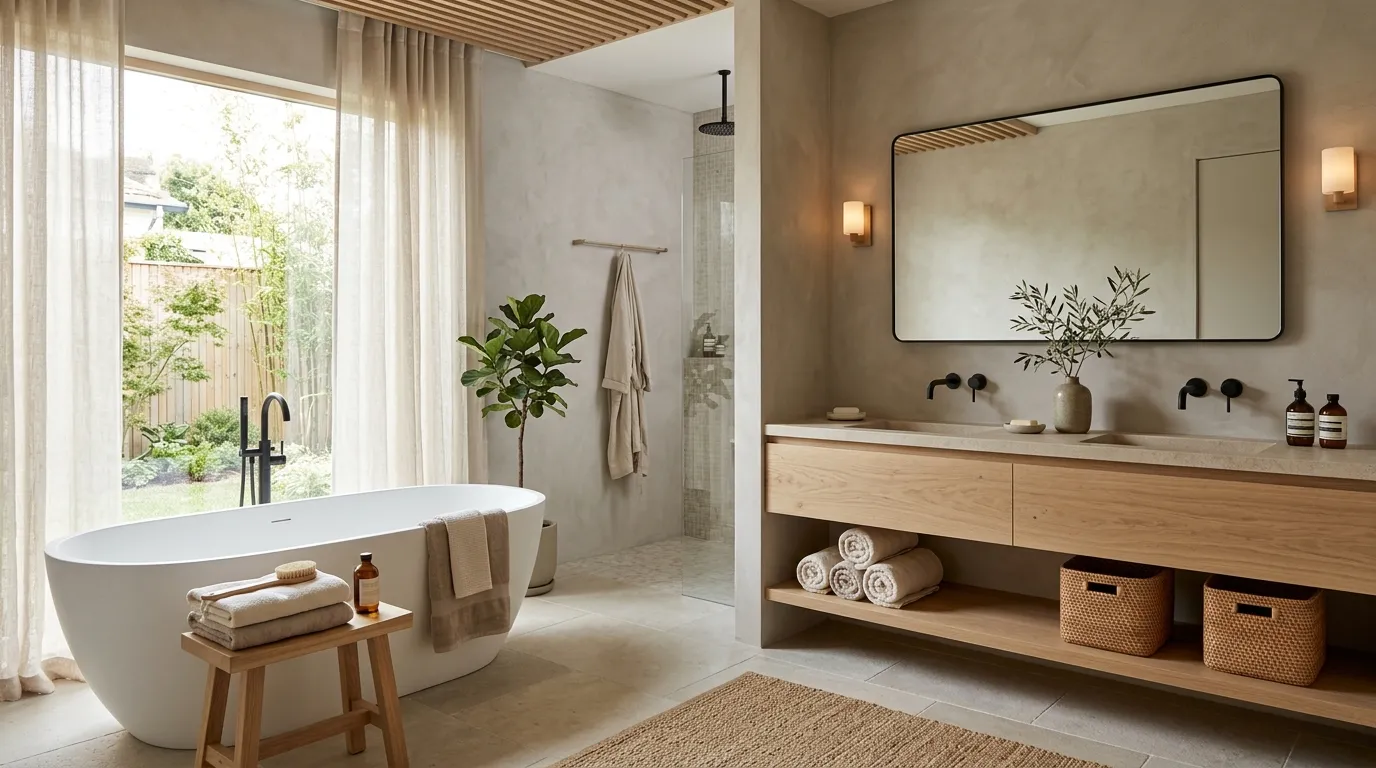
Some bathrooms feel like a place to rush through. Others feel like a place to breathe. The difference usually comes down to a handful of small, intentional choices rather than one big renovation. If you’ve ever scrolled through calming, minimal bathroom photos and wondered how to recreate that feeling in your own home, you’re not alone. This style blends Japanese simplicity with Scandinavian warmth, creating spaces that feel grounded, uncluttered, and genuinely restful to spend time in every day.
In my experience, people often assume this look requires a full remodel, but that’s rarely true. Many of the most effective ideas are small, affordable swaps, a woven basket here, a warm wood shelf there, that add up to something much bigger over time. This guide breaks down 25 practical ways to bring that same calm, natural feeling into your own bathroom, whether you’re planning a complete renovation or simply looking for a few meaningful updates. Each idea is meant to work on its own or alongside the others, so you can start wherever fits your space and budget best.
1. Natural Wood Vanity
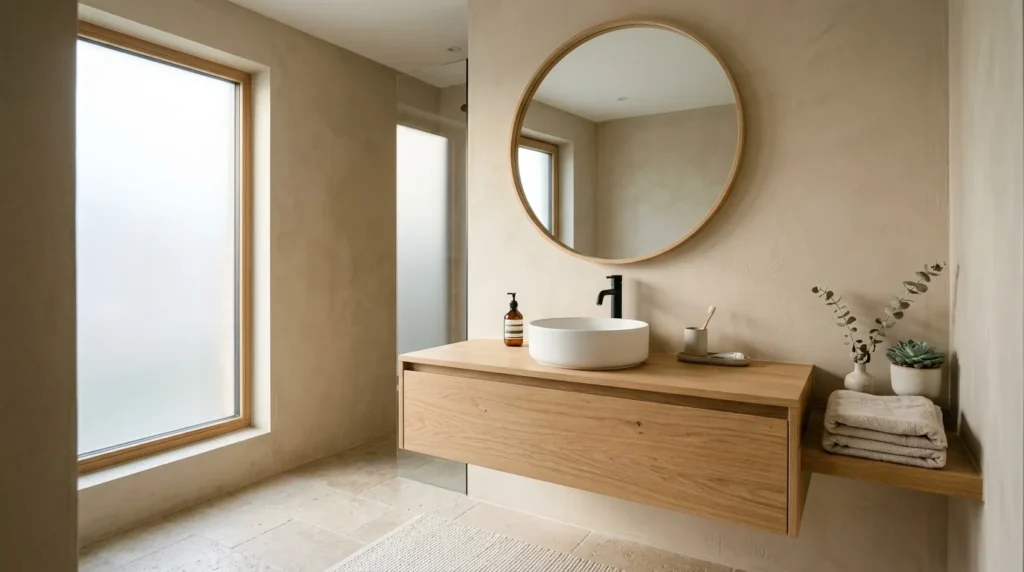
- Adds warmth to an otherwise cold, all-white bathroom
- Creates a natural focal point without feeling bulky
- Pairs well with round sinks and soft lighting
- Easy to keep clean with a simple wipe-down routine
A wood vanity instantly softens a bathroom that would otherwise feel sterile and cold. In my experience, homeowners often underestimate how much warmth a single wooden piece can bring to a small space. Light oak or ash tones work especially well in a japandi bathroom design because they echo natural materials without overwhelming the room. Unlike heavy dark cabinetry, a floating wood vanity keeps the floor visible, which makes even a compact bathroom feel more open. Paired with a simple round sink, it becomes the quiet centerpiece of the whole room, grounding the space while keeping the overall look calm.
Small design choices like this make a huge difference in daily use. A wood vanity is also practical, since natural finishes tend to hide water spots and daily wear better than glossy white surfaces. I’ve noticed that families with kids especially appreciate this low-maintenance quality. Beyond function, the visual softness of wood breaks up the sharp lines common in modern bathrooms, giving the space a more relaxed, organic feel. It also photographs beautifully, which is why wood vanities are one of the most saved bathroom ideas online. Over time, the natural grain only adds character instead of looking dated.
2. Stone Textured Walls
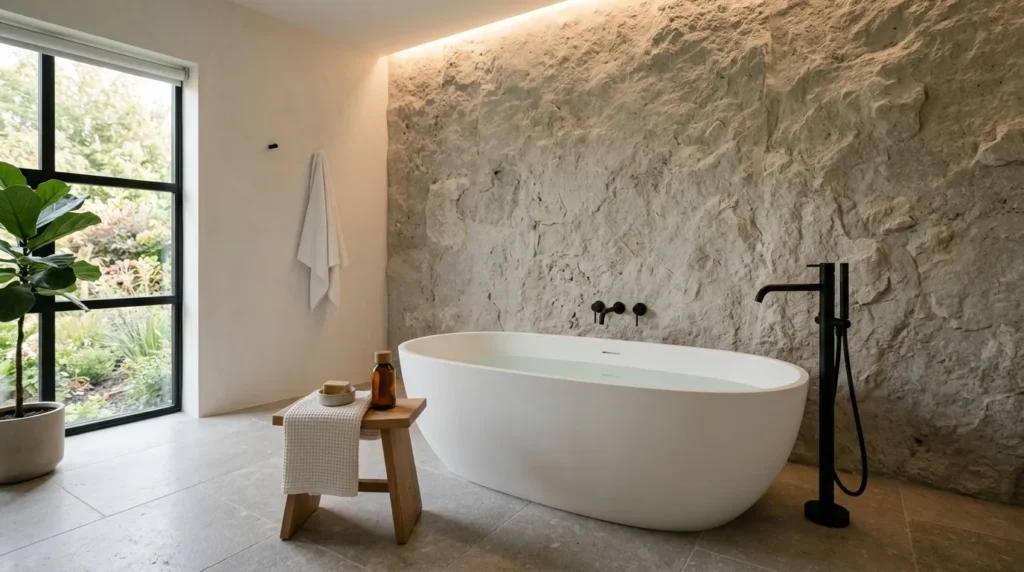
- Adds depth and texture without adding busy patterns
- Makes a small bathroom feel more like a retreat
- Works beautifully with warm, dim lighting at night
- Low maintenance compared to patterned tile or wallpaper
Textured stone walls turn a plain bathroom into something that feels genuinely calming. Instead of flat paint, a lightly textured limestone or plaster finish adds depth without adding visual noise, which is exactly the balance this style is known for. I’ve seen this work well in both large and small bathrooms, since the texture catches light differently throughout the day and keeps the room from feeling flat. It also pairs naturally with wood and stone accessories, reinforcing the earthy, grounded feeling that defines a calm, modern space. The result feels intentional, layered, and far from a typical builder-grade bathroom finish.
A textured wall does more than look good in photos. Stone finishes tend to hide small imperfections better than smooth paint, which makes them practical for busy, everyday bathrooms. That’s why many designers recommend this approach for homes with kids or frequent guests, since scuffs and water marks are far less noticeable. The texture also adds a tactile, spa-like quality that makes the space feel more expensive than it actually costs to create. Combined with warm lighting, the wall becomes a quiet focal point rather than an afterthought, giving the entire bathroom a more finished, high-end appearance overall.
Also Read : 24 Spring Wreath for Front Door Ideas to Welcome Spring
3. Soft Neutral Palette
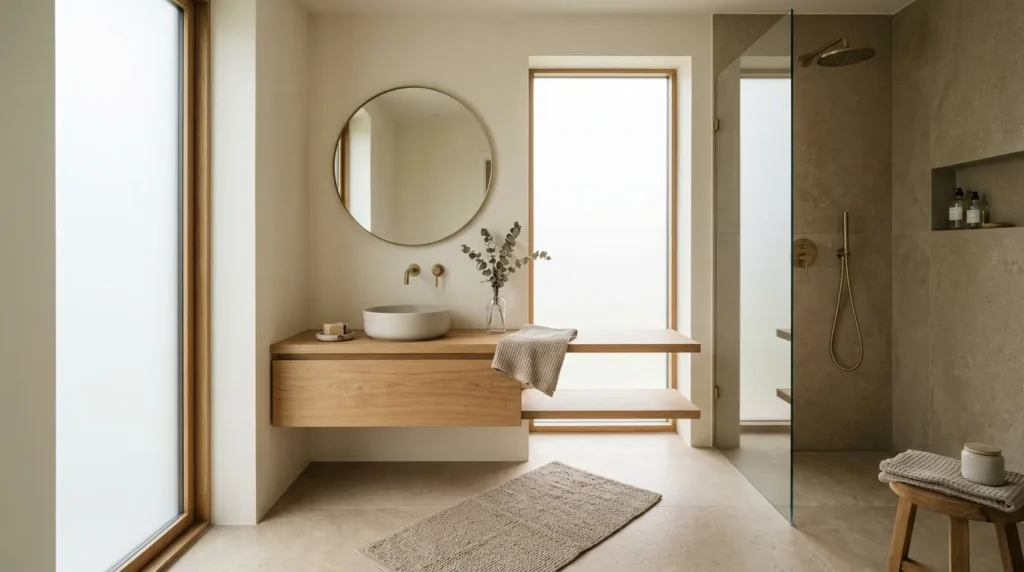
- Keeps the eye calm by avoiding harsh contrast
- Makes the room feel larger and brighter naturally
- Easy to update accessories without clashing with the palette
- Creates a timeless look that won’t feel dated in years
A neutral color palette does most of the calming work in this design style. Soft tones like ivory, taupe, and warm greige avoid the harsh contrast found in typical black-and-white bathrooms, which keeps the whole space feeling settled and quiet. In my experience, clients who choose muted colors rarely feel the urge to redecorate every few years, since the palette simply doesn’t go out of style. This approach also makes small bathrooms feel more spacious, because there are no strong color breaks to visually shrink the walls. Every material, from tile to towels, blends together into one cohesive, restful scene.
Neutral doesn’t mean boring when it’s done thoughtfully. Layering different textures, like matte tile, woven baskets, and soft linen towels, keeps a neutral bathroom from feeling flat or empty. This kind of japandi bathroom design relies on subtle contrast rather than bold color to create visual interest, which is part of why it photographs so well for Pinterest boards. The palette also makes it easy to swap small accessories seasonally without clashing, since almost every warm neutral works together. Over time, this flexibility saves money on redecorating, while keeping the bathroom looking fresh, calm, and effortlessly put together.
4. Sunken Stone Tub
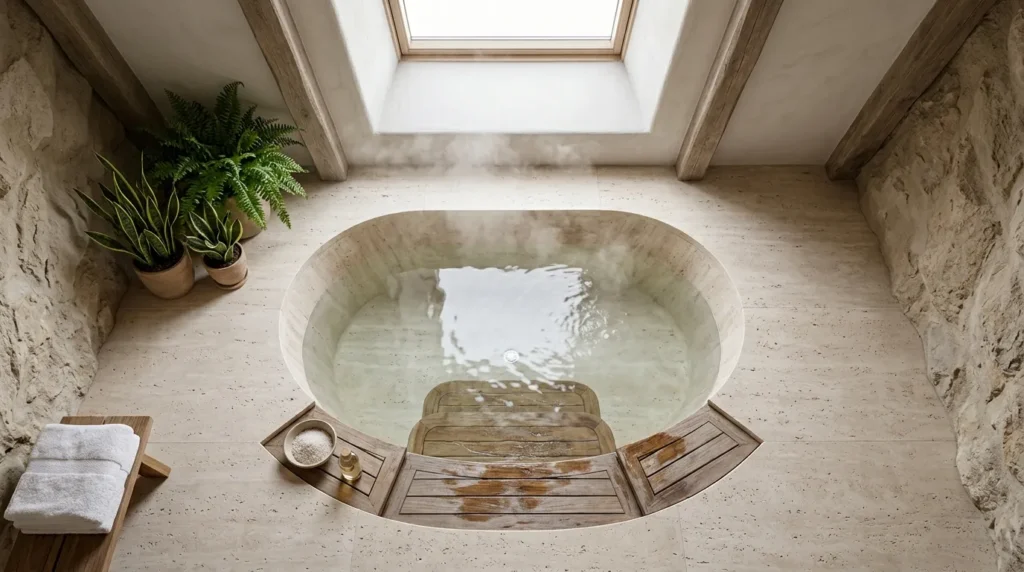
- Creates a dramatic, resort-style focal point
- Feels more immersive than a standard freestanding tub
- Works well in larger bathrooms with higher ceilings
- Pairs naturally with stone flooring and soft steam lighting
A sunken tub instantly changes how a bathroom feels the moment you walk in. Instead of sitting above the floor like a typical tub, it’s recessed into the ground, which creates a softer, more grounded silhouette that fits naturally into a calm, minimal space. I’ve noticed that homeowners who invest in this feature describe their bathroom less like a functional room and more like a private retreat. The sunken design also draws the eye downward, making high ceilings feel even more dramatic. It’s a bold structural choice, but one that pays off in both daily comfort and long-term visual impact.
This idea works especially well for anyone renovating from scratch rather than doing a light refresh. Because it requires flooring adjustments, a sunken tub is best planned early in a renovation timeline. That said, the payoff is significant, since it transforms bath time into something closer to a spa experience at home. Surrounding the tub with warm stone steps adds both safety and style, giving the space a natural transition point. For larger bathrooms especially, this feature becomes the emotional centerpiece of the entire room, anchoring every other design choice around it.
Also Read : 21 Spring Front Door Decor Ideas for a Welcoming Entry
5. Woven Storage Baskets
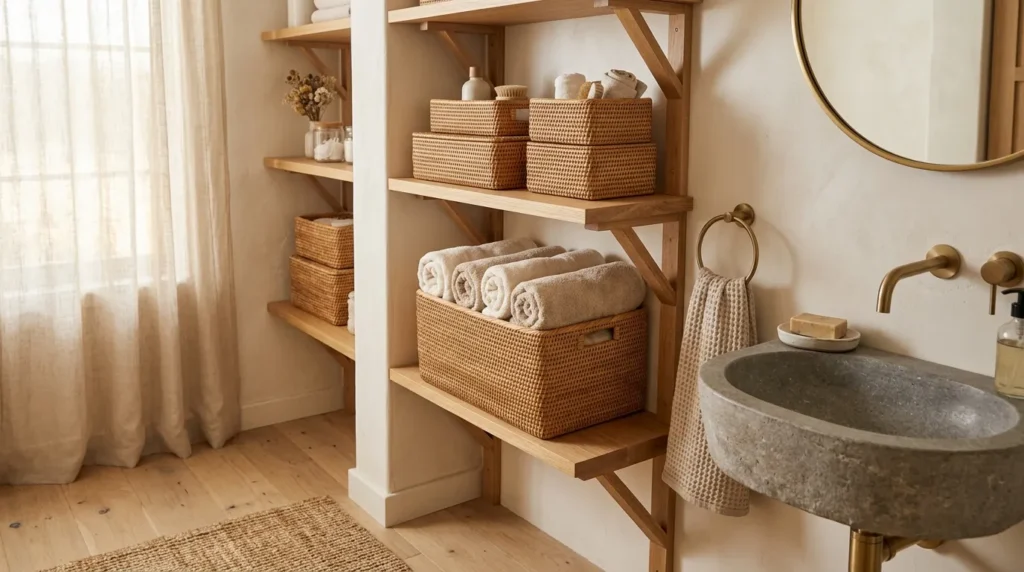
- Adds texture without adding visual clutter
- Keeps everyday items hidden but easy to reach
- Brings a handmade, natural feel to open shelving
- Simple and affordable way to refresh a plain bathroom
Woven baskets are one of the easiest upgrades for adding warmth to open shelving. Rattan and seagrass textures bring a handmade, natural quality that balances out the smooth, matte surfaces common in this style. Instead of leaving towels and toiletries exposed and messy, baskets tuck everything away while still looking intentional rather than hidden. This small styling choice photographs beautifully, which is part of why it shows up so often in bathroom inspiration boards. It also requires almost no cost or renovation, making it one of the simplest ways to shift the mood of an existing space.
Beyond the visual appeal, woven storage genuinely improves daily function. I’ve tried this approach in smaller bathrooms with limited cabinet space, and it consistently makes the room feel more organized without looking sterile. Grouping baskets by size on open shelves creates a natural rhythm that feels curated rather than random. The texture also softens the straight lines of wood shelving, adding just enough visual interest to keep the space from feeling flat. For renters or anyone avoiding major renovations, this idea offers real transformation with almost no structural changes required.
6. Low Profile Furniture
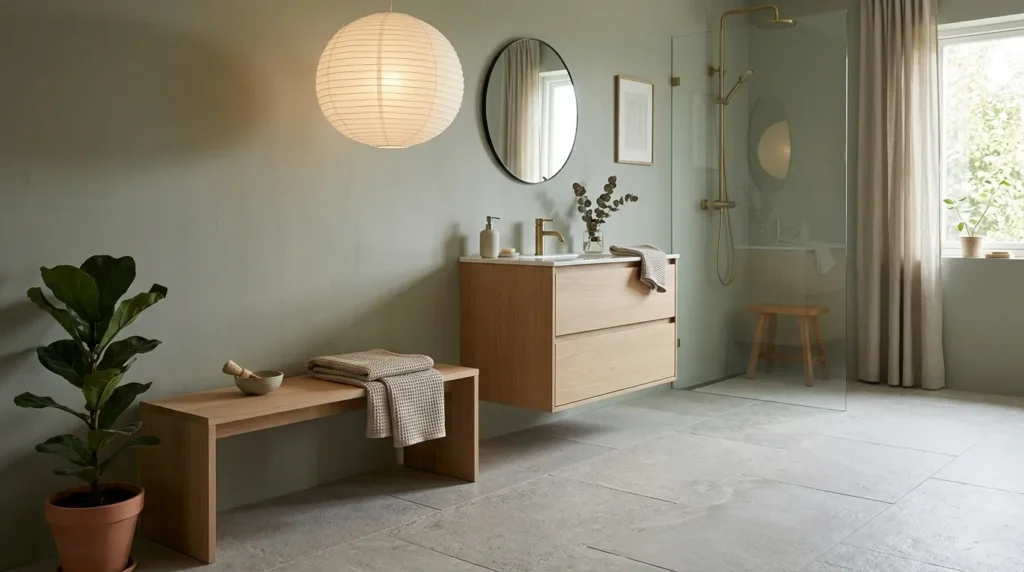
- Opens up floor space and improves visual flow
- Creates a grounded, relaxed feeling in the room
- Makes ceilings appear taller by contrast
- Fits naturally with minimal, clutter-free styling
Low profile furniture changes the entire proportion of a bathroom without changing its size. Pieces like floor-level benches and low floating cabinets keep sightlines open, which makes even a modest room feel more spacious and airy. This layout choice is central to a well-executed japandi bathroom design, since it reflects the grounded, floor-focused furniture style rooted in traditional Japanese interiors. Rather than stacking storage upward, everything stays low and horizontal, letting empty wall space breathe. That openness is often what makes a bathroom feel genuinely calming instead of just visually tidy on the surface.
There’s also a practical side to this approach that’s easy to overlook. Lower furniture makes cleaning floors simpler, since there’s less visual clutter and fewer tall obstacles breaking up the room. That’s why many designers recommend this layout for smaller bathrooms specifically, as it creates an illusion of extra height and space. Pairing low furniture with a light color palette amplifies the effect even further, keeping the whole room feeling open rather than boxed in. Once installed, most homeowners notice the difference immediately, since the room feels calmer without a single wall being touched.
7. Matte Black Fixtures
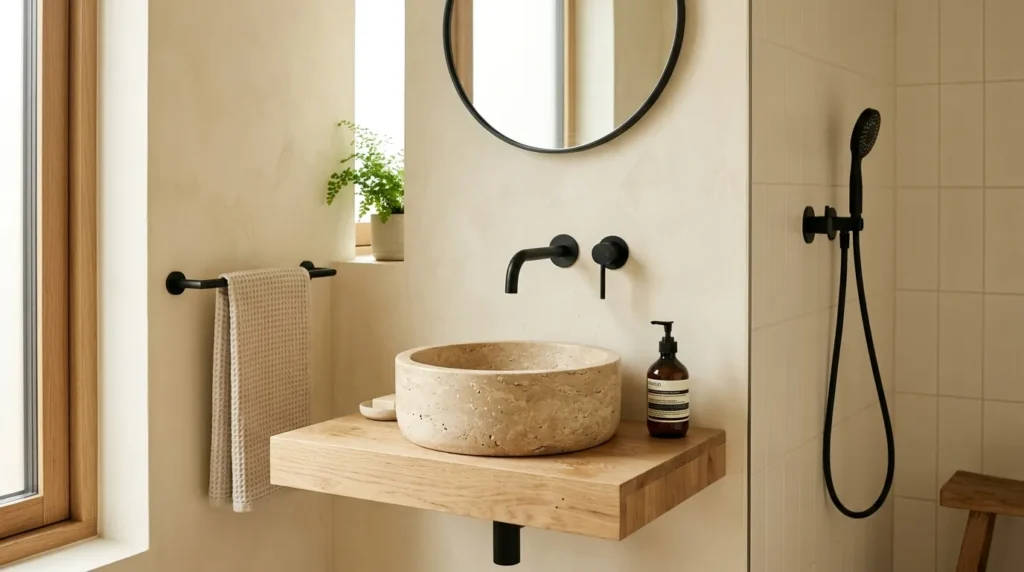
- Adds subtle contrast without disrupting the calm palette
- Gives fixtures a modern, grounded finish
- Hides water spots better than chrome or polished finishes
- Easy upgrade that doesn’t require a full renovation
Matte black fixtures bring just enough contrast to keep a neutral bathroom from feeling flat. Against warm creams, soft beiges, and light wood tones, black hardware creates definition without breaking the calm, cohesive mood of the room. It’s a small detail, but one that instantly makes taps, showerheads, and towel bars feel more intentional rather than purely functional. I’ve noticed this contrast works especially well in bathrooms that lean heavily neutral, since it gives the eye a natural resting point. The finish also feels current without being trendy, which matters for a design meant to last years, not seasons.
Practically speaking, matte black is also one of the easier upgrades to make during a partial renovation. Unlike changing tile or flooring, swapping fixtures is relatively quick and doesn’t require major structural work. Matte finishes hide water spots and fingerprints far better than polished chrome, which makes daily cleaning noticeably easier. This is especially useful in bathrooms shared by families, where fixtures get used constantly throughout the day. Combined with soft lighting and natural materials, matte black hardware rounds out the overall aesthetic, adding a refined, grounded touch that ties the whole space together.
8. Sliding Wood Door
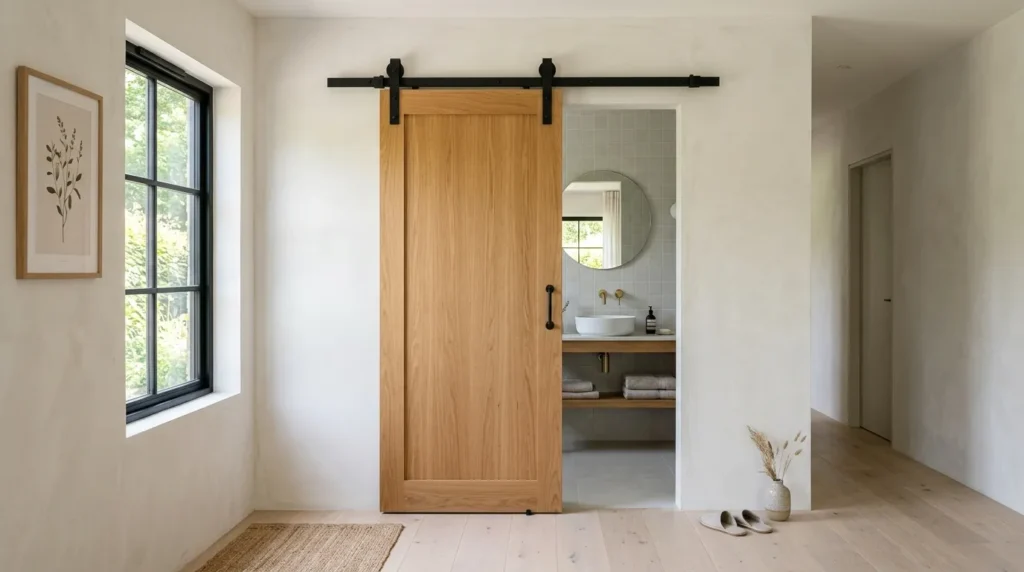
- Saves floor space compared to a traditional swinging door
- Adds a natural, warm material to transitional spaces
- Creates a smooth visual flow between rooms
- Doubles as a design feature, not just an entryway
A sliding wood door solves a practical problem while adding real visual character. In smaller bathrooms, a swinging door often eats into usable floor space, whereas a sliding door glides along the wall and frees up the entire entry area. Beyond function, the natural wood grain introduces warmth right at the threshold, setting the tone before someone even steps inside. This detail reflects the broader philosophy behind Japandi interiors, where natural materials, wood especially, are treated as design features rather than background elements. It’s a small architectural choice that quietly elevates the entire entrance.
I’ve seen this work well particularly in apartment renovations where space is limited but style still matters. Beyond saving room, a sliding door adds a soft mechanical sound and smooth motion that feels more deliberate than a standard hinge door. Pairing it with a black metal track adds subtle contrast against the wood, echoing other matte black details used elsewhere in the space. This kind of thoughtful transition detail is often what separates a bathroom that feels fully designed from one that simply looks assembled. It’s a feature worth planning early if layout flexibility matters.
9. Round Ceramic Basin
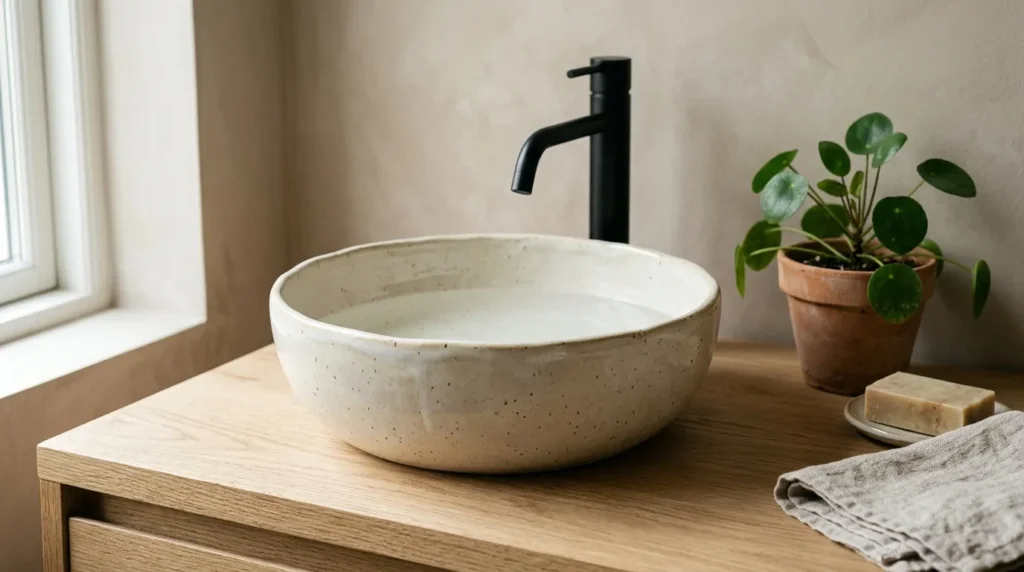
- Softens the overall look with organic, curved shapes
- Adds a handmade, artisanal quality to the vanity area
- Breaks up the straight lines common in modern bathrooms
- Easy focal point that doesn’t require extra decor
A round ceramic basin brings softness into a space that’s often dominated by straight lines and sharp edges. Rectangular sinks are common in modern bathrooms, but a curved basin interrupts that pattern, creating a gentler, more organic focal point on the vanity. This shape choice plays a meaningful role in achieving a balanced japandi bathroom design, since it blends minimalist form with a handcrafted, slightly imperfect quality. Even small variations in the ceramic glaze add character, making each basin feel unique rather than mass-produced. It’s a detail that draws quiet attention without needing extra decoration around it.
Functionally, round basins also tend to feel more comfortable in daily use, since there are no hard corners to bump into repeatedly. In my experience, people gravitate toward the sink area more when it feels inviting rather than clinical. Pairing a ceramic basin with a wood countertop enhances the handmade feeling even further, reinforcing the natural material palette used throughout the rest of the room. Because the basin itself carries so much visual interest, it allows other elements nearby to stay simple, keeping the vanity area calm, intentional, and free from unnecessary clutter or accessories.
10. Paper Pendant Lighting
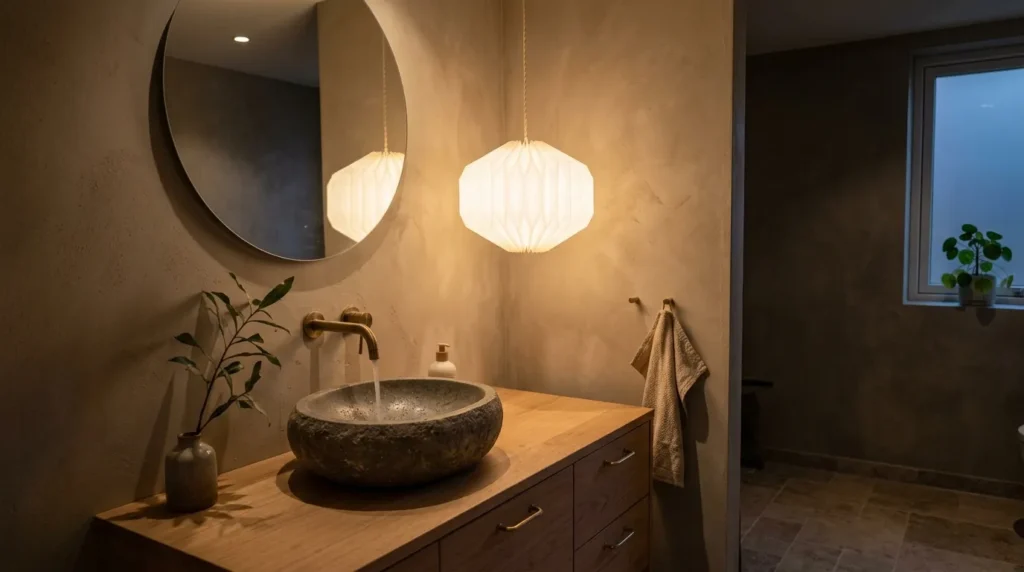
- Softens harsh overhead lighting with a warm, diffused glow
- Adds a sculptural element without taking up floor space
- Creates a cozy mood during evening routines
- Affordable way to elevate a plain lighting setup
Paper pendant lighting changes the entire mood of a bathroom after dark. Standard overhead lights tend to feel harsh and clinical, but a paper shade softens that glow into something warm and diffused, almost like candlelight. This kind of lighting choice matters more than people expect, since it directly shapes how relaxing the space feels during evening routines. I’ve noticed that even a single well-placed pendant can make a bathroom feel more like a retreat than a utility room, simply by changing how light hits the walls and water surfaces.
This upgrade is also one of the most budget-friendly ways to shift a bathroom’s atmosphere. A paper pendant costs far less than a full lighting renovation, yet it adds a sculptural, almost artistic quality above the sink or tub. That’s why many designers recommend layering soft ambient lighting instead of relying on a single bright overhead fixture. Paired with muted wall tones and natural materials, the pendant becomes a quiet visual anchor rather than just a light source. Over time, it’s often the detail guests notice first when they walk in.
11. Bamboo Bath Accessories
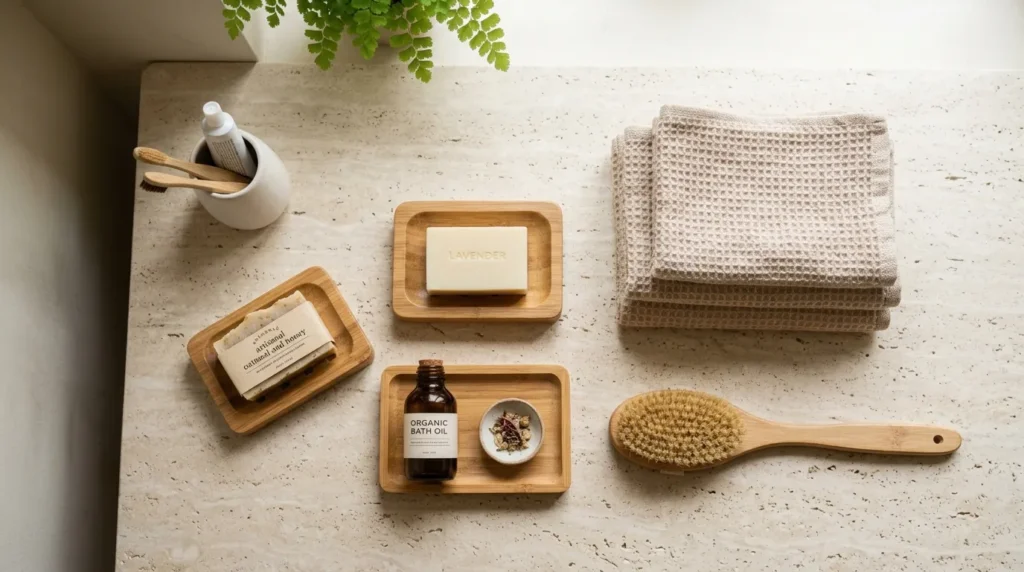
- Adds natural texture to small, often-overlooked surfaces
- Replaces plastic accessories with warmer, longer-lasting materials
- Creates a cohesive look across sink and shower areas
- Inexpensive way to tie the whole room together
Small accessories often get overlooked, but they quietly shape how finished a bathroom feels. Swapping plastic soap dishes and trays for bamboo versions introduces natural texture in places that are easy to ignore during a renovation. This detail ties directly into the broader idea of a calm, nature-inspired bathroom, since every surface, even the smallest ones, contributes to the overall mood. Bamboo also ages well compared to plastic, developing a subtle patina over time instead of looking worn out or discolored after just a few months of regular use.
I’ve tried this swap in my own space, and the difference is more noticeable than expected for such a small change. Grouping bamboo accessories near the sink or shower creates a sense of intention, as if every item was chosen rather than simply purchased in bulk. This approach costs very little compared to larger renovation ideas, yet it visually connects smaller details to bigger elements like wood vanities or flooring. For anyone not ready for a full remodel, updating accessories is often the easiest starting point toward a calmer, more cohesive bathroom.
12. Frosted Glass Partition
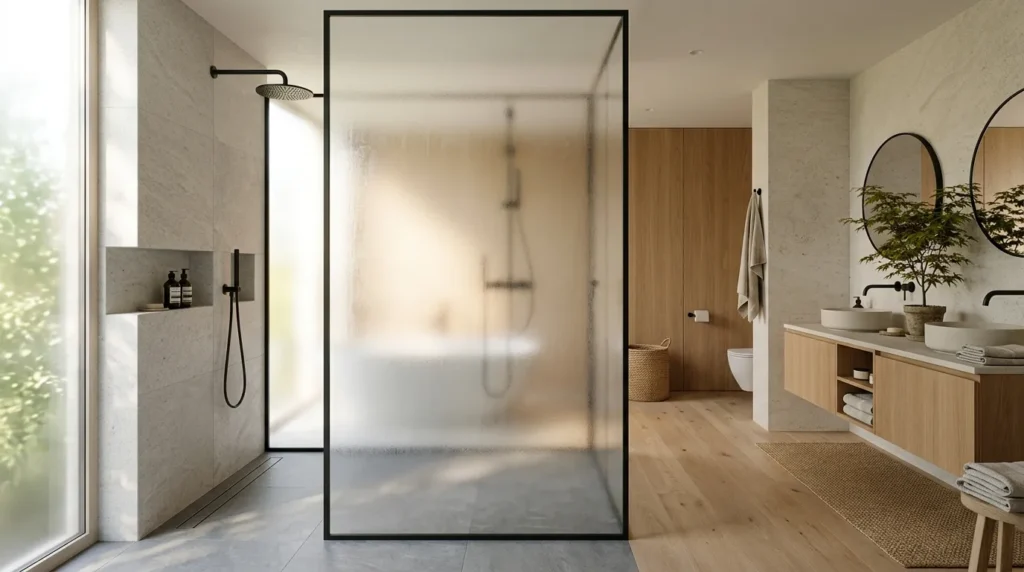
- Separates wet and dry areas without closing off the room
- Keeps natural light flowing between bathroom zones
- Adds a modern touch while staying visually soft
- Works well in both small and open-concept layouts
A frosted glass partition offers privacy without sacrificing the open, airy feeling this style depends on. Unlike solid walls, frosted glass lets natural light pass through while still blurring direct sightlines into the shower area. This balance is important, since fully enclosing a shower can make a small bathroom feel divided and cramped rather than cohesive. The soft, diffused effect of frosted glass also adds a gentle visual texture, echoing the same calm, understated quality found throughout the rest of the room’s material choices and lighting.
In my experience, this detail works particularly well in bathrooms where natural light is limited to begin with. Instead of blocking a window’s glow with a solid wall, a glass partition allows that light to spread further into the room, making the whole space feel brighter overall. A slim black frame around the glass adds subtle definition without feeling heavy, tying back to other matte black details used elsewhere. For anyone renovating an open-concept bathroom, this option offers a practical middle ground between full separation and total openness.
13. Linen Shower Curtain
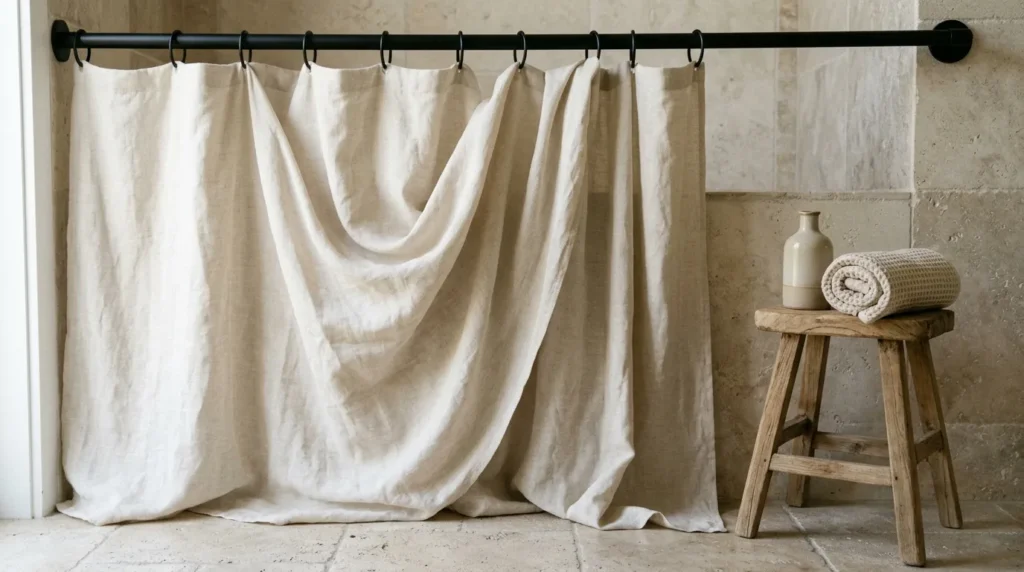
- Adds soft texture against hard stone and tile surfaces
- Feels more breathable and natural than plastic curtains
- Elevates a simple shower area without a full remodel
- Easy to wash and swap seasonally if needed
A linen curtain quietly upgrades one of the most overlooked parts of a bathroom. Standard plastic curtains often feel stiff and cold against stone or tile, while linen introduces a soft, breathable texture that immediately feels more natural. This fabric choice reflects the same material philosophy used throughout the rest of the space, favoring organic, tactile surfaces over synthetic ones. Even the way linen folds and catches light adds a gentle visual rhythm to an otherwise flat wall, making the shower area feel considered rather than purely functional or overlooked.
I’ve noticed that this swap is one of the fastest ways to soften a bathroom that otherwise leans too sharp or clinical. Linen also holds up surprisingly well in humid environments when properly cared for, making it a practical choice beyond just its appearance. Pairing it with a matte black rod keeps the hardware understated while letting the fabric’s texture take center stage. For renters or anyone hesitant to commit to permanent changes, a linen curtain offers an easy, reversible way to shift the entire mood of the shower space.
14. Concrete Floating Shelf
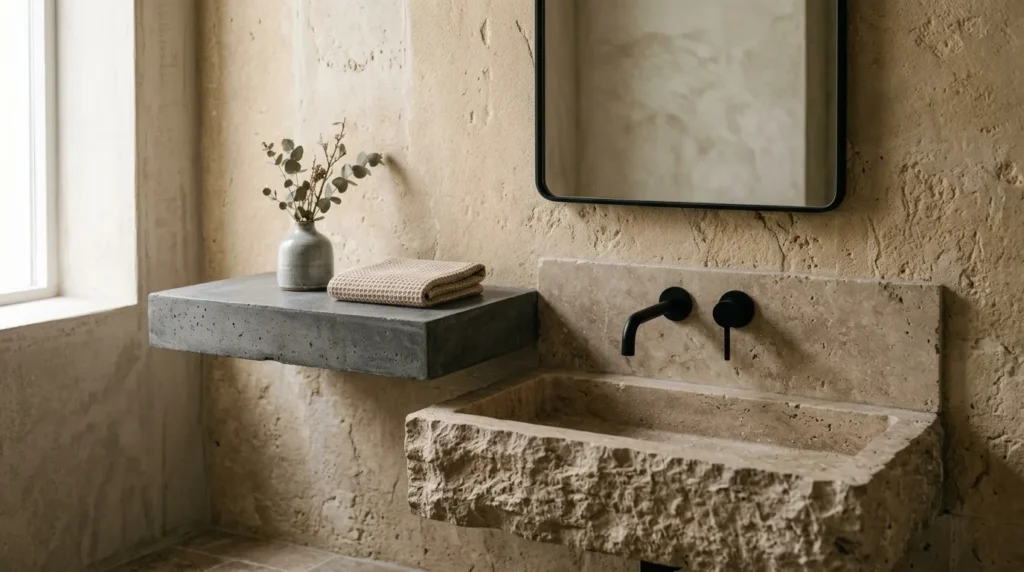
- Adds subtle industrial texture without feeling cold
- Provides display space without bulky cabinetry
- Balances warm materials with a more structured element
- Simple to install without major renovation work
A concrete shelf introduces a slightly different texture that still fits comfortably within a warm, natural palette. While concrete can feel cold on its own, pairing it with soft beige walls and warm ceramics balances that starkness, creating contrast without disrupting the overall calm. This kind of material mixing is part of what gives a space depth, rather than relying on a single texture throughout. A floating shelf also keeps the wall visually light, avoiding the bulk of a full cabinet while still offering a spot for small styled objects.
That’s why many designers recommend using one structured material, like concrete or stone, alongside softer elements such as wood and linen. The contrast keeps the room from feeling one-note, while still staying within a limited, cohesive color palette. Installation is also relatively simple compared to full cabinetry, making it a good option for partial updates rather than a complete renovation. Styled with just one or two objects, a concrete shelf becomes a quiet, intentional detail rather than another storage solution competing for attention in the room.
15. Indoor Plant Corner
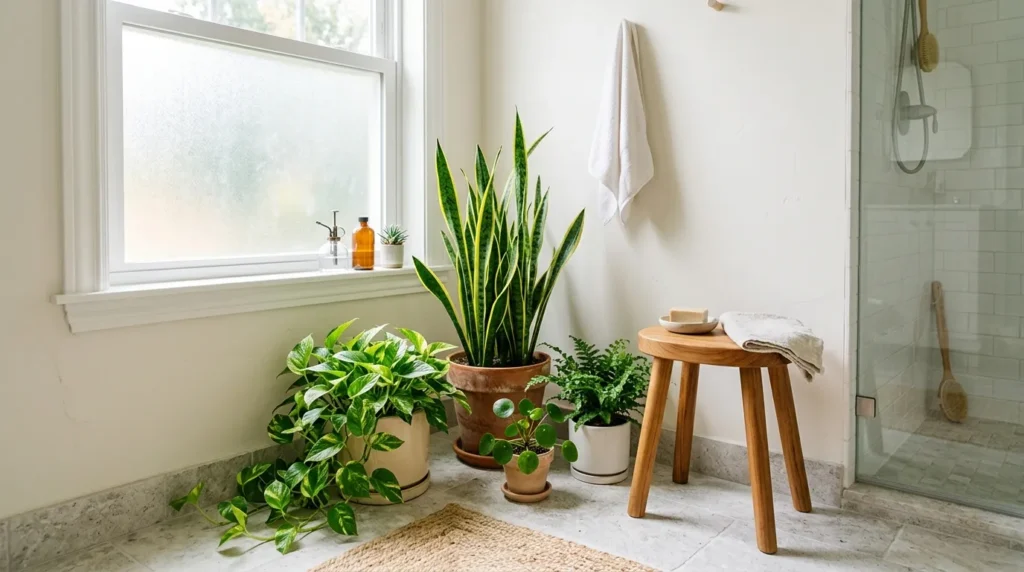
- Brings life and color into a mostly neutral palette
- Improves air quality in a naturally humid room
- Adds an organic focal point without extra furniture
- Simple, low-cost way to soften hard materials
A small plant corner brings a living element into a room that’s often dominated by hard, still surfaces. Greenery introduces natural color and movement, softening stone, tile, and wood without competing with the calm palette already in place. Bathrooms are naturally humid, which actually benefits certain plant varieties, making this one of the more practical rooms in the house for indoor greenery. Even a single well-placed plant can shift the entire feel of a corner that might otherwise sit empty or purely functional throughout the day.
In my experience, plants also help a bathroom feel more lived-in and less like a showroom. Species like snake plants and pothos tolerate lower light and higher humidity well, making them realistic choices rather than high-maintenance additions. Grouping two or three varieties at different heights creates a small, natural focal point without requiring extra furniture or shelving. This idea costs very little compared to structural changes, yet it consistently ranks among the most saved details in bathroom inspiration photos, largely because it feels achievable for almost any home.
16. Wall Mounted Faucet
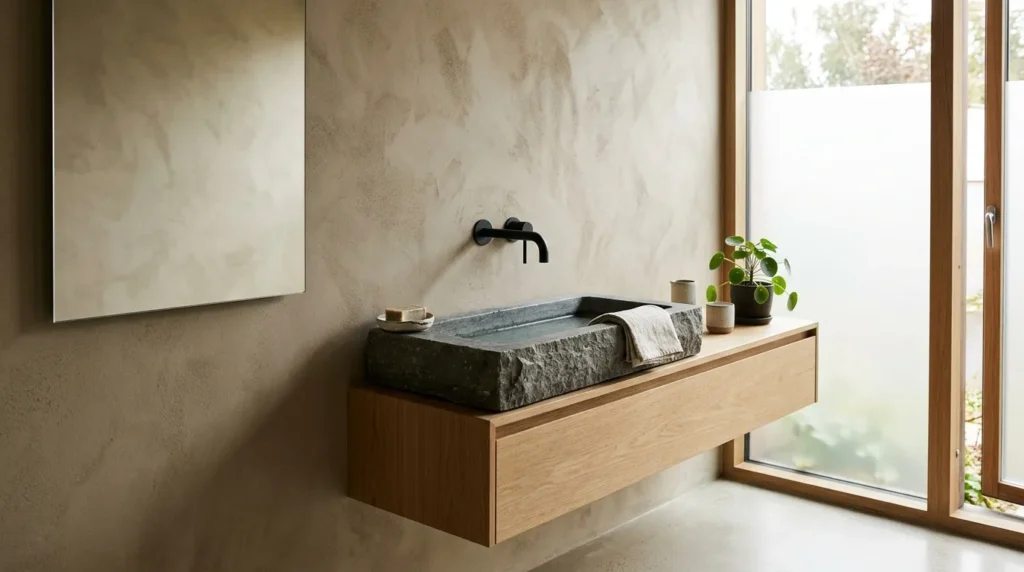
- Frees up counter space for a cleaner look
- Creates a sleek, uncluttered line above the sink
- Makes the sink area easier to wipe down
- Adds a modern architectural detail to the vanity
A wall mounted faucet removes visual clutter right at the point where it’s needed most. Without a faucet base taking up counter space, the sink area instantly feels more open and easier to keep tidy. This detail works particularly well with trough-style or wide stone sinks, since it lets the basin itself take center stage rather than sharing space with hardware. The result is a cleaner, more architectural look that feels closer to a boutique hotel bathroom than a standard home fixture, without requiring a complete vanity redesign.
Beyond the visual benefit, this setup also makes daily cleaning noticeably simpler. I’ve noticed that counters stay tidier when there’s no faucet base collecting water spots or toothpaste residue around it. Installation requires plumbing adjustments within the wall, so it’s best planned during a renovation rather than added later as a quick fix. Once in place, though, it becomes one of those details that quietly signals a well-planned space, reinforcing the clean, minimal lines that define this style throughout the rest of the room.
17. Warm Wood Ceiling
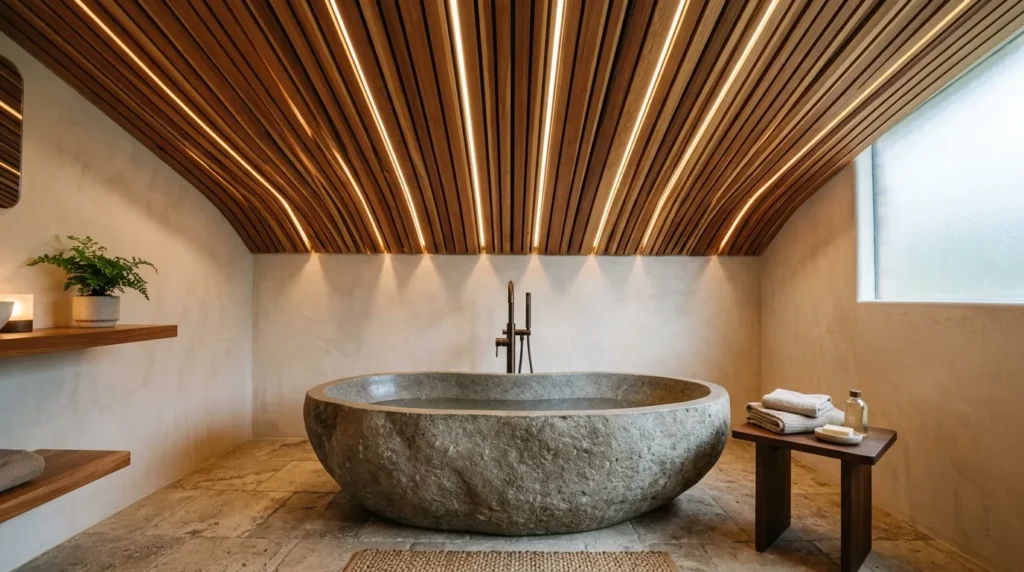
- Draws the eye upward for a more elevated feel
- Adds warmth to a space often left plain and white
- Creates dramatic shadow patterns with the right lighting
- Turns a normally overlooked surface into a design feature
A wood ceiling takes advantage of a surface most bathrooms leave completely blank. Slatted wood paneling overhead introduces warmth and texture exactly where it’s least expected, drawing the eye upward and making the room feel taller and more considered. This detail transforms the ceiling from an afterthought into an actual design feature, which is part of what separates a fully styled japandi bathroom design from one that only focuses on floor-level elements. Paired with recessed lighting, the slats also create subtle shadow lines that shift throughout the day.
I’ve seen this work well especially in bathrooms with higher ceilings, where the extra height can otherwise feel a bit stark or empty. Adding wood overhead brings the scale back down to something more human and cozy, without lowering the actual ceiling height. It’s a slightly more involved renovation step, but the payoff is significant, since it affects the entire mood of the room rather than just one small area. Combined with warm lighting, a wood ceiling often becomes the most photographed detail in the space.
18. Stacked Stone Shower Wall
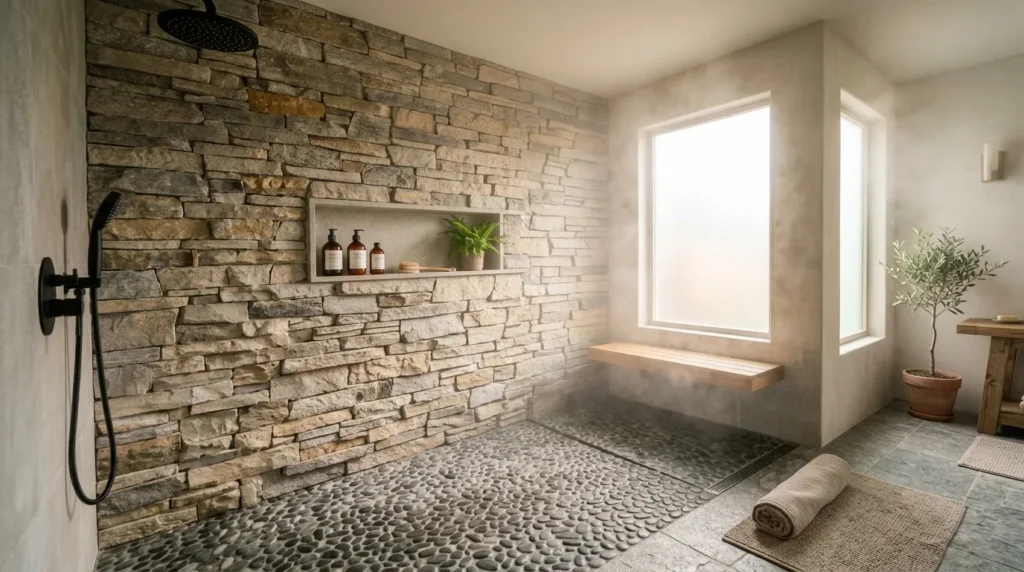
- Adds dramatic texture to an often plain shower wall
- Creates a natural, spa-like focal point
- Hides water marks better than smooth glossy tile
- Elevates a functional space into a design feature
A stacked stone wall turns a shower, one of the most overlooked areas in any bathroom, into a genuine design highlight. Instead of flat, glossy tile, stacked natural stone adds dimension and shadow, giving the shower a textured, almost sculptural quality. This approach is especially effective because showers are used daily but rarely styled with the same care as the rest of the room. Bringing that same attention to the shower wall creates a more consistent, intentional feeling throughout the entire bathroom rather than treating it as a purely functional zone.
That’s why many designers recommend extending key materials, like stone, into the shower itself rather than stopping at the vanity. Beyond aesthetics, textured stone genuinely hides water spots and soap residue better than smooth glossy surfaces, which cuts down on how often the area needs deep cleaning. Adding a small wood bench inside the shower reinforces the natural material palette even further, creating a cohesive look from floor to ceiling. For anyone renovating fully, this detail is well worth the extra planning it requires.
19. Soft Curved Mirror
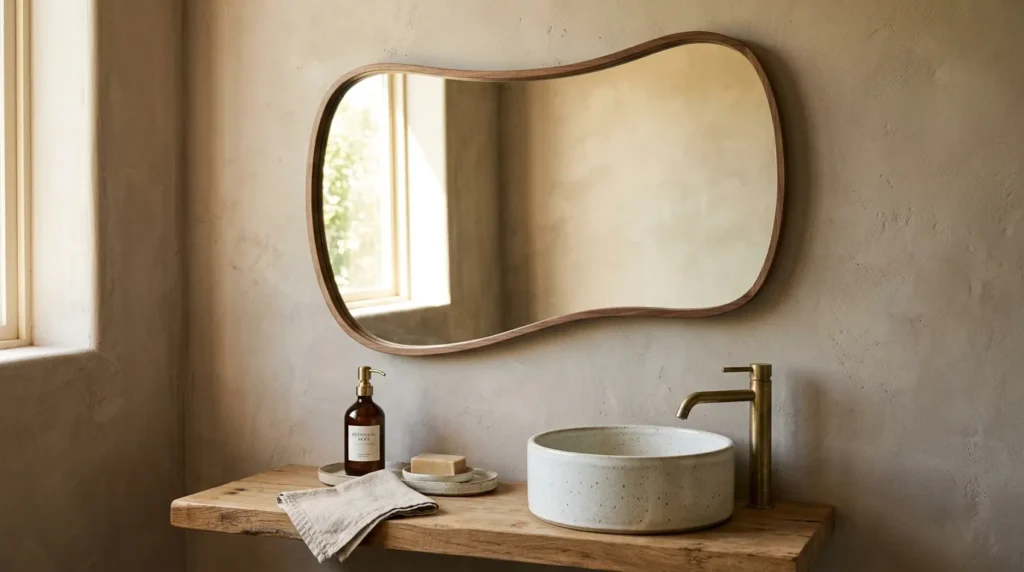
- Softens the vanity area with an organic shape
- Reflects light gently without harsh glare
- Pairs naturally with round basins and wood tones
- Adds personality without needing extra wall decor
A curved mirror breaks up the straight edges that usually dominate a vanity wall. Instead of a standard rectangular frame, an organic, softly curved shape echoes the round basin below it, creating visual harmony between two key elements in the same sightline. This kind of shape pairing might seem minor, but it’s often what makes a bathroom feel cohesively designed rather than assembled from separate, unrelated pieces. A slim wood frame around the mirror ties it back to other natural materials used throughout the space, reinforcing the same calm, grounded aesthetic.
I’ve noticed that curved mirrors also reflect light more gently than sharp rectangular ones, softening the overall glow in the room rather than bouncing it harshly across the walls. This makes a real difference during morning routines, when harsh reflected light can feel jarring first thing in the day. Because the mirror itself carries visual interest, it also reduces the need for additional wall decor nearby, keeping the vanity area simple. It’s a small swap, but one that noticeably elevates the entire sink area.
20. Zen Pebble Flooring Accent
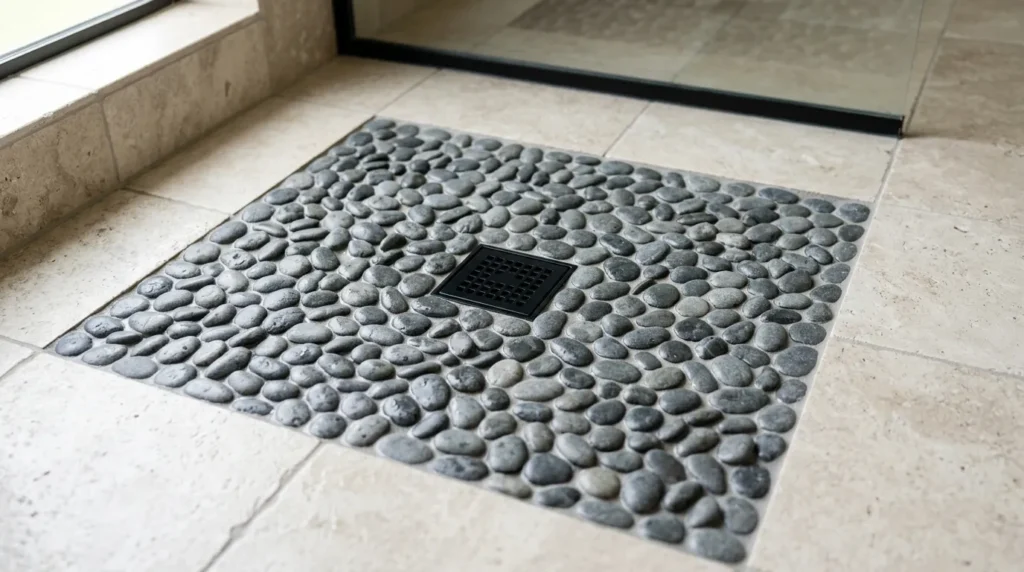
- Adds a sensory, natural texture underfoot
- Creates a subtle transition zone within the shower
- Brings a grounding, outdoor-inspired element indoors
- Doubles as a natural foot massage during showers
A pebble flooring accent brings a sensory detail into the bathroom that’s easy to overlook on a mood board but noticeable the moment you step into the shower. Smooth river pebbles set into a defined section of the floor introduce texture underfoot, creating a subtle, grounding sensation that contrasts with the flat tile surrounding it. This detail draws inspiration from outdoor spa spaces, bringing a small piece of that natural, tactile experience indoors. It’s a feature that appeals to more than just sight, engaging touch in a way most bathroom details don’t.
In my experience, this kind of detail tends to surprise people the first time they notice it, since it’s not something typically found in standard bathroom layouts. Beyond the sensory appeal, pebbles also provide natural traction underfoot, which adds a practical safety benefit inside a wet shower area. Keeping the pebble section contained to one defined zone, rather than covering the entire floor, makes cleaning more manageable while still delivering the visual and textural impact. It’s a smaller-scale project that adds a genuinely memorable detail to the space.
21. Japandi Vanity Mirror Lighting
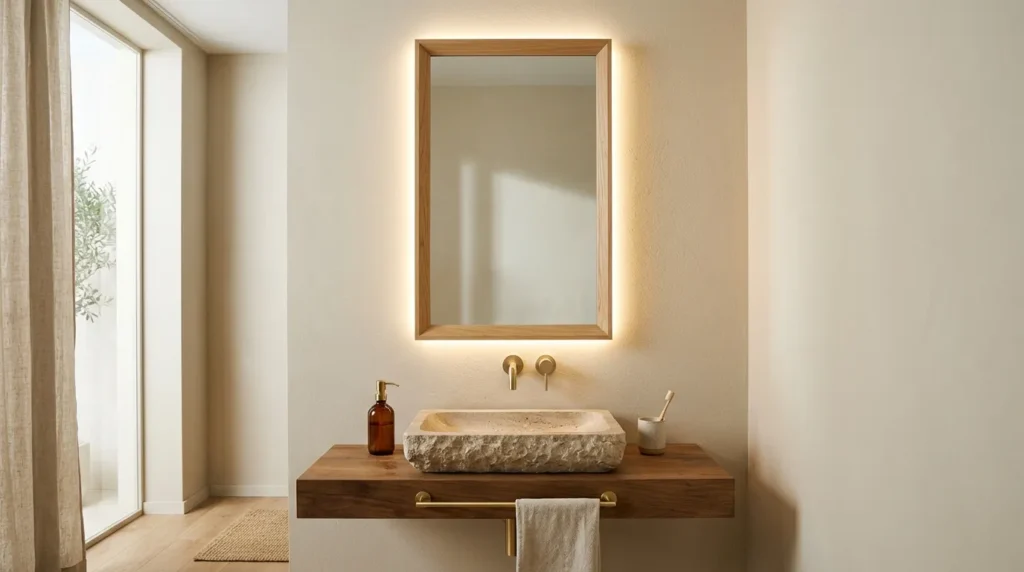
- Provides even, flattering light for daily routines
- Reduces shadows compared to a single overhead bulb
- Adds a subtle architectural glow around the mirror
- Balances function with a soft ambient aesthetic
Vanity lighting is one of the most functional details in any bathroom, yet it’s often treated as an afterthought. A slim LED strip framing the mirror provides even, shadow-free light across the face, which matters far more during daily routines like shaving or applying skincare than most people initially realize. Rather than relying on a single harsh overhead bulb, this framing approach distributes light evenly from multiple directions, softening shadows that typically fall under the chin or around the eyes during close-up tasks at the sink.
That’s why many designers recommend prioritizing vanity lighting early in a renovation plan rather than adjusting it last. Warm white LEDs, rather than cool white ones, keep the glow consistent with the room’s overall warm, natural palette instead of introducing a clinical, stark contrast. Paired with a wood-edged mirror, the lighting feels integrated into the design rather than bolted on as a separate fixture. This detail proves that a japandi bathroom design can be both deeply functional and visually calm at the very same time.
22. Minimal Open Shelving
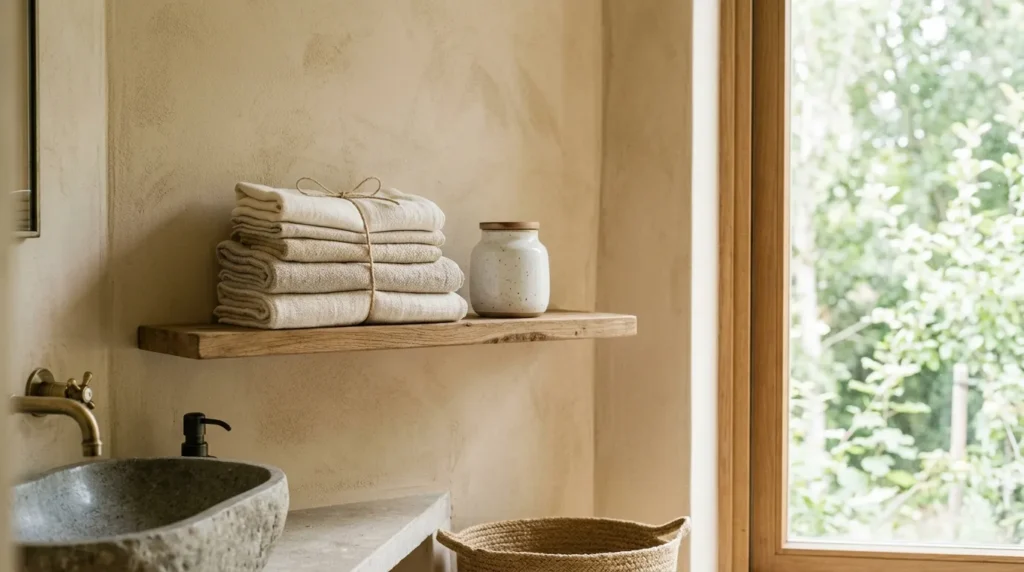
- Keeps daily items visible without feeling cluttered
- Adds warmth compared to closed cabinet doors
- Encourages a more intentional, edited storage approach
- Simple and affordable compared to full cabinetry
Open shelving forces a different relationship with storage than closed cabinetry does. Because everything on the shelf stays visible, there’s a natural pressure to keep only what’s actually needed and used, rather than letting items pile up out of sight. A single wood shelf holding folded towels and one or two ceramic pieces creates a curated, intentional look rather than a cluttered one. This kind of restraint is central to the overall feel of the room, since visible clutter can undo even the most carefully chosen materials elsewhere in the space.
I’ve tried both open and closed storage in small bathrooms, and open shelving consistently photographs better while also being far cheaper to install. Since it doesn’t require doors, hinges, or full cabinet boxes, a simple wood shelf costs a fraction of built-in storage, making it accessible for renters and smaller budget renovations alike. The key is limiting what goes on display, since three or four well-chosen items will always look more intentional than a shelf packed with everyday clutter. Done well, it becomes storage that doubles as decor.
23. Warm Terracotta Accents
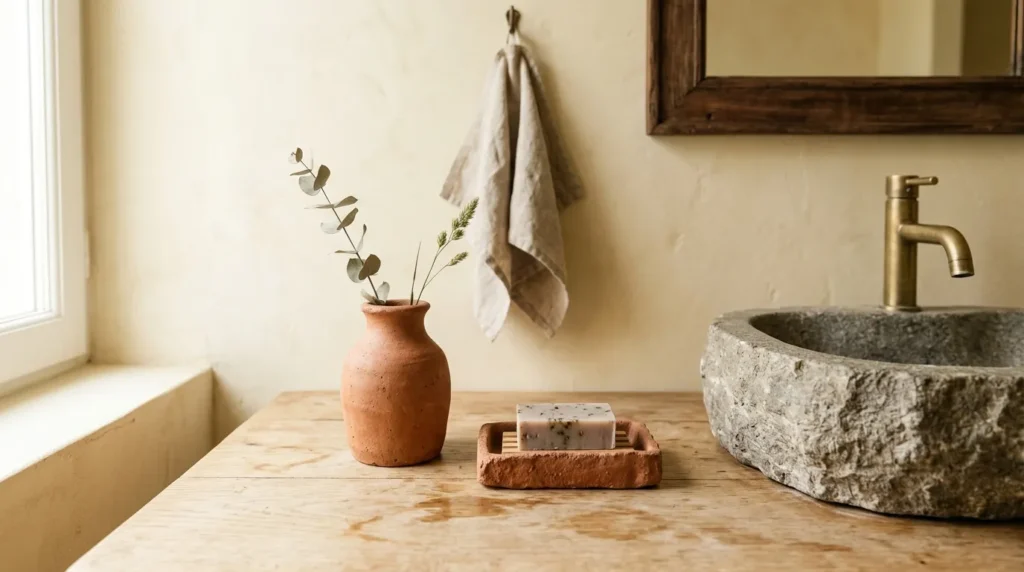
- Introduces gentle warmth without adding bold color
- Adds an earthy, handmade quality to small surfaces
- Balances cooler stone and grey tones nicely
- Inexpensive way to layer texture and warmth together
Terracotta accents bring a gentle, earthy warmth into a palette that can sometimes lean too cool or grey. A small clay vase or soap dish introduces color without breaking the muted, natural tone of the room, since terracotta sits comfortably alongside beige, cream, and light wood. This kind of accent is subtle rather than bold, adding just enough visual warmth to keep the space from feeling sterile. It’s the kind of detail that doesn’t demand attention on its own but noticeably rounds out the overall mood of the room when placed thoughtfully.
I’ve noticed that terracotta pairs particularly well in bathrooms that rely heavily on stone and concrete, since the clay’s warmth offsets those cooler, harder materials. Because these pieces are typically small and inexpensive, they’re an easy way to test out warmer tones without committing to a larger renovation. Grouping one or two terracotta pieces near the sink adds texture and color in a way that still feels cohesive with the rest of the natural material palette used throughout the space, rather than standing out as a mismatched accent.
24. Soft Step Bath Mat
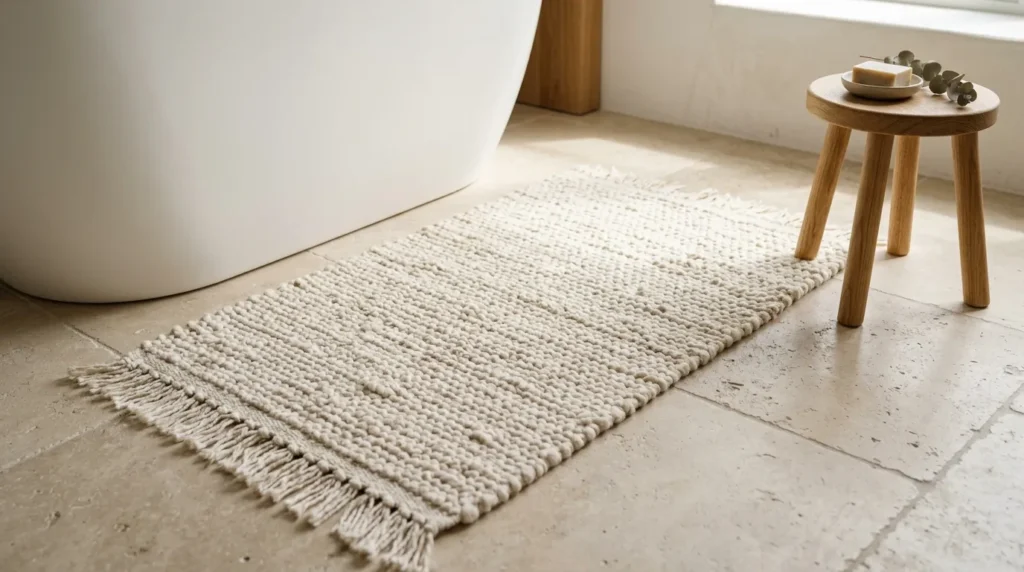
- Adds comfort underfoot on cold stone or tile
- Softens the visual hardness of stone flooring
- Easy, low-cost way to add texture and warmth
- Simple to wash and rotate seasonally
A textured bath mat solves a practical problem while adding a soft visual layer to the floor. Stone and tile flooring look beautiful but can feel cold and hard underfoot, especially first thing in the morning. A thick, woven mat in a neutral tone bridges that gap, adding comfort without introducing a jarring color or pattern into the room. This detail is often the last thing added to a bathroom, yet it plays a meaningful role in how the space actually feels to use every single day, not just how it looks in photos.
In my experience, this is one of the easiest updates for anyone not ready to commit to structural changes. A woven mat costs very little compared to flooring or fixtures, yet it adds genuine texture and warmth to an area that’s otherwise flat and hard. Rotating between one or two neutral mats seasonally keeps the look fresh without disrupting the palette. It’s a small, practical detail, but one that consistently shows up in saved bathroom photos because it feels both achievable and genuinely useful.
25. Natural Light Layering
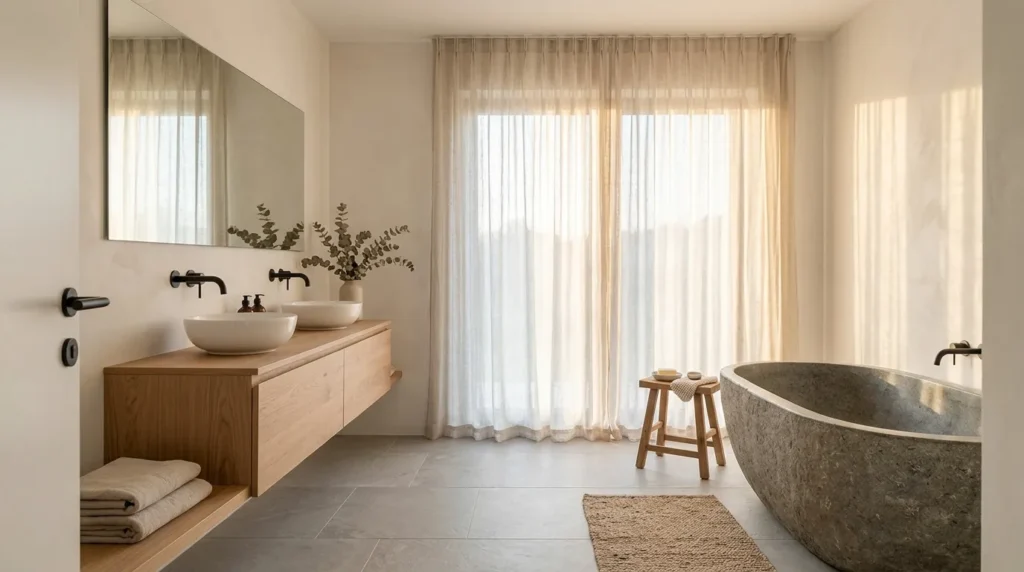
- Balances privacy with a bright, open feeling
- Enhances natural materials without artificial lighting
- Creates a softer glow than direct daylight
- Ties every other design element together visually
Natural light layering ties every other idea in this list back together into one cohesive space. Sheer linen curtains diffuse direct sunlight into something softer and more even, spreading warm light across stone, wood, and textured walls without harsh glare or dark shadows in the corners. This approach respects both privacy and brightness, which is often the biggest challenge in bathroom design. Rather than choosing between blocked-out windows and total exposure, a sheer layer lets light move through the room freely while still keeping the space private and comfortable throughout the day.
That’s why many designers recommend planning window treatments early, since lighting affects how every other material in the room actually reads. Stone can look cold under artificial light but warm and inviting under soft, diffused daylight. I’ve seen this work well even in bathrooms with smaller windows, where sheer fabric maximizes the light that does come through rather than blocking it further. As the final detail in a calm, modern bathroom, natural light layering pulls every material, color, and texture together into one unified, genuinely peaceful space.
Conclusion
A calm bathroom rarely happens by accident. It comes from choosing materials, lighting, and layouts that work together instead of competing for attention. Whether you start with something as simple as a linen shower curtain or take on a bigger change like a sunken tub, every idea in this list moves you closer to a space that feels genuinely restful rather than just visually styled for a photo.
The beauty of this approach is how flexible it is. You don’t need to apply all 25 ideas at once, and honestly, most homes shouldn’t. Pick two or three that fit your current space and budget, live with them for a while, and add more over time. That’s how the best, most lived-in bathrooms actually come together. If you’re ready to start planning your own calm, modern space, save this guide so you can return to it whenever you’re ready for the next update.