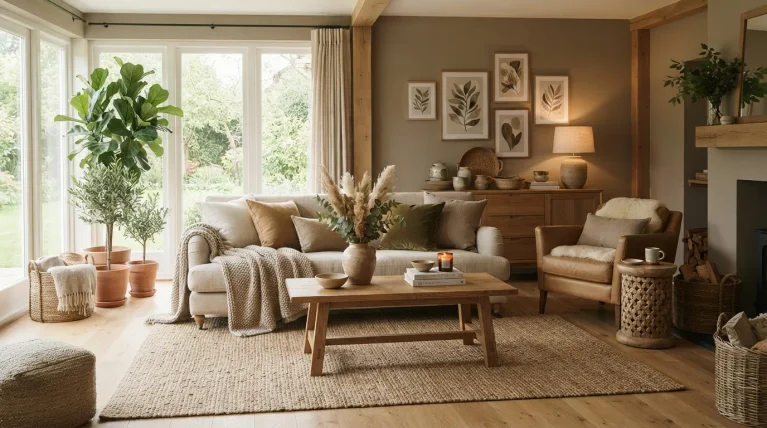
Ever feel like your desk is quietly stressing you out before the workday even starts? You’re not imagining it. A cluttered, mismatched workspace has a way of draining your focus before you’ve typed a single word. That’s exactly why a scandinavian home office has become such a popular fix, and honestly, it deserves the attention. In my experience, this style works so well because it strips away the noise and leaves only what actually helps you focus: soft light, natural materials, and a layout that feels calm instead of chaotic. This article brings together 22 practical ideas to help you build that same kind of workspace, whether you’re working with a whole room or just a small corner. I’ve noticed that people don’t need to overhaul everything at once. Even one or two small changes can shift how a space feels day to day,
1. Light-Filled Corner Desk

- Makes the most of daylight, cutting down on eye strain during long work hours
- Keeps the layout open instead of boxed into a corner
- Pairs well with a slim desk that won’t overwhelm a small room
- Naturally draws the eye outward, which helps during screen breaks
- Works especially well in apartments where space is tight
Natural light changes everything about a home office, and a corner desk near a window is one of the simplest ways to bring it in. In my experience, working near daylight instead of under a harsh ceiling lamp makes long hours feel shorter and far less draining. A scandinavian home office built around this idea feels calmer immediately, without needing extra decor. The light bounces softly off pale walls and wood tones, creating a workspace that feels open rather than cramped. It’s a small shift in furniture placement that makes a noticeably big difference in daily comfort and focus.
Beyond comfort, this layout genuinely improves how a small room functions day to day. Placing the desk along a window wall frees up the rest of the floor for movement, storage, or a reading chair, instead of cutting the room in half. I’ve noticed that people who try this setup rarely go back to a centered desk once they feel the difference. The corner naturally becomes a defined work zone without walls or dividers. For anyone short on square footage, this idea offers a practical, visually calming solution that still feels intentional and well-designed.
Also Read : 21 Navy Blue Wallpaper iPhone Ideas for a Stylish Screen
2. Warm Neutral Palette
- Creates a soothing backdrop that doesn’t compete with your focus
- Softer than stark white, but still bright and clean-feeling
- Easy to build a whole room around without overthinking color matching
- Photographs beautifully, which matters if you share your space online
- Hides everyday scuffs and marks better than pure white walls
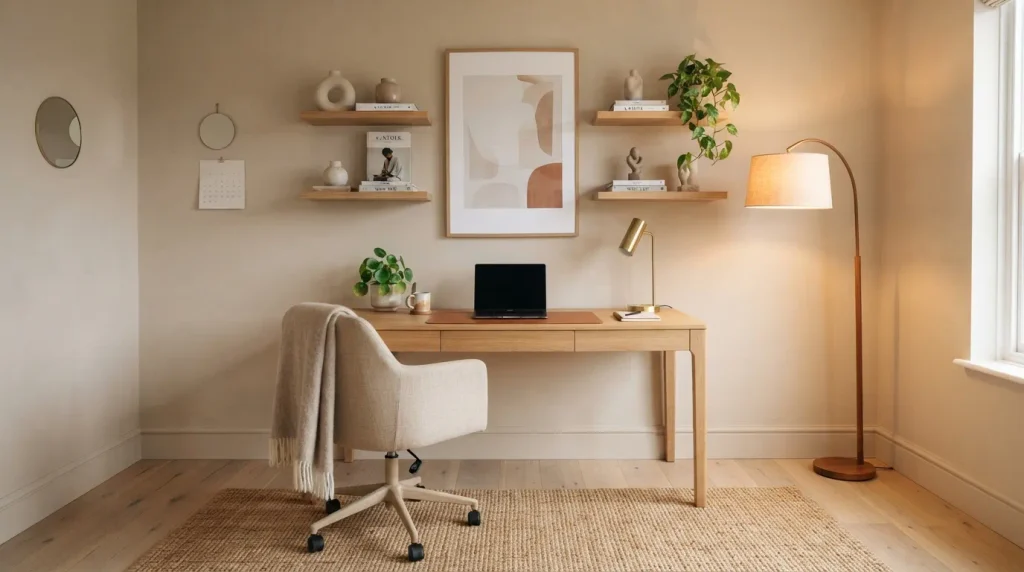
A warm neutral palette is quietly one of the most effective choices for a home office, and it’s often overlooked in favor of stark white. Beige, taupe, and soft ivory tones create a backdrop that feels calm without being cold or clinical. That’s why many designers recommend layering two or three neutral shades instead of one flat color, since it adds depth without adding visual noise. In a scandinavian-inspired room, this warmth balances out all the natural wood and metal accents. The result is a space that feels lived-in, welcoming, and easy to focus in every single day.
Choosing warm neutrals also solves a problem many people don’t anticipate until they’ve already painted: harsh white walls can feel sterile under artificial lighting at night. Soft beige or taupe tones hold warmth even after the sun goes down, so the room never feels flat or clinical during evening work sessions. I’ve seen this work well in many small offices, where the walls do the heavy lifting instead of relying on bold furniture or busy decor. It’s a low-effort, high-impact upgrade that ties the whole room together while keeping the design timeless rather than trendy.
Also Read : 23 Scandinavian Bedroom Ideas for a Cozy Minimalist Retreat
3.Minimalist Wall Shelving
- Keeps essentials visible without cluttering the desk surface
- Adds visual height to the room, making it feel less boxy
- Easy to style with just a few meaningful objects instead of many
- Doubles as decor and storage in one simple addition
- Great for renters since floating shelves are easy to install and remove
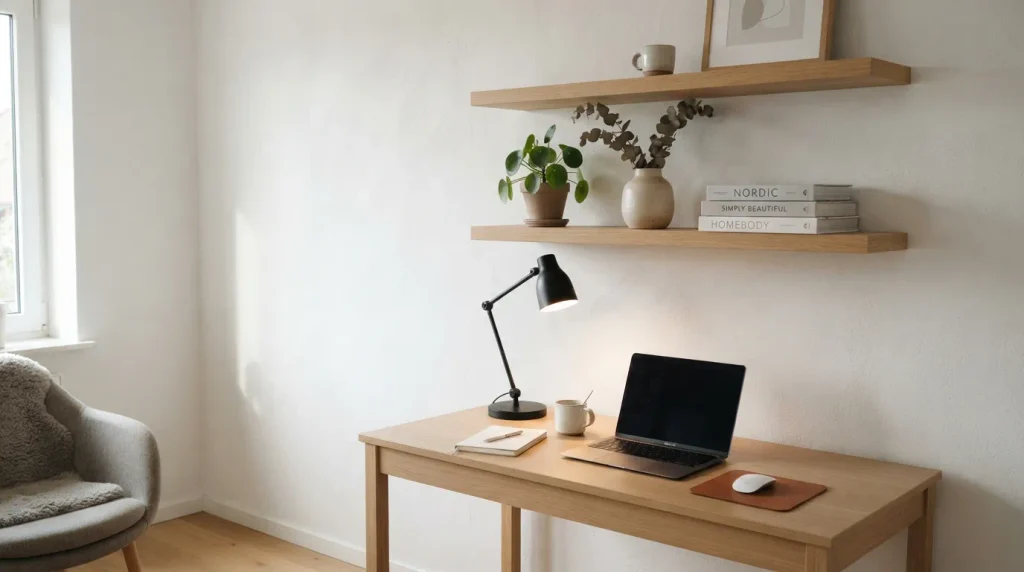
Floating shelves solve one of the biggest problems in a small home office: where to put things without cluttering the desk. A few light oak shelves mounted above eye level keep books, plants, and small decor within reach while leaving the work surface clear. In a scandinavian home office, less is genuinely more, and shelving lets you display only what you love instead of stacking everything within arm’s reach. This small addition adds both function and visual interest to a wall that would otherwise sit empty, making the whole room feel more finished and considered.
What makes shelving especially useful is how easily it adapts as your needs change over time. Swap a plant for a stack of notebooks, or a vase for a small frame, and the whole feel of the shelf shifts without any real effort. I’ve tried this in tighter spaces where a full bookcase simply wasn’t an option, and floating shelves gave the same visual payoff without eating into floor space. For renters or anyone hesitant to commit to bulky furniture, this idea offers a flexible, low-commitment way to add personality and order to the room.
Also Read : 25 Cozy Scandinavian Living Room Ideas for a Warm Home
4.Cozy Reading Nook
- Gives your brain a visual cue to switch from work mode to rest mode
- Adds texture and softness that balances out a desk’s hard lines
- Perfect for short breaks without leaving the room
- Turns an unused corner into something genuinely useful
- Works well even in studio apartments with limited square footage
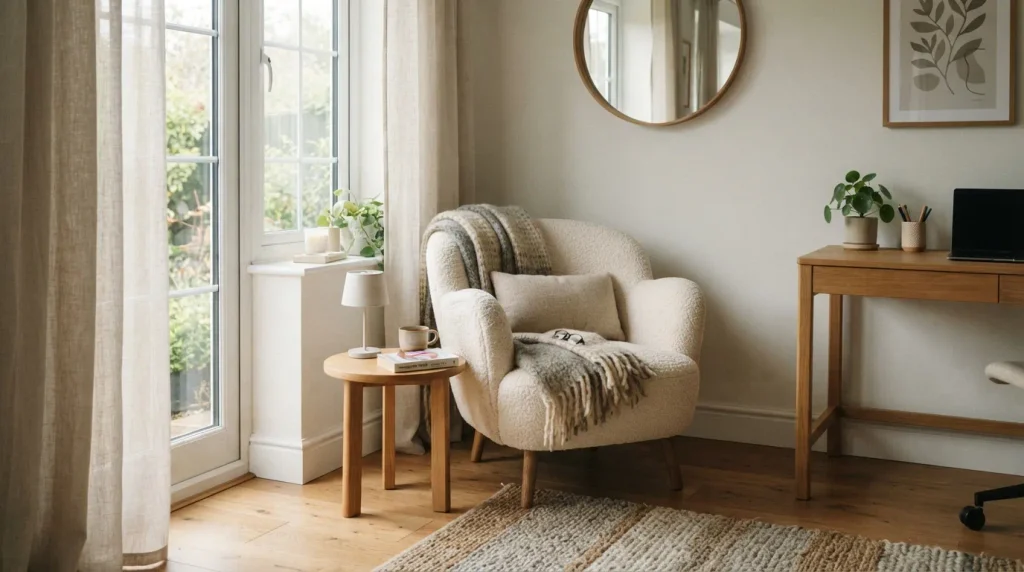
A reading nook tucked beside your desk might sound like an unnecessary addition, but it changes how the whole room feels day to day. Instead of staring at the same desk for eight hours, a soft chair nearby gives you somewhere to take calls, read, or simply pause between tasks. In my experience, having this kind of transition space makes remote work feel less like being chained to one spot. A scandinavian home office benefits especially from this contrast, since the soft textures balance the clean lines of a desk setup. It’s a small zone that adds real daily value.
This idea also works surprisingly well in smaller homes where a separate living room feels far away during the workday. A single accent chair and a throw blanket are enough to define the space without needing extra square footage or a room addition. I’ve noticed that people who add a nook like this actually take more breaks, not fewer, because the shift in seating naturally signals rest. The result is a healthier work rhythm and a room that feels multi-purpose instead of purely functional. It’s a simple upgrade with a genuinely noticeable effect on daily comfort.
Also Read : 22 Japandi Living Room Amazon Finds for a Calm Modern Space
5. Natural Wood Desk
- Adds warmth that metal or glass desks often lack
- Ages well and rarely looks outdated compared to trend-driven furniture
- Pairs naturally with almost any neutral color scheme
- Brings a grounded, organic feel into a room full of screens
- Durable enough to handle years of daily use
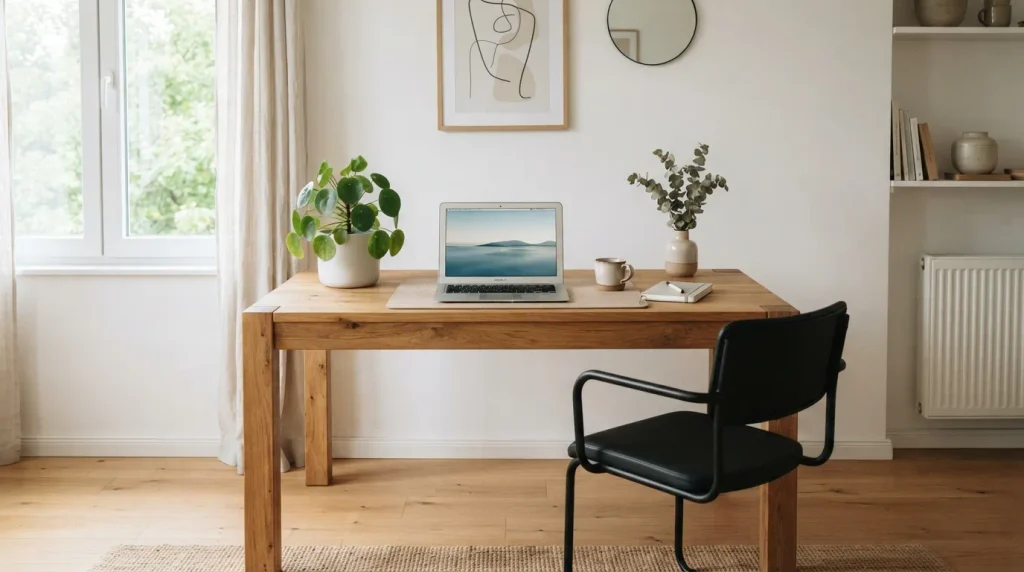
Wood grain does something a lot of home offices are missing: it brings warmth into a room that’s otherwise full of hard, flat surfaces like screens and metal frames. A natural wood desk anchors the space and gives it a lived-in, grounded feeling rather than a sterile one. This is one of the few areas where the exact scandinavian home office aesthetic really shows, since light oak and pine are signature materials of the style. Choosing solid wood over laminate also means the desk holds up to years of daily use without looking worn down or dated.
There’s also a practical side to this choice that’s easy to overlook. Natural wood desks tend to have simpler, sturdier construction than trend-driven furniture, which means fewer wobbly legs and less flexing under a heavy monitor setup. I’ve noticed that cheaper composite desks often need replacing within a few years, while a solid wood one just gets better with a little wear. For anyone furnishing a long-term home office, this is one purchase worth prioritizing quality over price, since it pays off in both looks and longevity.
Also Read : 23 Spring Front Porch Decor Ideas for a Fresh Welcome
6. Soft Textured Rug
- Softens hard flooring underfoot during long work hours
- Helps define the office zone within an open-plan room
- Adds texture without introducing bold pattern or color
- Muffles sound slightly, which helps on video calls
- Easy to swap out seasonally for a quick refresh
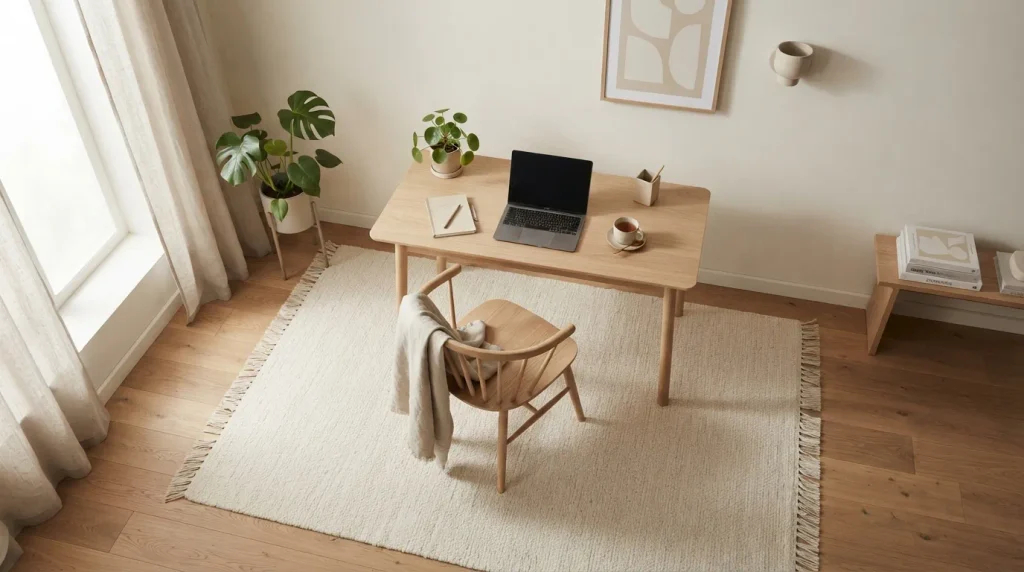
A rug is one of the most underrated additions to a home office, especially in rooms with hardwood or laminate flooring. Beyond comfort underfoot, a soft cream or beige rug visually defines the workspace, which matters a lot in open-plan homes where the office shares space with a living or dining area. That’s why many designers recommend anchoring a desk with a rug even in small rooms, since it creates a sense of boundary without adding walls. It’s a simple layering trick that makes the whole area feel more intentional and finished.
There’s also a functional benefit that’s easy to miss until you notice it missing. A textured rug absorbs a bit of sound, which quietly improves the acoustics during video calls or focused work, especially in rooms with hard floors and bare walls. I’ve tried working in the same room with and without a rug, and the difference in echo is more noticeable than expected. Beyond that, a rug is one of the easiest elements to update seasonally, letting you refresh the whole room’s mood without touching furniture or paint.
Also Read : 24 Boho Bedroom Amazon Finds for a Cozy Stylish Retreat
7. Hidden Cable Storage
- Removes visual clutter that instantly makes a desk feel messy
- Keeps chargers and cords from tangling or collecting dust
- Makes the whole setup look more polished in photos
- Reduces daily frustration searching for the right cable
- Inexpensive fix that takes less than an hour to set up
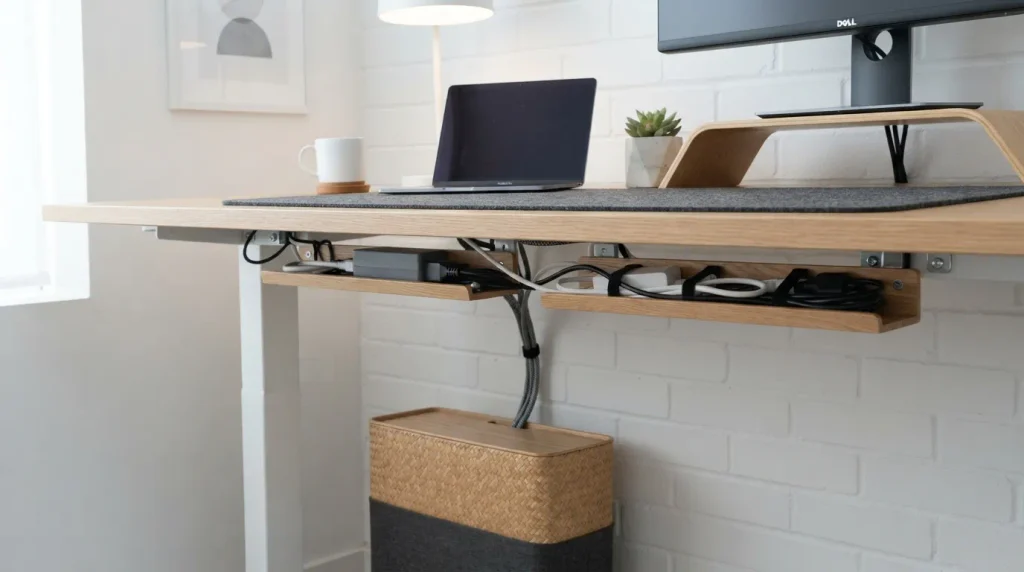
Cables are the one thing that can undo an otherwise beautiful desk setup in seconds. No matter how carefully you choose furniture or colors, a tangle of cords hanging off the back instantly makes the space feel chaotic. In my experience, tidying cables is one of the fastest, cheapest upgrades anyone can make to a scandinavian home office, and it’s often the last thing people think to fix. A simple woven cable box or under-desk tray hides everything from view while keeping chargers within easy reach. It’s a small detail that changes how finished the whole room feels.
This idea also solves a practical daily annoyance that goes beyond looks. Tangled cords make it harder to clean under the desk, and they’re a common source of frustration when you’re searching for the right charger in a rush. Organizing them with clips, boxes, or trays means less time untangling and more time actually working. I’ve noticed that once cables are hidden, people tend to keep the rest of the desk tidier too, almost like it sets a standard for the whole space. It’s a small fix with a surprisingly large ripple effect.
Also Read : 25 Japandi Bathroom Design Ideas for a Calm Modern Space
8. Statement Pendant Light
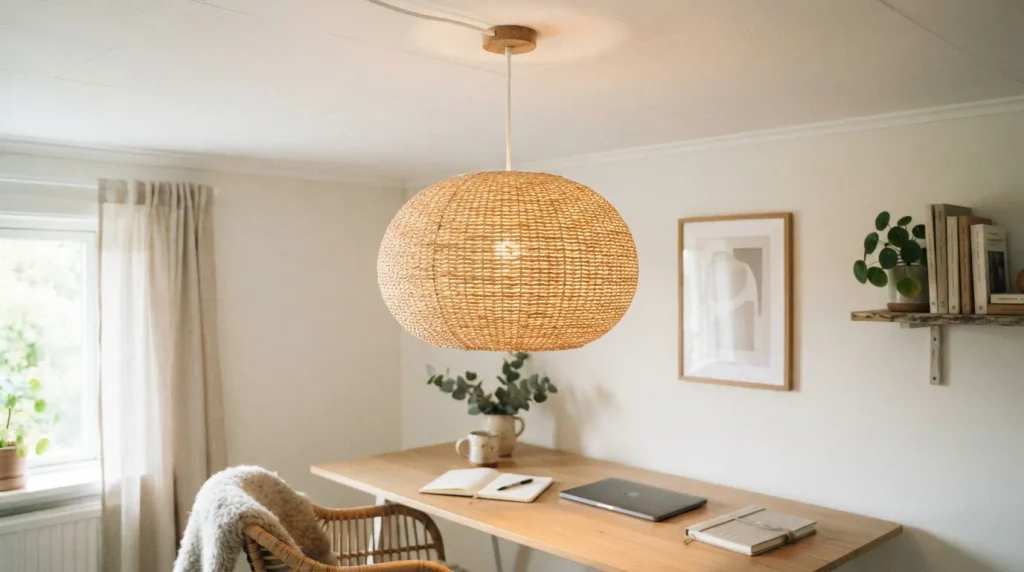
- Adds a design focal point without cluttering the desk itself
- Softens overhead lighting compared to a harsh ceiling bulb
- Brings texture and shape into a room that’s mostly flat surfaces
- Works in small rooms since it uses ceiling space, not floor space
- Easy way to add personality without a full room redesign
Overhead lighting is often an afterthought in home offices, but a statement pendant light can quietly transform the whole room. A round rattan or paper fixture adds texture and shape to a space that’s otherwise dominated by flat desks and straight walls. This is one of the easiest ways to bring character into a scandinavian home office without cluttering the desk with extra decor. Because it hangs from the ceiling, it takes up zero floor space, which makes it especially useful in smaller rooms where every inch of surface area matters for actual work.
Lighting quality also affects how long you can comfortably work without eye strain, and a diffused pendant does this better than a single harsh bulb. Soft, warm light spreads more evenly across the desk, reducing the sharp shadows that overhead spotlights tend to create. I’ve seen this work well in home offices that previously relied only on a desk lamp, since the added ambient light makes the whole room feel brighter without feeling overly lit. It’s a fixture that does double duty as both function and focal-point decor.
9. Layered Plant Styling
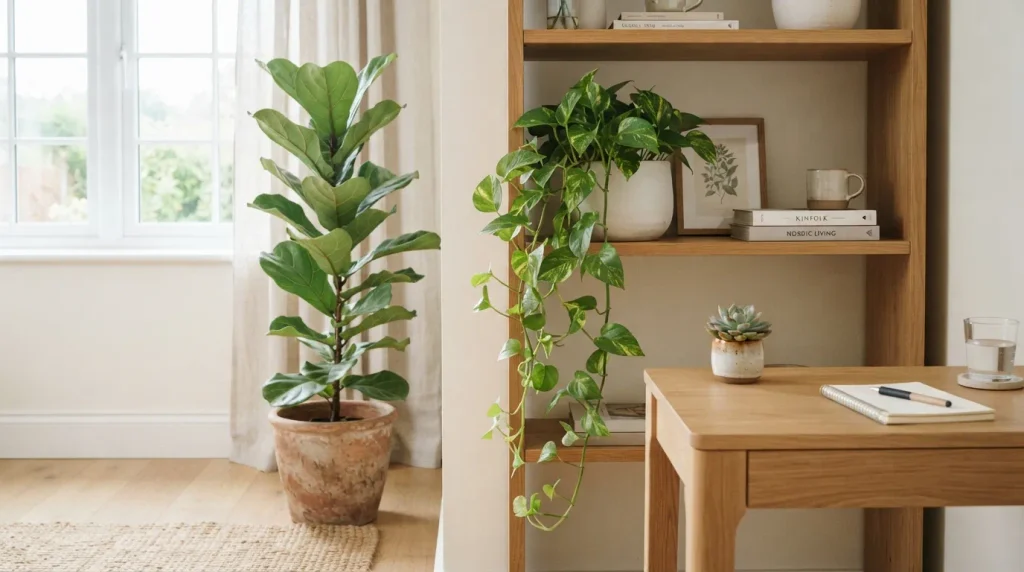
- Brings life and color into a mostly neutral color scheme
- Improves air quality and general mood during long work sessions
- Adds height variation that makes flat shelving feel more dynamic
- Low-maintenance options exist for people without a green thumb
- Instantly makes a space feel more finished and cared for
Plants are one of the simplest ways to soften a home office without straying from a neutral color palette. A mix of heights, like a tall floor plant, a trailing shelf plant, and a small desk succulent, adds natural variation without any real design skill needed. In a scandinavian home office, greenery plays an important role since the rest of the palette leans so heavily on white, oak, and muted tones. Without it, the room can start to feel flat or clinical. A few well-placed plants bring in color and life without disrupting the calm, minimal aesthetic the style is known for.
Beyond looks, there’s a real mood benefit to working near greenery that many people underestimate until they try it. Natural elements in a workspace have been linked to lower stress and better focus, which matters during long screen-heavy days. I’ve tried filling a bare shelf with just one or two plants, and the difference in how alive the room feels is immediate. For anyone worried about upkeep, low-maintenance options like pothos or snake plants offer the same visual payoff without demanding much care, making this an easy win for almost any skill level.
10. Woven Storage Baskets
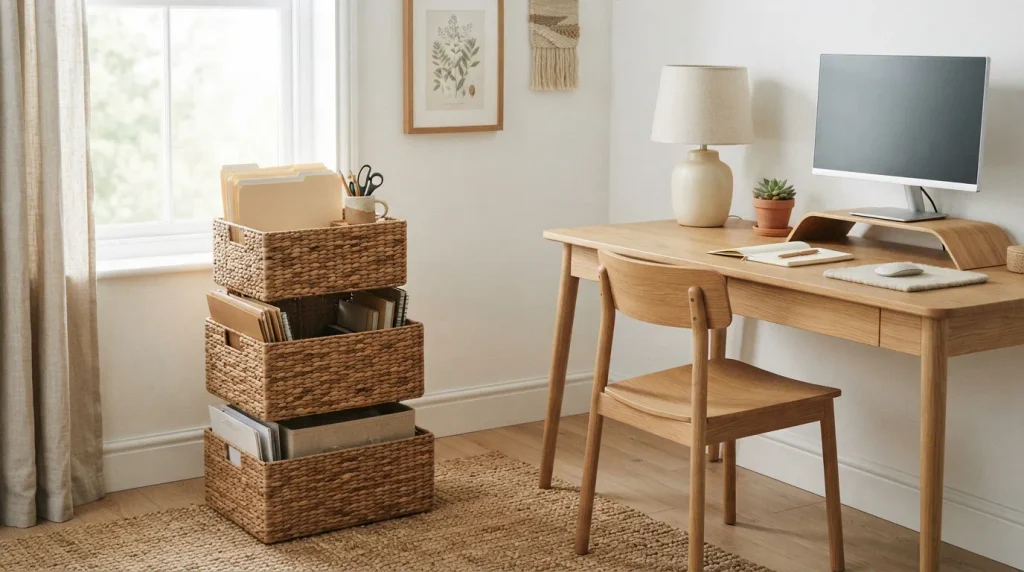
- Hides paperwork and supplies without looking like plastic storage bins
- Adds natural texture that softens a desk’s straight lines
- Doubles as floor decor when placed beside furniture
- Keeps frequently used items close without cluttering the desktop
- Affordable option compared to built-in cabinetry or shelving units
Paper clutter is one of the fastest ways to make a home office feel disorganized, even when the rest of the room is styled beautifully. Woven seagrass or rattan baskets solve this without resorting to plastic bins that clash with a soft neutral palette. In a scandinavian home office, texture matters just as much as color, and baskets bring in that natural, handmade feel while still doing real organizational work. Stacked beside a desk or tucked under a shelf, they keep folders, cords, or seasonal supplies out of sight but still within easy reach whenever needed.
What makes baskets especially practical is how adaptable they are compared to built-in storage. A basket can hold anything from spare notebooks to blankets, and it can move to a different spot the moment your layout changes, which built-in cabinetry simply can’t do. I’ve noticed that renters especially lean on this idea, since it adds real storage without any permanent installation or wall damage. For a fraction of the cost of custom shelving, woven baskets deliver a similar organized, finished look while keeping the whole setup flexible and easy to rearrange.
11 .Muted Sage Green Accents
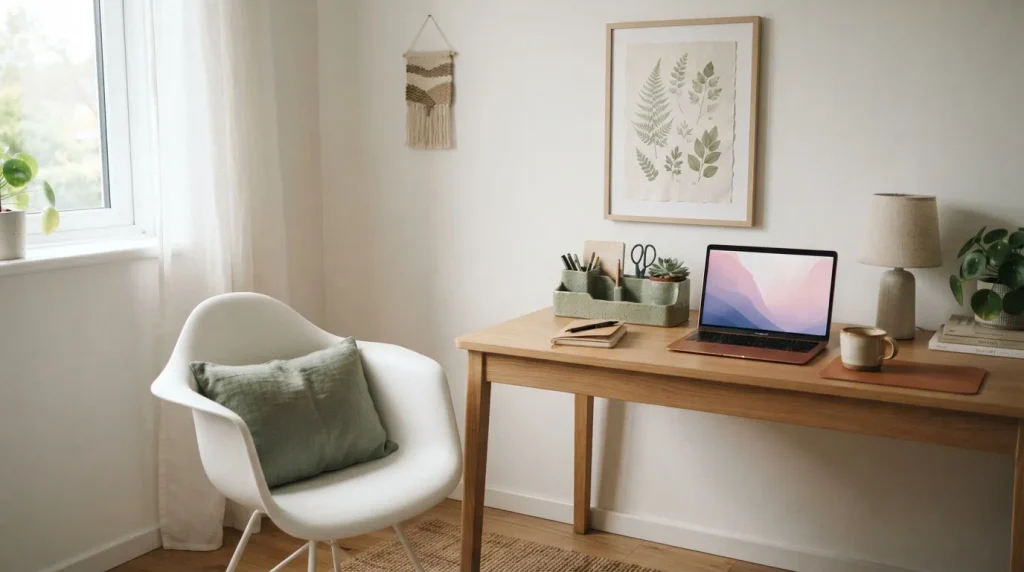
- Introduces color without overwhelming a neutral-based room
- Feels calming rather than energizing, which suits focused work
- Easy to add through small accessories instead of big purchases
- Pairs naturally with wood tones and white walls
- Timeless shade that won’t feel dated in a few years
Color can be intimidating to introduce into a neutral space, but muted sage green is one of the safest, most calming choices for a home office. Unlike bold or saturated colors, sage stays soft enough that it never competes for attention, which matters in a room meant for focus. A scandinavian home office benefits from this kind of restrained color use, since the whole aesthetic relies on subtlety rather than bold statements. A cushion, a ceramic organizer, or a single framed print is often enough to bring the shade in without committing to a full paint job or major furniture change.
This color also has a practical advantage: it’s genuinely difficult to get wrong. Sage green sits close enough to neutral that it pairs effortlessly with the oak, white, and beige tones already common in this style. I’ve seen this work well in rooms where the owner wanted “a little color” without risking a mismatch, since sage rarely clashes with existing decor. It’s also a shade that tends to stay in style far longer than trend-driven colors, meaning the investment in a cushion or print won’t feel outdated a year or two down the line.
12. Ergonomic Neutral Chair
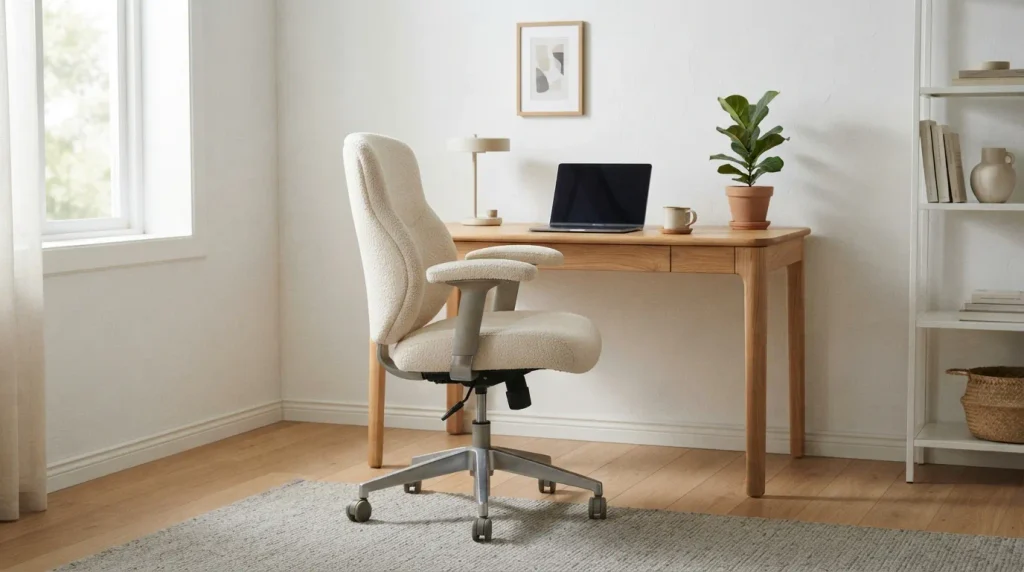
- Supports posture during long work hours without looking clinical
- Blends into the room instead of standing out like a typical office chair
- Reduces back and neck strain from cheaper, unsupportive seating
- Available in soft fabrics that match a cozy, neutral aesthetic
- Worth the investment given how many hours it gets used daily
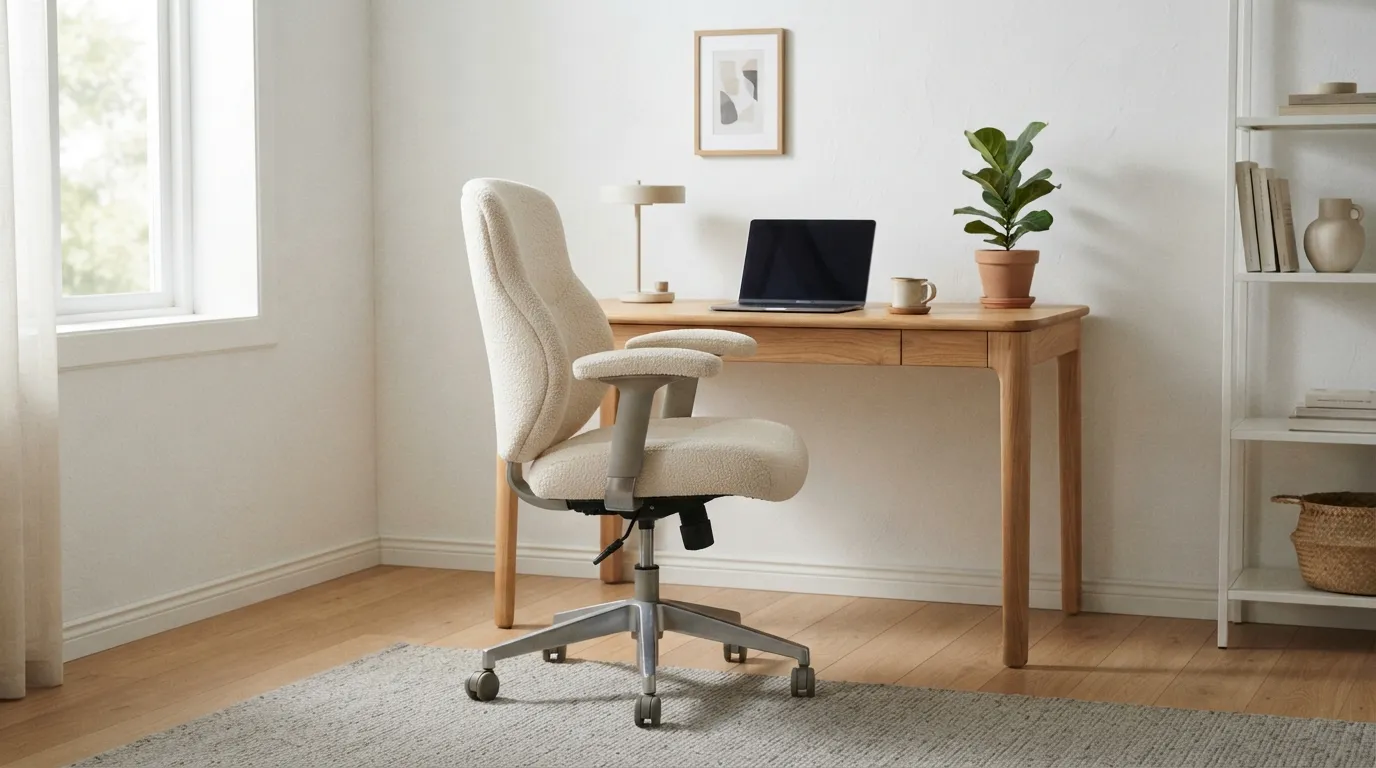
Comfort is often sacrificed for looks when people furnish a home office, and an ergonomic chair is where that trade-off shows up the most. A cream or oatmeal bouclé chair proves that support and style don’t have to be separate choices anymore. In a scandinavian home office, even functional pieces like desk chairs are chosen with the same care as decor, favoring soft textures and neutral tones over the black mesh look of a typical office chair. The result is a seat that supports your body through long work sessions while still looking like it belongs in a styled, intentional room.
Given how many hours a chair actually gets used, this is one area worth prioritizing quality over budget. In my experience, a poorly supportive chair causes more daily discomfort than almost any other piece of office furniture, even in an otherwise beautiful room. Adjustable height, proper lumbar support, and breathable fabric make a noticeable difference by the end of a long workday. Choosing one in a soft neutral tone means it never looks out of place next to wood and linen textures, proving that ergonomic doesn’t have to mean clinical or uncomfortable to look at.
13. Linen Curtain Panels

- Softens harsh daylight without blocking the room’s brightness
- Adds fabric texture that balances hard desk and wall surfaces
- Frames the window in a way that feels finished, not bare
- Provides privacy during video calls without heavy blackout curtains
- Affordable update that changes the whole feel of the room
Bare windows can leave a home office feeling unfinished, even when the furniture and colors are already well chosen. Sheer linen curtains solve this by softening the light instead of blocking it, which keeps the room bright while adding a layer of texture that’s currently missing. This is a small but meaningful detail in a scandinavian home office, where fabric plays just as much of a role as furniture in creating warmth. Instead of stark, uncovered glass, the window becomes a soft focal point that ties into the room’s overall neutral, relaxed aesthetic without requiring any major renovation.
There’s also a practical reason to add curtains beyond looks: privacy during video calls without sacrificing natural light. Heavy blackout curtains block too much brightness for daytime work, but sheer linen panels let you soften visibility while keeping the room well-lit. I’ve noticed that people often forget this detail until they’re mid-call and suddenly self-conscious about an uncovered window. Linen panels are also one of the more affordable upgrades on this list, making them an easy first step for anyone slowly building out a calmer, more considered home office over time.
14. Open Wall Calendar Station
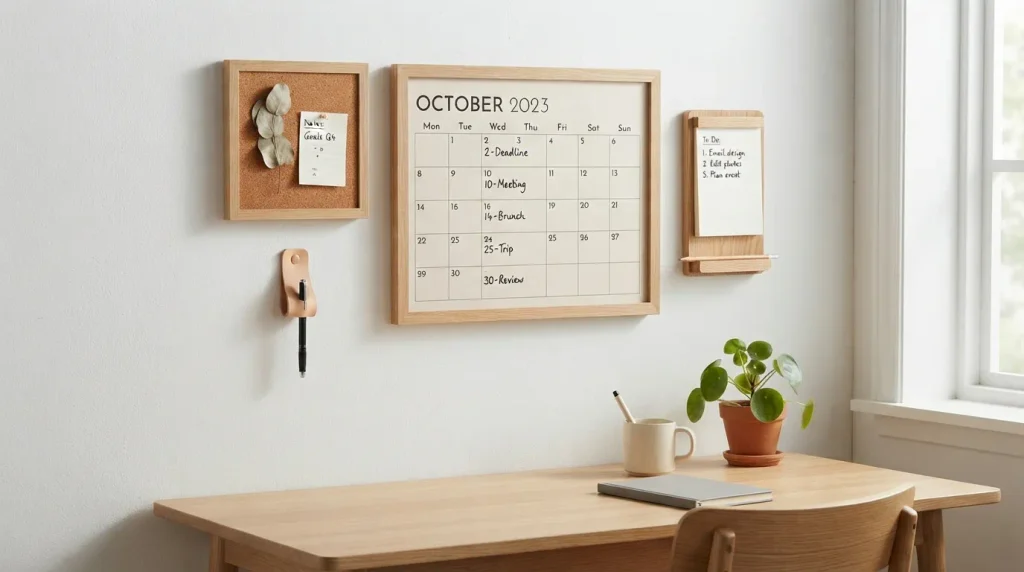
- Keeps schedules visible without cluttering the desk surface
- Adds a functional design element instead of empty wall space
- Helps separate work planning from personal to-do lists
- Simple to build using a frame, corkboard, and a few hooks
- Encourages a tidier desktop since notes live on the wall instead
A wall calendar station solves a problem most desks quietly struggle with: sticky notes and loose papers taking over the work surface. By moving scheduling and planning onto the wall instead of the desk, the whole area stays clearer and easier to focus in. In a scandinavian home office, this kind of functional styling is common, where even practical tools like calendars are chosen for their visual simplicity rather than treated as an afterthought. A light wood frame and a small corkboard turn planning into part of the room’s design instead of clutter competing for space on an already busy desktop.
This setup also helps mentally separate different types of tasks, which is something a lot of remote workers struggle with. Having a dedicated spot for deadlines and appointments means the desk itself stays reserved for actual work, not paperwork management. That’s why many designers recommend building small functional zones like this into a home office layout from the start. I’ve tried working without one and found myself constantly shuffling notes across the desk, which added unnecessary visual noise. A simple station like this keeps the whole room feeling calmer and more under control.
15. Matte Black Desk Accents
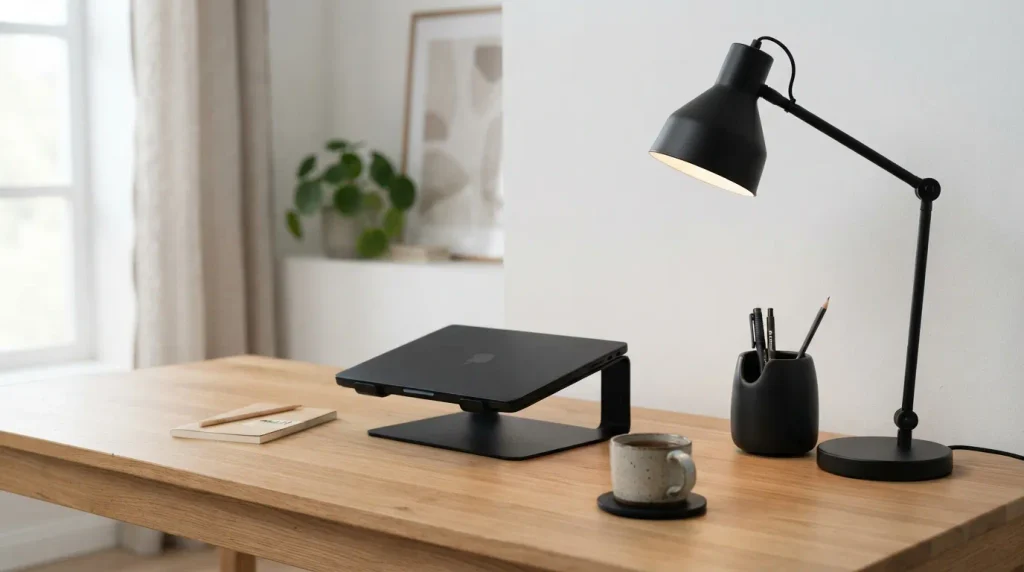
- Adds contrast that keeps an all-neutral room from feeling flat
- Grounds the space with a touch of visual weight
- Pairs well with wood and white without looking harsh
- Small accent pieces are easy and affordable to swap out
- Gives the desk a slightly more polished, considered look
An entirely neutral room can sometimes start to feel a little flat, and matte black accessories are one of the easiest ways to fix that without disrupting the calm overall mood. A black desk lamp or laptop stand adds just enough contrast to ground the space, keeping it from blending into a wash of beige and white. In a scandinavian home office, small doses of black are common precisely because they add definition without overwhelming the softness of the rest of the room. It’s a detail that photographs well too, giving the desk a slightly more polished, intentional appearance.
What makes this idea especially useful is how low-risk it is compared to larger design decisions. Swapping a beige desk lamp for a matte black one takes minutes and costs very little, yet the visual impact is immediate. I’ve seen this work well in rooms that felt slightly unfinished, where adding just one or two black accents gave the whole desk a sharper, more grounded feel. Because these are small, replaceable items, there’s no pressure to get it perfect the first time, making it a low-commitment way to experiment with contrast.
16. Vertical Bookshelf Nook
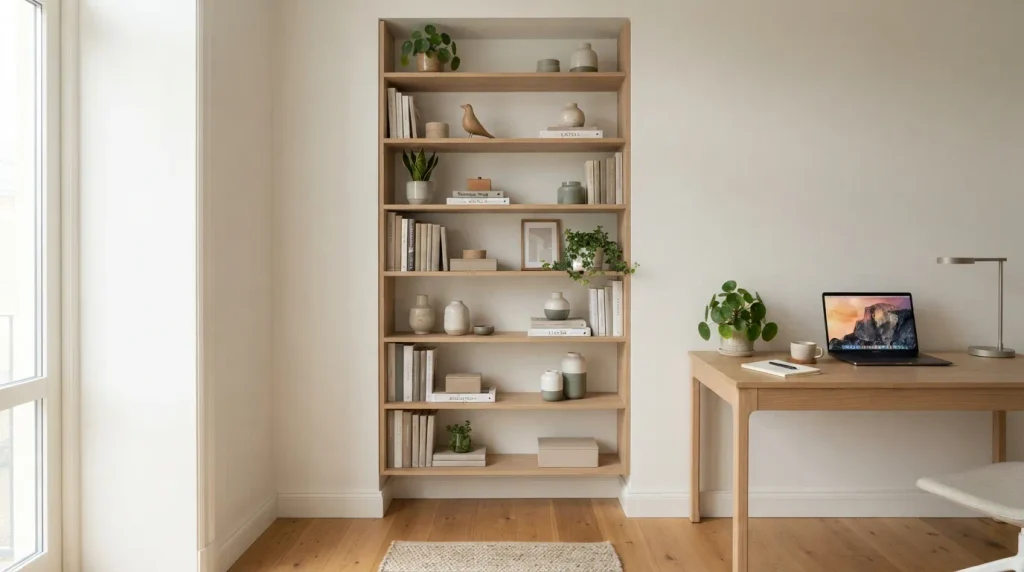
- Uses vertical space instead of eating into the room’s floor area
- Turns an awkward wall nook into a genuinely useful feature
- Keeps books and decor organized without a bulky bookcase
- Adds architectural interest to an otherwise plain wall
- Great option for narrow rooms where floor space is limited
Awkward wall nooks are common in older homes, and a tall, narrow bookshelf is one of the best ways to turn that dead space into something useful. Instead of leaving a gap that collects clutter, a vertical shelf makes use of height rather than floor space, which matters a lot in smaller rooms. In a scandinavian home office, this kind of built-in feel is valued because it keeps storage functional without adding visual bulk. Styled with a mix of books, a small plant, and a few ceramic pieces, the shelf becomes part of the room’s design instead of just extra storage.
This idea works particularly well for narrow or oddly shaped rooms where a traditional wide bookcase simply wouldn’t fit. By building up instead of out, you get the same storage capacity without sacrificing walking space or crowding the desk area. I’ve noticed that people often overlook these nooks entirely, treating them as wasted space rather than an opportunity. Filling one with a tall, simple shelf instantly makes the room feel more finished and considered, while also solving a real storage need that many home offices struggle with.
17. Soft Wall Art Gallery
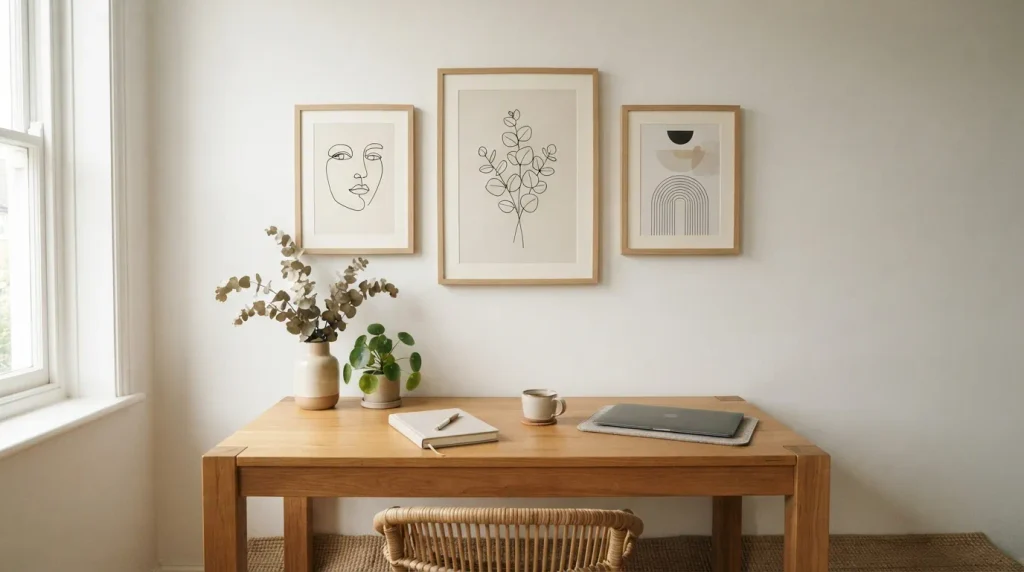
- Fills empty wall space without overwhelming the room’s calm feel
- Adds a personal touch that makes the office feel more like yours
- Easy to change out seasonally or whenever the mood shifts
- Works well above a desk where there’s often unused wall space
- Ties the whole color scheme together when frames match desk tones
Empty walls above a desk are a missed opportunity, and a small gallery of soft, minimalist prints is one of the easiest ways to fill that space without cluttering the room. Abstract line art or simple botanical illustrations keep the mood calm rather than busy, which fits the restrained character of a scandinavian home office perfectly. Choosing frames in the same light wood tone as the desk helps everything feel connected rather than randomly placed. This small styling choice makes the wall feel finished and personal, rather than like an afterthought tacked on once the furniture was already in place.
Art is also one of the few elements in a home office that reflects personality without disrupting the room’s overall calm. A gallery of three prints, evenly spaced and simply framed, adds just enough visual interest to keep the eye engaged without becoming distracting during work. I’ve tried swapping prints seasonally, and it’s a low-cost way to refresh the whole room’s feel without touching furniture or paint. For anyone who wants their office to feel less generic and more like their own space, this is one of the simplest, most flexible upgrades available.
18. Dual-Purpose Storage Bench
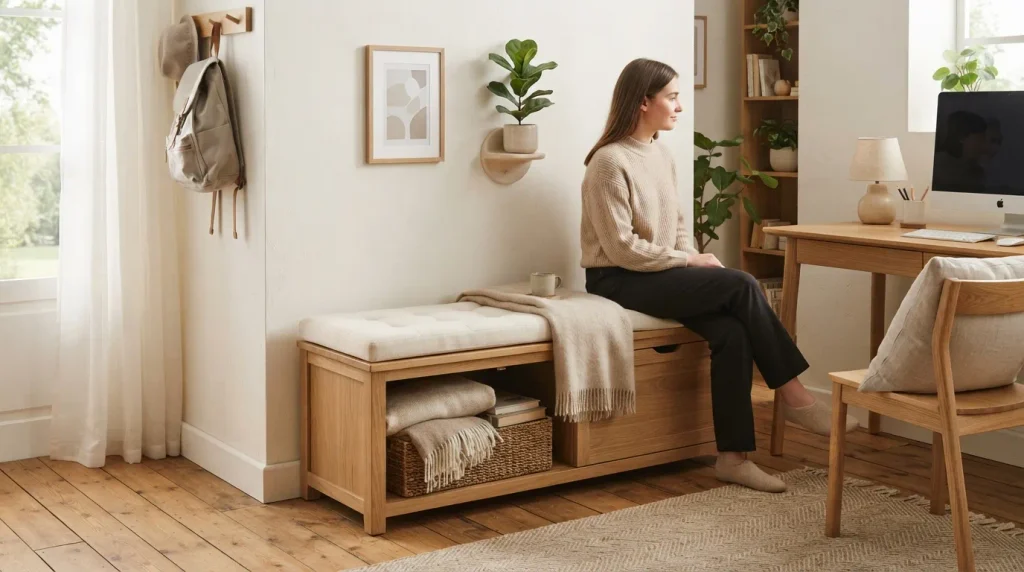
- Provides extra seating for calls or quick meetings without a second chair
- Hides bulky items like files, cables, or seasonal storage out of sight
- Adds a soft, cushioned element to balance the desk’s hard surfaces
- Works as a stepping stone piece between the office and a hallway
- Saves space compared to a separate storage cabinet and chair
A storage bench solves two problems at once, which is exactly why it works so well in smaller home offices. It offers extra seating for an unexpected video call guest or a quick conversation, while the hollow interior hides bulky items like files or seasonal supplies out of view. In a scandinavian home office, dual-purpose furniture like this is common because the style values function just as much as appearance. A cushioned top in a soft neutral fabric also adds a bit of comfort and texture to a room that can otherwise feel dominated by hard desk surfaces and flat walls.
Multi-purpose furniture like this is especially useful in homes where the office doubles as a guest room or shares space with another function. Instead of adding a separate storage cabinet and an extra chair, one bench handles both needs while taking up a fraction of the floor space. I’ve seen this work well near doorways or under windows, where a bench fits naturally without crowding the main desk area. It’s a practical, space-saving choice that still contributes to the room’s overall calm, considered look rather than feeling purely utilitarian.
19. Layered Table Lamp Lighting
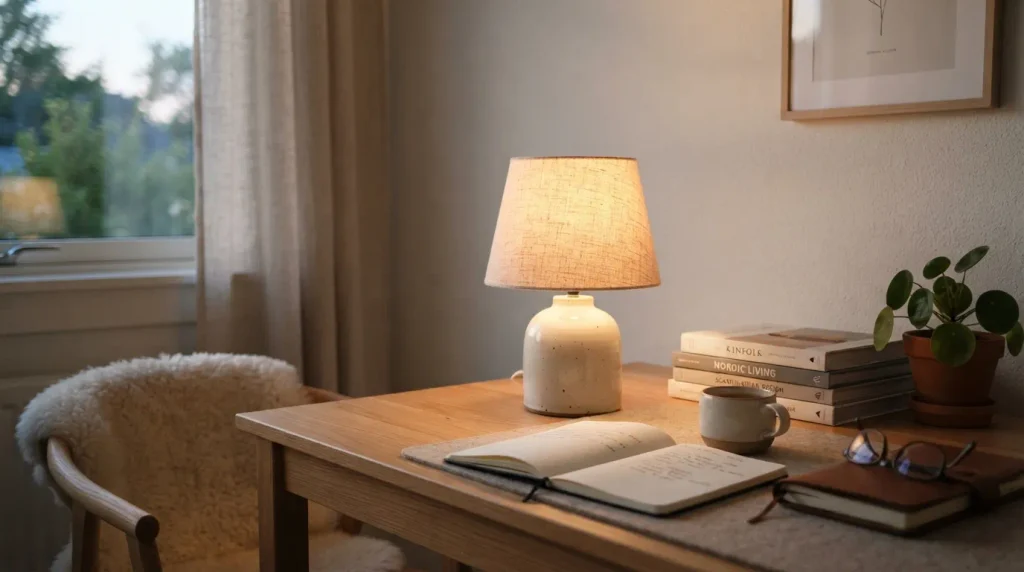
- Adds warmth for evening or low-light work sessions
- Softens the look of a desk that only has overhead lighting
- Creates a cozy contrast between daytime and nighttime work moods
- Small footprint that fits even the tightest desk setups
- Easy way to add a decorative element that’s also functional
Overhead lighting alone often leaves a home office feeling flat once the sun goes down, and a small table lamp fixes this without any major changes. A ceramic base with a soft linen shade adds warm, ambient light that feels far cozier than a single ceiling fixture working alone. In a scandinavian home office, layered lighting is a key part of the aesthetic, since one light source rarely creates the calm, welcoming mood the style is known for. Placed on the corner of a desk, a lamp like this becomes both a functional tool and a quiet decorative detail.
This idea also reflects how lighting needs shift throughout the day, something that’s easy to overlook when a room only has one light source. Natural daylight works fine in the morning, but by evening, a lamp becomes essential for reducing eye strain during extra work hours. I’ve noticed that adding a warm secondary light source makes late work sessions feel noticeably less draining than relying on a single overhead bulb. It’s a small, inexpensive addition, but the shift in mood between a lamp-lit desk and a plain one is more noticeable than most people expect.
20.Framed Motivational Print
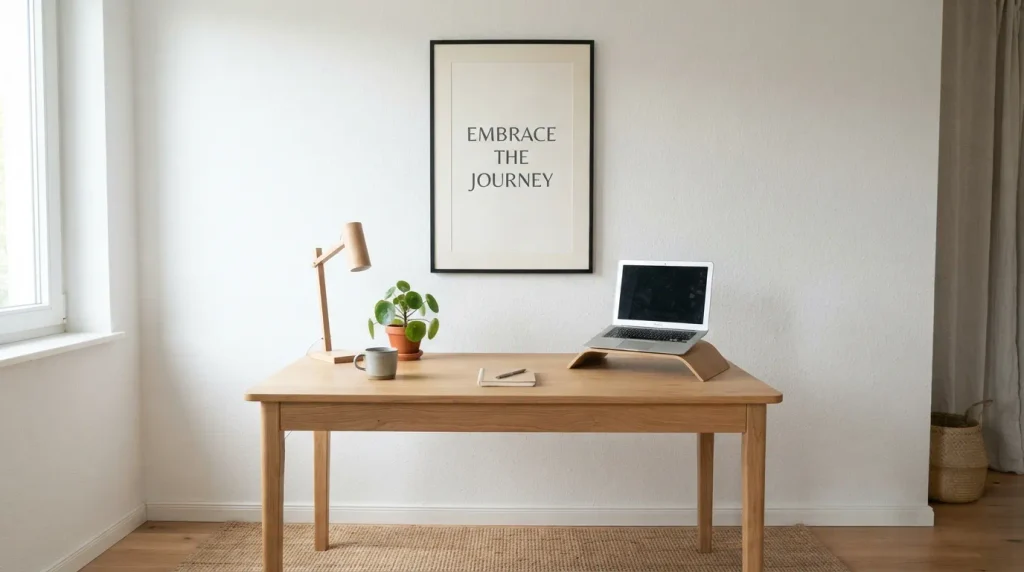
- Adds a small daily source of encouragement without feeling cheesy
- Fills wall space with meaning instead of generic decor
- Simple to swap out whenever you need a fresh perspective
- Works well paired with other minimal wall styling
- Keeps the tone personal rather than purely aesthetic
A single framed print with a short, simple phrase can do more for daily motivation than people expect, especially in a room where you spend hours facing the same wall. The key is keeping it minimal, a short phrase in a clean font, rather than anything busy or overly decorative, so it fits the quiet tone of a scandinavian home office. Placed above the desk at eye level, it becomes something you actually notice throughout the day instead of blending into the background. This small addition adds a personal, encouraging touch without making the space feel cluttered or overly styled.
In my experience, small visual reminders like this genuinely help on harder work days, even if the effect feels subtle at first. It’s not about the phrase itself doing the work, but about having something in your line of sight that shifts your mindset for a moment. Pairing it with one or two other minimal prints keeps the wall from feeling like a single random addition. For anyone who spends long hours at a desk, this is a low-cost way to make the space feel more personal and supportive rather than purely functional.
21. Foldable Desk Extension
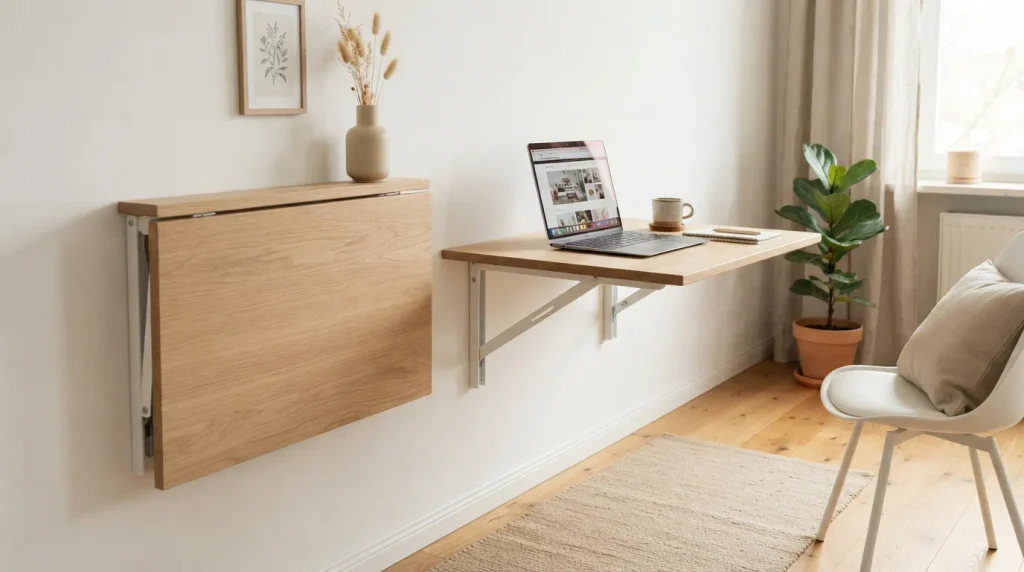
- Provides extra work surface only when you actually need it
- Folds flat to save space in small rooms or shared areas
- Great solution for apartments without a dedicated office room
- Doubles as a hobby or craft surface outside of work hours
- Keeps the room feeling open when the desk isn’t in use
Not everyone has a spare room to dedicate entirely to work, and a foldable desk extension is one of the smartest solutions for that reality. Mounted flat against the wall, it stays out of the way until you actually need extra surface area, then folds down in seconds when it’s time to work. This kind of flexible furniture fits naturally into a scandinavian home office, where function and simplicity matter just as much as appearance. For anyone working from a shared living space or a small apartment, this idea offers real desk space without permanently sacrificing the room for anything else.
What makes this option especially practical is how it adapts to different needs throughout the week. Fold it down for a work session, then fold it away for movie night or a yoga session in the same room. I’ve tried this setup in a small studio apartment, and the ability to reclaim floor space made the whole room feel far less dominated by work. It’s an ideal choice for renters too, since most versions require minimal wall mounting and can be removed without leaving major damage behind.
22. Quiet Zone Room Divider
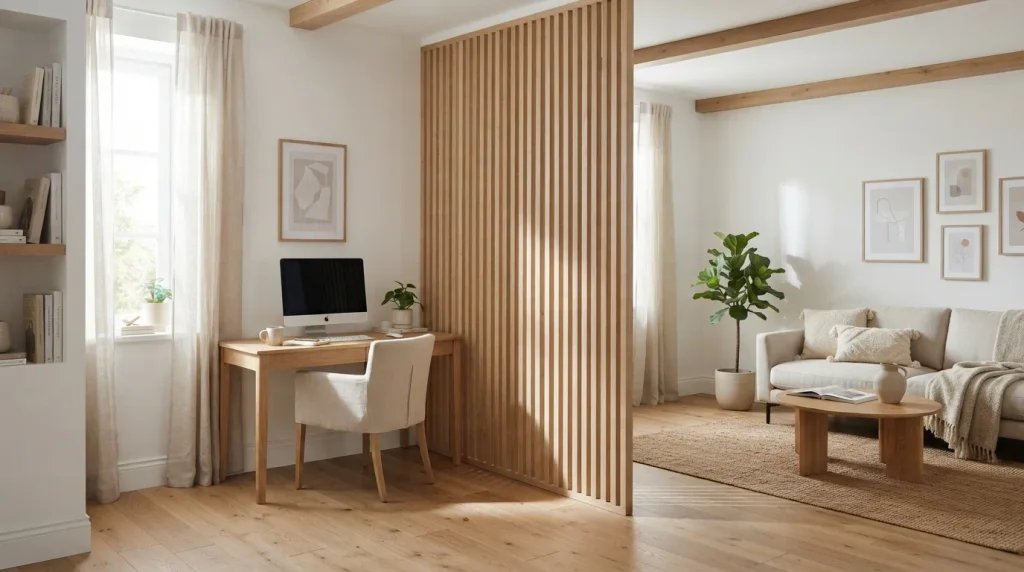
- Creates a visual boundary without closing off the room completely
- Lets light pass through, unlike a solid wall or heavy curtain
- Helps signal “work mode” in shared or open-plan living spaces
- Adds architectural texture to an otherwise plain open room
- Easy to reposition if your layout or needs change later
Open-plan homes make it hard to mentally separate work from everything else, and a slatted wood room divider offers a simple fix without requiring construction. Unlike a solid wall, the gaps between slats let light continue flowing through the space, so the room doesn’t feel closed off or dark. This kind of soft boundary fits naturally into a scandinavian home office, where the goal is always calm structure rather than harsh separation. Placed behind or beside a desk, it defines a clear work zone while keeping the rest of the room feeling open, connected, and visually consistent with the space around it.
This idea is especially useful for anyone working from a living room, bedroom, or shared space without a dedicated office. Instead of committing to permanent walls, a freestanding divider can be moved, angled, or removed entirely if your routine or living situation changes. I’ve seen this work well in studio apartments, where it created a genuine sense of separation between “work” and “home” without sacrificing an inch of usable floor space. It’s a flexible, renter-friendly upgrade that solves a real problem many open-plan households face every single day.
Conclusion
A calmer workday really can start with a calmer desk. Every idea in this guide, from warm wood tones to softer lighting, is meant to help you build a scandinavian home office that feels genuinely good to sit down in every morning. I’ve seen how small changes like a rug, a plant, or a tidied cable box can completely shift the mood of a room, often more than people expect. You don’t need to try all 22 at once, just start with what speaks to you. Save this post for later, try an idea this weekend, and share it with anyone who could use a calmer, more inspiring workspace too.