Your dining room can feel calm, beautiful, and inviting without being complicated. A few thoughtful changes can completely shift the mood of the space.
These japandi dining room ideas combine warm natural materials, simple furniture, soft textures, and uncluttered styling to create a dining area that feels both modern and comfortable. Whether you are decorating a small apartment, refreshing an open-plan dining space, or simply tired of a room that feels cold or unfinished, these ideas offer practical inspiration you can actually use. Think pale oak, woven seating, earthy ceramics, soft lighting, natural greenery, and calming neutral colors. In my experience, small changes in texture, lighting, and furniture proportions can make a surprisingly big difference. You’ll find plenty of ideas to save, adapt, and make your own.
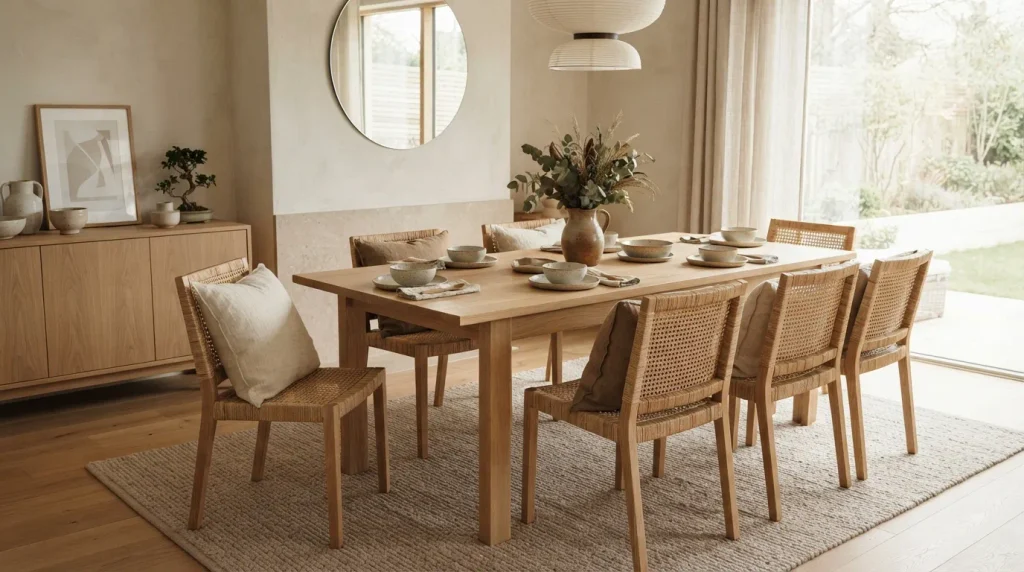
1. Light Oak Dining Table
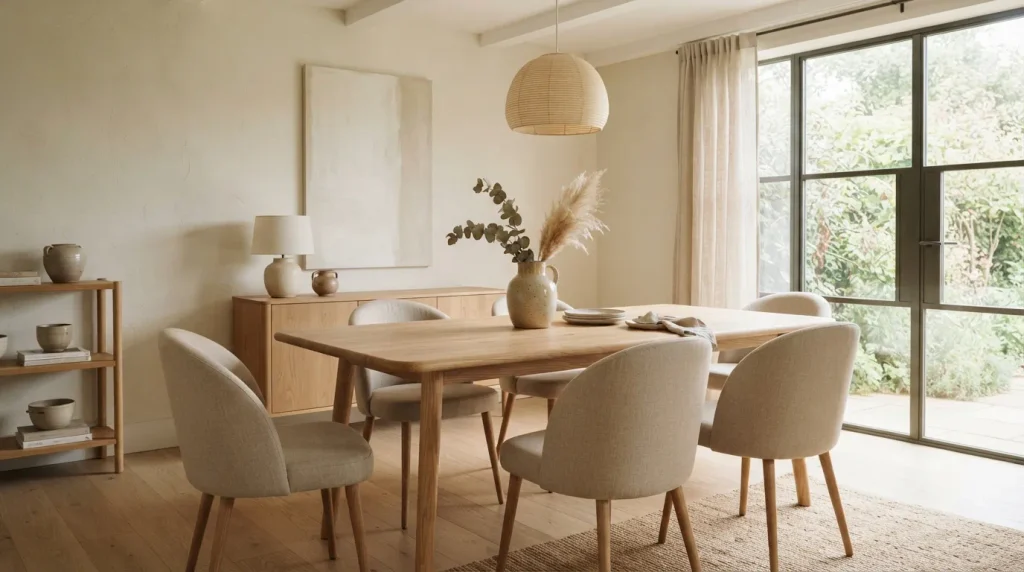
- Pale oak keeps the room feeling bright without making it look cold.
- Rounded table edges add softness to an otherwise structured layout.
- Neutral chairs help the wood remain the main visual feature.
- A simple ceramic centerpiece adds interest without creating clutter.
A light oak dining table can instantly make a Japandi room feel warmer, cleaner, and more inviting. Choose a simple rectangular table with softly rounded edges and a matte finish rather than ornate detailing. Pair it with low-profile chairs in beige, cream, or natural wood to keep the palette quiet. In my experience, pale timber works especially well in dining spaces that need more visual openness because it reflects daylight without looking stark. Add one ceramic centerpiece or a small branch arrangement, leaving plenty of tabletop visible. The result feels intentional, airy, and easy to live with every day.
The beauty of pale oak is how easily it connects different parts of the room without demanding attention. In smaller homes, a slim table can preserve walking space while still giving the dining area a polished focal point. Keep the floor natural, such as light wood or warm stone, and repeat similar tones in shelving or wall accents for a cohesive look. A simple pendant above the center of the table adds definition without clutter. This approach suits many japandi dining room ideas because it balances Scandinavian simplicity with Japanese restraint, creating a practical setting that still feels beautifully styled.
Also Read : 21 Sage Green Bedroom Ideas for a Calm Relaxing Retreat
2. Woven Dining Chairs
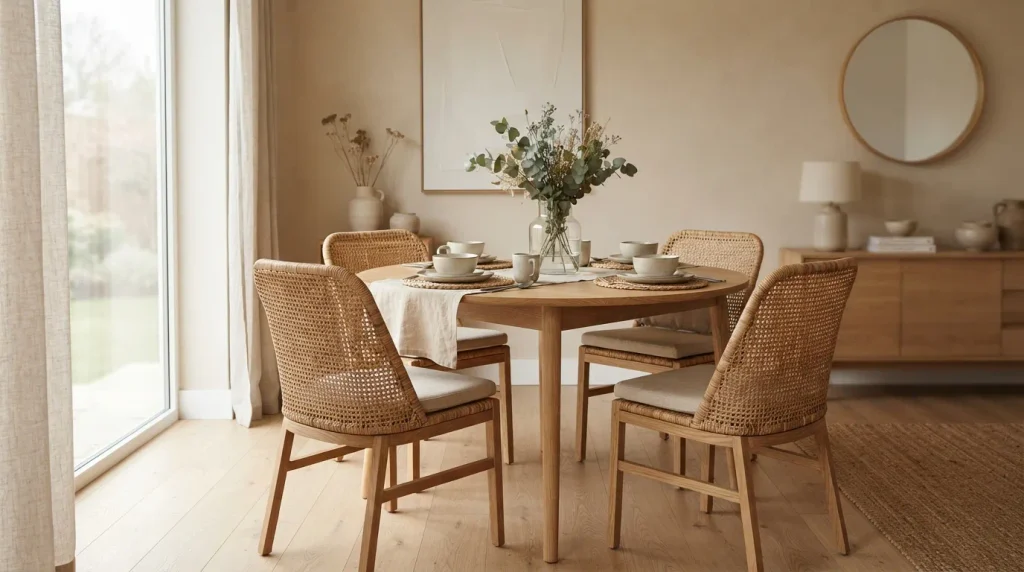
- Woven textures introduce warmth without overwhelming a minimalist room.
- Cane or rattan chairs make the seating area feel lighter.
- Natural fibers add visual depth to smooth wood surfaces.
- Two woven armchairs can create a subtle focal point.
Few changes create as much softness as swapping heavy seating for woven dining chairs. Look for natural cane, rattan, or woven paper cord paired with a simple wood frame in oak or walnut. The texture brings warmth to a room that might otherwise feel too smooth and minimal. I’ve noticed that woven seats also make neutral spaces feel more layered without introducing strong patterns. Keep the surrounding furniture streamlined, and let the chairs become the main tactile feature. A low ceramic vase, linen runner, and uncluttered tabletop can reinforce the relaxed, handcrafted feeling without making the room look rustic.
Woven seating works especially well when the dining room needs personality but not visual noise. The open texture allows light to pass through the chair backs, which can make a compact space appear less crowded. Choose matching chairs for a calm, coordinated arrangement, or place two woven armchairs at the table ends for a subtle focal point. Warm beige walls, pale flooring, and soft daylight help the natural fibers stand out beautifully. This simple update also adds comfort and everyday practicality, making the dining area feel welcoming for quick breakfasts, long dinners, and everything in between.
Also Read : 24 White Brick Fireplace Ideas for a Bright Cozy Home
3. Sculptural Pendant Light
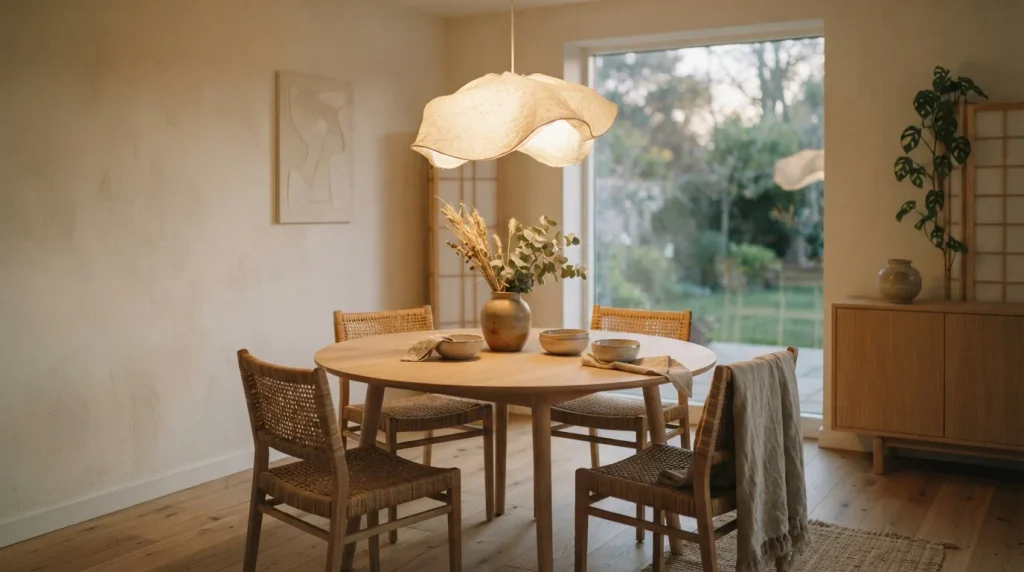
- An organic pendant creates a strong focal point above the table.
- Paper, linen, and wood shades reinforce the natural aesthetic.
- Warm lighting makes neutral colors feel richer after sunset.
- One oversized fixture can define the dining zone beautifully.
A sculptural pendant can give a Japandi dining room its visual anchor without overwhelming the calm atmosphere. Choose a paper, linen, wood, or softly textured shade with a rounded or organic silhouette. Hang it low enough to define the dining zone while keeping comfortable eye level across the table. Warm white light is ideal because it enhances natural wood and neutral fabrics after sunset. Keep the rest of the ceiling uncluttered so the fixture has room to breathe. This is one of those small upgrades that can make an otherwise simple dining setup look thoughtfully designed.
Lighting becomes especially important when a minimalist dining room feels flat or unfinished after dark. A softly diffused pendant adds a gentle pool of light over the table, creating separation between the dining area and nearby living spaces. Try a single oversized shade above a long table, or two smaller pendants over a wider surface. Matte finishes in ivory, sand, charcoal, or natural wood work beautifully with restrained interiors. I’ve seen this approach make simple furniture feel more elevated while keeping the room comfortable and functional. The key is warm illumination, clean shapes, and plenty of visual breathing room.
Also Read : 23 Corner Fireplace Ideas for a Cozy Stylish Living Room
4. Low Wooden Sideboard
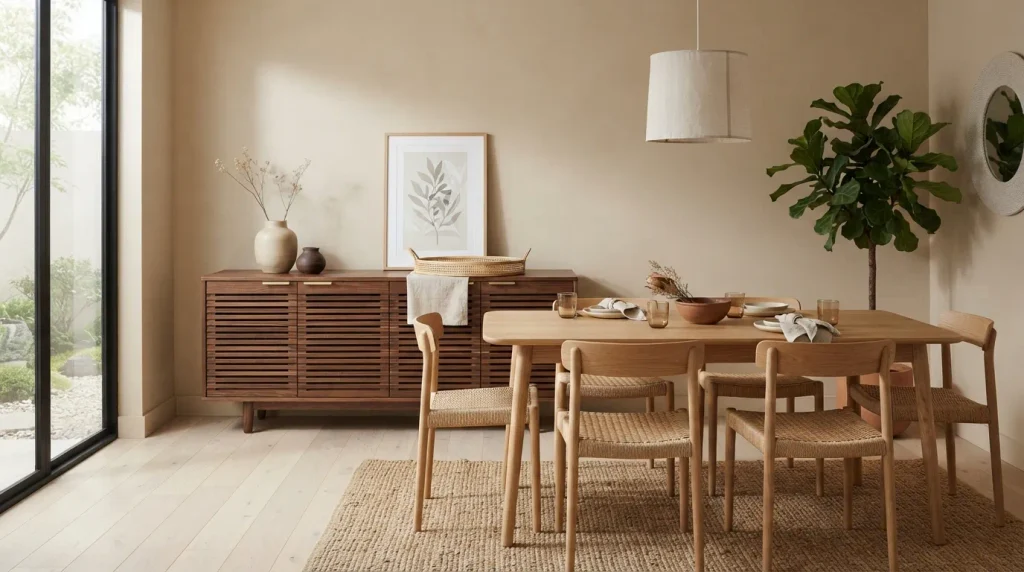
- A low sideboard adds storage without making the room feel bulky.
- Natural wood introduces warmth while keeping the furniture visually simple.
- Closed cabinets hide everyday dining essentials and reduce clutter.
- A few ceramics on top provide just enough decorative interest.
A low wooden sideboard can quietly transform a dining area by adding both storage and structure. Choose a piece with clean horizontal lines, slim legs, and mostly closed storage for a tidy appearance. Oak works beautifully in lighter rooms, while walnut adds deeper contrast to cream or beige walls. Use the cabinet for plates, serving pieces, table linens, or candles so the dining table stays clear. In my experience, practical storage is one of the easiest ways to make a minimalist room feel genuinely livable. The furniture should support everyday routines without becoming the room’s dominant feature.
Position the sideboard along the longest available wall, preferably opposite or beside the dining table, so the layout feels balanced rather than crowded. Keep the surface intentionally sparse with one large ceramic vase, a small bowl, or a simple branch arrangement. Avoid filling every section with accessories because negative space is part of the design. A warm wood finish can also visually connect the sideboard with the dining table and flooring. This combination creates a cohesive foundation for japandi dining room ideas while giving you a practical place to store items that would otherwise remain visible.
Also Read : 22 Black Fireplace Ideas for a Bold Modern Living Room
5. Neutral Linen Seating
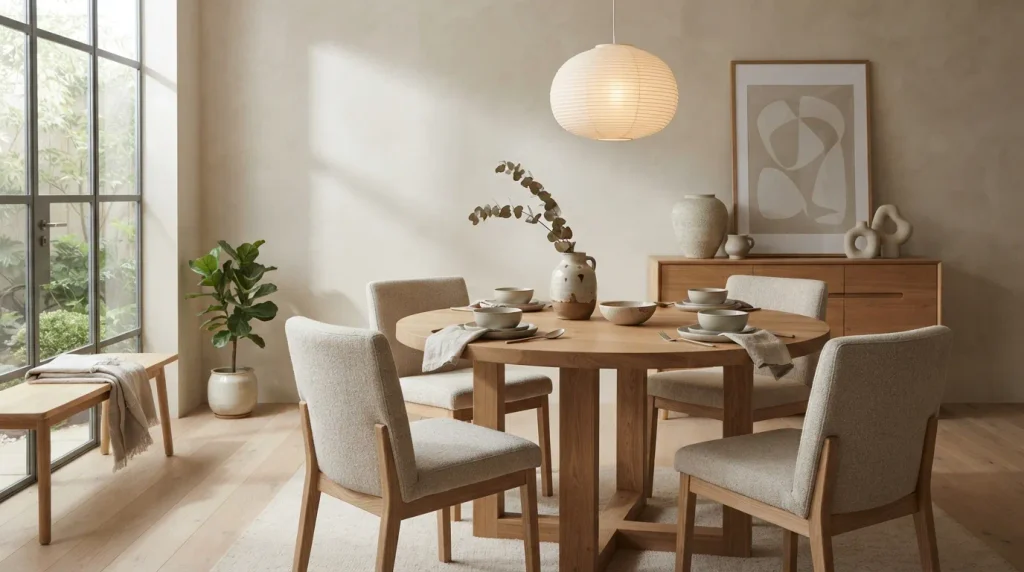
- Linen upholstery softens the clean lines of wooden dining furniture.
- Oatmeal and cream tones create an easy, versatile color palette.
- Textured fabric makes a minimalist room feel warmer and more comfortable.
- Choose washable or durable upholstery for everyday dining.
Neutral linen seating brings softness to a dining room without introducing distracting color or pattern. Look for chairs upholstered in oatmeal, warm beige, ivory, or muted taupe, preferably with simple silhouettes and gently curved backs. The fabric adds tactile interest against smooth timber and helps the space feel more comfortable. I’ve noticed that textured neutrals can make a sparse room feel finished even when very little decoration is used. For everyday homes, consider performance linen or a durable washable fabric, especially if the dining table is used frequently. Comfort matters just as much as appearance in a successful dining setup.
Pair the chairs with a light or medium-toned wooden table to keep the overall composition warm and balanced. You can mix subtle textures through a linen runner, woven placemats, or a handmade ceramic bowl without adding busy patterns. Keep the walls close to the same tonal family, using creamy white, warm beige, or soft greige for continuity. The result is a dining area that feels peaceful but not sterile. This approach works particularly well in open-plan homes because the neutral seating can connect visually with nearby living furniture while maintaining a distinct, welcoming dining zone.
Also Read : 23 Dark Blue Bedrooms Ideas for a Moody Stylish Retreat
6. Earthy Ceramic Centerpiece
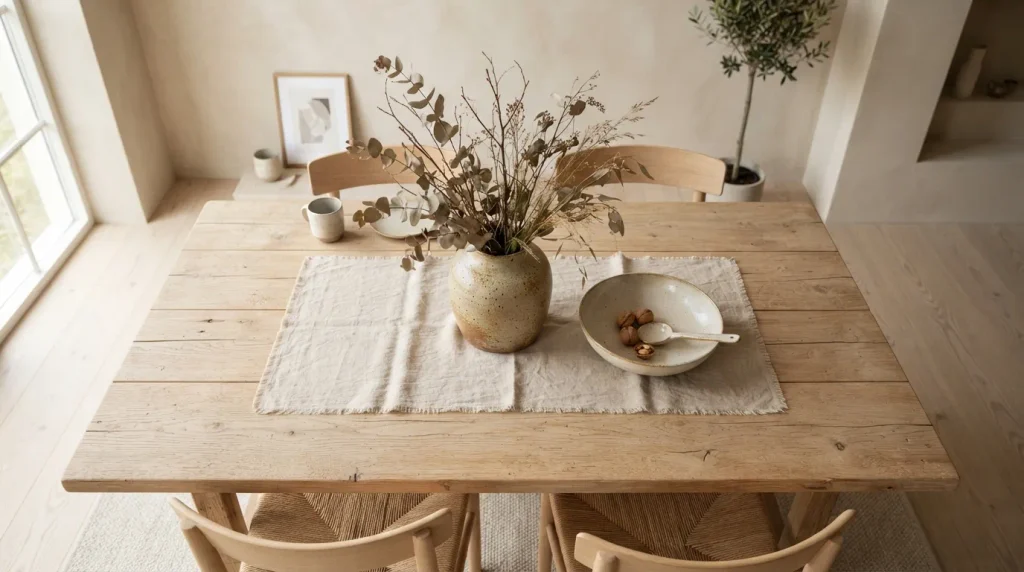
- Handmade ceramics add character without creating visual clutter.
- Earthy finishes bring natural variation to a restrained palette.
- One sculptural vase can make an empty table feel intentional.
- Keep accessories low enough to preserve easy conversation across the table.
An earthy ceramic centerpiece is a simple way to give a minimalist dining table more personality. Choose handmade-looking pieces with imperfect shapes, matte finishes, and natural colors such as sand, clay, stone, cream, or muted brown. A single sculptural vase can be enough, especially on a smaller table. Add a few delicate branches if you want height, or use a shallow bowl for a lower arrangement. In my experience, the slight irregularity of handmade ceramics keeps a neutral room from feeling overly polished. It introduces character while still respecting the simple, uncluttered principles behind the style.
The centerpiece should complement the table rather than compete with it. Leave generous open space around the main object, and avoid collecting several unrelated accessories in one area. A narrow linen runner can provide a soft foundation, while natural wood keeps the composition grounded. For everyday practicality, choose a sturdy ceramic piece that can stay on the table without getting in the way during meals. Warm daylight will emphasize the texture and subtle color variations beautifully. The finished look feels thoughtful, organic, and relaxed, proving that a small decorative choice can have a noticeable impact.
Also Read : 23 Masculine Home Office Ideas for a Stylish Workspace
7. Curved Dining Bench
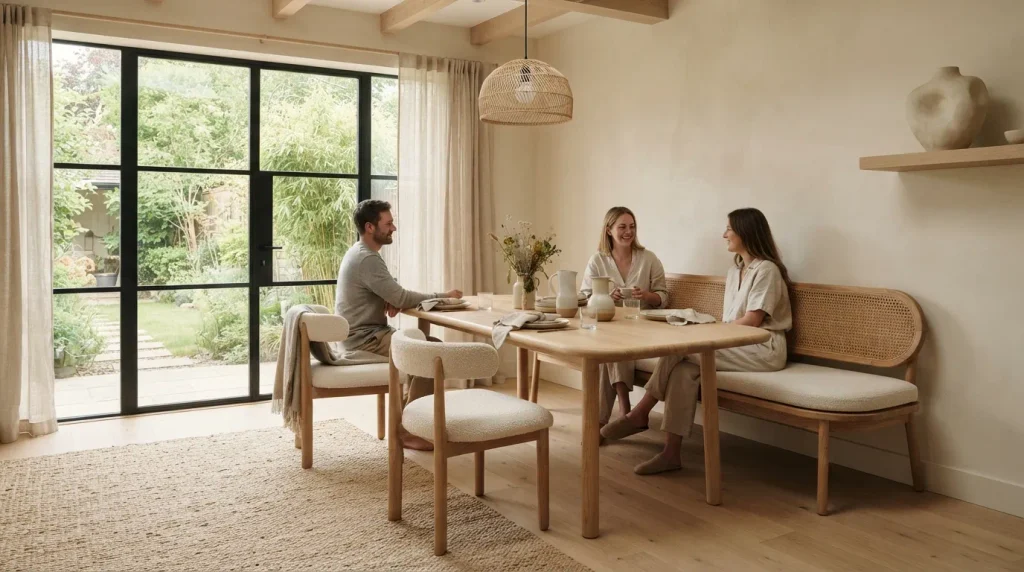
- A bench makes better use of wall-side seating in compact rooms.
- Curved edges soften the strong geometry of a rectangular table.
- Built-in or tucked-away seating can free valuable floor space.
- Add a neutral cushion for extra comfort without visual clutter.
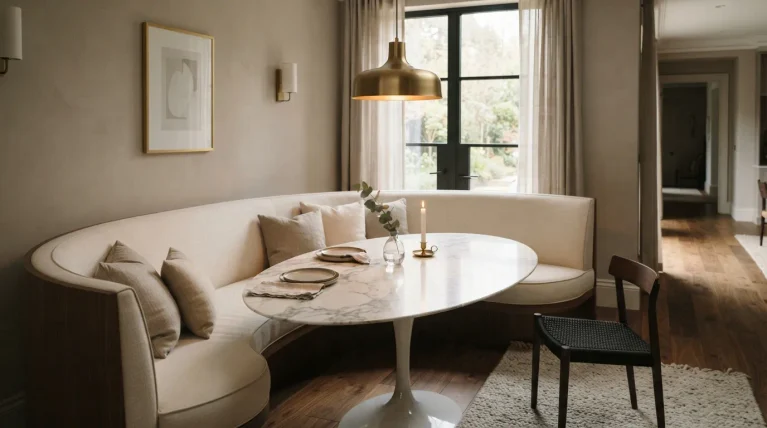
A curved dining bench can make a Japandi dining area feel softer while using floor space efficiently. Choose a bench with a rounded back, gently curved seat, or softened corners rather than a heavy traditional design. Position it against the wall so the table can sit closer to the perimeter, leaving more room for movement. Light oak, ash, or warm walnut all work beautifully with neutral upholstery. A simple cushion in oatmeal or cream can add comfort without introducing unnecessary pattern. This setup is especially useful for smaller homes where every inch of dining space needs to work harder.
The bench also creates a relaxed contrast when paired with individual chairs on the opposite side. This arrangement feels less formal than matching seating around every edge, while still looking polished and intentional. Keep the table proportions generous enough for comfortable legroom, and avoid pushing it so tightly against the wall that the space becomes difficult to use. I’ve seen this combination work particularly well in open-plan apartments because the long bench creates a strong visual line without making the dining zone feel closed off. Natural materials keep the entire arrangement connected and calm.
8. Soft Plaster Walls
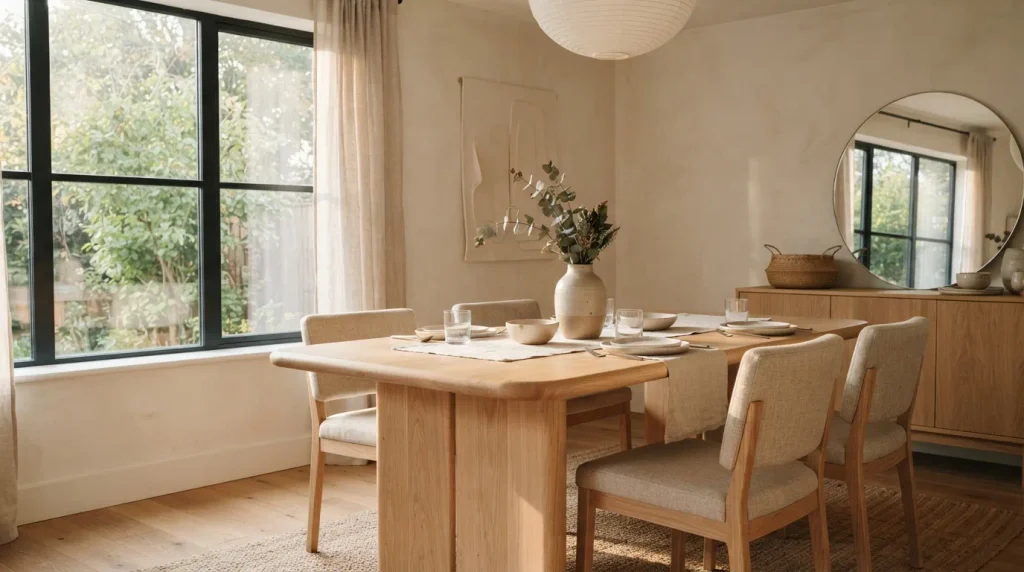
- Textured plaster adds depth without relying on bold wallpaper or artwork.
- Warm off-white tones keep the dining room bright and welcoming.
- Subtle wall texture makes simple furniture look more layered.
- Matte finishes help natural daylight feel softer and less harsh.
Soft plaster walls can give a simple dining room the quiet texture it needs to feel finished. Instead of perfectly smooth paint, consider a limewash or plaster-inspired finish in warm white, ivory, beige, or pale greige. The subtle variation catches daylight and creates gentle shadows across the wall. This works beautifully with natural wood because both surfaces have an understated, organic quality. Keep the furniture streamlined so the wall texture remains visible rather than competing with other details. The result is a space that feels refined and tactile while still maintaining the clean character of a modern Japandi interior.
For real homes, you do not need a dramatic textured treatment across every surface. One feature wall behind the dining table can provide enough visual depth, particularly in an open-plan layout. Pair it with a simple pendant, neutral seating, and one or two handmade ceramics for continuity. Matte finishes are especially helpful because they reduce glare and preserve the soft, natural appearance of the room throughout the day. This is a useful approach when the furniture already feels minimal but the space looks slightly flat. The wall becomes a quiet backdrop rather than another competing focal point.
9. Natural Wood Flooring
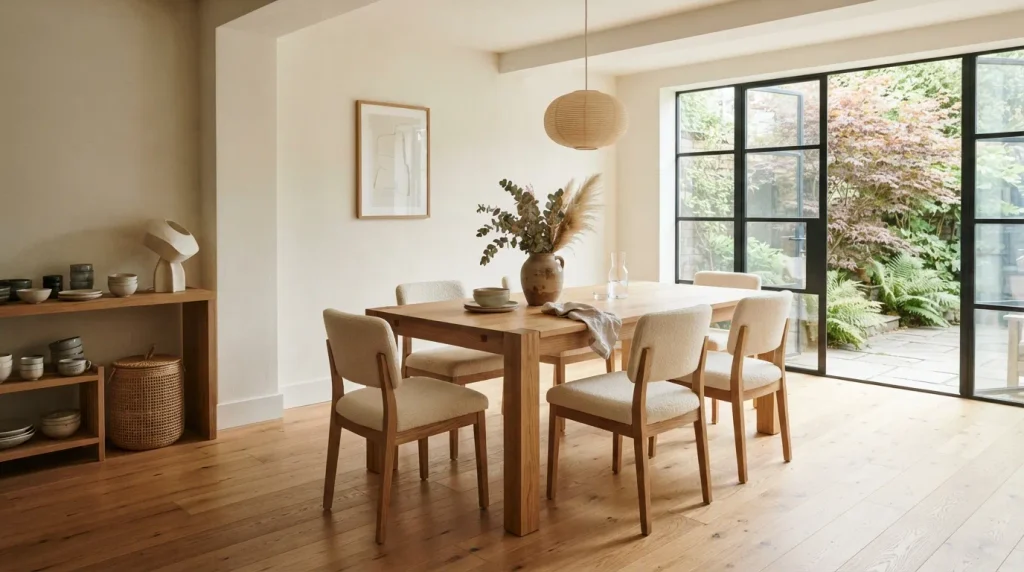
- Natural flooring creates a warm foundation for minimalist furniture.
- Visible wood grain adds texture without introducing strong patterns.
- Light finishes help compact dining rooms appear more spacious.
- Match undertones rather than exact wood colors for a cohesive look.
Natural wood flooring gives a dining room a warm foundation that connects the furniture, walls, and decorative details. Wide oak or ash planks with a matte finish are particularly effective because their visible grain adds texture without creating visual noise. Choose warm or neutral undertones that complement the dining table rather than trying to match every wooden element exactly. A slightly varied wood palette often looks more natural and collected. For smaller rooms, lighter flooring can also help bounce daylight around the space, making the dining area feel more open while preserving the grounded, organic character of the overall design.
When selecting flooring, think about how it will look beside chairs, rugs, and nearby living areas throughout the day. A matte surface usually feels more relaxed than glossy timber and is easier to integrate with linen, cane, stone, and ceramic accessories. If the dining space is part of an open floor plan, running the same flooring through adjoining areas can create visual continuity. This foundation supports many japandi dining room ideas because it combines practical durability with natural beauty. In my experience, getting the flooring tone right often makes even very simple furniture arrangements look significantly more cohesive.
10. Minimalist Wall Art
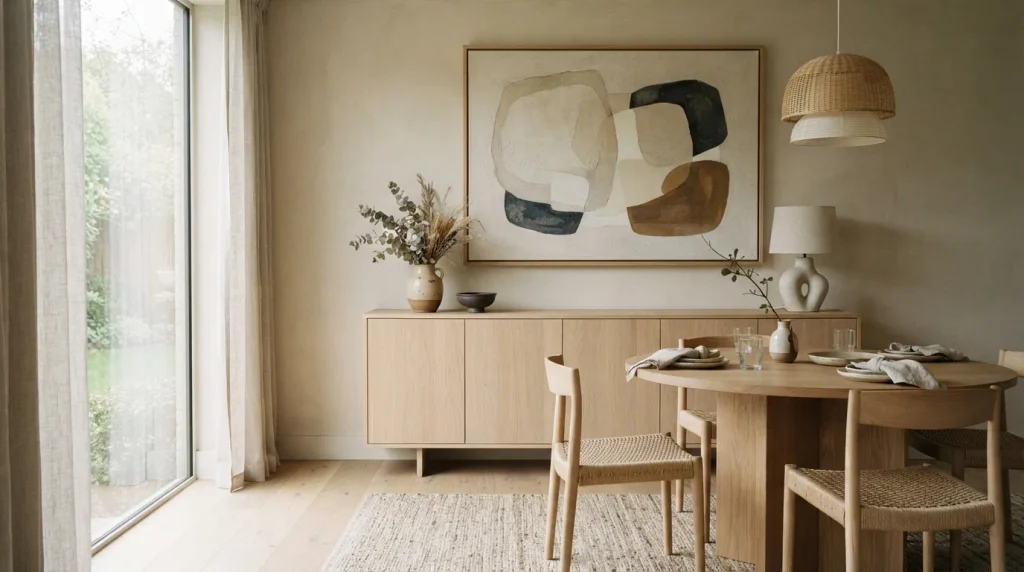
- One oversized artwork can create impact without filling the walls.
- Abstract shapes keep the room modern and visually quiet.
- Earthy tones connect naturally with wood and neutral textiles.
- Leave generous wall space around the artwork for a lighter look.
A single piece of minimalist wall art can give a dining room personality without disturbing its calm visual balance. Choose an abstract print, ink-style composition, or simple botanical artwork with a restrained palette of cream, sand, brown, charcoal, or muted green. Large artwork usually works better than several small pieces because it creates one clear focal point. Hang it above a sideboard or on the wall beside the dining table, keeping the surrounding area mostly empty. The goal is not to decorate every surface, but to introduce one thoughtful visual element that complements the furniture.
The frame matters just as much as the artwork itself. Natural oak, walnut, black, or thin neutral frames can reinforce the room’s existing materials without creating unnecessary contrast. Keep the artwork at a comfortable viewing height and choose proportions that relate to the furniture below it. If the dining table is long, a horizontal piece can echo its shape beautifully. If the room is compact, one vertical artwork can draw the eye upward. This approach keeps the dining space visually interesting while preserving the uncluttered quality that makes minimalist interiors feel comfortable rather than empty.
11. Built-In Dining Storage
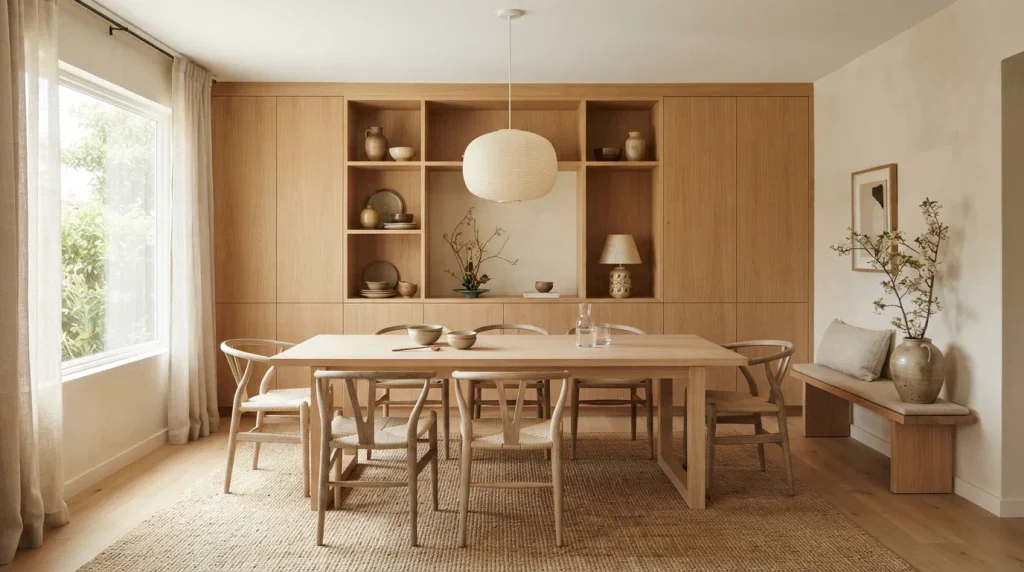
- Built-in cabinets maximize storage while keeping the room visually organized.
- Closed doors hide servingware and everyday dining clutter.
- A few open shelves create space for carefully chosen ceramics.
- Matching cabinetry with the walls can make a small room feel larger.
Built-in dining storage can make a Japandi space feel remarkably calm because everything has a designated place. Floor-to-ceiling cabinetry works especially well when storage is limited, while a lower built-in unit can preserve a lighter appearance. Use warm oak, ash, or painted cabinetry in a soft neutral shade, with simple recessed pulls or minimal hardware. Reserve closed sections for plates, glassware, linens, and less attractive essentials. Keeping these items out of sight makes the dining area easier to maintain and prevents everyday objects from competing with the room’s clean visual lines.
A few open niches can break up a large cabinet wall and provide space for handmade ceramics, cookbooks, or one sculptural object. Resist the temptation to fill every shelf because empty space helps the cabinetry feel intentional rather than busy. If your dining room connects directly to a kitchen or living area, matching the cabinet finish to nearby furniture can create a smoother transition. I’ve noticed that well-planned storage often has a bigger visual effect than adding more decoration. When clutter disappears, the natural materials and thoughtful proportions of the room become much more noticeable.
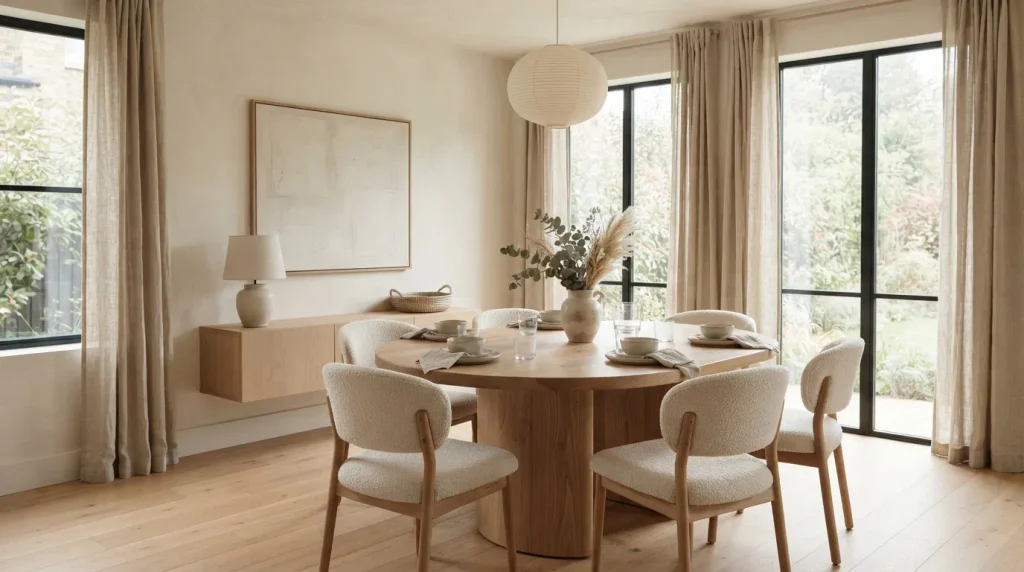
12. Round Dining Table
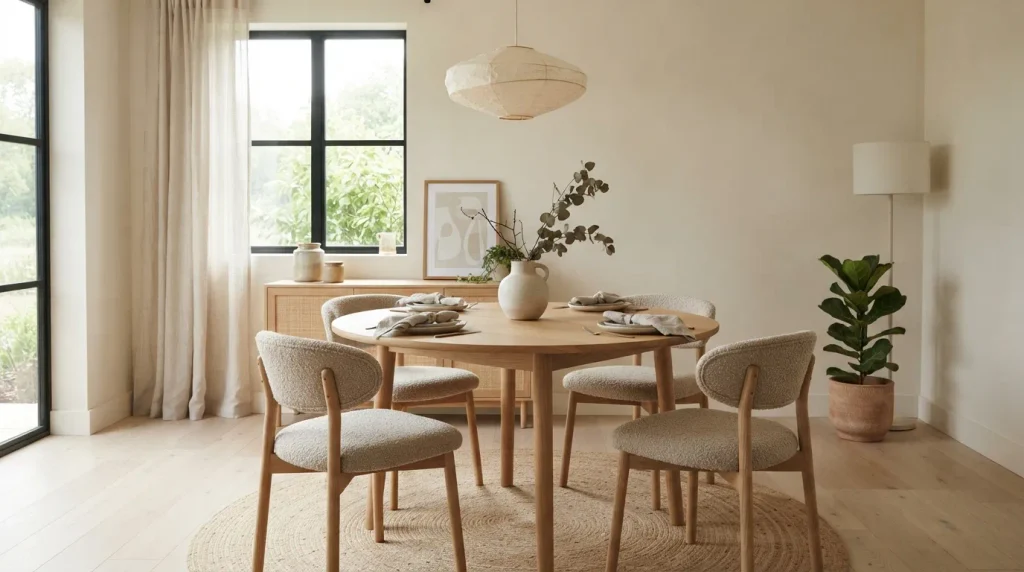
- A round table softens rooms filled with straight architectural lines.
- Its compact footprint works beautifully in smaller dining areas.
- Curved edges make movement around the table feel more natural.
- A central ceramic bowl keeps the tabletop simple and functional.
A round dining table can completely change the flow of a compact dining room by replacing hard rectangular lines with a softer, more organic shape. Choose a simple pedestal or central-leg design in light oak, ash, or warm walnut. The circular surface makes conversation feel more connected because everyone sits within a similar visual distance. It also eliminates sharp corners, which can be helpful in narrow walkways or busy family spaces. Keep the surrounding chairs slim and comfortable so the table remains the focal point without making the room feel crowded.
The most successful round-table arrangement leaves enough clearance around the entire perimeter for chairs to move comfortably. In a small room, four compact chairs may be all you need, while a larger space can accommodate six. Pair the table with a single low ceramic bowl or small vase to emphasize its shape without adding clutter. A softly textured rug beneath the table can further define the dining zone, provided its size allows chairs to remain on the rug when pulled back. This simple setup creates a balanced, welcoming atmosphere while keeping the overall design restrained and practical.
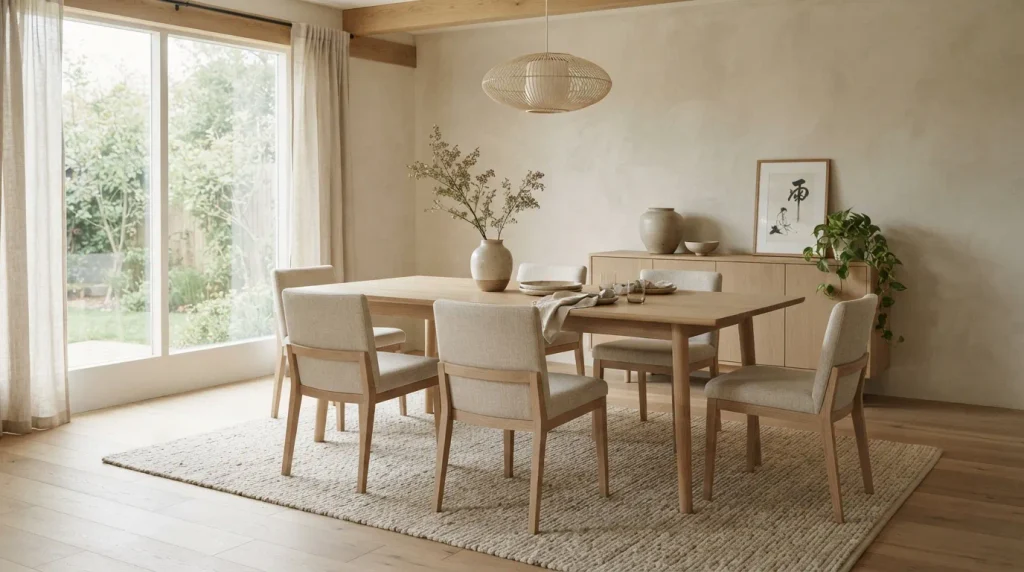
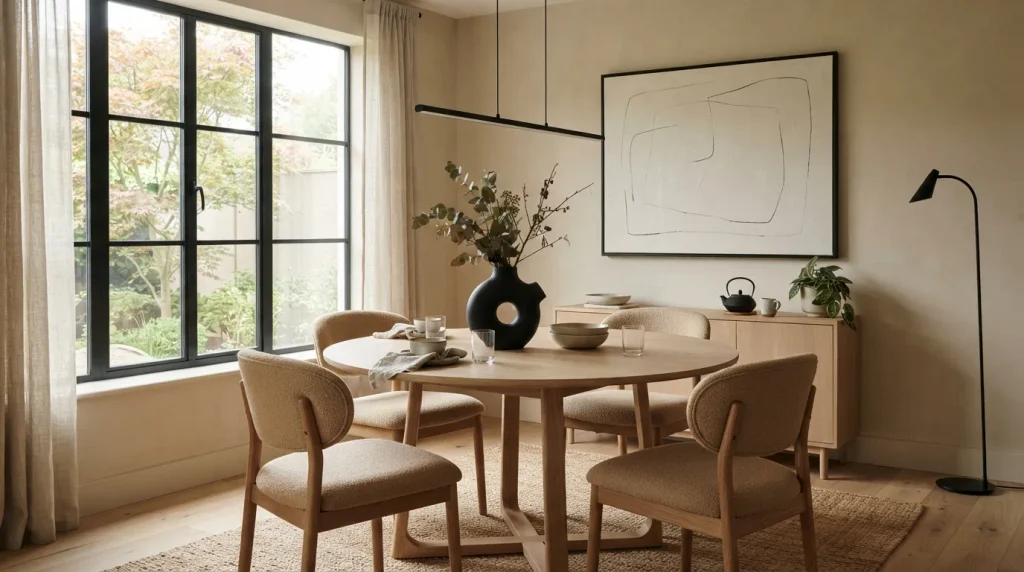
13. Japandi Dining Rug
- A neutral rug visually anchors the dining furniture.
- Subtle texture adds warmth without introducing distracting patterns.
- Low-pile materials make chair movement easier during meals.
- Choose a generous size so pulled-out chairs remain comfortably supported.
A neutral dining rug can instantly define the eating area and make the furniture arrangement feel more intentional. Choose a low-pile wool, cotton, jute blend, or textured flatweave in ivory, beige, taupe, or soft gray. Avoid busy geometric patterns because they can compete with the natural materials that give Japandi rooms their relaxed character. The rug should extend beyond the table far enough to keep the chair legs supported when guests pull their seats back. In my experience, getting the rug size right makes a bigger difference than choosing an expensive pattern or complicated design.
Texture is often more useful than color when you want a dining room to feel layered but restrained. A subtly woven surface can add depth beneath a simple wooden table while still allowing the flooring to remain visible around the edges. If spills are a concern, choose a durable, easy-clean material and avoid overly delicate fibers. Keep the rug centered beneath the table so the composition feels balanced from every angle. This small addition can soften hard flooring, reduce visual emptiness, and create a distinct dining zone without requiring extra furniture or decorative objects.
14. Organic Window Treatments
- Linen curtains soften strong window lines and filter harsh sunlight.
- Floor-length fabric makes the room feel taller and more finished.
- Natural shades work beautifully with pale timber and neutral walls.
- Keep the fabric lightly gathered for a relaxed, effortless appearance.
Natural window treatments can make a minimalist dining room feel significantly softer without adding visual clutter. Choose lightweight linen or linen-look curtains in ivory, oatmeal, warm white, or soft beige. Hang them close to the ceiling and let them fall nearly to the floor to create a taller, more polished appearance. During the day, the fabric gently filters sunlight instead of blocking it completely. This creates the soft glow that works so well with natural wood and neutral surfaces. Keep the curtain hardware simple, using a slim rod or discreet ceiling track whenever possible.
Window treatments also provide practical control over glare, privacy, and changing daylight. In dining areas with strong afternoon sun, a sheer linen layer can protect the room from harsh brightness while keeping the space naturally illuminated. Avoid heavy patterned curtains because they can quickly become the dominant feature. Instead, let the fabric texture provide subtle interest. Pair the curtains with a simple oak table and warm-toned chairs for continuity. I’ve noticed that soft textiles around windows can make a room feel more finished almost immediately, especially when the rest of the styling intentionally remains minimal.
15. Floating Wooden Shelves
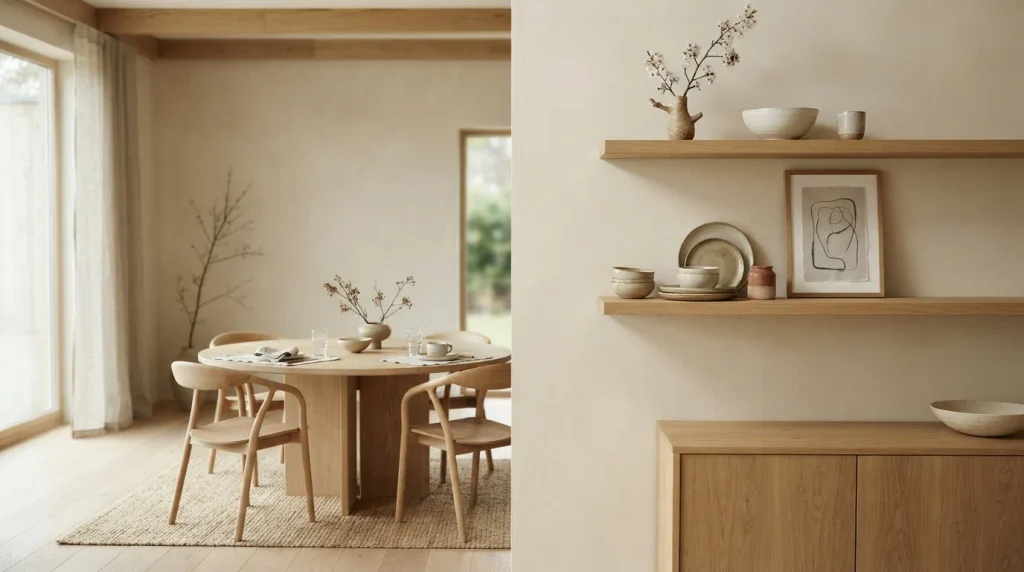
- Floating shelves add storage without the weight of bulky cabinets.
- Natural oak shelves introduce warmth against neutral walls.
- Keep displayed pieces limited to preserve a clean composition.
- Vary ceramic heights slightly for a more natural arrangement.
Floating wooden shelves offer a simple way to introduce storage and personality without taking up valuable floor space. Install one or two slim shelves in natural oak, ash, or walnut on an empty wall near the dining table. Use them to display a small collection of handmade ceramics, a framed print, or a simple branch arrangement. Keep the objects limited and leave visible gaps between them. This prevents the shelves from becoming cluttered and allows each piece to contribute to the overall composition. The result feels curated rather than overly decorated, which is especially useful in smaller dining rooms.
Think of the shelves as a quiet supporting element rather than the main attraction. Keep most of the wall visible and repeat materials already used elsewhere in the room, such as wood, ceramic, linen, or stone. A slightly uneven arrangement can feel more relaxed than perfectly symmetrical styling, but maintain enough balance that the display still feels intentional. If you rent, consider freestanding alternatives or removable mounting solutions where appropriate. These shelves can add useful personality to the room while preserving the open floor area and clean visual rhythm that make the style so appealing.
13. Japandi Dining Rug
- A neutral rug visually anchors the dining furniture.
- Subtle texture adds warmth without introducing distracting patterns.
- Low-pile materials make chair movement easier during meals.
- Choose a generous size so pulled-out chairs remain comfortably supported.
A neutral dining rug can instantly define the eating area and make the furniture arrangement feel more intentional. Choose a low-pile wool, cotton, jute blend, or textured flatweave in ivory, beige, taupe, or soft gray. Avoid busy geometric patterns because they can compete with the natural materials that give Japandi rooms their relaxed character. The rug should extend beyond the table far enough to keep the chair legs supported when guests pull their seats back. In my experience, getting the rug size right makes a bigger difference than choosing an expensive pattern or complicated design.
Texture is often more useful than color when you want a dining room to feel layered but restrained. A subtly woven surface can add depth beneath a simple wooden table while still allowing the flooring to remain visible around the edges. If spills are a concern, choose a durable, easy-clean material and avoid overly delicate fibers. Keep the rug centered beneath the table so the composition feels balanced from every angle. This small addition can soften hard flooring, reduce visual emptiness, and create a distinct dining zone without requiring extra furniture or decorative objects.
14. Organic Window Treatments
- Linen curtains soften strong window lines and filter harsh sunlight.
- Floor-length fabric makes the room feel taller and more finished.
- Natural shades work beautifully with pale timber and neutral walls.
- Keep the fabric lightly gathered for a relaxed, effortless appearance.
Natural window treatments can make a minimalist dining room feel significantly softer without adding visual clutter. Choose lightweight linen or linen-look curtains in ivory, oatmeal, warm white, or soft beige. Hang them close to the ceiling and let them fall nearly to the floor to create a taller, more polished appearance. During the day, the fabric gently filters sunlight instead of blocking it completely. This creates the soft glow that works so well with natural wood and neutral surfaces. Keep the curtain hardware simple, using a slim rod or discreet ceiling track whenever possible.
Window treatments also provide practical control over glare, privacy, and changing daylight. In dining areas with strong afternoon sun, a sheer linen layer can protect the room from harsh brightness while keeping the space naturally illuminated. Avoid heavy patterned curtains because they can quickly become the dominant feature. Instead, let the fabric texture provide subtle interest. Pair the curtains with a simple oak table and warm-toned chairs for continuity. I’ve noticed that soft textiles around windows can make a room feel more finished almost immediately, especially when the rest of the styling intentionally remains minimal.
15. Floating Wooden Shelves
- Floating shelves add storage without the weight of bulky cabinets.
- Natural oak shelves introduce warmth against neutral walls.
- Keep displayed pieces limited to preserve a clean composition.
- Vary ceramic heights slightly for a more natural arrangement.
Floating wooden shelves offer a simple way to introduce storage and personality without taking up valuable floor space. Install one or two slim shelves in natural oak, ash, or walnut on an empty wall near the dining table. Use them to display a small collection of handmade ceramics, a framed print, or a simple branch arrangement. Keep the objects limited and leave visible gaps between them. This prevents the shelves from becoming cluttered and allows each piece to contribute to the overall composition. The result feels curated rather than overly decorated, which is especially useful in smaller dining rooms.
Think of the shelves as a quiet supporting element rather than the main attraction. Keep most of the wall visible and repeat materials already used elsewhere in the room, such as wood, ceramic, linen, or stone. A slightly uneven arrangement can feel more relaxed than perfectly symmetrical styling, but maintain enough balance that the display still feels intentional. If you rent, consider freestanding alternatives or removable mounting solutions where appropriate. These shelves can add useful personality to the room while preserving the open floor area and clean visual rhythm that make the style so appealing.
16. Soft Earthy Palette
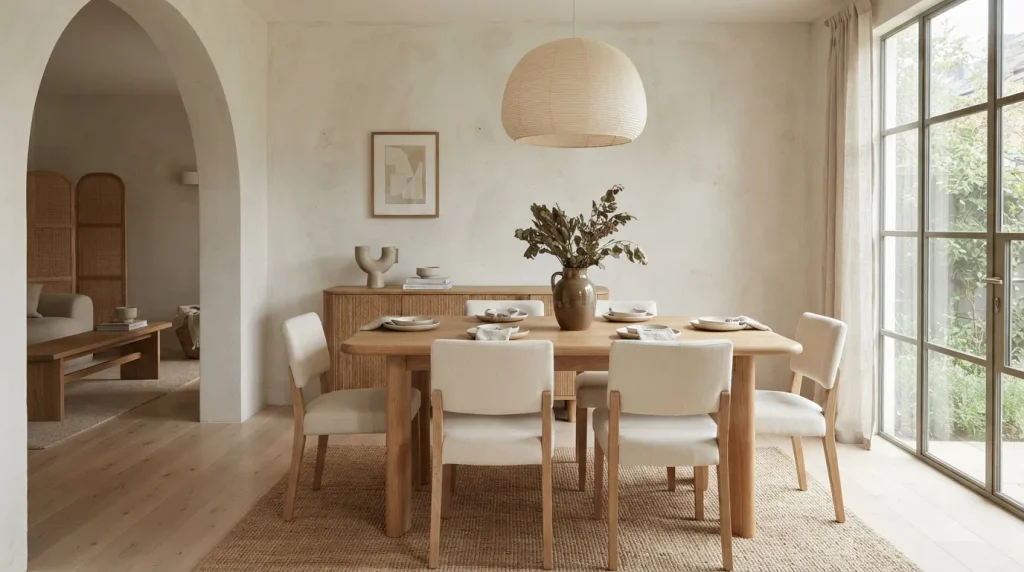
- Warm neutrals make the dining area feel inviting without becoming colorful.
- Layering similar shades creates depth while keeping the palette restrained.
- Earthy browns can add contrast without looking harsh.
- Repeat two or three tones throughout the room for visual continuity.
A soft earthy palette can make a dining room feel warm, cohesive, and naturally relaxing. Start with a foundation of creamy white or warm beige, then layer sand, taupe, muted brown, and natural wood tones through the furniture and accessories. The colors do not need to match perfectly. Slight variations create depth and keep the room from looking flat. For contrast, add one darker element such as a walnut chair, charcoal artwork, or deep brown ceramic piece. This restrained approach keeps the dining area visually quiet while still giving the eye enough variation to stay interested.
When working with neutrals, texture becomes especially important because color alone will not create enough visual dimension. Combine smooth timber with linen upholstery, woven fibers, textured plaster, and matte ceramics. Keep the strongest tones lower in the room so the upper half remains light and airy. This can be particularly effective in rooms with limited natural light because warm neutrals prevent the space from feeling cold. The palette also makes future decorating easier because new pieces can usually be introduced without disrupting the overall look. That flexibility is one reason neutral interiors remain practical for everyday homes.
17. Black Accent Details
- Small black accents give neutral rooms a sharper visual definition.
- Slim metal details create contrast without overpowering natural materials.
- Repeat the dark tone in two or three places for balance.
- Matte black usually feels softer than highly reflective finishes.
A few black accents can give a soft Japandi dining room the contrast it needs to feel crisp and contemporary. The key is restraint. Instead of choosing a large black dining table or dramatic feature wall, introduce smaller details through a pendant frame, chair legs, picture frame, cabinet hardware, or ceramic vase. Against pale oak and cream walls, these darker elements create clear visual anchors. In my experience, repeating one dark tone in several small places works better than concentrating all the contrast in a single oversized object.
Balance is especially important when using black in an otherwise light room. Choose matte or satin finishes rather than glossy surfaces to maintain the understated character of the space. For example, a slim black pendant can echo dark window frames, while a small ceramic vessel repeats the tone lower on the table. Keep the majority of the furniture natural and warm so the room never feels stark. This technique adds definition while preserving the calm foundation, making simple dining furniture appear more structured and visually polished without relying on excessive decoration.
18. Natural Stone Accents
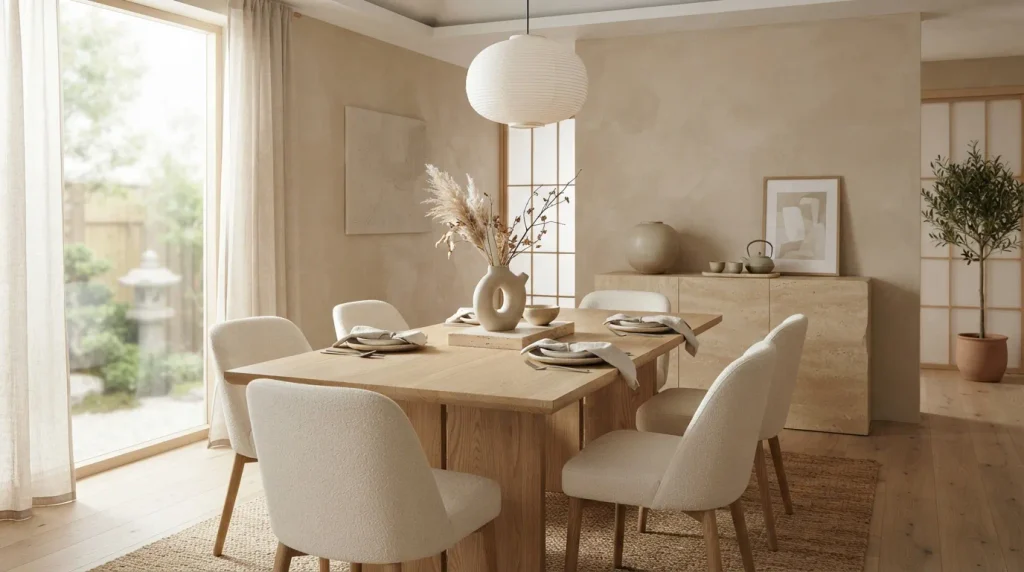
- Stone introduces a grounded texture alongside warm wooden furniture.
- Travertine and limestone work beautifully with beige and cream tones.
- A small stone bowl can provide contrast without adding strong color.
- Matte, naturally textured finishes feel more relaxed than polished stone.
Natural stone accents can add a grounded, tactile quality to a minimalist dining room. Look for travertine, limestone, soapstone, or similarly muted materials in warm beige, cream, taupe, or soft gray. You do not need a large stone dining table to achieve the effect. A small travertine bowl, stone pedestal, sideboard surface, or simple candle holder can introduce enough texture. Pairing stone with pale oak creates a beautiful contrast between cool mineral surfaces and warmer wood. The combination feels sophisticated while remaining understated, making it easy to use in both modern apartments and larger homes.
Choose finishes that show natural variation rather than perfectly uniform surfaces. Small pores, subtle color shifts, and gentle edges can make the material feel more organic and authentic. Keep the stone accents limited so they remain visually meaningful. A single centerpiece on the dining table may be enough, especially when the room already contains textured plaster, linen, or woven furniture. I’ve seen natural stone work particularly well when a neutral space feels slightly too soft or one-dimensional. It adds weight and contrast while still fitting comfortably within a restrained, nature-inspired palette.
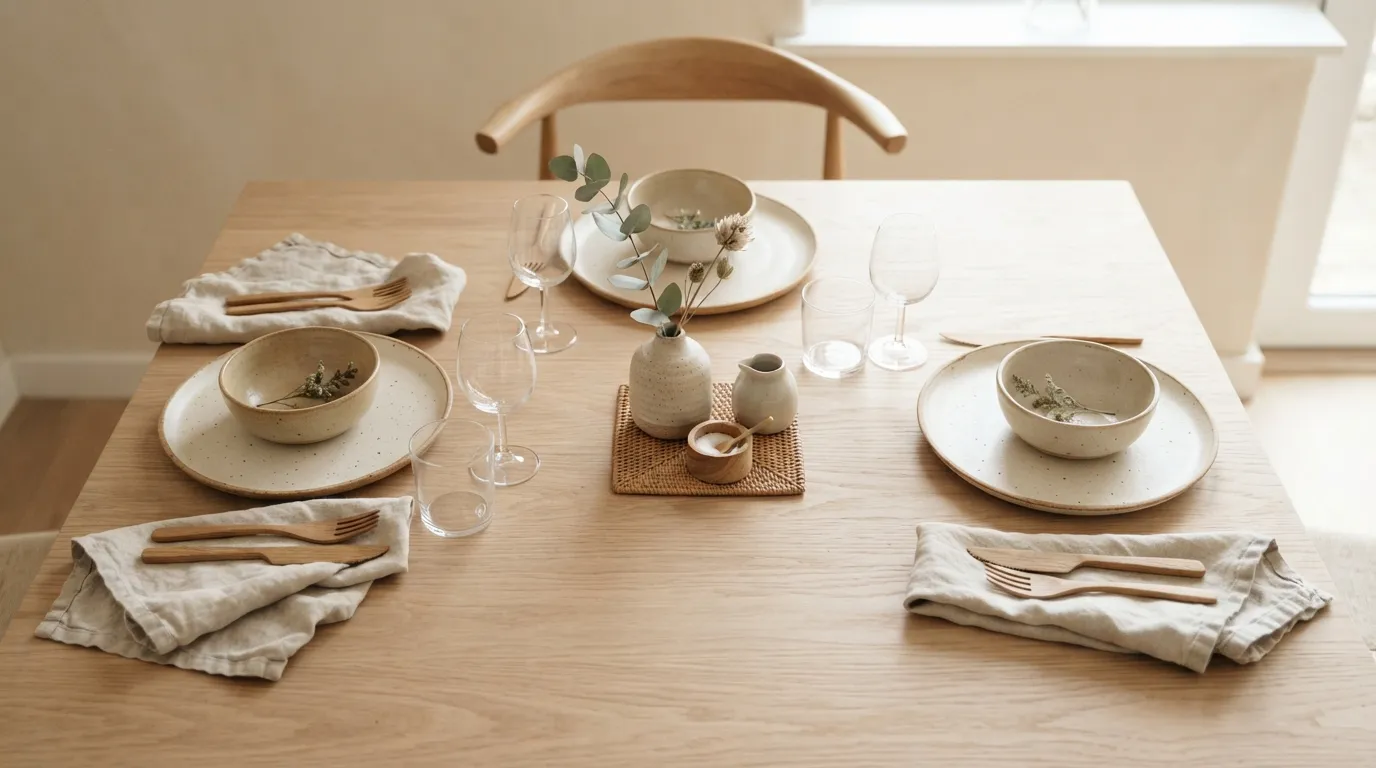
19. Minimal Dining Tableware
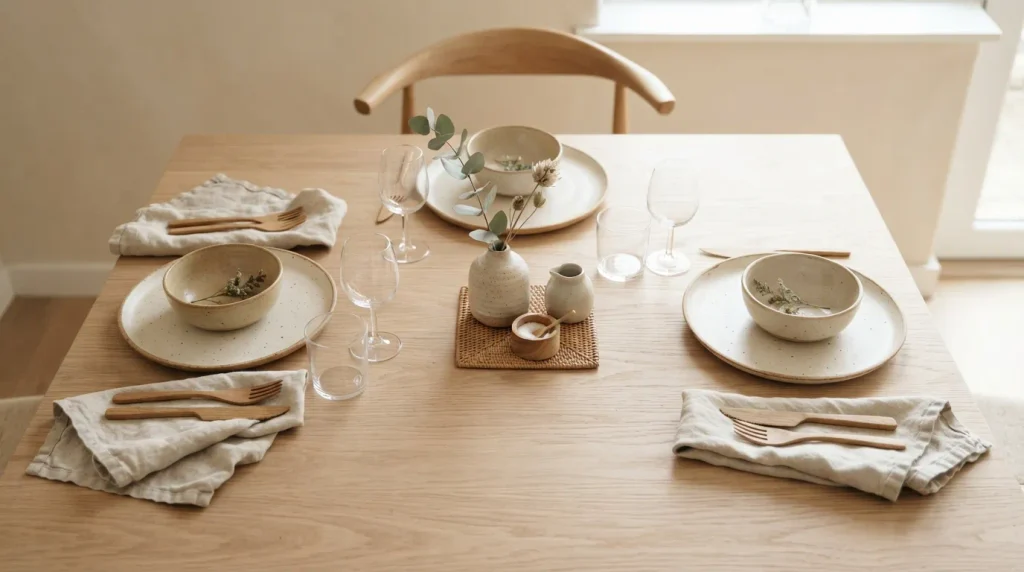
- Matte stoneware makes everyday meals feel thoughtfully styled.
- Natural linen napkins add softness without introducing busy patterns.
- Wooden or muted-toned utensils reinforce the organic material palette.
- Simple tableware keeps the dining table visually calm and practical.
Minimal tableware can make everyday dining feel more intentional without turning the table into a display. Choose matte stoneware plates and bowls in cream, beige, sand, or soft gray, then add linen napkins in a slightly contrasting neutral shade. Handmade ceramics with subtle imperfections can introduce character while keeping the overall palette quiet. Clear glassware helps preserve the visual openness of the setting. I’ve noticed that using a consistent group of natural materials makes even a simple weekday meal look more considered. The goal is an effortless arrangement that feels beautiful enough for guests but practical enough for daily use.
Avoid matching every item too perfectly because a small amount of variation keeps the table feeling relaxed. Mix slightly different ceramic shapes or use wooden serving pieces to create gentle texture. Keep the centerpiece low so diners can see comfortably across the table, and leave enough open tabletop for serving dishes. If storage space is limited, choose versatile pieces that work for both everyday meals and special occasions. This approach complements japandi dining room ideas by focusing on useful objects, natural materials, and visual simplicity rather than decorative excess, creating a table that feels calm and welcoming.
20. Indoor Greenery
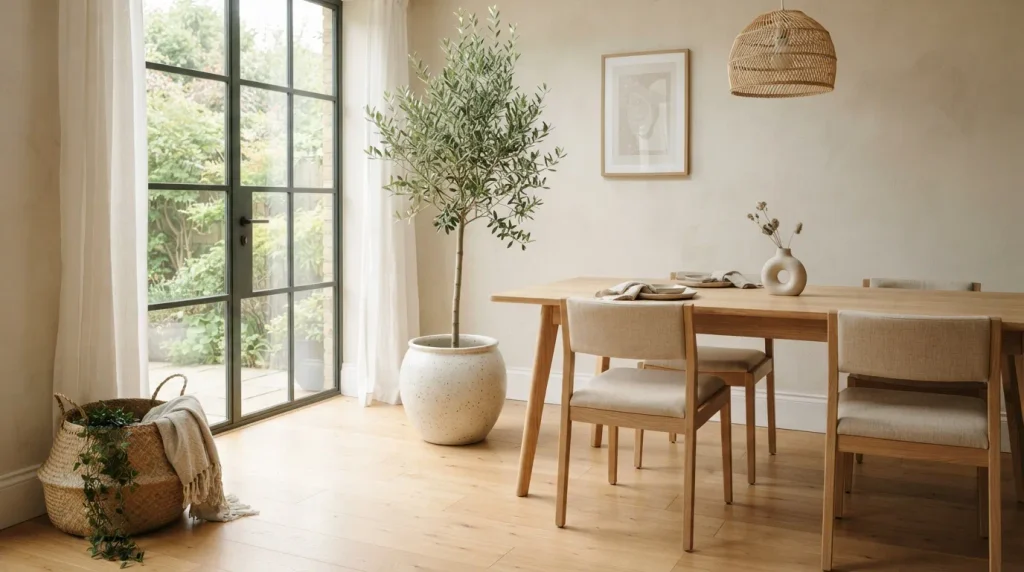
- One plant can bring life into an otherwise neutral dining room.
- Olive trees and sculptural greenery suit the simple aesthetic beautifully.
- Choose planters in ceramic, stone, or natural fiber for cohesion.
- Keep greenery intentional rather than turning the room into a plant collection.
Indoor greenery adds a fresh natural element to a dining room while fitting comfortably within a restrained palette. Instead of filling every corner with plants, choose one sculptural option such as an olive tree, ficus, rubber plant, or simple leafy branch arrangement. Place it beside the dining table, near a window, or in an unused corner where its shape can be appreciated. A matte ceramic or stone planter in cream, beige, or warm gray keeps the container visually quiet. The combination of green foliage and natural wood creates contrast without introducing the intensity of bright decorative colors.
Think about the plant’s mature size before placing it near the dining furniture. A tall plant can help balance an empty corner, while a smaller tabletop arrangement works better when floor space is limited. Choose varieties that suit the available natural light and your ability to maintain them, because healthy greenery will always look better than a neglected plant. In my experience, one well-positioned plant often has more impact than several small ones scattered around the room. It adds height, movement, and organic texture while preserving the uncluttered feeling that makes the space comfortable.
21. Compact Dining Nook
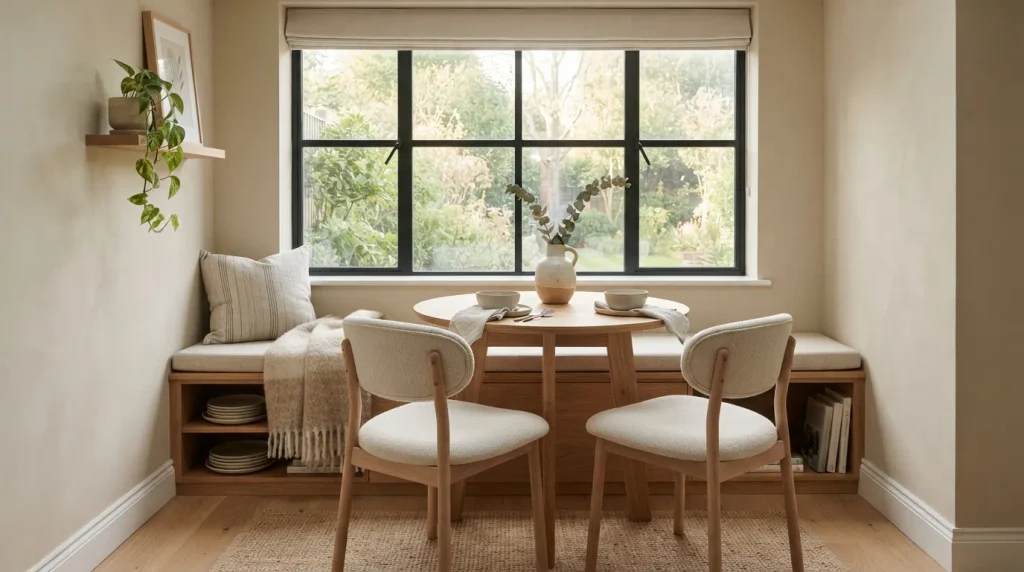
- A built-in bench makes excellent use of awkward wall space.
- Round tables improve movement through compact dining areas.
- Window seating brings natural light directly into the dining zone.
- Keep furniture proportions small enough to preserve comfortable circulation.
A compact dining nook can turn an overlooked corner into one of the most useful areas in the home. Start with a small round or oval table that allows easier movement around the seating. Add a built-in bench along one wall or beneath a window, then pair it with two lightweight chairs on the opposite side. Pale oak, cream upholstery, and warm beige walls keep the nook visually open. This setup works particularly well in apartments, breakfast areas, and open-plan kitchens where a full-sized dining arrangement would take up too much floor space.
Make the most of vertical space by adding one slim shelf or a small piece of artwork above the bench, but resist filling the entire wall. The goal is to make the nook feel intentional without making it crowded. Choose furniture with rounded corners and slim profiles so people can move around the table comfortably. A soft cushion or linen seat pad can improve comfort while adding subtle texture. This is a practical example of how thoughtful proportions can create a beautiful dining area even when square footage is limited, without sacrificing everyday usability or visual calm.
22. Layered Natural Textures
- Layering textures adds depth without relying on bold colors or patterns.
- Combine wood, linen, wool, ceramic, stone, and woven fibers naturally.
- Keep the color palette narrow so different materials feel connected.
- Repeat textures subtly throughout the room instead of clustering them together.
Layered natural textures can bring a Japandi dining room to life when a simple neutral palette starts feeling too plain. Combine smooth oak with woven cane, soft linen, textured wool, handmade ceramics, and small stone accents. Each material should feel distinct while sharing similar warm or muted tones. For example, a pale wood table can sit above a softly textured rug, while linen chairs and a ceramic centerpiece add smaller layers. This creates visual richness without introducing busy patterns. The room remains simple, but the eye discovers something interesting wherever it looks.
The most effective approach is to build texture gradually rather than adding everything at once. Start with the largest surfaces, such as flooring, walls, and furniture, then introduce smaller tactile elements through seating, rugs, tableware, and accessories. Keep finishes mostly matte and colors within a narrow range of cream, beige, sand, brown, and natural wood. I’ve noticed that this method makes minimalist spaces feel much more comfortable because the warmth comes from materials rather than decoration. The finished dining area feels balanced, practical, and thoughtfully collected while still maintaining the clean simplicity of the style.
Conclusion
A beautiful Japandi dining space does not require a complete renovation or expensive furniture. The right combination of natural wood, soft neutrals, organic textures, thoughtful lighting, and practical storage can create a room that feels calm and welcoming every day. These japandi dining room ideas are designed to help you make simple changes that bring more warmth, balance, and personality into your home. I’ve seen how small updates can completely transform a space when they work together. Save this post on Pinterest, try your favorite idea, and share it with someone who is dreaming of a calmer dining room. Your perfect space can start with one simple change.