Want a bedroom that feels cozy, stylish, and just a little moody? Purple gray bedroom ideas can turn an ordinary space into a soft retreat with surprisingly simple changes.
This color combination brings together the calming quality of gray with the gentle richness of lavender, mauve, plum, and smoky purple. Whether your room is small, spacious, modern, or more traditional, you can use these shades through paint, bedding, curtains, rugs, lighting, and decorative accents. The key is creating balance so the cooler colors never feel flat or overwhelming. In my experience, small changes in texture and lighting can make the biggest difference. These ideas will help you create a bedroom that feels layered, comfortable, personal, and beautiful enough to inspire your next Pinterest save.
1. Lavender Accent Wall
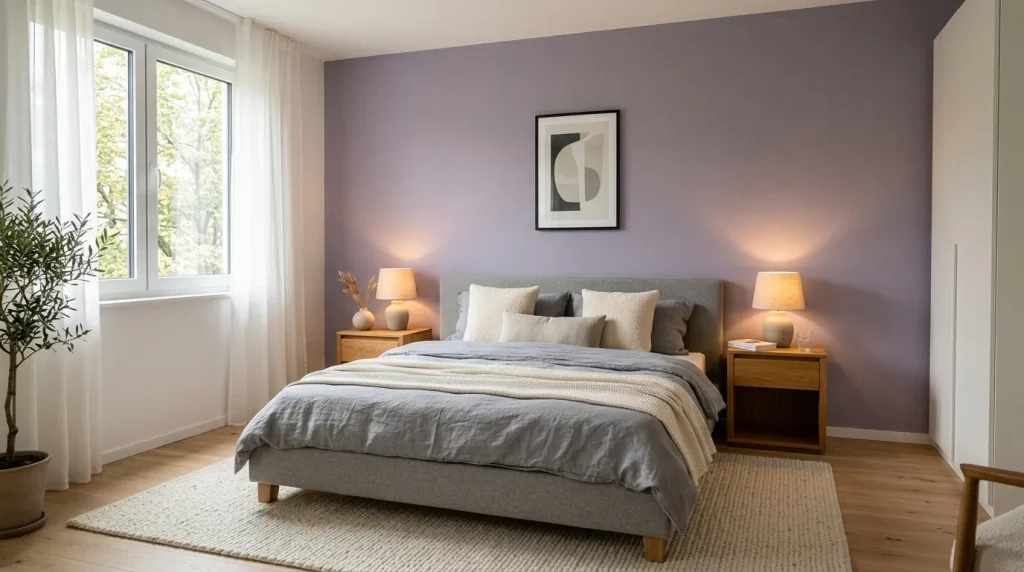
- A muted lavender wall adds personality without making the room feel too colorful.
- Gray bedding keeps the overall palette calm and sophisticated.
- Warm wood accents add contrast to the cooler shades.
- Soft fabrics make the space feel more comfortable and layered.
A dusty lavender wall can make a gray bedroom feel instantly softer and more layered without overwhelming the space. Pair muted purple paint with cool gray bedding, a simple upholstered bed, and warm wood accents for balance. Keep the purple slightly dusty rather than bright, especially in smaller rooms. Natural daylight highlights the gentle contrast, while warm bedside lamps create an inviting evening glow. In my experience, this combination works best with linen, boucle, or brushed cotton because those textures add depth and keep the cooler palette from feeling flat.
Use a medium-gray upholstered headboard against the lavender wall to create a polished focal point without adding visual clutter. Choose slim nightstands in warm oak, then repeat both colors through pillows, a folded throw, and one understated piece of artwork. Keep the floor light with pale oak or soft beige carpeting. I’ve noticed that repeating each shade in small amounts makes the room feel intentional rather than overly coordinated. The finished space feels calm, balanced, and practical, while the muted contrast gives the bedroom enough personality to stand out in Pinterest images.
Also Read : 24 Cherry Red Room Ideas for a Bold Stylish Home
2. Plush Gray Headboard
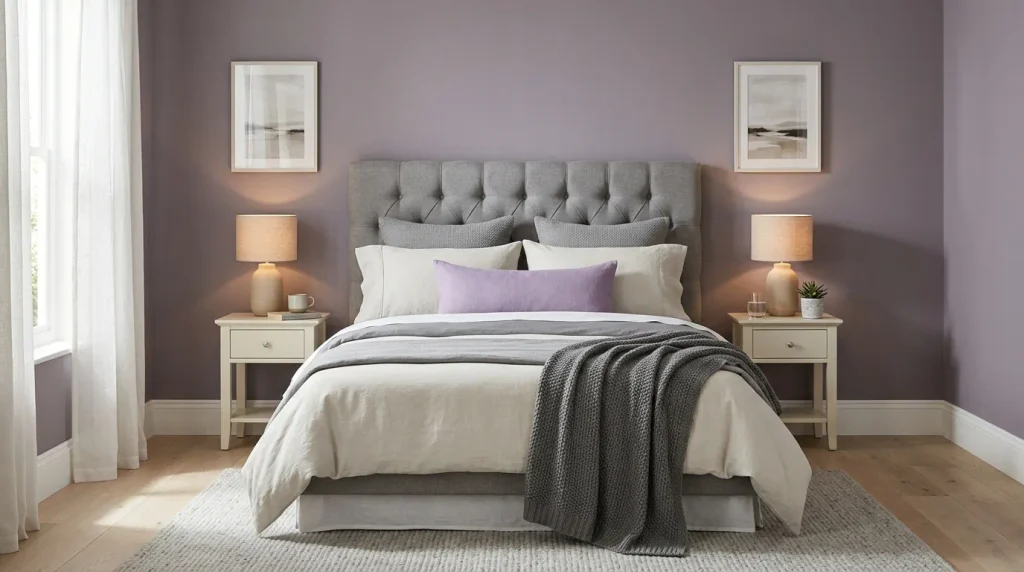
- A tall upholstered headboard gives the bed instant visual importance.
- Layered fabrics soften the contrast between purple and gray.
- Cream bedding prevents the palette from becoming too dark.
- Rounded furniture edges make the room feel relaxed and welcoming.
A plush gray headboard becomes especially striking when framed by soft lavender walls and layered bedding. Choose a tall upholstered design with rounded edges, then keep the surrounding furniture simple so the bed remains the main focal point. Add a lavender lumbar pillow, charcoal throw, and cream sheets for contrast. Soft natural light should enter from the side, revealing fabric texture without harsh shadows. This setup works well in real bedrooms because the neutral gray foundation is easy to update. When seasons change, you can simply swap accent pillows or throws while keeping the overall palette intact.
Also Read : 24 Modern Fireplace Ideas for a Stylish Cozy Home
3. Smoky Purple Feature Wall
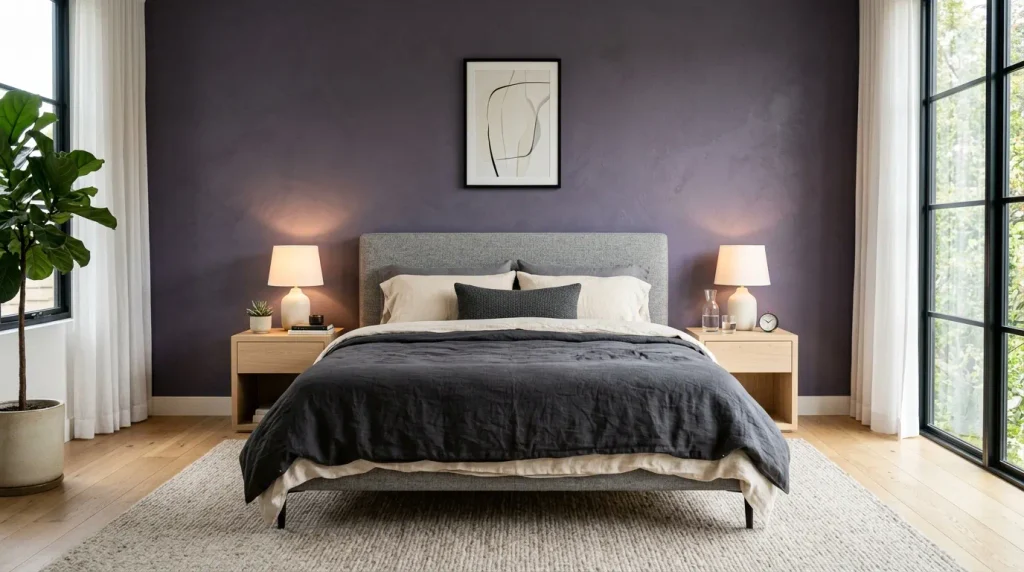
- A deeper purple wall creates a stronger focal point behind the bed.
- Charcoal bedding gives the room a sophisticated layered appearance.
- Pale wood furniture keeps the darker colors from feeling heavy.
- Minimal decor lets the feature wall make the visual impact.
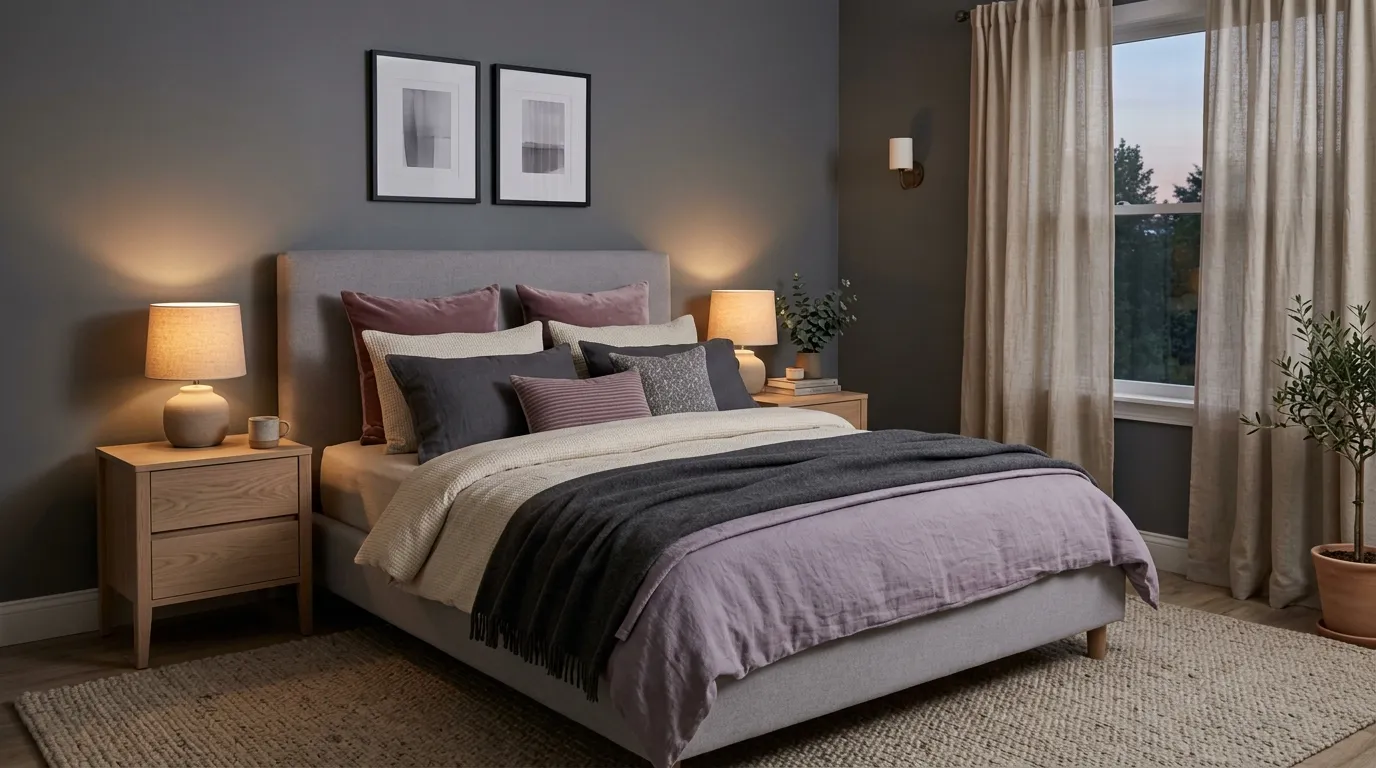
A soft purple accent wall behind the bed can transform a plain gray bedroom into a more finished, designer-looking space. Choose a muted lilac or smoky lavender rather than a saturated violet, then balance it with charcoal bedding and pale furniture. Keep wall decor restrained so the color remains the focal point. Warm white lighting helps soften the cooler undertones after sunset. This approach is especially useful for renters who cannot repaint every wall, because one carefully chosen surface can create a strong visual change. The result feels modern, cozy, and polished without requiring expensive furniture replacements.
Also Read : 23 Moody Farmhouse Kitchen Ideas for a Cozy Rustic Space
4. Lavender Bedding Layers
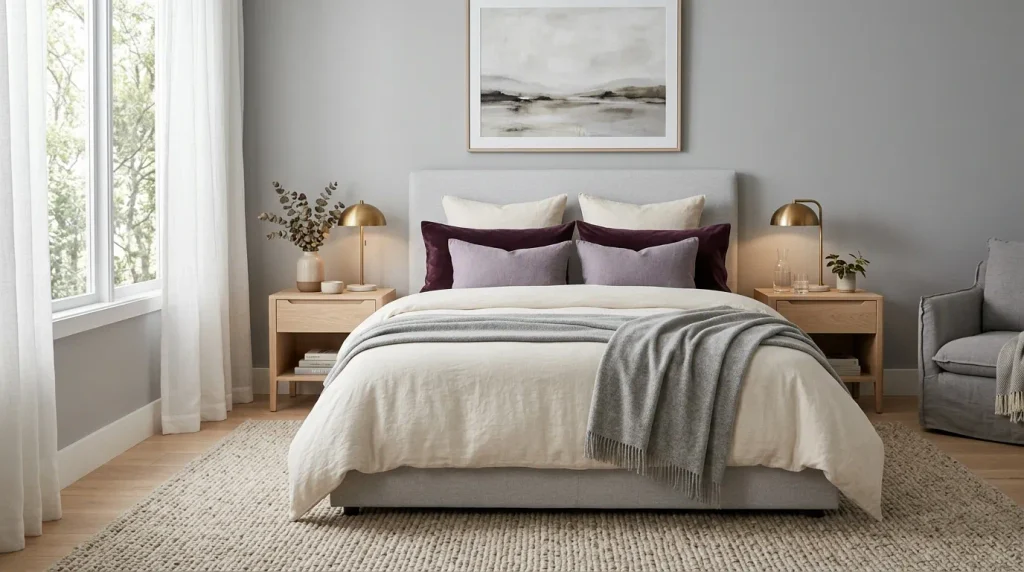
- Lavender layers add color without changing the room’s main furniture.
- Different purple tones make the bed look richer and more dimensional.
- Cream sheets create a clean break between gray and purple.
- Brushed brass lighting adds warmth to the cooler palette.
A gray upholstered bed looks instantly richer when surrounded by soft lavender layers and warm metallic details. Start with medium-gray bedding, then add lavender pillows, a mauve throw, and brushed brass lamps for a subtle glow. Keep larger furniture pieces neutral so the accent colors stay controlled. This approach works particularly well when the room already has gray flooring or curtains because the purple accessories introduce variation without creating visual noise. I’ve noticed that using two or three lavender shades instead of one exact match makes the bed look naturally layered and more collected.
For a practical finish, choose washable pillow covers and a lightweight throw that can be moved or replaced easily. A small brass table lamp beside each side of the bed adds warmth without dominating the palette, while cream sheets provide a clean break between darker gray and purple tones. Keep decorative objects limited to a few useful pieces, such as a small tray, candle, or framed print. The overall effect is cozy but uncluttered, making this one of those purple gray bedroom ideas that can work beautifully in both compact apartments and larger primary bedrooms.
Also Read : 23 Spring Home Decor Ideas for a Fresh Seasonal Look
5. Warm Ambient Lighting
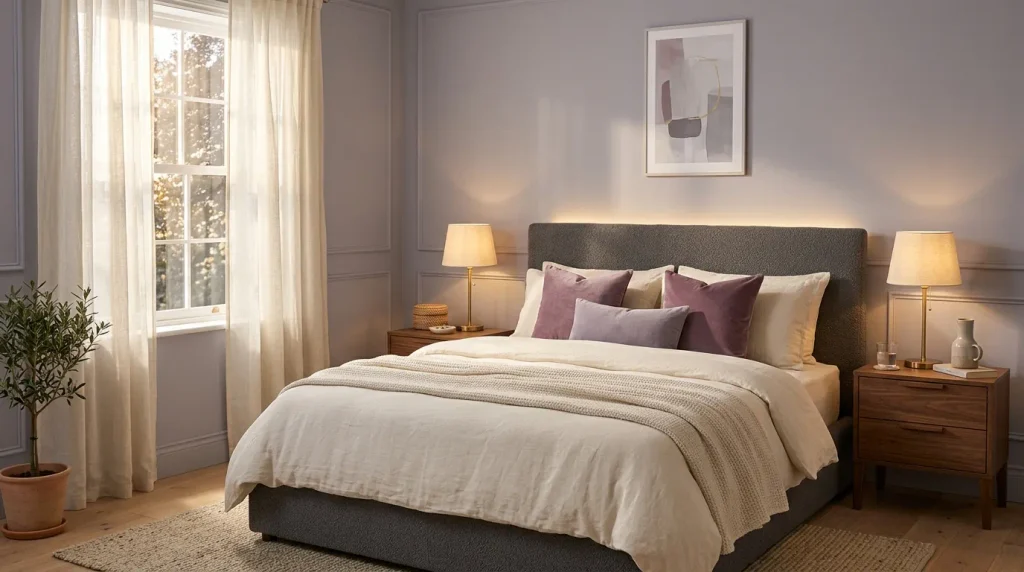
- Warm lamps soften the cooler appearance of purple and gray.
- Dimmable lighting makes the bedroom more flexible at night.
- Sheer curtains preserve natural daylight during the morning.
- Indirect light adds atmosphere without making the room feel overly dramatic.
Soft lighting can completely change how purple and gray colors appear after sunset. Use warm bedside lamps, a dimmable ceiling fixture, and subtle indirect lighting to keep the room comfortable rather than overly dramatic. Pair these light sources with lavender-gray walls, charcoal textiles, and pale bedding for a gentle tonal effect. Natural daylight should still have room to enter through sheer curtains, allowing the cooler colors to look fresh during the day. This layered lighting approach works in real homes because it supports different routines, from reading before bed to winding down in a darker, quieter atmosphere.
Choose bulbs around a warm white range rather than very cool daylight bulbs, especially if your walls have blue or gray undertones. Place lamps at a comfortable reading height and keep the shades simple so they blend into the design. If the bedroom feels too dark, add a small floor lamp or concealed strip lighting near a dresser rather than increasing the brightness everywhere. The goal is gentle illumination across several areas. This makes the space feel more balanced and gives the purple-gray palette a softer, more sophisticated appearance once the natural light disappears.
Also Read : 25 Maximalist Kitchen Ideas for a Colorful Stylish Space
6. Pale Neutral Foundation
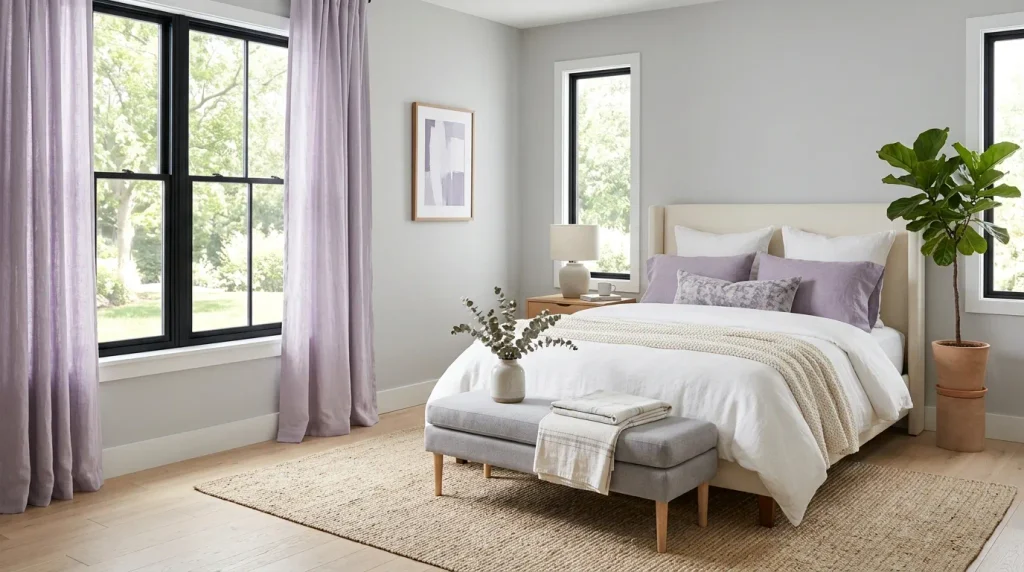
- Pale neutrals make deeper purple accents feel lighter.
- Light flooring helps a smaller bedroom appear more spacious.
- Lavender curtains add color without covering the entire room.
- Cream and white textiles keep the palette fresh and breathable.
The easiest way to keep a moody palette from feeling gloomy is to give the room a light visual foundation. Choose soft gray walls, pale oak flooring, and cream bedding, then introduce dusty purple through curtains, pillows, and a textured bench. These lighter surfaces reflect available daylight and make the room feel more open, while the purple accents provide enough depth to avoid a washed-out appearance. In smaller bedrooms, this balance is especially useful because it creates contrast without making the walls feel closer. The result is relaxed, airy, and visually polished without relying on excessive decoration.
When choosing the lighter pieces, look for warm whites and gentle beige undertones instead of stark white if the room already has cool gray surfaces. A natural woven rug can connect the flooring with the furniture, while lavender cushions bring the eye back toward the bed. Keep larger decorative pieces simple and allow negative space around them. This combination is easy to refresh because the neutral foundation stays versatile. Swap the purple accessories for deeper plum or softer lilac shades whenever you want a seasonal change without redesigning the entire bedroom.
Also Read : 25 Minimalist Christmas Decorations for a Simple Elegant Home
7. Charcoal Accent Bedding
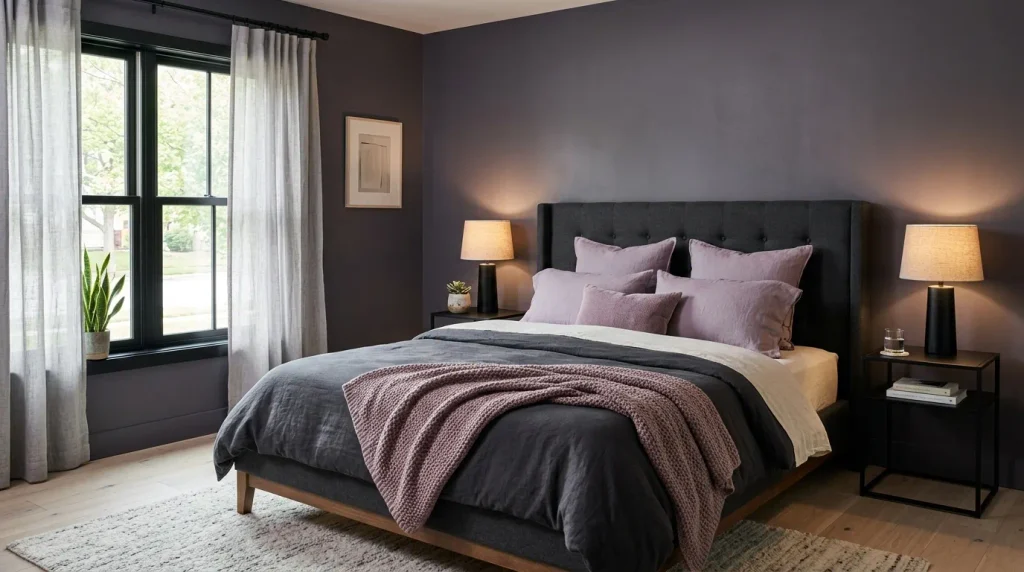
- Charcoal bedding adds depth without overpowering softer purple accents.
- Lavender pillows create a gentle contrast against darker gray.
- Cream sheets keep the bed from looking too heavy.
- Pale flooring provides brightness underneath the deeper palette.
Charcoal bedding gives a purple-and-gray bedroom a stronger, more sophisticated foundation while still keeping the space comfortable. Start with a charcoal duvet or quilt, then soften it with lavender pillows and a muted mauve throw. Cream sheets create a lighter layer between the darker textiles and help the bed look inviting rather than heavy. This setup works especially well when the walls are painted a smoky lavender or soft gray. In my experience, keeping the darkest shade mostly on the bed creates a clear focal point without making the entire room feel visually closed in.
Balance the darker bedding with lighter flooring, warm wood, or cream-colored furniture around the room. Avoid adding too many black accessories because they can make the palette feel overly sharp. Instead, use brushed metal, natural wood, and soft woven materials to introduce variation. A warm bedside lamp can also soften the charcoal tones in the evening. The finished arrangement feels moody but still practical, especially for anyone who wants a bedroom with more depth than an all-neutral scheme. Small lavender accents are enough to connect the colors without making the room look overly coordinated.
8. Mauve Velvet Bench
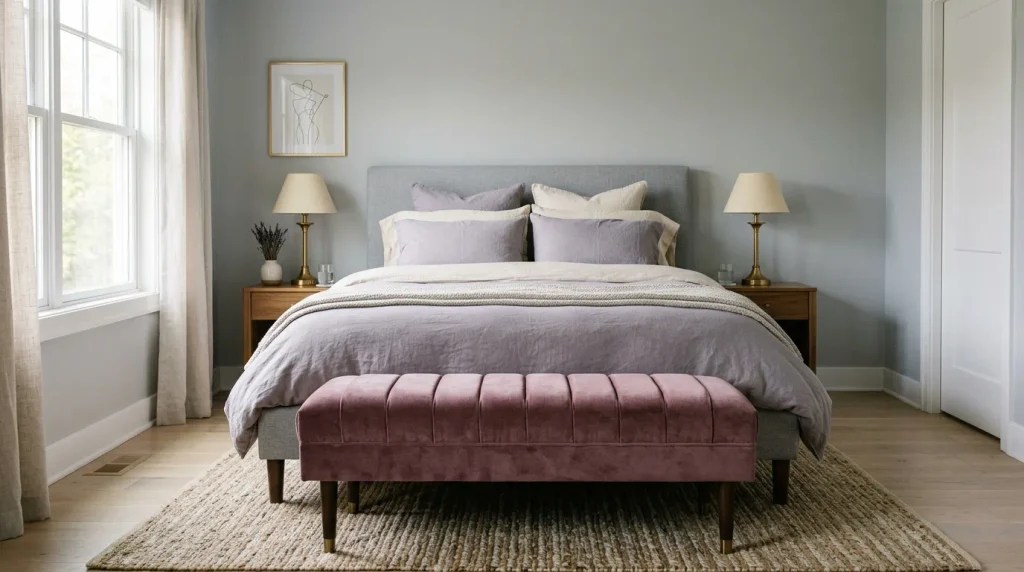
- A mauve bench adds a concentrated pop of soft purple.
- Velvet introduces texture and makes the room feel more layered.
- Placing it at the bed creates a practical seating area.
- Neutral surroundings keep the colorful piece from becoming overwhelming.
A mauve velvet bench can add just enough purple to make a gray bedroom feel thoughtfully designed. Place it at the foot of a simple upholstered bed and keep the surrounding bedding in gray, cream, and soft lavender tones. The velvet surface catches both daylight and warm evening light, giving the room subtle texture without requiring bold artwork or decorative walls. It also serves a practical purpose as a place to sit while getting dressed or to temporarily hold folded blankets. That combination of beauty and function makes this accent especially useful in everyday bedrooms.
Choose a bench with a simple silhouette rather than ornate legs or excessive detailing. If the room is small, select a narrow design that leaves a comfortable walking path around the bed. Pair it with a woven rug underneath to soften the flooring and visually connect the furniture pieces. I’ve seen this type of accent work particularly well when the purple elsewhere in the room is very subtle. The bench then becomes a memorable focal point while the gray foundation keeps everything calm, cohesive, and easy to live with.
9. Layered Gray Curtains
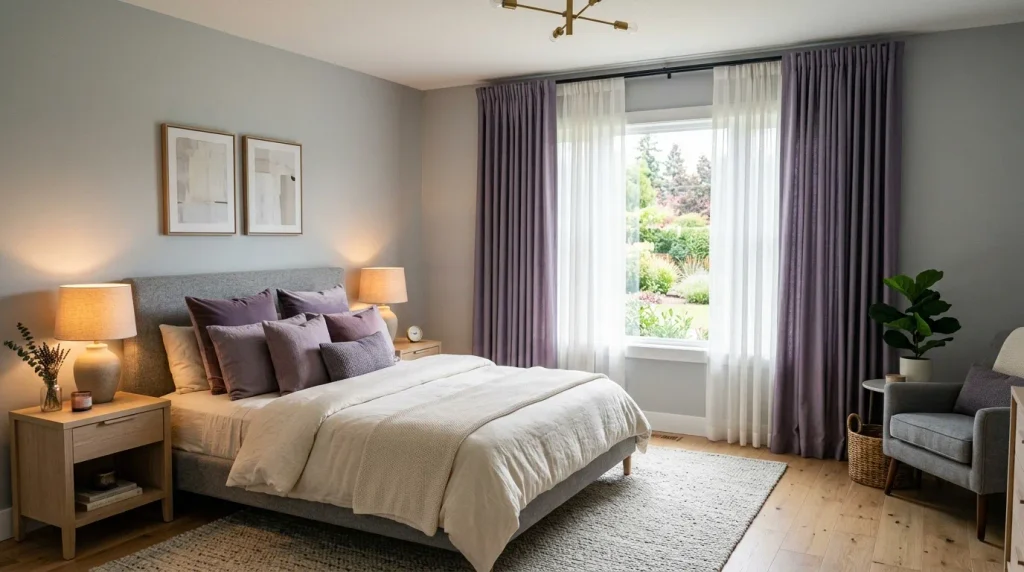
- Layered curtains add softness around the windows.
- Sheer panels keep daytime light bright and gentle.
- Lavender-gray drapes reinforce the color palette without covering the walls.
- Full-length fabric makes the room feel taller and more finished.
Layered curtains are an easy way to bring more depth into a purple and gray bedroom without adding another large piece of furniture. Use sheer white panels underneath soft gray or smoky lavender drapes so daylight remains gentle while the heavier fabric adds privacy at night. Hang the curtain rod slightly above the window frame and extend it beyond the sides when possible. This makes the window appear wider and the ceiling taller. The subtle color connection between the curtains, bedding, and wall accents helps the entire room feel coordinated without relying on identical shades.
For the most natural result, choose curtains with a matte finish and enough length to lightly touch or barely pool on the floor. Avoid overly shiny fabrics because they can make muted purple look less sophisticated. Pair the window treatment with pale bedding, a gray upholstered bed, and warm wood nightstands to maintain balance. If the room receives strong afternoon sunlight, a lined outer curtain can also improve comfort and reduce glare. This small upgrade can make the whole bedroom feel more finished while adding useful privacy and light control.
10. Lavender Paneling
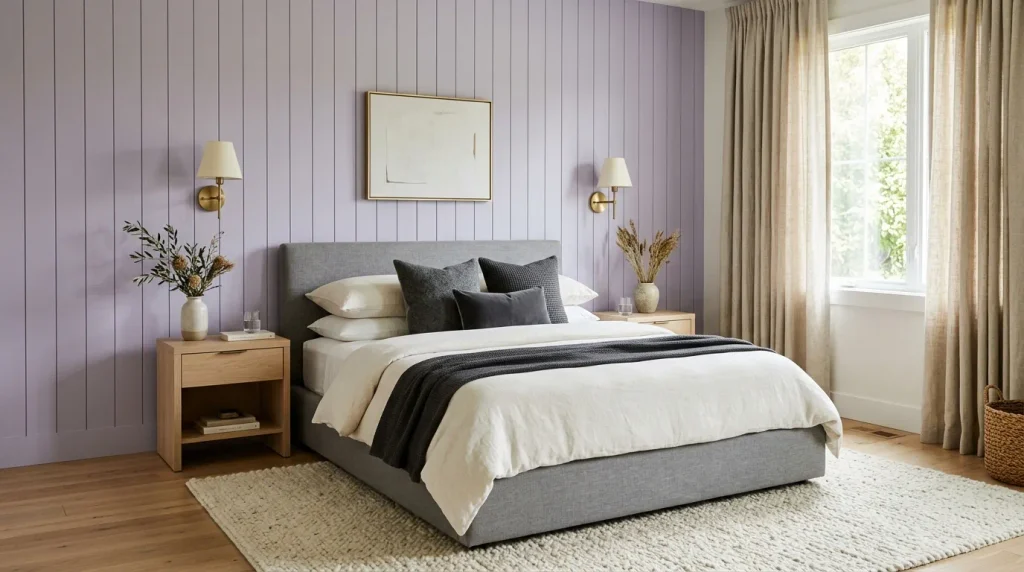
- Wall paneling gives a plain bedroom more architectural character.
- Soft lavender keeps the texture subtle rather than overpowering.
- Gray furniture creates a grounded contrast against the lighter wall.
- Vertical panels can make the ceiling appear visually taller.
Lavender wall paneling adds architectural interest while keeping the color palette soft and controlled. Install simple vertical or square molding behind the bed, then paint the entire feature wall in a muted lavender shade. Pair it with a gray upholstered bed, cream bedding, and pale wood nightstands to prevent the design from becoming too formal. The raised texture catches natural and artificial light differently throughout the day, giving the wall more dimension. This approach works particularly well in bedrooms where the furniture is simple because the wall becomes the main decorative feature without needing lots of artwork.
For a practical update, use narrow vertical panels if the room has a lower ceiling, as their direction can create a subtle sense of height. Keep the molding profile uncomplicated and avoid combining it with several other strong patterns. A warm brass wall sconce on each side of the bed can provide useful reading light while complementing the gentle purple tones. I’ve noticed that textured walls look most sophisticated when the surrounding furniture stays quiet. That balance lets the paneling add personality while preserving the peaceful, uncluttered feeling a bedroom needs.
11. Gray Linen Bedding
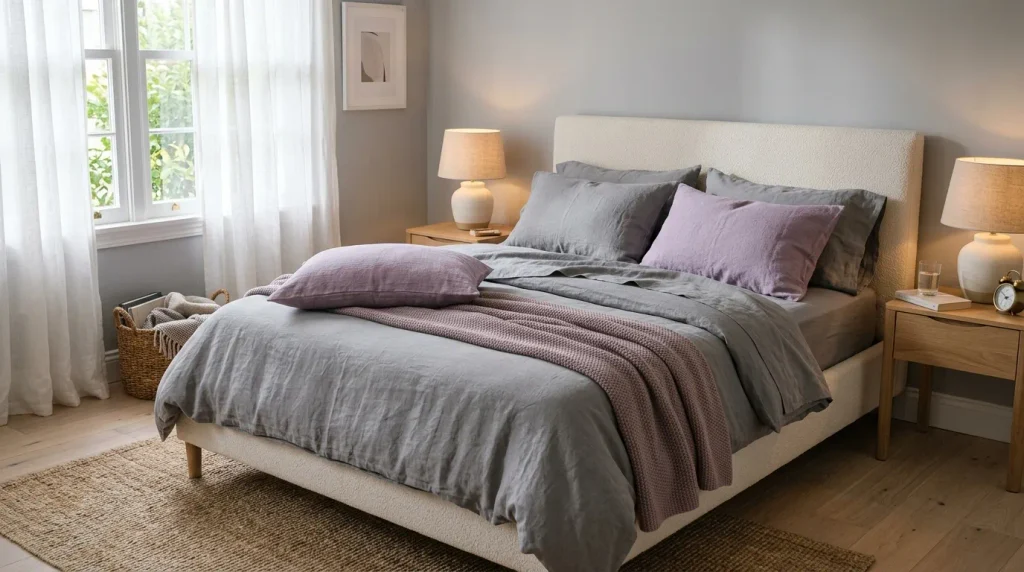
- Linen bedding gives gray tones a relaxed, natural appearance.
- Lavender accents add softness without making the bed look overly colorful.
- Natural fabric texture creates depth even with simple colors.
- Layered blankets make the bed look comfortable and inviting.
Gray linen bedding creates an effortless foundation for subtle purple accents because its natural texture keeps the color from looking too formal. Choose a medium or light gray linen duvet, then layer cream sheets, lavender pillows, and a muted mauve blanket across the bed. The slightly rumpled fabric adds visual interest without requiring patterns. Natural daylight brings out the variation in the linen weave, while warm bedside lamps make the room feel softer at night. This combination is especially useful for anyone who wants a bedroom that looks styled but still feels comfortable enough for everyday living.
Keep the surrounding furniture simple so the bedding remains the main visual layer. Pale oak, woven baskets, ceramic lamps, and natural curtains complement linen beautifully without competing with the purple accents. You do not need every textile to match exactly; slightly different gray and lavender tones often create a more relaxed appearance. If the bed feels too cool, introduce one warmer element, such as a beige throw or wood nightstand. The result is a calm, tactile bedroom where the colors feel connected through texture rather than perfect color matching.
12. Plum Accent Pillows
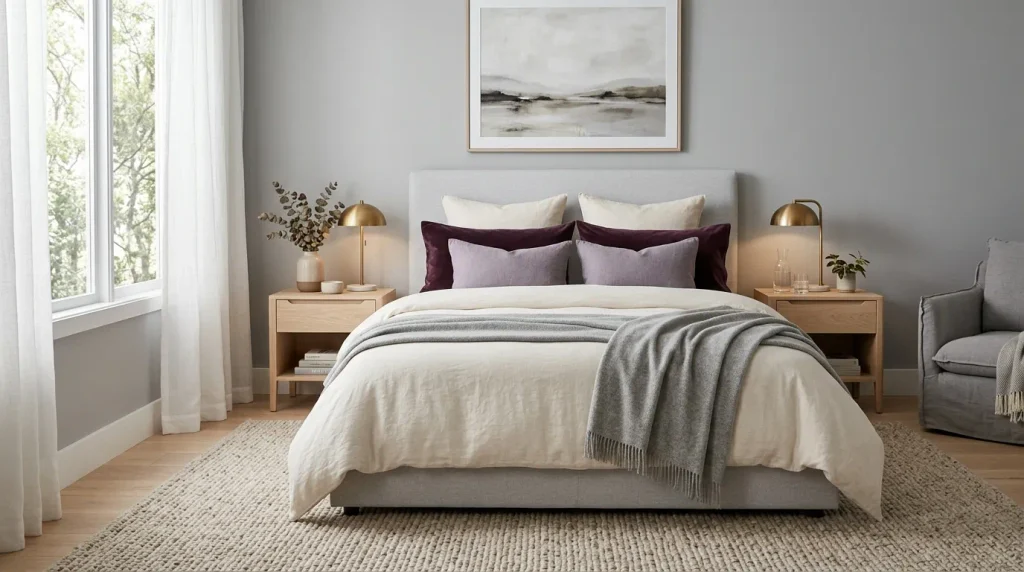
- Deep plum pillows create a richer focal point against pale bedding.
- Dusty lavender cushions soften the darker accent.
- Keeping plum limited to small areas prevents visual heaviness.
- A beige rug adds warmth between the cool color layers.
Deep plum pillows can give a soft gray bedroom more contrast without changing the larger color scheme. Place one or two darker plum cushions against a light gray or cream duvet, then layer smaller dusty lavender pillows in front. The darker shade naturally draws attention toward the bed, while the lighter purple keeps the composition gentle. This is one of the easiest ways to experiment with moodier color because pillows can be replaced without repainting walls or buying new furniture. In my experience, using plum sparingly makes the room feel sophisticated rather than overly dramatic.
To keep the arrangement balanced, repeat a hint of the plum shade somewhere else, such as a small artwork detail, ceramic vase, or folded throw. Avoid placing dark purple on every surface because the contrast can quickly become too strong. A beige or natural-fiber rug underneath the bed can introduce warmth and soften the transition between cool gray and purple. This simple layering technique creates a bedroom that feels richer and more dimensional while remaining flexible. It is also easy to refresh seasonally by changing only a few decorative textiles.
13. Soft Gray Walls
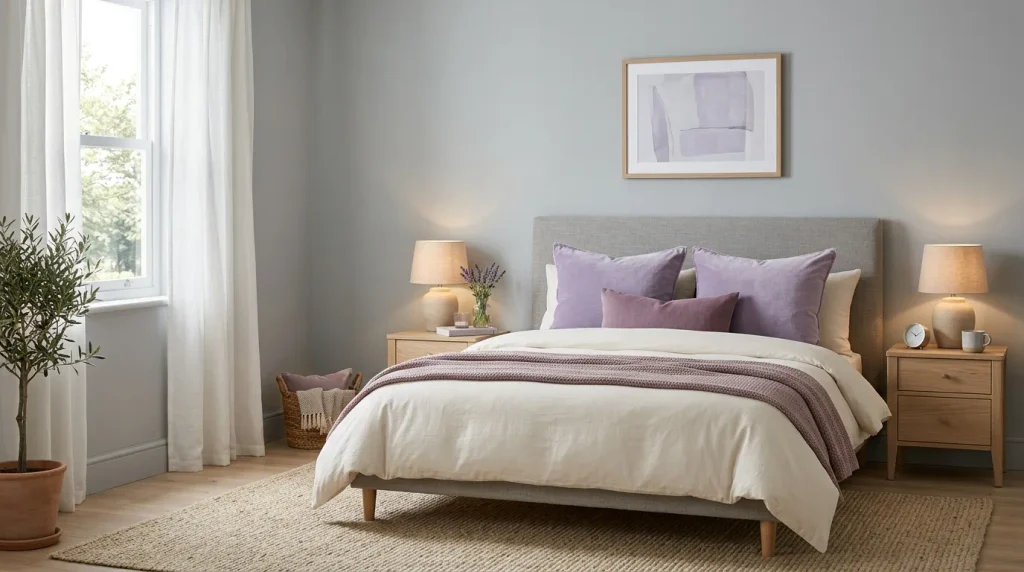
- Soft gray walls create a calm backdrop for purple accents.
- Lavender textiles add color without overwhelming the neutral foundation.
- Pale wood furniture keeps the room feeling warm and natural.
- Cream accessories brighten the cooler wall color.
Soft gray walls create a versatile foundation for adding purple without making the bedroom feel overly colorful. Choose a light dove or greige-leaning gray, then introduce lavender through pillows, curtains, artwork, or a folded throw. Because the walls remain neutral, you can use slightly richer purple accents without making the room feel busy. Natural daylight keeps the gray looking fresh, while warm lamps prevent it from becoming too cool after dark. This approach works especially well in bedrooms that already have neutral flooring or furniture because the color scheme can be introduced gradually.
Pay attention to the undertones when selecting gray paint, since blue-heavy grays can make purple accents appear cooler than expected. Test a sample near the bed and observe it during both daylight and evening lighting before committing. Add cream bedding and natural wood to soften the overall combination. A textured rug can also help connect the colors across the room. The finished look feels polished but adaptable, making it easy to change accent shades later without replacing the main furniture or repainting the walls.
14. Curved Upholstered Bed
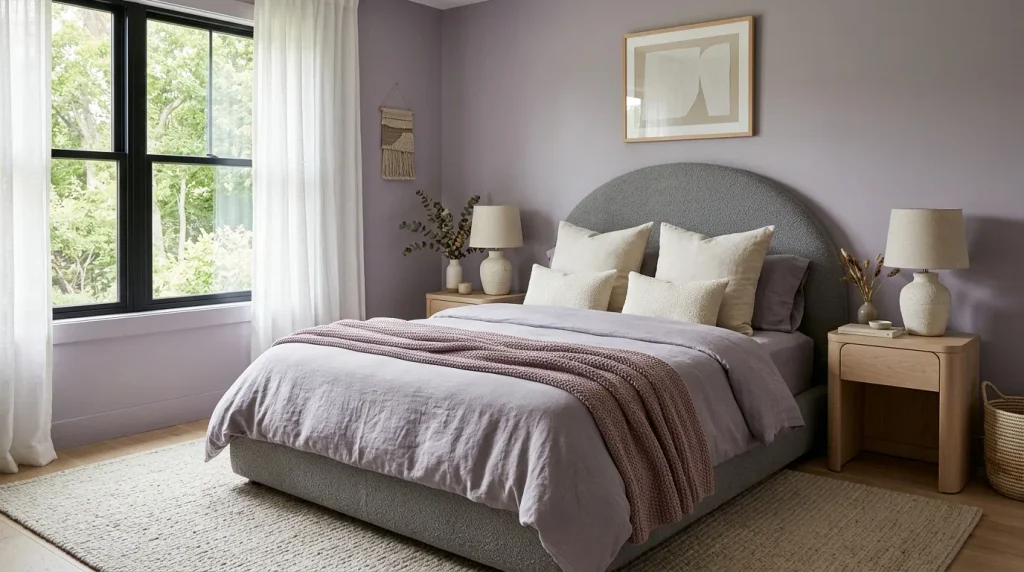
- Rounded furniture softens the stronger lines common in modern bedrooms.
- Gray upholstery keeps the curved silhouette visually grounded.
- Lavender textiles add gentle color around the headboard.
- Soft rugs and fabrics reinforce the relaxed shape of the furniture.
A curved upholstered bed can soften a purple and gray bedroom while giving the space a distinctive focal point. Choose a rounded gray headboard with gentle edges, then surround it with lavender-gray bedding and a muted mauve throw. The curved silhouette breaks up the straight lines of nightstands, windows, and flooring, creating a more relaxed visual rhythm. Keep the rest of the furniture simple so the bed remains the main feature. This design works especially well in contemporary rooms where softer shapes are needed to make clean architectural lines feel more comfortable and inviting.
Use rounded bedside lamps, a softly textured rug, or circular artwork to repeat the curved shape without making the room look overly themed. Pale oak nightstands can add warmth against the cooler upholstery, while cream pillows keep the bedding visually light. I’ve noticed that curved furniture looks most balanced when there is enough open space around it, so avoid crowding the bed with large decorative pieces. The result is a comfortable, modern retreat that feels distinctive while still maintaining a restrained purple-and-gray palette.
15. Moody Gray Flooring
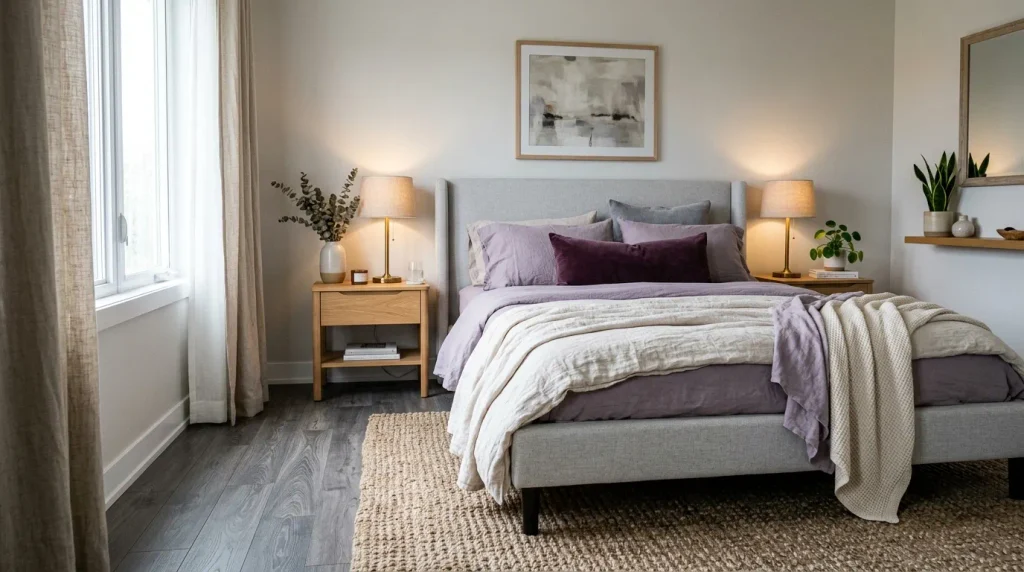
- Dark gray flooring anchors a lighter bedroom palette.
- Lavender bedding stands out beautifully against the deeper floor.
- A light rug prevents the lower half from feeling too heavy.
- Natural wood introduces warmth between cool gray surfaces.
Dark gray flooring can create a grounded base for softer purple and gray furnishings, especially when the walls and bedding remain light. Choose a charcoal wood or gray-toned laminate with visible grain so the floor has warmth and texture rather than appearing flat. Layer a cream or beige rug beneath the bed to create a visual break, then use lavender bedding and a few deeper plum accents above. The darker floor naturally anchors the room, allowing lighter colors to feel more prominent. This can be particularly effective in larger bedrooms that need stronger contrast to feel visually balanced.
When using a darker floor, keep the upper half of the room relatively light so the space does not feel visually compressed. Pale walls, cream curtains, and lighter bedding can reflect more natural light and balance the charcoal surface. Warm oak nightstands or a wooden bench can also introduce an organic element between the cool tones. The combination creates a more sophisticated version of a purple-gray bedroom while remaining practical. A well-placed rug adds comfort underfoot and makes the transition between the dark flooring and lighter furniture feel intentional.
16. Lavender Ceiling
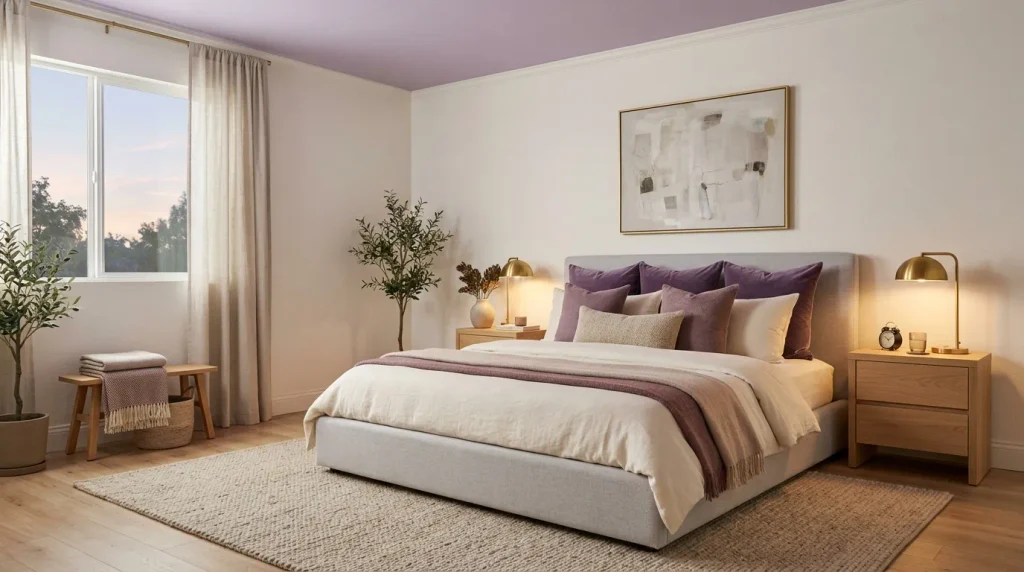
- A lavender ceiling adds color without competing with the furniture.
- Light walls keep the room feeling open and airy.
- Gray bedding connects the ceiling color to the rest of the space.
- Warm lighting makes the overhead color feel softer at night.
A lavender ceiling offers a creative way to introduce purple while keeping the walls and larger surfaces neutral. Paint the ceiling in a muted lavender shade, then use soft gray bedding, cream walls, and pale wood furniture below. Because the color sits overhead, it creates visual interest without taking over the room. The effect becomes especially noticeable when warm lamps are switched on at night, giving the ceiling a gentle glow. This approach works well for bedrooms where you want something more distinctive than an accent wall but still prefer a restrained, sophisticated color scheme.
Keep the ceiling shade soft and slightly dusty rather than choosing a highly saturated purple. This makes the color easier to live with and prevents the room from feeling visually heavy. Repeat a small amount of lavender through pillows or artwork so the ceiling feels connected to the rest of the design. If the room has low ceilings, use very light walls and avoid heavy crown molding to preserve an open appearance. The finished space feels thoughtfully designed while using color in an unexpected place that can make the entire bedroom more memorable.
17. Gray Built-In Storage
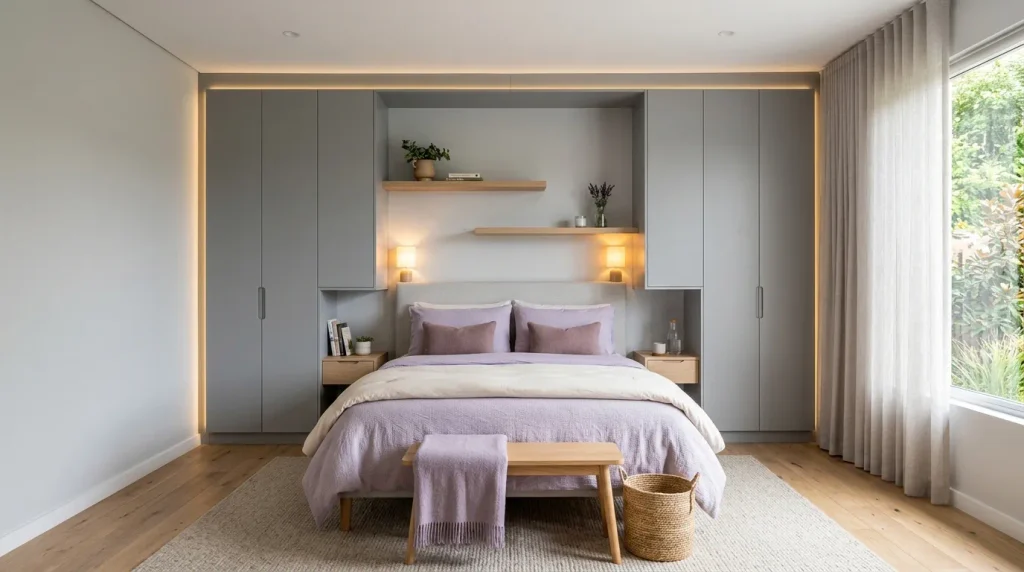
- Built-in gray storage keeps the bedroom visually organized.
- Matching cabinetry creates a calm, seamless background.
- Lavender bedding becomes the main source of color.
- Integrated lighting adds warmth without taking up bedside space.
Gray built-in storage can make a purple-accented bedroom feel cleaner while adding valuable everyday function. Use soft gray cabinetry around the bed or along one wall, then introduce lavender through bedding, curtains, or a small upholstered bench. Keeping the storage visually consistent reduces the number of competing colors and helps the room appear more spacious. Integrated shelves can hold books, baskets, and a few decorative objects without creating clutter. This setup is especially useful in smaller bedrooms because vertical storage makes better use of available wall space while keeping the floor area open.
Choose cabinetry with simple doors and minimal hardware if you want a streamlined appearance. Warm integrated lighting inside shelves or beneath upper cabinets can soften the gray surfaces and make the room feel more inviting after dark. Keep visible storage limited to useful or attractive items, using baskets for smaller belongings. A pale rug and cream bedding can brighten the lower part of the room. The combination gives you a practical storage solution while maintaining the soft, coordinated atmosphere that makes purple and gray work so well together.
18. Soft Lavender Drapes
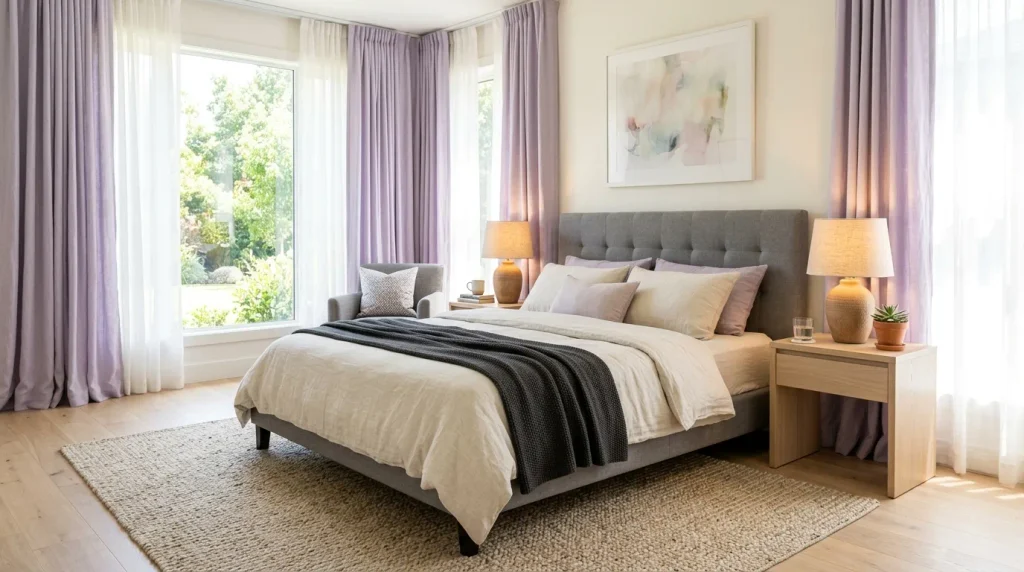
- Floor-to-ceiling drapes make the windows feel taller.
- Soft lavender fabric adds color without covering the entire room.
- Sheer inner curtains keep daytime light gentle and bright.
- Gray furniture creates a grounded contrast against the lighter fabric.
Soft lavender drapes can introduce a noticeable purple accent while keeping the rest of the bedroom comfortably neutral. Choose full-length curtains in a muted lavender tone and pair them with sheer inner panels for filtered daylight and privacy. Against a gray upholstered bed and cream bedding, the fabric creates a gentle vertical color frame around the window. Hanging the panels close to the ceiling can also make the room appear taller. This is a practical update because window treatments can change the character of a bedroom without requiring new furniture, paint, or major construction.
For a polished look, select a matte fabric with enough weight to fall neatly rather than a shiny material that reflects too much light. Repeat the lavender tone in one or two small accessories, such as a cushion or ceramic vase, instead of matching every textile. Keep the floor lighter with a beige woven rug or pale wood finish to maintain balance. I’ve noticed that curtains often have more visual influence than expected because they occupy a large vertical area. Used carefully, they can make the entire room feel softer and more cohesive.
19. Purple Gray Gallery Wall
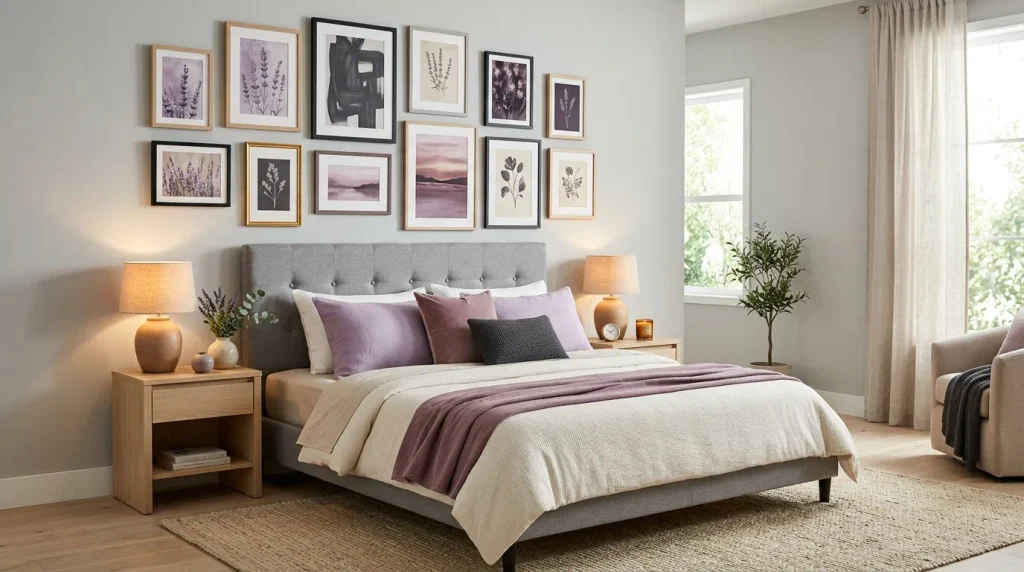
- A coordinated gallery wall adds personality without overwhelming the room.
- Purple and gray artwork reinforces the palette through small visual details.
- Cream backgrounds keep the arrangement light and balanced.
- Matching frame tones create a cleaner, more intentional display.
A curated gallery wall can bring purple and gray tones together without relying on large blocks of color. Arrange artwork featuring lavender, mauve, charcoal, cream, and soft gray above the bed, using a consistent frame finish to keep the display cohesive. Choose a mix of abstract prints, subtle botanical designs, and simple line art rather than filling every space with highly detailed pieces. The wall becomes a visual anchor while the neutral bedding keeps the overall room calm. This works particularly well when you want personality but prefer decorating with smaller, flexible elements.
Before hanging anything, arrange the frames on the floor to test spacing and balance. Keep the center of the composition roughly aligned with the bed rather than spreading the artwork too widely across the wall. If the room already has several patterns, choose mostly simple prints so the gallery does not compete with the bedding. A small lavender accent repeated in two or three artworks is enough to connect the display with the rest of the room. The finished arrangement feels personal, layered, and intentional without requiring a major bedroom makeover.
20. Textured Lavender Rug
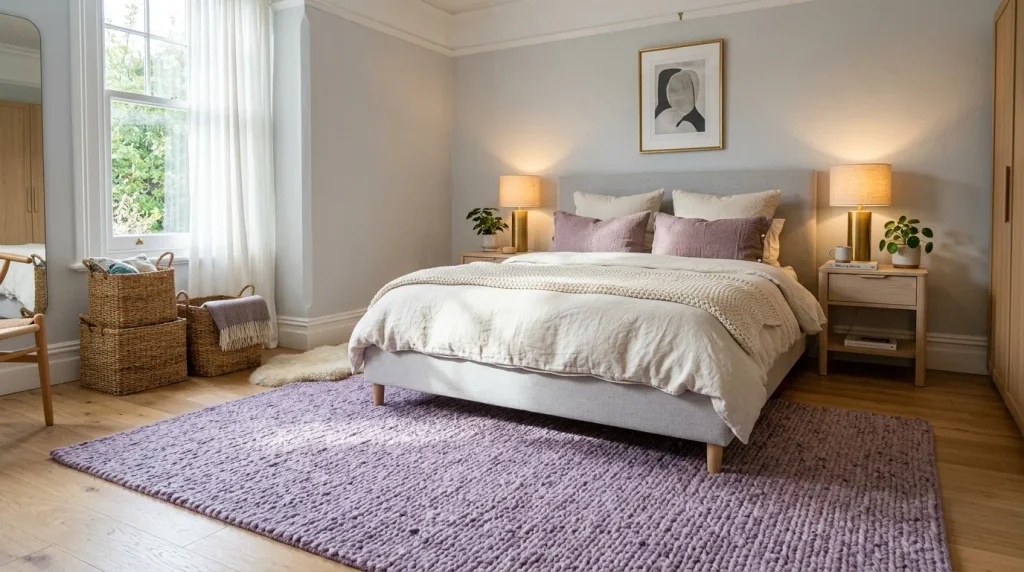
- A lavender rug introduces color at floor level without crowding the walls.
- Textured fibers make the bedroom feel warmer and more comfortable.
- Light gray furniture keeps the purple accent balanced.
- A large rug visually connects the bed and surrounding furniture.
A textured lavender rug can soften the lower half of a gray bedroom while adding a subtle wash of purple underfoot. Choose a muted lavender, dusty lilac, or gray-purple shade rather than a bright violet. Position a generously sized rug beneath the bed so it extends beyond the sides and foot, creating a unified visual area. Pair it with light gray upholstery, cream bedding, and pale wood furniture for contrast. The texture adds another layer of interest, making the room feel more comfortable without relying on additional wall decoration or busy patterns.
For everyday practicality, select a low-pile or tightly woven rug if the bedroom receives heavy foot traffic, especially around the bed. Leave enough exposed flooring near doorways so the room remains easy to navigate and clean. Repeat a small amount of lavender through pillows or artwork to connect the rug with the upper part of the room. I’ve noticed that floor textiles can make cool color palettes feel warmer almost immediately. This simple addition gives the bedroom a softer landing, stronger visual cohesion, and a comfortable finish without overwhelming the existing furniture.
21. Cozy Moody Layers
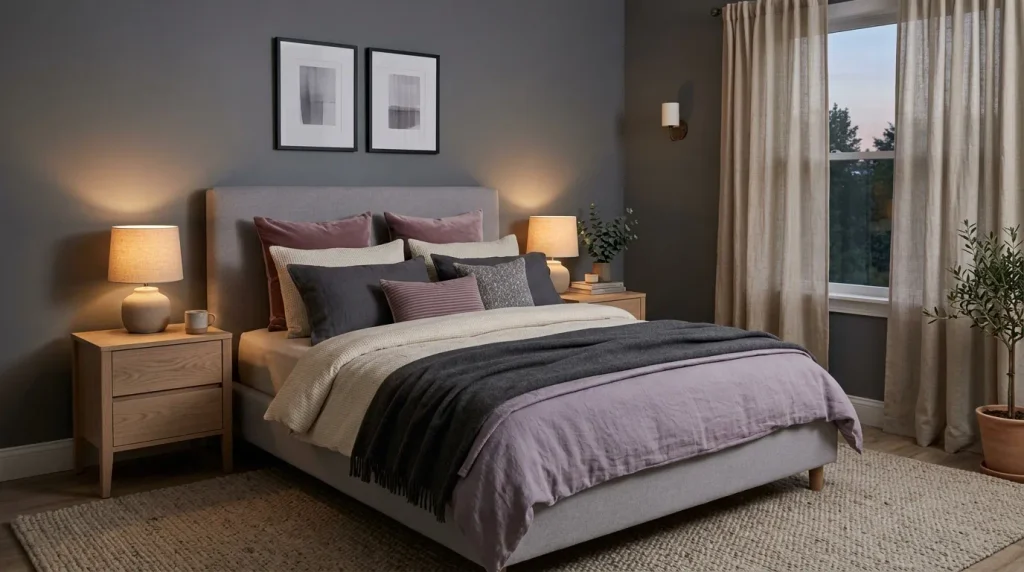
- Layered purple and gray textiles create depth without excessive decoration.
- Cream accents keep the darker palette from feeling too heavy.
- Warm wood and lighting add balance to the cooler colors.
- Mixing linen, velvet, and boucle makes the room feel tactile and inviting.
The most successful moody bedrooms usually rely on layers rather than one dramatic color choice. Combine soft gray walls with a gray upholstered bed, lavender pillows, a mauve throw, charcoal accents, and cream bedding to create gradual contrast. Add pale wood furniture and a beige rug to warm the cooler palette. Different textures, such as linen, velvet, boucle, and woven cotton, make each layer easier to see without introducing busy patterns. These purple gray bedroom ideas work because the colors remain connected while the changing textures give the room depth, comfort, and visual interest.
Keep the darkest tones in smaller areas and allow lighter colors to occupy the larger surfaces. Warm bedside lamps can soften charcoal and gray in the evening, while natural daylight keeps lavender and mauve looking fresh during the day. Avoid trying to match every purple shade perfectly; slight differences often make the room feel more natural. I’ve seen this layered approach work especially well when the goal is a bedroom that feels moody but still restful. The final result is cozy, balanced, and easy to refresh with seasonal textiles or small decorative changes.
Conclusion
A purple-and-gray bedroom does not need a complete makeover to feel beautifully transformed. Start with one change, such as lavender bedding, a soft gray wall, textured curtains, or warmer lighting, then build from there. The best results come from balancing cool colors with cream, wood, natural textures, and cozy layers. I’ve seen how small updates like these can completely change the atmosphere of a room without requiring a large budget. Save these purple gray bedroom ideas on Pinterest so you can return to them when decorating. Try your favorite idea, share this inspiration with someone planning a bedroom refresh, and create a retreat that feels uniquely yours.