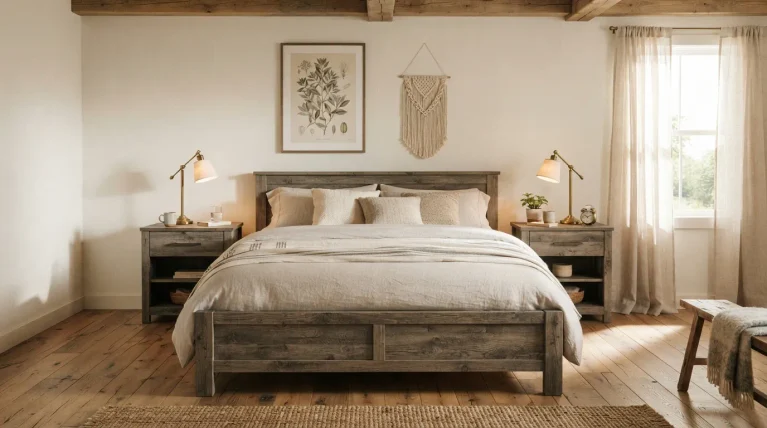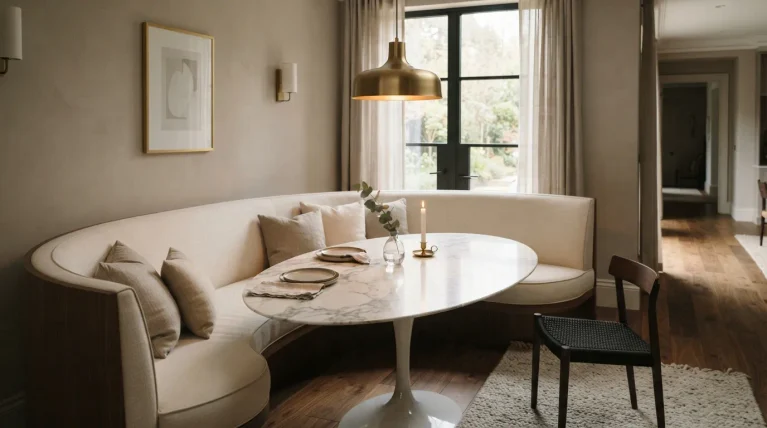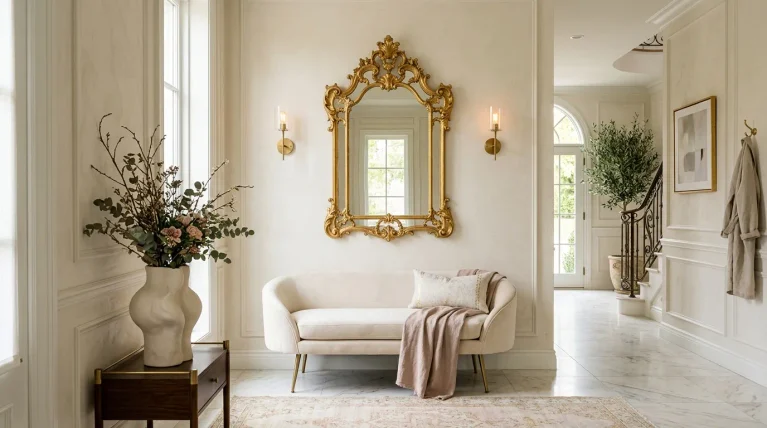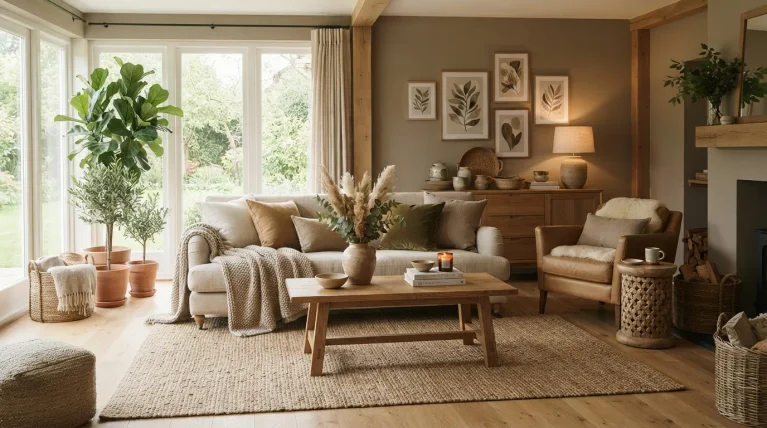
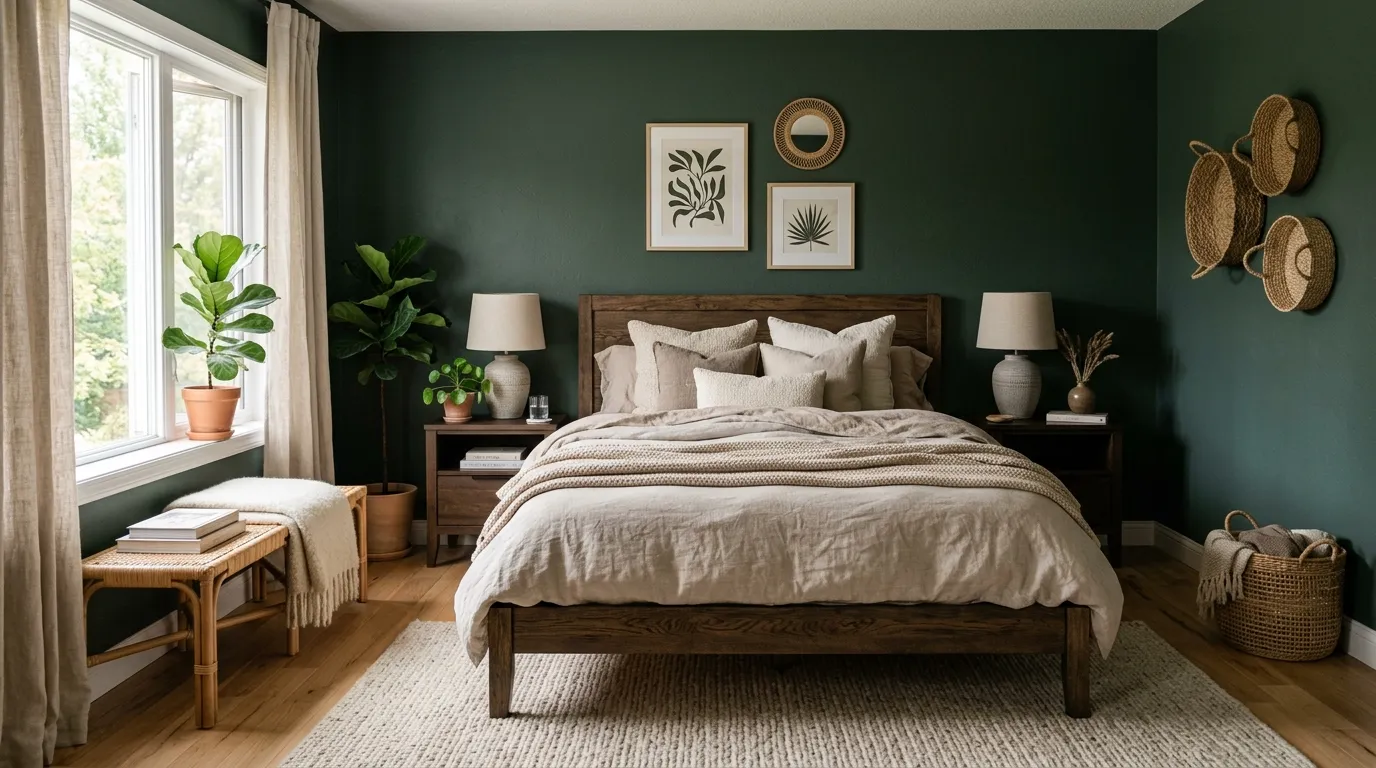
A dark green bedroom can feel cozy, sophisticated, and wonderfully relaxing without looking gloomy or closed in. From deep forest walls and velvet headboards to warm brass lighting, natural wood, layered bedding, and soft linen curtains, there are countless ways to create a moody retreat that still feels comfortable and inviting. The key is balance: pair rich green shades with warm neutrals, natural textures, thoughtful lighting, and a few personal details. Whether you are refreshing one wall or redesigning the entire room, these ideas can help you create a bedroom that feels calm, layered, and beautifully suited to everyday living.
1. Deep Green Walls
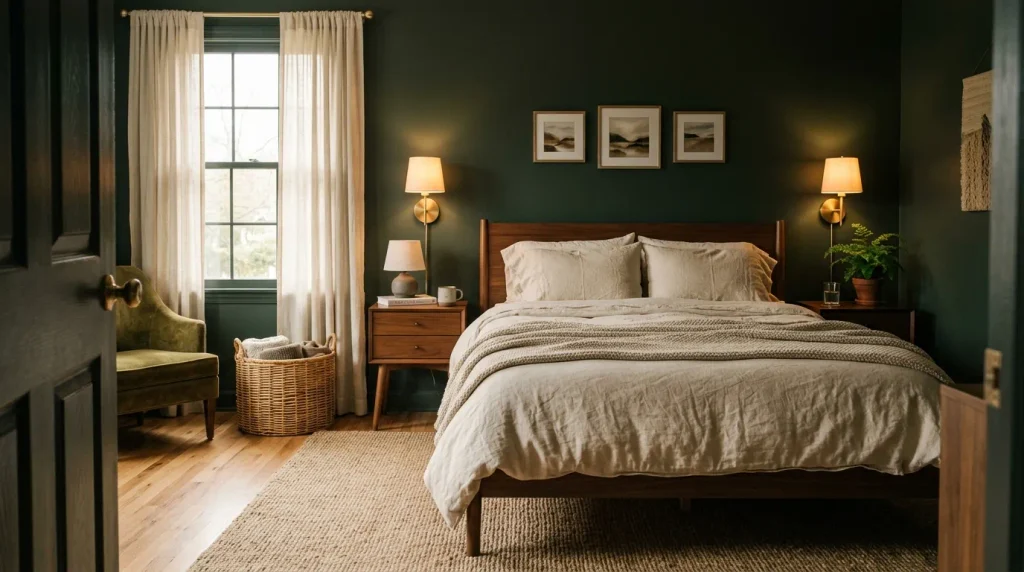
- Deep green walls create an instantly cozy backdrop without needing heavy decoration.
- Warm neutrals keep the darker color from feeling overwhelming.
- Matte finishes make the shade feel softer and more sophisticated.
- Natural wood adds warmth and balance to the rich wall color.
Deep green walls can instantly make a bedroom feel wrapped in calm, especially when the shade has a soft, muted undertone. Choose a matte or eggshell finish to keep the color rich without creating harsh reflections. Layer the room with warm white bedding, natural wood furniture, and small brass accents for balance. In my experience, darker wall colors look most inviting when paired with several soft textures rather than lots of bright decoration. Keep the palette restrained, and let the green become the visual anchor while cream, tan, and walnut tones quietly soften the overall effect.
A moody wall color works best when the rest of the room supports it instead of competing for attention. Try placing the bed against the darkest wall, then add linen bedding, a woven bench, and simple framed artwork in warm neutral tones. Soft bedside lamps can create pools of golden light that make the walls feel cozy after sunset. This approach also helps smaller bedrooms feel intentional rather than cramped. If natural light is limited, use lighter curtains and reflective metal details sparingly to maintain depth without losing the intimate, cocoon-like character.
Also Read : 21 Moody Dining Room Ideas for a Dramatic Cozy Space
2. Canopy Bed Frame
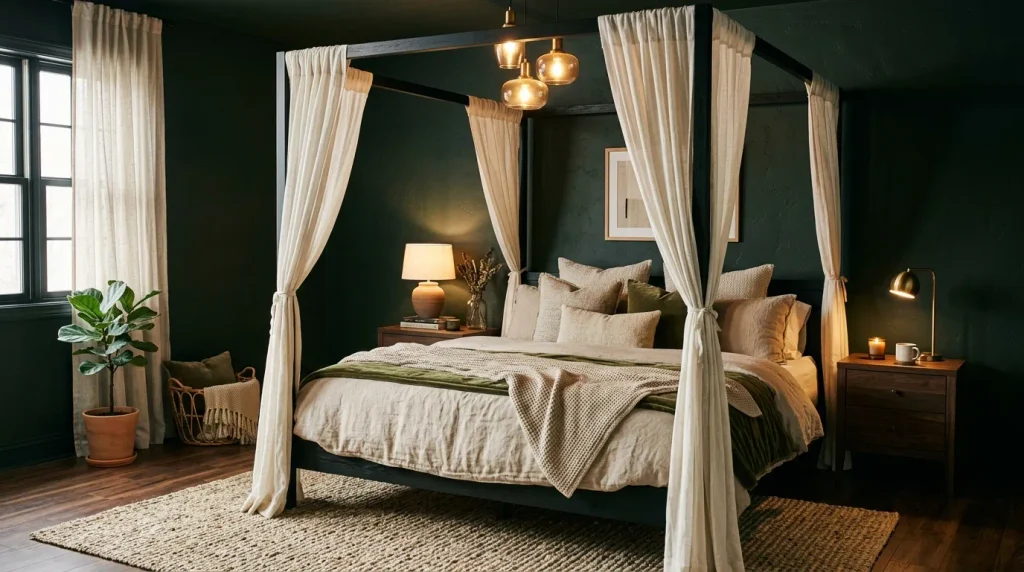
- A canopy frame creates a strong focal point above the bed.
- Light curtains soften the darker color palette.
- Black or walnut frames add structure without excessive decoration.
- Layered bedding makes the dramatic frame feel comfortable and inviting.
A canopy-style bed adds instant drama without requiring a complicated makeover. Choose a simple black or dark wood frame, then soften it with airy cream curtains or loosely draped fabric around the posts. Pair the structure with layered bedding in olive, beige, and warm ivory so the room feels collected rather than overly formal. I’ve noticed this setup works especially well when the surrounding furniture stays visually simple. The bed becomes the focal point, while soft fabric, warm lighting, and natural textures create the cozy retreat feeling many homeowners want to recreate.
Keep the canopy fabric lightweight and slightly sheer so it filters light instead of closing the room in. Position the bed where the frame has enough breathing space around all four sides, and avoid placing bulky furniture directly beside the posts. A small pendant or wall sconce on each side can provide balanced illumination without distracting from the structure. For a more relaxed look, choose rumpled linen rather than crisp hotel-style bedding. The result is a private-looking sleep zone that feels romantic, grounded, and practical enough for everyday living spaces.
Also Read : 23 Masculine Home Office Ideas for a Stylish Workspace
3. Velvet Headboard
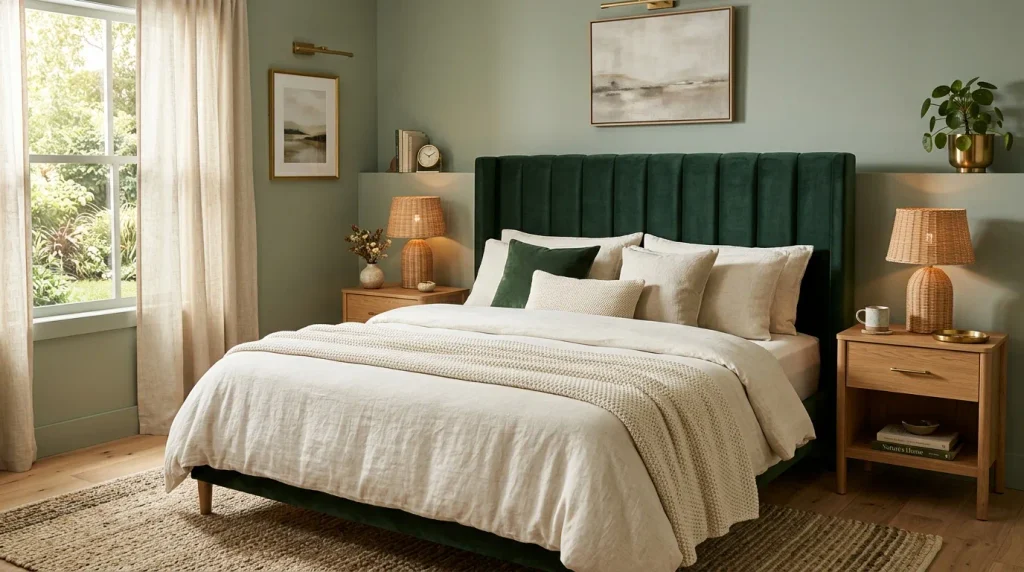
- Velvet brings softness and richness to a darker bedroom palette.
- Forest, olive, and muted emerald shades pair beautifully with cream bedding.
- Oak furniture prevents the space from feeling too heavy.
- Simple accessories let the headboard remain the focal point.
A velvet headboard can make a dark bedroom feel instantly richer, especially when its texture catches gentle light. Choose deep forest, olive, or muted emerald upholstery, then surround it with matte bedding and natural materials so the room does not become visually heavy. A low-profile headboard works beautifully in compact spaces because it adds softness without overwhelming the wall. I’ve seen this work well with oak nightstands, woven lamps, and cream bedding. The contrast between plush velvet and rougher textures gives the space depth, warmth, and a polished designer-inspired finish without needing many accessories.
Let the headboard remain the star by keeping the wall behind it relatively quiet. A pair of matching bedside tables can frame the bed, while small ceramic lamps or linen shades add warmth without competing with the upholstery. Choose bedding with subtle layers rather than busy patterns, such as a quilt, relaxed duvet, and one textured throw. This combination creates a comfortable visual rhythm and makes the room feel finished from every angle. For Pinterest-style impact, photograph the space from a corner where the velvet texture, layered bedding, and warm lighting are all clearly visible.
Also Read : 23 Dark Blue Bedrooms Ideas for a Moody Stylish Retreat
4. Olive Bedding Layers
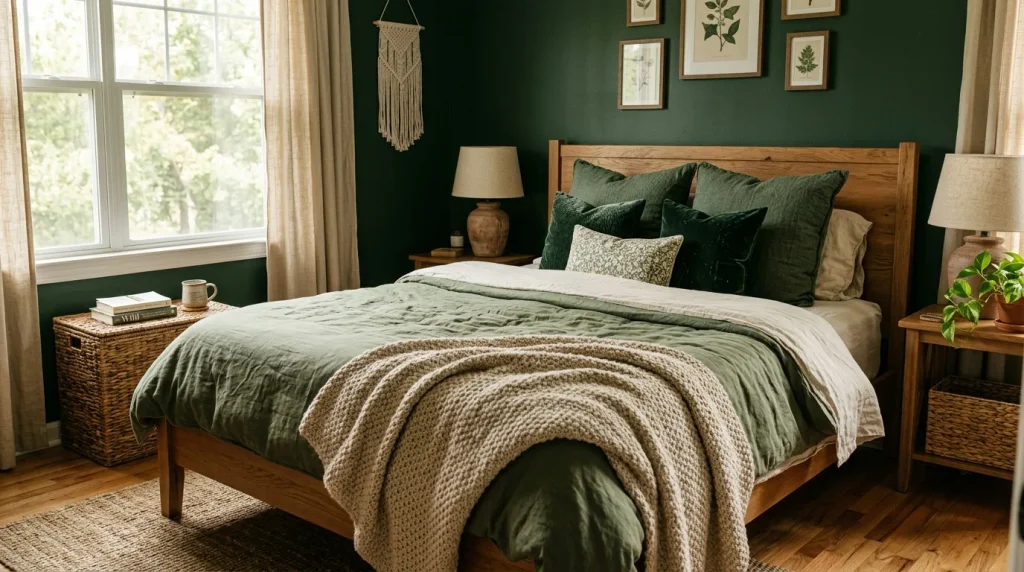
- Olive bedding adds softness without losing the moody color palette.
- Cream sheets create a bright layer against darker tones.
- A chunky throw introduces warmth and tactile contrast.
- Natural fabrics make the bed look relaxed and inviting.
Layered olive bedding is an easy way to bring depth into a dark bedroom without committing to more permanent changes. Start with cream or warm-white sheets, then add an olive duvet or quilt and finish with a textured beige throw. Mixing linen, cotton, and chunky woven fabrics keeps the bed from looking flat. In my experience, bedding becomes much more inviting when the colors are slightly varied rather than perfectly matched. Muted olive, moss, tan, and ivory work together naturally, creating a restful palette that feels connected to the surrounding green walls.
The key is to build layers from light to dark so the bed remains visually balanced. Keep the sheets light, place the main olive layer in the middle, and use deeper green pillows sparingly as accents. A casually folded throw at the foot adds softness while making the room look lived-in rather than staged. This arrangement also gives you flexibility throughout the seasons. Swap heavier quilts for lighter linen during warmer months while keeping the same color story. The result is a comfortable focal point that photographs beautifully and feels practical for everyday sleep.
Also Read : 23 Corner Fireplace Ideas for a Cozy Stylish Living Room
5. Brass Lighting Accents
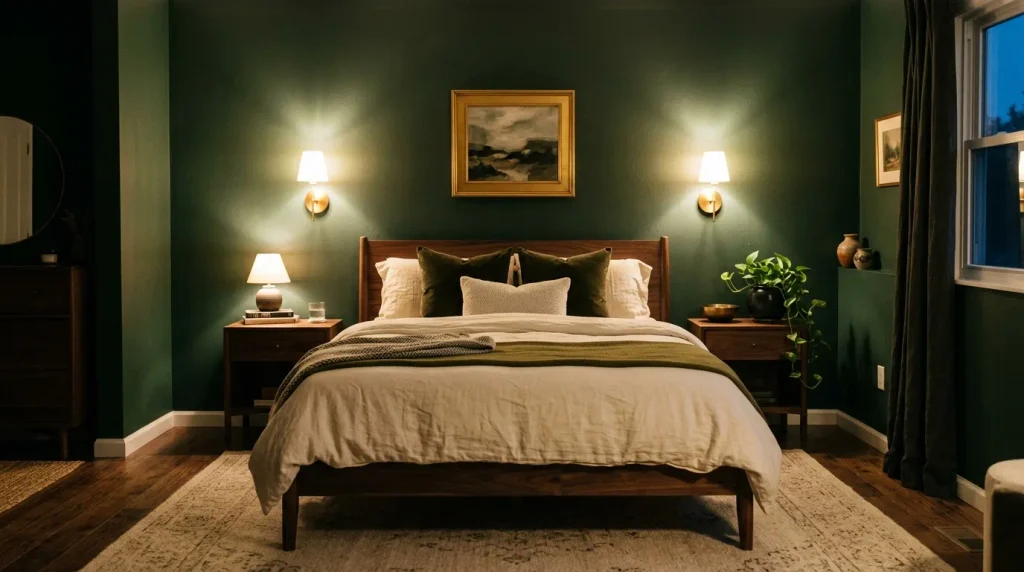
- Brass lighting adds warmth against deep green surfaces.
- Wall sconces save valuable bedside space.
- Warm bulbs make darker colors feel softer at night.
- Small metallic details can elevate the entire room without adding clutter.
Warm brass lighting can completely change how a dark bedroom looks after sunset. Against deep green walls, brass sconces create a gentle contrast that feels elegant without becoming flashy. Choose fixtures with warm bulbs around 2700K for a softer evening glow, especially beside the bed. I’ve noticed that lighting temperature matters just as much as fixture style when creating a cozy atmosphere. Pair brass with walnut, cream linen, and muted olive accents for a balanced look. The metallic finish catches small amounts of light, giving the room subtle sparkle while keeping the overall mood calm.
Wall-mounted sconces are especially useful when nightstands are small or when you want a cleaner bedside arrangement. Install them at a comfortable reading height and choose adjustable designs if you regularly read in bed. Keep other metallic finishes limited so the brass remains intentional rather than scattered. During daylight, the fixtures become decorative accents; at night, they create focused pools of warm light around the bed. This simple upgrade can make a bedroom feel more finished without replacing furniture, repainting every surface, or adding unnecessary decorative pieces.
Also Read : 23 Spring Home Decor Ideas for a Fresh Seasonal Look
6. Wooden Ceiling Detail
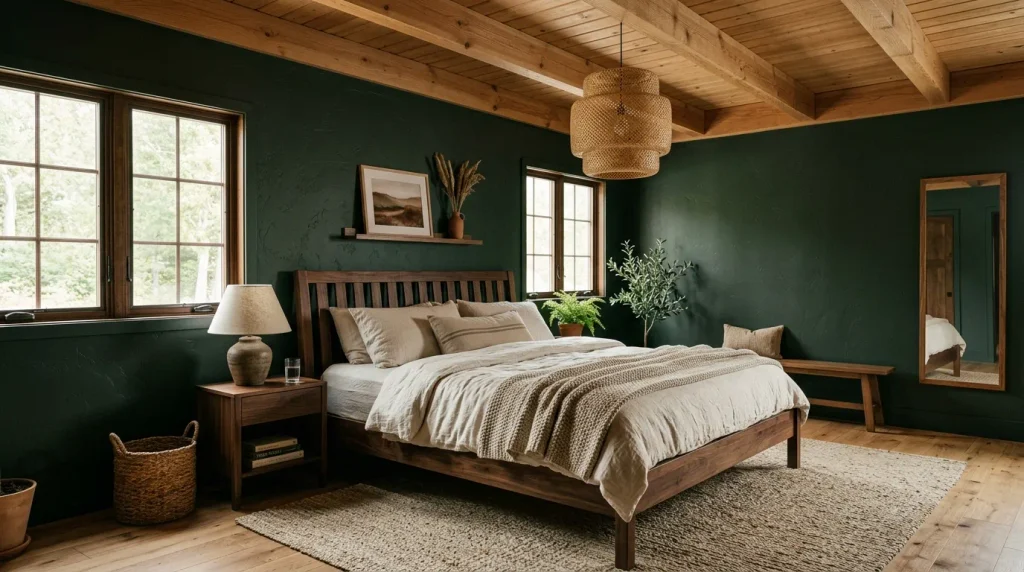
- Natural wood overhead adds warmth to deep wall colors.
- Exposed beams create architectural interest without extra decoration.
- A woven pendant reinforces the organic feeling.
- Warm wood tones help prevent the room from feeling visually cold.
A wooden ceiling detail can add warmth from above, making a dark bedroom feel grounded and architectural. Exposed beams, wood planks, or even a simple timber ceiling panel can work beautifully with rich green walls. The trick is choosing a warm natural finish rather than heavily polished wood that competes with the wall color. Pair the ceiling with cream bedding, woven accessories, and understated furniture. I’ve seen this combination work particularly well in bedrooms where the walls already provide plenty of visual drama, because the wood introduces another layer of character without requiring additional artwork.
Keep the rest of the room relatively simple so the ceiling detail remains noticeable. A woven pendant can connect the overhead wood with smaller natural textures around the room, while a beige rug helps visually soften the floor. If your ceiling is low, use narrow beams or lighter wood instead of thick, dark timbers that could make the space feel compressed. With the right proportions, the ceiling becomes a quiet design feature that makes the entire bedroom feel warmer, more established, and intentionally designed.
Also Read : 21 Sage Green Bedroom Ideas for a Calm Relaxing Retreat
7. Layered Area Rug
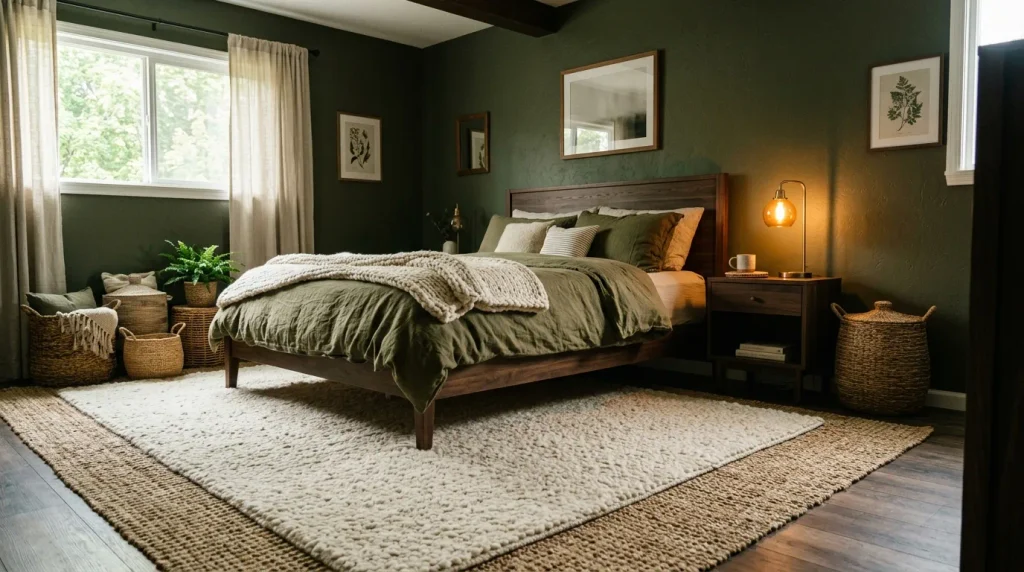
- Layering rugs adds warmth and softness beneath the bed.
- Jute provides natural texture against darker colors.
- A cream top layer brightens the floor visually.
- Larger rugs make the entire sleeping area feel more connected.
A layered area rug can make a dark bedroom feel noticeably warmer underfoot while adding another visual layer to the design. Start with a natural jute or sisal rug, then place a softer wool or cotton rug partially over it beneath the bed. Choose cream, beige, or muted taupe for the upper layer to balance deep green walls. In my experience, oversized rugs look more polished because they connect the bed, nightstands, and surrounding floor into one zone. The layered texture also prevents darker rooms from feeling overly sleek or visually flat.
Position the larger rug so it extends beyond both sides of the bed and reaches far enough toward the footboard to create a comfortable landing area. If the bedroom is small, you can use a runner on each side instead of covering most of the floor. Natural fibers work particularly well with green because their earthy tones reinforce the room’s organic character. Keep patterns subtle, especially if the bedding already includes texture. The finished space feels softer, warmer, and more inviting, while the rug quietly defines the sleeping area.
8. Moody Floral Wallpaper
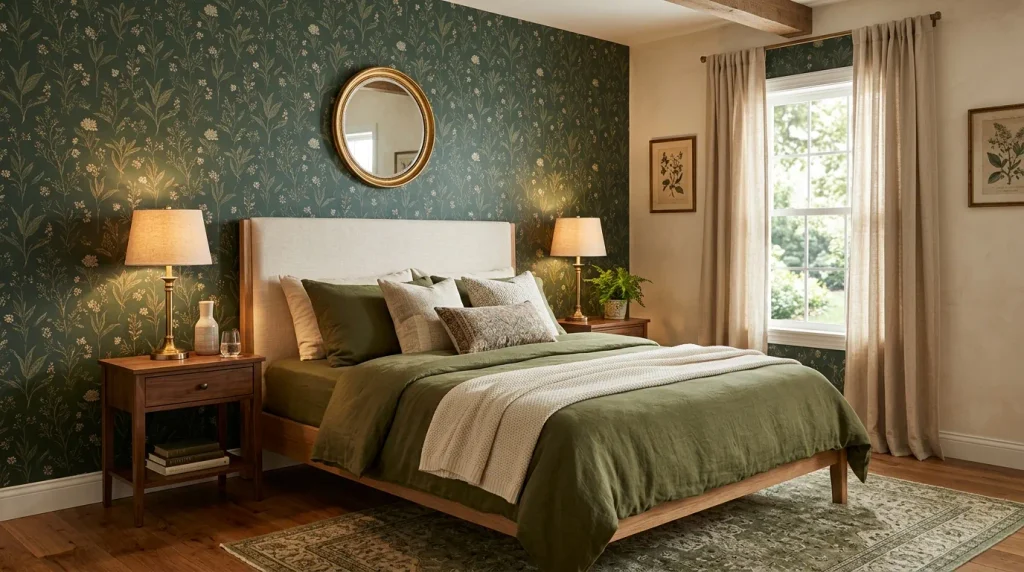
- Botanical wallpaper adds pattern without overwhelming a dark palette.
- Small-scale florals create more visual depth than plain walls.
- Cream furniture keeps the pattern from feeling too heavy.
- Brass and walnut accents reinforce the warm, timeless atmosphere.
Moody floral wallpaper brings personality to a dark bedroom while keeping the color palette cohesive. Look for botanical patterns that combine deep green with muted cream, brown, olive, or dusty beige instead of bright contrasting colors. This creates a layered backdrop that feels decorative without becoming busy. A floral design works especially well behind the bed because it naturally frames the main furniture piece. I’ve noticed that smaller botanical motifs can make a room feel detailed and collected, while oversized florals create a stronger statement. Choose the scale based on how dramatic you want the wall to feel.
Balance patterned wallpaper with quieter bedding and furniture. Cream linen, walnut wood, and aged brass are excellent companions because they repeat the wallpaper’s warm undertones without competing with its pattern. If applying wallpaper to every wall feels too intense, use it only behind the bed and paint the remaining walls a coordinating green. Keep artwork minimal so the botanical pattern has room to breathe. This approach creates a bedroom that feels cozy and visually rich, with enough detail to catch attention in a Pinterest image while remaining comfortable for everyday life.
9. Arched Wall Niche
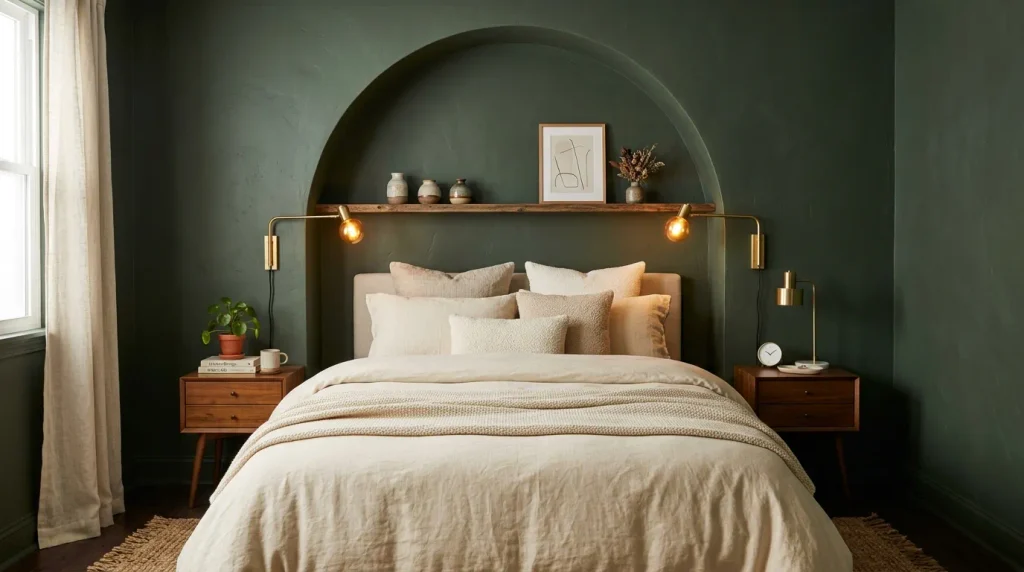
- An arched niche creates architectural interest without adding bulky furniture.
- Curved shapes soften the strong lines of a bed and nightstands.
- Small shelves provide space for practical bedside decoration.
- Warm lighting makes the recessed area feel intentional and cozy.
An arched wall niche can give a dark bedroom a custom architectural feel, even when the room itself is fairly simple. Use the recessed area behind the bed for small artwork, ceramics, books, or integrated lighting. Painting the niche in the same deep green as the surrounding wall creates a seamless look, while a slightly lighter shade can make the curved shape more noticeable. In my experience, curved details are particularly effective in bedrooms because they soften the straight edges of furniture. The result feels considered without requiring a large collection of decorative objects.
Keep the niche styling restrained so it remains useful rather than becoming a cluttered display. Two or three carefully chosen pieces, such as a ceramic vase, small framed print, and warm brass light, are usually enough. If you are designing a new wall feature, make the niche wide enough to relate visually to the bed without extending awkwardly beyond it. Soft lighting inside or beside the arch can emphasize its shape at night. This small architectural detail adds depth, character, and storage potential while keeping the overall bedroom calm and uncluttered.
10. Linen Curtain Panels
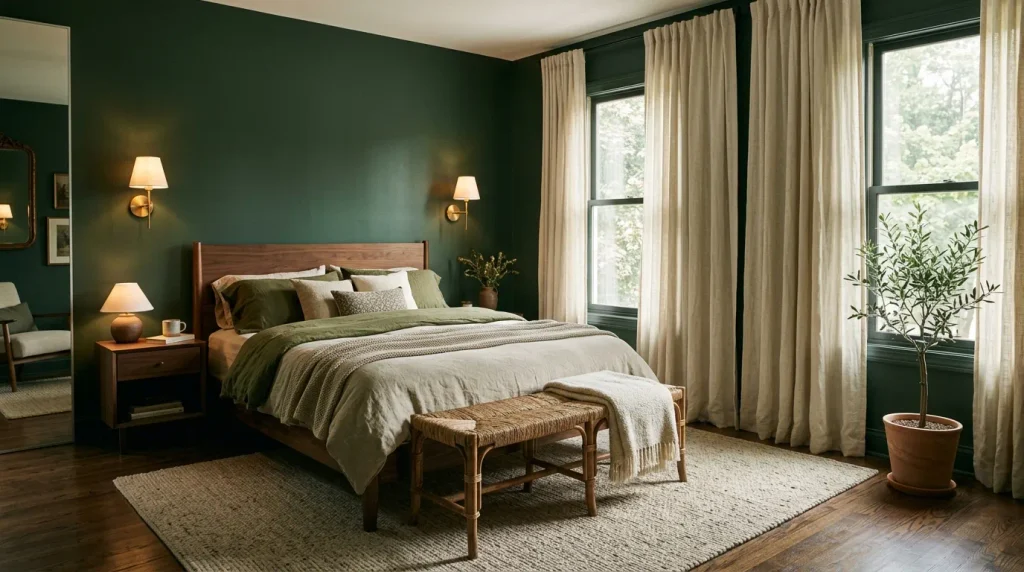
- Floor-length linen curtains soften strong green walls.
- Cream fabric brings brightness without feeling stark.
- Natural folds add movement and texture around the windows.
- Hanging curtains higher can make the ceiling appear taller.
Linen curtain panels can soften a dark bedroom while adding movement around the windows. Choose warm cream, oatmeal, or natural flax instead of bright white to keep the palette cozy. Hang the panels close to the ceiling and let them fall all the way to the floor for a taller, more polished appearance. I’ve noticed that natural linen looks especially beautiful against saturated green because its subtle texture catches daylight without becoming shiny. During the day, filtered sunlight creates soft shadows that make the room feel relaxed, layered, and naturally inviting.
For the best visual balance, allow the curtains to extend slightly beyond the window frame so they can be pushed fully aside when you want maximum daylight. If privacy is important, pair decorative linen panels with simple sheer curtains or a discreet shade underneath. Keep the hardware understated, using black, bronze, or aged brass depending on the rest of the room. This treatment works in both modern and traditional bedrooms because the fabric feels timeless. It also creates an easy way to introduce warmth and softness without changing the existing furniture or wall color.
11. Vintage Wooden Dresser

- Vintage wood furniture adds character to a modern bedroom.
- Walnut tones complement deep green beautifully.
- Brass hardware introduces a subtle warm accent.
- A dresser provides practical storage while strengthening the room’s visual style.
A vintage wooden dresser can bring warmth and personality into a dark bedroom, especially when the furniture has visible grain, slightly aged edges, or original hardware. Walnut, teak, and warm oak all pair naturally with rich green tones. Instead of filling the dresser with decorations, choose just a lamp, ceramic vessel, or small framed print for a relaxed appearance. In my experience, one older or character-filled piece can make an otherwise new bedroom feel much more personal. It adds visual history without requiring the entire room to follow a traditional decorating style.
Place the dresser on a wall where its wood finish can receive some natural or warm artificial light. This helps highlight the grain and keeps the darker color palette from looking flat. If the dresser has brass handles, repeat that finish subtly through a lamp or picture frame rather than adding many metallic pieces. Use the drawers for everyday storage so the surface stays mostly clear. The combination of useful storage and warm character makes this an especially practical upgrade for bedrooms that need style without sacrificing functionality.
12. Black Framed Artwork
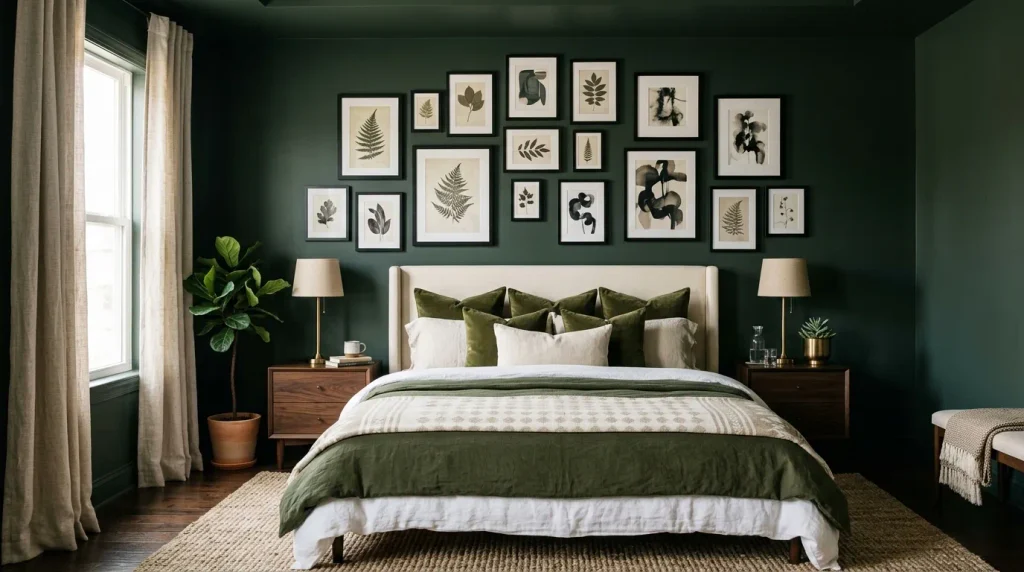
- Black frames create crisp contrast against green walls.
- A small gallery arrangement adds personality without overwhelming the room.
- Botanical prints reinforce the natural color palette.
- Neutral artwork keeps the composition calm and sophisticated.
Black-framed artwork can sharpen the look of a dark bedroom while giving the walls a more finished appearance. Choose botanical prints, abstract drawings, vintage sketches, or simple photography with neutral backgrounds. The black frames create a clear visual edge against deep green, while the artwork itself can introduce cream, tan, or muted brown tones. I’ve noticed that odd-numbered groupings often feel more natural when arranging several smaller pieces above a bed. Keep the spacing consistent, but allow the artwork to feel collected rather than perfectly symmetrical.
For a polished arrangement, center the artwork with the bed and keep the bottom edge roughly six to eight inches above the headboard. If the wall is already visually dramatic, avoid oversized frames with heavy ornamentation. Simple black profiles keep the focus on the artwork and make the room feel contemporary. You can also mix frame sizes while keeping the same finish for cohesion. Add one or two botanical pieces to echo the surrounding green, then let the remaining artwork provide subtle contrast. The result is personal, balanced, and easy to refresh later.
13. Woven Pendant Light
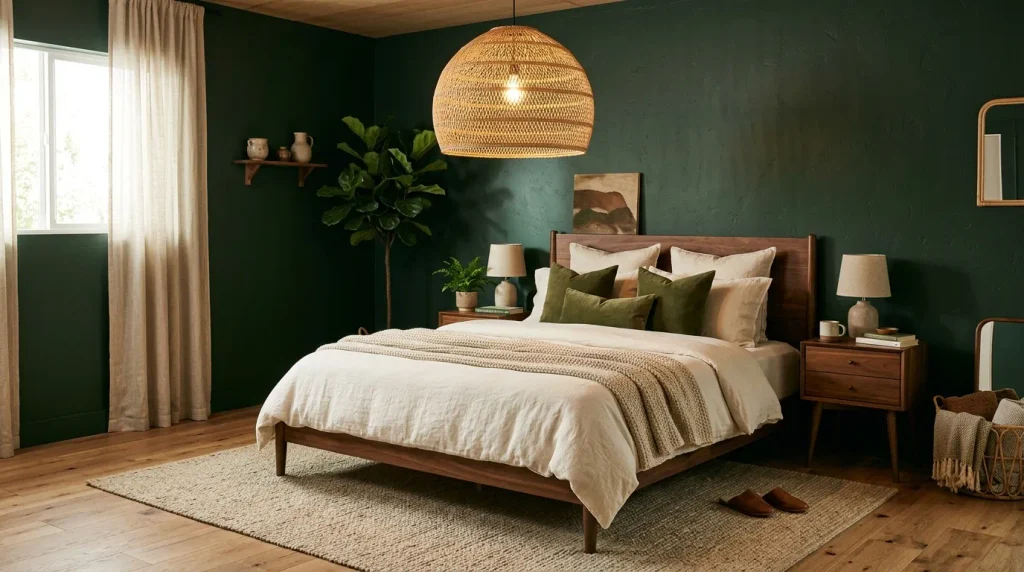
- A woven pendant adds texture above the bed.
- Natural fibers soften the intensity of dark green walls.
- Oversized lighting creates a strong focal point without extra artwork.
- Warm bulbs enhance the cozy atmosphere after sunset.
A woven pendant light can become a beautiful focal point in a dark bedroom while adding texture overhead. Rattan, cane, jute, and other natural fibers work especially well with deep green because their warm, earthy tones prevent the palette from feeling too heavy. Choose a rounded or softly shaped fixture for a relaxed look, then position it centrally above the bed or in the main ceiling area. In my experience, one substantial natural-fiber light often has more impact than several small decorative fixtures because it draws the eye upward and adds dimension.
Pay attention to the size of the pendant so it feels intentional rather than crowded. A wider bedroom can handle an oversized woven shade, while a smaller space benefits from a more compact shape with an open weave. Use a warm-toned bulb so the light filters gently through the material at night. Keep the surrounding decor simple, allowing the pendant to remain visually important. Cream bedding, wooden furniture, and a textured rug can repeat the natural materials below, creating a cohesive room that feels warm, relaxed, and thoughtfully layered.
14. Forest Green Ceiling
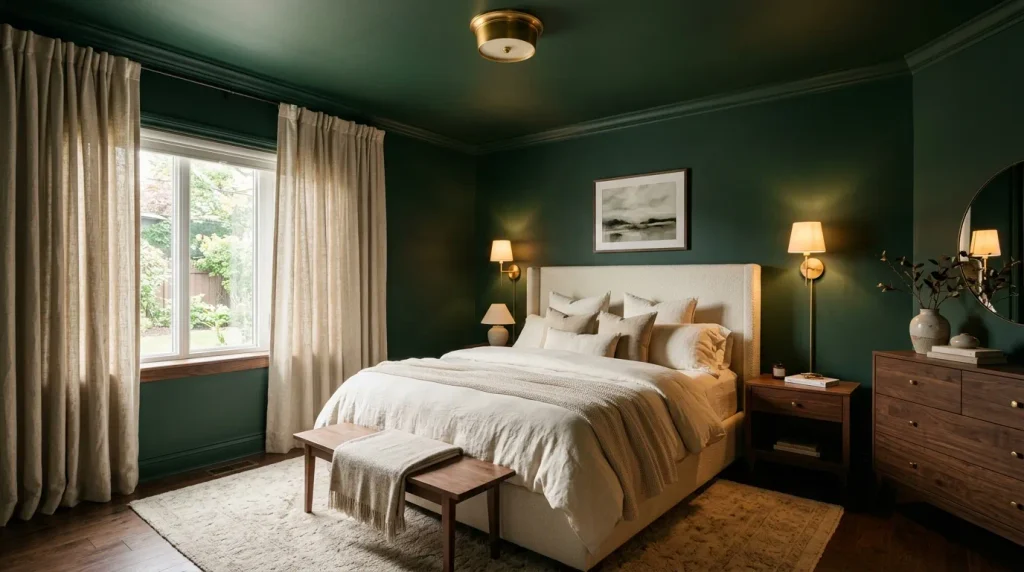
- Extending the color onto the ceiling creates a cocoon-like effect.
- Matching walls and ceiling make the room feel intentionally designed.
- Light bedding prevents the space from becoming too dark.
- Warm lighting brings out the richness of the green finish.
Painting the ceiling the same deep green as the walls creates a dramatic cocoon effect that can make a bedroom feel surprisingly intimate. Rather than treating the ceiling as a separate white surface, carrying the color upward visually wraps the room in one continuous tone. This works especially well in bedrooms with architectural details or generous ceiling height. Choose a slightly softer finish for the ceiling to control reflections. The exact green matters too; muted forest or moss tones usually feel more restful than highly saturated emerald shades when used across multiple surfaces.
Because this approach adds considerable visual weight, balance it with lighter bedding, curtains, and flooring. Cream, oatmeal, warm beige, and pale wood can provide enough contrast without breaking the cozy mood. Use layered lighting rather than relying on one bright overhead fixture. Wall sconces, bedside lamps, and a warm pendant can create different levels of illumination throughout the evening. If the room receives plenty of daylight, the darker ceiling will feel more dramatic by day and softer at night. The finished effect is bold, immersive, and especially memorable in photographs.
15. Olive Accent Chair
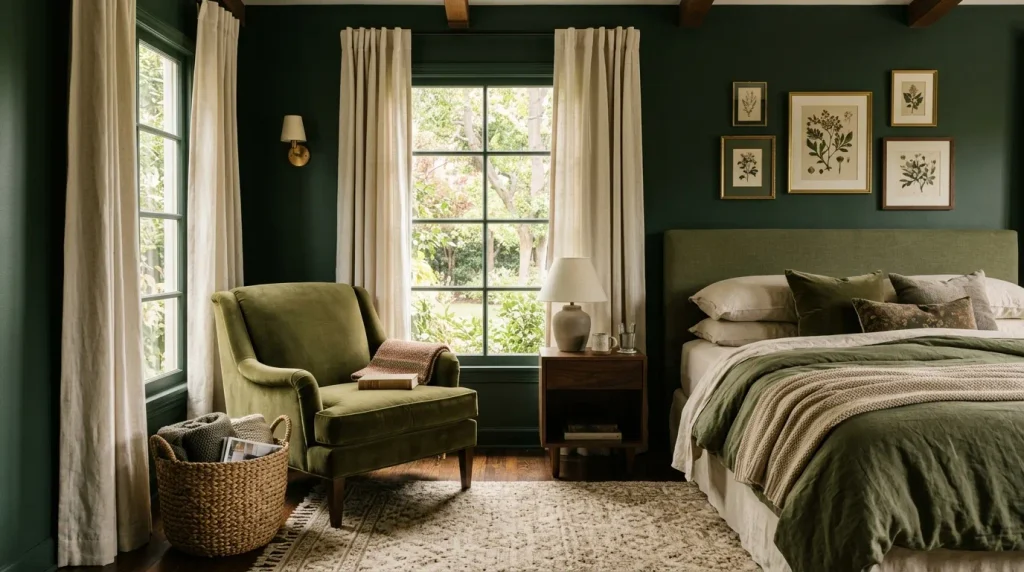
- An accent chair creates a useful reading or dressing corner.
- Olive upholstery connects naturally with deeper green walls.
- A small side table makes the corner more functional.
- Soft textiles make the seating area feel inviting rather than decorative only.
An olive accent chair can turn an unused bedroom corner into a practical little retreat. Choose a curved upholstered chair, linen armchair, or compact lounge seat in olive, moss, or muted sage to complement the deeper wall color. Place it near a window, dresser, or floor lamp where it can serve a real purpose. I’ve seen bedrooms feel much more complete when every corner has a reason to exist. Adding a chair gives you somewhere to read, put on shoes, or simply set down a book without making the room feel crowded.
Keep the chair proportionate to the available floor space, especially if the bedroom is compact. A small round side table can hold a book, cup, or lamp, while a woven basket underneath adds practical storage for blankets. Position the chair slightly away from the wall instead of pushing every piece tightly into the corners. This creates a more natural layout and improves movement around the room. Choose fabrics that repeat colors already present in the bedding or curtains. The result is a cozy secondary zone that adds function, texture, and visual interest.
16. Textured Plaster Walls
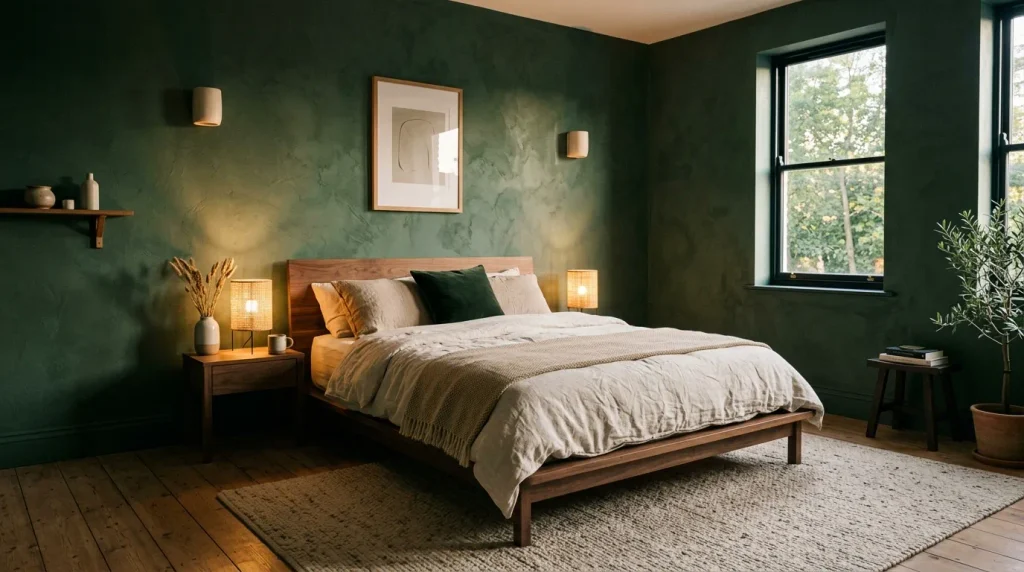
- Textured walls add depth without relying on busy decoration.
- Matte plaster softens the appearance of deep green.
- Natural imperfections create a more organic, lived-in feel.
- Simple furniture keeps the wall texture visually balanced.
Textured plaster walls can make a dark bedroom feel more dimensional without adding extra patterns or artwork. A limewash, mineral plaster, or softly brushed finish gives the green surface subtle variations that change with the light. Instead of looking like a perfectly flat painted wall, the finish creates gentle movement and depth. I’ve noticed this works particularly well in bedrooms where the furniture is simple because the wall itself becomes part of the design. Choose a muted green with warm undertones for a softer result that pairs naturally with wood, linen, and woven materials.
Keep the furniture relatively streamlined so the textured surface has enough visual breathing room. A low wooden bed, simple nightstands, and cream bedding allow the wall to remain the main backdrop. Use directional sconces or lamps to highlight the plaster after sunset, as grazing light can make subtle texture much more noticeable. If you prefer a quieter effect, keep the finish only slightly varied rather than heavily distressed. The result feels handcrafted and sophisticated while still being practical, especially for anyone who wants a richly layered bedroom without filling every surface with accessories.
17. Earthy Neutral Bedding
- Earthy neutrals soften the intensity of deep green.
- Oatmeal and taupe create warmth without looking overly bright.
- Layered fabrics make the bed feel fuller and more comfortable.
- Natural tones create an easy, timeless color palette.
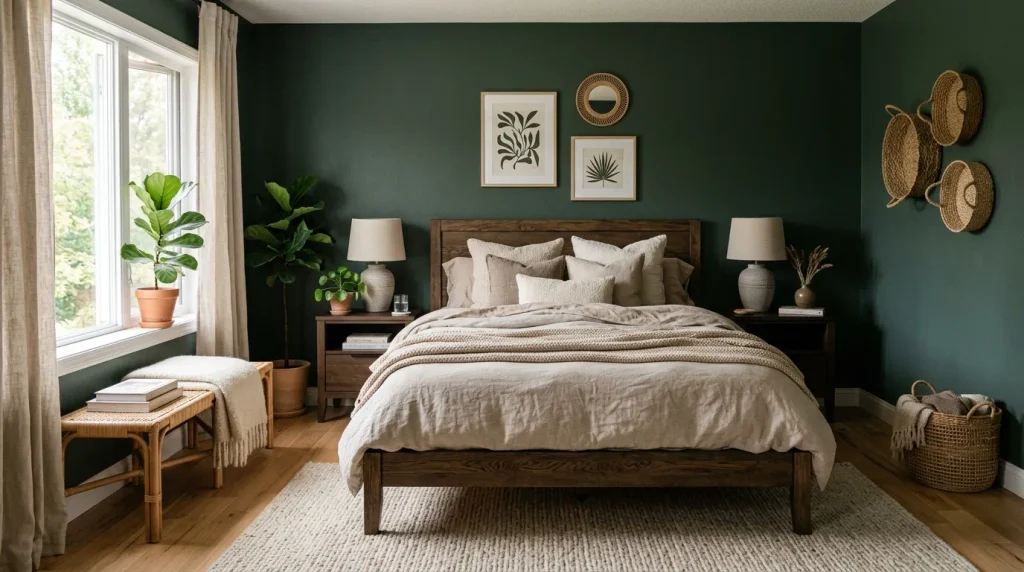
Earthy neutral bedding creates a beautiful contrast when the surrounding bedroom uses a rich green palette. Instead of choosing pure white, try oatmeal, sand, taupe, warm beige, and soft cream. These shades keep the room bright enough to feel comfortable while preserving the moody atmosphere. Mix several fabrics, such as washed linen, cotton, quilted blankets, and a chunky knit throw, to create visual depth. In my experience, neutral bedding is one of the easiest ways to make a dramatic wall color feel livable because it provides a calm resting point for the eyes.
Start with the lightest shade near the face, then gradually introduce darker beige or taupe layers toward the foot of the bed. Add one or two muted green pillows to connect the bedding with the walls, but avoid making every piece match exactly. A slightly rumpled arrangement often feels more inviting than perfectly straight layers. This palette also gives you flexibility when changing seasonal accents. Swap a lightweight throw for a heavier textured blanket in cooler months while keeping the same foundation. The result remains cozy, natural, and easy to update.
18. Built-In Bed Alcove
- A built-in alcove makes the bed feel naturally tucked away.
- Integrated shelves provide useful bedside storage.
- Matching green surfaces create a cohesive architectural feature.
- Warm wood breaks up the darker color without losing the moody effect.
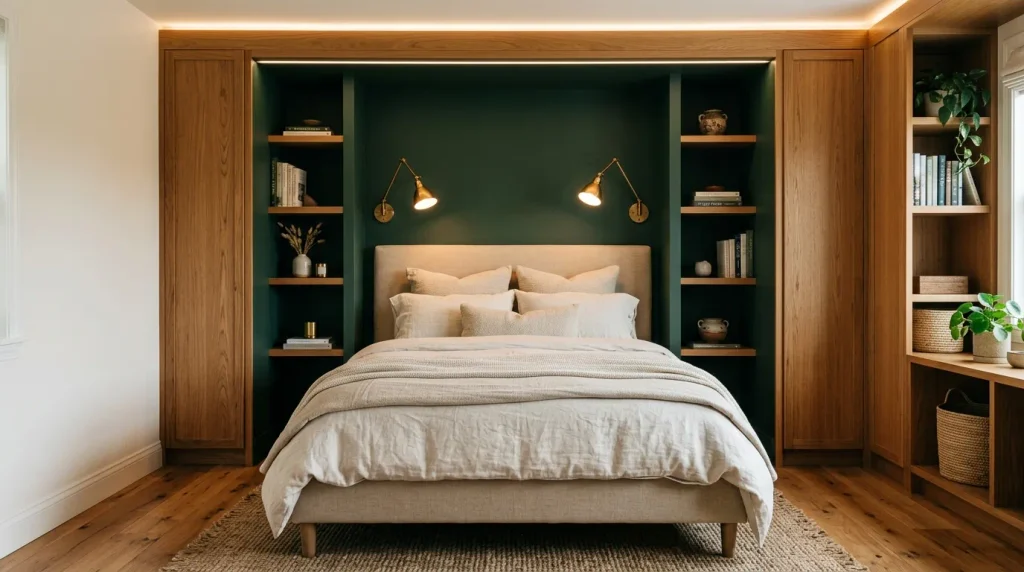
A built-in bed alcove can make a bedroom feel intentionally designed while giving the sleeping area a natural sense of enclosure. Paint the entire recess in a deep green shade so the bed becomes visually connected to the surrounding architecture. Add narrow shelves or recessed niches beside the mattress for books, lamps, and small essentials. This arrangement works especially well in compact rooms because it uses vertical space without requiring bulky bedside furniture. I’ve noticed that built-in details can also make an ordinary bedroom feel more custom, even when the overall decorating style remains simple.
Keep the alcove comfortable rather than overly crowded. Integrated warm lighting can replace traditional bedside lamps, while a few wooden shelves provide enough room for practical items and small decorative pieces. Use light bedding to create contrast against the dark recess, then add one textured throw for softness. If you are planning a renovation, make sure the alcove leaves enough clearance for making the bed and moving around it comfortably. When finished thoughtfully, the feature combines storage, architecture, and atmosphere in one compact design element.
19. Layered Wall Sconces
- Multiple light sources create a softer evening atmosphere.
- Wall sconces keep bedside surfaces uncluttered.
- Brass finishes add warmth against rich green walls.
- Adjustable fixtures make the room more practical for reading.
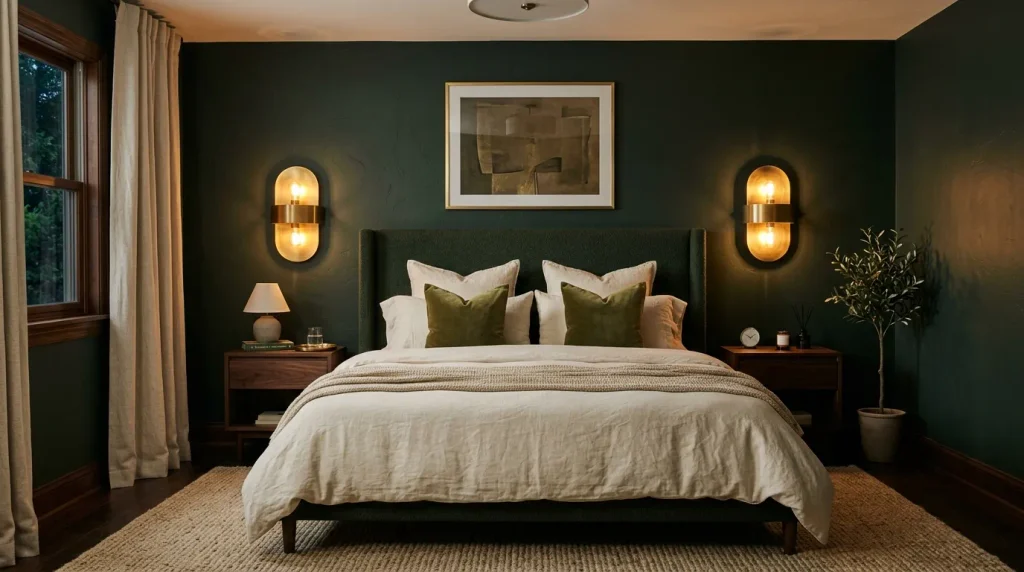
Layered wall sconces can make a dark bedroom feel warmer while giving you better control over evening lighting. Instead of relying on one ceiling fixture, combine bedside sconces with a small floor lamp or softly glowing table light. Choose warm bulbs and fixtures in brass, bronze, or matte black to complement the green palette. The different light sources create gentle pools of illumination rather than one harsh beam. In my experience, this approach makes the room feel more comfortable at night because you can adjust the brightness and location of light depending on what you are doing.
Mount bedside sconces at a height that works for reading while lying or sitting in bed, and consider adjustable arms if flexibility matters. Keep the fixtures visually balanced on both sides of the headboard, but they do not have to be identical if you prefer a more collected style. Use dimmable bulbs whenever possible so the lighting can shift from practical to atmospheric. Pair the sconces with soft bedding and textured walls to diffuse the glow. The finished room feels layered, functional, and noticeably more inviting after sunset.
20. Moody Reading Corner
- A dedicated chair creates a relaxing secondary zone.
- Warm lighting makes the corner useful after sunset.
- Cream upholstery adds contrast against dark green walls.
- A small table keeps books and everyday items within reach.
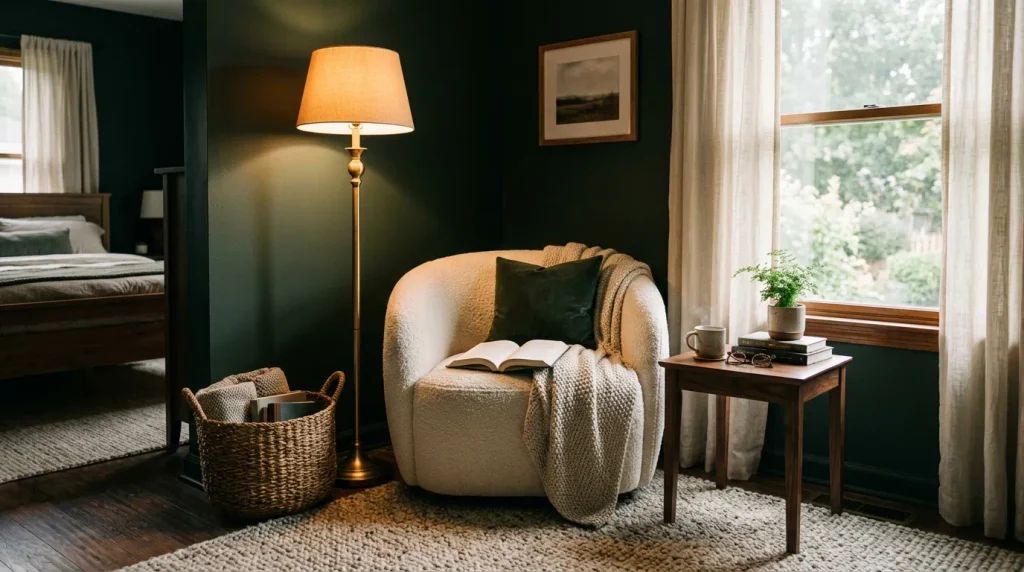
A dedicated reading corner can transform an unused bedroom area into one of the most inviting parts of the room. Place a comfortable chair near a window or quiet wall, then add a small side table and warm floor lamp. Choose upholstery in cream, camel, beige, or muted olive to connect with the existing palette. A soft throw draped over the chair adds texture without much effort. I’ve noticed that these small functional corners make bedrooms feel more personal because they encourage activities beyond sleeping while still keeping the overall atmosphere calm.
Keep the arrangement compact enough to preserve clear walking space around the bed. A narrow table is usually enough for a book, phone, or cup, while a basket can hold blankets underneath or beside the chair. Choose a floor lamp with an adjustable shade if you want focused reading light. During the day, position the chair where natural light is strongest without blocking curtains or windows. At night, the lamp creates a warm visual anchor that balances bedside lighting. This simple setup adds function, softness, and another attractive composition to the bedroom.
21. Antique Mirror Accent
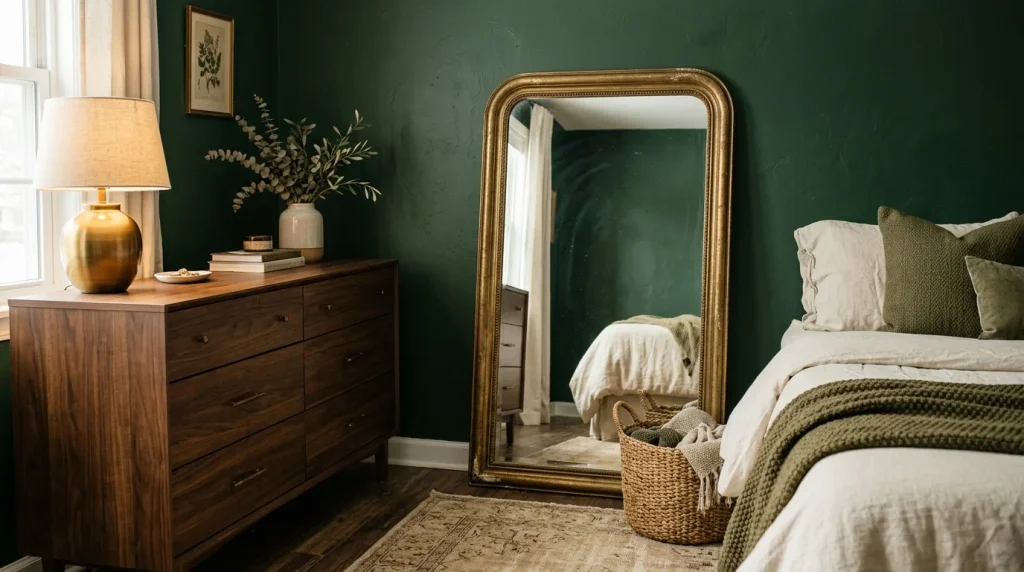
- An antique mirror reflects light without making the room feel overly modern.
- A warm frame complements wood and brass details.
- Large mirrors can visually open darker spaces.
- Leaning the mirror creates a relaxed, collected appearance.
An antique mirror can bring light, character, and subtle contrast into a dark bedroom without disrupting its cozy atmosphere. Look for aged glass with a slightly softened reflection and a frame in brass, bronze, or dark wood. Place a larger mirror opposite or near a window so it can reflect available daylight and make the room feel more open. I’ve seen aged mirrors work particularly well in moody interiors because their imperfect surface adds character instead of creating the sharp, contemporary effect of a completely clear mirror.
Lean a full-length mirror against the wall for a relaxed look, or mount a smaller vintage-style mirror above a dresser. Keep the surrounding decoration simple so the frame and reflective surface remain noticeable. Positioning matters more than quantity; one well-placed mirror can have greater impact than several small ones scattered around the room. Pair it with warm wood, cream textiles, and muted green accents for a cohesive palette. The result adds function while gently bouncing light around the space, helping the bedroom feel layered rather than visually closed in.
22. Cozy Window Seat
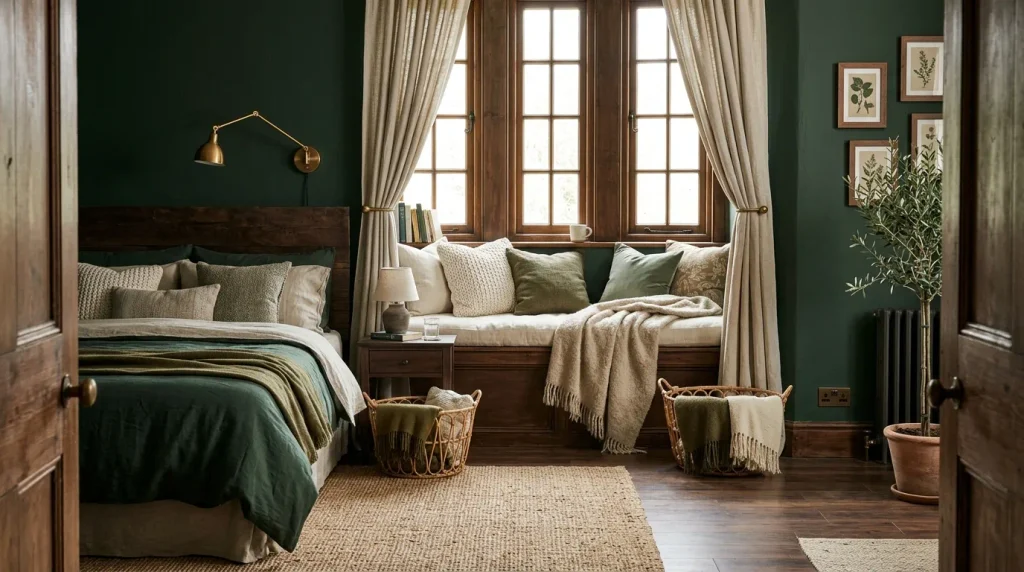
- A window seat turns unused space into a relaxing retreat.
- Cream cushions brighten the darker green surroundings.
- Layered pillows make the seating feel comfortable and inviting.
- Built-in storage underneath can hide blankets, books, or bedding.
A cozy window seat can become a beautiful finishing feature in a dark bedroom, especially when natural light enters through a large window. Use a simple built-in bench with a thick cream cushion, then layer it with olive, beige, and warm brown pillows. The contrast between the soft textiles and deep green walls creates an inviting little escape without adding another large piece of furniture. In my experience, window seating works best when it feels useful rather than purely decorative. A comfortable cushion and nearby basket can make the space practical every day.
Make the seat deep enough for comfortable sitting and choose washable fabrics if the area will be used frequently. Add a small reading lamp or wall sconce nearby if you want to use the space in the evening. Curtains should frame the window without covering the seat completely, allowing natural light to remain the main feature during the day. Storage drawers or lift-up compartments underneath can provide valuable space for extra blankets. With soft textures, warm lighting, and a restrained earthy palette, the window seat becomes a peaceful final layer in the bedroom design.
Conclusion
Creating a cozy dark green bedroom is less about making everything dark and more about building the right balance of color, texture, light, and warmth. Rich green walls can provide a dramatic foundation, while cream bedding, natural wood, woven materials, brass accents, and soft lighting keep the room welcoming. Small changes can make a noticeable difference, too. Try updating the bedding, adding warmer lighting, introducing a textured rug, or creating a comfortable reading corner. With a thoughtful mix of practical pieces and beautiful details, your bedroom can become a moody, peaceful retreat that feels personal and inviting every day.