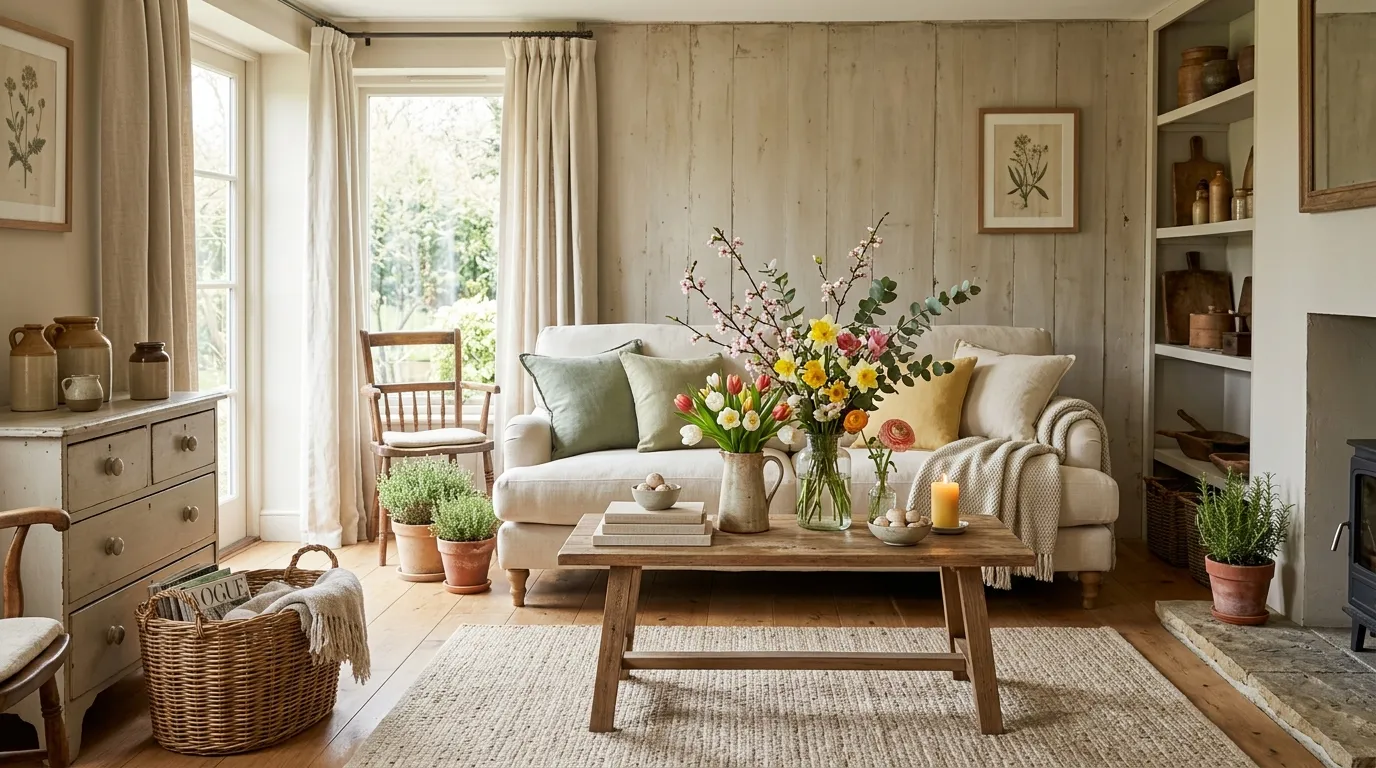
Spring has a way of making a home feel ready for a fresh start. Open the windows, bring in a few branches, soften the textures, and suddenly even a familiar room feels lighter. If you love warm wood, vintage finds, natural fabrics, and simple farmhouse details, rustic spring decor is an easy way to welcome the season without losing the cozy character of your home.
From weathered benches and mason jar flowers to woven baskets, botanical prints, and relaxed linen layers, these ideas focus on small changes that create a noticeable difference. You don’t need to redesign an entire room or buy everything new. A few thoughtful textures, natural colors, and seasonal touches can make your home feel brighter, warmer, and beautifully lived in.
1. Weathered Farmhouse Bench
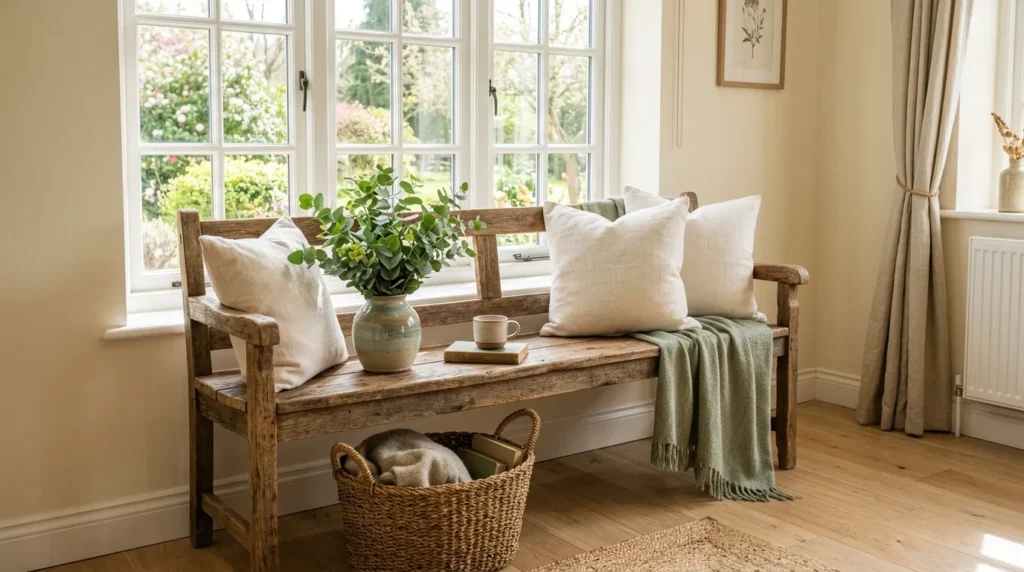
- A reclaimed wood bench adds instant farmhouse character without overwhelming the room.
- Soft linen cushions make the sturdy wood feel lighter and more comfortable for spring.
- A woven basket underneath creates useful hidden storage for blankets or everyday clutter.
- Fresh eucalyptus or delicate branches bring height and a natural seasonal touch.
- Keeping the colors muted helps heavier rustic materials feel fresh and airy.
Bring spring indoors with a weathered farmhouse bench dressed in soft linen and fresh greenery. A reclaimed wood bench instantly adds warmth, texture, and that relaxed country character that makes a room feel lived in rather than overly styled. Place it beneath a window, along an entry wall, or at the foot of a bed, then layer a neutral cushion with a sage or muted floral throw. In my experience, keeping the palette restrained makes rustic pieces feel lighter for spring. Add one woven basket underneath for shoes, blankets, or everyday clutter, so the display stays beautiful and useful.
A simple bench can become the visual anchor that pulls an entire spring corner together without making the room feel crowded. Choose naturally aged timber with visible knots, small imperfections, and a matte finish instead of polished wood. Pair it with cream, oatmeal, dusty green, or faded blue textiles to soften the heavier material. Nearby, a ceramic vase filled with eucalyptus or delicate branches adds height while keeping the arrangement airy. This combination works especially well in smaller homes because the bench provides seating and storage while still creating a charming country-inspired focal point for the season.
2. Mason Jar Florals
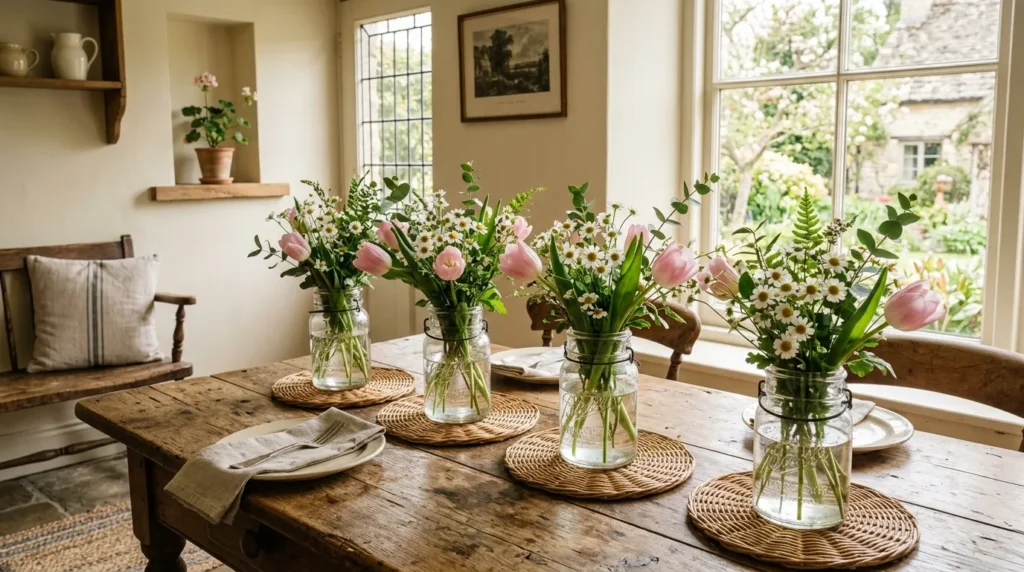
- Mason jars turn simple grocery-store flowers into an easy farmhouse centerpiece.
- Grouping jars in different sizes creates more visual interest than using identical containers.
- White blooms and soft pastels keep the arrangement feeling fresh rather than heavy.
- Place a few jars along a dining table, shelf, or kitchen counter for repetition.
- Add twine around one or two jars for a subtle handmade detail.
Nothing refreshes a farmhouse surface faster than a few mason jars filled with cheerful spring flowers. Their clear glass keeps the arrangement simple, while the familiar shape adds an instantly recognizable country touch. Use white daisies, tulips, baby’s breath, or small branches in varying heights, then place the jars together on a distressed wood table or open shelf. Rustic spring decor works especially well when natural materials do most of the decorating. I’ve noticed that uneven flower heights make these arrangements look more relaxed and authentic, especially when the blooms are allowed to bend naturally instead of being tightly arranged.
You don’t need expensive containers or elaborate floral skills to make this display work. Collect three to five jars in slightly different sizes and fill each with a small, loose bouquet. Keep the flowers within a soft palette of white, blush, pale yellow, and fresh green so the arrangement feels connected without looking too coordinated. A strip of natural twine around a jar adds texture without becoming distracting. On a dining table, space the jars along the center rather than creating one tall centerpiece. That leaves plenty of room for serving dishes while still giving the room a noticeable seasonal update.
Also Read : 23 Spring Tablescapes Ideas for a Fresh Beautiful Table
3. Linen Window Layers
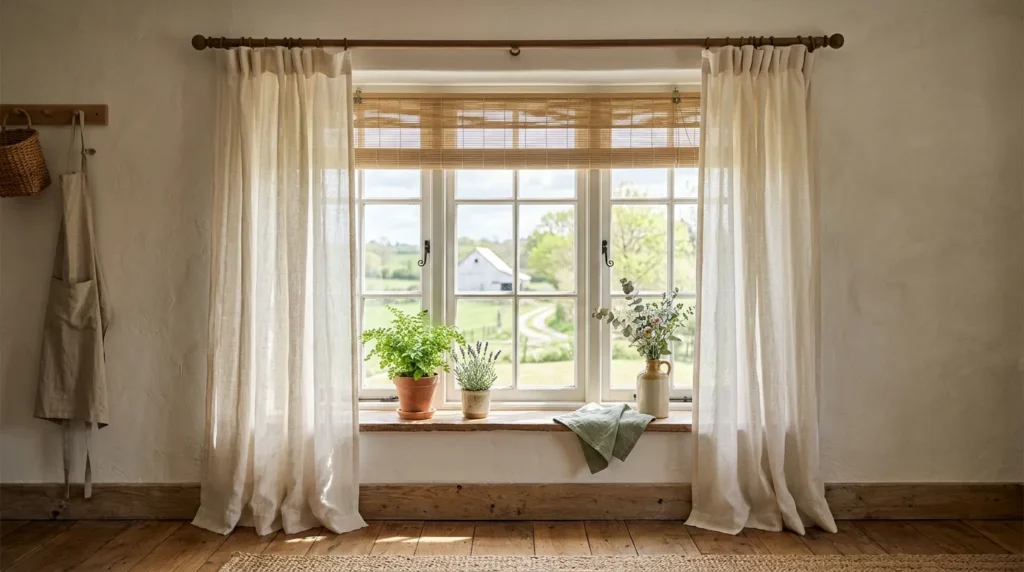
- Lightweight linen curtains soften bright windows without blocking the feeling of spring daylight.
- Natural woven shades add texture and provide privacy when needed.
- Cream, ivory, and muted sage tones make the room feel brighter and calmer.
- Letting curtains hang naturally creates a relaxed look instead of a formal finish.
- Keep the window area uncluttered so sunlight becomes part of the decoration.
Letting more daylight into a room can completely change how spring decorating feels. Lightweight linen curtains create a soft frame around the window while preserving the bright, relaxed character that suits a country home. Choose cream, ivory, oatmeal, or gently washed sage fabric, and allow the panels to fall naturally rather than pressing them into perfect folds. Pairing them with a simple wood curtain rod adds warmth without making the window look heavy. The result is a softer room with more texture, better light, and an easy connection to the outdoors that feels especially inviting during spring.
Layering window treatments can also solve practical problems while making the space look thoughtfully finished. A woven shade provides privacy during the day, while sheer or lightweight linen panels soften the edges and add movement. I’ve seen this combination work particularly well in dining rooms and bedrooms where strong sunlight can otherwise make neutral interiors feel stark. Keep surrounding accessories simple, such as a small potted herb, ceramic planter, or wooden stool. When the window remains visually open, natural light becomes part of the decorating scheme and makes nearby wood, baskets, and textiles appear warmer and more dimensional.
4. Vintage Garden Ladder
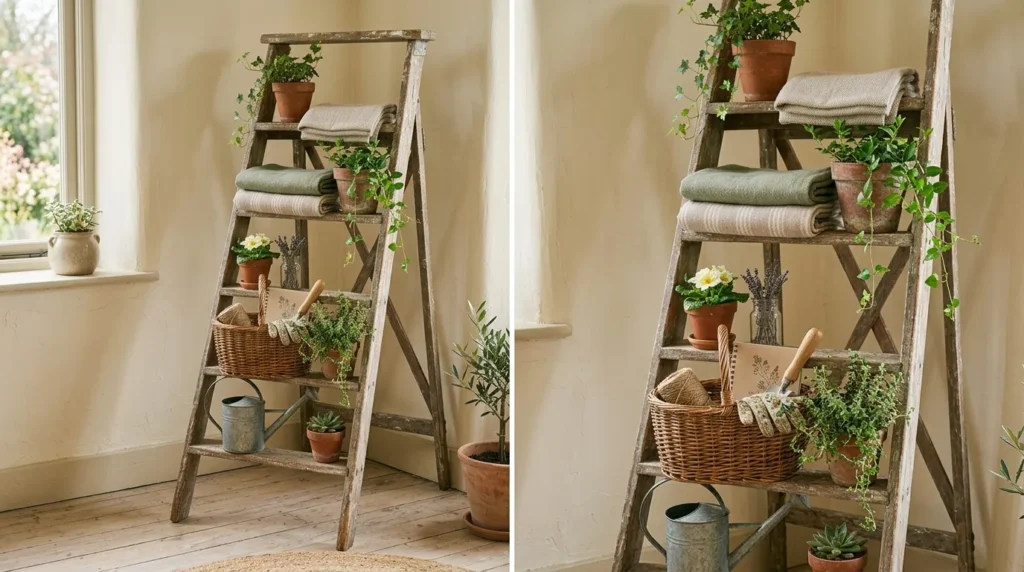
- A vintage ladder uses vertical space without taking up much floor area.
- Folded throws add softness and make the display feel practical.
- Small potted plants introduce fresh greenery without overwhelming the arrangement.
- Distressed paint and exposed wood grain give the corner authentic farmhouse texture.
- Lean the ladder securely against the wall and keep heavier baskets low for stability.
A forgotten wooden ladder can become one of the most charming spring accents in a country home. Lean a weathered ladder against a cream or softly painted wall, then drape lightweight linen throws across two or three rungs. Add a small woven basket near the bottom and a few trailing plants higher up to create layers. The vertical shape naturally draws the eye upward, making the room feel taller without adding bulky furniture. This is one of those rustic spring decor ideas that feels collected rather than purchased, especially when the ladder has chipped paint, visible grain, and small imperfections.
The best part is how easily the display can change throughout the season. Swap heavier winter blankets for lightweight cotton throws in ivory, sage, faded blue, or muted floral patterns as temperatures rise. Small terracotta pots can add earthy color, while trailing greenery softens the hard lines of the ladder. I’ve noticed that keeping the accessories slightly uneven makes the arrangement feel much more natural. Avoid filling every rung; leaving open spaces allows the wood itself to remain visible. Place the ladder in an entryway, bedroom corner, or living room where its vertical shape can become a simple decorative focal point.
Also Read : 25 Covered Patio Design Ideas for Stylish Outdoor Living
5. Antique Window Display
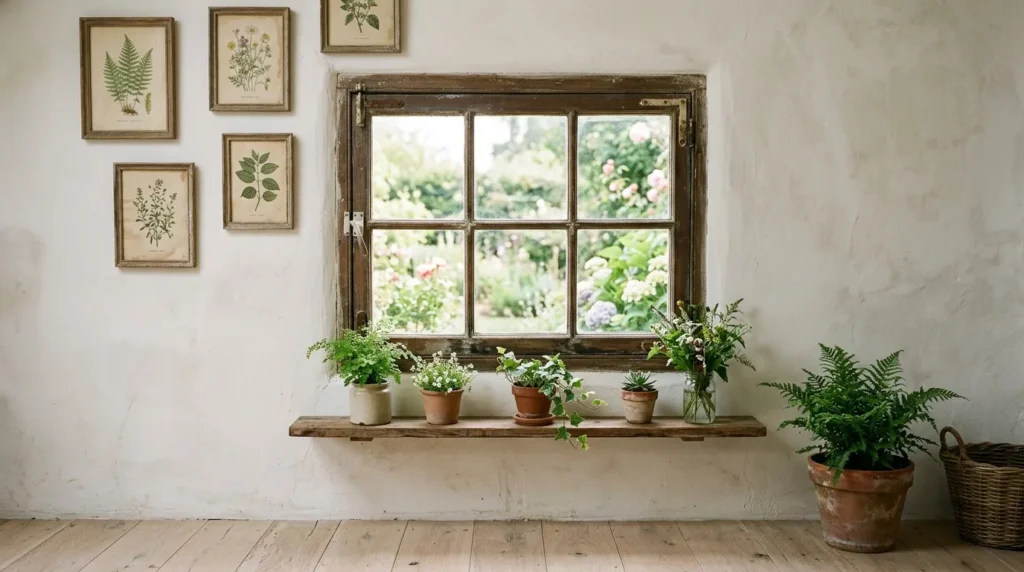
- An old window frame creates architectural interest without expensive remodeling.
- Botanical prints reinforce the spring theme while keeping the display timeless.
- A narrow shelf below provides space for small ceramics and greenery.
- Distressed wood pairs beautifully with white walls and soft neutral furnishings.
- Check old frames for loose glass, splinters, or unstable hardware before displaying them.
Old architectural pieces can give a room personality that new decorations often struggle to recreate. An antique window frame mounted against a light wall creates an instant focal point while bringing the character of an old farmhouse indoors. Leave the glass panes clear or fill them with small botanical prints for a subtle spring update. Beneath the frame, place a narrow wooden shelf with a ceramic vase, tiny planter, or vintage-inspired candle. The combination of aged wood, simple artwork, and fresh greenery creates rustic spring decor that feels collected over time rather than arranged all at once.
This display works particularly well when the surrounding furniture stays understated. A cream-painted wall gives the darker frame enough contrast to stand out, while pale oak, linen, and woven textures keep the overall corner from feeling too heavy. For a more casual look, mix two or three small botanical illustrations instead of using matching artwork in every pane. In my experience, leaving some sections completely empty makes vintage frames look more authentic and less staged. If you’re using a genuinely old window, inspect it carefully first and secure it properly so the decorative piece remains both attractive and safe.
6. Woven Entry Baskets
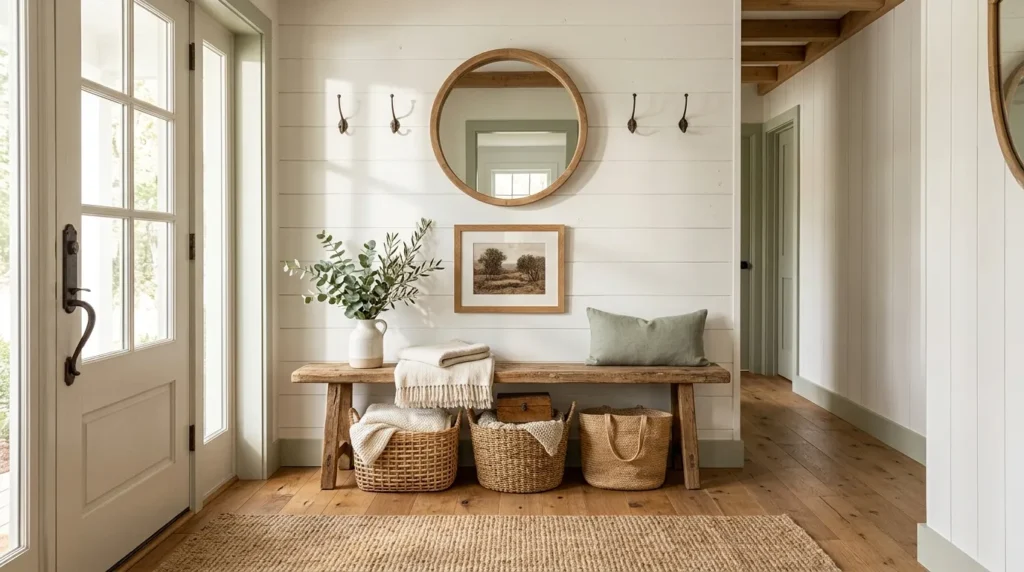
- Woven baskets add warmth while giving everyday items a dedicated place.
- Different basket shapes create texture without requiring many decorative accessories.
- Use larger baskets for shoes or blankets and smaller ones for keys and accessories.
- Natural fibers work beautifully with aged wood and soft spring textiles.
- Keep the entryway practical so the decoration supports everyday routines.
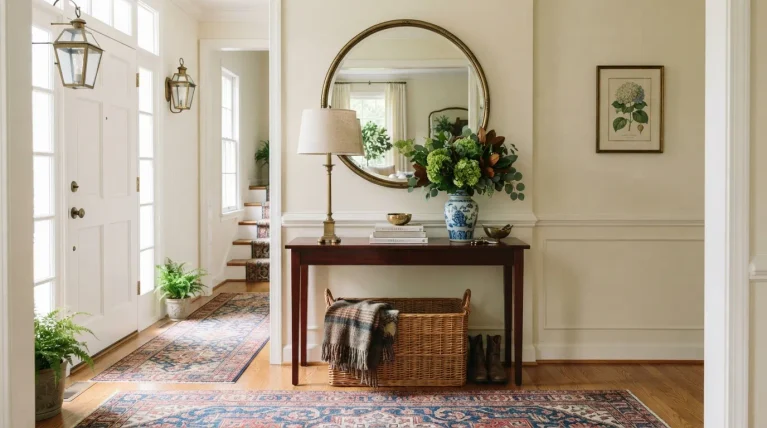
A few woven baskets can make a busy entryway look instantly calmer while adding the natural texture that country interiors do so well. Place two or three baskets beneath a weathered wood bench, then use them for shoes, scarves, lightweight blankets, or everyday accessories. Their warm fibers soften hard flooring and plain walls without adding visual clutter. Choose baskets in slightly different shapes or weaves so the arrangement feels collected rather than perfectly matched. For spring, pair them with cream linen, pale sage accents, and a small vase of fresh branches to create a welcoming entry that feels organized and naturally styled.
Function is what makes this idea especially useful in real homes. Instead of decorating a surface that rarely gets touched, you’re improving an area the household uses every day. A large lidded basket can hide less attractive essentials, while an open basket keeps frequently used items within easy reach. I’ve noticed that natural woven pieces also photograph beautifully because their texture remains visible even in simple, neutral rooms. Keep the palette close to honey, tan, ivory, and muted green, and avoid overcrowding the bench. A small ceramic vase or single plant is usually enough to finish the arrangement without making it feel busy.
7. Farmhouse Spring Wreath
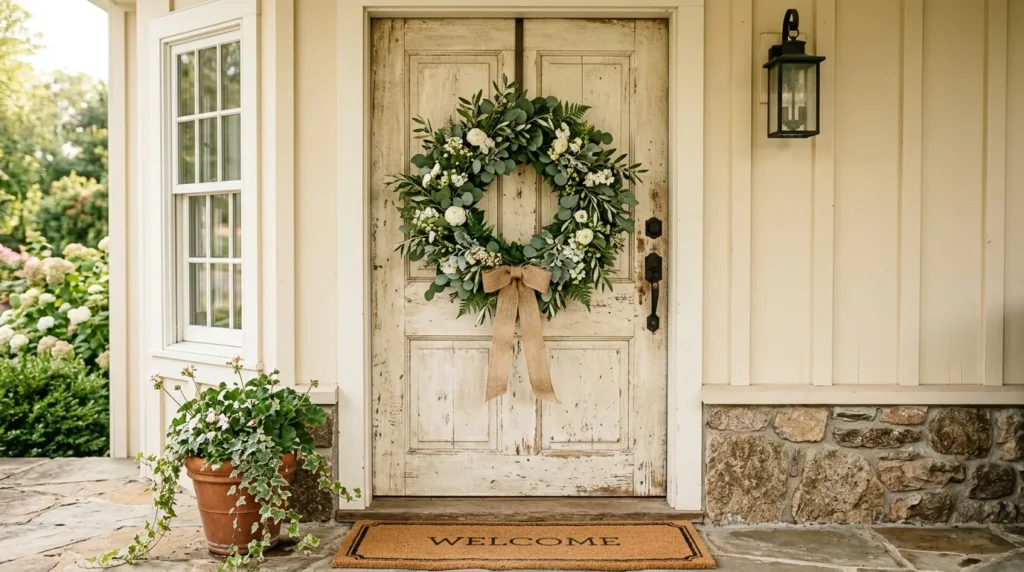
- A simple greenery wreath gives the entrance an immediate seasonal update.
- White flowers keep the arrangement fresh without making it overly colorful.
- A jute or linen ribbon adds natural texture and farmhouse character.
- Hang the wreath on a pantry, interior, or exterior door for flexible styling.
- Keep the greenery slightly loose for a relaxed, handcrafted appearance.
A fresh wreath is one of the easiest ways to make a home feel ready for spring before guests even walk through the door. Start with eucalyptus, olive branches, or another soft green base, then add a few white blossoms for a clean seasonal contrast. Hang the finished wreath from a distressed wood door using natural jute or linen ribbon. The muted palette works beautifully with farmhouse finishes because it adds color without competing with the architecture. Rustic spring decor feels especially inviting when the greenery looks slightly loose and organic rather than perfectly symmetrical or overly polished.
You can also bring this idea indoors when you want the seasonal feeling to continue throughout the house. A smaller wreath looks lovely on a pantry door, kitchen cabinet, bedroom door, or above a simple console table. Choose foliage that complements the room instead of introducing an entirely new color scheme. In my experience, white blooms and soft greens are particularly versatile because they work with both warm wood and painted furniture. If using fresh greenery, check it regularly for dryness and replace it when needed. Artificial stems can create the same visual effect when you want a longer-lasting arrangement.
8. Distressed Kitchen Shelves
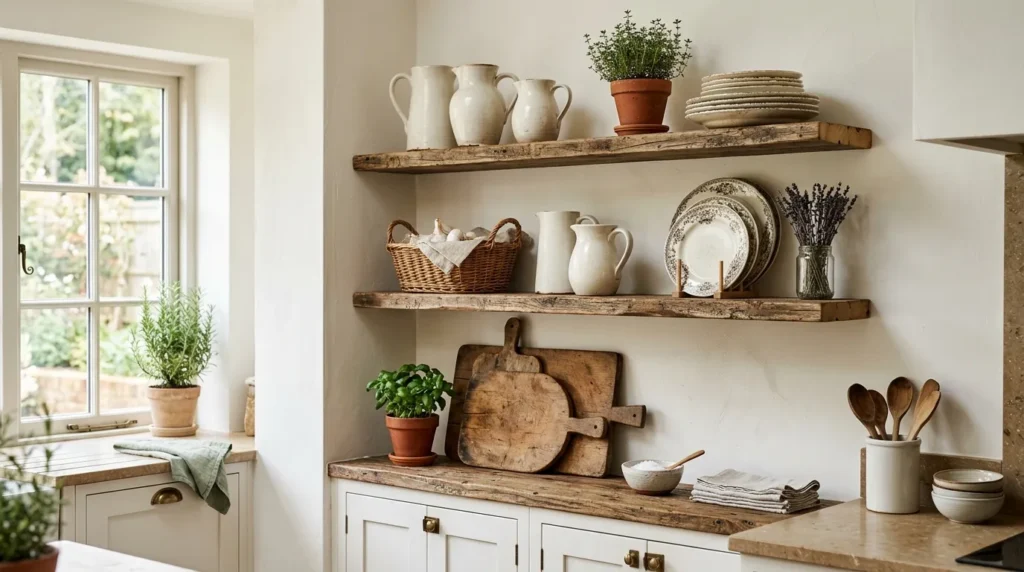
- Open shelves make everyday kitchen pieces part of the seasonal styling.
- Aged wood adds warmth against painted walls and simple cabinetry.
- Displaying useful items keeps the shelves attractive without feeling purely decorative.
- Fresh herbs provide color, fragrance, and a practical spring element.
- Leave breathing room between objects so the shelves stay visually calm.
Open shelving can turn an ordinary kitchen wall into a warm display of useful pieces and seasonal texture. Choose shelves with a distressed or naturally aged finish, then style them with cream pitchers, vintage plates, wooden cutting boards, woven baskets, and small terracotta pots. Keep frequently used pieces within easy reach so the arrangement remains practical rather than becoming a display that nobody touches. A few fresh herbs can add a lively green accent between neutral ceramics. The combination creates a relaxed country kitchen where the materials themselves provide most of the visual interest without needing excessive decoration.
The key is to create rhythm without filling every inch of the shelf. Start with one larger piece, such as a pitcher or wooden board, then add smaller ceramics and greenery around it. Vary heights and textures while keeping the overall color palette consistent. That approach prevents open shelving from looking chaotic, especially in a smaller kitchen. I’ve noticed that natural wood, creamy pottery, and woven materials become more attractive when they are given a little empty space around them. Leave enough room to remove dishes easily, and your spring display will remain beautiful while still supporting everyday cooking.
9. Floral Farmhouse Table
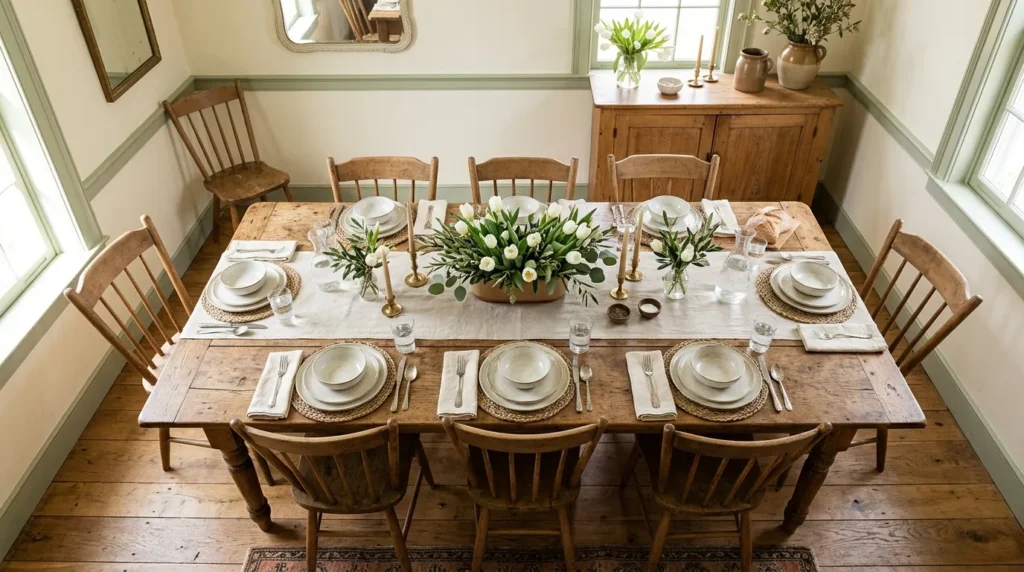
- A low floral centerpiece keeps the dining table inviting without blocking conversation.
- Linen runners soften the heavier appearance of reclaimed or aged wood.
- Woven placemats add natural texture while remaining practical for everyday meals.
- White flowers create a clean spring focal point against warm timber.
- Keep the centerpiece narrow enough to leave generous space for serving dishes.
A farmhouse dining table already has plenty of character, so spring styling works best when it enhances the wood instead of hiding it. Lay a narrow linen runner through the center and place a low arrangement of white tulips, delicate branches, or seasonal greenery on top. Add woven placemats and simple cream ceramics around the arrangement for a relaxed setting that works for both everyday meals and weekend gatherings. The natural materials create a layered look without feeling formal. A restrained palette also lets the texture of the table remain visible, which is often what makes country dining spaces feel warm.
Think about how the table will actually be used before choosing decorative pieces. A tall arrangement may look beautiful in photographs but can make conversation awkward during dinner. A low centerpiece keeps sightlines open while still giving the room a noticeable seasonal focal point. In my experience, one generous floral arrangement often looks better than several small decorative objects competing for attention. Add a few wooden serving boards or a ceramic pitcher if the table needs more height. Otherwise, let the flowers, linen, and aged timber provide the visual balance and keep the setting comfortable for everyday living.
10. Cottage Corner Chair
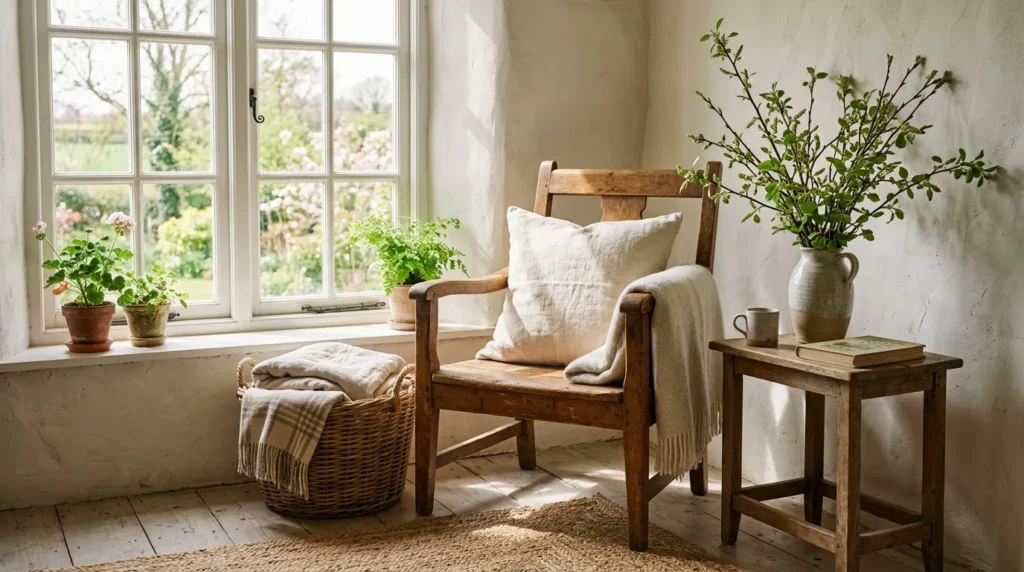
- A single vintage chair can create a cozy focal point without rearranging the whole room.
- Linen upholstery softens the appearance of aged wood and makes the chair feel inviting.
- A nearby basket adds practical storage for throws, books, or magazines.
- Fresh greenery brings a subtle seasonal accent without overwhelming the neutral palette.
- Position the chair near a window to make natural light part of the setup.
A quiet corner can become the coziest spot in the house with just one well-chosen chair. Look for a vintage wooden armchair with visible grain, gently worn edges, or a simple farmhouse silhouette, then soften it with a cream linen cushion. Position it near a bright window and add a small side table with a ceramic vase or fresh branch. A woven basket beside the chair can hold a lightweight throw. This arrangement works because it creates a clear purpose for an otherwise empty corner while adding layers of texture and natural light that make the room feel more welcoming.
The beauty of this setup is that it doesn’t require a large room or a complete furniture makeover. Even a narrow corner beside a bedroom window or living room cabinet can accommodate a compact chair. Keep the accessories limited so the chair remains the main feature. Soft ivory, oatmeal, faded green, and natural wood create an easy palette that transitions naturally through spring. I’ve noticed that slightly imperfect vintage furniture often gives these corners more personality than brand-new matching pieces. Add a small book stack or simple ceramic cup if desired, but leave enough open space for the chair to remain visually relaxed.
11. Galvanized Planter Trio
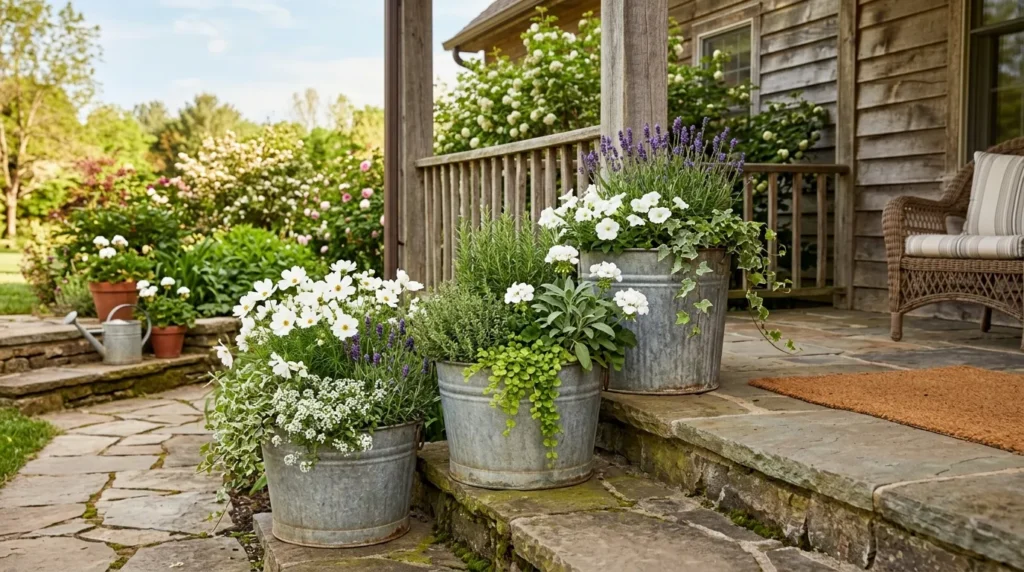
- Galvanized planters introduce cool metal texture against warm wood and natural fibers.
- Different heights create a layered arrangement without complicated styling.
- Herbs and flowers can combine beauty with practical everyday use.
- White blooms soften the industrial appearance of galvanized containers.
- Place the grouping near an entrance, porch step, kitchen window, or sunny patio.
Galvanized containers bring a useful contrast to the warmer materials found in country homes. Arrange three planters in different sizes or heights, filling them with white flowers, lavender, herbs, or trailing greenery. The cool gray metal looks especially attractive beside weathered wood, stone, and natural woven textures. Instead of lining the containers perfectly, stagger them slightly so the grouping feels casual and dimensional. This small change can make a porch, kitchen entrance, or sunny patio feel noticeably more finished. It’s a simple way to introduce spring plants while keeping the overall look grounded in farmhouse materials.
For the strongest visual effect, combine plants with different shapes rather than choosing three identical varieties. A taller herb or flowering plant can sit behind a rounded middle container, while a trailing plant softens the front edge. Keep flowers mostly white, lavender, pale yellow, or soft pink so the metal remains part of the palette. That balance is useful when you want seasonal color without creating a bright garden display. If the planters will stay outdoors, make sure they have adequate drainage. A few small drainage holes can prevent water from collecting around the roots after spring rain.
12. Vintage Botanical Gallery
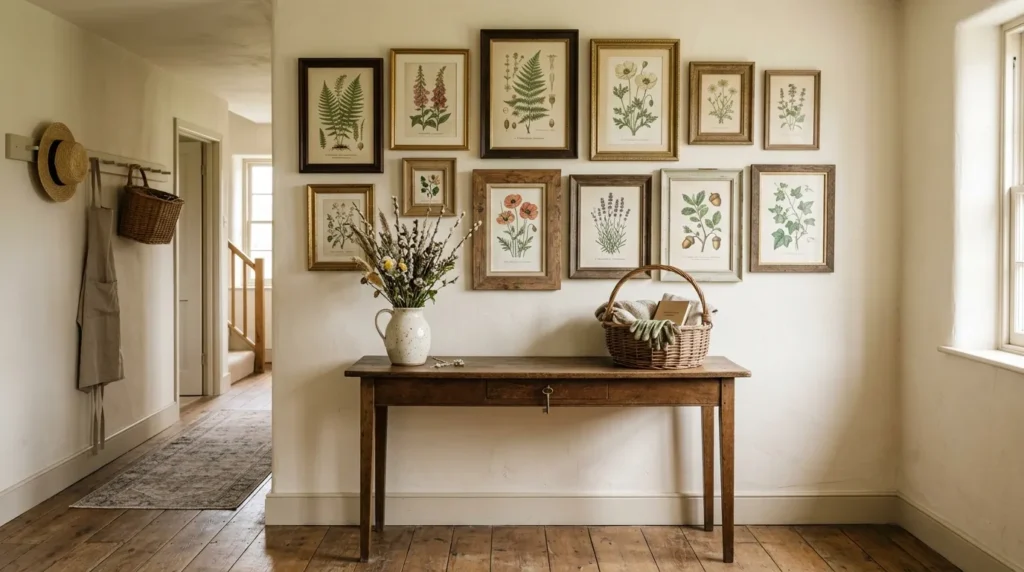
- Botanical prints bring spring-inspired color indoors without relying on fresh flowers.
- Mismatched wooden frames add character and prevent the arrangement from feeling too formal.
- A narrow gallery works well in hallways and smaller wall spaces.
- Keep artwork within a related color palette for a cohesive appearance.
- Use paper or framed prints rather than fragile originals in high-traffic areas.
Botanical artwork can bring the feeling of a spring garden indoors while adding lasting visual interest to otherwise plain walls. Gather several prints featuring leaves, wildflowers, herbs, or delicate garden specimens, then place them in aged wood frames with slightly different finishes. Arrange them above a narrow console, dining bench, or hallway table so the collection becomes a natural focal point. Soft greens, cream backgrounds, faded yellow, and muted botanical tones blend easily with country interiors. This approach adds seasonal character without relying entirely on temporary decorations, making the wall useful throughout spring and beyond.
A gallery arrangement looks most natural when the frames share a general feeling but aren’t perfectly identical. Start by placing the largest print near the center, then build outward with smaller pieces while leaving consistent breathing room. Keep the artwork at a comfortable viewing height, especially in hallways where people pass close to the wall. I’ve seen this work particularly well with weathered oak furniture because the wood frames visually connect the artwork to the rest of the room. Finish the area with one ceramic vase or woven basket, rather than adding too many accessories that could compete with the prints.
13. Burlap Table Runner
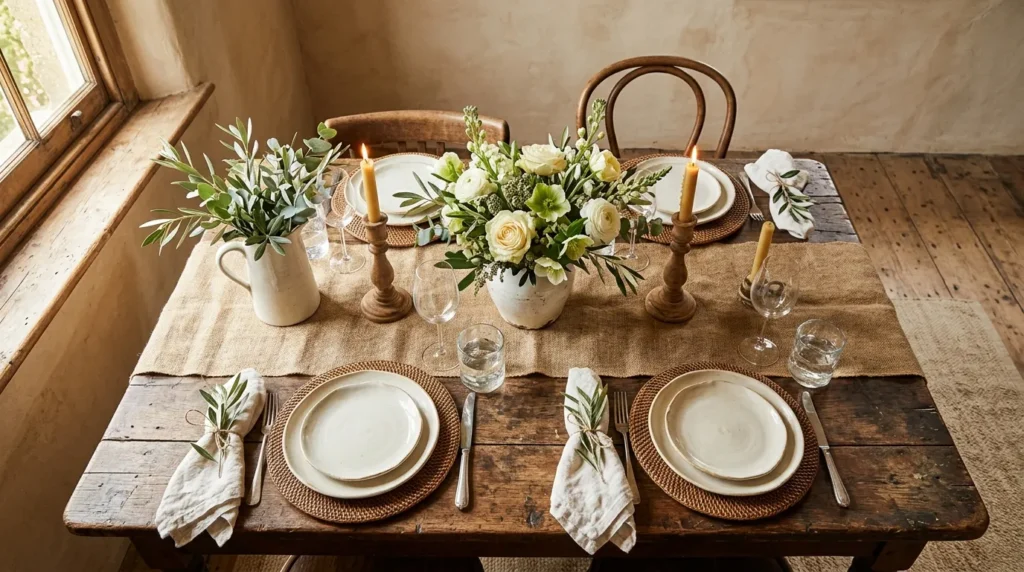
- Burlap adds rustic texture while keeping the table setting casual and approachable.
- Layer it over bare wood instead of covering the entire table.
- Cream ceramics and white flowers soften the rougher texture.
- Wooden candlesticks add height without making the arrangement feel formal.
- A narrow runner leaves plenty of visible tabletop for warmth and character.
A simple burlap runner can make a plain farmhouse table feel ready for spring in minutes. Lay a narrow strip across the center of a weathered wood table, leaving plenty of the natural surface visible around it. Add cream-colored ceramics, woven placemats, wooden candlesticks, and a low arrangement of white flowers for contrast. The rough weave of burlap brings earthy texture, while softer materials prevent the setting from looking too rugged. This combination works especially well when you want a casual dining space that feels intentionally decorated but still comfortable enough for everyday breakfasts, lunches, and family dinners.
The trick is to balance the burlap with lighter, smoother materials. If everything on the table has a rough texture, the arrangement can quickly feel visually heavy. Pair the runner with simple cotton napkins, glazed pottery, or clear glassware to create contrast. A few green branches can add height without introducing strong color. I’ve noticed that leaving the table mostly uncovered makes rustic materials look more sophisticated because the aged timber becomes part of the design. For a spring gathering, add small white blooms between serving dishes, but keep the centerpiece low enough that guests can see across the table comfortably.
14. Antique Crock Collection
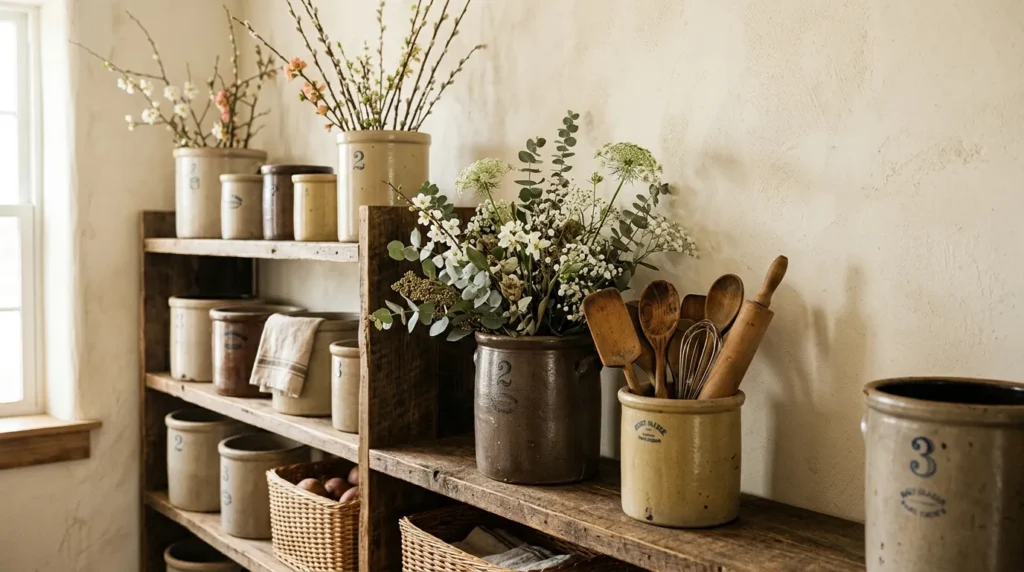
- Antique crocks add substantial texture without introducing bright seasonal colors.
- Use different sizes to create an easy visual hierarchy.
- Large crocks work beautifully as simple vessels for branches and greenery.
- Smaller pieces can hold utensils, flowers, or kitchen essentials.
- Grouping related objects makes the collection feel intentional rather than cluttered.
Antique crocks bring the weight and texture of old farmhouse kitchens into a spring decorating scheme without needing bright colors or elaborate accessories. Display several in different sizes on open shelving, a kitchen counter, or a dining room cabinet. Leave some empty and use others as vessels for eucalyptus, flowering branches, or wooden utensils. Their creamy stoneware surfaces pair naturally with reclaimed wood, linen, and woven materials. Rustic spring decor becomes more interesting when older pieces provide the foundation and seasonal greenery supplies the fresh contrast. The result feels timeless rather than like a temporary holiday display.
When arranging a crock collection, vary the heights and shapes so your eye moves naturally across the grouping. Place the largest vessel slightly behind smaller pieces, then add one branch arrangement to create vertical movement. Avoid filling every container because empty space helps emphasize their shape and aged finish. If authentic antiques are difficult to find, reproduction stoneware can create a similar visual effect. In my experience, the most convincing displays mix useful objects with decorative ones. A crock holding wooden spoons feels connected to the kitchen, while another filled with greenery adds just enough spring freshness to the arrangement.
15. Wooden Crate Planters

- Wooden crates turn ordinary plants into a distinctly farmhouse-style display.
- Their open construction allows greenery to spill naturally over the edges.
- Mix herbs, flowers, and foliage for a more relaxed planting arrangement.
- Stack crates carefully to create height around an entrance or patio.
- Line untreated crates before adding soil to help protect the wood.
Wooden crates make excellent spring planters because their rough surfaces complement the organic shapes of flowers and greenery. Choose crates with visible grain, faded lettering, or a naturally weathered finish, then fill them with herbs, white blooms, lavender, or trailing plants. A single crate works beside a doorway, while two or three can create a layered display along a porch or patio. The combination of aged timber and fresh foliage creates an easy country contrast that looks especially appealing in photographs. It’s practical, inexpensive, and simple enough for beginners to recreate with materials they may already have.
For a balanced arrangement, vary the plant heights and allow some greenery to spill over the crate edges. A taller herb or flowering plant can provide structure, while trailing stems soften the lower section. If stacking crates, position the largest and heaviest crate at the bottom and make sure the surface is stable. Wooden crates can also be used indoors with potted plants, but protect the wood from excess moisture. I’ve noticed that leaving some of the crate surface visible makes the display feel more authentic because the weathered material remains part of the decoration instead of disappearing beneath dense foliage.
16. Rattan Pendant Light
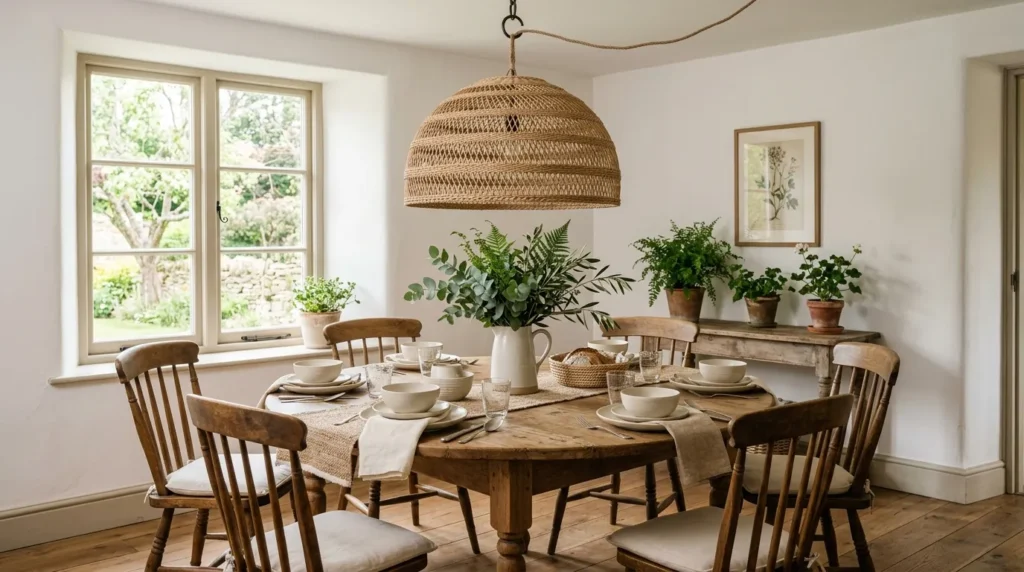
- A woven pendant adds texture overhead without taking up valuable floor space.
- Natural rattan creates a softer contrast against dark or weathered wood.
- Choose an open weave to keep the room feeling bright and airy.
- Hang the fixture low enough to define the dining area without blocking sightlines.
- Pair it with warm bulbs for a softer evening atmosphere.
Look upward when a room needs a fresh spring update without adding more furniture. A natural rattan pendant can bring warmth, texture, and a relaxed farmhouse feeling to a dining room or kitchen. Its woven surface creates a beautiful contrast against painted walls and aged timber, while an open weave keeps the fixture visually light. Hang it above a farmhouse table, then repeat the natural texture with woven placemats or a nearby basket. This small change can make the entire room feel more finished because the eye naturally notices the overhead layer once furniture and surfaces are already styled.
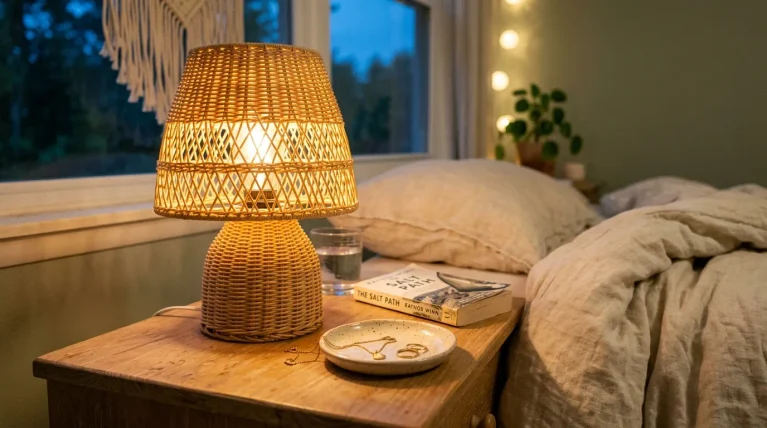
Choosing the right scale makes a big difference. A pendant that is too small can disappear above a large table, while an oversized fixture may make a compact room feel crowded. Look for a shape that relates to the table beneath it and leave comfortable clearance for anyone sitting or standing nearby. Warm-toned bulbs can make the woven material glow beautifully after sunset. I’ve noticed that rattan works particularly well with cream walls, reclaimed wood, and muted green accents because it bridges those materials naturally. Keep the rest of the ceiling area simple so the pendant remains the visual focus.
17. Stoneware Kitchen Vignettes
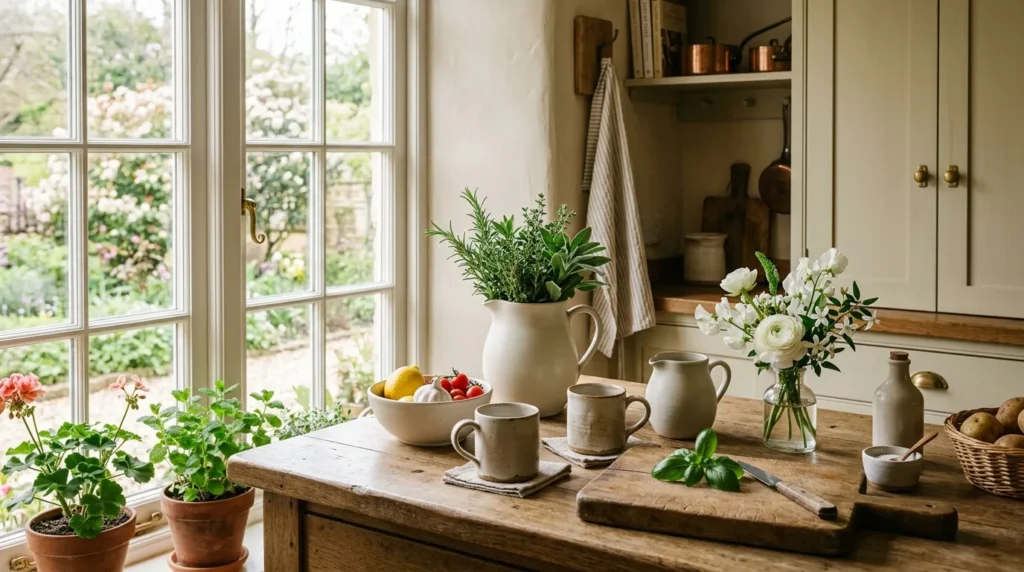
- Cream stoneware adds warmth while keeping the kitchen palette light and cohesive.
- Group pieces in small clusters instead of spreading them across the entire counter.
- Combine useful kitchenware with greenery for a practical seasonal vignette.
- Wooden boards add contrast and keep pale ceramics from looking flat.
- Leave clear preparation space so decoration never interferes with cooking.
A few pieces of simple stoneware can completely change the feel of a kitchen counter without making it look decorated for decoration’s sake. Choose cream, ivory, or softly speckled pitchers, bowls, mugs, and serving pieces, then group them beside a wooden cutting board. Add one small vase of white flowers or a pot of fresh herbs for a spring accent. The neutral ceramics reflect natural light beautifully and create a calm backdrop for aged wood and woven textures. These small kitchen vignettes work because they combine things you actually use with details that make the room feel considered.
The easiest way to avoid clutter is to create one defined cluster instead of decorating every available surface. Place the tallest piece toward the back, lean a wooden board behind it, and position two smaller ceramics in front. A little greenery can fill the remaining visual gap without overwhelming the arrangement. Keep the countertop around the vignette clear for food preparation and daily tasks. In my experience, practical displays stay attractive longer because they naturally fit into household routines. When spring ends, you can simply replace the flowers or herbs while keeping the stoneware arrangement almost exactly as it is.
18. Floral Feed Sack Pillows
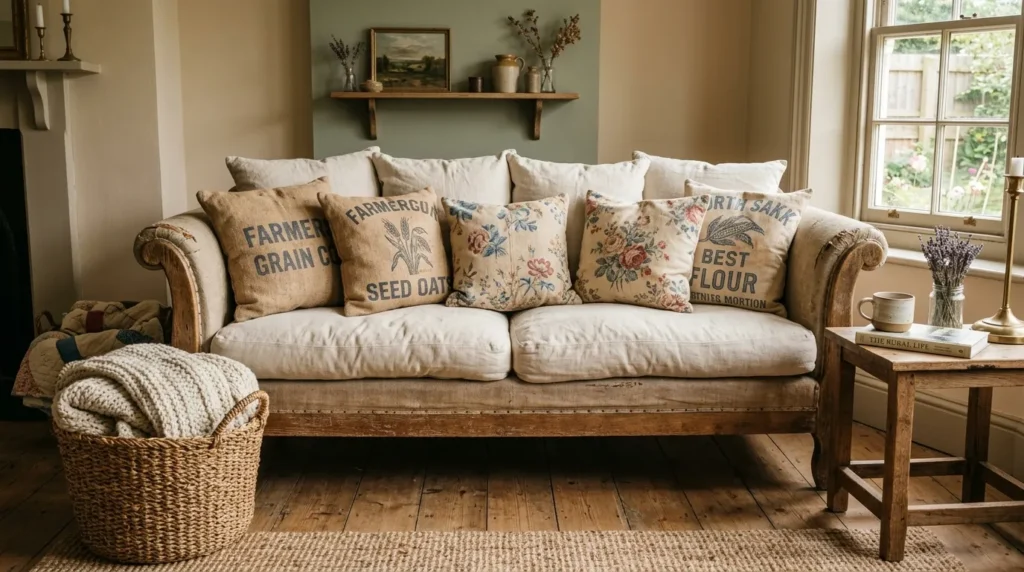
- Vintage-style feed sack fabric introduces pattern without overpowering a neutral sofa.
- Faded florals bring spring color while keeping the farmhouse aesthetic grounded.
- Mix patterned pillows with solid linen cushions for visual balance.
- Look for washable or removable covers in busy living areas.
- Limit the pattern to a few pillows so the room still feels calm.
Soft furnishings are one of the quickest ways to bring spring into a room, and vintage-inspired feed sack pillows make the change feel especially relaxed. Look for faded floral patterns, botanical motifs, or old-fashioned typography in muted colors rather than bright modern prints. Layer two patterned pillows with cream linen cushions on a weathered sofa or wooden bench. The contrast between rougher woven fabric and smooth linen creates depth without requiring a complete room makeover. This is an easy way to refresh a neutral living room while keeping its cozy country personality intact.
Pattern placement matters more than having a large collection of pillows. Choose one or two statement prints, then surround them with solids in ivory, oatmeal, sage, or faded blue. This gives the eye a place to rest and prevents the sofa from looking overly busy. If you have children or pets, removable washable covers are worth prioritizing because decorative textiles quickly become everyday household items. I’ve noticed that slightly faded patterns often feel more authentic than crisp, high-contrast prints. They blend naturally with reclaimed wood, woven baskets, and other relaxed farmhouse materials already in the room.
19. Copper Garden Buckets
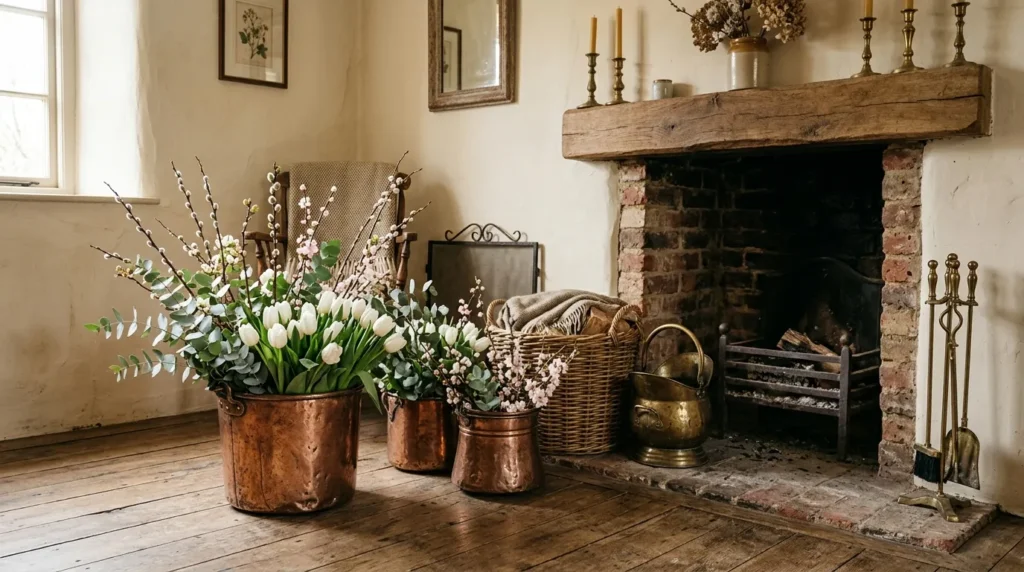
- Aged copper adds warmth and a subtle glow to neutral farmhouse interiors.
- Use buckets as flower vessels instead of leaving them purely decorative.
- White blooms and green foliage balance copper’s richer orange-brown tones.
- Smaller buckets work well on shelves, consoles, or kitchen counters.
- Look for naturally aged finishes rather than highly polished metal.
Copper garden buckets bring a warmer metallic element into a room filled with wood, linen, and neutral ceramics. Their naturally aged surfaces can show soft variations of brown, copper, and muted orange, making them feel collected rather than overly decorative. Fill a bucket with white tulips, eucalyptus, flowering branches, or simple greenery, then place it beside a fireplace, console table, or farmhouse bench. The contrast between fresh plants and weathered metal gives the arrangement dimension. It’s an easy seasonal update when you want something different from the usual glass vase or ceramic pitcher.
Keep the rest of the arrangement simple so the copper remains noticeable without dominating the room. A single large bucket can anchor a corner, while two smaller vessels can create a balanced display across a long console. Avoid combining too many shiny metals because the aged finish looks best when surrounded by natural materials. A woven basket, reclaimed wood surface, or linen throw can soften the metallic texture. I’ve noticed that copper becomes especially attractive in afternoon light, when its uneven patina catches subtle highlights and makes even a simple bunch of spring branches look more intentional.
20. Ruffled Linen Bedding
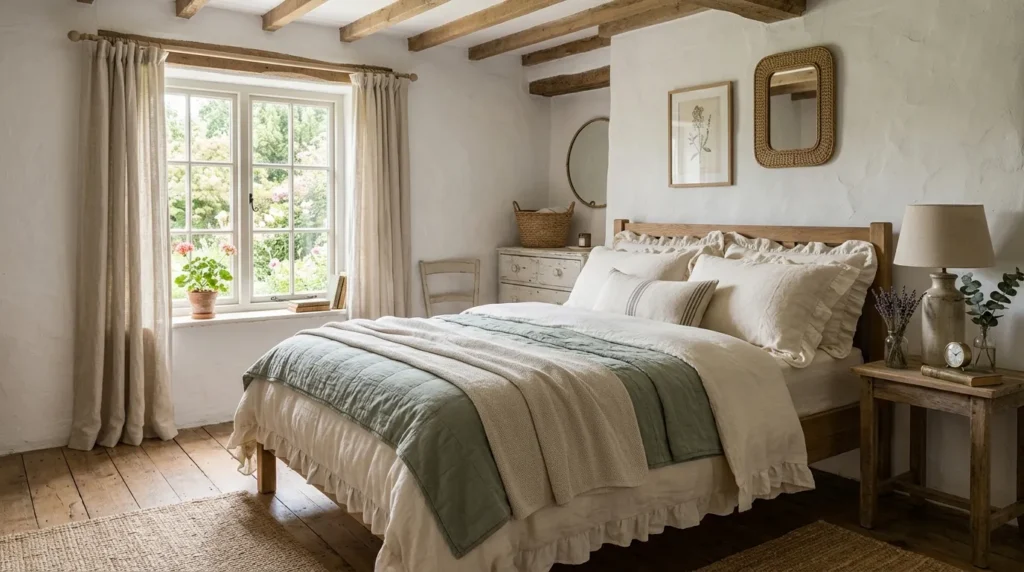
- Ruffled linen adds softness and movement to a sturdy wooden bed.
- Ivory and cream bedding keeps the bedroom bright without feeling stark.
- A muted sage quilt introduces a subtle spring color.
- Layer different natural fabrics for depth without adding excessive decoration.
- Slightly rumpled linen creates a relaxed appearance that suits farmhouse bedrooms.
Few changes make a bedroom feel more refreshed than replacing heavy bedding with light, textured linen. Choose ivory or cream sheets, add a softly ruffled duvet or quilt, and layer a muted sage throw across the foot of a wooden bed. The relaxed texture works beautifully with aged timber because it softens the stronger lines of the furniture. Instead of making the room look overly styled, gently rumpled linen gives it a comfortable, lived-in appearance. This approach brings the lighter feeling of spring indoors while keeping the bedroom warm, practical, and unmistakably country-inspired.
Texture is especially important when working with a mostly neutral bedroom. Combine smooth cotton sheets with washed linen, a woven throw, and perhaps one small embroidered cushion to create depth without relying on strong colors. Keep patterns subtle so the natural fabric textures remain visible. If your room receives plenty of daylight, cream and ivory bedding will reflect it and make the space appear more open. In my experience, slightly imperfect linen looks better over time because small wrinkles add character rather than making the bed look untidy. Finish with a simple wooden bench or woven basket rather than filling the room with accessories.
21. Herb Drying Rack
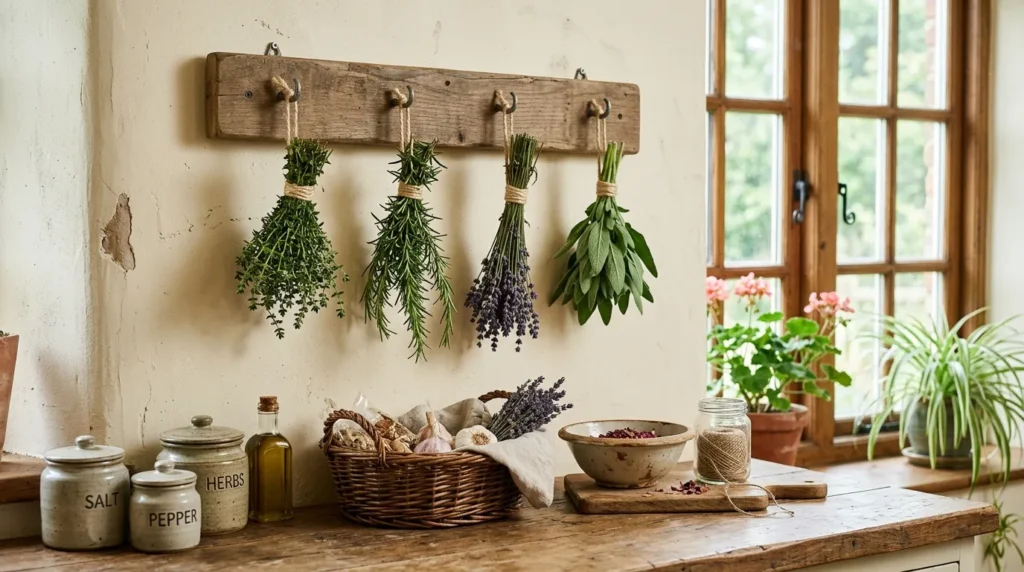
- A wall-mounted drying rack adds vertical interest to an otherwise unused kitchen area.
- Fresh herbs provide natural green color and a subtle seasonal fragrance.
- Twine and aged wood reinforce the handmade farmhouse character.
- Dry herbs gradually and store them properly once completely dry.
- Position the rack away from direct cooking steam and excessive moisture.
A small herb drying rack can turn a plain kitchen wall into a useful piece of seasonal decoration. Mount a simple wooden rack above a counter or beside an open shelf, then hang small bundles of rosemary, thyme, sage, or lavender with natural twine. The green stems add color against a cream wall while the aged wood brings warmth and texture. Unlike purely decorative accessories, this setup can support everyday cooking as well. It captures the practical spirit of a country kitchen, where useful objects are often displayed openly because they are beautiful enough to become part of the room.
Choose a location with good airflow and keep the rack away from strong steam from the stove or sink. Small bundles usually look more balanced than one oversized bunch, especially on a narrow wall. Once the herbs are completely dry, remove the leaves and store them in clean, airtight containers if you plan to cook with them. For a decorative version, dried lavender can remain tied in place for longer. I’ve noticed that natural twine and unfinished wood make the display feel more authentic than shiny hardware. Add one ceramic jar below the rack to connect it visually with the rest of the kitchen.
22. Vintage Porch Seating
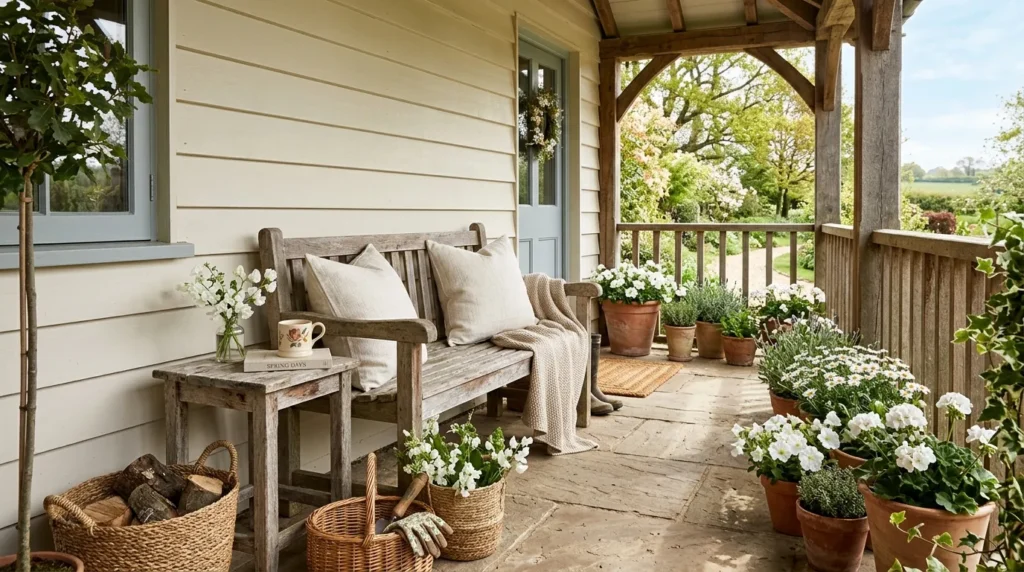
- A weathered bench creates an inviting place to sit without requiring a large outdoor setup.
- Cream cushions soften the harder appearance of aged wood.
- Terracotta pots introduce earthy color and natural spring texture.
- A small side table keeps drinks, books, or gardening tools within easy reach.
- Keep the porch palette simple so the greenery becomes the main seasonal accent.
A weathered porch bench can make the entrance feel like an extension of the home rather than a forgotten outdoor space. Choose a sturdy wooden bench with visible grain and pair it with cream linen cushions for softness. Add two or three terracotta pots filled with white flowers, herbs, or trailing greenery around the seating area. A small side table can hold a morning coffee or gardening book without taking up much space. The mix of aged wood, natural fabric, clay, and greenery creates a welcoming spring setting that feels comfortable rather than overly decorated.
Think about how the porch will actually be used when arranging the pieces. Leave enough walking space around the bench and keep planters where they won’t become obstacles near the doorway. A woven basket can hold gardening gloves or lightweight outdoor throws, giving the area a practical purpose as well as visual texture. I’ve noticed that simple porch arrangements often photograph better when there is some empty space around the furniture. Let the weathered wood, fresh greenery, and natural daylight do most of the work, then add only a few accessories that genuinely support the way you use the space.
Conclusion
Creating a cozy spring home doesn’t have to mean starting from scratch. The most inviting country spaces often come together through simple layers: weathered wood, fresh greenery, soft linen, woven textures, vintage pieces, and a few practical details that make everyday rooms feel special.
Choose the ideas that naturally fit your home and lifestyle. Maybe it’s a small mason jar arrangement on the kitchen counter, a vintage wreath by the entry, or a comfortable porch bench surrounded by spring plants. Start with one corner, then build slowly. The goal isn’t perfection. It’s creating a home that feels fresh, welcoming, useful, and genuinely yours throughout the season.