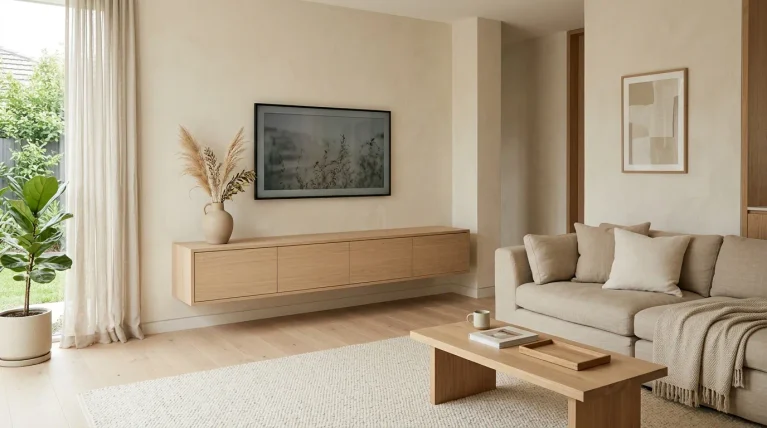
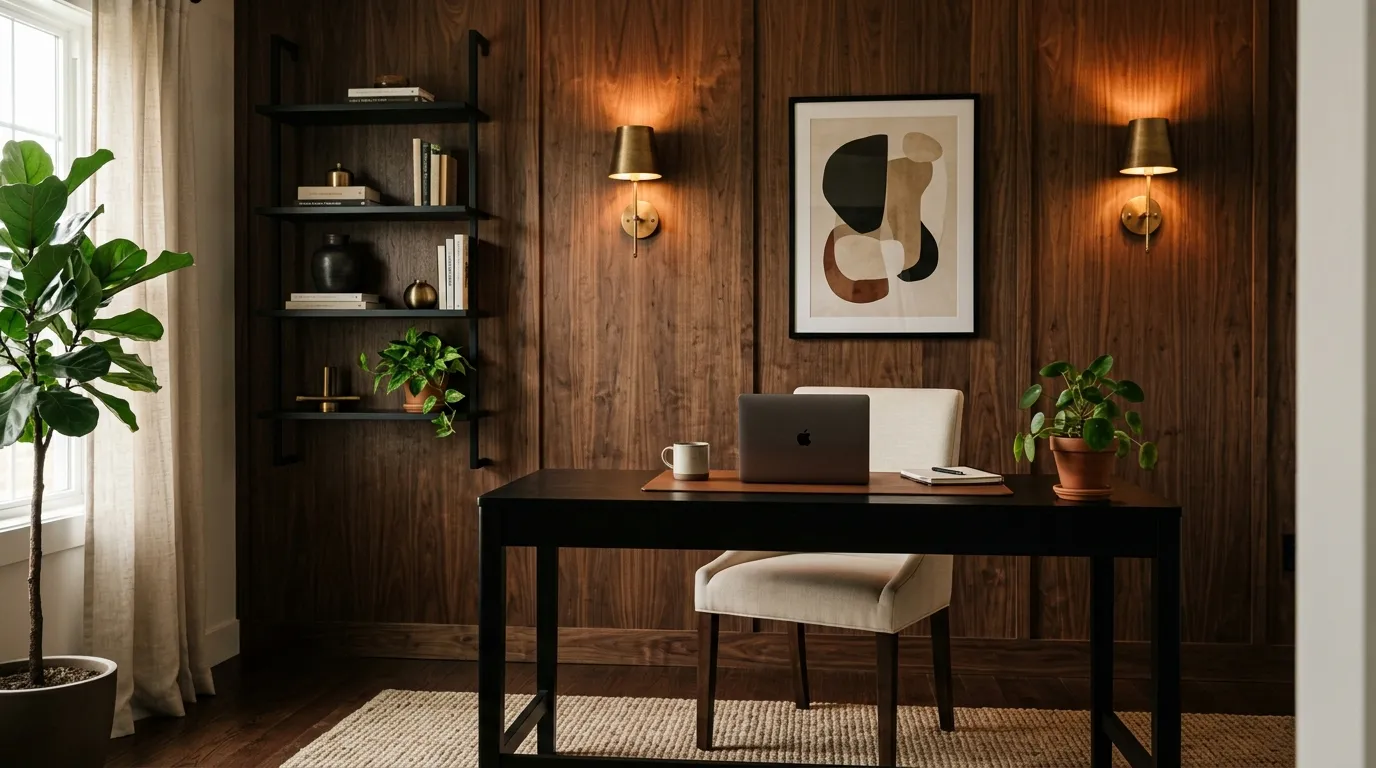
A dark, cozy workspace can make even an ordinary workday feel more inspiring. ✨
Want a home office that feels stylish, comfortable, and truly yours?
These moody home office ideas are designed to help you create a workspace with depth, warmth, and personality—without making it feel gloomy or cluttered. From charcoal walls and rich wood furniture to layered lighting, velvet seating, botanical artwork, and cozy office nooks, you’ll find practical ways to transform your space at any budget. Whether you have a dedicated room or just a small corner, these ideas can help you make every detail count. In my experience, the biggest difference often comes from simple change
1. Charcoal Accent Wall
- Creates a dramatic focal point behind the desk.
- Makes lighter furniture and artwork stand out beautifully.
- Works especially well with warm wood and brass details.
- A matte finish keeps the darker color sophisticated rather than harsh.
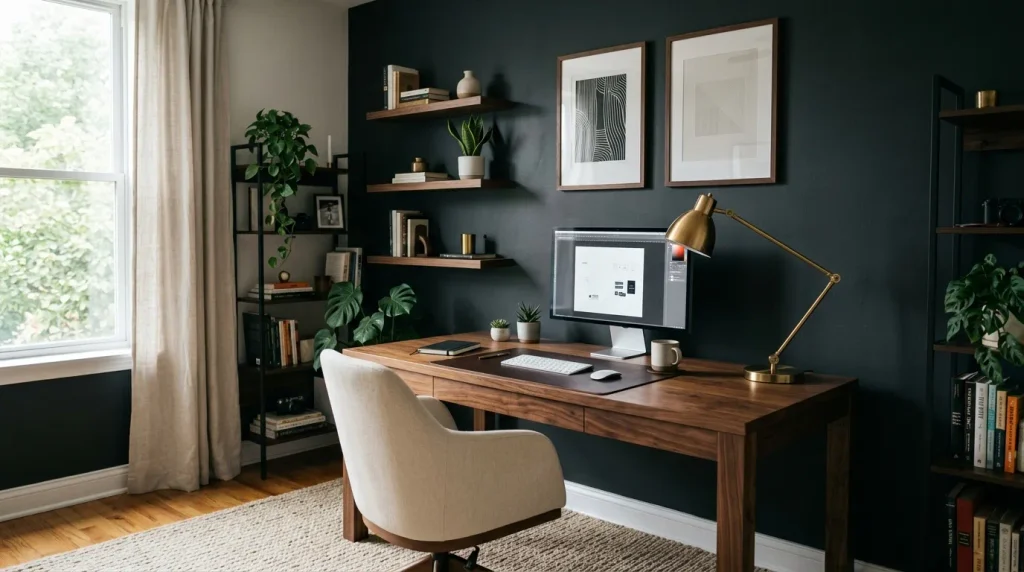
A charcoal accent wall instantly gives a workspace more depth and personality without requiring complicated decorating. Use it behind the desk so the darker tone naturally frames your working area and creates a strong visual anchor. Warm walnut furniture, cream upholstery, and brass hardware prevent the room from feeling too cold. I’ve noticed that charcoal looks especially polished when paired with plenty of warm texture, such as linen curtains, woven baskets, or a soft rug. This approach also works beautifully in compact offices because one dark wall can feel intentional and sophisticated rather than visually overwhelming.
Keep the rest of the room relatively restrained so the accent wall remains the star. A few framed prints, a simple shelf, or one oversized piece of artwork can add personality without creating clutter. During the day, natural light will reveal subtle undertones in the charcoal, while warm task lighting makes the workspace feel inviting after sunset. If painting feels too permanent, consider textured wallpaper in a similar shade. Choose finishes carefully, because highly reflective surfaces can highlight imperfections. The result is a focused workspace that feels cozy, refined, and much more visually finished.
Also Read : 24 White Brick Fireplace Ideas for a Bright Cozy Home
2. Forest Green Walls
- Brings a rich botanical tone into the workspace.
- Creates a calm backdrop for focused work.
- Looks beautiful with natural wood and cream accessories.
- Soft lighting makes the green feel warmer and more inviting.
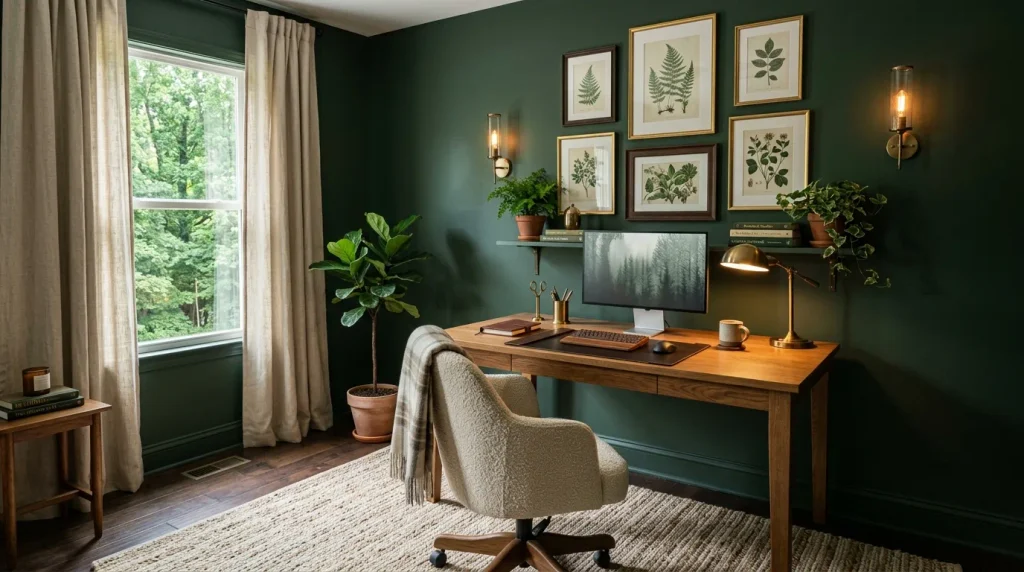
Deep forest-green walls can turn an ordinary workspace into a room that feels grounded, sophisticated, and connected to nature. The saturated color works especially well when you want the office to feel separate from the rest of the home. Balance the darker walls with warm oak, creamy textiles, leather accents, and natural woven materials. That contrast keeps the room from becoming visually heavy. In my experience, green walls look particularly beautiful in rooms with windows because daylight brings out their softer botanical undertones. Even a small office can benefit from this rich, enveloping backdrop.
The key is to let texture provide contrast rather than adding lots of competing colors. Try a linen desk chair cushion, woven lampshade, wooden picture frames, or a small collection of plants. Warm white bulbs can make the space feel comfortable during evening work sessions, while a brass desk lamp adds a subtle glow around the main work zone. Keep your desktop organized with attractive storage boxes and a simple tray. The combination creates a workspace that feels intentional and relaxing while still providing the visual structure needed for productive mornings, creative projects, or focused afternoons.
Also Read : 21 Moody Dining Room Ideas for a Dramatic Cozy Space
3. Dark Wood Desk
- Adds warmth and natural character to a darker workspace.
- Creates a strong visual foundation for the room.
- Pairs easily with green, charcoal, navy, and warm neutrals.
- Choose a desk with drawers if you need practical storage.
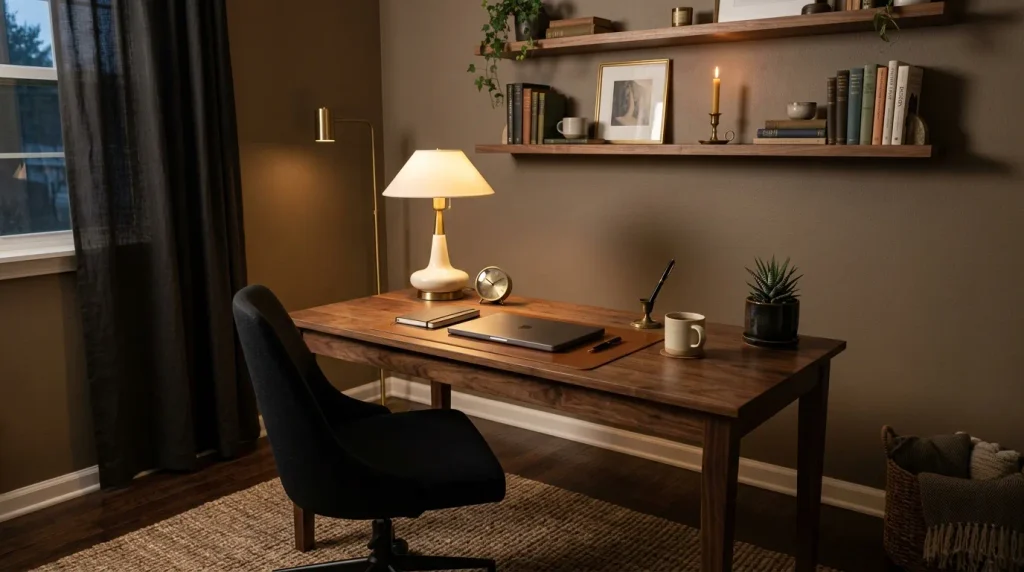
A dark wood desk can become the defining piece of a cozy workspace, especially when the surrounding palette includes deep, muted colors. Walnut, espresso, or smoked oak finishes bring natural warmth that balances charcoal walls, olive accents, or navy textiles. Choose a desk with clean lines if you want a modern appearance, or look for turned legs and visible grain for a more traditional feel. The darker surface also makes cream stationery, brass accessories, and greenery stand out beautifully. Rather than competing with the room, the desk becomes a grounded centerpiece that visually organizes everything around it.
Function matters just as much as appearance when choosing the right desk. Make sure there is enough surface area for your monitor, notebook, lighting, and everyday essentials without forcing everything into a crowded arrangement. If storage is limited, drawers can hide cables, paperwork, and supplies while keeping the workspace calm. I’ve seen this work particularly well in multipurpose rooms because a substantial wood desk gives the office zone a clear identity. Add a comfortable chair, soft rug, and warm task light, and the entire corner can feel polished without looking overly decorated.
Also Read : 25 Jewel Tone Bedroom Ideas for a Rich Luxurious Look
4. Moody Gallery Wall
- Adds personality without making the workspace feel overly decorated.
- Creates a strong visual backdrop behind the desk.
- Mix black, walnut, cream, and muted green frames for depth.
- Keep a little empty wall space so the arrangement can breathe.
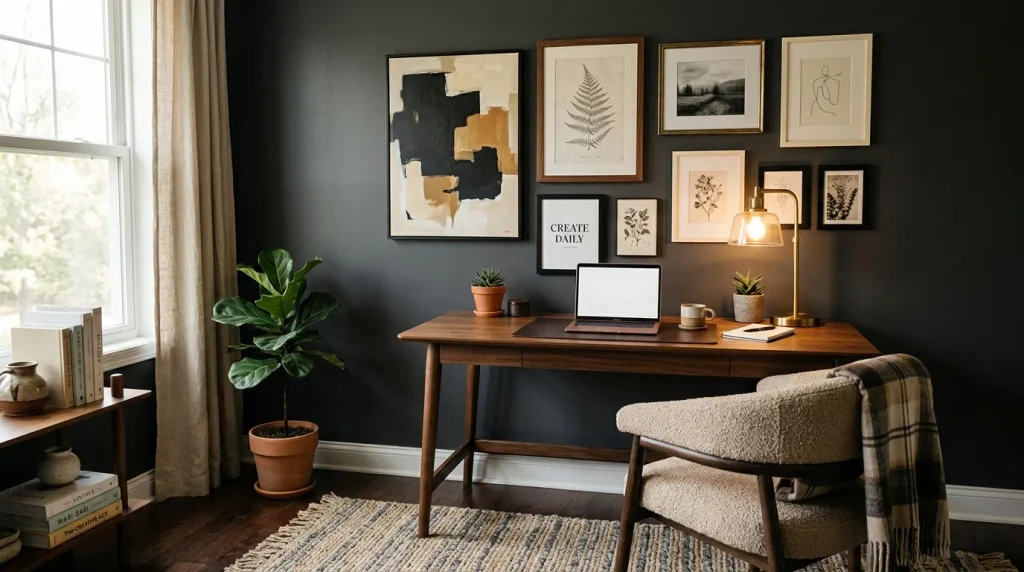
A gallery wall can make a workspace feel collected, personal, and visually interesting without sacrificing its sophisticated mood. Start with artwork in muted tones such as cream, charcoal, olive, brown, and dusty beige rather than introducing many bright colors. Position the arrangement behind or beside the desk so it naturally becomes part of the working area. Mixing frame finishes creates dimension, especially when black frames are combined with warm wood or aged brass. The trick is choosing pieces that share a similar color story, allowing different patterns and subjects to feel connected.
For a polished result, place your largest artwork slightly off-center and build smaller pieces around it. Leave consistent spacing between frames, but do not worry about making every piece perfectly symmetrical. Personal photographs, vintage prints, botanical illustrations, and abstract artwork can all work together when the palette stays cohesive. In my experience, a few meaningful pieces usually look better than filling every inch of the wall. Add warm lighting nearby to highlight the artwork after dark. This simple arrangement gives the office character while keeping the desk area visually inspiring and organized.
5. Black Framed Windows
- Gives the workspace an architectural, designer-inspired appearance.
- Creates crisp contrast against darker walls.
- Works beautifully with wood, leather, and neutral textiles.
- Use sheer curtains to soften the strong lines when needed.
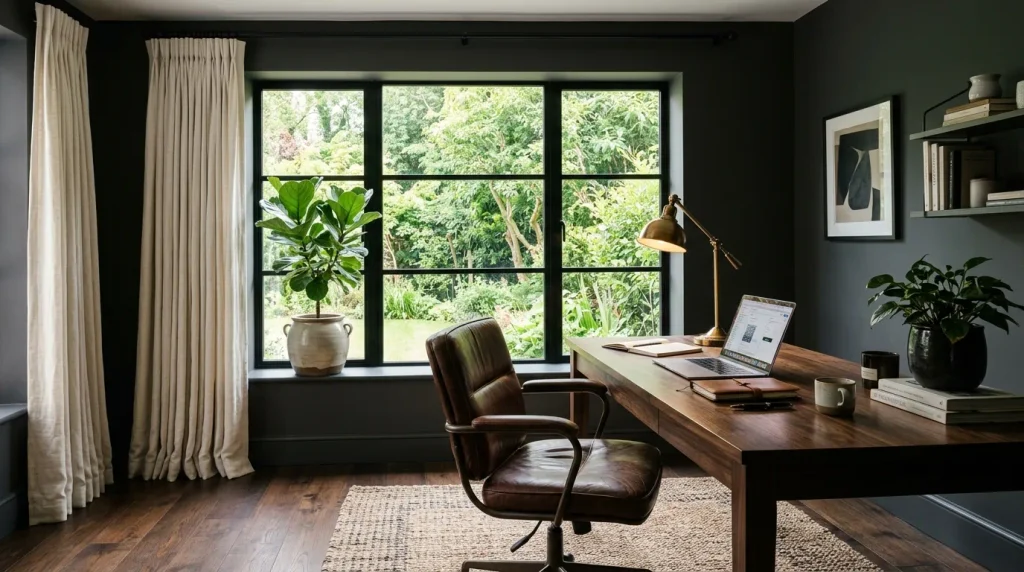
Black-framed windows can instantly give a workspace a stronger architectural presence. Their clean lines create contrast against deep wall colors while adding a modern, slightly industrial character. Pair them with walnut furniture, leather seating, warm brass lighting, and soft neutral fabrics to keep the room balanced. If the windows already have dark frames, allow them to become part of the design rather than trying to disguise them. They can visually connect the desk, shelving, and lighting fixtures, creating a cohesive look that feels carefully planned.
Window treatments can soften the harder edges without hiding the architectural detail. Sheer cream or oatmeal curtains are ideal when you want filtered daylight and a lighter atmosphere during working hours. For privacy, layer them with heavier drapes in charcoal, taupe, or olive. Keep the area around the window relatively uncluttered so the natural light remains a major feature. A single tall plant or ceramic planter can add organic contrast. This setup is especially effective for people who spend long hours at their desk because natural light can make a dark palette feel much more open and comfortable.
Also Read : 25 Jewel Tone Bedroom Ideas for a Rich Luxurious Look
6. Leather Office Chair
- Adds warmth and texture to a darker workspace.
- Creates a comfortable focal point around the desk.
- Cognac leather beautifully balances charcoal, green, and brown tones.
- Choose supportive proportions if you work at the desk for long periods.
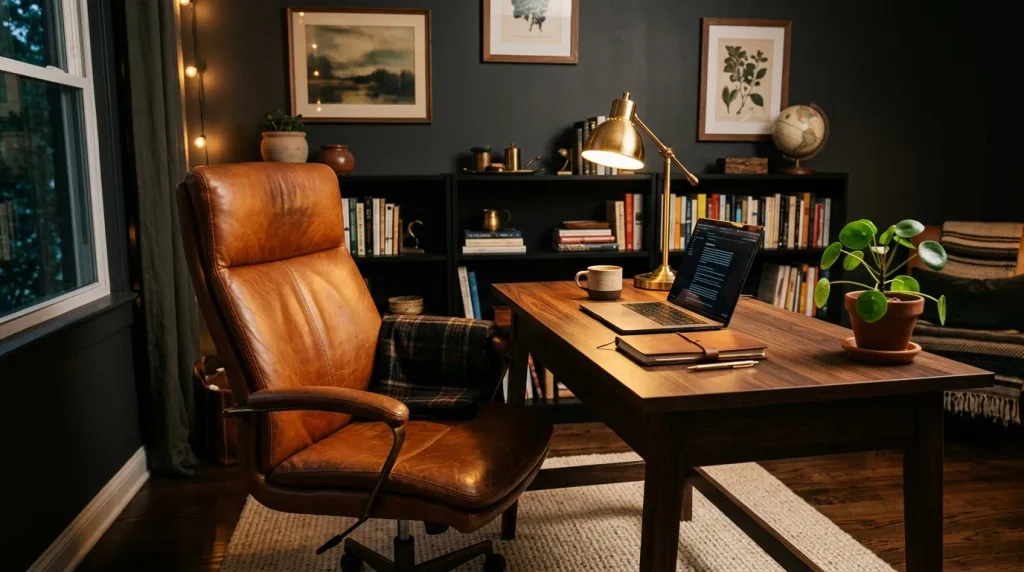
A leather office chair can bring warmth, texture, and a touch of timeless character to a darker workspace. Cognac leather is especially useful because its warm caramel tones contrast beautifully with charcoal, forest green, black, and walnut. Choose a chair with supportive proportions rather than selecting purely for appearance, particularly if you spend several hours working. A gently curved back, comfortable seat, and adjustable height can make a major difference. The leather itself becomes a decorative element, giving the room a richer appearance without requiring additional accessories or bold patterns.
To keep the chair connected to the rest of the room, repeat its warm tones in small details nearby. A walnut desk, tan notebook, brass lamp, or framed artwork with brown accents can create subtle visual links. Avoid overcrowding the floor around the chair because the silhouette looks strongest when it has room to stand out. I’ve noticed that leather also becomes more inviting as it develops natural character over time. Combined with soft lighting and a textured rug, this seating choice creates a workspace that feels professional enough for meetings yet comfortable enough for quiet creative work.
7. Navy Blue Walls
- Creates a deep, sophisticated backdrop for focused work.
- Pairs beautifully with warm wood and creamy neutrals.
- Works especially well in rooms with plenty of natural light.
- Add warm lighting to prevent the shade from feeling too cool.
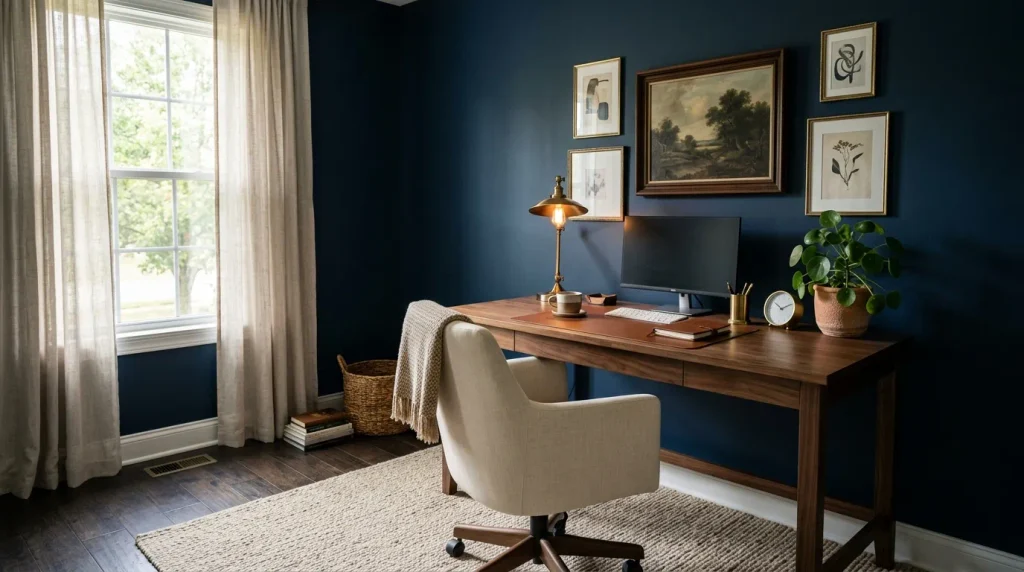
Deep navy walls can give a workspace a polished, cocoon-like appearance while still feeling classic and versatile. The rich blue creates an excellent backdrop for warm wood furniture, cream upholstery, brass lighting, and artwork with muted colors. If the room receives plenty of daylight, navy can look especially dimensional as the light changes throughout the day. For rooms with limited sunlight, use warmer bulbs and lighter furnishings to maintain balance. This color choice is ideal when you want the office to feel sophisticated and focused without relying on traditional gray or black walls.
Use texture to keep the dark blue from appearing flat. A woven rug, linen curtains, leather accessories, and natural wood can introduce subtle variation without distracting from the wall color. Keep the desktop relatively simple and let the navy backdrop provide most of the visual drama. A brass or warm metal lamp can add a gentle highlight against the darker surface. In my experience, navy also photographs beautifully because it creates strong contrast around furniture and artwork. The finished space feels calm, mature, and intentional, making it suitable for both everyday work and creative projects.
8. Vintage Desk Lamp
- Adds focused lighting without taking up much desk space.
- Brings character into an otherwise modern workspace.
- Brass, bronze, or aged metal finishes suit darker palettes.
- Position the lamp to illuminate your working hand and notebook area.
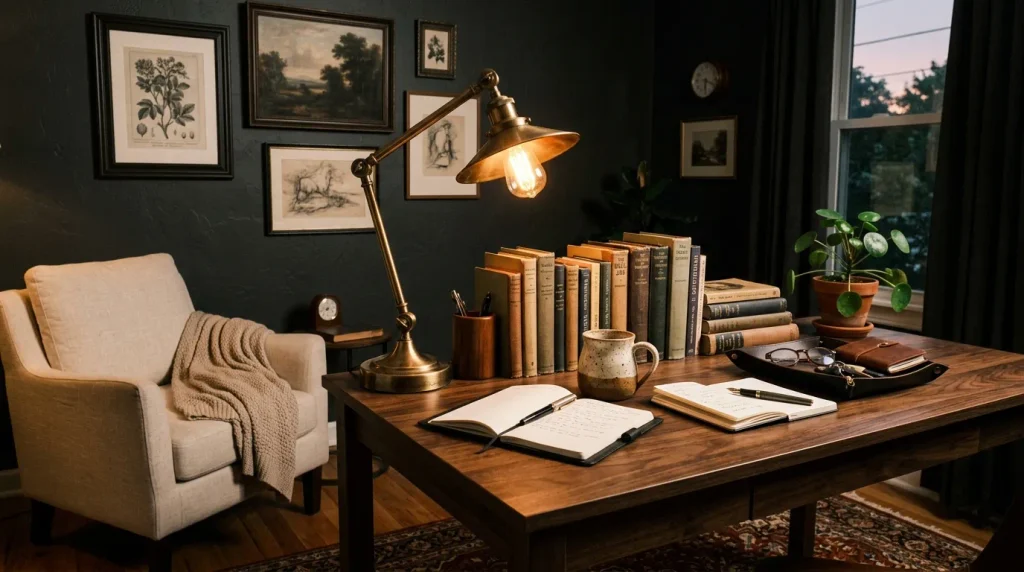
A vintage desk lamp can completely change the atmosphere of a workspace once the sun goes down. Instead of relying only on overhead lighting, place a warm-toned lamp directly on the desk to create a comfortable pool of illumination around your work area. Aged brass, bronze, or dark metal finishes work particularly well with deeper color palettes. The lamp becomes both a practical tool and a decorative focal point, especially when paired with a simple wooden desk and restrained accessories. Choose an adjustable shade whenever possible so you can direct light exactly where you need it.
The best desk lighting combines function with atmosphere. Keep the lamp close enough to illuminate notebooks, keyboards, or paperwork while avoiding harsh glare on your monitor. Warm white bulbs generally create a softer evening environment than very cool lighting. Add one or two books, a small ceramic container, or a low plant beside the lamp, but leave enough clear surface for everyday work. I’ve noticed that even a modest workspace feels more finished when the lighting has character. This small upgrade can make late-afternoon tasks feel less clinical and much more comfortable.
9. Built-In Dark Shelving
- Adds storage while creating a dramatic architectural feature.
- Gives books and decorative objects a strong visual backdrop.
- Helps organize office essentials without relying on floor furniture.
- Mix open display space with hidden storage for a cleaner appearance.
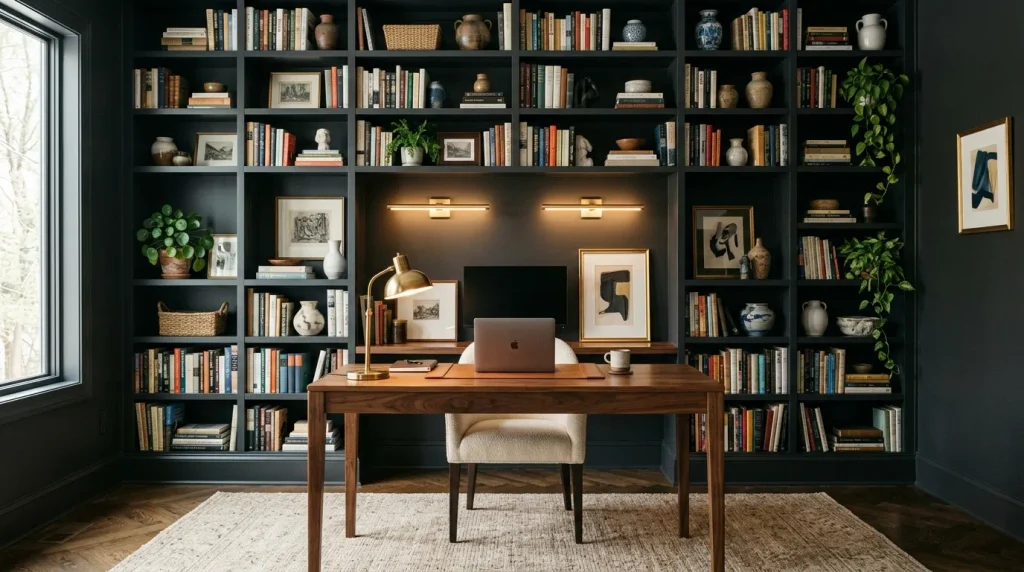
Built-in dark shelving can make a workspace feel custom-designed while giving everyday items a clear place to live. Deep charcoal, espresso, or near-black shelving creates a dramatic backdrop for books, ceramics, framed prints, baskets, and plants. Against the darker surface, lighter objects become more noticeable, so even a simple collection can look thoughtfully styled. If you are planning permanent cabinetry, combine open shelves with closed cupboards or drawers. This gives you attractive display space while hiding paperwork, technology, and supplies that could otherwise make the office look cluttered.
Styling the shelves thoughtfully is just as important as choosing the color. Group books vertically and horizontally, then leave small areas of empty space between decorative objects. Add baskets to conceal cables, chargers, and miscellaneous supplies while keeping the visual palette consistent. A few green plants can soften the strong lines of the shelving and introduce an organic element. Keep heavier objects toward the lower sections and lighter decor higher up for visual balance. This arrangement creates practical storage without making the room feel like a storage area, helping the workspace remain calm, organized, and inspiring.
10. Warm Wood Ceiling
- Adds warmth to a darker workspace from an unexpected surface.
- Makes the room feel more layered and architectural.
- Pairs naturally with charcoal, green, navy, and brown tones.
- Use lighter wood if the room has limited natural light.
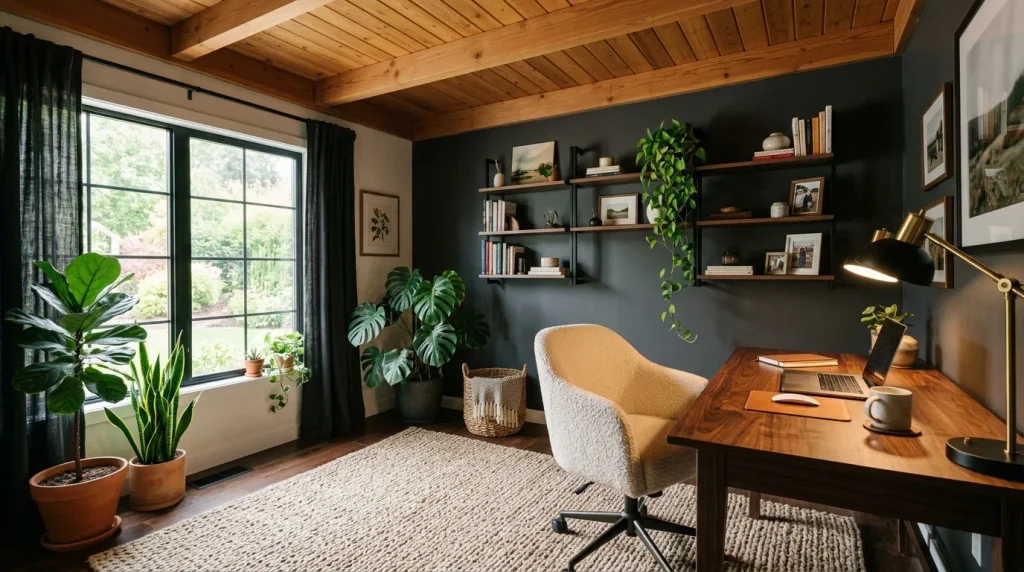
A warm wood ceiling can make a darker workspace feel surprisingly inviting by adding natural texture above eye level. Instead of introducing more decoration at floor level, the ceiling becomes a quiet architectural feature that balances deeper wall colors. Choose oak, cedar, walnut, or another natural finish depending on the existing furniture. The warmth of the wood works especially well with charcoal, navy, olive, and earthy brown palettes. This approach is particularly effective in rooms with simple walls because the ceiling adds character without competing with artwork, shelving, or the desk.
Lighting becomes important when using a darker overall palette with a wood ceiling. Choose fixtures that wash the ceiling gently rather than creating a single harsh spotlight. Wall sconces, a pendant with a diffused shade, or adjustable recessed lights can highlight the grain while keeping the desk comfortable for work. Avoid making every surface dark at once, especially in a small office. A lighter rug or cream chair can provide visual breathing room below. The result is a layered workspace where the ceiling contributes warmth, the furniture provides function, and the darker walls create a sophisticated atmosphere.
11. Moody Botanical Prints
- Introduces nature without adding large amounts of greenery.
- Creates visual interest against dark walls.
- Choose muted greens, browns, creams, and charcoal tones.
- Use matching frames for a cleaner, more intentional display.
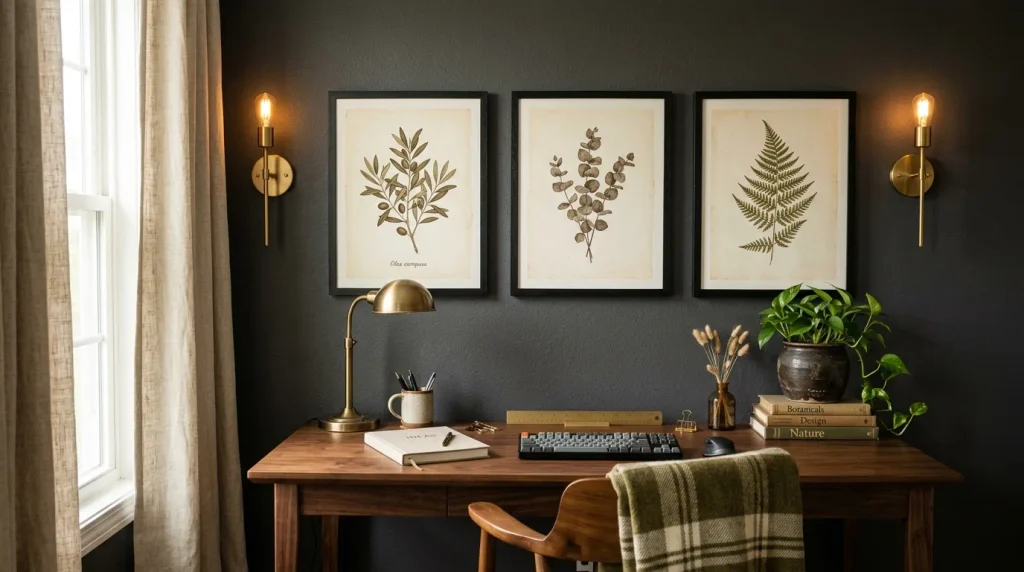
Botanical prints are an easy way to bring an organic feeling into a darker workspace without filling every corner with plants. Choose illustrations or photographs featuring muted greens, dried leaves, branches, or oversized foliage in neutral tones. Against charcoal, navy, or deep green walls, the lighter artwork creates gentle contrast while maintaining the moody palette. Black, walnut, or antique brass frames can reinforce the surrounding finishes. A small group of coordinated prints usually feels more intentional than many unrelated pieces, especially when the office already contains shelves, furniture, and other visual elements.
For a balanced arrangement, hang the artwork close enough to the desk that it feels connected to the work zone without sitting directly on top of it. Three similarly sized prints can create a clean rhythm, while one oversized botanical image makes a stronger statement. Keep the desk accessories simple so the artwork remains noticeable. In my experience, botanical artwork works particularly well when a room feels too industrial or visually hard because the natural shapes soften the overall impression. The result is a workspace that feels grounded and collected while still maintaining a sophisticated, grown-up appearance.
12. Blackout Linen Curtains
- Creates a softer, more private workspace atmosphere.
- Helps control harsh afternoon sunlight and screen glare.
- Linen texture prevents dark window treatments from feeling too heavy.
- Choose charcoal, taupe, or deep olive for a cohesive palette.
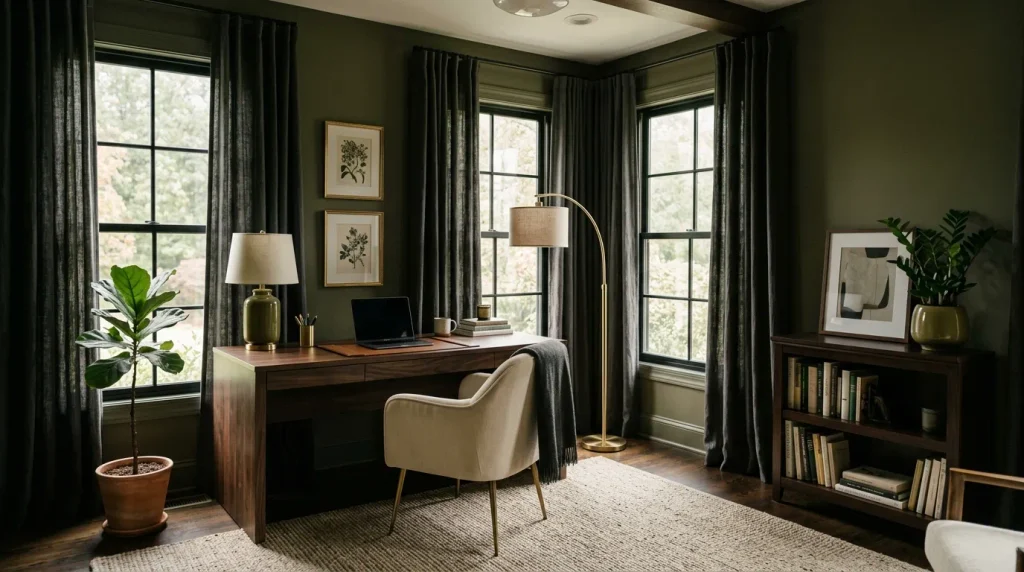
Blackout linen curtains can make a workspace feel softer while also solving practical problems such as glare, privacy, and overly bright afternoon sunlight. Choose a heavier linen or linen-look fabric in charcoal, taupe, deep olive, or warm brown to complement the room without making the windows look overly formal. Full-length curtains hung close to the ceiling can also make the room appear taller. When opened, they frame the window beautifully; when closed, they create a cocoon-like backdrop that works especially well with darker furniture and warm lighting.
Function should guide the curtain choice as much as appearance. If you regularly work near a window, look for panels with enough opacity to reduce screen glare while still allowing some ambient light around the edges. A soft lining can improve light control without making the fabric look stiff. Keep the surrounding furniture slightly away from the curtains so they can hang naturally and maintain clean vertical lines. I’ve noticed that textured curtains also make darker rooms feel more comfortable because the fabric introduces softness. This small window update can make long work sessions feel noticeably more relaxed.
13. Dark Accent Ceiling
- Adds drama without making every wall feel heavy.
- Draws the eye upward and gives the room more depth.
- Works beautifully with warm wood and soft neutral furniture.
- Use layered lighting to keep the ceiling from feeling too low.
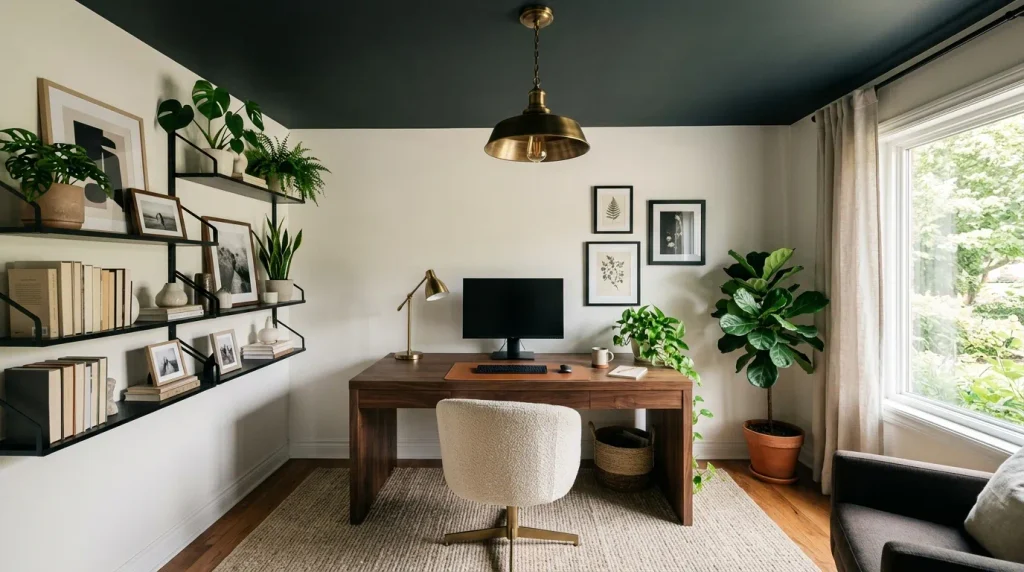
A dark accent ceiling is a bold way to create depth without covering every wall in a saturated color. Charcoal, deep olive, navy, or warm brown can make the ceiling feel like an intentional architectural feature while lighter walls keep the workspace visually balanced. This works particularly well in rooms with tall ceilings, exposed beams, or simple architectural lines. Pair the darker surface with warm wood furniture and cream textiles so the room feels layered rather than enclosed. The contrast draws the eye upward and gives an otherwise ordinary office an unexpected designer-inspired detail.
Lighting is essential when using a darker ceiling because poor illumination can make the room feel smaller. A pendant with a soft diffuser, recessed lighting, or wall sconces can spread light across the ceiling and surrounding surfaces. Avoid relying on one bright overhead fixture, especially if you want a cozy atmosphere. Keep the furniture palette warm and relatively simple so the ceiling remains the main architectural statement. In my experience, this idea works best when the darker tone is repeated in one or two smaller details, such as shelving or picture frames, creating a subtle visual connection throughout the room.
14. Moody Corner Desk
- Makes an unused corner feel purposeful and productive.
- Helps separate the work zone from the rest of the room.
- Works well in bedrooms, living rooms, and compact offices.
- Add a wall lamp to save valuable desk space.
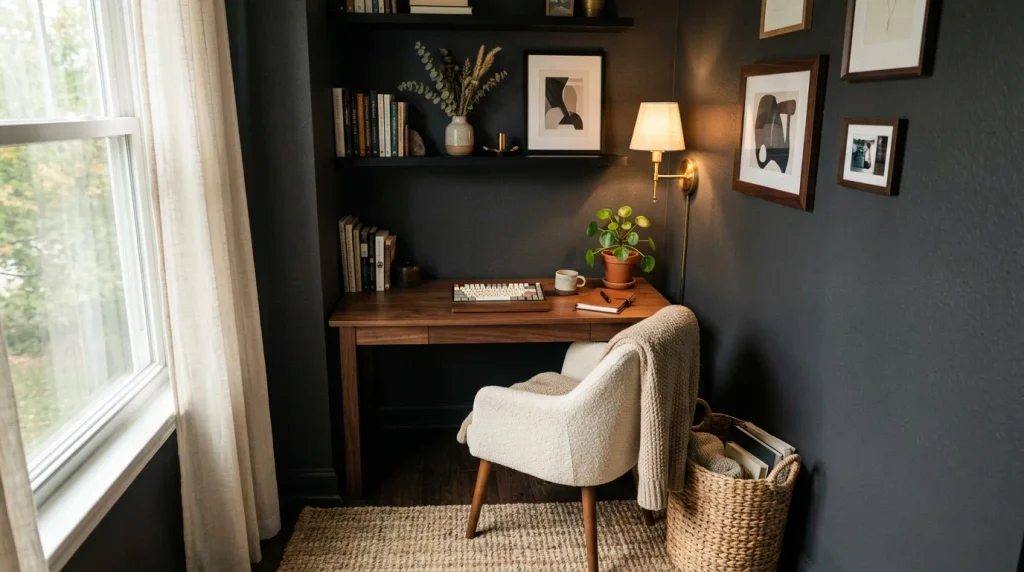
A moody corner desk can transform an overlooked part of the home into a dedicated workspace without requiring an entire room. Choose a compact desk that fits naturally between two walls or beneath a window, then use darker paint, wallpaper, or furniture to visually define the area. Walnut, black, and espresso finishes work beautifully with cream upholstery and warm metals. This setup is especially useful when your office shares space with a bedroom or living area because the darker corner creates a subtle boundary without adding a physical partition.
Keep the arrangement streamlined so the corner does not become cramped. A wall-mounted lamp can replace a bulky desk light, while floating shelves provide storage without taking up floor space. Use one small plant, a framed print, and a tray for everyday supplies rather than covering the desk with decorative objects. If cables are visible, route them along the back edge or use a discreet cable box. The goal is to create a workspace that feels intentional but remains easy to maintain. This simple arrangement can make even a small corner feel comfortable, organized, and surprisingly polished.
15. Layered Ambient Lighting
- Creates depth when one light source would feel flat.
- Makes darker colors look richer and more inviting.
- Combines task, accent, and ambient lighting for flexibility.
- Warm bulbs work especially well with wood and earthy finishes.
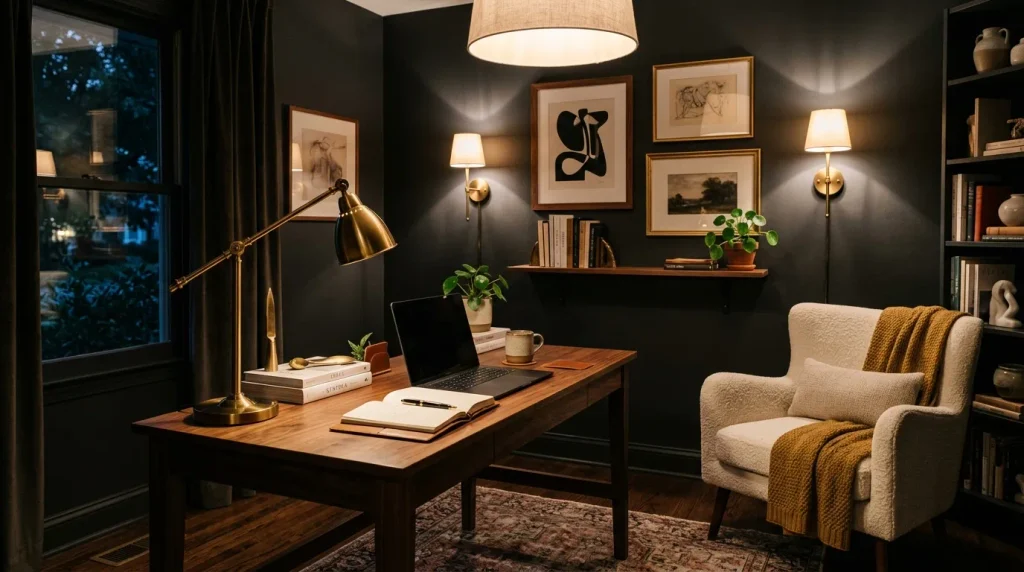
Layered lighting is one of the easiest ways to make a darker workspace feel comfortable instead of gloomy. Rather than depending on one ceiling fixture, combine several sources at different heights. A desk lamp handles focused work, wall sconces add decorative glow, and a pendant or ceiling fixture provides general illumination. Warm bulbs help wood, leather, brass, and earthy colors appear richer after sunset. The different light levels also allow you to change the atmosphere throughout the day, making the room suitable for focused computer work, reading, planning, or relaxing between tasks.
Start with the lighting you actually need, then add decorative sources where the room feels visually flat. Keep the desk lamp positioned so it illuminates paperwork without creating glare on your screen. Place accent lighting near artwork or shelving to highlight interesting details after dark. A dimmer switch is particularly useful because brightness needs can change throughout the day. I’ve noticed that warm, indirect lighting often makes the biggest difference in darker rooms because it softens hard edges and creates depth. The finished workspace feels layered, practical, and inviting without needing excessive decoration.
16. Velvet Office Chair
- Adds softness and rich texture around the desk.
- Creates a luxurious contrast against darker walls and wood.
- Jewel tones work beautifully without needing bold accessories.
- Choose a supportive shape for comfortable everyday use.
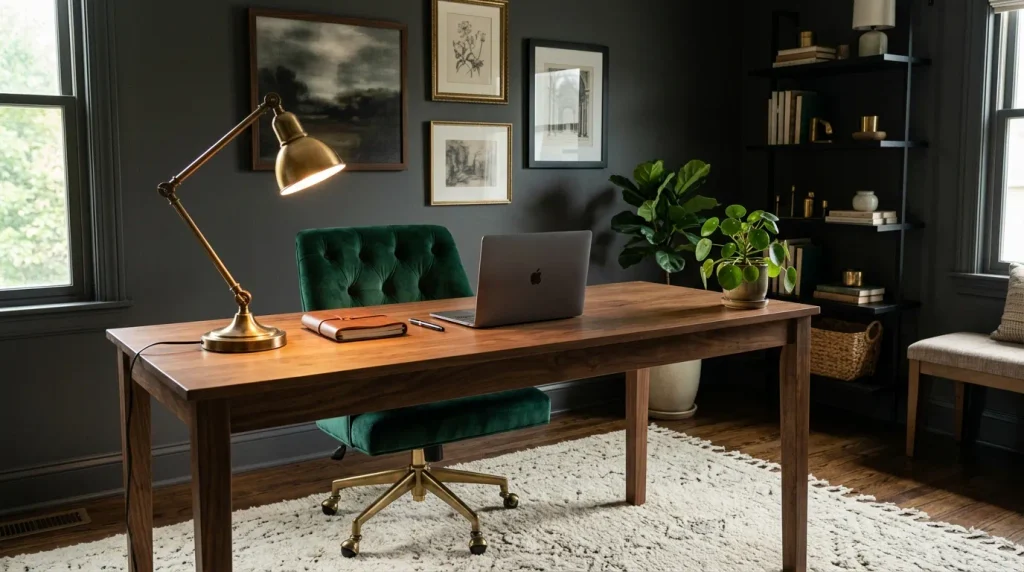
A velvet office chair can instantly make a workspace feel softer, richer, and more inviting. Deep emerald, burgundy, navy, or chocolate velvet works beautifully against charcoal walls and warm wood furniture. The fabric catches light differently across its surface, creating subtle variations that add depth without requiring busy patterns. Look for a chair with supportive cushioning and an adjustable height if you use the desk regularly. A beautiful chair should still be practical enough for everyday work. This combination is especially effective when you want your office to feel polished without turning it into a formal or overly decorated room.
Keep the rest of the furniture relatively simple so the velvet becomes the main textural feature. A walnut desk, cream rug, brass lamp, and minimal artwork can provide enough contrast without competing with the chair. If the velvet has a strong jewel tone, repeat a tiny hint of that color elsewhere through artwork or a cushion rather than matching every accessory. I’ve seen this work well in multipurpose rooms because the chair feels more like a deliberate furniture choice than typical office equipment. The result is a comfortable workspace with personality, warmth, and a sophisticated visual finish.
17. Moody Home Office Nook
- Turns a small unused area into a dedicated work zone.
- Uses color and lighting to visually separate the workspace.
- Works well beneath stairs, beside wardrobes, or in spare corners.
- Keep furniture compact to preserve movement around the area.
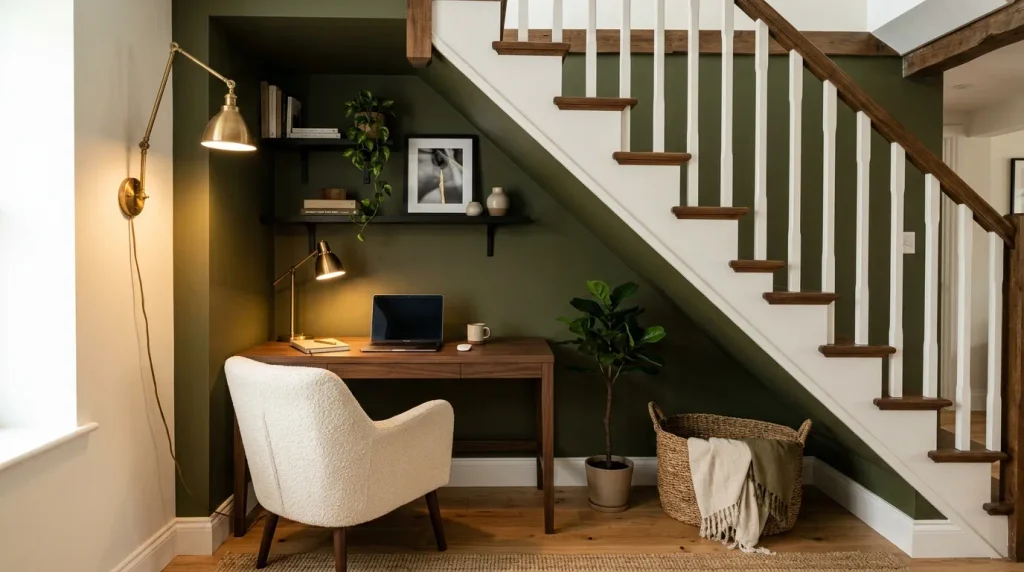
A small office nook can become one of the most useful areas in a home when it is designed with intention. Instead of trying to recreate a full-sized office, focus on the essentials: a compact desk, comfortable chair, practical lighting, and enough storage for everyday supplies. A deep green, charcoal, or navy backdrop can visually define the nook and make it feel separate from the surrounding room. This is one of the most practical moody home office ideas for apartments, bedrooms, and shared living spaces where every square foot needs to work harder.
Use vertical space whenever floor area is limited. Floating shelves can hold books and decorative objects, while a slim drawer unit can hide paperwork and chargers beneath the desk. Choose one strong light source, such as a brass wall sconce, rather than filling the small area with lamps. Keep the floor mostly clear so the nook does not feel crowded. In my experience, small workspaces often feel better when they have fewer visible objects and stronger visual contrast. A carefully styled corner can feel complete without requiring expensive furniture, major renovations, or a dedicated room.
18. Dark Floral Wallpaper
- Adds pattern while maintaining a sophisticated darker palette.
- Creates a dramatic backdrop behind the desk.
- Small-scale prints work well in compact offices.
- Pair bold wallpaper with simple furniture to avoid visual clutter.
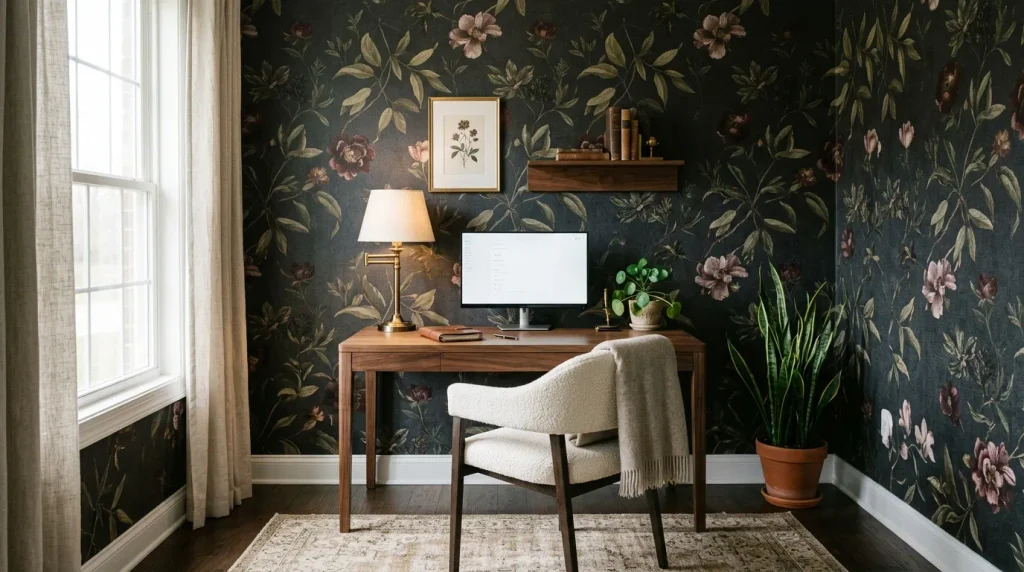
Dark floral wallpaper can bring pattern, personality, and depth into a workspace while keeping the overall mood sophisticated. Look for designs with charcoal, muted green, brown, dusty rose, or deep burgundy rather than highly saturated colors. A floral wall behind the desk creates an immediate focal point and can make a small office feel more layered. Keep the furniture simple so the wallpaper remains visually clear. A plain walnut desk and cream chair provide enough contrast without competing with the pattern, allowing the wall to carry most of the decorative impact.
Scale matters when choosing the right print. Large florals can create a dramatic statement in a spacious room, while smaller repeating patterns may feel more balanced in compact spaces. If the wallpaper is especially detailed, limit additional artwork and accessories to a few carefully chosen pieces. Warm brass lighting can highlight subtle colors within the pattern after sunset. I’ve noticed that dark wallpaper often makes lighter furniture appear more defined, giving the entire workspace a stronger sense of structure. The finished room feels expressive and cozy while still providing a practical environment for focused work.
19. Moody Wood Paneling
- Adds architectural texture without relying on artwork.
- Makes a plain workspace feel custom and substantial.
- Warm wood tones soften darker paint colors.
- Vertical panels can make the ceiling appear taller.
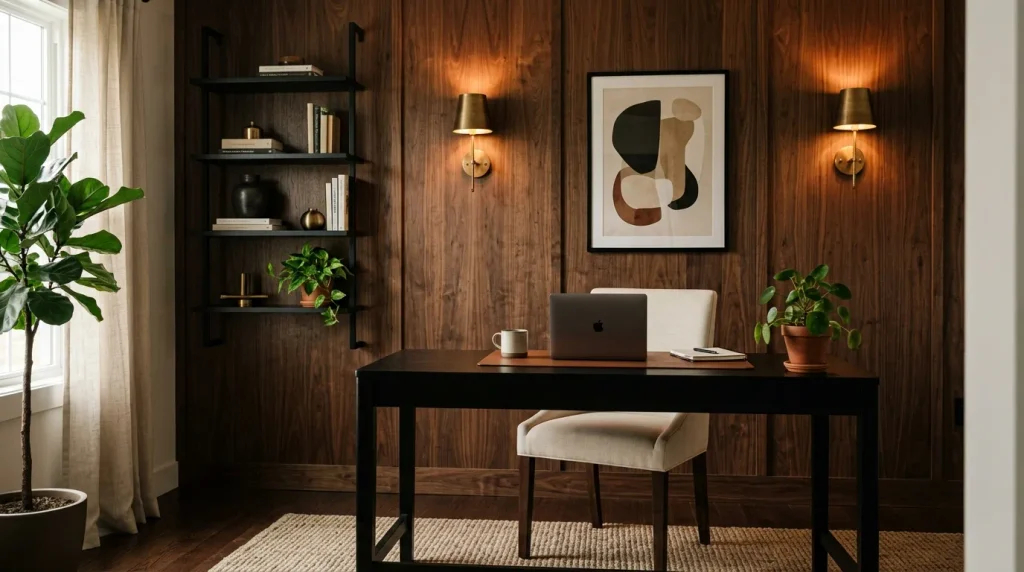
Dark wood paneling can instantly give a workspace more architectural character and warmth. Vertical walnut, smoked oak, or stained wood strips create a textured backdrop that feels richer than a plain painted wall. Place the paneling behind the desk to establish a clear focal point, then keep the furniture relatively streamlined. Cream upholstery, aged brass, and soft beige textiles can prevent the darker wood from feeling too heavy. Vertical paneling is also useful in rooms with lower ceilings because its direction naturally encourages the eye to travel upward.
The finish you choose can dramatically affect the final atmosphere. Matte or satin wood usually looks more sophisticated than an overly glossy surface, especially when paired with warm ambient lighting. If full wood paneling feels too expensive or permanent, consider decorative slat panels or a single feature section behind the desk. Keep accessories simple and let the natural grain provide most of the visual interest. In my experience, this approach works especially well when the room lacks architectural detail because the paneling creates instant depth. The result feels polished, warm, and intentionally designed.
20. Blackout Roman Shades
- Creates a clean, tailored look around office windows.
- Helps reduce screen glare during bright afternoons.
- Dark fabrics reinforce the room’s sophisticated palette.
- Choose textured materials to keep the treatment from feeling flat.
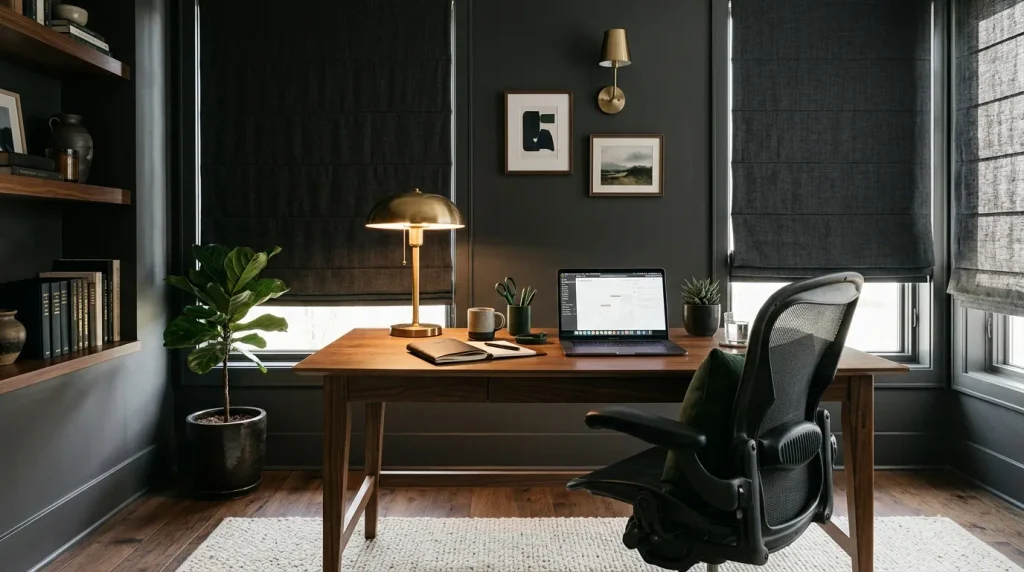
Blackout Roman shades offer a cleaner alternative to long curtains when you want a tailored, streamlined window treatment. Choose charcoal, deep olive, navy, or warm taupe to reinforce the darker palette without overwhelming the room. Their structured folds add subtle texture while keeping the window area visually neat. They are especially useful for home offices where bright sunlight can create distracting screen glare. When raised, the shades allow natural light into the room; when lowered, they provide privacy and a softer environment for afternoon work.
Keep the surrounding area simple so the window treatment remains crisp and intentional. A walnut desk positioned near the window can introduce warmth, while a cream rug or upholstered chair prevents the darker shades from making the room feel too enclosed. If the office has several windows, matching shades create a stronger architectural rhythm. Choose a fabric with visible texture rather than a completely smooth synthetic finish. This small detail can make the room feel more sophisticated. The result is a workspace that balances practical light control with a polished, cohesive appearance.
21. Moody Industrial Details
- Adds character through black metal, leather, and aged materials.
- Works beautifully with exposed brick or concrete surfaces.
- Keeps the workspace modern without feeling overly polished.
- Balance harder finishes with warm wood and soft textiles.
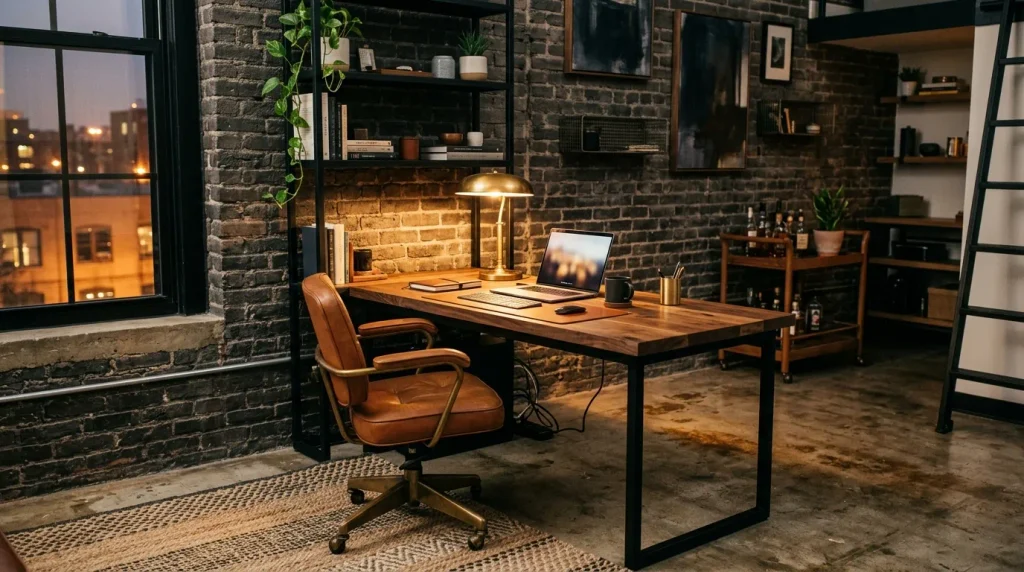
Industrial details can give a darker workspace a confident, architectural character without making it feel cold. Black metal frames, reclaimed wood, leather, exposed brick, and aged brass create a naturally layered palette. Start with one or two stronger industrial elements rather than adding every material at once. A walnut desktop with black metal legs can be enough to establish the look. If your room already has concrete, brick, or exposed beams, let those surfaces remain visible and use softer furnishings to create balance.
The secret to making industrial styling comfortable is contrast. Pair hard materials with a woven rug, linen curtains, upholstered chair, or soft throw to prevent the office from feeling too stark. Warm lighting is equally important because it highlights wood grain and aged metal while softening concrete and black finishes. Keep decorative objects purposeful, such as a vintage clock, ceramic planter, or framed architectural print. I’ve noticed that industrial rooms look more welcoming when there is at least one clearly tactile material nearby. The finished workspace feels urban, practical, and full of personality without becoming visually cluttered.
22. Moody Reading Corner
- Creates a relaxing second zone beside the main desk.
- Gives the office a place for reading or creative thinking.
- A comfortable chair can make unused floor space useful.
- Add a floor lamp for focused evening light.
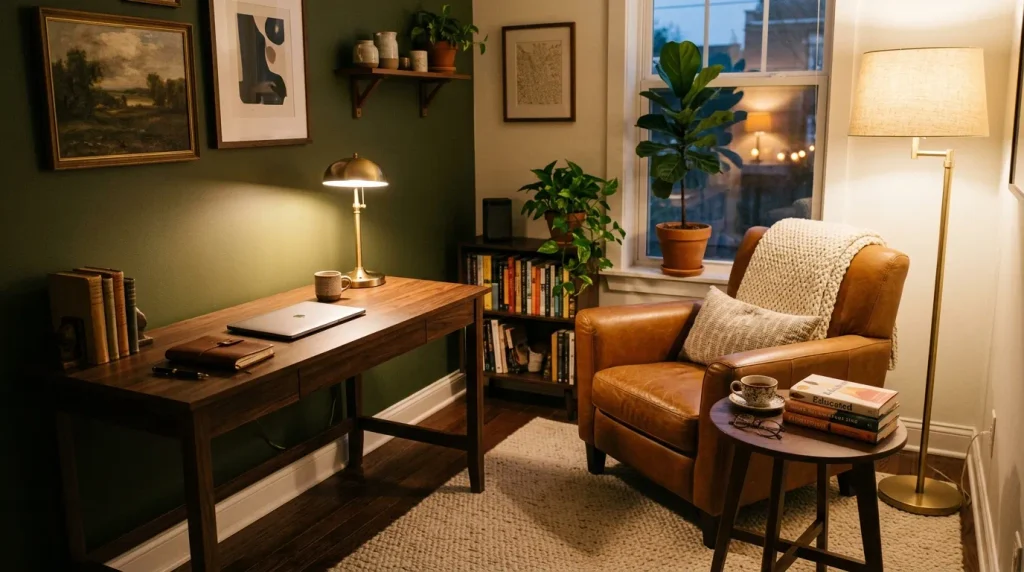
A dedicated reading corner can make a workspace feel more versatile and comfortable, especially when there is enough floor space beside the desk. Choose a supportive lounge chair in leather, boucle, velvet, or woven fabric, then position it beside a small side table for books and a drink. A brass or black floor lamp provides focused illumination without taking up desk space. Keep the palette connected to the main office through repeated tones such as walnut, cream, olive, charcoal, or cognac. The result is a secondary zone that feels intentional rather than like leftover furniture.
This corner can serve several purposes throughout the day. Use it for reading, reviewing documents, brainstorming away from the computer, or taking a short break between tasks. Keep the surrounding floor relatively open so the chair feels visually separate from the main work zone. A small rug beneath the chair can define the area and add softness. In my experience, creating a second seating option can make a home office feel less rigid because not every task has to happen at the desk. It adds comfort while giving the room more visual depth and practical flexibility.
23. Moody Ceiling Light
- Provides essential overhead illumination without losing atmosphere.
- A sculptural fixture can become a subtle focal point.
- Aged brass, black metal, and smoked glass suit darker palettes.
- Choose a diffused shade to avoid harsh shadows on the desk.
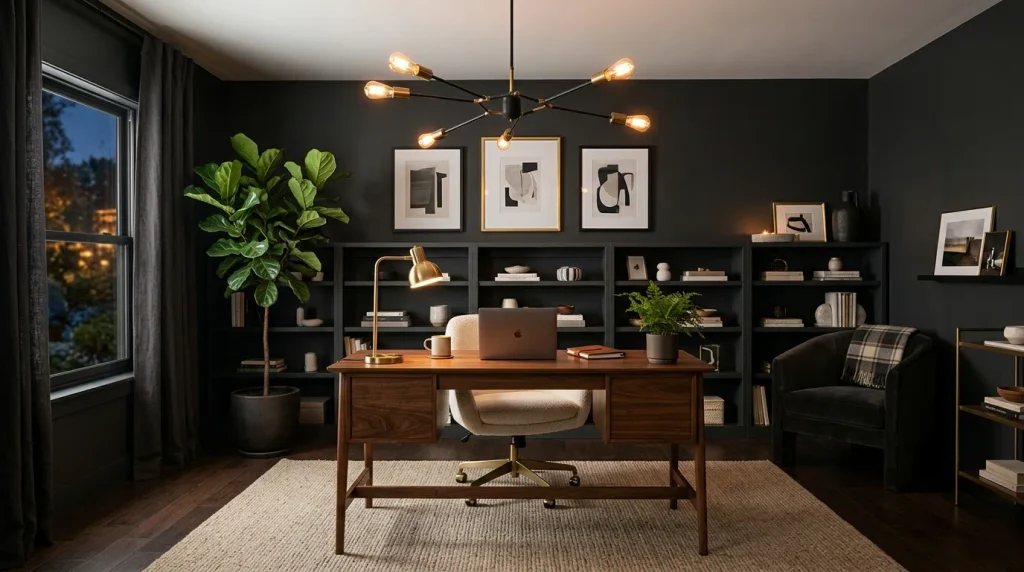
A moody ceiling light can serve as both practical illumination and a decorative feature in a darker workspace. Choose a fixture with black metal, aged brass, smoked glass, or a combination of warm materials to complement the room. Sculptural shapes can add personality without requiring additional wall decor. Position the light directly over the central work area when possible, but use a diffuser or frosted shade to prevent harsh shadows and glare. The goal is comfortable illumination that supports work while preserving the layered atmosphere created by the rest of the room.
Consider the scale of the fixture carefully before installing it. A large pendant can look beautiful in a spacious office but overwhelm a compact room, while a smaller semi-flush fixture may provide a better balance. Pair the overhead light with a desk lamp or wall sconce so you are not relying on one source throughout the day. Warm lighting usually complements dark wood and earthy colors particularly well. A thoughtfully chosen fixture can make the entire office feel more finished, especially when its finish subtly repeats details found in the furniture or hardware.
24. Moody Minimal Workspace
- Keeps the darker palette refined instead of visually crowded.
- Prioritizes useful furniture and intentional decorative pieces.
- Creates a calmer desk area for focused work.
- Use texture and lighting instead of excessive accessories.
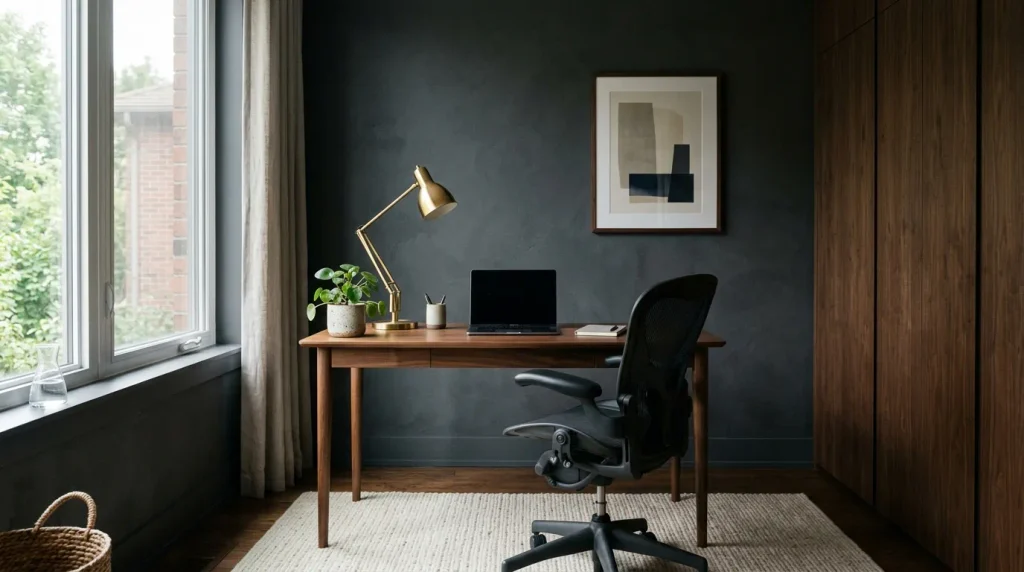
A moody minimal workspace proves that darker interiors do not need lots of decoration to feel complete. Start with a deep charcoal, olive, navy, or brown backdrop, then choose a few high-quality pieces that serve a clear purpose. A streamlined walnut desk, comfortable black chair, warm desk lamp, and one meaningful artwork may be enough. Keep storage mostly concealed so paperwork, cables, and office supplies do not interrupt the visual calm. The limited palette allows texture, lighting, and material quality to become the main decorative elements.
Minimal styling is especially helpful when your workspace needs to support concentration. Instead of filling shelves with accessories, leave intentional empty space and display only items you genuinely use or enjoy seeing. A textured rug can soften the floor, while a small ceramic planter introduces an organic shape without creating clutter. Keep technology organized with simple cable management and hidden charging solutions. I’ve noticed that darker minimalist offices often feel more sophisticated when every visible item has a purpose. The finished room becomes peaceful, functional, and visually strong enough to inspire without constantly demanding attention.
Conclusion
Creating a cozy, stylish workspace doesn’t require a complete renovation. The right colors, textures, lighting, furniture, and personal details can completely change how your office feels and functions. These moody home office ideas offer plenty of inspiration, whether you love deep green walls, dark wood, soft velvet, dramatic wallpaper, or simple minimalist styling. I’ve seen how small changes can make a workspace feel more comfortable and motivating. Choose one idea that speaks to you and start there. Save this post on Pinterest for your next decorating project, try an idea in your own space, and share it with someone who needs workspace inspiration.