Ready to make your living room feel bolder, brighter, and unmistakably yours? These maximalist living room ideas are packed with color, pattern, texture, and personality.
Maximalist decorating is perfect if your space feels too plain, predictable, or unfinished and you want to create a room that feels collected and full of life. From jewel-toned walls and patterned sofas to colorful artwork, vintage finds, statement lighting, and layered textiles, these ideas show how different elements can work together without making a room feel chaotic. In my experience, the secret is not simply adding more—it is choosing colors, patterns, and decorative pieces that connect visually. As you explore these ideas, you’ll find practical ways to create a vibrant, welcoming space that reflects your style while remaining comfortable for everyday living.
1. Jewel-Toned Walls
- Rich wall colors instantly create a dramatic foundation for layered decor.
- Emerald, sapphire, and ruby tones work beautifully with contrasting furniture.
- A deep backdrop helps artwork and patterned fabrics stand out.
- Use one dominant shade to keep the room visually connected.
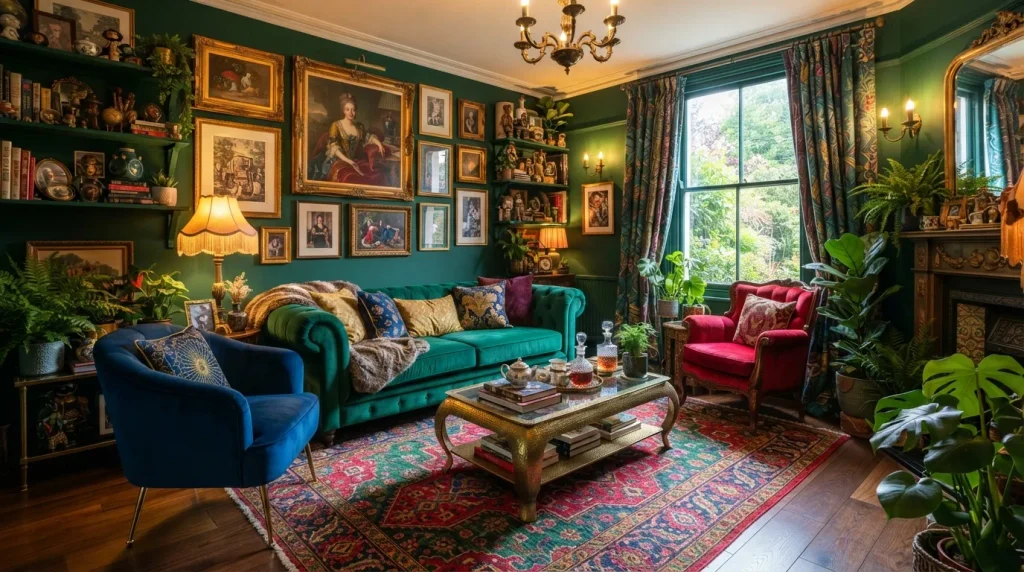
A bold wall color can completely change the personality of a living room, especially when you want maximalist living room ideas that feel confident rather than chaotic. Deep emerald, sapphire, or burgundy walls create an intense backdrop for colorful furniture and collected accessories. The trick is to repeat small touches of the wall color throughout the room so everything feels connected. In my experience, saturated paint looks especially striking beside brass details, warm wood, and creamy textiles. Instead of treating the walls as background, make them part of the room’s overall color story for maximum visual impact.
Jewel-toned walls also give artwork, mirrors, and patterned fabrics a stronger presence. Try placing a colorful sofa against the deepest wall, then introduce two or three related shades through cushions, curtains, or a patterned rug. Keep the ceiling and larger architectural elements slightly calmer if the room already contains several strong colors. This creates contrast without sacrificing the energetic personality that defines maximalist decorating. Good lighting matters too, because rich colors can appear dramatically different throughout the day. Use layered lighting to keep the space warm, dimensional, and inviting after sunset.
Also Read : 24 Moody Home Office Ideas for a Stylish Cozy Workspace
2. Patterned Sofa Focus
- Makes the sofa the immediate visual centerpiece of the room.
- Floral, geometric, or botanical prints bring personality to neutral furniture layouts.
- Repeating one pattern color elsewhere helps the design feel intentional.
- Keep surrounding pieces simpler so the upholstery remains visually powerful.
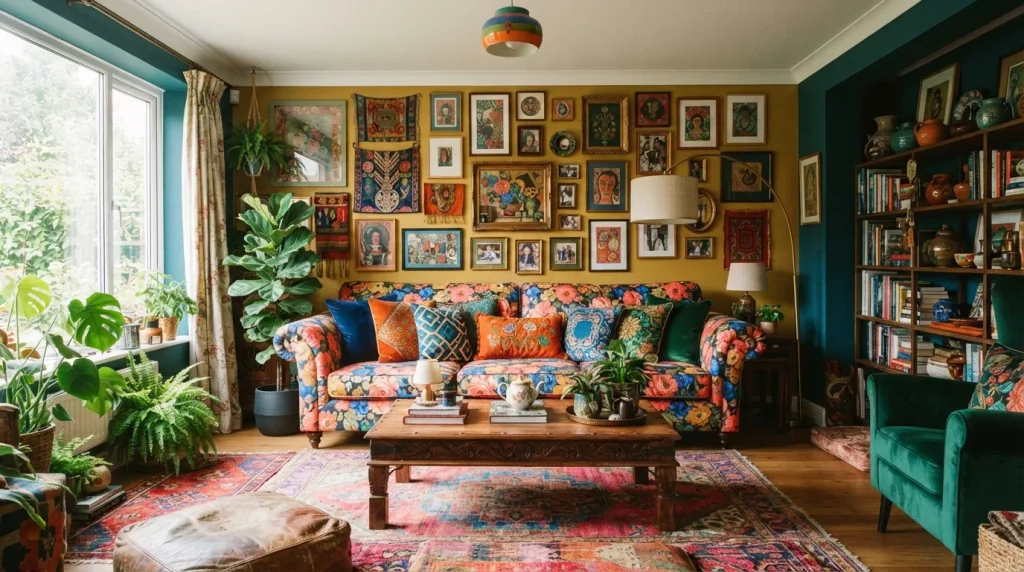
A patterned sofa can turn an ordinary seating arrangement into an instantly memorable focal point. Instead of choosing a plain couch and adding color only through accessories, let the upholstery introduce several shades at once. Floral, botanical, geometric, or vintage-inspired prints can work beautifully in a colorful interior when their strongest colors are repeated elsewhere. I’ve seen this work well in homes where the owners want personality without replacing every piece of furniture. Choose a rug or artwork that shares at least one sofa color, then let the remaining shades appear in smaller decorative details.
The easiest way to keep a bold sofa from overwhelming the room is to balance it with quieter furniture shapes and carefully selected accessories. A simple wooden coffee table can provide warmth, while a gallery wall introduces additional color without competing with the upholstery. Layer cushions in complementary shades rather than matching every pattern exactly. A patterned curtain can also work, but choose a smaller-scale print to create variation. This approach gives the room the abundant, collected appearance associated with maximalist style while maintaining enough visual structure for the space to feel comfortable and usable.
Also Read : 22 Rustic Mantel Decorating Ideas for a Cozy Holiday Home
3. Gallery Wall Layers
- Creates a strong focal point across a large empty wall.
- Mixing artwork sizes makes the arrangement feel collected over time.
- Colorful frames can add another decorative layer.
- Include personal pieces to make the display feel authentic and lived-in.
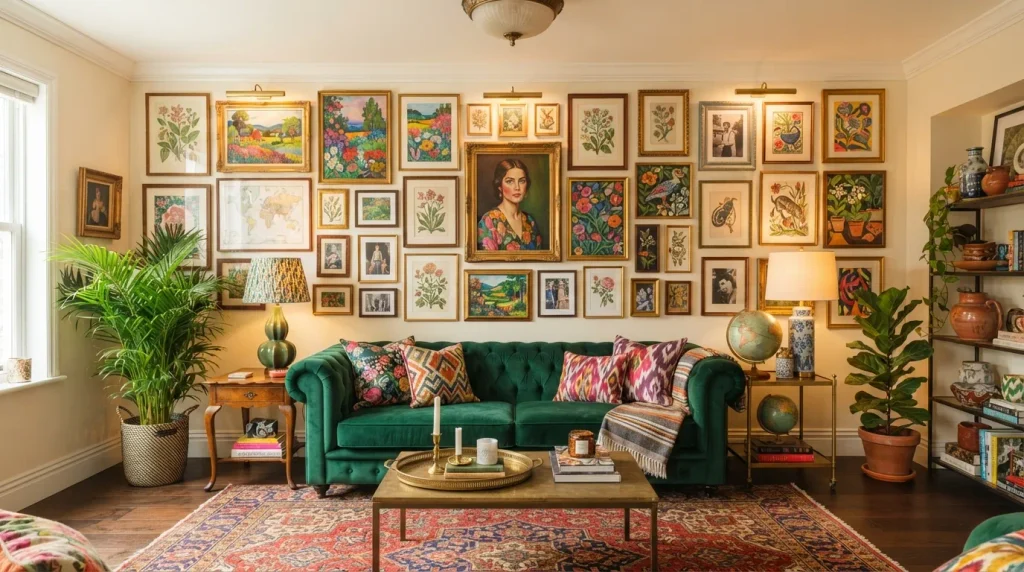
A layered gallery wall is one of the easiest ways to give a living room that collected, artistic character people associate with maximalist decorating. Combine paintings, vintage prints, photography, botanical illustrations, and small decorative objects rather than using identical frames. Start by choosing a loose color palette, then allow a few unexpected shades to appear naturally. For maximalist living room ideas, this technique works particularly well because the artwork can connect different furniture colors across the room. In my experience, imperfect spacing often looks more interesting than a rigid grid because it creates a relaxed, collected feeling.
Before hanging anything, arrange the pieces on the floor and photograph the composition from a distance. This makes it easier to spot areas that feel too crowded or visually empty. Place larger artwork toward the center and balance it with smaller pieces around the edges. Mixing ornate gold frames with painted wood or simple black frames adds depth without requiring everything to match. Leave enough breathing room around the display so individual pieces remain recognizable. The finished wall should feel abundant and personal, almost like a visual record of favorite colors, places, artwork, and memories.
Also Read : 23 Winter Porch Decor Ideas for a Cozy Seasonal Welcome
4. Colorful Velvet Seating
- Velvet seating adds depth, softness, and a luxurious visual layer.
- Rich colors like mustard, teal, and magenta instantly energize the room.
- Mixing seating colors creates a more collected and playful arrangement.
- Choose different silhouettes to keep the furniture from looking too coordinated.
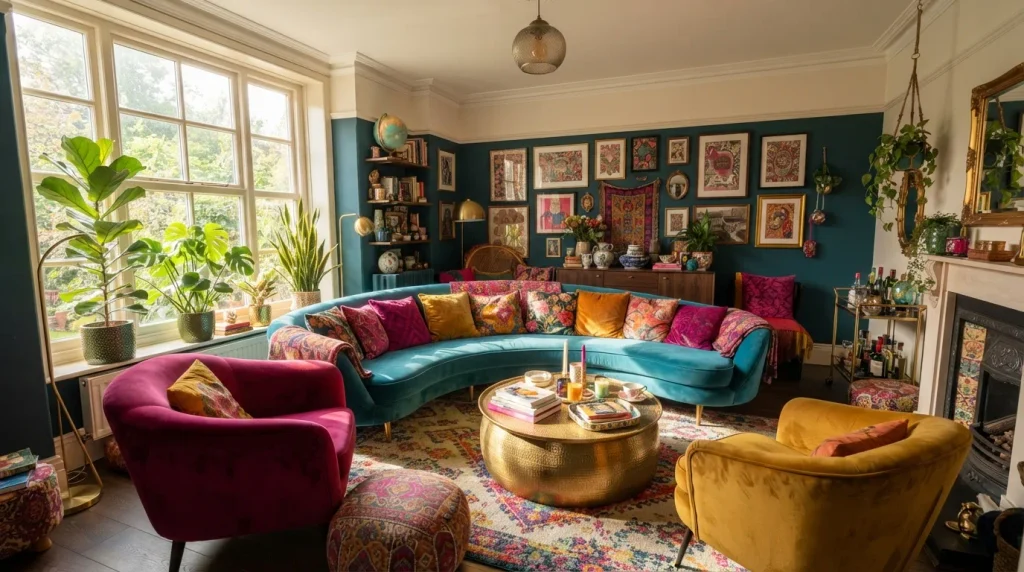
Nothing makes a colorful living room feel richer quite like velvet seating in unexpected shades. A mustard sofa, teal armchair, or magenta accent chair can introduce strong color while adding softness through its plush texture. The key is to avoid making every seat identical in shape or tone. Mix curved silhouettes with structured chairs for a more collected appearance. I’ve noticed that velvet works especially well in rooms with wood, brass, and patterned textiles because its subtle sheen catches changing light. The result feels luxurious without needing overly formal furniture or complicated decorating techniques.
To keep several colorful seats from competing, connect them through smaller accessories placed around the room. For example, repeat mustard in a cushion, teal in artwork, and magenta in a small decorative object. A neutral coffee table can create a visual pause between the strongest colors, while a patterned rug ties the entire seating area together. Choose durable upholstery if the room receives heavy daily use, especially when children or pets share the space. This combination of practical furniture and expressive color creates a lively room that feels intentionally styled rather than randomly filled with bright pieces.
Also Read : 21 Winter Decor Ideas for a Warm Cozy Home
5. Layered Pattern Mix
- Combining different prints gives the room a playful, collected personality.
- Varying pattern scales prevents the design from feeling visually repetitive.
- Florals, stripes, and geometric motifs can work together when colors connect.
- Keep one or two quieter surfaces to give the eye a resting place.
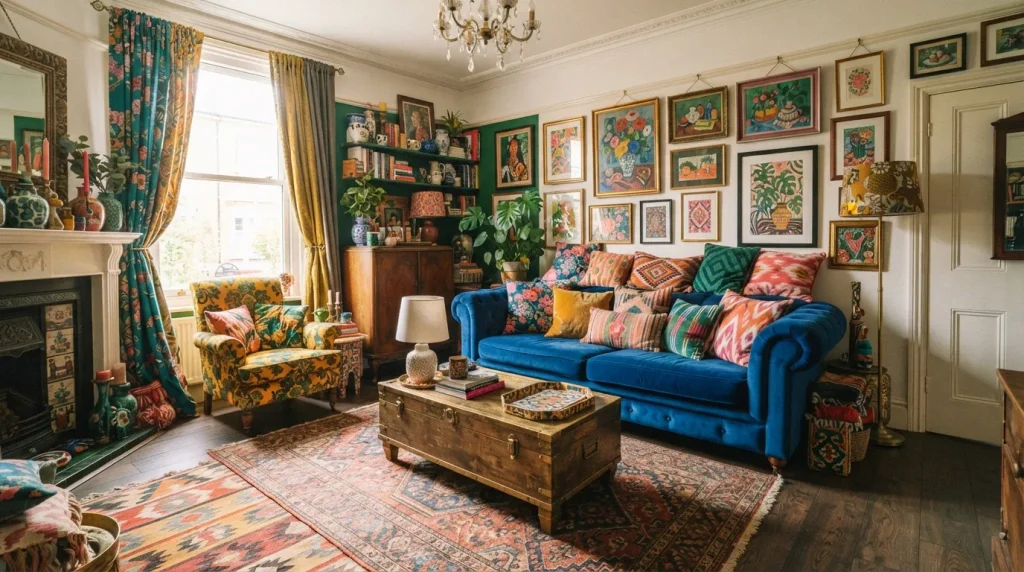
Mixing patterns is where a maximalist room can become truly expressive, but successful layering depends on more than simply choosing lots of prints. Start with one larger pattern, then introduce medium and small-scale designs around it. Florals can sit beside stripes, geometric cushions, and traditional rugs when they share a few recurring colors. This creates visual rhythm instead of random contrast. In my experience, choosing patterns from different scales is one of the simplest ways to make a busy room feel intentional. The eye moves naturally around the space, discovering new details without becoming overwhelmed.
When combining multiple prints, give each pattern a clear role. A large floral rug might become the foundation, while striped curtains provide vertical movement and smaller geometric cushions add detail. Avoid placing two equally dominant patterns directly beside each other if they compete for attention. Instead, separate them with solid-colored upholstery, wood furniture, or textured accessories. Repeating a few colors throughout the room will also make the combination feel cohesive. The finished space should look abundant and personal, with enough variation to create interest while still maintaining a recognizable color story from corner to corner.
Also Read : 21 Moody Dining Room Ideas for a Dramatic Cozy Space
6. Eclectic Furniture Pairings
- Mixing furniture styles makes the room feel collected rather than showroom-perfect.
- Vintage pieces can add character beside modern silhouettes.
- Different wood tones create warmth and visual depth.
- Use repeated colors to connect furniture from different design eras.
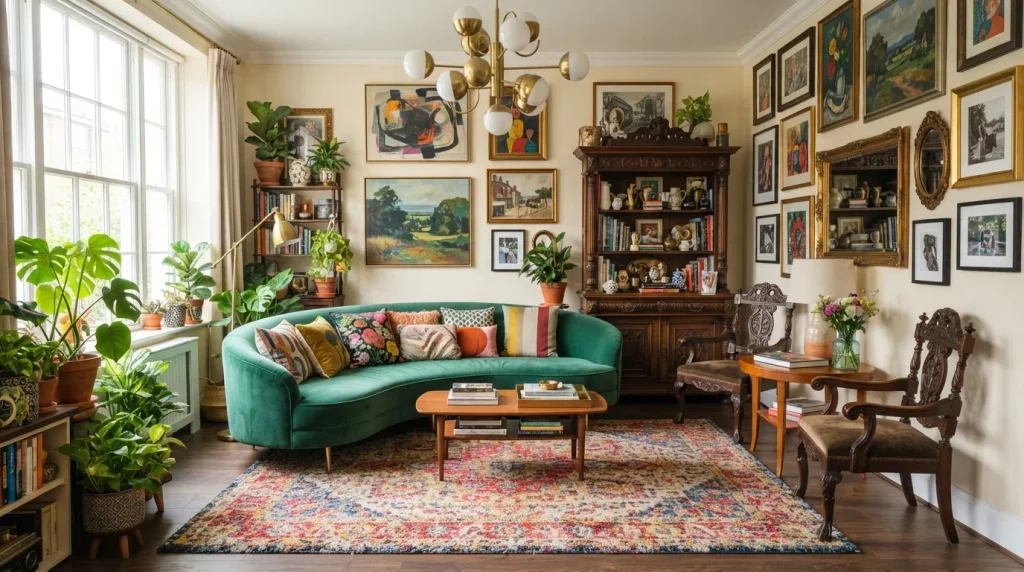
Mixing furniture styles gives a colorful living room a sense of history and personality that matching sets often cannot provide. Pair a contemporary curved sofa with a vintage wooden chair, an antique-style cabinet, or a sculptural side table. Different silhouettes make the arrangement more visually interesting while allowing favorite pieces to coexist. Maximalist living room ideas often work best when the furniture feels collected gradually rather than purchased as one complete set. I’ve seen rooms become far more inviting simply by replacing matching pieces with a few contrasting shapes that share similar proportions or complementary colors.
The goal is not to make every furniture style different, but to create enough variation for the room to feel layered. If you combine several wood tones, repeat one finish in smaller accessories to create continuity. A modern sofa can look perfectly at home beside an ornate vintage table when their colors connect through cushions, artwork, or a rug. Keep pathways clear and make sure each seating piece remains comfortable and functional. This balance between visual variety and everyday practicality creates an eclectic room that feels bold, welcoming, and genuinely lived in rather than carefully staged.
Also Read : 24 Winter Centerpieces for a Beautiful Seasonal Table
7. Bold Floral Curtains
- Large-scale floral curtains instantly add color and movement to plain windows.
- Choose prints that repeat shades already used in the furniture.
- Floor-length panels make the room feel taller and more finished.
- Layer sheer curtains underneath for softer daytime light.
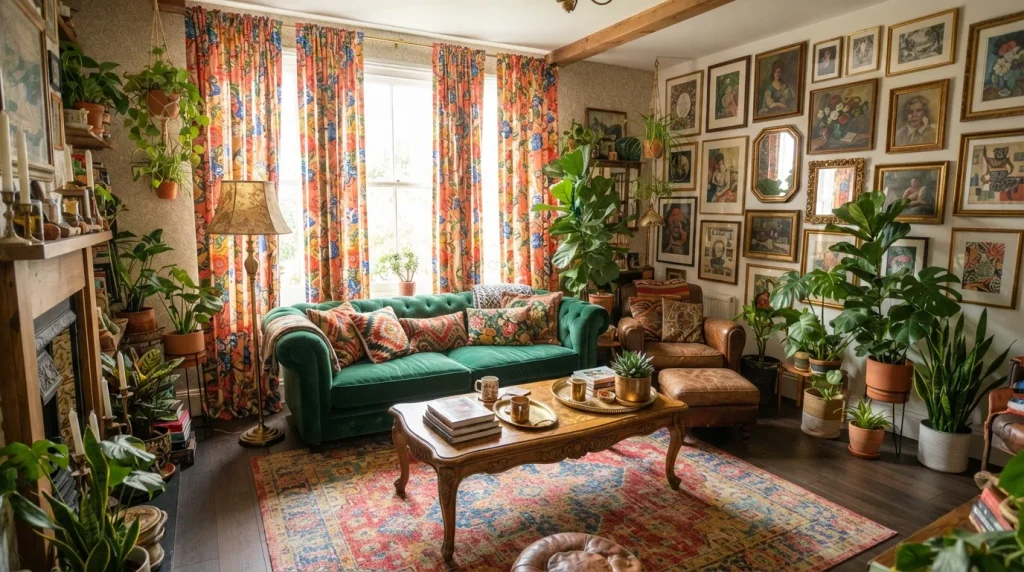
Bold floral curtains can completely transform an otherwise ordinary living room because they add height, pattern, and color in one simple update. Choose a large botanical print with two or three shades already present in your furniture or artwork. Floor-length panels create a stronger architectural effect than short curtains, especially when mounted slightly above the window frame. In my experience, curtains are often overlooked when decorating colorful spaces, yet they can become one of the most noticeable visual elements. A dramatic floral design also softens hard surfaces and makes the room feel more finished.
To prevent large floral curtains from becoming visually overwhelming, balance them with solid-colored furniture and smaller-scale patterns elsewhere. If the sofa is already patterned, select curtains with a simpler botanical motif or fewer contrasting colors. Sheer panels underneath can soften strong sunlight while preserving the rich appearance of the outer fabric. Repeat one curtain color through cushions, artwork, or decorative objects for cohesion. This creates a connected look rather than making the windows feel separate from the rest of the room. The result is colorful, layered, and expressive while remaining comfortable for everyday living.
8. Statement Ceiling Color
- A colorful ceiling turns an overlooked surface into a surprising design feature.
- Deep shades can make a large room feel more intimate.
- Lighter saturated colors add personality without visually lowering the space.
- Repeat the ceiling color subtly through accessories for a cohesive finish.
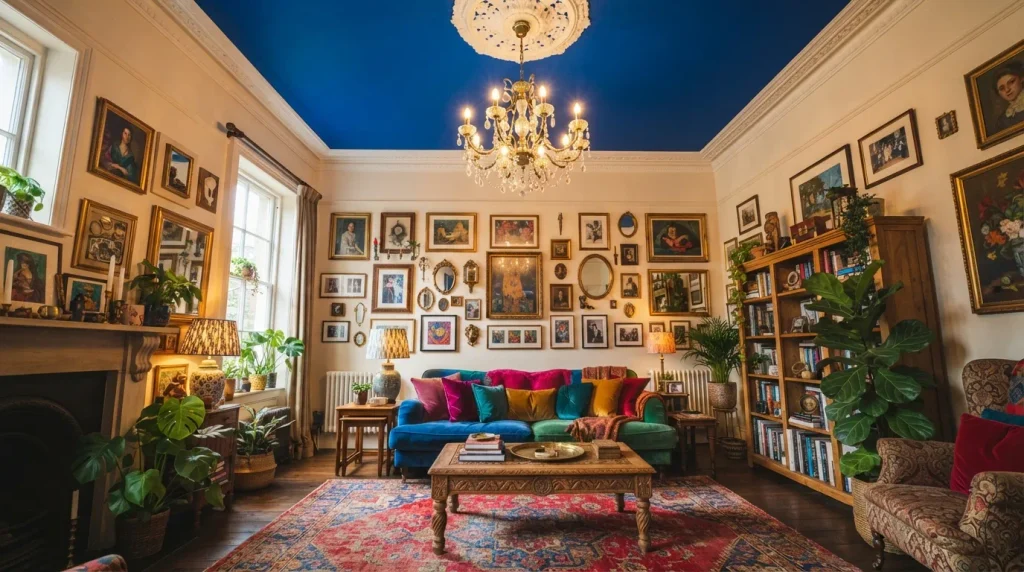
The ceiling is often the forgotten fifth wall, making it a perfect place to introduce an unexpected burst of color. A painted ceiling in cobalt, emerald, terracotta, or even a soft pink can instantly make a living room feel more distinctive. For maximalist living room ideas, this technique adds another layer without taking up any floor or wall space. A darker ceiling can create intimacy in a large room, while a brighter shade can make a smaller space feel playful. Choose a finish that complements the existing walls and furnishings rather than treating the ceiling as an unrelated accent.
A statement ceiling works best when the color appears subtly elsewhere in the room. Repeat it in a cushion, artwork detail, vase, or patterned rug so the eye naturally travels upward and back through the space. Keep lighting in mind because ceiling color changes dramatically under warm and cool bulbs. A decorative chandelier or sculptural pendant can make the painted surface even more noticeable. If you are nervous about committing to a very strong shade, start with a muted version of your favorite room color. The effect can still feel bold while remaining sophisticated.
9. Vibrant Accent Rug
- A colorful rug anchors multiple furniture colors into one visual foundation.
- Traditional, geometric, and abstract patterns all suit layered interiors.
- Larger rugs help define the seating area and make furniture feel connected.
- Choose a durable material when the room receives heavy daily traffic.
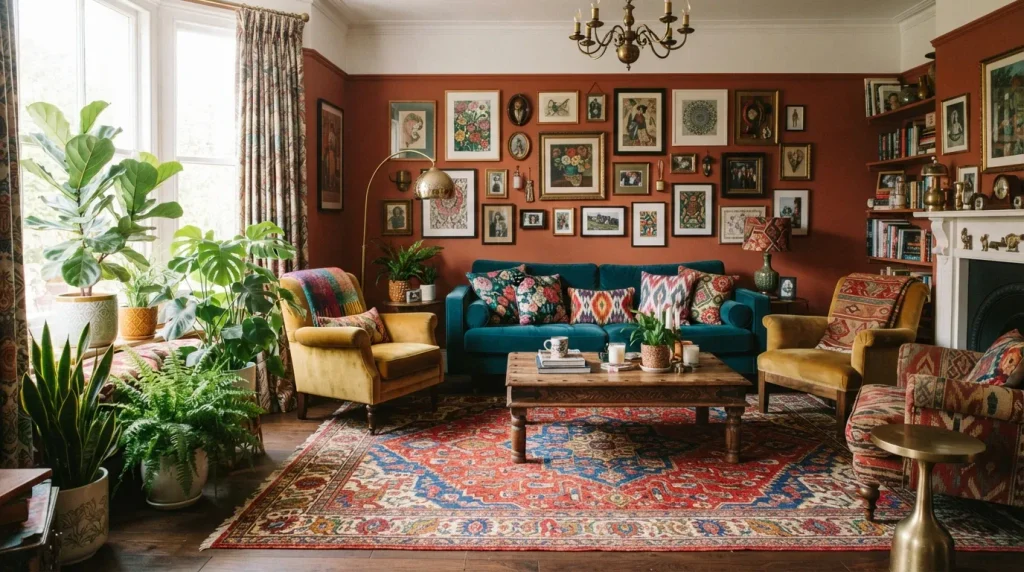
A vibrant area rug can instantly bring scattered colors together and give the entire seating arrangement a stronger sense of purpose. Choose a design that includes several shades already present in the room, such as ruby, cobalt, mustard, emerald, or coral. A traditional Persian-inspired pattern adds visual richness, while geometric or abstract designs create a more contemporary effect. I’ve noticed that larger rugs usually make colorful rooms look more polished because they visually connect the sofa, chairs, and coffee table. Instead of floating around separate pieces, the furniture feels like one intentional conversation area.
Size matters just as much as color when choosing a statement rug. Ideally, the front legs of your main seating pieces should sit comfortably on the rug so the arrangement feels connected rather than fragmented. If the room already contains several strong patterns, choose a rug with a repeating color palette instead of too many competing motifs. For busy households, look for materials that are easy to maintain and suited to everyday traffic. A well-chosen rug can soften hard flooring, define the room, introduce personality, and provide the colorful foundation that ties the rest of the decor together.
10. Collected Display Shelves
- Open shelving provides space for artwork, books, ceramics, and colorful objects.
- Mixing heights creates a more dynamic visual arrangement.
- Personal collections make the room feel authentic and lived-in.
- Leave small areas empty so the display does not become visually heavy.
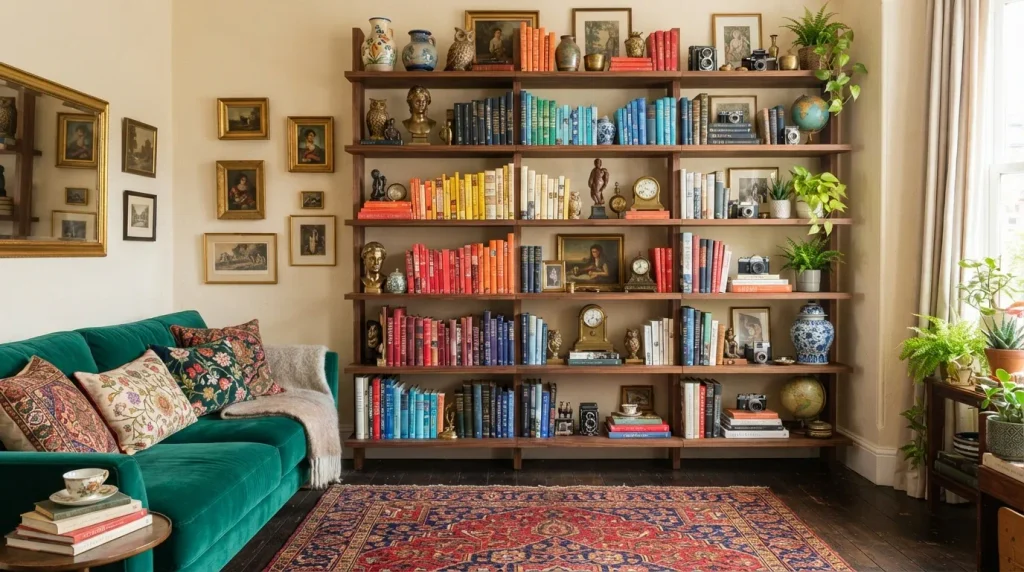
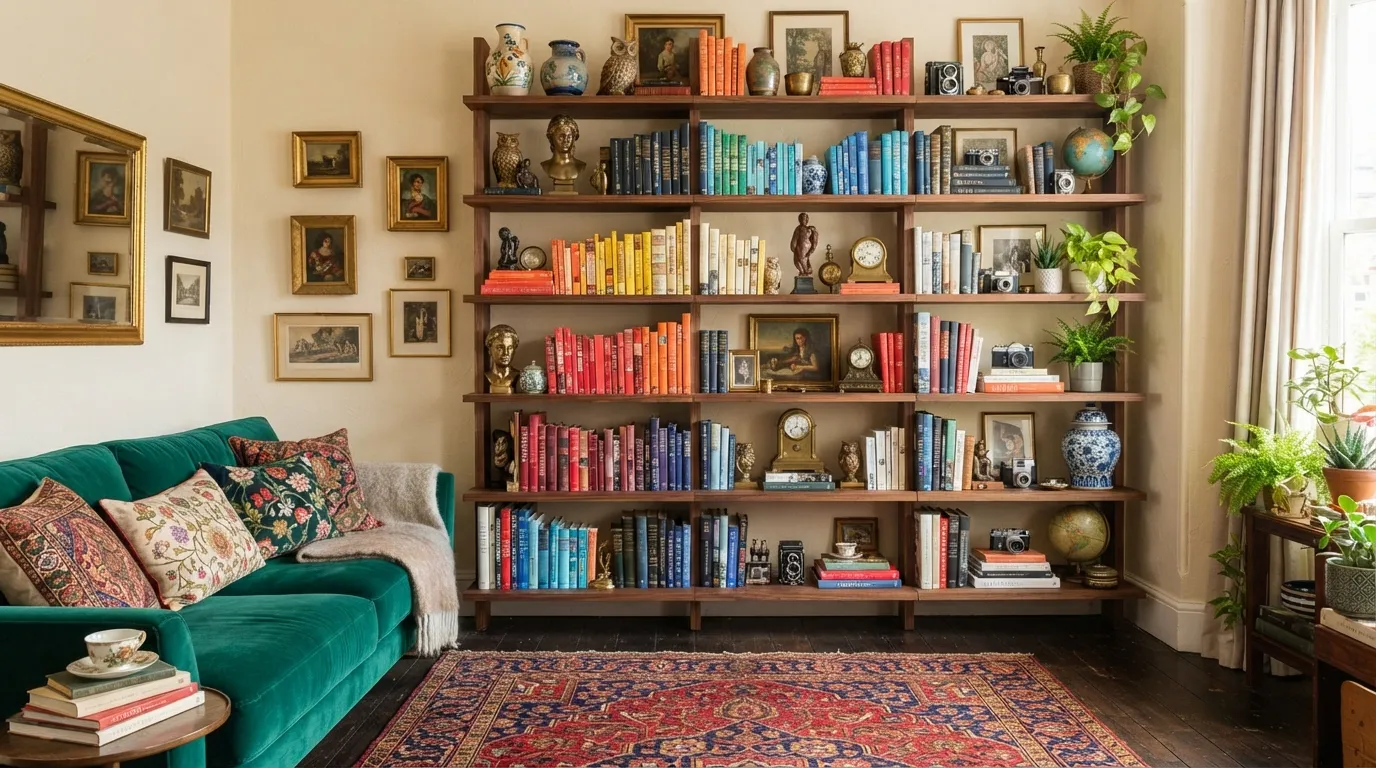
Open display shelves are perfect for adding personality because they let you showcase colorful objects without covering every wall with artwork. Combine books, ceramics, framed prints, small sculptures, plants, and collected treasures at different heights. For maximalist living room ideas, this creates the layered appearance of a home that has evolved naturally over time. In my experience, the most attractive shelves usually include a mixture of practical and decorative pieces rather than looking like a showroom. Choose objects in related colors, but allow a few unexpected pieces to break the pattern and keep the display interesting.
Avoid filling every shelf from edge to edge because visual breathing room helps individual pieces stand out. Place larger objects first, then fill the surrounding spaces with smaller items. Stack a few books horizontally beneath a vertical frame, or place a rounded vase beside a rectangular artwork for contrast. Rotate seasonal pieces occasionally so the display stays fresh without requiring a complete redesign. This approach adds storage and decoration at the same time. The result feels abundant and personal, while thoughtful spacing keeps the arrangement organized enough for everyday living.
11. Mixed Lighting Layers
- Combining several light sources makes bold colors look richer at different times.
- Table lamps create warm pools of light around seating areas.
- Decorative pendants can become colorful sculptural features.
- Dimmers make it easier to change the atmosphere from daytime to evening.
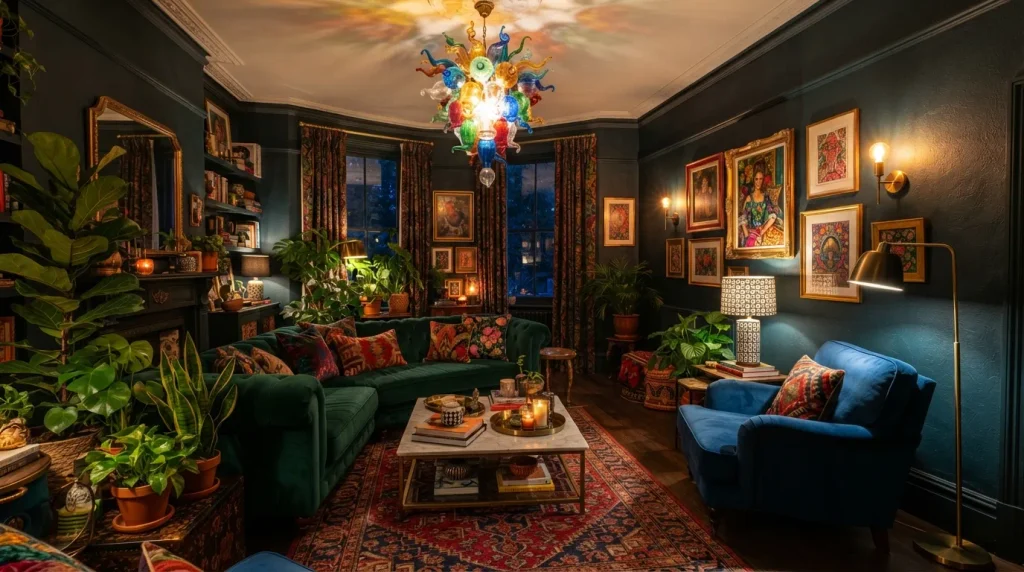
Great lighting can make a colorful room look dramatically different after sunset, so avoid relying on a single overhead fixture. Combine a statement pendant with floor lamps, table lamps, and wall lighting to create several warm layers throughout the space. This allows different corners to glow independently instead of leaving the room evenly illuminated from above. That layered approach works especially well with rich fabrics and saturated colors because softer light brings out their depth. I’ve noticed that even simple furniture arrangements feel more sophisticated when each seating area has its own comfortable source of illumination.
Choose warm bulbs for living spaces where you want a cozy atmosphere, and consider dimmable fixtures when possible. Place a floor lamp beside a reading chair, a table lamp near artwork or shelving, and a decorative pendant above the main seating zone. These separate light pools create depth and prevent a large room from feeling flat at night. Metallic finishes such as brass or antique gold can reflect the glow beautifully without adding another strong color. The result is a vibrant space that remains inviting and functional from bright mornings through relaxed evenings.
12. Layered Statement Pillows
- Multiple cushions make simple seating feel instantly richer and more expressive.
- Combine solids, stripes, florals, and geometric patterns for variety.
- Different sizes create depth without requiring new furniture.
- Repeat existing room colors so the arrangement feels intentionally coordinated.

Statement pillows are one of the quickest ways to make a simple sofa feel abundant, colorful, and full of personality. Mix different shapes, fabrics, and patterns instead of buying matching sets. A combination of velvet, linen, woven fabric, and embroidered covers creates beautiful texture while floral, striped, and geometric prints add visual movement. I’ve noticed that using three or four connected colors keeps even a busy arrangement looking intentional. Start with larger cushions at the back, add medium pieces in front, and finish with one smaller accent pillow for a naturally layered appearance.
The best pillow arrangements balance variety with repetition. Choose a few shades from the rug, artwork, or curtains, then repeat those colors across different patterns rather than using identical designs. This makes the seating area feel connected to the rest of the room. Odd numbers often create a more relaxed arrangement, while different shapes prevent everything from looking too uniform. If the sofa already has a strong pattern, use mostly solid or lightly textured cushions to avoid visual competition. Rotate covers seasonally to refresh the room without replacing expensive furniture or changing the entire design.
13. Oversized Artwork
- Large artwork gives a colorful room an instant focal point.
- Choose pieces with shades that echo the furniture and accessories.
- Abstract, botanical, and expressive paintings work especially well.
- One oversized piece can be more effective than several small decorations.
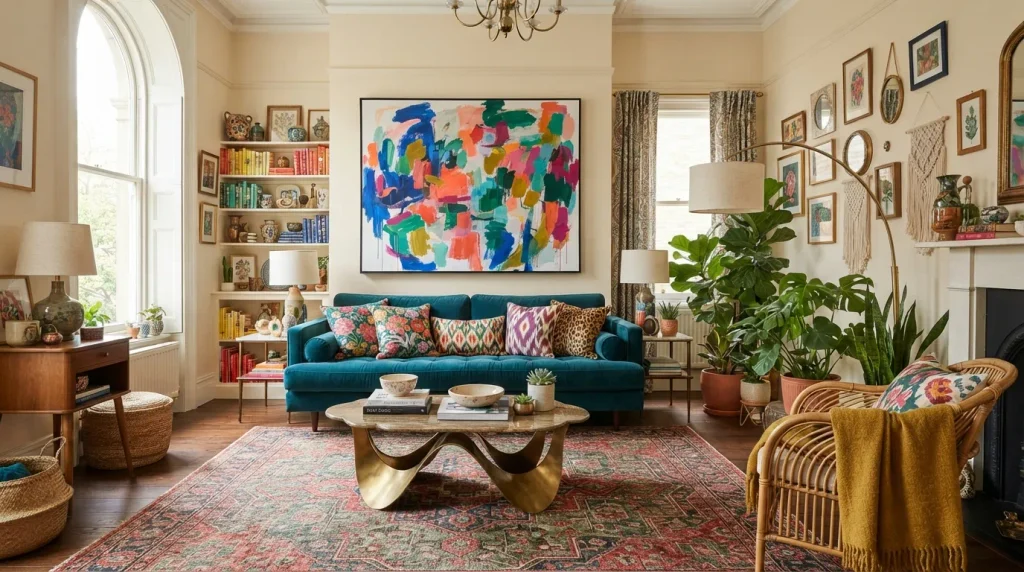
Oversized artwork can give a colorful living room the strong focal point it needs without adding more furniture or accessories. Choose one expressive piece with several shades that already appear throughout the room, then position it where the eye naturally lands. Abstract paintings, bold botanicals, and colorful modern compositions can all work beautifully. For maximalist living room ideas, a large artwork piece helps organize the surrounding colors by giving them a visual reference point. I’ve noticed that one substantial artwork often feels more sophisticated than covering every available wall with small decorations.
When selecting the artwork, consider the furniture beneath it and leave enough surrounding wall space for the piece to breathe. A colorful painting can sit above a solid velvet sofa, while a patterned rug below adds another layer without competing directly. If the artwork contains a particularly bright shade, repeat that color through just one or two cushions or decorative objects. This creates continuity without making the room look overly matched. Good framing can also change the overall impression, with ornate gold adding vintage character and simple wood or black frames creating a more contemporary balance.
14. Painted Interior Doors
- A colorful door creates a surprising focal point in an otherwise overlooked area.
- Saturated shades can highlight architectural details beautifully.
- Repeating the door color through small accessories creates visual connection.
- Use durable paint for doors that receive frequent daily handling.
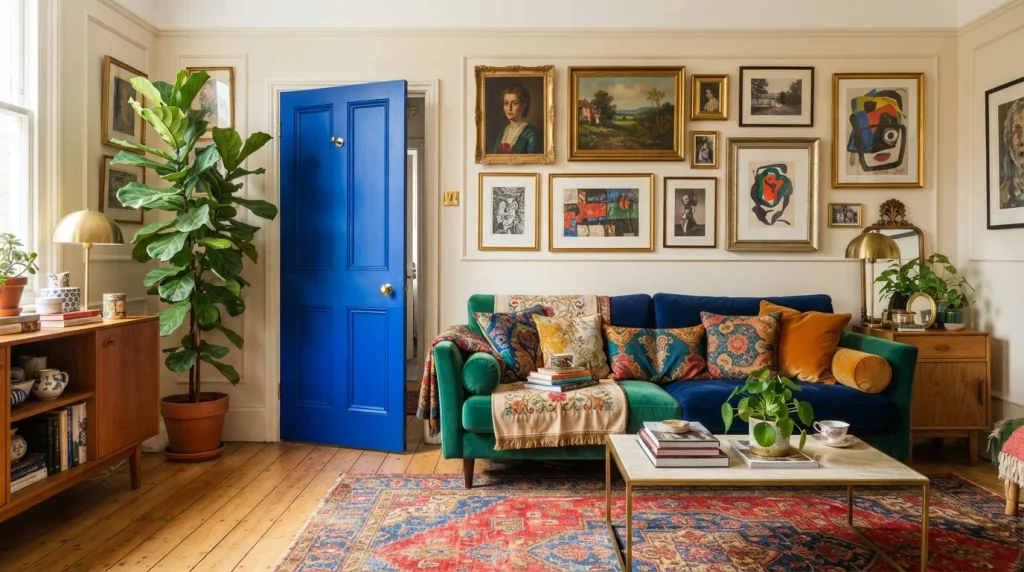
Painting an interior door is a small change that can introduce a surprisingly strong dose of personality. Instead of treating the door as a plain functional surface, use it to repeat one of the room’s strongest accent colors. Cobalt blue, deep green, coral, mustard, or burgundy can create a beautiful contrast against lighter walls. In my experience, doors are especially useful for adding bold color when you want to experiment without committing to painting an entire room. The smaller surface area makes the decision feel manageable while still creating a noticeable visual feature.
For a polished result, coordinate the door color with nearby artwork, cushions, or decorative accessories rather than matching everything exactly. Brass or antique-gold hardware can add warmth to deeper shades, while black hardware creates a stronger modern contrast. Use a durable washable finish because doors are touched frequently and can show marks more easily than walls. If the room already contains several dominant colors, choose a shade that appears subtly elsewhere. This technique adds architectural interest, strengthens the room’s color story, and makes an ordinary doorway feel like part of the overall design.
15. Sculptural Coffee Tables
- Unusual table shapes add another layer of visual interest.
- Curved silhouettes soften rooms filled with strong patterns and colors.
- Natural wood introduces warmth between vibrant upholstery pieces.
- Keep tabletop styling selective so the sculpture remains visible.
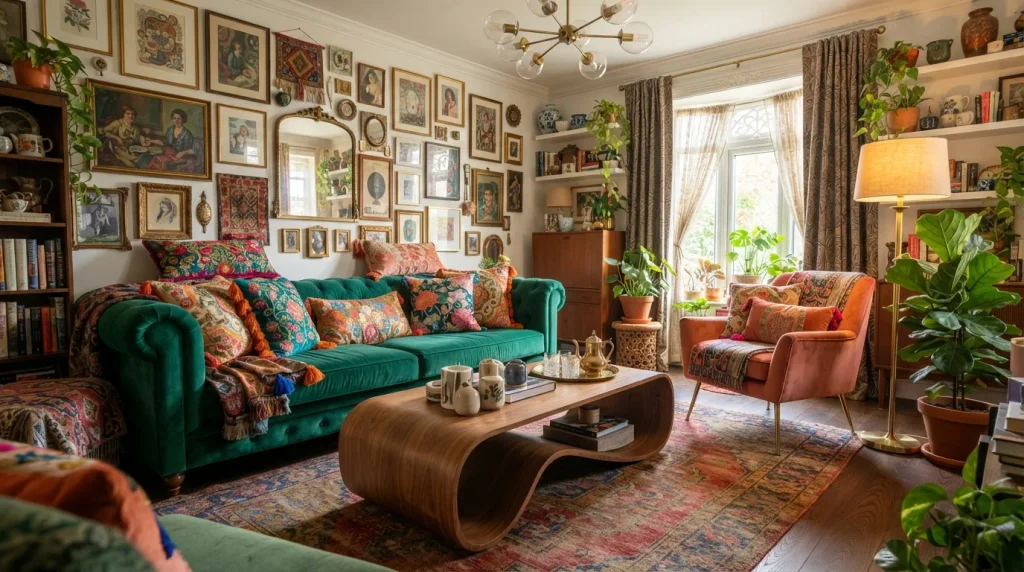
A sculptural coffee table can give a colorful living room an unexpected architectural element while keeping the furniture arrangement functional. Look for rounded, irregular, pedestal, or geometric silhouettes that contrast with straight-edged sofas and chairs. Natural wood adds warmth, while painted or lacquered finishes can introduce another accent color. For maximalist living room ideas, an unusual table shape creates visual interest without relying on additional patterns. In my experience, curved tables work particularly well in rooms filled with bold textiles because their softer outlines provide contrast and make the overall arrangement feel more balanced.
Keep the tabletop styling intentionally simple when the furniture around it already makes a strong statement. A ceramic vase, colorful art book, small sculpture, or low bowl can add personality without hiding the table’s shape. Make sure there is enough clearance around the coffee table for comfortable movement, especially in busy family living rooms. Choose a material that suits your daily routine and is easy to maintain. The finished arrangement should feel artistic but practical, giving the seating area a distinctive centerpiece while still providing enough surface space for everyday items like drinks, books, and remotes.
16. Colorful Accent Chairs
- Mismatched accent chairs add personality without requiring a complete furniture change.
- Contrasting colors make the seating arrangement feel collected and energetic.
- Choose chairs with different silhouettes for stronger visual variety.
- Repeat one chair color through artwork or cushions for balance.
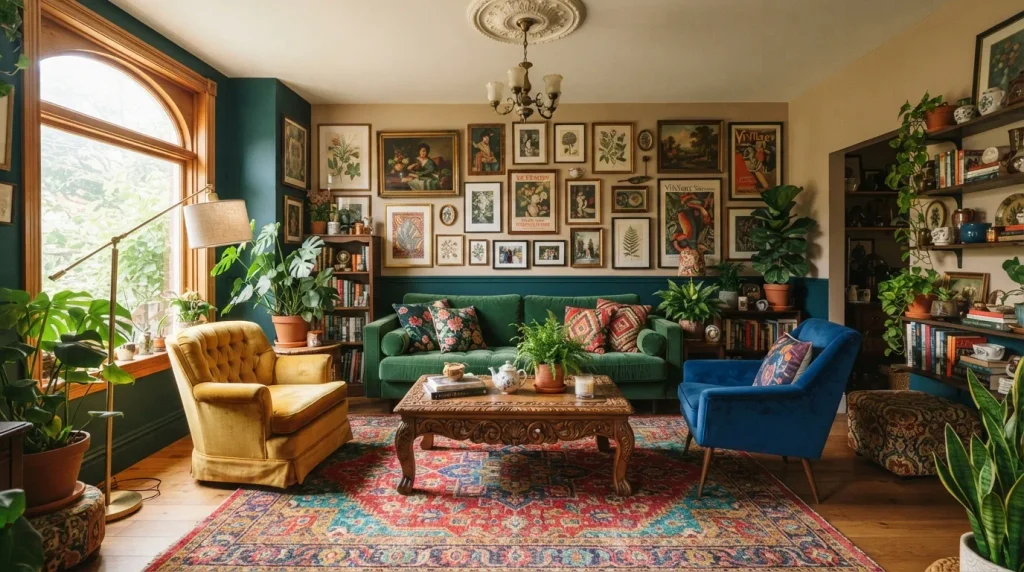
Colorful accent chairs can completely change the energy of a living room while giving you more flexibility with seating. Instead of choosing two identical chairs, consider contrasting colors such as mustard and cobalt, or coral and emerald. Different silhouettes can make the arrangement feel more collected and expressive. For maximalist living room ideas, this approach works particularly well because the chairs can introduce new shades without requiring the sofa to carry all the visual interest. Choose comfortable proportions first, then focus on upholstery color and shape to create a statement that still works for everyday use.
The easiest way to make mismatched chairs feel connected is to repeat their colors elsewhere in the room. A mustard chair might connect with a cushion or artwork detail, while cobalt can appear in the rug or decorative objects. Place chairs opposite or beside the main sofa to create a balanced conversation area, keeping enough space between pieces for comfortable movement. If the room already contains many patterns, select solid-colored chairs in rich fabrics. This gives the space contrast and creates visual pauses between busier elements, helping the overall design feel abundant without becoming difficult to navigate.
17. Decorative Wall Molding
- Wall molding adds architectural detail behind colorful furniture.
- Painted molding can create depth without requiring expensive artwork.
- Combining molding with bold paint makes a strong visual backdrop.
- Use simple geometric layouts to keep the feature refined.
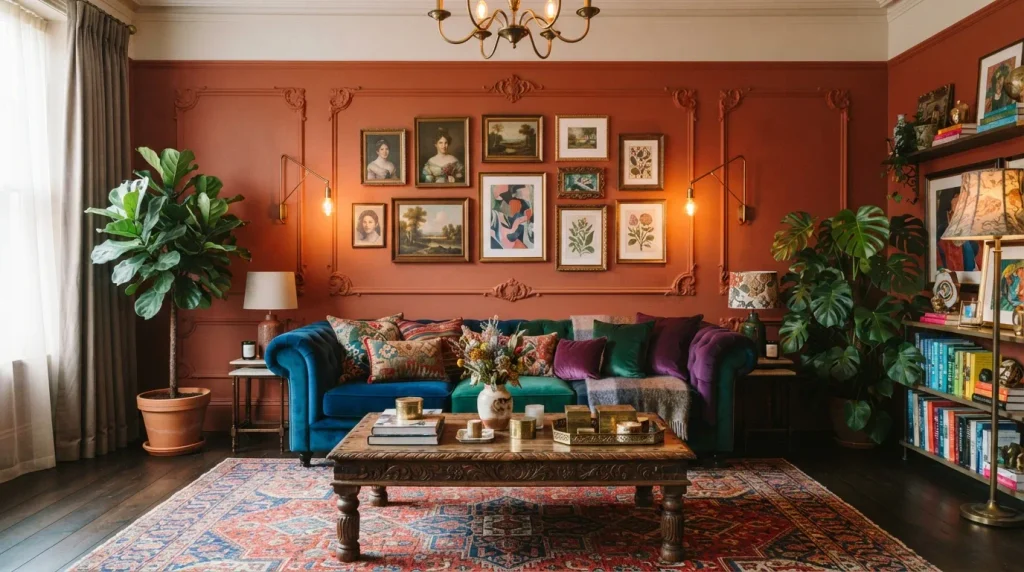
Decorative wall molding can give a maximalist living room an architectural foundation that makes bold colors feel even more intentional. Picture simple rectangular panels painted in terracotta, emerald, navy, or warm pink behind a colorful sofa. The molding adds shadows and dimension before you even introduce artwork or accessories. I’ve noticed that this treatment works especially well in rooms with high ceilings because it gives large walls more visual structure. You do not need elaborate patterns either; clean rectangular frames can create enough detail to support colorful furniture while keeping the overall design sophisticated.
If you want the molding to stand out, paint it the same color as the wall for a subtle tone-on-tone effect, or use a slightly contrasting shade for more definition. Place artwork inside selected panels rather than filling every section, allowing some of the architectural detail to remain visible. Brass sconces or picture lights can highlight the raised surfaces and create attractive shadows in the evening. This combination adds depth without relying entirely on decoration. The result feels layered and thoughtfully designed, making the walls an active part of the room instead of a simple background.
18. Statement Floor Lamps
- Oversized lamps add height and sculptural interest beside seating.
- Metallic finishes introduce warmth against saturated colors.
- Arched designs work well over sofas and reading corners.
- Use warm bulbs to make colorful fabrics appear richer at night.
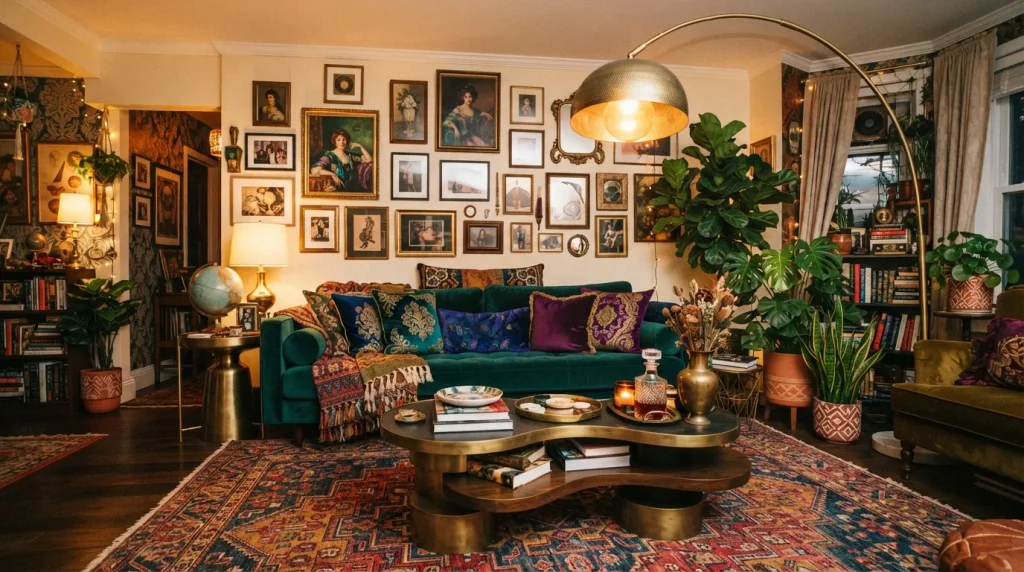
A statement floor lamp can act almost like a piece of sculpture while providing useful lighting exactly where you need it. Oversized arched designs work beautifully beside sofas because they extend above the seating area without requiring a ceiling fixture. Brass, antique gold, painted metal, and sculptural ceramic bases can all add another decorative layer. For a colorful interior, choose a lamp that contrasts with nearby upholstery rather than blending into it. In my experience, a distinctive floor lamp is especially useful when you want to make a corner feel finished without adding another bulky piece of furniture.
Think about both scale and placement before choosing the lamp. A tall design can balance a large sofa or gallery wall, while a smaller lamp may work better beside an accent chair. Position the base where it will not interrupt walking paths, and make sure the shade provides comfortable illumination for reading or relaxing. Warm bulbs generally complement rich colors better than harsh cool lighting. If the room already contains metallic details, repeat the lamp’s finish through a mirror frame, hardware, or small decorative object. This creates subtle continuity without making every element match.
19. Layered Window Seating
- A window bench creates useful seating while maximizing natural light.
- Colorful cushions make the area feel connected to the main room.
- Built-in storage can keep blankets, books, and accessories organized.
- Layered textiles soften the architectural structure of the space.
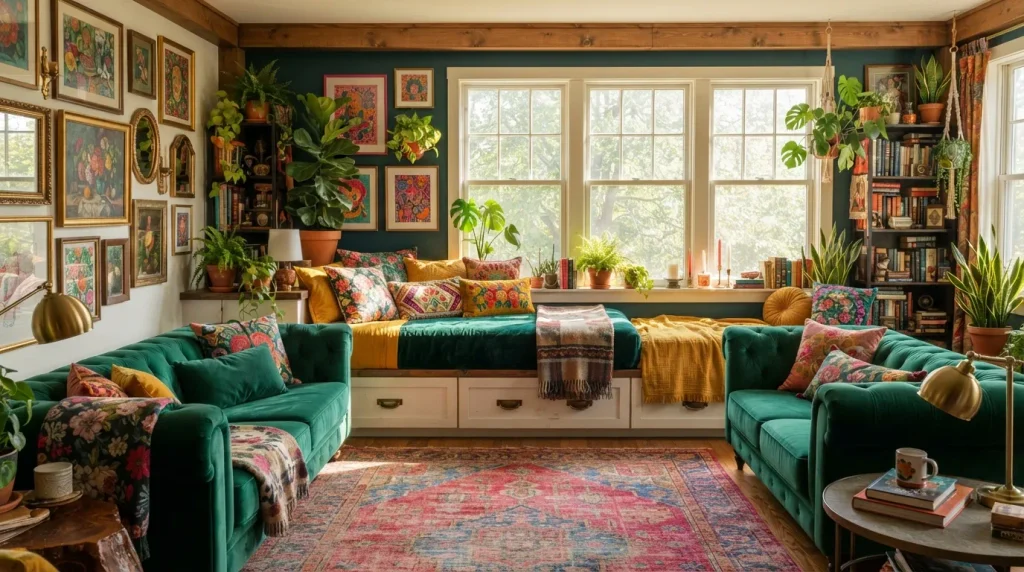
A window seat can turn an overlooked architectural area into one of the most charming parts of a colorful living room. Place a comfortable upholstered cushion across the bench, then layer it with pillows in several coordinating patterns. Natural daylight makes the colors feel especially vibrant during the day, while nearby lamps can keep the area useful after sunset. This type of seating is also practical because a built-in bench can provide hidden storage underneath. For maximalist decorating, it offers another surface for introducing pattern and texture without taking up additional floor space.
Keep the window area comfortable rather than filling it with too many decorative objects. Choose durable upholstery if the seat will be used regularly, and add a washable throw for extra softness. If the bench is built into the wall, matching its base color to the surrounding architecture can make it feel more integrated. Use pillows to repeat shades from the sofa, rug, or curtains so the window becomes part of the overall color story. The finished corner can serve as a reading spot, quiet seating area, or simple place to enjoy natural light throughout the day.
20. Color-Blocked Furniture
- Color blocking gives large furniture pieces a confident modern appearance.
- Contrasting shades can define different seating zones visually.
- Repeating two or three colors keeps the arrangement coordinated.
- Solid upholstery provides a useful break between busy patterns.

Color blocking gives large furniture pieces a confident, modern presence while making the room feel intentionally layered. Instead of relying entirely on patterns, combine solid furniture in contrasting shades such as cobalt blue, coral, mustard, and emerald. A two-tone sofa or pair of differently colored chairs can create instant visual structure. I’ve noticed this approach works especially well when the room contains many decorative elements because solid colors provide breathing space between busier patterns. Choose two dominant shades and one supporting color to keep the furniture arrangement bold without making the overall palette feel disconnected.
The key to successful color blocking is repetition. If you choose a coral chair, bring a small amount of coral into the artwork, cushions, or rug so it does not feel isolated. Use furniture placement to define different areas, especially in larger open-plan rooms where color can help separate the seating zone from nearby spaces. Keep the shapes relatively simple when the colors are strong, allowing the palette to become the main feature. This creates a lively but organized interior where every furniture piece contributes to the visual story without competing for attention.
21. Maximalist Plant Corners
- Large plants add natural texture to colorful interiors.
- Varied leaf shapes create another layer without introducing more artificial color.
- Decorative planters can reinforce the room’s existing palette.
- Place taller plants near empty corners to balance large furniture.
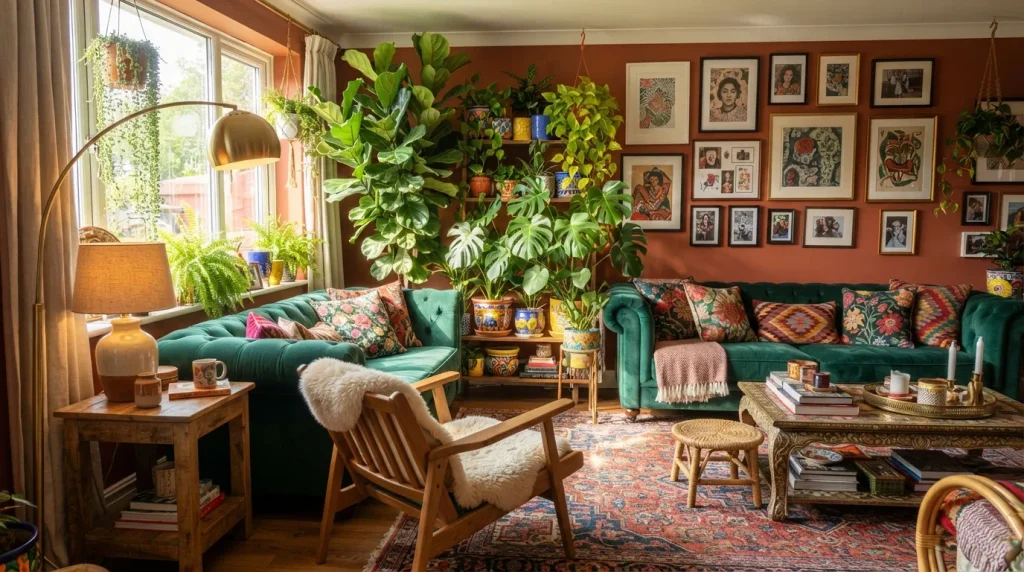
A lush plant corner can bring natural movement into a room filled with strong colors, patterns, and decorative details. Tall plants such as fiddle leaf figs or palms can fill empty vertical space, while smaller plants create layers around shelves and side tables. Green foliage works surprisingly well with jewel tones because it adds a natural color that does not feel overly decorative. For maximalist living room ideas, plants also soften the visual impact of hard furniture edges and patterned surfaces. I’ve noticed that even one large plant can make an eclectic room feel more relaxed and connected to nature.
Use different heights and leaf shapes to create a fuller arrangement without overcrowding the floor. A tall plant can anchor an empty corner, while a trailing variety can sit on a shelf or cabinet nearby. Choose planters that complement existing colors, such as mustard ceramic, cobalt blue, terracotta, or simple woven baskets. Make sure each plant receives suitable light and has enough room to grow comfortably. The goal is to create a natural-looking corner rather than a dense indoor jungle that blocks pathways. Thoughtful placement keeps the greenery decorative, practical, and easy to maintain.
22. Vintage Decor Mix
- Vintage accessories give colorful interiors character and visual history.
- Antique mirrors, ceramics, clocks, and artwork add unique details.
- Mixing old and new prevents the room from feeling overly coordinated.
- Choose pieces you genuinely enjoy instead of filling shelves for decoration alone.
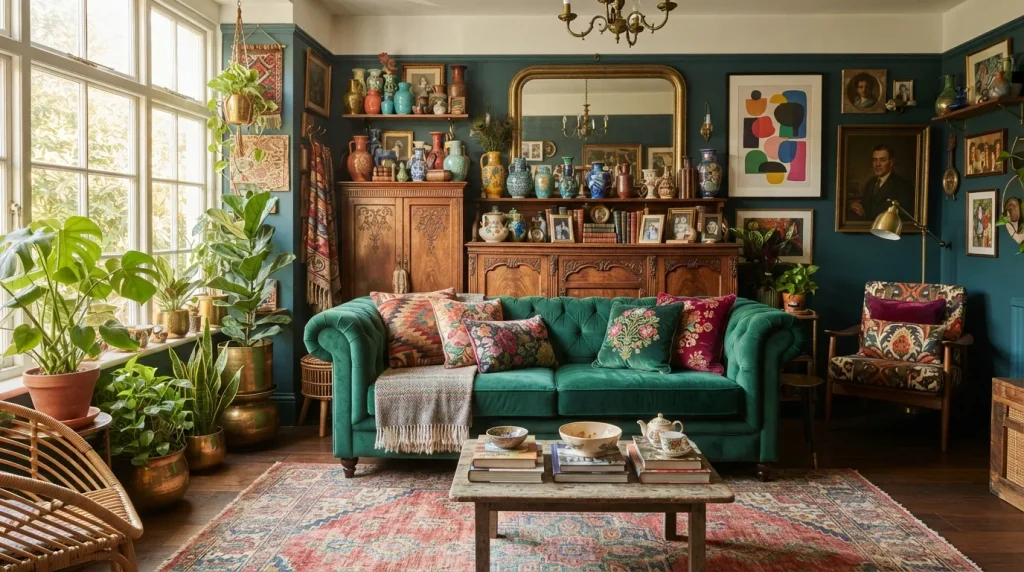
Vintage decor gives a colorful living room the collected character that makes it feel personal rather than freshly staged. Look for antique mirrors, old books, ceramic vases, decorative clocks, carved boxes, or artwork with visible age and character. Mixing these pieces with modern furniture creates contrast and makes the room feel as though it has evolved naturally over time. I’ve seen this work especially well when homeowners display objects connected to their interests or travels. Instead of buying many decorative pieces at once, choose a few meaningful finds and allow them to become recognizable features.
The best vintage arrangements combine different materials while keeping the overall color palette connected. An aged brass mirror can complement a modern velvet sofa, while a wooden cabinet can balance colorful upholstery and patterned textiles. Avoid placing every antique item together in one corner because spreading them around the room creates better visual continuity. Flea-market finds, inherited objects, and secondhand treasures can all work beautifully when their proportions suit the space. The result feels layered, expressive, and authentic, giving the room the abundant personality that makes maximalist decorating so visually memorable.
Conclusion
A bold living room does not have to happen all at once. Start with one colorful chair, a statement rug, layered pillows, or an oversized artwork piece, then build from there. These maximalist living room ideas can help you create a space that feels expressive, collected, and genuinely personal. I’ve seen how small decorating changes can completely transform a room when colors and textures are thoughtfully connected. Save this post on Pinterest so you can return to your favorite ideas when you’re ready to decorate. Try one idea in your own space, and share this article with someone who loves colorful, creative interiors.