21 Afrohemian and Bold Pattern Decor Ideas for a Warm, Collected Home
There is a kind of home that stops you in the doorway. Terracotta walls, a deep sofa you can sink into, patterns that do not match and somehow do. It feels warm, collected, and itself — like the person who lives there chose every single thing on purpose. That is the heart of afrohemian decor: African craft and heritage, bohemian layering, and the confidence to let bold pattern do the talking. I used to think a home like that needed a designer’s budget and a fearless eye. It needs neither — just a warm wall, a few honest materials, and the patience to layer one pattern at a time.

Photo: Whitney Diène (@therealafrohemian) on Instagram
These 21 ideas are grouped the way I would build the look in a real home: the living room first, where the style lives; then the pattern layering, because bold pattern only works with rules; then the cultural pieces and natural materials that make a home feel collected rather than decorated; and finally leopard print, the boldest accent of all, used the way it works best — as an accent, never as the whole room. Nothing here needs a renovation.

Photo: Whitney Diène (@therealafrohemian) on Instagram
What Makes a Living Room Feel Afrohemian?
An afrohemian living room is not a set of products — it is a feeling, from four things working together: warm earthy colour, natural materials, layered pattern, and art and objects that mean something to the person who lives there. Take one away and the room falls flat; together, even a small rented living room feels rich and intentional. Start with the wall colour and the sofa — those two decisions set the temperature of everything that follows.

Photo: Whitney Diène (@therealafrohemian) on Instagram
1. Paint the Walls a Warm Earthy Colour
Best For: a white or grey living room that swallows every pattern you put in it. Afrohemian decor needs a warm ground to stand on: terracotta, burnt orange, deep ochre, or a rich clay pink. A warm wall makes wood richer, mudcloth read as craft rather than clutter, and the room glow in the evening. How to Create It: if you own the walls, paint one — the wall behind the sofa — and live with it for a month. If you rent, warm-toned art, a terracotta throw, and warm bulbs do the same job without touching the paint.

Photo: Whitney Diène (@therealafrohemian) on Instagram
2. Choose a Deep, Sink-In Sofa in a Rich Colour
Best For: a living room with a pale, flat sofa that disappears against the wall. The afrohemian sofa is deep, soft, and coloured: burgundy, forest green, rust, warm brown. It is the largest object in the room, so its colour sets the palette. How to Create It: if a new sofa is not in the budget, a deep-coloured slipcover or a stack of rich cushions and a heavy throw does the same work. See maximalist living room ideas for more on building a room around one bold piece.

Photo: Alyah (@artbyalyah) on Instagram
3. Ground the Room With a Bold Patterned Rug
Best For: a living room where the furniture floats on a bare floor and the patterns never quite connect. A bold rug — geometric, mudcloth-inspired, or a strong diamond pattern — is the anchor of an afrohemian room: it defines the seating area, sets the pattern scale for the cushions, and gives the eye a place to land. How to Create It: size it so the front legs of the sofa and chairs sit on it, and pick a rug with one colour matching the sofa and one matching the wall. A rug that is too small scatters the room, so measure first and go one size up if torn.

Photo: Cynthia Nyamai (@cynthianyamai) on Instagram
4. Add a Sculptural Woven Chair
Best For: a living room that needs one unforgettable object. The peacock chair — tall, woven, unmistakably handmade — is the signature seat of the look, and one in a corner does the work of three ordinary chairs. How to Create It: place it where it catches the light, add one mudcloth cushion, and leave space around it so the shape reads. A rattan or wicker chair works the same way; the point is the woven texture and the sculptural silhouette, not the exact shape.

Photo: Whitney Diène (@therealafrohemian) on Instagram
5. Hang Art That Tells Your Story
Best For: a living room with generic prints that could belong to anyone. Afrohemian rooms are personal: a portrait that looks like your family, a print by a Black artist, a piece you bought from a market. Art is what stops the style looking like a theme and starts it looking like a home. How to Create It: hang one large piece above the sofa, centre at eye level, with a small cluster around it — a mask, a woven disc, a framed textile. One large, meaningful piece beats five small anonymous ones.
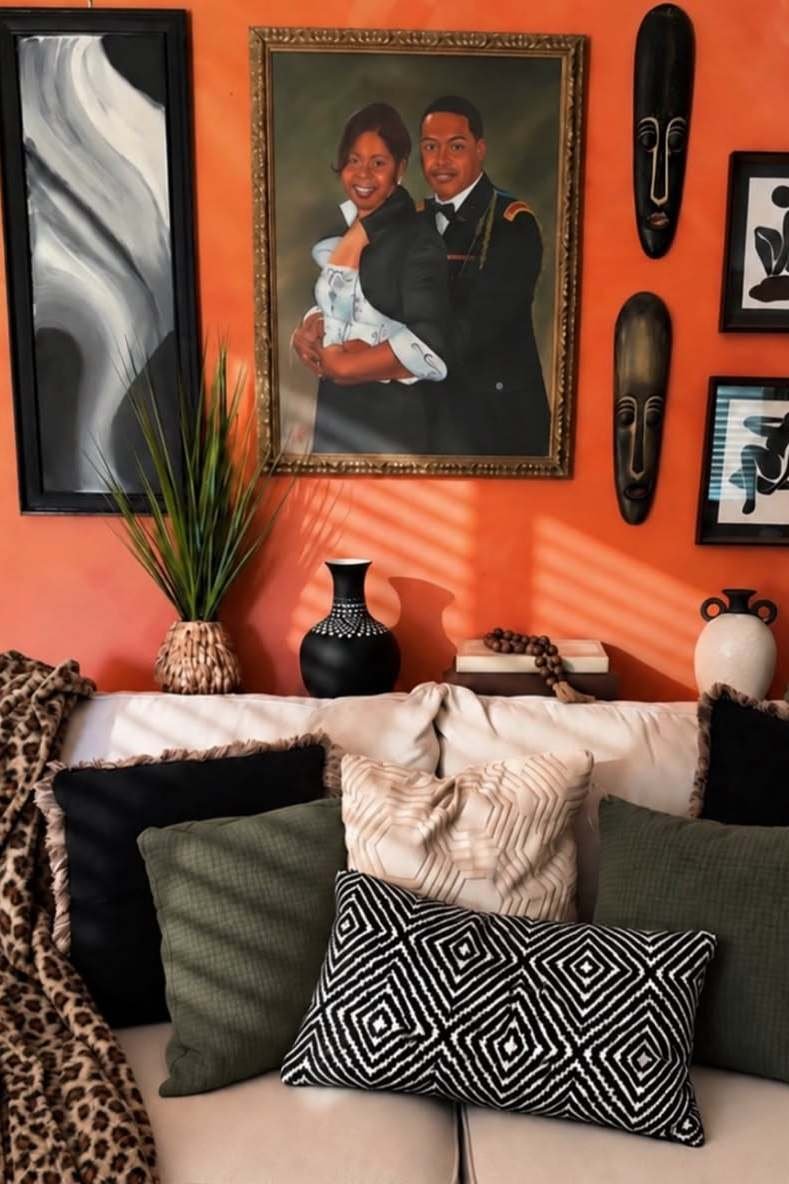
Photo: A’Lores Norris (@aloresthehouseofflawless) on Instagram
6. Let Plants Soften the Pattern
Best For: a room where the pattern is starting to feel loud. Plants are the quiet note in an afrohemian room: a large monstera, a snake plant, a trailing pothos breaks up the geometry and softens every hard edge. How to Create It: put one large plant in a woven basket by the sofa and one trailing plant on a shelf.

Photo: Whitney Diène (@therealafrohemian) on Instagram
7. Keep One Calm Corner to Let the Room Breathe
Best For: a room where every surface is patterned and the eye has nowhere to rest. Bold rooms need a quiet corner: a plain dining table, a clear shelf, a single chair with a plain cushion. How to Create It: choose one corner — the dining nook is the natural one — and keep it simple: white table, woven chairs, one vase. The calm corner makes the bold corners look deliberate, and it is where you will sit with your morning coffee.

Photo: Whitney Diène (@therealafrohemian) on Instagram
How Do You Layer Bold Pattern Without Chaos?
Pattern is the part of afrohemian decor that scares people, and the fear is fair: too many patterns at the same scale, in clashing colours, looks like a fabric shop exploded. The rule that fixes it is simple, and it is the only pattern rule you need: three patterns, three scales, one shared colour. A large pattern on the rug, a medium one on the cushions, a small one on a throw — all sharing one colour, usually black, terracotta, or ochre. Follow that and you can mix mudcloth, geometric prints, and animal print without a single clash.
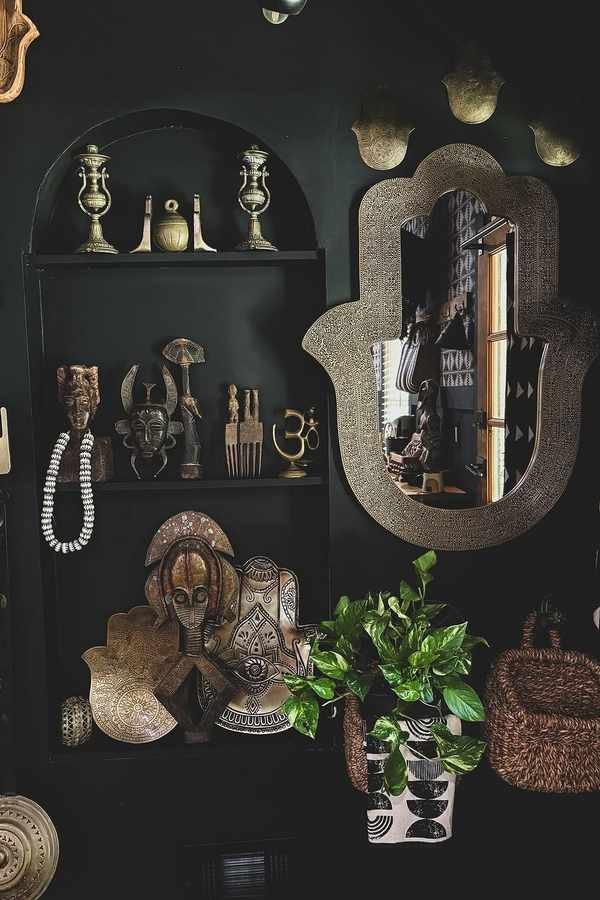
Photo: Whitney Diène (@therealafrohemian) on Instagram
8. Lead With One Hero Textile
Best For: a room where the pattern has no clear leader and everything shouts at once. Every patterned room needs a hero textile: one mudcloth throw, one bold cushion, one patterned rug the rest of the room answers. How to Create It: place the strongest pattern where the eye lands first — the sofa, the bed, or the front door. Everything else should be quieter than the hero: smaller patterns, plainer textures, fewer colours. Cozy boho living room ideas layer pattern the same way with gentler prints.

Photo: A’Lores Norris (@aloresthehouseofflawless) on Instagram
9. Mix Three Patterns at Three Scales
Best For: a room with one pattern repeated everywhere, or three patterns fighting at the same size. The scale rule is the difference between a collected room and a chaotic one: large on the rug or art, medium on the cushions, small on a throw. How to Create It: hold the three textiles together first — if you cannot tell which pattern is biggest at a glance, two are the same scale and one must change. Keep one colour running through all three and the mix will hold together.
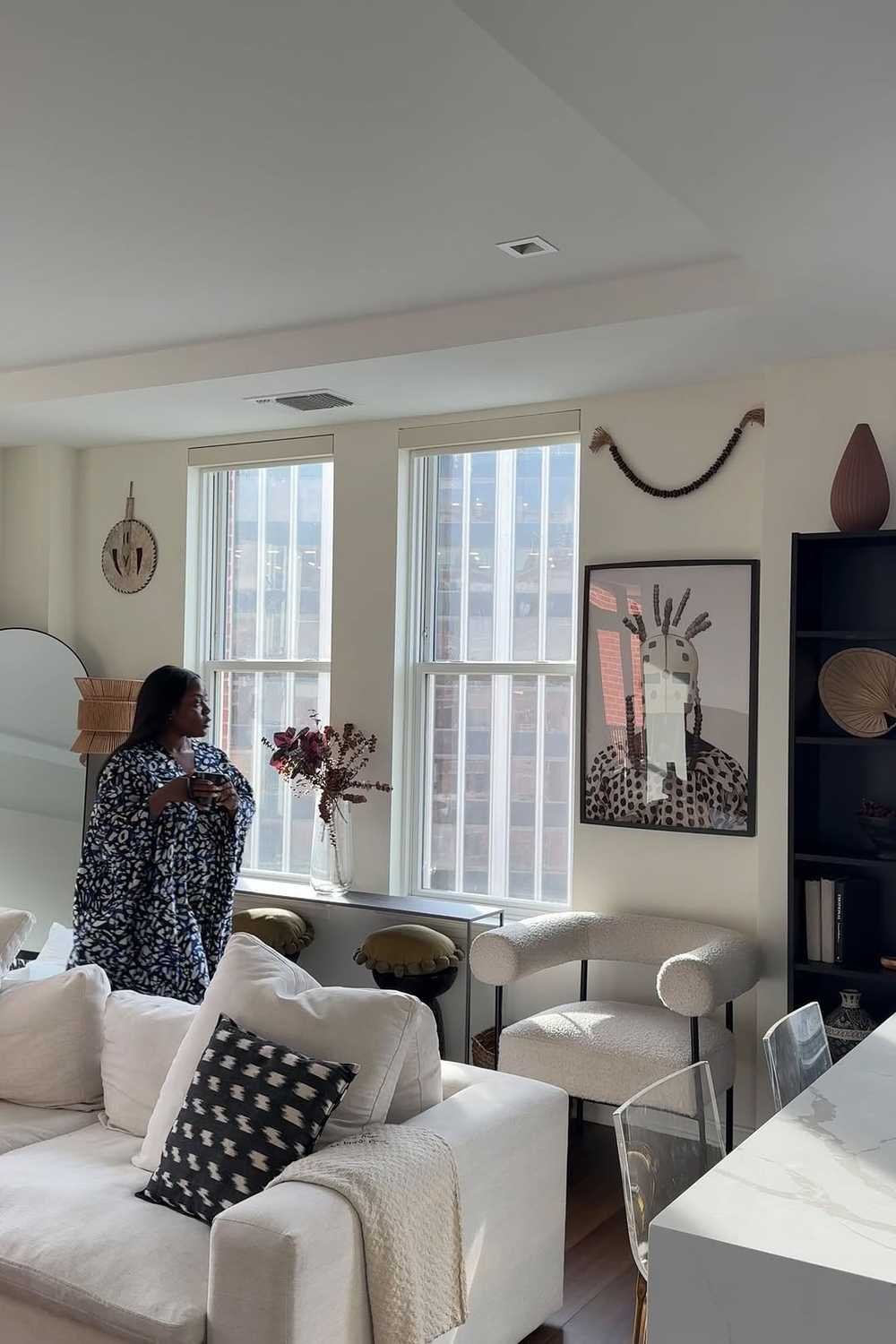
Photo: Ayeyi Aboagye (@ayeyiathome) on Instagram
10. Repeat One Pattern in Two Places
Best For: a pattern that appears once and looks like a mistake. One cheetah-print cushion on a plain sofa reads as an accident; the same print on a cushion and a framed print reads as a decision. How to Create It: use your favourite pattern twice, in two forms — a cushion and a piece of art, a throw and a lampshade. Two repeats is enough; three looks like a set.

Photo: Ayeyi Aboagye (@ayeyiathome) on Instagram
11. Pattern the Hallway, Not Just the Living Room
Best For: a home where the living room is bold and the hallway is a blank white corridor. Pattern does not have to stop at the living room door: a patterned wallpaper, a woven runner, or framed prints turns a hallway into part of the home instead of a passage. How to Create It: a bold wallpaper on one hallway wall, with mirrors above a dark wainscot, gives the hallway the living room’s depth. Keep the runner in the living room rug’s colour family so the two rooms talk to each other.
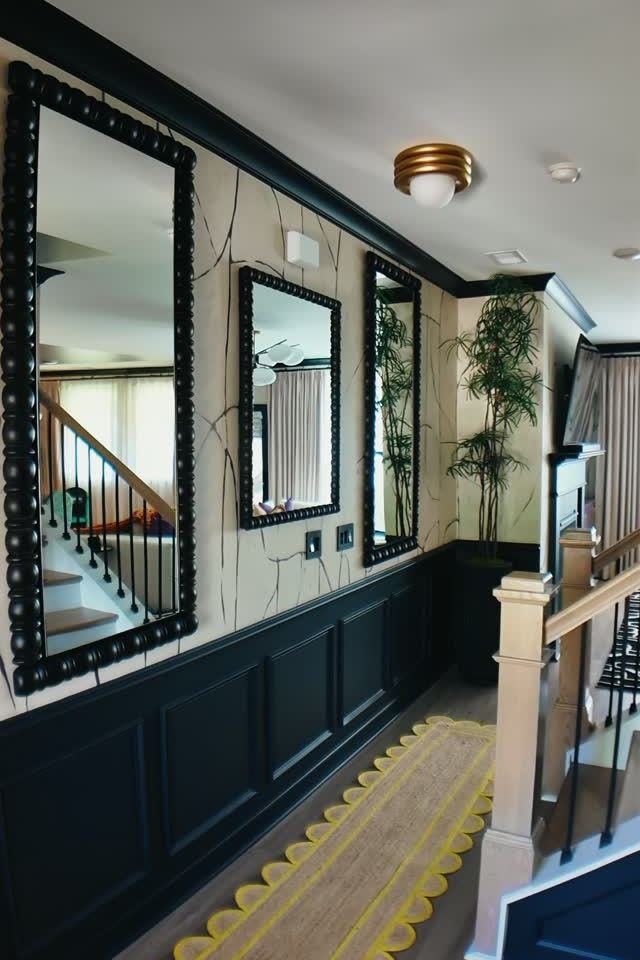
Photo: Shari Dyonne (@sharidyonne) on Instagram
12. Let Zebra Be Your Neutral Pattern
Best For: a room that needs pattern but cannot take another loud colour. Zebra is the quietest bold pattern: black and white, graphic, happy next to almost any colour. A zebra throw at the foot of the bed or a zebra cushion on a plain chair adds pattern without adding a new colour. How to Create It: use zebra the way you would use a stripe — the pattern that holds the room together while the coloured patterns talk. One zebra piece per room is enough.
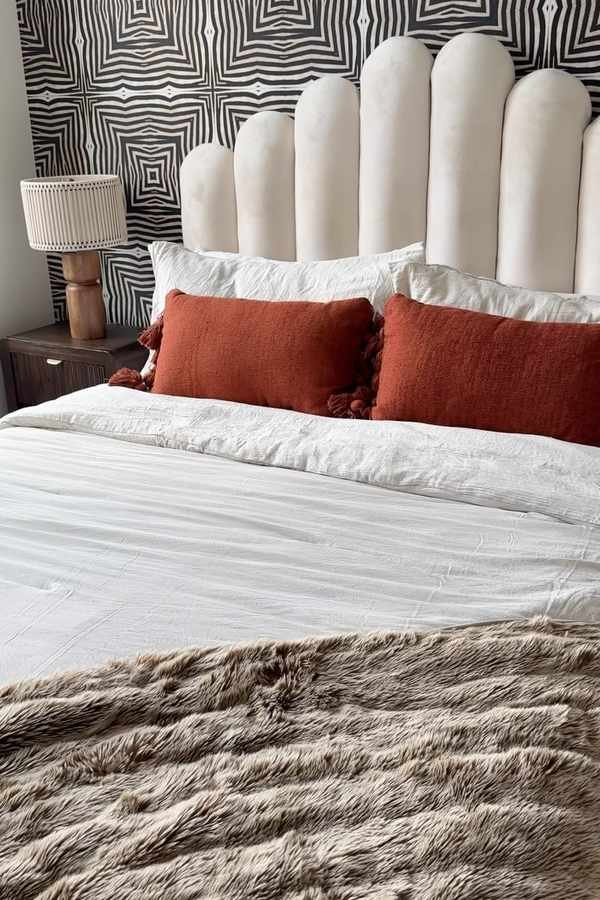
Photo: Ayeyi Aboagye (@ayeyiathome) on Instagram
13. Pattern the Curtains for Instant Impact
Best For: a room with plain curtains and bare walls, where pattern has nowhere to land. Curtains are the largest pattern surface in most rooms — bigger than any rug — and a bold print changes the whole room in one move. How to Create It: choose a pattern with the room’s main colour in it, hang the curtains high and wide, and keep the cushions plainer so the curtains stay the hero.
Which Cultural Pieces Make a Home Feel Collected, Not Decorated?
The line between a collected home and a themed one is honesty: collected homes hold things the owner chose, kept, and lived with; themed homes hold things bought to match. The cultural pieces in an afrohemian home — masks, baskets, handmade ceramics, art by Black artists — work because they are real craft, made by real hands, and because they sit next to ordinary things: a stack of books, a plant, a sofa with a throw. Buy what you love, display what you use, and let pieces earn their place over time.

Photo: Whitney Diène (@therealafrohemian) on Instagram
14. Build a Gallery Wall of Black Art
Best For: a blank wall that needs a story, not just a picture. A gallery wall of Black art — portraits, prints, photographs, textiles — is the most personal wall in an afrohemian home, and the most forgiving to build: different-sized frames, hung close together, read as one collection. How to Create It: start with the largest piece at eye level, build outwards with smaller frames, and leave no more than two inches between them.

Photo: Shari Dyonne (@sharidyonne) on Instagram
15. Hang Woven Baskets as Art
Best For: a wall above the television or the sofa that is too wide for a single picture. Woven baskets — flat discs, shallow bowls, deep coils — make a wall composition that is sculptural, handmade, and impossible to buy as a set. How to Create It: hang five to seven baskets in a loose cluster, one colour family, largest in the centre. Baskets are light, so command strips hold most of them — a genuinely renter-friendly upgrade.

Photo: Ayeyi Aboagye (@ayeyiathome) on Instagram
16. Display Carved Wood and Handmade Ceramics
Best For: shelves and sideboards that hold only books and candles. Carved wood — a mask, a sculpture, a wooden bowl — and handmade ceramics bring the maker’s hand into a room, and they are the objects guests pick up and ask about. How to Create It: give each piece space: one carved object per shelf, one ceramic bowl on a low table, nothing crowded beside it.
17. Layer Natural Fibres Everywhere
Best For: a room that has gone too smooth — too much velvet, too much glass, too much shine. Natural fibres hold an afrohemian room together: rattan, jute, seagrass, raffia, woven cotton — in baskets, rugs, lampshades, throws. How to Create It: add one natural fibre in three places — jute rug, rattan basket, woven lampshade — and the room feels warmer and more handmade.
How Do You Use Leopard Print Without Letting It Take Over?
Leopard print is the boldest pattern in this guide, and the easiest to get wrong. As an accent it is warm, glamorous, a little wild — the pattern equivalent of red lipstick. Used as a theme, it takes over the room and nothing else gets a word in. The rule is the same as for every bold pattern, only stricter: one leopard piece per room, small, on a solid background. Every idea below follows that rule, and most work in a bedroom first, where leopard belongs.
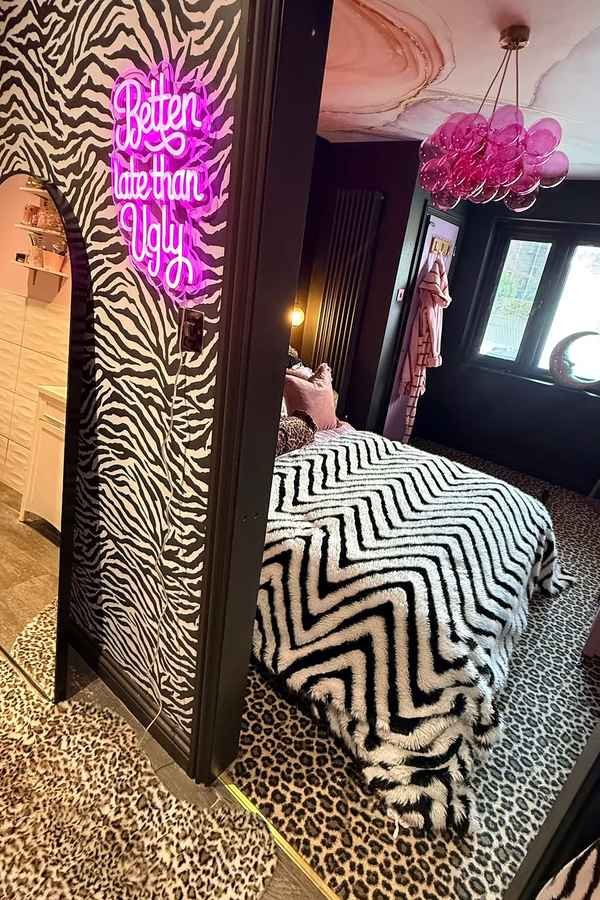
Photo: Jen (@jen_at82) on Instagram
18. Leopard Bedding, Kept to the Bed
Best For: a bedroom that needs one bold moment and has the confidence to carry it. A leopard-print duvet is the fullest expression of the pattern, and it works when the bed is the only leopard in the room. How to Create It: keep the rest of the bedding solid — cream sheets, one plain cushion. A leopard duvet with leopard curtains and a leopard rug is a costume; on its own it is a statement. See boho maximalist bedroom ideas for more bold-bedroom thinking.
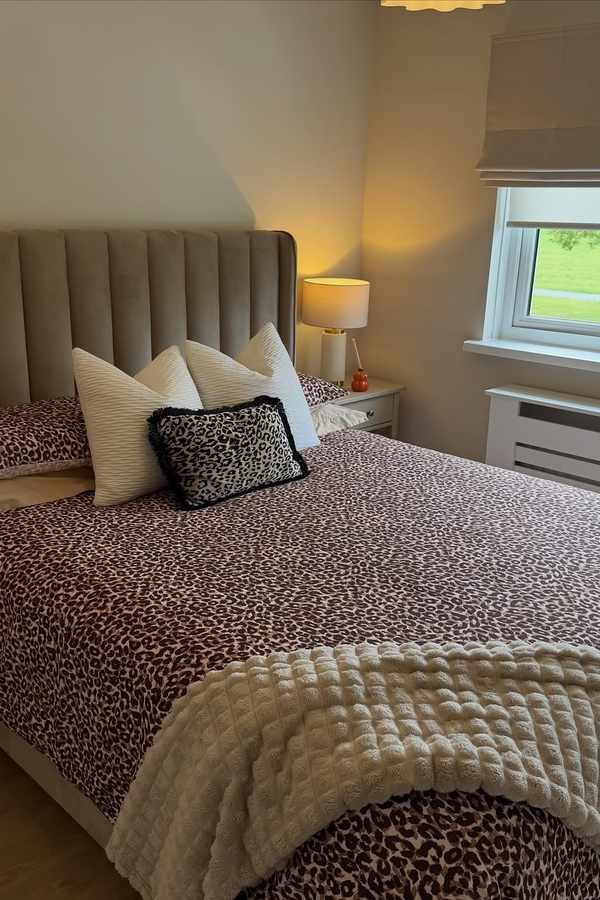
Photo: Ellie Kelly (@elliekellyhome) on Instagram
19. Leopard Pillows on a Solid Bed
Best For: a bedroom you love as it is, that needs one wild note. Two leopard-print pillows on a solid-coloured bed — deep red, forest green, warm brown velvet — give the whole leopard effect for the price of two cushion covers. How to Create It: choose a real leopard print, not a cartoon one, and pair it with one plain cushion in the bed’s main colour. Maximalist decor bedroom ideas show the same pillows in louder company.
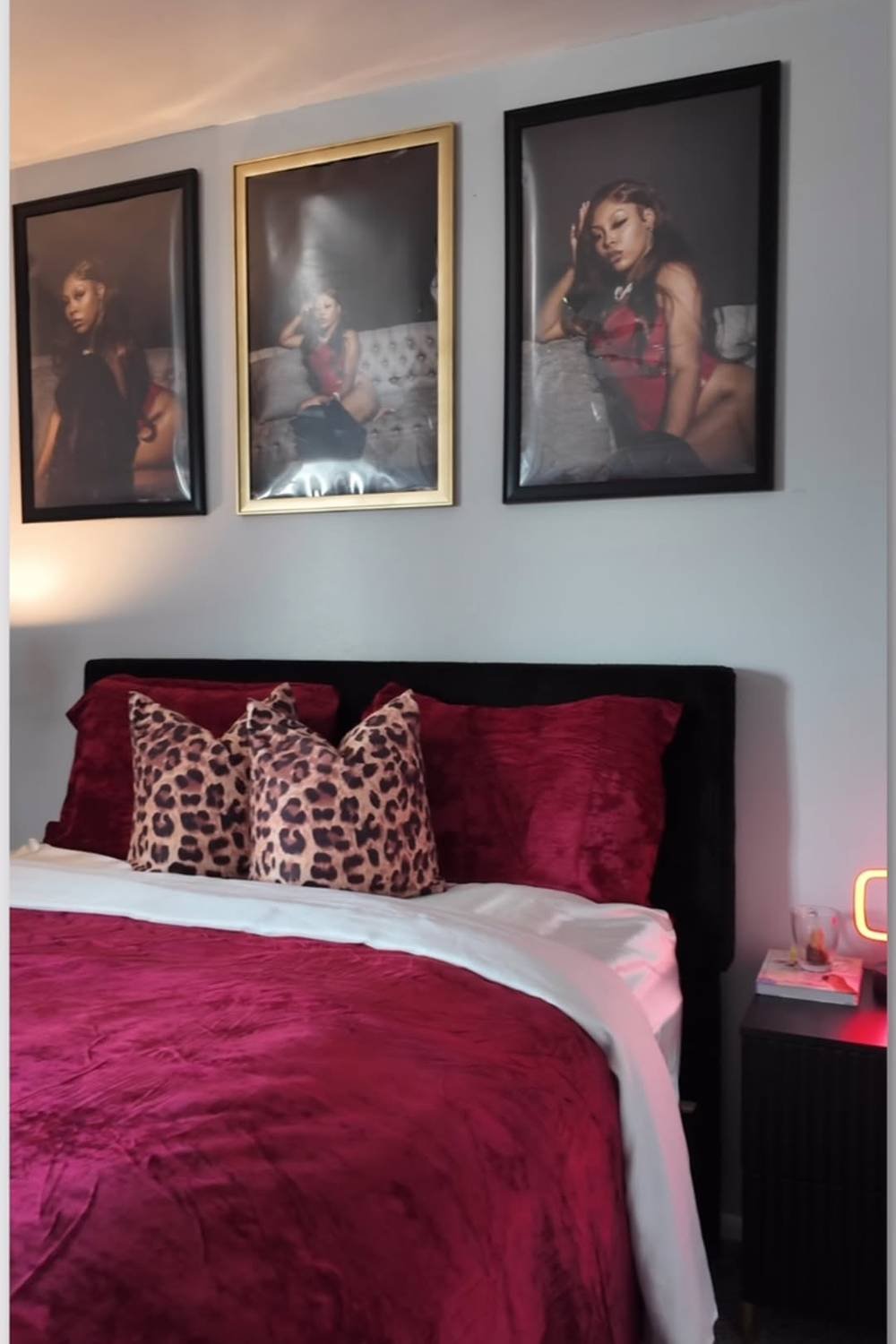
Photo: Tatyanna Aliyah (@tatyannaaliyah_) on Instagram
20. One Leopard Throw, Nothing Else
Best For: a living room or bedroom where you want the leopard note without committing to it. A single leopard throw, folded over the arm of a white sofa or the foot of a white bed, is the smallest possible dose — and often the most effective, because the plain background makes it look deliberate. How to Create It: choose a soft, heavy throw rather than a thin one — a cheap leopard fabric looks like a costume, the same print in plush faux fur looks like a luxury. Keep the rest of the room plain and let the throw be the only animal in it. The same rule works in softer rooms — see colorful bedroom ideas.
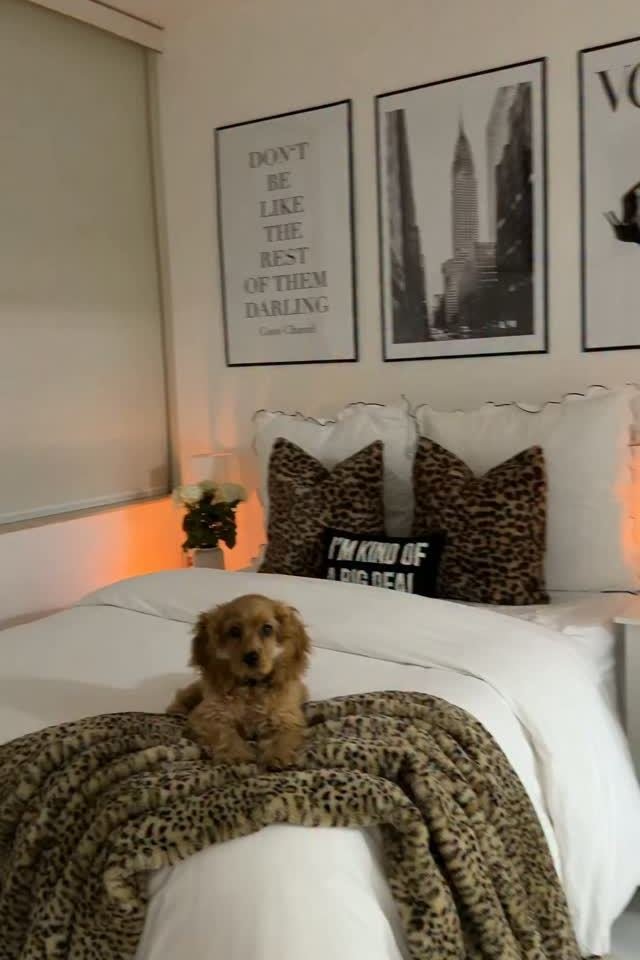
Photo: Claudia (@claudia._x0o) on Instagram
21. Leopard Beyond the Bedroom
Best For: a dressing area, a vanity corner, or a hallway that needs one bold detail. Leopard works beyond the bedroom when it stays small and functional: curtains in a vanity nook, a rug under a dressing table, a cushion on a hallway bench. How to Create It: pick one functional piece — curtains you open every morning, a rug you stand on — and let the pattern earn its place by being useful. A leopard curtain in a room with plain walls and a white vanity is the whole idea in one image: bold, but only in one place. See cozy moody bedroom ideas for the moodier version, and cozy earthy living room ideas for the earthier base.

Photo: Tymfnke Files (@tymfnkefiles) on Instagram

An afrohemian home is not a style you buy; it is a home you build, one warm wall, one woven chair, one honest object at a time. Start with the room you sit in most: paint one wall warm if you can, add one bold rug and one piece of art that means something to you. The leopard throw comes last, not first — it is the finishing touch on a room that is already warm, layered, and yours. When someone walks in and stops in the doorway, the way you once did, you will know the room is finished.
💬 Join Our Decor Community
Decor Fern | Home Decor Ideas & Inspiration — share your rooms, get ideas, and chat with fellow decor lovers.
Join the Facebook GroupFollow on Facebook