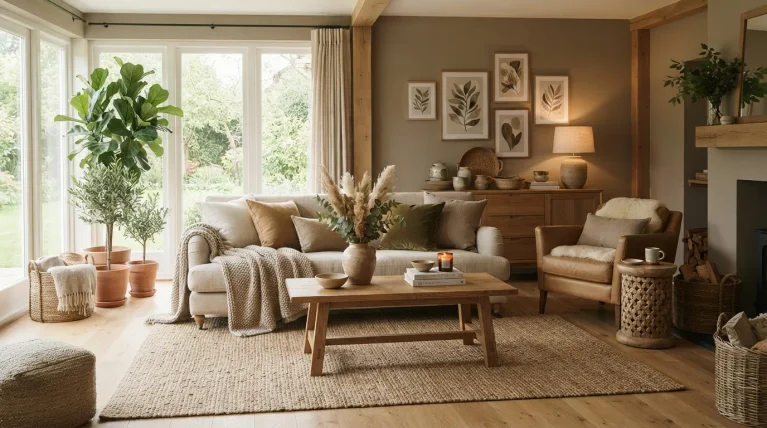
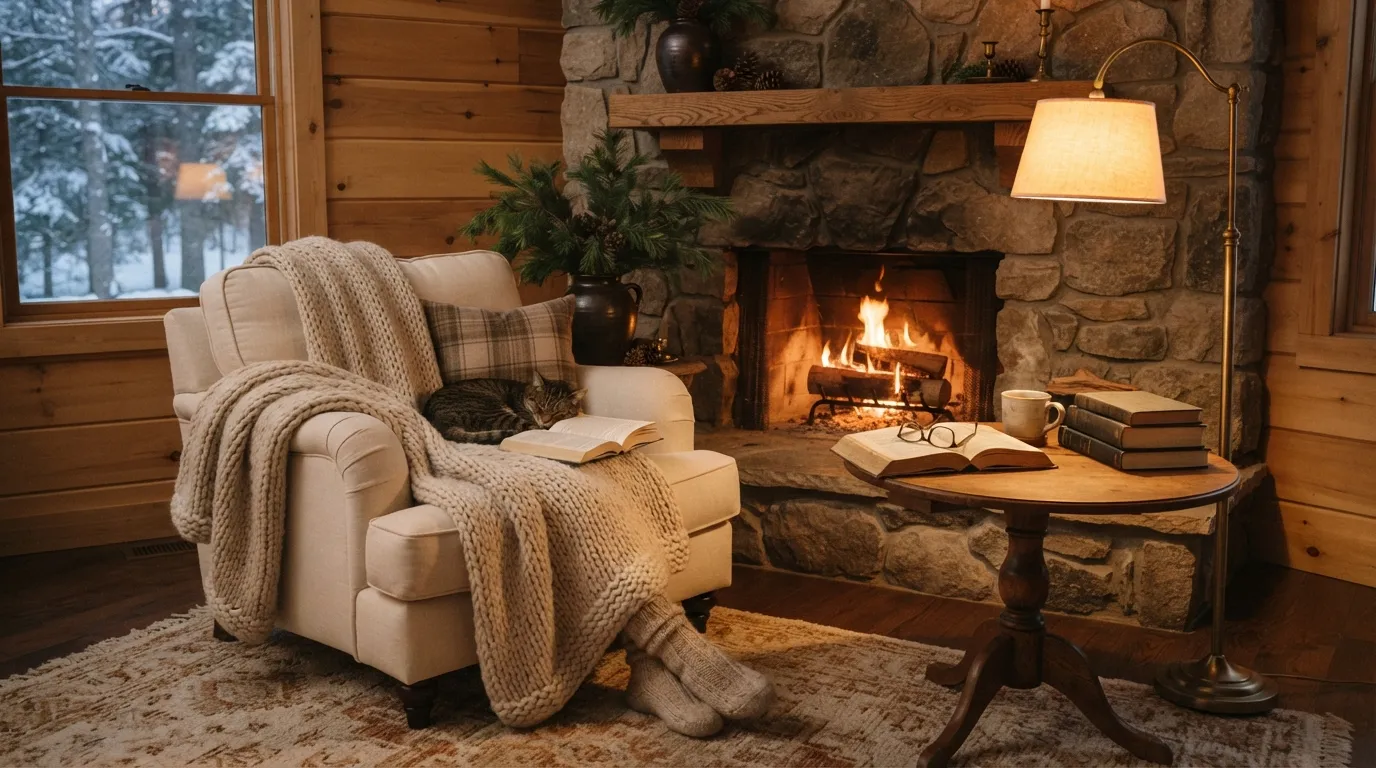
Make your home feel like the coziest place to escape the cold this winter.
Soft blankets, warm lighting, natural textures, and inviting layers can completely change the feeling of a room.
These winter decor ideas are designed to help you create a home that feels warmer, calmer, and more comfortable without requiring a complete makeover. From chunky knit pillows and wool rugs to evergreen mantel displays, cozy reading corners, rustic wood accents, and layered lighting, each idea adds something practical and visually inviting. You can use a few simple changes to refresh your living room, bedroom, dining area, or entryway. In my experience, the most effective seasonal updates often come from layering textures and improving lighting rather than buying lots of new decorations.
1. Layered Knit Throws
About the Idea
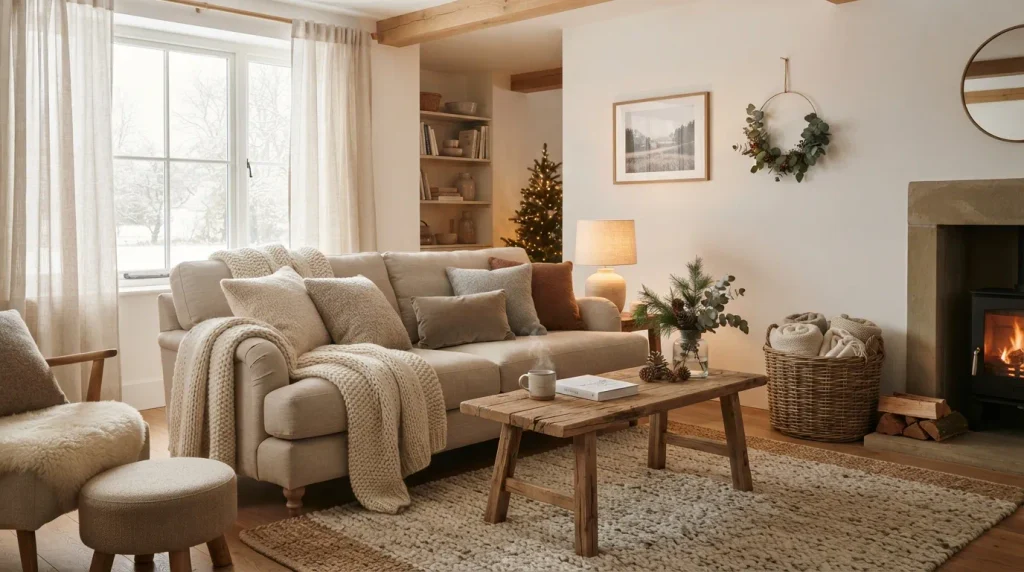
- Chunky knits instantly make seating feel warmer and more inviting.
- Layer different cream, beige, and taupe textures for visual depth.
- Keep one throw casually draped for a relaxed lived-in look.
- Woven baskets provide practical storage for extra blankets.
Nothing makes a room feel ready for winter quite like layers of soft, chunky texture. Drape a thick knitted throw over the arm of a sofa or casually across a lounge chair to create instant warmth. Cream, oatmeal, beige, and soft gray work especially well because they make the space feel cozy without becoming visually heavy. Add cushions in different materials such as boucle, wool, or brushed cotton to build depth. In my experience, simply changing the textiles can make an ordinary living room feel noticeably warmer without moving furniture or making major changes.
The key is to avoid making every textile identical. Combine chunky knits with smoother linen, woven cotton, or faux-fur accents so the room has plenty of tactile variety. A large basket beside the sofa can hold extra blankets while keeping them easy to reach on cold evenings. Keep the furniture arrangement open enough for comfortable movement, and let a few pieces look naturally relaxed rather than perfectly styled. This creates a room that feels genuinely lived in and inviting. The finished space becomes the kind of cozy retreat where you naturally want to curl up with a book or warm drink.
Also Read : 22 Rustic Spring Decor Ideas for a Cozy Country Home
2. Warm Neutral Palette
About the Idea
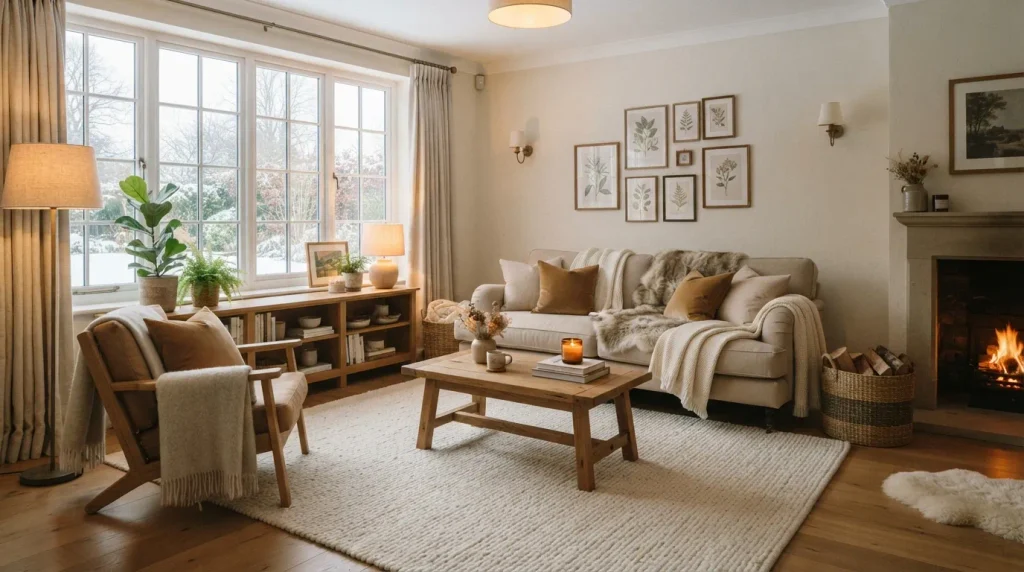
- Warm neutrals create a calm foundation for seasonal decorating.
- Cream, camel, beige, and brown add warmth without bright colors.
- Natural wood prevents a neutral room from feeling flat.
- Layered lighting makes pale colors feel especially inviting at night.
A warm neutral palette can make a home feel cozy throughout winter without relying on obvious seasonal decorations. Start with shades such as ivory, oatmeal, beige, camel, warm gray, and soft brown, then layer them through furniture, rugs, cushions, curtains, and accessories. These colors reflect natural light gently while creating a comfortable backdrop for winter textures. Natural wood adds another layer of warmth and keeps the palette from looking too pale. I’ve noticed that neutral rooms often feel most inviting when several slightly different shades are used instead of trying to match everything exactly.
Lighting becomes especially important when working with warm neutrals. Use table lamps, floor lamps, wall sconces, or candles to create several soft pools of light rather than depending entirely on one ceiling fixture. Textured fabrics can also prevent the room from feeling plain. Try boucle cushions, woven baskets, wool rugs, and linen curtains to add dimension. A few evergreen branches or dried stems can introduce subtle seasonal character without changing the overall color scheme. The result is a calm, comfortable interior that feels warm during winter and remains versatile enough for the rest of the year.
Also Read : 22 Thanksgiving Decor Ideas for a Warm Festive Home
3. Cozy Candle Arrangement
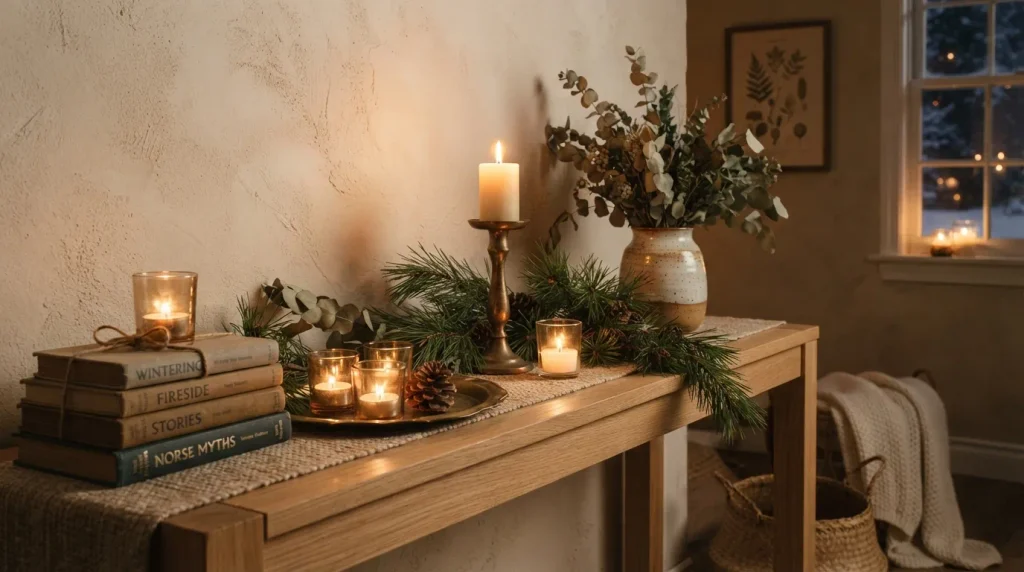
About the Idea
- Candlelight adds warmth when winter days become darker and shorter.
- Mix different candle heights for a more layered arrangement.
- Brass and ceramic holders add texture and character.
- Flameless candles provide a practical option for everyday use.
Few details create a warmer winter atmosphere as quickly as a thoughtful candle arrangement. Group cream pillar candles, small glass votives, and brass or ceramic holders on a mantel, console, dining table, or coffee table. Varying the heights creates a gentle rhythm while keeping the display visually interesting. Choose warm ivory, beige, or soft amber tones rather than highly colorful candles so the arrangement works naturally with winter interiors. In my experience, candlelight is especially effective in the evening because it softens hard surfaces and makes neutral rooms feel much more intimate.
Keep candle groups contained on a tray or shallow decorative surface so they remain organized and easy to move. Add a small amount of greenery, dried stems, or a ceramic vase for texture, but avoid overcrowding the arrangement. Always position real candles on stable, heat-resistant surfaces and keep them away from curtains, paper, dried foliage, and other flammable materials. Flameless candles are a useful alternative when open flames are impractical. With the right placement, a simple collection of candles can turn an ordinary corner into a warm winter focal point.
Also Read : 24 Moody Home Office Ideas for a Stylish Cozy Workspace
4. Chunky Knit Pillows
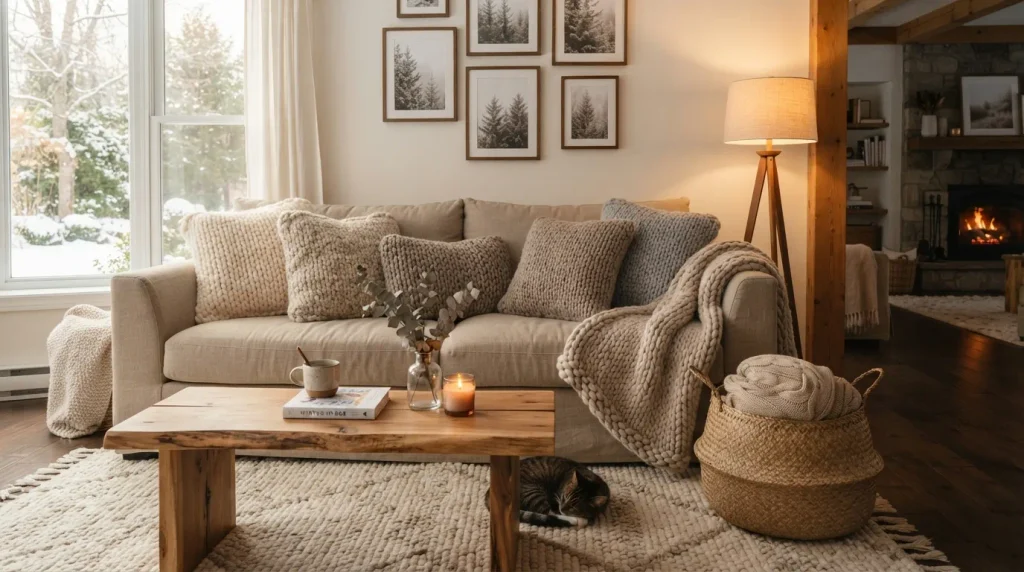
About the Idea
- Chunky knit pillows add softness and visible winter texture.
- Mix cable-knit and woven patterns for more visual depth.
- Neutral shades keep the arrangement calm and versatile.
- Use different pillow sizes for a relaxed layered look.
Chunky knit pillows can make a sofa look instantly warmer and more inviting during the colder months. Choose oversized cushions in cream, oatmeal, taupe, warm gray, or soft brown, then mix cable-knit patterns with simpler woven textures. The contrast keeps the arrangement interesting without introducing too many colors. Place larger pillows toward the back and smaller cushions toward the front to create a comfortable layered effect. In my experience, changing just a few sofa cushions can completely refresh a living room for winter without requiring new furniture or expensive seasonal accessories.
For a polished but relaxed arrangement, avoid making every pillow match. Pair a thick braided knit with a softer wool cushion or a simple linen pillow in a coordinating shade. A textured throw placed nearby can repeat the same materials and make the seating area feel more cohesive. Keep the coffee table and surrounding surfaces relatively simple so the soft textiles remain the visual focus. These small changes can make the sofa feel like the natural place to relax on cold evenings, while the neutral colors allow the pieces to remain useful long after winter ends.
Also Read : 22 Rustic Mantel Decorating Ideas for a Cozy Holiday Home
5. Rustic Wood Accents
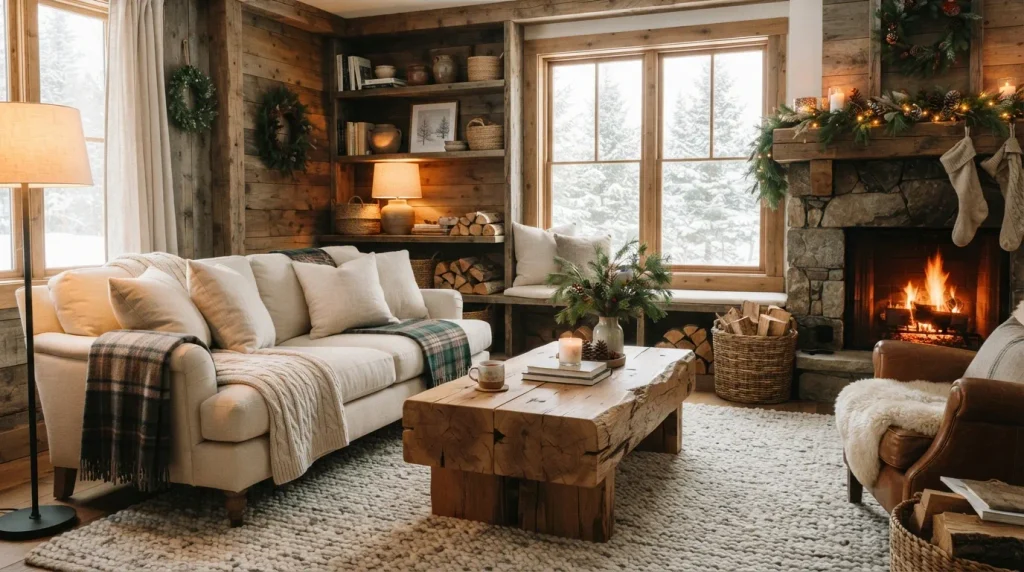
About the Idea
- Natural wood instantly adds warmth and character.
- Reclaimed pieces bring texture and rustic personality.
- Combine light and dark wood for subtle contrast.
- Wooden accessories work beautifully with soft winter textiles.
Rustic wood accents can make a winter home feel grounded, natural, and comfortably lived in. Introduce reclaimed wood through a coffee table, floating shelf, bench, picture frame, or decorative tray rather than changing every piece of furniture. Visible grain, knots, and slightly weathered surfaces add character and contrast beautifully with soft fabrics. Pair the wood with cream upholstery, wool rugs, chunky blankets, and woven baskets to create a balanced mix of hard and soft textures. The combination feels especially welcoming when the rest of the room uses neutral colors and gentle lighting.
You do not need a cabin-style interior to make rustic wood work. A single reclaimed coffee table or wooden bench can provide enough warmth to change the atmosphere of a modern room. Try repeating the wood tone in smaller details, such as frames, bowls, or candle trays, so the room feels connected without becoming overly rustic. I’ve noticed that natural wood also makes pale winter palettes feel less cold. When combined with warm textiles and greenery, it creates an inviting foundation that feels timeless rather than limited to a specific season.
Also Read: 24 Stone Fireplace Ideas for a Warm Rustic Living Room
6. Evergreen Mantel Decor
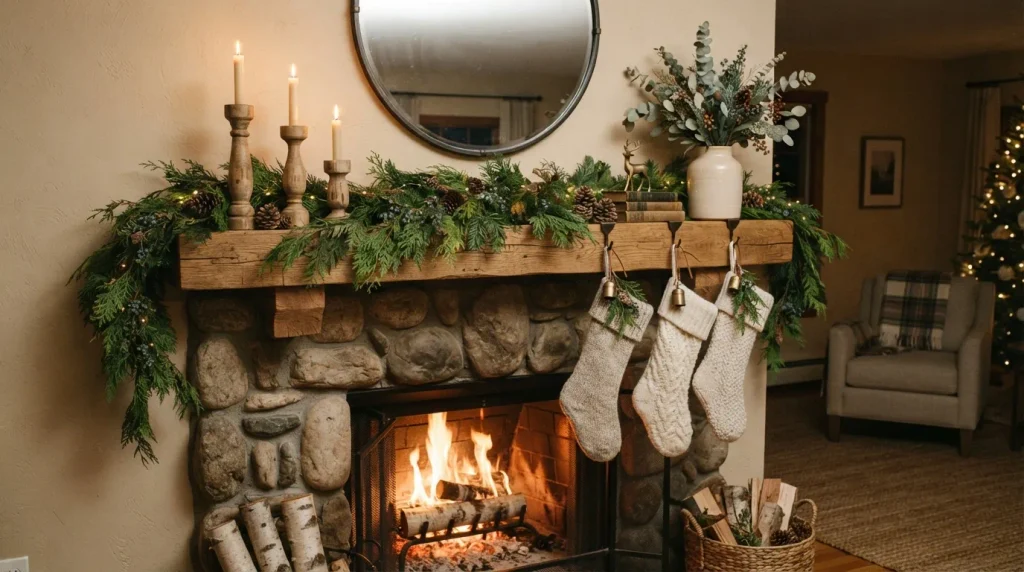
About the Idea
- Evergreen branches bring natural winter color indoors.
- Pinecones add earthy texture without overwhelming the display.
- Keep the arrangement loose for a natural appearance.
- Neutral stockings and candles complement the greenery beautifully.
An evergreen mantel can bring the feeling of a winter landscape indoors while keeping the decoration simple and natural. Arrange pine branches, cedar, fir, or other suitable greenery across the mantel, allowing some stems to extend naturally over the edges. Add pinecones, cream candles, rustic wood pieces, or simple ceramic objects to create layers without making the arrangement feel crowded. The deep green contrasts beautifully with ivory, beige, and natural wood. In my experience, greenery works best when it looks slightly relaxed rather than perfectly symmetrical, especially in rustic or farmhouse-style interiors.
Think about the mantel as a horizontal composition with different heights and textures. Place taller candleholders or vases toward the back, then layer shorter pinecones and decorative pieces in front. If using fresh greenery, monitor it regularly and keep it away from heat sources, fireplaces, and open flames. Faux greenery can provide a practical alternative and can be reused every year. A simple evergreen arrangement can transform the fireplace into a natural focal point while keeping the rest of the room calm, warm, and comfortably seasonal.
Also Read : 23 Winter Porch Decor Ideas for a Cozy Seasonal Welcome
7. Soft Wool Rug
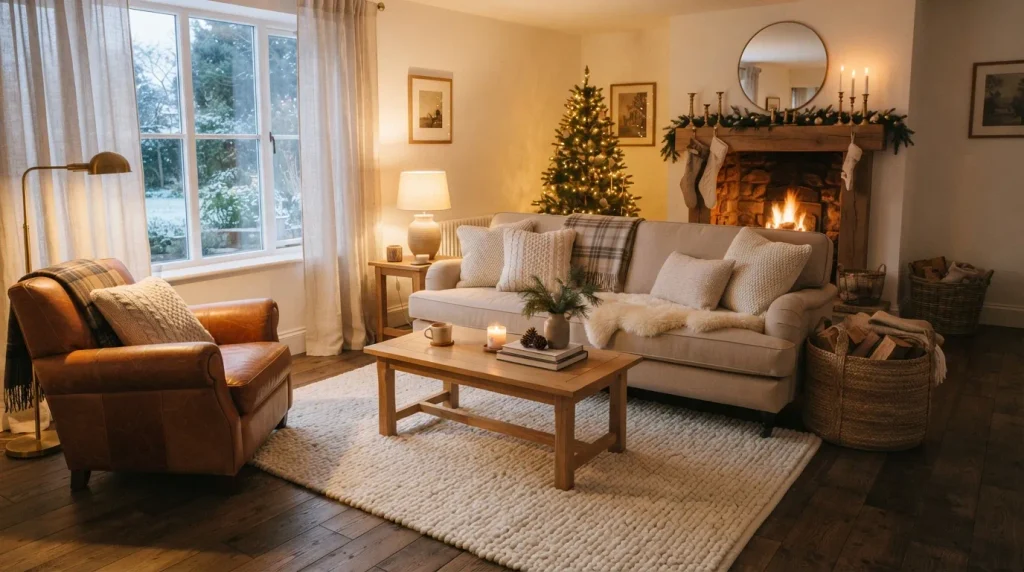
About the Idea
- A wool rug adds warmth underfoot during colder months.
- Ivory and beige shades keep the room bright and cozy.
- Thick texture makes hard flooring feel softer.
- Choose a size large enough to connect the seating area.
A soft wool rug can make a winter living room feel noticeably warmer, both visually and underfoot. Choose an ivory, cream, beige, or warm gray rug with a substantial woven texture that adds softness to wood, tile, or stone flooring. A larger rug can anchor the sofa, chairs, and coffee table together, making the seating arrangement feel more intentional. Wool is particularly useful because it has a naturally substantial texture and works beautifully with other winter materials such as chunky knits, linen, leather, and wood. The result feels comfortable without needing bold seasonal decorations.
Pay attention to the rug size before purchasing. Ideally, the front legs of the main seating pieces should sit comfortably on the rug so the area feels connected rather than fragmented. If you already have a patterned rug, layer a smaller neutral textile over part of it for additional texture. Keep the surrounding furniture simple and allow the rug to provide softness under the entire arrangement. I’ve noticed that changing the floor texture can have a surprisingly strong effect on how cozy a room feels. It is a practical update that can make winter evenings much more comfortable.
8. Layered Window Treatments
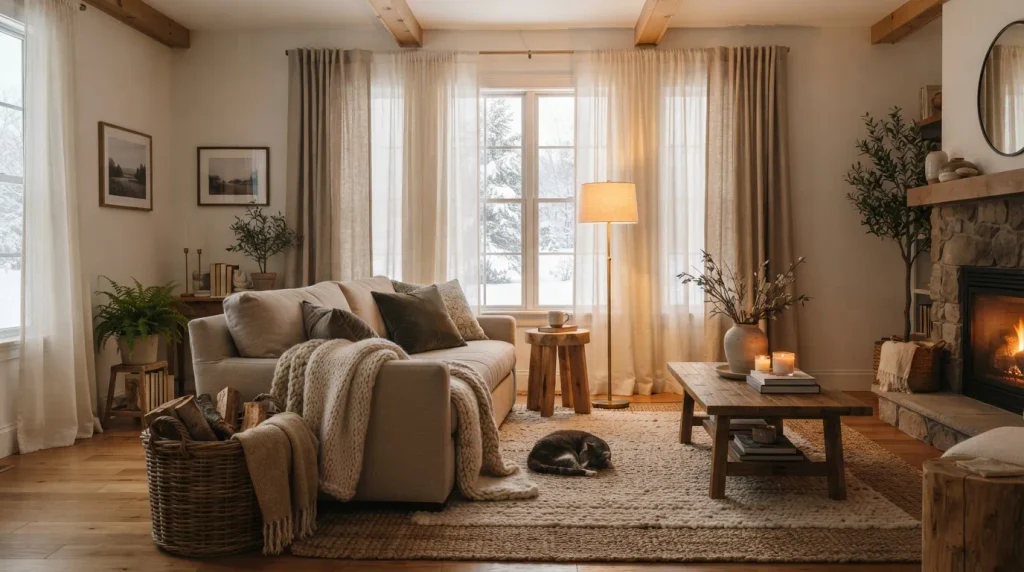
About the Idea
- Layered curtains add softness and visual depth around windows.
- Heavier fabrics can make a room feel more sheltered.
- Sheer panels preserve natural daylight during the day.
- Warm neutral fabrics blend easily with winter interiors.
Layered window treatments can make a room feel warmer and more finished during winter while giving you greater control over natural light. Combine sheer ivory curtains with heavier drapes in oatmeal, beige, taupe, or warm gray. The sheer layer allows gentle daylight to enter while the heavier panels can create a more enclosed atmosphere in the evening. Linen blends, cotton, velvet, and woven fabrics can all work depending on the style of the room. In my experience, window treatments are often overlooked, but they can dramatically change how soft and comfortable a space feels.
Hang the curtain rod high and wide enough to frame the window without blocking unnecessary light when the curtains are open. Let the panels fall close to the floor for a more polished appearance. If you want a particularly cozy effect, choose a fabric with visible texture rather than a completely smooth finish. Pair the curtains with warm lamps, wool rugs, and natural wood so the entire room feels connected. The result is a softer visual frame around the windows and a more intimate atmosphere when winter evenings arrive.
9. Fireplace Seating Nook
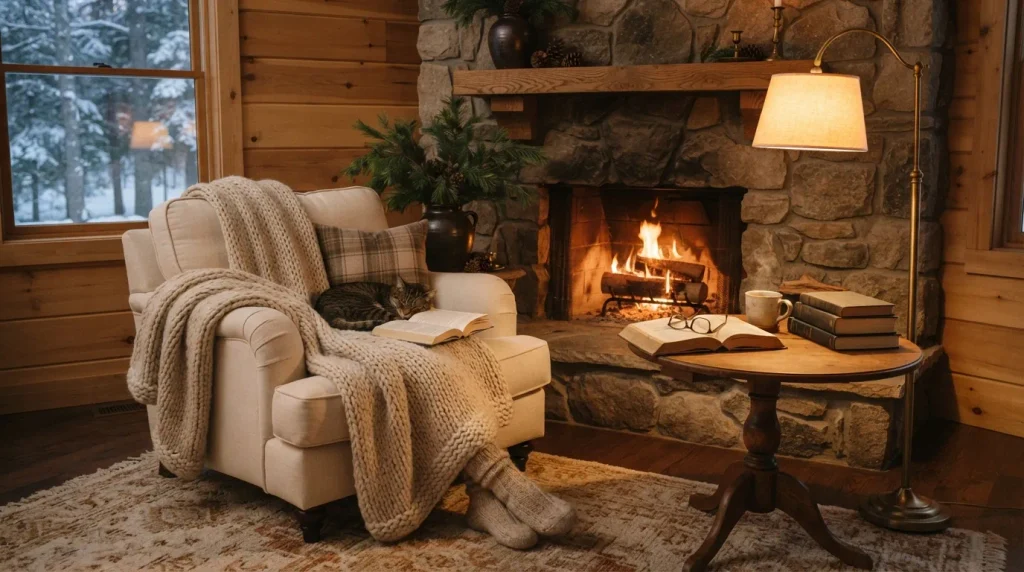
About the Idea
- A seating nook gives unused space a clear purpose.
- Position an armchair where it can benefit from fireplace warmth.
- Add a small table for books, drinks, or candles.
- Layer soft textiles to make the chair more inviting.
A fireplace seating nook can turn an overlooked corner into one of the coziest places in the home. Position a comfortable armchair near the fireplace, then add a small wooden side table, warm floor lamp, and soft wool rug to define the area. A chunky knitted throw draped over the chair makes the space feel immediately inviting, while a small stack of books adds a practical personal touch. The goal is to create a place where someone can comfortably read, relax, or enjoy the warmth of the room without requiring a large furniture arrangement.
Pay attention to distance from the fireplace and follow the manufacturer’s or fireplace professional’s clearance requirements before positioning furniture nearby. Once the layout is safe, focus on comfort and proportion. A small round table can provide enough surface area without making the nook feel crowded. Choose natural materials such as wood, wool, ceramic, and linen to create a layered winter palette. I’ve seen many rooms become more functional simply by giving an unused corner a clear purpose. A thoughtfully arranged nook can make the entire home feel more welcoming and lived in.
10. Plaid Winter Textiles
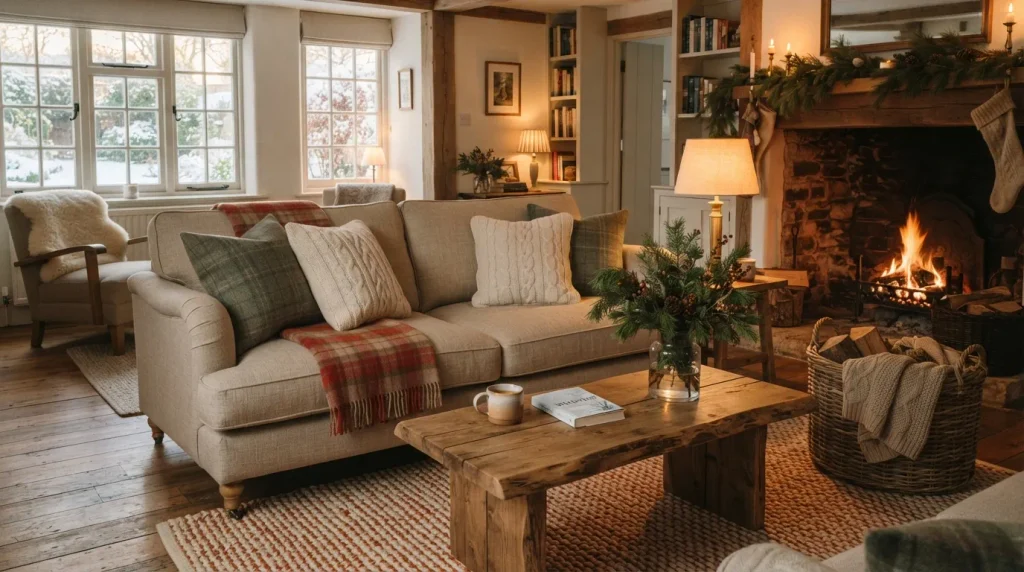
About the Idea
- Plaid adds classic seasonal pattern without overwhelming the room.
- Muted colors feel warmer and more timeless than bright contrasts.
- Mix plaid with solid neutral textiles for balance.
- One statement throw can be enough to change the sofa.
Plaid textiles can instantly introduce a classic winter feeling while keeping a room comfortable and relaxed. Choose patterns in muted green, burgundy, cream, tan, charcoal, or warm brown rather than extremely bright combinations. A plaid throw over the arm of a sofa or a pair of patterned cushions can provide enough seasonal character without making the room feel themed. Pair the pattern with solid cream, beige, or oatmeal textiles so the overall arrangement remains balanced. In my experience, one or two well-chosen plaid pieces usually create more impact than covering every surface with the pattern.
Use plaid to connect existing colors in the room rather than introducing an entirely new palette. For example, a throw containing cream, brown, and muted green can repeat tones already found in the rug, furniture, or greenery. Layer it with a chunky knit or smooth linen cushion to create texture without visual clutter. If your sofa is already patterned, keep the plaid subtle and use it on a smaller accessory. The result is a warm, familiar winter atmosphere that feels inviting and practical while remaining easy to update when the season changes.
11. Woven Basket Storage
About the Idea
- Woven baskets provide useful storage while adding natural texture.
- Large baskets are ideal for blankets and extra cushions.
- Natural fibers complement wool, wood, and linen beautifully.
- Place baskets where cozy accessories are easy to reach.
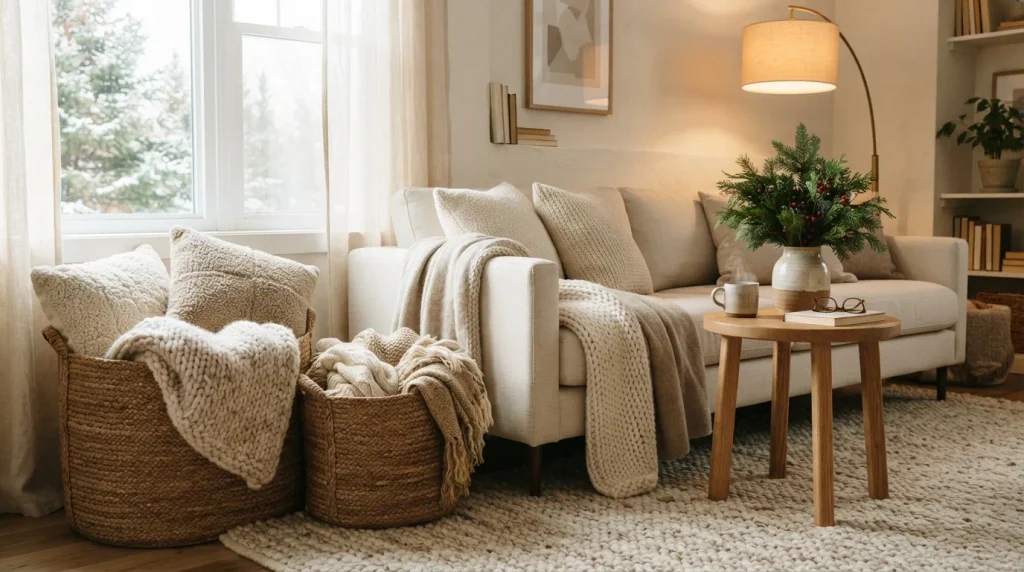
Woven baskets are a simple way to combine storage with seasonal texture. Place one large basket beside the sofa or fireplace and fill it with chunky blankets, extra pillows, or folded throws. Natural materials such as rattan, seagrass, jute, and wicker bring warmth to neutral interiors and contrast beautifully with soft winter textiles. Instead of hiding blankets inside a cabinet, keeping them visible makes the room feel more relaxed and encourages everyone to use them. This is especially useful in living rooms where comfort and practicality need to work together.
Choose baskets with enough structure to stand upright without looking overly rigid. A slightly irregular woven texture often feels more natural in rustic, farmhouse, and Scandinavian interiors. You can also place smaller baskets on open shelving for organizing books, magazines, or everyday items. Keep the color close to existing wood and textile tones so the storage pieces feel integrated. I’ve noticed that practical decor tends to make a home feel more authentic because every item has a purpose. These baskets keep the room organized while adding exactly the kind of natural texture that makes winter spaces feel inviting.
12. Warm Layered Lighting
About the Idea
- Multiple light sources make winter evenings feel softer.
- Table and floor lamps create comfortable pools of warm light.
- Warm bulbs complement wood, cream, and earthy colors.
- Use dimmers where possible for flexible evening brightness.
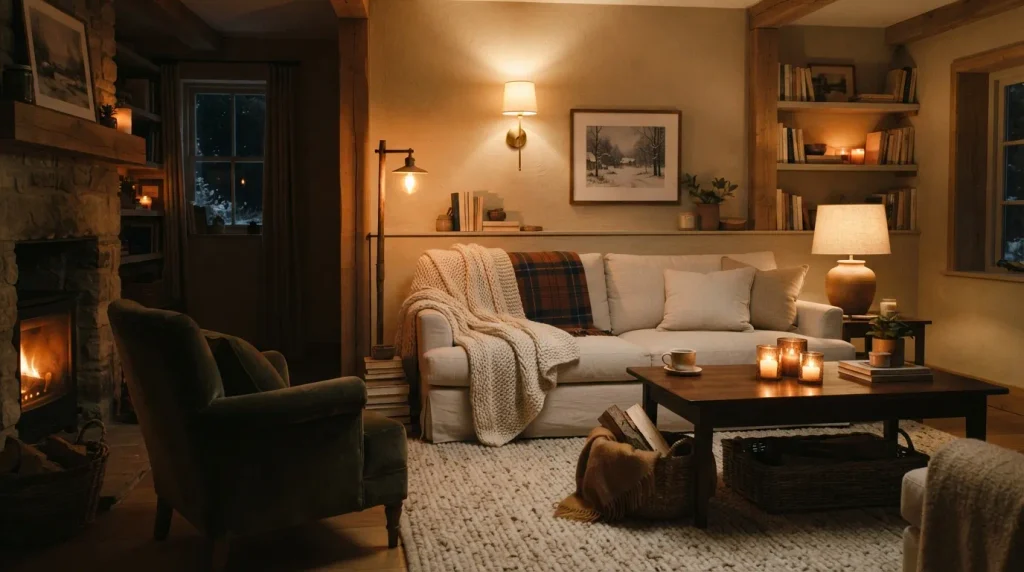
Layered lighting can completely change the atmosphere of a room when winter afternoons become darker earlier. Instead of relying on one overhead fixture, combine a floor lamp, table lamp, wall light, and a few candles or flameless lights. Each source creates a smaller pool of illumination, making the room feel softer and more intimate. Choose warm-toned bulbs that complement cream, beige, brown, and natural wood. In my experience, lighting is one of the fastest ways to make a room feel cozier because it changes the mood without changing the furniture.
Place lights at different heights to avoid creating one flat layer of brightness. A floor lamp beside a reading chair provides practical task lighting, while a table lamp on a console can illuminate decorative objects. A small lamp on a side table can add warmth closer to eye level when you are sitting down. If possible, use dimmers so the brightness can change throughout the evening. Keep cords safely managed and avoid placing lamps where they can be knocked over. The finished room feels warmer, calmer, and much more inviting after sunset.
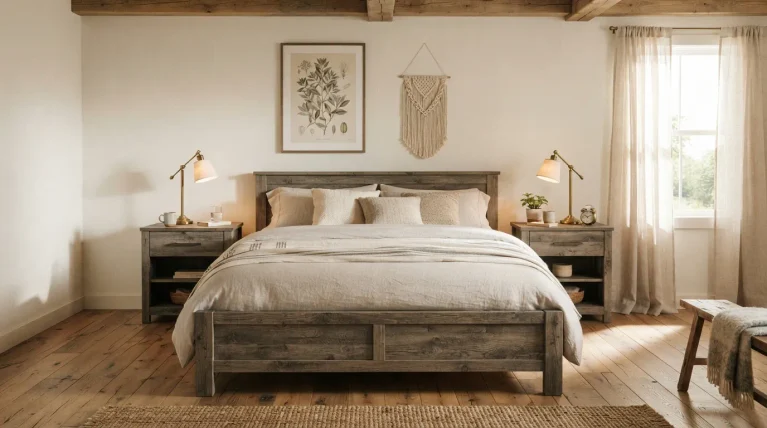
13. Winter Bedroom Layers
About the Idea
- Layered bedding makes the bedroom feel warmer and more comfortable.
- Combine smooth cotton with chunky knits and wool textures.
- Neutral colors create a peaceful winter atmosphere.
- Keep extra blankets within easy reach for practical comfort.
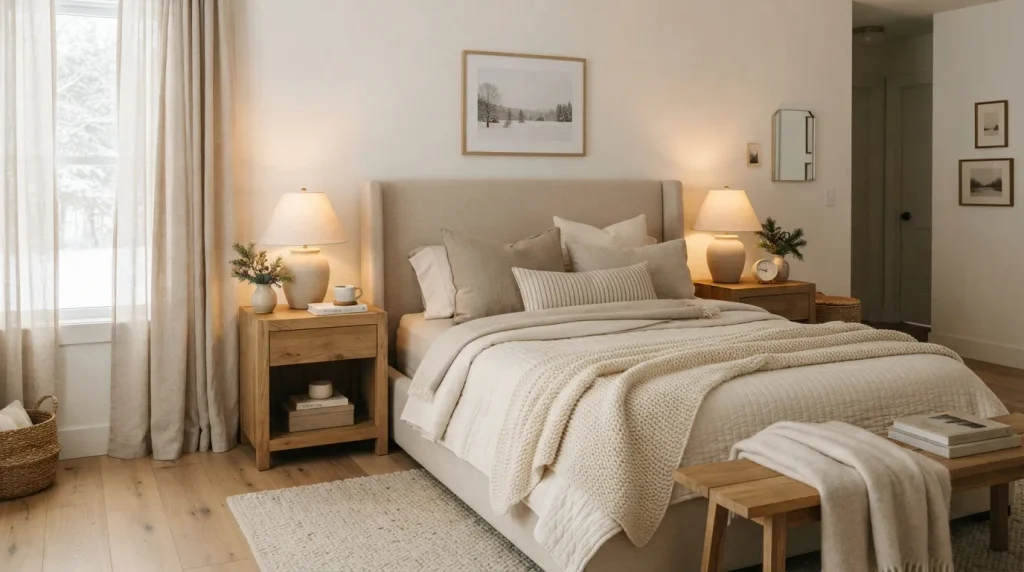
A cozy winter bedroom starts with layers that make the bed look inviting and feel comfortable. Begin with soft cotton or linen bedding, then add an ivory quilt, chunky knitted throw, wool blanket, and several pillows in cream, beige, taupe, or warm gray. Mixing textures is more effective than simply adding more pieces because each material catches light differently. The layered arrangement creates depth while keeping the palette calm. In my experience, changing the bedding is one of the easiest ways to give a bedroom a completely different seasonal feeling without replacing furniture.
Avoid arranging every blanket and pillow too perfectly. Let one knitted throw fall naturally across the foot of the bed or over one corner to create a relaxed appearance. Add a small basket nearby for extra bedding and use warm bedside lamps instead of harsh overhead lighting. Natural wood nightstands, ceramic accessories, and linen curtains can reinforce the soft winter palette. If the room already has dark furniture, lighter bedding can prevent it from feeling too heavy. The finished bedroom becomes a peaceful retreat that feels warm and comfortable from morning through bedtime.
14. Frosted Glass Accents
About the Idea
- Frosted glass creates a subtle connection to icy winter textures.
- Translucent pieces add light without strong visual weight.
- White branches and cream candles reinforce the soft palette.
- Mix glass with wood to keep the arrangement warm.
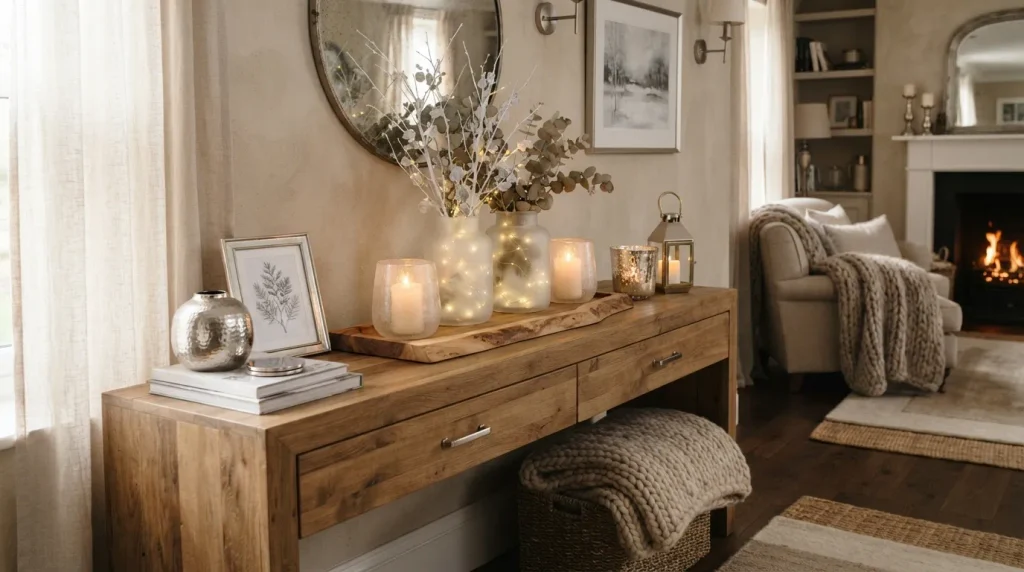
Frosted glass accents can bring a delicate winter quality into the home without making the decor feel cold. Use frosted vases, candleholders, bowls, or small decorative objects in soft white, translucent gray, or pale blue. Their slightly cloudy surfaces resemble winter frost and diffuse light beautifully. Place them on a console, dining table, mantel, or open shelf alongside cream candles and natural branches. The key is balancing the cooler glass with warmer materials such as wood, wool, woven fibers, and beige textiles so the room remains inviting.
A small grouping is usually more effective than scattering individual glass pieces throughout the room. Try placing two or three objects at different heights on a wooden tray, then add a few white branches or dried stems for shape. Warm lighting will create subtle reflections after sunset and prevent the glass from appearing too stark. I’ve noticed that translucent materials work especially well in neutral rooms because they add visual interest without introducing another strong color. The result is understated, elegant, and distinctly winter-inspired while remaining suitable for everyday decorating.
15. Natural Pinecone Decor
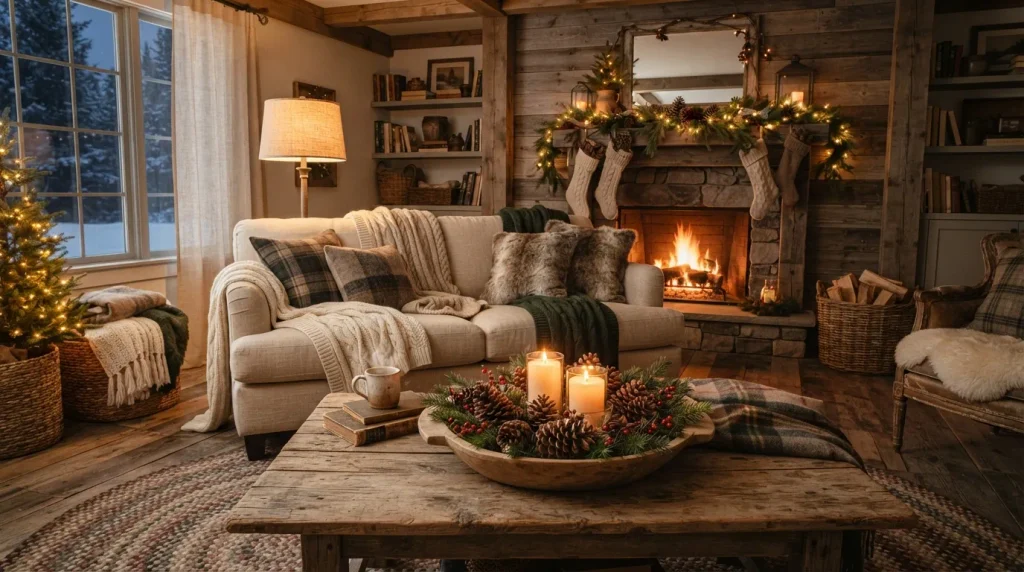
About the Idea
- Pinecones add natural texture and seasonal character.
- Wooden bowls make simple arrangements feel intentional.
- Mix pinecones with greenery for a fuller display.
- Their neutral color works with almost any winter palette.
Natural pinecones are an easy and inexpensive way to bring outdoor winter texture inside. Collect or purchase clean, dry pinecones and arrange them in a wooden bowl, ceramic dish, woven basket, or glass container. Their warm brown tones work beautifully with cream, beige, green, and natural wood, making them easy to combine with existing decor. Add a few evergreen sprigs, dried branches, or small candles to create a simple centerpiece. Because pinecones have such a strong natural texture, even a small collection can make a surface feel more seasonal.
Think about scale when choosing the container. A shallow wooden bowl works well for a coffee table, while a taller basket can create a larger arrangement near a fireplace. Avoid overcrowding the display with too many decorative colors; let the natural materials provide most of the visual interest. If you collect pinecones outdoors, make sure they are clean and completely dry before bringing them indoors. I’ve noticed that simple natural elements often create the most timeless winter displays. They add seasonal character without making the room feel overly decorated or difficult to maintain.
16. Cozy Reading Corner
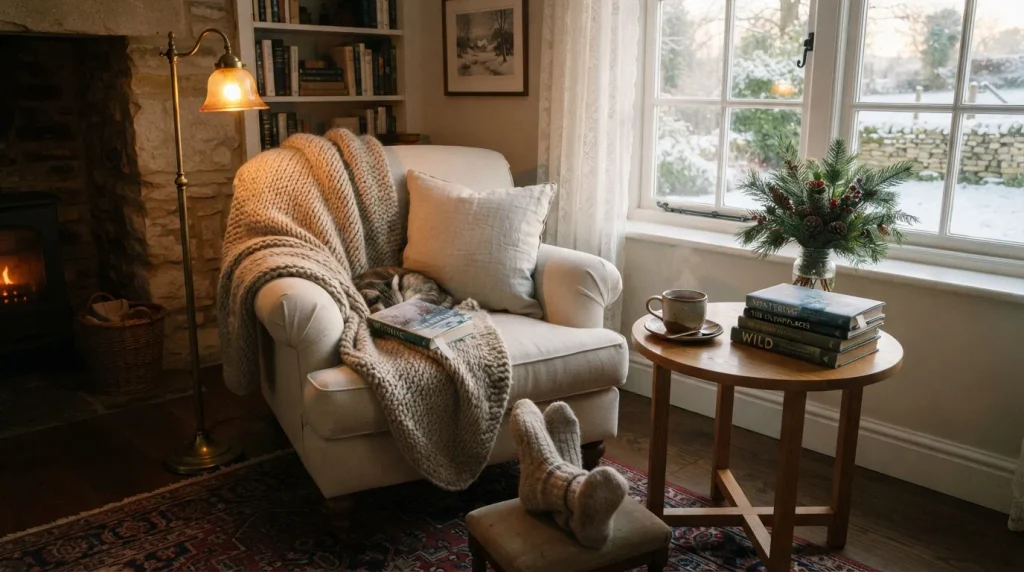
About the Idea
- A reading corner gives an unused area a practical purpose.
- Layered textiles make the chair feel instantly more comfortable.
- A small side table keeps books and drinks within reach.
- Warm lighting creates a relaxing atmosphere after sunset.
A cozy reading corner can turn a quiet area of the home into a favorite winter retreat. Start with a comfortable armchair, then add a chunky throw, soft cushion, small side table, and warm floor lamp. A wool or woven rug underneath helps define the area and adds softness underfoot. Keep a few favorite books within easy reach and add a ceramic mug or small vase for a personal touch. In my experience, a dedicated corner like this makes a home feel more functional because it creates a natural place to slow down and relax.
Choose a position near a window if possible so the chair receives natural daylight during the day. At night, a floor lamp with warm illumination can provide comfortable reading light without making the entire room bright. Keep the palette connected to the rest of the home through cream, beige, wood, and earthy accents. A small basket beside the chair can hold additional blankets or magazines. The finished corner feels intimate and useful, giving the room a cozy winter feature that remains practical long after the season ends.
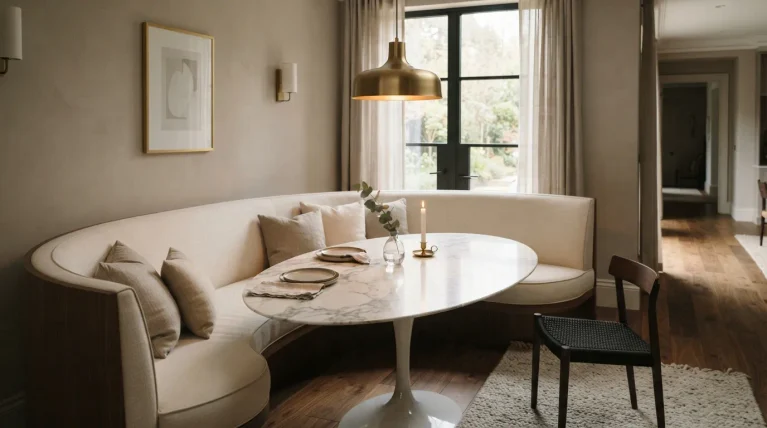
17. Winter Dining Table
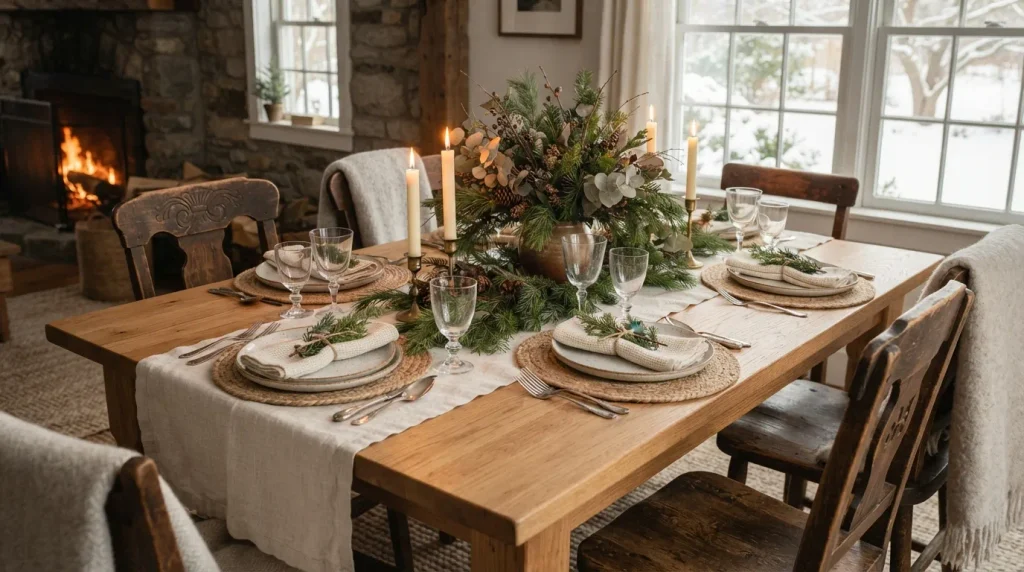
About the Idea
- Natural greenery creates an effortless seasonal centerpiece.
- Linen and woven napkins soften the wooden table.
- Candles add warmth without requiring elaborate decorations.
- Keep the centerpiece low enough for comfortable conversation.
A winter dining table can feel festive and inviting without becoming overloaded with seasonal decorations. Start with a natural linen runner, then add an arrangement of evergreen branches, pinecones, and a few cream candles. Keep the centerpiece relatively low so guests can comfortably see one another across the table. Natural wood, ceramic dishes, woven napkins, and simple glassware reinforce the relaxed winter aesthetic. In my experience, dining tables look most welcoming when the decoration leaves enough open space for food, serving pieces, and everyday use.
Choose a restrained color palette of cream, beige, green, brown, and soft metallic accents. If your table is already made from beautiful natural wood, allow part of the surface to remain visible rather than covering it completely. Place candles in sturdy holders and keep greenery safely away from open flames and hot serving dishes. For a more casual setting, use mismatched ceramic plates or woven placemats. These small variations can make the table feel collected and personal. The finished arrangement creates a warm setting for family meals, winter gatherings, or quiet dinners at home.
18. Faux Fur Details
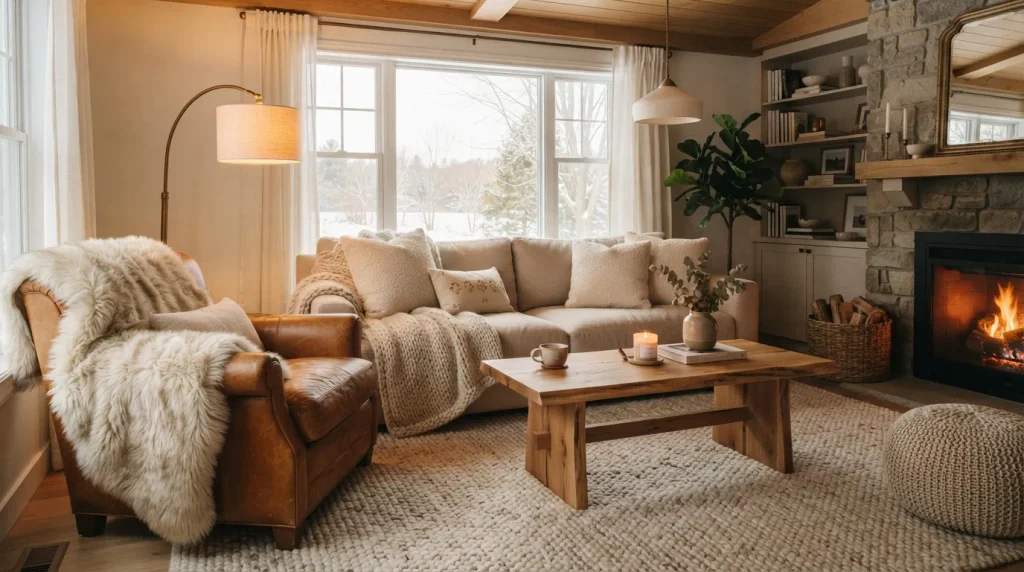
About the Idea
- Faux fur adds softness and visual warmth.
- Use it on one statement piece for balanced styling.
- Cream and ivory tones create a light winter atmosphere.
- Pair plush textures with leather or wood for contrast.
Faux fur details can instantly make a winter room feel softer and more luxurious without requiring a complete redesign. A cream or ivory faux fur throw draped over an armchair is an easy starting point, while a small faux fur cushion can add similar texture to a sofa or bed. The plush surface contrasts beautifully with harder materials such as leather, wood, metal, and stone. Keep the color neutral so the texture remains the main feature. In my experience, one carefully placed faux fur piece can create more impact than covering the entire room in heavy fabrics.
Balance the softness with materials that have more structure. A caramel leather chair, natural wood table, woven basket, or wool rug can prevent the room from feeling too fluffy or visually heavy. Keep the throw slightly relaxed rather than folding it into a perfect rectangle. This creates a more comfortable, lived-in appearance and makes the piece feel ready to use. Choose washable or easy-care options where possible, especially in high-traffic areas. The finished room feels warm, tactile, and inviting while maintaining a polished enough appearance for everyday living.
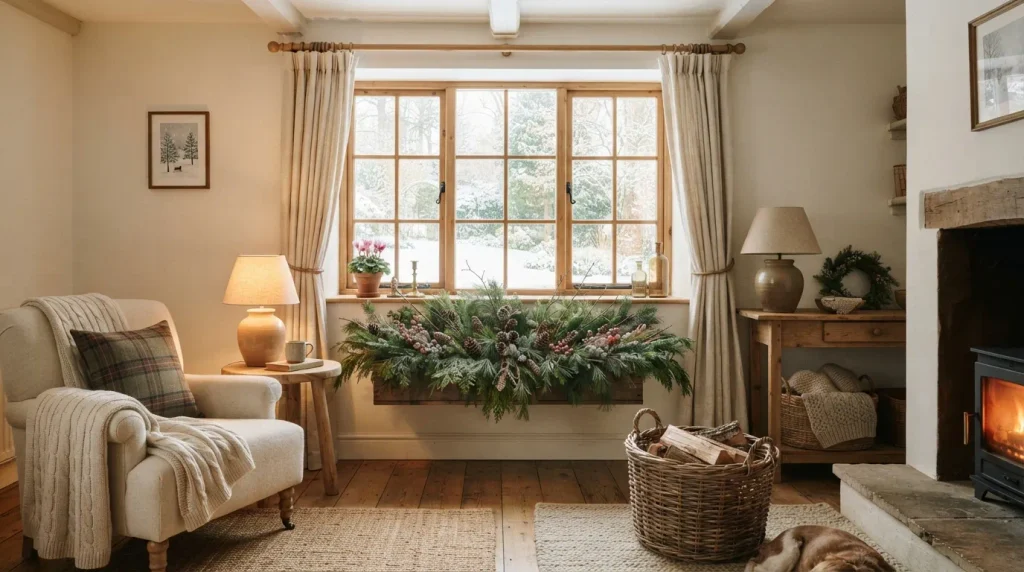
19. Evergreen Window Box
About the Idea
- Evergreen window displays bring winter nature directly into the room.
- Pinecones and berries add subtle color and texture.
- Natural greenery works beautifully against neutral curtains.
- Use faux stems indoors for an easy low-maintenance arrangement.
An evergreen window box can bring a fresh winter feeling into a room while making the window itself part of the decor. Fill a wooden or ceramic container with evergreen branches, cedar, pinecones, and a few muted berries. Position it on a wide interior windowsill or beneath a large window where the greenery can become a natural focal point. The deep green tones contrast beautifully with cream curtains and neutral walls. In my experience, bringing greenery close to a window makes a room feel more connected to the outdoors, especially during colder months.
Keep the arrangement slightly loose so the branches have room to extend naturally. If using fresh greenery, choose suitable varieties and check moisture levels regularly to prevent damage to the surface underneath. Faux branches can provide a practical alternative for a reusable display. Pair the window box with warm textiles, natural wood, and soft lighting so the greenery feels integrated with the rest of the room. At night, a nearby table lamp can create a gentle silhouette against the window. This simple feature adds seasonal character without requiring much space or complicated styling.
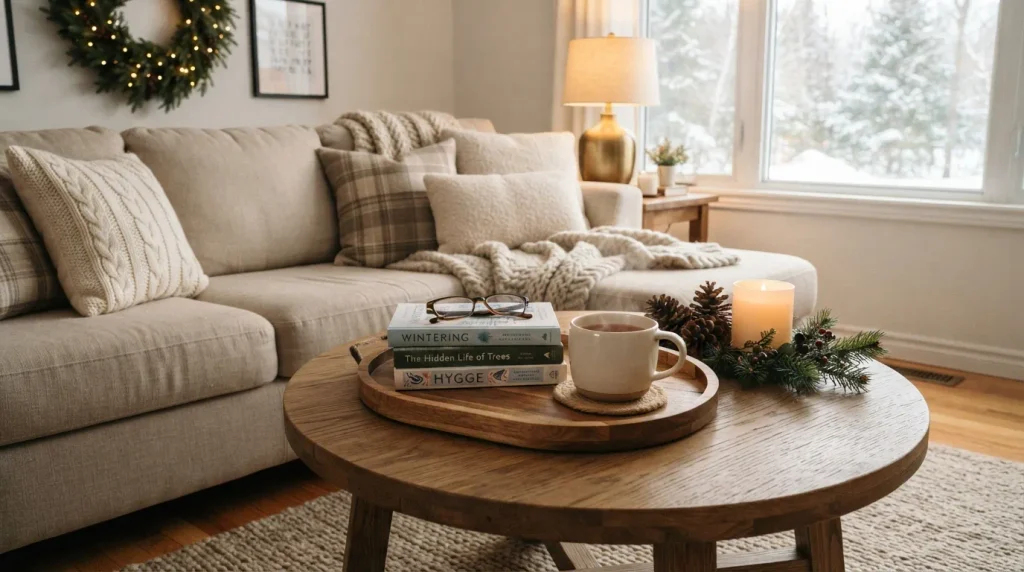
20. Cozy Coffee Table
About the Idea
- A simple coffee table arrangement adds warmth without clutter.
- Wooden trays keep small seasonal accessories organized.
- Books provide height and a lived-in feeling.
- Natural elements complement winter textiles beautifully.
A cozy coffee table arrangement can make the center of a living room feel more inviting without taking away valuable surface space. Start with a wooden or woven tray to contain the main pieces, then add two or three hardcover books, a cream candle, small evergreen branches, and a ceramic mug or bowl. Pinecones can provide additional texture while keeping the color palette natural. The goal is to create an arrangement that looks beautiful but still leaves enough room for everyday use. In my experience, functional styling makes a coffee table feel much more natural than a display filled entirely with decorative objects.
Use different heights to keep the arrangement visually interesting. Stack books underneath a small vase or candle, then place lower objects around them to create balance. Avoid placing too many delicate items where they could easily be knocked over. Choose accessories in cream, beige, brown, green, and natural wood so the table connects with the rest of the room. If you have children or pets, keep small objects and candles safely out of reach. The result is a relaxed centerpiece that makes everyday winter evenings feel warmer and more comfortable.
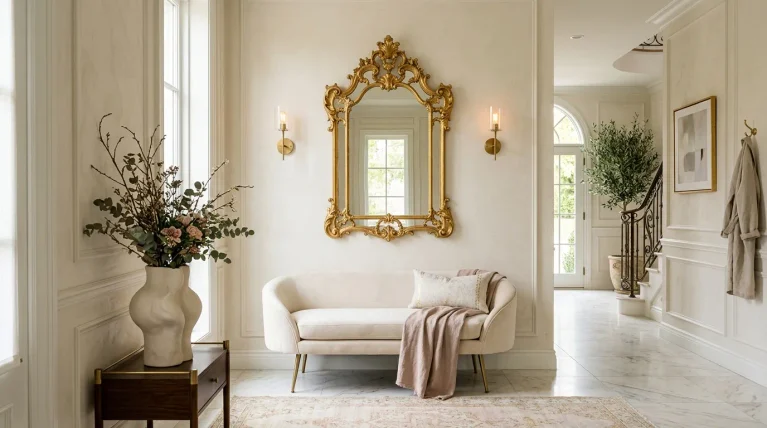
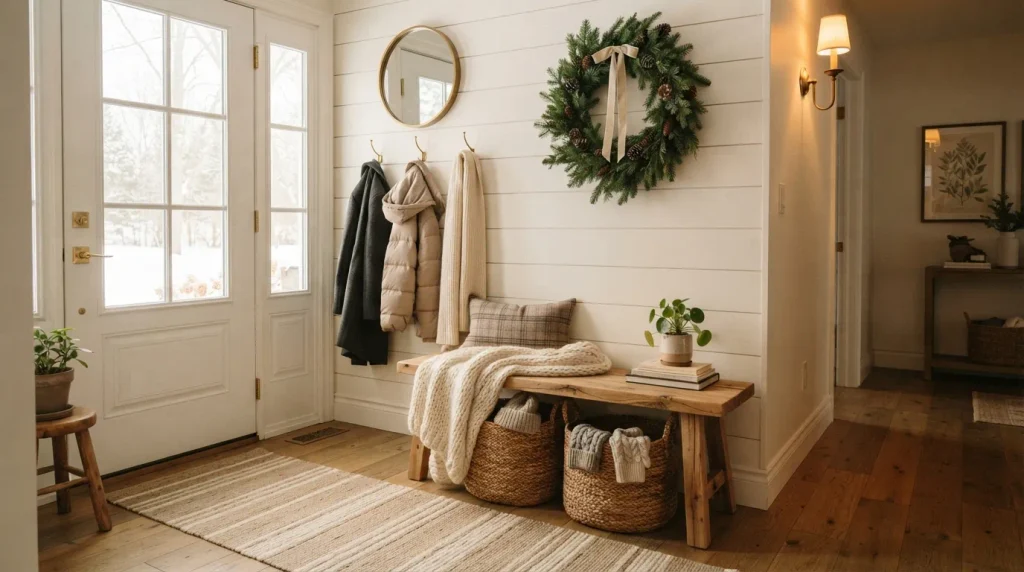
21. Cozy Winter Entryway
About the Idea
- A winter entryway sets the tone for the rest of the home.
- Baskets provide practical storage for scarves, hats, and gloves.
- A bench creates convenient seating for removing shoes.
- Evergreen accents add seasonal character without taking much space.
A cozy winter entryway should feel welcoming while still handling the practical needs of cold-weather living. Start with a wooden bench where shoes can be removed comfortably, then place woven baskets underneath for scarves, gloves, hats, or other accessories. Add a soft cream throw to the bench and hang a simple evergreen wreath or seasonal greenery nearby. A neutral runner can soften the floor and create a visual path into the home. In my experience, the best entryways balance decoration with storage so the space remains attractive even when everyone is coming and going.
Keep the color palette warm and restrained with natural wood, cream, beige, muted green, and subtle brass accents. Wall hooks should be positioned at practical heights, and frequently used items should remain easy to reach. A small tray can collect keys while a basket keeps loose accessories organized. Add warm lighting if the entryway lacks natural brightness, especially for darker winter evenings. These small changes can make a surprisingly large difference to the first impression of your home. The finished space feels organized, comfortable, and ready to welcome you home on a cold winter day.
Conclusion
Creating a warm winter home is all about making small changes that improve both comfort and atmosphere. Layer soft textiles, bring in natural greenery, add warm lighting, and use wood, wool, and woven materials to create depth and character. You do not need to completely redecorate to make your space feel inviting. Choose a few winter decor ideas that fit your style and start with the areas you use most. Save this post on Pinterest for your next seasonal refresh, try your favorite ideas at home, and share it with someone who loves cozy interiors. A few thoughtful details can make winter feel wonderfully comfortable.