There’s a reason moody kitchens stop people mid-scroll. Something about deep colors, warm lighting, and rustic textures just feels like home. If you’ve been dreaming of a kitchen that feels cozy instead of clinical, these 23 moody farmhouse kitchen ideas are exactly what you need to get started.
I’ve noticed that a lot of homeowners assume “moody” means dark and gloomy, but that’s not quite right. Done well, it means warm, layered, and inviting, the kind of kitchen that makes you want to linger over morning coffee a little longer. In my experience, the difference usually comes down to a few key choices: the right cabinet color, warm lighting, and natural textures like wood, iron, or woven baskets.
This list walks through everything from cabinetry and lighting to small styling details that pull a whole room together. Whether you’re planning a full renovation or just want a few weekend upgrades, there’s something here for every budget and every kitchen size.
1. Dark Wood Cabinetry
- Adds instant warmth without feeling heavy
- Hides everyday scuffs better than white cabinets
- Pairs beautifully with brass or matte black hardware
- Creates a grounded, cozy focal point in the room
- Works in small kitchens too, not just large ones
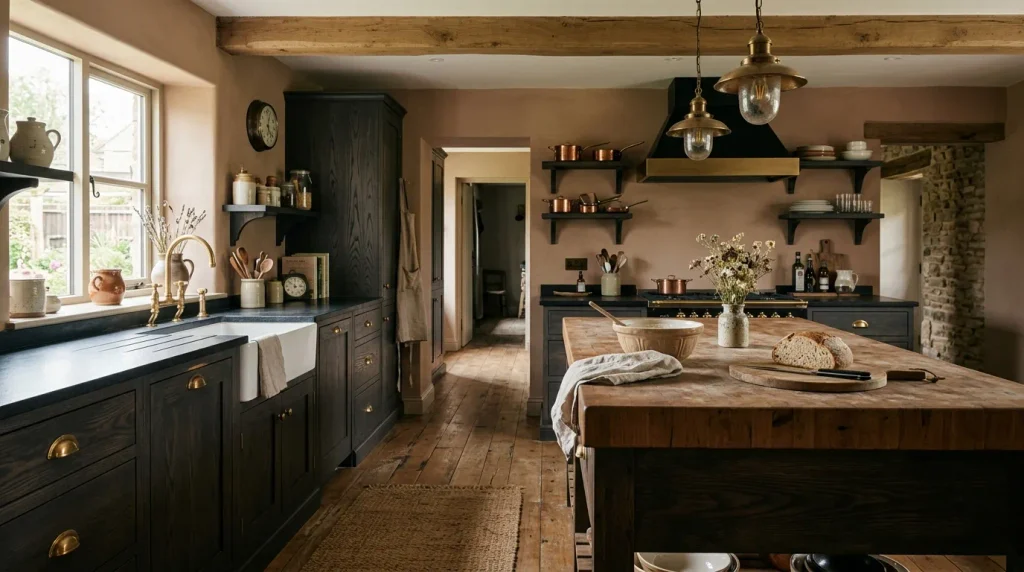
Dark wood cabinetry instantly changes how a kitchen feels the moment you walk in. It swaps that bright, sterile look for something warmer and more inviting, almost like stepping into a cabin retreat. In my experience, homeowners worry dark cabinets will make a small kitchen feel cramped, but the opposite usually happens when paired with good lighting. The wood tone absorbs harsh shadows and adds depth instead of flatness. This is one of the easiest moody farmhouse kitchen ideas to start with, since it doesn’t require a full renovation, just a cabinet refinish or repaint to shift the entire mood.
Choosing the right wood undertone matters more than people expect. Cabinets with warm brown or espresso finishes feel cozy, while cooler charcoal tones lean more modern-rustic. I’ve noticed kitchens with dark lower cabinets and lighter upper shelving strike the best balance, keeping the space grounded but not cave-like. Adding brass or aged bronze hardware softens the darkness and adds a collected, vintage charm. If you’re nervous about committing, start with just the island or lower cabinets first. It’s a low-risk way to test the moody look before going all-in on the entire kitchen layout.
Also Read : 24 Minimalist Japandi Bedroom Design Ideas for a Calm Retreat
2. Black Iron Fixtures
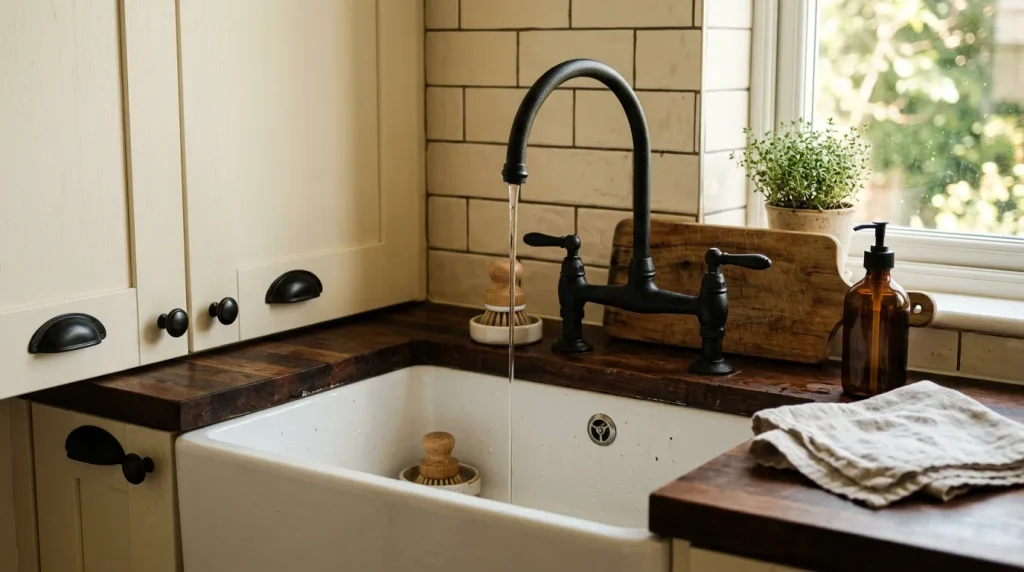
- Adds bold contrast against light countertops and tile
- Feels timeless instead of trendy, so it won’t date quickly
- Easy upgrade that doesn’t require replacing full cabinets
- Ties together hardware, lighting, and faucet into one cohesive look
- Small detail that makes a big visual difference
Black iron fixtures are one of those small changes that quietly transform an entire kitchen. Swap out a shiny chrome faucet for matte black, and suddenly the whole space feels more intentional and pulled together. I’ve tried this update in a few kitchens, and it’s consistently the most cost-effective way to shift a plain kitchen toward that cozy, rustic feel. It works because black creates contrast against lighter surfaces like white sinks or pale countertops, giving the eye something to rest on. It’s a detail-focused upgrade, but the impact shows up the second you walk into the room.
Beyond the faucet, black iron shows up in hinges, drawer pulls, pot racks, and even light fixtures hanging above an island. That’s why many designers recommend choosing one hardware finish and repeating it throughout the kitchen, rather than mixing several metals at once. Consistency is what makes the space feel curated instead of accidental. If your kitchen already leans farmhouse with wood beams or open shelving, black iron accents add just enough edge to keep it from feeling too soft or overly sweet. It’s a subtle but effective way to add character without a major remodel.
Also Read : 25 Japandi Bathroom Design Ideas for a Calm Modern Space
3. Vintage Farmhouse Sink
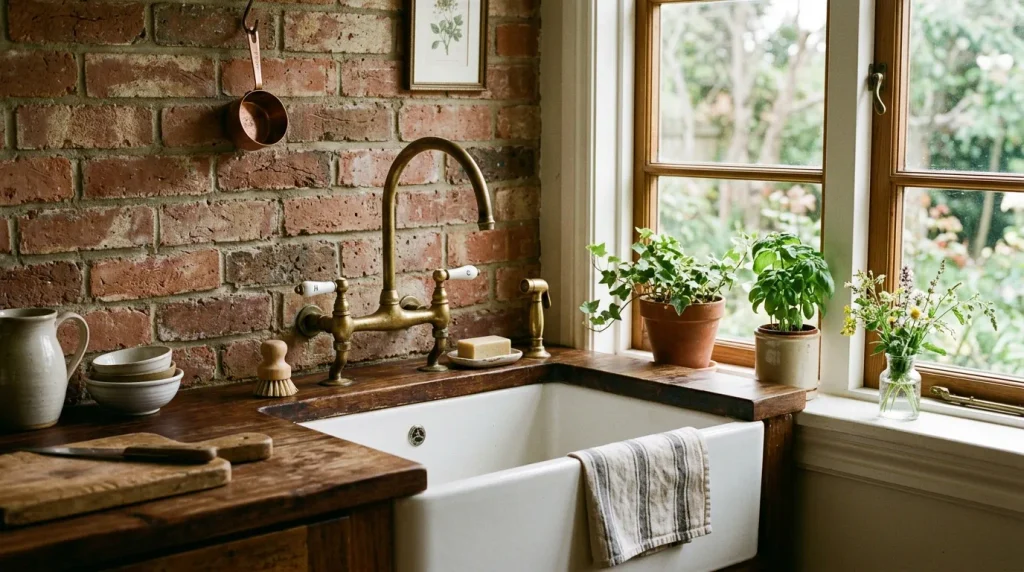
- Instantly signals farmhouse style even in a modern layout
- Deep basin makes washing large pots and pans easier
- Apron front adds visual texture that flat sinks lack
- Pairs well with exposed brick, brass, or open shelving
- A statement piece that anchors the whole kitchen design
A farmhouse sink does more than just hold water, it becomes the visual anchor of the entire kitchen. The deep, apron-front design has a way of drawing the eye immediately, even before anyone notices the cabinets or countertops. I’ve seen this work well in kitchens that otherwise feel plain, because the sink alone adds enough character to carry the rustic theme. It’s practical too, offering more room for oversized dishes and cutting boards than a standard double basin. For anyone building out moody farmhouse kitchen ideas from scratch, this is often the piece worth splurging on first.
Material choice changes the personality of the sink quite a bit. Fireclay versions feel classic and soft, while cast iron with an enamel coating leans slightly more industrial and durable. Pairing it with a curved brass or matte black faucet adds another layer of vintage charm without overcomplicating the design. Surrounding the sink with open shelving or a small potted herb garden on the windowsill makes the whole corner feel intentional and homey. It’s a detail guests always notice first, and one that photographs beautifully for anyone sharing kitchen inspiration online.
Also Read : 23 Tropical Jungle Living Room Ideas for a Lush Retreat
4. Exposed Wood Beams
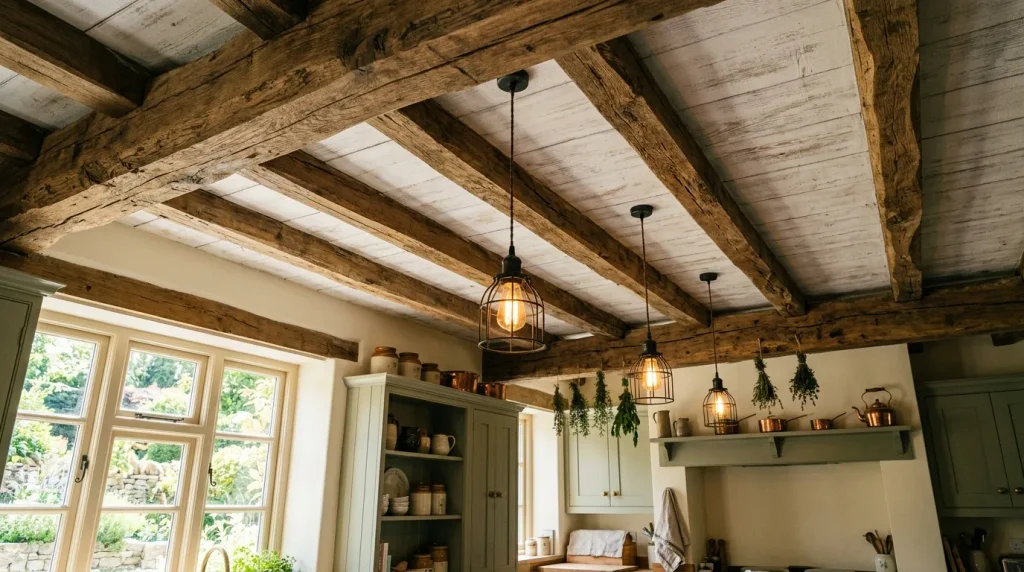
- Adds architectural character without touching the walls or floor
- Draws the eye upward, making low ceilings feel less flat
- Works with painted, stained, or reclaimed wood finishes
- Pairs naturally with pendant lighting for a layered look
- Brings warmth to kitchens that feel too clean or sterile
Exposed wood beams bring a sense of history into a kitchen, even if the house was built last year. They break up flat, plain ceilings and give the room a lived-in, storybook quality that’s hard to fake with paint alone. In my experience, this is one of those upgrades homeowners don’t consider until they see it in someone else’s kitchen, and then they can’t stop thinking about it. Reclaimed or faux beams both work, depending on budget. Either way, the effect is the same: a ceiling that suddenly feels intentional, textured, and part of the overall rustic story.
The finish on the beams changes the entire mood of the room. Weathered gray or driftwood tones feel coastal-farmhouse, while rich dark walnut leans more traditional and cozy. Pairing beams with black iron pendant lights creates a strong visual line that ties the ceiling to the countertop hardware below. I’ve noticed kitchens with white or cream walls benefit most from this contrast, since the beams don’t get lost against a busy backdrop. It’s a bigger commitment than paint or hardware, but for anyone chasing an authentic farmhouse look, beams deliver results that are hard to replicate.
ALso Read : 22 Rustic Spring Decor Ideas for a Cozy Country Home
5. Open Wood Shelving
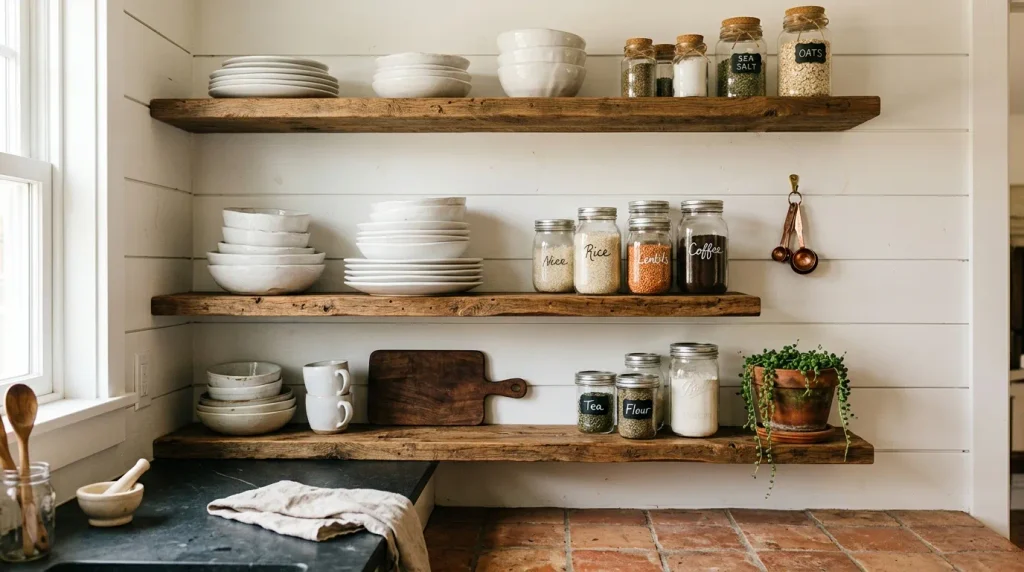
- Creates display space for dishware without bulky upper cabinets
- Makes small kitchens feel more open and less boxed in
- Encourages a curated, collected-over-time visual style
- Great spot to mix greenery, ceramics, and everyday items
- Keeps frequently used items within easy reach
Open shelving trades a bit of storage for a whole lot of personality, and most people find that trade worth making. Instead of hiding everything behind cabinet doors, dishes and jars become part of the decor itself. I’ve tried this in narrow kitchens especially, and it makes a real difference in how open the room feels, since there’s less visual bulk near eye level. The trick is keeping what’s displayed simple and cohesive, rather than cluttered. When done right, open shelving becomes one of the most photographed corners of the entire kitchen.
Wood shelves specifically add warmth that floating metal or glass versions don’t. A slightly rough, unfinished edge feels more authentic to the farmhouse look than anything overly polished. Styling matters just as much as the shelf itself: stack plates by color, group jars by size, tuck in a small plant or two for softness. That’s why many designers recommend keeping only a third of the shelf full at any time, leaving breathing room so it doesn’t look crowded. Paired with a dark countertop below, the contrast makes the wood tone stand out even more.
Also Read : 22 Maximalist Decor Bedroom Ideas for a Colorful Retreat
6. Shiplap Accent Wall
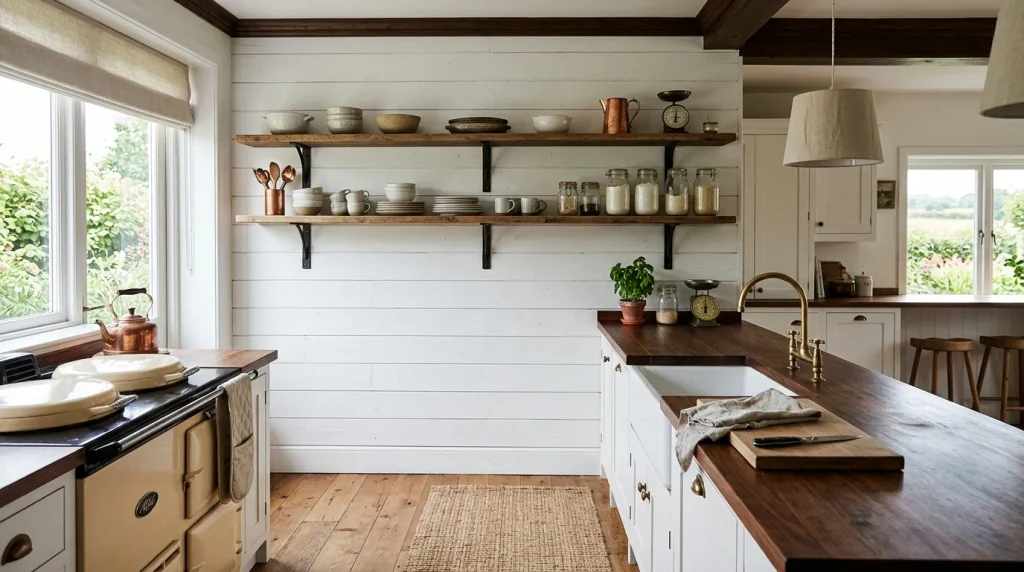
- Adds texture to plain drywall without heavy renovation
- Brightens the space when painted in white or cream
- Creates a classic farmhouse backdrop for shelving or artwork
- Budget-friendly compared to full wall remodels
- Works behind stoves, sinks, or as a standalone feature wall
Shiplap has become almost synonymous with farmhouse style, and there’s a reason it never seems to go out of favor. The horizontal grooves catch light in a way flat drywall simply can’t, adding subtle dimension to an otherwise plain wall. I’ve seen this work well as a budget stretch too, since peel-and-stick or thin panel versions cost far less than a full wall renovation. Painted white or soft cream, it brightens a kitchen instantly while still keeping that cozy, textured feel that moody farmhouse kitchen ideas tend to rely on for warmth.
Placement makes a real difference in how much impact shiplap has. Behind open shelving or a stove hood, it becomes a natural focal point without overwhelming the whole room. Some homeowners choose to shiplap an entire wall, while others use it just behind a sink or breakfast nook for a subtler touch. In my experience, pairing shiplap with darker cabinetry or black fixtures creates the best contrast, since the light wood grain stands out more clearly. It’s one of the simplest updates on this list, yet it consistently photographs as one of the most charming.
Also Read : 24 Cherry Red Room Ideas for a Bold Stylish Home
7. Wrought Iron Lighting
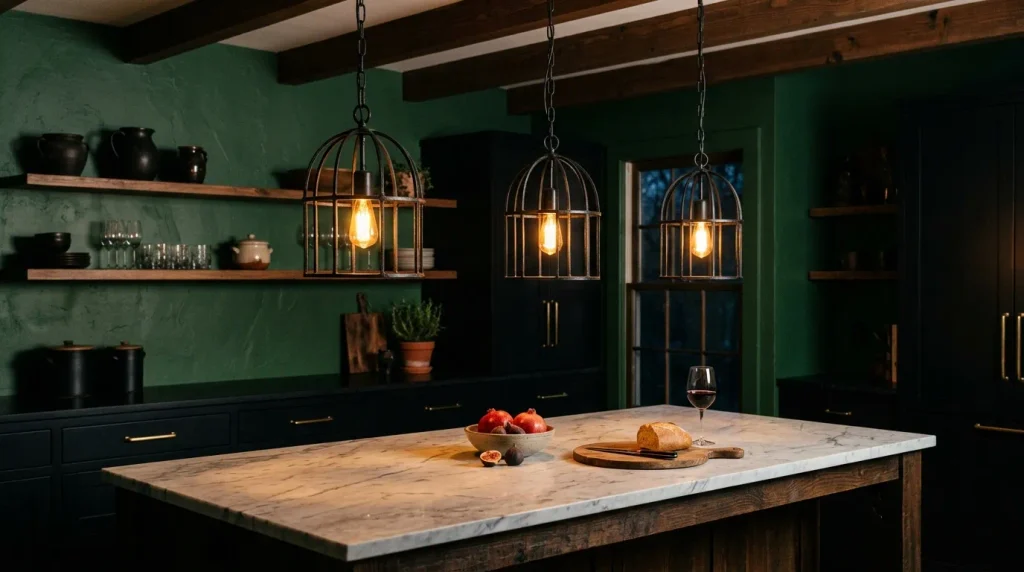
- Adds a vintage, handcrafted feel above islands or dining tables
- Warm bulb tones enhance the cozy, moody atmosphere
- Works as a striking focal point even in simple kitchens
- Pairs naturally with black hardware and dark cabinetry
- Available in budget-friendly versions that still look high-end
Lighting sets the entire mood of a kitchen, and wrought iron fixtures do it better than almost anything else on this list. Their slightly rough, hand-forged look adds an old-world charm that sleek modern lighting just can’t match. I’ve noticed that switching just the island pendants can change how the whole room feels in the evening, especially when paired with warm amber bulbs instead of cool white ones. It’s a smaller investment than most structural changes, yet it shows up in nearly every photo taken of the space, since lighting draws the eye first.
Placement and bulb choice matter as much as the fixture itself. Hanging pendants at the right height above an island, roughly 30 to 36 inches from the countertop, keeps the look proportional and functional. Warm-toned bulbs, ideally soft white or amber, enhance that moody, golden glow farmhouse kitchens are known for. That’s why many designers recommend layering this lighting with under-cabinet strips for practical brightness while cooking. Together, they create a space that feels both beautiful in photos and genuinely usable for everyday meal prep.
8. Terracotta Floor Tile
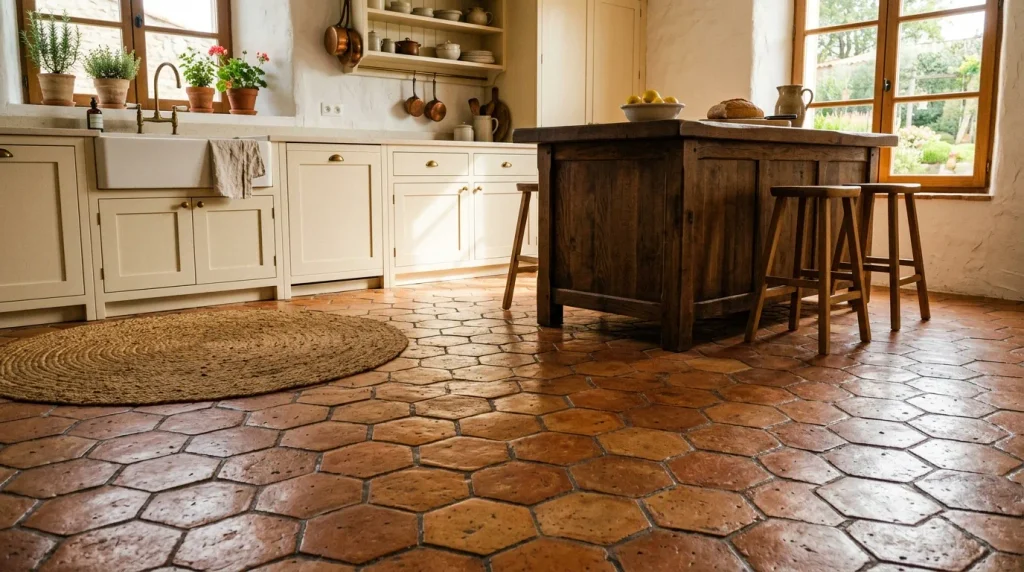
- Adds warmth underfoot that cool tile or wood can’t match
- Hides dirt and scuffs better than lighter flooring options
- Brings an earthy, sun-baked texture to the whole room
- Complements both white and dark cabinetry equally well
- Durable choice for high-traffic cooking areas
Terracotta tile brings an earthy warmth to a kitchen floor that few other materials can replicate. Its rich, sun-baked tones feel grounding underfoot, and the slight texture adds visual interest even in a simple, uncluttered layout. In my experience, homeowners hesitant about bold flooring find terracotta easier to commit to than bright color, since it reads as neutral while still adding personality. It works particularly well in kitchens with lots of natural light, where the warm undertones seem to glow throughout the day rather than looking flat or dull under artificial lighting alone.
Practically speaking, terracotta holds up well in busy kitchens where spills and foot traffic are constant. It hides small scuffs and stains better than glossy white tile, which is a real advantage for a room used daily. Hexagon or classic square shapes both work, though hexagon leans slightly more traditional-farmhouse. Pairing it with a woven jute rug near the sink softens the hard surface underfoot. I’ve seen this flooring choice tie together white, cream, and dark cabinetry alike, making it one of the more versatile materials on this entire list.
9. Deep Green Cabinets
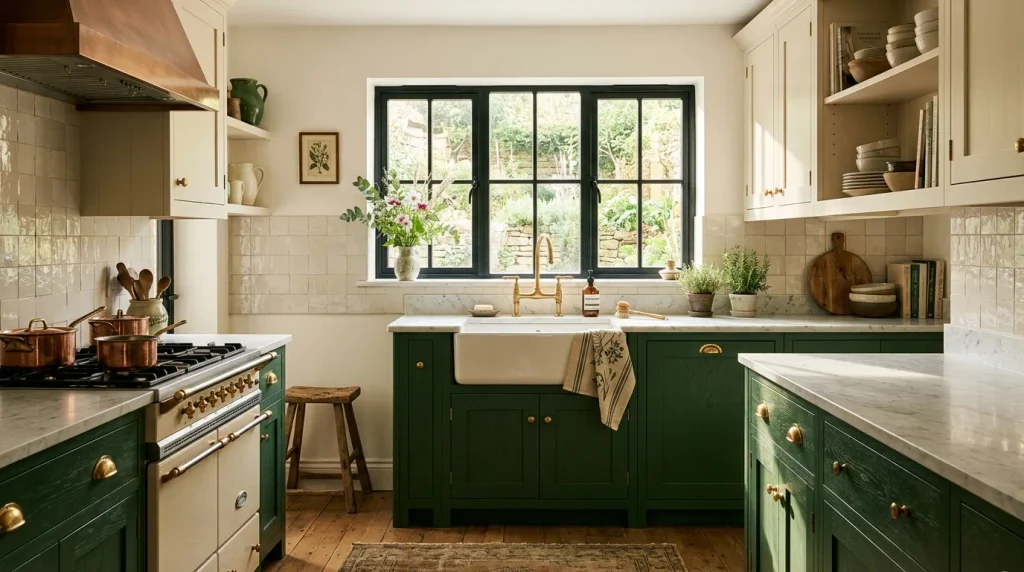
- Adds rich color without feeling overly bold or trendy
- Balances beautifully with brass, gold, or warm wood tones
- Feels fresh compared to the more common all-white kitchen
- Works well on lower cabinets paired with lighter uppers
- Brings a botanical, nature-inspired feel into the space
Deep green cabinetry offers a middle ground for anyone who wants color but isn’t ready to commit to something bold or unusual. Forest, sage, or hunter green tones feel closer to neutral than people expect, since they pull from nature and pair easily with wood, brass, and cream tones already common in farmhouse kitchens. I’ve noticed this color choice photographs beautifully in natural light, shifting subtly throughout the day from deep and moody in the morning to soft and warm by afternoon. It’s a confident update that still feels timeless rather than tied to a passing trend.
The easiest way to try this look is on lower cabinets only, keeping uppers in white or cream to balance the visual weight. This keeps the kitchen from feeling too dark or heavy, especially in smaller layouts. Brass or unlacquered hardware enhances the richness of the green, adding a warm metallic contrast that feels collected rather than matched from a showroom. That’s why many designers recommend testing a sample on the actual cabinet doors before committing, since green shades shift noticeably depending on the room’s lighting throughout the day.
10. Woven Pendant Baskets
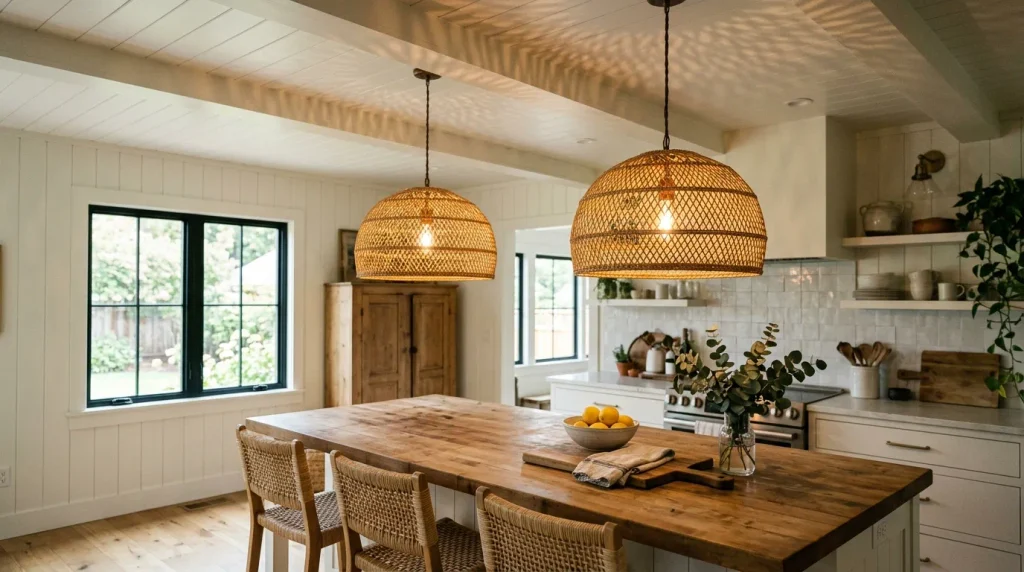
- Adds natural texture without competing with other design elements
- Softens the look of an otherwise heavy, rustic kitchen
- Casts warm, dappled shadows that feel cozy in the evening
- Lightweight visual alternative to metal or glass fixtures
- Blends farmhouse style with relaxed, bohemian touches
Woven pendant lights bring a softness to farmhouse kitchens that iron and metal fixtures don’t quite achieve on their own. The natural rattan or seagrass texture adds warmth while still feeling light, almost airy, above an island or dining nook. In my experience, this works especially well in kitchens that already lean heavily rustic, since the woven texture balances out darker wood tones or iron hardware elsewhere in the room. It’s a small styling choice, but one that consistently gets noticed for how much personality it adds to an otherwise simple ceiling space.
Beyond the visual appeal, woven pendants cast a genuinely lovely light pattern once the bulb is on. The gaps in the weave let warm light escape in small dappled patterns across the ceiling and walls, especially noticeable in the evening. Pairing two or three of these fixtures in a row above an island creates rhythm without needing matching metal finishes throughout the kitchen. I’ve seen this pairing work particularly well with butcher block countertops, since the natural materials echo each other without feeling like they were bought as a matched set.
11. Vintage Brass Hardware
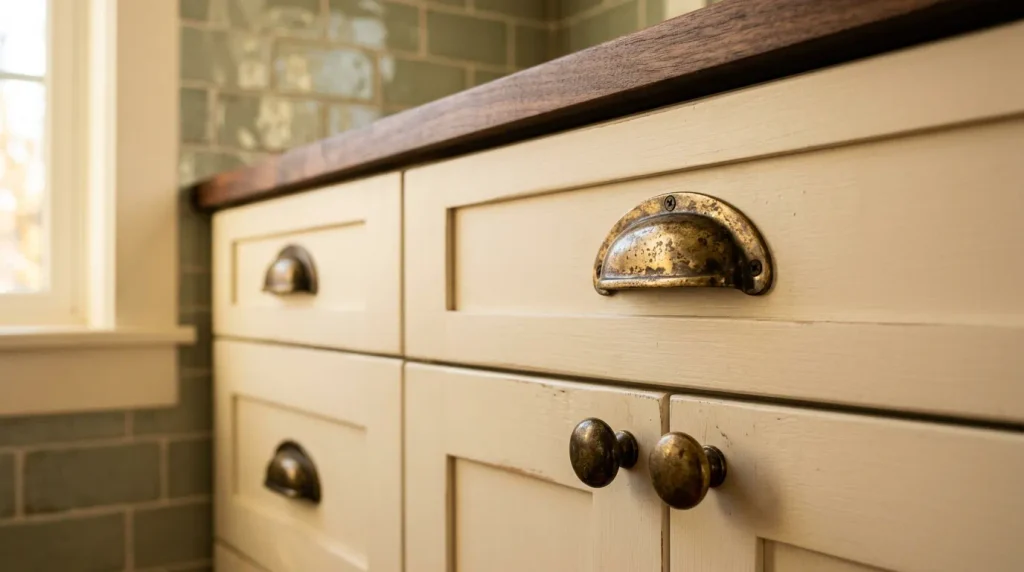
- Adds a warm metallic touch that feels collected, not matched
- Patina develops naturally, giving hardware character over time
- Complements both light and dark cabinet colors equally well
- Small detail that elevates the entire kitchen’s finish
- Easy weekend upgrade that doesn’t require professional installation
Vintage brass hardware carries a warmth that chrome or brushed nickel simply doesn’t replicate. Unlacquered brass especially develops a natural patina over time, meaning fingerprints and slight tarnishing actually add character instead of looking worn out. I’ve tried both lacquered and unlacquered versions, and the unlacquered option consistently ages into something that feels more authentic and lived-in, which fits the farmhouse aesthetic perfectly. It’s one of the most affordable updates on this entire list, since swapping knobs and pulls is usually a project that takes an afternoon rather than a full weekend.
Mixing hardware styles, rather than matching every piece exactly, tends to create a more collected look than a uniform showroom set. Cup pulls on drawers paired with round knobs on doors is a classic combination that feels intentional without looking overly planned. That’s why many designers recommend shopping estate sales or reclaimed hardware shops for pieces with genuine age already built in. Against both cream and deep green cabinetry, brass adds a warm glow that ties the whole kitchen’s finishes together into one cohesive, welcoming story.
12. Farmhouse Dining Nook
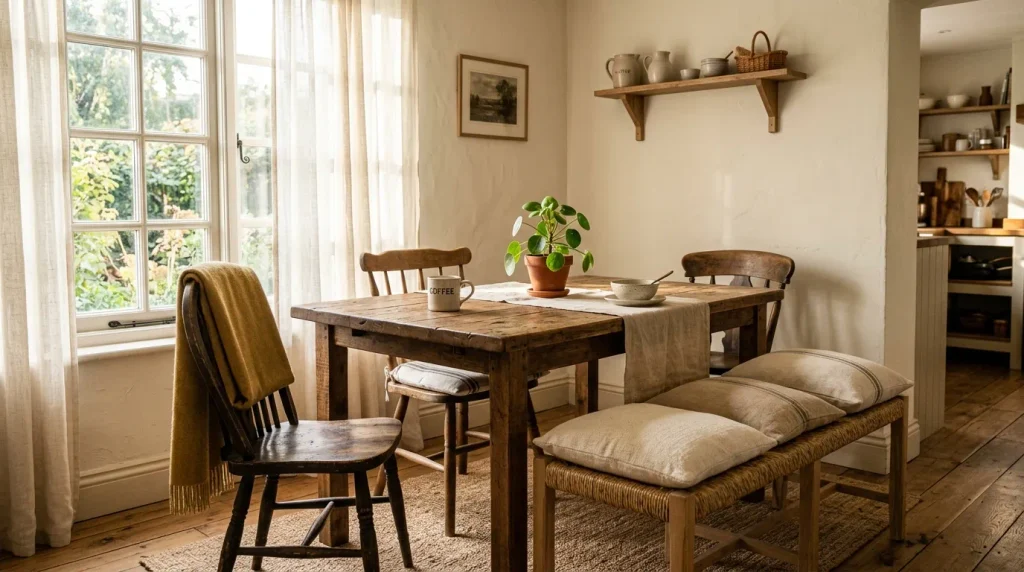
- Creates a casual spot for morning coffee or quick meals
- Mismatched chairs add charm without looking chaotic
- Makes use of awkward kitchen corners that often go to waste
- Encourages family gathering without needing a formal dining room
- Softens the kitchen with linen, wood, and greenery
A dining nook turns an unused corner into one of the most lived-in spots in the entire house. Rather than reserving meals for a separate dining room, a small farmhouse-style table tucked near a window invites everyday moments like morning coffee or homework at the counter. I’ve noticed that even tiny kitchens can fit a nook if a bench replaces bulky chairs on one side, saving valuable floor space. It’s a functional addition that also happens to be one of the coziest, most photographed corners homeowners share once it’s finished.
Mixing furniture styles here actually works in the nook’s favor, unlike more formal dining spaces. A reclaimed wood table paired with slightly mismatched chairs feels collected over time rather than bought as a matching set from one store. Adding a linen or woven cushion to a bench softens hard wood surfaces and makes the space feel more inviting for longer meals. That’s why many designers recommend layering in a small plant or vase of dried flowers on the table, since it adds life to the space without requiring any ongoing maintenance.
13. Antique Rug Layering
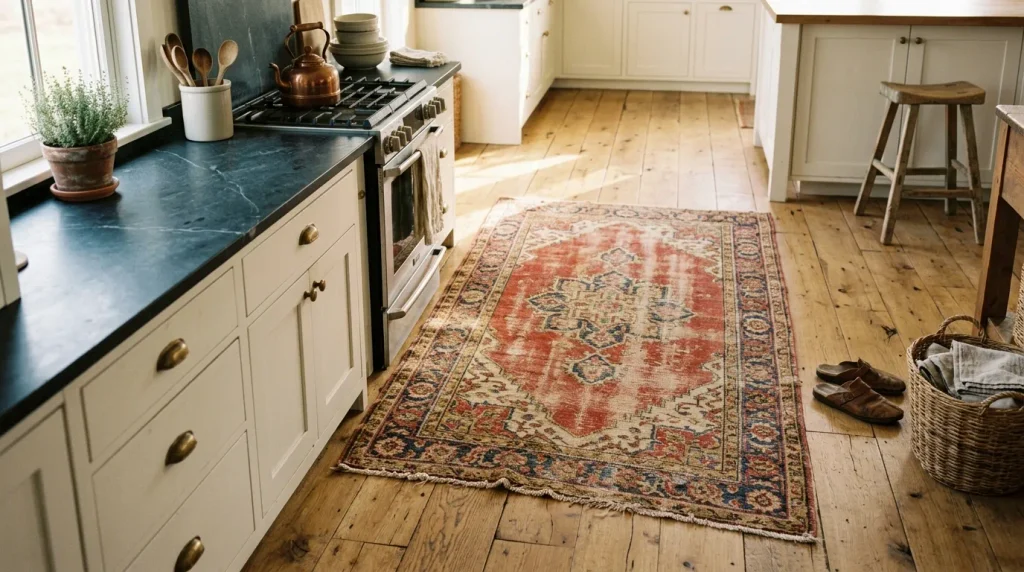
- Adds pattern and softness to hard kitchen flooring
- Muted, faded tones feel worn-in rather than brand new
- Defines a cooking or dining zone within an open layout
- Brings warmth underfoot in colder months
- Easy to swap out for seasonal refreshes
An antique or vintage-style rug does something floor tile alone can’t, it adds pattern, softness, and a sense of history to the kitchen. Faded reds, muted blues, or soft creams feel worn-in rather than freshly manufactured, which suits the farmhouse aesthetic far better than a crisp, new design. In my experience, laying a rug in front of the sink or stove is where it gets noticed most, since that’s where people naturally stand and look down while working. It’s a simple textile addition, yet it consistently softens what would otherwise be an all-hard-surface room.
Beyond looks, a rug adds real comfort underfoot during long cooking sessions, especially over tile or stone flooring that can feel cold in winter months. Choosing a slightly oversized rug, rather than a small mat, helps define a zone within an open kitchen layout without needing walls or furniture to separate the space. I’ve seen this trick used well in kitchens that flow directly into living areas, where the rug visually signals “this is the cooking zone” without any structural changes. It’s an easy, low-cost way to add texture instantly.
14. Copper Cookware Display
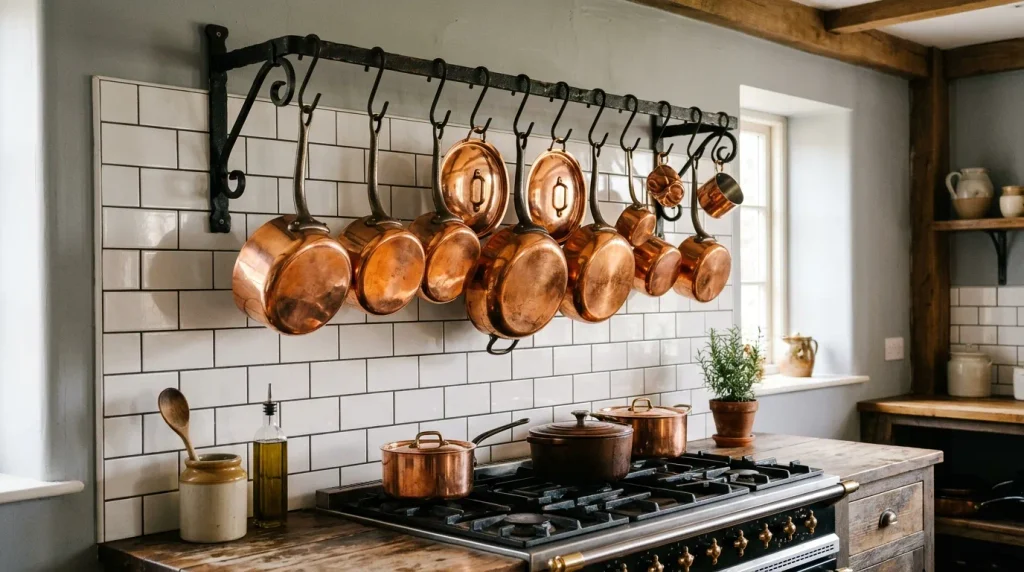
- Turns everyday cookware into functional wall decor
- Frees up cabinet space by keeping pots within reach
- Copper tones add warmth against white or gray backsplashes
- Creates a rustic, well-used kitchen feel instantly
- Practical for kitchens with limited storage space
Displaying copper cookware solves two problems at once: it frees up crowded cabinets and adds instant warmth to the walls. The reflective copper surface catches light beautifully, especially when hung near a window or under pendant lighting, giving the kitchen a glow that closed storage never could. I’ve tried this in smaller kitchens specifically, and it’s one of the best ways to add visual interest to blank wall space above a stove without spending money on artwork or additional decor pieces that don’t serve a daily function.
A simple wrought iron pot rack, mounted either on the ceiling or wall, keeps everything organized while looking intentional rather than cluttered. Hanging pieces by size, largest to smallest, creates a natural visual rhythm that’s pleasing to look at even when the kitchen is mid-use. I’ve noticed this display works best against a plain backsplash, like white subway tile, since a busy pattern behind the copper competes for attention. It’s both a storage solution and a decorative statement, making it one of the more practical ideas on this entire list.
15. Whitewashed Brick Backsplash
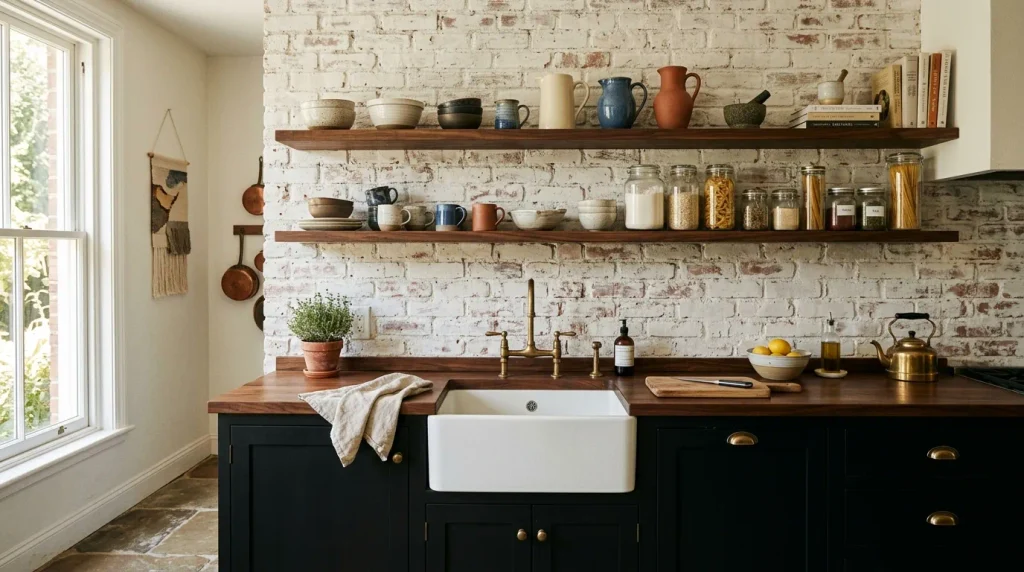
- Adds texture and history without a fully exposed brick look
- Softer alternative to raw red brick for lighter kitchens
- Hides imperfections better than a flat painted wall
- Pairs beautifully with dark cabinetry and black hardware
- Brings old-world character into newer kitchen builds
Whitewashed brick offers the charm of exposed brick without the heavier, more industrial feel raw red brick can bring to a kitchen. The wash technique lets faint red and orange undertones peek through the white paint, creating texture and depth that a flat wall simply can’t achieve. I’ve seen this used well in newer builds especially, where homeowners want that lived-in, historic farmhouse feel without an actual old house. It softens the overall look while still adding enough visual interest to serve as a proper backdrop for open shelving or hanging cookware.
The technique itself is fairly forgiving, which makes it a popular DIY weekend project for anyone comfortable with a paintbrush. Diluting white paint and applying it unevenly, then wiping some away, creates that authentic aged look rather than a solid coat. Pairing whitewashed brick with dark cabinetry creates strong contrast that photographs particularly well in natural light. That’s why many designers recommend keeping the rest of the kitchen simple when using this backsplash, letting the textured wall be the standout feature rather than competing with too many other bold elements.
16. Reclaimed Wood Island
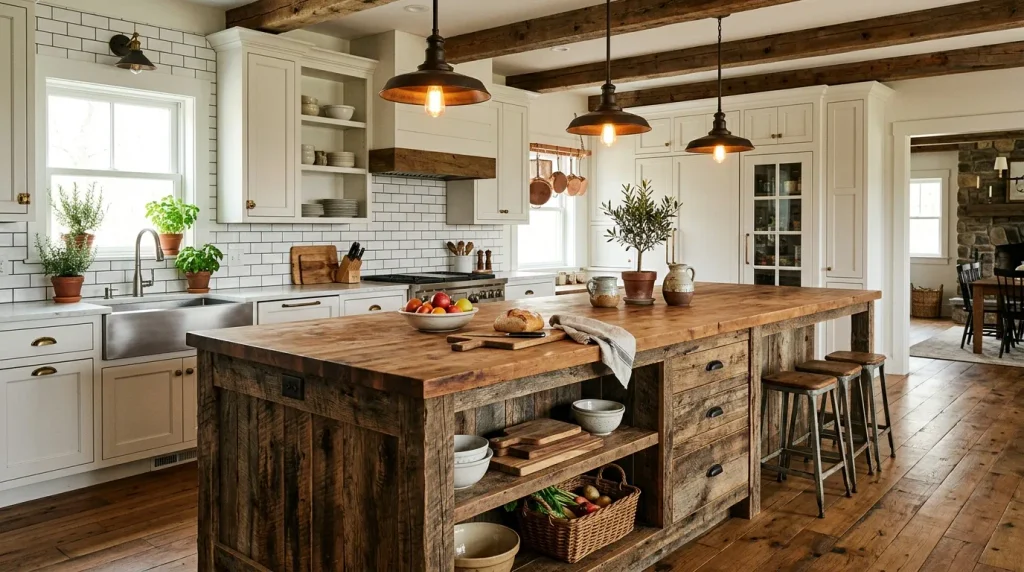
- Adds a genuine farmhouse centerpiece with real history
- Weathered texture contrasts beautifully with clean white cabinetry
- Provides extra prep space and seating in one piece
- Each board’s unique grain makes the island one-of-a-kind
- Sturdy, functional focal point for gathering and cooking
A reclaimed wood island brings genuine history into a kitchen in a way that new, factory-finished wood can’t fake. Real barnwood carries visible knots, nail holes, and weathering that tells a story just by looking at it, which is exactly the kind of authentic detail that separates a truly moody farmhouse kitchen from one that’s simply painted to look the part. In my experience, this piece often becomes the room’s centerpiece the moment it’s installed, drawing attention before anyone even notices the cabinets or backsplash surrounding it.
Pairing a reclaimed wood island with simpler white or cream perimeter cabinetry keeps the space from feeling too busy or heavy. The contrast lets the island’s texture and character stand out as the clear focal point rather than competing with matching finishes elsewhere. Adding a butcher block or soapstone top gives it practical function for food prep, while stools tucked underneath turn it into a casual gathering spot. I’ve noticed guests naturally gravitate toward these islands during parties, since the raw material feels warm and approachable rather than formal.
17. Cast Iron Cookware Wall
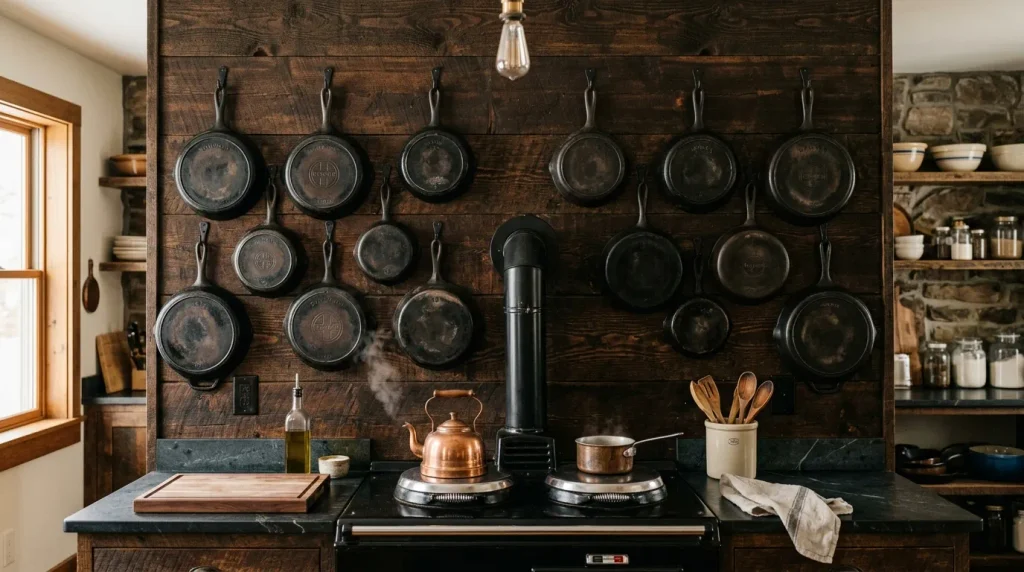
- Turns functional cookware into a rustic wall feature
- Dark iron tones add depth against wood or brick walls
- Keeps frequently used skillets within easy cooking reach
- Adds a collected, generations-old farmhouse charm
- Requires no extra floor or counter space
A wall of cast iron skillets brings a rugged, utilitarian charm that feels distinctly farmhouse in a way few other displays can match. Unlike shiny copper, the matte black seasoned surface of cast iron absorbs light rather than reflecting it, creating a moodier, more grounded visual against a wood or brick wall. I’ve tried this arrangement in kitchens with limited storage, and it works well precisely because it turns a practical necessity, storing pans, into a decorative feature that also happens to save valuable cabinet space nearby the stove.
Arranging the skillets by size, largest at the bottom or center, creates a balanced visual weight that feels intentional rather than randomly hung. Mounting them on a stained wood panel rather than directly on drywall adds another textural layer, especially when the wall behind the stove already carries some rustic detailing. I’ve seen this display work particularly well in kitchens leaning toward a more rugged, cabin-inspired farmhouse look, since the iron’s dark, matte finish pairs naturally with dark wood tones, black hardware, and other moody, warm-toned design elements throughout the space.
18. Vintage Enamel Signage

- Adds personality and a sense of history to blank wall space
- Chipped, weathered finishes feel authentic rather than staged
- Easy to swap out seasonally or when redecorating
- Works leaning on a shelf or hung as wall art
- Injects character without a big financial investment
Vintage enamel signage brings a sense of story into a kitchen that new decor often lacks. The chipped paint and rusted edges look collected over decades, even if the piece was found last weekend at a flea market or antique shop. I’ve noticed that leaning a sign against the backsplash, rather than hanging it perfectly straight, feels more natural and less staged, which suits the relaxed farmhouse aesthetic. It’s an inexpensive way to fill empty wall space while adding genuine character that mass-produced modern decor simply can’t replicate no matter how well it’s designed.
Choosing signage with muted, faded colors, rather than bright new reproductions, keeps the look authentic rather than costume-like. Old advertisements, feed store signs, or simple typography pieces all work well within a farmhouse setting. That’s why many designers recommend hunting for genuinely aged pieces instead of buying pre-distressed versions, since real wear patterns are nearly impossible to fake convincingly. Layering a sign near open shelving, jars, or dried florals creates a small vignette that feels collected over time rather than purchased all at once from a single store.
19. Soft Sage Green Walls
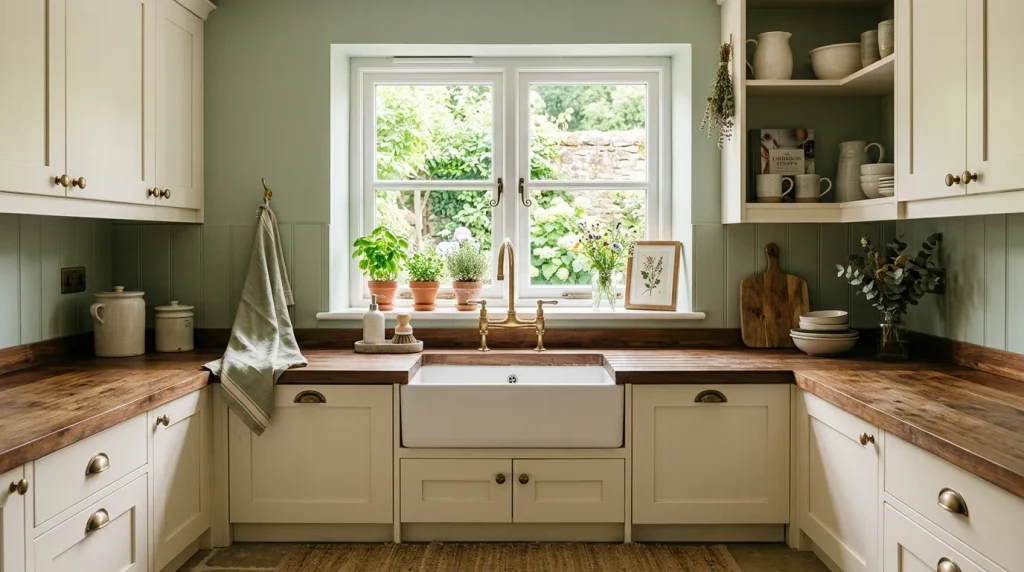
- Adds gentle color without overwhelming the room
- Creates a calming, nature-inspired backdrop for cooking
- Pairs beautifully with cream, white, or dark wood cabinetry
- Softer alternative to bold accent walls
- Works well in both large and small kitchens
Soft sage green walls bring a quiet, calming energy into a kitchen without the commitment of a bold, saturated color. The muted, grayed-out green reads as almost neutral in certain lighting, making it an easy way to add color for anyone nervous about painting an entire room. I’ve noticed this shade works particularly well in kitchens with lots of natural light, since it shifts gently throughout the day, appearing cooler in the morning and warmer by late afternoon, which keeps the space feeling alive rather than static or flat.
Pairing sage walls with cream cabinetry keeps the overall palette soft and cohesive, while brass or wood accents add just enough warmth to prevent the room from feeling cold. In my experience, this color combination photographs beautifully because it avoids harsh contrast, letting textures like butcher block countertops or woven baskets stand out instead. It’s a versatile backdrop that works whether the rest of the kitchen leans traditional farmhouse or slightly more modern, making it one of the safer color choices for anyone still finding their overall design direction.
20. Woven Basket Storage
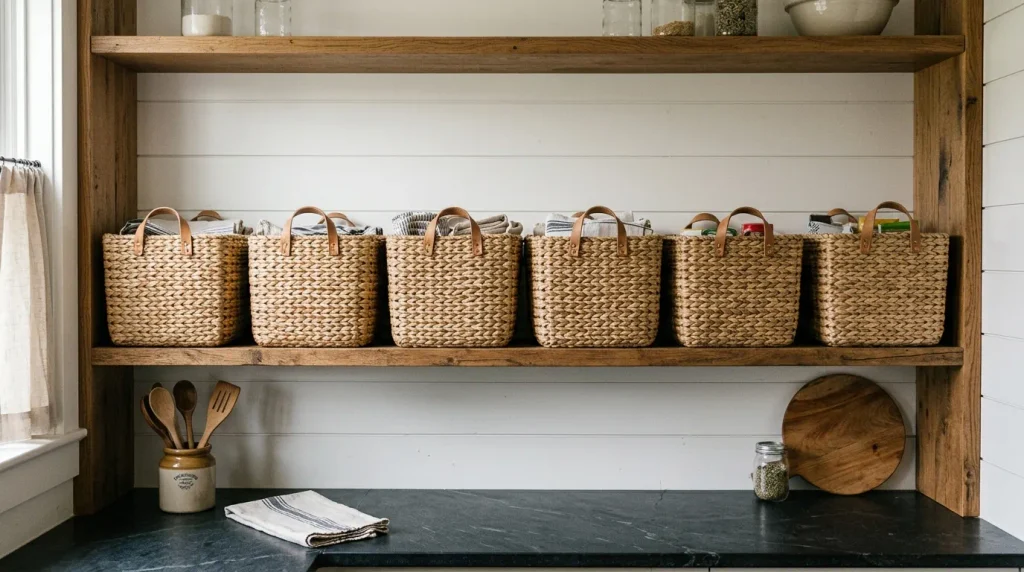
- Hides kitchen clutter while keeping a natural, textured look
- Adds warmth to open shelving without extra cost
- Practical for storing linens, produce, or pantry items
- Softens hard lines from wood or metal shelving
- Easy to find secondhand or at budget-friendly retailers
Woven baskets solve one of the biggest challenges of open shelving: keeping things looking tidy without hiding everything behind closed cabinet doors. Slipping smaller items, like dish towels or dry pantry goods, into seagrass or rattan baskets keeps the shelf looking curated rather than cluttered. I’ve tried this in kitchens where open shelving initially felt overwhelming, and baskets consistently solved the problem within minutes, giving cluttered surfaces an instant sense of order while still keeping that relaxed, natural farmhouse texture intact throughout the entire display.
Mixing basket sizes across a shelf, rather than lining up identical ones, creates a more organic, collected look that feels less like a store display. I’ve seen this work especially well against white shiplap or painted brick backgrounds, where the woven texture provides warm contrast against a cooler wall tone. Labeling baskets isn’t necessary for the look to work, but it does add function for households sharing kitchen space. It’s an inexpensive styling trick that instantly makes open shelving feel more intentional and considerably easier to keep looking neat day to day.
21. Dried Floral Arrangements
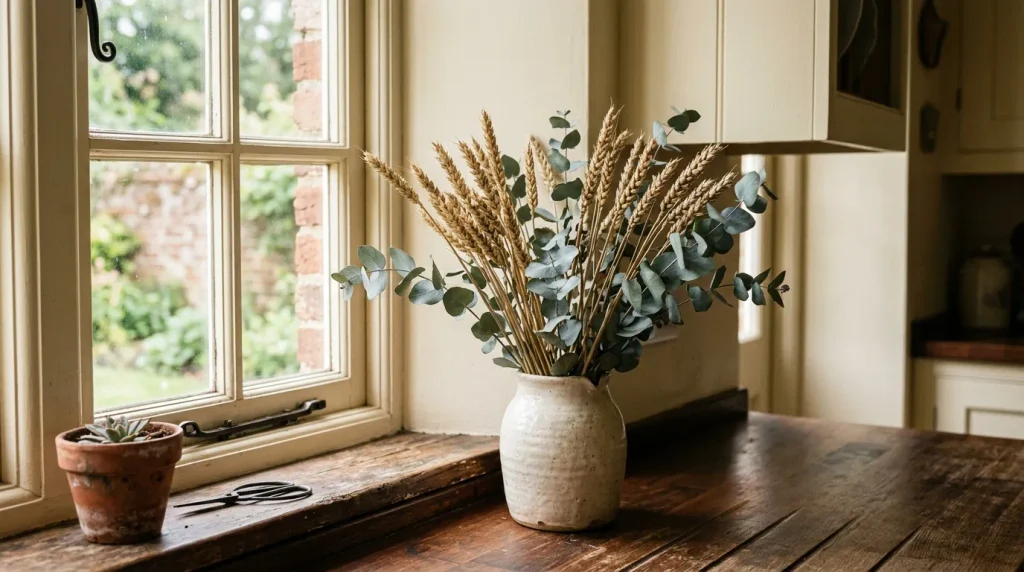
- Adds natural texture that never needs watering or replacing
- Brings warmth and softness to countertops or windowsills
- Complements neutral color palettes without adding bold color
- Long-lasting alternative to fresh flowers
- Simple styling detail that photographs beautifully
Dried florals bring a soft, natural touch to a kitchen without the upkeep fresh flowers require, which matters in a room used daily for cooking and cleanup. Wheat stalks, eucalyptus, or pampas grass tucked into a simple ceramic vase add texture without introducing bold color, keeping the overall palette calm and cohesive. I’ve noticed these arrangements work especially well on windowsills or open shelves, where natural light catches the dried stems and creates soft shadows throughout the day, adding a small but noticeable layer of warmth to otherwise plain surfaces nearby.
Unlike fresh bouquets, dried arrangements last for months without wilting, making them a practical choice for a busy kitchen where flowers often get forgotten. In my experience, choosing muted, neutral-toned dried florals rather than brightly dyed versions keeps the look aligned with a farmhouse aesthetic instead of feeling artificial or overly styled. Pairing them with a simple stoneware or ceramic vase, rather than glass, adds another textural layer. It’s a small, low-maintenance detail that consistently shows up in farmhouse kitchen photos for good reason.
22. Matte Black Range
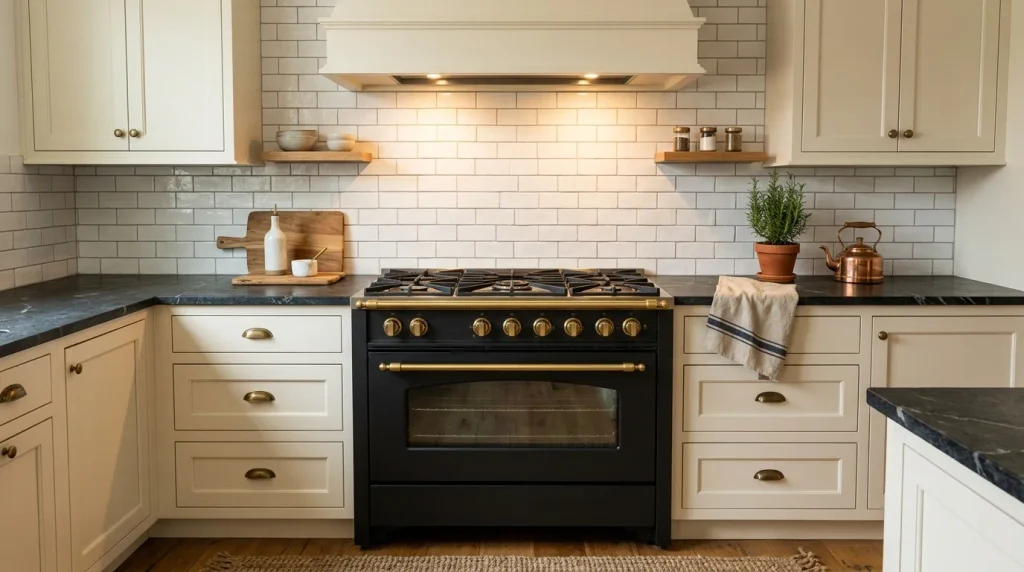
- Creates a bold focal point without using bright color
- Matte finish hides fingerprints better than glossy stainless steel
- Pairs naturally with brass, black, or dark wood accents
- Elevates the whole kitchen’s look even on a mid-range budget
- Works as the anchor piece around which other details are chosen
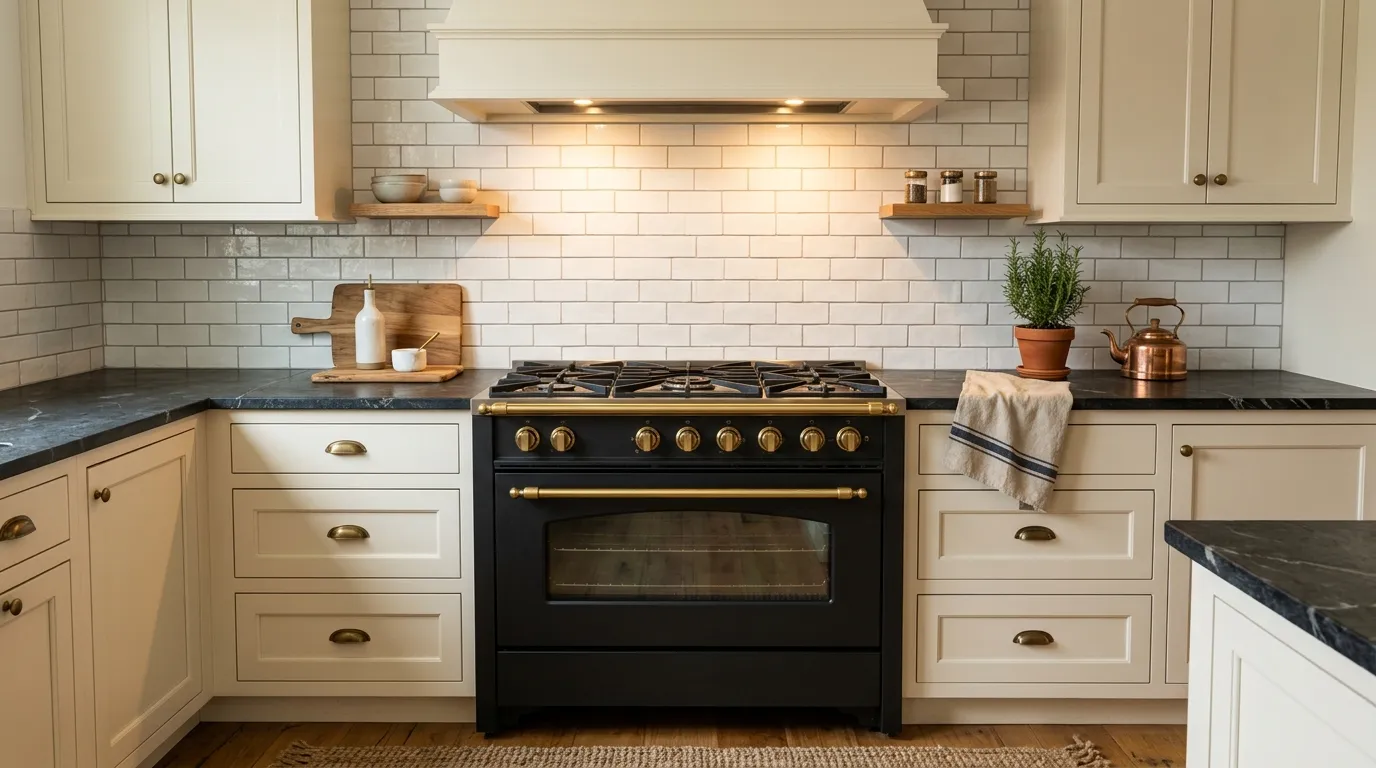
A matte black range acts as a natural focal point the moment someone walks into the kitchen, without relying on bright color or bold pattern to grab attention. The deep, non-reflective finish feels more substantial than glossy stainless steel, and it hides fingerprints and smudges far better during daily cooking use. I’ve seen homeowners build their entire kitchen color scheme around this one appliance, choosing cabinetry and hardware finishes afterward to complement the range rather than the other way around, which often results in a more cohesive final look.
Brass or gold control knobs against the matte black surface add a warm metallic detail that ties the appliance into the rest of the room’s hardware and lighting choices. That’s why many designers recommend selecting the range early in a kitchen renovation, since its bold presence tends to influence nearly every other material and color decision that follows. Paired with a simple white subway tile backsplash, the range stands out clearly as the room’s anchor piece, giving the entire moody farmhouse kitchen a clear focal point without needing additional decor to compete for attention.
23. Warm Copper Accents
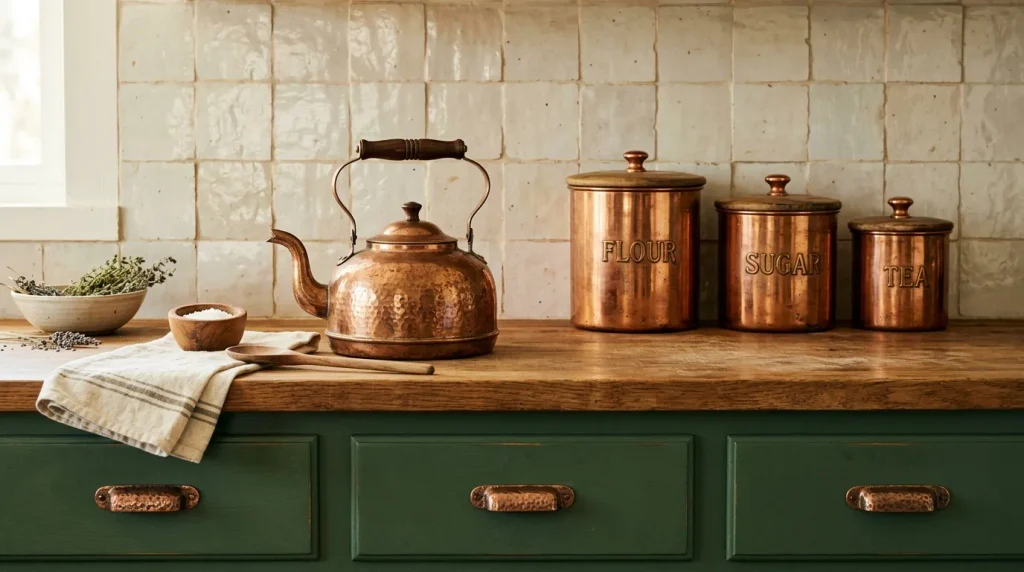
- Adds warm metallic tone without a major renovation
- Small accents are easy to swap or update over time
- Complements both light and dark cabinetry equally well
- Brings a collected, curated feel to countertops and shelves
- Budget-friendly way to finish off the overall design
Copper accents work as the finishing touch that pulls a farmhouse kitchen together without requiring any structural changes. A copper kettle on the stove, a few canisters on the counter, or copper drawer pulls scattered throughout the room all add warmth in small, manageable doses. I’ve noticed that even a few pieces make a noticeable difference, especially in kitchens with darker cabinetry, since the copper catches available light and adds a soft glow against deep green, black, or navy surfaces that might otherwise feel a bit flat or heavy on their own.
Because these pieces are small and relatively inexpensive, they’re easy to introduce gradually rather than all at once during a full renovation. In my experience, starting with one or two statement pieces, like a kettle or a set of canisters, gives the kitchen a finished look without overwhelming the space with too much shine. Mixing copper with brass or black hardware elsewhere in the room keeps the metallic tones feeling intentional rather than mismatched. It’s a simple, affordable way to add the final layer of warmth to a moody farmhouse kitchen.
Conclusion
A truly cozy kitchen doesn’t happen by accident, it’s built through small, intentional choices that add warmth and character over time. From dark cabinetry to woven baskets and copper accents, these moody farmhouse kitchen ideas prove that rustic charm can fit any home, big or small. I’ve seen how just one or two changes, like swapping hardware or adding warm lighting, can completely shift how a kitchen feels day to day.
Save this post to Pinterest so you can revisit it whenever you’re ready to start. Try one idea this weekend, and don’t be afraid to mix a few together. If you know someone dreaming of a cozier kitchen, share this with them too, they’ll thank you for it.