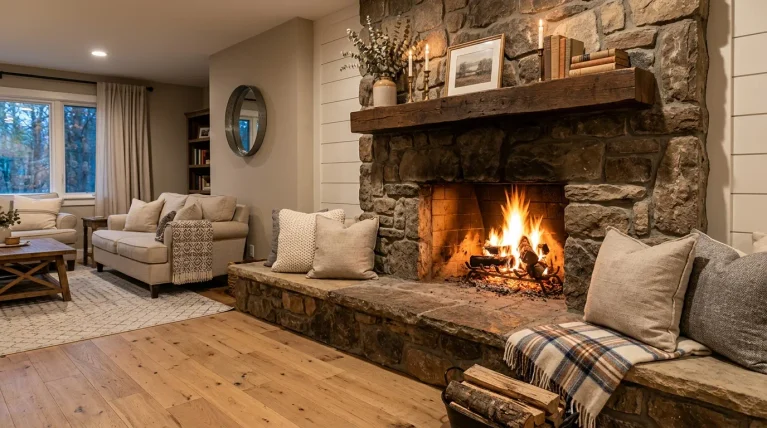
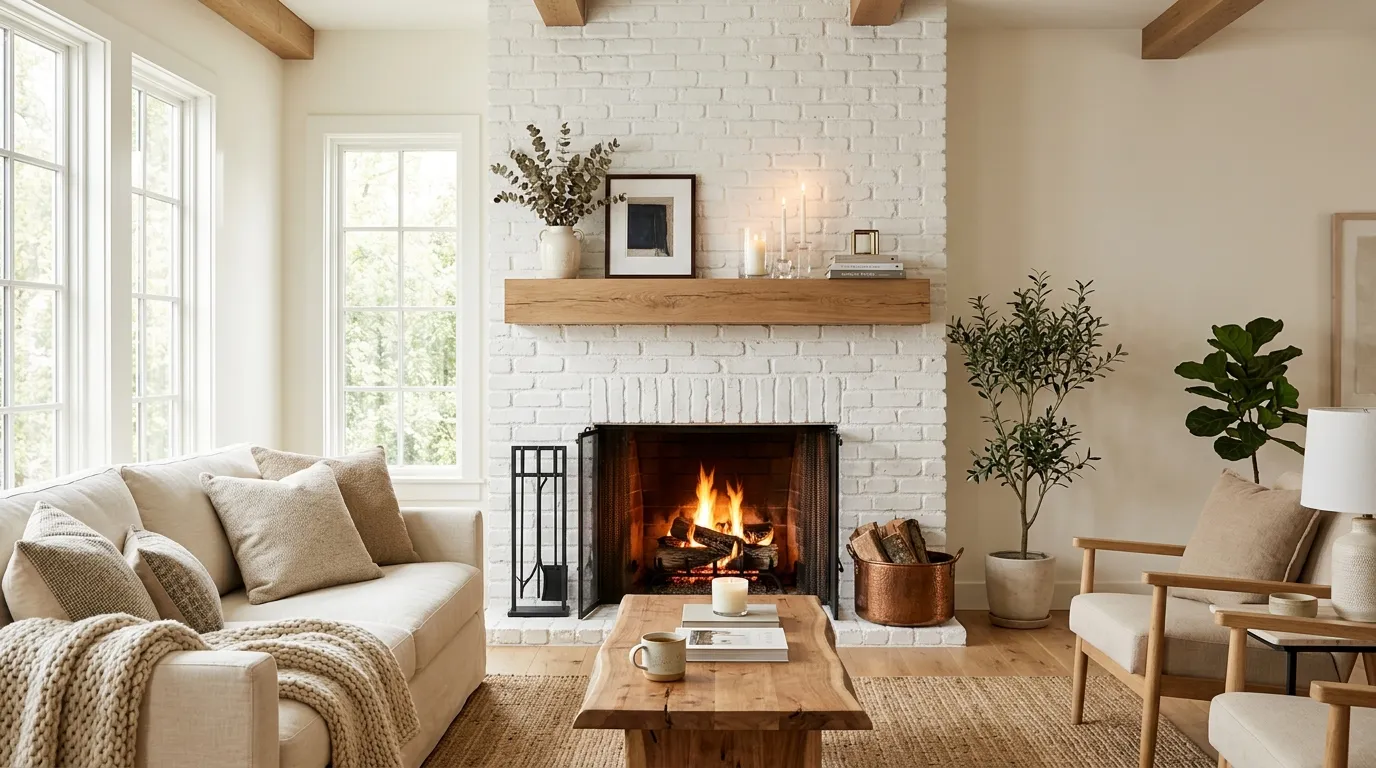
A beautiful fireplace can change the entire feeling of a room.
Add bright brick, warm wood, and cozy textures, and suddenly the space feels lighter and more inviting.
A white brick fireplace is a versatile focal point that can work with farmhouse, cottage, coastal, Scandinavian, rustic, and modern interiors. This collection of 24 ideas is designed to help you find a style that fits your home, whether you want a simple refresh or a more dramatic fireplace makeover. You’ll discover ways to use mantels, artwork, natural materials, built-ins, lighting, and comfortable textures to make the hearth feel intentional. In my experience, even small changes around a fireplace can make a living room feel noticeably brighter, warmer, and more finished without requiring a complete renovation.
1. Classic White Brick
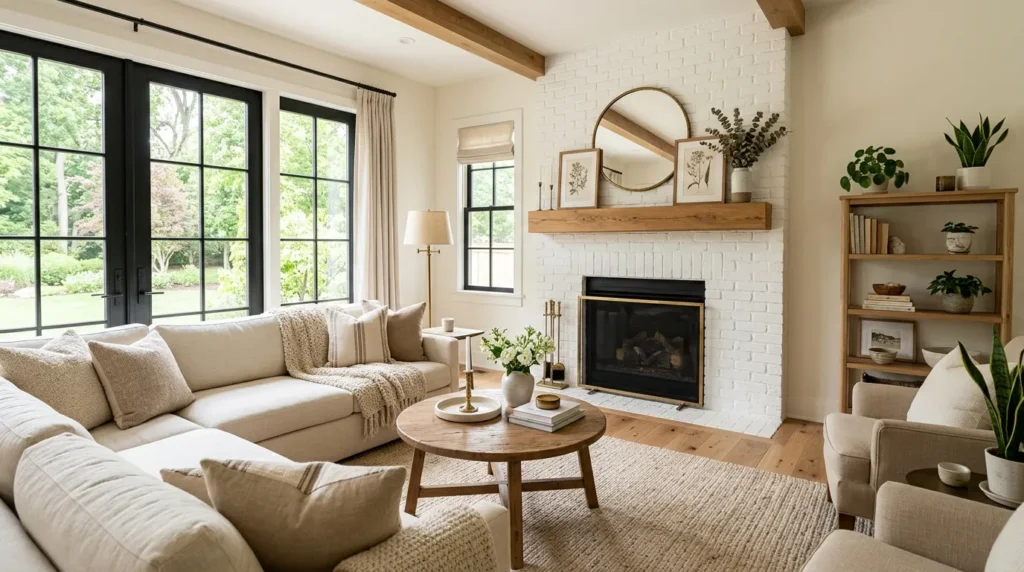
- A pale brick finish instantly brightens the fireplace wall.
- Natural texture adds character without needing extra decoration.
- A simple wood mantel introduces warmth and contrast.
- Neutral furniture keeps the fireplace as the main focal point.
A white brick surround can instantly make a fireplace feel brighter, cleaner, and more inviting. The textured masonry adds character that a flat painted wall simply cannot provide, while the pale finish reflects natural light around the room. This works especially well in living rooms that feel dark or visually heavy because the fireplace becomes a fresh focal point. Pair it with a simple wood mantel, neutral seating, and warm textiles for balance. In my experience, keeping the surrounding palette restrained helps the brick texture stand out without making the space feel overly decorated or busy.
The finish matters just as much as the brick itself when creating this look. Choose a soft warm white if the room has beige, cream, or natural wood elements, or a cleaner white when the space leans modern. Leave some texture visible so the masonry still feels authentic rather than completely covered. A chunky mantel can add warmth, while black, brass, or natural wood accents create useful contrast. Add a woven rug and comfortable upholstery nearby to soften the harder surface. The result is a fireplace that feels architectural, bright, and genuinely connected to everyday living.
2. Whitewashed Brick
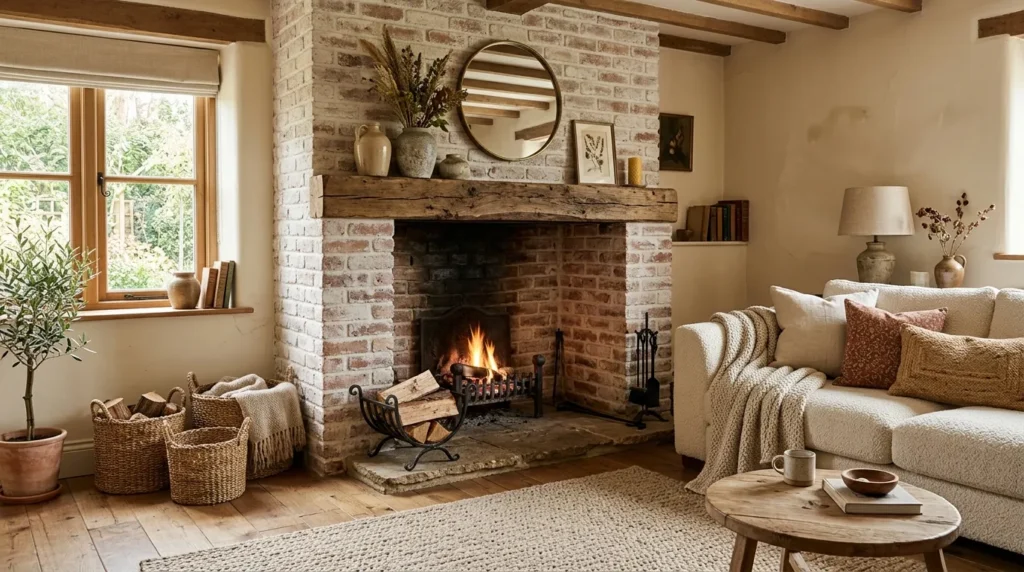
- Whitewashing keeps the original brick character visible.
- Uneven coverage creates a relaxed, lived-in appearance.
- Warm wood helps balance the lighter masonry.
- Neutral accessories keep the finish looking effortless.
Whitewashing gives a fireplace a lighter appearance while preserving the irregular texture that makes brick so appealing. Instead of completely covering every variation, the finish allows subtle reds, grays, and earthy undertones to peek through. That creates a relaxed, collected look that works beautifully with cottage, farmhouse, rustic, and transitional interiors. The technique can also make an older fireplace feel fresher without erasing its original character. Pair the masonry with a reclaimed wood mantel, linen seating, and woven accessories for warmth. The contrast between imperfect brick and soft furnishings makes the room feel comfortable rather than overly polished.
A whitewashed finish is particularly useful when you want brightness without the crisp appearance of fully painted masonry. Before applying anything, test the chosen mixture on a small hidden section because existing brick can absorb color unevenly. In my experience, that variation often becomes part of the charm, especially in older homes. Keep nearby decor simple and let the fireplace provide the texture. A vintage mirror, ceramic vase, or small stack of books can add personality without competing with the surface. Finish with warm lighting to emphasize the brick’s subtle tonal changes after sunset.
3. Modern Minimalist Mantel
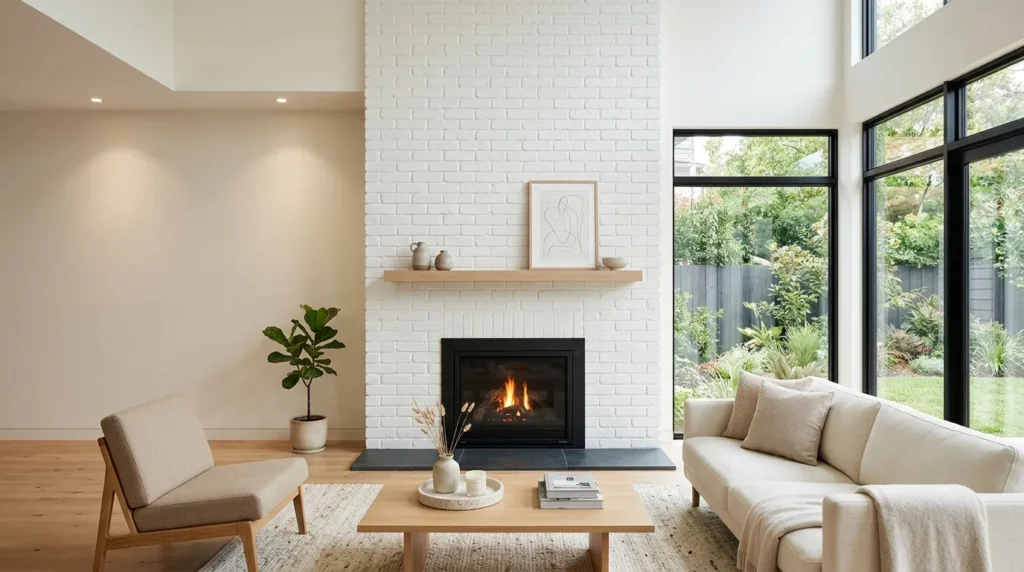
- A streamlined mantel keeps the fireplace looking contemporary.
- White masonry creates a clean architectural backdrop.
- Minimal decor prevents the room from feeling cluttered.
- Pale wood adds warmth without overpowering the design.
A minimalist mantel can make a textured fireplace feel surprisingly sleek and contemporary. The key is allowing the brick to provide visual interest while keeping everything placed above and around it simple. A slim wood shelf, one oversized ceramic vessel, or a single piece of artwork can be enough. Pair the fireplace with streamlined furniture, pale flooring, and soft neutral upholstery so the room feels open rather than crowded. This style works especially well when you want a bright focal point without turning the fireplace into a heavily decorated feature. The result feels intentional, calm, and easy to maintain.
Proportion makes the minimalist approach work, especially when the fireplace wall is large. Choose a mantel that feels substantial enough to relate to the surrounding architecture without becoming visually bulky. Keep decorative objects low in number and vary their heights slightly for balance. A black firebox or simple metal insert can introduce contrast against the lighter brick while maintaining the clean aesthetic. I’ve noticed that warm wood is particularly effective here because it prevents an all-white palette from feeling sterile. Add soft ambient lighting and one textured rug to bring comfort into the streamlined arrangement.
4. Farmhouse Wood Mantel
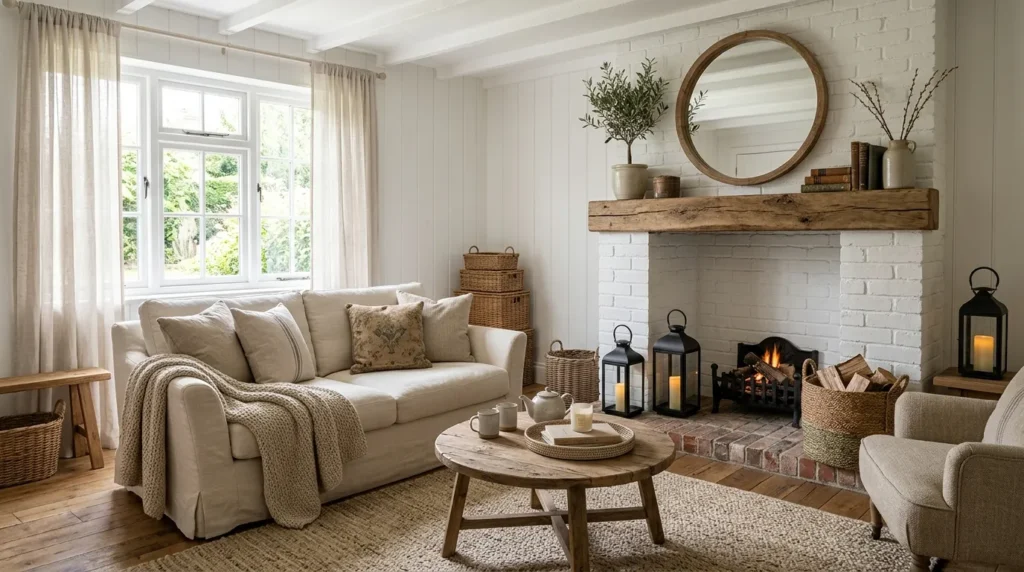
- Reclaimed wood adds warmth against pale masonry.
- A chunky mantel creates a strong visual anchor.
- Neutral furnishings keep the farmhouse look fresh.
- Woven accents add softness and natural texture.
- Black hardware provides subtle contrast.
A chunky wood mantel can transform a simple brick fireplace into a warm farmhouse focal point. The natural grain introduces contrast against the pale masonry, while the substantial shape gives the fireplace a grounded, architectural presence. Reclaimed or distressed wood works particularly well when you want character, but smooth oak can create a cleaner modern farmhouse look. Pair the mantel with cream upholstery, woven baskets, and simple ceramics to keep the room relaxed. This combination feels welcoming without becoming overly rustic, making it easy to blend with furniture you already own.
Choose the mantel finish according to the other wood tones already present in your room. If the flooring is warm oak, a similar or slightly darker mantel can create continuity without looking too matched. Keep the styling above it relatively simple, using one large mirror, artwork, or a few neutral objects rather than filling every inch. I’ve noticed that farmhouse fireplaces look most convincing when natural materials do the decorating work. Add a textured rug, linen curtains, and warm lighting to soften the harder brick surface and make the entire seating area feel more comfortable.
5. Black Firebox Contrast
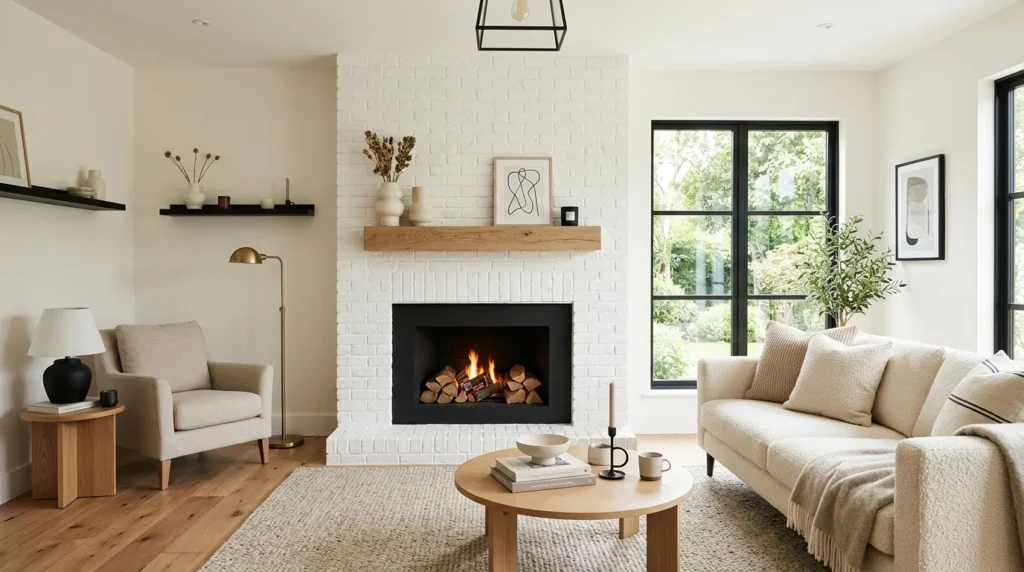
- A black firebox creates striking contrast against pale brick.
- Dark metal details give the fireplace a defined edge.
- Light furniture keeps the room feeling balanced.
- Minimal mantel decor prevents competing focal points.
- Warm wood tones soften the black-and-white combination.
A black firebox can give a white brick fireplace a crisp focal point without making the entire room feel dark. The strong contrast clearly defines the opening and creates a clean architectural center for the living space. This works especially well in modern, transitional, farmhouse, and Scandinavian-inspired interiors. Keep the surrounding furniture light, using cream, beige, or soft gray upholstery to maintain brightness. Natural wood can bridge the contrast beautifully, adding warmth between the pale masonry and dark metal. The result is graphic enough to feel modern while remaining comfortable for everyday living.
The firebox does not need to be the only black element in the room. Repeat the darker finish subtly through a floor lamp, picture frame, coffee table legs, or curtain hardware to make the contrast feel intentional. Avoid adding too many dark accessories because the fireplace already provides a strong visual anchor. In my experience, one or two repeated accents are usually enough. Add warm lighting around the seating area to soften the black details after sunset, while a textured neutral rug can connect the entire arrangement and make the space feel layered rather than stark.
Also Read : 21 Sage Green Bedroom Ideas for a Calm Relaxing Retreat
6. Arched Fireplace Design
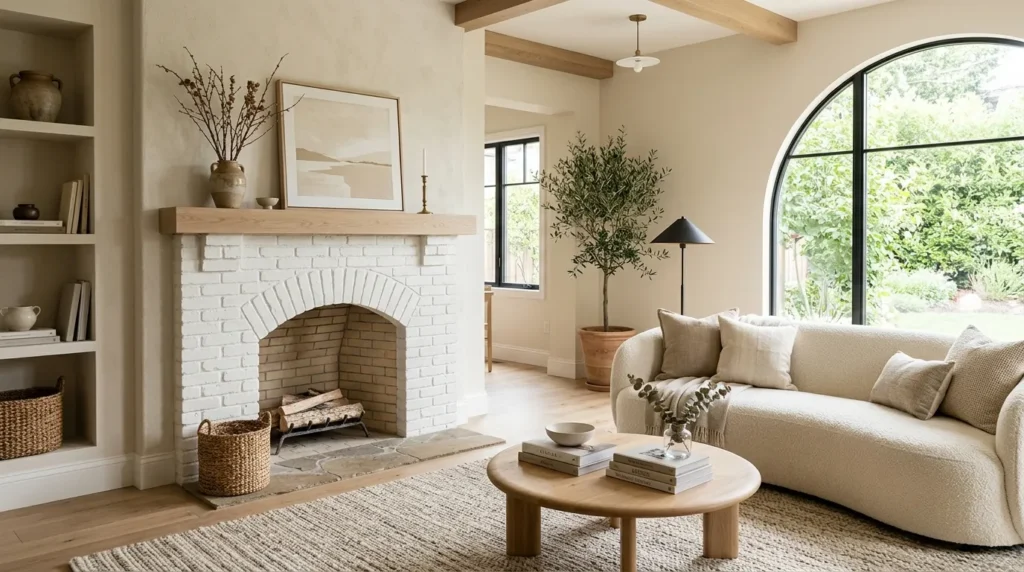
- An arched opening introduces softer architectural lines.
- White masonry emphasizes the unusual shape.
- Rounded furniture can echo the fireplace silhouette.
- Simple decor keeps the architectural detail visible.
- Warm wood prevents the space from feeling too clinical.
An arched fireplace brings an architectural softness that can make a room feel distinctive without relying on bold decoration. The curved opening naturally draws attention, while a pale brick finish keeps the feature bright and approachable. This shape works beautifully in Mediterranean, cottage, traditional, and modern organic interiors. Echo the curve with a rounded coffee table, arched mirror, or softly shaped seating to create visual continuity. Keep the surrounding colors calm so the opening remains the star. The result is a fireplace wall that feels thoughtfully designed rather than simply functional.
When working with an unusual fireplace shape, proportion is especially important. Avoid placing oversized accessories directly around the opening because they can hide the detail that makes it special. A simple mantel or floating shelf may be enough, depending on the architecture. I’ve seen curved forms work particularly well with natural materials because wood, linen, stone, and woven textures soften the masonry. Use warm white lighting in the evening to highlight the arch without creating harsh shadows. A few carefully chosen accessories can then complete the room while preserving its clean architectural character.
7. Built-In Fireplace Wall
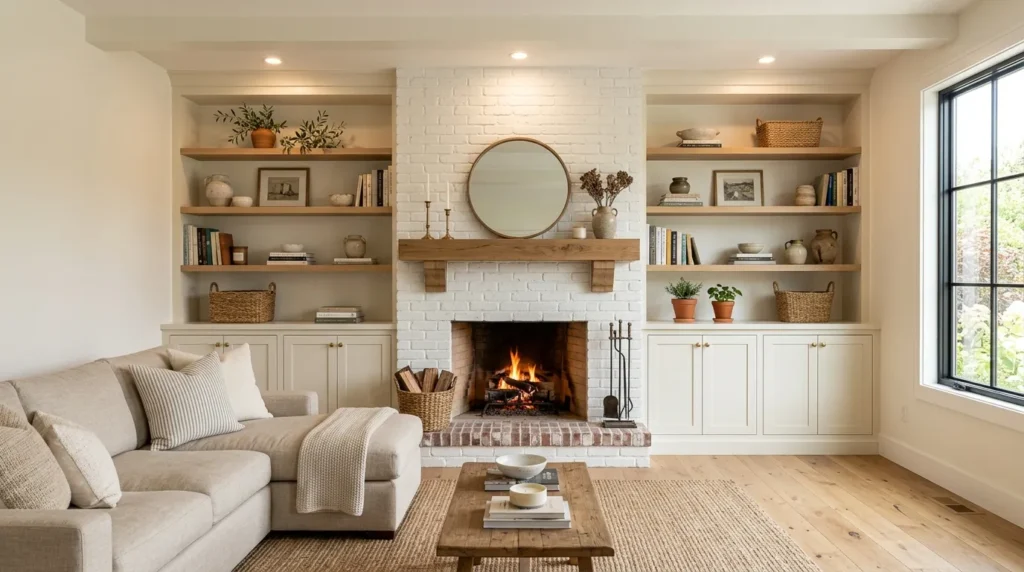
- Built-in cabinetry adds practical storage around the fireplace.
- White masonry keeps the entire wall feeling bright.
- Closed cabinets hide everyday clutter.
- Open shelves create space for books and decor.
- Warm wood details prevent the design from feeling too stark.
A built-in fireplace wall can turn an unused section of the living room into a highly functional focal point. Centering the masonry fireplace between cabinets or shelving creates visual balance while adding valuable storage for books, media equipment, blankets, and everyday items. Keeping the cabinetry white or cream helps the entire wall feel cohesive and bright. Natural wood shelves can introduce warmth and texture without overpowering the fireplace. This setup is especially useful in family rooms where the space needs to look polished while still handling real-life clutter.
Think about storage needs before choosing between open shelving and closed cabinetry. Open shelves are ideal for books, artwork, baskets, and a few decorative objects, while cupboards can hide electronics, toys, or less attractive essentials. Leave enough empty space around the fireplace so the wall does not feel overcrowded. In my experience, combining both storage types creates the most practical arrangement. Add warm recessed lighting or small shelf lights to highlight the architecture at night, then soften the seating area with a textured rug and comfortable upholstery.
8. Scandinavian White Brick
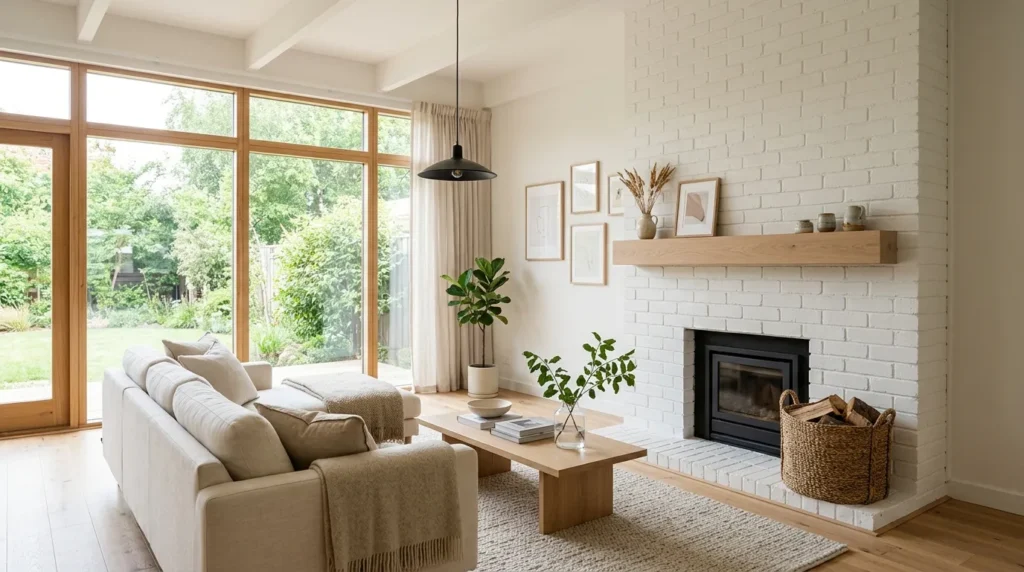
- Pale wood creates warmth against the lighter masonry.
- Simple furniture keeps the room airy and uncluttered.
- Soft textiles add comfort without visual heaviness.
- Black accents provide small points of contrast.
- Natural daylight enhances the bright Scandinavian palette.
Scandinavian styling makes a pale brick fireplace feel especially fresh by combining clean shapes with warm natural materials. Keep the furniture simple, choosing light wood, cream upholstery, and softly textured fabrics that allow the masonry to remain visible. A small amount of black can provide definition through lighting, frames, or furniture legs without making the room feel heavy. This approach is ideal for spaces that receive good natural light because the pale surfaces reflect brightness throughout the room. The overall effect feels calm, functional, and inviting rather than overly decorated.
The Scandinavian look depends on balance rather than having an entirely white room. Add warmth through oak, wool, linen, rattan, and beige accents so the fireplace feels connected to the rest of the space. Choose decor carefully and leave some surfaces intentionally empty. I’ve noticed that this creates a stronger sense of calm because every visible item has a purpose. If your fireplace feels too stark, a chunky knit throw or soft rug can immediately make it feel more welcoming. Warm bulbs also help the pale palette feel cozy after the natural daylight fades.
9. Coastal Fireplace Wall
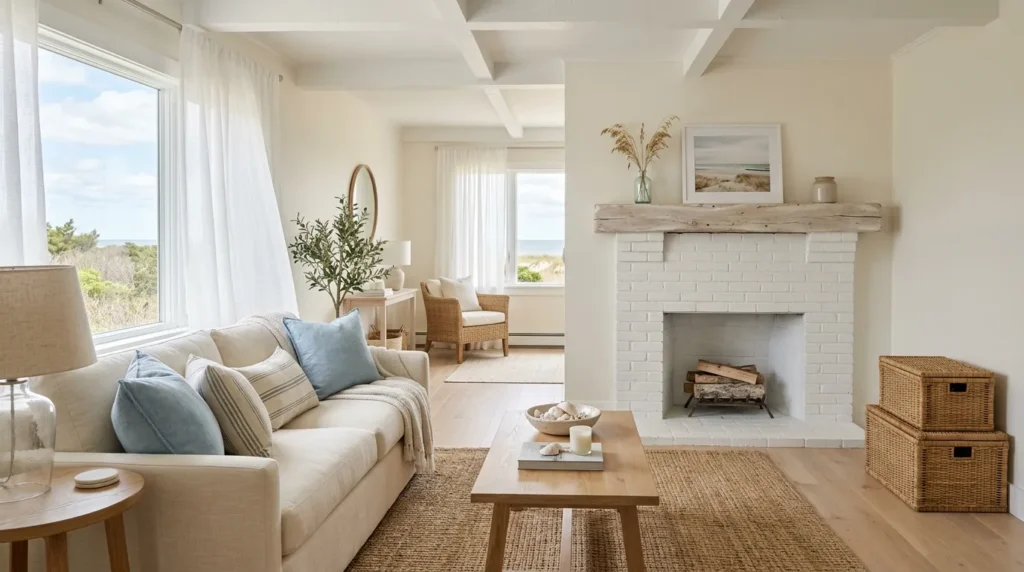
- White brick creates an airy foundation for coastal decor.
- Light blue accents add subtle color.
- Natural fibers bring relaxed texture.
- Pale wood keeps the room feeling fresh.
- Simple accessories prevent an overly themed appearance.
A pale brick fireplace works beautifully in a coastal-inspired room because its texture adds character without sacrificing the light, airy feeling. Pair it with white or cream upholstery, pale wood, woven baskets, and soft blue accents for a relaxed palette inspired by sand, sky, and natural materials. Keep nautical details subtle rather than filling the room with obvious themed accessories. The fireplace can remain the main architectural feature while the surrounding textures create a casual atmosphere. This combination works particularly well in bright living rooms where sunlight can emphasize the masonry throughout the day.
For a more sophisticated coastal look, focus on materials instead of obvious beach motifs. Linen curtains, jute rugs, rattan baskets, cotton cushions, and unfinished wood naturally create the relaxed feeling you want. Use one or two muted blue accents rather than several bright shades, allowing the white brick to remain visually dominant. I’ve noticed that coastal rooms feel more timeless when accessories are practical as well as decorative. Add a comfortable throw near the sofa, a simple ceramic vase, and warm evening lighting to make the fireplace area feel inviting long after the sunlight disappears.
10. Rustic Stone Mix
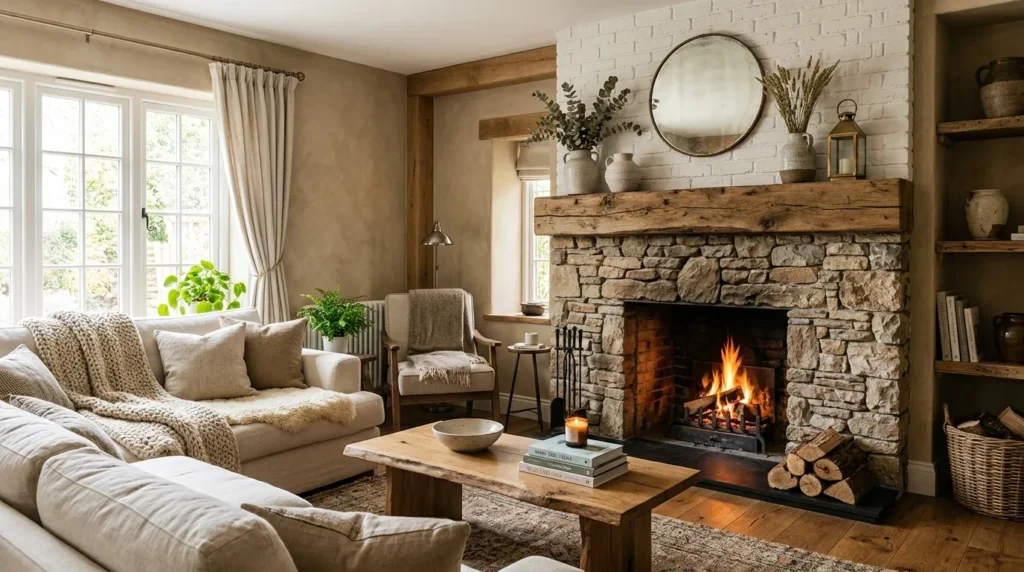
- Mixing stone with pale brick adds natural depth.
- Rough textures create a grounded rustic appearance.
- Warm wood connects the different materials.
- Neutral upholstery keeps the fireplace wall balanced.
- Simple accessories let the masonry remain the focus.
A combination of pale brick and natural stone can give a fireplace wall more depth and character than either material alone. The lighter brick keeps the room bright, while irregular stone introduces earthy variation around the hearth or lower section. This pairing works especially well in rustic, lodge-inspired, farmhouse, and organic modern interiors. Use warm wood nearby to connect the materials visually, then soften the harder surfaces with linen upholstery and woven rugs. The contrasting textures make the fireplace feel substantial without requiring a large amount of decorative styling.
The key to combining masonry materials is giving each one a clear role. For example, use brick across the upper fireplace surround and stone around the hearth, rather than mixing several materials randomly. Keep the colors related so the transition feels deliberate. In my experience, natural stone looks especially attractive when paired with warm white brick because the small differences in texture create interest without overwhelming the room. Choose understated accessories and let the materials speak for themselves. Soft lamps and warm firelight can further emphasize the natural variations after sunset.
11. Floor-To-Ceiling Brick
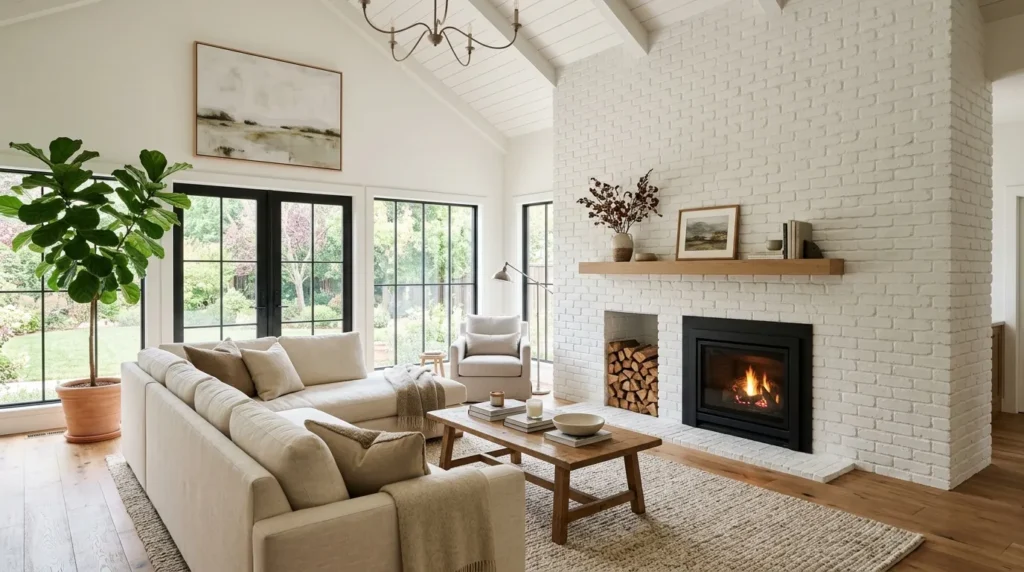
- Full-height masonry creates a dramatic architectural focal point.
- White color keeps the large surface visually light.
- Simple furniture prevents the room from feeling overwhelming.
- Tall artwork can complement the vertical proportions.
- Warm flooring adds contrast beneath the fireplace wall.
A floor-to-ceiling brick fireplace creates an impressive focal point by extending the texture from the hearth all the way toward the ceiling. Using a pale finish keeps this large surface from becoming visually heavy, allowing the room to remain bright and open. The height can also emphasize tall ceilings and make the fireplace feel like part of the architecture rather than a separate feature. Keep nearby furniture relatively low and simple so the vertical wall remains dominant. This approach works especially well in open-plan living spaces where a strong architectural anchor helps define the seating area.
When the fireplace reaches the ceiling, proportion becomes even more important. A slim mantel or simple hearth usually works better than adding several bulky horizontal elements that could interrupt the vertical flow. Use artwork sparingly, or allow the masonry to remain completely unadorned. I’ve noticed that tall plants and low furniture can create a pleasing contrast against the height of the wall. Warm wood flooring also helps ground the room visually. Finish with a large neutral rug and soft upholstery so the dramatic fireplace still feels connected to a comfortable, everyday seating area.
12. Cottage Fireplace Mantel
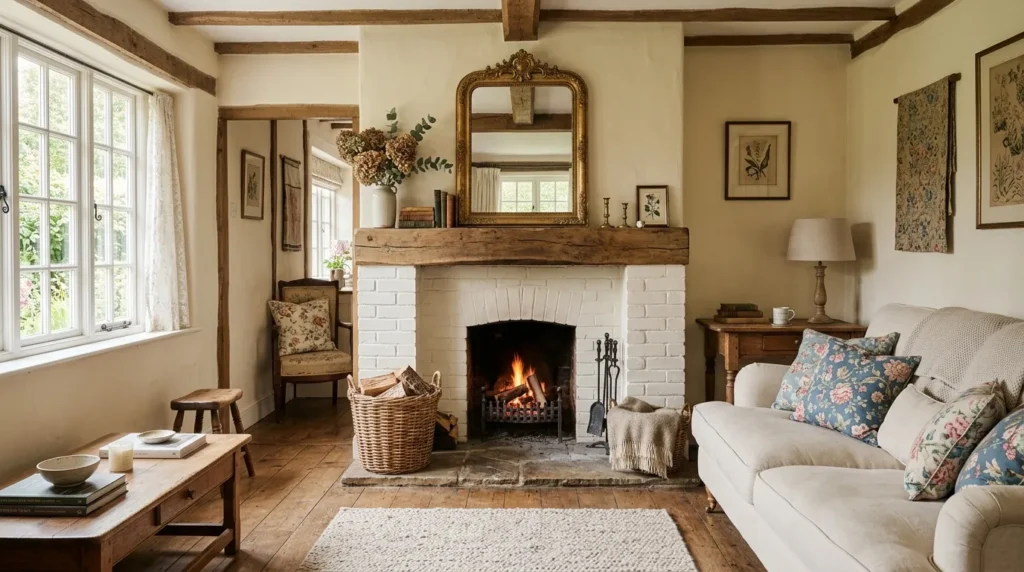
- A traditional mantel adds timeless character.
- White brick keeps the cottage look fresh.
- Vintage accessories create personality without clutter.
- Soft textiles make the hearth feel inviting.
- Natural wood tones complement the relaxed setting.
A traditional mantel can make a pale brick fireplace feel timeless, especially when paired with cottage-inspired furniture and soft, comfortable textiles. Choose a wood mantel with simple molding or a gently aged finish to introduce warmth against the lighter masonry. Above it, a vintage mirror, framed artwork, or understated ceramic collection can create a relaxed focal point. Keep the surrounding colors soft, using cream, beige, muted green, or dusty blue. The combination feels welcoming and personal, making the fireplace look like a natural part of the home’s history.
The cottage style works best when the room does not look too perfectly coordinated. Mix old and new pieces, such as a vintage mirror with a modern sofa or an antique-style ceramic vase beside a contemporary lamp. This creates the collected feeling that makes cottage interiors so appealing. I’ve seen many fireplaces look more inviting simply by replacing overly polished accessories with natural, slightly imperfect pieces. Add a woven basket for blankets, a soft rug under the seating area, and warm lighting to make the mantel feel decorative while keeping the room practical.
13. Farmhouse Shiplap Surround
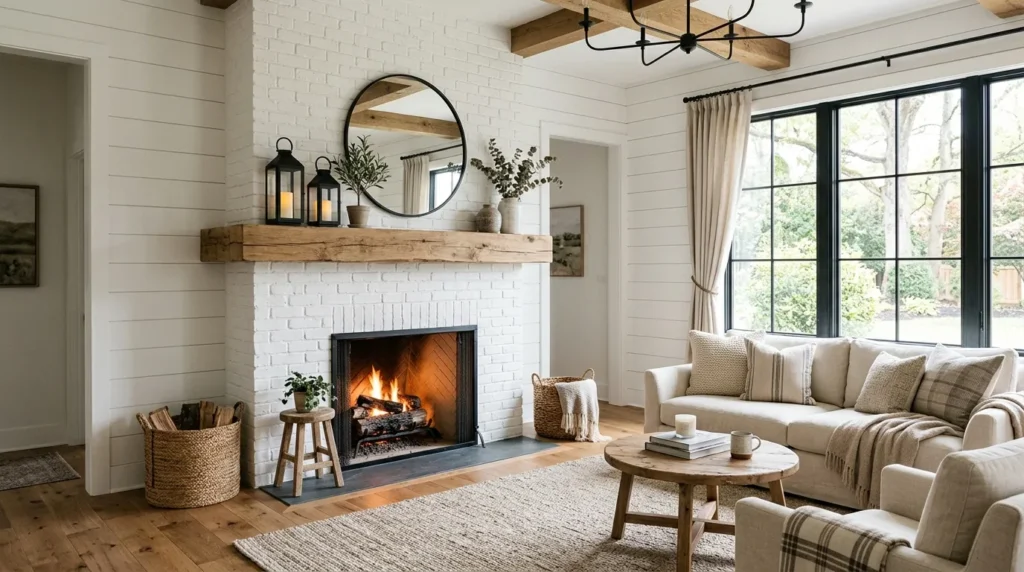
- Shiplap adds another layer of classic farmhouse texture.
- White-on-white finishes keep the fireplace bright.
- A natural wood mantel provides warm contrast.
- Black accents create subtle definition.
- Simple furniture keeps the wall from feeling busy.
A shiplap surround can make a pale brick fireplace feel even more connected to farmhouse design by combining two familiar textures in one balanced composition. Keep both surfaces within similar white or warm ivory tones so the wall feels cohesive rather than visually divided. A chunky natural wood mantel can separate the textures and introduce warmth. Add simple black accents through lighting or hardware for definition. This combination works particularly well in bright living rooms because the layered white surfaces reflect daylight while the brick and shiplap prevent the space from looking completely flat.
Because both brick and shiplap have strong textures, the rest of the room should remain relatively simple. Choose neutral upholstery, natural wood flooring, and one textured rug to provide comfort without adding too many competing patterns. A few woven baskets can soften the harder architectural surfaces while also offering practical storage. In my experience, the most successful farmhouse fireplaces use texture selectively rather than covering every available surface with decor. Let the fireplace wall breathe, then use warm lamps and soft throws to make the room feel cozy once natural daylight fades.
14. Herringbone Brick Detail
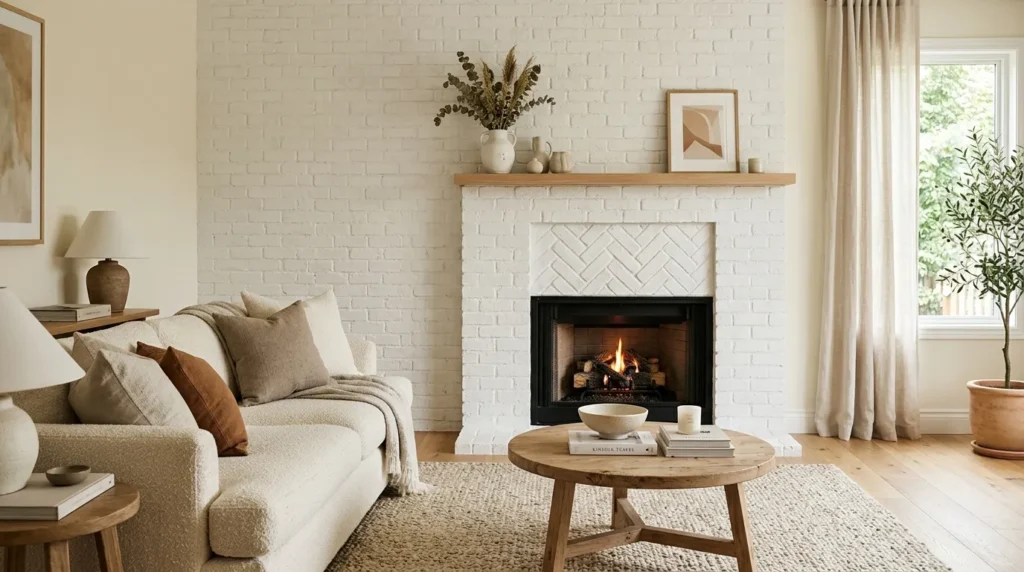
- Herringbone placement adds movement to the fireplace surround.
- White masonry keeps the pattern sophisticated and bright.
- A simple mantel prevents visual competition.
- Neutral furnishings let the brick pattern stand out.
- Subtle pattern adds interest without introducing extra colors.
A herringbone brick pattern can give a fireplace a custom-designed appearance while keeping the overall color palette simple. The angled placement creates movement and visual interest, especially when surrounded by traditional horizontal brick. Because the masonry remains white or softly neutral, the pattern feels sophisticated rather than overly busy. This detail works well in modern farmhouse, transitional, traditional, and organic interiors. Pair it with a simple mantel and understated furnishings so the craftsmanship remains easy to notice. Even a small herringbone section inside the firebox surround can create a meaningful decorative upgrade.
If you are planning a new installation or renovation, think about where the pattern will have the strongest visual impact before committing to the entire wall. A herringbone inset can define the firebox, hearth, or central section while standard brick surrounds it. This creates contrast without requiring multiple colors. I’ve noticed that natural wood and warm neutral fabrics pair especially well with this detail because they keep the patterned masonry from feeling too formal. Add a textured rug and soft lighting to balance the structured brick and create a comfortable seating area.
15. Floating Wood Mantel
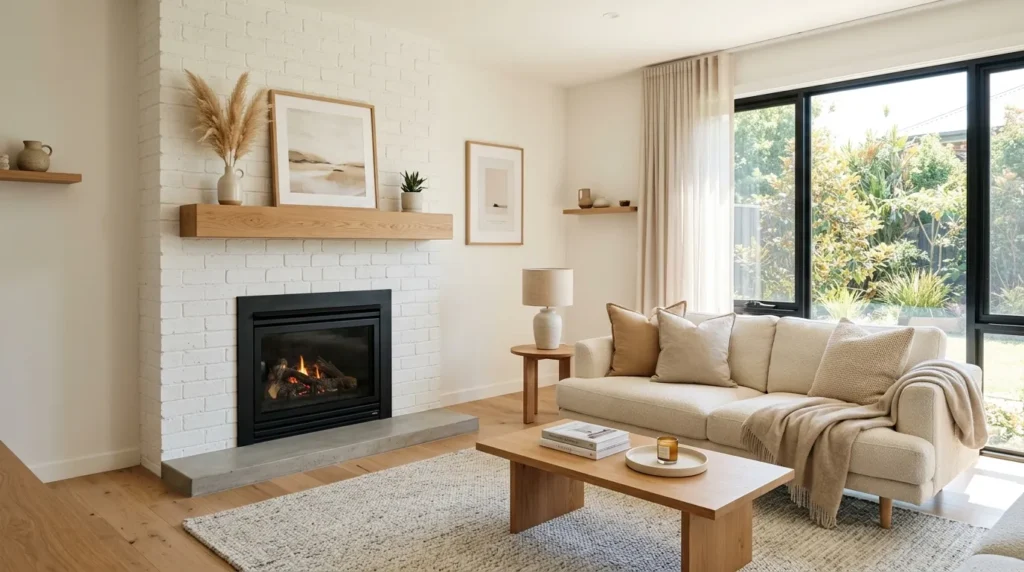
- A floating shelf creates a lighter visual profile.
- Natural wood warms the pale masonry.
- Minimal styling keeps the fireplace contemporary.
- The open space below maintains an airy appearance.
- Simple ceramics add personality without clutter.
A floating wood mantel creates a clean, lightweight look that works beautifully with textured white masonry. Unlike a traditional bulky mantel, the simple shelf leaves more of the brick visible and helps the fireplace wall feel open. Natural oak, walnut, or reclaimed wood can all work depending on the room’s style. Keep the shelf styling minimal with a ceramic vase, small artwork, or a few books rather than filling the entire surface. This approach is especially useful when you want the fireplace to feel modern while still retaining the warmth and character of natural materials.
Before installing a floating mantel, consider its depth and the scale of the fireplace. A shelf that is too shallow may look disconnected, while one that is too deep can make the wall feel heavy. Choose a finish that relates to existing flooring or furniture for a more cohesive result. I’ve noticed that a single oversized piece of artwork can look particularly effective above a floating mantel because it maintains the clean horizontal line. Add soft seating, a neutral rug, and warm lighting to create contrast between the structured wall and relaxed living space.
16. Built-In TV Fireplace
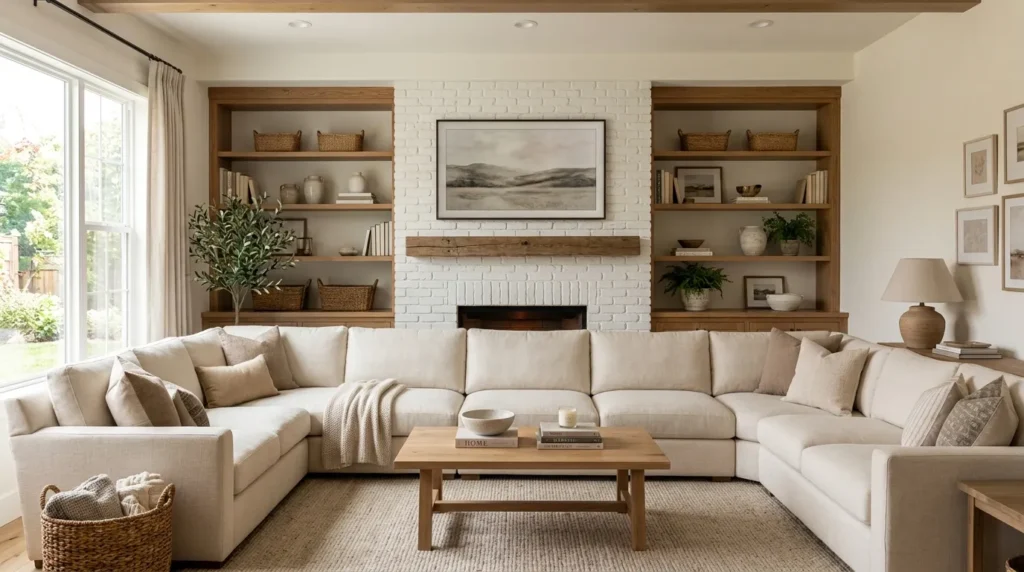
- Combining the television and fireplace saves valuable wall space.
- Pale masonry creates a unified backdrop for both features.
- Closed storage keeps electronics and clutter hidden.
- Wood shelving adds warmth and visual balance.
- Simple styling prevents the entertainment wall from feeling overwhelming.
A fireplace and television can share one wall without making the living room feel cluttered when the layout is carefully planned. Centering the screen above the firebox creates a clear focal point, while surrounding cabinetry can hide electronics, games, blankets, and everyday items. The pale brick provides texture without competing heavily with the television. Add warm wood shelves or cabinets to introduce contrast and prevent the entire wall from becoming visually flat. This arrangement is particularly practical for family rooms where entertainment, storage, and cozy seating all need to work together.
The proportions of the television, fireplace, and surrounding cabinetry should feel balanced before installation. Avoid placing the screen so high that viewing becomes uncomfortable, and check the manufacturer’s requirements for mounting a television above a fireplace because heat can affect certain equipment. In my experience, closed storage is especially valuable because it keeps the wall looking calm when the room is not being used. Use a few open shelves for books or ceramics, then keep the rest of the decor restrained. A large rug and comfortable seating can visually connect the entire entertainment zone.
17. Scandinavian Wood Hearth
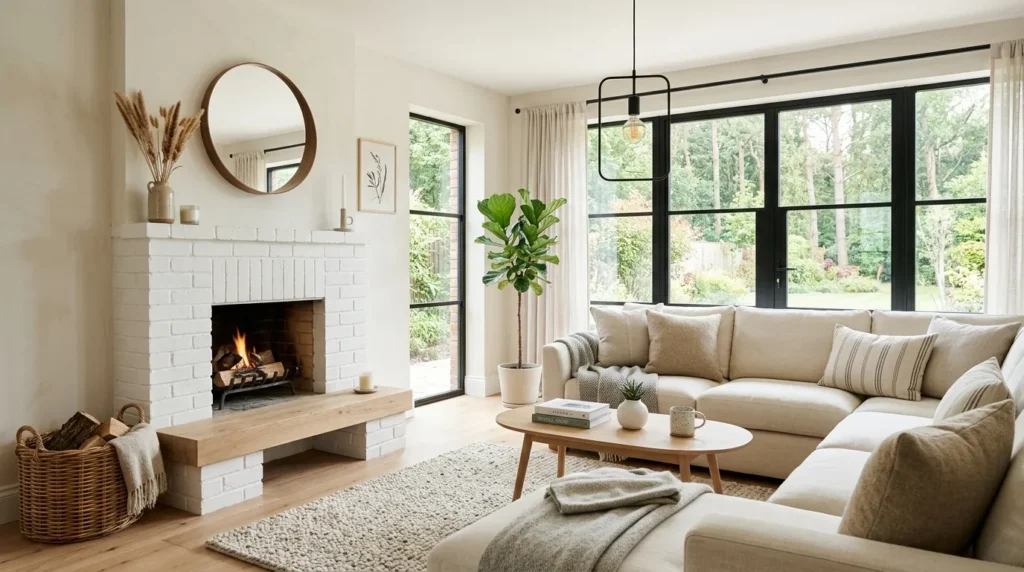
- Pale wood brings warmth to the lighter fireplace.
- Clean lines support a simple Nordic aesthetic.
- Natural textiles add softness without visual clutter.
- Black accents provide subtle contrast.
- Open space keeps the room feeling bright and calm.
A pale wood hearth can make a white brick fireplace feel warmer and more relaxed, especially in Scandinavian-inspired interiors. The combination of light masonry and natural timber creates a bright foundation while adding enough contrast to keep the room from feeling one-dimensional. Choose simple furniture with clean lines, then layer in wool, linen, cotton, and woven materials for comfort. A small amount of black through lighting or hardware can sharpen the palette without overpowering it. The overall look is understated, functional, and welcoming rather than heavily decorated.
Scandinavian interiors rely heavily on natural light, so avoid covering the windows with overly heavy treatments if privacy allows. Position the seating where it can benefit from daylight, then use warm lamps for evening comfort. Keep accessories purposeful and choose materials that feel good as well as look attractive. I’ve noticed that a pale wood element near the hearth can make even a very white room feel warmer immediately. Add a neutral rug, a soft throw, and one or two plants to bring organic texture into the arrangement without creating visual clutter.
18. Vintage Mirror Mantel
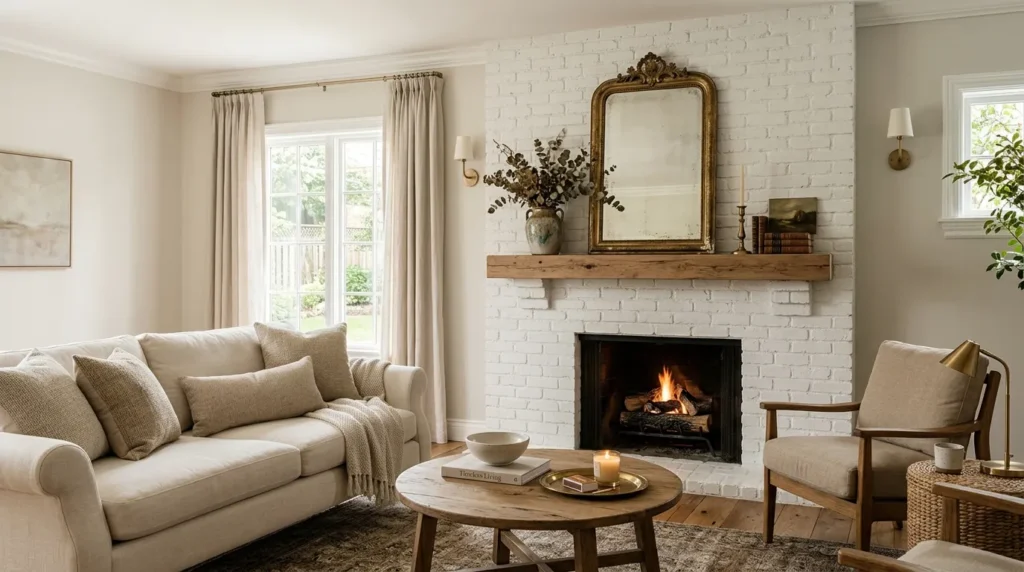
- A vintage mirror adds character above the fireplace.
- Reflective glass helps bounce light around the room.
- Aged frames introduce warmth and history.
- Simple furniture keeps the focal point elegant.
- Soft neutral colors prevent the arrangement from feeling heavy.
A vintage mirror can make a pale brick fireplace feel brighter while adding a layer of character above the mantel. Choose an aged brass, wood, or distressed frame to introduce warmth and contrast against the lighter masonry. The reflective surface also helps bounce daylight around the room, making it especially useful in spaces with limited natural brightness. Keep the mantel styling simple so the mirror remains the main decorative element. A ceramic vase, small stack of books, or single branch can be enough to complete the arrangement without competing with the reflection.
The mirror should be proportionate to the fireplace rather than simply filling as much wall space as possible. A piece that is slightly narrower than the mantel often creates a balanced, intentional appearance. If the room already contains several metallic finishes, choose a frame that connects with those details instead of introducing another unrelated tone. I’ve seen older mirrors work particularly well in modern rooms because their imperfections add personality against clean furniture. Finish with warm lighting and soft textiles nearby to make the reflective surface feel inviting rather than overly formal.
19. Modern Farmhouse Hearth
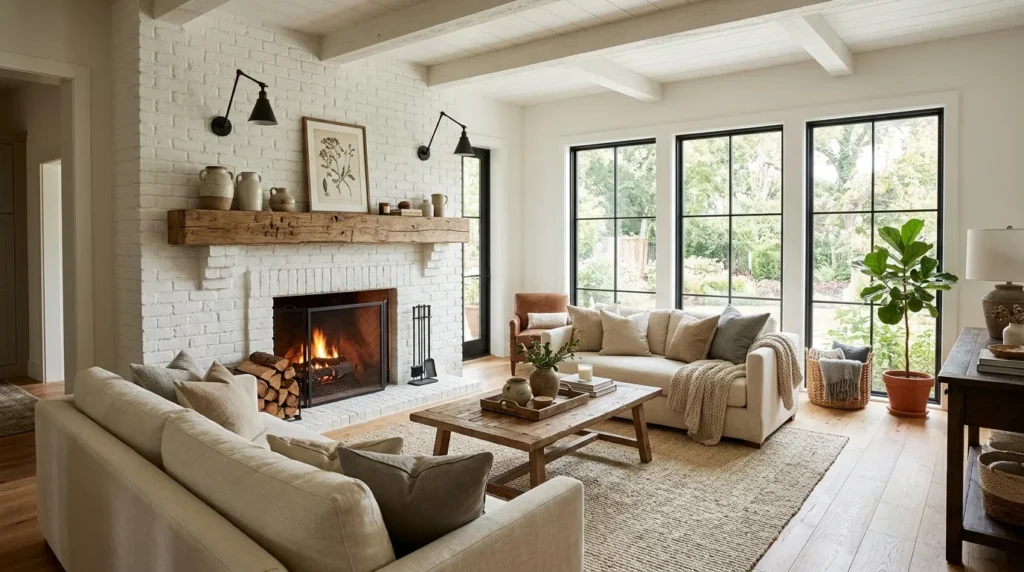
- Clean furniture gives the farmhouse look a fresh update.
- White masonry keeps the fireplace bright and approachable.
- Natural wood adds warmth and character.
- Black accents create crisp visual contrast.
- Layered textiles make the seating area feel comfortable.
Modern farmhouse styling works beautifully with pale brick because it combines traditional texture with cleaner, more contemporary furnishings. Start with the fireplace as the architectural anchor, then add a natural wood mantel for warmth and contrast. Cream upholstery, beige textiles, and simple black accents create a balanced palette without making the room feel overly rustic. The goal is to keep the character of farmhouse design while avoiding excessive distressed finishes or themed accessories. This makes the fireplace feel timeless enough to work with changing furniture and decor over the years.
The strongest modern farmhouse rooms usually mix old-fashioned materials with streamlined shapes. A chunky wood mantel can sit comfortably above a simple sofa, while a black metal sconce adds definition without becoming decorative clutter. I’ve noticed that texture is more effective than adding lots of farmhouse signs or accessories. Use linen, wool, jute, and natural wood to create depth instead. Add a large neutral rug beneath the seating area and keep the mantel display simple. The result feels warm and lived-in while maintaining the clean visual quality that makes modern farmhouse interiors so popular.
20. Boho Fireplace Styling
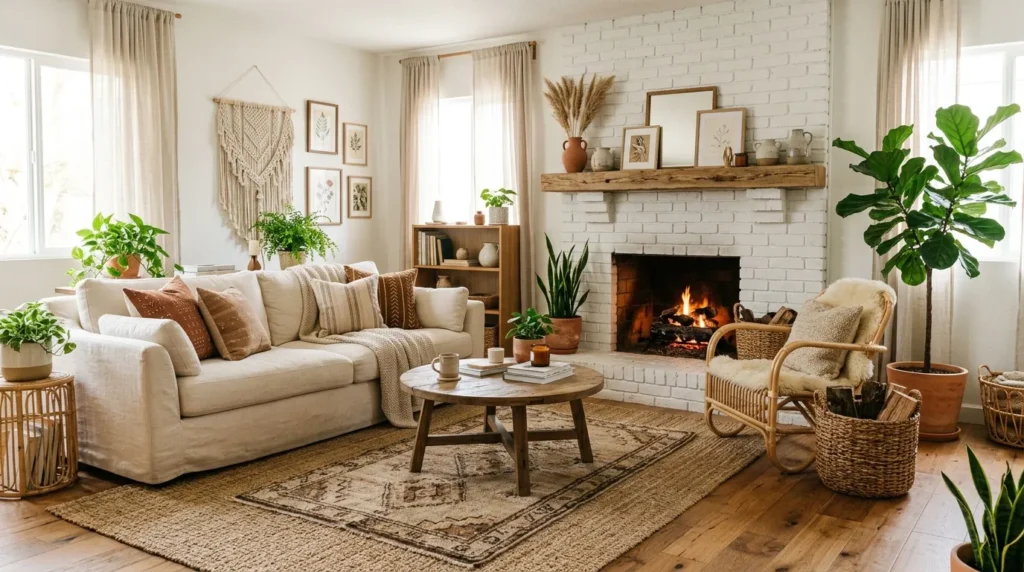
- Woven materials soften the harder brick texture.
- Plants add fresh organic contrast.
- Layered rugs create warmth around the hearth.
- Handmade ceramics give the mantel personality.
- Earthy accents keep the palette relaxed.
Boho styling can make a white brick fireplace feel relaxed, collected, and full of personality. Rather than relying on bright colors, build interest through woven baskets, rattan furniture, textured rugs, linen cushions, handmade ceramics, and leafy plants. Warm earthy accents such as terracotta, caramel, sand, and muted olive can add depth without overwhelming the pale masonry. The fireplace provides a clean foundation while the surrounding textures create the layered feeling associated with bohemian interiors. This approach works especially well when you want a living room that feels personal rather than perfectly coordinated.
The trick is to layer materials without filling every surface. Choose a few pieces that are useful as well as decorative, such as baskets for blankets or a stool that can move around the room when needed. Plants can bring life to the fireplace wall, but select varieties based on the actual light conditions. In my experience, natural materials look particularly beautiful against pale brick because the subtle textures become more visible. Keep the largest furniture pieces neutral, then let smaller accessories introduce warmth and personality around the hearth.
21. White Brick Alcove
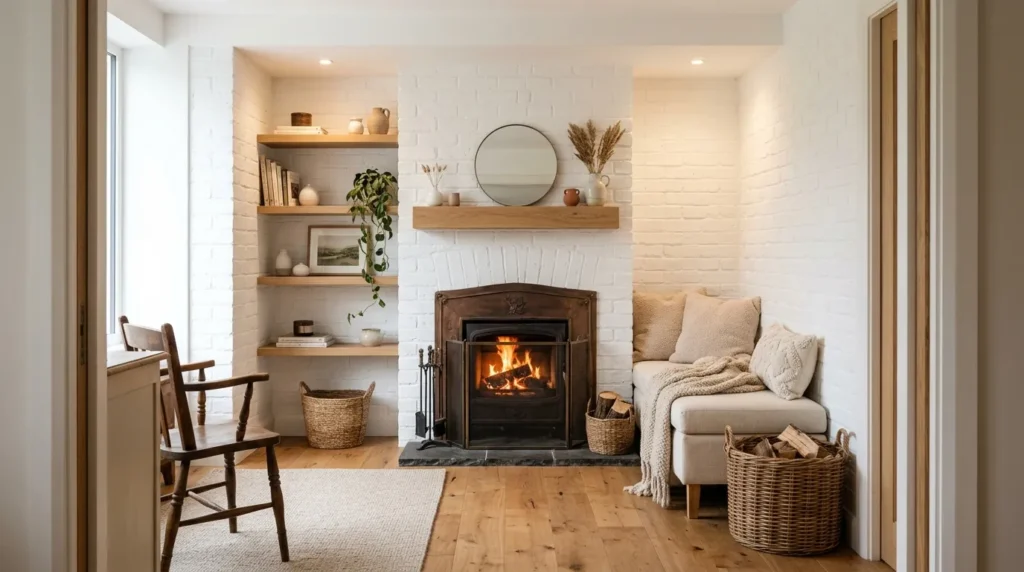
- An alcove creates a naturally defined fireplace zone.
- Pale masonry makes the recessed area feel brighter.
- Built-in seating can add practical function.
- Small shelves provide space for books and accessories.
- Soft lighting highlights the architectural depth.
A fireplace alcove can turn an awkward recess into one of the most charming features in a living room. Covering the recessed area with pale brick emphasizes its shape while keeping the space visually bright. Depending on its size, the alcove can include a built-in bench, compact reading chair, floating shelves, or hidden storage. These additions give the architectural feature a practical purpose instead of leaving it as unused space. Keep the furnishings simple and comfortable so the brick remains visible and the area feels like a natural extension of the main living room.
Use the proportions of the alcove to decide what belongs inside it. A narrow recess may work best with two floating shelves and a small basket, while a deeper opening could accommodate a built-in bench with cushions. Avoid forcing large furniture into a tight area because that can make the room feel smaller. I’ve noticed that warm recessed lighting can make a surprisingly big difference here, especially in the evening. Add a soft cushion, a woven throw, or a few books to create a useful corner that feels connected to the fireplace rather than separate from it.
22. Gallery Art Mantel
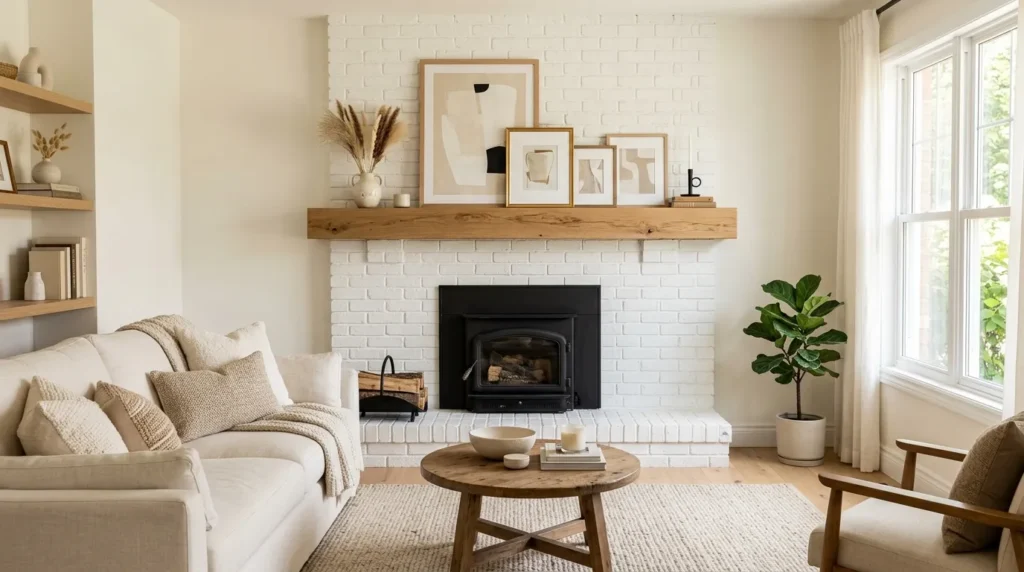
- Layered artwork adds personality above the fireplace.
- Different frame sizes create visual movement.
- Neutral artwork keeps the palette cohesive.
- Small ceramics add dimension without overwhelming the display.
- Personal pieces make the room feel more lived-in.
A gallery-style mantel can turn a pale brick fireplace into a personalized focal point without requiring dramatic changes to the surrounding room. Layer two or three framed artworks at different heights, then add one small ceramic piece or natural object for dimension. Choose prints with cream, beige, muted blue, charcoal, or warm brown tones so the collection feels connected. Leaning artwork rather than hanging every piece creates a relaxed appearance and makes seasonal updates easier. This approach works especially well when you want the fireplace to feel decorative while still maintaining a casual, lived-in atmosphere.
Keep the largest artwork toward the back and smaller pieces slightly forward to create depth without making the mantel look crowded. If the fireplace is narrow, choose fewer pieces and leave some empty space around them. I’ve noticed that personal artwork, family photographs, or collected pieces often make a mantel feel more authentic than a perfectly matched set. Repeat one or two colors from the artwork elsewhere in the room through cushions or a throw. This small connection can make the entire living area feel thoughtfully coordinated without becoming overly styled.
23. Warm Neutral Fireplace
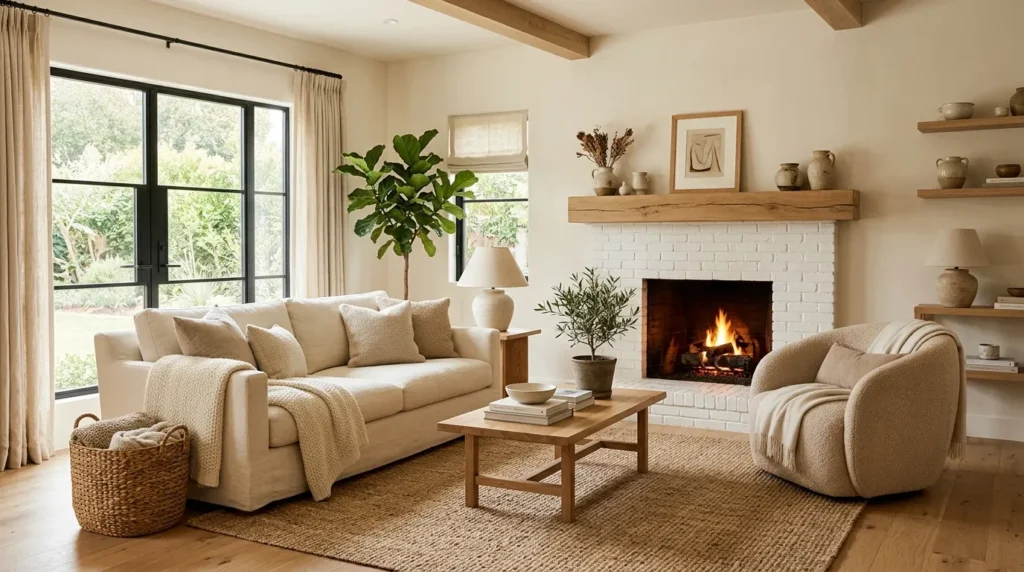
- Beige and cream tones soften the brighter masonry.
- Natural materials create warmth and depth.
- Light wood furniture keeps the palette grounded.
- Textured fabrics prevent an all-neutral room from feeling flat.
- Warm lighting enhances the cozy atmosphere.
A warm neutral palette can make a white brick fireplace feel especially inviting while preserving its bright appearance. Instead of relying on pure white throughout the room, introduce ivory, beige, oatmeal, sand, and light taupe through upholstery, rugs, curtains, and accessories. Natural wood adds another layer of warmth and helps the pale masonry feel connected to the rest of the space. This approach is ideal for anyone who wants a cozy room without using strong colors. The subtle differences between neutral shades create depth while keeping the fireplace visually clean and timeless.
Texture becomes essential when working with several similar colors. Combine linen, boucle, wool, jute, cotton, and wood so the eye can distinguish each layer even when the shades are close. Keep the fireplace itself relatively simple and allow the surrounding materials to provide warmth. In my experience, warm lighting is especially important in neutral rooms because cool bulbs can make pale surfaces look flat or gray. Use lamps with soft shades, warm bulbs, and perhaps a few candles around the seating area to create a gentle evening glow.
24. Layered Cozy Hearth
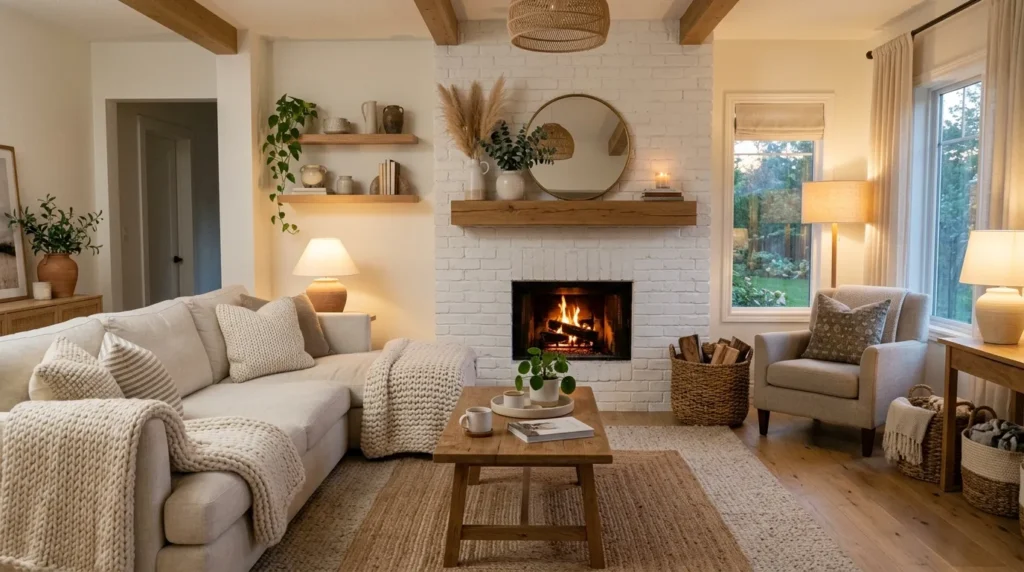
- Multiple textures make the fireplace area feel inviting.
- Soft seating creates a comfortable gathering spot.
- Wood accents balance the pale brick.
- Layered rugs add warmth underfoot.
- Simple seasonal decor keeps the hearth easy to refresh.
A layered hearth brings together the most comfortable elements of a bright fireplace room without making the design feel complicated. Start with the pale brick as the foundation, then add natural wood, soft upholstery, woven baskets, textured rugs, and cozy throws around the seating area. The goal is to create different layers that invite people to sit, relax, and gather. Keep the main colors light and warm so the room stays visually bright. This approach works across farmhouse, cottage, transitional, and modern interiors because the materials can easily adapt to different decorating styles.
Think of the fireplace area as a place that needs to function every day, not simply look attractive in photographs. Keep blankets within easy reach, choose durable upholstery, and leave enough open space around the hearth for comfortable movement. Seasonal accessories can be swapped without changing the foundation, making the room easy to refresh throughout the year. I’ve seen how small changes like a new throw, rug, or mantel arrangement can completely transform a familiar space. Save your favorite ideas, start with one simple update, and let the rest of the room evolve naturally.
Conclusion
A fireplace can become much more than a source of warmth—it can anchor the entire room and make your home feel brighter, cozier, and more personal. These 24 white brick fireplace ideas show how different materials, colors, textures, mantels, and styling choices can completely change the atmosphere. Start with one idea that feels realistic for your space, whether that means adding a wood mantel, updating the decor, or creating a layered hearth. I’ve seen how small changes can transform a familiar room. Save this post on Pinterest for your next decorating project, try your favorite idea, and share it with someone planning a cozy home refresh.