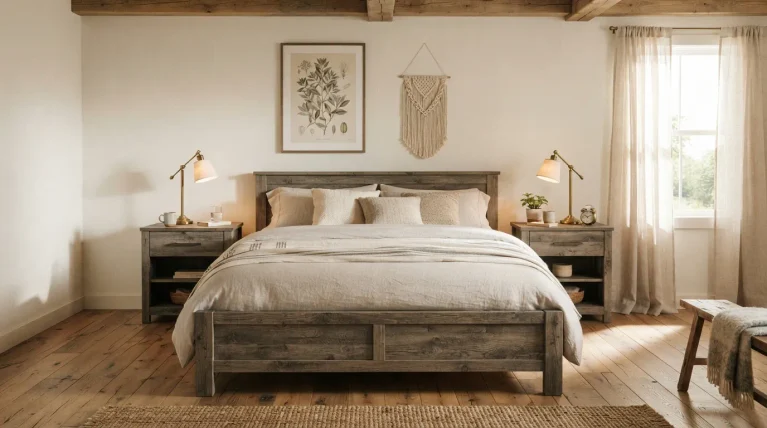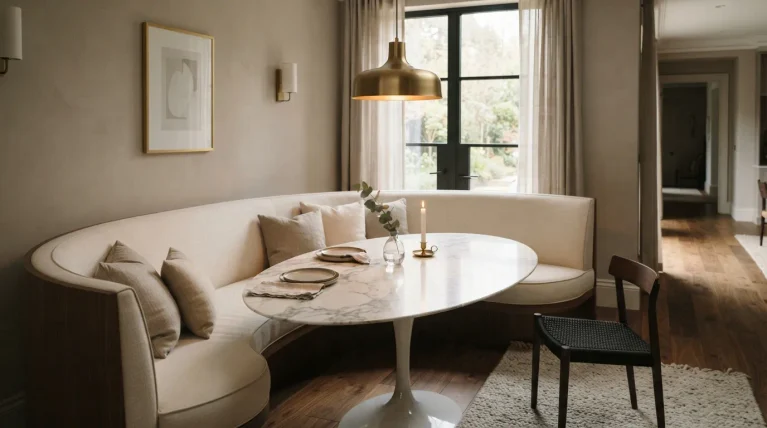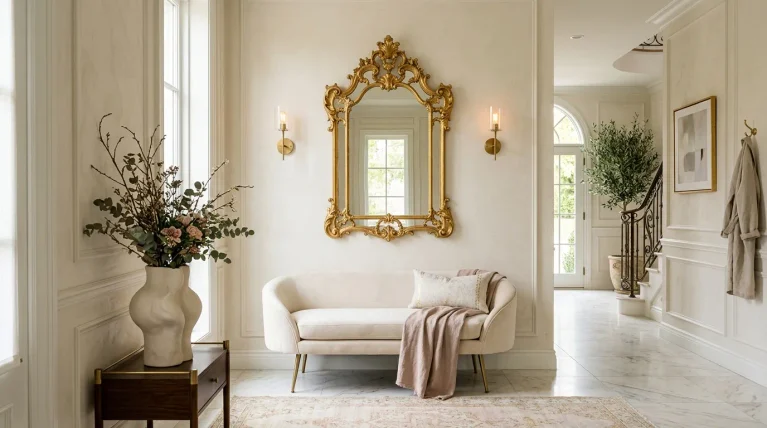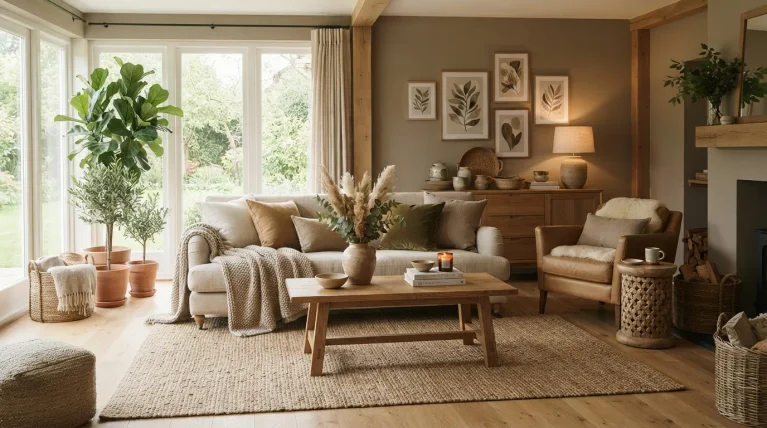
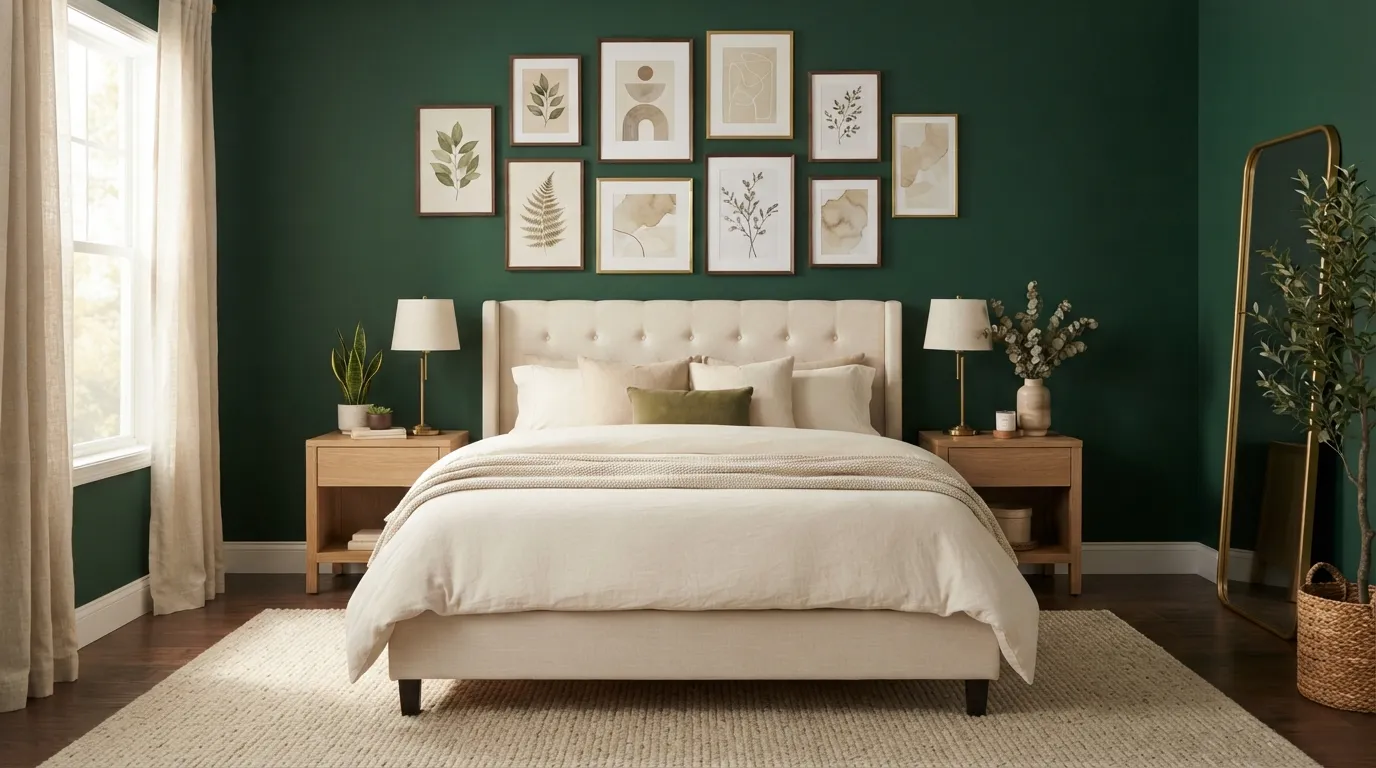
Ready to make your bedroom feel richer, warmer, and effortlessly elegant? Emerald green bedroom ideas can turn an ordinary space into a beautifully layered retreat with surprisingly simple changes.
From a dramatic accent wall and velvet headboard to soft neutral bedding, warm wood, brass details, and cozy textures, these ideas show how to use emerald without making the room feel dark or overwhelming. Whether you are refreshing a small bedroom, decorating a new home, or simply craving a more sophisticated color palette, there is an approach here to suit your space and style. In my experience, the best results often come from combining one bold green element with lighter neutrals and natural textures. Keep scrolling for practical inspiration you can easily save, recreate, and make your own.
1. Emerald Accent Wall
- Creates an instant focal point behind the bed without adding visual clutter.
- Makes simple furniture feel more polished and intentional.
- Warm neutrals help balance the depth of the green.
- Brass or wood accents add contrast without competing with the wall.
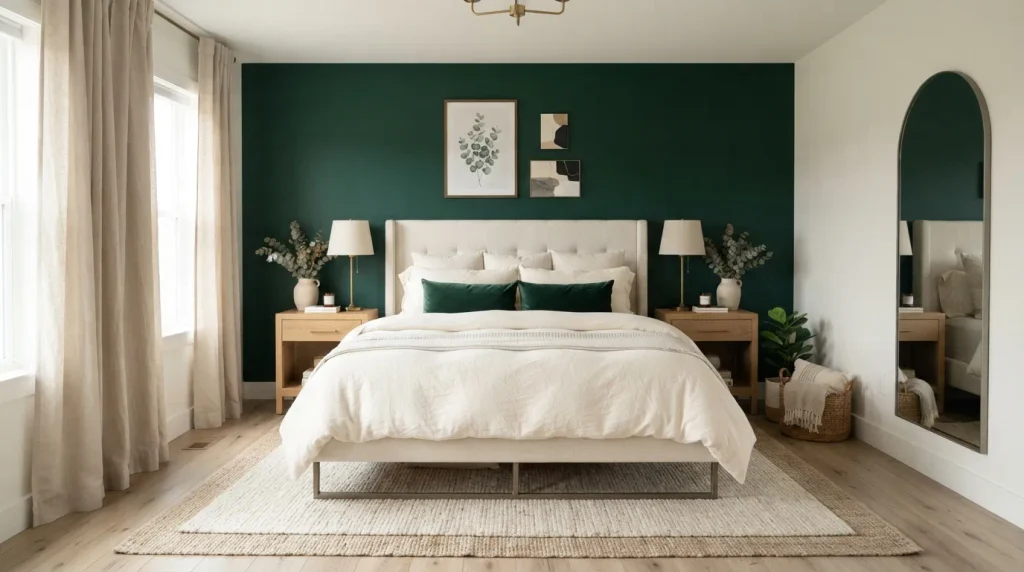
A deep green wall can instantly give a bedroom the polished depth that lighter colors sometimes miss. Emerald paint works especially well behind the bed because it creates a natural focal point without needing a busy feature wall. Pair it with a warm upholstered headboard, cream bedding, and light oak furniture to soften the saturated shade. In my experience, keeping the surrounding pieces simple makes the green feel intentional rather than overwhelming. Add one or two brass accents, such as bedside lamps or drawer pulls, to introduce a refined glow while maintaining a calm, comfortable atmosphere.
For smaller rooms, the trick is balancing richness with breathing space. Use emerald on one main wall while leaving the other walls warm white, soft beige, or pale greige. This keeps the room visually open while still giving the bed a dramatic backdrop. Natural daylight will make the green feel fresher, while warm lamps create a cozy evening look. Choose curtains in linen or another lightweight fabric so the windows remain visually bright. A textured rug under the bed can also connect the darker wall to the lighter furnishings, making the entire scheme feel layered, balanced, and thoughtfully finished.
Also Read : 24 Cherry Red Bedroom Ideas for a Bold Stylish Retreat
2. Emerald And Brass
- Creates a sophisticated contrast with very little decoration.
- Brass lighting can make the green appear warmer in the evening.
- Walnut and cream furniture soften the stronger color combination.
- Repeating brass in small details keeps the room visually cohesive.
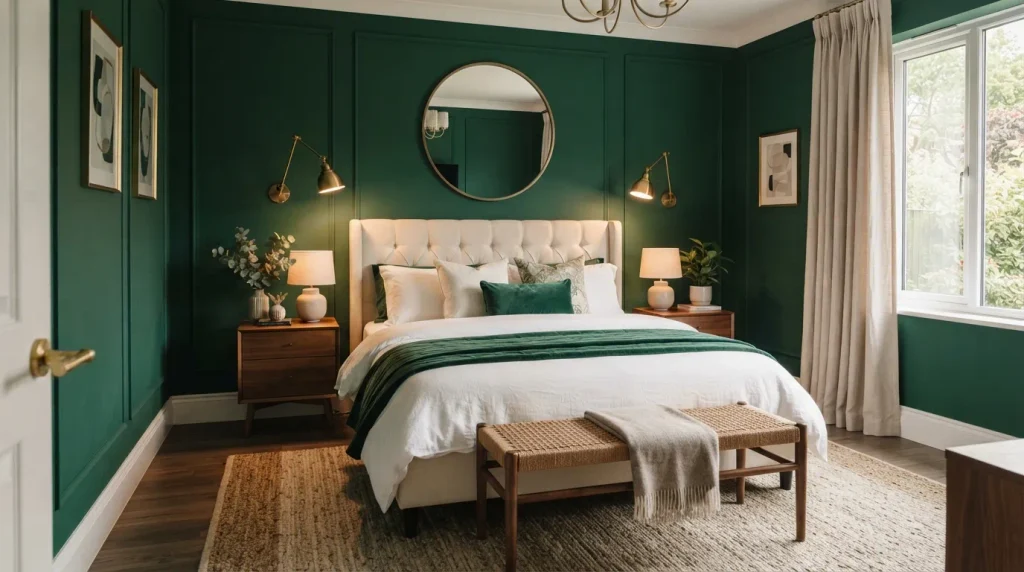
Few combinations feel as instantly luxurious as emerald green paired with warm brass. The contrast gives a bedroom a jewel-box quality without requiring expensive furniture or elaborate decoration. Try emerald walls with a cream upholstered bed, brass sconces, walnut nightstands, and crisp white bedding for a sophisticated foundation. The warm metallic finish catches light beautifully and prevents the darker color from feeling flat. I’ve noticed this pairing works particularly well when brass appears in small repeated details rather than everywhere. Matching a lamp, mirror frame, and a few hardware pieces creates cohesion while keeping the overall look elegant and relaxed.
Emerald and brass become even more inviting when the bedroom includes soft textures that absorb and diffuse the visual intensity. Layer a quilted coverlet, velvet accent pillow, woven throw, and plush rug around the bed to create depth without adding clutter. Keep the brass finish slightly muted if you want a relaxed, contemporary result instead of a highly glamorous one. Warm-white bulbs are another simple upgrade because they make metallic surfaces glow gently after sunset. The result is a bedroom that feels rich and finished during the day, then noticeably warmer and more intimate when the evening lighting comes on.
Also Read : 21 Moody Dining Room Ideas for a Dramatic Cozy Space
3. Emerald Bedding
- Adds dramatic color without permanently changing the walls.
- Works especially well with ivory, beige, and natural textures.
- Makes the bed the clear visual centerpiece of the room.
- Easy to refresh with seasonal throws and accent pillows.
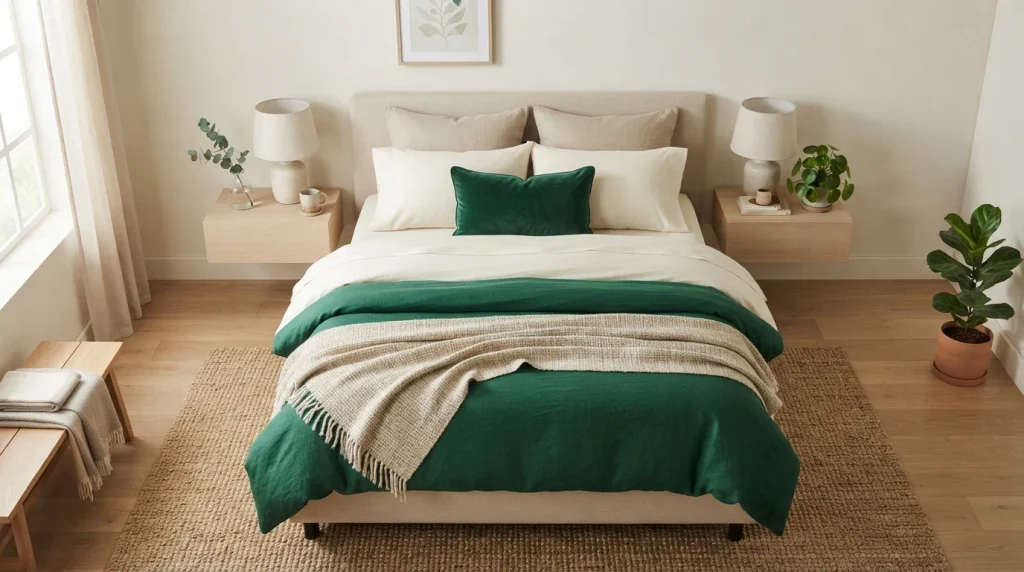
Emerald bedding can bring the same dramatic effect as painted walls while giving you much more flexibility. Choose a duvet cover, quilt, or oversized comforter in a rich green shade, then build the rest of the bed with ivory sheets, beige pillows, and natural woven textures. This approach is especially useful for renters or anyone who likes changing their bedroom seasonally. The darker bedding becomes the visual anchor, while lighter layers keep the arrangement fresh. In my experience, mixing matte cotton with one subtle velvet or satin accent makes the bed look collected rather than overly coordinated.
To keep saturated bedding from making the room feel visually heavy, repeat small touches of green elsewhere instead of covering every surface. A framed botanical print, ceramic vase, or small bench cushion can echo the duvet without competing with it. Keep the walls neutral and choose pale wood or cream furniture to create contrast around the bed. A simple pendant or bedside lamp can add another layer of warmth. This setup also makes seasonal updates easy: swap the throw and accent pillows for lighter fabrics in warmer months, then add chunky textures when you want the bedroom to feel especially cozy.
Also Read : 22 Maximalist Home Office Decor Ideas for a Bold Workspace
4. Velvet Headboard
- Adds softness and depth to the bed area without needing heavy decoration.
- Emerald velvet catches light differently throughout the day.
- A neutral wall keeps the rich headboard from dominating the room.
- Brass or wood nightstands create an elegant finishing contrast.
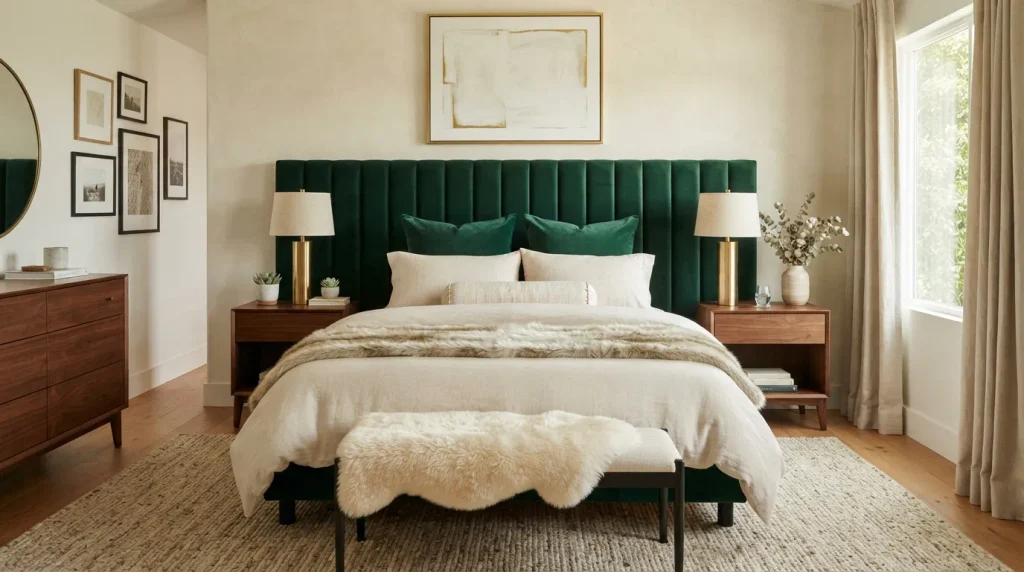
An emerald velvet headboard can make an ordinary bedroom feel instantly more refined. The soft fabric adds dimension while the deep green gives the bed a strong visual presence. Choose a tall or gently curved design if you want the room to feel more luxurious without adding unnecessary decoration. Pair it with cream bedding and warm wood furniture to create contrast around the saturated color. I’ve seen this work especially well in bedrooms where the walls need to stay neutral, because the headboard becomes the main design feature while still keeping the overall space comfortable and approachable.
The key is to let the velvet remain the star while surrounding it with quieter materials. Linen bedding, woven cushions, a textured rug, and light curtains can prevent the room from feeling too formal. If the headboard is particularly dark, use warm lighting beside the bed to soften its appearance at night. Brass lamps add a subtle polished detail, while walnut or oak furniture brings natural warmth. This balance creates a bedroom that feels rich without looking overly decorated. The finished space has depth, softness, and a sophisticated focal point that photographs beautifully for Pinterest.
Also Read : 24 White Brick Fireplace Ideas for a Bright Cozy Home
5. Botanical Accents
- Brings natural freshness into a darker bedroom palette.
- Green foliage connects beautifully with emerald walls or bedding.
- Botanical artwork adds personality without making the room busy.
- Natural baskets and wood finishes keep the look grounded.
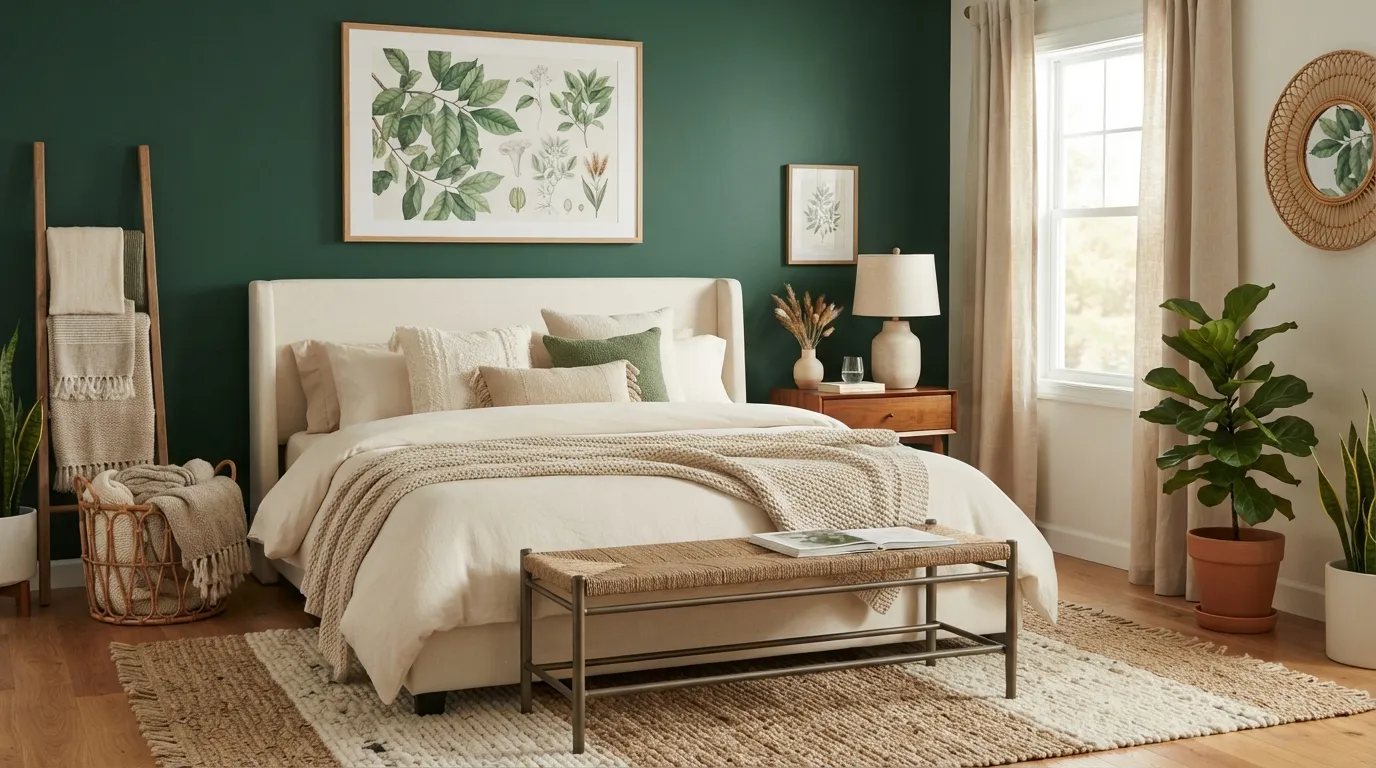
Bring the outdoors in by pairing rich green tones with botanical accents and natural materials. A few carefully chosen plants, leafy artwork, or botanical prints can make a darker bedroom feel fresher and more connected to nature. The trick is avoiding too many competing patterns. Choose one dominant botanical motif, then repeat its colors through smaller accessories. In my experience, a simple leafy print above the bed and one medium-sized plant beside the window can be enough to transform the atmosphere. The combination feels organic, especially when paired with cream bedding, warm wood, and woven textures.
Natural materials help balance the richness of emerald and make the bedroom feel welcoming rather than overly dramatic. Try a rattan basket, oak nightstand, jute rug, or woven pendant to introduce tactile contrast. If your room has limited sunlight, choose low-maintenance greenery or realistic botanical artwork instead of filling the space with plants. Keep the rest of the decor relatively simple so the foliage remains noticeable. This approach works beautifully in both modern and traditional bedrooms because the natural elements soften strong color while adding texture, warmth, and an effortless sense of freshness.
Also Read : 21 Earthy Minimalist Bedroom Ideas for a Calm Natural Retreat
6. Dark Wood Furniture
- Creates a rich, grounded foundation beside emerald tones.
- Walnut furniture adds warmth without introducing another bright color.
- Simple silhouettes keep the darker palette from feeling crowded.
- Cream textiles provide important visual contrast.
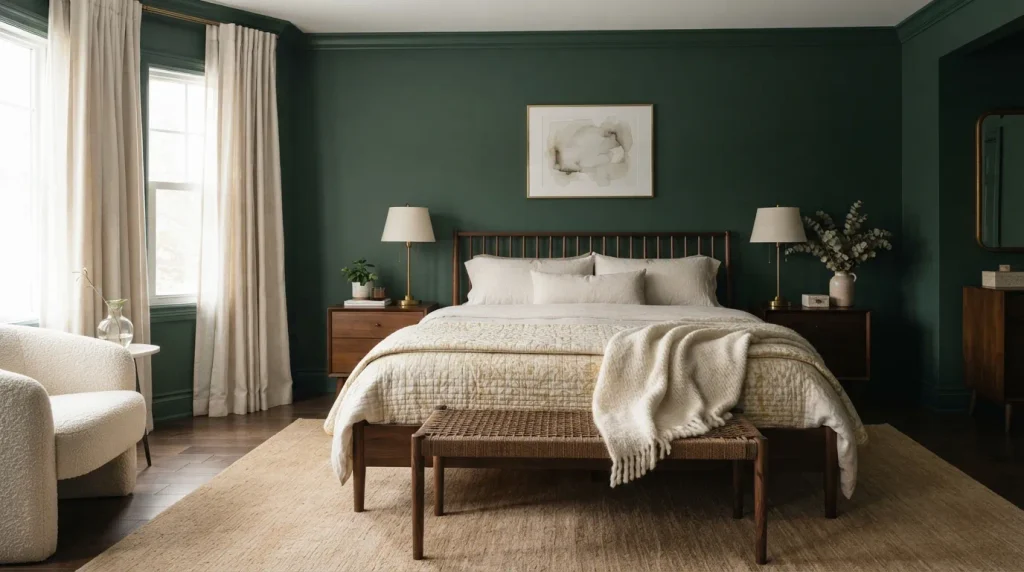
Dark wood furniture gives an emerald bedroom a deeper, more sophisticated character. Walnut, espresso, and other warm brown finishes work naturally with jewel-toned green because they share an earthy richness. Choose clean-lined nightstands, a wooden bed frame, or a simple dresser rather than filling the room with heavy furniture. The goal is to create visual depth while preserving enough open space for the green to stand out. A cream upholstered accent chair or pale bedding can provide the contrast needed to keep the darker combination from becoming visually dense.
When using both dark furniture and saturated green, lighting becomes especially important. Position the bed where natural daylight can reach the room, and use warm bedside lamps to create softer illumination after sunset. Light-colored curtains can also help reflect daylight around the darker surfaces. I’ve noticed that adding one large neutral rug makes a significant difference because it visually separates the furniture from the floor. Finish with a few restrained accessories, such as ceramic pieces, framed art, or a woven basket. The result feels grounded, elegant, and intentionally layered without sacrificing everyday comfort.
Also Read : 21 Bedroom Lighting Ideas for a Cozy Stylish Space
7. Arched Details
- Softens the strong geometry of emerald walls and furniture.
- An arched mirror can make a small bedroom feel taller.
- Curved lamps and benches add subtle visual movement.
- Keep the surrounding furniture simple for a polished result.
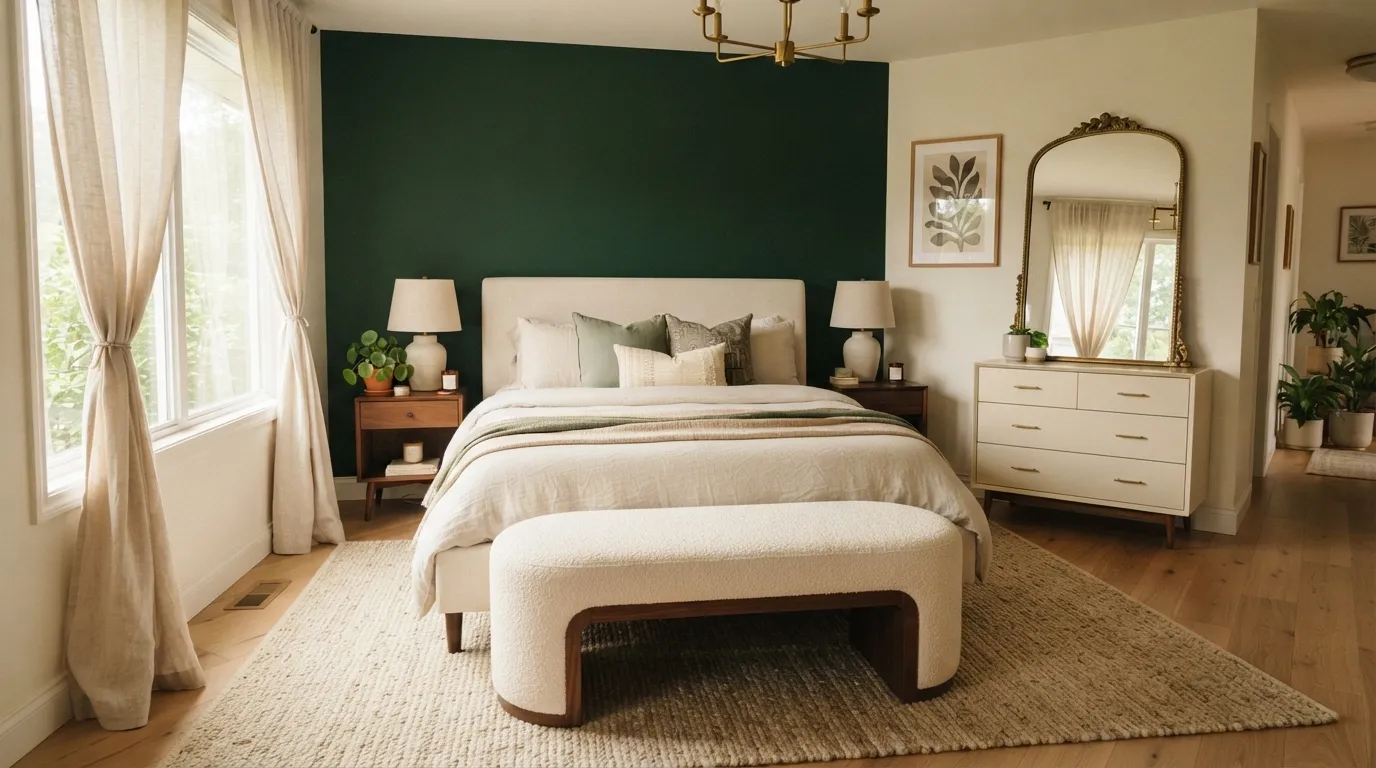
Curved shapes can make a richly colored bedroom feel softer and more inviting. An arched mirror, rounded headboard, curved bench, or softly shaped lamp introduces gentle movement against straight walls and furniture. Place one prominent arched element near the bed or dresser so it becomes a subtle focal point without competing with the emerald palette. In my experience, an oversized mirror is particularly useful because it reflects light while adding architectural interest. Keep the frame in brass, natural wood, or matte black depending on the surrounding finishes for a cohesive and intentional appearance.
You do not need several curved pieces to make this idea work. One arched mirror above a dresser can be enough to break up a large wall, while a rounded bench at the foot of the bed adds another soft detail at a lower level. Balance these shapes with rectangular nightstands and a simple bed frame so the room does not feel overly themed. Light-colored textiles are helpful here because they create contrast around the richer green surfaces. The finished bedroom feels contemporary and elegant, while the curved details prevent the darker color scheme from appearing too rigid.
8. Neutral Layering
- Keeps saturated green tones balanced and comfortable.
- Cream and beige textiles make the bedroom feel brighter.
- Different fabrics add depth without introducing more strong colors.
- Natural textures create a relaxed, lived-in finish.
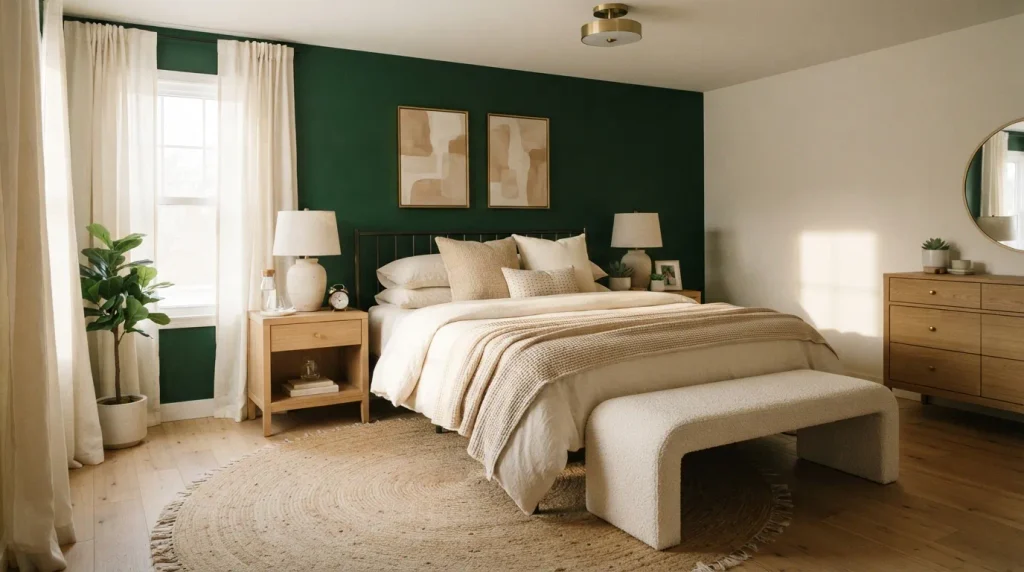
Neutral layers are one of the easiest ways to make emerald green feel sophisticated rather than overwhelming. Start with ivory or cream bedding, then introduce beige pillows, a soft taupe throw, and a textured neutral rug. These quieter tones create visual breathing room around the deeper green while allowing its richness to remain noticeable. Instead of adding lots of accessories, focus on differences in texture. Linen, cotton, boucle, wool, and woven materials can make a simple bedroom feel detailed and finished without introducing unnecessary colors or patterns.
This approach is especially useful when your bedroom already has emerald walls, curtains, or a statement bed. Rather than adding more green, repeat warm neutrals throughout the room to create balance. A light oak nightstand, woven basket, or cream upholstered bench can make the palette feel more natural. I’ve noticed that bedrooms with several neutral textures often look more expensive than rooms filled with matching decorative pieces. Keep the flooring and window treatments relatively light if possible, then let the emerald element provide the strongest color contrast. The result feels calm, layered, and easy to live with.
9. Emerald Wallpaper
- Adds pattern and color in one intentional feature.
- Botanical designs create a natural connection with green.
- Small-scale patterns can work beautifully in compact bedrooms.
- Keeping furniture neutral prevents the wallpaper from becoming busy.
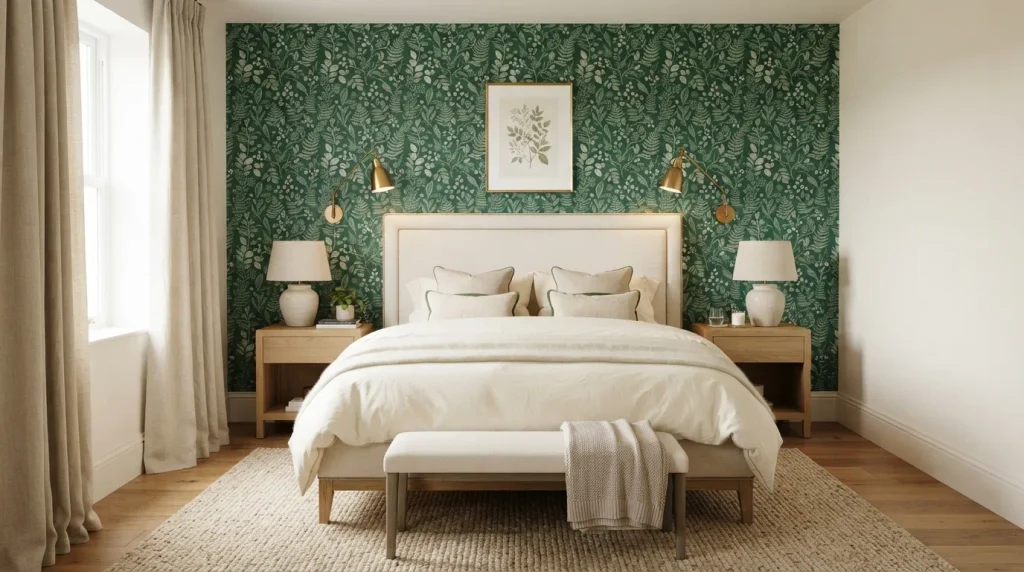
Emerald wallpaper can create a much more immersive effect than a solid painted wall. A botanical, geometric, or softly textured pattern gives the room color while adding another layer of visual interest. For a sophisticated look, use the wallpaper behind the bed and keep the remaining walls in a warm neutral shade. This creates a clear focal point without making the entire room feel enclosed. Choose patterns carefully according to the room size: smaller bedrooms often benefit from delicate designs, while larger spaces can handle bolder botanical or geometric motifs.
The furniture should remain relatively simple when the wallpaper has a strong pattern. An upholstered cream bed, light wood nightstands, and understated brass lighting allow the wall to remain the star. Avoid matching every accessory to the exact green shade because slight variations make the room feel more natural. Instead, pull supporting colors from the wallpaper, such as muted beige, cream, brown, or soft olive. This creates a cohesive palette without looking overly coordinated. With the right balance, emerald wallpaper can turn an ordinary sleeping area into a memorable, polished retreat that feels both decorative and practical.
10. Emerald Curtains
- Adds a rich color layer without changing the walls.
- Floor-length curtains can make the bedroom appear taller.
- Velvet creates drama, while linen keeps the look relaxed.
- Matching small green accents can connect the window to the bed.
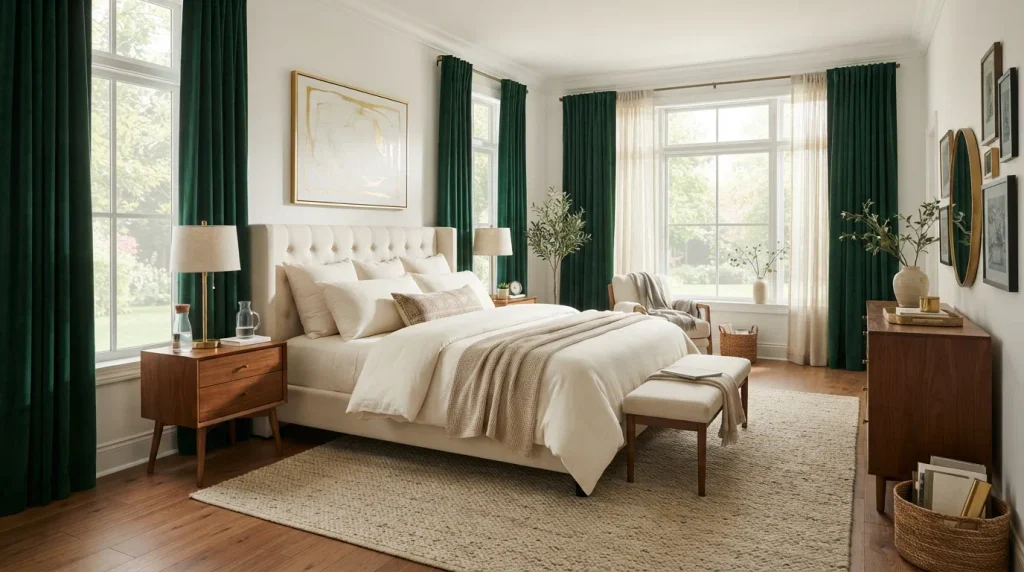
Emerald curtains can bring dramatic color into a bedroom while keeping the walls completely neutral. Floor-to-ceiling panels are especially effective because they draw the eye upward and make the room feel taller. Choose velvet for a luxurious, cocooning effect or linen for a softer, more relaxed appearance. Pair the curtains with cream bedding, warm wood furniture, and subtle brass details so the green feels intentional. The fabric also changes throughout the day as natural light moves across its surface, creating depth without needing additional decorative elements around the windows.
For the most polished result, hang curtains slightly wider and higher than the window frame so they frame the architecture rather than simply covering the glass. This small installation detail can make a noticeable difference in the room’s proportions. If the green feels too strong, repeat it in just one or two small accessories, such as a cushion or ceramic vase. I’ve noticed that keeping the remaining textiles neutral helps emerald curtains feel sophisticated rather than overly coordinated. During the evening, warm lamps beside the bed soften the darker fabric and create a comfortable, intimate atmosphere.
11. Layered Lighting
- Prevents a dark green palette from feeling flat or gloomy.
- Combining overhead, bedside, and accent lighting adds depth.
- Warm bulbs make emerald surfaces feel richer at night.
- Adjustable fixtures give practical control for reading and relaxing.
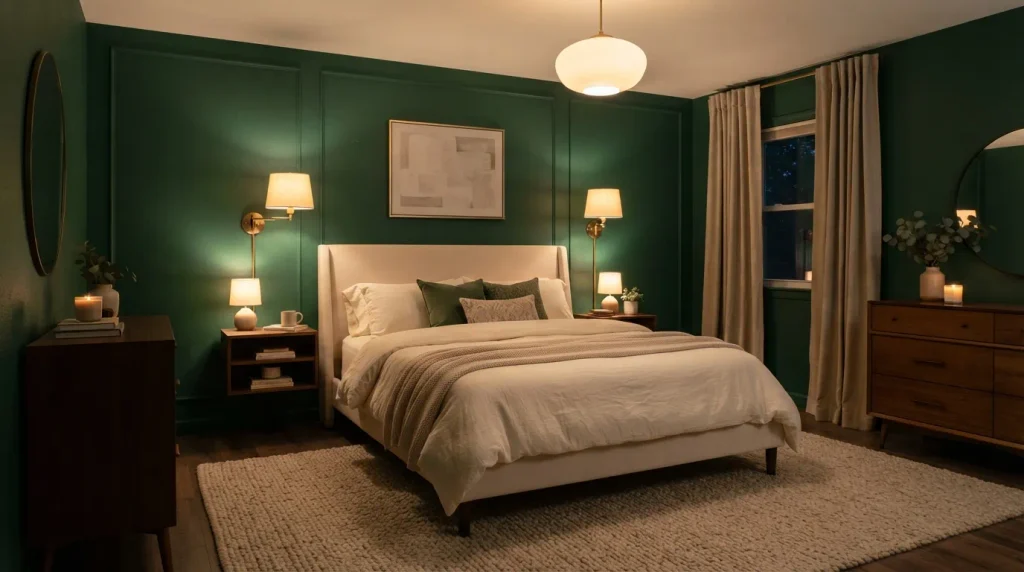
Good lighting can completely change how emerald green looks inside a bedroom. Instead of relying on one ceiling fixture, combine several light sources at different heights. Bedside sconces provide practical reading light, table lamps create a softer glow, and a central fixture adds general illumination. This layered approach prevents darker green walls or furnishings from appearing flat after sunset. Warm-white bulbs are particularly effective because they bring out the richness of emerald without making the room feel harsh. The goal is not simply to brighten the space, but to create several comfortable lighting zones.
Think about how you actually use the bedroom before choosing fixtures. A reading lamp should illuminate the bed without shining directly into your eyes, while a small accent lamp can highlight artwork or a decorative corner. Dimmers are useful because the ideal brightness changes from morning routines to nighttime relaxation. Brass or aged-metal fixtures work beautifully with deep green, while matte black creates a more contemporary contrast. In my experience, layered lighting is one of the simplest upgrades that makes a bedroom feel more finished, especially when the main color is rich and saturated.
12. Cream Upholstery
- Creates a bright visual break against deep green tones.
- Cream fabric makes the bedroom feel softer and more welcoming.
- Upholstered furniture adds comfort without requiring extra decoration.
- Boucle, linen, and woven fabrics bring useful texture.
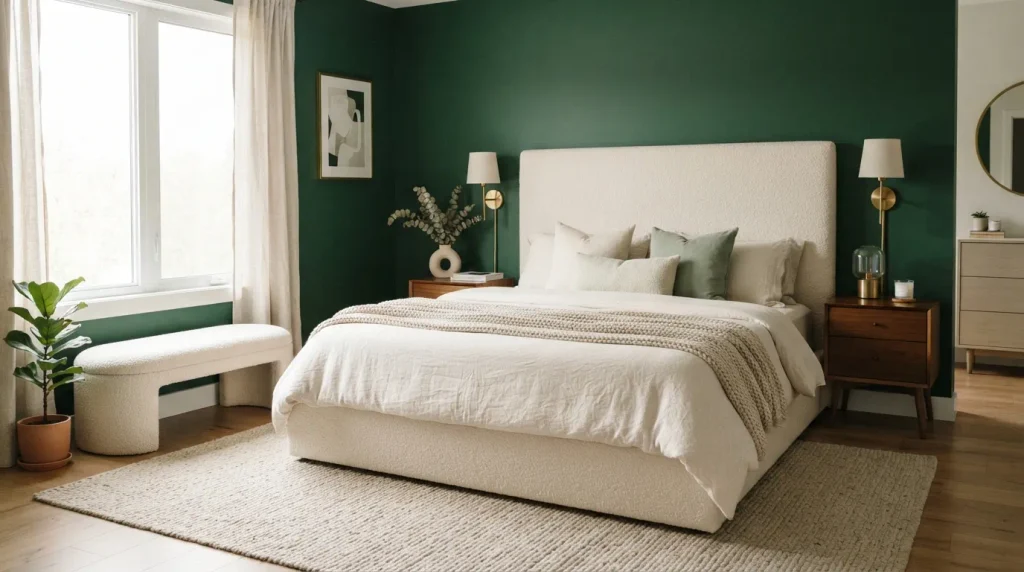
Cream upholstery provides the perfect visual counterpoint to a rich emerald palette. A cream upholstered bed, boucle bench, or occasional chair can brighten the room while adding softness and texture. This is particularly useful when the walls or curtains are already dark because the lighter furniture creates a strong focal point without introducing another bold color. Choose materials such as linen, boucle, or softly woven fabric to keep the bedroom comfortable and tactile. The contrast between plush cream upholstery and saturated green creates an elegant look that still feels welcoming enough for everyday living.
To keep cream furniture practical, especially in a busy bedroom, choose a durable upholstery and use washable throws or removable covers where possible. Keep the surrounding furniture in warm wood or muted metal so the palette remains balanced. Ivory bedding can blend naturally with the headboard, while beige accents create a gentle transition toward the floor. Avoid adding too many bright white pieces because warmer cream tones usually complement emerald more naturally. The finished arrangement feels lighter, calmer, and more spacious, while the green remains the defining color that gives the bedroom its distinctive character.
13. Marble Accents
- Adds a refined surface contrast against rich green tones.
- White or cream marble keeps the room feeling bright.
- Small marble pieces can create luxury without visual clutter.
- Brass details pair naturally with both marble and emerald.
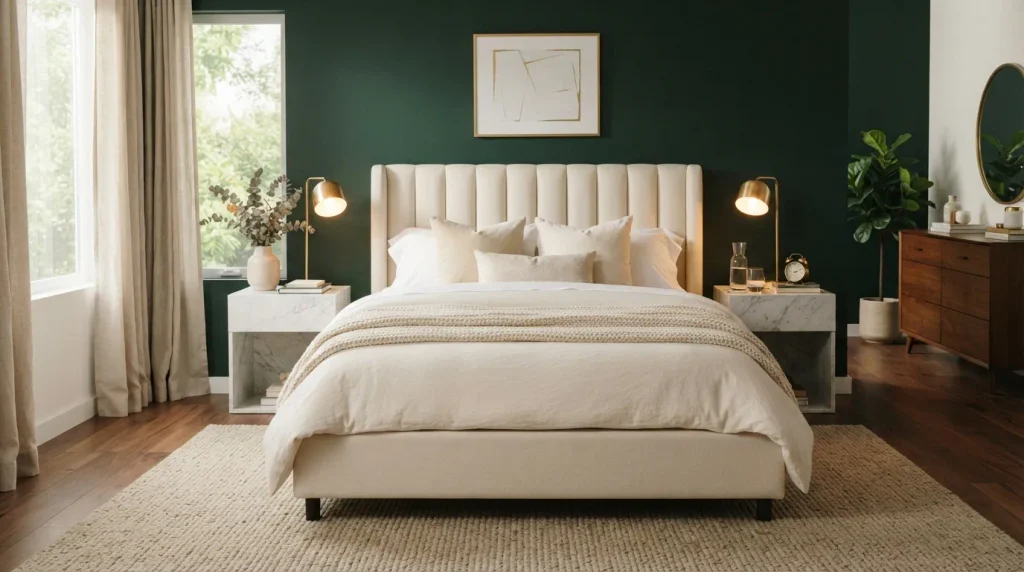
Marble accents can give an emerald bedroom a polished, elevated finish without requiring a complete furniture makeover. A marble-topped nightstand, small side table, or decorative tray introduces a cool, refined surface that contrasts beautifully with the depth of green. White or cream marble works especially well because its lighter base creates visual breathing room. Choose pieces with subtle veining rather than extremely dramatic patterns if you want the bedroom to remain calm. The combination of green, marble, and warm metal creates an elegant foundation that feels luxurious while still being practical for everyday use.
You can also use marble in smaller details when a large piece feels too formal. A bedside tray, lamp base, vase, or small accent table can provide enough contrast to make the palette feel more sophisticated. Balance the cooler stone with warm materials such as walnut, oak, linen, or woven textiles. Brass hardware adds another gentle layer of warmth and connects naturally with the green. I’ve noticed that using marble sparingly often looks more expensive than covering multiple surfaces with it. One or two carefully selected pieces can create the desired effect without making the bedroom feel like a showroom.
14. Vintage Decor
- Adds personality and character to a modern green bedroom.
- Antique-style mirrors create an interesting focal point.
- Aged wood and brass make the color palette feel warmer.
- Mixing old and new prevents the room from looking overly coordinated.

Vintage accents can make an emerald bedroom feel collected rather than overly styled. Look for an antique-inspired mirror, aged brass lamp, carved wooden nightstand, or framed artwork with a slightly traditional character. These details introduce history and visual texture while working beautifully with rich green tones. The key is mixing them with simpler contemporary pieces so the room feels current. For example, place a vintage-style mirror above a streamlined dresser or combine an ornate lamp with a clean upholstered bed. This contrast gives the space personality without making it feel like a themed period room.
When mixing vintage pieces, focus on repeating finishes rather than matching every item. Warm brass, walnut, cream, and muted beige can connect pieces from different styles naturally. Avoid filling every empty surface with antiques because a little negative space helps individual objects stand out. A vintage rug can also work beautifully if its colors include muted cream, brown, or green. In my experience, one distinctive older-looking piece often has more impact than several decorative replicas. The result is a bedroom with depth and character, where the emerald color acts as a sophisticated backdrop for meaningful, interesting details.
15. Cozy Textures
- Makes deep green feel softer and more inviting.
- Layered fabrics add dimension without introducing many colors.
- Chunky throws and cushions create a comfortable focal point.
- Natural fibers prevent the room from feeling overly polished.
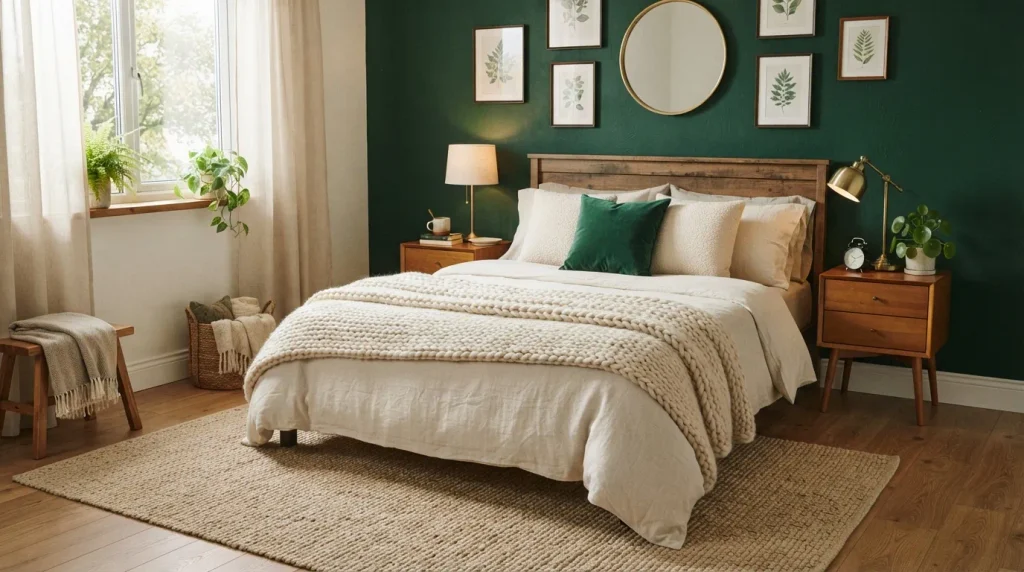
Rich color becomes especially inviting when it is surrounded by soft, touchable textures. Layering linen bedding, chunky knitted throws, boucle cushions, velvet accents, and a woven rug can make an emerald bedroom feel warm rather than formal. Instead of introducing several new colors, concentrate on cream, ivory, beige, and warm brown so the textures provide the visual variety. This works particularly well during cooler months, when heavier fabrics naturally make the room feel more comfortable. The result is a bed that looks inviting from across the room and feels equally pleasant when you actually use it.
Texture is also a practical way to soften a strong color without repainting or replacing major furniture. Add a quilted coverlet beneath the duvet, place two tactile cushions against the headboard, and finish with a throw folded casually across the lower third of the bed. A woven rug can soften hard flooring while adding another layer underfoot. Keep patterns understated so the different materials remain the focus. I’ve noticed that mixing matte and slightly lustrous fabrics creates particularly beautiful depth because the lighting catches each surface differently. This makes the bedroom feel layered, comfortable, and visually rich.
16. Black Accents
- Adds crisp contrast that makes emerald green feel more contemporary.
- Black frames and fixtures define the room without adding more color.
- Matte finishes keep the combination sophisticated rather than overly dramatic.
- Warm wood and cream textiles soften the darker elements.
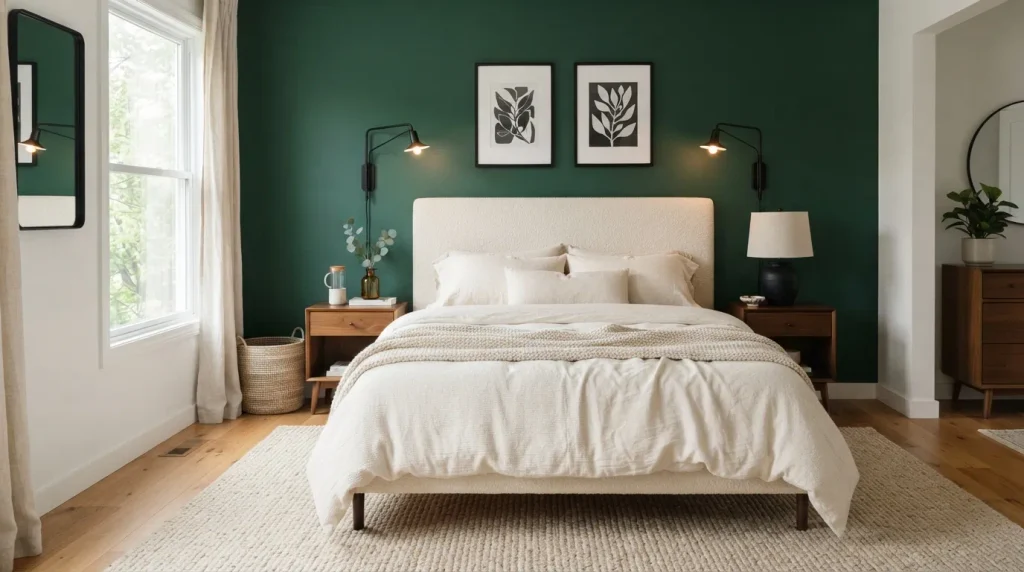
Black accents can give an emerald bedroom a sharper, more contemporary edge. Instead of adding large black furniture pieces, introduce the color through smaller details such as picture frames, bedside sconces, curtain rods, mirrors, or cabinet hardware. Matte black works particularly well because it creates definition without reflecting too much light. Pair these accents with cream bedding and warm wood furniture to prevent the room from becoming visually heavy. The result is a clean contrast that makes the green appear even richer while giving the overall bedroom a more structured, modern appearance.
Balance is important when combining two strong colors. Keep black concentrated in a few purposeful areas rather than spreading it across every surface. For example, black sconces beside the bed can visually frame an emerald wall while matching a slim picture frame above the headboard. Warm oak or walnut introduces an earthy transition between the darker elements, while ivory textiles keep the room bright. I’ve noticed that this combination works especially well in modern bedrooms with simple furniture because the black details emphasize clean lines. The finished space feels confident, sophisticated, and uncluttered without losing warmth.
17. Soft Pink Details
- Introduces a gentle contrast against saturated emerald tones.
- Blush textiles soften the overall color scheme.
- Small accents are enough to create noticeable warmth.
- Cream and brass help connect both colors naturally.
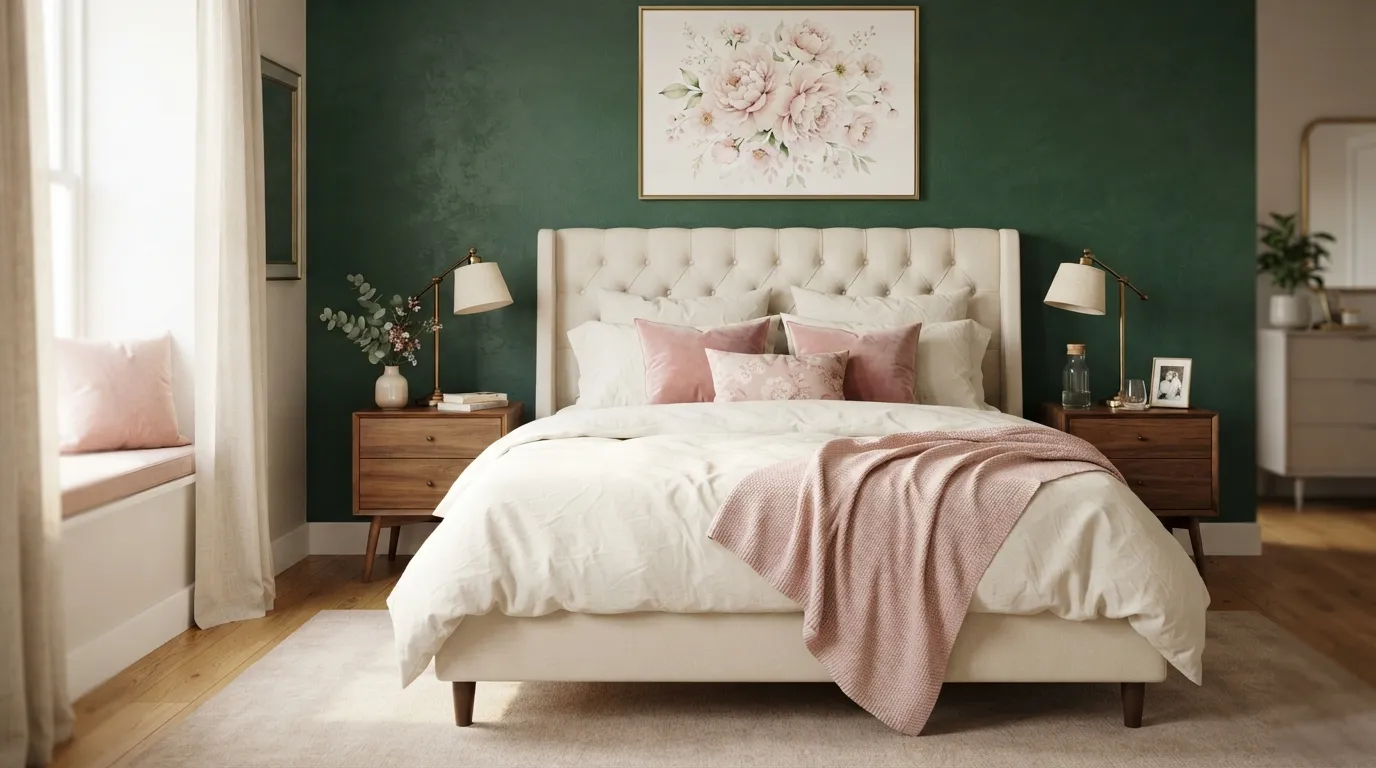
Soft pink can create a surprisingly elegant contrast with emerald green. Blush cushions, a dusty rose throw, or muted pink artwork can soften the intensity of the deeper shade without making the bedroom feel overly colorful. The secret is choosing dusty, muted pink rather than a bright bubblegum tone. Pair it with cream, beige, warm wood, and brushed brass so the two colors feel connected rather than competing. This palette works beautifully when you want a bedroom that feels sophisticated but still has a gentle, welcoming character.
Use pink as an accent rather than an equal partner to the green. Two or three carefully placed pieces can be enough, such as blush pillows on the bed and a small piece of artwork above a dresser. If the emerald is already used on the walls, keep the larger furniture pieces neutral to maintain balance. Warm lighting will make the pink feel softer in the evening, while natural daylight keeps the green looking fresh. This combination is particularly useful for refreshing a room without major changes because swapping textiles can completely shift the atmosphere without replacing permanent furniture.
18. Minimalist Styling
- Keeps emerald green as the clear focal point.
- Reduces visual clutter in smaller bedrooms.
- Simple furniture allows architectural details to stand out.
- Neutral accessories create a calm, contemporary atmosphere.
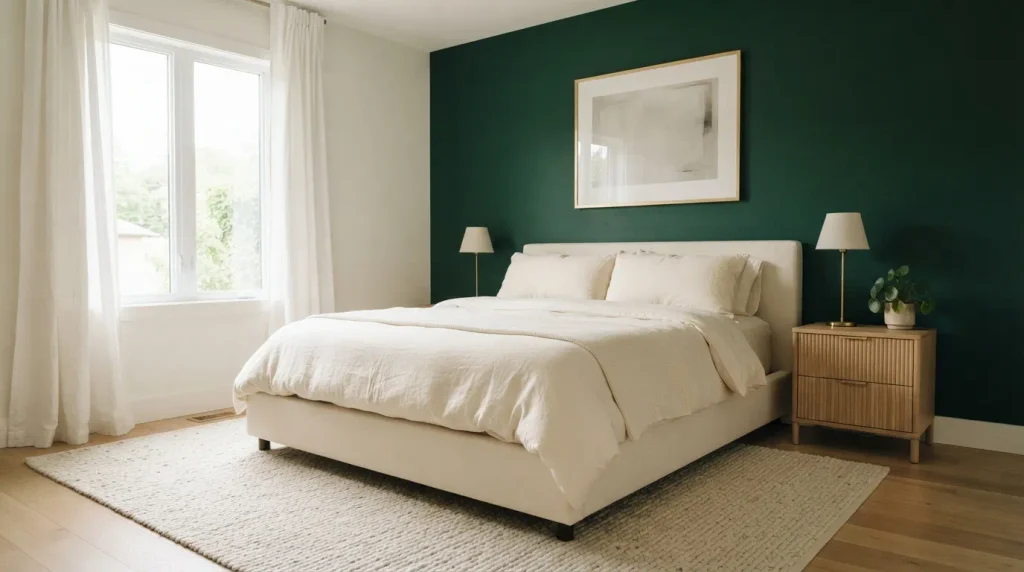
Minimalist styling lets emerald green make a strong statement without competing with unnecessary decoration. Choose a simple bed, streamlined nightstands, neutral bedding, and one or two carefully selected accessories. When the furniture has clean silhouettes, the color itself becomes the main design feature. This is particularly effective in smaller bedrooms where too many decorative pieces can make the space feel crowded. Keep surfaces mostly clear and use texture rather than extra objects to add interest. A linen duvet, woven rug, and softly upholstered headboard can provide enough detail while preserving the calm quality of minimalist design.
The best minimalist bedrooms are not empty; they are edited carefully. Give each visible piece a purpose, whether it provides storage, lighting, comfort, or visual balance. If your emerald color is concentrated on one wall, leave the surrounding surfaces quiet so the focal point remains obvious. Light oak, warm white, and beige are useful supporting tones because they prevent the room from feeling stark. In my experience, removing just a few unnecessary accessories can make a saturated color feel much more luxurious. The finished bedroom looks spacious, intentional, and peaceful while remaining practical for everyday routines.
19. Emerald Ceiling
- Creates an unexpected focal point without covering every wall.
- Works especially well with warm white or cream walls.
- Draws the eye upward and can emphasize ceiling height.
- Brass lighting adds a polished finishing detail.
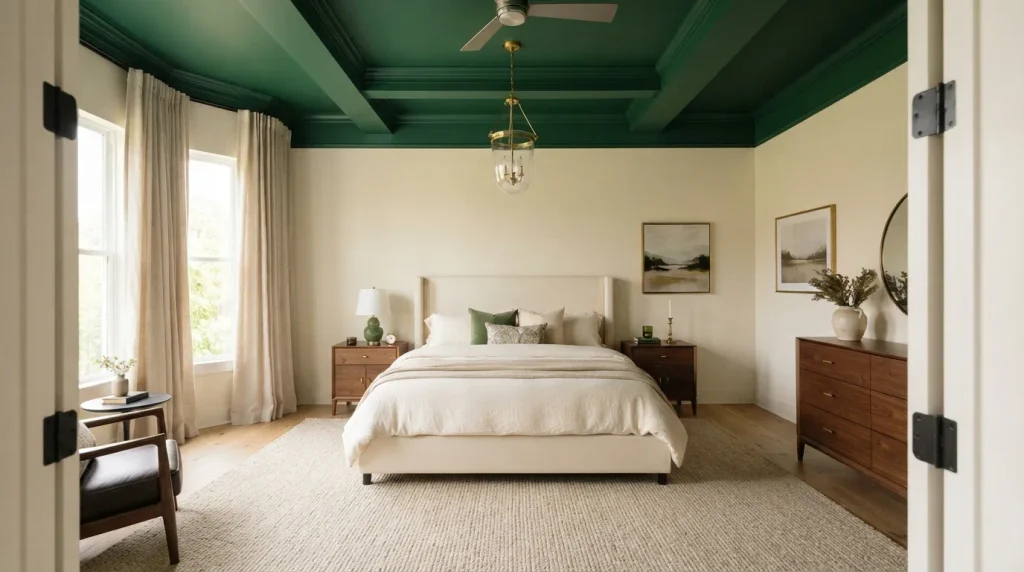
An emerald ceiling creates a striking design moment while keeping the walls light and airy. This approach works particularly well when you want a rich color but do not want the entire bedroom surrounded by dark surfaces. Pair the ceiling with warm white or creamy walls so the green feels intentional rather than heavy. A simple pendant or chandelier can become an additional focal point beneath the saturated surface. The contrast draws attention upward, which can make architectural details such as molding, beams, or a higher ceiling feel even more noticeable.
Because the ceiling is such an unexpected place for color, keep the rest of the room relatively restrained. Cream bedding, pale curtains, warm wood, and a neutral rug create a calm foundation beneath the bold overhead shade. Choose lighting with a warm glow so the green remains rich rather than appearing cold at night. If you have decorative molding, painting it in the same emerald shade can create a seamless, sophisticated effect. This idea is especially useful for bedrooms with neutral walls because it adds personality and drama without requiring a major change to the existing furniture or layout.
20. Gallery Wall
- Adds personality while breaking up a large green surface.
- Mixed frames create an intentionally collected appearance.
- Neutral artwork keeps the arrangement from becoming visually chaotic.
- Repeating brass, wood, or black frames connects the display to the furniture.
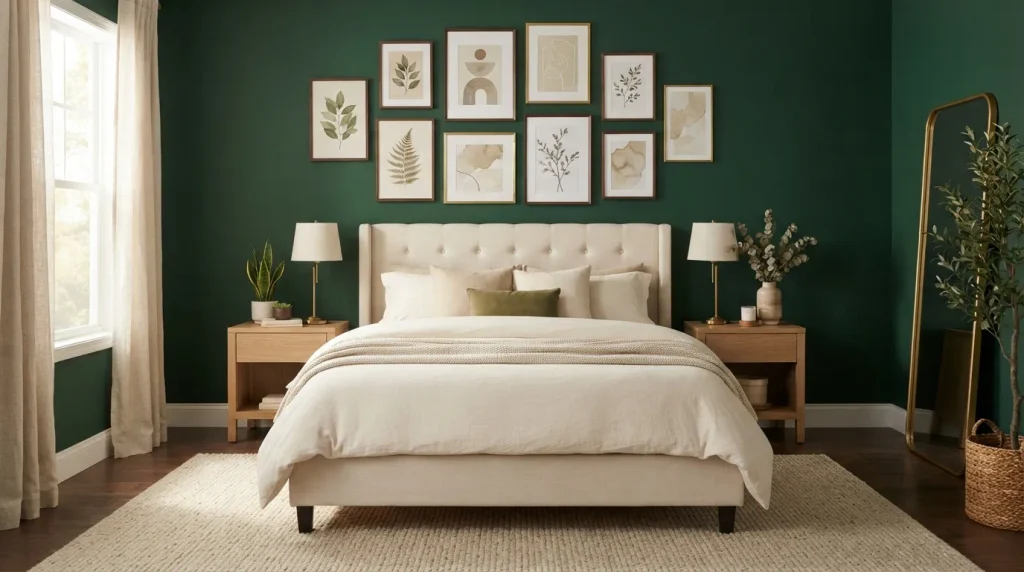
A gallery wall can transform a plain emerald backdrop into a personalized focal point. Choose a mix of botanical prints, abstract artwork, line drawings, or understated photography in cream, beige, brown, and muted green tones. Arranging several smaller pieces creates more visual interest than relying on one oversized print, especially across a wide wall behind the bed. Keep a consistent visual thread through the collection, such as similar frame finishes or a shared neutral palette. The deep green background helps lighter artwork stand out beautifully while giving the entire display a sophisticated, layered appearance.
Before hanging anything, arrange the frames on the floor to test spacing and proportions. Leave enough breathing room between pieces so the wall feels curated rather than crowded. Warm wood frames can soften the green, while brass or black frames create stronger definition. If the bedroom already contains patterned bedding, choose simpler artwork to avoid competing focal points. I’ve noticed that a gallery wall feels most successful when it includes a few pieces with different sizes rather than perfectly matching frames. The result adds personality and makes the bedroom feel thoughtfully lived-in without sacrificing visual calm.
21. Reading Corner
- Creates a useful second zone beyond the sleeping area.
- Emerald tones make the corner feel cozy and defined.
- A comfortable chair adds function without changing the whole room.
- A floor lamp provides focused evening light.
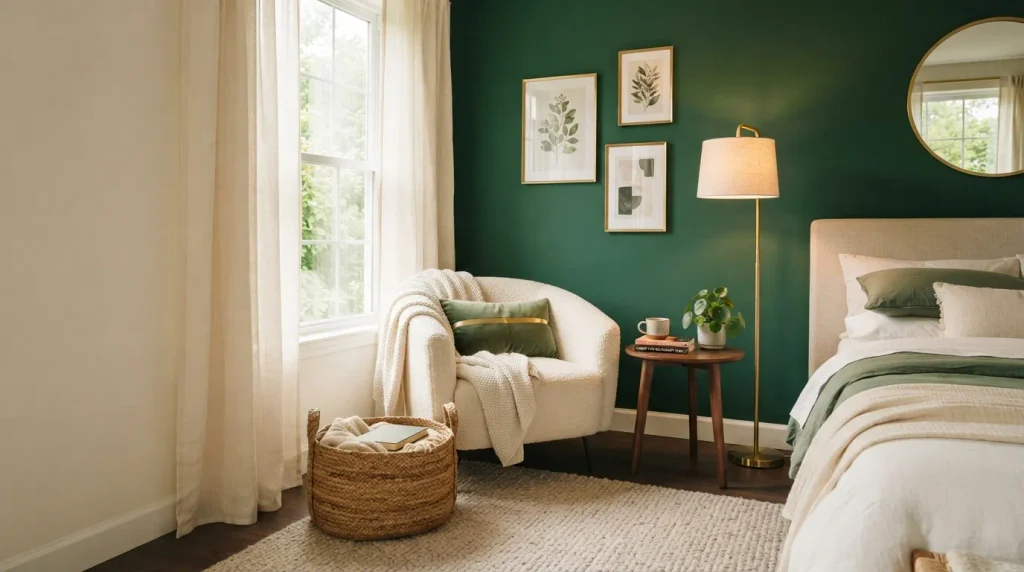
A cozy reading corner can make an emerald bedroom feel more useful and thoughtfully designed. Place a comfortable cream or beige armchair beside a window, then add a small wooden side table for books, a cup, or a decorative object. A slim floor lamp provides focused evening light without taking up much space. If the bedroom has an emerald accent wall, positioning the chair nearby visually connects the two areas. In my experience, even a compact corner can make a bedroom feel more complete because it creates a separate place for reading, relaxing, or enjoying a few quiet minutes.
Keep the reading area visually light so it does not compete with the bed. A boucle or linen chair adds softness, while a woven basket underneath or beside the table provides useful storage for blankets and books. Choose warm wood and brass finishes to complement the deeper green without introducing another dominant color. If natural light reaches the corner during the day, sheer curtains can soften it while maintaining brightness. At night, a warm floor lamp creates a comfortable glow that makes the emerald surroundings feel richer. The finished corner adds function, texture, and a welcoming sense of comfort.
22. Warm Wood Accents
- Adds natural warmth to balance rich emerald surfaces.
- Wood furniture makes the bedroom feel grounded and welcoming.
- Light oak creates contrast, while walnut gives a deeper layered effect.
- Small wooden accessories can refresh the room without major changes.
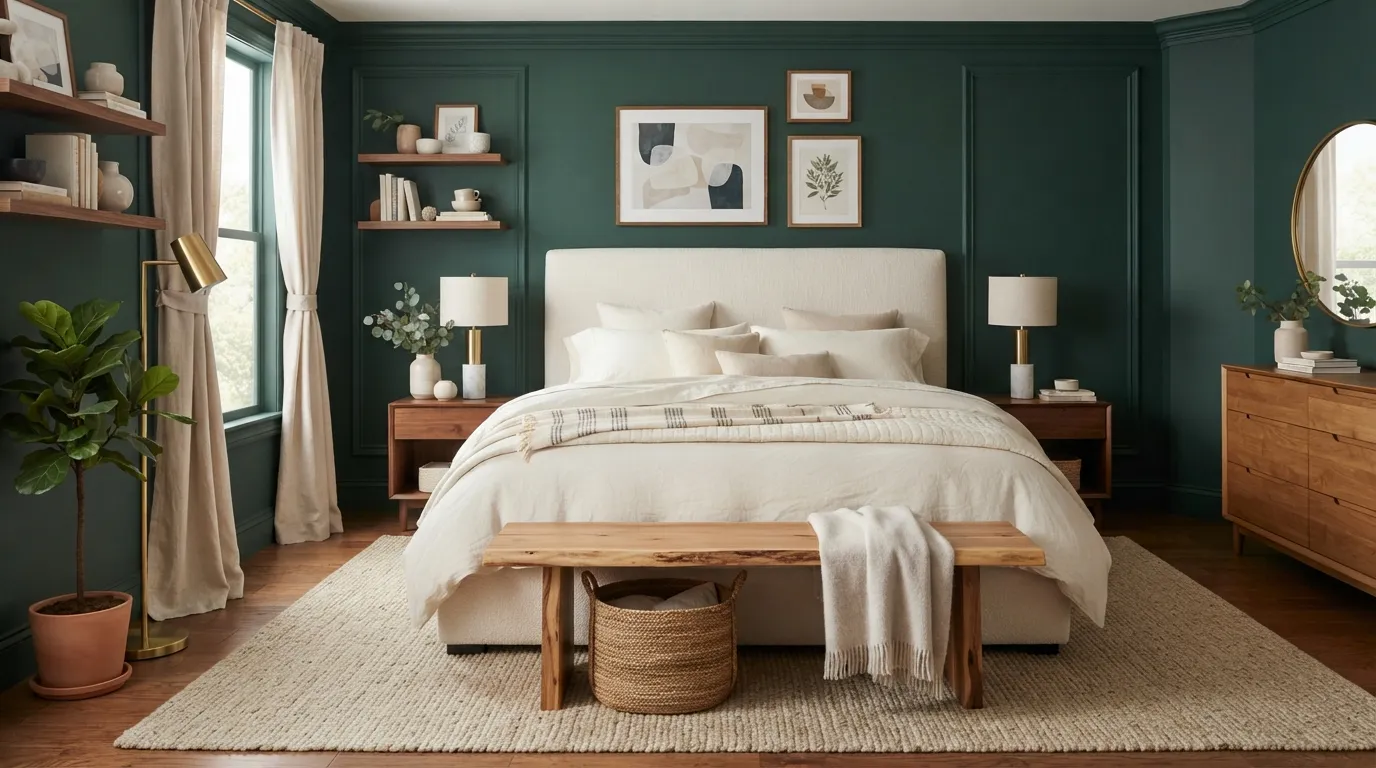
Warm wood can make an emerald bedroom feel instantly more natural and inviting. Whether you choose pale oak, honey-toned wood, or deeper walnut, the organic finish creates a beautiful contrast with saturated green. Use wood through nightstands, a bed frame, bench, dresser, or small decorative pieces rather than introducing too many different finishes. Cream bedding and beige textiles help connect the two colors while keeping the overall palette soft. The combination works because wood adds warmth and texture, giving the deeper green an earthy quality that feels comfortable rather than overly formal.
For the most cohesive result, choose one main wood tone and repeat it across two or three pieces. Light oak can brighten a darker room, while walnut creates a richer, more dramatic atmosphere. Avoid matching every wooden item perfectly because slight differences in grain and finish can make the space feel more natural. A woven basket, wooden tray, or small stool can extend the material throughout the room without adding clutter. I’ve noticed that warm wood is especially effective when paired with simple neutral fabrics because the contrast allows both the emerald color and natural grain to remain visible and visually balanced.
Conclusion
Emerald green can completely change the atmosphere of a bedroom, adding depth, personality, and a sense of quiet luxury. From statement walls and rich bedding to warm wood, soft upholstery, layered lighting, and natural accents, these emerald green bedroom ideas offer plenty of ways to create a space that feels both elegant and comfortable. You do not need to redesign everything at once; even one thoughtful update can make a noticeable difference. Save this post on Pinterest for your next bedroom refresh, try your favorite idea at home, and share it with someone looking for beautiful bedroom inspiration. Your dream retreat may be closer than you think.