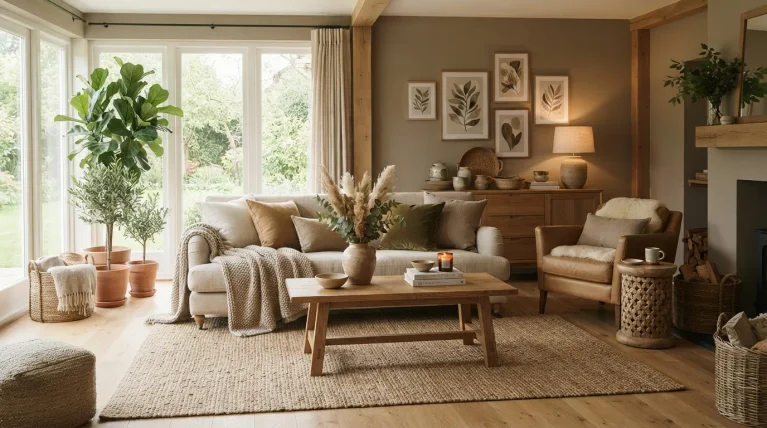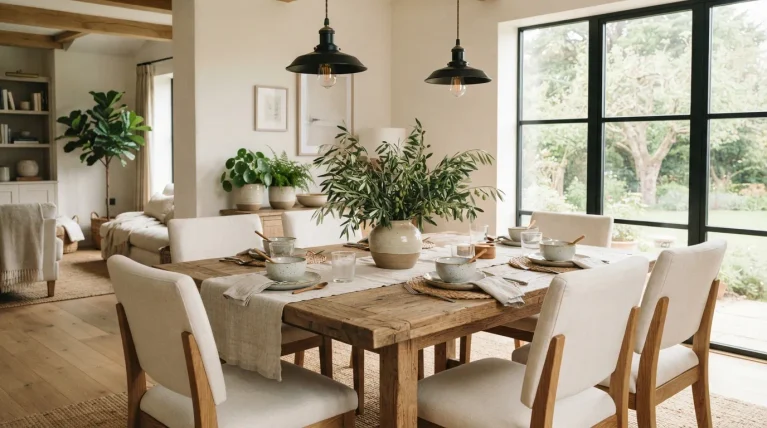
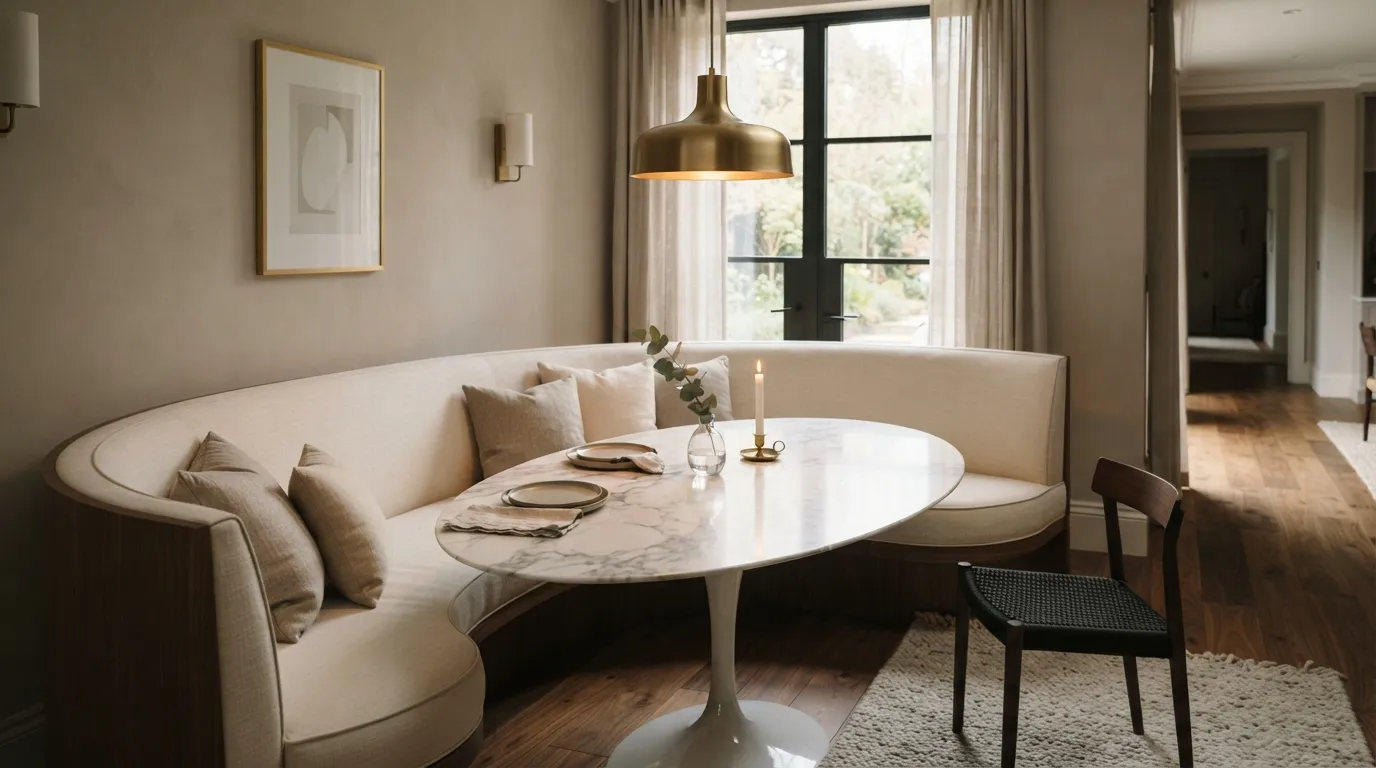
That awkward empty corner could become your favorite spot in the house. A small table, a comfortable bench, and the right lighting can change everything.
These corner dining nook ideas are designed to help you turn unused or cramped spaces into beautiful, functional dining areas that feel intentional and inviting. Whether you have a tiny apartment kitchen, a bright window corner, or a spacious open-plan room, there are plenty of ways to create a nook that fits your lifestyle and decorating style. You’ll find ideas ranging from built-in benches and hidden storage to colorful cushions, natural wood, modern curves, and cozy evening lighting. In my experience, the biggest transformations often come from small changes in furniture placement, lighting, and texture rather than expensive renovations. Save your favorites as you explore and choose the idea that best fits your space.
19 Corner Dining Nook Ideas for a Cozy Stylish Space
1. Built-In Bench Nook
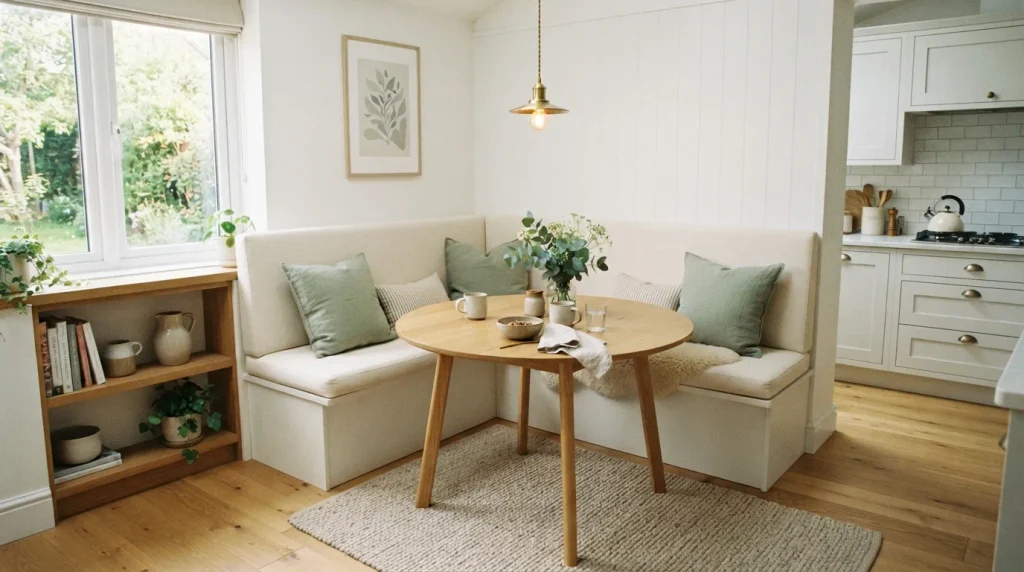
- A built-in bench turns an unused corner into purposeful seating.
- The round table makes the space easier to move around.
- Soft cushions add comfort without overwhelming the room.
- Hidden bench storage can keep dining essentials neatly tucked away.
A corner can become the most inviting seat in the room when it is planned around comfort and proportion. A built-in bench tucked against two walls creates a snug dining zone without taking over valuable floor space. Add a compact round table to soften the angles and make movement easier around the nook. In my experience, this setup works especially well in apartments and smaller kitchens because the bench uses space that would otherwise stay empty. Layer in a slim pendant, washable cushions, and one textured rug, and the whole corner feels intentional, warm, and surprisingly spacious.
This simple layout makes an awkward corner feel like a purposeful part of the home. The bench provides generous seating while the round tabletop keeps the arrangement visually light and leaves clear walking paths nearby. Choose a warm wood table for a relaxed look, or use a painted finish if you want the nook to blend with your cabinetry. A few patterned cushions can introduce color without making the area busy. For a practical upgrade, include lift-up bench storage for linens, placemats, or rarely used serving pieces. The result is a cozy dining spot that feels polished every day.
Also Read : 25 Christmas Mantel Ideas to Make Your Home Glow
2. Round Table Corner
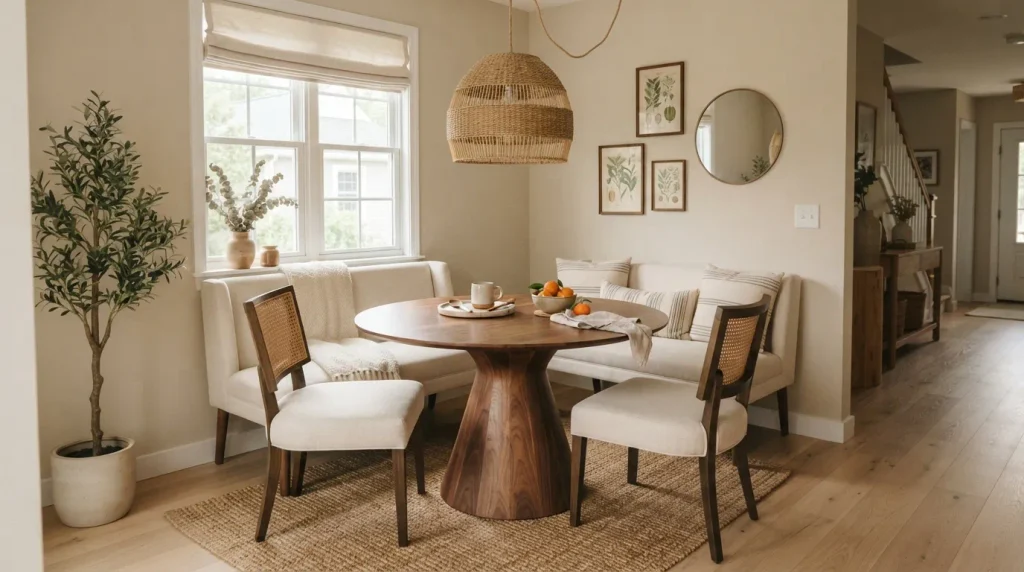
- A round table creates softer lines in a boxy corner.
- Mixed seating gives the nook a relaxed, collected appearance.
- Natural wood adds warmth against lighter walls.
- Keeping decor minimal helps the small area feel open.
A round table can instantly make a tight dining corner feel easier and more welcoming. Its curved shape breaks up the hard lines of walls, cabinets, and countertops while giving everyone a comfortable view across the table. This is one of the most versatile corner dining nook ideas because it works with benches, chairs, or a combination of both. Keep the tabletop visually simple, then add one pendant or a small centerpiece above it. I’ve noticed that leaving a little breathing room around the table makes even compact spaces appear larger, cleaner, and much easier to navigate.
The best part of this arrangement is its flexibility. A small round table can accommodate everyday breakfasts, homework sessions, coffee breaks, and casual dinners without demanding much floor space. Choose a pedestal base instead of four legs if chairs need to slide underneath easily. Upholstered seating can soften the look, while wood chairs add a more casual character. For a cohesive finish, repeat one material or color from the nearby kitchen, such as oak, black metal, or warm cream. These small connections make the dining corner feel designed rather than simply placed into an empty spot.
Also Read : 24 White Brick Fireplace Ideas for a Bright Cozy Home
3. Window Seat Dining
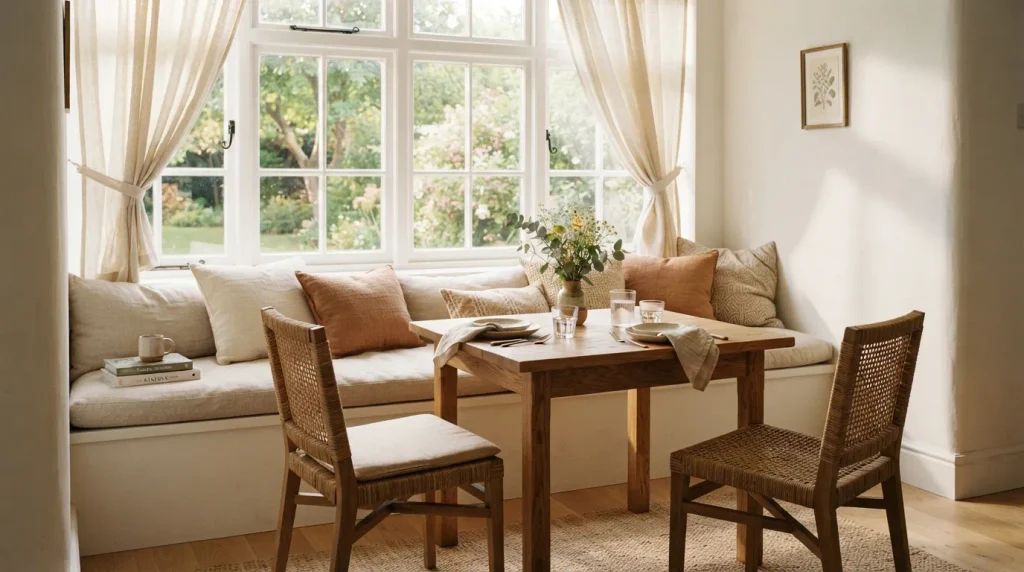
- A window seat brings natural light directly into the dining area.
- Layered cushions make the bench comfortable for longer meals.
- Light fabrics keep the corner fresh and visually airy.
- Curtains can soften the window while adding subtle texture.
Few small dining spaces feel as inviting as a nook built around a sunny window. Positioning the table beside a generous window seat lets natural light become part of the design instead of relying only on overhead fixtures. A cushioned bench provides comfortable seating while freeing the opposite side for lightweight chairs that can move when needed. In my experience, this arrangement feels especially pleasant for morning coffee or slow weekend breakfasts. Choose linen curtains, pale wood, and soft neutral upholstery to keep the area bright, then add one leafy plant for a simple finishing touch.
A window-centered dining nook can also make a room feel connected to the outdoors. Keep furniture low enough to preserve the view, and avoid filling the sill with too many accessories. A narrow table works well when floor space is limited, while a slightly wider surface gives families more room for serving dishes and daily activities. If the window receives strong sunlight, choose washable, fade-resistant fabrics for the bench cushions. Add a textured runner or small rug underneath to define the eating area without blocking the clean visual flow created by the natural light.
Also Read : 23 Christmas Decor Ideas for Living Room: Cozy & Chic
4. Hidden Storage Bench
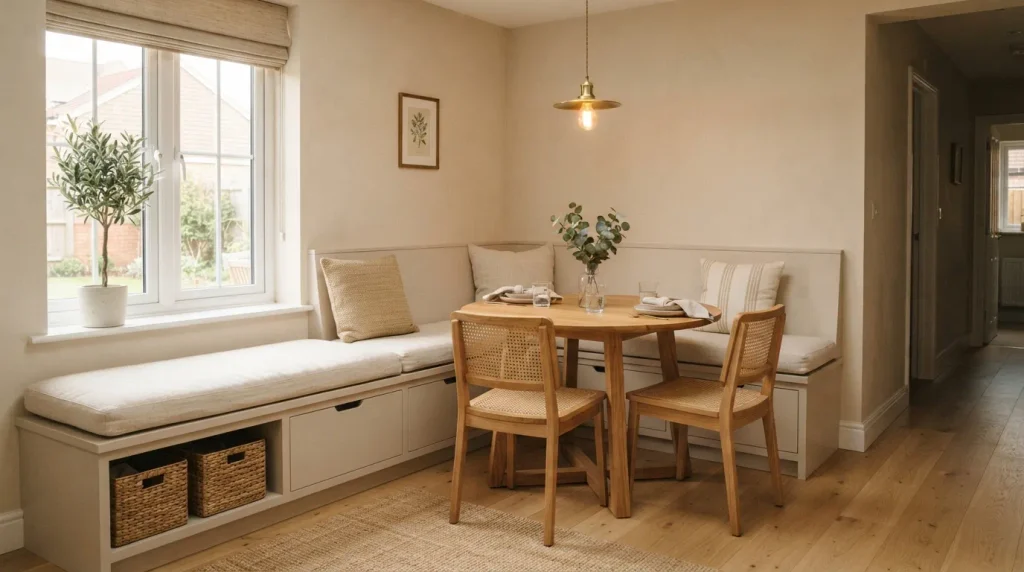
- Hidden compartments keep placemats, linens, and serving pieces out of sight.
- A cushioned bench adds comfortable seating without needing extra chairs.
- Matching cabinetry creates a seamless, built-in appearance.
- This setup makes an unused corner work harder every day.
An empty corner can become a practical dining destination with the right combination of storage and seating. A storage bench keeps everyday clutter hidden while creating a comfortable place to sit, making this setup especially useful in busy kitchens. Choose drawers or lift-up compartments for napkins, placemats, table linens, and serving pieces you do not need every day. Pair the bench with a compact wooden table and simple chairs to keep the arrangement balanced. I’ve seen this work well in family homes where every extra storage zone makes the kitchen feel calmer and easier to maintain.
Storage does not have to make a dining nook look bulky or overly functional. Use matching baskets inside open cubbies, or choose smooth drawer fronts that blend with nearby cabinetry for a cleaner finish. A slim back cushion can make the bench more comfortable without consuming much space, while a small pendant visually anchors the table. If the corner is narrow, select a table with rounded edges and enough clearance for easy movement. This approach gives you seating, organization, and personality in one compact area, helping an overlooked corner work harder without sacrificing the relaxed feeling you want from a dining space.
Also Read : 21 Moody Dining Room Ideas for a Dramatic Cozy Space
5. Minimalist Corner Table
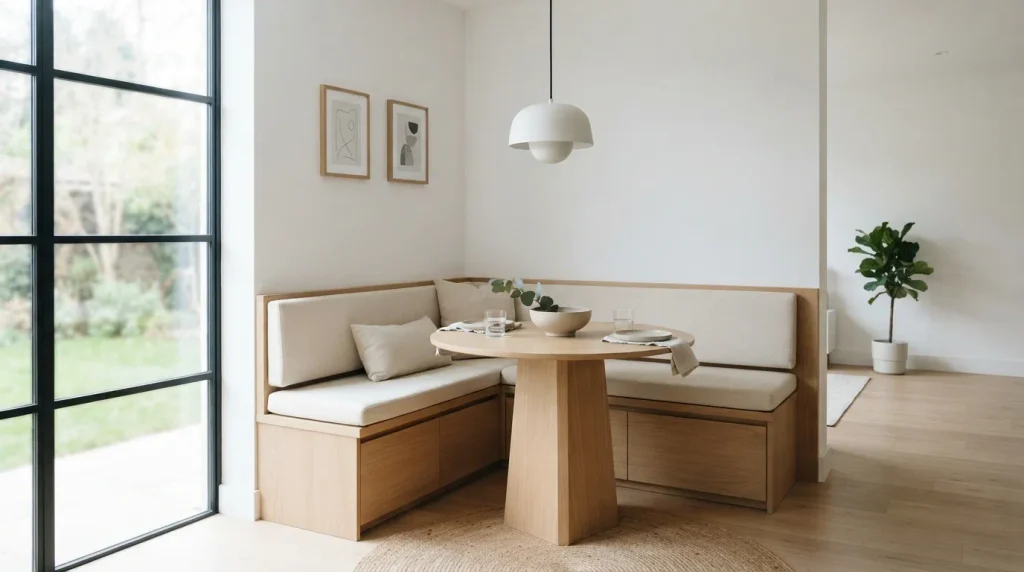
- A narrow table preserves valuable walking space around the nook.
- Neutral colors make a compact corner look brighter and larger.
- Minimal decor keeps the dining area visually calm.
- A pedestal base gives chairs more flexibility underneath the table.
A tiny dining corner can feel surprisingly elegant when every element is chosen with restraint. Instead of crowding the space with several chairs, use a slim built-in bench along one wall and pair it with a narrow pedestal table. This arrangement keeps the floor visually open while still providing enough seating for everyday meals. Soft cream upholstery, pale oak, and a simple pendant create a warm neutral palette that reflects natural light. In my experience, reducing visual clutter is one of the easiest ways to make a compact nook feel larger, calmer, and more thoughtfully designed.
For a polished finish, focus on proportion before adding decoration. The table should leave enough room for people to slide in comfortably, while the bench should provide adequate depth without making the walkway feel cramped. Wall-mounted lighting can save valuable surface and floor space, especially when the corner sits close to a kitchen work zone. Add one framed print, a small vase, or a woven cushion for personality rather than filling every surface. These practical choices help small corner dining nook ideas feel intentional and functional, proving that limited square footage can still support a beautiful everyday dining area.
Also Read : 21 Classy Christmas Decor Ideas for a Chic Home
6. Sunny Window Nook
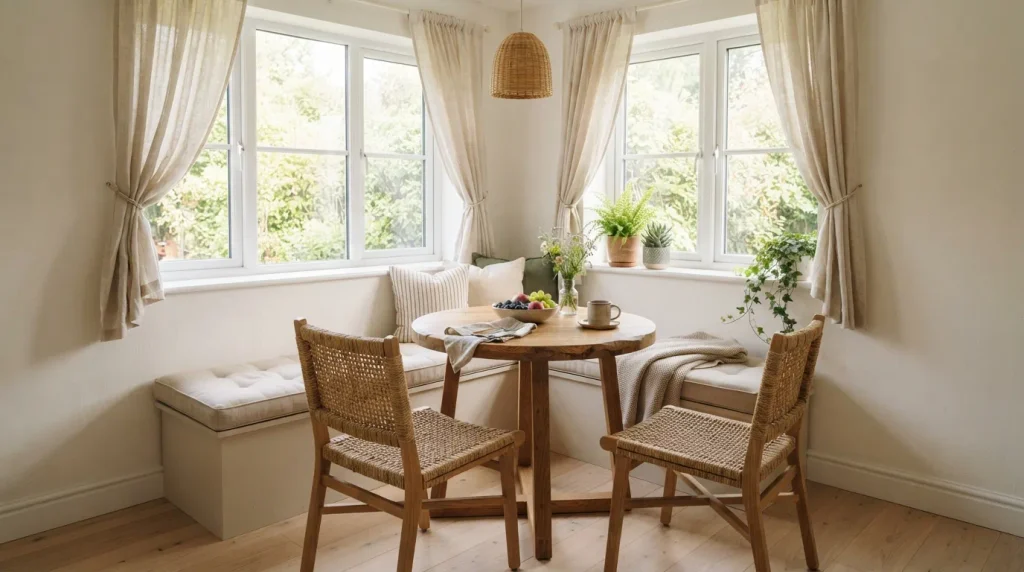
- A window seat brings natural light directly into the dining area.
- Low-profile furniture keeps the outdoor view open and inviting.
- Linen curtains soften bright sunlight without making the corner dark.
- Woven textures add warmth while keeping the look relaxed.
A breakfast corner becomes instantly brighter when its seating is placed directly beside generous windows. Use a slim bench beneath the window and position a small round table just in front of it, leaving enough space for chairs to pull out comfortably. Light oak, creamy upholstery, and soft white walls bounce daylight around the area, while a linen pendant adds warmth after sunset. This arrangement works particularly well for morning routines because the natural light makes the space feel fresh and open. I’ve noticed that simple window placement can make a compact dining area feel much more generous.
Keep the window view as the main feature by choosing furniture with a low visual profile. A shallow bench cushion, slim table legs, and lightweight chairs prevent the corner from looking crowded. Add woven textures through a small rug, basket, or chair seat to bring warmth without competing with the natural scenery outside. If direct sunlight is strong, use simple linen curtains or adjustable shades to control glare and protect upholstery. The result is a comfortable place for breakfast, reading, or casual meals that feels connected to the outdoors while still functioning as a practical part of the home.
Also Read : 23 Christmas Tree Trends 2026 for a Stylish Holiday Home
7. Farmhouse Corner Bench
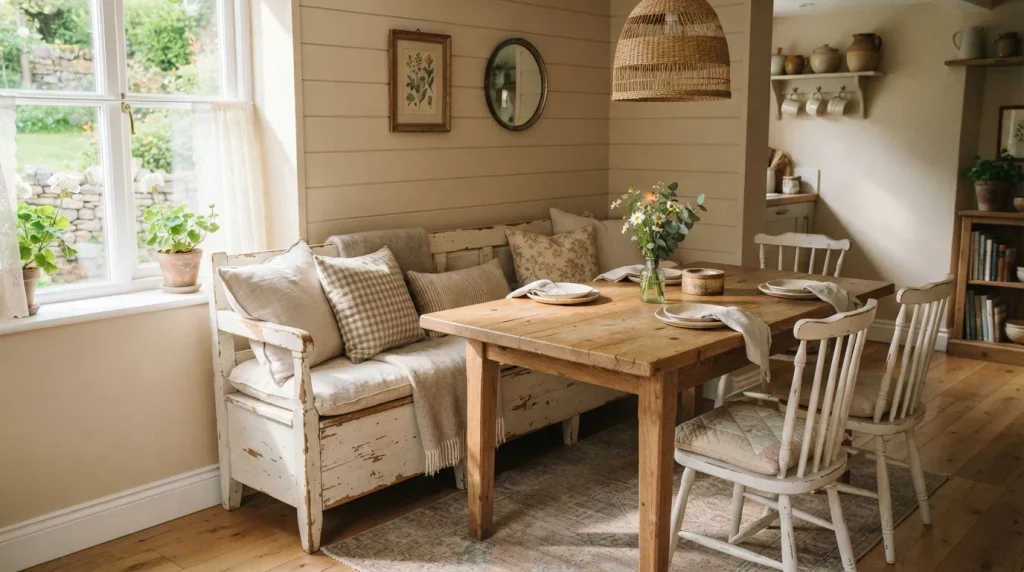
- A farmhouse bench adds relaxed character to an unused corner.
- Reclaimed wood brings warmth and natural texture.
- Soft linen cushions keep rustic furniture comfortable.
- Vintage-inspired details make the nook feel collected and lived-in.
A farmhouse dining corner feels welcoming because it combines practical furniture with imperfect, natural textures. Start with a sturdy wooden table and a built-in bench painted in warm white or soft cream. Add spindle-back chairs, linen cushions, and a woven pendant to create that relaxed country character without making the space feel old-fashioned. In my experience, mixing one weathered finish with cleaner pieces keeps farmhouse spaces looking fresh. A simple centerpiece, such as a ceramic pitcher filled with greenery, can complete the look while leaving enough table space for everyday breakfasts, family meals, and casual gatherings.
The key to a successful farmhouse nook is balance. Too many rustic accessories can make a small corner feel crowded, so let the furniture provide most of the character. Choose natural oak, reclaimed wood, linen, cotton, and woven materials, then keep the wall color light to reflect available daylight. A washable runner can add pattern beneath the table without competing with the seating. If storage is needed, baskets beneath the bench provide an easy solution while maintaining the relaxed appearance. These details create a practical dining area that feels comfortable, timeless, and naturally connected to a warm farmhouse kitchen.
8. Scandinavian Breakfast Nook
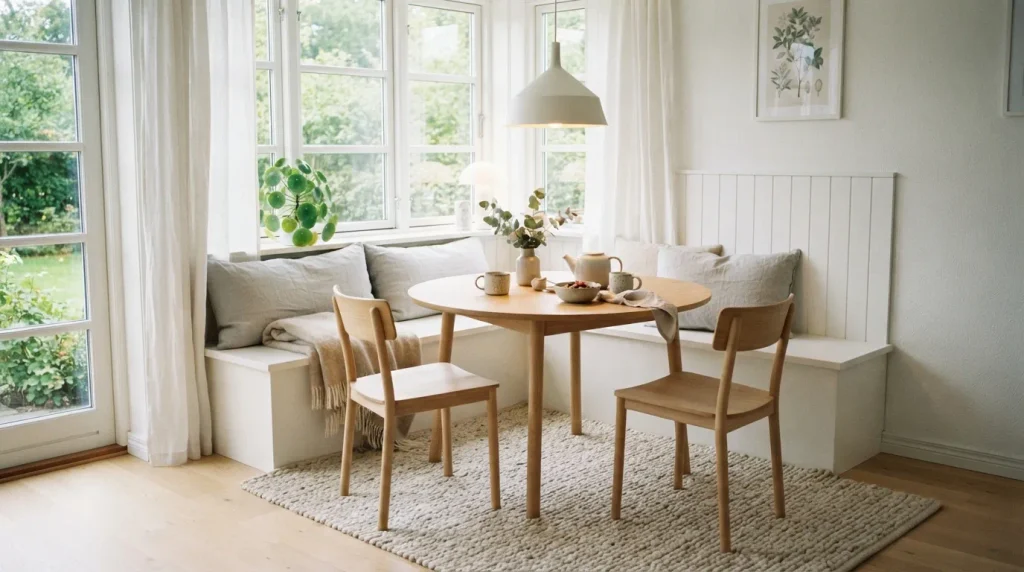
- Pale wood keeps the corner bright and visually lightweight.
- Simple furniture makes a small nook feel more spacious.
- Soft textiles add warmth to an otherwise minimal palette.
- A round table improves movement around tight corners.
A Scandinavian-inspired dining nook makes a small corner feel calm, bright, and beautifully uncluttered. Choose pale oak furniture, a simple upholstered bench, and lightweight wooden chairs to create an airy foundation. Keep the walls white or softly warm-toned so natural light can bounce around the space. This style works especially well for breakfast areas because it feels fresh without looking overly formal. Add a woven rug and a simple pendant for texture, then keep tabletop accessories limited to a ceramic bowl or small vase. The result is one of those corner dining nook ideas that feels effortlessly organized.
Scandinavian design works because every piece has a clear purpose while still contributing to the overall atmosphere. Avoid filling the corner with unnecessary decoration, and instead focus on comfortable seating, natural materials, and useful lighting. A bench can provide extra seating without visually weighing down the room, while a pedestal table makes it easier to move chairs around. If the space feels too pale, introduce muted sage, dusty blue, or warm beige through cushions and ceramics. These subtle accents add personality while preserving the clean, peaceful appearance that makes this style so effective in compact homes.
9. Contemporary Curved Nook
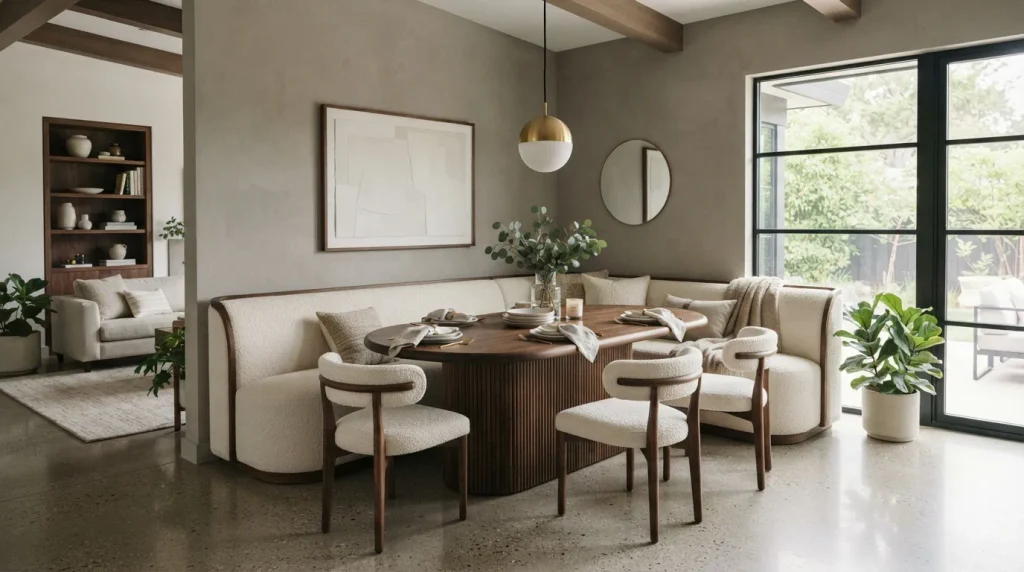
- Curved furniture softens sharp architectural corners.
- An oval tabletop provides generous seating without harsh edges.
- Boucle or textured upholstery adds contemporary softness.
- Sculptural lighting gives the nook a strong visual focal point.
Curved furniture can completely change the character of a sharp kitchen corner. Instead of repeating straight lines, use a curved banquette with an oval or softly rounded table to create a smoother visual flow. This arrangement feels contemporary without needing excessive decoration, making it ideal when you want the dining area to stand out subtly. Choose warm gray upholstery, natural walnut, and cream textiles for a sophisticated palette. I’ve noticed that rounded furniture is particularly effective in narrow spaces because it reduces the visual heaviness of corners and creates easier movement around the table.
Keep the rest of the decor restrained so the curved shapes remain the main feature. A sculptural pendant above the table can reinforce the rounded silhouette, while textured upholstery adds depth without introducing too many colors. If the surrounding kitchen is minimalist, repeat one finish from the cabinetry or flooring to make the nook feel connected. An oval table is also practical because it provides more usable surface than a tiny circular table while avoiding sharp edges. The finished space feels modern, comfortable, and intentional, with enough personality to become a standout feature of the room.
10. Small Space Banquette
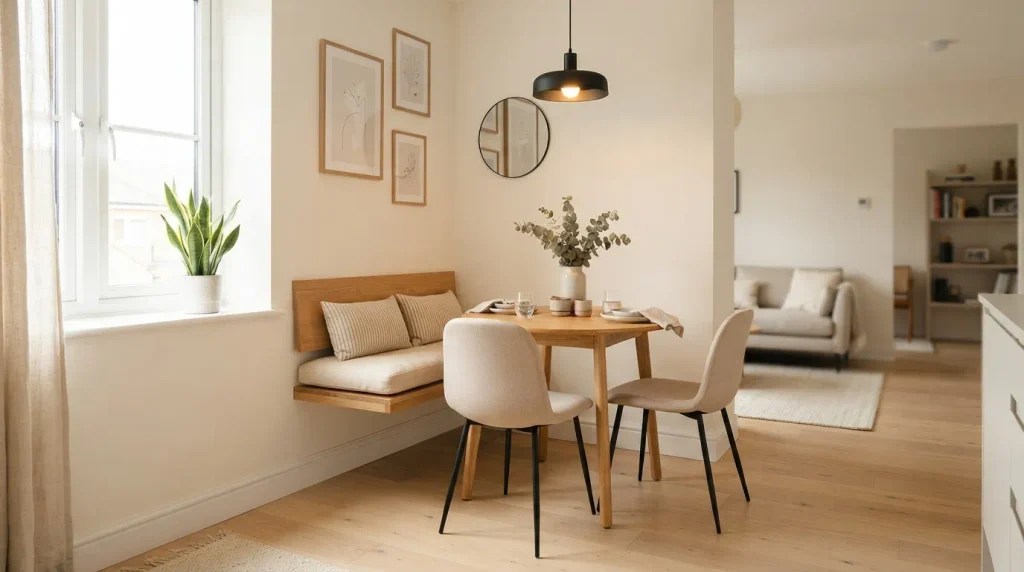
- A compact banquette maximizes seating without crowding the room.
- A small round table keeps movement around the corner easy.
- Slim chairs preserve valuable floor space.
- Light colors help the nook appear more open.
When floor space is limited, smart proportions matter more than adding more furniture. A compact banquette tucked tightly into the corner can provide comfortable seating while leaving the center of the room open. Pair it with a petite round table and two lightweight chairs that can slide underneath when not needed. Light upholstery, pale wood, and warm white walls reflect daylight and prevent the nook from feeling cramped. In my experience, choosing furniture that fits the corner rather than forcing standard dining pieces into it makes a dramatic difference in both appearance and everyday usability.
The goal is to create enough room for meals without making the dining area compete with nearby kitchen or living zones. Measure the available wall length before choosing the bench, and leave enough clearance around the table for chairs and comfortable movement. A pedestal table can be especially useful because its central base leaves more legroom underneath. Keep wall decor minimal and use one mirror or framed print to add personality without consuming floor space. With thoughtful proportions, even a narrow corner can become a comfortable dining destination that feels intentional instead of squeezed into leftover space.
11. Colorful Cushion Nook

- Colorful cushions instantly refresh a neutral dining corner.
- Mixed patterns add personality without changing permanent finishes.
- Repeated accent colors create a coordinated appearance.
- Removable textiles make seasonal updates simple and affordable.
A neutral dining corner can become much more memorable with a few well-chosen bursts of color. Start with a simple built-in bench in white or warm cream, then layer cushions in terracotta, mustard, sage, dusty blue, or another palette that complements the surrounding room. Keep the table and walls relatively neutral so the textiles become the focal point. This is an easy way to experiment with personality without committing to painted cabinetry or expensive furniture changes. One of my favorite practical tricks is repeating one cushion color in artwork or ceramics to make the whole corner feel intentionally coordinated.
Pattern can also make a small nook feel more inviting, but restraint keeps the result polished. Choose one larger pattern, then combine it with two simpler textures or solid colors so the cushions do not compete. A small patterned rug can echo the palette while visually defining the dining area. If you enjoy seasonal decorating, swap the covers rather than replacing furniture whenever you want a fresh look. This flexible approach gives your corner a new personality throughout the year while keeping the underlying design simple, functional, and easy to maintain.
12. Luxe Upholstered Nook
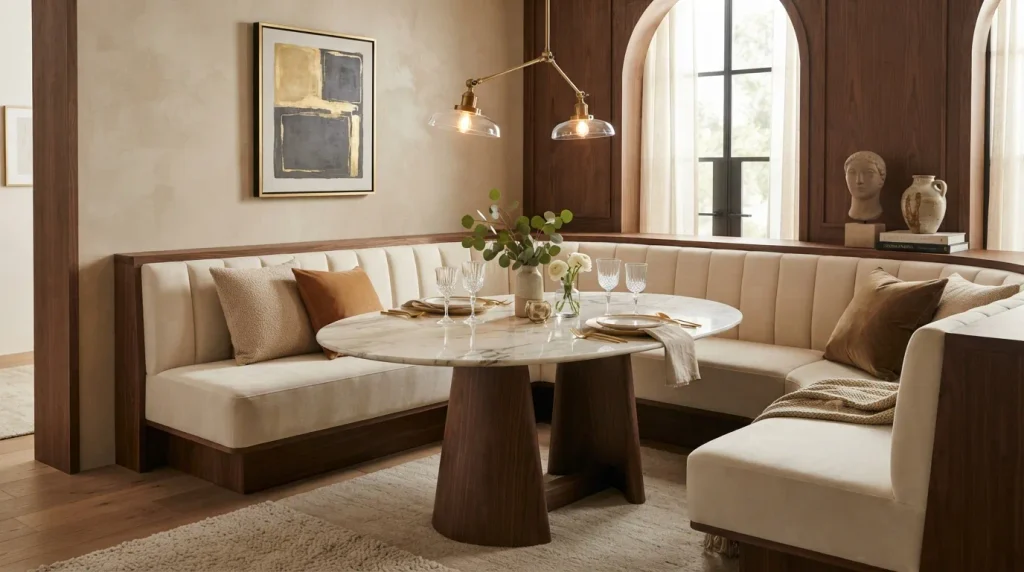
- Plush upholstery gives the dining corner an elevated appearance.
- Marble and brass create subtle visual contrast.
- Neutral tones keep the luxurious look sophisticated rather than flashy.
- Soft lighting makes the nook especially inviting in the evening.
A small dining corner can feel luxurious without becoming formal or impractical. Use a deeply upholstered banquette in cream, taupe, or soft gray as the foundation, then pair it with a rounded marble or stone table. Brushed brass lighting and warm walnut accents add polished contrast while keeping the palette restrained. The key is texture rather than excess: velvet, boucle, linen, stone, and wood can create richness without filling every surface. I’ve noticed that one high-impact material, such as marble or brass, often makes a compact space feel more sophisticated than several decorative accessories.
Comfort should remain just as important as appearance in an elevated dining nook. Choose upholstery that is durable enough for regular use, especially if the space serves as a family breakfast area rather than an occasional dining room. A plush rug can soften the flooring, while dimmable lighting creates a warmer atmosphere after sunset. Keep the tabletop mostly clear and let the furniture provide the visual drama. This balance creates a polished corner that feels special enough for entertaining but comfortable enough for everyday coffee, meals, conversations, and relaxed weekend mornings.
13. Boho Woven Nook
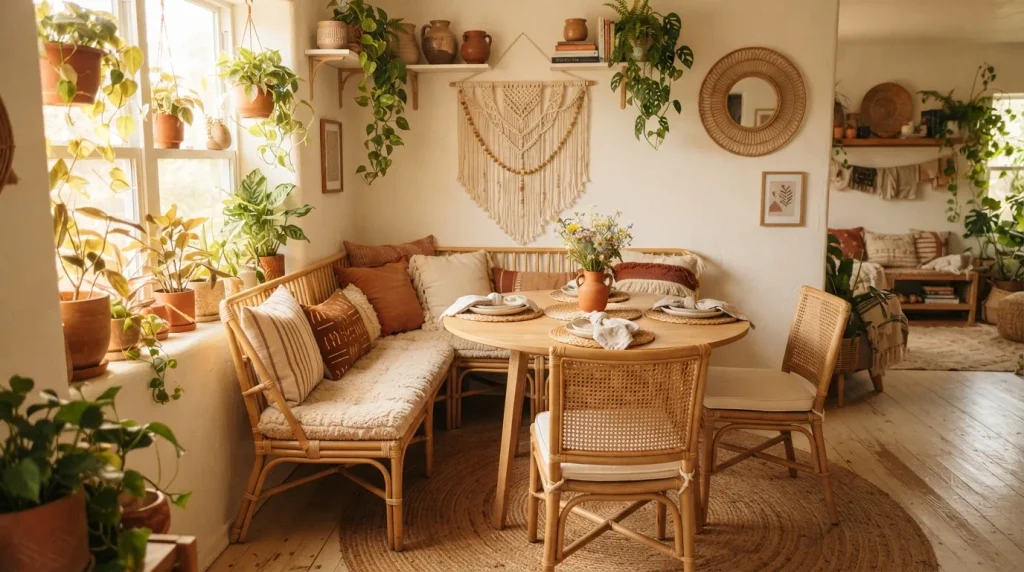
- Woven materials bring warmth and relaxed texture to the corner.
- Earthy cushions add color without overwhelming the space.
- A round wood table keeps the arrangement visually soft.
- Plants make the nook feel fresh and naturally layered.
A boho dining corner feels relaxed because it combines natural materials, warm colors, and comfortable textures without looking overly coordinated. Start with a simple wood table and add woven seating, a textured rug, and cushions in earthy shades such as terracotta, olive, sand, and cream. Rattan, jute, linen, and unfinished wood work especially well together because each material adds subtle visual interest. In my experience, the easiest way to achieve this style is to layer textures gradually rather than buying everything as a matching set. That approach keeps the nook personal, relaxed, and naturally collected.
Keep the layout simple so the variety of textures does not make a small corner feel crowded. A round table works beautifully with woven chairs or a cushioned bench, while a pendant made from rattan or natural fibers can visually anchor the arrangement. Add one or two leafy plants instead of filling every surface with accessories. A handmade ceramic bowl or small piece of wall art can provide an imperfect detail that complements the relaxed aesthetic. The finished nook should feel comfortable and organic, with enough open space to preserve easy movement and let the natural materials remain visually prominent.
14. Black And White Nook
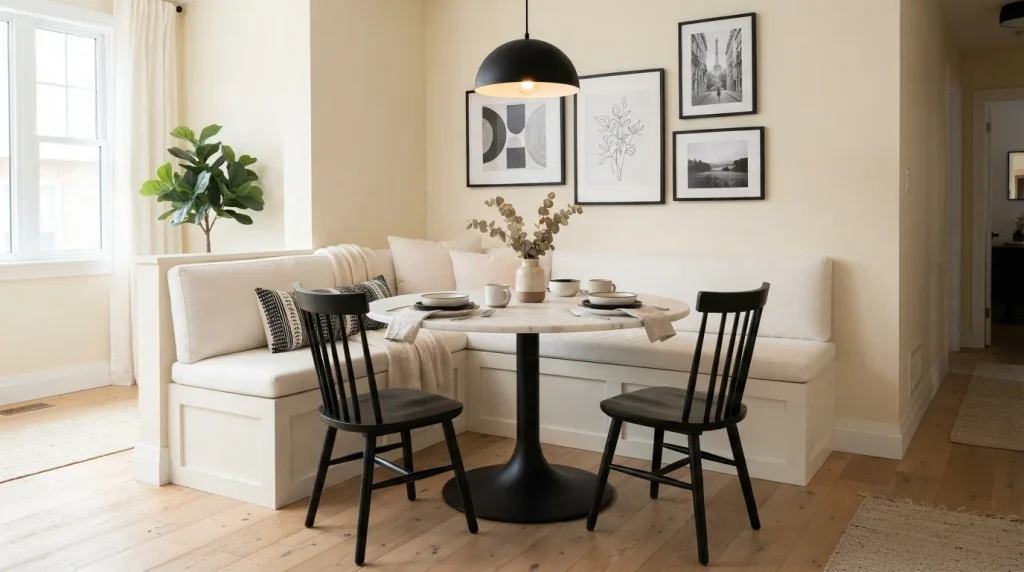
- Black accents create definition in a light dining corner.
- White upholstery keeps the overall space feeling bright.
- Warm wood prevents the monochrome palette from becoming cold.
- Simple artwork reinforces the clean visual contrast.
Black and white can give a corner dining area a crisp, timeless appearance without requiring complicated decoration. Use a white or cream bench as the foundation, then introduce black through the table base, pendant, chair frames, or artwork. Warm wood flooring or a small oak table keeps the contrast from feeling too severe. This combination works particularly well in modern kitchens because it creates a clear visual connection between the dining area and darker hardware or fixtures nearby. The strongest result comes from repeating black in small amounts rather than making every piece equally dark.
Balance is especially important when using a strong monochrome palette in a compact space. Keep larger surfaces light, then use black as an accent that guides the eye around the corner. Linen cushions, woven textures, and natural wood can soften the sharper contrast while adding warmth. A simple black-framed print above the bench can also make the nook feel finished without requiring a full gallery wall. If the space receives plenty of daylight, the darker details will look crisp rather than heavy. The result is a practical dining corner that feels contemporary, organized, and visually striking.
15. Rustic Farmhouse Table
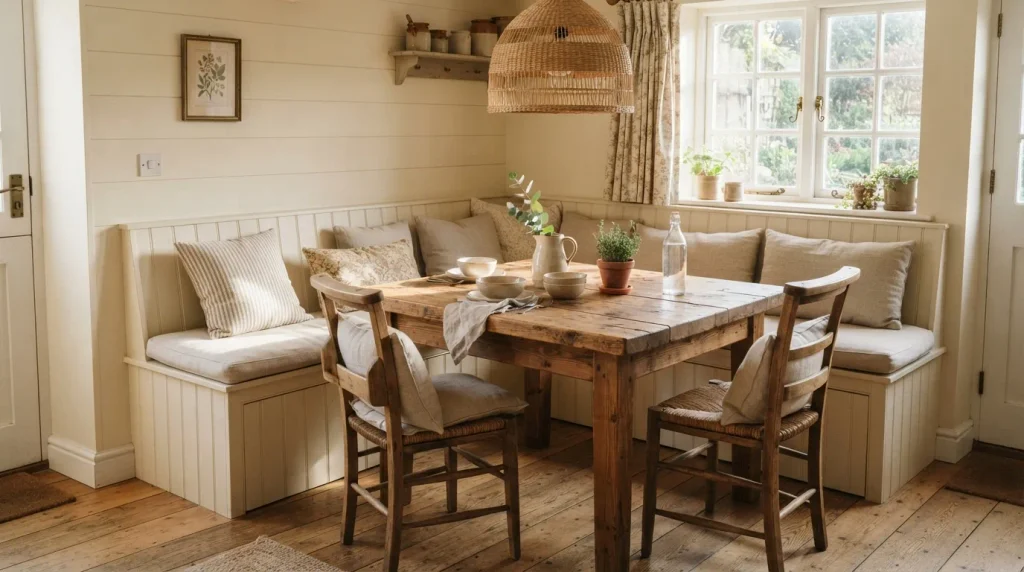
- Reclaimed wood gives the nook character and natural warmth.
- A sturdy table creates a welcoming farmhouse focal point.
- Linen seating softens heavier rustic materials.
- Vintage accents add personality without excessive decoration.
A rustic table can turn an ordinary corner into a warm gathering place with very little decoration. Choose reclaimed or naturally weathered wood with visible grain, then pair it with a simple built-in bench and comfortable chairs. The contrast between sturdy timber and soft linen cushions keeps the arrangement balanced and inviting. Warm ivory walls help the wood stand out while reflecting natural light into the corner. I’ve seen this style work especially well in homes where the kitchen already has natural wood cabinetry, because repeating the material creates an effortless visual connection between the dining nook and the rest of the room.
Rustic does not have to mean dark or heavy, particularly when the nook is small. Look for tables with a substantial appearance but a practical footprint, and combine them with lighter upholstery to keep the space approachable. A woven pendant can introduce another natural texture while providing warm evening light. Keep decorative pieces simple, such as a ceramic pitcher, wooden bowl, or small vase of greenery. If the table has a strong finish, avoid adding too many competing patterns nearby. This creates a comfortable corner that feels established and authentic while remaining practical for everyday meals.
16. Colorful Corner Bench

- A colorful bench creates an instant focal point.
- Soft accent shades add personality without repainting the room.
- Natural wood balances stronger upholstery colors.
- Coordinated cushions make the corner feel polished rather than random.
A colorful bench can completely change the personality of a quiet dining corner. Choose one confident upholstery shade, such as muted teal, dusty blue, olive, or warm terracotta, then keep the table and walls relatively neutral. This gives the seating a clear visual role without making the entire room feel busy. Add two or three cushions in related shades to create depth and repetition. I’ve noticed that using one dominant color and repeating it in smaller accessories usually feels more intentional than mixing several unrelated bright tones throughout a compact space.
Color becomes even more effective when the surrounding materials remain simple. A natural oak table, cream walls, woven pendant, and light flooring can provide a calm backdrop for richer upholstery. If you want a seasonal update later, changing cushion covers or a small rug is much easier than replacing the main seating. Keep patterns limited to one noticeable piece, such as a geometric rug or floral cushion. This approach creates a dining corner that feels cheerful and personal while remaining practical enough for everyday meals, morning coffee, homework, or relaxed conversations around the table.
17. Apartment-Friendly Nook
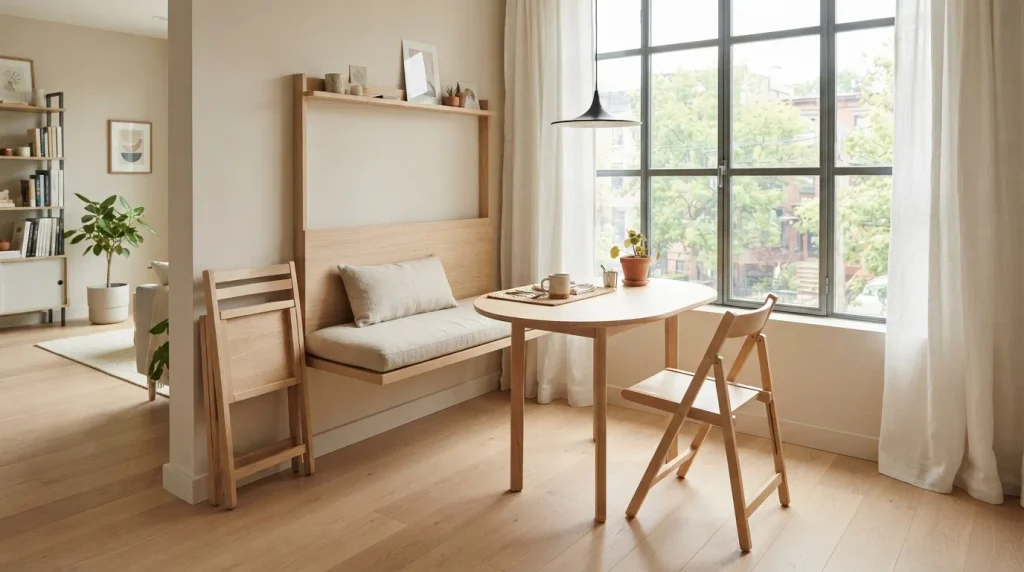
- Wall-mounted seating saves valuable floor space.
- A slim oval table improves movement through a narrow room.
- Folding chairs can be stored when the area is not being used.
- Neutral finishes help a small apartment feel more open.
Small apartments often need furniture that performs more than one job, and a compact dining nook can do exactly that. Install a shallow bench along an unused wall, then pair it with a slim oval table that leaves enough room for comfortable movement. Lightweight chairs can be pulled out for meals and moved elsewhere when extra floor space is needed. This arrangement is especially useful beside kitchens where a full dining set would interrupt the walkway. In my experience, choosing flexible furniture makes a small home feel less restricted because the same area can adapt throughout the day.
Think vertically when floor space is limited. A wall-mounted shelf can display a few dishes or plants without taking up table space, while a pendant light defines the dining zone from above. Choose pale wood, warm white, beige, or soft gray to reflect available daylight and maintain an airy appearance. If storage is necessary, use a bench with hidden compartments rather than adding a separate cabinet. The result is a compact dining area that feels organized and comfortable without dominating the apartment. Good proportions make even a narrow corner feel purposeful, useful, and visually calm.
18. Elegant Marble Nook
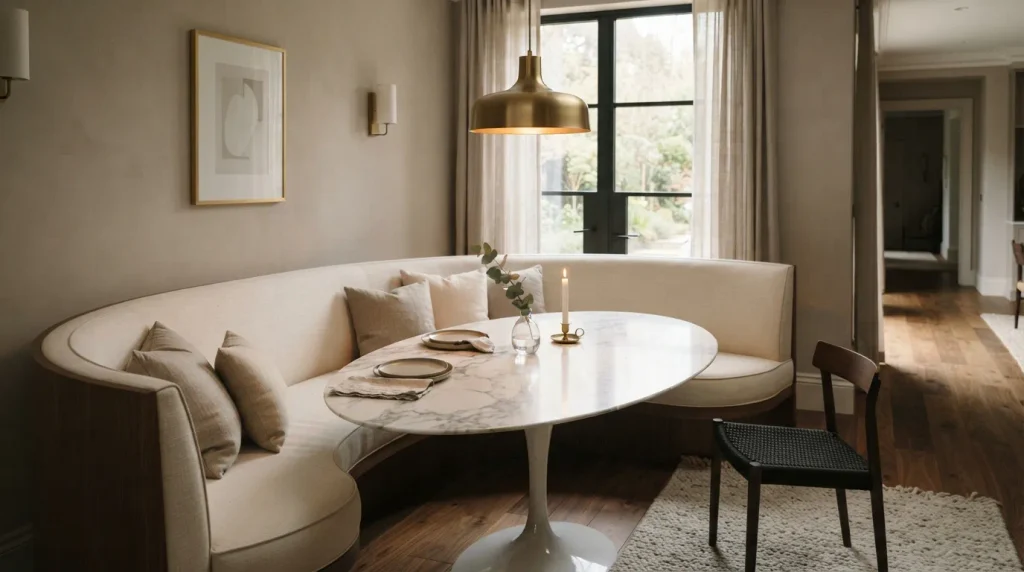
- Marble adds a refined focal point without needing heavy decoration.
- Curved seating softens the hard surface of the stone.
- Brass details introduce subtle warmth and polish.
- Neutral textiles keep the elegant design comfortable and approachable.
A marble table can give a small dining corner an elevated appearance while keeping the overall design remarkably simple. Choose an oval or rounded tabletop, then pair it with a curved upholstered bench to soften the stone’s crisp surface. Cream, taupe, walnut, and brushed brass create a refined palette that feels luxurious without becoming overly formal. This setup works especially well when the dining corner is visible from the living room because the furniture can act as a polished focal point. The key is restraint: let the marble and curved seating provide most of the visual interest.
Practical choices can make an elegant nook just as comfortable as a casual one. Choose a durable stone surface that suits your household, and use removable cushions if the bench receives frequent use. A small rug can soften the floor beneath the table while visually defining the dining area. Keep accessories minimal, perhaps using one ceramic vase or shallow bowl as a centerpiece. Warm lighting is particularly important in the evening because it prevents white marble and neutral upholstery from appearing too cool. The finished corner feels sophisticated, inviting, and useful rather than simply decorative.
19. Cozy Evening Nook
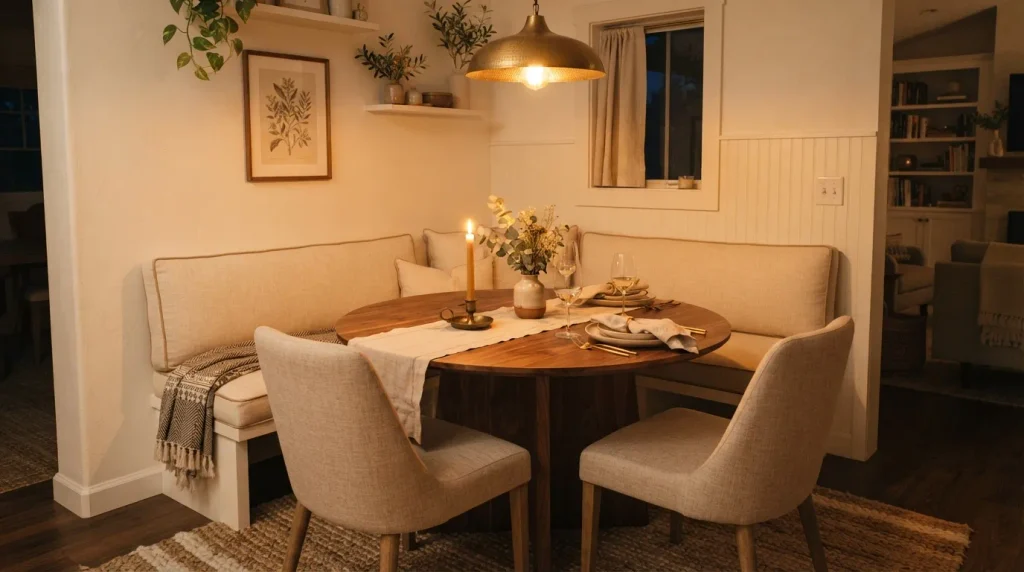
- Warm lighting makes the corner feel inviting after sunset.
- Soft upholstery creates a comfortable place for lingering meals.
- Walnut and brass details add warmth and subtle sophistication.
- A simple centerpiece keeps the table visually uncluttered.
The right lighting can transform a simple dining corner from a daytime eating spot into a cozy evening retreat. Use a warm pendant above the table, then layer in soft textures through an upholstered bench, linen cushions, and a plush neutral rug. Walnut or warm oak furniture adds depth against cream or beige walls, while a small vase or candle creates a gentle finishing detail. I’ve noticed that warm lighting makes even modest dining areas feel more intimate, especially when the kitchen lights are dimmed. The result is a corner that naturally encourages longer dinners and relaxed conversations.
Keep the evening atmosphere comfortable rather than overly decorated. Choose a dimmable pendant so the brightness can change from casual family meals to more relaxed entertaining. Soft brass, natural wood, cream upholstery, and woven details create warmth without requiring a large decorating budget. Leave enough open space around the table for easy movement, and avoid placing too many objects on the tabletop. A single centerpiece is usually enough. With thoughtful lighting, comfortable seating, and a restrained palette, an overlooked corner can become a welcoming destination for breakfast, dinner, coffee, conversations, and quiet moments throughout the day.
Conclusion
A well-designed dining nook can turn an overlooked corner into a place you genuinely enjoy using every day. These corner dining nook ideas show how thoughtful seating, smart proportions, warm textures, and simple styling can make even a small space feel comfortable and complete. Whether you prefer farmhouse warmth, Scandinavian simplicity, colorful accents, or modern elegance, there’s an approach worth trying. I’ve seen how small changes can completely transform a room’s atmosphere. Save this post on Pinterest for your next decorating project, try your favorite idea at home, and share it with someone who could use a little inspiration for their dining space.