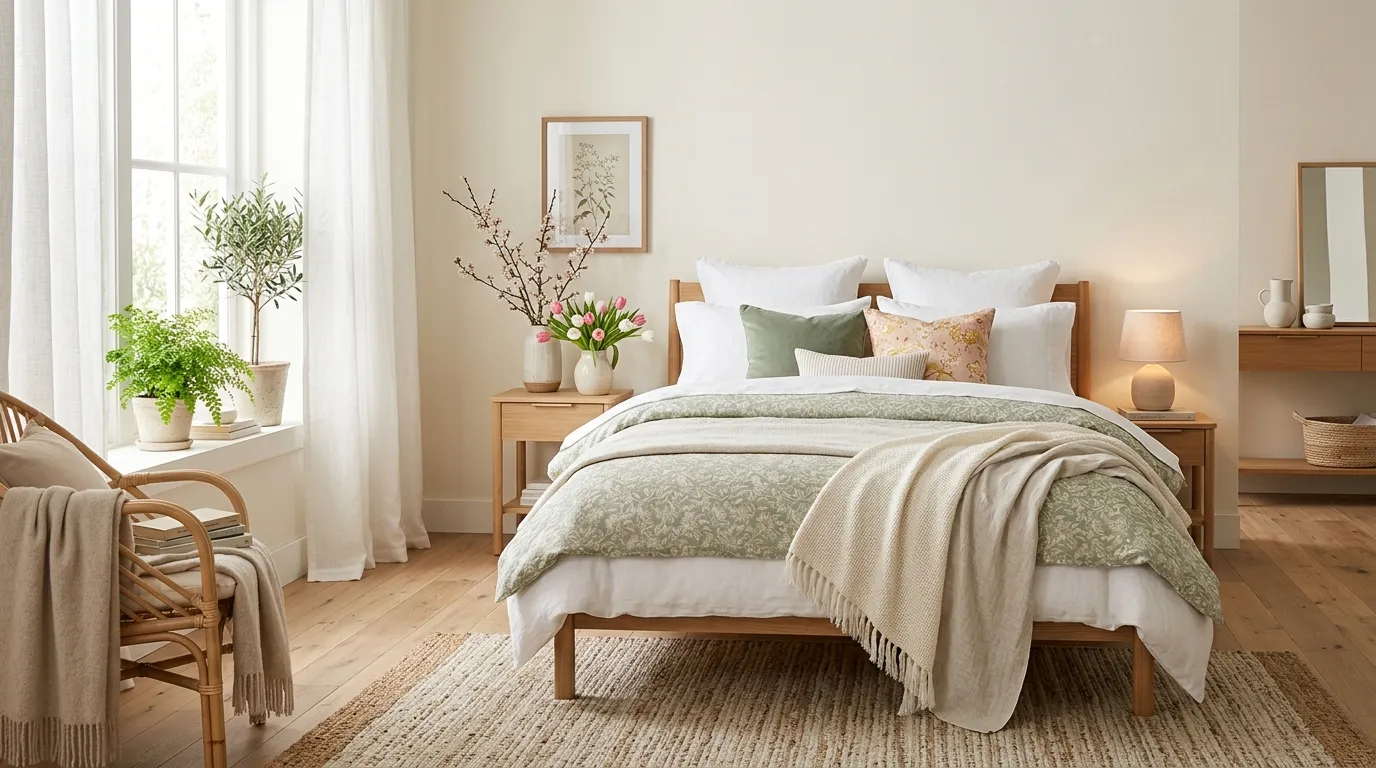
Spring is the perfect excuse to make your bedroom feel lighter, softer, and a little more inviting. You do not need a complete makeover or a big decorating budget to create a cozy seasonal retreat. A few fresh flowers, airy curtains, natural textures, pastel accents, or a new set of pillows can completely change the atmosphere.
These spring bedroom ideas are designed for real homes and everyday routines. Whether your style leans toward cozy cottage, modern minimal, Scandinavian, or relaxed farmhouse, small thoughtful changes can bring a fresh feeling into the room. Focus on colors, fabrics, greenery, and natural light to create a space that feels peaceful rather than overly decorated.
The best approach is to choose just a few ideas that suit your existing furniture and personal style. Mix soft seasonal colors with timeless neutrals, add natural textures for warmth, and let plenty of natural light into the room. With a few simple updates, your bedroom can become a fresh, comfortable retreat you will enjoy all season.
1. Floral Bedding
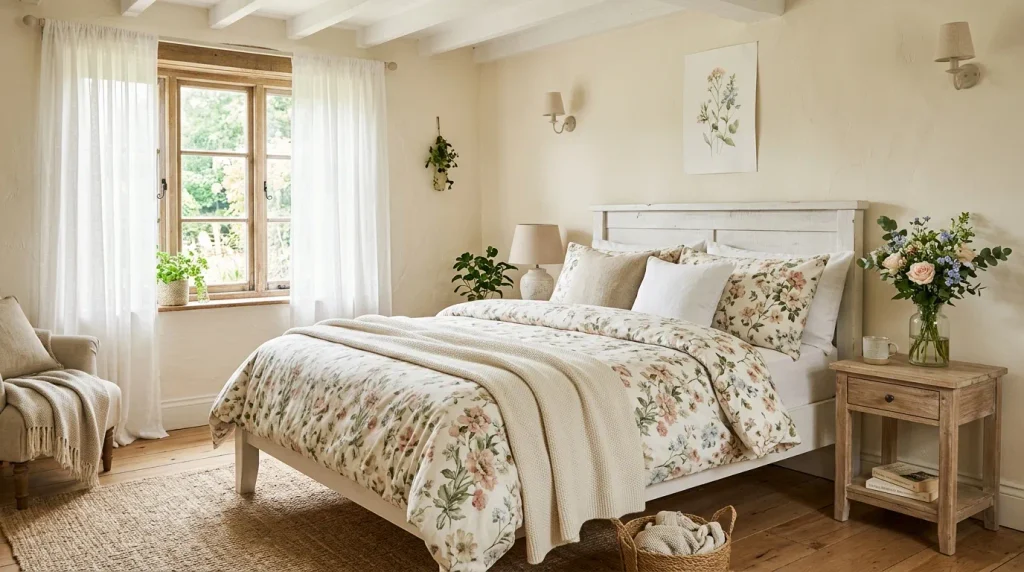
- Soft floral bedding instantly gives the bed a fresh seasonal update.
- Choose small-scale blooms for a calm, timeless appearance.
- Repeat one flower color in a pillow, vase, or nearby accent.
- Light cotton or linen keeps the bed comfortable as temperatures rise.
Nothing refreshes a bedroom faster than crisp floral bedding that instantly makes the bed feel brighter and more inviting. Choose a soft botanical pattern with small flowers, delicate branches, or watercolor-style blooms in blush, sage, cream, or pale blue. Keep the background light so the room still feels calm at bedtime. This approach works especially well when the walls and larger furniture are neutral because the bedding becomes the seasonal focal point without requiring a major makeover. For a more polished look, repeat one flower color in a nearby cushion, vase, or small decorative accent.
A floral bed does not need to look overly feminine or busy. Balance patterned sheets or a duvet with solid-colored pillows, a simple throw, and natural textures such as linen or cotton. I’ve noticed that smaller-scale floral prints often feel more timeless because they add detail without dominating the room. If you already have patterned curtains or artwork, choose bedding with a simpler botanical design. This keeps the space visually restful while still giving it a fresh spring personality. The result is a cozy bedroom that feels lighter, softer, and ready for the new season without replacing every piece of furniture.
2. Soft Pastel Walls
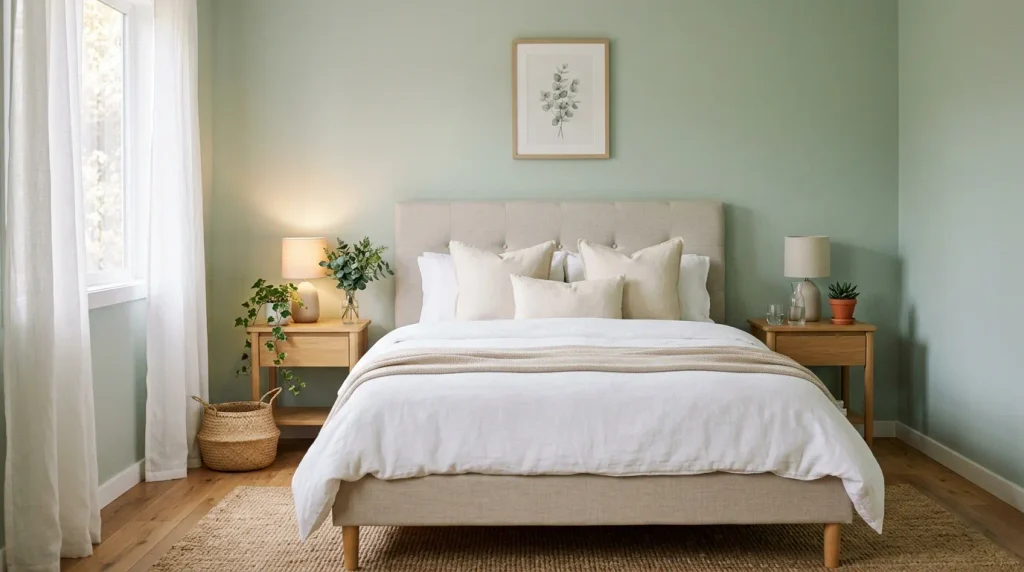
- Pale wall colors can make a bedroom feel brighter without looking stark.
- Sage, powder blue, blush, and warm cream work beautifully for spring.
- Test paint samples under both morning and evening light.
- Keep larger furnishings neutral to let the wall color quietly shape the room.
A soft pastel wall can completely change the atmosphere of a bedroom without making the space feel overly decorated. Shades such as muted sage, powder blue, dusty blush, or warm cream add gentle color while preserving the peaceful feeling you want in a sleeping space. These tones work particularly well with white bedding, natural wood furniture, woven accessories, and soft textiles. If your room receives plenty of daylight, a muted pastel can make the space feel fresh and airy. In darker rooms, warmer shades can help prevent the walls from appearing cold or flat.
Before committing to a color, paint a sample area and observe it throughout the day because natural light can change how pastel shades appear. I’ve noticed that slightly muted colors tend to be easier to style because they work with both seasonal and year-round decor. You do not need to repaint every wall, either. A single accent wall behind the bed can create enough visual change while keeping the rest of the room neutral. Add simple greenery and textured bedding, and the finished space feels refreshed without becoming visually overwhelming.
3. Lightweight Linen
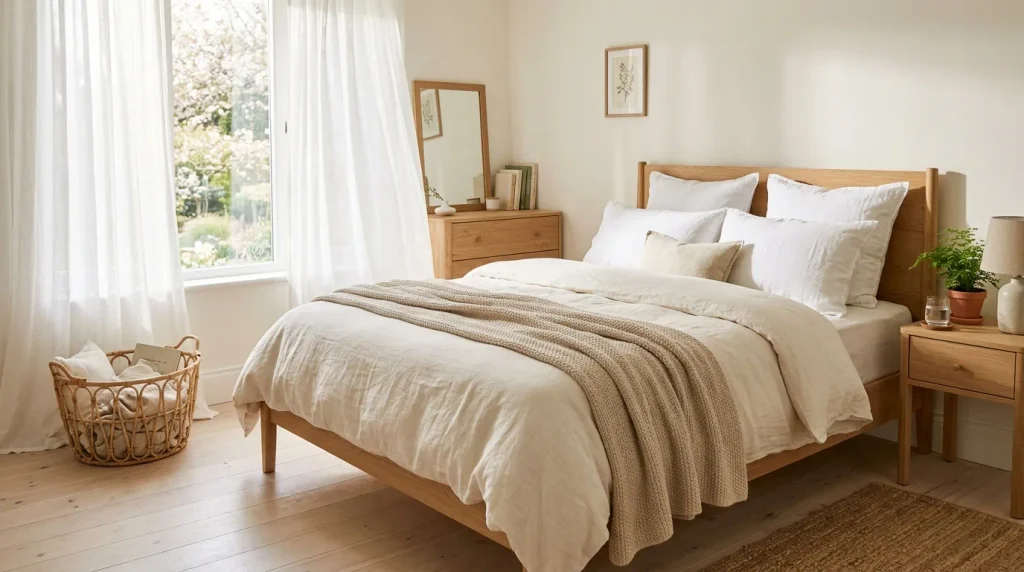
- Linen bedding creates an airy look that feels naturally suited to spring.
- Its relaxed texture adds depth without heavy layers.
- Choose cream, white, pale beige, or muted pastel shades.
- Slight wrinkles give linen a comfortable, lived-in appearance.
Lightweight linen is an easy way to make a bedroom feel cooler, softer, and more relaxed as spring arrives. Its naturally textured surface adds depth to the bed without relying on bold patterns or heavy decorative layers. Choose linen duvet covers, pillowcases, or a lightweight coverlet in cream, white, pale beige, sage, or another muted seasonal shade. The fabric looks especially beautiful when paired with natural wood, woven baskets, and simple greenery. Instead of creating a perfectly styled bed, let the linen fall naturally for an effortless appearance that feels comfortable rather than overly formal.
One of the best things about linen is that its relaxed texture can make a simple bedroom look thoughtfully designed. Layer a lightweight linen cover over cotton sheets, then add just a few pillows and a soft throw at the foot of the bed. This creates dimension without making the bed feel heavy. If you prefer a cleaner appearance, choose pre-washed linen with a smoother finish. In my experience, natural-looking fabrics are especially useful when refreshing a room because they add warmth and character while remaining versatile enough to work long after spring has passed.
4. Fresh Greenery
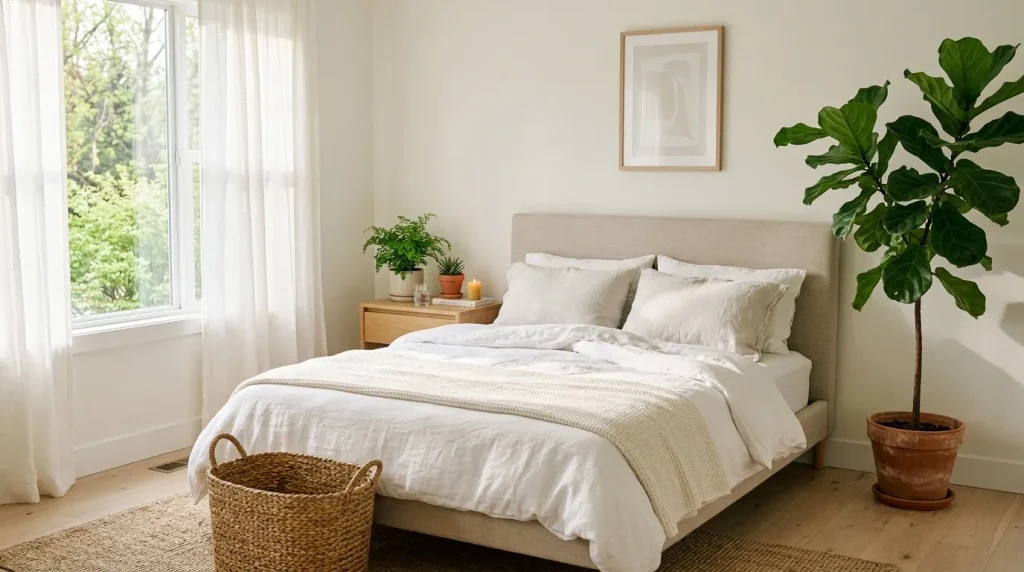
- Green plants bring natural color and life into the bedroom.
- Choose low-maintenance varieties if you want an easy routine.
- Place taller plants in empty corners to add height.
- Smaller plants work beautifully on nightstands, dressers, or window ledges.
A few fresh green plants can make a bedroom feel instantly more alive and connected to the outdoors. Place a tall leafy plant beside the bed, add a smaller pot to the nightstand, or use a trailing plant on a nearby shelf. The different heights create natural layers while the greenery introduces color without making the room feel busy. This is one of the easiest spring bedroom ideas to adapt because you can work with the space you already have. Even one healthy plant can soften hard furniture edges and make a neutral bedroom feel more welcoming.
Choose plants according to the actual light available in your bedroom rather than selecting them purely for appearance. A bright windowsill may suit herbs or sun-loving varieties, while a lower-light corner may need a more tolerant houseplant. Make sure containers have proper drainage and protect wood surfaces from excess water. I’ve noticed that plants look especially effective when grouped with natural materials such as rattan, linen, and unfinished wood. Keep the arrangement simple, and let the foliage provide the seasonal freshness instead of filling every surface with decorative accessories.
5. Botanical Prints
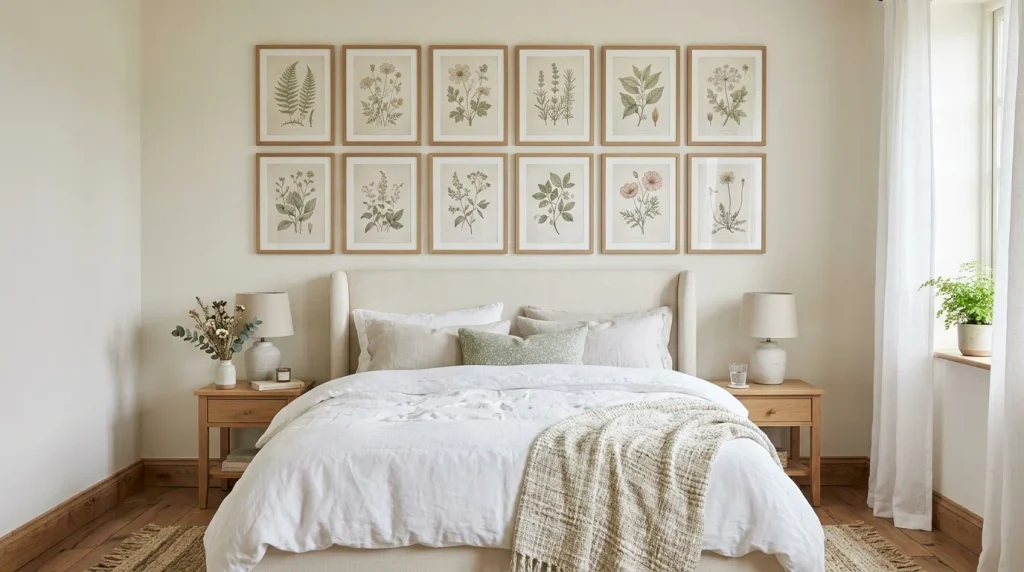
- Botanical artwork introduces spring-inspired detail without adding physical clutter.
- Mix leaves, stems, and delicate flowers for a collected appearance.
- Natural wood frames keep the display warm and understated.
- Keep the artwork palette connected to the bedding and surrounding textiles.
Botanical prints can bring the feeling of a spring garden indoors while keeping the bedroom calm and sophisticated. Choose artwork featuring pressed leaves, delicate flowers, herbs, or simple line drawings, then arrange the pieces above the bed, on a gallery wall, or across a dresser. Soft greens, cream, muted pink, and earthy brown create a natural palette that works beautifully with neutral furniture. Botanical artwork is particularly useful when you want seasonal character without adding many physical accessories. A few thoughtfully framed prints can create a noticeable focal point while keeping surfaces clean.
For a cohesive arrangement, repeat colors already present in the room rather than introducing an entirely new palette. Natural wood frames pair beautifully with linen bedding and woven accents, while thin white frames create a lighter, more contemporary appearance. I’ve noticed that botanical artwork feels less seasonal when the illustrations are simple and realistic, making them easy to keep displayed throughout the year. Leave enough space between frames so the arrangement can breathe. This small detail prevents a gallery wall from feeling crowded and allows each print to remain visually distinct.
Also Read : 21 Sage Green Bedroom Ideas for a Calm Relaxing Retreat
6. Woven Bedside Baskets
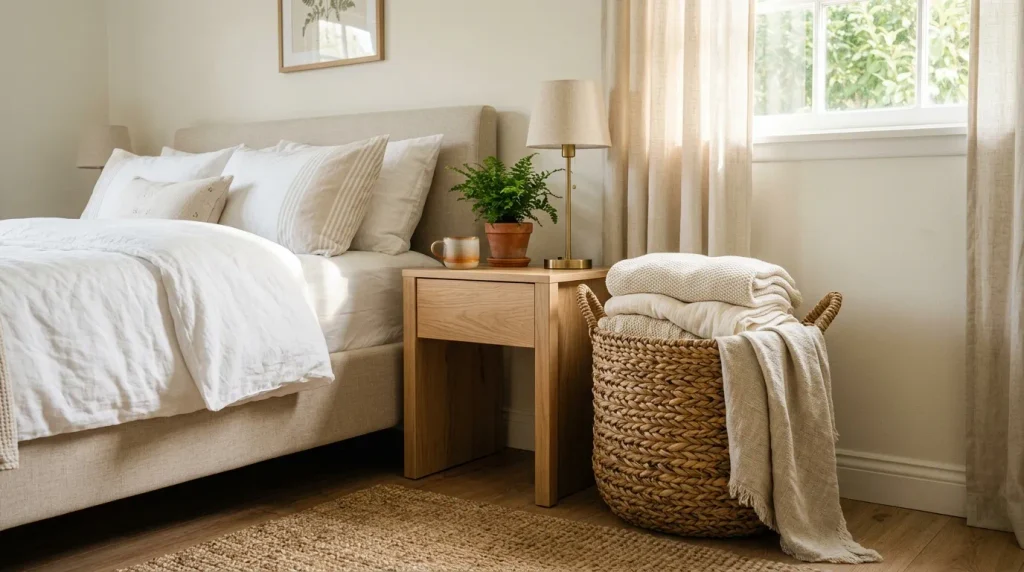
- Woven baskets add natural texture while keeping bedside storage practical.
- Use them for blankets, books, slippers, or extra pillows.
- Choose baskets that fit comfortably beneath or beside the nightstand.
- Natural fibers pair easily with linen, cotton, and light wood furniture.
A woven bedside basket is a small upgrade that can make a bedroom feel warmer while solving an everyday storage problem. Place a rattan, seagrass, or natural-fiber basket beside the bed and use it to hold extra blankets, books, slippers, or decorative pillows. The woven texture introduces visual interest without adding another strong color to the room. It also keeps useful items close without leaving them scattered across the floor. This makes the idea especially practical for bedrooms where storage is limited but you still want a relaxed, spring-inspired atmosphere.
Choose a basket with enough structure to stand upright and a size that does not interfere with walking around the bed. If your nightstand is small, a taller basket beside it can provide storage without taking up the tabletop. In my experience, natural baskets work best when they are allowed to look slightly relaxed rather than perfectly arranged. Fold one soft throw inside, leave some texture visible, and pair it with simple linen bedding. The combination creates a cozy layered effect while keeping the bedroom organized, breathable, and easy to maintain.
7. Airy White Curtains
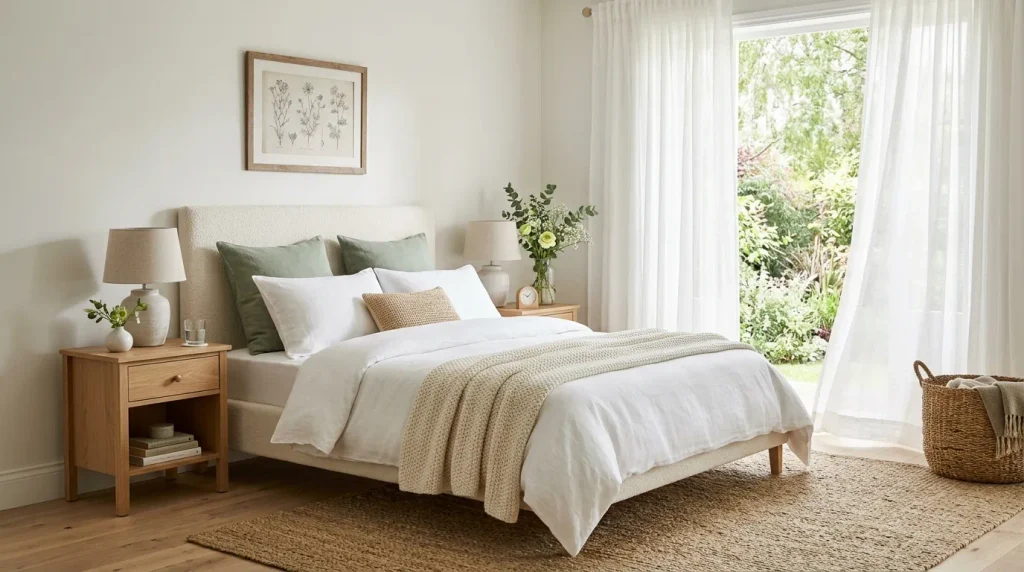
- Sheer white curtains instantly make a bedroom feel lighter and more open.
- They allow natural daylight to soften the room without removing privacy completely.
- Floor-length panels can make the ceiling appear taller.
- Pair them with simple linen bedding for an effortless spring look.
Nothing makes a bedroom feel lighter quite like soft white curtains moving gently in natural daylight. Choose sheer or lightweight panels that allow plenty of sunlight to filter through while still giving the room a little privacy. Floor-length curtains can also create the illusion of taller ceilings, especially when hung slightly above the window frame. White works beautifully with spring colors because it creates a clean backdrop for sage greenery, pastel bedding, floral accents, and warm wood furniture. The result is an airy room that feels noticeably fresher without needing major changes.
For a softer appearance, choose linen-blend or cotton curtains with a subtle texture instead of completely smooth synthetic panels. Hang the curtain rod wider than the window when possible so the fabric frames the opening without blocking much daylight. I’ve noticed that this small placement trick can make an ordinary bedroom window feel much larger. Keep the surrounding decor simple so the natural light remains the main feature. During brighter mornings, layer the sheers with light-filtering shades if needed, giving you flexibility while maintaining the relaxed, breathable atmosphere that makes the room feel ready for spring.
8. Spring Accent Pillows
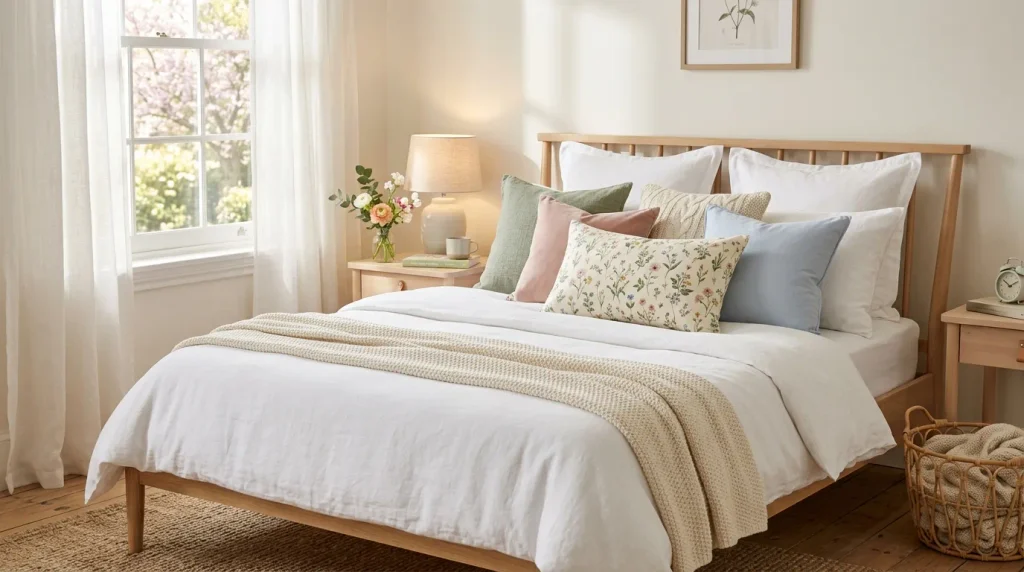
- Accent pillows are an easy way to introduce seasonal color without replacing the bedding.
- Mix solids, subtle florals, and natural textures for visual depth.
- Choose washable covers for easy seasonal maintenance.
- Repeat one pillow color somewhere else in the room for cohesion.
A few carefully chosen accent pillows can give a bedroom an entirely different mood without replacing the main bedding. Start with two or three pillows in soft spring shades such as sage, blush, pale blue, butter yellow, or warm cream. Add one subtle floral or botanical pattern for visual interest, then balance it with solid-colored linen or cotton pillows. The combination creates a layered bed that feels inviting without looking overly styled. This is one of the simplest seasonal updates because pillow covers are easy to store and switch when you want a new look.
Avoid choosing too many unrelated patterns, especially if your bedding already has a print. Instead, select one dominant color and repeat it through the pillow arrangement. In my experience, mixing textures often creates more depth than adding more patterns. Try pairing a linen pillow with a softly woven cushion and one small floral design. Arrange the larger pillows at the back and smaller ones toward the front, then leave enough open space for the bed to remain comfortable. The finished arrangement feels cozy, fresh, and polished without sacrificing practicality.
9. Natural Wood Details
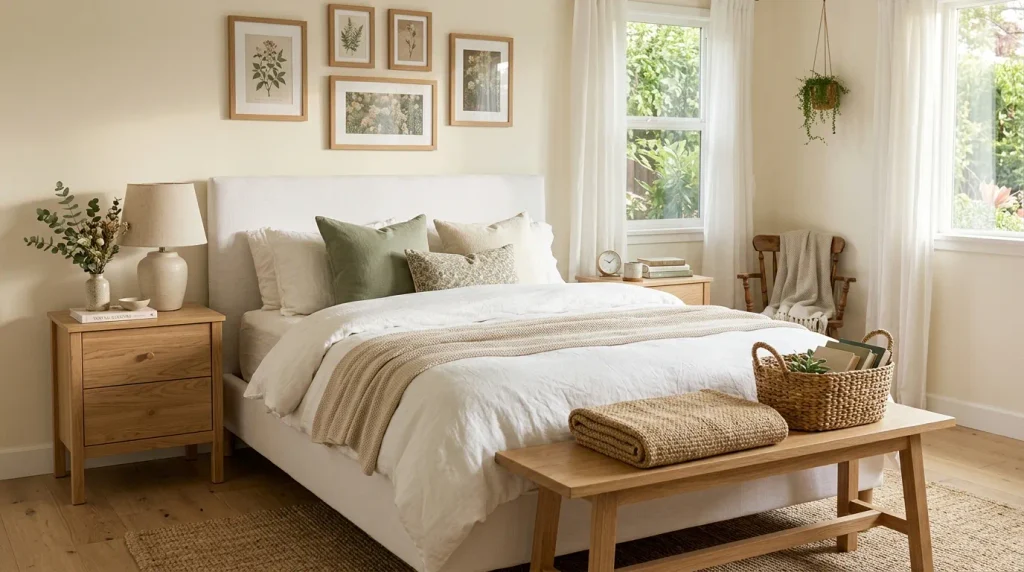
- Natural wood introduces warmth that balances light spring colors.
- Use wood through nightstands, benches, picture frames, or small shelves.
- Choose finishes with visible grain for added texture.
- Repeat the same wood tone in two or three places for a cohesive room.
Natural wood details can keep a spring bedroom from feeling too pale or overly decorated. A light oak nightstand, wooden bench, floating shelf, or simple picture frame introduces warmth while complementing soft seasonal colors. Visible wood grain also adds texture without requiring patterns, making it especially useful in rooms decorated with white bedding and neutral walls. You do not need to replace existing furniture to get the effect. Even one small wooden stool or framed botanical print can bring enough warmth to balance fresh greenery and pastel textiles.
Try to repeat a similar wood tone in at least two areas so the room feels connected. For example, pair a light oak nightstand with a matching picture frame or small bench at the foot of the bed. I’ve noticed that natural finishes look particularly inviting when combined with linen, cotton, rattan, and greenery because the materials create a balanced mix of smooth and textured surfaces. Avoid filling the room with too many different wood shades. Keeping the palette simple allows the grain and warmth of the furniture to become a subtle but noticeable part of the spring refresh.
10. Fresh Flower Vases
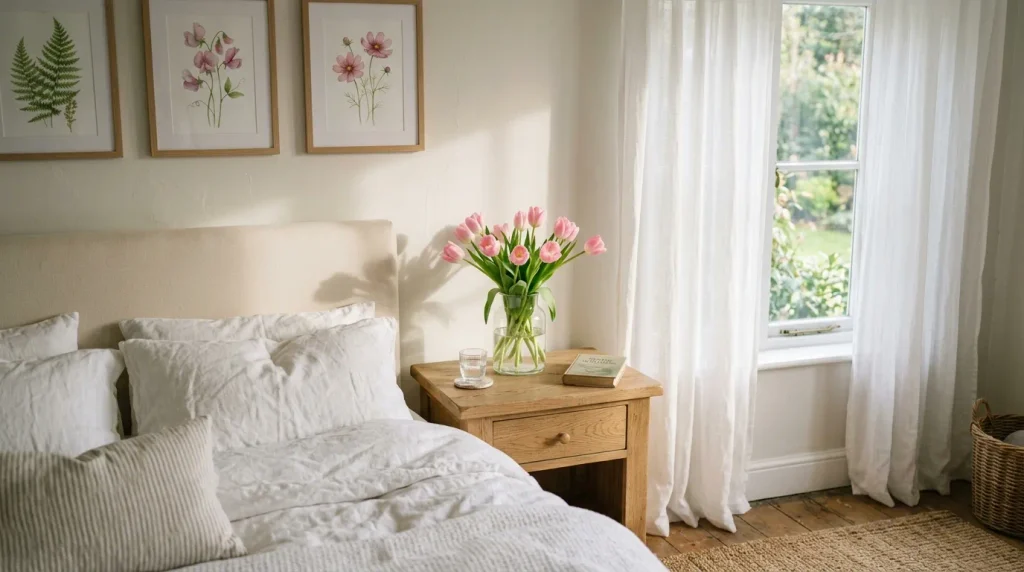
- Fresh flowers instantly introduce natural color and seasonal character.
- Use small arrangements so the bedroom stays calm and uncluttered.
- Choose flowers that repeat colors already found in the room.
- A simple glass or ceramic vase keeps the focus on the blooms.
A small vase of fresh flowers can make a bedroom feel instantly brighter and more connected to spring. Place a simple arrangement on the nightstand, dresser, windowsill, or a small bedside table where you can enjoy it every day. Tulips, daffodils, ranunculus, and delicate branches all bring natural color without requiring a large arrangement. Choose a vase in clear glass, white ceramic, or another neutral finish so the flowers remain the focal point. Even a few stems can add enough color and movement to make a quiet bedroom feel noticeably fresher.
Keep the arrangement slightly loose instead of tightly packed, allowing the natural shape of the stems to show. Trim the flowers regularly and change the water frequently to keep them looking fresh. I’ve noticed that smaller arrangements are often easier to maintain and can actually feel more elegant in a bedroom than oversized bouquets. If you already have colorful bedding, choose flowers in one complementary shade. Place the vase where it receives suitable indirect light, and keep water away from delicate wood surfaces. This simple detail can bring a cheerful spring touch without adding visual clutter.
11. Layered Neutral Textures
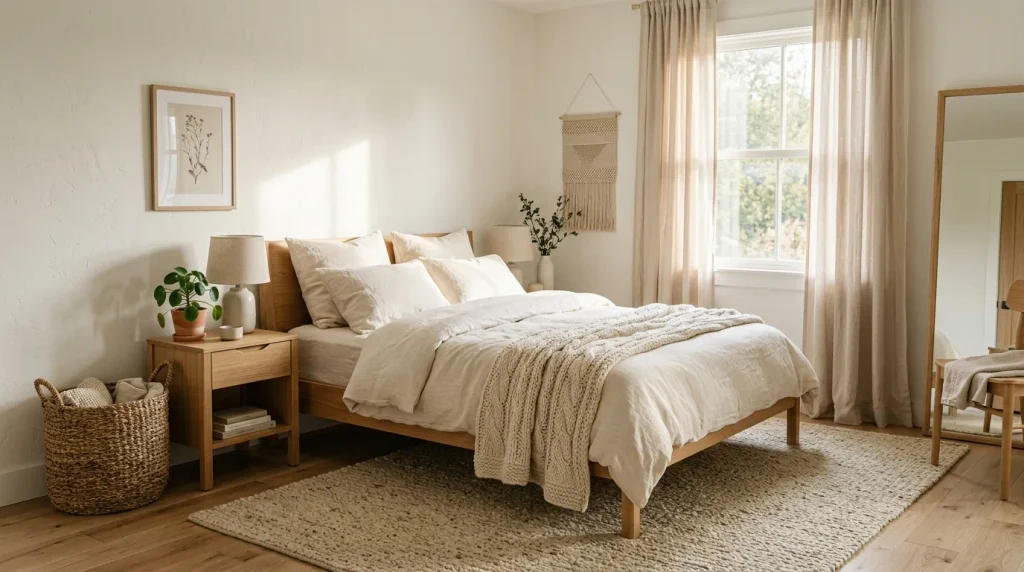
- Neutral textures create coziness without relying on strong seasonal colors.
- Mix linen, cotton, wool, woven fibers, and soft knits.
- Layer textures across the bed, rug, curtains, and accessories.
- Keep the color palette close to cream, beige, taupe, and warm white.
Layered neutral textures can make a bedroom feel cozy and fresh at the same time. Instead of relying on bold colors, combine cream linen bedding, a chunky cotton throw, a woven basket, a soft area rug, and lightly textured curtains. The subtle differences between these materials create depth while keeping the room visually calm. This approach works particularly well if you prefer minimalist interiors but still want your bedroom to feel warm and inviting for spring. Natural neutrals also make it easy to introduce greenery or small floral accents without overwhelming the overall design.
The secret is allowing each texture to remain slightly different while keeping the colors closely related. Pair smooth cotton sheets with rumpled linen, a woven basket, and a softly patterned cushion. In my experience, this creates a much richer room than using several decorations in different colors. Avoid matching every fabric perfectly because slight variation makes the space feel more relaxed and lived-in. Add natural wood furniture and one leafy plant to complete the palette. The finished bedroom feels comfortable, breathable, and timeless enough to transition easily into summer and beyond.
12. Rattan Pendant Lights
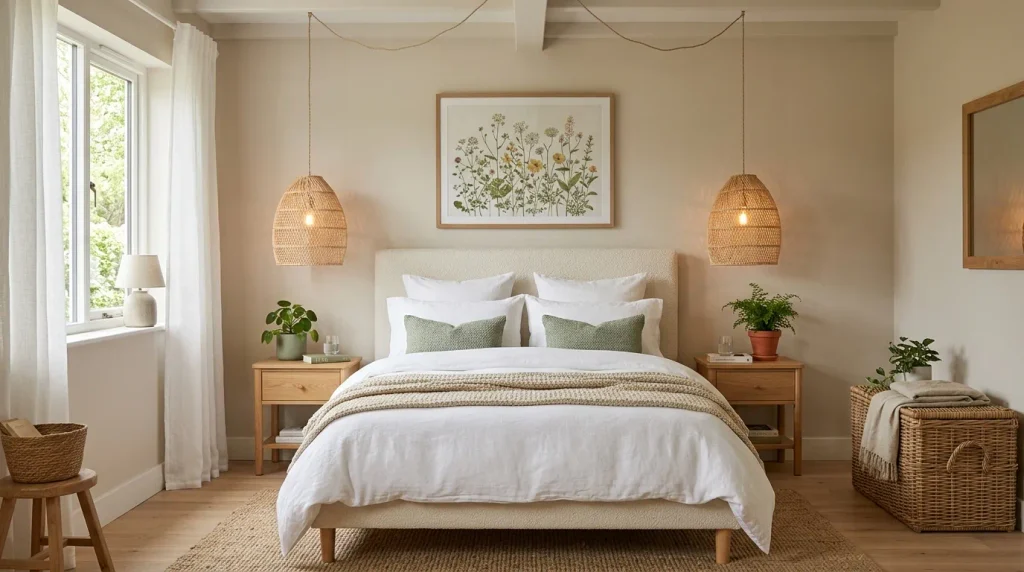
- Rattan lighting adds warmth and natural texture above the bedside area.
- Pendant fixtures free up valuable nightstand space.
- Open woven shades create interesting patterns when illuminated.
- Choose warm bulbs for a softer and more relaxing evening atmosphere.
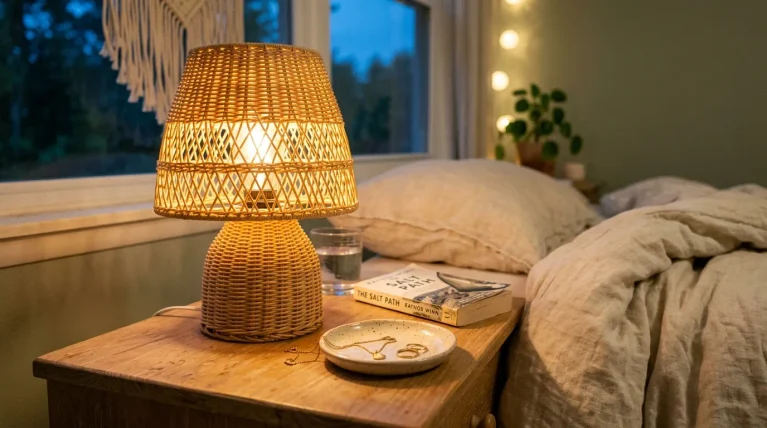
Rattan pendant lights can add a beautiful natural texture while giving a bedroom a lighter, more spacious bedside arrangement. Hang one pendant on each side of the bed instead of using traditional table lamps, keeping the nightstands clear for books, flowers, or small personal items. The woven shade creates an organic focal point and casts delicate patterns across nearby walls when the light is switched on. Natural rattan works especially well with white bedding, light wood, greenery, and neutral walls, creating a relaxed spring atmosphere without relying on obvious seasonal decorations.
Make sure the pendants are installed at a comfortable height and positioned safely away from bedding or areas where they could be bumped. Choose warm-toned bulbs rather than harsh cool light to maintain a cozy evening atmosphere. I’ve noticed that woven lighting can make a neutral bedroom feel much more finished because it introduces both texture and shape. If your room is small, select an open-weave shade that allows light to pass through easily. Pair the fixtures with simple bedding and natural accents so the lighting remains an attractive feature without making the room feel crowded.
13. Soft Floral Curtains
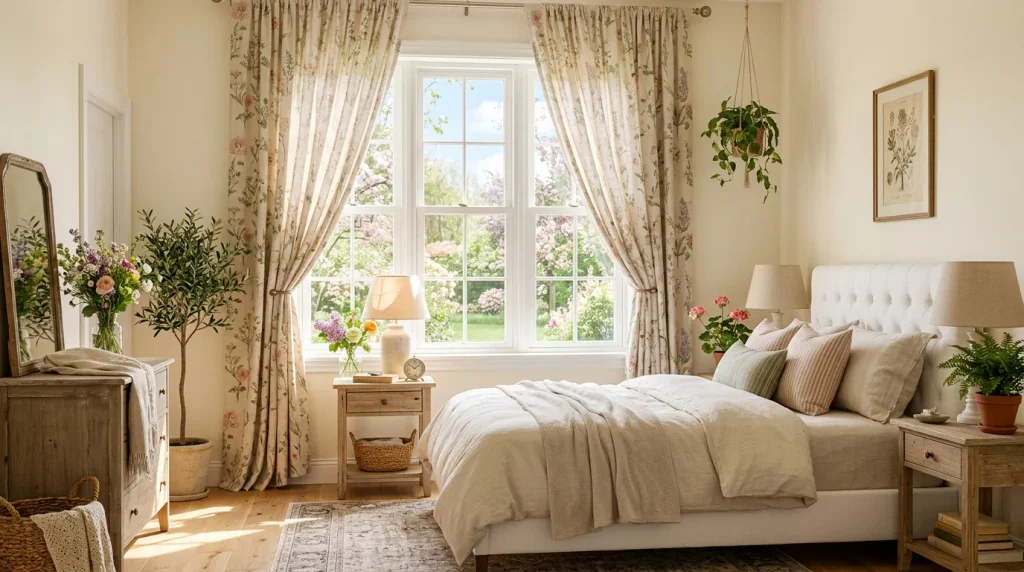
- Floral curtains can introduce spring pattern without covering the entire room in print.
- Choose a light background to keep the bedroom feeling airy.
- Small botanical patterns are easier to pair with existing bedding.
- Use blackout lining when you need stronger light control at night.
Soft floral curtains can bring a subtle garden-inspired feeling into the bedroom while keeping the overall atmosphere calm. Choose lightweight panels featuring small flowers, leafy branches, or delicate botanical patterns on a cream or white background. Soft pink, sage, lavender, and pale blue are especially easy to coordinate with neutral bedding. Because the pattern is concentrated around the windows, it adds seasonal character without overwhelming the entire room. This works beautifully when the rest of the bedroom uses simple furniture and understated accessories.
Before choosing a pattern, consider how much visual activity is already present in the room. If your bedding has flowers or botanical prints, choose curtains with a smaller or simpler design. I’ve noticed that hanging patterned curtains slightly wider than the window helps them feel more like a deliberate design feature rather than an afterthought. For bedrooms that need darkness at night, add a blackout lining behind the decorative fabric. This gives you the pretty spring look during the day while still supporting comfortable sleep after sunset.
14. Cozy Reading Corner
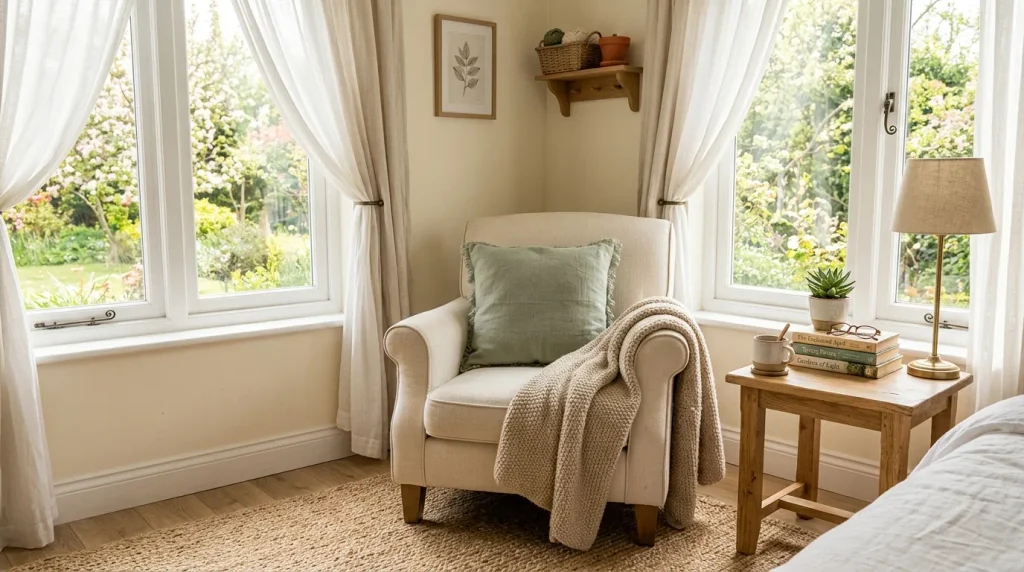
- A small reading corner makes unused bedroom space more functional.
- Choose a comfortable chair in a light neutral fabric.
- Add a small table for books, tea, or a decorative plant.
- Position the chair near natural light when possible.
A cozy reading corner can turn an empty bedroom corner into one of the most inviting parts of the room. Place a comfortable upholstered or woven chair near a window, then add a small side table for books, a cup of tea, or a little potted plant. A soft throw draped over the chair adds texture and makes the space look ready to use. Keep the colors connected to the rest of the bedroom so the corner feels like part of the design rather than a separate area. Natural daylight makes the setup especially appealing during spring mornings and afternoons.
Choose a chair that fits the available space without making the room feel cramped. If the corner is small, a compact accent chair or simple wooden armchair may work better than a large lounge chair. I’ve noticed that a floor lamp can make these corners more useful after sunset without taking up much surface space. Add one cushion in a spring-inspired shade, but avoid filling the chair with accessories. The goal is to create a quiet, comfortable spot where you can read, relax, or simply enjoy the natural light coming through the window.
15. Pastel Throw Blankets
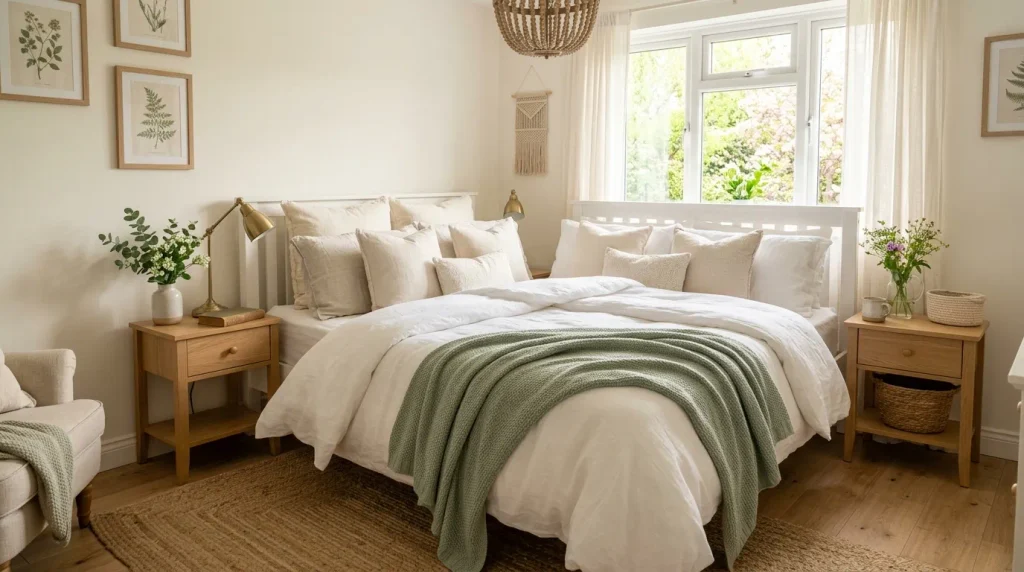
- A pastel throw adds color without changing the main bedding.
- Drape it casually across the foot of the bed for a relaxed look.
- Choose one soft shade that complements existing pillows or artwork.
- Lightweight cotton or woven throws work well as temperatures change.
A pastel throw blanket is a simple way to add spring color while keeping your main bedding neutral and versatile. Choose a lightweight throw in sage green, powder blue, blush pink, soft lavender, or pale yellow, then drape it loosely across the foot of the bed. The gentle color creates a seasonal accent without requiring a full bedding change. Textured cotton, lightweight knit, or linen throws work especially well because they add visual depth while remaining comfortable during changing temperatures. This small layer can make a plain bed feel much more finished.
For a balanced arrangement, choose a throw that connects with one existing color in the room. If you already have sage pillows, for example, a pale sage blanket will make the bedding feel coordinated without looking too matched. In my experience, casually folded or loosely draped throws usually look more inviting than perfectly arranged ones. Keep the rest of the bed relatively simple so the blanket remains noticeable. When warmer weather arrives, you can easily remove it and store it, making this one of the easiest seasonal updates to repeat each year.
16. Minimal Spring Gallery
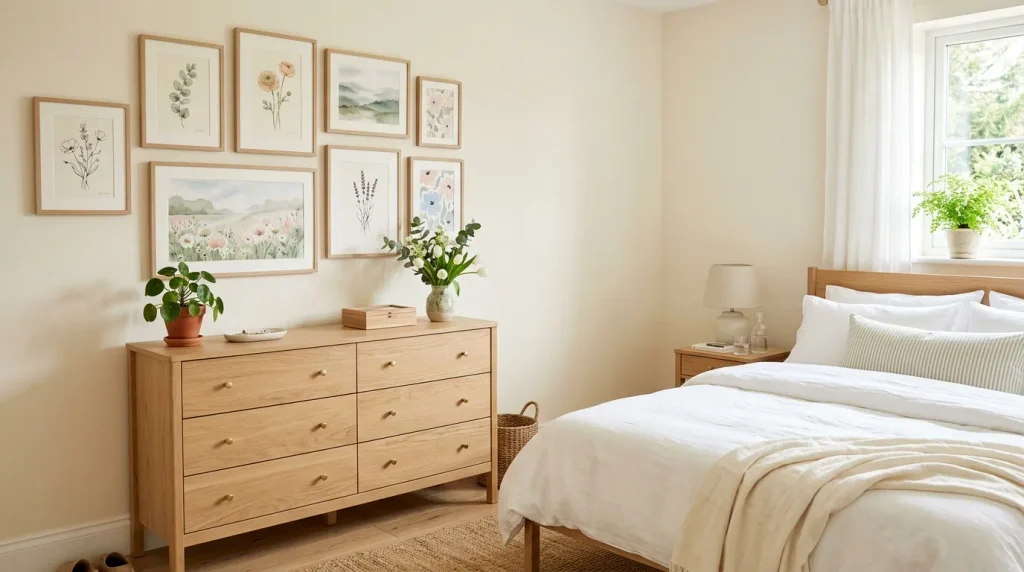
- A small gallery wall adds personality without overwhelming the bedroom.
- Choose simple botanical, floral, or nature-inspired artwork.
- Keep frames in one or two finishes for a cleaner appearance.
- Leave enough wall space around each piece so the arrangement feels airy.
A minimal spring gallery wall can give your bedroom a fresh focal point while keeping the overall design peaceful. Choose three to five pieces featuring delicate flowers, botanical sketches, landscapes, or simple nature-inspired artwork. Arrange them above a dresser, beside the bed, or on the wall opposite the window. Soft greens, creams, muted blues, and blush tones can introduce spring color without competing with your bedding. The key is restraint: a small collection of thoughtfully chosen pieces often looks more sophisticated than covering a large wall with unrelated artwork.
Before hanging anything, place the frames on the floor and experiment with spacing until the arrangement feels balanced. Keep the frame colors consistent or limit them to two complementary finishes, such as natural wood and white. I’ve noticed that leaving more breathing room between pieces makes a gallery wall feel especially calm in a bedroom. If you rent, lightweight frames or removable hanging strips can make the idea easier to achieve. Pair the artwork with simple bedding and one or two plants so the room feels decorated but still restful enough for winding down.
17. Cottage Style Nightstand
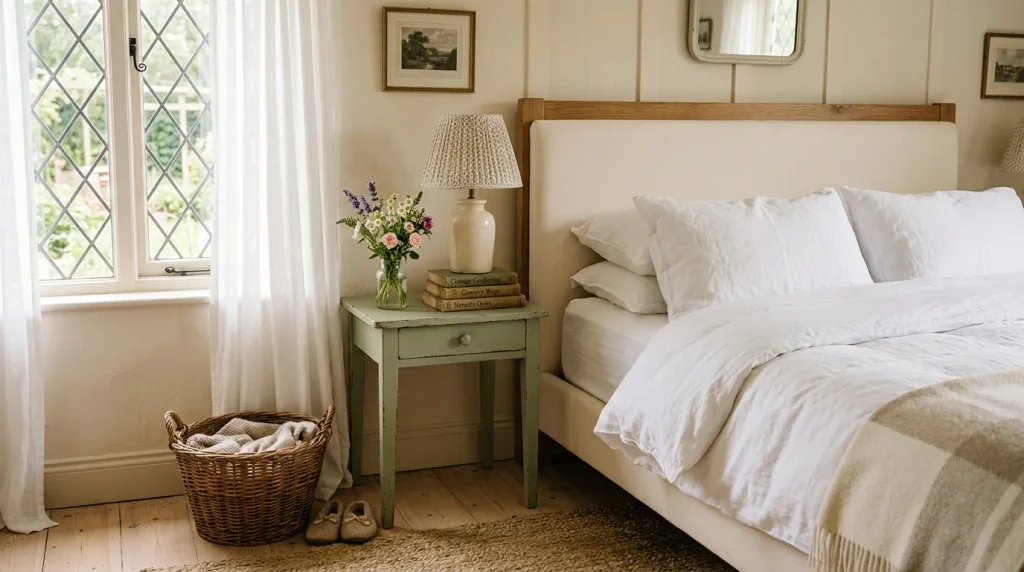
- A cottage-inspired nightstand adds warmth and practical bedside storage.
- Look for painted wood, turned legs, or subtle vintage details.
- Keep the surface useful rather than filling it with decorations.
- A small lamp, book, and flower vase can create a balanced arrangement.
A cottage-style nightstand can make the bedside area feel warm, personal, and thoughtfully layered. Choose a small painted-wood table, vintage-inspired cabinet, or piece with simple turned legs and subtle detailing. White, cream, pale sage, and natural wood finishes work especially well with spring bedroom colors. Keep the top functional by adding only a few useful pieces, such as a small lamp, favorite book, ceramic vase, or tiny plant. The combination of practical storage and gentle character makes the nightstand feel like part of the room rather than just a place to set things down.
Look for a nightstand with at least one drawer or shelf if you need extra storage for chargers, reading glasses, or other bedside essentials. I’ve noticed that slightly imperfect vintage-style furniture can add more charm than perfectly matched pieces because the texture makes the room feel lived in. If the nightstand is painted, allow a little of the wood character or hardware to show through. Pair it with linen bedding and a woven basket nearby, and the bedside area becomes a cozy spring-inspired corner that remains useful all year.
18. Green Accent Chair
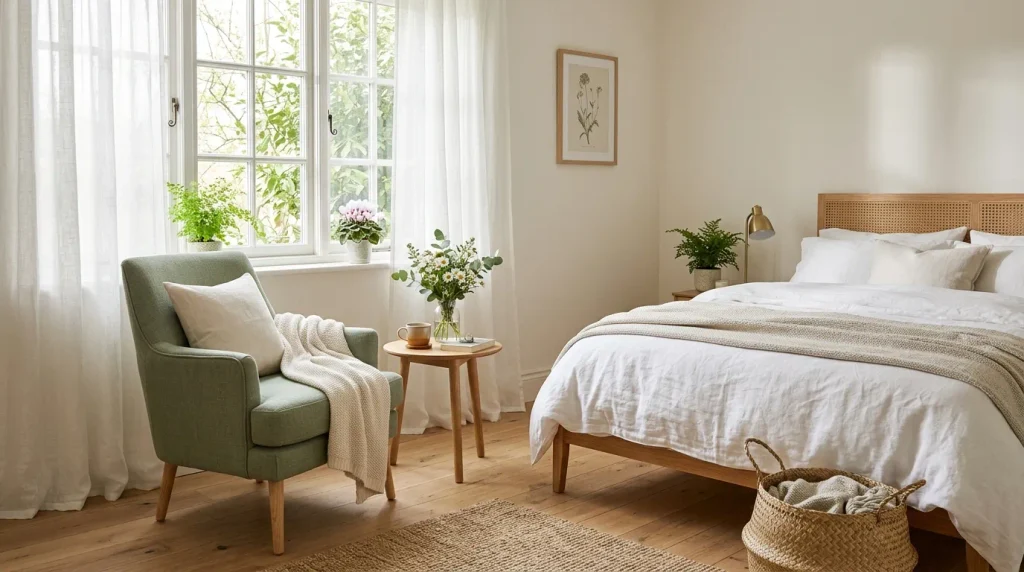
- A green accent chair brings a natural spring color into an unused corner.
- Choose sage or muted olive for a softer, sophisticated look.
- Add one neutral cushion instead of several decorative layers.
- Position the chair where it does not block windows, closets, or walking paths.
A green accent chair can bring a beautiful touch of nature into a bedroom while creating useful seating at the same time. Sage, muted olive, and soft eucalyptus shades work especially well because they add color without becoming too intense. Place the chair near a window, beside a dresser, or in an empty corner where it can serve as a comfortable spot for reading or getting ready. Pair it with a small neutral cushion and a simple throw if desired. The result adds personality while keeping the bedroom calm and connected to spring’s natural palette.
Choose the chair’s size carefully, especially if your bedroom is compact. A slim upholstered chair can provide the same visual impact as a larger piece without taking up too much floor space. I’ve noticed that muted green upholstery pairs particularly well with cream, white, natural wood, and woven textures. If the chair is already a strong focal point, keep nearby accessories minimal. A small plant or simple side table is enough to complete the corner. This creates a practical seating area that feels intentional without turning an empty corner into a cluttered display.
19. Textured Area Rug
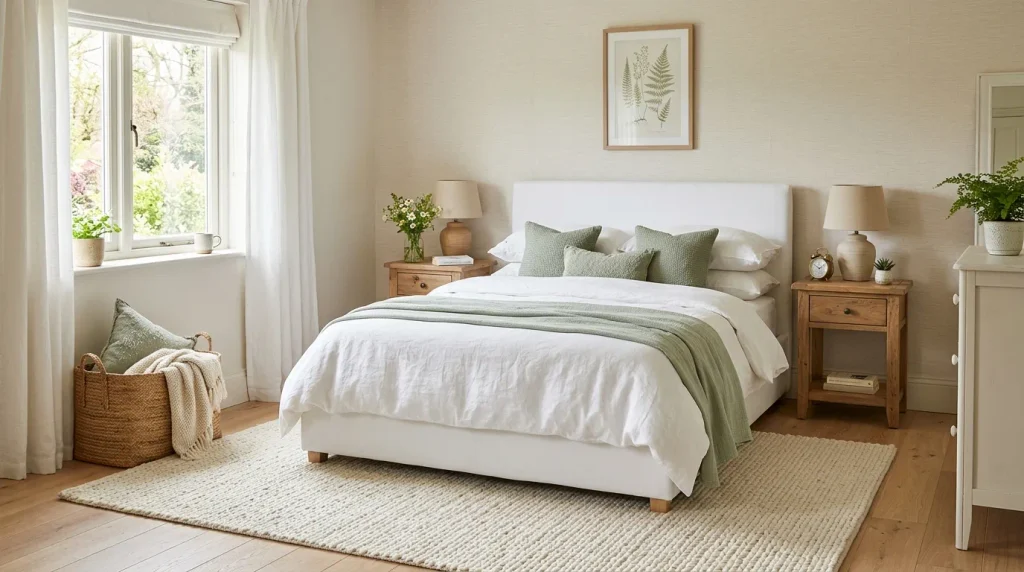
- A textured rug can make a bedroom feel warmer without adding bold color.
- Choose a soft neutral shade to complement existing bedding.
- Place the rug partly beneath the bed to visually anchor the room.
- Low-pile options are easier to clean and practical for everyday bedrooms.
A textured area rug can instantly make a bedroom feel softer and more finished, especially when the floor is hard wood, laminate, or tile. Choose a neutral rug in cream, beige, oatmeal, or soft gray with a subtle woven, tufted, or braided texture. Position it beneath the lower portion of the bed so it extends beyond both sides, creating a comfortable landing spot when you get up. The understated texture adds warmth without competing with floral bedding, pastel accents, or botanical artwork, making it an easy foundation for a fresh seasonal bedroom.
Consider the rug’s size carefully before purchasing because a rug that is too small can make the bed feel disconnected from the rest of the room. For easier maintenance, choose a low-pile design if the bedroom receives heavy foot traffic. I’ve noticed that natural-looking textures work particularly well with spring decor because they add warmth while keeping the color palette light. Pair the rug with linen bedding, a woven basket, and natural wood furniture for a cohesive finish. The result is a bedroom that feels softer underfoot, visually grounded, and comfortably layered without looking overly decorated.
20. Botanical Wall Art
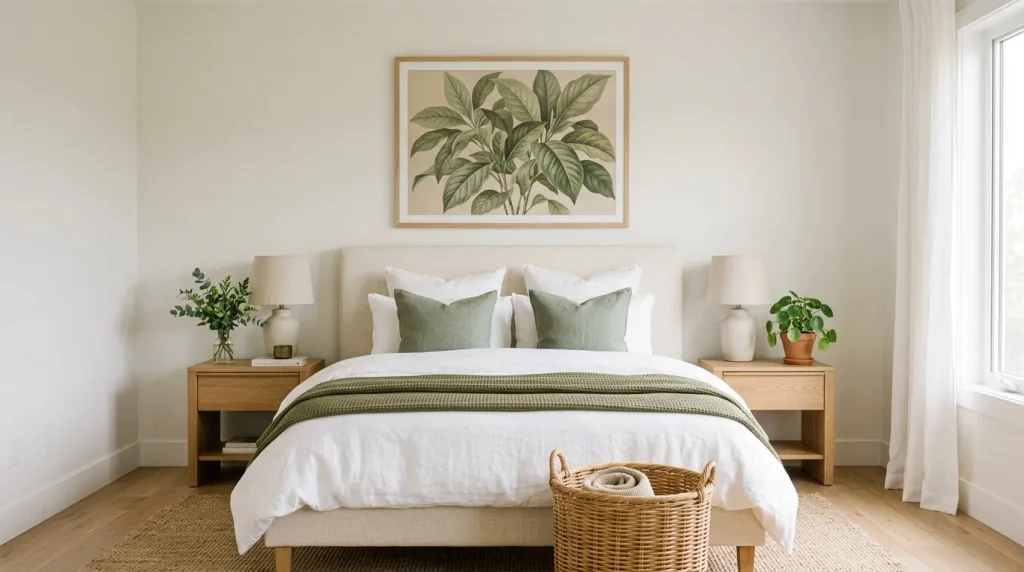
- Botanical wall art adds natural color without taking up floor space.
- Large leaf prints work well as a single statement piece.
- Smaller framed illustrations create a softer layered arrangement.
- Choose artwork colors that repeat throughout the bedding or accessories.
Botanical wall art can make a bedroom feel connected to nature while keeping the design clean and uncluttered. A large framed leaf print above the bed can act as a simple statement piece, while several smaller botanical illustrations can create a more collected look above a dresser or reading corner. Choose artwork featuring sage, olive, cream, muted blue, or soft brown so it blends naturally with neutral furniture and spring textiles. The organic shapes of leaves and stems bring movement to blank walls without introducing the visual busyness of heavily patterned artwork.
Think about the scale of the wall before selecting your pieces. One oversized print can look more balanced above a wide headboard, while a vertical arrangement may work better in a narrow space. I’ve noticed that botanical artwork feels especially cohesive when at least one color appears elsewhere in the room. Repeat a shade through a cushion, plant pot, or throw blanket rather than matching everything exactly. Use simple frames in natural wood, white, or black depending on your style. This keeps the artwork visually connected while allowing the natural imagery to remain the main attraction.
21. Sunlit Bedding Nook
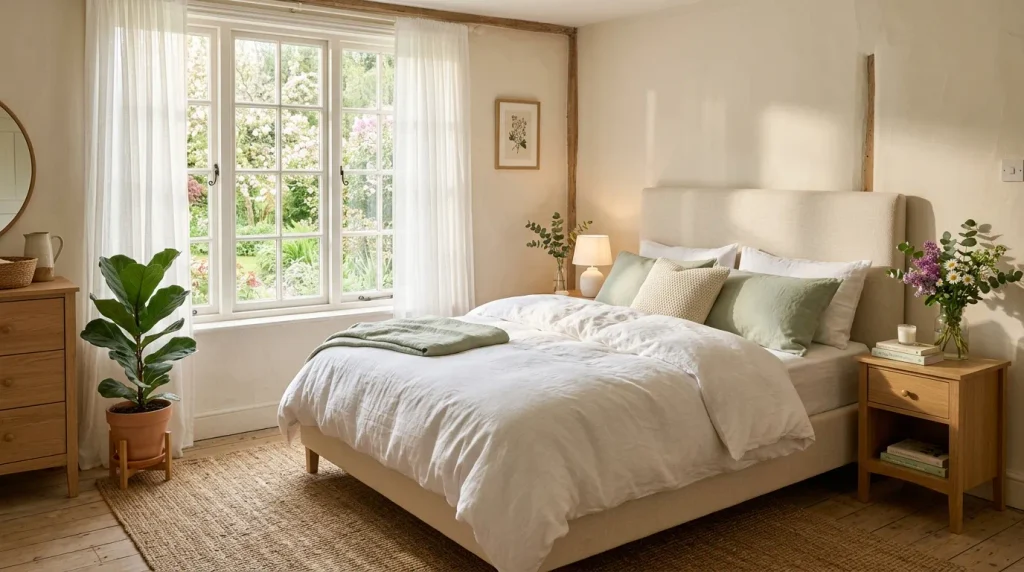
- A sunny corner can become a beautiful focal point with very little decoration.
- Position the bed or a small daybed near natural light when practical.
- Keep window treatments lightweight to maximize daytime brightness.
- Use pale bedding to reflect and soften incoming sunlight.
A sunlit bedding nook can make a bedroom feel brighter, calmer, and wonderfully connected to the changing season. If your room allows, position the bed or a small daybed near a generous window where natural light can become part of the design. Dress the bed in white, cream, or pale pastel bedding so the sunlight reflects softly across the fabrics. Keep the surrounding furniture simple and use lightweight curtains that allow daylight to filter through. This arrangement works particularly well in bedrooms that already have attractive windows or pleasant outdoor views.
Avoid placing the bed directly against a window if doing so would interfere with ventilation, curtains, or comfortable access. Instead, use the brightest part of the room for a reading chair, bench, or small seating nook if the bed must remain elsewhere. In my experience, natural light can transform neutral textiles, making linen and cotton appear warmer and more dimensional. Add one leafy plant near the window and a soft woven rug beneath the bed. The result is a peaceful retreat that feels naturally refreshed rather than heavily decorated for the season.
22. Vintage Spring Accents
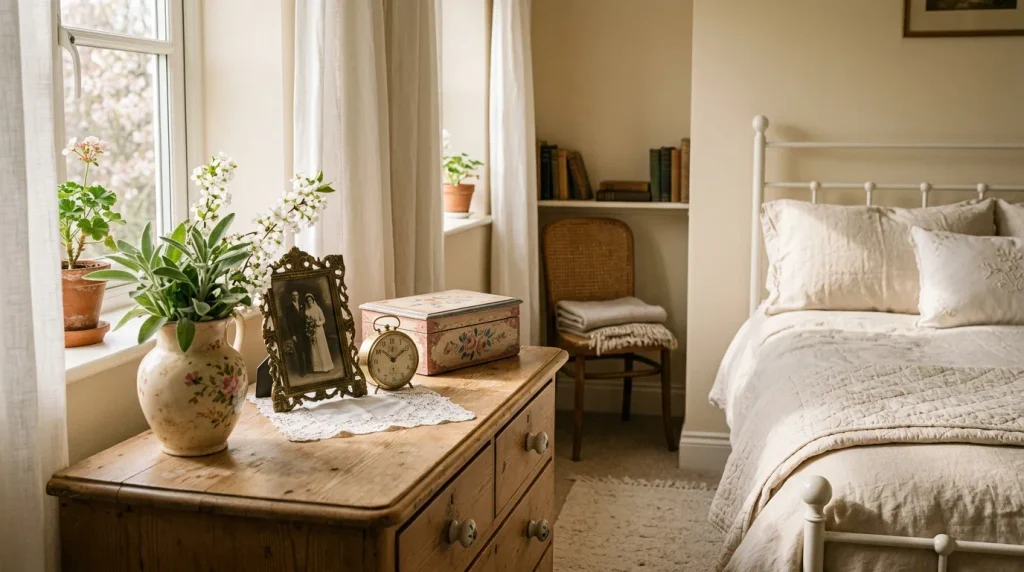
- Vintage pieces add personality without requiring a complete room makeover.
- Look for floral ceramics, old-fashioned frames, or small decorative boxes.
- Mix one or two aged pieces with modern bedding for balance.
- Choose accents with colors that already appear in the bedroom.
Vintage spring accents can give a bedroom a sense of charm and history while keeping the seasonal update subtle. Look for a small floral ceramic vase, antique-style frame, painted jewelry box, vintage clock, or delicate brass accessory. Place one or two pieces on a dresser, nightstand, or shelf where their details can be appreciated. Soft floral patterns, faded greens, warm cream, and muted pinks work beautifully with modern neutral bedding. The contrast between old-fashioned details and simple contemporary pieces makes the room feel personal rather than overly coordinated.
You do not need an entire collection of vintage furniture to create this look. One meaningful piece can become a focal point, especially when surrounded by simple textures and natural materials. I’ve noticed that vintage accents look most convincing when they are mixed rather than perfectly matched. Pair an aged frame with a modern lamp or place an old ceramic vase beside a contemporary plant pot. This balance keeps the bedroom comfortable and current while adding character. Choose pieces you genuinely like instead of decorating solely around a theme, and the room will feel naturally collected.
23. Layered Bed Pillows
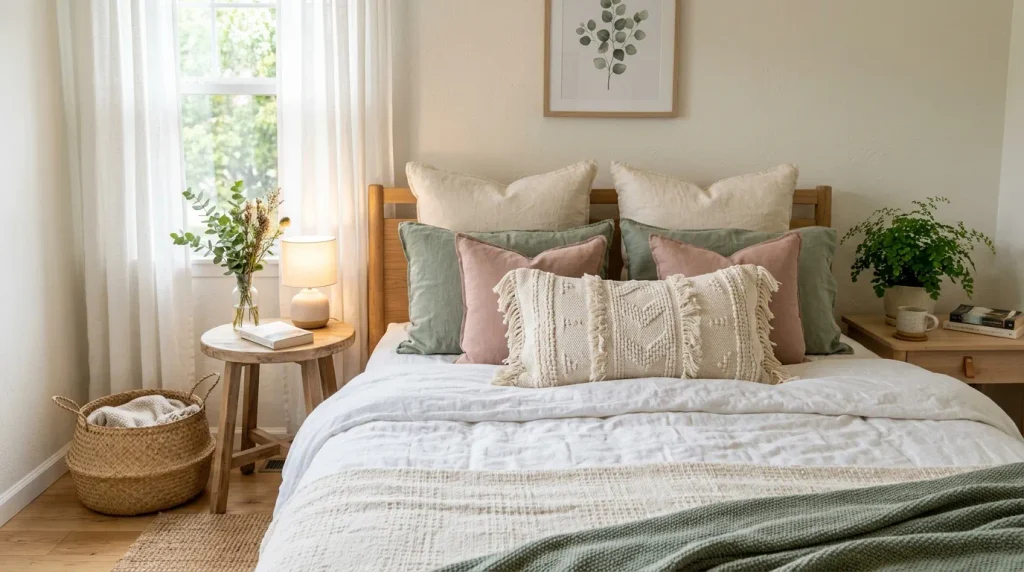
- Layered pillows make the bed look comfortable and inviting.
- Combine different sizes rather than using identical pillows throughout.
- Keep colors connected to the room’s existing spring palette.
- Use washable covers for practical everyday maintenance.
Layered bed pillows can make even simple bedding feel instantly more inviting and polished. Start with larger sleeping pillows at the back, add two medium decorative cushions, and finish with one smaller lumbar pillow at the front. Choose a palette of cream, sage, blush, pale blue, or another soft shade already used in the bedroom. Mixing linen, cotton, woven, and subtly patterned fabrics creates depth without needing loud prints. The finished arrangement gives the bed a cozy focal point while still leaving enough room for the pillows to be easily removed at bedtime.
Avoid adding so many pillows that making the bed becomes a daily chore. A few carefully selected layers usually look better and are much easier to maintain. In my experience, one textured lumbar pillow can provide more visual interest than several small decorative cushions. Keep the largest pieces relatively neutral, then introduce spring color through the smaller layers. If your duvet or comforter already has a pattern, use mostly solid pillows to create balance. This approach keeps the bed looking fresh and comfortable while making the room feel more thoughtfully styled.
24. Natural Fiber Headboard
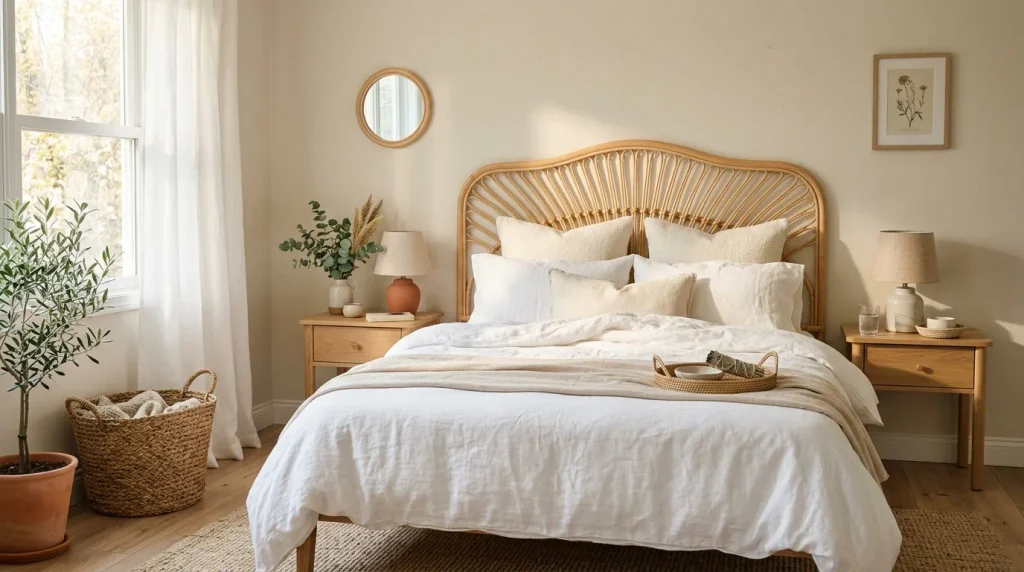
- Natural fibers add warmth and texture around the main focal point of the bedroom.
- Rattan, cane, and woven materials complement light spring colors.
- Choose a simple silhouette for a calm, uncluttered appearance.
- Repeat the natural material through a basket or pendant light nearby.
A natural fiber headboard can become the foundation for a warm and airy spring bedroom. Rattan, cane, woven seagrass, and other natural materials introduce texture around the bed without requiring bright colors or elaborate decoration. Choose a simple curved or rectangular design that complements the room’s proportions, then pair it with white linen bedding, soft greenery, and light wood furniture. The woven surface creates subtle shadows and detail, giving the sleeping area more character while maintaining the relaxed atmosphere that makes a bedroom feel comfortable.
Keep the surrounding decor relatively simple so the headboard remains easy to appreciate. A woven basket beside the bed or a rattan pendant light can repeat the material without making the room feel themed. I’ve noticed that natural fiber pieces work particularly well in rooms with pale walls because they add warmth and prevent the space from feeling too stark. If replacing the headboard is not practical, consider a removable woven panel or natural-texture wall treatment behind the bed. This can create a similar focal effect while giving you more flexibility.
25. Serene Spring Palette
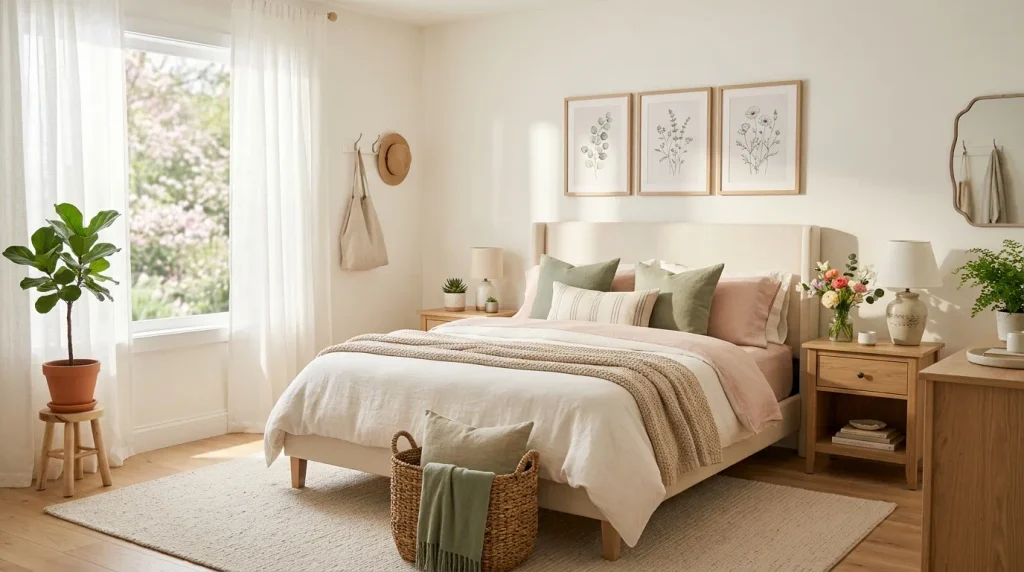
- A restrained color palette makes the entire bedroom feel calm and connected.
- Combine warm white with sage, blush, pale blue, or soft beige.
- Repeat colors subtly through bedding, artwork, curtains, and accessories.
- Keep stronger colors limited to small accents for a peaceful finish.
A serene spring color palette can tie every bedroom detail together and create the fresh, cozy feeling you want without making the space look overly seasonal. Start with a warm neutral foundation such as cream, ivory, or light beige, then introduce two gentle accent shades such as sage and blush or pale blue and soft yellow. Repeat those colors through bedding, artwork, curtains, cushions, and small accessories. Because the colors appear in several places, the room feels intentionally designed rather than decorated with unrelated seasonal pieces.
The most relaxing bedrooms usually leave plenty of visual breathing room, so resist the temptation to use every spring color at once. Choose one main accent shade, one supporting color, and let neutrals fill most of the space. I’ve noticed that this approach makes seasonal decorating much easier because individual pieces can be swapped without disrupting the entire room. Add natural wood, woven textures, and fresh greenery to soften the palette further. The finished bedroom feels bright enough for spring, cozy enough for everyday living, and timeless enough to enjoy long after the season changes.
Conclusion
Creating a fresh spring bedroom does not have to mean replacing everything you already own. Often, the smallest changes make the biggest difference. Swap heavy textiles for lightweight linen, add a few fresh flowers, introduce greenery, or bring in soft pastel accents to instantly brighten the space.
When choosing your favorite ideas, think about how your bedroom feels as well as how it looks. Add texture if the room feels flat, natural greenery if it feels lifeless, or lighter fabrics if it feels heavy. In my experience, the most comfortable bedrooms combine seasonal details with timeless pieces instead of trying to make every element look perfectly matched.
Let your spring bedroom ideas reflect the way you want to feel when you walk into the room. Keep the colors soft, the textures inviting, and the decor practical enough for everyday life. A few thoughtful updates can turn your bedroom into the fresh, cozy retreat you have been wanting for the season.