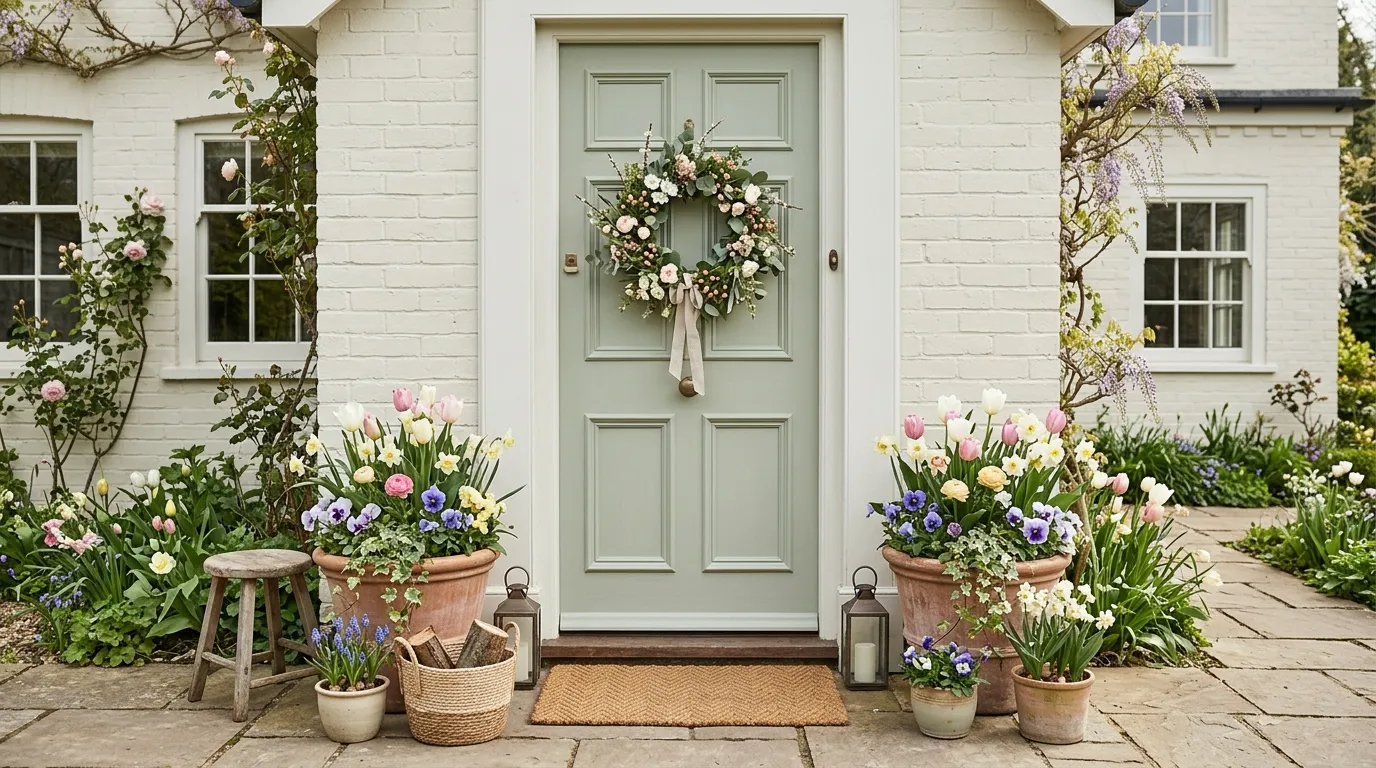
Spring has a way of making you want to start over, and nowhere shows that more than your front door. It’s the first thing guests see, the first thing you see coming home, and honestly, the easiest part of your house to transform in a single afternoon.
You don’t need a big budget or a design degree to make it happen. A few well-chosen touches — a wreath here, a planter there — can completely change how your entry feels the moment spring weather arrives.
In my experience, small entryway updates get noticed more than almost any other home project. Neighbors comment, guests compliment, and you get to enjoy it every single day just walking in and out. That’s exactly why spring front door decor is worth the little bit of time it takes.
This list walks through 21 ideas, from simple ribbon hangers to fuller wreath layering, so you can pick what fits your style, your porch, and your budget. Save the ones that speak to you and start with just one — you’ll likely want to add more once you see the difference it makes.
1. Rustic Twig Wreath
- Adds instant texture without looking cluttered
- Works with almost any door color
- Cheap to make with materials from your backyard
- Feels seasonal without screaming “holiday decor”
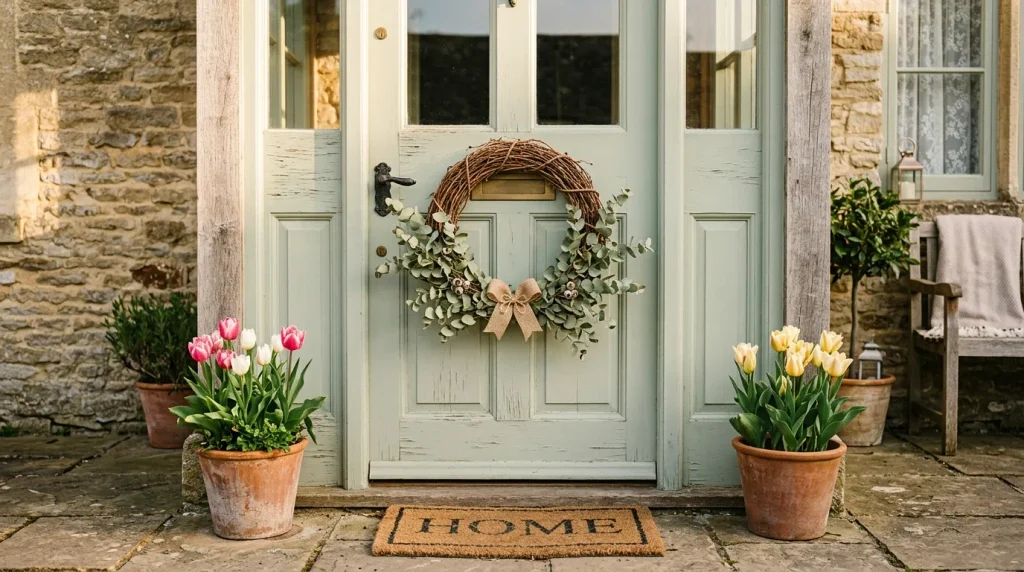
A twig wreath is one of the easiest ways to signal spring before anyone even reaches your porch. It costs little, takes under twenty minutes to assemble, and instantly softens a plain door. In my experience, mixing textures — rough twigs with a few silky ribbon accents — makes the wreath look intentional rather than thrown together. Even a slightly imperfect, asymmetrical shape reads as charming and handmade. This is a great starting project if you’re new to spring front door decor, since it requires no power tools, no measuring, and almost no cleanup once you’re done.
Twigs alone can look bare, so layering in small elements makes a real difference. Adding faux forsythia branches or a few silk daisies gives the wreath color without the upkeep of real flowers. I’ve noticed homeowners often stop at just the wreath and skip the base, but a matching door mat or small potted plant nearby ties the whole look together. The goal isn’t a single statement piece — it’s a cohesive first impression. When the wreath, mat, and planters share a color story, the entry feels styled rather than decorated last-minute the night before guests arrive.
2. Pastel Planter Duo
- Creates instant symmetry and curb appeal
- Pastel colors feel fresh without being overwhelming
- Low-maintenance flowers keep upkeep simple
- Easy to swap seasonally
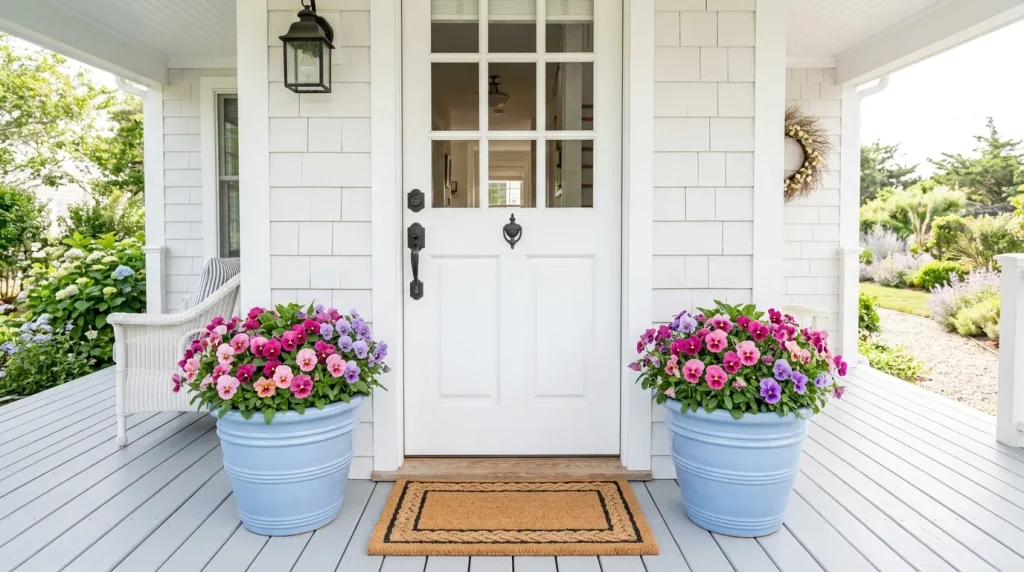
Symmetry does a lot of visual work with very little effort. Two identical planters, one on each side of the door, immediately make an entry feel balanced and cared for. Choosing pastel ceramic over plain plastic elevates the whole look for a small cost difference. Pansies and violas are ideal here because they tolerate cooler spring temperatures and bloom for weeks without constant attention. This kind of simple planter styling is one of the most repeated pieces of spring front door decor advice for a reason — it consistently delivers a polished result regardless of the door’s actual color or style.
Color pairing matters more than people expect when choosing planters. I’ve tried pairing bold planters with equally bold doors, and it often competes rather than complements. A calmer approach — soft planter tones against a neutral or classic door color — tends to age better through the season. If your door is already colorful, keep the planters simple and let the flowers provide the pop instead. Rotating in taller stems like ranunculus toward late spring keeps the display from looking static, giving returning guests something slightly new to notice each visit.
3. Painted Door Accent
- Transforms the entire entry without a full renovation
- Bold color choices boost curb appeal instantly
- Pairs well with neutral house exteriors
- A weekend project most homeowners can DIY
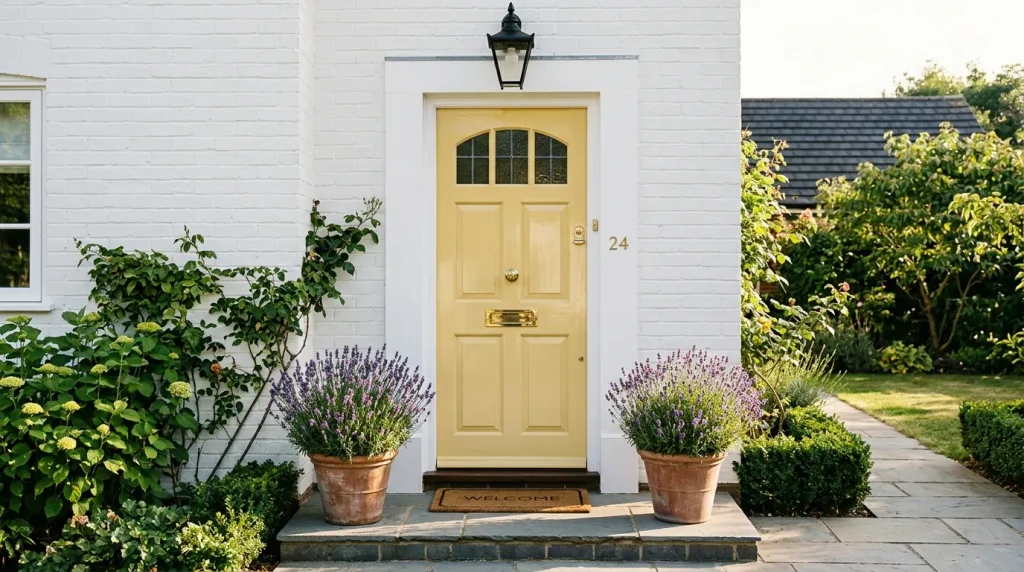
A fresh coat of paint remains one of the highest-impact, lowest-cost upgrades for any entryway. Colors like buttery yellow, soft coral, or sage green feel distinctly spring without looking out of place the rest of the year. Unlike wreaths or planters that need seasonal swapping, a painted door is a longer-term investment in your home’s overall character. That’s why many designers recommend starting here before adding smaller decorative touches — the door color sets the tone that everything else, from mats to planters, will need to complement rather than compete with.
Choosing the right finish matters just as much as the color itself. A satin or semi-gloss finish reflects light beautifully and holds up better against weather than flat paint. I’ve seen this work well in many homes: pairing a saturated door color with all-white or neutral trim keeps the look sharp instead of chaotic. If you’re hesitant about commitment, test a peel-and-stick door film first. It’s a reversible way to experiment with spring front door decor before investing in an actual repaint, especially useful for renters or seasonal decorators.
4. Ribbon Door Hanger
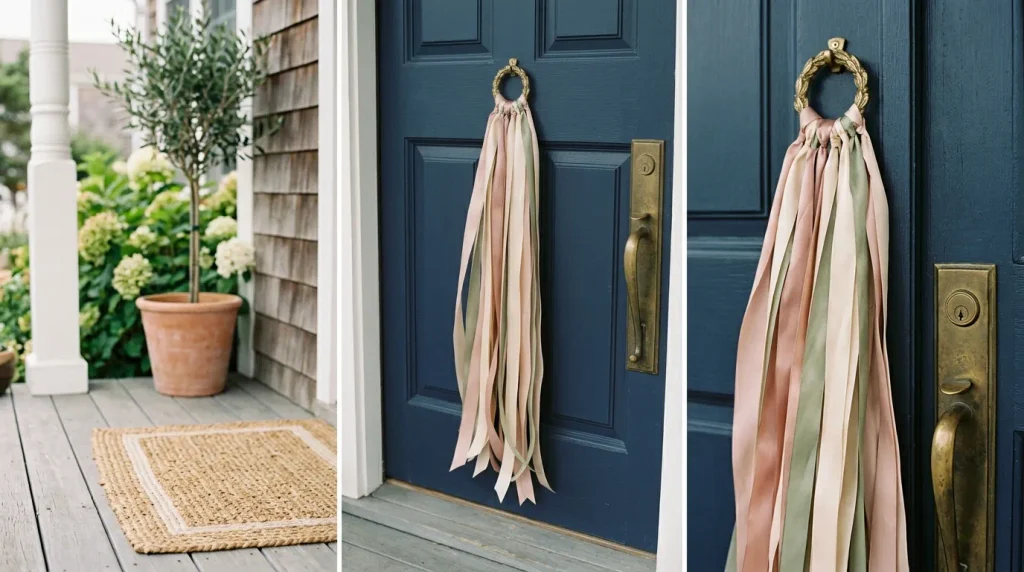
- A quick alternative to a full wreath
- Adds movement and softness to a static door
- Easy to make in under ten minutes
- Great for renters who can’t paint or drill
Ribbon hangers are having a moment for good reason — they take almost no effort but photograph beautifully. Cutting a few lengths of ribbon in coordinating spring shades and tying them to a small hook creates gentle motion every time the door opens or wind passes through. This works especially well on darker doors, where pastel ribbon colors create real contrast. It’s also one of the most beginner-friendly spring front door decor projects out there, needing no glue gun, no wire, and no crafting experience beyond tying a basic knot.
Layering ribbon widths and textures keeps the hanger from looking flat or one-note. Mixing a wide grosgrain ribbon with a few thin silk strands adds depth without extra cost. I’ve noticed that odd numbers of ribbon strands, like five or seven, tend to look more natural than even, overly symmetrical counts. This small detail makes a noticeable difference in photos. Pairing the hanger with a simple seasonal doormat rounds out the look, giving the entry a cohesive, styled feel without requiring a wreath, planter, or any permanent changes to the door itself.
5. Tiered Plant Stand
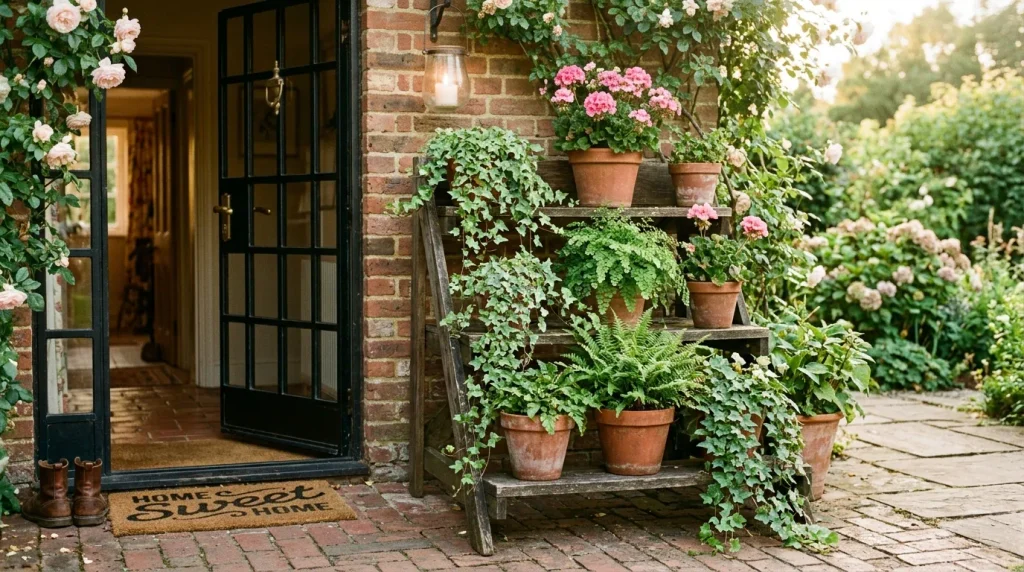
- Maximizes plant display in a small footprint
- Adds height and visual layering to a flat entry
- Works even on narrow porches
- Easy to rearrange as flowers bloom or fade
A tiered stand solves a problem most porches have: not enough floor space for the amount of greenery you actually want. Stacking plants vertically instead of spreading them out lets you fit five or six pots in the same space a single large planter would take. This creates a fuller, more lived-in look that flat, single-level arrangements often lack. It’s a favorite trick among people serious about spring front door decor because it delivers a nursery-quality display using plants you can buy individually and swap out as needed throughout the season.
Placement height changes the whole feel of the arrangement. I’ve tried keeping tallest plants at the back tier and trailing ones like ivy at the front, and it consistently looks more intentional than random placement. Mixing textures — spiky, round, trailing — prevents the display from reading as one green blur. If your porch gets limited sun, choose shade-tolerant options like ferns for lower tiers. This setup also makes maintenance easier, since each plant is visible and accessible rather than crowded together in one oversized pot.
Also Read : 22 Palm Sunday Decorations Home Ideas for a Peaceful Space
6. Seasonal Doormat Swap
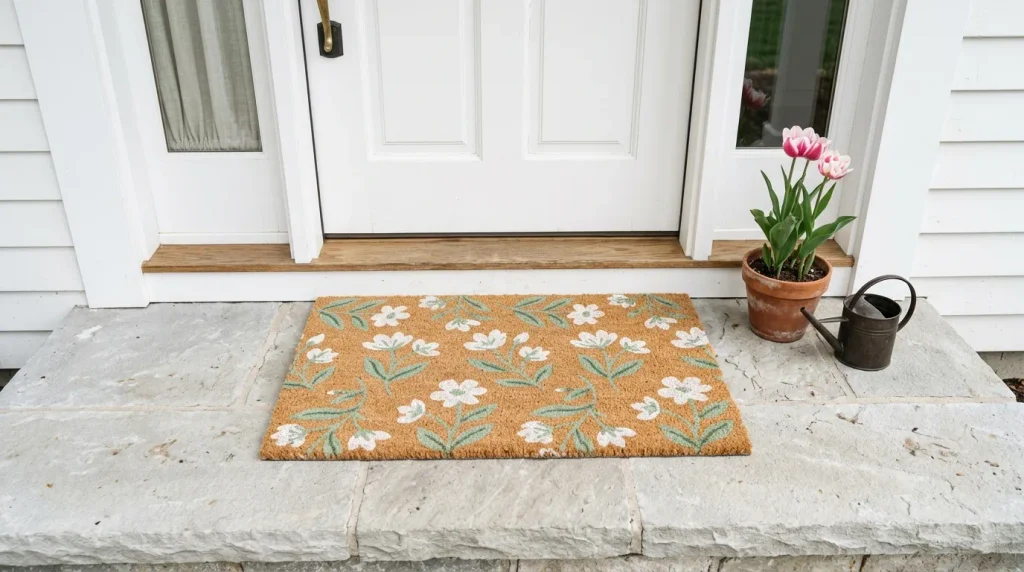
- Instantly refreshes the entry for almost no cost
- Sets the tone before guests even see the door
- Easy to store and rotate by season
- Functional as well as decorative
A doormat is the most overlooked piece of any entryway refresh, yet it’s often the first thing visitors actually step on. Swapping a heavy winter mat for something lighter, with floral or botanical patterns, immediately signals the season has changed. It’s a small, affordable update that pairs well with almost every other idea on this list, whether that’s a wreath, planters, or a painted door. Because it sits at ground level, a mat also grounds the whole display, visually anchoring taller decor above it.
Material choice affects both look and longevity more than people realize. Coir mats hold pattern detail well and handle muddy spring weather better than fabric options, which tend to fade or mildew. I’ve seen this work well in many homes: choosing a mat with just one or two accent colors that echo the planters or wreath nearby, rather than something busy or mismatched. This keeps the overall spring front door decor scheme feeling curated. A quick shake-out or hose-down every few weeks keeps it looking fresh through the entire season.
7. Hanging Basket Pair
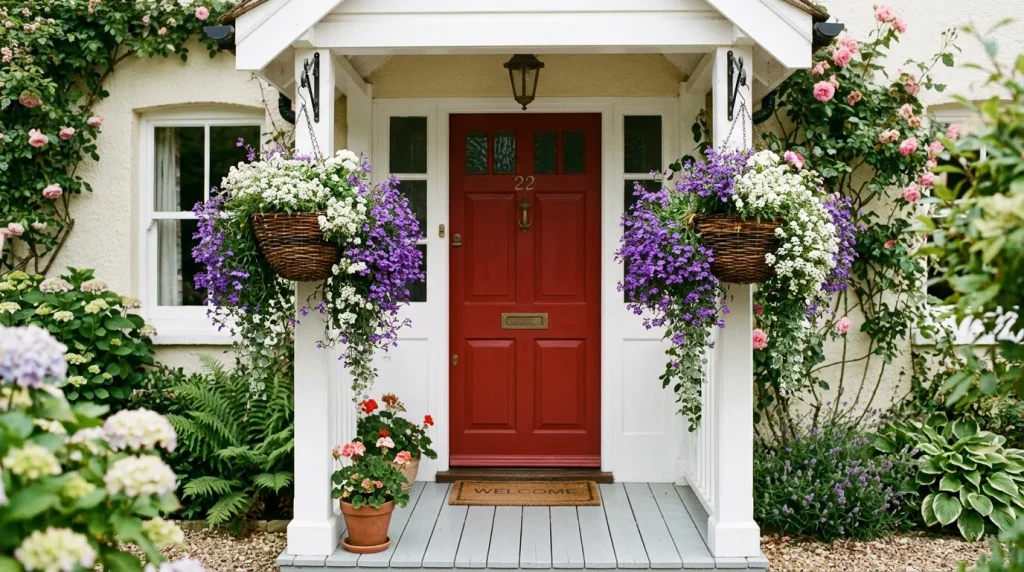
- Frees up floor space while still adding greenery
- Cascading blooms soften hard architectural lines
- Works well on porches with columns or overhangs
- Requires only occasional watering once established
Hanging baskets solve the same problem tiered stands do, just from a different angle — literally. Instead of building up from the ground, they bring color and texture down from above, which works especially well on porches with columns, hooks, or overhead beams already in place. Cascading flowers like lobelia or verbena spill over the basket edges, softening straight lines around the doorframe. This vertical approach to spring front door decor is ideal for smaller porches where floor space is already taken up by furniture, mats, or planters.
Watering consistency matters more with hanging baskets than with ground planters, since they dry out faster in open air. In my experience, self-watering basket liners make a real difference for anyone who tends to forget daily watering, especially as spring afternoons get warmer. Choosing a basket color that matches or complements your door hardware, rather than the door itself, tends to look more polished. Hung slightly above eye level, baskets also avoid blocking the doorway, keeping the entrance functional as well as beautifully layered with seasonal color.
8. Botanical Welcome Sign
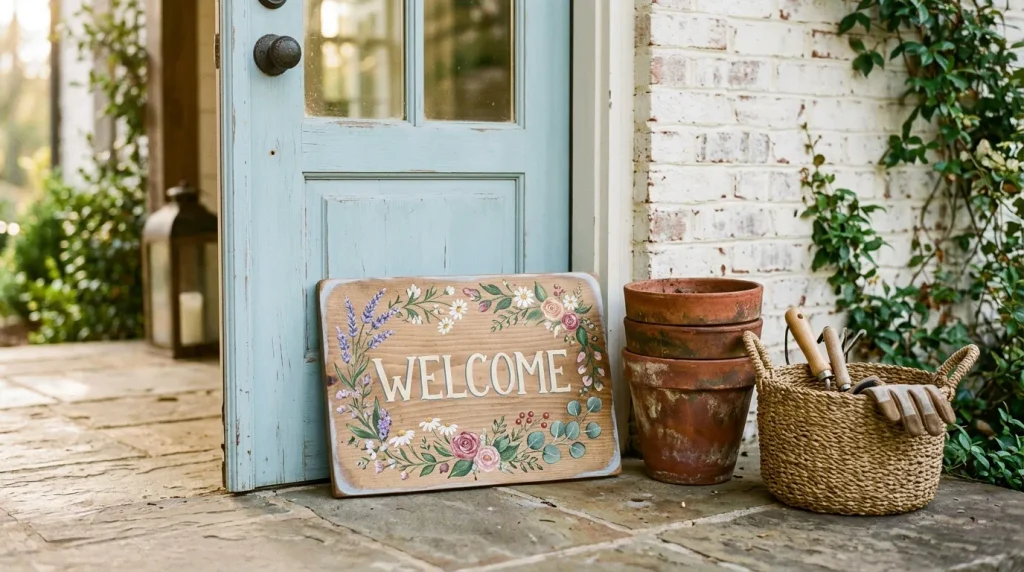
- Adds a personal, handmade touch to the entry
- Doubles as a functional design accent
- Easy to update with paint for any season
- Great focal point for photos
A welcome sign gives an entryway personality that plants and mats alone can’t provide. Leaning a small painted sign against the door frame, rather than mounting it, keeps the look casual and easy to change whenever you want a new design. Botanical illustrations — simple sketched flowers or leaves — feel more current than printed text-heavy signs and photograph better for anyone who likes documenting their porch setup. It’s a subtle way to reinforce a spring front door decor theme without adding another wreath or planter to an already busy space.
Sign placement changes how much attention it draws. I’ve noticed that leaning a sign at a slight angle against a lower step, rather than centering it directly under the door, creates a more natural, candid look rather than a staged one. Pairing the sign’s color palette with nearby flowers ties the whole entry together visually. If you enjoy DIY projects, repainting the same wooden sign each season is far more sustainable than buying new decor every few months, and it becomes a small seasonal ritual many homeowners genuinely look forward to.
9. Layered Doorstep Rugs
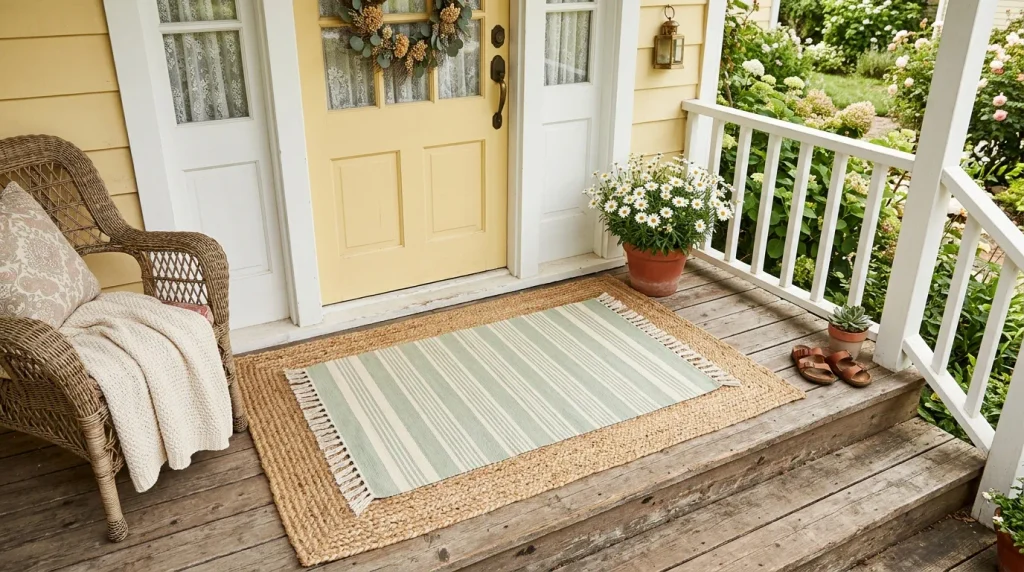
- Adds visual depth without extra furniture
- Softens hard porch surfaces underfoot
- Mixes patterns for a curated, boutique feel
- Inexpensive way to define the entry space
Layering two rugs of different sizes and textures is a trick borrowed from interior design that translates surprisingly well to outdoor entries. A larger, neutral jute rug acts as a base, while a smaller patterned rug on top adds color and personality. This creates the impression of a defined “entry zone” even on porches that are just a single concrete step. It’s a simple, low-cost way to elevate spring front door decor without buying planters, wreaths, or furniture, and it works on nearly any porch size or shape.
Rug placement should feel intentional rather than accidental. I’ve tried centering the smaller rug slightly off-center from the top rug’s edge, which reads as more styled than a perfectly stacked, symmetrical look. Choosing weather-resistant outdoor rugs matters here, since spring rain and morning dew can otherwise damage fabric quickly. Pairing rug colors with your door or planter tones pulls the whole entrance together visually. This is an easy update to swap out entirely once summer arrives, without needing to touch paint, plants, or anything permanent.
10. Iron Lantern Accent
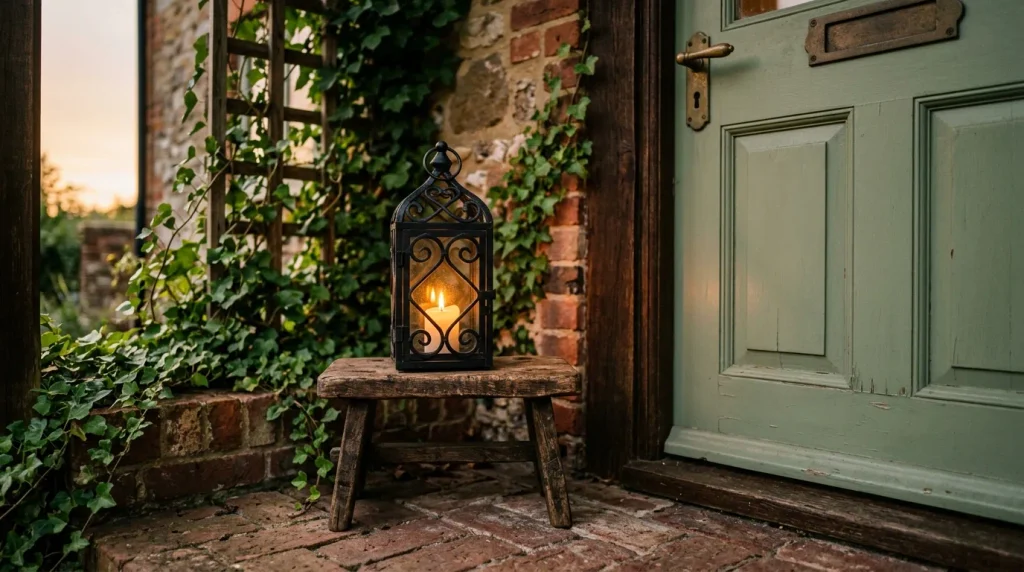
- Adds warmth and ambiance during evening hours
- Creates a charming focal point beside the door
- Works well year-round, not just in spring
- Pairs naturally with greenery and rustic textures
Lighting accents are often forgotten in daytime-focused entry styling, but they matter just as much once the sun sets. A single iron lantern placed on a stool or small table beside the door adds warmth without requiring electrical work. Flameless LED candles make this both safer and more practical for daily use, especially for households with kids or pets. This kind of accent brings a cozy, almost European courtyard feeling to an otherwise plain American porch setup, and it’s one of the few ideas here that looks just as good after dark as it does in daylight.
Scale and placement affect how natural a lantern accent feels. I’ve seen lanterns that are too small get visually lost next to a full-sized door, so choosing one with some real presence — at least a foot tall — tends to look more deliberate. Placing it at a slight offset from center, rather than dead-center under the door, avoids competing with a wreath or sign above. Combined with nearby greenery or a trailing plant, a lantern rounds out the entry with texture that daytime-only decor simply can’t provide.
11. Floral Garland Drape
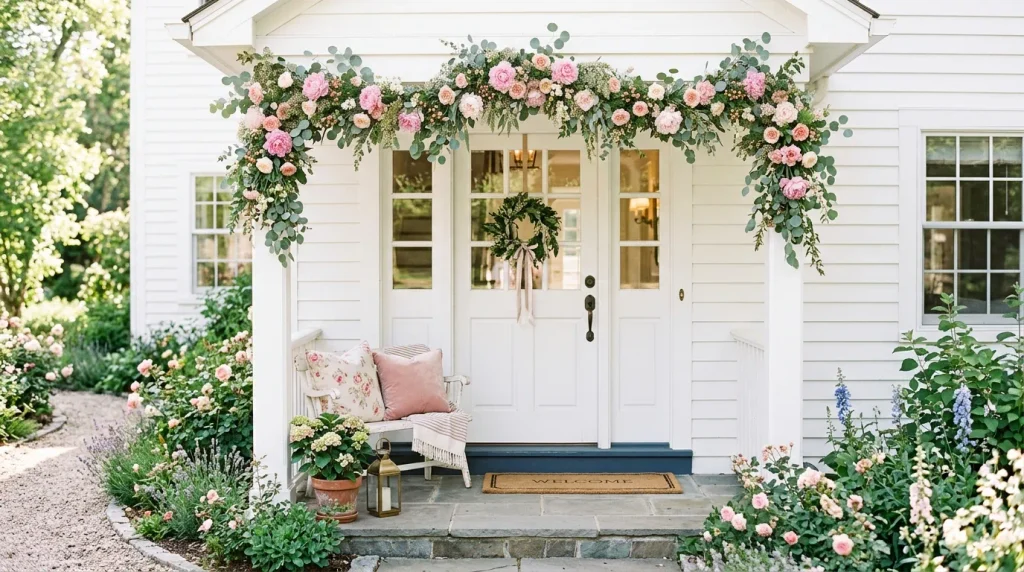
- Frames the entire doorway, not just the center
- Creates a romantic, garden-party feel
- Great for special spring occasions like Easter
- Easily removable without damaging door surfaces
A garland changes the scale of an entry’s decor by framing the whole doorway rather than a single focal point like a wreath does. Draping faux peonies and eucalyptus across the top of the frame, secured with small removable hooks, creates a soft, celebratory look that feels especially fitting for spring gatherings or holidays. Unlike a wreath, which sits centered and static, a garland follows the shape of the doorway itself, making the entire entrance feel dressed up rather than just accented in one spot.
Proportion is everything with a garland — too short and it looks like an afterthought. In my experience, garlands need to extend at least three-quarters of the door’s width to actually read as intentional framing rather than a stray decoration. Mixing faux and dried elements keeps the look full without excessive cost. This idea pairs beautifully with a smaller wreath centered lower on the door, giving the display two layers of floral detail. It’s a slightly more elaborate take on spring front door decor, best saved for occasions worth the extra setup effort.
12. Monogram Wreath Insert
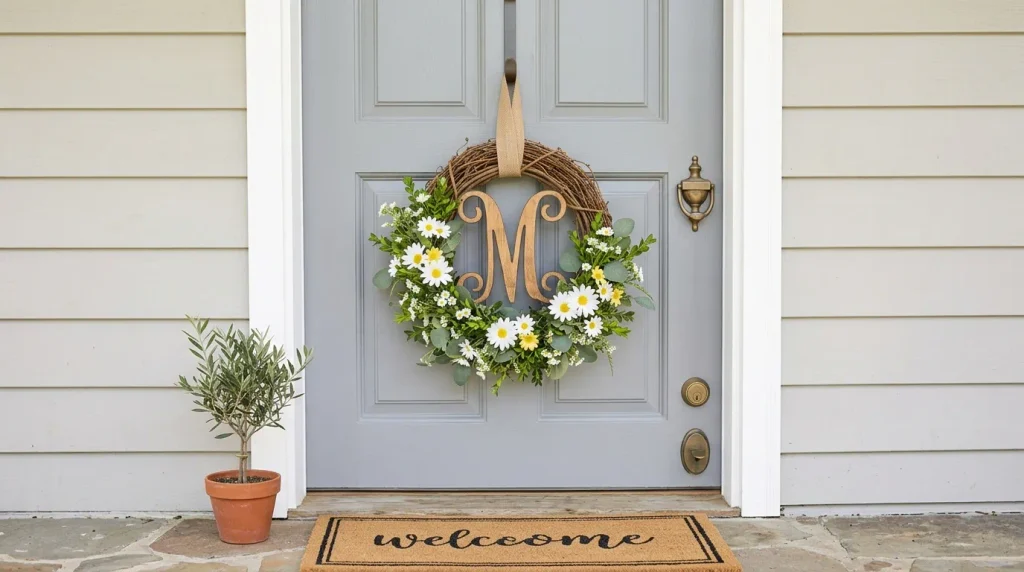
- Personalizes the entry in a subtle, tasteful way
- Combines two popular styles into one focal piece
- Makes a great housewarming or gift-inspired detail
- Easy to find pre-made or customize yourself
Adding a monogram inside a wreath base gives an otherwise generic decoration a personal signature, literally. Instead of buying a plain floral wreath, a wooden or metal initial nestled inside greenery makes the piece feel specifically yours rather than something anyone else on the block might have. This idea has become increasingly popular because it photographs well and feels meaningful without being overly sentimental. It’s also one of the more searched styles within spring front door decor, since people often want decor that reflects their home identity, not just the season.
Letter size relative to the wreath matters for balance. I’ve noticed that monograms taking up roughly a third of the wreath’s diameter look proportional, while oversized letters can overwhelm the greenery around them. Choosing a finish — painted, natural wood, or metallic — that complements your door hardware ties the piece together visually. This is also a great project to build yourself using a plain wreath form and a craft store letter, making it both budget-friendly and satisfying to display once finished on your own front entry.
13. Blooming Window Boxes
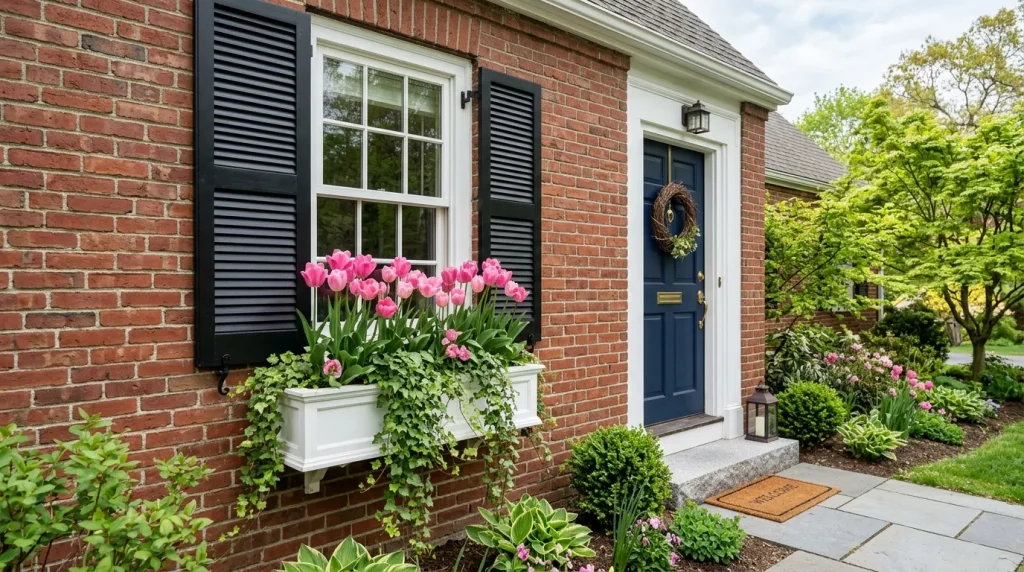
- Extends decor beyond just the door itself
- Adds color at eye level from the street
- Works alongside planters for a fuller look
- Easy to maintain with the right drainage
Window boxes shift the focus of an entry refresh slightly away from the door and toward the whole facade, which often makes the biggest difference from a distance. Installed just beneath a front-facing window, a box filled with tulips or trailing ivy adds a layer of color that’s visible from the street, not just up close on the porch. This is especially effective for homes where the front door sits slightly recessed or is otherwise hard to decorate directly, giving the entire entryway more visual weight.
Proper drainage is the detail most people overlook until it’s too late. I’ve tried boxes without drainage holes, and they hold water long enough to rot roots within a few weeks of spring rain. Lining the box with gravel before soil solves this simply. Choosing flowers that bloom at slightly different heights, like tulips paired with lower trailing ivy, creates a fuller look than single-height plantings. Paired with matching door planters below, window boxes complete a cohesive, top-to-bottom seasonal look across the entire entry.
14. Chalkboard Welcome Easel
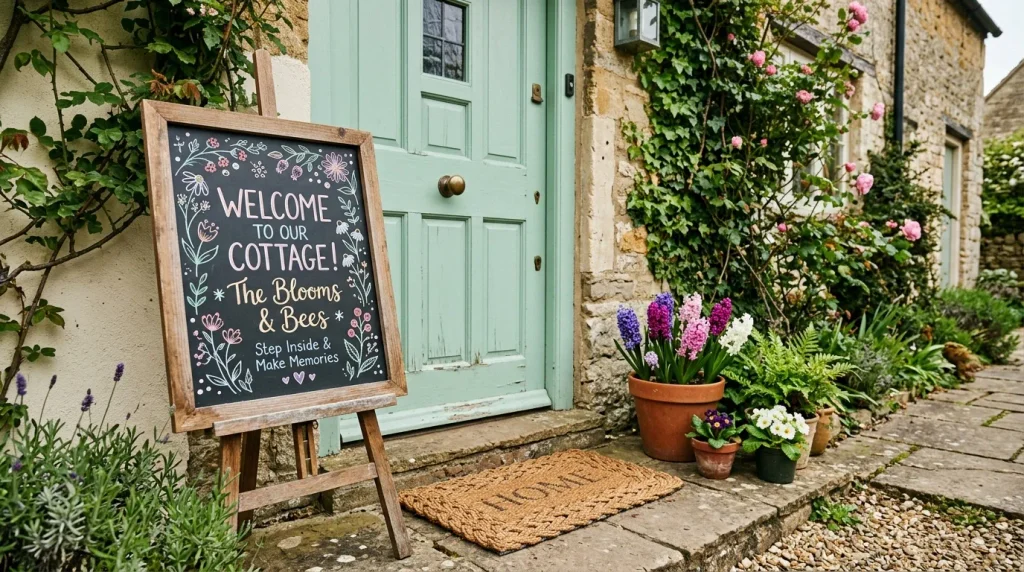
- Allows for custom, changeable messages
- Adds a playful, personal touch to the entry
- Inexpensive compared to permanent signage
- Fun to update for holidays within the season
A chalkboard easel offers something most other decor ideas can’t: flexibility. Instead of committing to one printed design, a chalkboard lets you change the message or doodle whenever the mood strikes, whether that’s a simple “welcome” or something tied to an upcoming holiday like Easter. Propped on a small easel rather than mounted, it also stays portable, so it’s easy to bring inside during storms without any installation to undo. This makes it one of the more practical, low-commitment pieces of spring front door decor available.
Handwriting style affects the overall feel more than people expect. I’ve noticed that slightly imperfect, casual lettering reads as warmer and more personal than overly polished calligraphy, which can look stock or impersonal. Adding a small floral doodle in the corner, rather than filling the whole board with drawings, keeps the design from feeling cluttered. Chalk pens work better than traditional chalk for outdoor durability, resisting smudging from humidity. This is also a fun, low-pressure project to involve kids in each time the message needs refreshing.
15. Vintage Watering Can Display
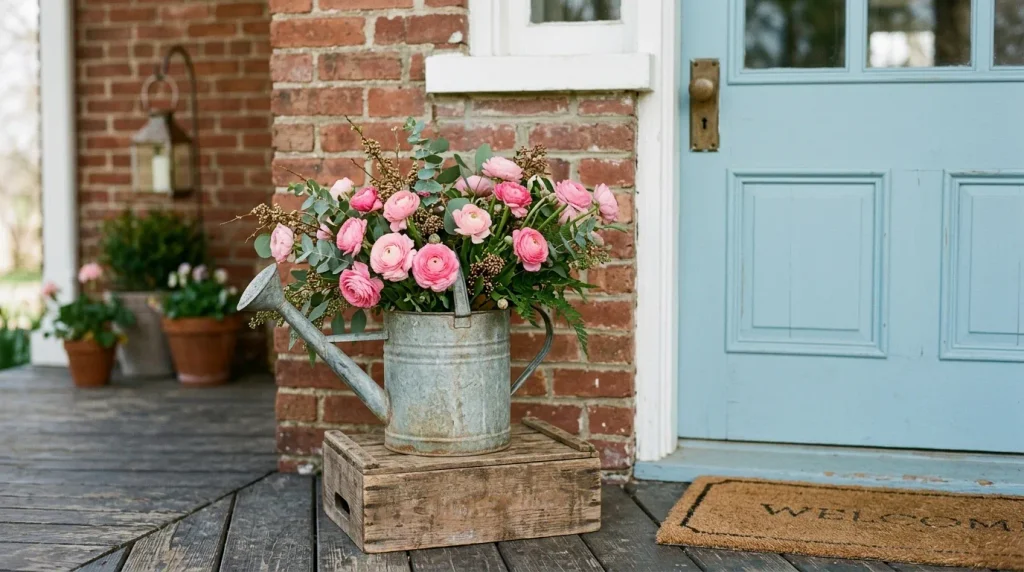
- Repurposes an everyday item as a planter
- Adds vintage character without a big investment
- Great conversation piece for guests
- Easy to switch flowers as the season shifts
Using a watering can as a flower vessel instead of a traditional pot brings a bit of storytelling into the display. An old galvanized can, whether genuinely vintage or a store-bought replica, suggests a garden already in progress rather than decor bought specifically for show. Set on a small crate or stack of bricks beside the door, it adds height variation without needing a full plant stand. This kind of repurposed styling has become a favorite within spring front door decor circles because it feels collected over time rather than purchased all at once.
Drainage is worth solving before flowers go in, since most watering cans aren’t designed to hold soil long-term. I’ve tried simply placing a plastic liner with holes inside the can, which protects the metal from rust while still keeping the vintage look intact. Choosing flowers with a slightly wild, garden-cut appearance — ranunculus, sweet peas, or ranunculus mixed with greenery — suits the relaxed nature of this display better than stiff, uniform arrangements. It’s a detail guests genuinely notice and often ask about during spring visits.
16. Pastel Shutters Refresh
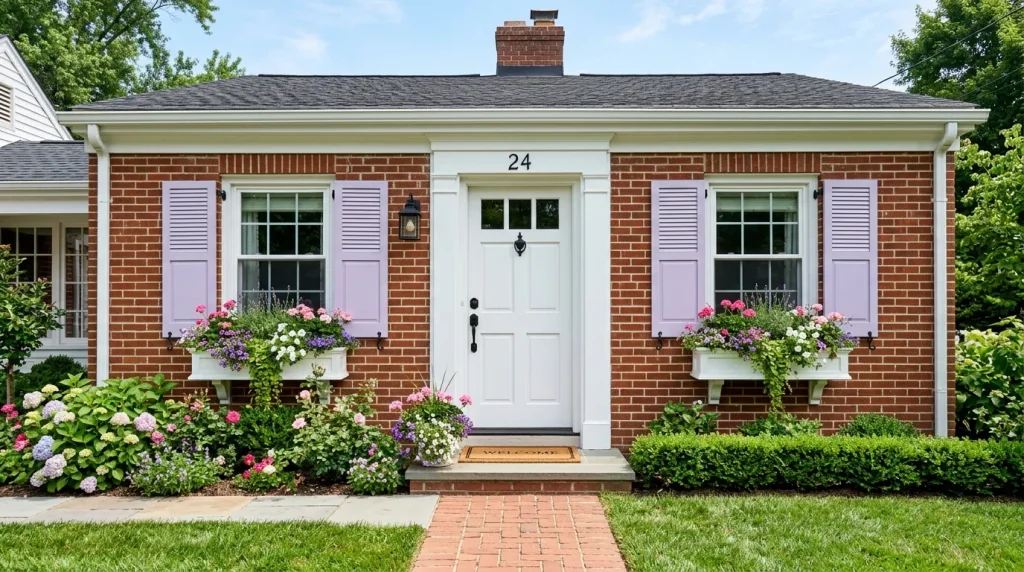
- Refreshes the whole facade, not just the door
- Adds color that’s visible from the street
- Longer-lasting than seasonal decor swaps
- Pairs beautifully with window boxes and planters
Repainting shutters is a step up from door-focused decor, extending a spring color refresh to the whole front of the house. Soft pastel shades like lavender, dusty blue, or sage tend to feel seasonal without looking dated once summer arrives. Because shutters frame windows on either side of the entry, this update draws the eye across the entire facade rather than just to the doorway itself. It’s a slightly bigger project than most ideas on this list, but the curb-appeal payoff tends to last far beyond a single season.
Color coordination between shutters and the door is where most people either succeed or stumble. That’s why many designers recommend choosing shutters a shade lighter or darker than the door, rather than an identical match, since too much color repetition can flatten the overall look. Weatherproof exterior paint is essential here, as shutters face more direct sun and rain exposure than smaller decor pieces. Paired with matching window boxes or planters, refreshed shutters tie together a cohesive spring theme across the whole front of the home.
17. Braided Rope Wreath
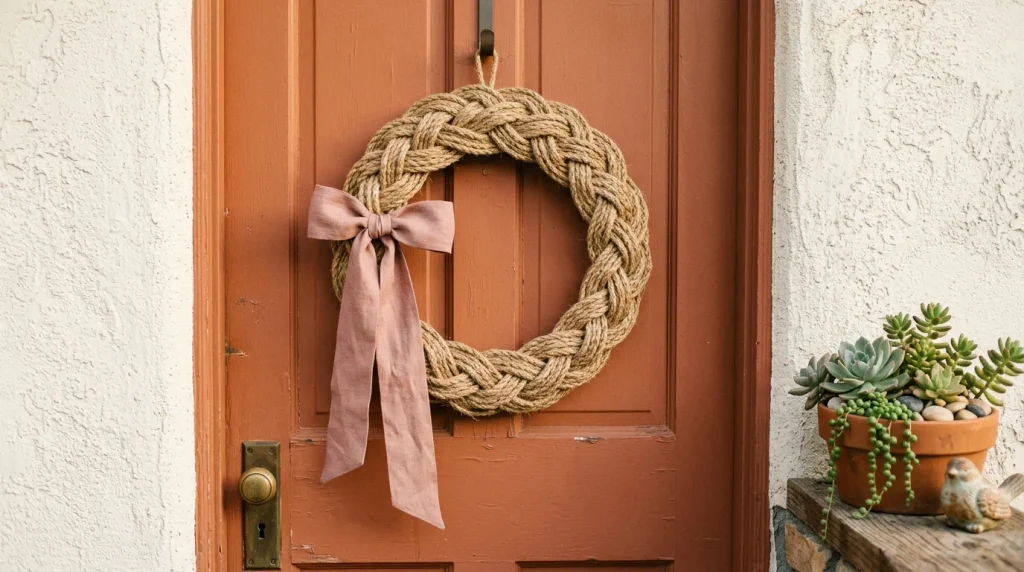
- Offers a minimalist alternative to floral wreaths
- Adds texture without heavy color commitment
- Fits neutral or earthy exterior palettes
- Long-lasting compared to fresh or faux florals
Not every entry needs florals to feel seasonal, and a braided rope wreath proves that texture alone can carry a design. Made from thick jute or cotton rope coiled and secured into a circular shape, this style suits homes with warm, earthy exterior tones where bright florals might feel out of place. A single fabric bow in a soft accent color keeps it from looking too plain. This minimalist take on spring front door decor tends to appeal to homeowners who prefer understated, texture-driven styling over bold seasonal statements.
Rope thickness changes the entire character of the wreath. I’ve noticed thinner rope looks delicate and almost fragile once hung, while thicker rope reads as sturdy and intentional from a distance. Leaving small gaps in the braid pattern, rather than a perfectly tight coil, gives it a handmade, relaxed quality. Since this style contains no live or faux flowers, it also requires zero maintenance through the season, making it one of the most practical, long-lasting options on this list for anyone who wants simple, low-effort curb appeal.
18. Copper Accent Planters
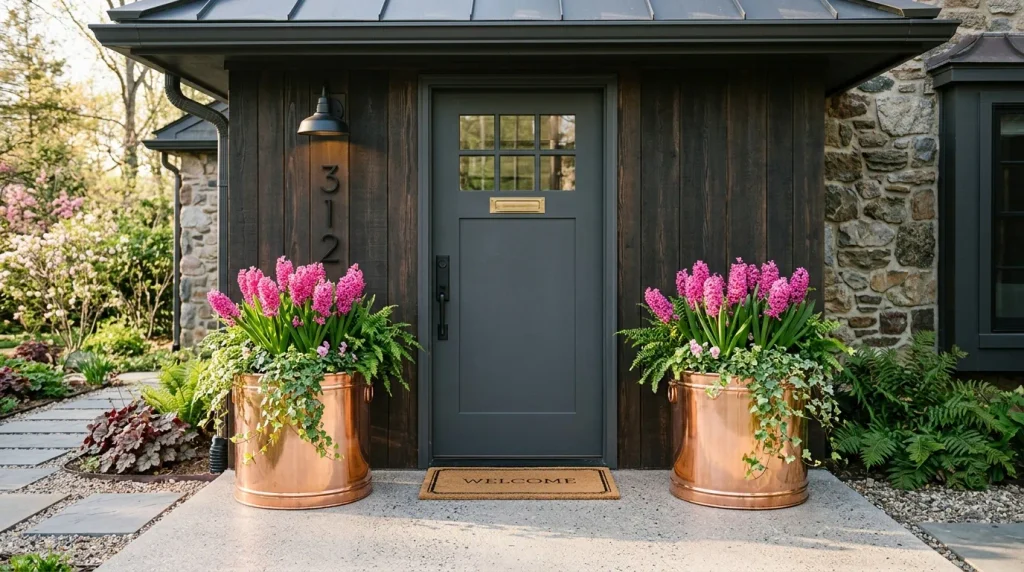
- Adds a modern, polished touch to the entry
- Copper tones warm up cool exterior colors
- Reflects light beautifully in morning or evening sun
- Elevates simple flowers into a designer-look display
Copper planters bring a subtle shine that plastic or plain terracotta simply can’t match, making even inexpensive flowers look intentional and elevated. Placed beside a darker door like charcoal or navy, the metallic tone creates real contrast without needing bold paint colors elsewhere. This pairing has become popular in modern-cottage style homes because it bridges a clean, contemporary look with the softness of seasonal blooms. As part of a broader spring front door decor plan, copper accents work especially well when the rest of the palette stays neutral, letting the planters themselves become the standout detail.
Patina development is something worth understanding before buying copper planters. In my experience, real copper develops a soft greenish patina over time, which some homeowners love and others prefer to prevent with a sealant. Either look works, but knowing which you want ahead of time avoids disappointment later. Pairing copper planters with warm-toned flowers like coral or blush pink, rather than cool blues or purples, keeps the color story consistent. This small styling choice makes the whole entry feel considered rather than randomly assembled from separate purchases.
19. Fresh Herb Pots
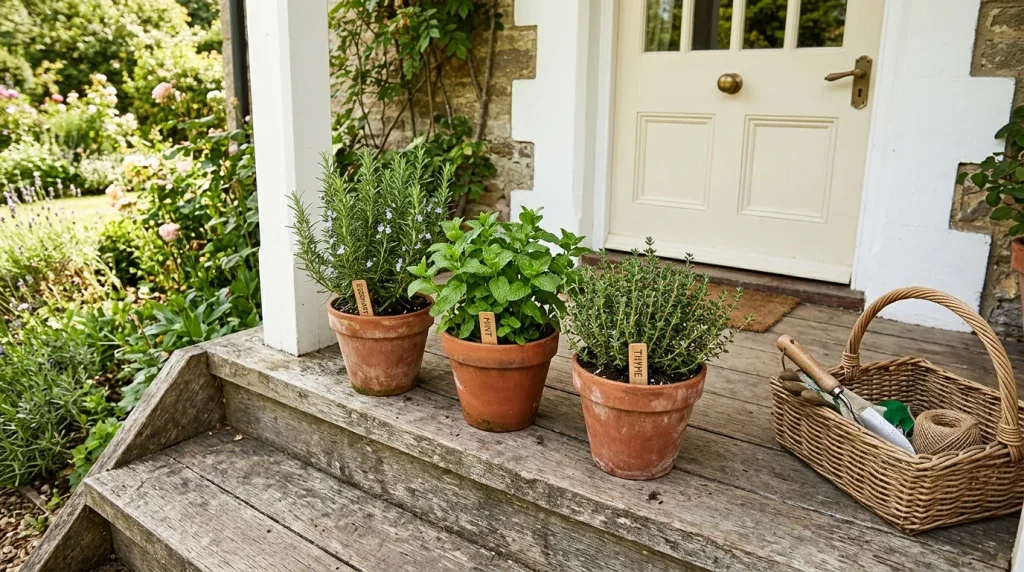
- Combines function with seasonal decoration
- Adds fresh fragrance right at the entryway
- Low-cost compared to ornamental flowers
- Doubles as kitchen ingredients when needed
Herb pots offer something purely decorative flowers don’t: everyday usefulness. Rosemary, thyme, and mint not only look lush and green through spring but also release fragrance every time someone brushes past them on the way inside. Lined along a porch step or grouped near the door, they create a relaxed, kitchen-garden feel that feels grounded rather than purely ornamental. This practical angle makes herb pots a favorite among homeowners who want their spring front door decor to serve a purpose beyond just looking good for a season.
Sunlight exposure determines which herbs will actually thrive near your entrance. I’ve seen rosemary struggle badly in shaded porches, while mint tolerates lower light with far less complaint. Testing your entry’s actual sun exposure before committing to a full herb lineup saves wasted money and effort. Grouping pots by height, with taller rosemary at the back and shorter thyme in front, creates a fuller visual display similar to a tiered stand. Snipping herbs regularly for cooking also keeps the plants healthier and bushier throughout the season.
20. Woven Basket Planters
- Adds natural texture that pots alone can’t offer
- Budget-friendly alternative to ceramic planters
- Softens modern or plain exterior finishes
- Easy to line for indoor-outdoor flexibility
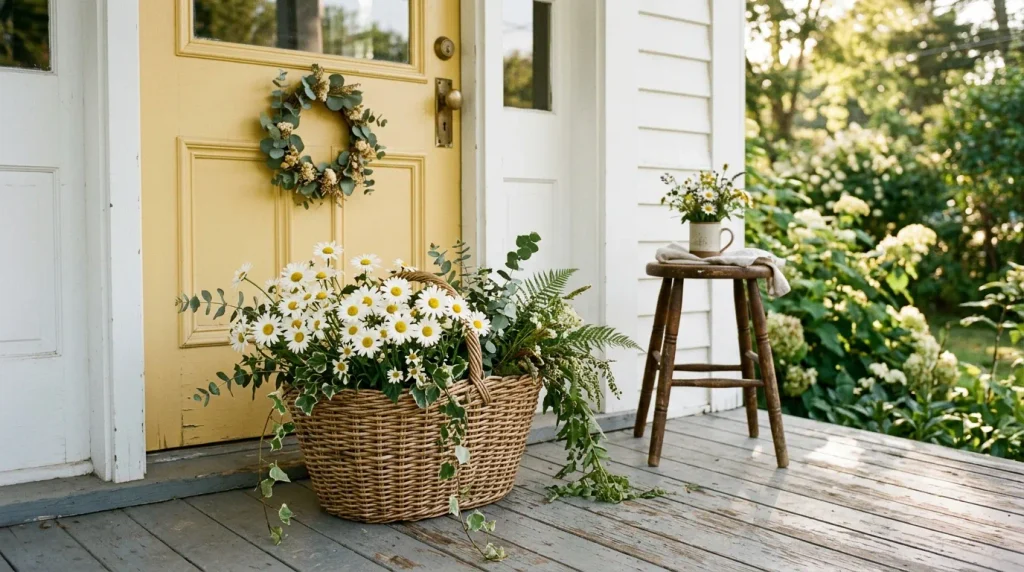
Woven baskets bring a handmade warmth to plant displays that smooth ceramic or plastic pots often lack. The visible texture of the weave adds visual interest even before flowers are added, making it a strong choice for plainer or more modern exteriors that need some softening. Because baskets are typically lighter and cheaper than ceramic planters, they’re also easy to reposition or swap seasonally without much effort. This texture-forward approach to spring front door decor works especially well layered alongside smoother elements like a painted door or metal lantern.
Weatherproofing is the one detail that determines how long a basket planter actually lasts outdoors. I’ve tried using baskets without any lining, and they break down quickly once exposed to regular rain. A simple plastic liner or repurposed nursery pot placed inside solves this while keeping the display looking natural from the outside. Choosing a basket slightly larger than the plant’s actual pot leaves room for a decorative moss layer on top, hiding the liner completely and finishing the display with a clean, polished edge.
21. Spring Wreath Layering
- Creates a fuller, more dimensional look than one wreath
- Combines textures like grapevine, florals, and ribbon
- Feels more custom than a single store-bought wreath
- Great way to reuse an older wreath base
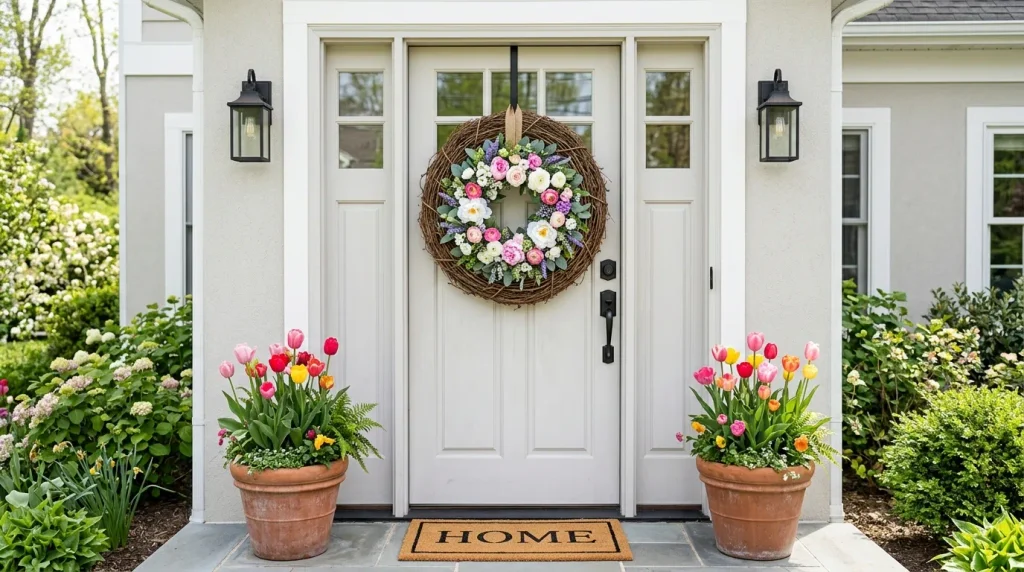
Layering two wreaths together solves a common problem: a single wreath, no matter how nice, can sometimes look flat against a large door. Placing a smaller floral wreath directly on top of a larger textured base, like grapevine or rope, instantly adds dimension and makes the whole piece look custom-designed rather than store-bought as-is. This technique also stretches your decorating budget, since it often reuses a plain wreath you may already own as the base layer, simply refreshed with a smaller seasonal accent piece.
Centering the smaller wreath perfectly isn’t actually necessary, and slight asymmetry often looks better. I’ve noticed that offsetting the top wreath just slightly, rather than stacking it dead-center, creates a more natural, less mass-produced appearance. Securing both layers with the same hook keeps installation simple and avoids extra hardware on the door. This layering approach works as a strong finishing touch for anyone who has already tried several ideas from this list, tying wreath styling together as the final, most detailed piece of a complete spring front door decor refresh.
Conclusion
Refreshing your entryway for spring doesn’t have to mean doing all 21 of these ideas at once. Pick two or three that genuinely fit your home’s style and budget, and let the rest inspire you for later in the season.
I’ve noticed that the best entries usually build up slowly — a new doormat one week, a wreath the next, maybe planters once the weather warms up for good. There’s no rush, and honestly, that’s part of the fun of decorating with the seasons.
Whether you go with something as simple as a ribbon door hanger or as detailed as layered wreaths and copper planters, the goal is the same: a front door that feels warm, fresh, and genuinely yours. Save this list, come back to it as spring moves along, and enjoy watching your entryway come together one small update at a time.