Gold and Silver New Year Decor Ideas for a Glam Home
Gold and silver together can look like a million dollars or like two parties collided — and the difference is never the pieces themselves. It is the ratio. When one metal clearly leads and the other whispers in support, mixed metals read as designer styling; when they split the room fifty-fifty, every piece starts arguing with its neighbour.
If you want gold and silver new year decor that feels intentional from the front door to the dinner table, this guide sets the rules in order: choose your lead metal, dose out the second, mix finishes instead of just colours, let warm light blend everything, and repeat the pairing room by room against a calm neutral backdrop.
By the end, you will have a simple system you can point at any shelf, mantel or table in the house — including the Christmas decorations you already own.
1. Choose Your Lead Metal First

Photo credit: @treetopia on Instagram
Before touching a single ornament, decide which metal runs this party. Gold leads warm, cozy and traditional; silver leads bright, icy and modern; champagne sits between them and can partner with either. Let your home vote: warm wood, brass fixtures and cream walls pick gold, while marble, chrome, grey and white walls pick silver.
Commit to roughly seventy-thirty. If gold leads, about seven of every ten metallic pieces should be gold — the garland, the chargers, the big ornaments — leaving silver as the sparkle accent. The ratio can flex, but the lead never should; guests will not know why the room feels calm, only that it does.
Style note: Look at the largest metal already in the room — light fixtures, mirror frames, curtain rods. Your lead metal should befriend it, not fight it all night.
Budget note: Choosing a lead usually ends the shopping. Most mixed-metal messes are just un-led shopping carts.
2. Repeat the Second Metal in Small Doses
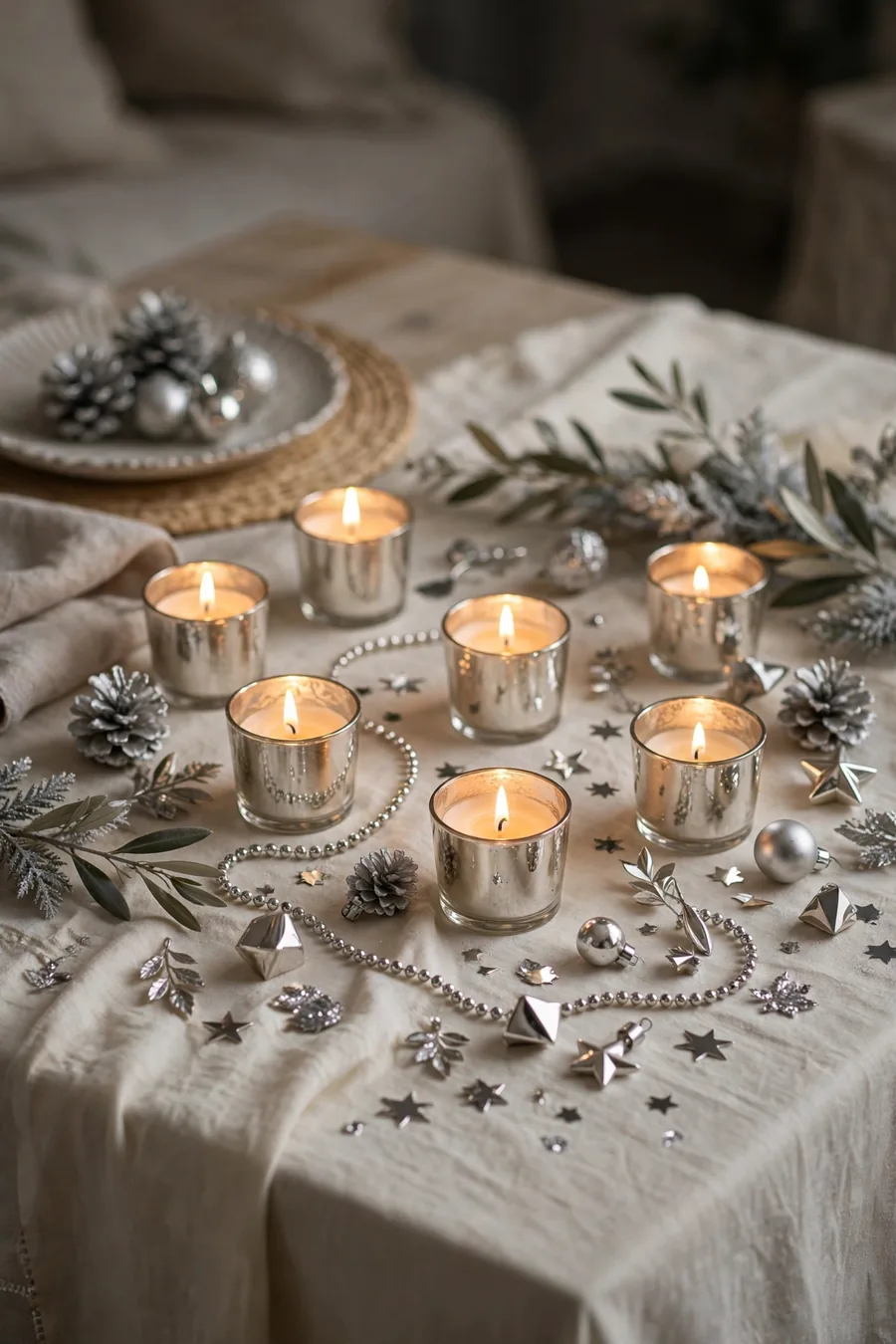
The supporting metal works like jewellery on an outfit: small, repeated, deliberate. If gold leads, silver appears in votive holders, napkin rings, candle snuffers, the star on top of the arrangement — pieces at the scale of a hand, sprinkled evenly through the room instead of gathered in one corner.
Repeat each accent at least three times in any view. One silver candle holder looks lost; three silver holders spaced down the table look chosen. This rhythm is what converts "couldn’t decide" into "clearly styled," and it costs nothing but placement.
Scale note: Accent pieces stay small; statement pieces stay lead. The moment a giant silver bowl joins your gold scheme, the room starts renegotiating who is in charge.
Fixing note: If the mix looks patchy, you probably have the right pieces in the wrong proportions of space — spread the accent out before you buy or remove anything.
You May Also Like: New Year Party Decor Ideas at Home: Easy Festive Looks
3. Mix Finishes, Not Just Colours
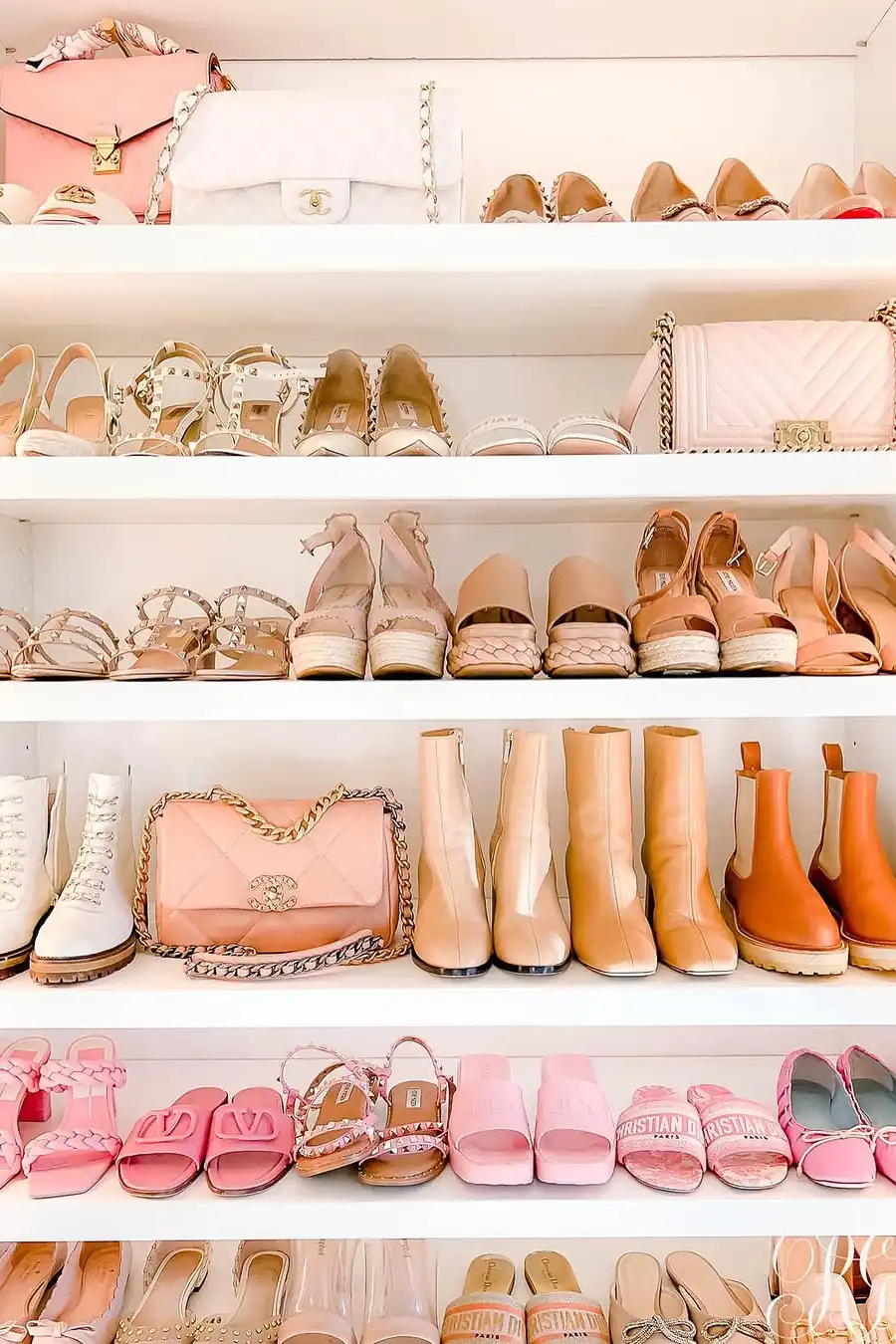
Photo credit: @randigarrettdesign on Instagram
Gold and silver are colours, but the real magic is finish: shiny, brushed, antiqued, glittered, mercury-glass. A room of only mirror-shiny gold looks like a showroom; gold in three finishes looks collected over years. Pair one shiny piece with one brushed and one textured in each metal family.
Mercury glass is the great peacemaker — its mottled silver-gold shimmer literally contains both metals, so a few mercury pieces woven through the scheme make gold and silver look like cousins. Antiqued finishes do similar peace work on the warm side.
Texture note: In every vignette, aim for one matte neighbour — velvet, linen, wood, frosted glass. Shine only reads as shine when something quiet stands beside it.
Style note: Glitter counts as a finish, not a colour. One glittered piece per surface is sparkle; five is a craft accident.
4. Let Warm Light Marry the Metals

Photo credit: @birch_barks_adk on Instagram
Light is the ingredient that physically blends two metals. Under warm candlelight and warm-white fairy lights, gold deepens and silver softens toward champagne, and the gap between them nearly disappears. Under cold blue-white bulbs, silver turns icy and gold turns brassy, and the same room looks mismatched.
So light the pairing deliberately: candles or flameless candles near every major arrangement, lamps on instead of overheads, fairy-light strands in warm white only. Test the room after dark, not at noon — New Year decor performs at night, and midnight is the only review that counts.
Lighting note: Place one light source beside each metal cluster, not above it. Side light rakes across finishes and makes brushed, shiny and glittered surfaces shimmer in turn.
Safety note: Real flames near metallic tinsel and ribbon need stable holders and clearance. Flameless candles marry metals just as well and never drip on the chargers.
You May Also Like: 2026 Christmas Tree Trends: 15 Looks and How to Get Them
5. Dress Greenery and the Tree in Both Metals
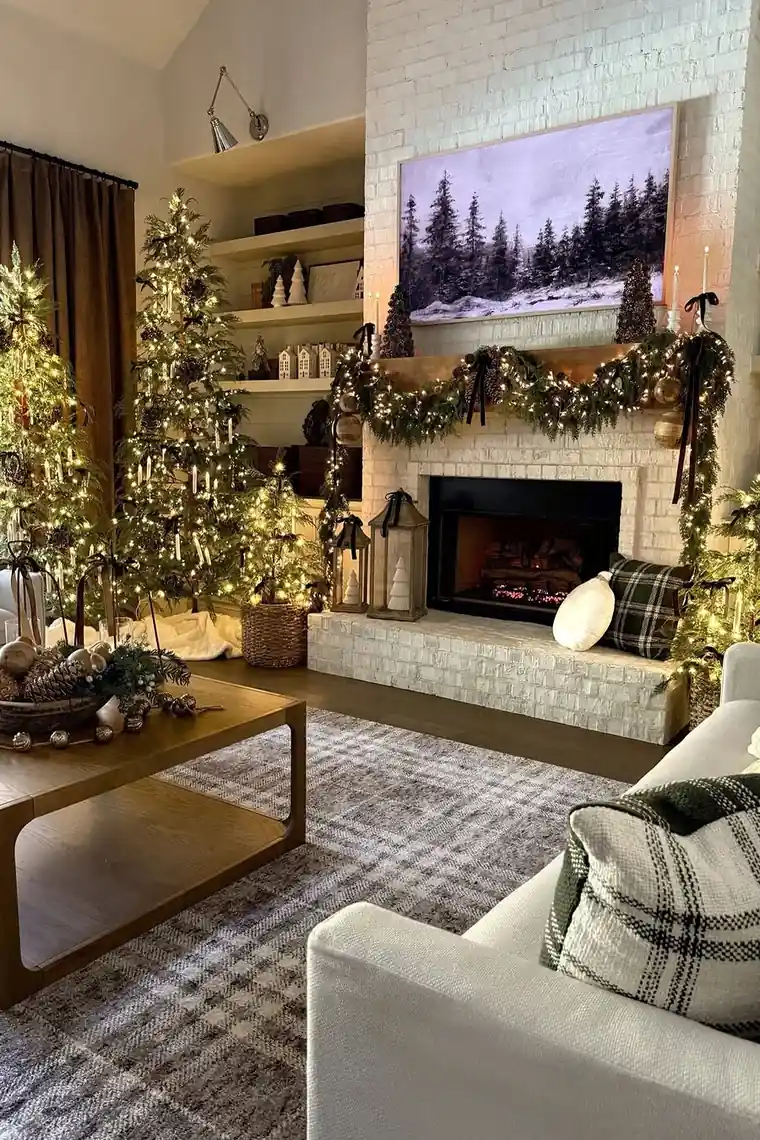
Photo credit: @mytexashouse on Instagram
If a tree or garland is still up from Christmas, it is your biggest mixed-metal canvas. Work the lead metal deep into the greenery first — ornaments pushed toward the trunk catch inner light — then add the accent metal nearer the tips, where it sparkles like frost on the edges.
On garlands, run a beaded strand in the lead metal along the full length, then tuck accent ornaments in loose clusters of three. The deep-green background is the neutral that lets two metals share one branch without either shouting.
Style note: Finish the tree pairing with ribbon in the lead metal or a deep neutral. Ribbon is the frame that tells the eye the two metals belong to one picture.
Budget note: You rarely need new ornaments — redistributing existing gold and silver by depth (lead deep, accent at tips) re-styles a tree for free.
6. Balance Shine on Tables and Shelves
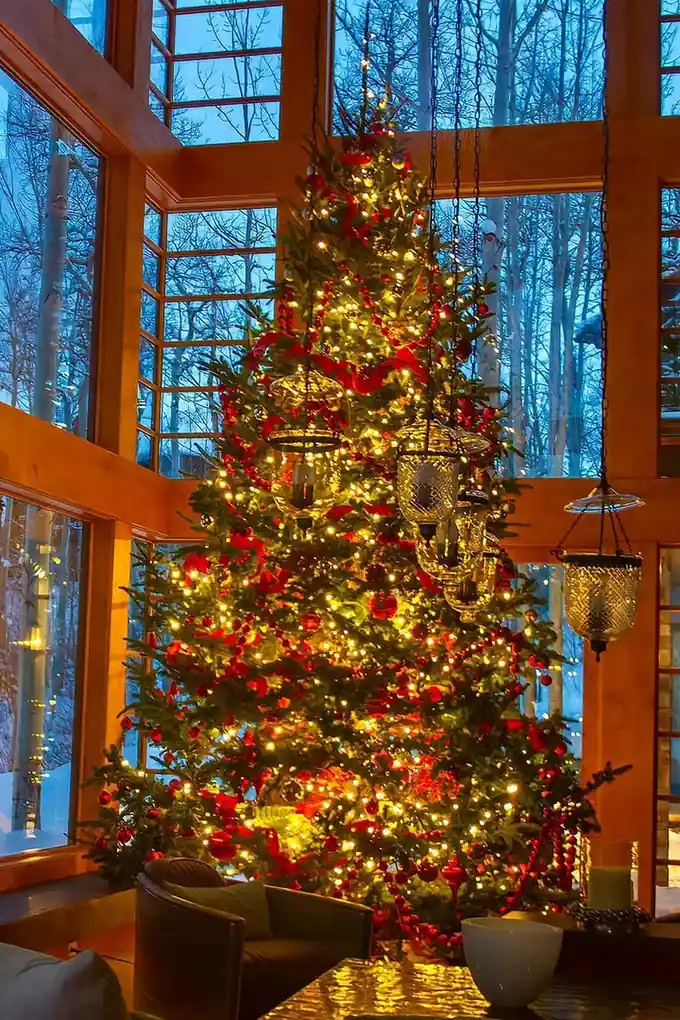
Photo credit: @sportsworld on Instagram
Tables and shelves are where mixed metals get judged up close. Style each surface as its own small version of the room’s ratio: lead metal in the big piece (charger, tray, lantern), accent in the small repeats (votive, napkin ring, tiny bowl), and one candle to light the marriage.
Leave breathing room. A shelf where every object is metallic exhausts the eye by the second glance; the same pieces with a stack of books, a plant or a framed photo between them read as a curated collection. Shine needs somewhere to rest the eye.
Scale note: On shelves, put the largest metallic piece at one end and the smallest accents at the other, stepping down like a skyline, instead of clustering all shine in the middle.
Fixing note: Photograph each surface in black and white. If one side of the photo glares and the other disappears, rebalance the shine — the phone sees imbalance your eyes forgive.
You May Also Like: 25 Neutral Christmas Decor Ideas for a Calm Elegant Home
7. Keep One Calm Neutral Backdrop
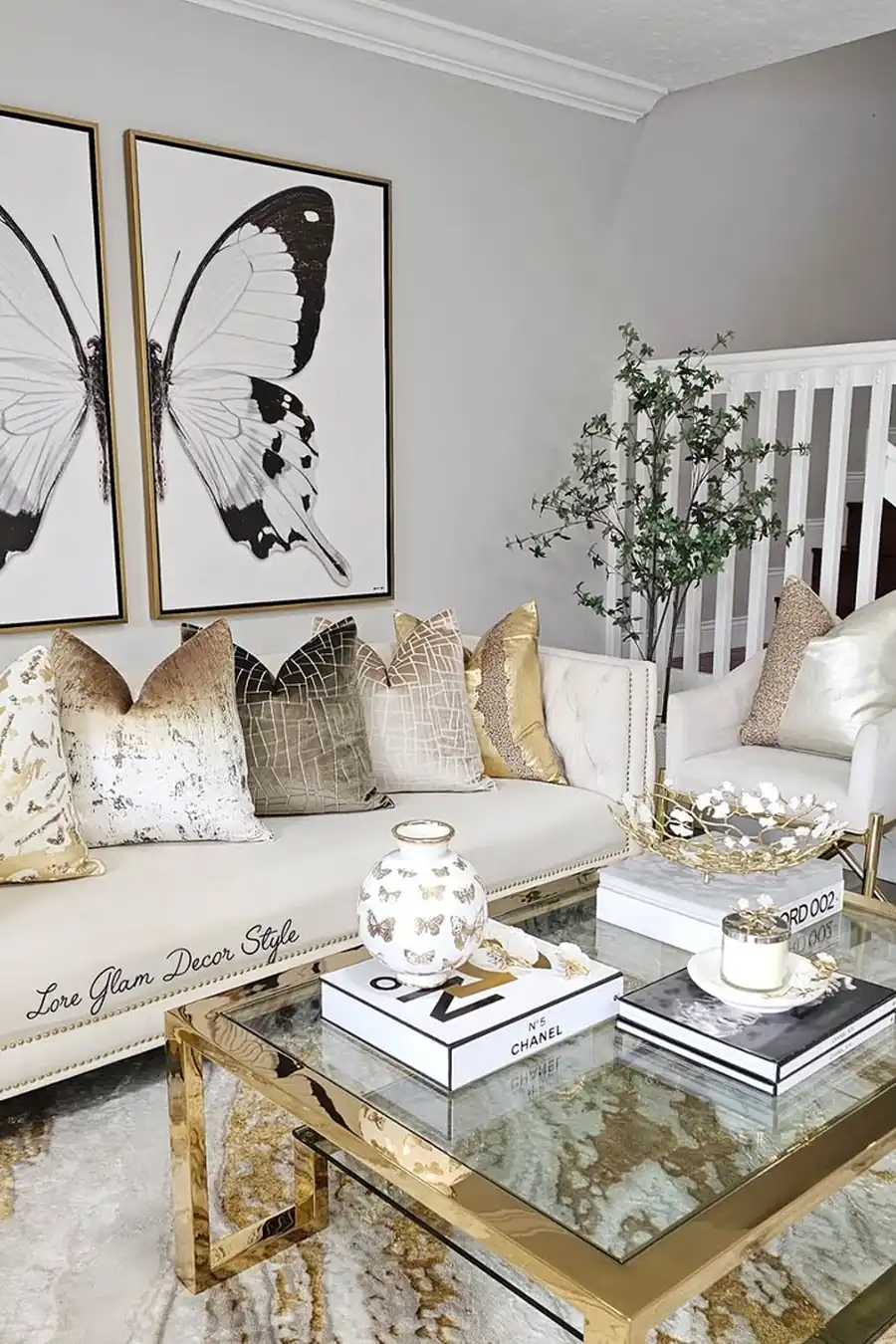
Photo credit: @lore_glamdecorstyle on Instagram
Two metals need a referee, and the referee is a calm neutral: cream walls, a black tablecloth, white linen, warm wood. Choose one backdrop colour per room and let it dominate the large surfaces so the metallics perform against quiet instead of against each other.
Black is the glam referee — it makes gold look richer and silver look brighter at once. Cream and ivory soften the pair toward elegant; deep navy or emerald backs them with drama. What never works is a busy patterned backdrop asking for attention of its own.
Style note: Carry the same neutral through textiles — napkins, runner, cushions — and the whole room’s metal story tightens instantly, even before you move a single ornament.
Budget note: A plain cloth or a folded throw in your neutral is the cheapest "coordination" you can buy. It will do more for the mix than any new decoration.
Gold + Silver Mixing Cheat Sheet

Photo credit: @randigarrettdesign on Instagram
| Piece | Gold does the talking | Silver adds the sparkle |
|---|---|---|
| Ratio | About 70% of metallic pieces | About 30%, repeated evenly |
| Big statements | Garland, chargers, hero ornaments | Never — accents stay small |
| Small repeats | Candle glow, warm reflections | Votives, napkin rings, stars |
| Finishes | Shiny + brushed + antiqued | Mercury glass bridges both |
| Best light | Warm candlelight deepens it | Warm light softens it to champagne |
| Backdrop | Black for drama, cream for calm | Same neutral, every surface |
| Tree trick | Lead deep inside the branches | Accent at the tips like frost |
Frequently Asked Questions
How do I mix gold and silver new year decor without it looking mismatched?
Pick one lead metal at about seventy percent and let the other appear only in small, repeated accents. Keep both metals in mixed finishes, light everything warmly, and set the pair against one calm neutral like black or cream. Ratio, warm light and a quiet backdrop do nearly all the blending work.
Which metal should lead, gold or silver?
Let your room decide. Gold leads best in warm rooms — wood, brass, cream and warm light. Silver leads in cooler rooms with marble, chrome, grey or white. Champagne gold is the safe middle and partners happily with either, so it makes a good lead if you truly cannot choose.
Can I use the Christmas ornaments I already own?
Almost always, yes. Sort them into lead and accent piles, hang the lead deep in the greenery and the accent toward the tips, and add one ribbon or neutral textile to frame the mix. Re-sorting existing ornaments re-styles them for free.
What colours go with gold and silver for New Year?
Black for high glam, cream or ivory for soft elegance, deep navy or emerald for drama, and blush for a romantic take. Pick exactly one colour partner plus your two metals; a second colour is where elegant turns busy.



One Comment