Ready to turn an ordinary bathroom into a little seaside escape? These mermaid tile bathroom ideas bring playful texture, coastal color, and eye-catching detail to spaces of every size.
Whether your bathroom feels plain, cramped, or simply lacks personality, the right mermaid-inspired tile can completely change its mood. From soft aqua scales and pearly white finishes to bold blue patterns and warm coastal combinations, these ideas show how to create a bathroom that feels fresh, whimsical, and beautifully inviting. You’ll find inspiration for feature walls, showers, vanities, backsplashes, and small spaces, along with practical ways to balance statement tiles with simple finishes. In my experience, even one carefully chosen tiled surface can make a bathroom feel far more intentional without requiring a complete renovation. Keep scrolling to discover designs you’ll want to save, recreate, and pin for your next bathroom makeover.
1. Aqua Scallop Feature Wall
- Creates an instant coastal focal point without overwhelming the room.
- Aqua and seafoam tones make the bathroom feel fresh and airy.
- Works beautifully behind a vanity, bathtub, or shower.
- A single tiled wall gives maximum impact with less installation.
- Simple surrounding finishes keep the scalloped pattern balanced.
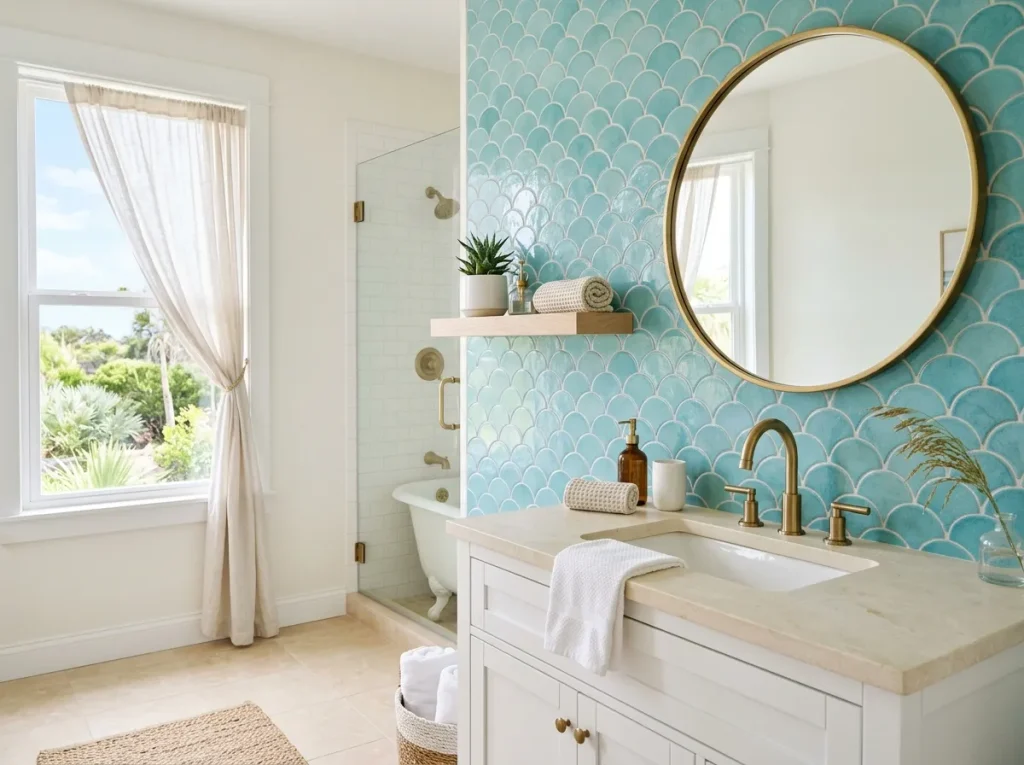
Make a small bathroom feel like a seaside escape with the right tile shape and color. Mermaid-scale tiles create instant movement because their rounded edges catch light differently across the wall. A soft blend of aqua, seafoam, and white keeps the look airy instead of overly themed. This style works especially well behind a vanity, around a tub, or inside a shower niche where a smaller surface can make a bigger visual statement. In my experience, repeating the same tile on one feature wall gives a compact bathroom personality without making the entire room feel busy or difficult to maintain.
For a polished finish, pair the curved tiles with simple surfaces that let their pattern shine. A white vanity, pale oak shelf, brushed brass hardware, and creamy stone countertop create a calm coastal foundation around the colorful wall. Keep the floor quieter, such as warm porcelain or light terrazzo, so the eye naturally lands on the tilework. Soft daylight from a nearby window will emphasize the scalloped pattern, while warm evening bulbs make the aqua tones feel cozy. The result is whimsical, but still practical enough for an everyday family bathroom that needs to feel fresh and uncluttered.
Also Read : 24 Moody Living Room Ideas for a Cozy Dramatic Retreat
2. Ocean Blue Shower Wall
- Turns an ordinary shower into the room’s main visual feature.
- Layered blue shades create depth without needing extra decoration.
- Vertical placement can make the shower feel taller.
- Frameless glass keeps the colorful tile visible from across the room.
- Matte flooring adds practical contrast and safer footing.
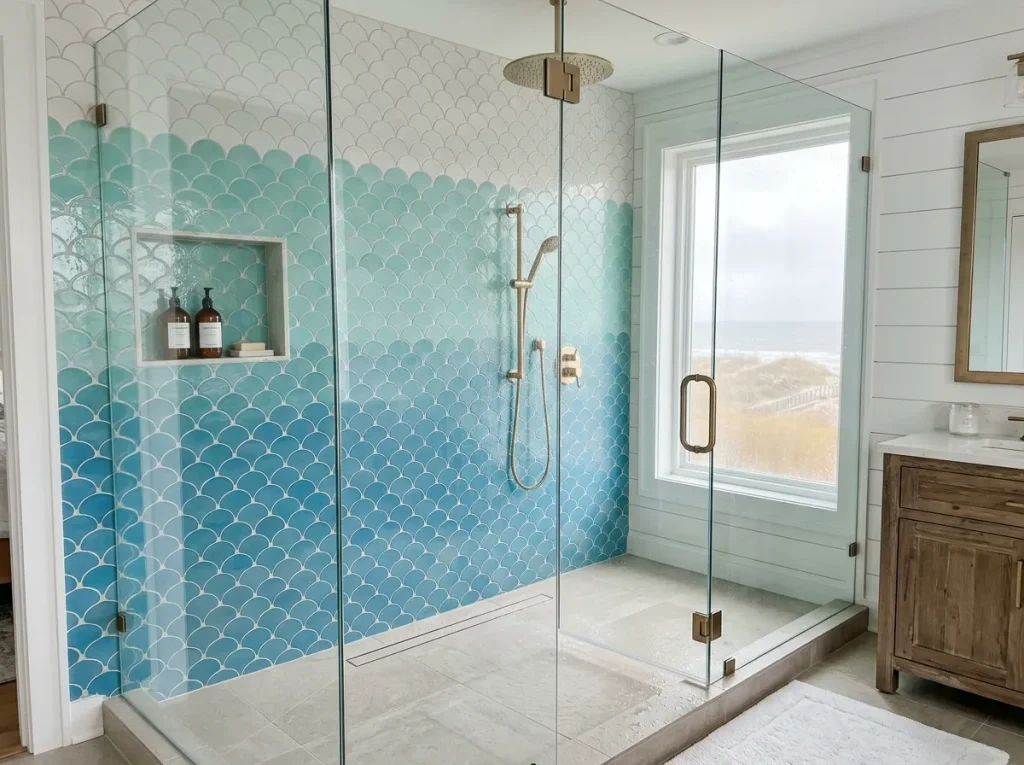
Turn a shower wall into the star of the room by covering it with glossy scallop tiles in layered ocean blues. The curved pattern feels playful, while the vertical installation draws the eye upward and can make a standard-height shower seem taller. Choose a medium blue grout for definition without creating a harsh grid. This approach is especially useful when the rest of the bathroom is simple, because the shower becomes a strong focal point without needing extra artwork. I’ve noticed that keeping the fixtures streamlined helps decorative tile feel intentional rather than visually crowded.
A walk-in shower can feel brighter and more spacious when its most colorful surface stays visually organized. Use blue, teal, and soft white tiles in a controlled gradient, placing deeper shades toward the lower portion and lighter tones above. Frameless glass keeps the pattern visible from across the room, while a recessed niche adds useful storage without interrupting the tile field. Pair the wall with matte porcelain flooring for safer footing and subtle contrast. Warm metal fixtures can soften the cooler palette, giving the space a relaxed coastal character while maintaining a clean, contemporary finish.
Also Read : 34 Easter Wreath Ideas Front Door for a Spring Welcome
3. Seafoam Vanity Backsplash
- Adds a soft ocean-inspired accent without covering the entire bathroom.
- Seafoam tiles pair naturally with white and warm wood.
- A rounded mirror reinforces the curved tile pattern.
- Minimal countertop styling lets the backsplash remain the focal point.
- Perfect for a smaller renovation with noticeable visual impact.
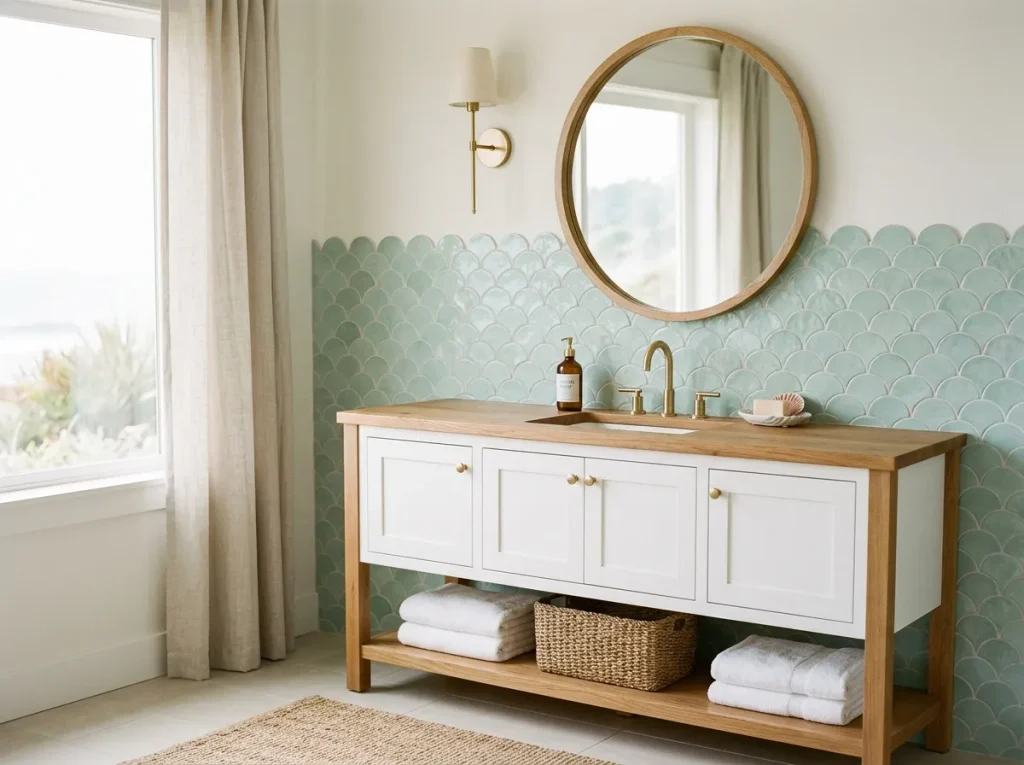
Bring a subtle ocean reference to the vanity wall with pale seafoam scallop tiles arranged in a gentle fan pattern. The soft color works beautifully with white cabinetry and natural wood, creating a bathroom that feels fresh without looking overly nautical. This idea is ideal for renters or homeowners who want one memorable feature instead of a full-room renovation. Use open shelving sparingly, add a rounded mirror, and keep countertop accessories minimal. The repeated curves create enough decoration on their own, so the finished space feels collected, light, and Pinterest-ready without relying on lots of small decorative objects.
A vanity backsplash becomes much more distinctive when the tile echoes the shape of waves, shells, and overlapping scales. Choose a muted seafoam glaze with slight tonal variation so each piece catches light differently. A white countertop and oak vanity keep the palette warm, while a round mirror reinforces the soft curves. For small bathrooms, stopping the tile at the underside of the mirror can create a defined focal zone without covering every wall. That balance makes the room easier to update later, while still delivering the whimsical coastal detail that makes this style so appealing.
Also Read : 24 Boho Style Bedroom Ideas for a Cozy Relaxed Retreat
4. Turquoise Tub Surround
- Frames the bathtub with an instant seaside-inspired focal point.
- Glossy turquoise tiles brighten the bathing area beautifully.
- Warm white walls keep the pattern from feeling overwhelming.
- A slim shelf adds useful storage without visual clutter.
- Soft towels and pale wood bring warmth to the cool palette.
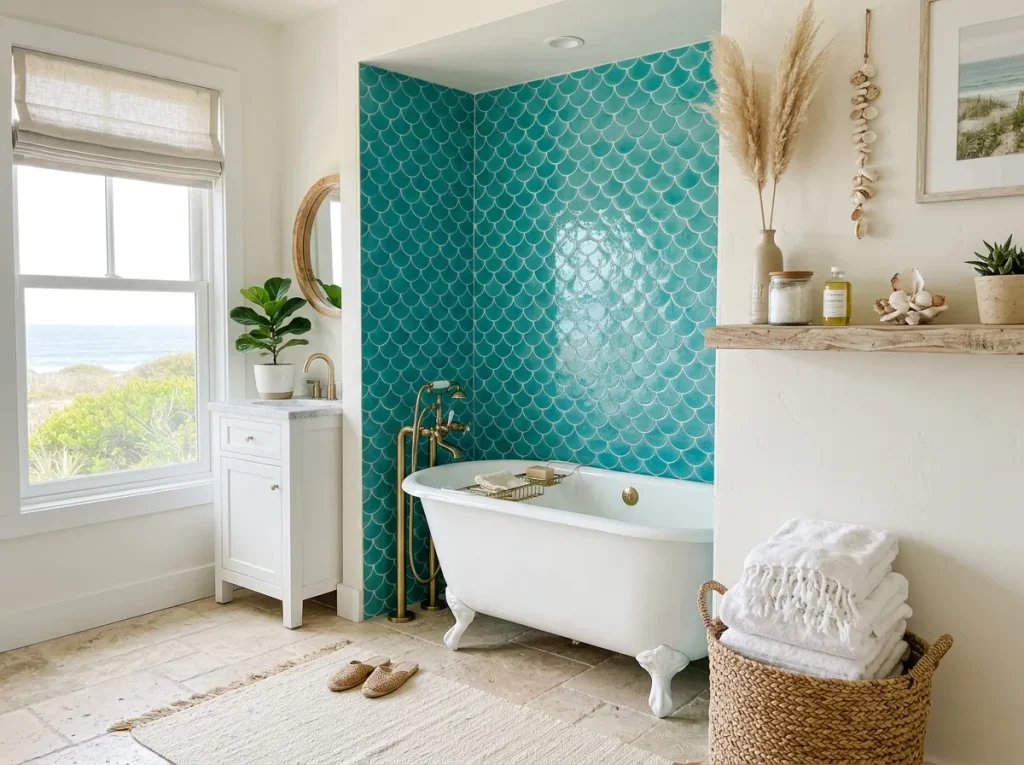
Give a plain bathtub wall a little seaside personality with glossy mermaid-scale tiles in a soft turquoise shade. The curved pattern works beautifully around a freestanding or built-in tub because it visually follows the gentle shape of the water. Keep the surrounding walls warm white so the tile remains the star. A slim shelf can hold folded towels, candles, or bath products without competing with the pattern. In my experience, this combination feels especially welcoming in bathrooms where the tub is already a strong feature, because the tile frames it rather than making the entire space feel decorated.
For a balanced finish, continue the scallop tiles slightly above the tub rim and finish the edges neatly with a slim metal or stone trim. Choose waterproof grout in a soft neutral shade to keep maintenance manageable and prevent the pattern from looking too busy. Pale wood, woven baskets, and fluffy white towels add warmth against the cool turquoise surface. If the bathroom receives good daylight, glossy tiles will reflect it across the wall and make the bathing area feel brighter. The finished look is playful and coastal, yet still polished enough to work with modern fixtures and simple accessories.
Also Read : 23 Spring Home Decor Ideas for a Fresh Seasonal Look
5. Blush Shell Tiles
- Adds a soft, unexpected color twist to coastal bathroom design.
- Blush pink feels playful without creating an overly themed room.
- Creamy whites and pale wood keep the palette sophisticated.
- Rounded mirrors naturally complement the scalloped tile shape.
- Perfect for adding personality to a small vanity area.
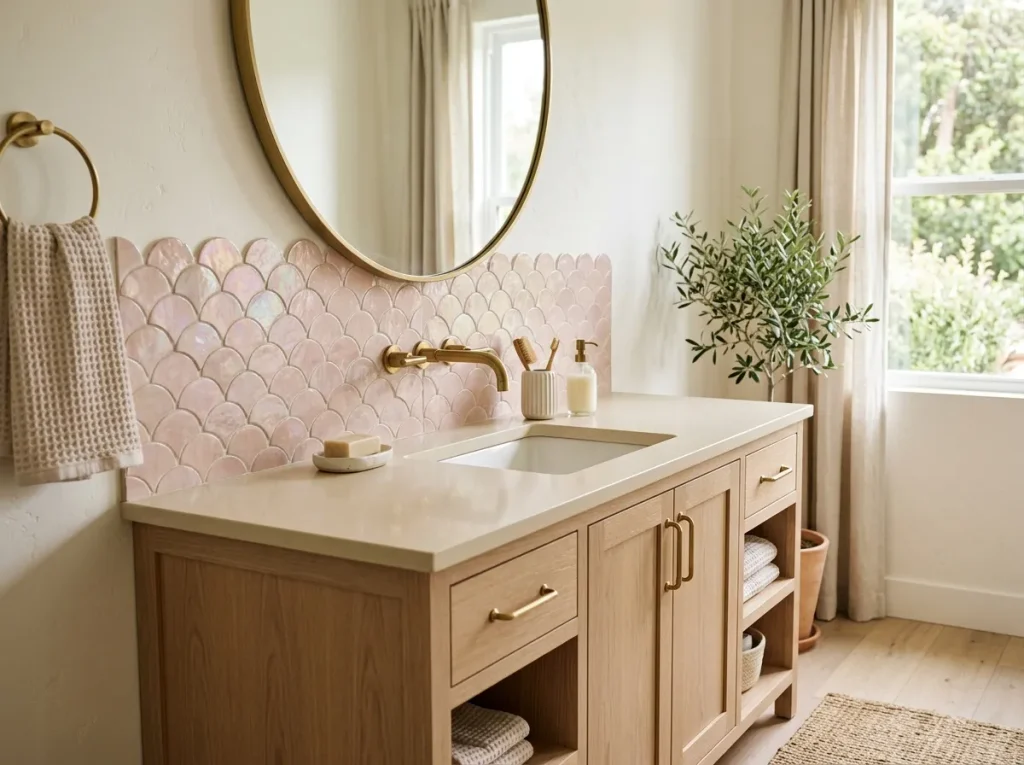
Soft color can make a dramatic tile shape feel surprisingly calm. Try blush pink mermaid-scale tiles behind the vanity, then balance them with creamy white walls, pale wood, and understated brass hardware. The warm pink brings a playful touch to the bathroom without turning it into a themed space. Choose a lightly glossy finish to reflect natural light, especially if the room has a small window. I’ve noticed that muted pink works best when the surrounding finishes stay simple. One patterned surface is usually enough to create personality while keeping the overall bathroom comfortable and sophisticated.
A blush tile backsplash can also soften bathrooms that rely heavily on hard stone, ceramic, or metal surfaces. Use a warm ivory countertop, rounded mirror, and light oak vanity to create a gentle transition between the tile and the rest of the room. Keep accessories limited to a small vase, folded towels, or one decorative tray. The result feels cheerful in daylight and cozy under warm lighting. For homeowners nervous about colorful tile, this palette is an easy starting point because the pink behaves almost like a neutral. It adds character without demanding that every other finish match it.
Also Read : 22 Classy Man Cave Ideas for a Stylish Personal Space
6. Scalloped Tile Flooring
- Turns the bathroom floor into an unexpected design feature.
- Deep teal and soft blue create an ocean-inspired foundation.
- Keeping the walls neutral prevents visual overload.
- Smaller tiles can provide useful grout lines in wet areas.
- A simple vanity lets the patterned floor stand out.
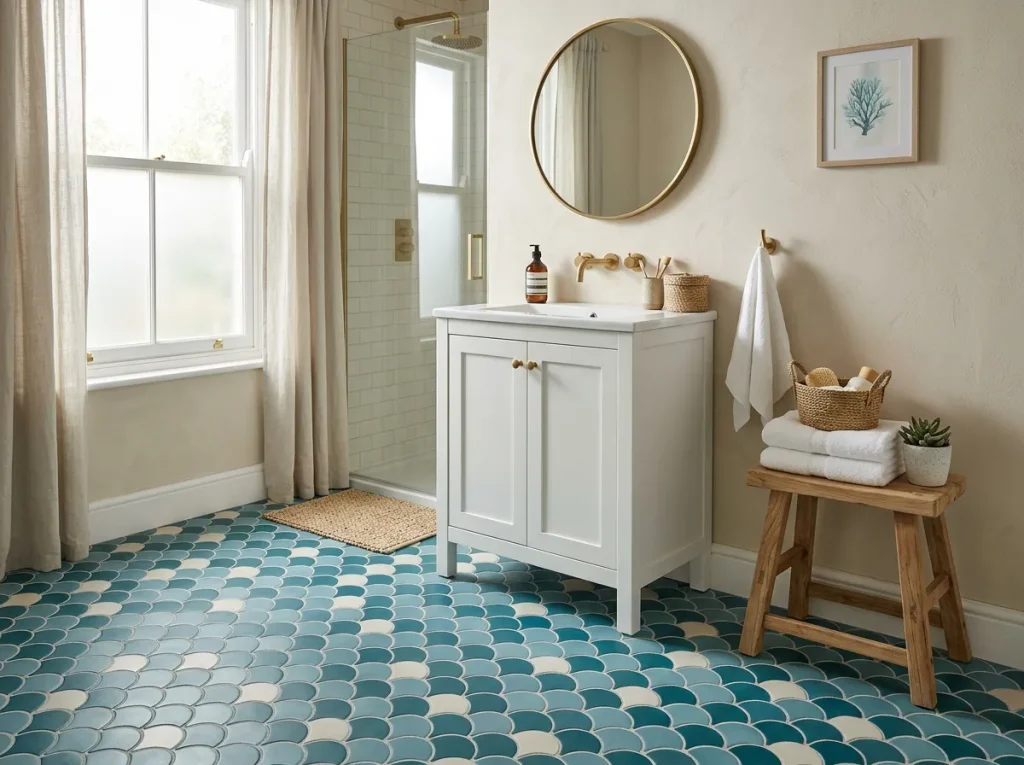
Make the floor the unexpected focal point by using small mermaid-scale tiles in a controlled ocean-inspired palette. Deep teal, soft blue, and creamy white can create a layered surface that feels decorative while remaining grounded. Keep the walls mostly white so the eye naturally travels downward. A simple vanity and minimal hardware prevent the patterned floor from becoming overwhelming. This approach works particularly well in compact bathrooms because a strong floor can add personality without taking valuable wall space. Choose slip-resistant tile designed for wet areas, since beauty should never come at the expense of everyday practicality.
A patterned floor becomes easier to live with when the rest of the bathroom stays visually quiet. Use a single wall color, simple cabinetry, and clean-lined fixtures to let the scallop shapes create movement underfoot. Smaller tiles can also provide more grout lines, which may improve traction in a bathroom compared with large smooth surfaces, depending on the tile and installation. I’ve seen this approach work especially well in guest bathrooms because visitors notice the floor immediately. The space feels thoughtfully designed without requiring expensive artwork or lots of decorative accessories to make an impression.
Also Read : 25 Mermaid Home Decor Ideas for a Whimsical Coastal Home
7. White Pearl Scales
- Creates a bright, luminous backdrop with subtle coastal character.
- Pearl-like tiles reflect light beautifully in smaller bathrooms.
- White cabinetry keeps the entire space feeling clean and open.
- Brushed brass adds warmth against the cool tile surface.
- Perfect when you want texture without strong color.
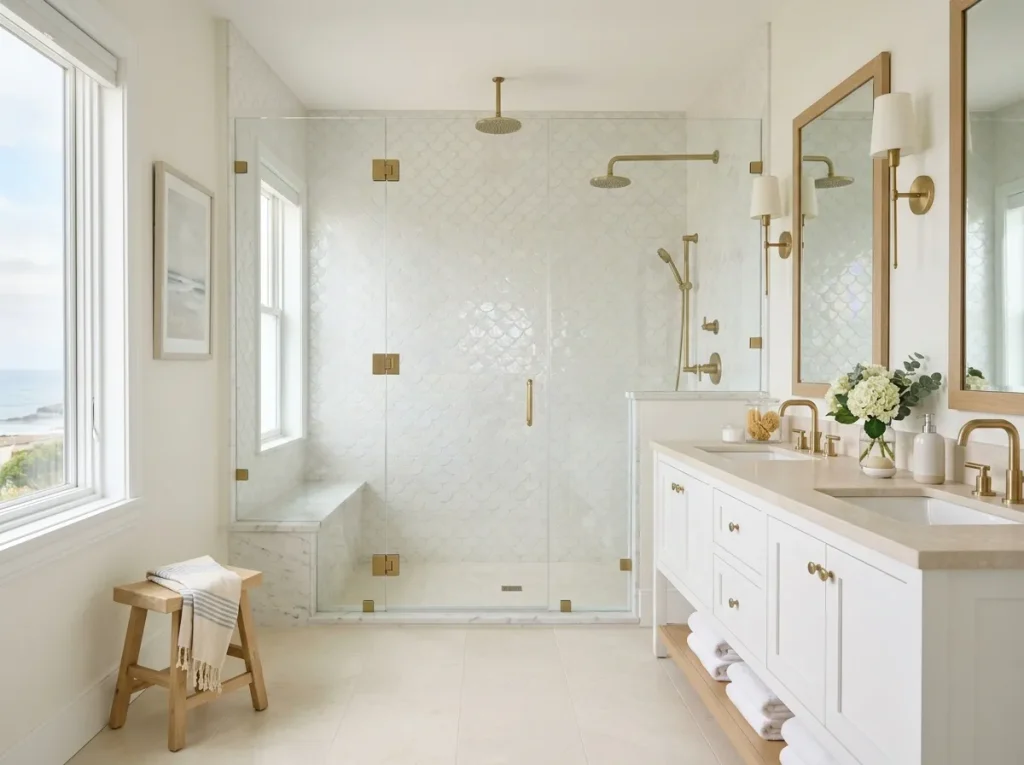
Sometimes the most beautiful coastal bathrooms use almost no color at all. Pearlescent white mermaid-scale tiles create gentle texture while keeping the room bright, airy, and timeless. Their subtle shimmer catches daylight across the curved edges, giving the wall a soft shell-like appearance without becoming flashy. This works especially well behind a vanity or across a shower wall where the tile can provide interest without competing with other finishes. If you prefer a calm bathroom rather than a colorful one, this is one of the easiest ways to bring a whimsical coastal detail into the design.
Pair the pearl finish with warm neutrals so the bathroom does not feel too stark. A creamy stone countertop, pale oak accessories, and brushed brass fixtures introduce gentle contrast while preserving the light palette. Keep grout close to the tile color for a seamless appearance, particularly if the bathroom is small. A rounded mirror can reinforce the scalloped shapes and make the composition feel intentional. Under warm evening lighting, the pearly surface takes on a soft glow that feels relaxing. The finished space is fresh enough for everyday use but refined enough to resemble a boutique coastal retreat.
8. Navy Scallop Accent
- Adds depth to a light bathroom with a rich ocean-inspired color.
- Navy works beautifully with crisp white fixtures.
- A limited accent zone keeps the darker shade from shrinking the room.
- Brass details introduce warmth and contrast.
- Ideal for shower niches, vanity walls, or tub surrounds.
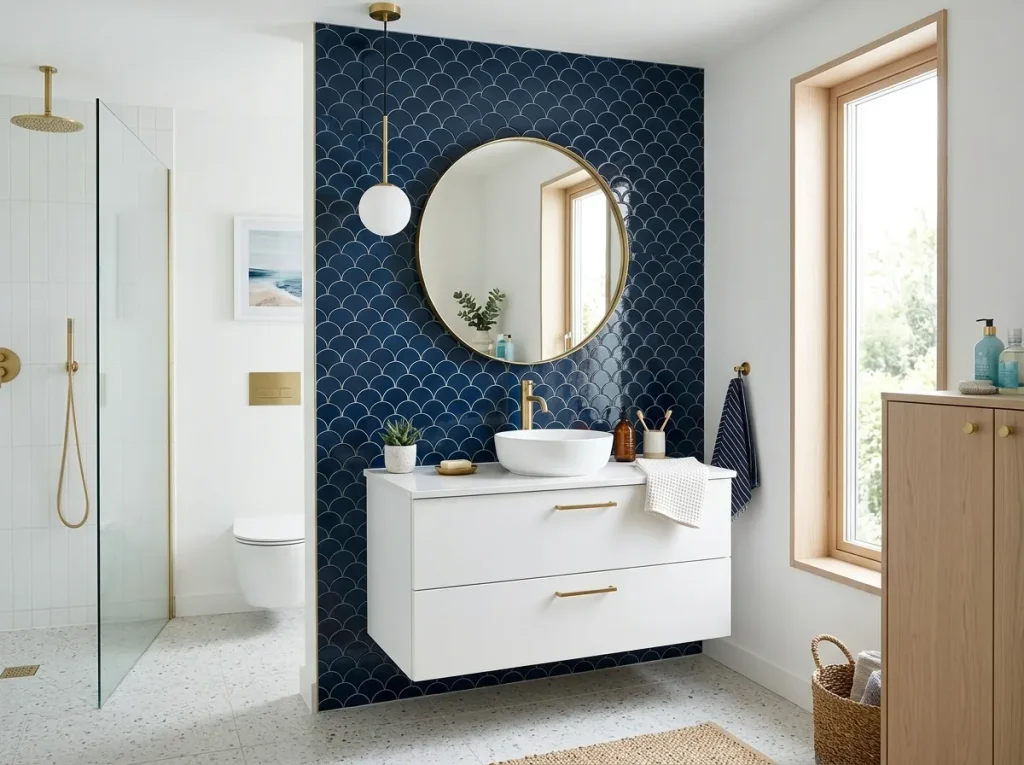
Deep navy scallop tiles can give a light bathroom the visual depth it needs without relying on complicated decoration. Use them on a single vanity wall, shower niche, or narrow tub surround, then keep the remaining surfaces crisp white. The contrast makes the curved pattern immediately noticeable and gives the room a richer coastal character. Navy also works well when you want something more sophisticated than pale aqua. In my experience, the key is restraint: a small, well-defined navy area often looks more expensive and intentional than covering every wall with a dark patterned tile.
Balance the darker accent with plenty of light-reflective surfaces around it. White cabinetry, a pale countertop, and a large round mirror can prevent the navy area from making the bathroom feel closed in. Warm brass fixtures add a subtle glow and soften the cool blue. If the bathroom has limited natural light, consider using navy on one smaller surface rather than a full wall. A light terrazzo or cream floor will further brighten the room. The combination creates a dramatic focal point while preserving the clean, breezy quality associated with coastal bathroom design.
9. Mixed Blue Gradient
- Creates the look of layered ocean water across the wall.
- Blended shades add movement without requiring extra decor.
- Light-to-dark placement can visually emphasize the room’s height.
- Works beautifully with simple white or natural wood furniture.
- Ideal for homeowners who want color with a softer transition.
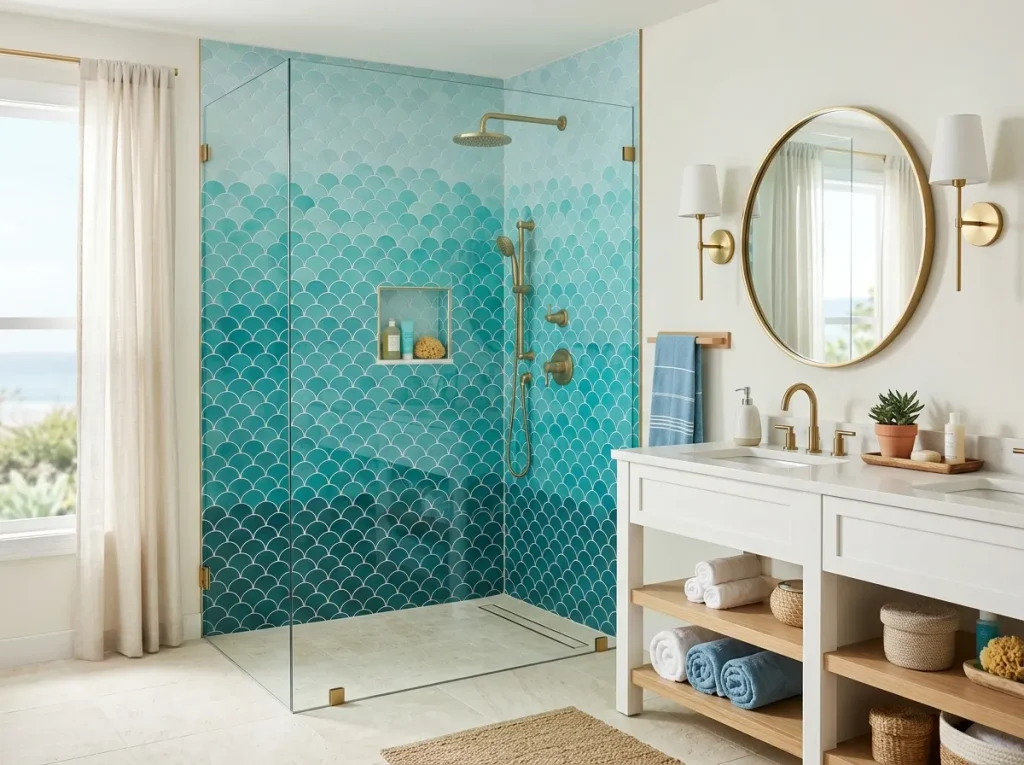
Create a gentle underwater effect by arranging scallop tiles in a blue-to-aqua gradient. Start with deeper teal near the lower portion of the wall and gradually move toward lighter aqua and pale blue as the pattern rises. The changing shades add depth and movement without needing artwork or decorative accessories. This technique looks especially striking inside a shower, where the colors naturally connect with the idea of water. Use simple white fixtures and warm wood nearby so the gradient remains the main visual feature. It is a creative way to make a standard bathroom feel custom-designed without relying on complicated architectural changes.
A gradient can also help control how the bathroom feels visually. Darker tones near the bottom provide grounding, while lighter shades toward the ceiling keep the upper area open and bright. Choose tiles from the same color family so the transition feels intentional rather than patchy. A frameless glass enclosure allows the entire pattern to remain visible, and pale flooring keeps the room balanced. That’s why many designers recommend using a limited palette when working with decorative tile. The result feels layered and artistic, yet the overall bathroom remains easy to coordinate with towels, hardware, and everyday accessories.
10. Teal Niche Detail
- Adds a colorful surprise inside an otherwise neutral shower.
- Turns practical storage into a decorative feature.
- Teal scales create contrast against white or cream tile.
- A recessed niche keeps bottles organized and off the floor.
- Great for adding personality without covering an entire wall.
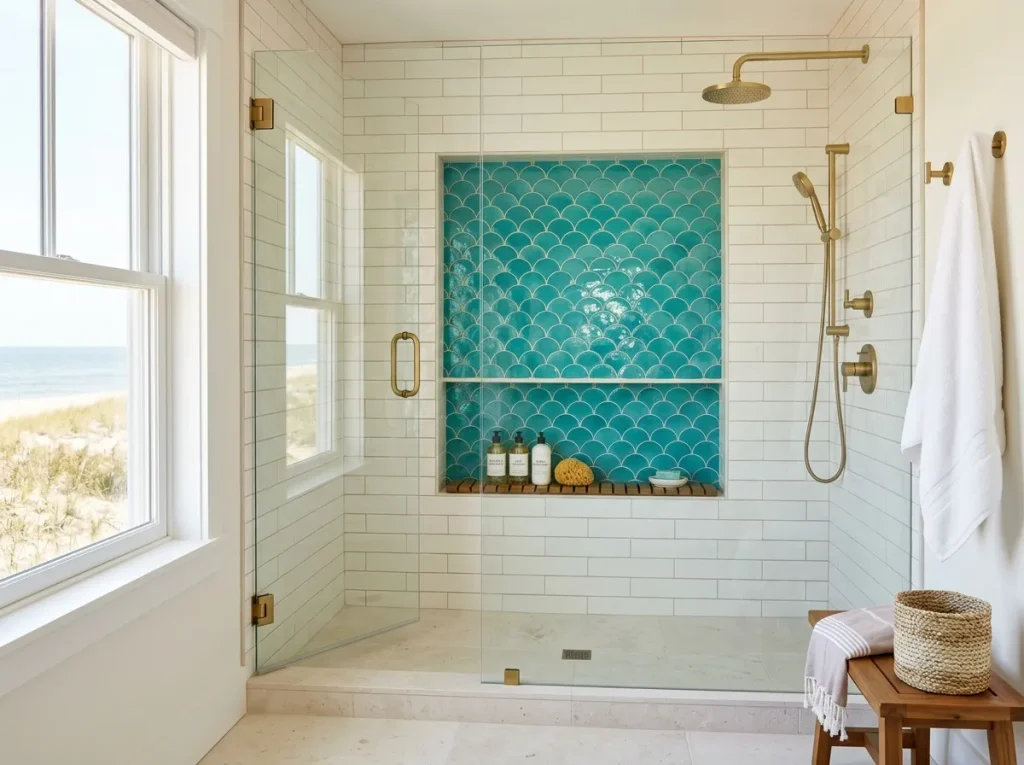
A small shower niche can become a standout detail when its interior is lined with glossy teal mermaid-scale tiles. Instead of covering the entire shower, you get a concentrated burst of color and pattern exactly where the eye naturally looks. This is especially useful when your main bathroom already has neutral tile but needs a little personality. The recessed design also keeps shampoo and soap organized, so the decorative feature has a practical purpose. I’ve noticed that small tiled accents often make a bathroom feel more custom because they show attention to details that larger surfaces can overlook.
Keep the surrounding shower walls simple to make the niche feel intentional. Warm white subway tile or large cream porcelain provides a quiet backdrop, while the teal scales add depth inside the recessed opening. Use a waterproof shelf material that coordinates with the shower floor, and choose a grout color that gently defines the curved pattern. A frameless glass door will keep the accent visible from outside the shower. This approach is also useful for smaller bathrooms because it delivers the charm of decorative tile without visually filling the entire room.
11. Coastal Mosaic Border
- Adds a decorative line without covering large wall areas.
- Works well around mirrors, tubs, or shower walls.
- Blue and aqua tones create a subtle seaside connection.
- A narrow border can refresh existing neutral tile.
- Useful when you want a lower-cost decorative upgrade.
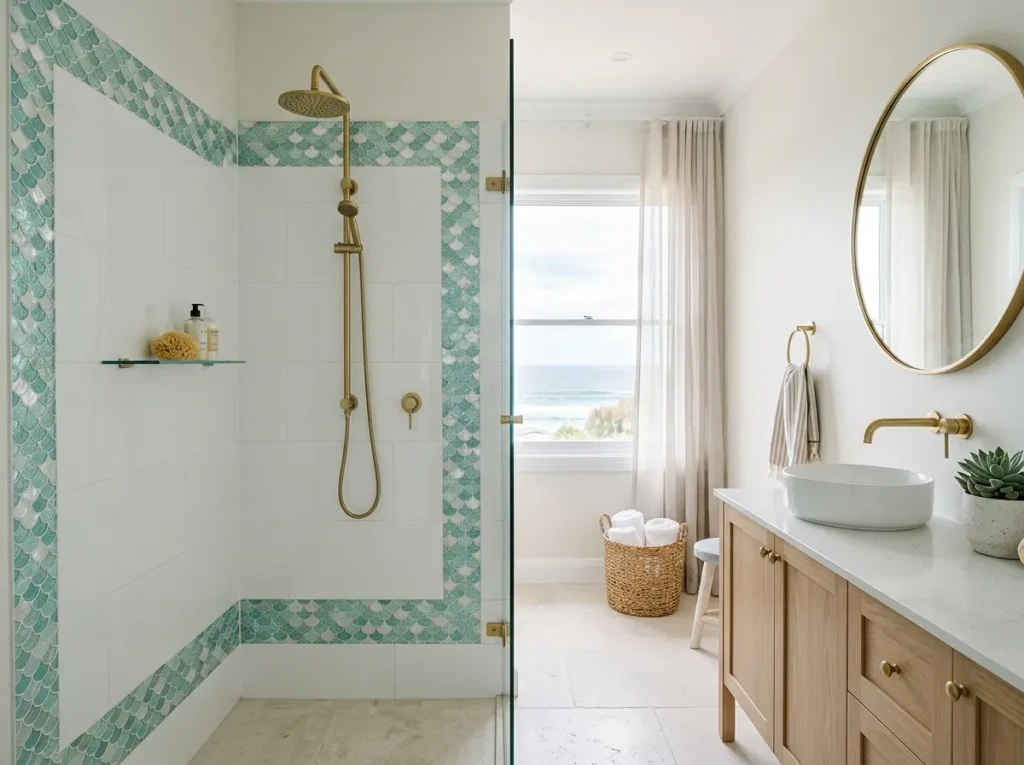
A narrow mosaic border can deliver plenty of personality without requiring a full wall of patterned tile. Place a strip of small mermaid-scale pieces around the shower, beneath a mirror, or at the transition between two neutral surfaces. Aqua, teal, pearl, and soft white create a recognizable coastal palette while keeping the overall bathroom restrained. This approach can be especially helpful when working with an existing space where replacing every tile is unrealistic. The border acts like decorative trim, giving the room a finished appearance while allowing your main wall and floor materials to remain simple.
For the cleanest result, keep the border width consistent and align it carefully with existing grout lines or architectural edges. A horizontal strip can visually widen a narrow room, while a vertical accent beside a vanity can draw attention upward. Use one dominant tile color and one or two supporting shades rather than mixing too many tones. Warm brass fixtures and pale wood accessories work naturally with the blue-green palette. Because the patterned area is limited, you can experiment with a bolder glaze or more noticeable scale shape without worrying that it will overpower the entire bathroom.
12. Mermaid Blue Vanity
- Makes the vanity area feel playful and custom.
- Blue cabinetry pairs beautifully with scalloped wall tile.
- White countertops keep the design fresh and practical.
- Open shelving provides room for towels and baskets.
- Repeated curves create a cohesive visual theme.
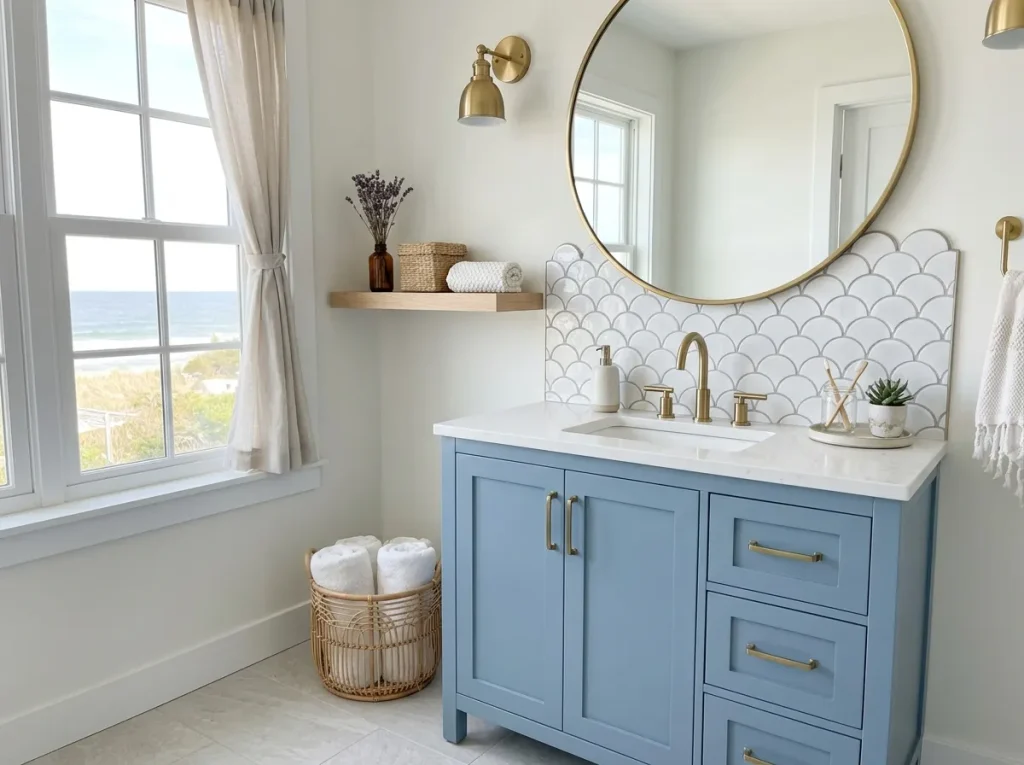
Pair a soft blue vanity with mermaid-scale backsplash tile for a layered coastal look that feels coordinated without being overly themed. The cabinetry gives the room a strong color anchor, while the curved tile adds texture behind the sink. White countertops and a rounded mirror keep the composition fresh and light. This combination works particularly well when the vanity is the first thing you see upon entering the bathroom. Instead of adding many decorative pieces, let the cabinetry and tile provide the visual interest. A small woven basket or ceramic tray is enough to finish the space.
Choose a blue vanity with a slightly muted finish so it complements rather than competes with the tile. If the backsplash is glossy white, pale aqua, or pearl, the combination will feel connected without looking identical. Add warm brass hardware for contrast and pale oak shelving to introduce natural texture. In smaller bathrooms, a floating vanity can preserve visible floor area and make the room feel more spacious. The result is both decorative and functional, with generous storage underneath and a backsplash that turns an everyday sink area into a memorable coastal feature.
13. Pearl Aqua Shower
- Combines soft aqua with a luminous pearl finish.
- Reflective surfaces help bounce natural light around the shower.
- Pale flooring keeps the color palette balanced.
- Simple fixtures prevent the tile from feeling overly decorative.
- Works especially well in bathrooms with limited daylight.
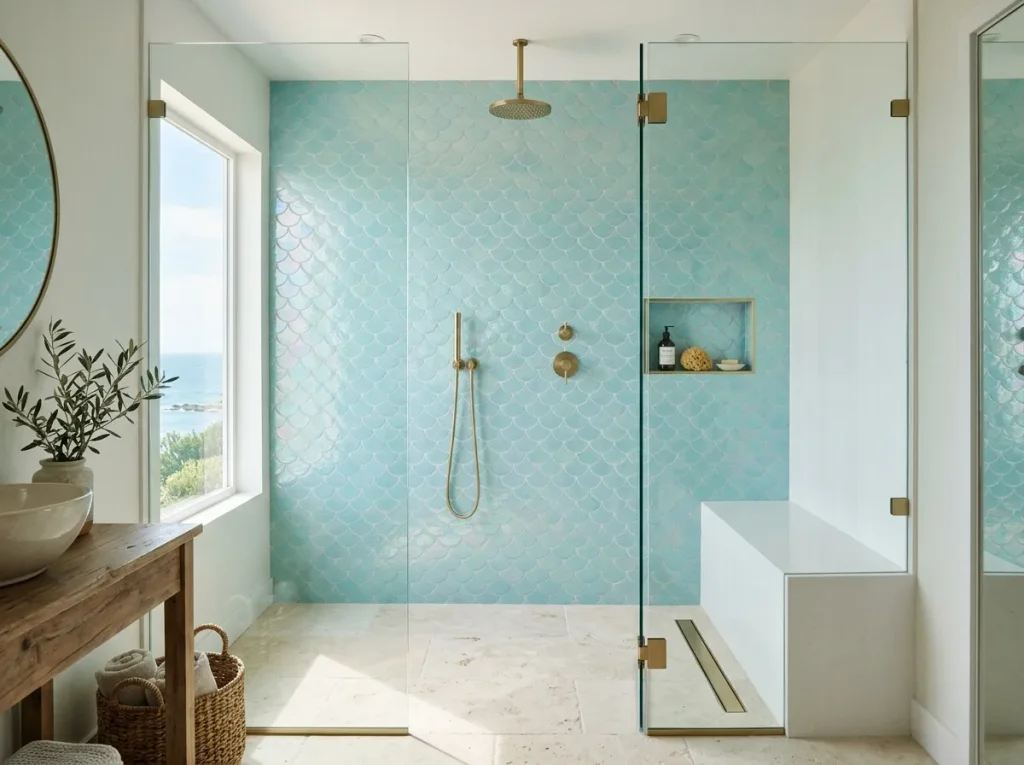
Soft aqua and pearl tones can make a shower feel bright, fresh, and almost luminous. This combination is ideal when you want the playful shape of mermaid tiles without using a strong saturated color. The pearl glaze catches natural light across each curved edge, creating subtle variation as you move through the room. Use the tile across the main shower wall, then keep the remaining surfaces creamy white or pale stone. In my experience, this palette feels particularly successful in bathrooms with limited space because the reflective finish adds visual depth while the light colors maintain an open appearance.
A frameless glass enclosure will help the pearlescent tile remain visible from different angles, making the shower feel more connected to the rest of the bathroom. Add a simple built-in bench or recessed niche in matching stone for useful function without introducing another competing material. Brushed brass fixtures can provide warmth, while pale flooring prevents the aqua tones from becoming too cool. Keep decorative products to a minimum and choose containers in white or neutral shades. The finished space feels polished and coastal, with enough texture to look interesting without sacrificing the calm atmosphere of a practical bathroom.
14. Half-Wall Scallops
- Adds decorative tile while keeping the upper walls light.
- Works beautifully behind a freestanding bathtub or vanity.
- Creates a natural visual break between materials.
- Makes bold tile easier to balance in smaller bathrooms.
- A slim trim gives the transition a finished appearance.
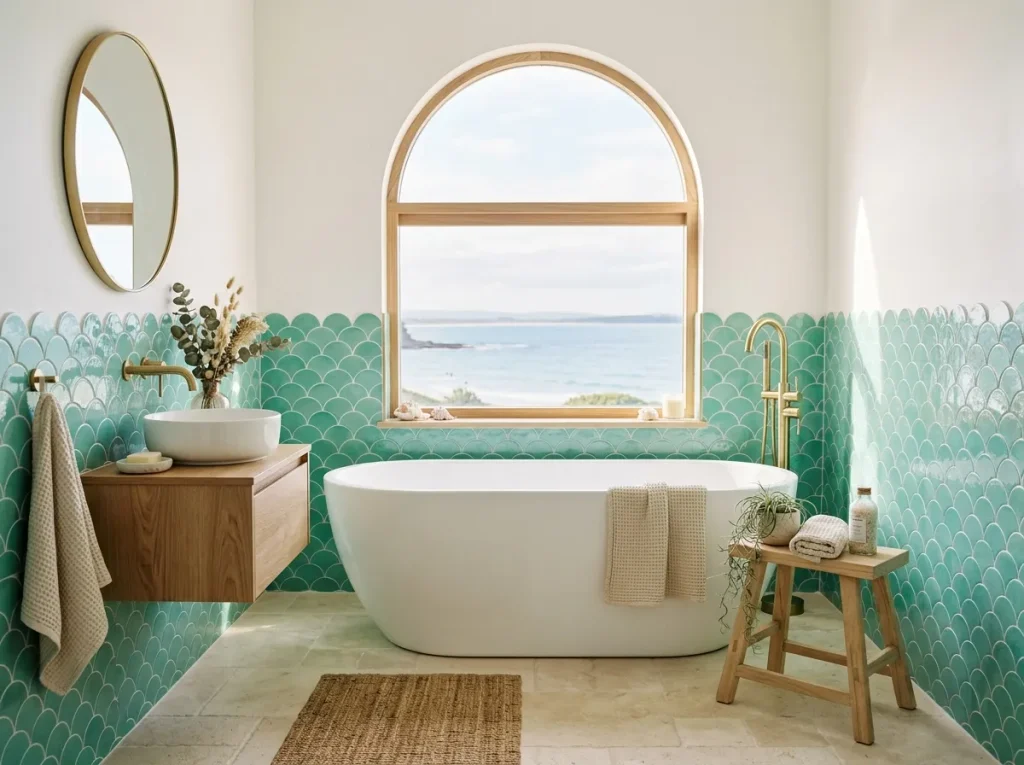
Covering only the lower portion of a bathroom wall is an easy way to introduce mermaid-scale texture without overwhelming the room. The tile can run from the floor to roughly halfway up the wall, creating a clear visual boundary between the patterned surface and a simple painted upper section. This works beautifully behind a bathtub or along a vanity wall. Choose aqua, seafoam, or soft blue for a gentle coastal effect. The open upper wall also gives the bathroom more breathing room, which can be especially valuable when the room has a low ceiling or limited natural light.
Finish the transition with a slim stone, ceramic, or metal trim that coordinates with the fixtures. Keep the upper wall warm white or a very pale neutral so the scalloped pattern remains clearly defined. A freestanding tub, pale wood stool, and woven basket can add natural texture without competing with the tile. This design is also easier to update than a fully tiled wall because the painted section can be refreshed independently. The result feels intentional and decorative while maintaining the clean proportions that make smaller bathrooms appear more spacious.
15. Shell-Inspired Shower Floor
- Brings the mermaid theme into the smallest practical details.
- Small-scale tiles create texture underfoot.
- Cream, aqua, and pearl tones mimic natural seashell colors.
- Neutral shower walls prevent the floor from becoming too busy.
- Textured surfaces can add useful traction in wet areas.
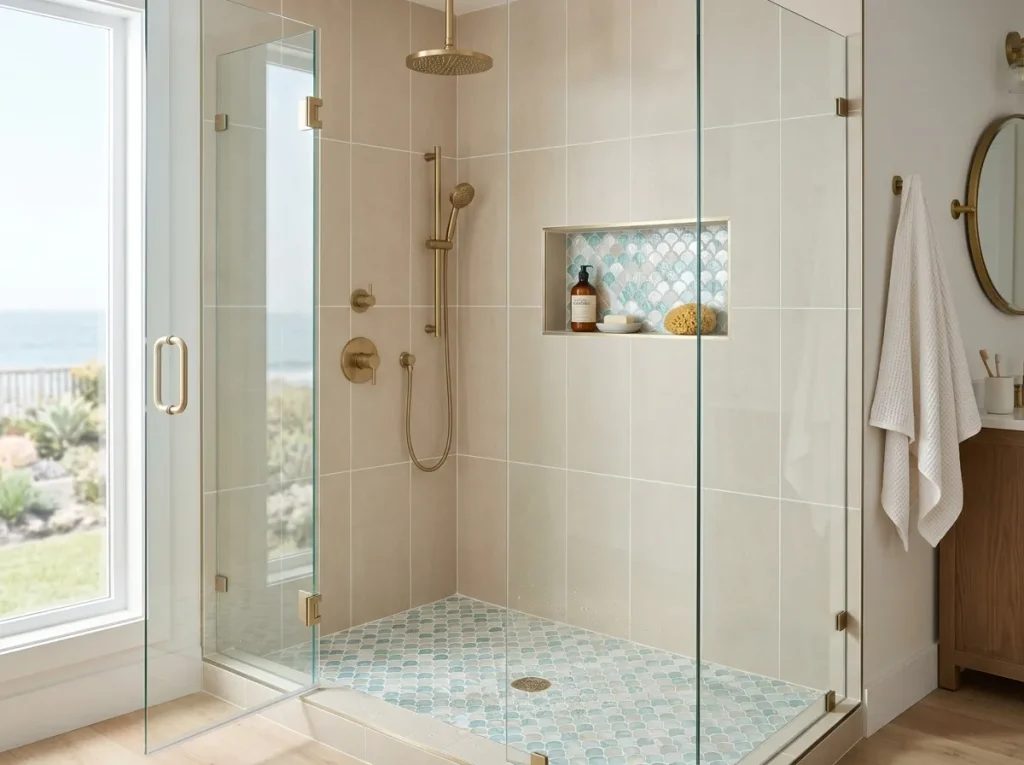
Look down for an unexpected place to add coastal character with a shell-inspired scallop tile shower floor. Small tiles in pearl white, cream, aqua, or soft blue can create a delicate pattern that feels connected to seashells and ocean water. Because the surface is compact, you can use more noticeable color variation without making the entire bathroom feel busy. Keep the shower walls simple so the floor has room to stand out. This idea is especially effective when you already have neutral wall tile but want to introduce decorative detail without starting a major renovation.
For wet areas, choose a tile product specifically rated for bathroom floors and follow appropriate installation guidance for slip resistance and waterproofing. Smaller pieces can create more grout joints, which may contribute to traction, although the tile’s actual surface rating matters most. Pair the floor with large cream or white wall tiles for contrast and visual calm. A frameless enclosure keeps the pattern visible, while warm metal fixtures add polish. The result is a subtle surprise that makes the shower feel custom while keeping the rest of the bathroom practical, uncluttered, and easy to coordinate.
16. Rainbow Shell Gradient
- Creates a playful coastal palette without looking overly bright.
- Soft pastel shades make the bathroom feel cheerful and airy.
- A controlled color transition keeps the pattern visually organized.
- White fixtures provide a clean contrast.
- Perfect for a bathroom that needs personality and light.
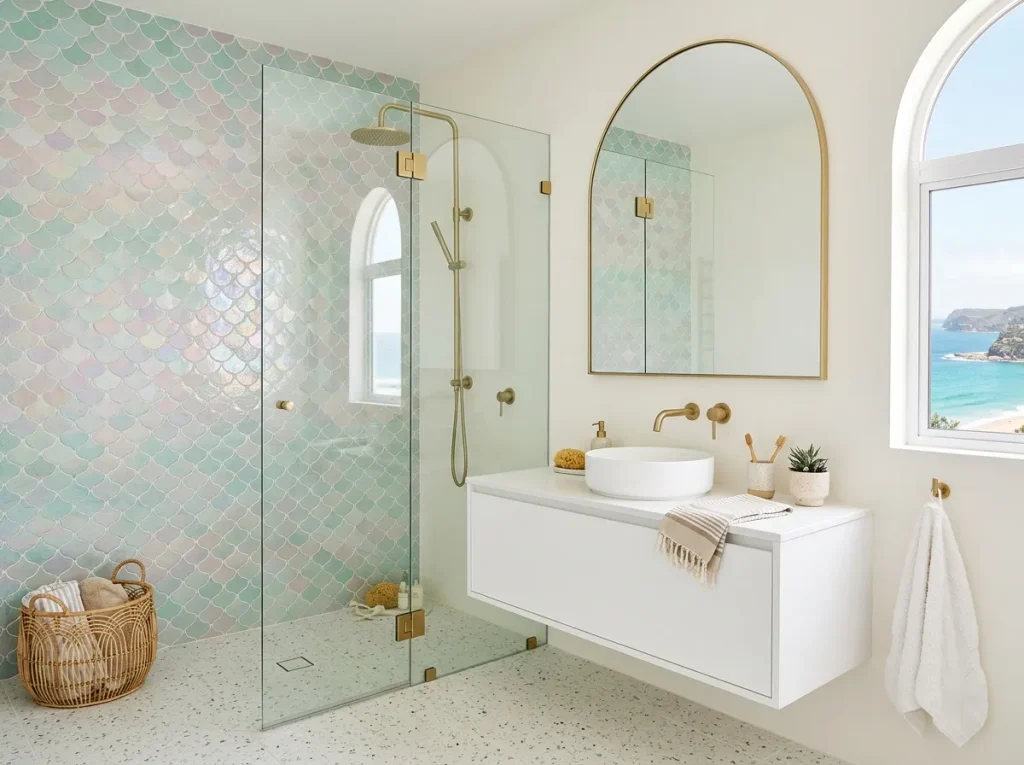
Bring a little more color into the bathroom with a soft pastel gradient of mermaid-scale tiles. Think seafoam, pale aqua, blush, lavender, and pearl white rather than highly saturated rainbow shades. Arranged carefully, these colors can create a dreamy coastal effect that feels playful but still sophisticated. Use the gradient on one shower wall or behind the vanity so the rest of the room has plenty of visual breathing space. This style is especially appealing for anyone who wants a bathroom that feels cheerful and unique without relying on bold artwork or excessive accessories.
The easiest way to keep multiple colors looking polished is to choose shades with similar softness and brightness. Let one color transition gradually into another instead of scattering random tiles across the wall. White cabinetry, a pale terrazzo floor, and a rounded mirror will help the pastel surface feel intentional. Warm brass hardware can add a little contrast without fighting the delicate palette. I’ve noticed that soft gradients photograph beautifully in natural daylight because the curved tile edges create tiny shifts in reflection. That makes this design especially well suited to Pinterest-inspired spaces where texture and color need to read clearly.
17. Coastal Powder Room
- Makes a small powder room feel memorable and highly designed.
- Decorative tile can transform a compact wall quickly.
- Soft blue-green tones reinforce the coastal theme.
- A statement mirror adds another curved visual element.
- Minimal furniture keeps the tiny room from feeling crowded.
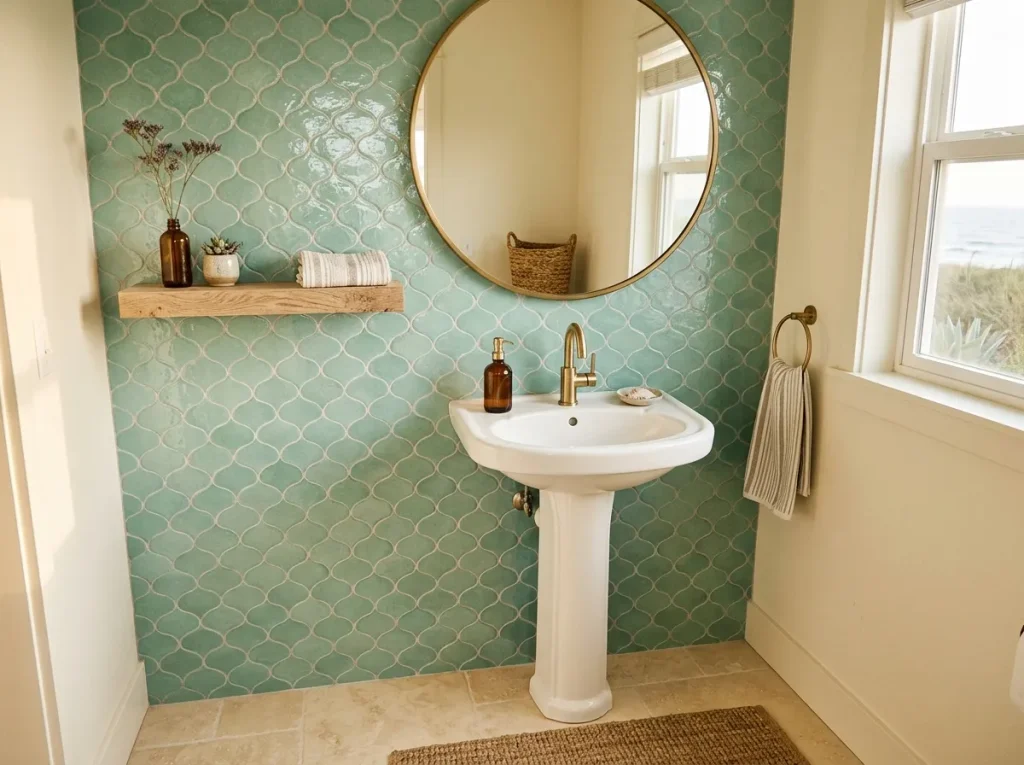
A small powder room is the perfect place to take a creative tile idea a little further. Because the space is compact, covering one prominent wall with glossy mermaid-scale tiles can create a dramatic effect without requiring a large quantity of material. Seafoam, turquoise, or soft navy can all work beautifully here. Pair the tile with a compact pedestal or floating sink, then add one oversized round mirror to emphasize the curved shapes. In my experience, small bathrooms often benefit from stronger design choices because there are fewer competing surfaces to coordinate.
Keep the remaining elements simple so the patterned wall does not become visually crowded. A warm white or cream floor provides a neutral foundation, while brushed brass hardware adds a little elegance. If storage is needed, use one slim floating shelf or a small woven basket rather than bulky cabinetry. Good lighting matters in a powder room, so combine flattering warm fixtures with any available natural light. The result feels charming and intentional, giving guests something memorable to notice while preserving enough open space to make the room feel comfortable.
18. Sandy Neutral Scales
- Offers a softer alternative to traditional blue coastal palettes.
- Beige and ivory tones create a warm, relaxed atmosphere.
- Textured tile adds interest without relying on strong color.
- Natural wood complements the sandy palette beautifully.
- Ideal for modern coastal bathrooms with a calm aesthetic.
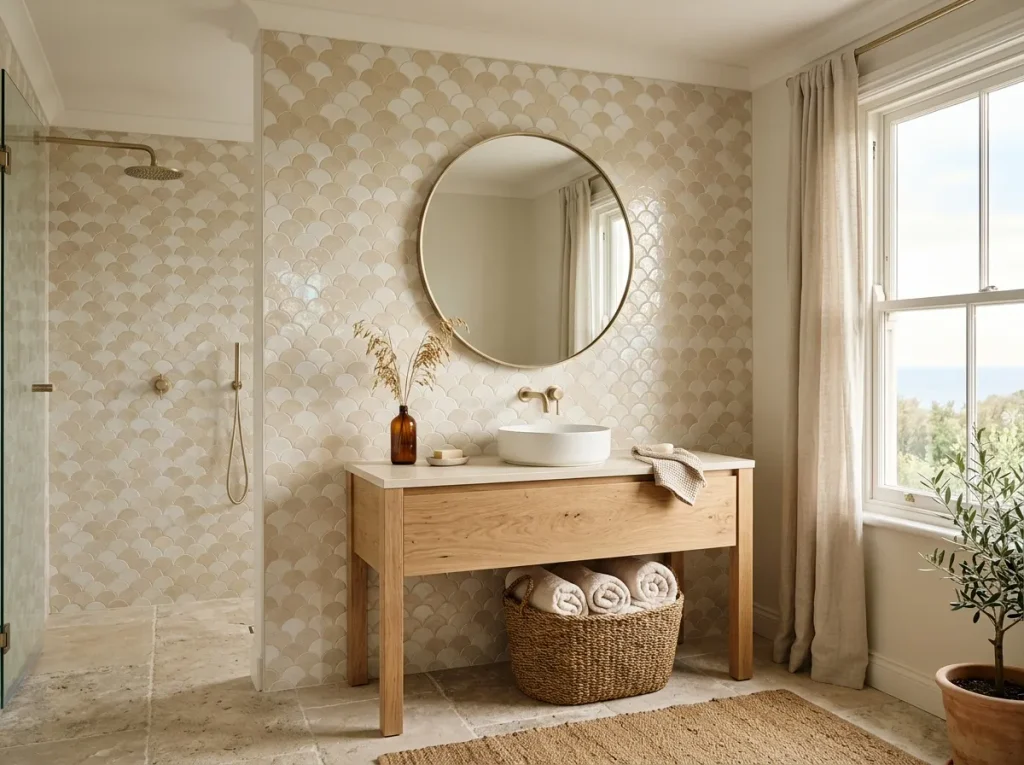
Not every coastal bathroom needs shades of blue. Sandy beige, ivory, and warm cream mermaid-scale tiles can create a softer interpretation that feels inspired by beaches, shells, and sun-warmed sand. The curved tile shape still provides the whimsical detail, but the neutral palette makes the bathroom easier to coordinate with existing finishes. Use these tiles behind a vanity or across a shower wall, then introduce natural oak, woven baskets, and creamy stone. This is a particularly good option for anyone who loves coastal style but prefers warm neutrals over traditional aqua and turquoise.
The neutral palette also gives you more freedom with hardware and accessories. Brushed champagne, antique brass, or even matte black fixtures can work depending on the overall style. Keep the countertop warm rather than stark white to maintain the relaxed appearance. A limestone-look porcelain floor can add another natural texture without competing with the scalloped pattern. That’s why this approach works well in modern homes: the mermaid shape provides personality, while the sandy colors keep the room sophisticated. The finished bathroom feels warm, comfortable, and quietly connected to the coast.
19. Emerald Mermaid Scales
- Adds rich color while keeping the playful scalloped shape.
- Deep green creates a sophisticated alternative to traditional aqua.
- Warm wood prevents the darker tile from feeling too heavy.
- Brass hardware adds a polished coastal touch.
- Best used as one defined focal surface.
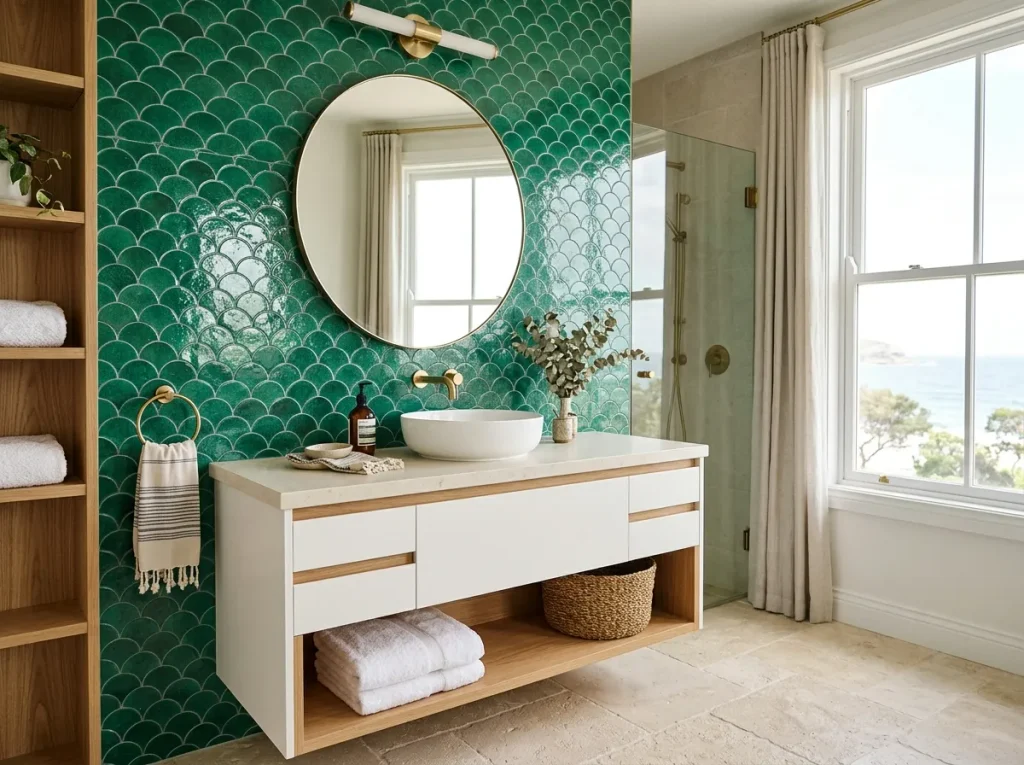
Give a compact bathroom a jewel-like focal point with emerald mermaid-scale tiles behind the vanity. The rich green shade brings depth while the curved pattern keeps the wall playful and fluid. Pair it with warm white cabinetry, a creamy countertop, and natural wood accents so the color feels grounded rather than heavy. This design works especially well in bathrooms with good daylight, where the glossy surface can shift between deep green and softer teal. I’ve noticed that one saturated tile wall often creates more impact than several competing decorative elements, making the room feel considered and custom.
Keep the emerald surface visually controlled by limiting it to one clearly defined area. A rounded mirror above the vanity can echo the scalloped shapes, while brushed brass hardware adds warmth against the cooler green. Choose a pale floor and simple towels so the bathroom remains bright and practical. If the room is small, consider tiling only the backsplash zone rather than the entire wall. The result is a sophisticated coastal interpretation with a little drama. It also gives you an easy styling base because cream, beige, wood, brass, and white accessories all coordinate naturally with the deep green.
20. Aqua Tub Backdrop
- Creates a calming focal wall behind the bathtub.
- Pale aqua makes the bathing area feel fresh and spacious.
- Fan-shaped placement emphasizes the flowing tile pattern.
- Neutral flooring keeps the palette balanced.
- Simple fixtures let the decorative surface shine.
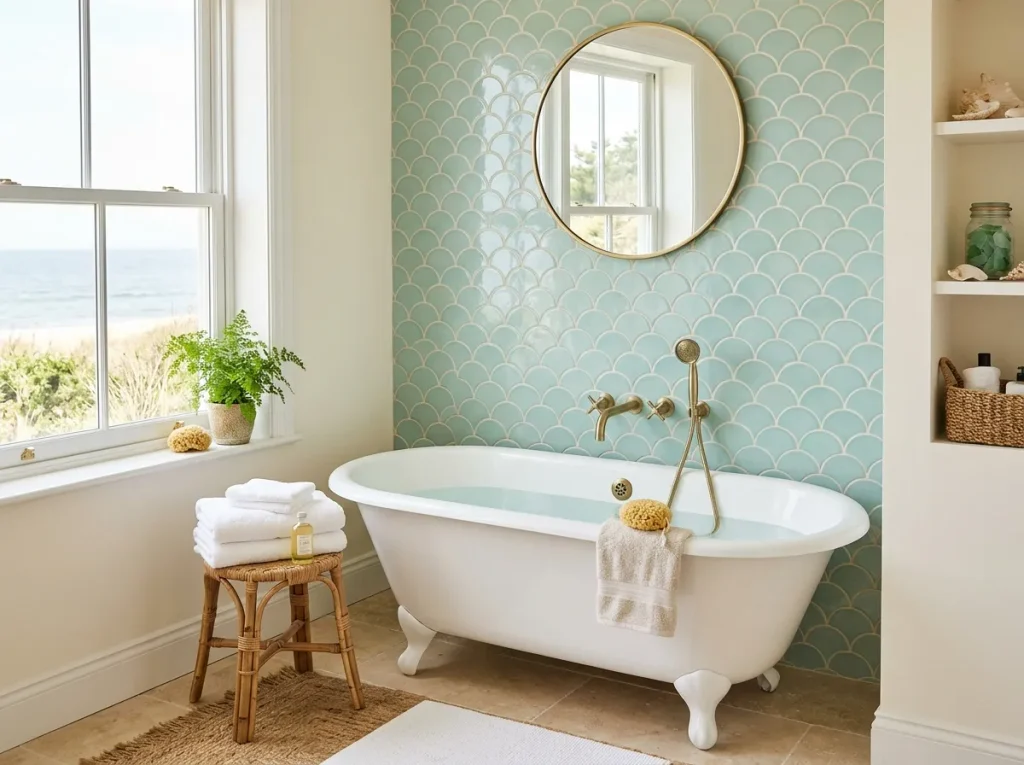
Create a soft focal point around the bathtub with pale aqua scallop tiles arranged in a fan-like pattern. The curved edges visually echo rippling water, while the light blue shade keeps the room feeling open and refreshing. This idea works beautifully behind a freestanding tub because the tile creates a backdrop without requiring additional artwork. Keep the tub white and choose warm neutral flooring to prevent the space from becoming too cool. In my experience, decorative tile feels most successful when the surrounding fixtures stay simple, allowing the shape, glaze, and subtle color variation to do the decorating.
For a more polished result, carry the aqua tile high enough to frame the tub but leave adjacent walls quiet. A narrow stone ledge can provide useful space for bath products, while a woven stool adds natural texture nearby. Use soft white towels and understated brass or chrome fixtures to complete the look. If the bathroom receives strong sunlight, a lightly glossy glaze will create gentle reflections throughout the day. This approach gives you the charm of coastal pattern without covering every surface. It feels especially welcoming in bathrooms where the bathtub is intended to be the main relaxing feature.
21. Scalloped Mirror Frame
- Turns a basic mirror into a custom-looking focal point.
- Small tile pieces add texture without covering a full wall.
- Pearl and aqua tones create a subtle coastal connection.
- Rounded mirror shapes reinforce the organic tile pattern.
- A practical upgrade for smaller bathroom renovations.
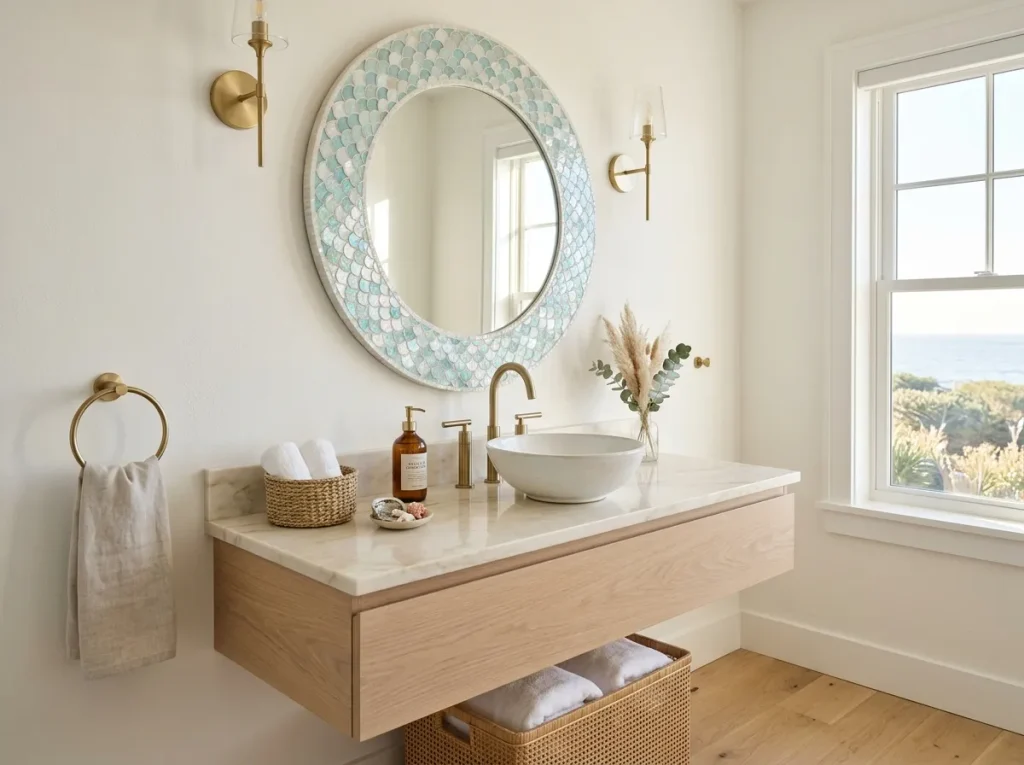
Add a delicate coastal detail around the mirror with a narrow frame of mermaid-scale tiles. Instead of covering a full wall, arrange small pearl, aqua, and soft blue pieces around the mirror’s outer edge to create a decorative border. The curved tile shapes make a simple mirror feel custom and visually connected to the rest of the bathroom. This works particularly well above a floating vanity, where the mirror already acts as a natural focal point. A clean countertop and minimal accessories will keep the frame looking intentional rather than overly decorative.
Choose a round or softly arched mirror to reinforce the organic shape of the scalloped tile. Keep the surrounding wall in warm white, pale beige, or another quiet neutral so the border remains easy to notice. A slim vanity with drawers provides practical storage without competing for attention. Soft wall lighting placed beside or above the mirror can highlight the tile glaze and make the bathroom feel warmer at night. This small upgrade is useful when you want a noticeable design change without replacing the shower, flooring, or major fixtures. It adds character while preserving a clean layout.
22. Shell Pink Shower
- Adds a warm, playful twist to coastal bathroom design.
- Soft pink creates a gentle shell-inspired atmosphere.
- White fixtures keep the shower bright and fresh.
- Brass hardware complements the warm undertones beautifully.
- Best paired with quiet flooring and simple accessories.
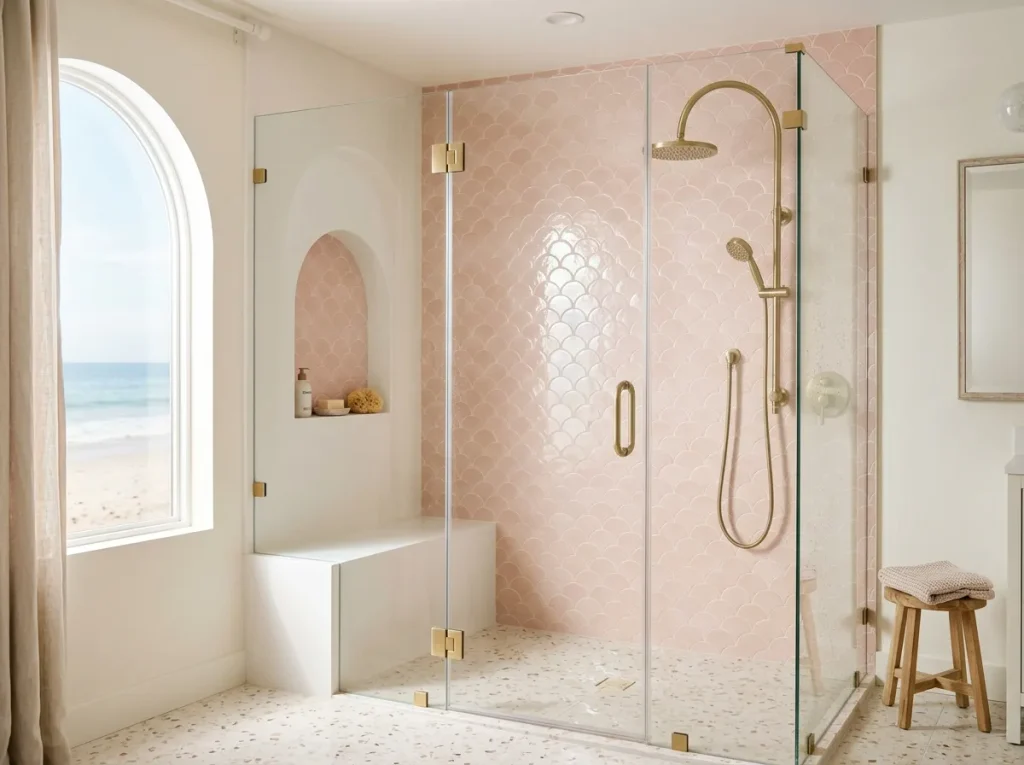
Soft shell pink can bring a surprisingly fresh coastal feeling to a bathroom when it is paired with the right materials. Cover a shower wall with muted pink mermaid-scale tiles, then balance the color with creamy white walls and a pale floor. The rounded pattern keeps the pink from feeling overly traditional, giving it a playful, beach-inspired quality instead. This idea works particularly well in bathrooms where you want warmth rather than cool blue tones. Keep the shower enclosure simple and transparent so the decorative wall remains visible from the rest of the room.
Warm metal fixtures can make the pink tile feel even more sophisticated. Choose brushed brass or champagne finishes for the shower hardware, then repeat the tone in a small mirror frame or light fixture. A white built-in bench and simple recessed niche provide practical function without adding competing colors. For the floor, choose a light terrazzo or stone-look porcelain with subtle variation. The finished shower feels soft and welcoming while still being easy to coordinate with white towels and neutral accessories. It is a good option for creating coastal charm without relying on predictable aqua or navy.
23. White And Teal Mix
- Creates contrast while keeping the bathroom bright.
- White scales soften the stronger teal pieces.
- A mixed pattern can feel more custom and artistic.
- Neutral fixtures prevent the tile combination from becoming busy.
- Works well on vanity walls and shower surrounds.
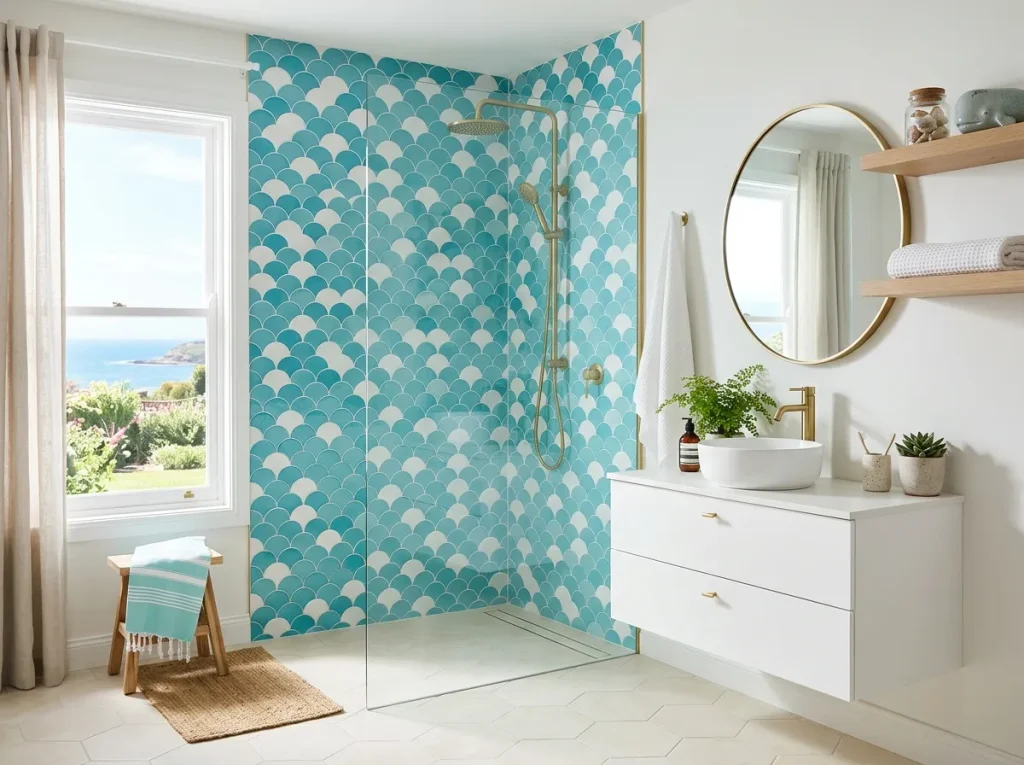
Mix white and teal scallop tiles to create a playful pattern that feels brighter than an all-color installation. The white pieces act as visual breathing room, while teal adds enough contrast to make the curved shapes stand out. You can alternate the colors in rows, create a soft checker-like rhythm, or use mostly white tile with occasional teal accents. This flexibility makes the design easy to personalize. If you want one of the more versatile mermaid tile bathroom ideas, this combination works because the colors are distinctive enough for Pinterest inspiration but simple enough to live with every day.
Keep the surrounding materials understated so the mixed tile remains the main attraction. A white floating vanity, pale oak shelf, and creamy porcelain floor provide a clean foundation, while brushed brass or chrome fixtures add a refined finishing touch. Use a grout shade that visually connects the two tile colors rather than creating another strong contrast. For smaller bathrooms, concentrate the pattern on one wall or shower area. The result feels lively without becoming chaotic, and the white elements help reflect natural light so the room stays open, crisp, and inviting.
24. Ocean Wave Accent
- Uses flowing tile placement to mimic the movement of water.
- Blue-green shades create depth and visual rhythm.
- A single accent zone keeps the design easy to balance.
- Curved placement works beautifully with rounded fixtures.
- Ideal for adding movement to a plain bathroom wall.
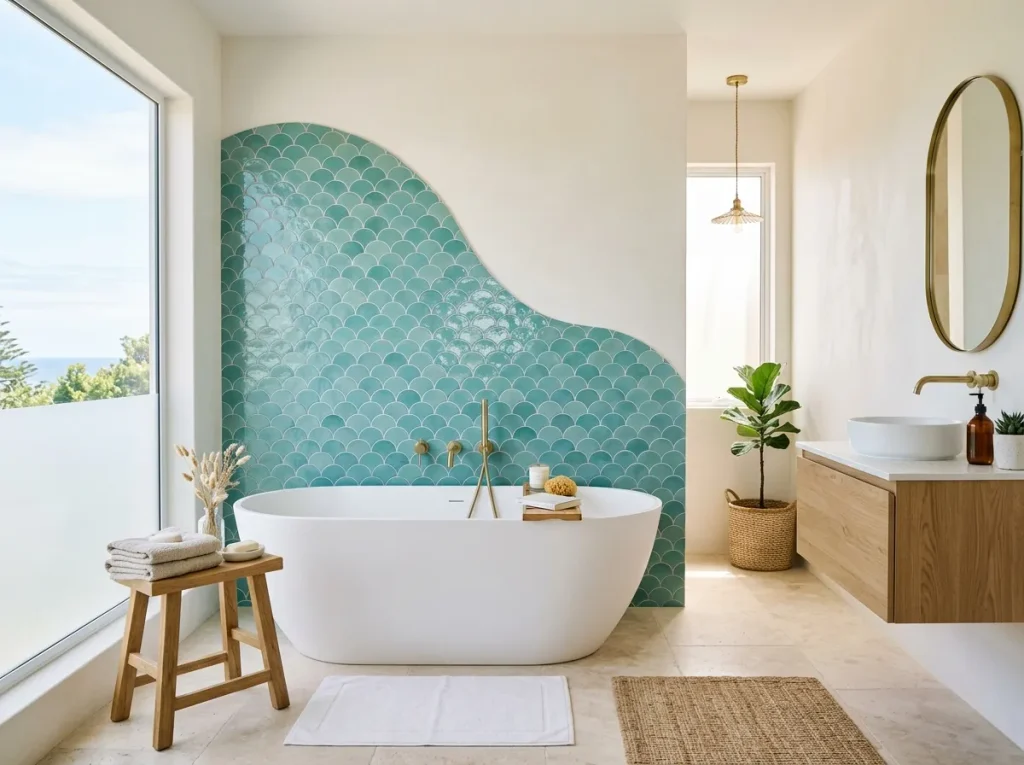
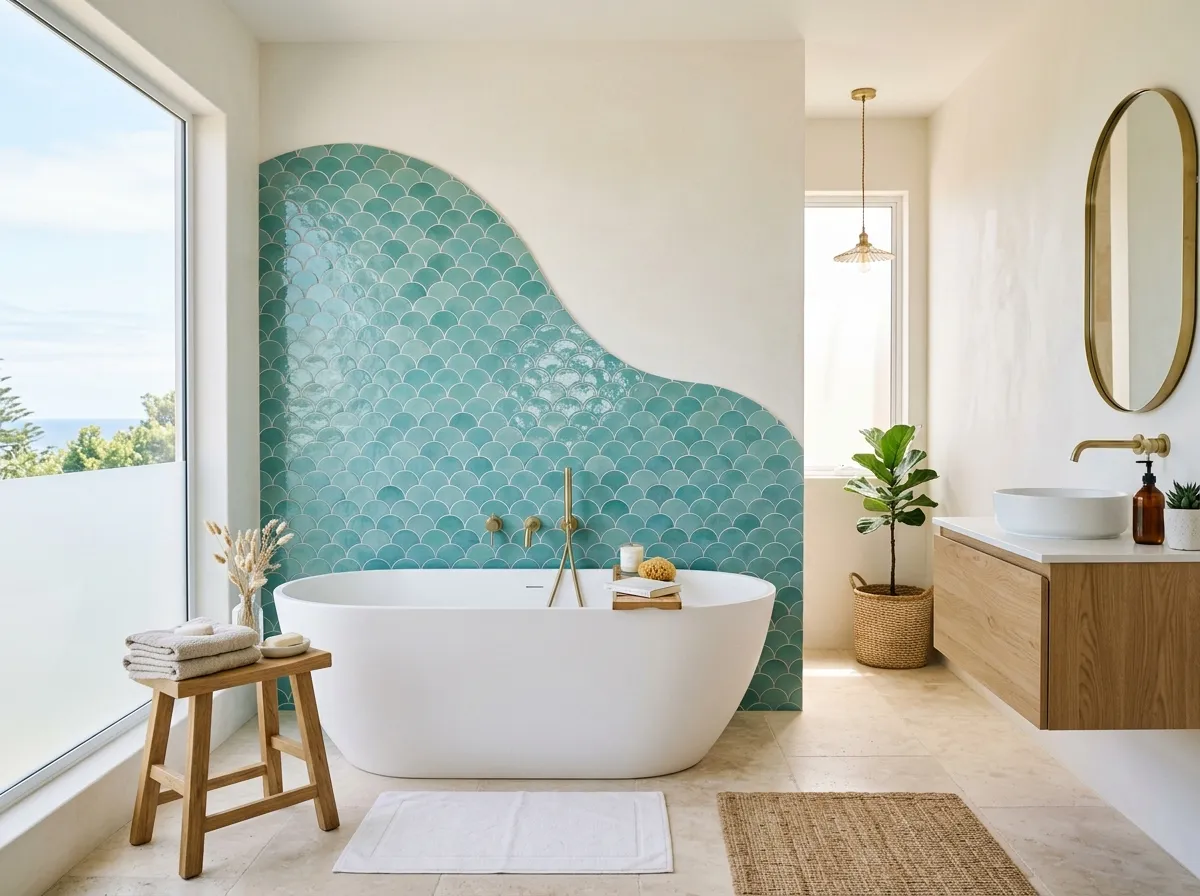
Create the feeling of moving water by arranging blue-green mermaid-scale tiles in a flowing accent pattern. Rather than using a perfectly uniform block, let the tiled area gently curve or expand around a bathtub, vanity, or shower wall. Shades of aqua, teal, and soft blue can reinforce the wave-like effect without requiring additional decorations. This idea works best when the surrounding surfaces are simple, because the unusual tile placement becomes the feature. I’ve seen this type of controlled asymmetry work especially well in contemporary bathrooms where homeowners want something artistic without adding bulky architectural details.
Use a pale neutral background to make the flowing tile shape easy to read from across the room. A freestanding tub, rounded mirror, or curved vanity can repeat the organic forms and make the design feel cohesive. Keep flooring simple, preferably in cream, beige, or light stone tones. Natural oak and woven accessories can soften the cooler colors, while brushed brass adds a refined contrast. The finished bathroom feels energetic but not chaotic. Most importantly, the accent can be scaled to the room, allowing you to create a subtle wave or a larger statement depending on the available wall space.
25. Pearl White Mermaid Tile Retreat
- Gives the bathroom a soft, elegant coastal feeling.
- Pearl-white scales reflect light and make a small space feel brighter.
- Looks beautiful with natural wood, cream, and warm brass accents.
- Works well in showers, behind vanities, or across a bathtub wall.
- Keeps the mermaid-inspired look subtle enough for timeless bathroom design.
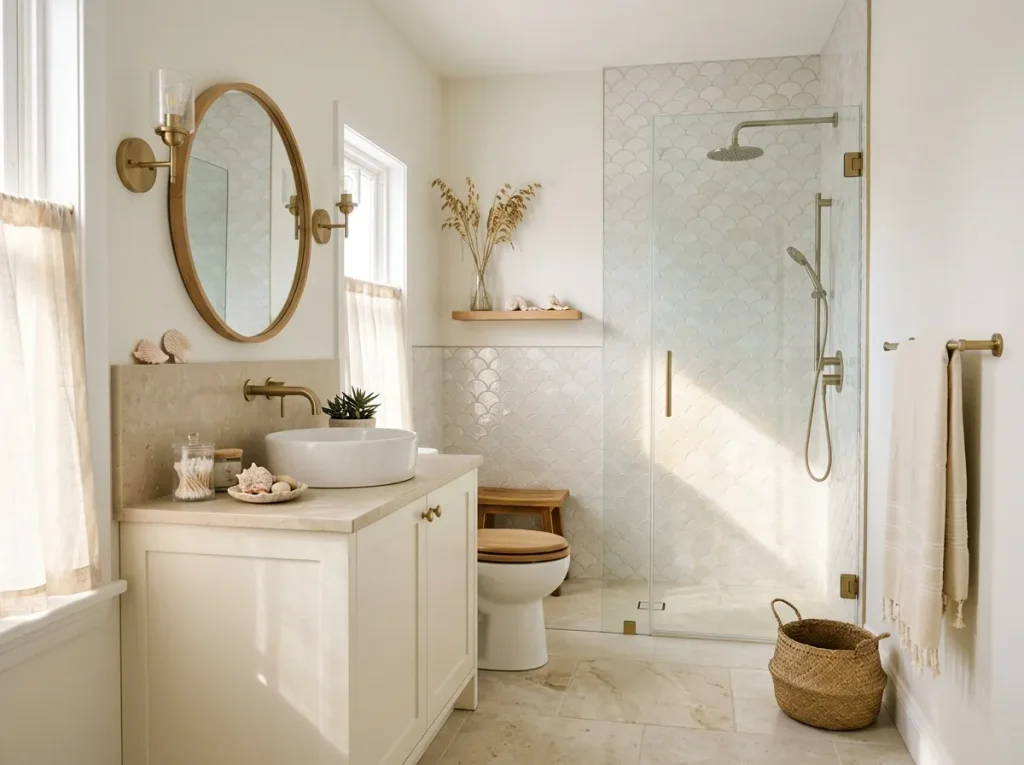
Create a peaceful seaside feeling with pearl-white mermaid tiles that bring texture without relying on strong color. The softly curved scales add a playful detail to the bathroom while maintaining a clean and sophisticated appearance. Because white reflects both natural and artificial light, this idea works especially well in smaller bathrooms where you want the space to feel open and bright. Use the tiles inside a walk-in shower, behind a floating vanity, or across a bathtub wall to create a delicate focal point.
Balance the glossy tile surface with warm, natural materials for a more inviting finish. Light oak cabinetry, creamy stone, brushed brass fixtures, and beige flooring can soften the coolness of the white tile while keeping the coastal mood relaxed. A rounded mirror can echo the curved shape of the mermaid scales, creating visual harmony throughout the room. Add only a few subtle accessories, such as woven baskets or small shell-inspired details, so the bathroom feels inspired by the ocean without becoming overly themed.
Conclusion
A beautiful bathroom doesn’t need an elaborate renovation to feel completely transformed. The right mermaid tile bathroom ideas can add movement, color, texture, and a touch of coastal magic while still keeping the space practical and inviting. Whether you prefer soft pearl tones, ocean-inspired blues, or playful scalloped patterns, there’s an idea here to inspire your own style. I’ve seen how small changes in tile can make an everyday bathroom feel much more special. Save your favorite ideas to Pinterest, choose one detail to try in your own space, and share this collection with someone planning a bathroom refresh. Let your next makeover bring a little seaside charm home!