Neutral Winter Decor Ideas for a Calm Peaceful Home
January asks something different of a home. After weeks of colour, pattern and sparkle, what most rooms need is quiet — the visual equivalent of a deep breath. Neutral winter decorating delivers exactly that: soft whites, warm woods and layered textures that feel like fresh snow and early nights.
The neutral winter decor ideas that work are not about stripping a room bare. They are about trading loud contrast for soft contrast — cream against white, matte against shine, rough wood against smooth linen — so the room stays interesting at half the volume.
Go room by room with the steps below: base palette first, then wood, texture, greenery and gentle light, and finish by editing each room to one calm focal point.
1. Build a Cream, White and Soft-Grey Base
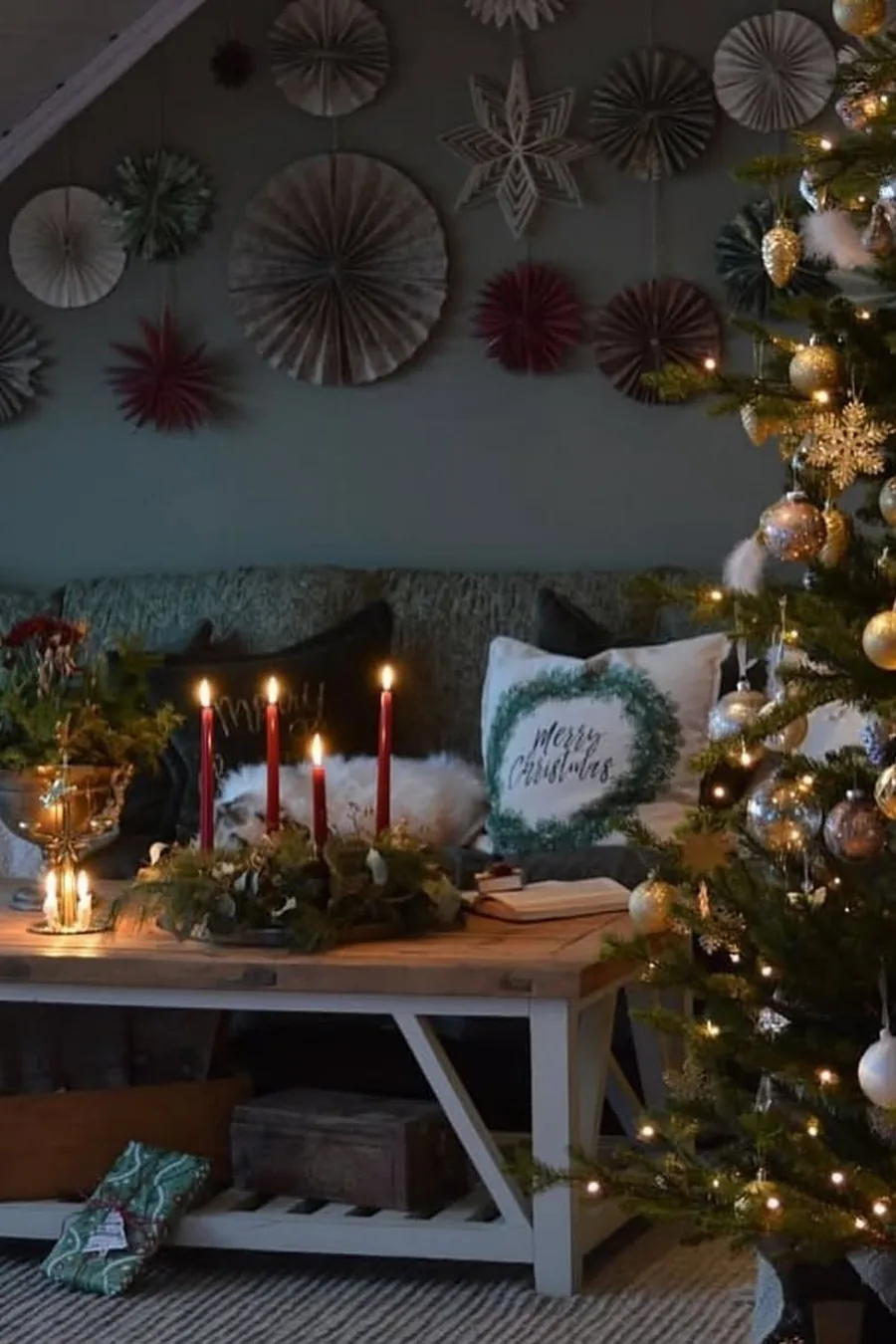
Photo credit: @christmastreeideas on Instagram
Start by gathering everything pale you already own into one view: cream throws, white cushions, oatmeal linens, soft-grey knits. Neutral decorating fails when the whites fight — bright blue-white next to warm cream looks dirty — so sort by undertone and keep only the warm family in each room.
Layer at least three neutrals rather than one. Cream cushions on a white sofa with a grey throw has depth; a single flat white everywhere feels like a showroom. Let walls stay as they are and do the palette with textiles, which you can change again in spring for nothing.
Test your whites together before committing: hold the cushion fabric against the sofa, the throw against the curtains, in daylight and lamplight. The ones that clash announce themselves quickly, and sending one warm-cream piece to another room is all the editing a neutral base usually needs.
Style note: Photograph the room in black and white. If the tones still step gently from light to mid to deep, your neutrals are balanced; if it reads as one grey blur, add one darker piece.
2. Bring in Natural Wood for Warmth

Photo credit: @threearrowsco on Instagram
Wood is the neutral that stops pale rooms feeling cold. A wooden tray on the coffee table, a bowl on the dining table, stacked books or a stool beside the sofa — two or three wood moments per room is enough to warm the whole scheme.
Mix wood tones freely, but keep them matte and natural rather than glossy and orange. Pale oak, weathered pine and one deeper walnut piece layer beautifully together, and against cream textiles their grain does the work patterns usually do.
Texture note: Wood counts as texture as well as colour. One rough or live-edge piece adds more calm interest than three smooth matching ones.
You May Also Like: New Year Home Organization Ideas for a Tidy Fresh Home
3. Use Texture Where You Would Use Colour

Photo credit: @kirklands on Instagram
In a colourful room, contrast comes from hues; in a neutral room, it comes from touch. Build each surface with one smooth, one soft and one rough element: a linen cushion, a chunky knit throw and a woven basket beside the sofa; a ceramic vase, a cotton runner and pinecones on the table.
Keep textures matte and natural — wool, linen, cotton, rattan, stone, unglazed pottery. Shiny synthetics fight the calm. From across the room, a well-textured neutral scheme reads clearly; from up close, it keeps rewarding a second look.
Do not forget the soft layers you already wear: a folded knit at the sofa's end, slippers by the chair, a shawl over the arm. Neutral rooms ask to be touched, and the pieces that get used are the ones that keep the scheme feeling lived-in instead of staged.
Budget note: Texture is the cheap neutral upgrade. A woven basket, a knit throw and one stone or wood piece transform a pale room for very little, and none of it dates by spring.
4. Choose Winter Greenery in Muted Tones
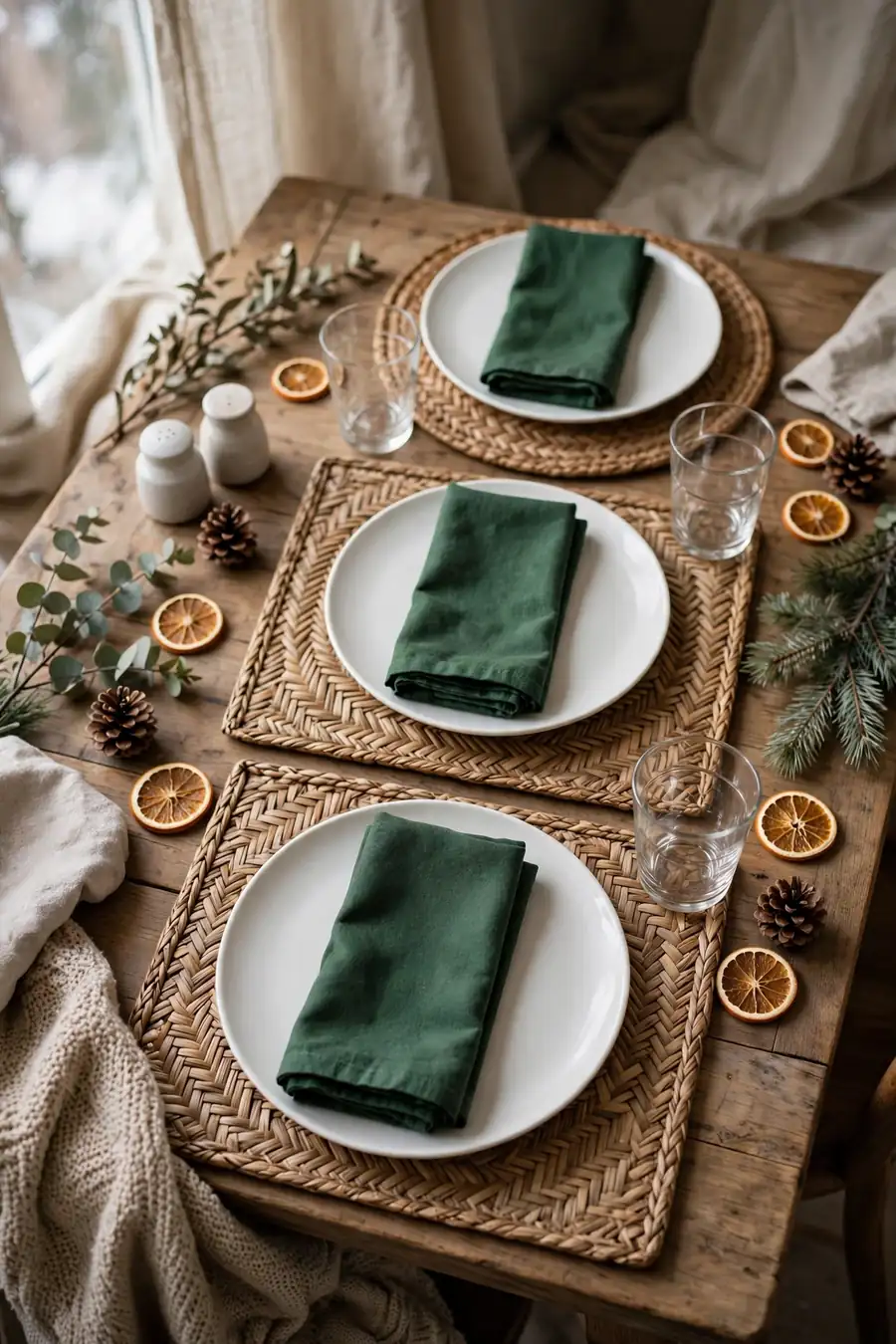
Every neutral room needs one living note, and winter greenery provides it without breaking the palette. Choose dusty, muted greens — eucalyptus, olive, frosted pine — over bright glossy foliage, which reads summery or Christmasy against creams.
Use greenery sparingly: one vase of branches on the table, one small arrangement on a shelf, perhaps a plain wreath on an internal door. Bare branches count too, and their silhouettes against pale walls are the purest winter neutral there is. Let most surfaces stay empty; the emptiness is the style.
Change the water and trim stems weekly and even bare branches will last the season, dropping the odd bud rather than petals everywhere. A greenery habit this small asks almost nothing of you, which is rather the point of the whole calm scheme.
Style note: If faux greenery looks too green, a light dusting with a dry cloth tones it down, and mixing one real stem among faux pieces settles the whole arrangement.
You May Also Like: 25 Neutral Christmas Decor Ideas for a Calm Elegant Home
5. Add Quiet Shine With Glass, Silver and Mirror

Neutral rooms still need sparkle — just at a whisper. Clear glass, mercury glass, brushed silver and mirror catch winter light and return it softly, where gold and glitter would shout. Cluster two or three glass pieces where daylight or lamplight reaches them: a windowsill, the mantel end, a tray on the table.
Mercury glass and antique-look silver suit neutrals best because their shine is already softened. Keep metals to one family per room so the glints feel related, and polish nothing to a mirror glare — the calm depends on it.
Lighting note: Glass earns its place near light. A glass cluster on a dark shelf does nothing; the same pieces beside a lamp will sparkle all evening.
6. Light Everything Warm, Not Bright

Neutral schemes live or die by their light. Cool bright bulbs turn cream into grey and white into blue; warm-white bulbs around 2700K keep every tone golden. Use several low lamps rather than one ceiling light, so pools of warmth model the room's textures.
Candles are the neutral room's best friend — plain cream pillars and tea lights in glass holders, grouped in threes. Flameless versions on timers give the same dusk glow daily. By evening, a neutral room lit low and warm feels like the calmest place in the house.
Safety note: Pale rooms mean pale fabrics near flames. Keep candles in glass, on trays, and a clear margin from linen, knit and paper.
You May Also Like: 23 Minimalist Christmas Decor Ideas for a Simple Home
7. Edit Each Room Down to One Calm Focal Point

Photo credit: @wilshire_collections on Instagram
The final step is subtraction. Stand in each doorway and ask what the eye hits first; make that the room's one focal point — the fireplace, a branch arrangement, a textured bed, a set table — then quiet everything competing with it. Remove one object per surface and see if the room misses it. It rarely does.
This is also the step that separates calm from empty: empty rooms have nothing to land on, calm rooms have exactly one generous thing. Keep stored-away pieces boxed until spring; if you have not fetched one by March, it was decoration the room never needed.
Fixing note: If a neutral room feels bland rather than calm, the fix is rarely more objects — it is one bigger, more textured focal point and warmer light.
The Neutral Winter Cheat Sheet

Photo credit: @goldenboysandme on Instagram
| Instead of this | Try this | Why it feels calm |
|---|---|---|
| Bright colour accents | Cream, wood and soft grey layers | Gentle contrast rests the eye |
| Patterned cushions | Mixed knit, linen and bouclé textures | Interest you feel, not noise you see |
| Glitter and gold sparkle | Glass, mercury glass, brushed silver | Quiet shine that suits pale tones |
| Glossy bright greenery | Dusty eucalyptus and bare branches | Muted season, no holiday echo |
| One bright ceiling light | Low warm lamps plus candle clusters | Golden pools that model texture |
| Every surface styled | One focal point, emptier surfaces | Calm comes from what you remove |
Frequently Asked Questions
What neutral winter decor ideas work in a home that usually loves colour?
Start with textiles, not paint: swap cushion covers and throws for cream, oatmeal and soft grey, keep one favourite coloured piece as the single accent, and warm the light. Most colourful homes look calmly wintry within an hour, and spring can have its colour back.
How do I stop a neutral room looking cold or bland?
Add warmth in three places: natural wood, textured layers (knit, linen, woven), and warm-white light. If it still feels flat, increase contrast gently with one deeper tone — charcoal, walnut or deep grey — rather than adding colour.
What colours count as winter neutrals?
Warm white, cream, oatmeal, beige and soft greys, with natural wood tones and muted dusty greens as the living accent. Keep undertones warm and consistent — mixed blue-whites and yellow-creams are what make neutrals look muddy.
Can neutral winter decor work with kids and pets?
Yes, if you choose washable textures and forgiving tones: mid-tone oatmeal and grey hide more than bright white, and baskets corral the clutter. Keep glass and candles high, and the calm becomes a background the household can actually live in.




One Comment