Spring is the perfect time to make your dining table feel fresh, colorful, and full of life. These spring tablescapes ideas make it easy to create a beautiful setting without needing an expensive makeover.
From fresh tulips and cheerful lemons to soft linens, woven textures, botanical plates, and candlelit arrangements, these 23 ideas offer inspiration for every kind of spring gathering. Whether you are planning Easter brunch, a garden-inspired dinner, a casual family meal, or simply want to refresh your everyday table, you’ll find easy details worth trying. In my experience, a beautiful tablescape often comes from a few thoughtful layers rather than a table filled with decorations. Choose your favorite colors, add seasonal flowers, mix in natural textures, and let the table feel welcoming and personal.
1. Fresh Tulip Centerpiece
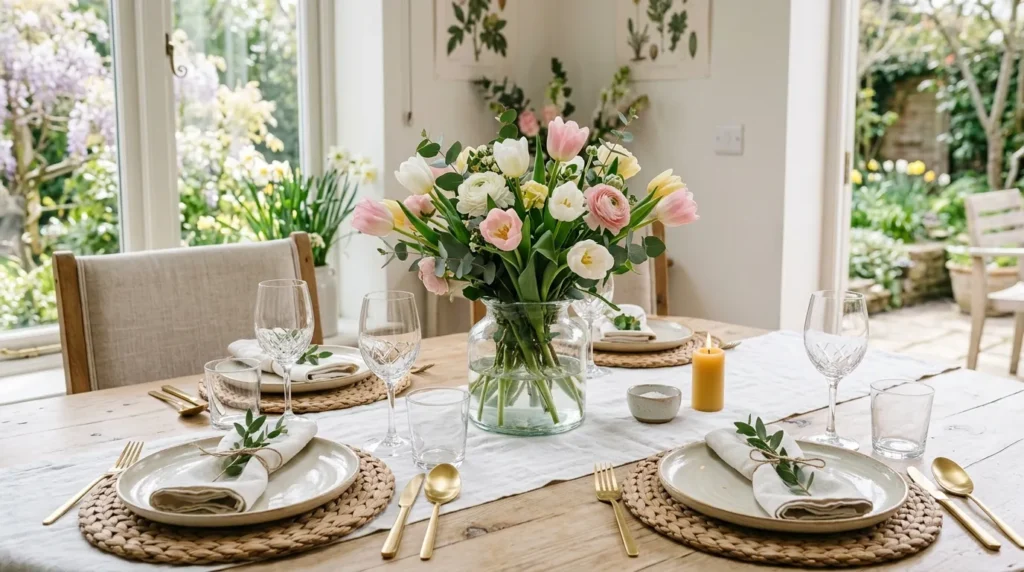
- Fresh tulips bring instant spring color to the table.
- A simple glass vase keeps the arrangement feeling airy.
- Soft pastel blooms work beautifully with neutral dinnerware.
- Slightly uneven stems create a relaxed, natural look.
Nothing says spring quite like a table filled with fresh tulips. Their simple shape and soft colors can instantly make an everyday dining space feel brighter and more welcoming. Place a loose bouquet in a clear glass vase so the stems remain visible and add a touch of natural simplicity. Blush pink, creamy white, pale yellow, and soft peach work especially well together. Keep the rest of the table understated with neutral plates, linen napkins, and natural textures. The flowers become the focal point without making the setting feel overly formal or carefully arranged.
For a relaxed centerpiece, do not worry about making every tulip stand at exactly the same height. Let a few stems curve naturally over the edge of the arrangement for a softer appearance. If you are setting the table for everyday meals, choose a vase that does not block conversation across the table. I’ve noticed that clear glass works particularly well because it keeps the arrangement visually light. Add woven placemats or a simple linen runner underneath to introduce texture. The finished table feels fresh, cheerful, and effortless while still looking beautiful enough for guests.
2. Lemon Garden Table
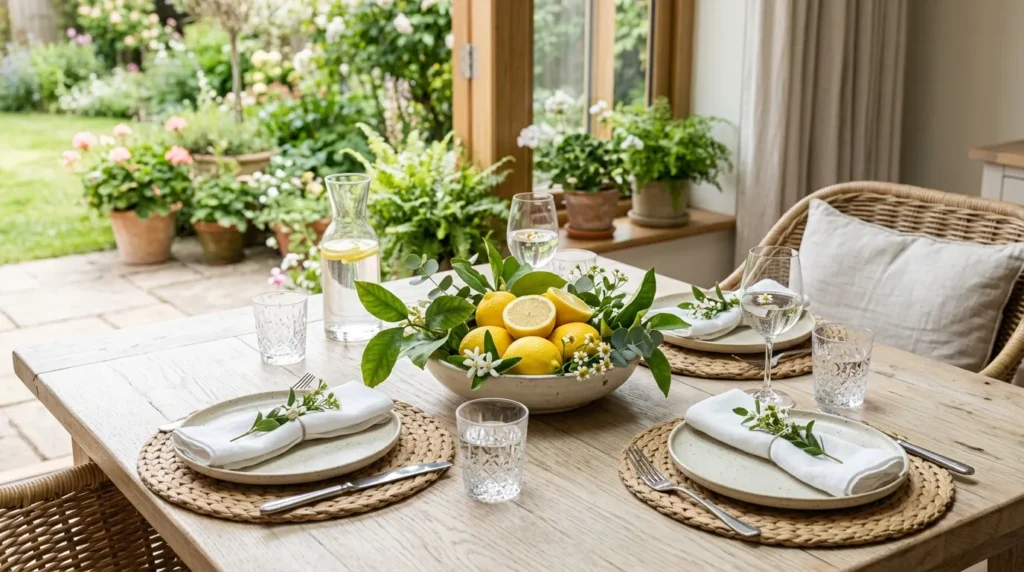
- Lemons add cheerful color without requiring elaborate decor.
- Green foliage creates a fresh natural contrast.
- Ceramic bowls can double as simple centerpieces.
- Yellow accents make neutral tableware feel more lively.
A bowl of bright lemons can turn a simple dining table into a cheerful spring display with almost no effort. Their sunny yellow color creates an instant focal point against white ceramics, natural wood, and soft linen. Add a few leafy branches around the bowl to bring in a garden-inspired feeling without creating a complicated centerpiece. This idea works especially well for casual brunches, weekend lunches, or everyday meals because the lemons can remain useful after the table is cleared. The combination feels fresh and colorful while staying simple enough for a relaxed home.
To make the arrangement look intentional, choose a low ceramic bowl or shallow tray and fill it generously with lemons. Avoid mixing too many colors into the centerpiece because the yellow and green already provide plenty of contrast. White flowers can be added in small amounts if you want a softer appearance. I’ve seen this type of styling work beautifully on wooden tables because the natural grain balances the brightness of the fruit. Keep the surrounding place settings neutral, using cream plates, woven placemats, and linen napkins so the centerpiece remains the star.
3. Soft Pastel Place Settings
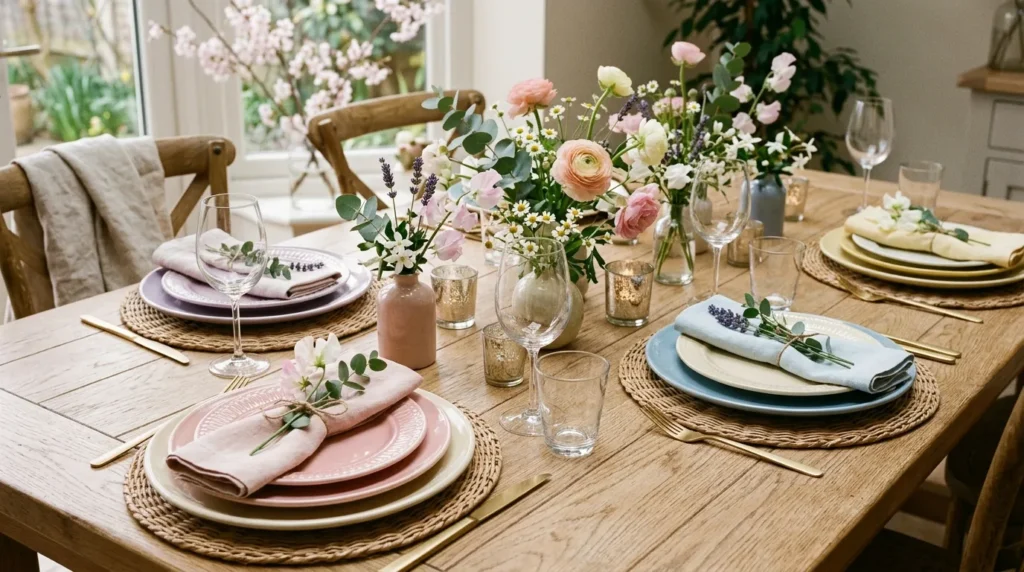
- Pastel colors create a gentle spring-inspired palette.
- Mixing shades keeps the table from looking too coordinated.
- Linen napkins add softness and texture.
- Simple ceramics let the colors remain visually balanced.
4. Cottage Flower Runner
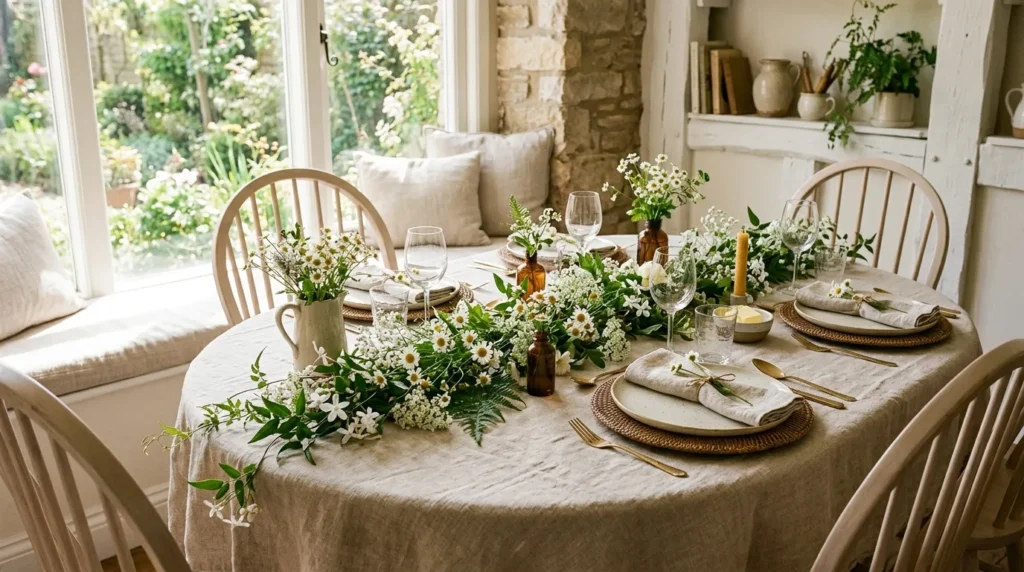
- Small flowers create a relaxed garden-inspired centerpiece.
- A loose arrangement feels more natural than a formal one.
- Linen fabric adds softness beneath the flowers.
- Seasonal blooms make the table feel fresh and personal.
A loose line of small flowers can make a dining table feel like a garden brought indoors. Instead of placing one large arrangement in the center, scatter delicate blooms and greenery along the table in a relaxed runner. Daisies, chamomile, baby’s breath, or small seasonal branches can create this effect beautifully. Keep the flowers slightly varied in height and shape so the arrangement feels naturally gathered. Pair them with a soft linen tablecloth, simple ceramics, and woven textures. This style is especially lovely for spring brunches because it feels cheerful without looking overly formal.
The beauty of a floral runner is its flexibility. You can use fresh flowers for a special gathering or dried and faux stems when you want something that lasts longer. Keep the arrangement low enough that guests can comfortably see one another across the table. In my experience, small vessels placed throughout the runner are easier to manage than one oversized bouquet because individual sections can be moved when serving food. Add simple candles between the flowers for evening dinners, making sure they are positioned safely away from leaves and other flammable materials.
5. Natural Linen Layers
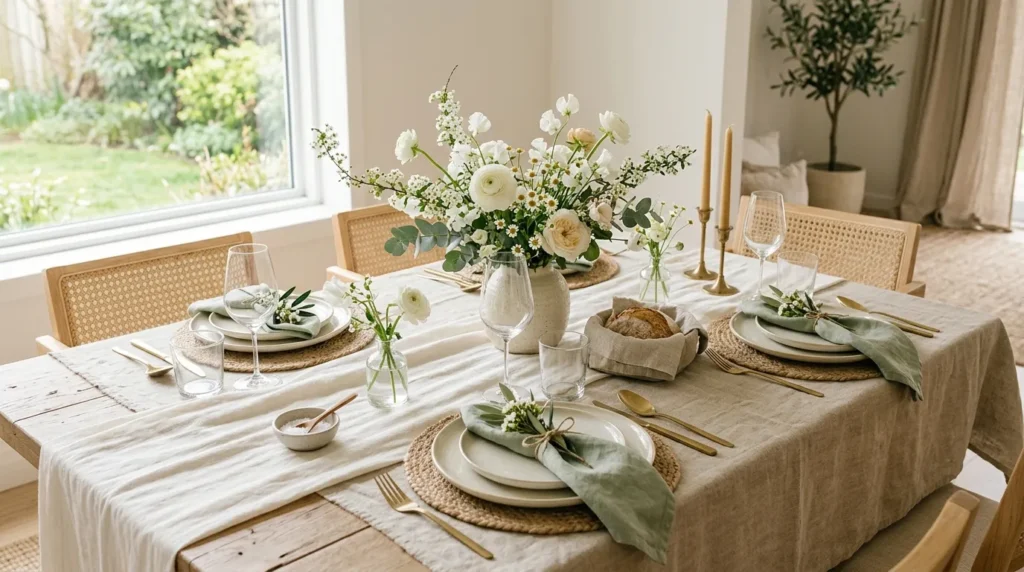
- Linen creates an effortless spring texture.
- Neutral tones make colorful flowers stand out.
- Layered fabrics add depth without heavy decoration.
- Natural fibers complement wood and woven accessories.
Natural linen can make a spring table feel instantly softer, lighter, and more relaxed. Its slightly imperfect texture brings warmth to the setting without requiring bold patterns or elaborate decorations. Start with a natural flax-colored tablecloth or runner, then layer cream plates, woven placemats, and soft cotton or linen napkins. The neutral palette creates an easy backdrop for seasonal flowers, greenery, or pastel accents. This approach works particularly well when you want your table to feel beautiful but still comfortable enough for everyday meals and casual entertaining.
Linen also gives you plenty of flexibility because it does not need to look perfectly pressed. Slight wrinkles can actually enhance the relaxed character of the setting. Combine different neutral shades, such as oatmeal, ivory, beige, and soft gray, to create depth without introducing visual clutter. I’ve noticed that natural fabrics look especially beautiful alongside wooden tables because the textures complement one another naturally. Add a small ceramic vase or a few simple branches for a finishing touch. The result feels fresh and welcoming while allowing the food, flowers, and people around the table to remain the focus.
Also Read : 22 Black Fireplace Ideas for a Bold Modern Living Room
6. Blue And White Table
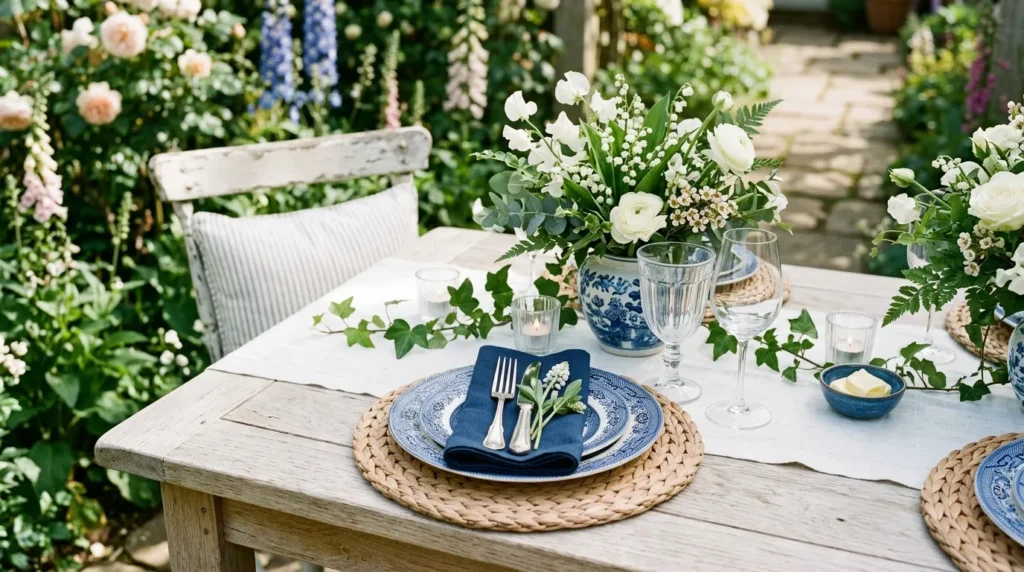
- Blue and white create a timeless spring palette.
- Patterned plates add visual interest without extra clutter.
- Fresh greenery keeps the colors connected to nature.
- Blue napkins can repeat the theme subtly.
Blue and white create a timeless combination that instantly makes a spring table feel crisp, fresh, and inviting. Layer blue patterned plates over simple white dinnerware, then add navy or soft blue linen napkins for a subtle connection between each place setting. Small white flowers and fresh greenery can soften the stronger blue tones without taking away from the classic look. This palette works beautifully for brunches, garden-inspired gatherings, and relaxed family meals. In my experience, blue and white is especially easy to decorate because it feels polished without requiring many additional colors or accessories.
You can make the table feel more collected by mixing different blue patterns rather than choosing identical pieces. Floral, striped, geometric, or delicate botanical designs can work together when they share similar shades. Keep the tablecloth or runner neutral so the patterned dishes remain easy to appreciate. Woven chargers, clear glassware, and simple brass flatware can add natural texture and warmth. If the setting starts to feel too cool, introduce pale wood or soft beige details around the table. The finished look feels fresh and classic while still being relaxed enough for everyday spring dining.
7. Wildflower Mason Jars
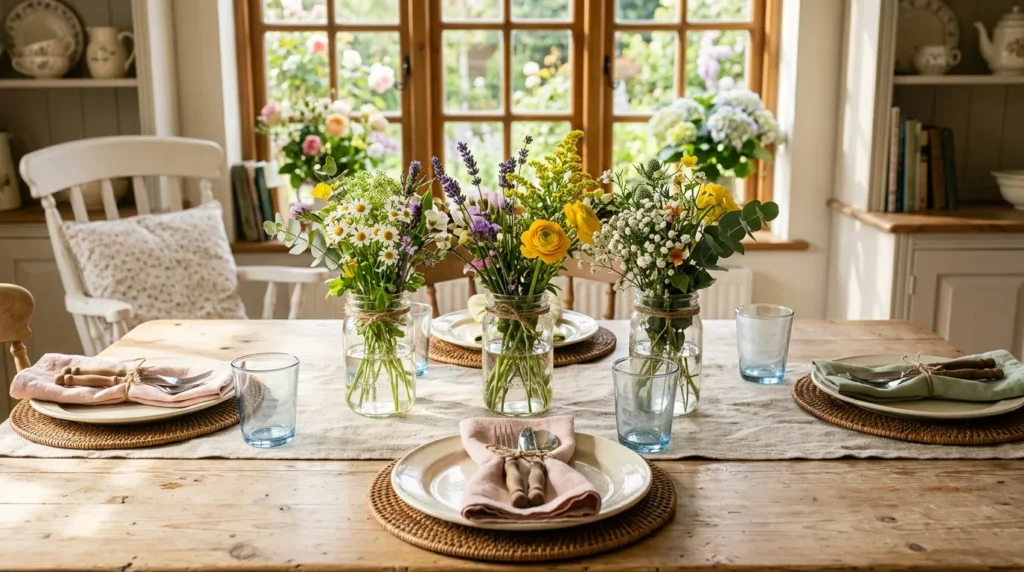
- Mason jars create an easy budget-friendly centerpiece.
- Mixed wildflowers bring natural color and movement.
- Small arrangements leave plenty of table space.
- Twine or ribbon adds a simple rustic detail.
Wildflowers in simple mason jars can create one of the easiest spring table arrangements without making the setting feel overly decorated. Choose a mix of daisies, lavender, tiny yellow blooms, and leafy stems for a naturally varied look. Instead of using one large arrangement, place several small jars along the center of the table. This keeps the flowers low and leaves plenty of room for serving dishes. The casual arrangement works beautifully for farmhouse, cottage, rustic, and relaxed contemporary interiors while adding plenty of seasonal color.
You can personalize the jars with twine, narrow ribbon, or small handwritten tags if you are preparing the table for a special gathering. Keep the flowers slightly different in every jar rather than making identical arrangements. This creates movement and makes the centerpiece feel collected from a garden. I’ve noticed that smaller vessels are also easier to rearrange when food is served because they can be moved individually. Pair the flowers with linen napkins, wooden details, and simple ceramic plates. The finished table feels cheerful, approachable, and naturally beautiful without requiring expensive decorations.
8. Citrus And Greenery
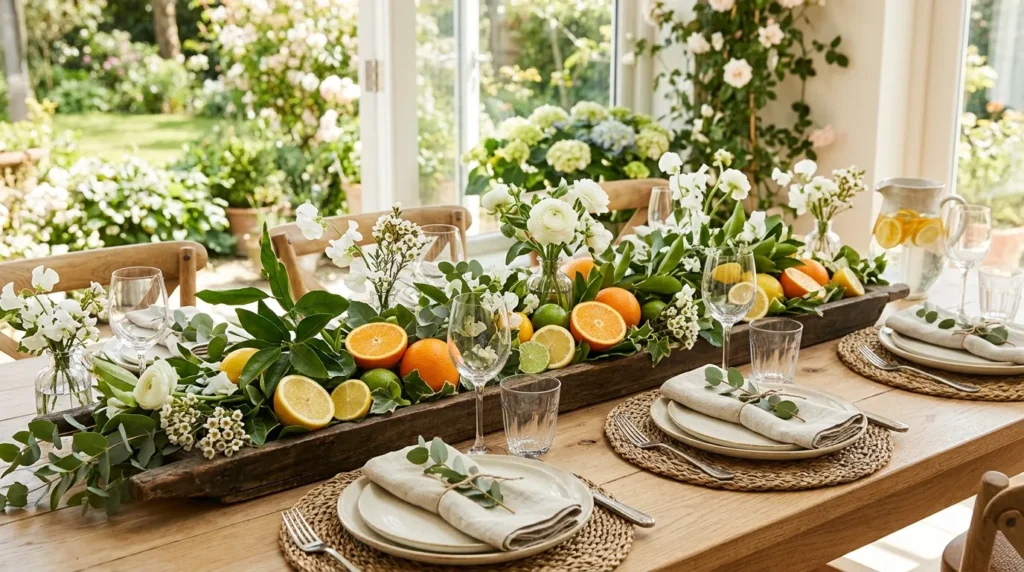
- Citrus fruit adds bright seasonal color.
- Green leaves create a natural contrast.
- A long tray keeps the centerpiece organized.
- The arrangement works for casual and formal meals.
Citrus fruit can bring a lively spring feeling to the dining table while doubling as a practical centerpiece. Arrange lemons, oranges, and a few limes along a long wooden tray, then tuck fresh green leaves or small flowers between them. The combination of yellow, orange, and green creates instant visual energy against neutral dinnerware and natural wood. Because the arrangement stays low, it works well for meals where guests need to see across the table. It is also easy to refresh when the fruit is used, making the centerpiece practical as well as decorative.
For a more polished appearance, choose fruit that is similar in size and arrange it in loose groups rather than scattering individual pieces randomly. A few white flowers can soften the stronger citrus colors without competing with them. Keep the surrounding place settings simple, using cream ceramics and linen napkins in natural or muted green tones. In my experience, citrus looks especially attractive in rooms with plenty of natural light because the colors appear brighter throughout the day. The finished tablescape feels fresh, sunny, and welcoming, making it perfect for spring lunches and casual entertaining.
9. Garden-Inspired Plates
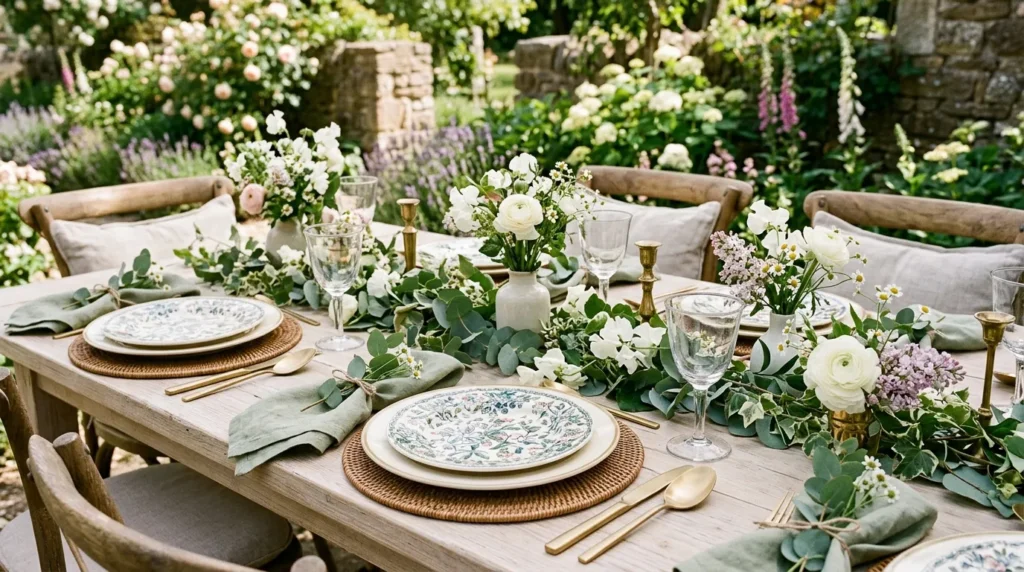
- Botanical plates bring the garden directly to the table.
- Green foliage connects the pattern with fresh flowers.
- Neutral linens prevent the setting from feeling busy.
- Layered plates create a polished dining experience.
Garden-inspired plates can instantly bring the feeling of spring indoors, especially when decorated with delicate leaves, flowers, or botanical illustrations. Choose plates featuring soft greens, muted blues, blush flowers, or natural foliage, then layer them over simple cream or white chargers. This creates depth while allowing the botanical pattern to remain visible. Keep the centerpiece understated with small white flowers or fresh greenery so the table does not become visually crowded. These plates are especially useful when you want your spring table to feel decorative without relying on lots of extra accessories.
For a more relaxed setting, mix botanical patterns with plain ceramics instead of covering every place setting with detailed designs. A sage green linen napkin can quietly connect the colors, while woven placemats add warmth beneath the dishes. I’ve noticed that botanical tableware looks particularly beautiful in natural daylight because the printed details feel almost like an extension of the greenery outside. Keep glassware simple and let the plates provide most of the visual interest. The result is a fresh, garden-inspired tablescape that feels welcoming, thoughtful, and easy to recreate for spring gatherings.
10. Strawberry Centerpiece
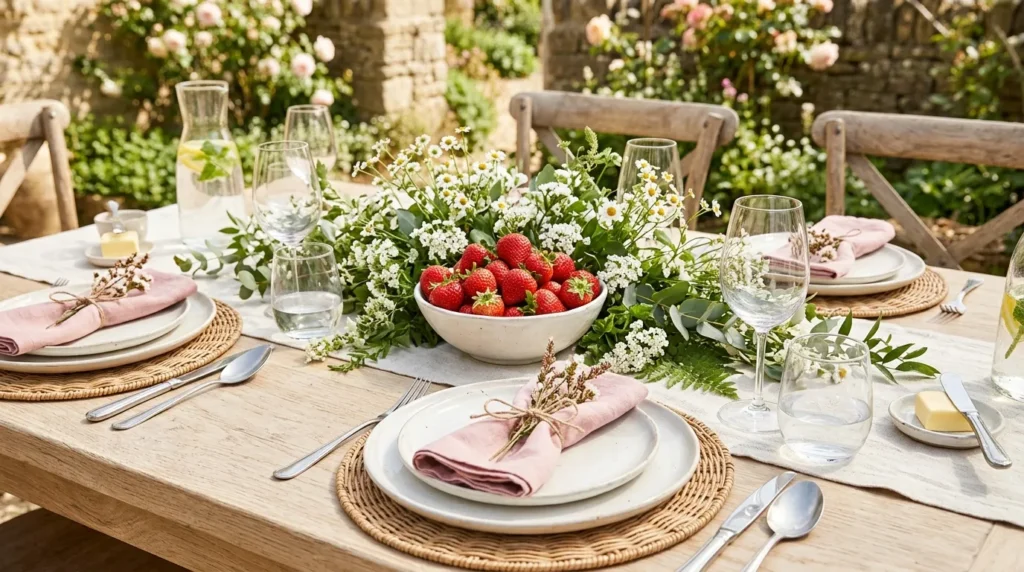
- Fresh strawberries add cheerful seasonal color.
- White flowers soften the bright red accents.
- A shallow bowl keeps the arrangement casual and practical.
- Natural wood and linen balance the vivid fruit.
Strawberries can turn a simple spring table into a colorful and inviting display while keeping the centerpiece easy to create. Fill a shallow ceramic bowl with fresh strawberries and place a few delicate flowers or leafy stems around it for contrast. The rich red berries stand out beautifully against cream linens, white dinnerware, and natural wood. This idea feels especially appropriate for spring brunches, afternoon gatherings, and casual outdoor-inspired meals. Because the fruit is edible, the centerpiece can also transition easily from decoration to dessert when the meal is ready.
For a more polished look, choose a low bowl that allows guests to see across the table without the centerpiece blocking conversation. Add small white flowers, pale pink napkins, or soft green foliage to repeat the colors naturally. Avoid adding too many decorative pieces because the strawberries already provide a strong focal point. I’ve noticed that edible centerpieces are particularly useful when hosting because they reduce the amount of decoration that needs to be stored afterward. The result feels fresh, cheerful, and practical while giving the table an unmistakable springtime character.
11. Woven Rattan Chargers
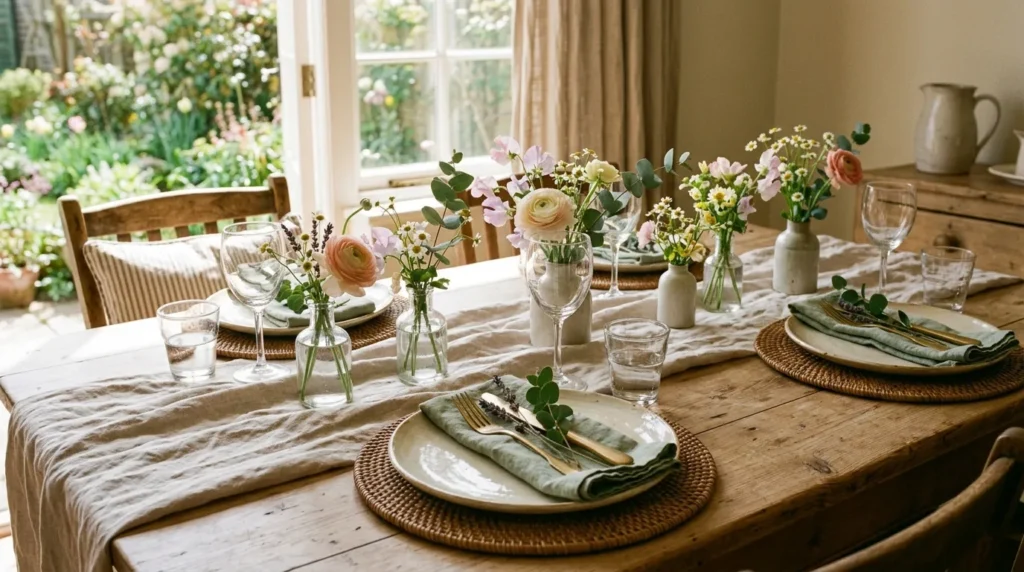
- Rattan adds natural texture beneath each place setting.
- Warm fibers complement spring florals beautifully.
- Neutral chargers work with colorful or patterned plates.
- Reusable pieces make them practical for future gatherings.
Woven rattan chargers can instantly make a spring table feel warmer and more textured without adding strong colors. Their natural fibers create a beautiful foundation beneath cream, white, pastel, or botanical plates. Place a simple linen napkin over each setting and add fresh flowers along the center for a relaxed seasonal finish. Rattan works especially well with wooden dining tables because both materials have organic qualities that make the arrangement feel connected. This is an easy choice when you want a table that looks thoughtfully layered but still feels casual enough for everyday use.
The best part about woven chargers is their versatility beyond spring. They can easily transition into summer, autumn, or everyday dining arrangements depending on the colors and accessories you pair with them. Choose tightly woven designs if you want a cleaner appearance or slightly irregular textures for a more rustic feel. Keep the rest of the table relatively simple so the natural material remains noticeable. In my experience, adding just one woven element can make a neutral table feel considerably more interesting. Pair it with linen, ceramic, wood, and greenery for a fresh combination that never feels overly decorated.
12. Lavender And Linen
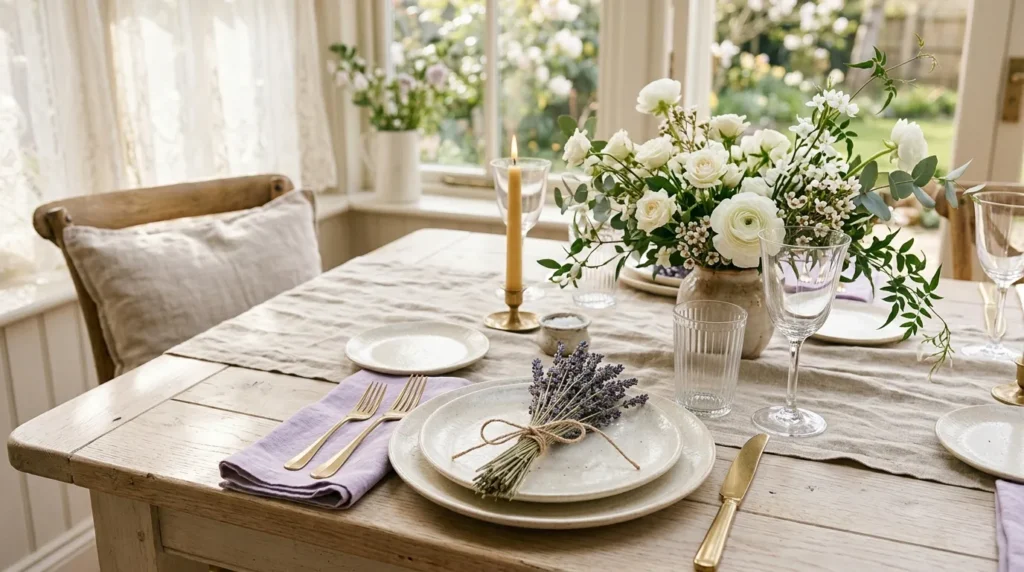
- Lavender introduces a soft spring color without feeling overly bright.
- Linen provides a relaxed natural texture.
- Small lavender bundles make charming place-setting accents.
- Neutral ceramics keep the palette sophisticated.
Lavender and linen create a beautifully soft combination for a spring table, especially when you prefer gentle colors instead of bright seasonal shades. Start with a natural flax runner or tablecloth, then introduce lavender napkins, small dried lavender bundles, or fresh purple sprigs at each place setting. Cream plates and clear glassware keep the palette light, while small white flowers add another delicate layer. The result feels romantic without becoming overly decorative. This setting works beautifully for afternoon tea, brunch, intimate dinners, and spring celebrations where you want the table to feel calm and thoughtfully arranged.
You can keep the lavender theme subtle by using just two or three touches rather than covering the entire table in purple. Tie small bundles with natural twine and place them across folded napkins, or arrange a few stems in tiny ceramic vessels along the center. Linen is especially useful because its relaxed texture prevents the pastel palette from feeling too formal. I’ve noticed that soft lavender looks particularly beautiful beside warm wood because the natural brown tones give the cooler color more depth. Add brass or antique gold flatware for a gentle glow, creating a fresh tablescape that feels elegant, peaceful, and welcoming.
13. Greenery-Filled Runner
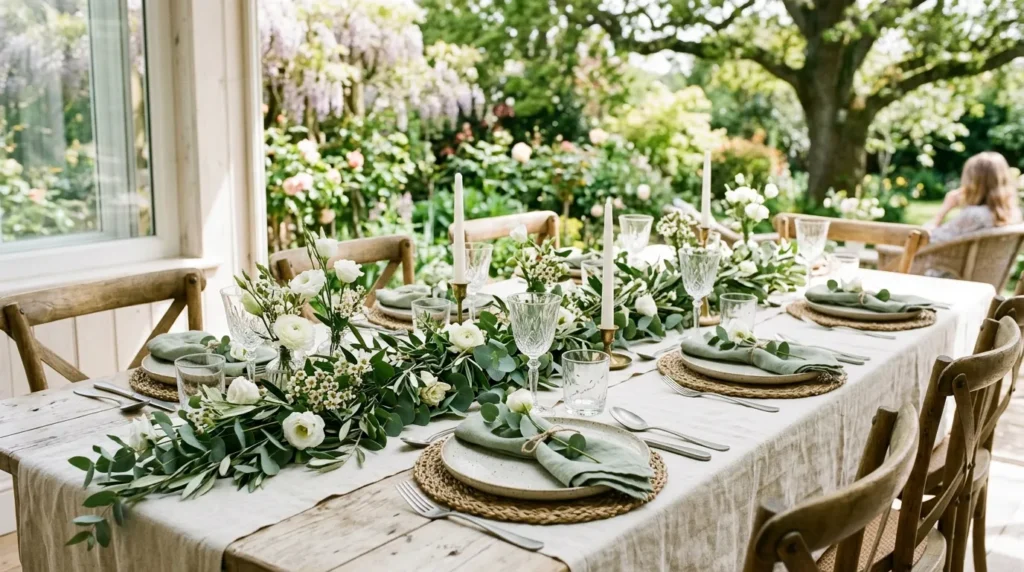
- Fresh greenery creates a naturally abundant centerpiece.
- Eucalyptus adds soft color and delicate texture.
- A long runner visually connects the place settings.
- Small flowers can be added for seasonal color.
A greenery-filled runner can make a spring table feel like a fresh garden without relying on large floral arrangements. Use eucalyptus, olive branches, fern leaves, or other seasonal greenery to create a loose line along the center of the table. Add a few small white or pastel flowers for gentle pops of color. The natural shapes bring movement and texture while keeping the overall palette calm. This approach works beautifully for both casual family meals and more polished gatherings because the greenery feels decorative without becoming overly formal or difficult to arrange.
Keep the greenery loose rather than tightly packed so the table still feels airy and practical. If you are serving a full meal, make sure branches do not interfere with plates, serving dishes, or guests’ view across the table. Small glass vessels can hold sections of greenery if you prefer a more controlled arrangement. In my experience, greenery is one of the easiest ways to make a table feel abundant without spending heavily on flowers. Pair it with linen, natural wood, woven chargers, and simple ceramics to create a fresh spring setting with an effortless garden-inspired character.
14. Peach And Cream Palette
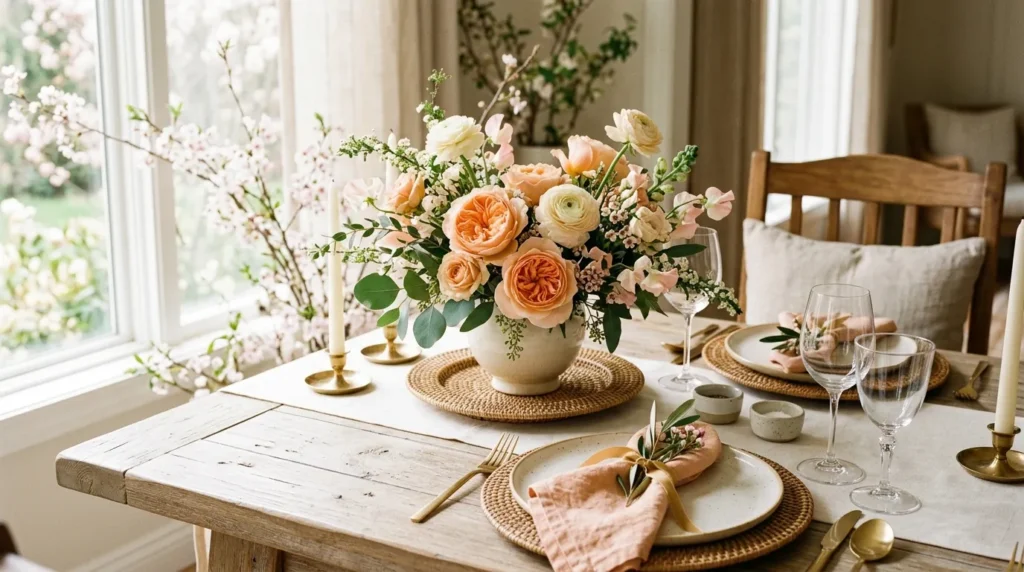
- Peach adds warmth without overpowering the table.
- Cream creates a soft neutral foundation.
- Fresh flowers reinforce the seasonal color scheme.
- Gold accents add a subtle polished finish.
Peach and cream create a warm spring palette that feels cheerful, elegant, and easy to live with. Start with a cream tablecloth or runner, then introduce peach through linen napkins, flowers, candles, or small decorative details. The soft orange-pink tone adds warmth without becoming too bright, while cream keeps the overall arrangement light. Fresh roses, ranunculus, tulips, or similar seasonal flowers can reinforce the palette beautifully. This combination works especially well for brunches, bridal-style gatherings, birthday dinners, or any spring occasion where you want the table to feel polished but welcoming.
The key is to use peach as an accent rather than covering every surface in the same color. Layer different neutral textures around it, such as woven chargers, ivory ceramics, and natural linen. A few brushed gold details can add a subtle glow without making the setting feel formal. If you are working with a wooden table, allow some of the wood to remain visible because its natural warmth complements peach beautifully. I’ve noticed that this palette looks especially inviting in natural daylight, when the softer tones appear fresh and luminous without feeling overly decorated.
15. Floral Napkin Rings
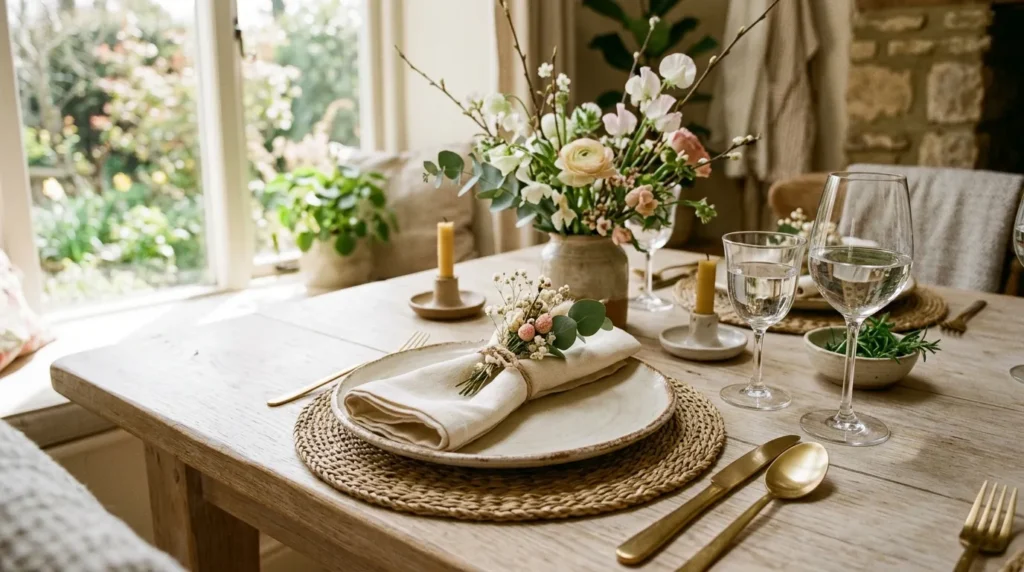
- Floral napkin rings create small decorative moments.
- They add color without filling the whole table.
- Simple plates keep the place settings balanced.
- Fresh or faux flowers can work depending on the occasion.
Floral napkin rings can turn even the simplest place setting into a thoughtful spring detail. Instead of covering the table with large decorations, let each guest have a small floral accent beside their plate. Tiny daisies, pastel blossoms, greenery, or delicate faux flowers can be wrapped around linen napkins for a soft seasonal touch. Keep the dinnerware simple so the flowers remain noticeable. This idea works beautifully when you want your table to feel special without spending hours creating an elaborate centerpiece. It is also an easy way to introduce spring color in a subtle, controlled manner.
You can coordinate the napkin flowers with your centerpiece or intentionally choose slightly different blooms for a more relaxed garden-inspired appearance. Natural linen, cream ceramics, and woven chargers provide a beautiful neutral foundation for the floral details. If you are hosting outdoors, faux flowers can be particularly practical because they will not wilt during a long meal. I’ve noticed that small details like these often make guests feel that extra thought went into the table. They also photograph beautifully, making floral napkin rings a simple upgrade worth saving for future spring gatherings.
16. Daffodil Centerpiece
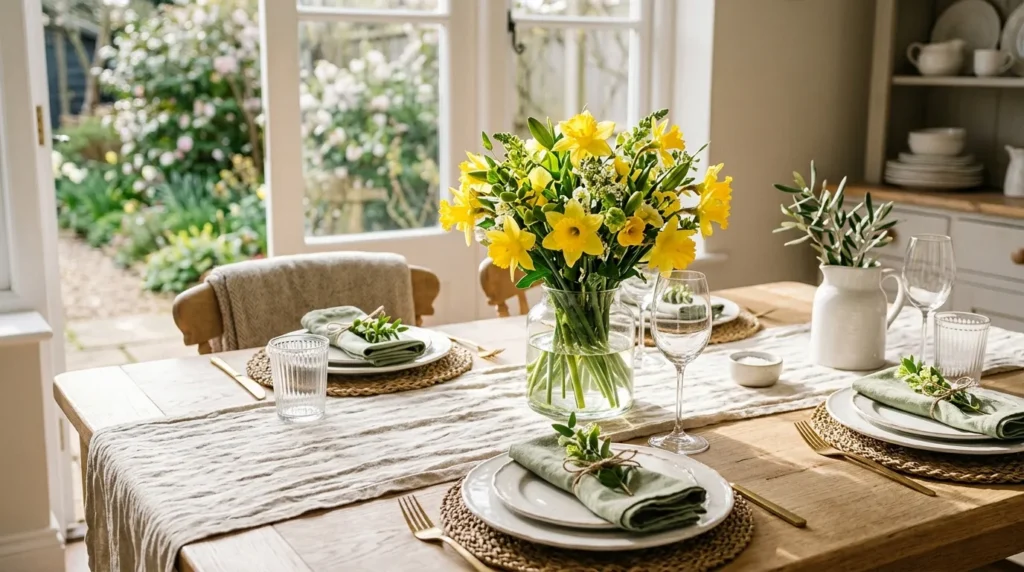
- Daffodils bring bright yellow color to the table.
- A simple vase keeps the arrangement fresh and unfussy.
- Green stems add natural contrast.
- White dinnerware lets the flowers stand out.
Daffodils are one of the easiest ways to bring the feeling of spring directly onto your dining table. Their bright yellow petals instantly add energy and warmth, while their natural green stems keep the arrangement connected to the season. Place a generous bunch in a clear glass vase so the flowers remain the main focal point. Keep the rest of the table simple with white ceramics, natural linen, and woven textures. This creates a cheerful setting that feels fresh without requiring complicated floral arranging or a large collection of decorative accessories.
For the most natural appearance, allow some daffodils to stand taller and others to curve gently outward. A clear vase works particularly well because the visible stems add another layer of green to the arrangement. Keep the centerpiece low enough for comfortable conversation if you are hosting a meal. In my experience, bright yellow flowers look especially beautiful against pale wood and neutral fabrics because the contrast feels lively without becoming overwhelming. Add small touches of sage, cream, or soft green throughout the place settings to create a cohesive spring palette that feels sunny and inviting.
17. Farmhouse Spring Table
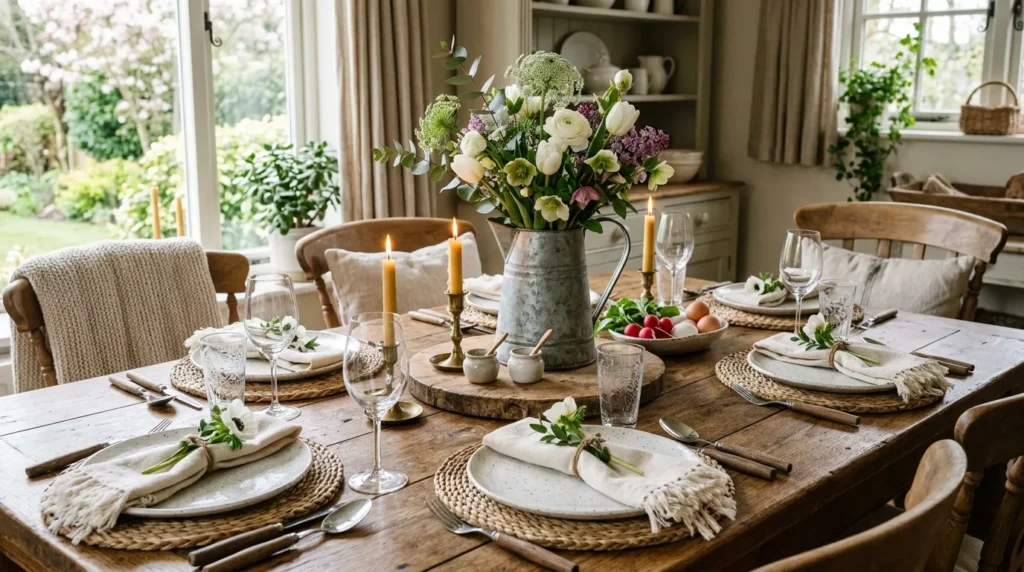
- Natural wood creates a warm rustic foundation.
- White ceramics keep the table feeling fresh.
- Seasonal greenery adds an effortless touch.
- Vintage-inspired pieces create character without clutter.
A farmhouse-inspired spring table feels warm, relaxed, and welcoming, making it perfect for family meals and casual gatherings. Start with a natural wood table and layer simple white ceramics, woven chargers, and soft linen napkins across each place setting. A vintage-style pitcher filled with greenery and small white flowers can create an effortless centerpiece. The combination of natural materials and light colors keeps the table feeling fresh while preserving the cozy character that makes farmhouse decorating so appealing. You do not need matching pieces; slight variations can actually make the setting feel more authentic.
Look for pieces with gentle imperfections, such as handmade ceramics, aged wood, vintage glassware, or woven accessories with natural variations. Keep the color palette focused on cream, white, green, beige, and warm wood so the table does not become visually busy. A few small candles can add warmth for an evening meal, while fresh flowers brighten the arrangement during daytime gatherings. I’ve noticed that farmhouse tables look best when they are not overly styled. Leave some open space and let the natural materials provide the texture, creating a setting that feels beautiful but genuinely comfortable.
18. Easter-Inspired Setting
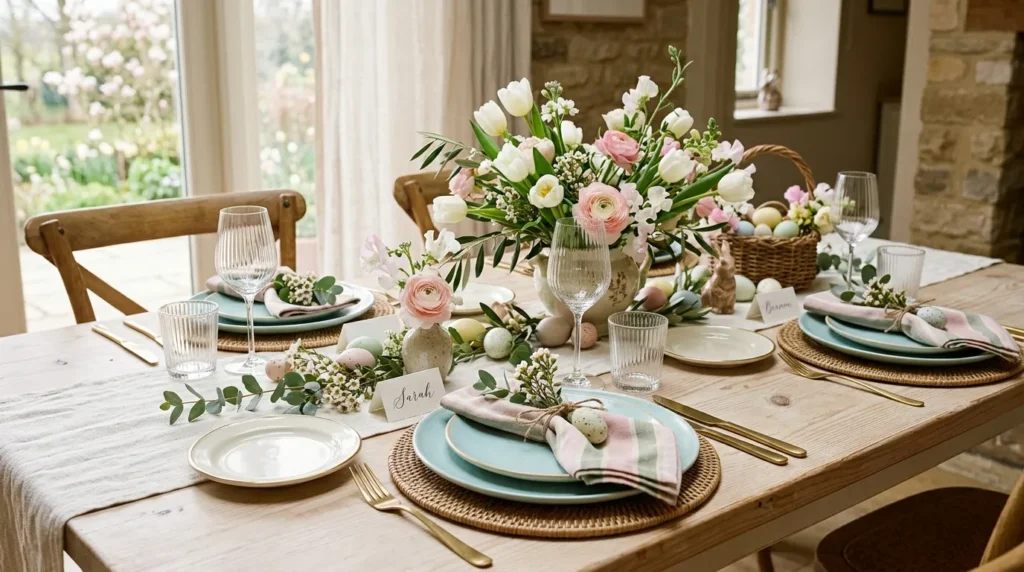
- Soft seasonal colors create a cheerful spring atmosphere.
- Small decorative eggs add playful visual interest.
- Pastel napkins keep the palette light.
- Fresh flowers prevent the table from feeling overly themed.
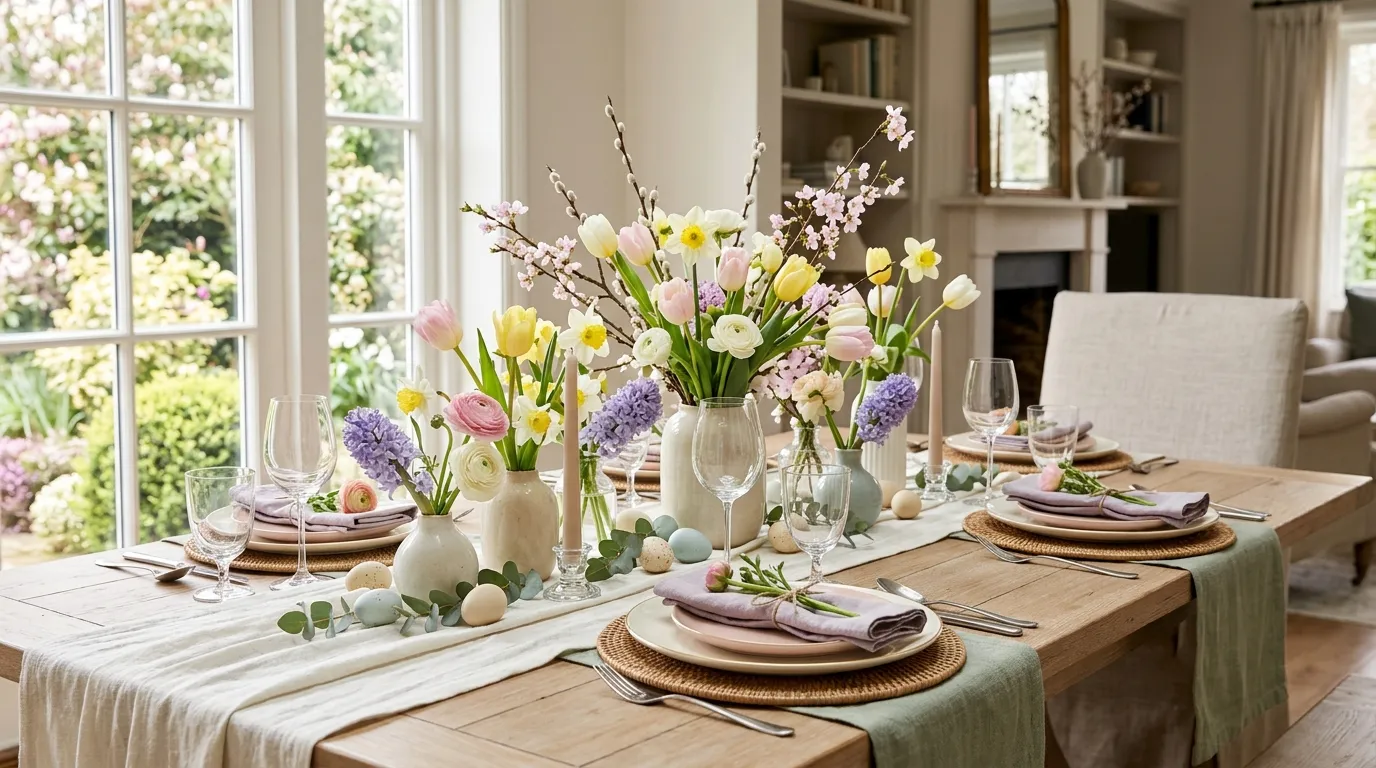
An Easter-inspired table can bring a cheerful spring feeling to your dining space without making the decor look overly themed. Start with soft shades like blush pink, sage green, pale blue, cream, and buttery yellow, then add a few decorative eggs among fresh greenery or small seasonal flowers. White tulips or delicate branches can keep the centerpiece elegant while the pastel details add a playful touch. This setting works beautifully for Easter brunch, family lunches, or spring gatherings where you want the table to feel festive, colorful, and welcoming without becoming cluttered.
The easiest way to keep this look sophisticated is to use seasonal details sparingly. Instead of covering the entire table with eggs and bunny decorations, choose a few pieces and let the flowers, linens, and dinnerware carry the rest of the design. Woven chargers and natural wood can add warmth, while simple glassware keeps the arrangement feeling airy. I’ve noticed that pastel colors look especially beautiful in natural daylight because they create a soft, fresh atmosphere. After the holiday, simply remove the themed pieces and keep the flowers, linens, and neutral tableware for a spring setting that can last throughout the season.
19. Floral China Collection
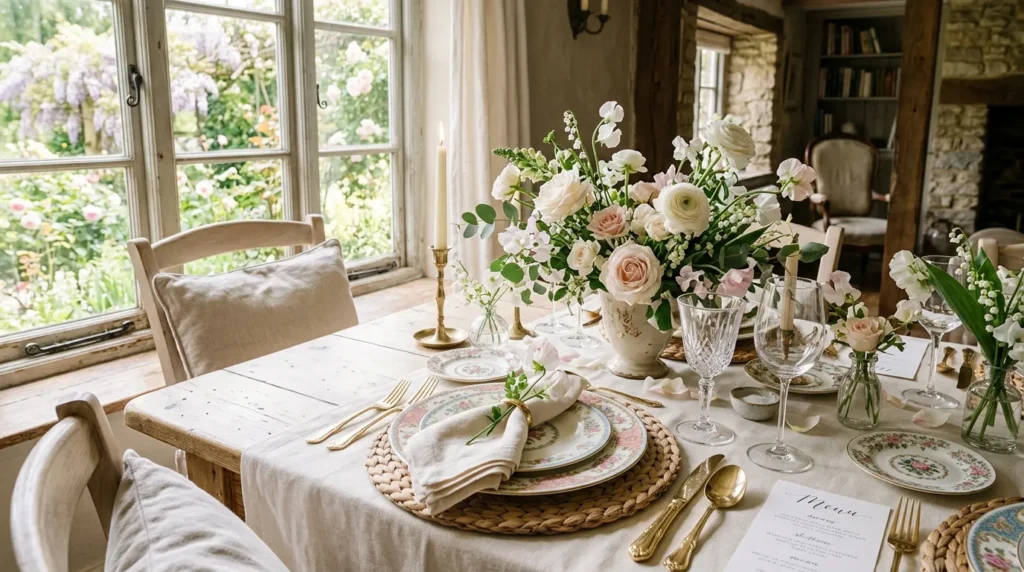
- Vintage floral plates instantly create a romantic spring feeling.
- Mixing patterns makes the table feel collected and personal.
- Soft colors keep the setting light and cheerful.
- Simple linens balance detailed dinnerware.
Vintage floral china can make a spring table feel collected, romantic, and full of personality. Look for plates with delicate roses, botanical details, soft blue patterns, or muted green accents, then mix several designs instead of choosing one matching set. The different patterns create visual interest while still feeling cohesive when they share similar colors. Keep the linens simple in cream, white, or natural linen so the detailed dinnerware remains the star. This approach is especially beautiful for afternoon tea, brunch, garden parties, and intimate spring dinners where small details make the setting feel memorable.
You do not need a complete vintage dinnerware collection to recreate this look. Start with a few floral plates and combine them with plain cream pieces you already own. A small bouquet of seasonal flowers can repeat the colors from the china and tie the entire arrangement together. In my experience, slightly mismatched pieces often make a table feel more welcoming because the setting looks gathered over time rather than purchased all at once. Add simple glassware and understated flatware, then leave enough open space around the plates so the floral patterns can be appreciated.
20. Green And White Layers
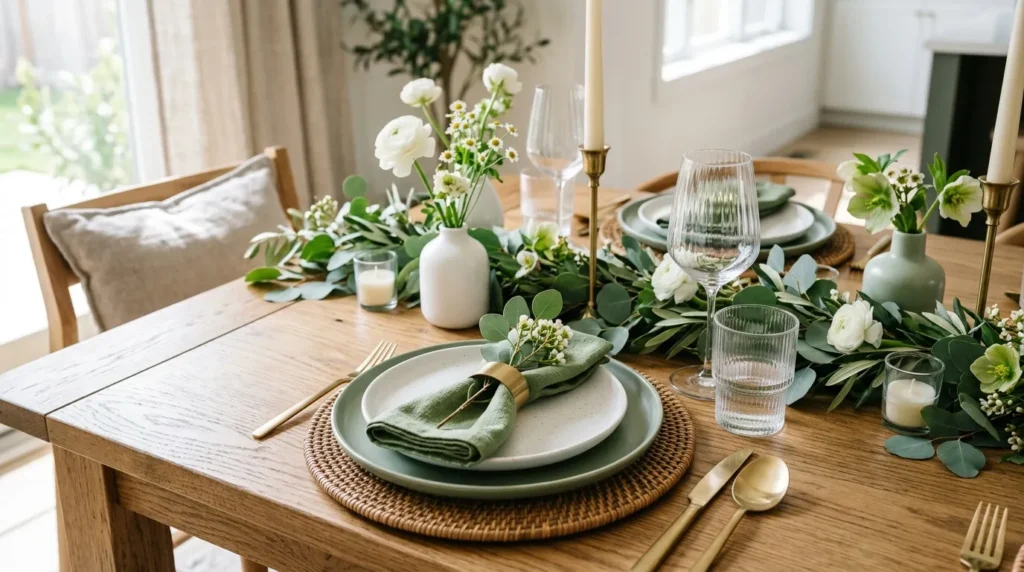
- Green and white create a crisp natural spring palette.
- Layered plates add depth to each place setting.
- Fresh greenery connects the table to the outdoors.
- Natural textures prevent the colors from feeling too plain.
Green and white create a fresh combination that feels especially natural for spring dining. Layer white dinner plates over woven chargers, then introduce sage or olive green through napkins, salad plates, glassware, or small decorative accents. Add eucalyptus, olive branches, or fresh leafy stems through the center of the table to reinforce the botanical feeling. The restrained palette keeps the setting visually calm while still providing enough contrast to make every place setting feel thoughtfully arranged. This look works equally well for everyday meals, brunches, and more polished spring celebrations.
Texture becomes important when working with a limited color palette. Add woven chargers, natural linen, ceramic finishes, and visible wood grain so the table does not appear flat or overly coordinated. You can also introduce tiny touches of brass or aged metal for warmth. I’ve noticed that sage green is particularly versatile because it works beautifully with both warm and cool neutrals. Keep the floral arrangements loose and natural rather than perfectly symmetrical. The result is a clean, garden-inspired table that feels fresh and sophisticated while remaining easy to recreate with pieces you may already have at home.
21. Spring Candlelight Table
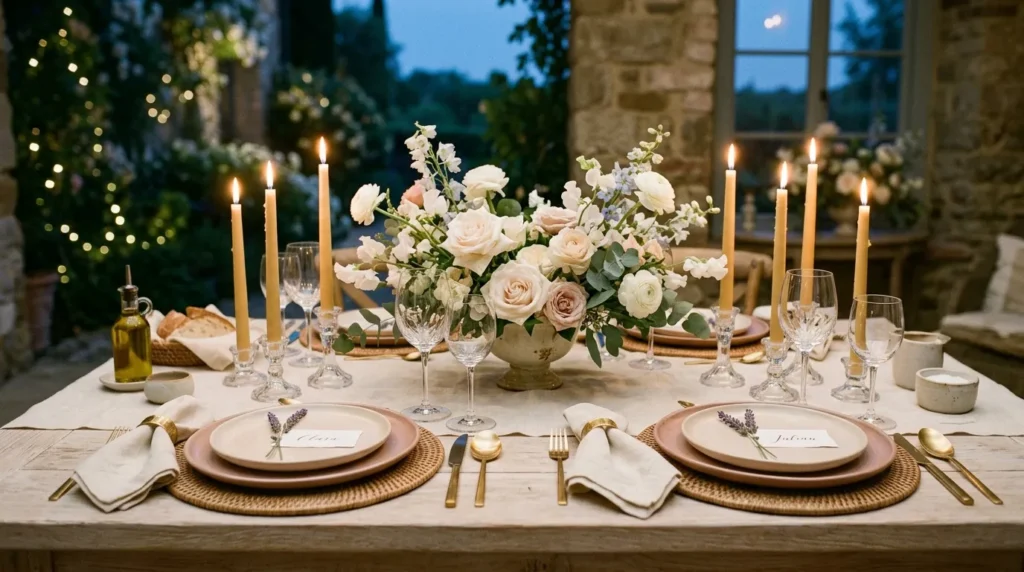
- Candles create warmth for evening spring gatherings.
- Glass holders keep the arrangement visually light.
- Soft flowers balance the glow beautifully.
- Warm-toned linens make the table feel inviting.
Candlelight can completely change the atmosphere of a spring dining table once the sun begins to set. Use several slender candles in clear or delicate glass holders and arrange them between small seasonal flowers. The soft glow reflects beautifully from glassware and metal flatware, creating a warmer and more intimate setting. Keep the flowers low so the candlelight remains visible across the table. Cream linens, pastel ceramics, and natural wood can provide a soft foundation that makes the warm illumination feel even more inviting during an evening meal.
For a relaxed arrangement, vary the heights of your candleholders while keeping the overall display balanced. Unscented candles are generally the better choice for dining because strong fragrances can interfere with food aromas. Always keep flames safely away from flowers, napkins, foliage, and other flammable materials. In my experience, candlelight is one of the simplest ways to make an ordinary dinner feel special without changing the entire tablescape. Add a few fresh flowers and simple place settings, and the table can shift from bright daytime spring styling to a cozy evening atmosphere with almost no extra effort.
22. Bird-Inspired Table Decor
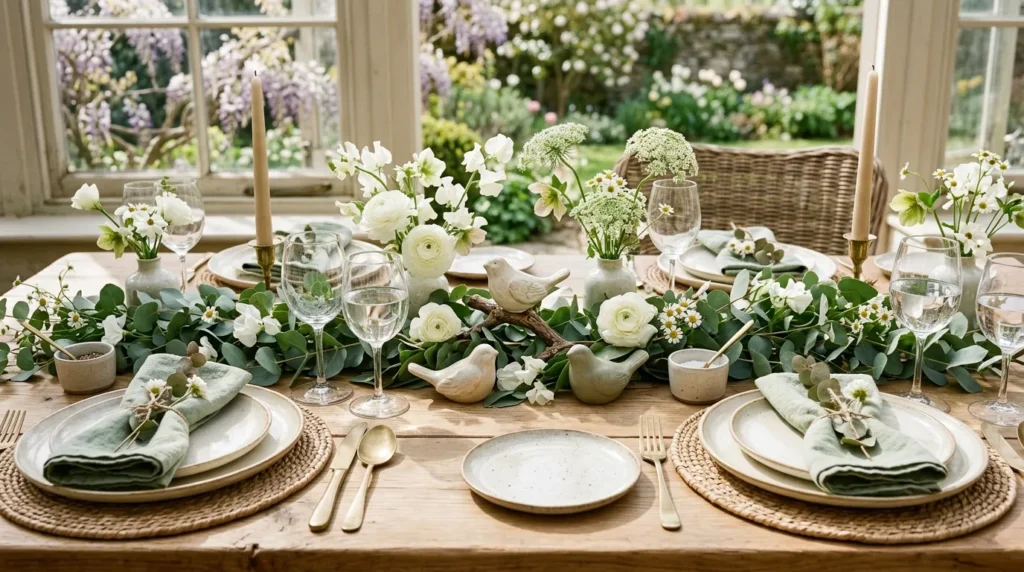
- Small bird details add a playful garden touch.
- Soft greenery keeps the theme feeling natural.
- Neutral dinnerware prevents the decor from becoming busy.
- Ceramic or wooden birds can be reused seasonally.
Bird-inspired details can bring a charming garden feeling to the spring table without making the setting look overly themed. Place a few small ceramic or wooden birds among fresh greenery, delicate flowers, or moss-inspired accents along the center. Choose neutral, cream, sage, or soft blue finishes so the decorations blend naturally with the rest of the table. This idea works especially well with cottage, farmhouse, traditional, and garden-inspired interiors. The tiny details add personality while keeping the overall arrangement calm, fresh, and appropriate for everyday meals or spring gatherings.
The key is restraint when using decorative figures. A few carefully positioned birds usually look more sophisticated than filling the table with many themed objects. Pair them with simple white dinnerware, linen napkins, and woven chargers so the natural garden feeling remains the focus. You can also place one small bird beside each place setting for a subtle repeated detail. I’ve noticed that nature-inspired accessories work best when they appear as part of the arrangement rather than as separate decorations. Add fresh branches, soft flowers, and natural wood to create a spring table that feels whimsical yet tasteful.
23. White Flower Elegance
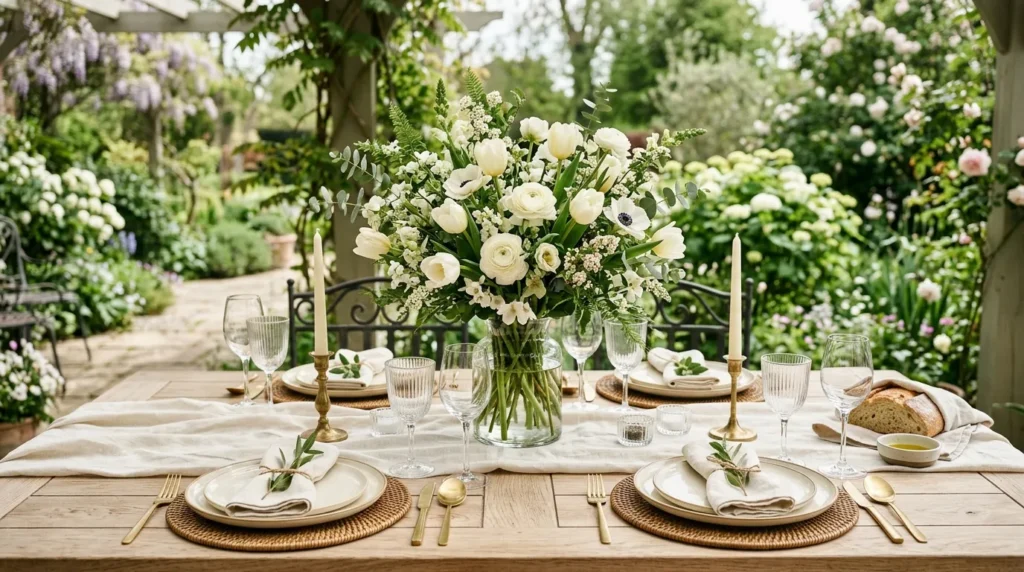
- White flowers create a timeless spring centerpiece.
- Neutral linens keep the table feeling bright and airy.
- Green stems provide subtle natural contrast.
- Simple details make the arrangement easy to recreate.
White flowers can create one of the most timeless spring tablescapes because they brighten the table without competing with the food, dinnerware, or surrounding decor. Choose tulips, ranunculus, daisies, hydrangeas, or other seasonal white blooms and arrange them loosely in a clear glass vase. Let the green stems remain visible for a natural touch. Pair the centerpiece with ivory linen, cream ceramics, woven chargers, and simple glassware. The monochromatic palette feels elegant but relaxed, making it suitable for everything from a casual family brunch to a beautiful spring dinner with guests.
To keep an all-white arrangement from looking flat, mix several flower shapes and add greenery for gentle variation. Different textures create depth even when the color palette stays simple. Keep the vase proportional to the table and avoid making the arrangement so tall that it blocks conversation. In my experience, white flowers are also one of the easiest choices to style because they work with almost any existing dinnerware or table color. Add subtle brass accents if you want a little warmth, or leave the setting completely neutral for an airy, understated finish.
Conclusion
A beautiful spring table does not need to be complicated. Fresh flowers, soft colors, natural textures, seasonal fruit, pretty dinnerware, and thoughtful little details can completely transform an ordinary meal into something special. These spring tablescapes ideas give you plenty of inspiration to create a table that feels fresh, welcoming, and uniquely yours. I’ve seen how small changes, such as adding a floral centerpiece or layering linen and woven textures, can make a surprising difference. Save this post on Pinterest for your next decorating project, try one idea in your own home, and share it with someone who loves beautiful spring entertaining.