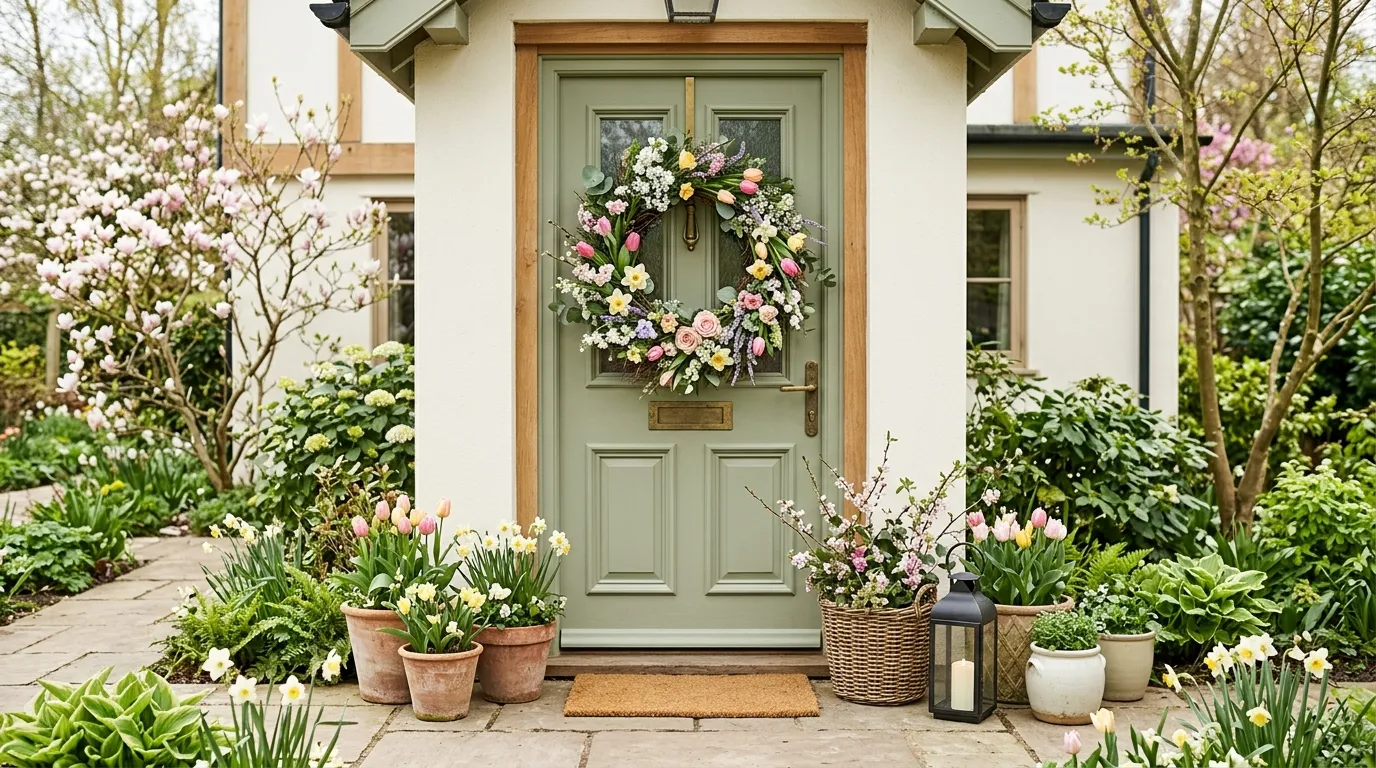
Spring is the perfect time to give your front entrance a fresh, welcoming look, and a beautiful wreath can make a surprisingly big difference. From cheerful tulips and soft lavender to rustic greenery and elegant white blooms, there are countless ways to refresh your doorway for the season.
Whether you love farmhouse charm, cottage style, modern simplicity, or colorful garden-inspired decor, these spring wreath ideas offer easy inspiration for creating an entrance that feels bright and inviting. Choose your favorite flowers, mix in natural textures, and add a few personal touches to make your front door feel ready for spring.
1. Fresh Tulip Arrangement
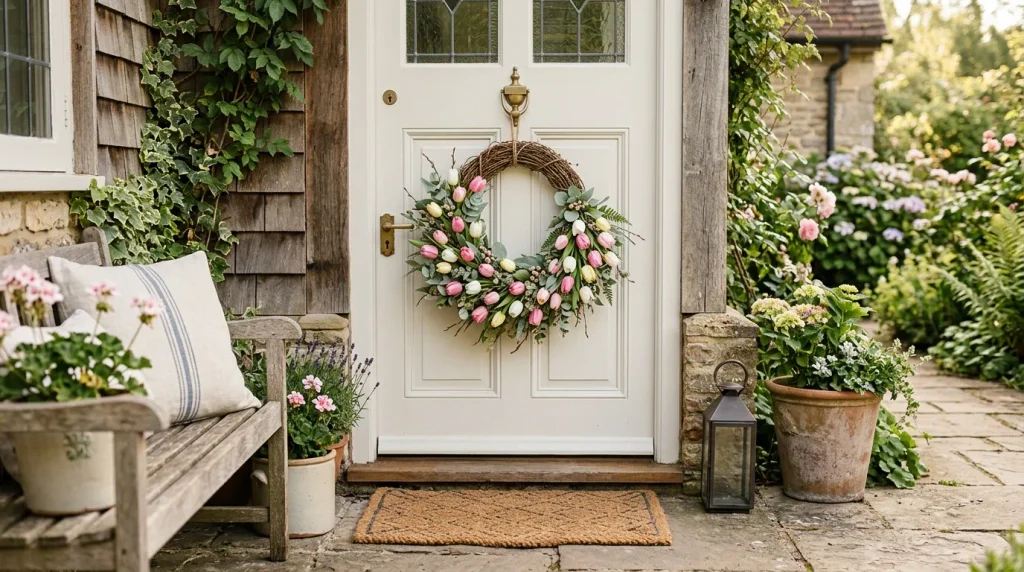
- Bright tulips instantly give the entrance a fresh spring identity.
- Mix soft pink, white, and yellow blooms for a cheerful but balanced look.
- A simple grapevine base keeps the arrangement natural and lightweight.
- I’ve noticed that clustered flowers usually create more visual impact from the street.
A burst of tulips can make an ordinary entryway feel instantly ready for a new season. This spring wreath for front door idea combines colorful blooms with a simple natural base, creating an arrangement that feels cheerful without looking overly busy. Pink and yellow flowers stand out beautifully against a white, cream, or muted green door. Keep the blooms slightly clustered around one side instead of covering the entire circle. This small styling choice leaves some of the grapevine visible, adding texture and making the wreath feel more handmade, relaxed, and naturally welcoming from the street.
For a polished finish, repeat one or two colors from the wreath somewhere nearby, such as a planter, cushion, or small porch accessory. This creates visual connection without making the entrance feel overly coordinated. In my experience, tulip arrangements look especially attractive when the greenery is kept soft and slightly uneven rather than perfectly symmetrical. A natural-looking shape gives the flowers room to breathe and makes the doorway feel more inviting. If your porch receives strong afternoon sun, choose faux blooms or durable materials so the arrangement keeps its fresh appearance throughout the season.
2. Lemon and Greenery
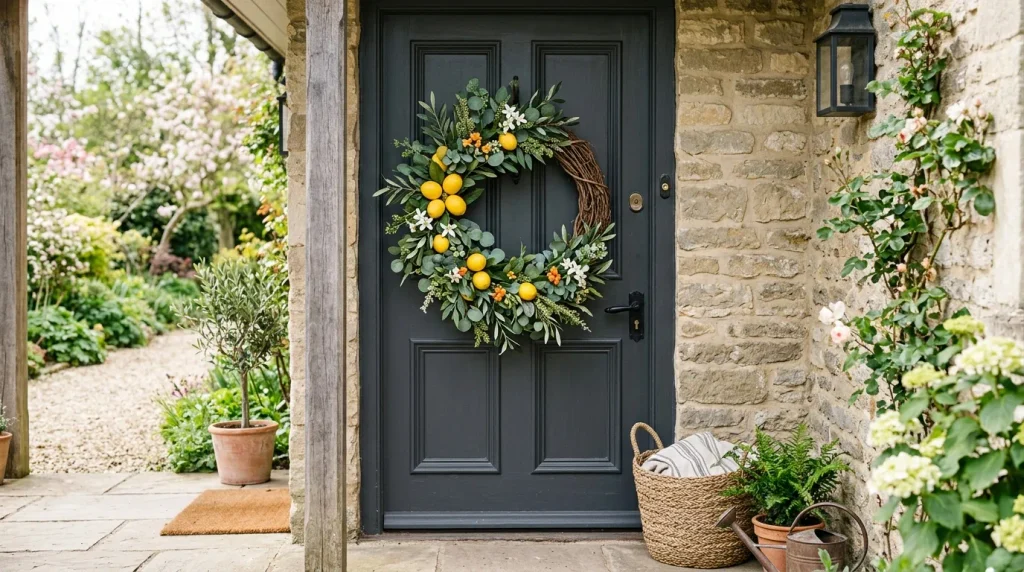
- Yellow accents bring a sunny touch to darker or neutral-colored doors.
- Eucalyptus-style greenery softens the bright citrus elements.
- Small faux lemons can add playful detail without overwhelming the arrangement.
- A few trailing leaves create movement around the circular shape.
Few colors say cheerful spring quite like sunny yellow paired with fresh greenery. A lemon-inspired arrangement creates a bright focal point while still feeling clean enough for everyday home decor. The contrast works particularly well on charcoal, navy, black, or deep green doors, where the yellow details immediately catch the eye. Use several small lemons rather than oversized pieces, then weave eucalyptus-style leaves between them. White blossoms can fill empty spaces and soften the overall palette. The result feels fresh and decorative without turning the doorway into an overly themed seasonal display.
The best part of this look is how easily it can be adapted to different porch styles. For a farmhouse entrance, pair the wreath with a woven basket and neutral doormat. For a modern home, keep the greenery compact and use fewer decorative accents. I’ve seen this combination work well because the yellow creates a welcoming focal point while the foliage prevents it from feeling too bright. If using faux lemons, choose matte finishes rather than highly glossy ones; they usually look more natural and photograph beautifully in bright outdoor light.
3. Lavender Herb Ring
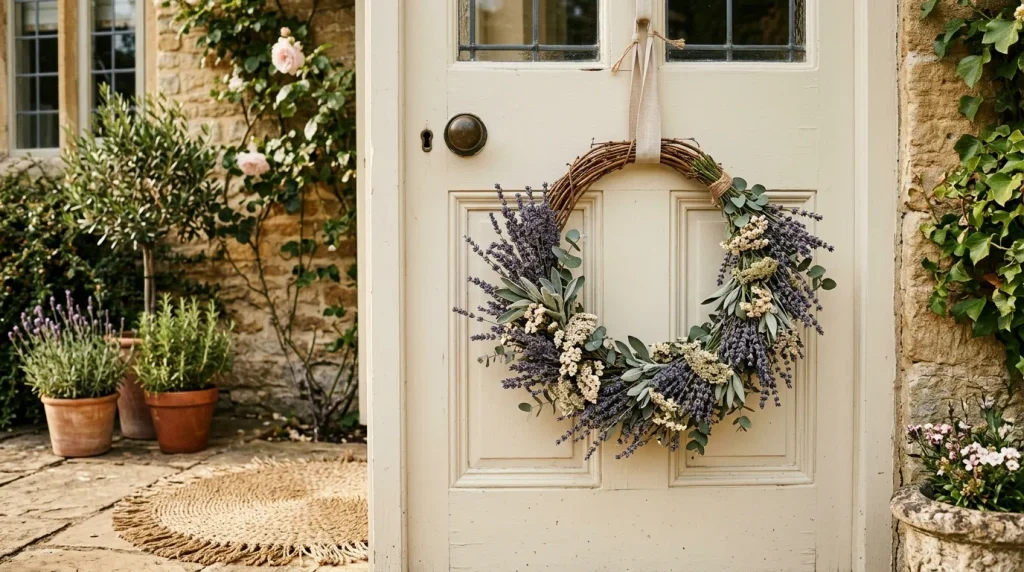
- Purple lavender adds soft color without feeling overly bright.
- Silvery-green foliage gives the wreath a refined, natural texture.
- A slim circular design works beautifully on small doors and narrow porches.
- Let a few stems extend beyond the main shape for a relaxed finish.
Soft lavender can give a front entrance a calm, elegant spring update without relying on bold colors. A slim herb-inspired ring feels especially beautiful when the flowers are arranged loosely enough to reveal the natural base underneath. Combine dusty purple stems with silvery sage leaves and a few tiny cream blossoms for a muted palette that works with white, beige, gray, or pale green doors. The narrow shape is also practical for smaller entryways because it adds seasonal personality without making the door appear crowded or visually heavy from a distance.
For an especially natural finish, vary the direction of the lavender stems instead of placing every sprig at the same angle. This creates subtle movement and makes the wreath look more handcrafted. In my experience, softer purple shades are easier to style than intense violet because they blend naturally with neutral porch colors. Add a simple woven mat underneath and keep surrounding accessories understated. The wreath should remain the main focal point, while the neutral textures quietly support it and create a relaxed spring entrance that looks just as appealing in photographs as it does in person.
4. Daisy Garden Ring
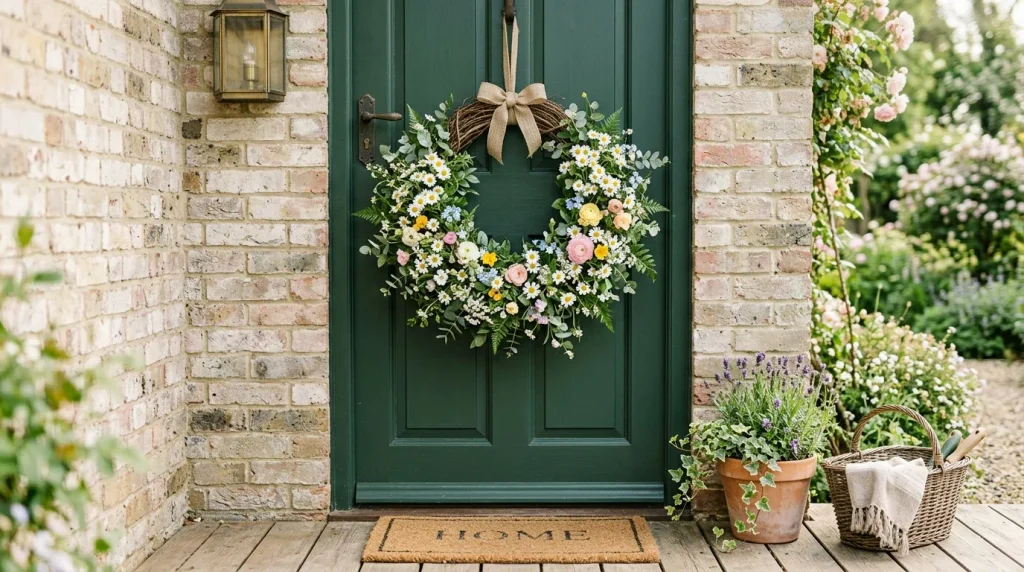
- White daisies create a crisp, cheerful look against darker doors.
- Small green leaves keep the arrangement fresh and balanced.
- A few wildflower accents make the design feel naturally gathered.
- This style works especially well with simple cottage or farmhouse porches.
Nothing brightens an entrance quite like a circle of cheerful daisies. Their simple white petals create a clean contrast against deeper door colors while the yellow centers add just enough warmth to keep the arrangement playful. This design looks especially natural when the flowers vary slightly in size rather than appearing perfectly identical. Add small green leaves and a handful of tiny pastel flowers to fill gaps without hiding the airy shape. The finished look feels like a little garden gathered around the doorway, making the entrance appear fresh, welcoming, and ready for warmer days.
A daisy arrangement is also wonderfully flexible because it can work with both traditional and modern exterior styles. On a farmhouse porch, pair it with a wooden sign and neutral textiles. On a contemporary entry, keep the surrounding decor minimal so the white flowers remain the focal point. I’ve noticed that white blooms photograph particularly well in natural daylight because their petals create a soft, luminous effect. If your door is already light, choose a darker leafy base or add pale blue accents so the flowers remain visually distinct instead of blending into the background.
5. Wildflower Meadow Mix
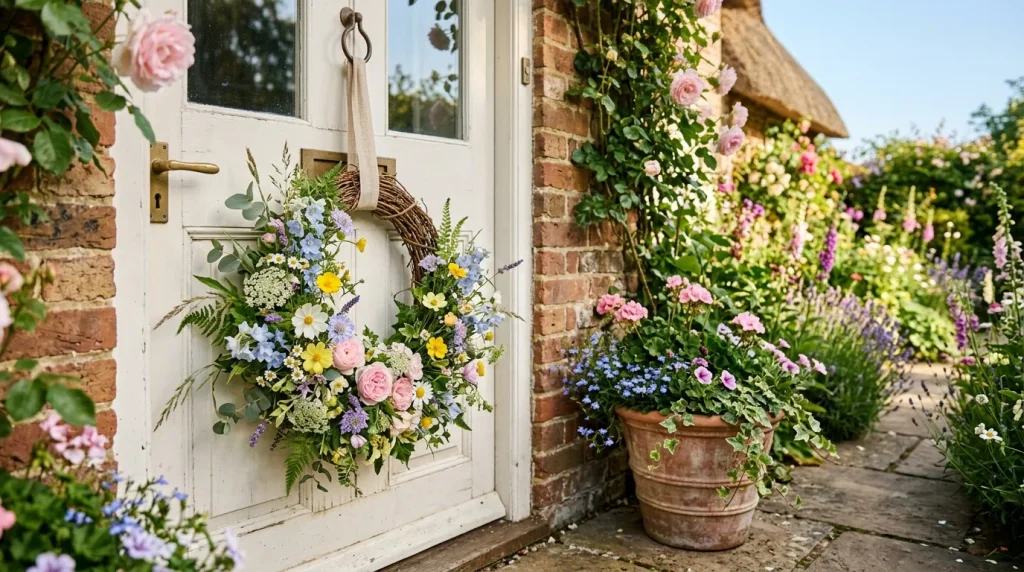
- Mixed blooms create a relaxed garden-picked appearance.
- Soft pink, blue, yellow, and white flowers add layered color.
- Uneven greenery gives the wreath an authentic outdoor feel.
- This option is ideal when you prefer charm over perfect symmetry.
A meadow-inspired arrangement brings the loose beauty of a spring garden directly to the front door. Instead of relying on one dominant flower, combine several small blooms in pink, blue, yellow, white, and lavender. The varied colors create depth while the irregular greenery keeps the arrangement relaxed. Avoid placing every flower at equal intervals; natural variation makes the design look more authentic. A grapevine base works especially well because its warm brown texture provides a subtle contrast beneath the lighter flowers. The overall effect feels collected, cheerful, and effortlessly connected to the season.
This style is particularly useful if you want a decorative piece that feels personal rather than overly polished. Start with the largest flowers, then fill open areas with smaller blossoms and leafy stems. In my experience, leaving a few small sections of the grapevine exposed makes mixed arrangements look more intentional and less crowded. Keep the color palette limited to four or five related shades so the many flower types still feel cohesive. A simple planter, neutral mat, or wooden porch accent can complete the look without competing with the colorful arrangement.
Also Read : 27 Modern Rustic Living Room Ideas to Try Today
6. Peony Floral Cluster
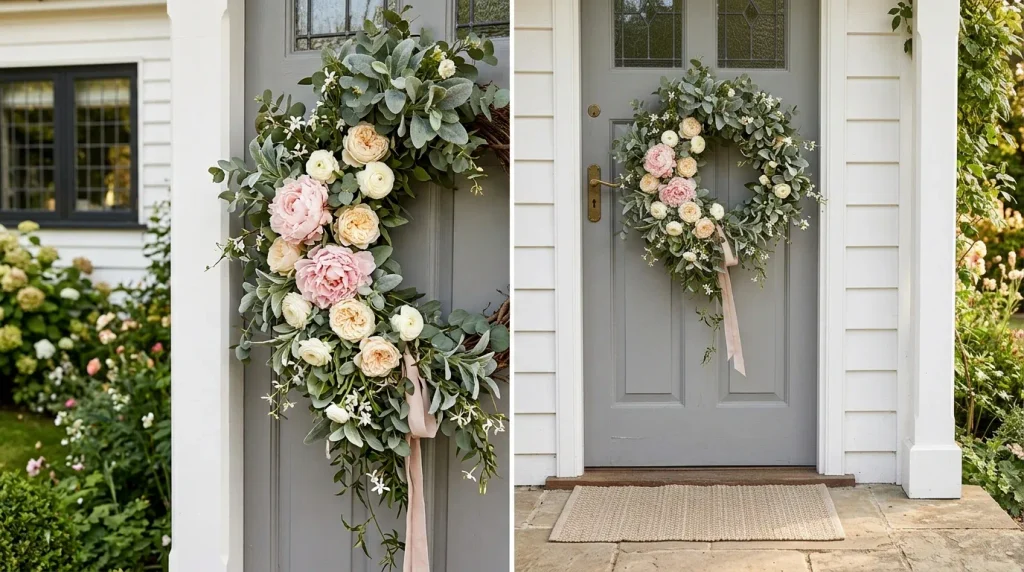
- Large peonies create an abundant, luxurious focal point.
- Soft blush tones make the entrance feel warm and welcoming.
- Green leaves add structure around fuller flower heads.
- Concentrating blooms in one area creates an updated asymmetrical look.
Large peony blooms instantly create a fuller, more luxurious spring entrance. Their rounded petals add softness and dimension, especially when grouped with cream flowers and muted green leaves. Instead of covering the entire wreath, concentrate the flowers along one side of a natural base. This asymmetrical approach leaves breathing room around the circle and gives the arrangement a more contemporary appearance. Blush pink and ivory tones are particularly easy to pair with neutral doors, while darker green foliage adds enough contrast to keep the floral cluster defined from several steps away.
A fuller design does not have to mean using dozens of flowers. Choose a few realistic large blooms as the focal point, then use smaller flowers and foliage to connect them visually. I’ve seen this approach work well on homes where the doorway already has strong architectural details because the wreath adds softness without competing with the trim. For a smaller entrance, keep the cluster compact and slightly higher on the door. This draws the eye upward and can make the doorway feel taller while maintaining a polished, seasonal appearance.
7. Hydrangea Bloom Ring
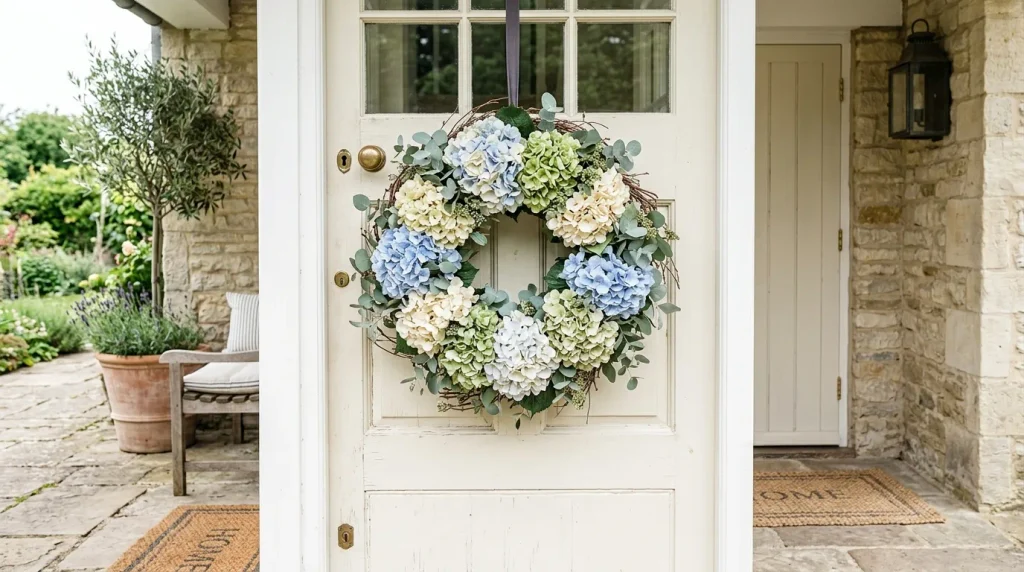
- Oversized hydrangeas create a lush, garden-inspired focal point.
- Pale blue and cream tones feel soft against neutral doors.
- Rounded blooms add fullness without requiring many different flower types.
- Green foliage keeps the arrangement fresh and dimensional.
Large hydrangea clusters can make an entrance feel instantly fuller and more polished. Their rounded flower heads create a soft, abundant shape that looks beautiful from a distance, while subtle blue, ivory, and green tones keep the palette calm. A natural vine base works underneath the blooms because its texture adds warmth without competing with the flowers. Rather than mixing too many varieties, choose one main hydrangea color and support it with leafy stems. This creates a cohesive look that feels intentional, fresh, and easy to coordinate with existing porch furniture or planters.
Hydrangeas are also useful when you want noticeable seasonal decor without an overly complicated arrangement. Place the largest blooms around the lower or side portion of the wreath, then tuck greenery between them to hide gaps and create a continuous flow. For real flowers, keep the arrangement protected from harsh direct sunlight and moisture. For reusable decor, high-quality faux blooms can maintain their shape year after year. In my experience, pale blue hydrangeas look especially attractive against warm white or natural wood surroundings because the cool floral color creates gentle contrast without making the entryway feel busy.
8. Forsythia Branch Circle
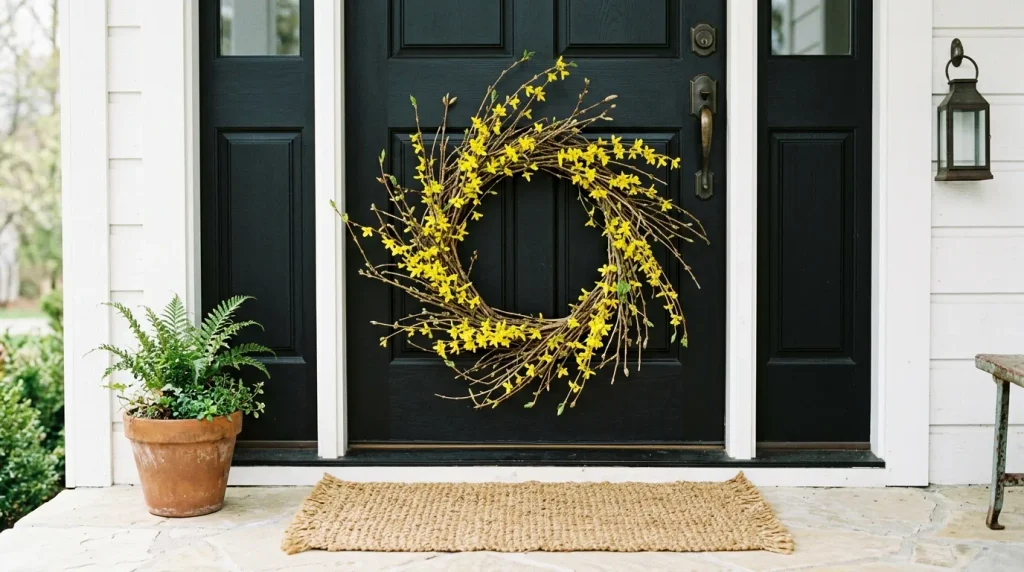
- Bright yellow branches create strong visual impact with minimal decoration.
- Long stems give the circular shape a natural, airy appearance.
- A mostly foliage-free design feels modern and uncluttered.
- This option works beautifully with neutral or dark-colored doors.
For a bold seasonal update with a surprisingly simple structure, try arranging golden forsythia branches into a loose circle. The bright yellow blossoms naturally draw attention, while the visible twigs provide texture and keep the design from looking overly decorative. This is an excellent choice for a dark door because the yellow flowers create immediate contrast. Instead of filling every section, allow a few branches to extend slightly beyond the circular outline. That small irregularity gives the arrangement an organic appearance and makes the entrance feel connected to the flowering branches appearing outdoors during spring.
A branch-based design can also be easier to maintain than a densely packed floral wreath. Start by shaping flexible stems into a rough circle, then secure overlapping sections where necessary. If the branches are artificial, choose stems with varying lengths and flower density so the final arrangement does not look too uniform. I’ve noticed that simple branch wreaths work particularly well on modern homes because they introduce natural texture without adding visual clutter. Pair the door with a plain mat and one understated planter, allowing the yellow branches to provide most of the seasonal color.
9. Butterfly Garden Accent
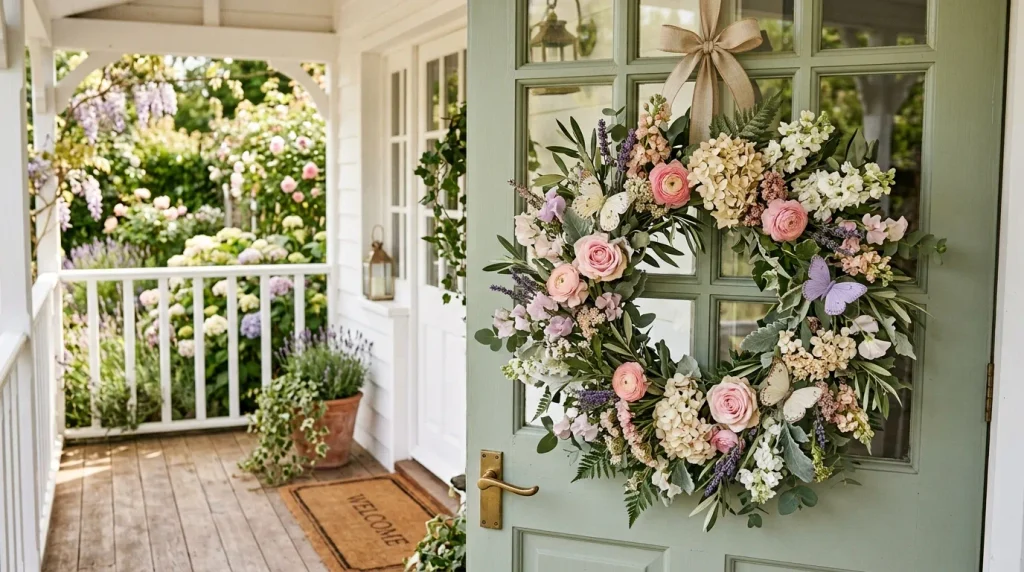
- Small butterflies add playful movement without dominating the flowers.
- Pastel blooms create a soft, cheerful spring palette.
- Green foliage gives decorative accents a more natural setting.
- Keep butterfly details limited for a sophisticated rather than novelty look.
A few delicate butterflies can turn a simple floral arrangement into a playful garden-inspired accent. The key is restraint: use only a small number of butterflies and let the flowers remain the main feature. Soft pink, lavender, cream, and white blooms create a gentle palette, while green leaves provide the natural backdrop the decorative details need. Position the butterflies at different heights so they feel integrated into the arrangement rather than simply attached to the surface. This small detail adds personality and makes the wreath especially appealing for a welcoming family entryway.
When choosing butterfly decorations, look for lightweight pieces in matte or softly finished materials rather than highly shiny plastic. They tend to blend more naturally with realistic flowers and are less distracting in photographs. I’ve seen this idea work especially well on lighter doors because the pastel colors create a subtle layered effect instead of a strong visual clash. If the porch already has several decorative elements, keep the wreath fairly simple and use the butterflies as tiny accents. A neutral mat and one green planter can provide enough finishing detail without overwhelming the doorway.
10. Ranunculus Color Mix
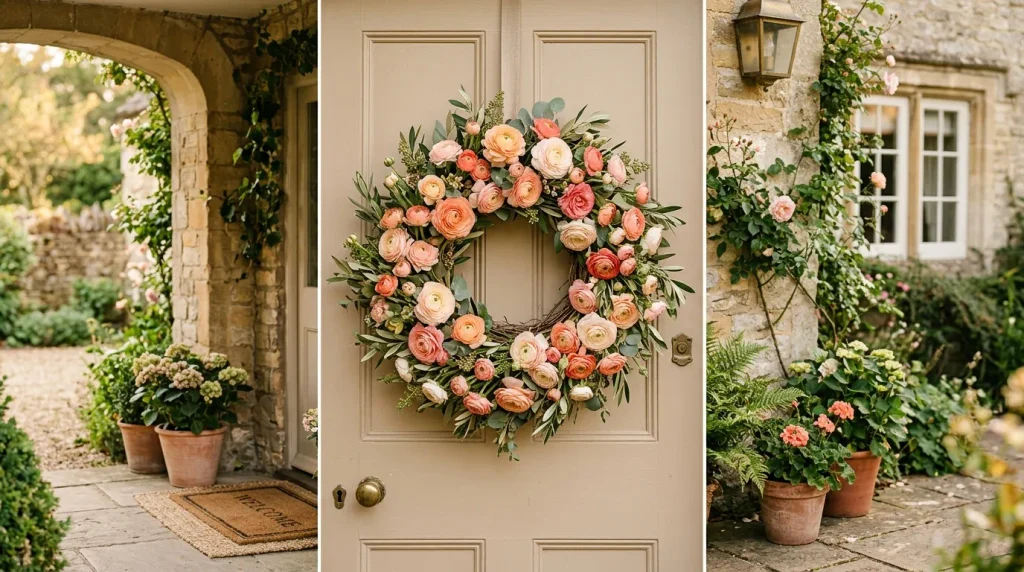
- Layered ranunculus petals create a rich, full appearance.
- Peach, coral, blush, and cream shades add warmth.
- Rounded blooms give the wreath a soft, romantic texture.
- Keep greenery delicate so the flowers remain the main focus.
Layered ranunculus blooms bring a beautiful sense of fullness without making a spring arrangement feel heavy. Their tightly folded petals create texture that catches the eye, especially when several warm shades are grouped together. Peach, coral, blush, and cream work beautifully as a coordinated palette, giving the entrance a soft glow. Use smaller leafy stems around the flowers rather than thick greenery so the detailed petals remain visible. This combination creates a polished focal point that feels cheerful enough for spring while still looking sophisticated beside neutral exterior colors and natural porch materials.
For a balanced arrangement, begin with the largest ranunculus blooms and place them at slightly different angles. Fill the spaces between them with smaller flowers, then add just enough greenery to connect the clusters. This technique helps the wreath appear naturally layered instead of flat. I’ve noticed that warm floral colors are especially effective on beige, taupe, or light gray doors because they add depth without creating harsh contrast. If your porch gets strong sunlight, choose fade-resistant faux stems or position delicate arrangements where they receive indirect light for longer-lasting color.
11. Magnolia Leaf Circle
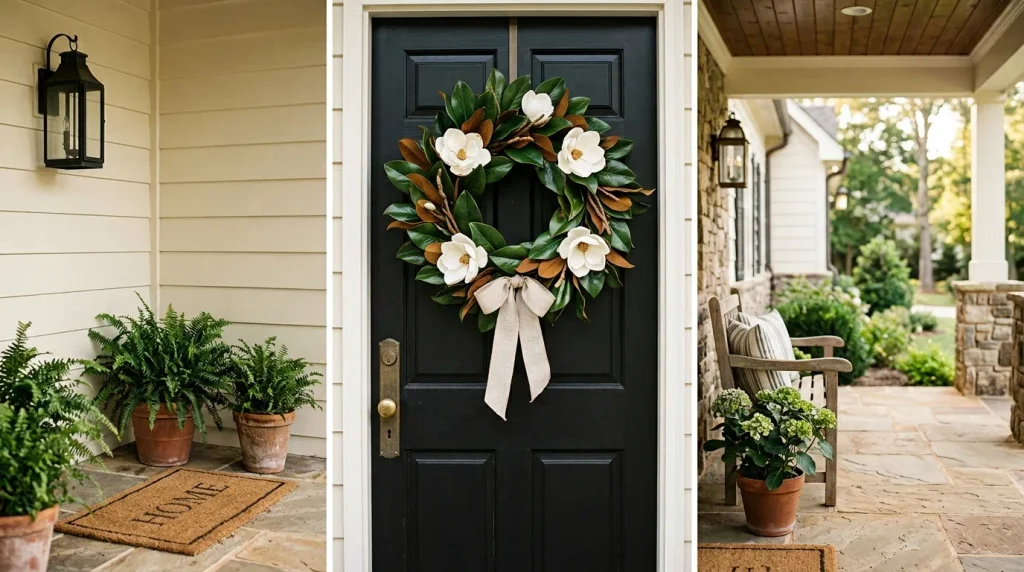
- Glossy magnolia leaves create a timeless, structured appearance.
- Cream flowers soften the deep green foliage.
- The restrained palette works with traditional and modern homes.
- A simple ribbon can add one subtle finishing detail.
Magnolia leaves offer a simple way to create a polished spring entrance with very little visual clutter. Their broad, glossy surfaces provide strong texture and a rich green color that looks striking against both light and dark doors. Add a handful of creamy flowers for softness, but avoid overcrowding the circular shape. The combination feels timeless because it relies on natural foliage rather than seasonal novelty pieces. A natural stem base can remain partially visible, adding warmth and dimension beneath the leaves. The result is refined, welcoming, and easy to coordinate with classic exterior finishes.
This style is particularly helpful when your home already has a defined architectural look and you want seasonal decor that complements rather than competes with it. Keep the color palette focused on deep green, cream, and warm brown, then add a narrow linen ribbon if you want another texture. In my experience, foliage-forward designs often stay attractive longer because they do not depend on delicate individual petals. They can also transition easily into early summer decor, making them a practical choice if you prefer one beautiful arrangement that works beyond a single season.
12. Blue Floral Cottage
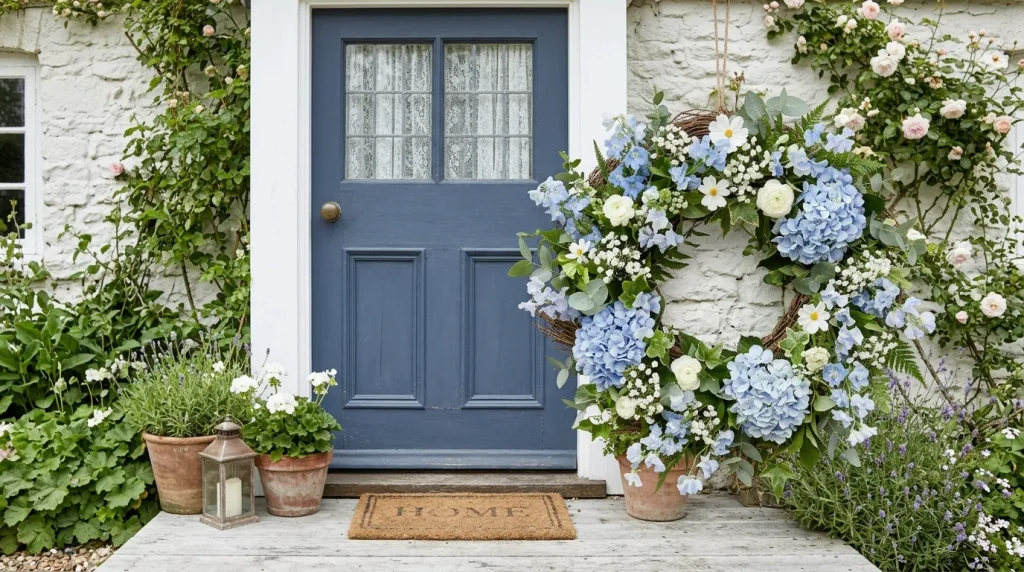
- Soft blue flowers bring a peaceful, airy quality to the entrance.
- White blossoms brighten the darker floral tones.
- Natural greenery prevents the cool palette from feeling flat.
- This combination pairs beautifully with white trim and wood accents.
Soft blue flowers can give an entrance a peaceful spring refresh while still feeling bright and welcoming. Pair powder blue blooms with small white flowers and fresh greenery to create a palette that feels airy rather than cold. The combination looks especially striking against navy, charcoal, or medium-green doors because the lighter flowers stand out clearly. A grapevine base adds a warm natural texture underneath the cool colors. Keep the flowers loosely grouped rather than perfectly symmetrical so the wreath feels more like a relaxed cottage garden arrangement than a formal floral display.
To make the color scheme feel connected to the rest of the porch, repeat one subtle shade nearby. A pale blue cushion, ceramic planter, or small decorative pot can be enough. Avoid matching every accessory exactly because slight variation keeps the space looking natural. I’ve seen blue-and-white arrangements work particularly well in homes with white trim because the flowers visually echo the architecture. If the doorway is already colorful, use more white blooms and muted greenery to balance the composition and prevent the overall entrance from becoming too visually intense.
13. Mossy Woodland Ring
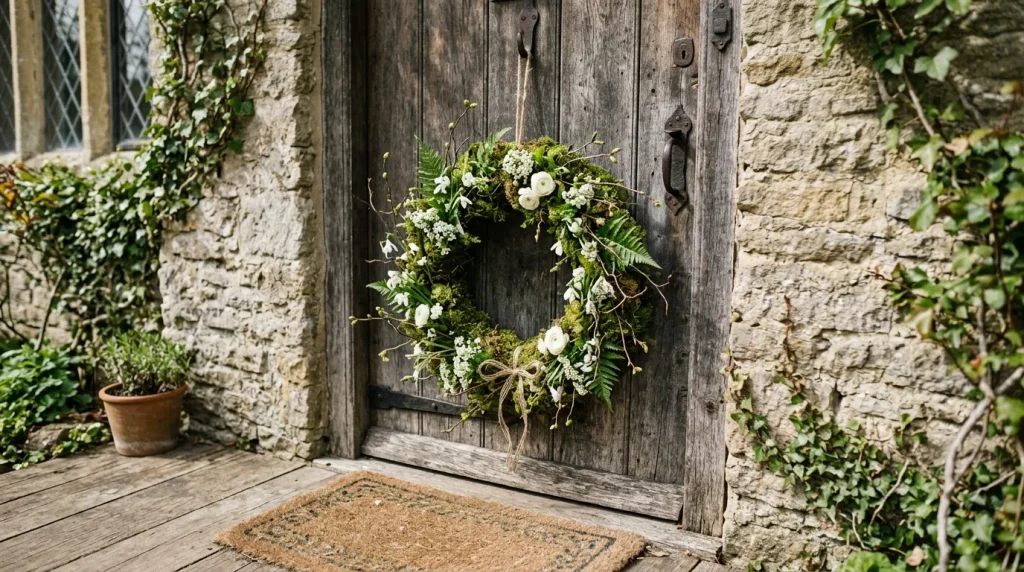
- Preserved moss adds rich texture and an earthy spring feeling.
- Tiny white flowers brighten the darker green base.
- Small branches create an organic, woodland-inspired structure.
- This design suits rustic doors and natural-material porches.
A moss-covered base brings a quiet woodland feeling to the front entrance while still looking fresh enough for spring. The deep green texture creates a rich foundation for tiny white flowers, fern leaves, and delicate branches. Instead of using large blooms, let small details create the visual interest. This approach works beautifully on rustic or natural wood doors because the colors and textures feel connected to the surrounding materials. A few exposed twigs can make the circle look more organic, while tiny buds add just enough seasonal detail to keep the arrangement feeling lively.
This design is also a smart option when you prefer understated seasonal decorating. Moss naturally provides depth, so you do not need many additional decorations to make the wreath noticeable. Choose preserved or high-quality faux moss if the door is exposed to changing weather. I’ve noticed that textured greenery photographs beautifully because small variations in surface and color remain visible even from a distance. Pair the arrangement with a stone planter, woven mat, or unfinished wood accent, keeping the rest of the porch simple so the earthy wreath remains the natural focal point.
14. White Flower Cascade
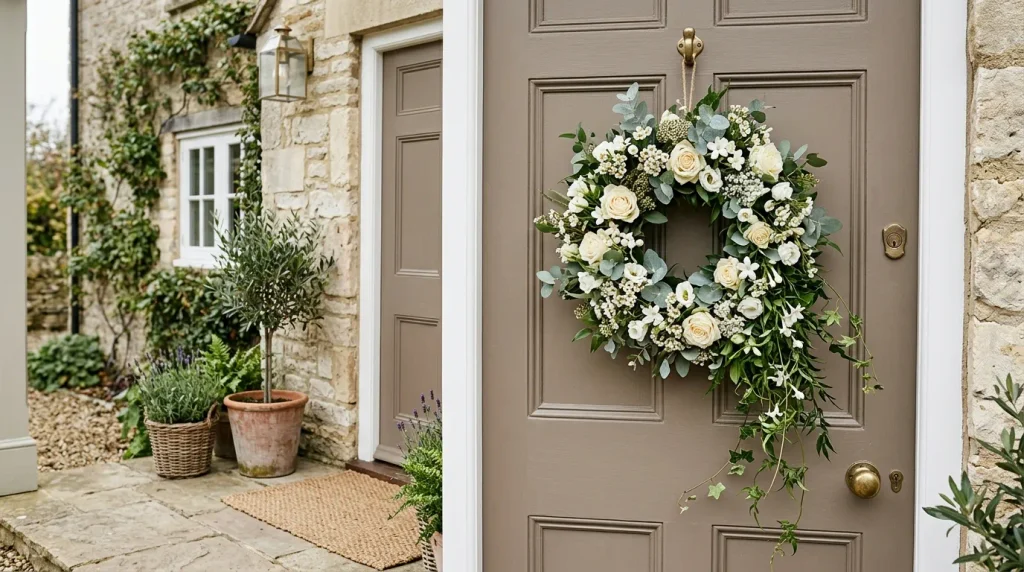
- White flowers create a clean, elegant appearance.
- Trailing greenery adds movement around the circular form.
- Asymmetrical placement makes the design feel modern and relaxed.
- Neutral doors let the delicate details stand out beautifully.
A cascade of white flowers creates an entrance that feels bright, refined, and beautifully uncluttered. Instead of covering the entire wreath evenly, concentrate cream roses and small white blossoms across one side, allowing leafy stems to trail gently downward. The asymmetrical shape adds movement and keeps the design from feeling too formal. Eucalyptus-style foliage introduces soft green tones that separate the flowers from a neutral door. This arrangement is especially effective when you want a seasonal update that looks elegant in photographs while remaining versatile enough to complement different architectural styles.
The cascading shape can also help make a smaller doorway feel more visually interesting without requiring a large, oversized wreath. Keep the upper portion relatively open and allow a few stems to extend naturally beyond the main circle. In my experience, this type of arrangement looks best when the trailing greenery is not trimmed into a perfectly even line. Slight variations create a handcrafted appearance. Add simple white porch accessories or pale stone textures nearby, but avoid strong competing colors so the soft floral palette remains the main feature.
15. Pink Rose Garden
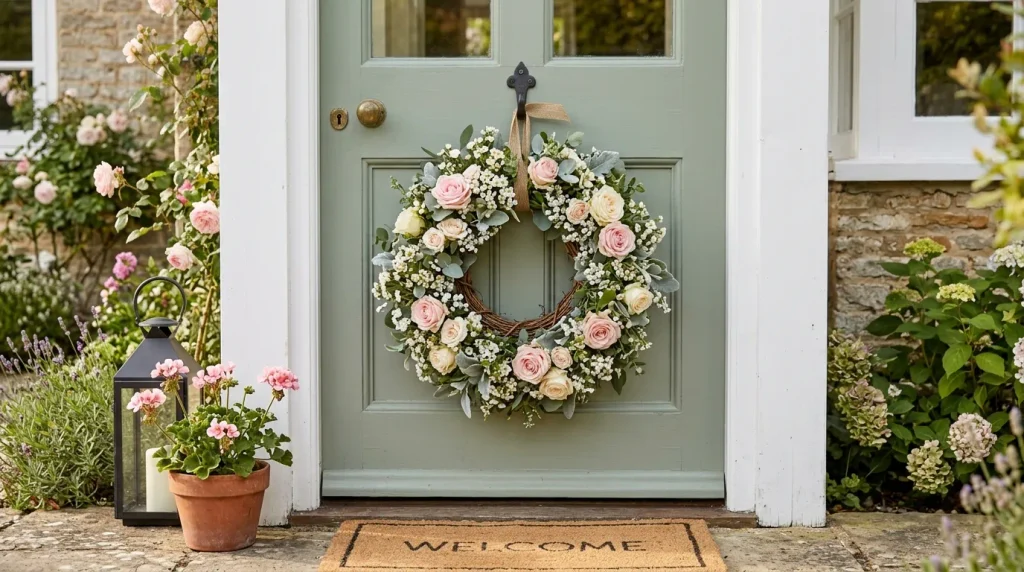
- Blush roses create a classic and welcoming spring look.
- Small filler flowers add texture between larger blooms.
- Soft green leaves keep the arrangement fresh and balanced.
- A natural vine base prevents the romantic palette from feeling too formal.
Blush roses bring an instantly recognizable garden feel to the entrance without needing complicated decoration. Mix several shades of pink with cream blooms to create gentle variation, then add small white flowers between the larger rose heads. Soft green leaves help separate the colors and give the arrangement a fresh, natural finish. Keeping portions of the grapevine base visible adds rustic texture beneath the romantic flowers. This combination works particularly well on sage, cream, white, gray, or natural wood doors, where the warm pink tones can stand out without creating an overly dramatic contrast.
A rose arrangement can easily become too formal if every bloom is identical and evenly spaced, so vary the flower sizes and positions. Place a few larger roses as focal points, then use smaller blooms and greenery to create a gradual transition around them. I’ve noticed that slightly muted blush tones usually feel more sophisticated than intensely bright pink. If you want the arrangement to remain useful beyond spring, choose neutral cream accents and natural foliage. These elements make the wreath easier to adapt to early summer decorating without needing a complete redesign.
16. Sunflower Spring Ring
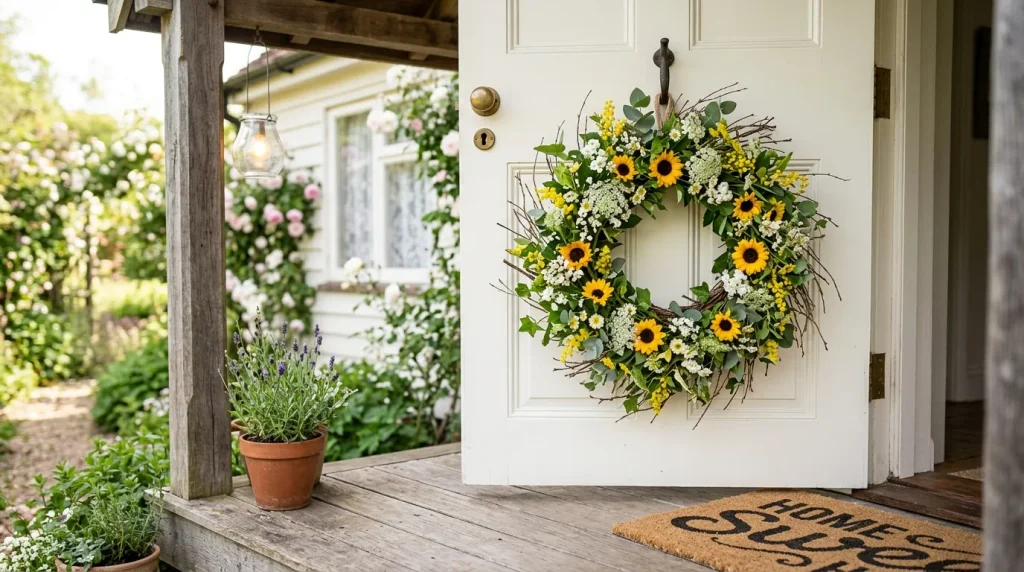
- Small sunflowers bring cheerful yellow energy to the doorway.
- Green leaves balance the stronger floral color.
- White filler flowers keep the arrangement feeling light and seasonal.
- A rustic base adds warmth and farmhouse character.
Small sunflowers can bring a cheerful burst of color to an entrance without making the arrangement feel like midsummer decor. Choose compact golden blooms and surround them with white filler flowers, fresh leaves, and a few smaller yellow blossoms. This keeps the palette bright while preserving a light spring feeling. A natural grapevine base adds warmth beneath the vivid flowers and works especially well with farmhouse or cottage exteriors. The combination creates an inviting focal point that catches attention quickly while still feeling relaxed enough for everyday home decor.
The secret to keeping this look seasonal is using sunflowers sparingly and balancing them with plenty of greenery and white accents. Place the largest blooms around the lower half or one side of the wreath, then use smaller flowers to connect the arrangement. I’ve noticed that this approach feels more refined than covering the entire circle with large yellow flowers. Pair it with a simple woven mat, wooden planter, or neutral porch furniture. These natural textures soften the bright color and help the doorway feel coordinated without looking overly decorated.
17. Eucalyptus Floral Hoop
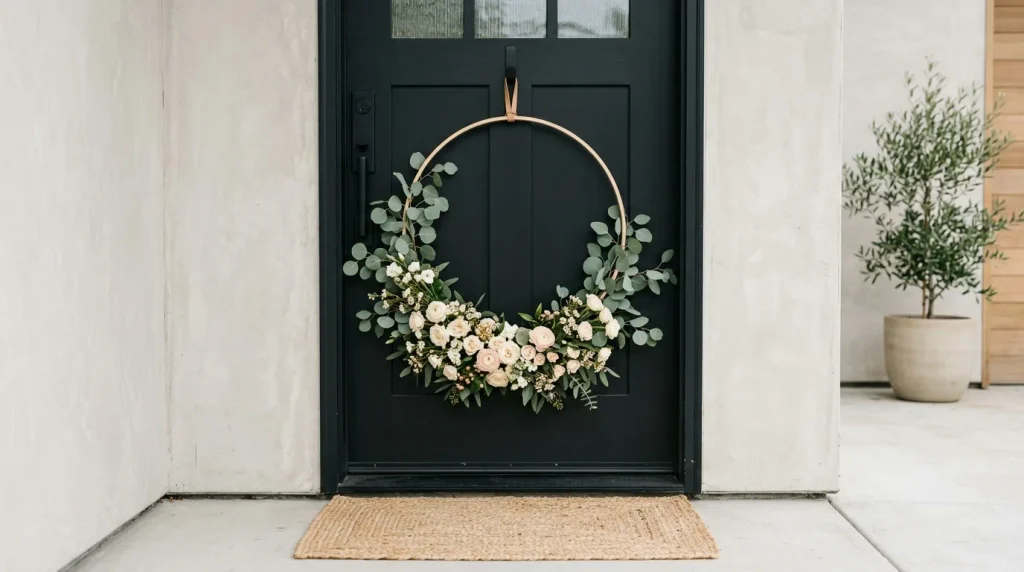
- A slim hoop creates a modern alternative to traditional full wreaths.
- Eucalyptus leaves add soft green texture and movement.
- Small cream flowers keep the arrangement delicate.
- The open center makes the door color part of the design.
An open floral hoop can make a front entrance feel modern, airy, and surprisingly spacious. Instead of filling the entire circle, use a thin wooden hoop with eucalyptus stems and small cream or blush flowers arranged along one side. The open center allows the door color to remain visible, creating contrast without adding visual weight. Silver-green foliage brings softness and movement, while the narrow structure gives the arrangement a contemporary edge. This is an especially useful option for smaller entryways where a traditional full wreath might make the door feel crowded.
To create a balanced composition, keep the floral cluster slightly asymmetrical but substantial enough to be visible from the sidewalk. Use eucalyptus stems with different lengths so some leaves extend beyond the hoop naturally. In my experience, open designs look best when the surrounding porch is kept fairly simple because their negative space is part of the visual appeal. A plain doormat, ceramic planter, or clean-lined outdoor light can complete the setting. The result feels fresh and sophisticated while remaining easy to recreate with faux stems and a basic wooden hoop.
18. Gerbera Daisy Burst
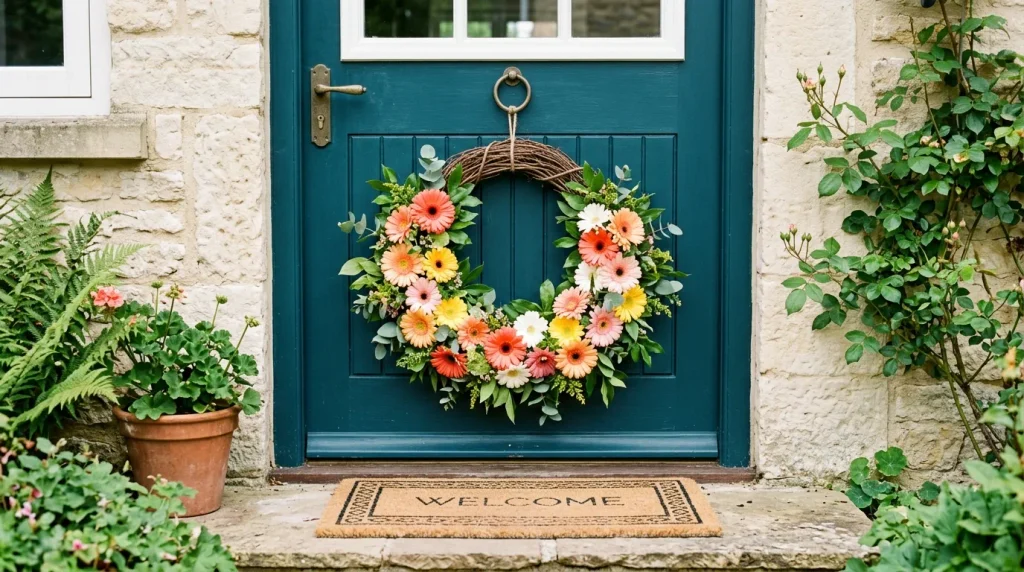
- Gerbera daisies add bold color with a clean, simple flower shape.
- Coral, pink, and yellow blooms create playful spring contrast.
- Green foliage softens the brighter flower palette.
- A compact arrangement keeps the bold colors visually controlled.
Gerbera daisies bring instant personality to a doorway because their broad petals and simple centers remain easy to see from a distance. Mix coral, peach, sunny yellow, blush pink, and a few white blooms for a playful spring palette. The key is keeping the colors organized rather than scattering every shade randomly. Group similar tones together and use green foliage to create breathing space between the brighter flowers. A natural grapevine base adds earthy texture, helping the colorful arrangement feel grounded instead of overly bold or artificial.
This colorful style works particularly well when the front door is a strong neutral or deep accent shade. Against teal, navy, charcoal, or warm white, the flowers become an obvious focal point. I’ve noticed that limiting the wreath to several repeated flower colors makes even a vibrant arrangement look intentional. If your porch already contains colorful accessories, choose two dominant flower shades and use the others only as small accents. Finish with neutral furniture or a woven mat so the doorway stays cheerful, balanced, and visually easy to photograph.
19. Faux Floral Basket
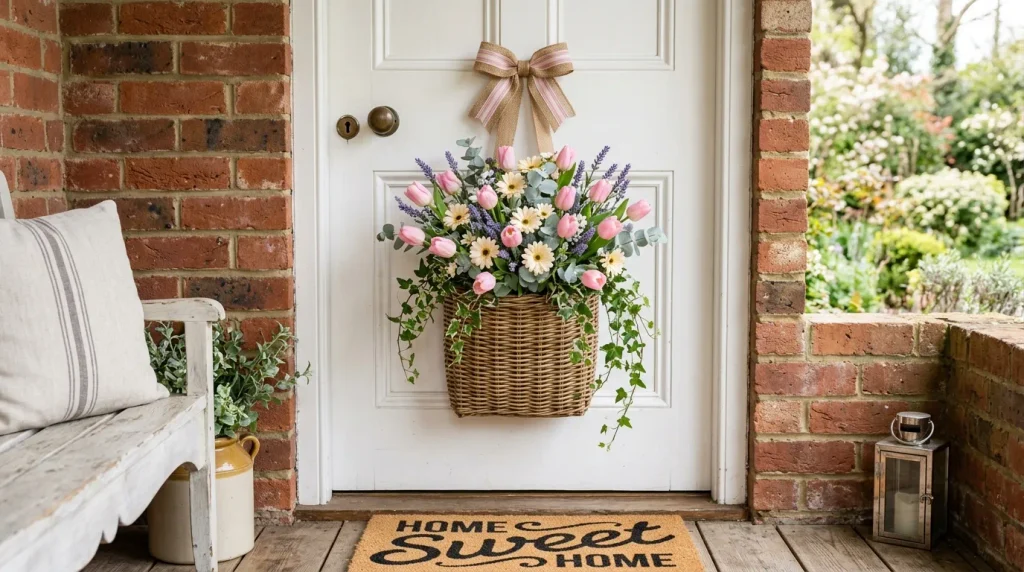
- A basket base gives the arrangement a charming, dimensional shape.
- Mixed pastel flowers create a relaxed spring garden effect.
- Trailing greenery softens the edges and adds natural movement.
- A basket design works especially well with farmhouse and cottage exteriors.
A woven basket filled with spring flowers offers a charming alternative to the traditional circular arrangement. The basket shape gives the display more dimension, while pastel tulips, daisies, lavender, and greenery create the feeling of a freshly gathered garden. Let several leafy stems trail slightly over the basket edge for movement and softness. The natural woven texture also adds warmth against painted doors, brick walls, or wood siding. This approach feels especially welcoming when you want the entrance to look relaxed and lived-in rather than perfectly formal or heavily decorated.
Choose a shallow basket so the arrangement stays lightweight and does not overwhelm the door. Start with greenery to create a base, then add the tallest flowers toward the center and smaller blooms around the edges. In my experience, mixing flower heights makes basket displays look much more natural than keeping every stem at the same level. If the basket will stay outdoors, select weather-resistant materials and secure it firmly to the door. A neutral doormat and simple planter can finish the porch without competing with the colorful floral display.
20. White Rose Greenery
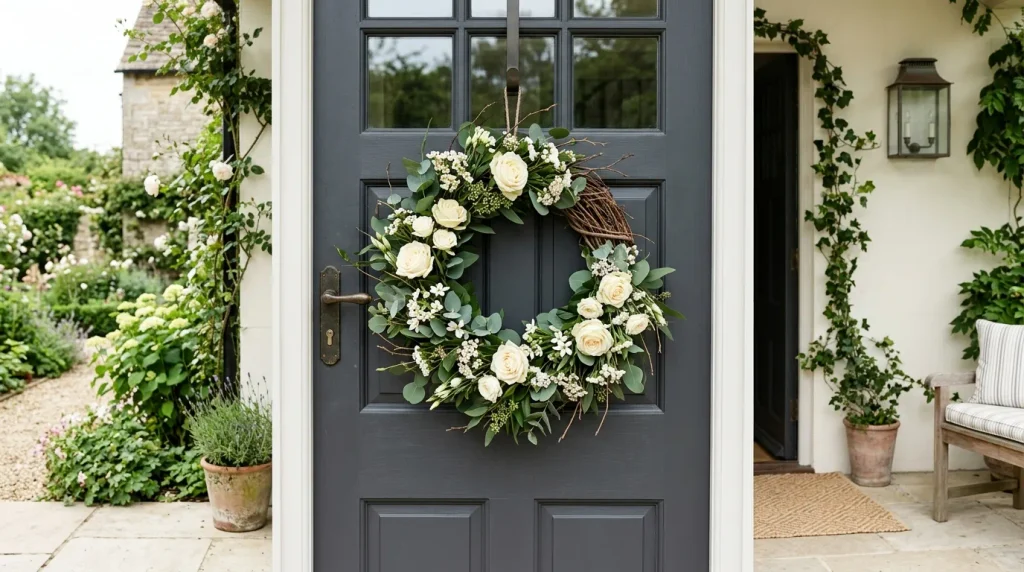
- White roses create a timeless, polished appearance.
- Deep greenery provides contrast and makes the flowers stand out.
- Small filler blooms add texture without distracting from the roses.
- This restrained palette suits elegant, traditional, and modern entrances.
White roses create a clean and sophisticated entrance while still feeling appropriate for spring. Their soft ivory petals look especially beautiful when surrounded by deeper green leaves, creating contrast that helps every bloom remain visible. Add a few tiny white filler flowers and natural branches to give the arrangement texture without introducing too many colors. The restrained palette works with almost any exterior because it feels timeless rather than strongly tied to one decorating trend. Against a charcoal or dark green door, the light flowers become a graceful focal point that can be noticed from across the porch.
A monochromatic arrangement can sometimes look flat, so texture becomes especially important here. Combine glossy leaves, softer foliage, natural twigs, and flowers with slightly different petal sizes. I’ve noticed that this combination creates much more depth than simply using identical white roses throughout. Keep the greenery concentrated around the flower clusters rather than covering the entire base. This leaves small areas of the natural vine visible and adds warmth. For an elegant finishing touch, pair the wreath with neutral stone, woven fibers, or simple black hardware that echoes the doorway.
21. Pastel Egg Accent
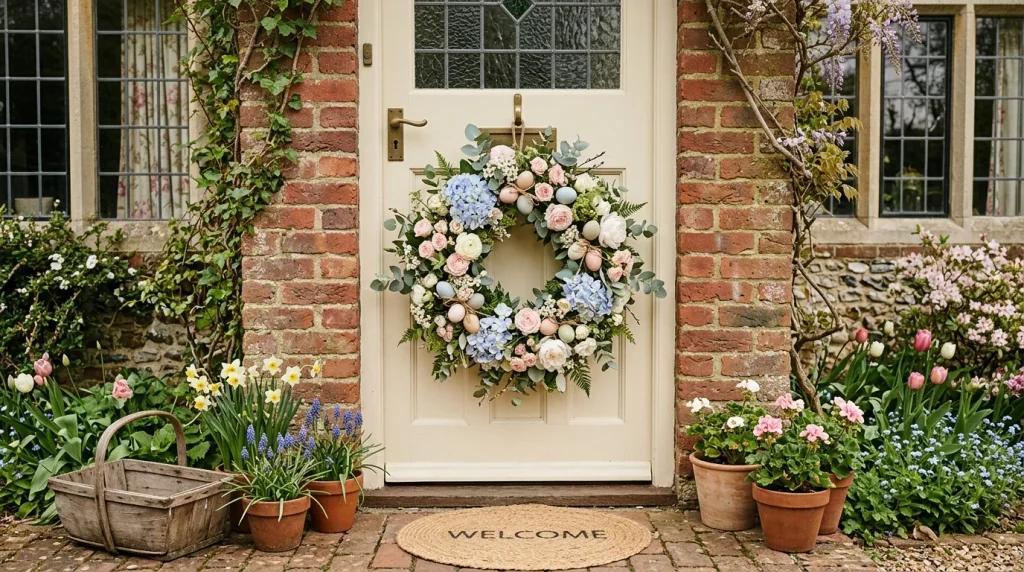
- Small pastel eggs introduce a playful seasonal detail.
- Soft florals keep the arrangement suitable for the wider spring season.
- Pale blue, blush, cream, and green create a gentle color palette.
- Use only a few decorative eggs for a refined appearance.
Pastel eggs can add a playful spring detail without turning the entire entrance into holiday-specific decor. Tuck just a few matte eggs between soft flowers in pale blue, blush, cream, and muted green. Keeping the eggs small and scattered makes them feel like subtle decorative accents rather than the main theme. Surround them with eucalyptus leaves, tiny blossoms, and a natural vine base so the arrangement still reads primarily as seasonal floral decor. This approach works beautifully when you want a cheerful doorway that feels fresh throughout the broader spring decorating season.
Choose muted finishes instead of highly glossy eggs because softer surfaces blend more naturally with realistic flowers and greenery. Place the accents at different points around the wreath so the eye moves gently through the arrangement. In my experience, three to five small decorative pieces are usually enough to create the effect without making the design feel crowded. Keep nearby porch accessories simple, especially if the wreath already contains several pastel shades. A woven mat, neutral planter, or light wood accent can support the colors while keeping the overall entrance calm and inviting.
22. Cherry Blossom Branches
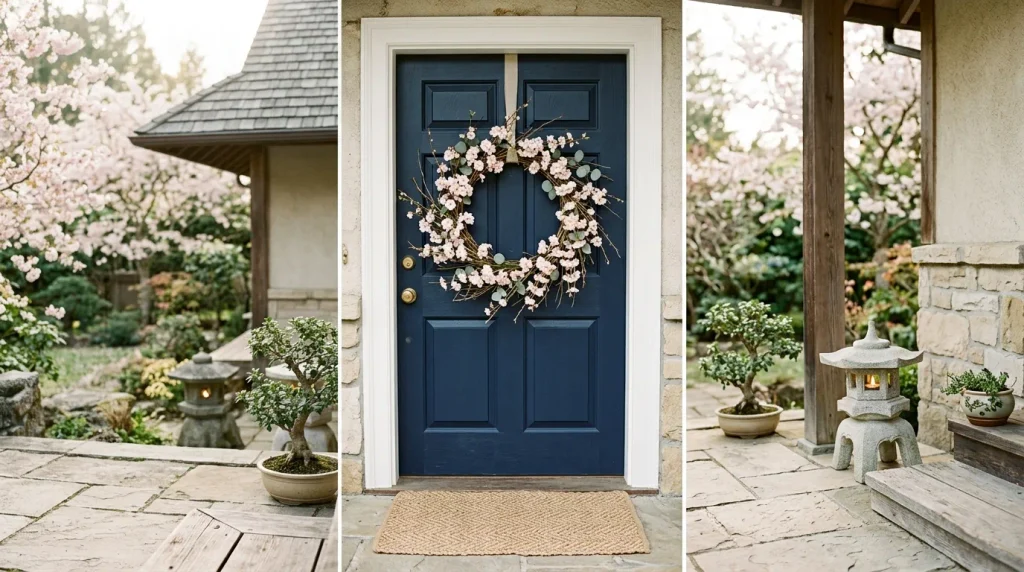
- Delicate blossoms create an airy, graceful spring look.
- Soft pink and white petals brighten darker doors beautifully.
- Natural branches add height and organic texture.
- The sparse design feels elegant without making the entrance look crowded.
Cherry blossom branches bring an airy, graceful feeling to the entrance without requiring a dense arrangement. Their delicate pink and white petals create gentle contrast against navy, charcoal, sage, or natural wood doors. Keep the branches slightly open so the circular structure remains visible and the blossoms have room to breathe. A few understated green leaves can add contrast without taking attention away from the flowers. The result feels light and sophisticated, making it a lovely choice when you prefer seasonal decor that looks fresh rather than overly colorful or heavily layered.
For the most natural appearance, choose branches with different lengths and let some stems extend beyond the main circle. Avoid placing every blossom at the same density because small variations make the arrangement feel more realistic. I’ve noticed that delicate branch designs look especially beautiful in morning light, when the petals create soft shadows across the door. Keep surrounding accessories simple and use neutral materials such as stone, linen, or woven fibers. This allows the blossoms to remain the focal point while creating a calm, refined entrance that photographs beautifully for Pinterest.
23. Garden Herb Wreath
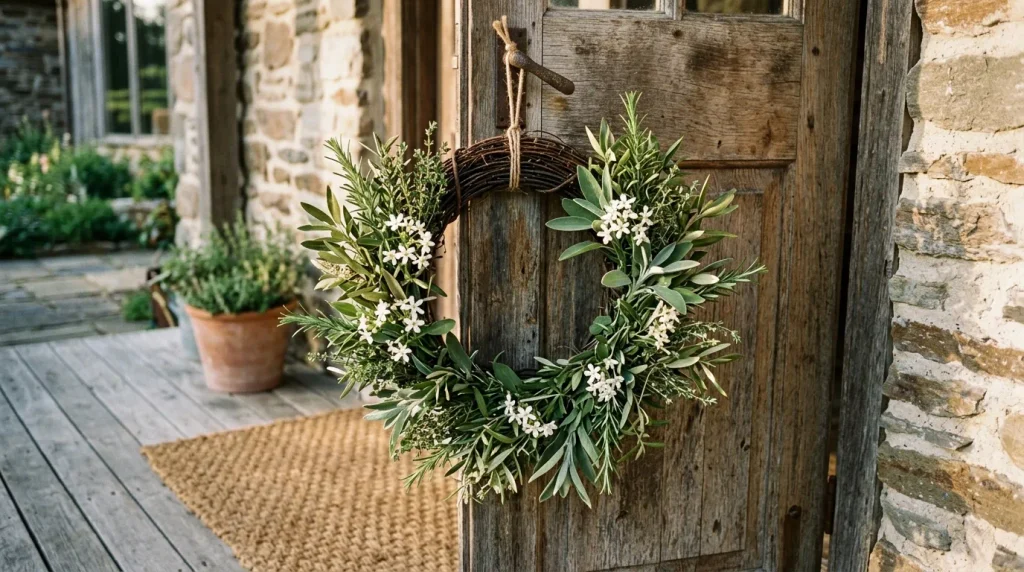
- Rosemary, thyme, and sage-inspired foliage create natural texture.
- Small white flowers add subtle seasonal color.
- Silvery and deep green leaves create a sophisticated palette.
- The herbal look works especially well with rustic wood and stone.
An herb-inspired arrangement offers a fresh alternative to colorful floral displays while still giving the entrance a clear spring update. Combine rosemary-like stems, sage leaves, thyme sprigs, and small white flowers around a natural grapevine base. The varied greens create texture and depth, while tiny blossoms add just enough brightness. This palette works beautifully with weathered wood, stone, brick, and other natural exterior materials. The finished design feels relaxed and organic, making it ideal for homeowners who prefer understated seasonal decor with a connection to garden-inspired styling.
You can keep the arrangement simple by allowing the foliage to do most of the visual work. Place fuller herb stems around the lower half of the circle, then add delicate flowering sprigs to soften the edges. In my experience, foliage-heavy designs are especially practical because they remain attractive even when individual flowers begin to fade. For outdoor use, choose preserved or weather-resistant materials if the door receives rain or strong sunlight. A terracotta planter, wooden stool, or woven mat nearby can reinforce the garden-inspired feeling without making the porch look overly styled.
24. Tulip and Eucalyptus
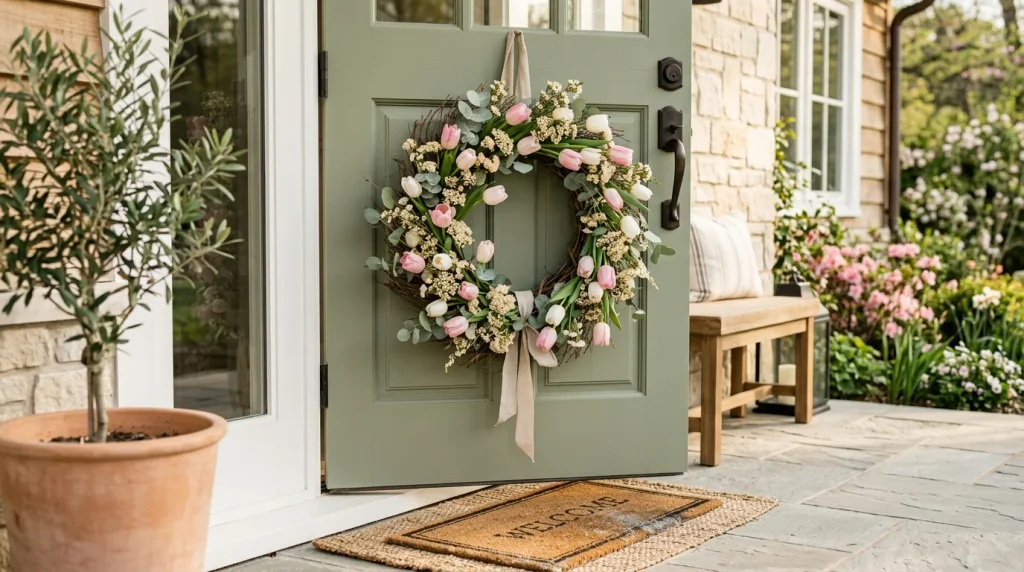
- Tulips provide the main burst of seasonal color.
- Eucalyptus adds soft greenery and a refined texture.
- Pink, white, and muted green create an easy-to-style palette.
- A loose arrangement feels fresh, natural, and welcoming.
Tulips and eucalyptus create a fresh combination that feels colorful, elegant, and easy to recreate. Soft pink and white tulips provide the seasonal focal point, while silvery eucalyptus leaves add contrast and a more sophisticated texture. Keep the flowers slightly clustered along one side or across the lower half of the wreath rather than distributing them perfectly around the circle. This creates movement while leaving enough of the natural base visible. The combination works beautifully on sage, cream, gray, white, or natural wood doors, making it a versatile choice for many different home styles.
A simple palette makes this arrangement especially easy to coordinate with the rest of the porch. Repeat the greenery through a small planter or potted herb, then keep other accessories neutral. I’ve noticed that tulips look more realistic when their stems and leaves are allowed to curve naturally instead of being arranged in rigid, identical positions. For a reusable design, choose high-quality faux tulips with varied petal shapes and eucalyptus with realistic coloring. The finished entrance feels bright and welcoming without looking overdone, giving you a seasonal focal point that is also highly photographable for Pinterest.
Conclusion
A beautiful spring wreath can completely refresh the feeling of your front entrance with just a few thoughtful details. Whether you prefer colorful tulips, delicate cherry blossoms, lush greenery, or a simple open floral hoop, the right design can make your doorway feel brighter and more welcoming.
The best choice is the one that fits your home and personal style. Start with a color palette you love, add natural textures, and keep the arrangement balanced with your existing porch decor. Save your favorite ideas for inspiration, then create a spring entryway that feels fresh, inviting, and uniquely yours.