Your Easter table can feel special without being complicated. A few beautiful details can completely change the mood of the room.
These easter table centerpieces are designed to help you create a spring table that feels fresh, welcoming, and effortlessly beautiful. From cheerful tulips and daffodils to mossy eggs, woven textures, candles, and natural greenery, these ideas offer plenty of inspiration for different decorating styles and table sizes. Whether you’re preparing for Easter brunch, a family dinner, or a casual spring gathering, you’ll find simple ways to make your table feel more thoughtful. In my experience, the best arrangements are often the easiest ones—using a few colors, natural textures, and one clear focal point can make the whole space feel finished.
1. Tulip Basket Display
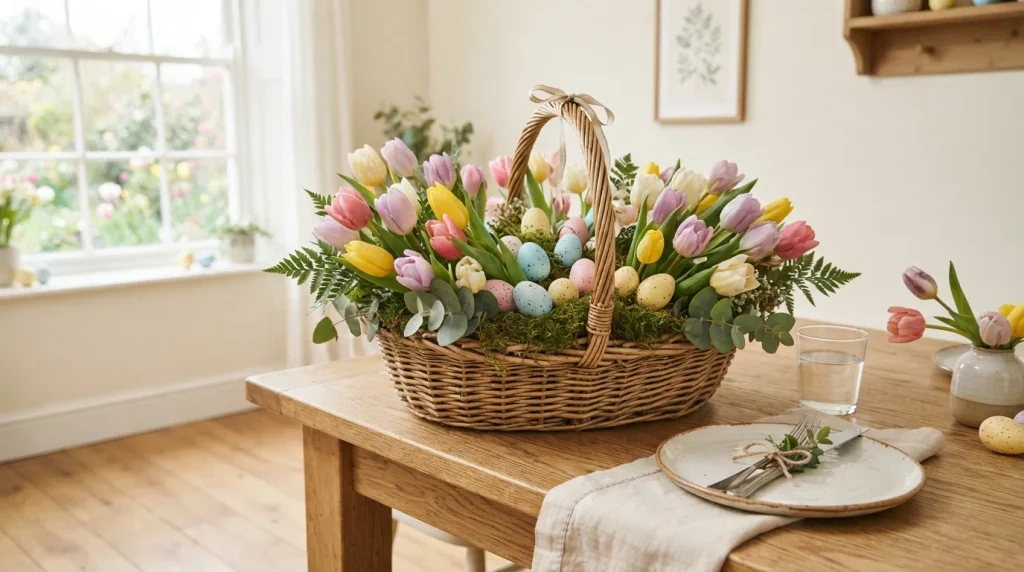
- A woven basket adds warmth and natural texture to the table.
- Fresh tulips instantly bring a soft spring feeling indoors.
- Pastel eggs add Easter detail without making the centerpiece look busy.
- Keep the arrangement low enough for easy conversation across the table.
Bring spring charm to the table with a simple basket overflowing with tulips, greenery, and pastel eggs. A woven basket creates an easy centerpiece that feels festive without looking overly styled. Choose flowers in soft pink, yellow, lavender, or white, then tuck a few faux or painted eggs between the stems for subtle Easter detail. In my experience, using one generous arrangement instead of several tiny decorations keeps a dining table feeling open and practical. It also leaves enough space for serving dishes, plates, and glasses, making the setup pretty enough for guests but comfortable for everyday meals.
A woven basket centerpiece works especially well on farmhouse, cottage, and casual dining tables because its natural texture softens brighter spring colors. Place the basket in the center and keep the arrangement slightly low so guests can see across the table. Add moss around the base of the stems, then scatter a few eggs nearby rather than filling every open space. This small styling choice makes the display look intentional instead of crowded. For a polished finish, repeat one flower color in napkins or place settings. The result is cheerful, relaxed, and easy to recreate with affordable seasonal decorations.
Also Read : 23 Modern Rococo Interior Ideas for a Chic Elegant Home
2. Mossy Egg Bowl
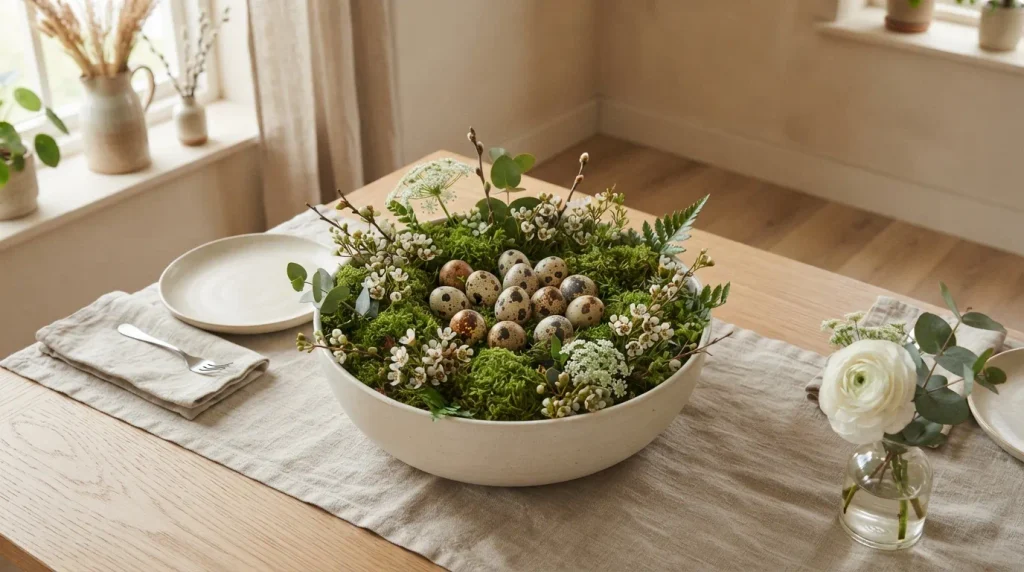
- A shallow bowl makes a compact centerpiece for smaller dining tables.
- Green moss creates a fresh, garden-inspired base.
- Speckled eggs add texture while keeping the palette natural.
- This setup is easy to assemble and simple to refresh throughout spring.
A moss-filled bowl can turn a few simple Easter decorations into a centerpiece that feels fresh and thoughtfully styled. Choose a shallow ceramic, wooden, or stone bowl, then cover the base with preserved moss or a realistic faux version. Nestle speckled eggs throughout the greenery and add a few delicate stems for height. The natural green-and-neutral palette works beautifully when you want Easter decor that feels subtle rather than overly colorful. This is one of those easter table centerpieces that can look polished with very little effort, especially when your dining room already has natural wood or neutral finishes.
For a more finished arrangement, vary the egg sizes and leave small patches of moss visible between them. I’ve noticed that uneven spacing makes tabletop displays look much more natural than perfectly arranged rows. Place the bowl on a simple runner and keep surrounding decorations minimal so the textures remain the focus. A few cream candles or small ceramic pieces can frame the centerpiece without competing with it. The finished look feels like a tiny spring garden brought indoors. It is especially useful for casual brunches because the low profile keeps conversation and serving space unobstructed.
Also Read : 21 Modern Coffee Bar Ideas for a Stylish Home Setup
3. Lemon Floral Arrangement
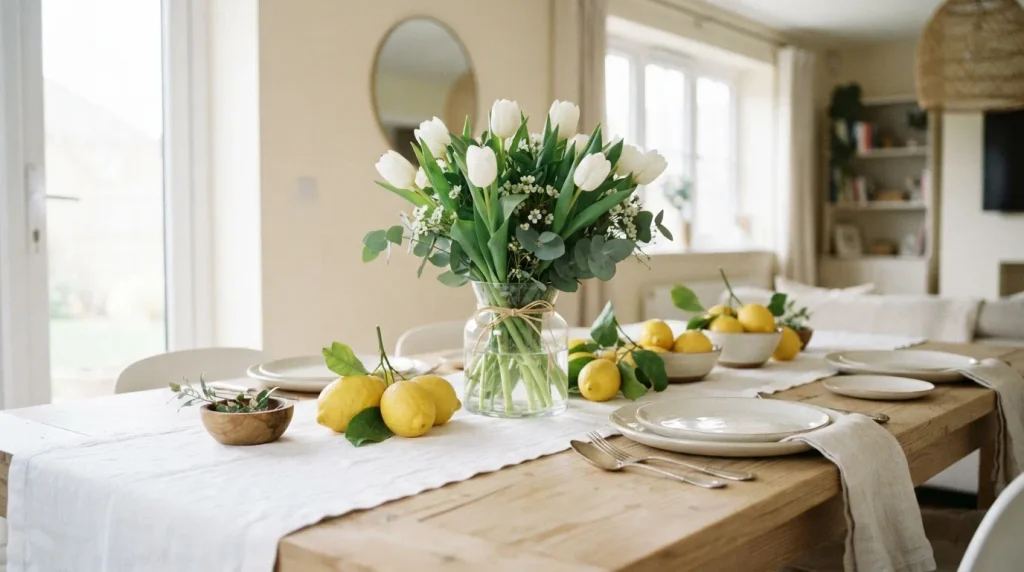
- Bright lemons create an instant burst of spring color.
- White flowers balance the yellow for a clean, fresh look.
- A glass vase keeps the arrangement light and visually open.
- Small greenery accents make the display feel abundant without becoming cluttered.
A bowl of bright lemons paired with fresh white flowers creates a centerpiece that feels sunny, clean, and unmistakably spring-inspired. Start with a clear glass vase or low pitcher, then surround its base with whole lemons in a shallow dish. Add tulips, daisies, ranunculus, or similar white blooms for a crisp contrast against the yellow fruit. The combination feels cheerful without relying on traditional pastel Easter colors. It is also practical because the lemons can be moved to the kitchen afterward. For homes with neutral interiors, this simple color pairing can make the entire dining area feel brighter and more welcoming.
To keep the arrangement balanced, choose flowers with loose, natural shapes rather than forcing every stem into perfect symmetry. Add a few leafy branches around the blooms and leave plenty of white space between the vase and surrounding tableware. That breathing room helps the centerpiece feel intentional rather than crowded. I’ve seen this approach work particularly well on white, pale wood, or glass dining tables because the yellow becomes a lively focal point. Pair it with linen napkins and simple white plates for an effortless Easter brunch setting that feels fresh, modern, and easy to recreate.
Also Read : 24 Pantone Color of the Year 2026 Ideas for Your Home
4. Carrot Vase Arrangement
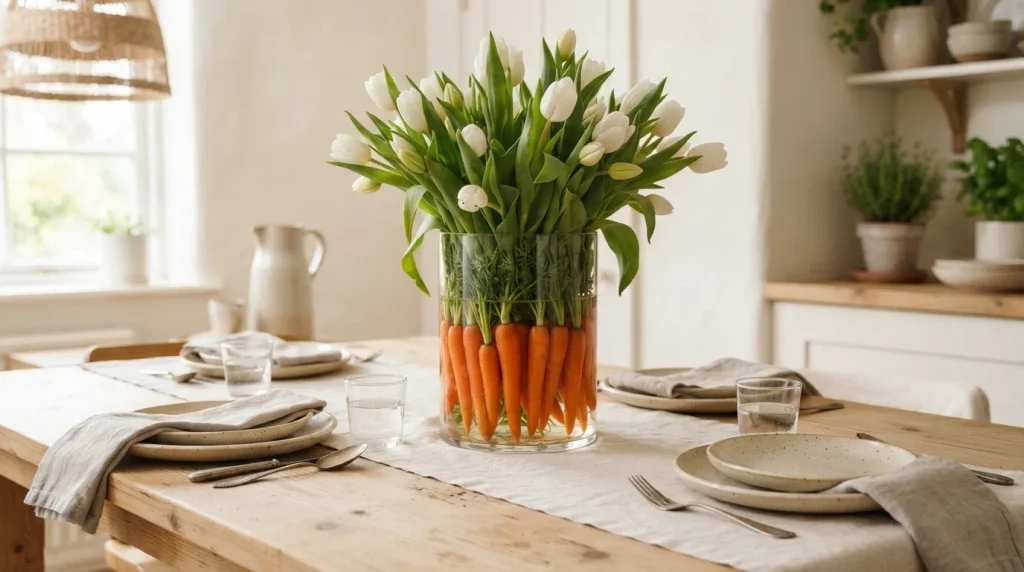
- A carrot-filled vase adds a playful Easter detail without looking overly themed.
- Orange carrots create a warm contrast against fresh green stems.
- A clear vessel lets the seasonal detail become part of the design.
- Keep the flowers tall enough to create height while maintaining table visibility.
A clear glass vase filled with fresh carrots turns a simple flower arrangement into a playful Easter focal point. Layer whole carrots around the inside of the vase, then add water and arrange white tulips, daisies, or delicate greenery in the center. The orange-and-green combination feels naturally seasonal while still looking sophisticated enough for a spring dining table. This idea is especially useful when you want Easter decorations to feel festive without covering the table in themed accessories. The transparent glass also keeps the arrangement visually light, allowing the colorful ingredients to become part of the centerpiece itself.
For the prettiest result, choose carrots with fresh green tops or add leafy stems that echo their natural color. Place the vase over a neutral runner so the orange tones stand out clearly. I’ve noticed that simple arrangements like this look more polished when only one playful element takes center stage. Keep plates, napkins, and surrounding decorations understated to prevent the table from feeling too busy. A few small white flowers around the base can soften the display. The finished arrangement brings color, texture, and personality to Easter brunch while remaining inexpensive and surprisingly easy to assemble.
Also Read : 22 Minimalist Living Room Ideas for a Calm Modern Space
5. Pastel Candle Cluster
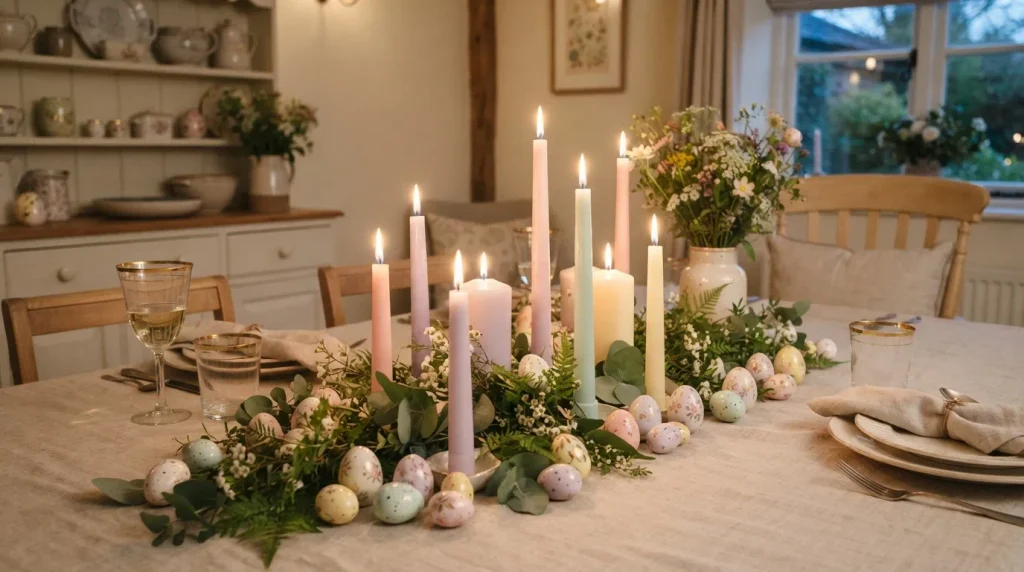
- Pastel candles bring gentle color without overwhelming the table.
- Mixing candle heights creates depth and visual movement.
- Small flowers can soften the edges of the arrangement.
- Use flameless candles when children or pets will be nearby.
Soft pastel candles can make an Easter table feel warm and elegant without requiring a large floral arrangement. Choose three to five candles in shades such as blush pink, pale yellow, mint, lavender, or powder blue, then arrange them at different heights along the center of the table. Add small ceramic eggs, delicate greenery, or tiny spring flowers between the holders for seasonal character. This approach works particularly well when you want centerpiece ideas that transition easily from brunch into an evening meal. The gentle colors create a calm spring palette while the candlelight adds warmth as the day changes.
For a balanced look, keep the candle cluster fairly narrow and repeat one or two pastel shades in the table linens. Use simple holders in white, brass, glass, or natural wood so the colors remain the main attraction. That’s why many designers recommend varying height rather than adding more objects when a table feels visually flat. The different levels catch both daylight and candlelight, giving the centerpiece dimension. If open flames are inconvenient, battery-operated candles can create a similar glow. Finish with simple white dishes and fresh greenery for an inviting, uncluttered Easter setting.
6. Spring Branch Vase
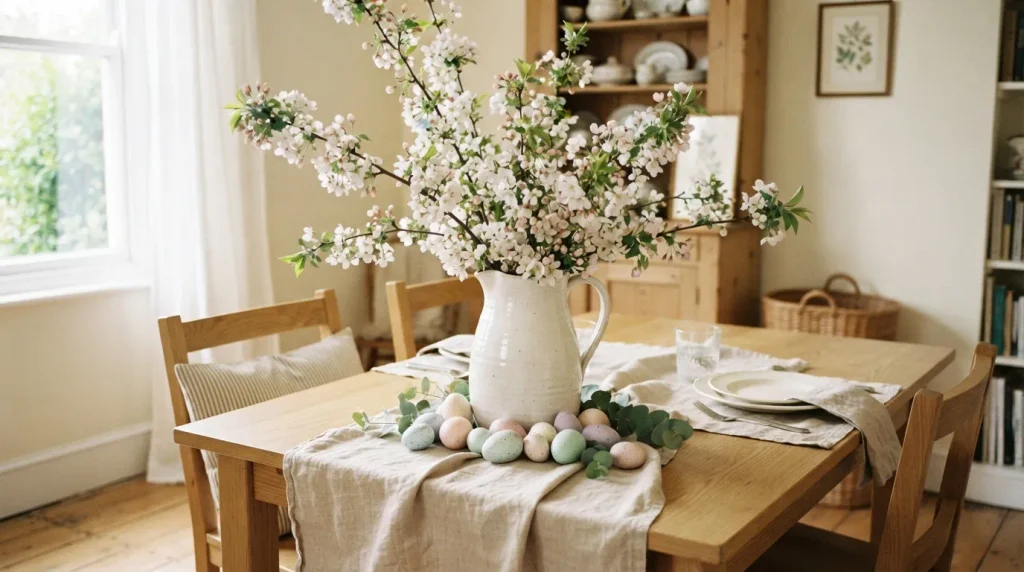
- Tall flowering branches add height without requiring many decorations.
- A narrow vase keeps the centerpiece elegant and space-conscious.
- Soft blossoms create a natural transition from winter into spring.
- Leave the lower table area open for plates and serving dishes.
Flowering branches offer an effortless way to give an Easter table height, movement, and a fresh spring feeling. Place several branches in a tall ceramic pitcher or glass vase, choosing varieties with delicate white, pink, or pale blossoms. The irregular shapes create natural texture and make the arrangement feel gathered rather than overly formal. Unlike dense floral displays, branches take up very little table surface while still making a strong visual statement. This makes them especially practical for dining rooms where guests need plenty of space for food, dishes, and conversation around the centerpiece.
Keep the vase centered and allow the branches to spread naturally rather than trimming everything to identical lengths. A few small Easter eggs at the base can connect the arrangement to the holiday without distracting from the flowers. In my experience, tall branches look particularly beautiful against simple walls because their silhouettes become part of the room’s decor. Pair them with neutral linen, white dinnerware, and a few soft pastel accents for an understated spring table. The result feels airy and sophisticated while still being easy enough for a beginner to recreate.
Also Read : 25 Mothers Day Decorations for a Beautiful Celebration
7. Floral Egg Nest
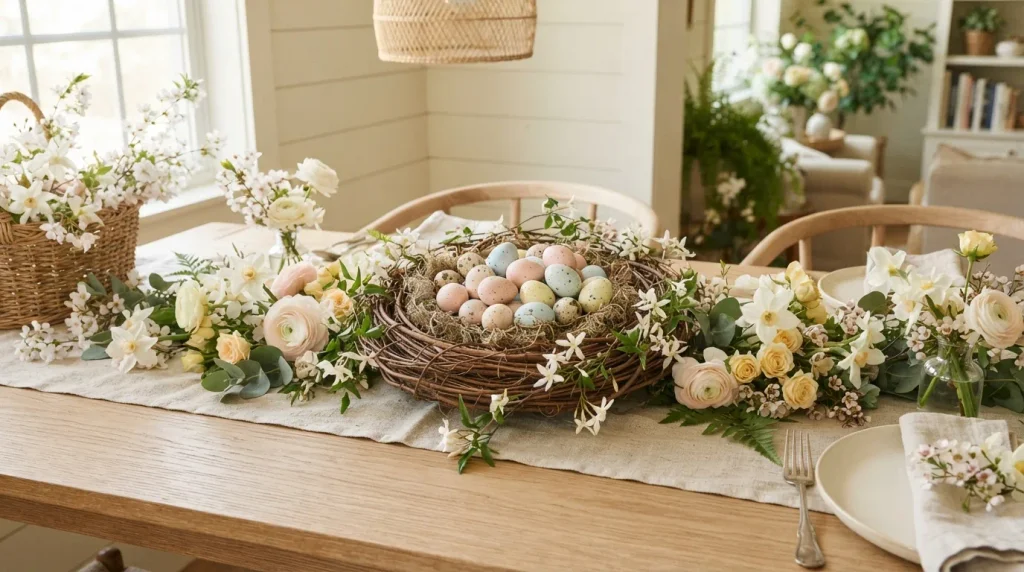
- A nest-shaped base gives the centerpiece an unmistakable Easter detail.
- Soft flowers keep the arrangement elegant instead of overly decorative.
- Neutral materials make the idea work with many table styles.
- A low profile keeps sightlines open during meals.
A delicate egg nest surrounded by spring flowers creates a charming centerpiece that feels natural rather than overly themed. Start with a shallow woven nest or a loose circle of grapevine, then place a few pastel or speckled eggs inside. Surround the nest with small white flowers, baby’s breath, or soft greenery to create a relaxed garden-inspired arrangement. The combination of natural twigs, fresh blooms, and eggs adds texture from every angle. It works especially well for Easter brunch because the centerpiece feels festive while remaining low enough for guests to see and talk comfortably across the table.
Keep the flowers slightly uneven so the arrangement resembles something gathered from a spring garden. Choose soft shades such as cream, blush, pale yellow, or lavender and avoid adding too many competing colors. I’ve noticed that natural materials help holiday decorations blend beautifully with everyday dining furniture. Place the nest on a linen runner and surround it with simple ceramic dishes or wooden accents. A few loose petals or tiny sprigs of greenery can complete the look without adding clutter. The finished display feels handmade, welcoming, and easy to recreate with affordable craft-store materials.
8. Hydrangea Egg Bowl
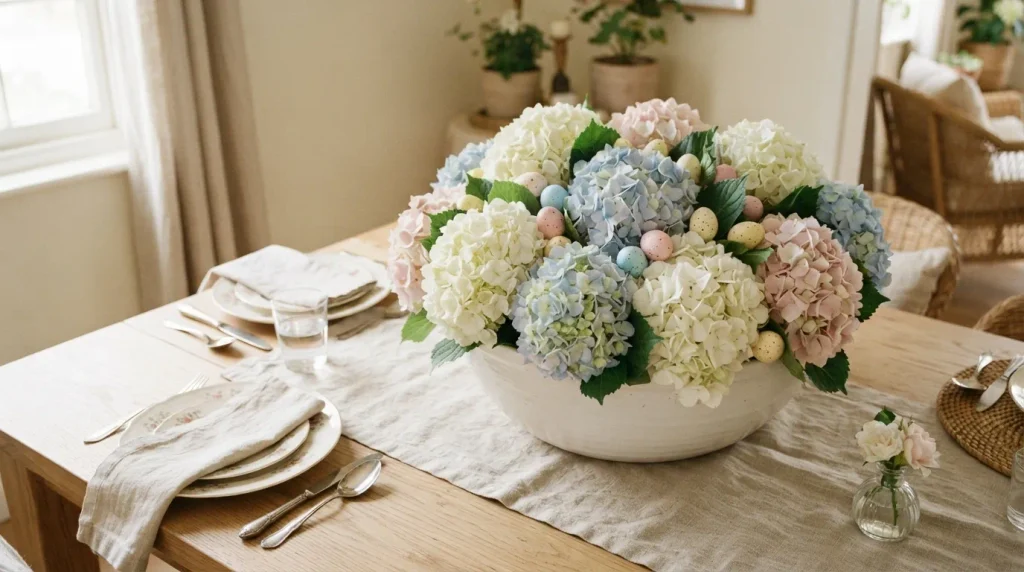
- Full hydrangea blooms create instant volume and softness.
- Pastel eggs add Easter character without overwhelming the flowers.
- A low bowl keeps the arrangement practical for dining.
- Blue, white, or blush blooms can coordinate with existing table colors.
A low bowl filled with hydrangeas and pastel eggs creates a lush centerpiece with very little decorating effort. Choose large blooms in white, pale blue, blush, or soft green, then arrange them in a shallow ceramic bowl or wide glass vessel. Tuck a few pastel eggs between the flowers so they appear naturally nestled among the petals. The large flower heads provide plenty of visual impact, making this a useful choice when you want the table to feel decorated without adding lots of separate objects. The result is soft, abundant, and especially pretty against neutral table linens.
To keep the arrangement looking fresh instead of crowded, let the hydrangeas form the main shape and use only a handful of eggs as accents. Place the bowl on a simple runner and repeat one flower shade in your napkins or glassware for a coordinated finish. In my experience, large blooms work best when the surrounding decor is restrained because their rounded shapes already create plenty of visual interest. If fresh hydrangeas are unavailable, quality faux stems can create a similar effect. Add simple white plates and natural wood details for an inviting spring table.
9. Wooden Rabbit Display
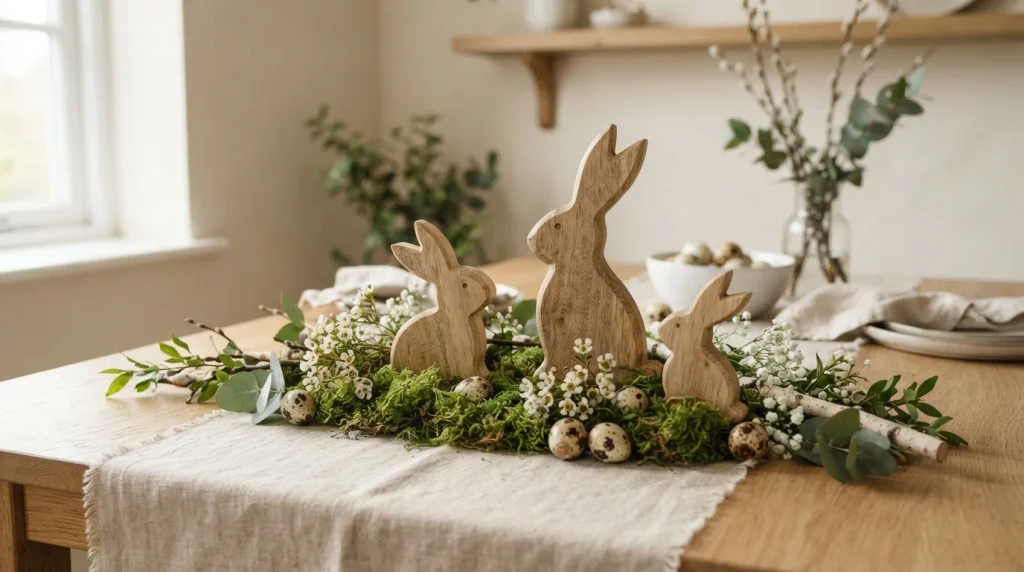
- Wooden rabbits add Easter charm through simple natural shapes.
- A neutral palette keeps the arrangement sophisticated.
- Moss and greenery bring softness around the decorative figures.
- Layering different heights creates a more interesting tabletop display.
A small group of wooden rabbits can become a beautifully understated Easter centerpiece when paired with moss, greenery, and simple spring accents. Choose two or three rabbits in natural wood, white, or soft neutral finishes, then arrange them along the center of the table at slightly different heights. Surround their bases with moss, small branches, or tiny white flowers to soften the display. This approach works particularly well when you prefer Easter decor that feels timeless rather than colorful or heavily themed. The natural materials also pair easily with farmhouse, Scandinavian, rustic, and minimalist dining rooms.
Create a gentle visual rhythm by placing the tallest rabbit slightly behind the others and leaving open space between each piece. Add a few speckled eggs or small ceramic accents if you want more seasonal detail, but resist filling every gap. That breathing room keeps the arrangement looking intentional. I’ve noticed that wooden decorations are especially useful because they can be reused year after year and adapted to different table settings. Pair the display with neutral linen, simple dishes, and fresh greenery for a centerpiece that feels warm, modern, and quietly festive.
10. Carrot and Tulip Tray
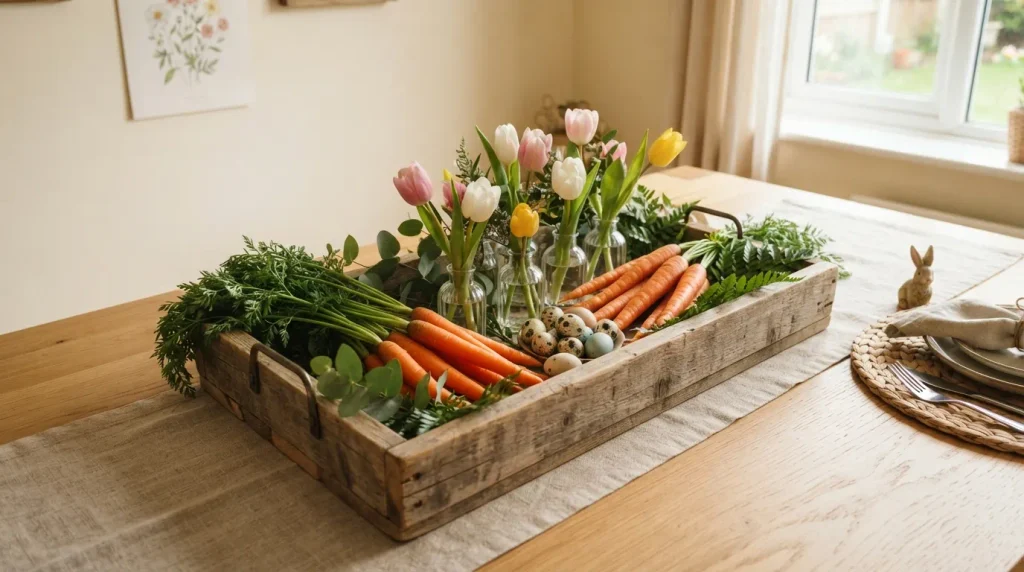
- A wooden tray gives the centerpiece a neat, contained shape.
- Carrots add playful Easter color beside soft tulip blooms.
- Small greenery fills empty spaces without making the arrangement heavy.
- The tray can be moved easily when serving food.
A shallow wooden tray filled with carrots, tulips, and greenery creates a cheerful spring centerpiece that feels collected rather than complicated. Arrange several orange carrots along the base, then place small glass jars or bud vases between them with pink, white, or yellow tulips. Add leafy sprigs around the jars to soften the strong orange color. The tray keeps everything visually connected and makes the display easy to move when you need more table space. For Easter brunches, this setup adds a playful seasonal touch while still leaving enough room for plates, serving bowls, and glasses.
Choose a tray with a natural wood finish if your dining room already includes warm furniture or woven textures. For a lighter look, use a whitewashed tray and pair it with pale flowers and neutral linens. I’ve noticed that grouping small decorations inside one container makes a table look much more organized than scattering individual pieces everywhere. Keep the flowers at slightly different heights so the arrangement feels relaxed and dimensional. A few speckled eggs tucked between the carrots can add another layer of detail, while simple white dinnerware keeps the overall display fresh and balanced.
11. White Pitcher Blooms
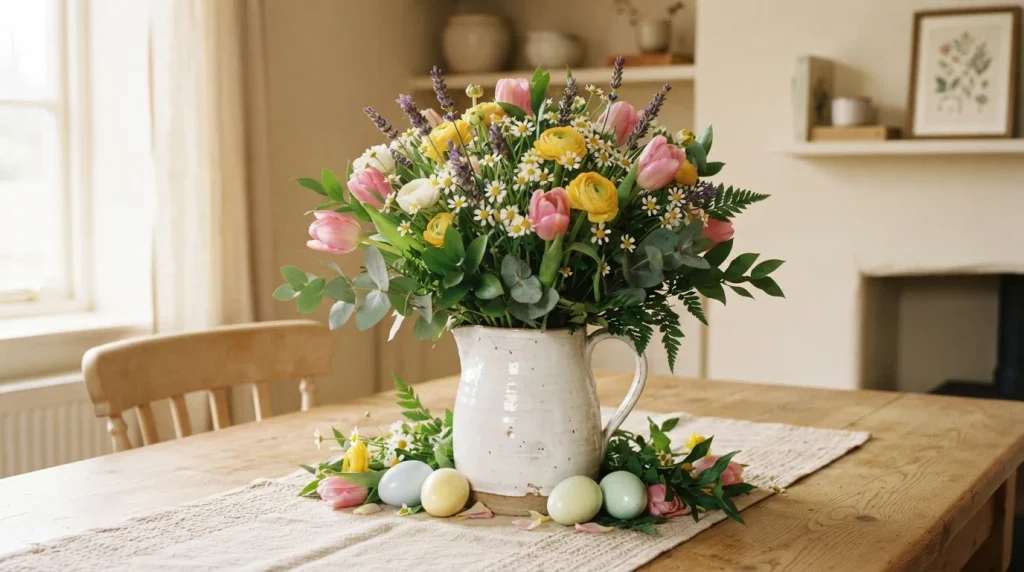
- A white pitcher creates a clean focal point against colorful spring flowers.
- Mixed blooms give the arrangement a relaxed, gathered appearance.
- The simple vessel can be reused for everyday home decorating.
- A few eggs around the base add subtle Easter character.
A classic white pitcher filled with spring flowers can instantly make an Easter dining table feel fresh and welcoming. Choose a ceramic pitcher with a slightly imperfect or handmade shape, then fill it with tulips, daisies, ranunculus, or flowering branches in soft seasonal colors. White provides a calm foundation, allowing pink, yellow, lavender, and green tones to stand out naturally. This is one of the easiest easter table centerpieces to recreate because the design relies on familiar flowers and a vessel you may already have at home. Its relaxed shape also works beautifully for casual family meals and festive gatherings.
For a fuller arrangement, combine flowers with different bloom sizes and allow several stems to extend slightly beyond the main shape. Place the pitcher on a neutral runner and add just a few pastel eggs or small branches around its base. That small amount of seasonal detail is usually enough to make the display feel intentional without turning it into a themed collection. In my experience, white ceramic vessels are especially versatile because they work with nearly any color palette. After Easter, remove the eggs and keep the flowers for a simple spring arrangement that can stay on the table.
12. Berry and Blossom Bowl
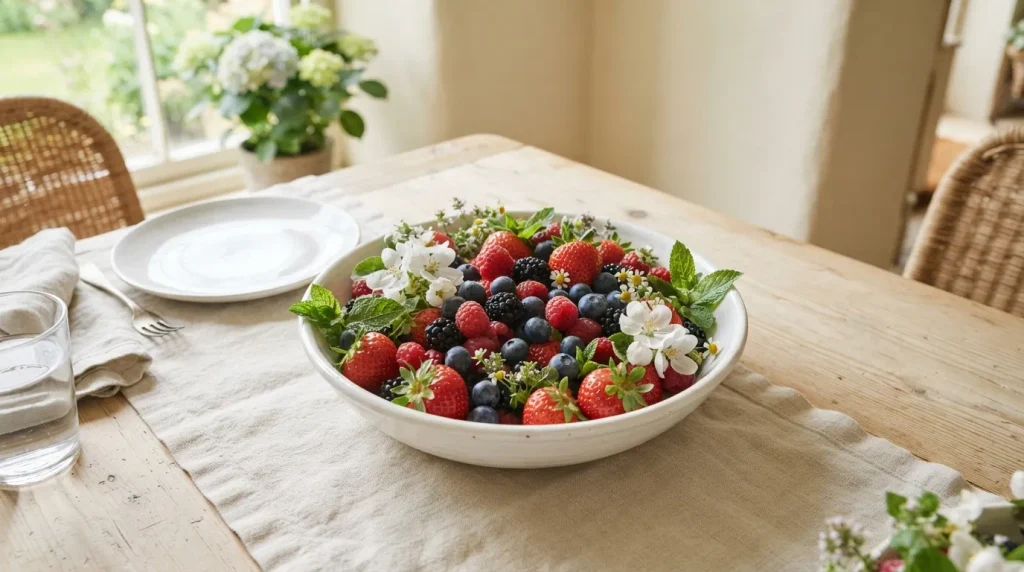
- Fresh berries introduce rich color without relying on traditional Easter decor.
- Small blossoms soften the darker berry tones.
- A shallow bowl keeps the arrangement low and practical.
- This idea works beautifully for spring brunch tables and garden-inspired settings.
A shallow bowl filled with colorful berries and delicate blossoms creates an unexpected centerpiece with a fresh, abundant look. Use strawberries, blueberries, raspberries, or blackberries in small groups, then tuck white flowers and leafy stems between them. The combination of deep berry tones, fresh greens, and pale petals gives the table a natural spring garden feeling. Unlike a traditional floral arrangement, this idea adds edible texture and color, making it especially fitting for Easter brunch. Keep the fruit clean and fresh, and use a food-safe bowl if guests will be eating the berries afterward.
For a more polished presentation, arrange the berries in loose sections rather than mixing every color together. Add small blossoms around the edges and leave some of the bowl visible so the arrangement has definition. I’ve seen this work particularly well on white or pale wood tables because the darker berries create a strong focal point without needing many extra decorations. Pair the bowl with white plates, simple glassware, and linen napkins in a soft neutral shade. The finished centerpiece feels generous, colorful, and seasonal while giving your Easter table a slightly more modern personality.
13. Mini Terracotta Pots
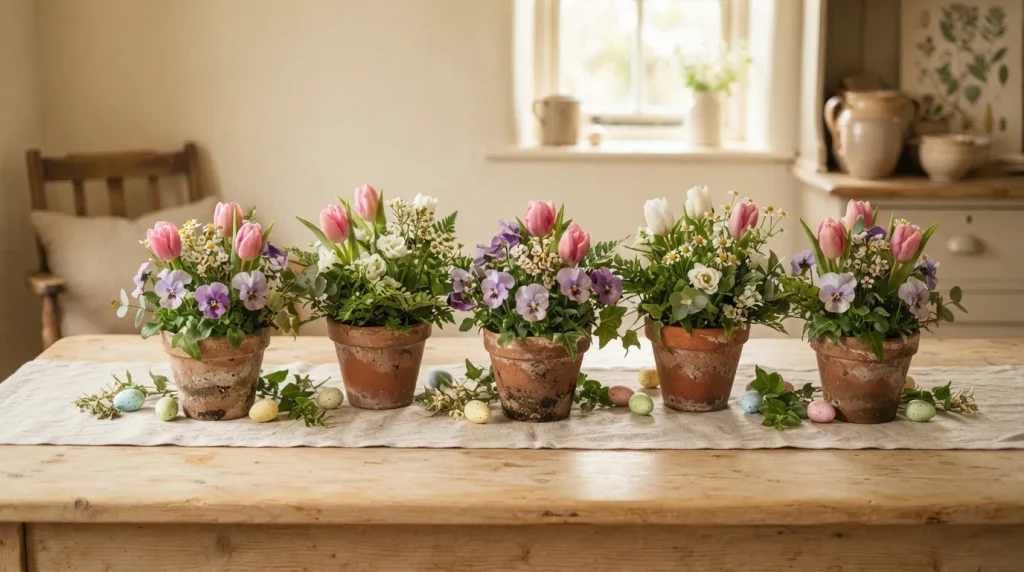
- Small terracotta pots bring earthy warmth to the spring table.
- Individual flowers create a charming garden-inspired arrangement.
- Varying pot heights add depth without making the centerpiece oversized.
- The pots can be reused for herbs or plants after Easter.
Mini terracotta pots filled with spring flowers create a centerpiece that feels like a tiny garden placed directly on the dining table. Choose three to five small pots and fill them with tulips, pansies, violas, or fresh greenery in soft seasonal shades. Arrange the pots along a narrow runner, keeping their heights slightly varied for a relaxed look. The warm terracotta color adds contrast to white dishes and pale linens while making the entire setting feel more natural. Small pastel eggs tucked between the pots can add Easter detail without distracting from the flowers.
For a cleaner arrangement, use matching pots and let the flowers provide most of the color. If you prefer a collected cottage look, combine slightly different pot shapes while keeping the flower palette coordinated. I’ve noticed that repeating one material across several small pieces helps a centerpiece feel intentional rather than scattered. Add a few sprigs of greenery between the pots to connect the individual arrangements visually. This setup works especially well on long dining tables because it creates a gentle line of color without blocking conversation. After the celebration, the pots can move to a windowsill or patio.
14. Glass Cloche Garden
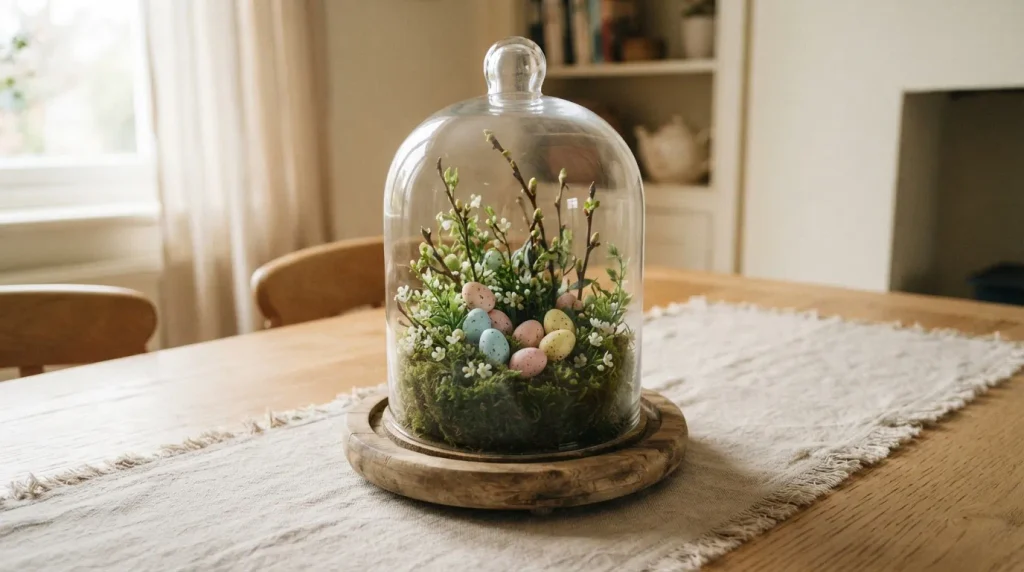
- A glass cloche gives the centerpiece a delicate collected-garden appearance.
- Moss creates a soft green foundation for small seasonal details.
- Miniature eggs and flowers add interest without filling the entire table.
- The transparent cover keeps the arrangement visually light and elegant.
A glass cloche filled with moss, tiny flowers, and miniature Easter eggs creates a centerpiece that feels delicate and beautifully curated. Begin with a wooden or ceramic base, then layer moss across the surface before adding small blooms, miniature branches, and a few speckled eggs. Place the clear cloche over the arrangement so every detail remains visible from different sides. The transparent glass adds an elegant vertical element without making the table feel heavy. This idea works particularly well when you enjoy cottage, vintage, or garden-inspired decor and want something more unusual than a traditional vase.
Keep the miniature elements varied in height so the scene looks natural beneath the glass. Avoid overcrowding the base because the cloche itself already creates a strong visual boundary. A neutral runner and simple tableware allow the green moss and delicate decorations to remain the focal point. In my experience, glass-covered arrangements are especially effective on smaller tables because they concentrate several decorative details into one compact display. Use realistic faux moss and flowers if you want the centerpiece to last throughout the season. A few nearby candles can add warmth without competing with the transparent garden effect.
15. Lavender Linen Runner
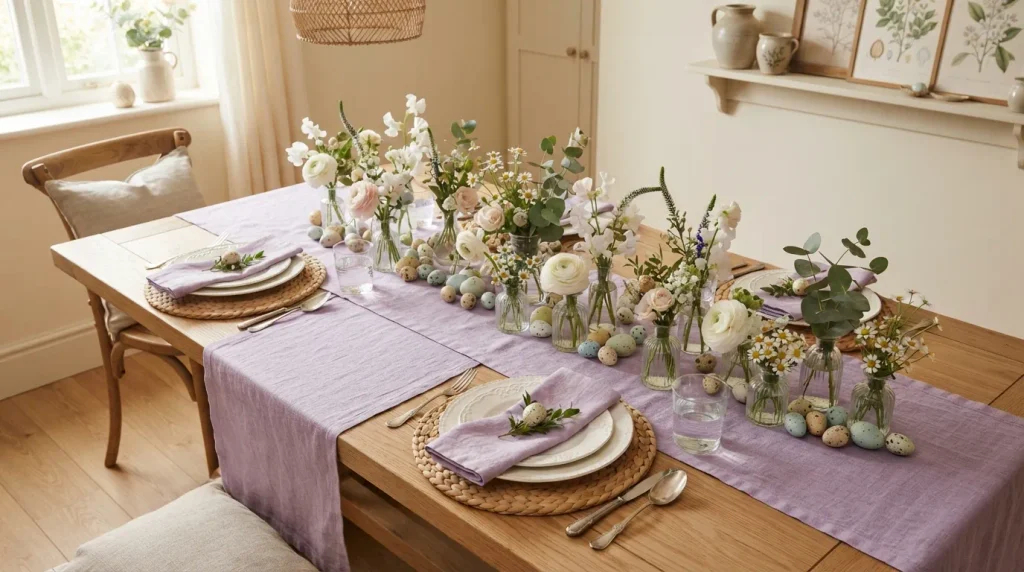
- Lavender tones create a soft Easter palette with a sophisticated finish.
- A long runner gives the table a cohesive visual foundation.
- Small floral arrangements can be spaced along the fabric.
- Natural linen texture keeps pastel colors from looking overly sweet.
A lavender linen runner can become the foundation for a beautiful Easter table when paired with small flowers, greenery, and simple seasonal accents. Lay the runner lengthwise through the center of the table, then place small bud vases or low floral arrangements at intervals along the fabric. Choose white, blush, or pale purple blooms to build a soft spring palette without relying on too many colors. Add a few speckled eggs or natural wooden details between the flowers for subtle holiday character. The result feels coordinated and elegant while still being relaxed enough for a family brunch.
Choose washed linen with a slightly rumpled texture to keep the table from looking overly formal. Repeat the lavender shade in napkins, candles, or small floral accents rather than matching every item exactly. That variation creates a more layered appearance. I’ve noticed that a strong textile foundation can make simple decorations look much more intentional because it visually connects the entire table. Keep the individual arrangements low so guests can see across the table comfortably. Pair the runner with white dinnerware and clear glassware for a fresh setting that feels light, calm, and distinctly spring-inspired.
16. Vintage Cake Stand
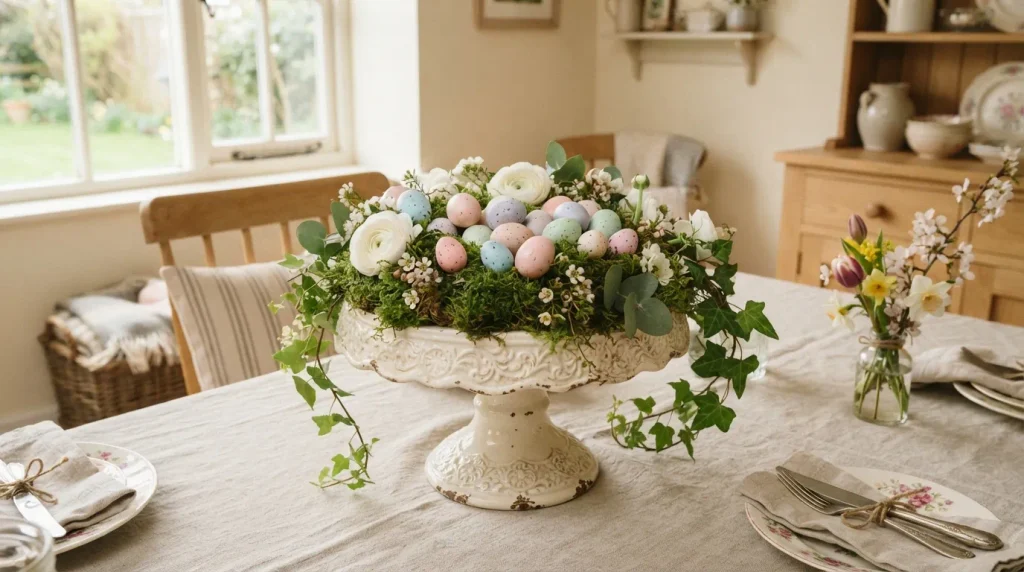
- A raised cake stand adds height without taking up much table space.
- Moss and pastel eggs create a soft spring-inspired base.
- Small flowers bring freshness without making the display too formal.
- A reusable stand makes this idea practical beyond Easter.
A vintage cake stand can do more than hold dessert—it can become a charming Easter centerpiece with almost no effort. Place a shallow stand in the center of the table, then layer moss, pastel eggs, and small spring flowers across its surface. The raised shape gives the arrangement extra height while keeping its footprint compact. This is especially helpful on smaller dining tables where a wide decoration can quickly crowd plates and serving dishes. Choose a white ceramic or clear glass stand for a lighter appearance, or use wood for a warmer farmhouse look that complements natural Easter textures.
17. Painted Egg Bowl
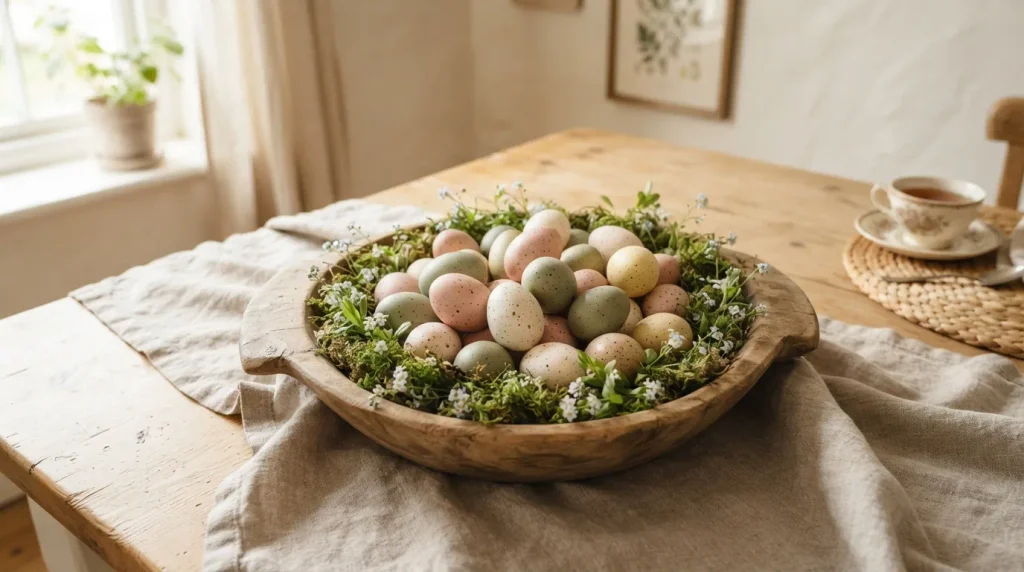
- A shallow bowl gives colorful eggs a clean, contained arrangement.
- Mixed finishes make the display feel more handmade and interesting.
- Moss adds natural texture beneath the decorative eggs.
- The bowl can be prepared ahead and moved easily when needed.
A shallow wooden bowl filled with painted eggs creates a colorful centerpiece that feels playful, handmade, and easy to personalize. Choose eggs in three or four coordinated shades, such as blush, cream, sage, and pale yellow, then layer them with moss or shredded paper for texture. A few tiny flowers tucked around the edges soften the arrangement and make it feel more connected to spring. This setup is particularly useful when you want Easter decor that can be prepared ahead of time. The bowl keeps everything contained, so the centerpiece can be moved quickly whenever the table needs more space.
For a more natural appearance, mix matte, speckled, and lightly patterned eggs rather than using one identical finish. Leave small gaps between them so the moss remains visible and the colors do not become overwhelming. I’ve noticed that handmade or imperfect-looking eggs often give holiday tables more personality because they feel collected instead of mass-produced. Place the bowl over a neutral runner and repeat one egg color in the napkins or flowers. The result is bright enough to feel festive but restrained enough for a relaxed family meal, Sunday brunch, or spring gathering with friends.
18. Rosemary Flower Bowl
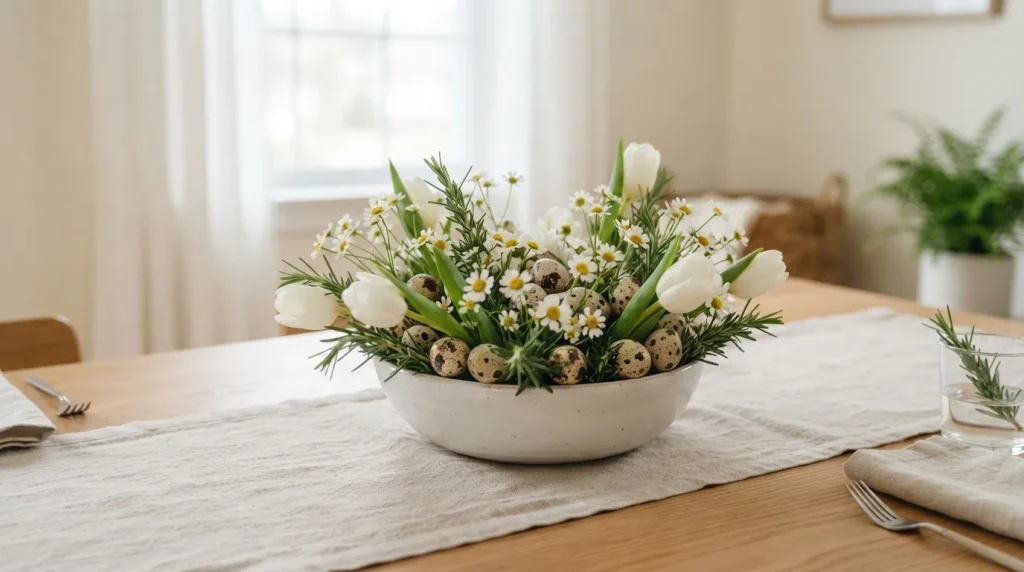
- Rosemary adds fresh greenery and a subtle natural fragrance.
- White flowers keep the palette crisp and elegant.
- Speckled eggs introduce Easter detail without overwhelming the arrangement.
- A low bowl leaves plenty of room for conversation and serving dishes.
Fresh rosemary and white flowers create a fragrant centerpiece that feels crisp, natural, and quietly festive. Use a low ceramic bowl or small collection of glass jars to hold rosemary sprigs alongside white tulips, daisies, or baby’s breath. The deep green foliage gives the arrangement structure while the pale blooms keep it feeling light. Add a few natural or speckled eggs around the base for an Easter touch. This combination works beautifully in homes with wood furniture because the earthy greenery connects the table to other natural materials while the white flowers provide a clean visual contrast.
Keep the rosemary loosely arranged rather than packing every opening with greenery, allowing the stems to create soft movement around the flowers. A simple linen runner and neutral dinnerware will reinforce the fresh, garden-inspired palette without competing with the centerpiece. That’s why many designers recommend repeating natural materials instead of adding more decorations when a table needs cohesion. Use small glass jars if you want several compact arrangements, or choose one bowl for a fuller display. The result feels inviting and practical, with enough breathing room for serving dishes and comfortable conversation throughout the meal.
19. Daffodil Glass Vases
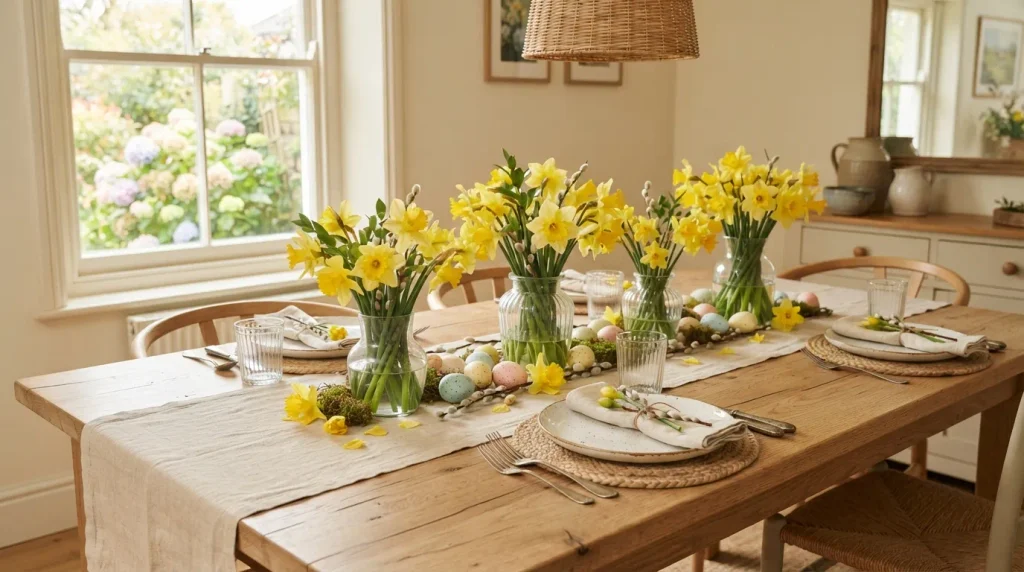
- Small glass vases keep the centerpiece airy and uncluttered.
- Yellow daffodils bring instant spring brightness to the table.
- Grouping several vases creates visual rhythm across a longer table.
- A few pastel eggs add Easter detail without competing with the flowers.
Nothing brightens a spring table faster than a simple group of yellow daffodils in clear glass vases. Use three to five small vases and fill each with a few stems, keeping the arrangements slightly different in height. The transparent glass lets the flowers remain the focus while making the overall display feel light and open. Add a handful of pastel eggs between the vases for a subtle Easter touch. These easter table centerpieces work especially well when you want cheerful color without using a large arrangement that takes up valuable dining space.
For a longer table, spread the vases down the center rather than placing everything in one cluster. Leave enough space between each arrangement so the yellow flowers create a gentle visual rhythm instead of appearing crowded. I’ve noticed that repeating one flower across several small vessels can look surprisingly polished because the consistent color ties the entire setting together. Pair the daffodils with white plates, natural linen, and pale wood for a fresh finish. If your table is small, simply use two vases and place them beside a small bowl of eggs for the same spring-inspired effect.
20. Rattan Lantern Arrangement
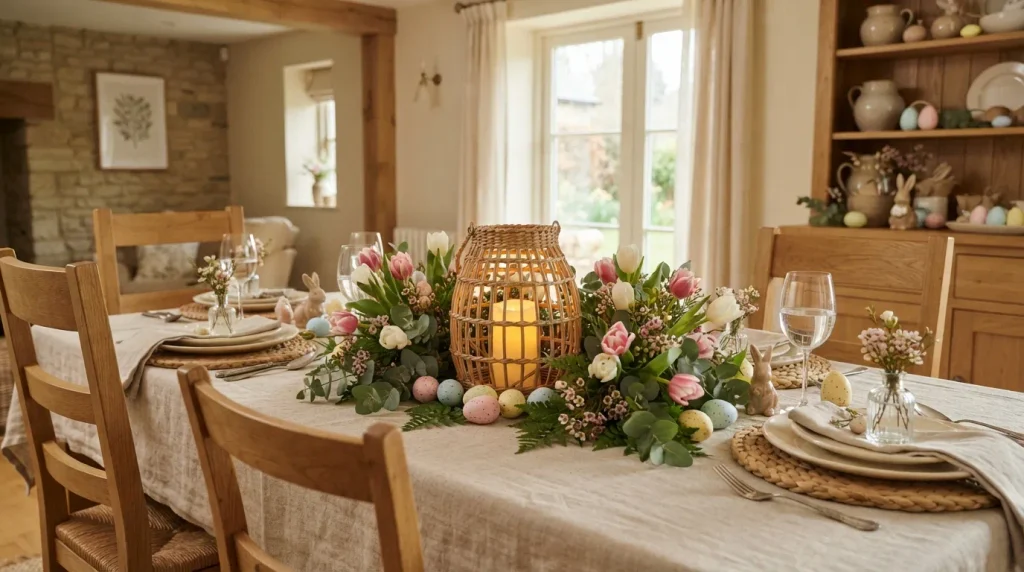
- Rattan adds warmth and natural texture to the spring table.
- A lantern creates a strong focal point without requiring many decorations.
- Greenery and flowers soften the structured shape.
- Battery candles make the arrangement practical for family gatherings.
A woven rattan lantern surrounded by spring flowers creates a warm centerpiece with plenty of natural texture. Choose a medium-sized lantern with an open design, place a battery-operated candle inside, and surround the base with tulips, greenery, and a few pastel eggs. The woven material brings an earthy quality to the table while the flowers keep the arrangement fresh and seasonal. This combination is particularly effective for homes with farmhouse, coastal, or relaxed modern decor. The lantern also adds a gentle glow when dinner extends into the evening, making the centerpiece useful beyond daylight hours.
Keep the flowers low around the lantern so its shape remains visible from every side. Use white, blush, or pale yellow blooms to maintain a soft spring palette, then add a few speckled eggs for understated Easter detail. Battery candles are especially helpful when children or pets are present because they provide warmth without an exposed flame. Place the arrangement on a neutral runner and keep the surrounding tableware simple. The result feels layered but not crowded, giving the dining table texture, height, and a welcoming glow without requiring a complicated floral design.
21. Garden Urn Arrangement
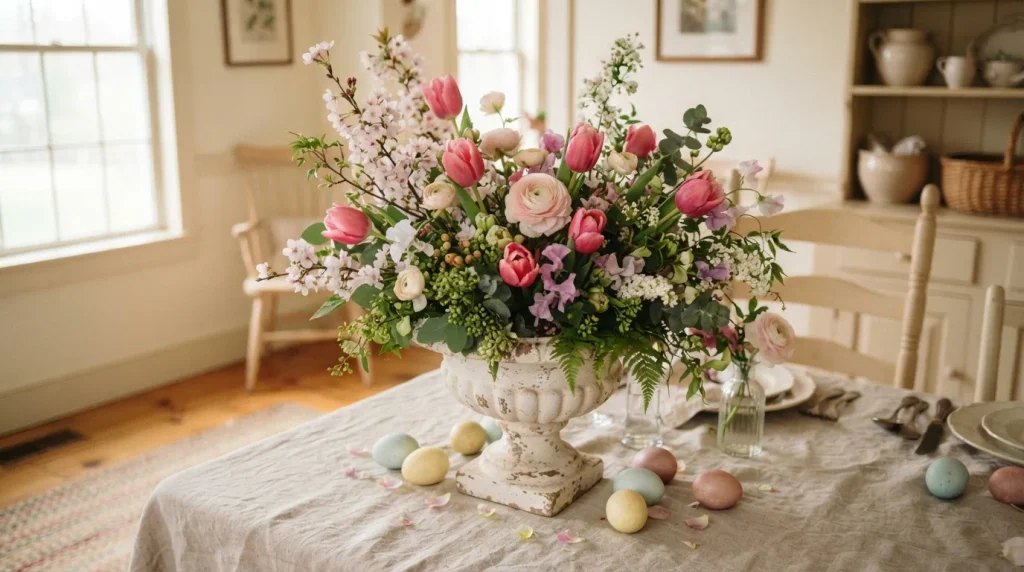
- A small garden urn gives the centerpiece an elegant architectural shape.
- Mixed spring flowers create fullness and natural movement.
- Greenery softens the structured container.
- The raised form adds presence while keeping the table visually balanced.
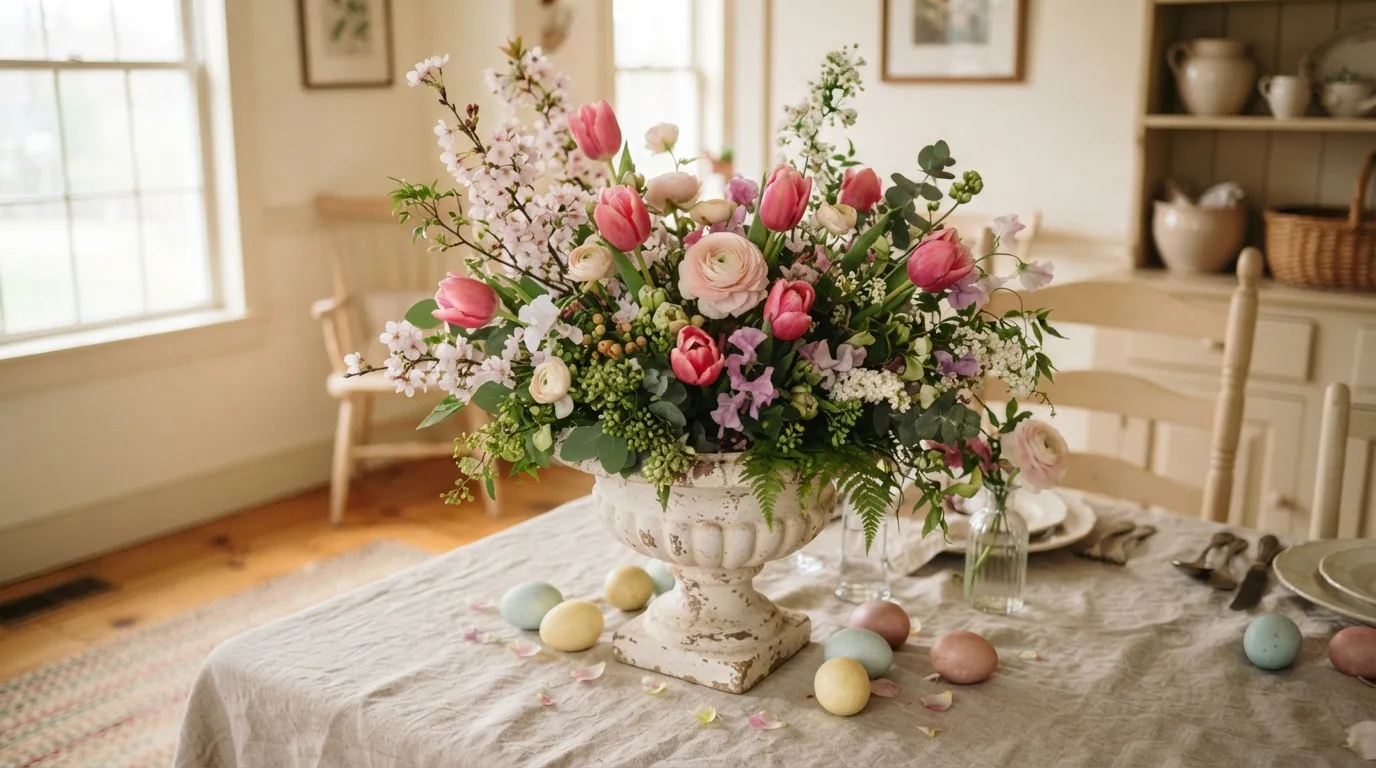
A small garden urn filled with spring flowers can give an Easter table an elegant garden-inspired finish. Choose a compact urn in white, stone, or aged ceramic, then fill it with tulips, ranunculus, small branches, and fresh greenery. Let some stems rise naturally while others curve gently over the rim to create movement. The structured shape of the urn contrasts beautifully with loose flowers, giving the arrangement both form and softness. Add a few pastel eggs around the base if you want a stronger Easter connection without changing the centerpiece’s sophisticated character.
Place the urn in the center of the table and keep its width proportional to the dining surface. A narrow arrangement works better for smaller tables, while a fuller shape can anchor a larger setting. In my experience, combining one architectural container with relaxed flowers creates a designer-like effect without needing professional arranging skills. Use a neutral linen runner, simple white dishes, and small touches of greenery to complete the setting. The finished display feels fresh, graceful, and seasonal, while the urn itself can easily be reused for other floral arrangements throughout spring and summer.
Conclusion
A beautiful Easter table doesn’t require a huge budget or complicated decorating skills. The right flowers, textures, colors, and seasonal details can turn an ordinary dining space into a warm spring gathering spot. These easter table centerpieces offer ideas for everything from simple family meals to special Easter brunches, so choose the style that feels most like you. Try one idea, mix elements from a few favorites, and make the arrangement your own. I’ve seen how small changes can completely transform a space. Save this post on Pinterest, share it with someone planning an Easter table, and start creating your favorite look today.