Ready to give your bathroom a little vintage magic? These 1950 bathroom ideas make it easy to bring playful color, classic tile, and charming retro details into your space.
A 1950s-inspired bathroom can feel cheerful, welcoming, and surprisingly practical. Whether you love pastel pink, mint green, turquoise tile, checkerboard floors, chrome fixtures, or rounded vintage shapes, small design choices can completely change the atmosphere. This collection is designed to help you find inspiration without making your bathroom feel like a museum. You’ll discover ideas for adding period character while keeping modern comfort, storage, lighting, and everyday function in mind. In my experience, even one thoughtful detail, such as a colorful vanity or vintage-style mirror, can make a plain bathroom feel much more personal and memorable.
1. Pink and Black Tilework
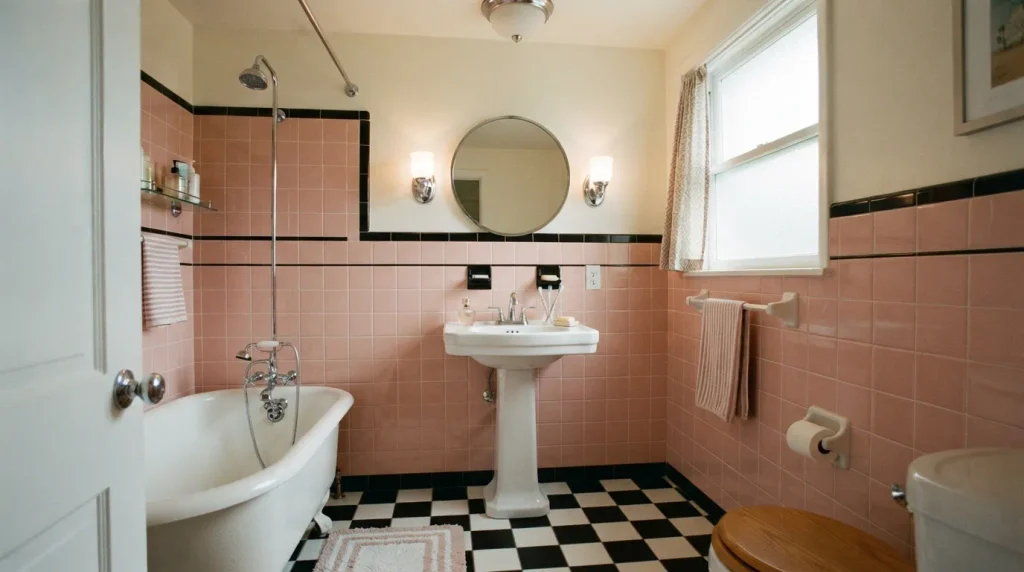
- Pair soft pink wall tiles with black accents for an instantly recognizable mid-century look.
- Use glossy surfaces to bounce light around a compact bathroom.
- Add black trim around mirrors, windows, or tile borders for crisp definition.
- A simple vintage vanity keeps the room practical without overwhelming the pattern.
Nothing makes a vintage bathroom feel instantly more authentic than a soft pink-and-black palette. This classic combination captures the playful character of mid-century interiors while remaining surprisingly easy to live with today. Glossy pink tiles brighten the walls, while narrow black borders give the room structure and contrast. I’ve noticed this pairing works especially well in smaller bathrooms because the reflective tile surface helps spread available light. Keep the fixtures simple, preferably chrome or polished metal, so the color combination remains the star without making the room feel visually crowded or overly themed.
For a balanced finish, carry the black detail onto a small section of the floor, mirror frame, or hardware rather than using it everywhere. A white pedestal sink or streamlined vintage vanity can soften the stronger contrast and keep the room feeling fresh. This is one of those 1950 bathroom ideas that can be adapted without completely remodeling the space. Even replacing plain wall paint with a pink tile backsplash can create the same retro impression. Add a rounded mirror and globe-style lighting, and the bathroom gains those unmistakable 1950s details while still feeling comfortable for everyday use.
Also Read : 24 Boho Bedroom Amazon Finds for a Cozy Stylish Retreat
2. Checkerboard Floor
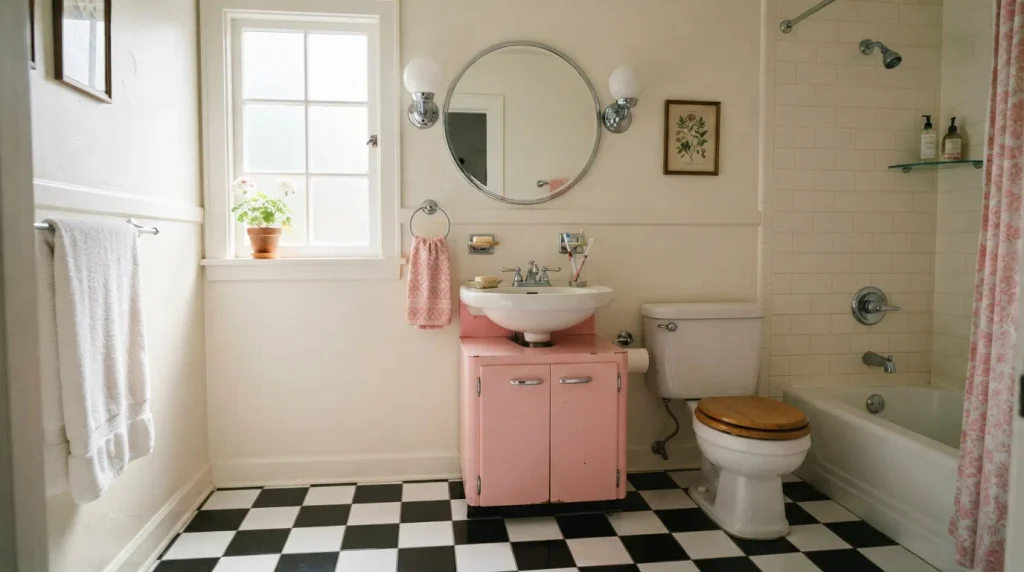
- Install small black-and-white tiles for an authentic retro foundation.
- Keep the walls lighter so the floor becomes the main visual feature.
- Chrome fixtures add a clean mid-century finish.
- A patterned floor can hide minor everyday marks better than very pale flooring.
A checkerboard floor can completely change the personality of a bathroom without requiring complicated decoration. The crisp black-and-white pattern creates a strong geometric foundation that immediately recalls classic mid-century interiors. For smaller rooms, choose smaller square tiles so the pattern feels detailed rather than oversized. In my experience, keeping the walls mostly white or cream prevents the floor from competing with every other surface. Chrome faucets, simple lighting, and a compact vanity then add just enough vintage character. The result feels intentional, cheerful, and visually memorable without becoming difficult to maintain or decorate around.
This flooring also gives you plenty of flexibility when choosing colors elsewhere. Soft pink, mint green, pale yellow, or turquoise accessories can all work beautifully against the monochrome base. If you are collecting 1950 bathroom ideas for a renovation, consider using the checkerboard pattern only on the main floor while keeping the shower area simple. That approach creates a focal point without making the room feel busy. A rounded mirror, retro towel holder, and classic pedestal sink can complete the look. The finished space feels nostalgic, yet the clean contrast keeps it surprisingly fresh for modern homes.
Also Read : 24 Colorful Bedroom Ideas for a Bright Happy Space
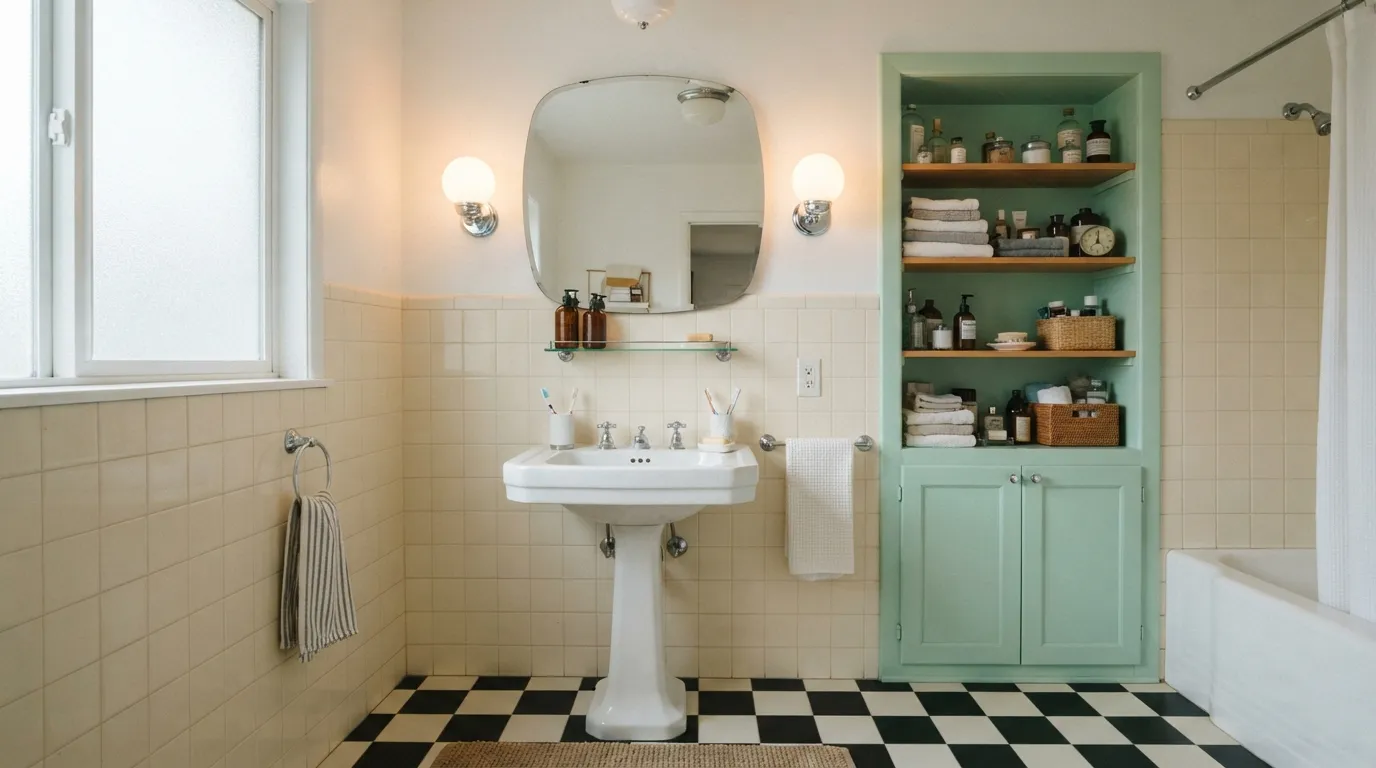
3. Mint Green Fixtures
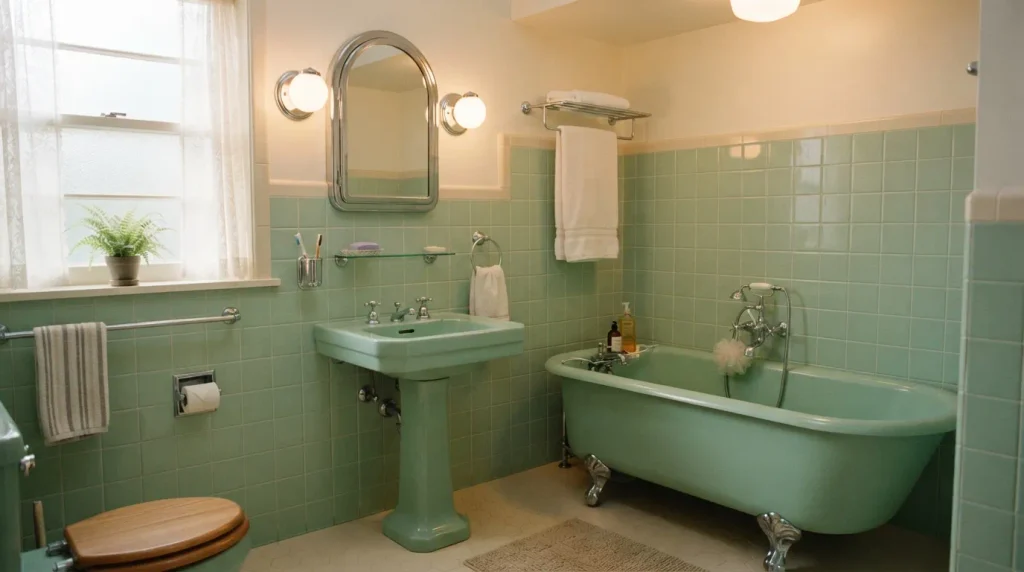
- Choose a mint green sink or bathtub as the room’s standout vintage feature.
- Combine the colored fixture with warm white walls for a softer appearance.
- Use chrome fittings to provide a polished contrast.
- Repeat the green through towels or small accessories for visual balance.
A mint green fixture brings a softer side of mid-century style into the bathroom and instantly becomes the room’s focal point. Unlike a heavily patterned wall, a colored sink or bathtub can create vintage personality while leaving plenty of visual breathing room. Warm white tile makes the green feel fresh rather than dated, while chrome hardware adds a bright, polished contrast. I’ve seen this approach work particularly well when homeowners want a nostalgic bathroom without turning every surface into a period detail. The result feels cheerful, distinctive, and easy to personalize with simple textiles and accessories.
When planning this look, let the colored fixture remain the hero and keep surrounding finishes relatively calm. Cream tile, pale flooring, and simple white towels create a gentle backdrop that makes mint green stand out beautifully. You can repeat the shade in a small framed print, soap dish, or window treatment for cohesion. Among classic 1950s bathroom styles, this approach offers a practical middle ground between authentic character and modern simplicity. It also works when replacing only one major fixture, making it possible to introduce retro charm gradually instead of committing to a complete bathroom renovation all at once.
Also Read : 22 Scandinavian Home Office Ideas for a Calm Workspace
4. Pink Clawfoot Tub

- Make a pastel bathtub the main focal point of the room.
- Pair pink with creamy white surfaces for a softer vintage effect.
- Use chrome feet and fixtures to add authentic mid-century shine.
- Keep surrounding accessories minimal so the tub remains visually dominant.
A pastel bathtub can turn an ordinary bathroom into a playful vintage retreat with one unforgettable focal point. A soft pink clawfoot tub works especially well when surrounded by creamy white tile and simple chrome fittings. The rounded silhouette adds softness, while the raised feet create an unmistakable period-inspired detail. Instead of filling the room with decorations, let the bathtub provide most of the personality. This approach is particularly useful in bathrooms where the walls and flooring need to stay simple. The result feels charming, colorful, and distinctly retro without looking like a themed showroom.
For a practical update, choose modern plumbing inside the vintage-looking tub so the bathroom remains comfortable for everyday use. A compact stool, simple white towels, and a rounded mirror can reinforce the period character without adding unnecessary clutter. If the room receives limited daylight, use warm bulbs near the tub to enhance the pastel color. I’ve noticed that soft pink looks especially inviting beside brushed or polished chrome. This combination creates one of those vintage bathroom looks that photographs beautifully for Pinterest while still feeling relaxed and functional when you actually use the space.
Also Read : 21 Dark Feminine Bedroom Ideas for a Moody Chic Retreat
5. Turquoise Tile Walls

- Cover the shower or vanity wall with turquoise square tiles.
- Balance bright tile with white fixtures and warm neutral flooring.
- Use darker grout to emphasize the geometric pattern.
- Add chrome hardware for a crisp vintage finish.
Turquoise tile instantly brings the cheerful optimism of mid-century bathrooms into a modern space. Its blue-green color feels especially effective when paired with crisp white fixtures, chrome hardware, and warm cream flooring. Square tiles with a glossy finish reflect light and make the walls feel brighter, which can be helpful in bathrooms with limited natural illumination. Use the strongest color around the shower or vanity while leaving other surfaces calmer. This creates a defined focal area instead of covering every wall. The finished room feels energetic, polished, and unmistakably inspired by classic 1950s interiors.
Grout color can also change the overall effect more than you might expect. White grout creates a softer, cleaner appearance, while a medium neutral grout makes each turquoise tile stand out more clearly. For a cohesive room, repeat small touches of turquoise through towels, artwork, or a soap container rather than introducing another dominant color. These details help connect the different surfaces without making the bathroom feel overly coordinated. If you are exploring 1950 bathroom ideas, turquoise tile is a strong choice because it delivers visual impact while still giving you plenty of flexibility with modern fixtures and practical storage.
Also Read : 25 Modern Colorful Living Room Ideas for a Bright Stylish Home
6. Vintage Pedestal Sink
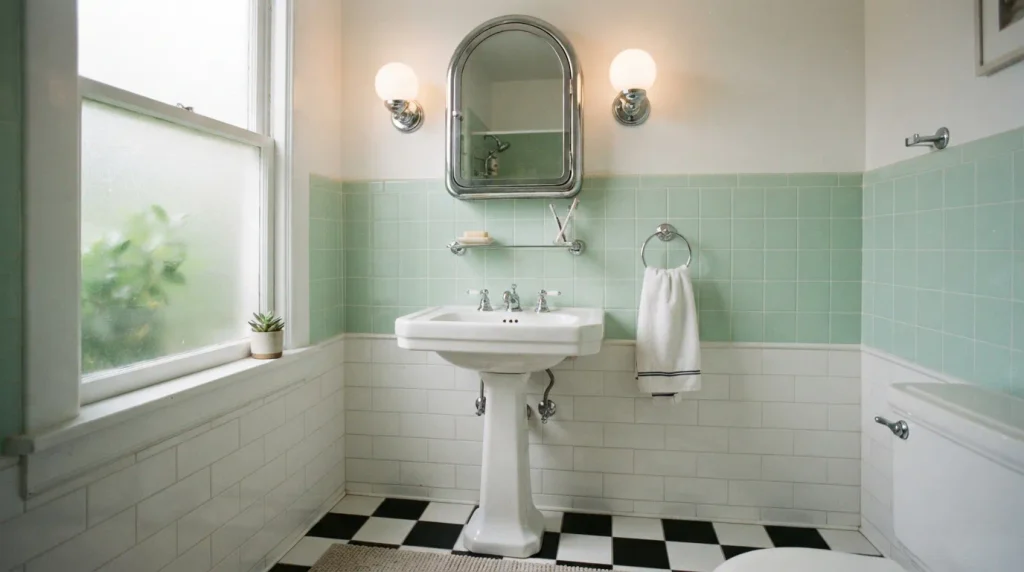
- Choose a compact pedestal sink to preserve an open floor plan.
- Pair it with chrome plumbing for a classic appearance.
- Add wall-mounted storage when cabinet space is limited.
- A rounded mirror above the basin reinforces the softer retro shapes.
A pedestal sink is one of the easiest ways to introduce vintage character without sacrificing valuable floor space. Its slim porcelain base keeps the area underneath visually open, making a compact bathroom appear larger and less crowded. Pairing it with chrome faucets and exposed plumbing creates an authentic period-inspired detail while maintaining a clean appearance. I’ve noticed this setup works particularly well in narrow bathrooms where a bulky vanity can make movement feel restricted. The simple silhouette also provides a neutral foundation, allowing colorful tile, patterned flooring, or pastel accessories to become the room’s stronger design features.
The main trade-off is storage, so plan for it before installing the sink. A recessed medicine cabinet, narrow wall shelf, or small freestanding cabinet can provide useful space without hiding the pedestal’s shape. Keep everyday products organized so the open area around the basin stays visually calm. A rounded mirror above the sink can echo the curves of the porcelain and soften surrounding square tiles. Among practical retro bathroom ideas, this arrangement is especially useful because it combines period character with efficient proportions. The bathroom feels brighter, more spacious, and easier to navigate while retaining a distinctly vintage personality.
Also Read : 23 Solarpunk Architecture Ideas for a Futuristic Green Home
7. Atomic Starburst Accents
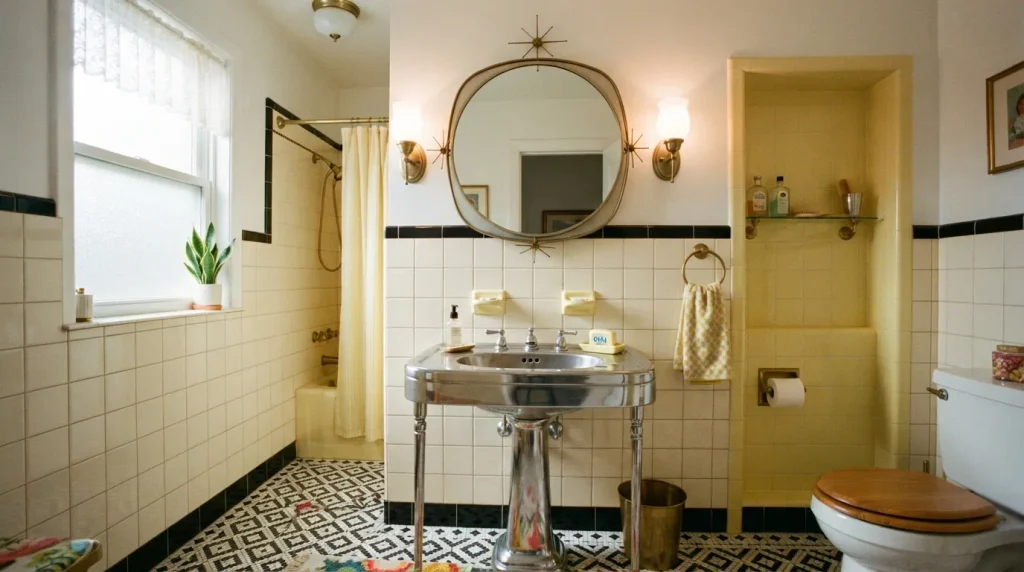
- Add a small starburst mirror or clock for recognizable mid-century character.
- Keep the main surfaces simple so the accent feels intentional.
- Choose chrome or brass details to complement vintage-inspired fixtures.
- Repeat the geometric shape sparingly for a polished look.
A small atomic-inspired accent can give a bathroom unmistakable 1950s personality without requiring a complete period renovation. Think starburst mirrors, sunburst clocks, geometric wall art, or sculptural light fixtures with radiating shapes. These details work best against simple backgrounds such as white tile, pale pastel walls, or neutral flooring. The contrast lets the distinctive shape stand out immediately. Instead of adding several competing patterns, choose one statement piece and let it carry the retro theme. This creates a bathroom that feels thoughtfully styled rather than overloaded with decorative references.
The beauty of this approach is its flexibility. A starburst mirror can be installed above a pedestal sink, while a small geometric clock can occupy an otherwise empty wall. Chrome works beautifully for a cooler appearance, while brass creates a warmer vintage mood. I’ve noticed that repeating one geometric shape in just two places often creates enough visual connection without making the room feel overly coordinated. If you are collecting retro-inspired bathroom designs, this technique is also budget-friendly because accessories can change the atmosphere without replacing tile, plumbing, or major fixtures.
8. Soft Yellow Cabinetry
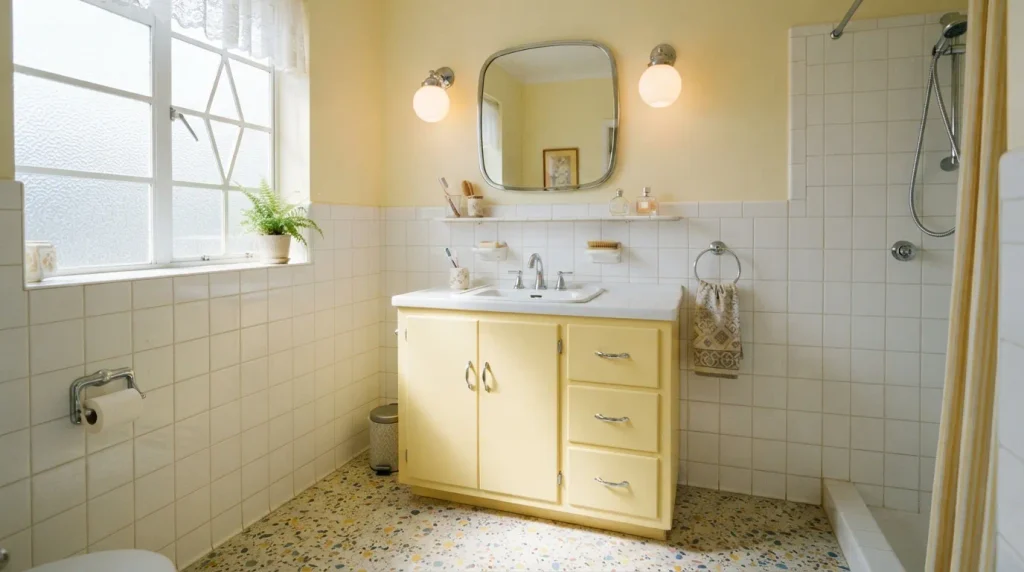
- Use pale yellow cabinetry to introduce cheerful vintage color.
- Combine it with white tile for a bright, balanced backdrop.
- Choose simple hardware in chrome or brass for subtle character.
- Keep countertop surfaces light to prevent the room from feeling heavy.
Soft yellow cabinetry brings warmth and personality to a bathroom while staying lighter than many stronger retro colors. A butter-yellow vanity looks especially appealing against white square tile because the clean background allows the cabinet color to become the focal point. Simple chrome pulls can reinforce the vintage character, while a white porcelain countertop keeps the overall composition fresh. This combination is useful when you want colorful 1950s influence without committing to brightly colored fixtures. The result feels sunny and welcoming, especially in bathrooms where natural light is limited or the existing architecture feels plain.
For a more authentic appearance, choose a cabinet with rounded corners or gently tapered legs rather than an overly modern box shape. You can introduce additional color through a small framed print, patterned hand towel, or vintage-style soap dish. Keep those accents restrained so the yellow remains the strongest visual element. Among classic retro bathroom decorating ideas, painted cabinetry is also relatively easy to update later. If your taste changes, repainting the cabinet is far simpler than replacing tile or plumbing, making this an approachable option for renters and homeowners experimenting with vintage-inspired design.
9. Glass Block Window
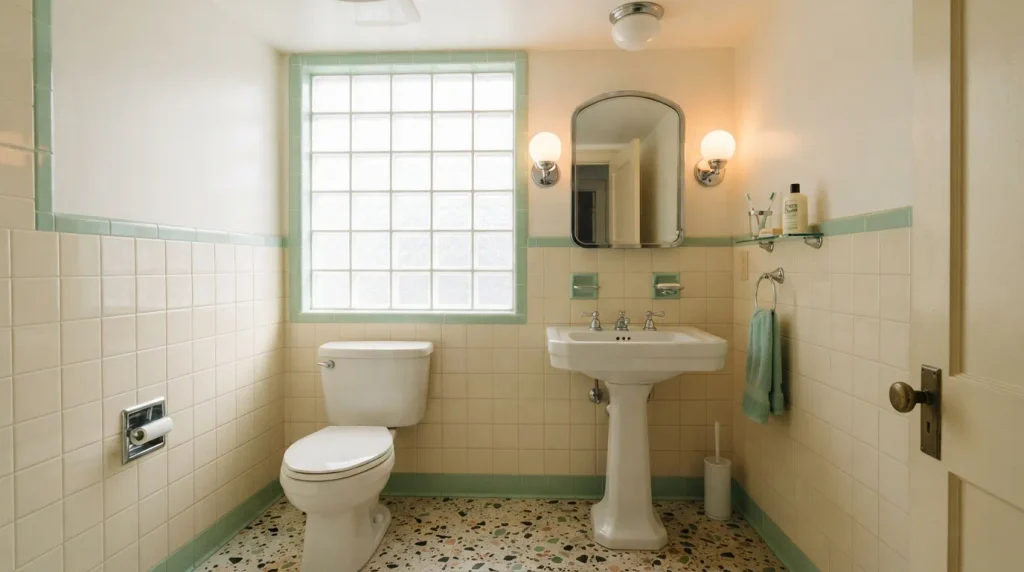
- Use glass blocks to create privacy while allowing natural light inside.
- Pair their textured surface with smooth ceramic tile for contrast.
- Keep the window treatment minimal to preserve the architectural detail.
- Chrome fixtures and pale colors help maximize the reflected light.
A glass block window can add architectural character while solving one of the most common bathroom problems: balancing privacy with natural light. The textured blocks diffuse sunlight instead of creating a clear view, giving the room a soft, glowing quality throughout the day. This material became strongly associated with mid-century architecture and works beautifully with square ceramic tile, chrome fixtures, and simple porcelain pieces. The patterned surface also adds visual texture without requiring additional decoration. For a bathroom that feels authentic but not cluttered, the window itself can become an important design feature.
If you are renovating an older bathroom, consider the window placement before choosing surrounding colors. Pale tile and light flooring can reflect the diffused daylight and make the room feel more spacious. Avoid heavy curtains that hide the glass blocks and reduce their visual impact. In my experience, this detail looks especially effective when paired with rounded mirrors and streamlined fixtures because the combination balances strong geometric texture with softer shapes. It is a practical way to capture the spirit of 1950s bathroom design while improving privacy, daylight, and overall atmosphere in a very functional space.
10. Terrazzo Tile Flooring
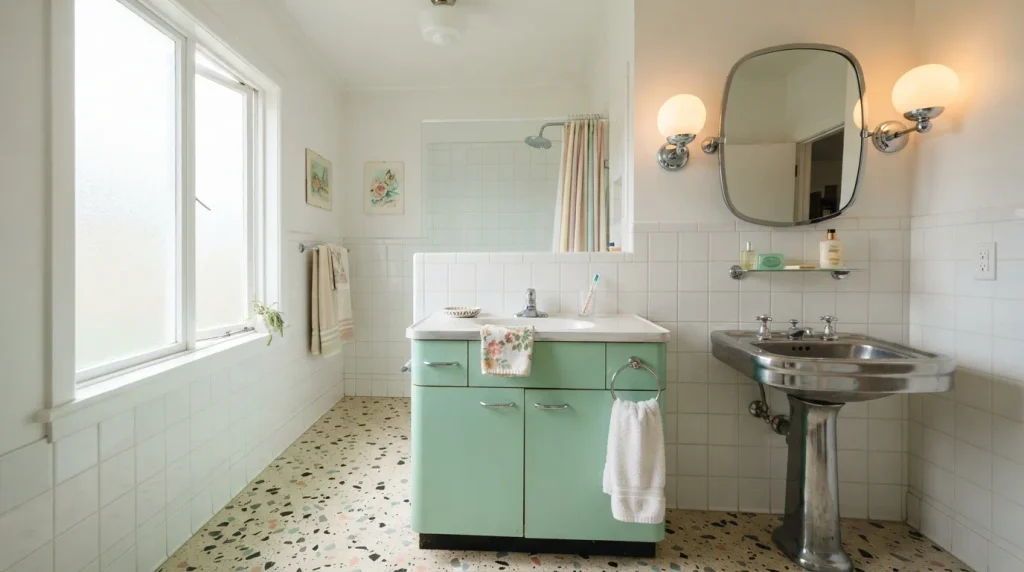
- Choose terrazzo with small chips for an authentic mid-century texture.
- Keep the wall treatment simple so the floor remains the focal point.
- Repeat one terrazzo color through towels or accessories for cohesion.
- Select a slip-resistant finish for better everyday bathroom safety.
Terrazzo flooring adds quiet visual interest while giving a bathroom the unmistakable texture associated with mid-century interiors. Its mixture of small stone or glass chips creates movement across the floor without relying on a bold graphic pattern. A cream base with black, gray, or pastel flecks works particularly well beside white tile and chrome fixtures. Unlike a highly decorative floor, terrazzo can connect several colors throughout the room without making the space feel busy. It is especially useful when you want vintage character that feels subtle, sophisticated, and easy to combine with modern bathroom essentials.
When selecting terrazzo, pay attention to both the chip colors and the surface finish. A floor containing one or two accent shades can help guide your choices for towels, cabinetry, or wall accessories. For practical use, choose a finish designed for wet areas and avoid surfaces that become excessively slippery. I’ve noticed terrazzo looks particularly polished when the rest of the room uses clean silhouettes and minimal decoration. This flooring option can therefore anchor a retro bathroom beautifully while giving you enough flexibility to update fixtures, paint, or accessories later without needing to replace the entire design.
11. Rounded Medicine Cabinet

- Replace a sharp rectangular cabinet with a softly rounded silhouette.
- Choose a mirrored surface to reflect light around the room.
- Chrome edging provides a subtle vintage detail.
- Use recessed storage when possible to preserve valuable wall space.
A rounded medicine cabinet can make a surprisingly noticeable difference in a small bathroom. Its curved outline softens the straight lines created by square tiles, rectangular flooring patterns, and cabinetry. A mirrored front also reflects available light, helping the room feel brighter and more open. Chrome edging reinforces the vintage character without adding another strong color. This is a particularly smart detail when the bathroom has limited wall space because the cabinet can provide useful storage while functioning as a decorative focal point. The result feels considered rather than overly decorated, which suits understated mid-century interiors beautifully.
For the strongest effect, position the cabinet directly above a pedestal sink or compact vanity and keep nearby accessories simple. Recessed models provide an especially clean appearance because they sit closer to the wall. If a recessed installation is not possible, choose a shallow cabinet with a streamlined frame. Among practical retro bathroom decorating choices, this update offers a good balance between appearance and everyday function. I’ve seen rounded mirrors and cabinets work especially well together because their repeated curves create visual continuity, making even a basic bathroom feel more intentionally designed.
12. Chrome Wall Sconces
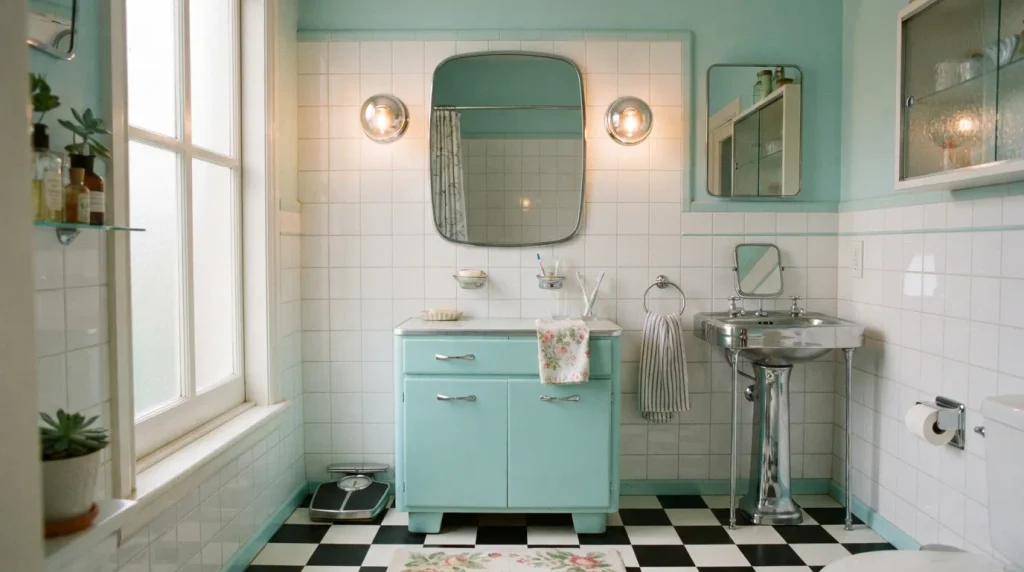
- Install globe-style sconces beside the mirror for balanced illumination.
- Choose polished chrome to reinforce the period-inspired aesthetic.
- Use warm bulbs to soften reflective surfaces.
- Keep the fixture shape simple when the tile already has strong patterns.
Lighting can transform even the simplest bathroom, and chrome wall sconces are an easy way to introduce mid-century character. Globe-style fixtures placed on either side of a mirror provide balanced illumination while creating a polished focal point around the sink. Warm bulbs make the reflective chrome feel softer and more inviting, especially when combined with white ceramic tile. Rather than relying on one ceiling fixture, layered lighting helps eliminate shadows around the face and improves everyday tasks such as shaving, applying makeup, or grooming. The result is both decorative and genuinely useful.
For a more authentic appearance, look for simple rounded shades, slim metal arms, and finishes such as polished chrome. Avoid oversized contemporary fixtures that dominate the wall or compete with patterned tile. In my experience, symmetrical placement makes vintage-style sconces look more intentional, even when the rest of the bathroom is modern. You can also combine them with a rounded medicine cabinet or mirror to reinforce the curved shapes. This approach captures the clean optimism of 1950s interiors while giving the bathroom better task lighting, stronger visual balance, and a warmer atmosphere for daily routines.
13. Pastel Blue Tile

- Use soft blue tile to create a calm vintage foundation.
- Combine it with white porcelain fixtures for a clean contrast.
- Add chrome hardware to keep the palette bright and polished.
- Repeat the blue in small textiles instead of adding more wall patterns.
Pastel blue tile gives a bathroom a calm, refreshing character while still capturing the playful color palette of the mid-century era. Soft blue works especially well with white porcelain because the contrast keeps the room feeling clean and airy. Glossy ceramic surfaces can also reflect daylight, making a smaller bathroom appear brighter. Chrome faucets, towel rings, and lighting add another reflective layer without introducing visual clutter. If you want vintage personality without using strong pink or turquoise, this softer blue provides an excellent middle ground that feels timeless and easy to live with.
For a cohesive finish, choose towels or accessories in closely related shades rather than introducing several competing colors. A rounded mirror can soften the straight tile grid, while a simple black-and-white floor adds just enough contrast underneath. These 1950 bathroom ideas show how a single pastel color can establish an entire design direction. I’ve noticed that pale blue is particularly forgiving when paired with modern updates because it works naturally with contemporary white fixtures too. That makes it easier to preserve a vintage atmosphere while quietly improving storage, lighting, plumbing, and everyday functionality.
14. Black Trim Details

- Use narrow black borders to frame light-colored ceramic tile.
- Repeat black through small hardware for a connected appearance.
- Keep the trim thin so it defines rather than dominates.
- Pair strong edging with softer pastel colors for balance.
Small black trim details can give a simple bathroom much stronger architectural definition. A narrow border around white or pastel tile creates clear visual lines and makes the wall arrangement feel deliberately designed. Black can also appear around a mirror, along the floor edge, or through small cabinet pulls. The key is restraint. Too much dark trim can make a compact bathroom feel divided, while carefully placed accents create contrast without overwhelming the space. This technique is especially useful when you want retro character but prefer a cleaner, less colorful interpretation of mid-century style.
Consider using the same black tone in two or three locations so the room feels connected. For example, a black tile border can relate naturally to a checkerboard floor and a slim black mirror frame. Chrome fixtures then add brightness between the darker elements. I’ve noticed this combination works particularly well with pale pink, mint, and cream because those colors soften the stronger edges. If you are gathering vintage bathroom inspiration for a renovation, black trim is also relatively easy to introduce through tile borders, paint, or accessories, allowing you to create a period-inspired appearance without changing every major surface.
15. Mid-Century Vanity
- Choose a compact vanity with tapered legs for recognizable retro character.
- Use warm wood or painted pastel cabinetry depending on the room palette.
- Add simple chrome pulls instead of oversized modern hardware.
- Keep the countertop light to preserve an airy appearance.
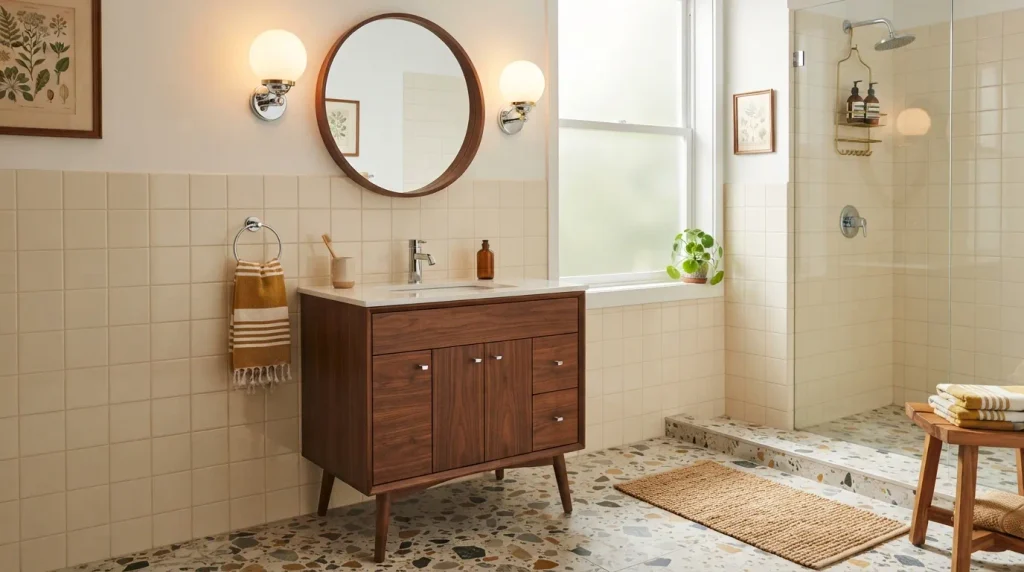
A well-chosen vanity can bring warmth and useful storage to a vintage bathroom without making the room feel visually heavy. Look for tapered legs, gently rounded corners, natural wood grain, or softly painted cabinetry to capture the relaxed character of mid-century furniture. Walnut and warm oak create a richer appearance, while pale yellow, mint, or cream paint can make the design feel more playful. A simple white countertop keeps the composition light. This balance between warm cabinetry and crisp porcelain creates a bathroom that feels authentic while still meeting modern storage needs.
Size matters just as much as style, particularly in older bathrooms where floor plans can be narrow. Choose a vanity that leaves enough clearance around the toilet, shower, and doorway so the room remains comfortable to use. Chrome pulls can provide a subtle vintage reference without making the furniture look overly decorative. In my experience, a wood vanity looks especially good against pastel tile because the natural grain prevents the color palette from feeling too sweet. Among practical retro-inspired bathroom ideas, this option delivers one of the best combinations of storage, warmth, personality, and everyday functionality.
16. Retro Wall Clock
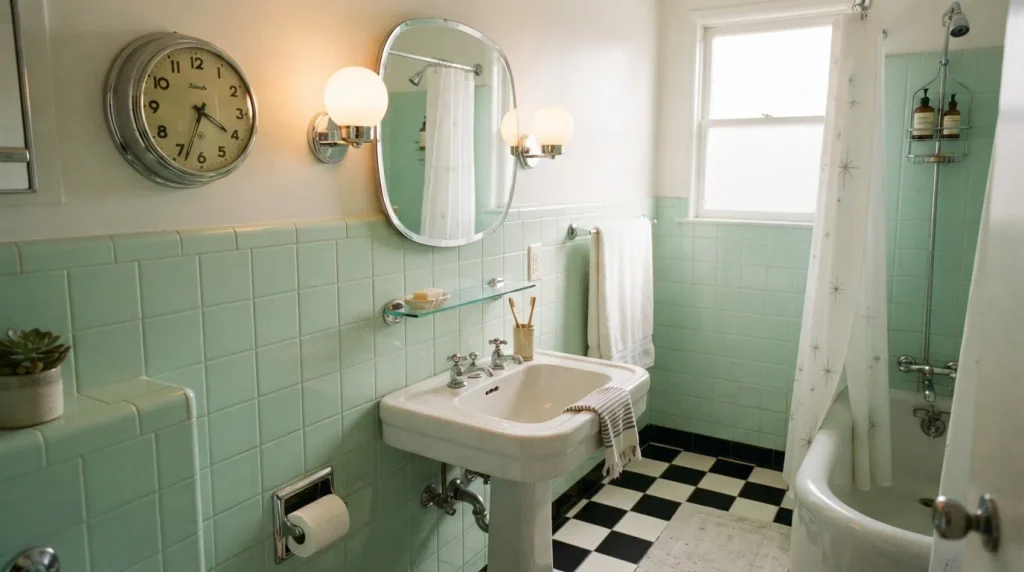
- Add a rounded wall clock as a small but noticeable vintage accent.
- Choose simple black, cream, chrome, or pastel detailing.
- Position it where it remains visible without competing with the mirror.
- Coordinate its shape with other curved accessories for a cohesive look.
A retro wall clock can add personality to a bathroom while keeping the overall design surprisingly simple. Rounded clocks with clean faces, chrome frames, or pastel details fit naturally into a 1950s-inspired setting. Unlike large decorative pieces, a clock provides a useful function while quietly reinforcing the period aesthetic. Place it on an open wall near the vanity or doorway where it can be seen easily. The combination of curved clock lines with square ceramic tile creates an appealing contrast that keeps the room from looking too rigid or overly geometric.
Choose a clock color that already appears somewhere else in the bathroom for a more connected finish. A cream clock can echo the floor, while black can relate to checkerboard tile or dark trim. Chrome works particularly well when the room already has polished metal fixtures. I’ve noticed that one carefully chosen accessory often creates more impact than several small decorations scattered throughout the room. If you are collecting 1950 bathroom ideas for a subtle makeover, a vintage-style clock is an affordable detail that adds function, visual interest, and nostalgic character without requiring major construction.
17. Peach Ceramic Tile
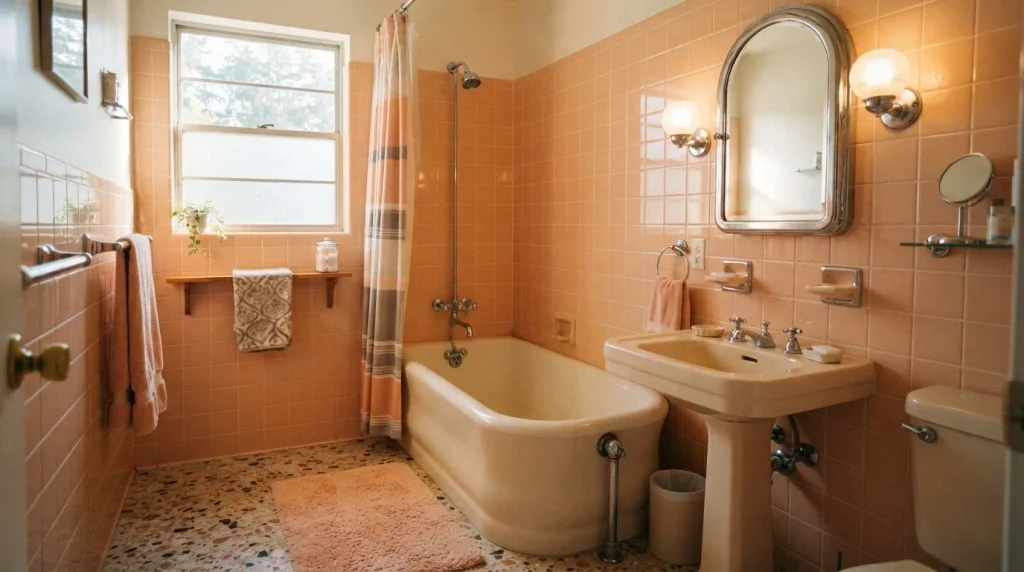
- Use warm peach tile for a softer alternative to classic pink.
- Balance the color with creamy white porcelain fixtures.
- Choose chrome hardware to keep the palette bright.
- Repeat peach through towels or small accessories for visual consistency.
Peach ceramic tile creates a warm, welcoming bathroom with a softer vintage personality than brighter pink or turquoise finishes. Its gentle orange-pink undertone works beautifully with creamy white porcelain and polished chrome, producing a palette that feels cheerful without becoming overwhelming. Glossy square tiles can reflect natural light across the walls, while terrazzo or pale neutral flooring keeps the lower part of the room grounded. This combination is particularly effective when you want the bathroom to feel colorful and distinctive but still comfortable enough for everyday routines and future decorating changes.
To keep peach tile looking sophisticated, avoid introducing too many additional warm colors. Let the tile provide the main color statement, then use white, cream, and chrome as supporting finishes. A rounded mirror or medicine cabinet can add softer shapes against the tile grid. For smaller bathrooms, using peach only around the vanity or shower can create the same visual effect with less commitment. These vintage bathroom ideas work well because the color creates immediate character, while the simple fixtures prevent the space from feeling overly themed or locked into one particular decorating era.
18. Mint and Pink Pairing
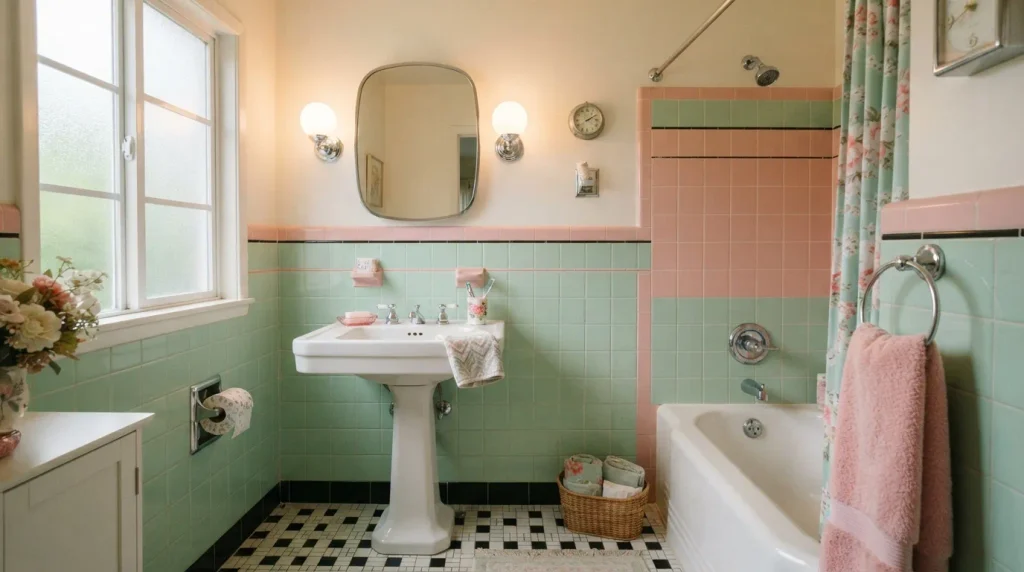
- Combine two soft pastels for a playful mid-century color scheme.
- Keep white porcelain fixtures between the stronger wall colors.
- Use black accents sparingly to sharpen the overall palette.
- Choose one pastel as the dominant shade and the other as an accent.
Few color combinations capture vintage bathroom charm as naturally as mint green and soft pink. The two pastels create a cheerful mid-century palette while remaining gentle enough for a relaxing space. To prevent the room from feeling visually scattered, choose one color for the larger tiled area and use the second as an accent around the vanity, bathtub, or accessories. White porcelain fixtures provide a clean visual break between the shades, while small black details can add definition. The result feels playful, recognizable, and much more intentional than simply mixing several pastel colors together.
If you want a quieter interpretation, use mint on the walls and introduce pink through towels, artwork, or a small cabinet. For a stronger period effect, alternate the two colors in separate tile zones or use a narrow accent border. Chrome hardware helps keep the palette polished and bright. I’ve seen this pairing work especially well in bathrooms with natural daylight because the colors become soft and luminous rather than heavy. Among 1950 bathroom ideas, this combination is particularly memorable for Pinterest because it creates an instantly recognizable visual palette while still allowing practical modern fixtures and storage.
19. Formica Vanity Top
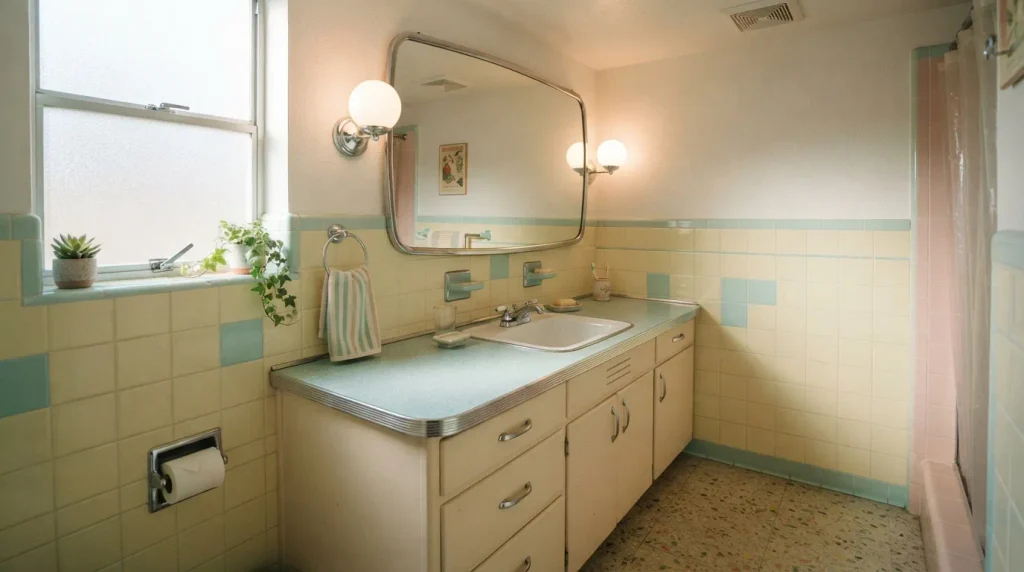
- Choose a vintage-inspired laminate countertop for an authentic mid-century touch.
- Look for subtle speckles, pastel tones, or simple geometric patterns.
- Pair the surface with chrome edging for stronger period character.
- Keep the cabinetry simple so the countertop remains visually distinctive.
A Formica-style vanity top can introduce a genuine mid-century reference without covering the entire bathroom in retro patterns. Laminate was valued for its practical surface and wide range of colors, making it a natural choice for vintage-inspired interiors. Look for pale aqua, cream, soft pink, or lightly speckled finishes that complement the room’s existing palette. Chrome edging can strengthen the period feel, while a simple porcelain sink keeps the countertop looking clean. This approach works especially well when you want a small renovation detail that creates character without replacing every major bathroom fixture.
When choosing the surface, prioritize durability and easy cleaning because bathroom countertops encounter moisture, cosmetics, and daily spills. A subtle pattern is often easier to style than a highly graphic design because it can work with both vintage and modern accessories. Pair the countertop with streamlined cabinetry and simple chrome hardware so the laminate remains the visual highlight. In my experience, one authentic-looking material can make a bigger difference than many decorative accessories. This is a practical way to capture the spirit of mid-century bathroom design while keeping the space functional, affordable, and easy to maintain.
20. Retro Checkerboard Walls

- Use a small checkerboard pattern on one wall instead of the entire bathroom.
- Combine black and white tiles with colorful vintage accessories.
- Keep the remaining surfaces plain to avoid visual overload.
- A feature wall can define the vanity or bathtub area beautifully.
A checkerboard feature wall delivers bold retro character while giving you much more control than covering every surface with pattern. Black-and-white tiles create a crisp geometric backdrop behind a vanity, bathtub, or open shelving area. The strong contrast naturally draws attention, so the rest of the bathroom should remain relatively calm. White porcelain fixtures, pale pastel accessories, and chrome hardware help soften the graphic effect. This approach is especially useful when you want a statement feature that photographs beautifully but does not make a compact bathroom feel visually crowded.
Consider using smaller tiles for a more detailed period appearance, or larger squares if you prefer a cleaner modern interpretation. Keep grout lines neat and choose a durable tile appropriate for humid bathroom conditions. A pastel pink towel, mint accessory, or colorful vintage-style print can add warmth without competing with the pattern. Among 1950 bathroom ideas, a checkerboard feature wall is one of the easiest ways to create a dramatic focal point while leaving the rest of the room flexible. It also allows future updates without requiring a complete redesign of the bathroom.
21. Vintage Built-In Storage
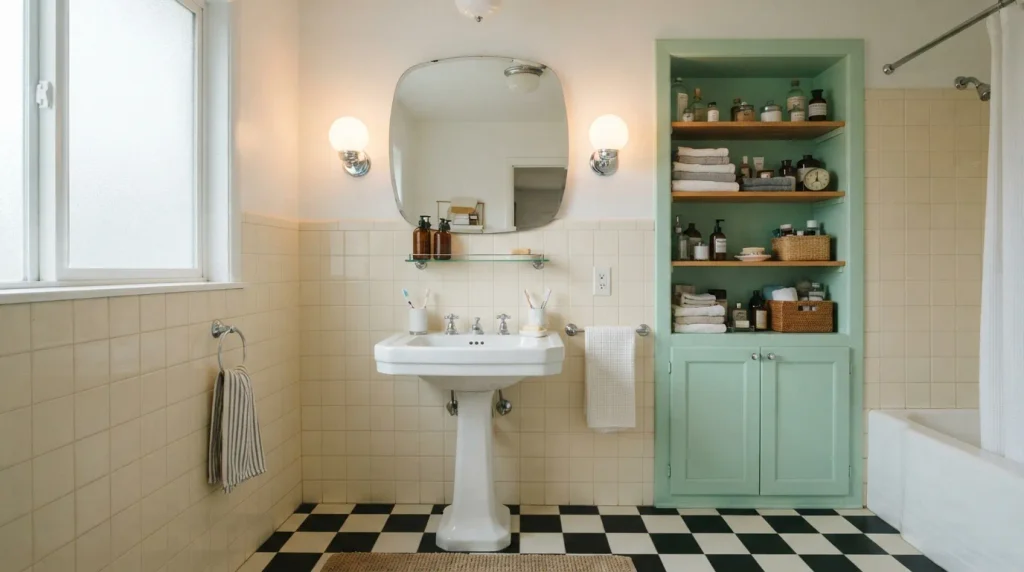
- Use recessed cabinets to preserve the clean lines of a compact bathroom.
- Choose painted doors in cream, mint, or pale yellow.
- Add simple chrome knobs for a subtle retro reference.
- Keep frequently used products behind closed doors for a calmer appearance.
Built-in storage can make a vintage-inspired bathroom feel considerably more practical without taking away its character. Recessed cabinets keep toiletries, towels, and cleaning supplies organized while preserving valuable floor space. Painted doors in mint, cream, pale yellow, or soft pink can introduce a gentle period color without requiring colorful tile throughout the room. Simple chrome knobs provide a small vintage reference, while closed storage keeps everyday clutter hidden. This matters especially in compact bathrooms, where too many products left on open surfaces can quickly make the room feel cramped and visually untidy.
For the most cohesive result, match the cabinet color with one existing element rather than introducing another unrelated shade. A mint cabinet can connect with pastel tile, while cream cabinetry can complement terrazzo flooring and white porcelain. If the bathroom has enough wall depth, recessed storage is particularly valuable because it adds capacity without projecting into the walking area. I’ve noticed that practical organization often makes a bigger visual difference than adding more decoration. A well-planned storage wall can therefore complete the vintage look while making the bathroom easier to clean, navigate, and enjoy every day.
Conclusion
A vintage-inspired bathroom does not need a complete renovation to feel special. The right tile, pastel color, rounded mirror, chrome fixture, or retro accessory can create a beautiful transformation one detail at a time. These 1950 bathroom ideas give you plenty of ways to mix nostalgic charm with practical modern living. I’ve seen how small changes can completely refresh a space without making it feel overly themed. Save this post on Pinterest so you can return to your favorite ideas when planning your makeover. Try one detail that fits your style, and share this inspiration with someone who loves timeless retro design.