
Your home office should feel like a space you’re excited to enter—not a bland corner you simply tolerate. Ready to turn your workspace into something bold, colorful, and completely your own? These maximalist home office decor ideas make it easy to layer personality, pattern, color, and comfort without losing functionality.
Whether your office feels plain, cluttered, or simply uninspiring, the right decorative choices can make a remarkable difference. From jewel-toned walls and patterned rugs to statement chairs, layered artwork, greenery, and beautiful storage, these ideas show how to create a workspace that feels both expressive and practical. In my experience, you don’t need a huge budget or a complete renovation to make a room feel transformed. Start with one element you love, then build around it thoughtfully. As you explore these ideas, you’ll discover simple ways to create a workspace that feels inspiring, organized, personal, and unmistakably yours.
1. Jewel-Toned Accent Wall
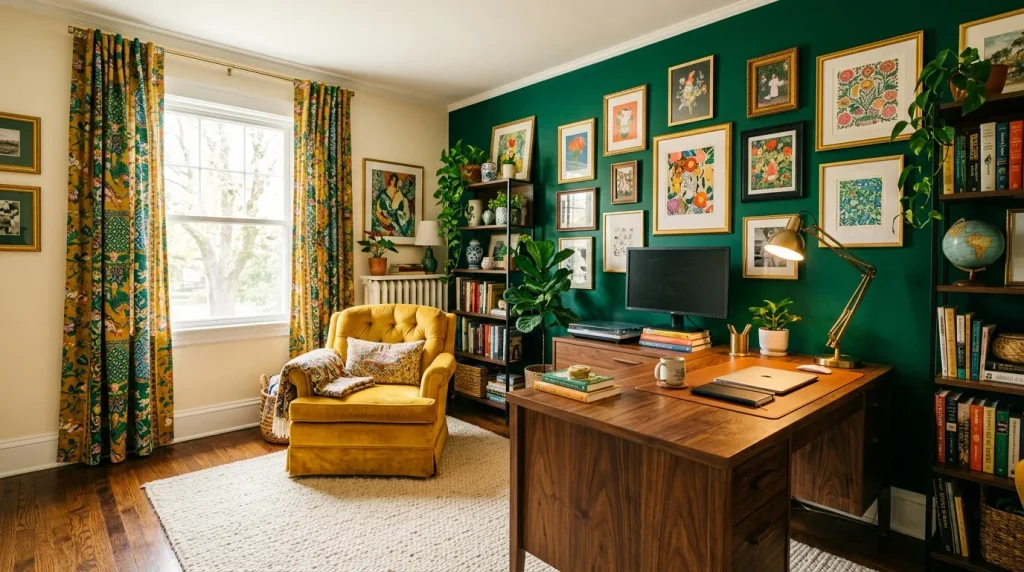
- Choose emerald, cobalt, plum, or deep teal for instant visual impact.
- Repeat two or three accent colors through furniture and accessories.
- Balance saturated walls with warm wood or creamy textiles.
- Use a warm desk lamp to soften the room after sunset.
Ready to make your office impossible to ignore? A jewel-toned accent wall gives a maximalist workspace instant personality without requiring a complete makeover. Choose emerald, cobalt, plum, or deep teal, then layer artwork and furniture in complementary shades for a collected look. In my experience, one saturated wall can make even a small home office feel intentional and finished. Keep the remaining surfaces visually balanced with warm wood, brass accents, or creamy textiles. The result is dramatic but practical, creating a focused backdrop that makes your desk, shelves, and favorite decorative pieces feel connected.
A bold wall color becomes even more striking when the rest of the room feels layered and lived-in. Pair saturated paint with framed prints, patterned curtains, colorful storage boxes, or a statement desk chair to build depth without making the workspace chaotic. The key is repeating two or three colors throughout the room so separate pieces feel visually related. Natural daylight will reveal the richness of the paint, while a warm desk lamp adds cozy contrast after sunset. This approach works especially well when you want maximalist home office decor that feels expressive yet organized.
Also Read : 21 Sage Green Bedroom Ideas for a Calm Relaxing Retreat
2. Layered Gallery Wall
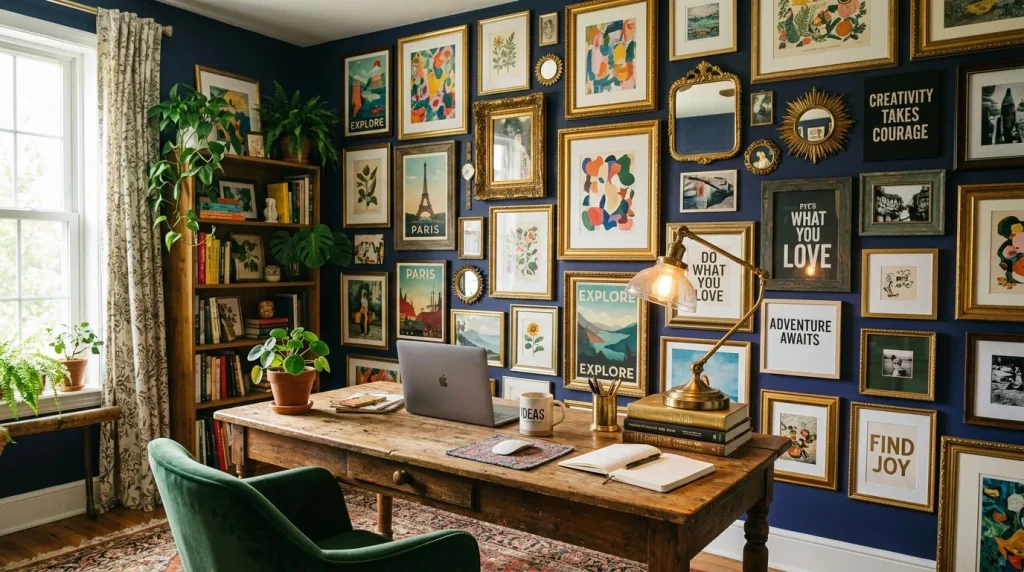
- Turn an empty wall into a colorful focal point.
- Mix artwork, mirrors, photographs, and decorative pieces in different sizes.
- Combine frame finishes for a collected, personal appearance.
- Keep a loose color palette so the arrangement feels intentional.
A gallery wall can completely change the energy of a home office, especially when the desk itself has a simple silhouette. Start with your largest artwork near the center, then build outward with smaller pieces to create balance. Mixing textures makes the display feel richer, so consider canvas, woven art, glossy frames, and vintage-style prints. Keep frequently used items below eye level or away from the arrangement so the workspace remains functional. Warm lighting directed toward the wall can create gentle evening highlights, making your office feel more inviting without sacrificing the bold, layered character that defines this style.
Also Read : 23 Solarpunk Architecture Ideas for a Futuristic Green Home
3. Lush Greenery Corner
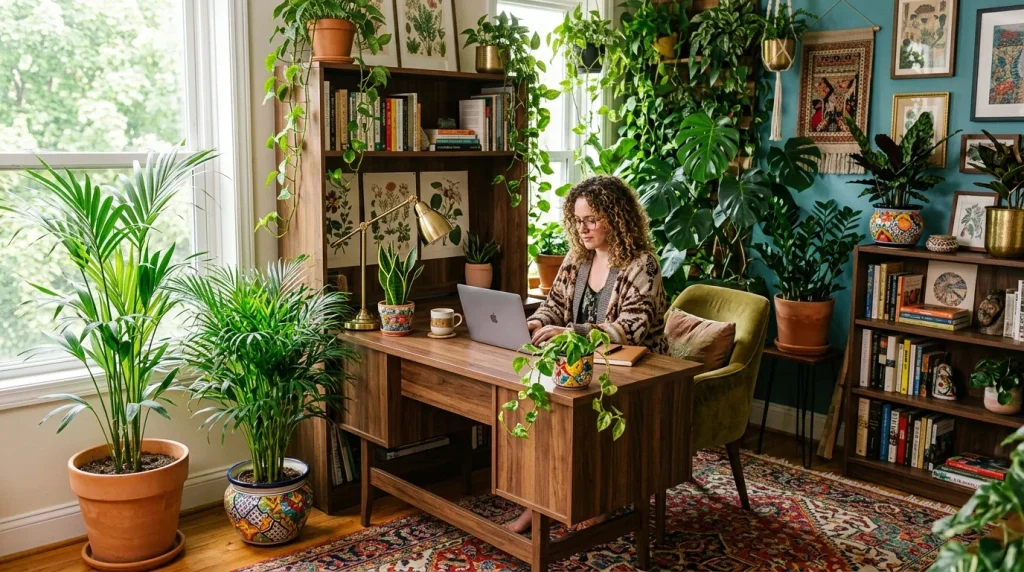
- Add trailing plants for movement and softness.
- Mix plant heights to create a fuller visual composition.
- Choose colorful or textured planters that complement the room.
- Keep taller greenery behind the desk and smaller plants nearby.
Nothing says playful maximalism like a desk surrounded by lush greenery and colorful accents. Bring together trailing pothos, compact palms, sculptural plants, and patterned planters to soften hard office surfaces while adding height and texture. Choose planters in terracotta, ceramic, brass, or painted finishes that echo colors already present in the room. Place taller plants behind the desk and smaller ones on shelves or side tables, keeping cables and work tools accessible. I’ve seen this combination make workspaces feel noticeably warmer and less sterile. Natural greenery also adds an easy decorative layer without needing more artwork or furniture.
Nothing says playful maximalism like a desk surrounded by lush greenery and colorful accents. Bring together trailing pothos, compact palms, sculptural plants, and patterned planters to soften hard office surfaces while adding height and texture. Choose planters in terracotta, ceramic, brass, or painted finishes that echo colors already present in the room. Place taller plants behind the desk and smaller ones on shelves or side tables, keeping cables and work tools accessible. I’ve seen this combination make workspaces feel noticeably warmer and less sterile. Natural greenery also adds an easy decorative layer without needing more artwork or furniture.
A greenery-filled corner can also make a busy workspace feel more visually balanced and inviting. Use a tall plant beside the desk, trailing vines on a floating shelf, and one compact plant near your monitor for different levels of interest. If natural light is limited, choose low-light varieties and place them where they can thrive without blocking your workspace. Decorative pots can introduce another layer of pattern or color, helping the plants connect with the rest of the room. This approach works beautifully in maximalist home office decor because greenery adds texture, freshness, height, and personality without overwhelming useful work surfaces.
Also Read : 21 1950 Bathroom Ideas for a Vintage Retro-Inspired Space
4. Patterned Window Treatments
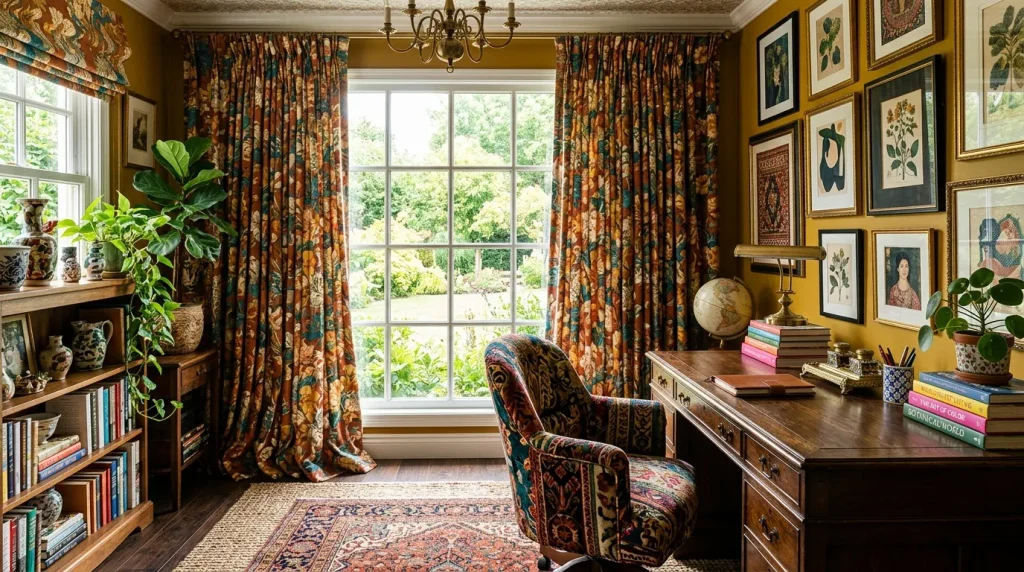
- Choose curtains with bold florals, stripes, or geometric patterns.
- Repeat one curtain color elsewhere for a coordinated look.
- Use full-length panels to make the room feel taller.
- Layer sheer curtains underneath for softer daytime light.
Want an easy way to make your workspace feel dramatically more finished? Patterned curtains can instantly introduce color, movement, and personality without taking up valuable floor space. Choose oversized florals, geometric shapes, stripes, or botanical prints that connect with colors already used around the room. Full-length panels can also make the ceiling appear taller, especially when mounted slightly above the window frame. In smaller offices, this vertical effect is surprisingly useful. I’ve noticed that repeating one curtain color in artwork, cushions, or desk accessories helps a bold pattern feel intentional rather than visually disconnected from the rest of the space.
Window treatments should look beautiful while still supporting comfortable work conditions. If your office receives strong afternoon sun, combine decorative panels with lightweight sheers or practical blinds to control glare on your screen. A layered setup creates softer daylight and adds another texture to the room. For a richer maximalist effect, select curtains with a substantial fabric such as velvet, linen, or textured cotton, depending on the season and climate. Keep the desk positioned so the window remains useful for natural illumination without creating distracting screen reflections. The finished space feels colorful, cozy, polished, and distinctly personal.
Also Read : 23 Corner Fireplace Ideas for a Cozy Stylish Living Room
5. Statement Desk Chair
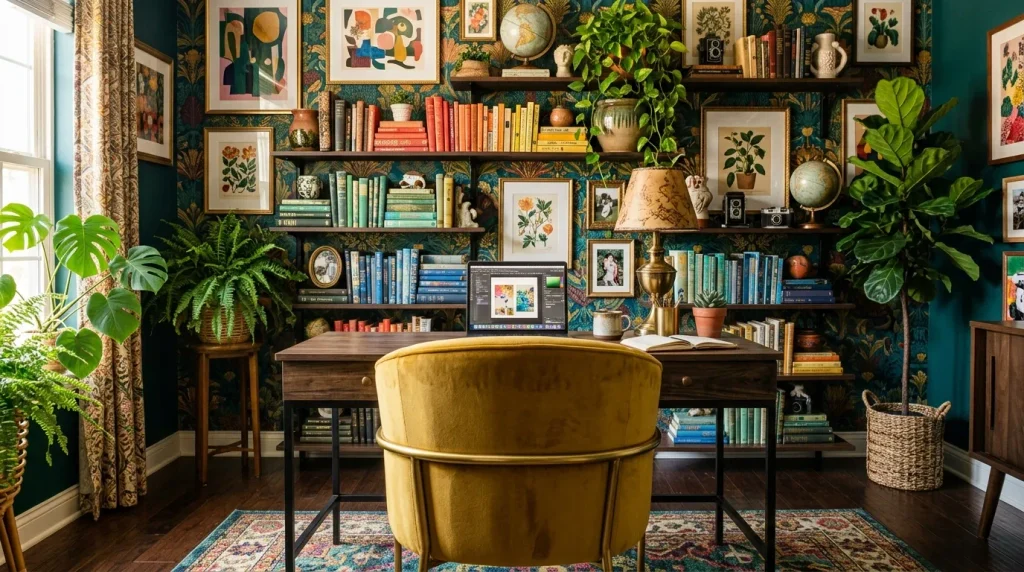
- Pick a chair in velvet, boucle, leather, or another tactile material.
- Use a strong color that complements the surrounding decor.
- Look for an interesting silhouette instead of a plain office shape.
- Prioritize ergonomic support so style never replaces comfort.
One standout chair can give a home office an instant personality boost, especially when the rest of the furniture has simple lines. Look for curved backs, sculptural arms, tufted upholstery, or unexpected colors such as mustard, ruby, emerald, or cobalt. Velvet creates a luxurious appearance, while boucle adds softness and visual texture. The chair should still provide proper back support and allow your feet to rest comfortably on the floor. That balance matters when you work for several hours at a time. A beautiful seat becomes much more useful when it looks decorative while still supporting your everyday routine.
To make the chair feel connected rather than randomly placed, repeat its strongest color in two or three smaller details around the room. A mustard chair might echo a framed print, desk lamp, or patterned rug, while an emerald chair could connect with nearby plants or painted shelving. Keep the desk proportionate to the chair so the workspace remains comfortable and visually balanced. In my experience, a statement seat works particularly well in maximalist home office decor because it acts as both functional furniture and a major decorative feature. It gives the room a clear focal point without requiring another large piece.
Also Read : 24 Cherry Red Bedroom Ideas for a Bold Stylish Retreat
6. Eclectic Bookshelf Display
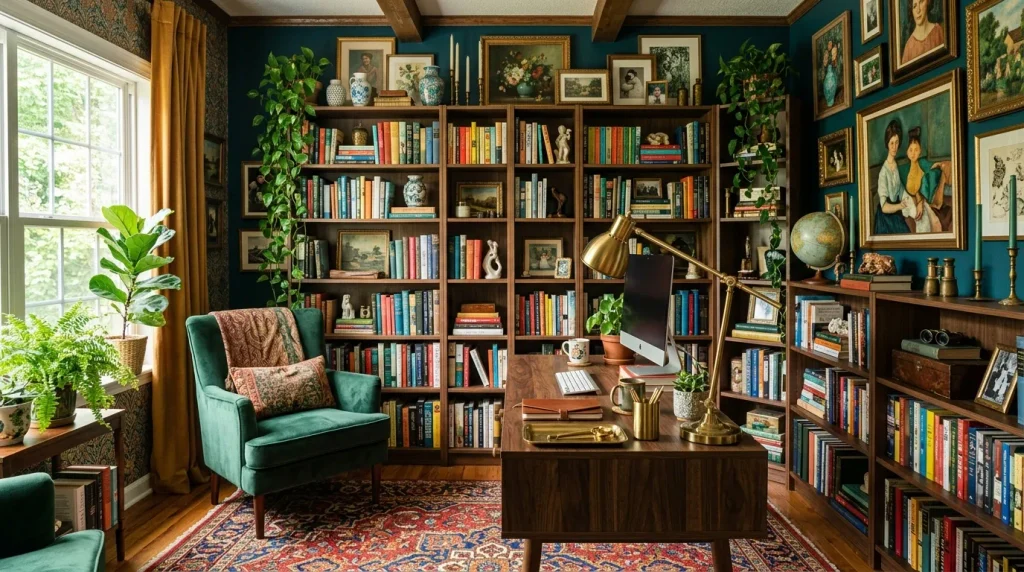
- Combine books with art, plants, ceramics, and collected objects.
- Arrange items at different heights for a layered appearance.
- Leave small breathing spaces between decorative groupings.
- Use colorful book covers to introduce effortless visual interest.
A bookshelf becomes much more interesting when it holds more than books. Mix colorful covers with framed artwork, small sculptures, ceramic vases, plants, candles, and meaningful objects to create a display that feels collected over time. Vary the height and position of each item instead of lining everything up evenly. Group three or four related pieces together, then leave a small open area before the next arrangement. This simple spacing trick keeps a busy shelf from looking cluttered. I’ve noticed that rotating decorative objects seasonally also keeps the workspace feeling fresh without buying anything new.
For a polished maximalist shelf, think in layers rather than rows. Place larger books horizontally beneath smaller objects, lean a framed print behind a vase, and allow trailing greenery to soften one corner. Repeating a few colors throughout the shelves will make the collection feel cohesive even when the objects differ greatly in style. Keep frequently referenced books within easy reach and reserve higher shelves for decorative pieces. This combination adds storage and personality at the same time, making the office more practical while giving the background plenty of visual interest for video calls, photos, and Pinterest-worthy inspiration
7. Colorful Desk Accessories

- Choose desk accessories in two or three coordinating colors.
- Mix practical items with decorative pieces for personality.
- Use trays and organizers to keep small supplies contained.
- Add one metallic finish for a polished accent.
Small details can make a surprisingly big difference when you want your desk to feel expressive rather than ordinary. Replace basic organizers with colorful trays, patterned notebooks, sculptural pencil cups, decorative clips, and attractive storage boxes. Choose a few coordinating shades instead of collecting every color at once, so the arrangement still feels intentional. Metallic accents such as brass or gold can add a polished finish without overpowering the display. Keep your most frequently used supplies within easy reach, while storing backups in drawers. This creates a workspace that looks beautifully layered but remains practical enough for everyday tasks.
A well-styled desktop should support your routine, not create another surface you constantly need to tidy. Use one tray for daily essentials, one container for writing tools, and a small decorative area for objects that simply make you happy. Repeat colors from nearby artwork, curtains, or your chair to visually connect the desk with the rest of the room. In my experience, this kind of color repetition makes even inexpensive accessories look more thoughtfully selected. The result is a cheerful work zone where organization becomes part of the decor instead of something hidden away.
8. Vintage-Inspired Desk
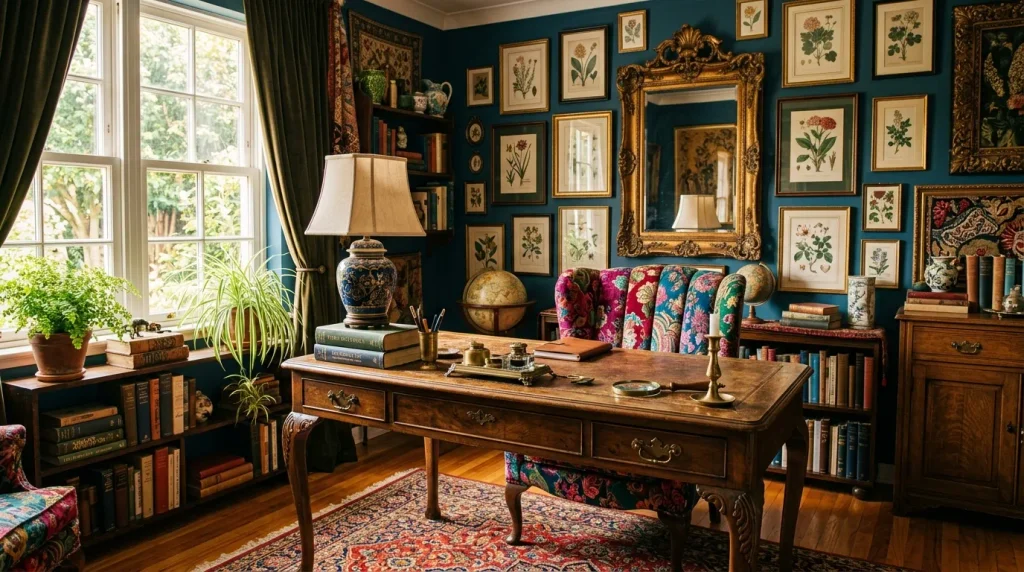
- Choose a traditional wooden desk with visible grain and character.
- Pair antique-style furniture with modern office essentials.
- Add brass hardware for warmth and old-world detail.
- Balance heavier furniture with lighter artwork or textiles.
Give your workspace a timeless foundation with a vintage-inspired desk that brings warmth and character to the room. Look for rich wood grain, curved legs, brass handles, carved details, or a slightly weathered finish that feels collected rather than mass-produced. The traditional shape creates a beautiful contrast against colorful artwork, modern technology, and playful accessories. You do not need an authentic antique to achieve the look; many reproduction desks offer similar visual details at more accessible prices. Keep your monitor and cables organized so the beautiful furniture remains the star while still supporting comfortable modern work.
The secret to making vintage furniture work in a bold office is contrast. Pair the traditional desk with a colorful chair, contemporary artwork, sculptural lamp, or unexpected patterned rug instead of matching every piece to the same era. This creates the layered character that makes eclectic rooms feel personal. Keep heavier wood furniture near lighter walls or bright textiles so the space does not become visually dense. A vintage-inspired desk also adds warmth that can be missing from modern home offices. It becomes both a practical workstation and an anchor that gives the entire room a more established personality.
9. Bold Patterned Rug
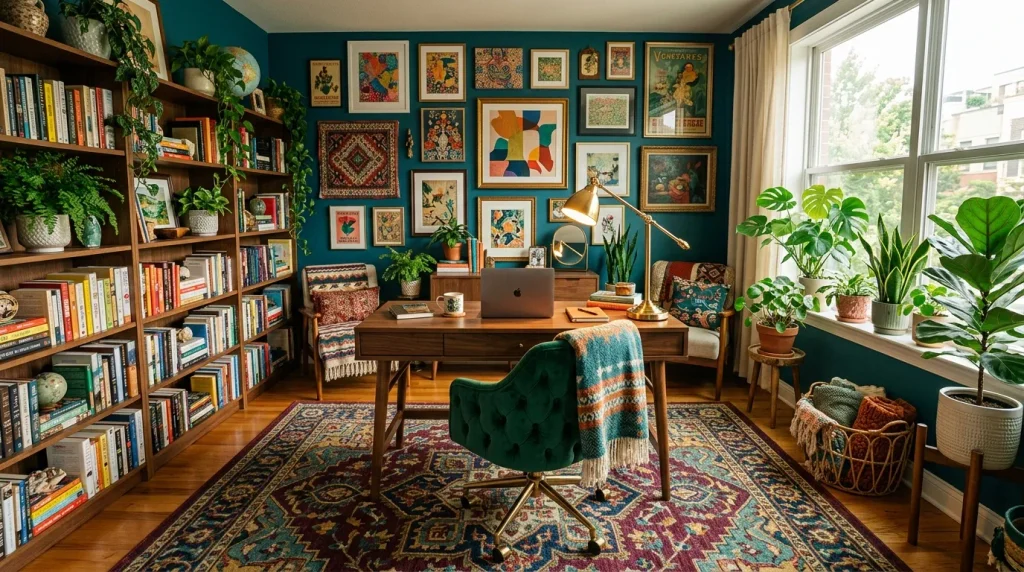
- Ground the workspace with an oversized colorful rug.
- Select patterns that repeat existing room colors.
- Use layered rugs for extra texture and visual depth.
- Choose a durable material suited to desk-chair movement.
A bold rug can instantly pull an entire home office together, especially when the room contains several strong colors and patterns. Choose an oversized design with enough visual weight to sit comfortably beneath the desk and chair area. Florals, geometric motifs, Persian-inspired patterns, and abstract designs can all work beautifully. Look for colors that already appear in your artwork, curtains, or furniture so the rug acts as a visual bridge between separate pieces. A durable low-pile construction is particularly practical under a rolling chair because it allows smoother movement while keeping the room comfortable and decorative.
When the floor feels visually finished, the entire workspace can appear more intentional. Use the rug as your starting point for selecting smaller accents, pulling one shade into a desk lamp, cushion, vase, or storage box. If you already have several patterns in the room, choose a rug with a slightly calmer background and let its colors provide the excitement. For extra texture, layer a smaller woven rug over a larger neutral foundation. This approach works beautifully with maximalist home office decor because it adds warmth, defines the working zone, and gives every surrounding piece a stronger visual connection.
10. Decorative Ceiling
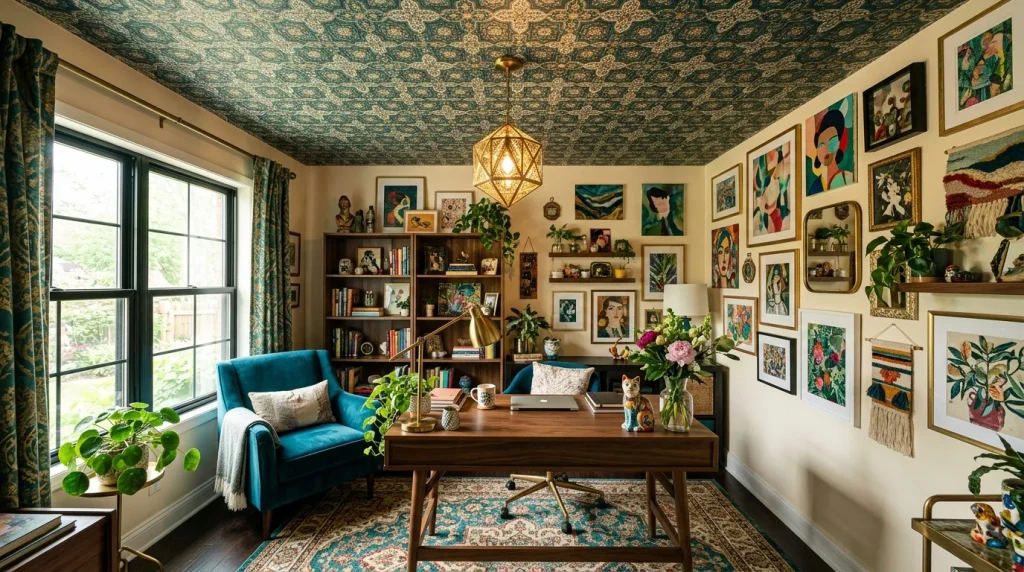
- Paint the ceiling a color that complements the walls.
- Try patterned wallpaper for an unexpected focal point.
- Use the ceiling to introduce color without crowding the floor.
- Pair bold overhead details with simple, warm lighting.
Look up and you may discover the most overlooked surface in your home office. A decorated ceiling can add personality without taking away valuable wall, desk, or floor space. Try painting it in a rich complementary shade, adding patterned wallpaper, or choosing a subtle geometric design that echoes colors elsewhere in the room. This works especially well in offices with simple furniture because the ceiling becomes an unexpected focal point. Keep the design connected to the room’s existing palette rather than introducing too many unrelated shades. The result feels creative, layered, and surprisingly sophisticated without requiring additional furniture.
A bold ceiling also changes how the room feels from your seated position, which makes it particularly effective in a workspace where you naturally spend hours looking around. Pair patterned overhead details with a warm pendant, chandelier, or semi-flush fixture that enhances the design instead of competing with it. If the ceiling is already visually strong, keep nearby walls slightly calmer and use artwork selectively. I’ve noticed that this approach can make an ordinary office feel much more custom and considered. It adds the dramatic quality associated with maximalist interiors while preserving clear surfaces for work and storage.
11. Ornate Wall Molding
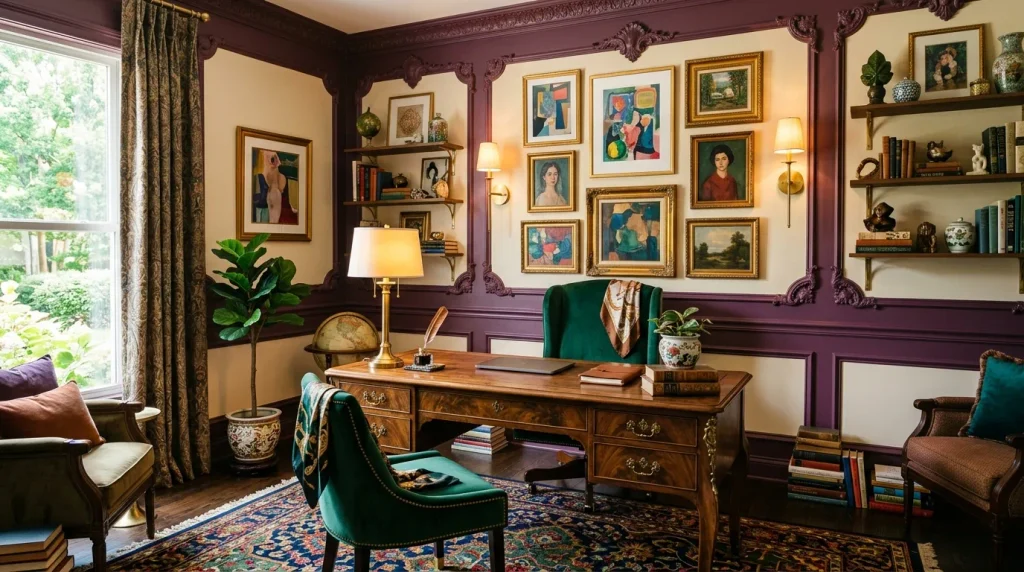
- Add decorative molding to create architectural depth.
- Paint molding and walls in contrasting or tonal shades.
- Use artwork to highlight individual wall panels.
- Combine traditional details with colorful contemporary furnishings.
Architectural details can make a home office feel far more distinctive, and wall molding is one of the easiest ways to create that impression. Install picture-frame molding, raised panels, or decorative trim to give plain walls structure and depth. Paint the molding and wall in the same color for a sophisticated tonal effect, or create contrast with two complementary shades. Once the architectural framework is established, artwork and furniture have natural areas to occupy. This technique works particularly well in rooms with tall ceilings because the vertical and rectangular lines help emphasize the proportions without filling every surface.
You can make the look more contemporary by pairing traditional molding with unexpected colors and modern accessories. Imagine deep plum walls with brass lighting, a colorful abstract print, and a sculptural chair, or warm cream molding behind a vivid emerald desk chair. The contrast keeps the room from feeling overly formal. If you rent, removable molding kits or decorative trim alternatives can create a similar effect without permanent construction. In my experience, architectural details are especially valuable when a room lacks natural character because they provide a strong visual foundation before you add the decorative layers.
12. Maximalist Wallpaper
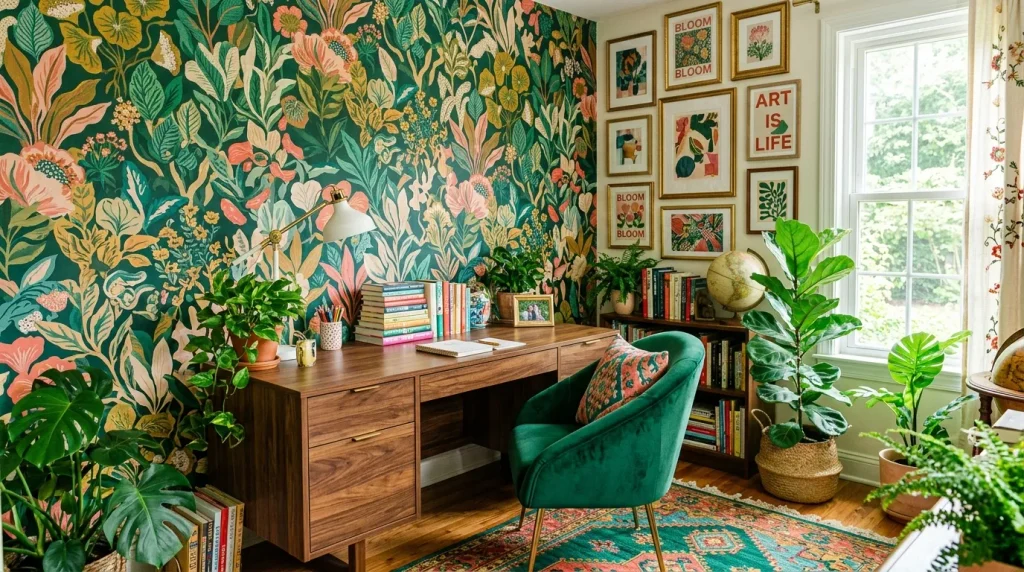
- Choose wallpaper with oversized florals, botanical motifs, or graphic shapes.
- Cover one wall when you want a controlled statement.
- Repeat wallpaper colors through furniture and accessories.
- Use removable options for a renter-friendly transformation.
Wallpaper can transform a plain workspace faster than almost any other decorating choice. Oversized florals, dramatic botanicals, colorful geometrics, and vintage-inspired motifs instantly create a strong visual backdrop behind the desk. If covering every wall feels overwhelming, start with one feature wall and let the pattern become the room’s main focal point. Choose furniture and accessories that repeat two or three colors from the wallpaper to create cohesion. In my experience, this simple color connection makes even a very detailed print feel intentional rather than chaotic, while giving the office a distinctly personalized and creative appearance.
The best wallpaper choice should match both your personality and your practical needs. For a small office, lighter backgrounds can help preserve brightness, while deeper shades create a cozy, immersive atmosphere when balanced with good lighting. Place the desk against the patterned wall when you want it to appear as a deliberate centerpiece, or use wallpaper behind shelving for a layered effect. Removable options are especially useful for renters or anyone who likes to refresh their space regularly. This approach adds color, texture, and visual depth while keeping the rest of the office functional and comfortable.
13. Oversized Statement Art
- Choose one large piece to create an instant focal point.
- Use bold colors that connect with the room’s existing palette.
- Hang artwork where it remains visible from the desk.
- Balance dramatic art with smaller decorative accents nearby.
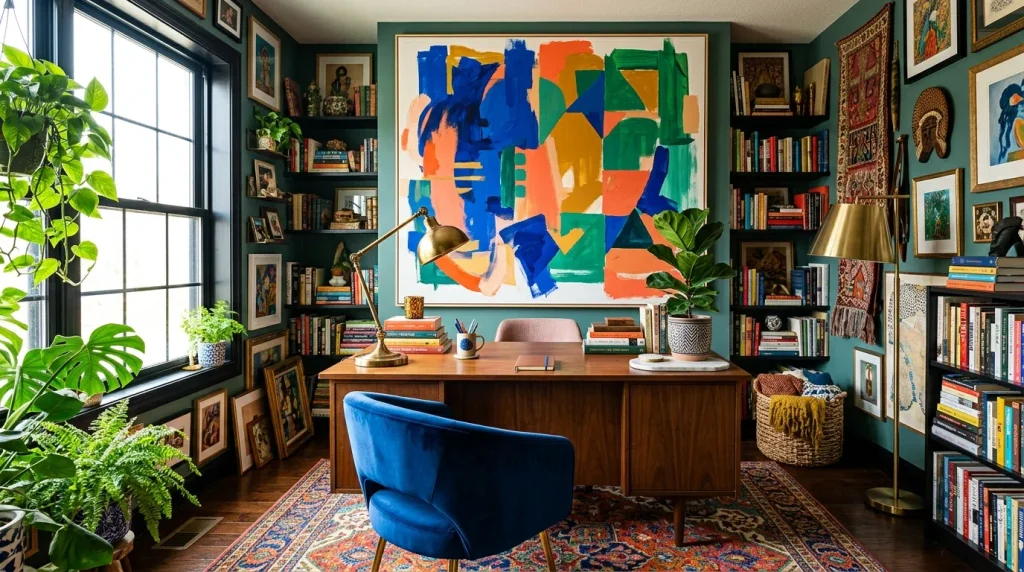
One oversized artwork can give a busy office a clear focal point without adding more clutter. Choose an abstract painting, colorful print, vintage poster, or expressive illustration that reflects the mood you want to create. Large-scale art works especially well above a desk, credenza, or open wall where smaller decorations might feel scattered. Pull one or two shades from the artwork into nearby accessories for a connected look. I’ve noticed that a single dramatic piece often makes a maximalist room feel more intentional because it gives the eye one strong place to land among all the layers.
The scale of the artwork matters just as much as its color. A piece that feels too small can disappear behind furniture and surrounding decor, while a generously sized design creates confidence and visual structure. If you love collecting smaller prints, group them nearby rather than competing directly with the main artwork. Leave a little breathing room around the frame so its colors and details can stand out. This approach also works well for renters because one carefully chosen statement piece can transform a plain wall without requiring major changes. The finished office feels expressive, polished, and personally curated.
14. Mixed Pattern Layers
- Combine stripes, florals, checks, or geometric prints.
- Repeat a few shared colors to keep patterns visually connected.
- Mix large and small-scale designs for better balance.
- Start with one dominant pattern and build around it gradually.
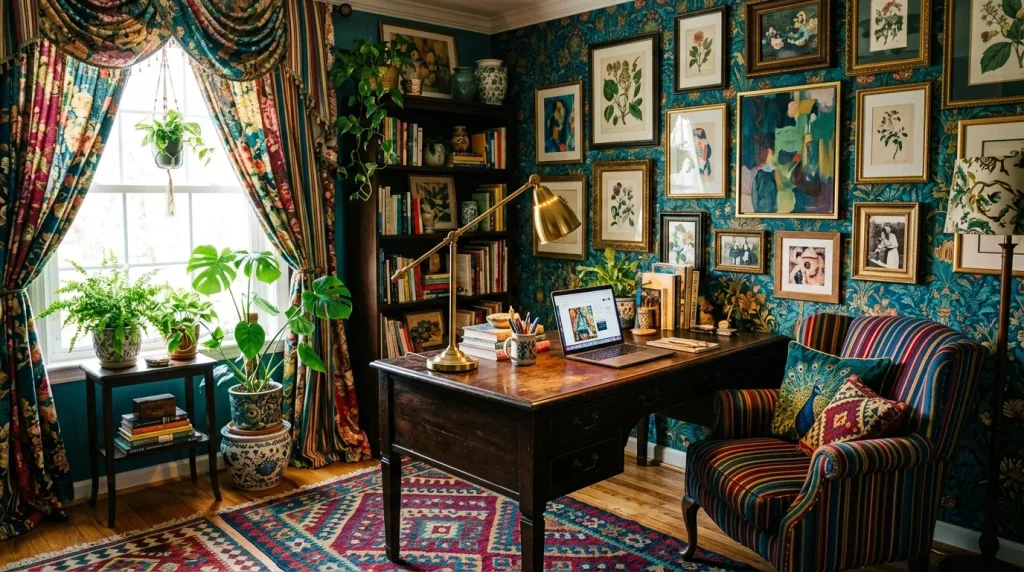
Mixing patterns can make a home office feel richly layered when each print has a clear role. Start with one dominant pattern, such as a large floral rug or dramatic curtain, then add smaller-scale stripes, checks, or geometric details around it. The easiest way to keep everything connected is through color. Even very different patterns can work together when they share two or three repeated shades. Varying the scale also prevents the room from feeling too busy. A large print, medium motif, and smaller accent pattern usually create a more comfortable visual rhythm than using similarly sized designs everywhere.
The goal is not to match every pattern perfectly but to create an interesting balance between contrast and connection. Try pairing a botanical curtain with a striped chair cushion or a geometric rug with floral artwork. Solid-colored furniture can provide a visual pause between stronger prints, helping the room feel energetic without becoming exhausting. I’ve seen this work well in many homes when patterns are introduced gradually instead of all at once. Once the largest elements feel balanced, smaller accessories can add the final layers. The result is a workspace that feels bold, collected, creative, and full of personality.
15. Color-Coordinated Bookcases
- Arrange books and objects by color for an organized visual display.
- Add decorative pieces between sections to break up the rows.
- Use storage boxes in coordinating shades to hide office clutter.
- Repeat accent colors from the shelves throughout the workspace.
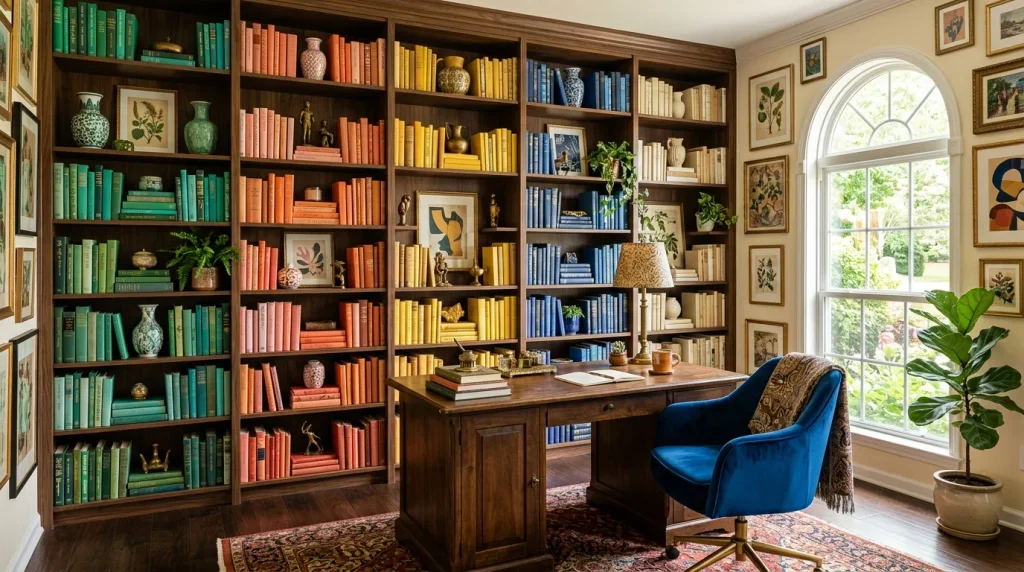
A colorful bookcase can turn everyday storage into one of the most eye-catching features in your office. Arrange books in loose color groups, then add ceramic objects, framed photos, small plants, or decorative boxes between sections to create variety. You do not need perfect rainbow rows; a relaxed arrangement often feels more natural and collected. Keep frequently used reference books within easy reach and place purely decorative items on higher shelves. This method gives practical storage a stronger visual purpose while helping the office feel brighter, more organized, and more intentionally styled from every angle.
Color-coordinated shelves work best when the arrangement connects with the rest of the room. Pull shades from your book collection into artwork, textiles, desk accessories, or even a nearby chair to create subtle repetition. Storage boxes can hide cables, paperwork, and supplies while still contributing to the palette. If your books do not naturally provide enough color, mix in objects with painted, metallic, or patterned finishes. This creates depth without sacrificing usefulness. The finished shelves become both a storage solution and a decorative backdrop, making the workspace feel lively while keeping important items easy to find.
16. Sculptural Lighting
- Choose a dramatic lamp with an unusual shape or silhouette.
- Use brass, glass, ceramic, or colorful finishes for extra character.
- Combine task lighting with softer ambient illumination.
- Position the fixture where it becomes part of the room’s decor.
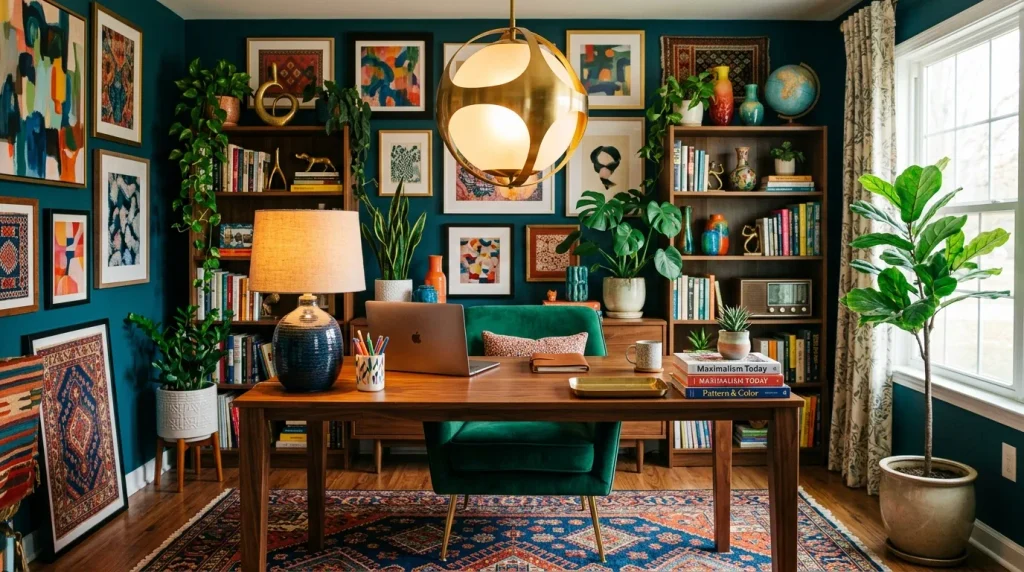
Lighting can become a major decorative feature when you choose a fixture with an artistic shape instead of a basic office lamp. Look for curved silhouettes, oversized pendants, sculptural ceramic bases, colorful glass shades, or warm brass finishes that complement the rest of the room. Place the main fixture where it adds visual interest without creating glare on your screen. A separate desk lamp can provide focused task lighting while the larger fixture supplies atmosphere. This layered approach makes the workspace feel more polished during the day and noticeably cozier when you continue working after sunset.
Think of lighting as another opportunity to introduce color, texture, and personality. A brass pendant can connect with picture frames and hardware, while a colorful glass lamp can repeat shades from your artwork or rug. Use warm bulbs for a softer atmosphere, particularly if the office contains rich jewel tones or dark wood. Avoid placing strong lights directly behind your monitor because reflections can make screen work uncomfortable. In my experience, combining practical illumination with decorative fixtures creates a much more finished room. The lighting becomes part of the overall design instead of looking like an afterthought.
17. Decorative Desk Backdrop
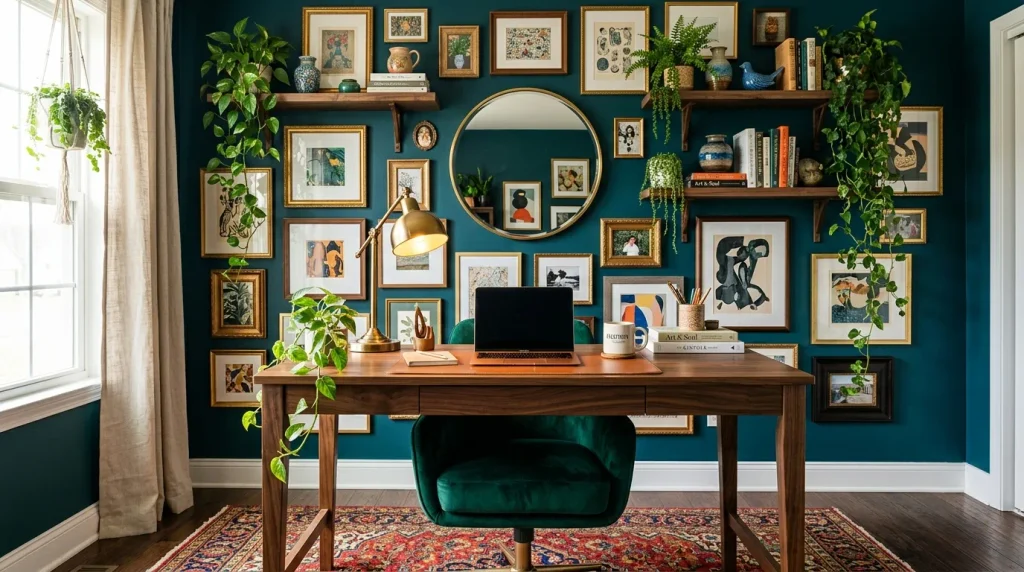
- Style the wall behind the desk for a strong visual focal point.
- Combine artwork, shelves, mirrors, and small decorative objects.
- Keep the center area clear enough for video calls.
- Repeat colors from the chair, rug, and desk accessories.
Your desk backdrop deserves just as much attention as the workspace itself, especially if you take video calls or photograph your office. Create a layered arrangement with framed artwork, small shelves, a decorative mirror, books, and a few sculptural objects. Keep the central area relatively open so your face remains clearly visible on camera. Use the surrounding pieces to introduce color and personality without allowing them to compete with your work zone. A carefully styled backdrop can make a simple desk look much more intentional, giving the room a finished appearance from the moment someone walks through the door.
The easiest way to build a strong backdrop is to work outward from one anchor piece. Start with a large artwork, mirror, or shelf above the desk, then add smaller objects around it in different heights. Repeat colors from your chair or rug to make the arrangement feel connected. If you work on camera regularly, check the composition from the webcam’s actual viewpoint rather than judging it only from across the room. This small step can make a big difference. The finished wall provides visual interest while remaining functional, organized, and flattering for everyday video meetings.
18. Layered Window Nook
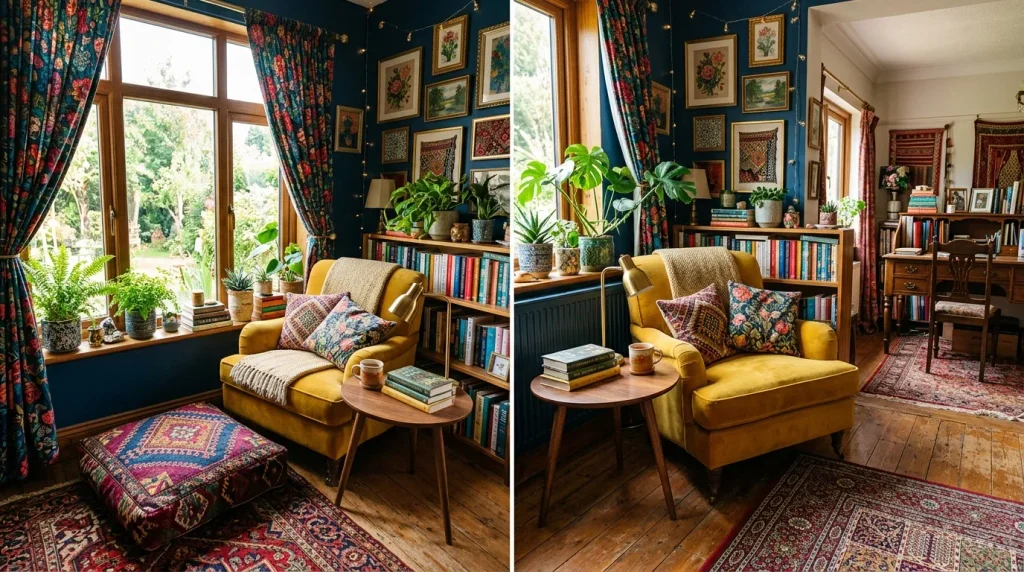
- Create a cozy reading or planning corner near natural light.
- Add a colorful chair, floor cushion, or compact bench.
- Layer curtains, pillows, and a soft rug for comfort.
- Keep the nook separate from the main working zone.
A sunny window nook can give your home office a second purpose beyond everyday desk work. Place a comfortable accent chair, compact bench, or cushioned seat near the window, then layer it with a colorful pillow and soft throw. Add a small side table for books, coffee, or a notebook so the area becomes useful rather than purely decorative. Keep the nook visually separate from your main workstation to create a natural change of pace. In my experience, having a dedicated spot for reading or brainstorming can make a home office feel more flexible and enjoyable throughout the day.
Use the window nook to introduce textures and colors that complement the rest of the office. Patterned curtains can frame the area, while a layered rug adds warmth beneath the chair and helps visually define the corner. Add a tall plant beside the window for height and a small stack of books for personality. If the room is compact, choose furniture with a smaller footprint and avoid blocking the window. The goal is a comfortable retreat that feels connected to the workspace without competing with it. This extra zone makes the office feel richer, more functional, and thoughtfully designed.
19. Decorative Storage Cabinets
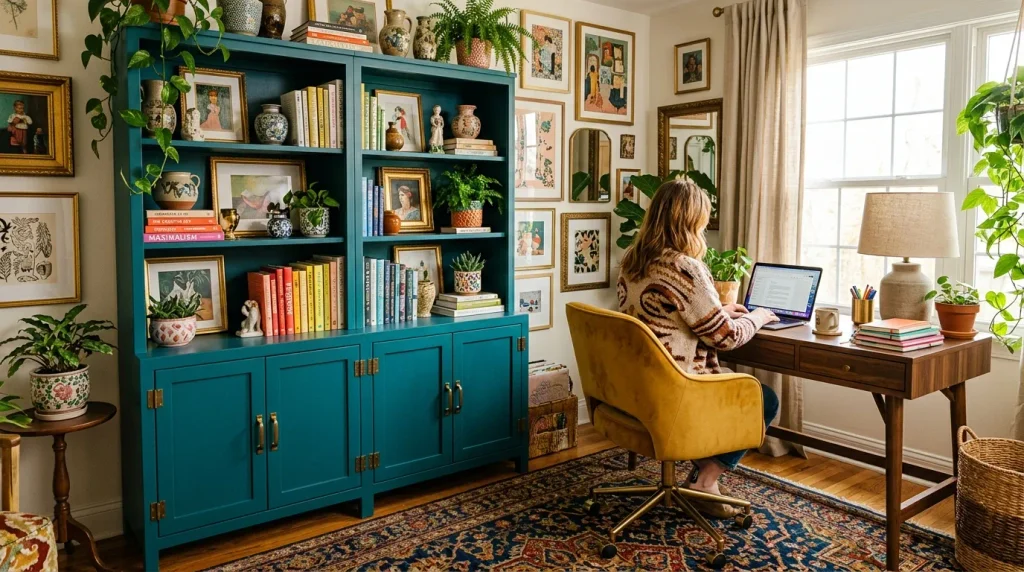
- Choose colorful cabinets that add personality while hiding clutter.
- Mix closed storage with a few open display areas.
- Use brass, ceramic, or sculptural handles for extra detail.
- Keep everyday paperwork organized behind closed doors.
Beautiful storage can completely change how a busy home office feels. Choose a cabinet in a rich color such as teal, burgundy, mustard, or emerald, then use it to hide paperwork, technology, and supplies that would otherwise make the room look messy. Closed doors keep visual clutter under control while decorative handles add another opportunity for personality. If possible, select a cabinet with a combination of open and closed sections. This gives you space to display favorite objects while keeping less attractive essentials out of sight. The result is practical storage that contributes to the overall decorative scheme.
The most successful storage solutions make tidying easier, not harder. Give frequently used supplies dedicated spaces inside drawers or cabinets so putting things away takes only a few seconds. Use baskets or labeled boxes inside larger compartments to prevent smaller items from becoming scattered. For open shelving, display only pieces that genuinely enhance the room and leave some negative space around them. That balance helps bold interiors remain visually organized. A colorful cabinet can then become an anchor piece that adds character while quietly solving one of the biggest challenges in a decorative workspace: keeping everyday clutter under control.
20. Colorful Gallery Shelves

- Use floating shelves to display art without filling the floor.
- Layer framed prints behind smaller decorative objects.
- Add colorful ceramics, books, and plants for varied texture.
- Repeat shelf colors through nearby furniture and accessories.
Floating shelves offer an easy way to turn an empty office wall into a colorful display without taking up valuable floor space. Start with two or three sturdy shelves, then layer framed artwork behind smaller ceramics, books, plants, and sculptural objects. Let some frames lean casually instead of hanging every piece, which creates a relaxed collected look. Vary the height of objects so the arrangement has movement from side to side. This setup works especially well above a desk because it uses vertical space while leaving the working surface available for your computer, stationery, and everyday essentials.
A shelf display becomes more cohesive when you repeat a few colors throughout the arrangement. If your chair is emerald green, for example, add a small green vase or book nearby rather than introducing another unrelated shade. Leave small gaps between groupings so the shelves do not become visually overwhelming. Trailing plants can soften straight lines, while brass or metallic objects add a little shine. I’ve noticed that rotating shelf decor every few months keeps the workspace feeling fresh without requiring a full redesign. The result is flexible, practical styling that brings personality to otherwise unused wall space.
21. Patterned Office Chair
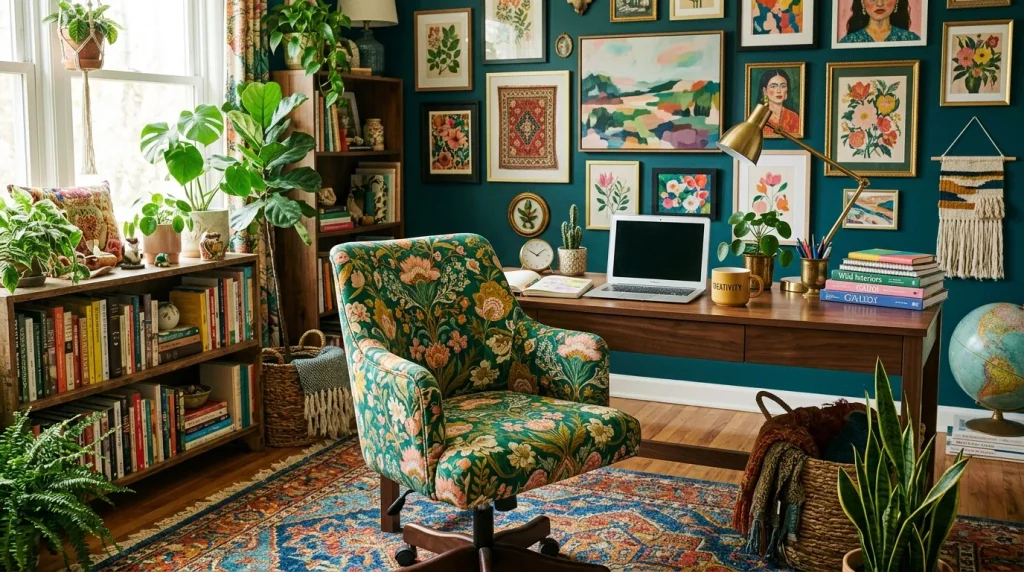
- Choose upholstery with florals, checks, stripes, or graphic motifs.
- Keep the desk simple so the chair remains the focal point.
- Match one chair color with nearby artwork or textiles.
- Prioritize ergonomic support for comfortable daily work.
A patterned office chair can turn an ordinary workstation into a statement-making corner almost instantly. Florals, stripes, checks, and graphic motifs bring movement to the room while giving you another opportunity to introduce personality. Because the chair sits directly at the desk, its design naturally becomes one of the first things people notice. Choose a pattern that includes colors already used elsewhere, such as the rug, curtains, or artwork. In my experience, keeping the desk itself relatively simple allows a dramatic chair to stand out beautifully without making the workspace feel unnecessarily crowded or visually confusing.
Comfort should remain just as important as appearance when choosing a decorative office chair. Look for adjustable height, supportive cushioning, a comfortable backrest, and enough room to move naturally during long work sessions. Once the practical features are right, focus on upholstery that adds visual character. A botanical print can soften a modern room, while geometric fabric creates a sharper contemporary feel. If the pattern is especially bold, repeat only one or two of its colors through smaller accessories. This creates a cohesive workspace where the chair feels like a deliberate design choice rather than an isolated statement piece.
22. Collected Decor Layers
- Combine meaningful objects, artwork, books, and accessories from different styles.
- Mix new pieces with vintage-inspired finds for more character.
- Use trays and baskets to keep smaller items contained.
- Repeat colors and materials to make varied pieces feel connected.
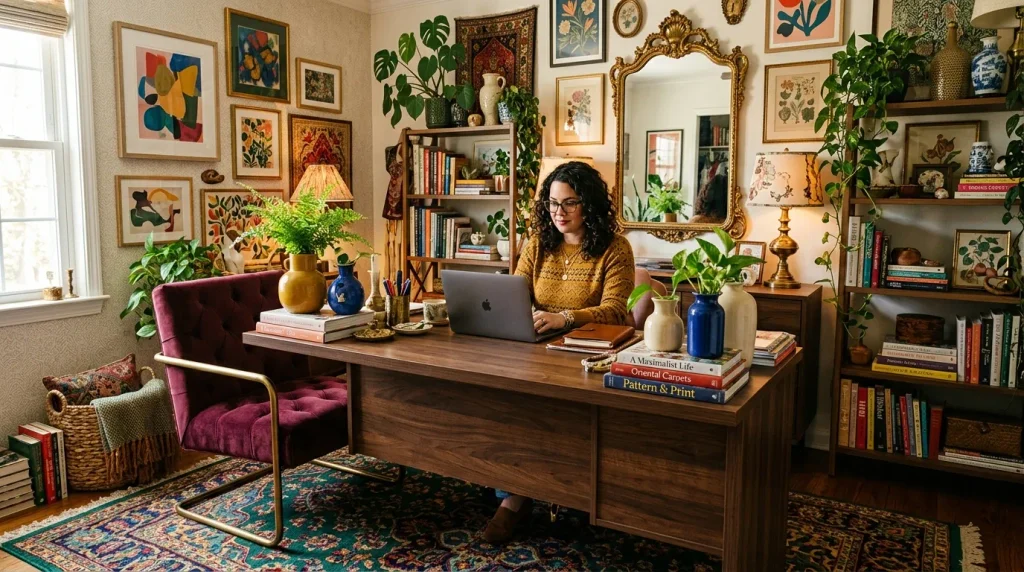
The most memorable workspace often feels collected rather than perfectly matched. Bring together artwork, books, ceramics, vintage-inspired objects, plants, and personal treasures that genuinely appeal to you. Instead of buying everything from one collection, combine different shapes, finishes, and eras to create visual depth. A wooden desk might sit beside a velvet chair, brass lamp, colorful artwork, and handmade ceramic pieces. This layered approach gives maximalist home office decor its distinctive character while allowing the room to evolve naturally. When every object has a reason to be there, the space feels personal rather than simply decorated.
The trick to making many different pieces work together is creating a few visual connections. Repeat colors, wood tones, metallic finishes, or textures throughout the room so individual items feel related. Use trays to group smaller objects and leave small areas of open space between decorative clusters. Rotate seasonal pieces instead of continually adding more, especially when shelves and surfaces begin feeling crowded. I’ve noticed that the most inviting maximalist rooms usually contain a mixture of useful and beautiful things. Your office should reflect how you actually live and work, creating a bold environment that still feels comfortable and functional.
Conclusion
A bold home office doesn’t have to feel chaotic or impractical. The right combination of color, pattern, texture, artwork, greenery, lighting, and thoughtful storage can transform an ordinary workspace into a room that feels inspiring and uniquely personal. These maximalist home office decor ideas give you plenty of ways to start small or create a dramatic makeover. I’ve seen how even one statement piece can completely change the feeling of a space. Save this post on Pinterest for your next decorating project, try an idea that speaks to you, and share it with someone who needs a more inspiring place to work. Your dream workspace can start today.