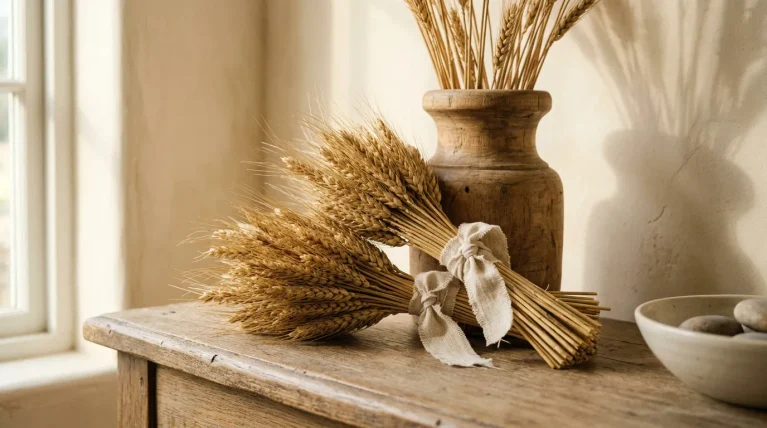
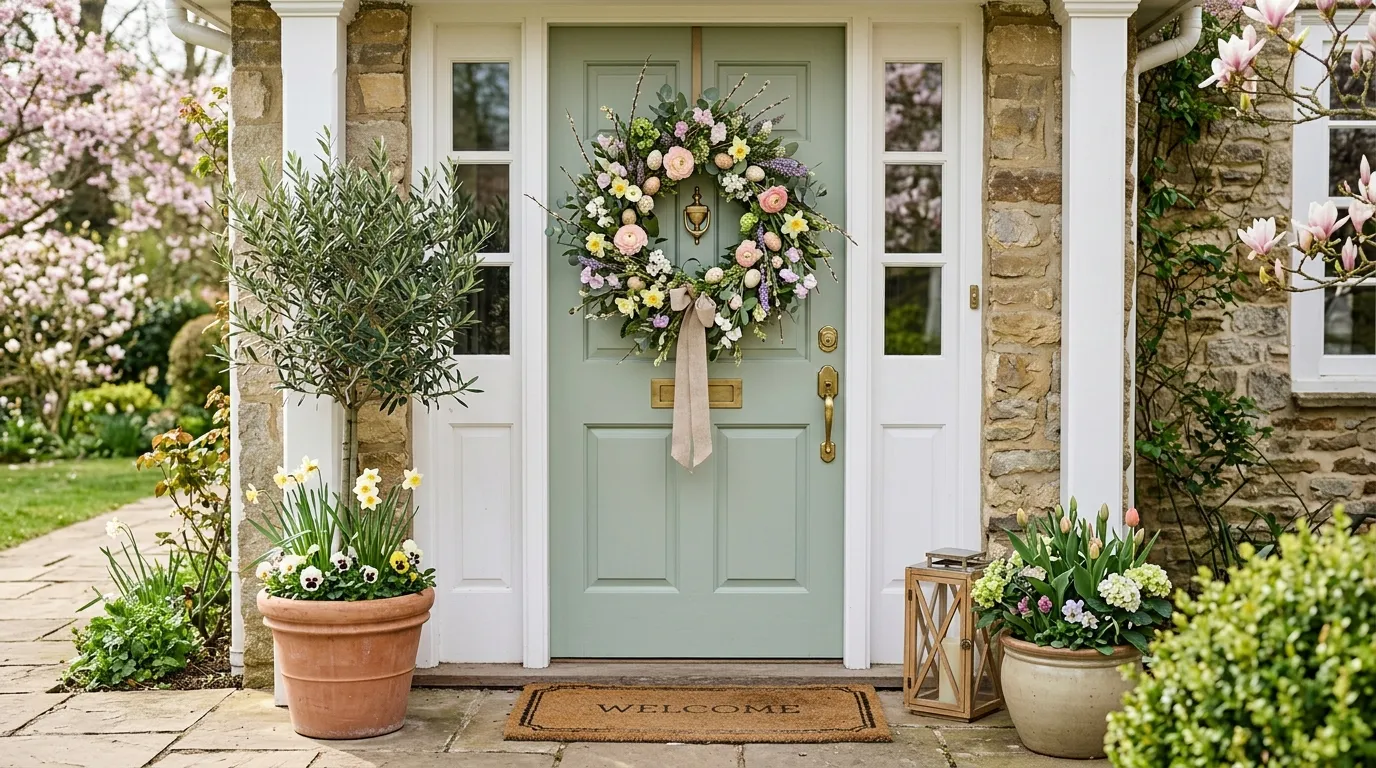
Your front door is the first glimpse guests get of your home, so why not make it feel fresh, welcoming, and ready for spring? Easter wreath ideas front door designs can instantly transform an ordinary entrance into a cheerful seasonal focal point. From soft pastel flowers and natural greenery to playful eggs, carrots, and bunny-inspired details, there are plenty of ways to create a look that suits your home. This collection brings together 23 beautiful ideas for different decorating styles, budgets, and skill levels. I’ve noticed that even a simple wreath can make a porch feel noticeably more finished. You’ll find practical inspiration for creating a spring welcome that feels personal, polished, and easy to recreate.
1. Eucalyptus Egg Wreath
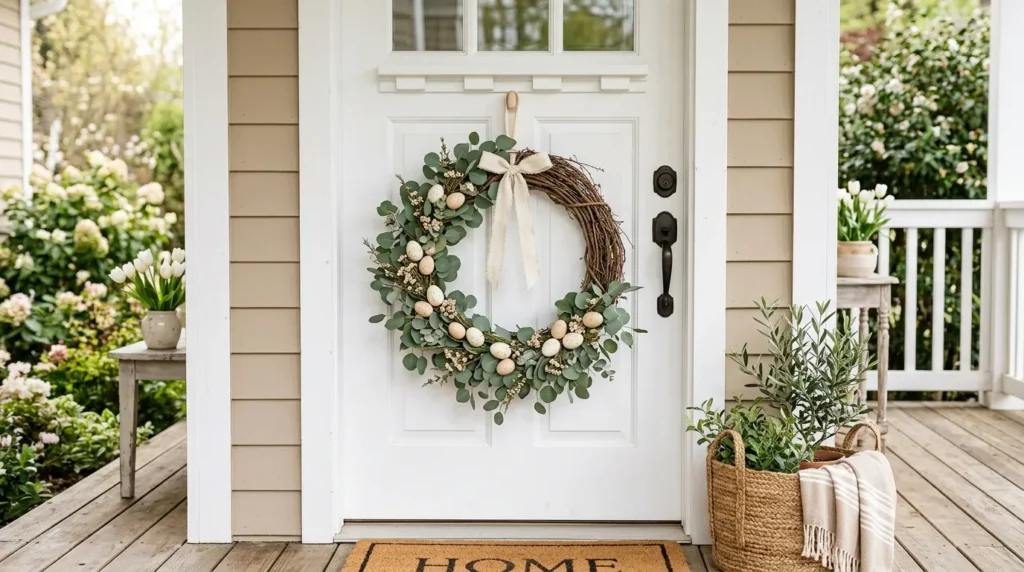
- Eucalyptus creates a fresh, natural foundation for spring.
- Small ivory eggs add subtle Easter character.
- Muted greenery works beautifully with neutral entryways.
- The exposed grapevine base adds warmth and texture.
Give your front door an instant spring refresh with a eucalyptus wreath that feels light, natural, and polished. Start with a grapevine or simple twig base, then layer eucalyptus stems around one side or across the full circle. Add a few small ivory eggs for subtle Easter character without making the design look busy. This style works especially well with white, beige, gray, or natural wood entryways because the muted green blends easily with existing colors. The soft foliage also creates a welcoming organic texture that looks beautiful in both traditional and contemporary homes.
Choose eucalyptus with varied leaf sizes so the wreath has movement and depth instead of appearing flat. Secure the stems with floral wire, keeping some branches loose for a relaxed silhouette. I’ve noticed that partially covered wreath bases often look more sophisticated because the exposed twig texture adds warmth and contrast. For a stronger seasonal touch, add a narrow cream ribbon or three matte eggs rather than several bright decorations. Hang the finished piece at eye level and check it from the sidewalk before making final adjustments. A simple design can make a plain entry feel fresh and thoughtfully styled.
2. Pastel Egg Wreath
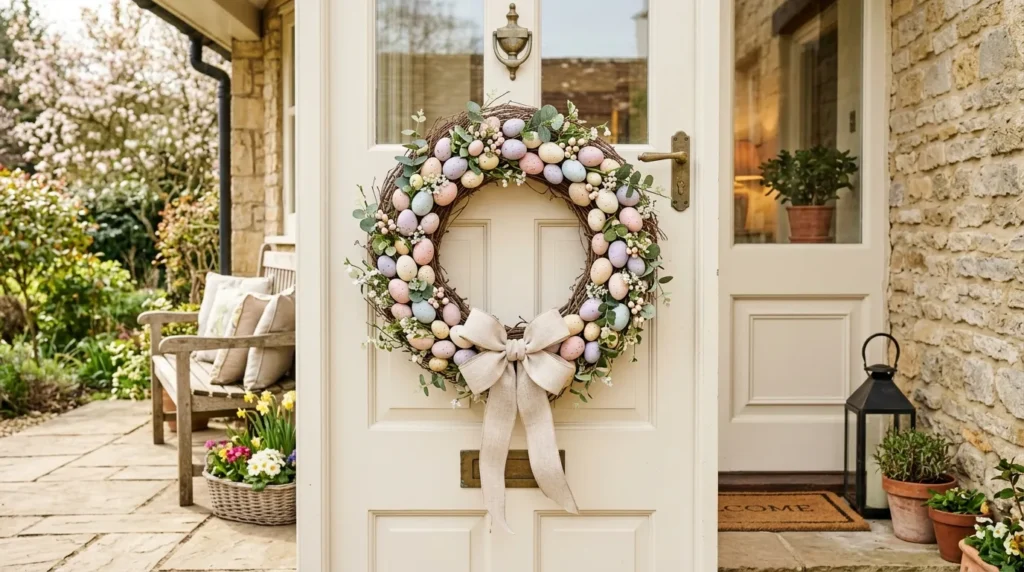
- Soft pastel eggs bring cheerful spring color to the entrance.
- A limited palette keeps the wreath visually balanced.
- Small greenery accents prevent the design from feeling flat.
- Matte finishes create a more refined appearance.
Add a gentle burst of spring color to your entrance with a pastel egg wreath arranged in a soft, balanced palette. Choose decorative eggs in blush, pale blue, lavender, cream, and muted yellow, then attach them to a grapevine or twig base. Leave small sections of the natural base visible so the wreath retains warmth and texture. A few delicate greenery stems can fill empty spaces without competing with the pastel colors. This design is especially effective on white, cream, gray, or natural wood doors where the soft shades can stand out clearly.
Use different egg sizes to create depth, placing larger pieces toward the center and smaller ones around the edges. Avoid using too many colors because a controlled palette makes the wreath look intentional rather than overly busy. I’ve noticed that matte eggs usually look more sophisticated outdoors than highly glossy finishes, especially under strong daylight. Finish the design with a narrow linen ribbon in cream or natural beige. Check that the wreath hangs securely before stepping back to view it from the street. The result feels cheerful, welcoming, and distinctly springlike without overwhelming the entry.
3. Tulip Door Wreath
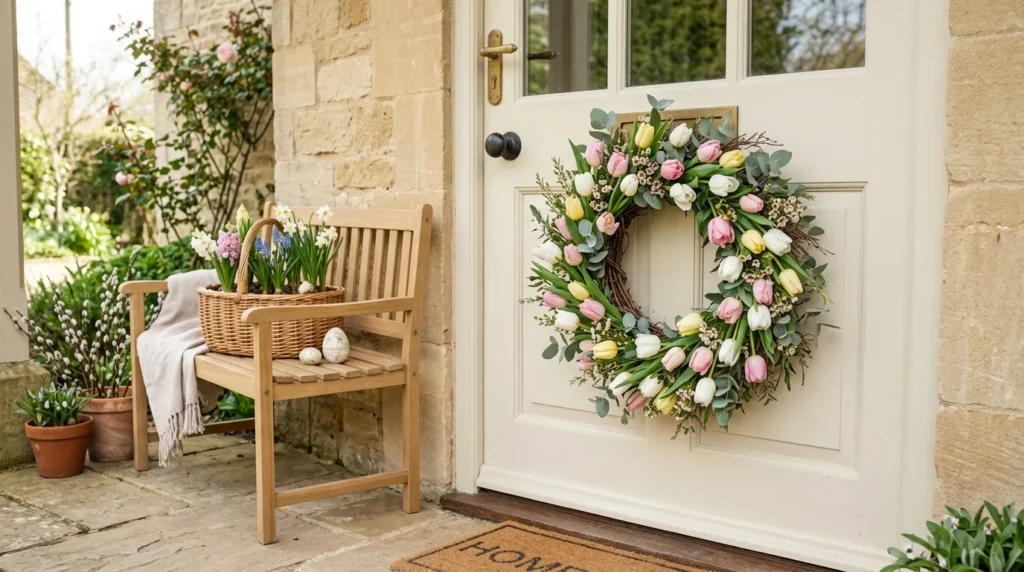
- Tulips instantly introduce fresh spring color.
- White and blush blooms create a soft welcome.
- Eucalyptus adds greenery and visual balance.
- A natural base keeps the arrangement relaxed.
Few flowers make a front entrance feel more like spring than fresh tulips. Create a welcoming wreath using white, blush, and pale yellow tulips arranged around a natural grapevine base. Add eucalyptus leaves or other delicate greenery between the blooms to create contrast and movement. The flowers can be positioned around the entire wreath or concentrated along one side for a modern asymmetrical effect. This style works particularly well when your porch already includes neutral materials such as stone, beige siding, light wood, or woven accessories.
If using fresh flowers, choose sturdy stems and use floral tubes or another suitable method to help maintain hydration. For a longer-lasting version, select realistic faux tulips with natural-looking petals and flexible stems. I’ve seen this work especially well on sheltered porches where the arrangement remains protected from strong weather. Keep the flower colors limited to two or three shades so the wreath stays cohesive. A simple cream ribbon can finish the design without distracting from the blooms. Positioned against a neutral door, the tulips create a bright focal point that instantly makes the entrance feel more inviting.
4. Lemon And Greenery
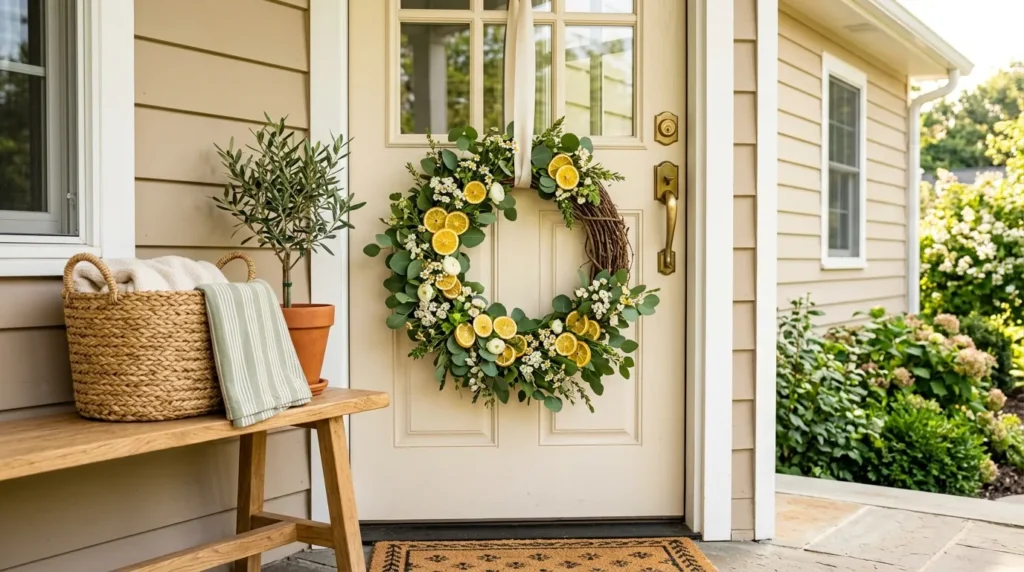
- Lemon accents add a cheerful burst of spring color.
- Greenery keeps the bright yellow from feeling overwhelming.
- White flowers soften the overall composition.
- Natural materials make the wreath feel fresh and relaxed.
Brighten a neutral front door with a lemon and greenery wreath that feels sunny, fresh, and effortlessly springlike. Use a grapevine base covered with eucalyptus, olive branches, or another realistic green foliage, then add a small number of yellow lemon accents throughout the arrangement. White flowers can fill small gaps and soften the contrast between the yellow and green. This design works particularly well on cream, white, gray, or light wood doors because the cheerful citrus tones become an instant focal point without requiring additional porch decorations.
Keep the lemons distributed unevenly rather than placing them at identical intervals around the wreath. This creates a more natural, garden-inspired appearance and allows the greenery to remain visible. I’ve noticed that strong yellow looks most balanced when it is supported by plenty of green and a little white. Choose lightweight faux lemons for a wreath that will stay outdoors, and secure each piece firmly against wind. A simple linen ribbon in cream or natural beige can finish the arrangement. The result feels energetic and welcoming while still fitting a tasteful spring entryway.
5. Bunny And Burlap
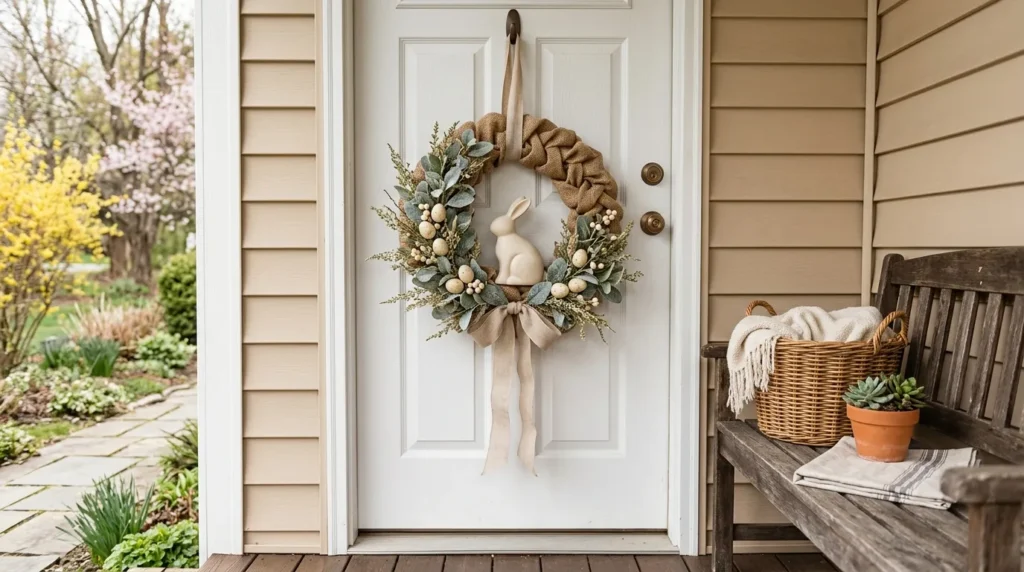
- Burlap adds natural texture to a simple wreath.
- A bunny creates an unmistakable Easter detail.
- Neutral colors work with many exterior styles.
- Greenery keeps the rustic materials feeling fresh.
Combine rustic texture with a clean seasonal palette using a burlap and bunny wreath. Start with a natural burlap-wrapped base, then add eucalyptus leaves, small cream eggs, and one simple bunny accent. Choose ivory, beige, sage, and natural brown instead of bright colors to keep the arrangement modern and easy to coordinate. The rough texture of burlap contrasts beautifully with smooth ceramic-style decorations, creating depth without requiring many individual pieces. This wreath is especially suitable for farmhouse, cottage, transitional, and contemporary homes with natural wood or neutral exterior finishes.
Keep the bunny slightly off-center so the wreath feels balanced without becoming too symmetrical. Add a narrow beige or natural linen ribbon rather than a large decorative bow if you prefer a cleaner appearance. In my experience, rustic materials look more polished when only one or two textures dominate the arrangement. Avoid covering every inch of the base; visible burlap gives the wreath character and prevents it from appearing overly decorated. Secure all lightweight pieces with floral wire or strong adhesive suitable for outdoor use. The finished design feels warm, approachable, and distinctly seasonal.
Also Read : 27 Modern Rustic Living Room Ideas to Try Today
6. White Flower Ring
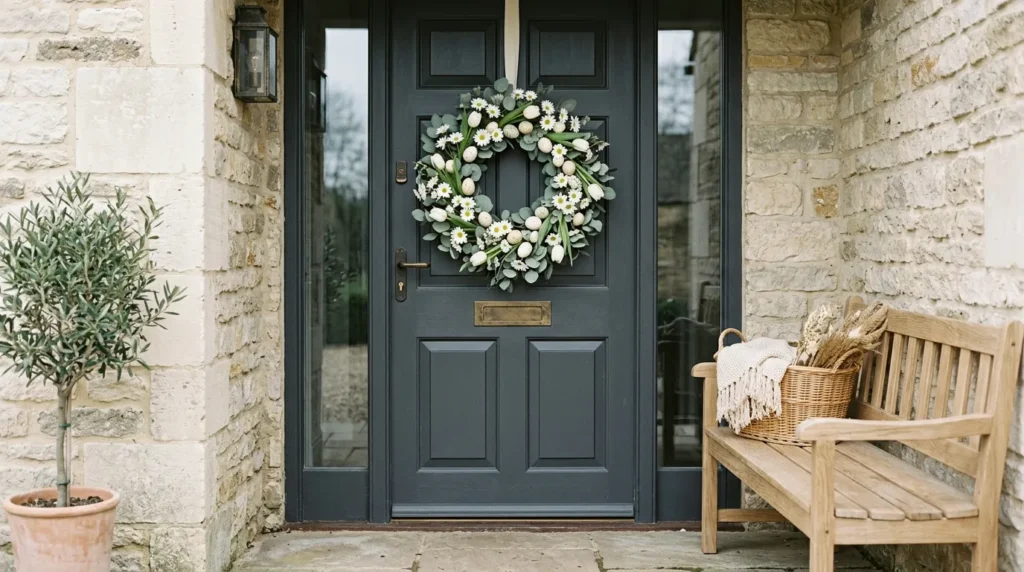
- White flowers create a clean, timeless focal point.
- Green leaves add subtle contrast and depth.
- Tiny eggs introduce seasonal character quietly.
- The monochrome palette suits modern exterior designs.
A white flower ring creates an elegant spring statement while keeping Easter styling understated. Cover a simple circular base with white daisies, tulips, ranunculus, or other small blooms, then weave eucalyptus leaves between selected flowers. Add just a few tiny cream eggs if you want the wreath to feel more specifically seasonal. The monochrome floral palette looks especially striking against charcoal, navy, natural wood, or brightly painted doors. Because the colors remain restrained, this design can transition easily from Easter into the rest of spring.
Build the wreath with flowers of slightly different sizes so the surface feels layered rather than perfectly uniform. Leave small gaps where the greenery can show through, giving the design a lighter appearance. I’ve noticed that white floral wreaths benefit from a darker or richly textured door because the flowers become much more visually defined. For lighter doors, use greenery more generously or choose a darker natural base for contrast. Finish with a thin cream ribbon if needed, then step back several feet to check the overall balance. The result feels fresh, graceful, and welcoming.
7. Rattan Egg Wreath
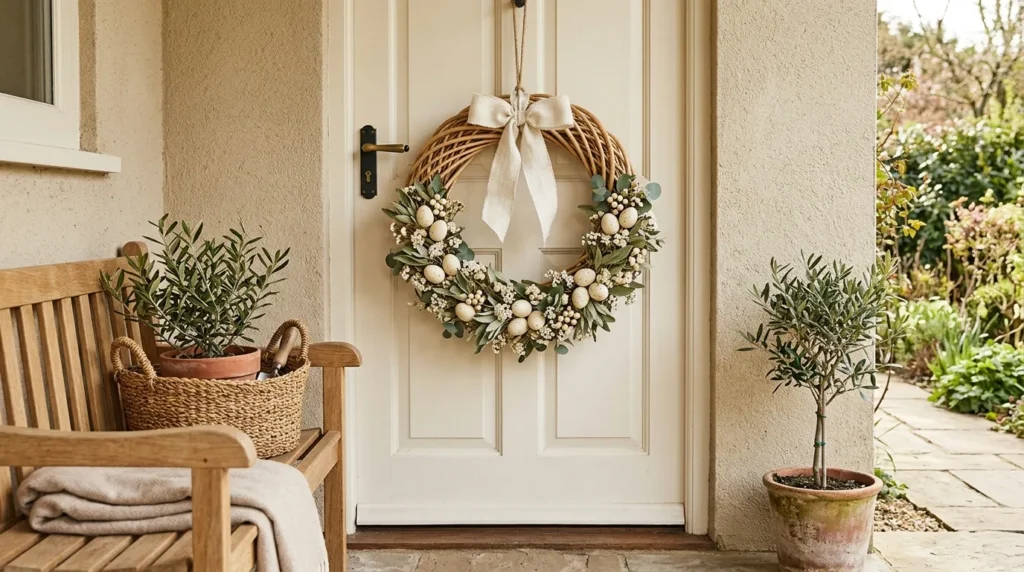
- Rattan adds warmth and natural texture.
- Ivory eggs keep the seasonal palette understated.
- Small greenery accents create a fresh spring feel.
- The woven base works beautifully with neutral doors.
A rattan egg wreath brings natural texture to the entrance while keeping the Easter theme simple and sophisticated. Begin with a round woven rattan base, then attach ivory or beige decorative eggs among small eucalyptus leaves and delicate white flowers. Let plenty of the woven surface remain visible because its texture is part of the design. The combination of natural fiber, muted greenery, and neutral eggs works especially well with white, cream, beige, or light wood doors. It also pairs naturally with porch furniture made from rattan, wicker, or warm-toned wood.
Use only a few decorative elements so the woven base remains the visual foundation. Place the eggs at varied angles and group some pieces slightly closer together instead of spacing everything evenly. I’ve noticed that natural-fiber wreaths often look more expensive when their texture is allowed to remain visible rather than being completely covered. Add a narrow cream ribbon for a soft finishing detail, or leave the wreath ribbon-free for a cleaner look. Secure the arrangement carefully if your doorway receives wind. This design creates a welcoming spring accent that feels relaxed, warm, and easy to maintain.
8. Lavender Spring Wreath
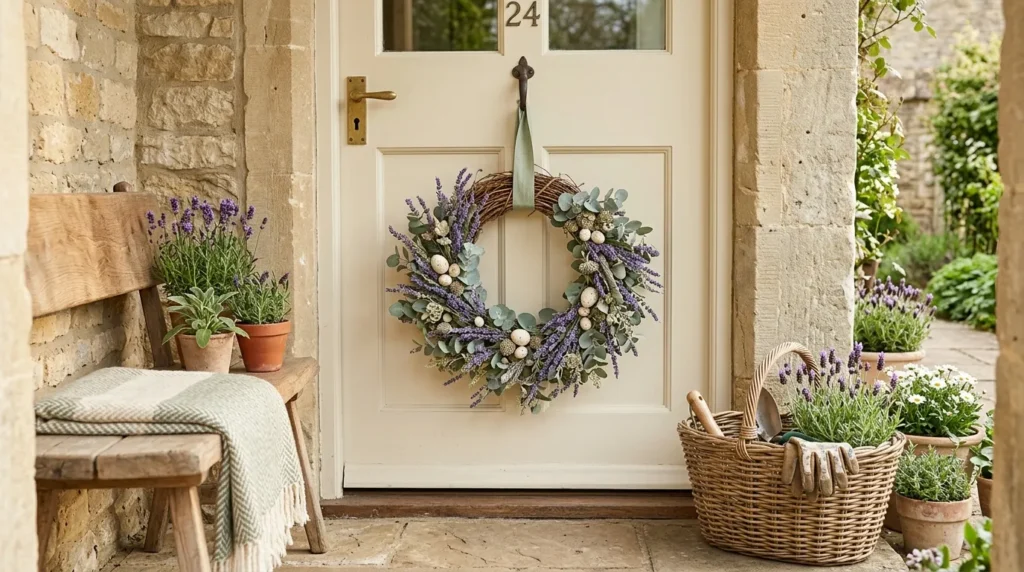
- Lavender introduces gentle color without looking overly bright.
- Sage greenery balances the purple flowers.
- Ivory eggs add subtle Easter character.
- The natural base provides warmth and texture.
Bring a softer spring palette to your entryway with a lavender wreath filled with delicate purple blooms, eucalyptus, and a few ivory eggs. Lavender works beautifully for Easter because it introduces color without the intensity of brighter seasonal shades. Arrange the flowers across a grapevine base, leaving some natural branches exposed for texture. Add small eggs between the greenery to connect the floral design with the holiday. This wreath looks especially attractive on cream, pale gray, white, or natural wood doors where the lavender and sage tones can stand out gently.
Choose two or three complementary lavender shades rather than mixing many unrelated colors. Keep the greenery slightly fuller around the lower or side portions to create an organic shape. In my experience, lavender looks particularly polished when paired with warm neutrals such as beige, ivory, and light oak. If the wreath will hang outdoors, use weather-resistant faux flowers for better longevity. A simple natural ribbon can complete the design without adding unnecessary decoration. The finished arrangement creates a peaceful spring welcome while still giving the front door enough color to feel festive.
Also Read : 21 Contemporary Coastal Living Room Ideas to Try
9. Moss Bunny Wreath
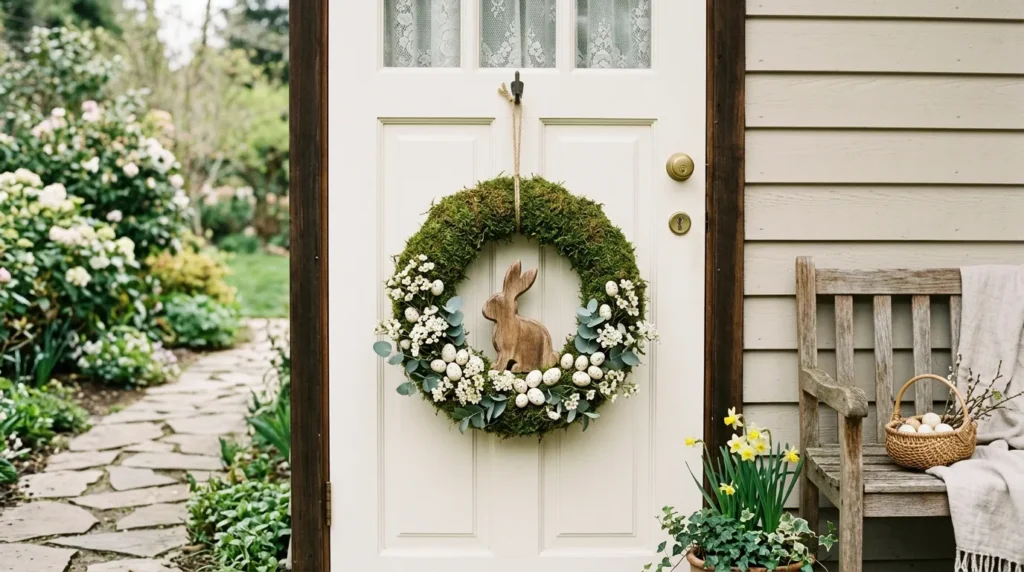
- Moss creates an earthy, garden-inspired texture.
- A bunny silhouette makes the Easter theme clear.
- White flowers brighten the deep green base.
- Natural materials suit cottage and modern organic homes.
A moss bunny wreath brings a garden-inspired feeling to the front door while keeping the seasonal design grounded in natural textures. Use a moss-covered circular base with a simple bunny silhouette or bunny-shaped accent positioned near the center or lower portion. Add tiny ivory eggs, white flowers, and eucalyptus leaves to create subtle contrast against the green surface. The earthy palette works beautifully with stone, wood, white siding, and neutral exterior finishes. This style is especially appealing when you want Easter decoration that feels connected to spring gardens rather than traditional bright holiday colors.
Keep the moss texture visible and avoid covering the entire wreath with flowers or eggs. The green surface already provides plenty of visual interest, so a few carefully placed accents are enough. I’ve noticed that natural-looking wreaths tend to blend more easily with outdoor landscaping because their colors echo surrounding plants and materials. Choose preserved or faux moss if the wreath will be exposed to moisture, wind, or direct sun. Secure the bunny and smaller decorations firmly before hanging. The result feels fresh, organic, and welcoming while giving your entrance a distinctive Easter focal point.
10. Wildflower Hoop Wreath
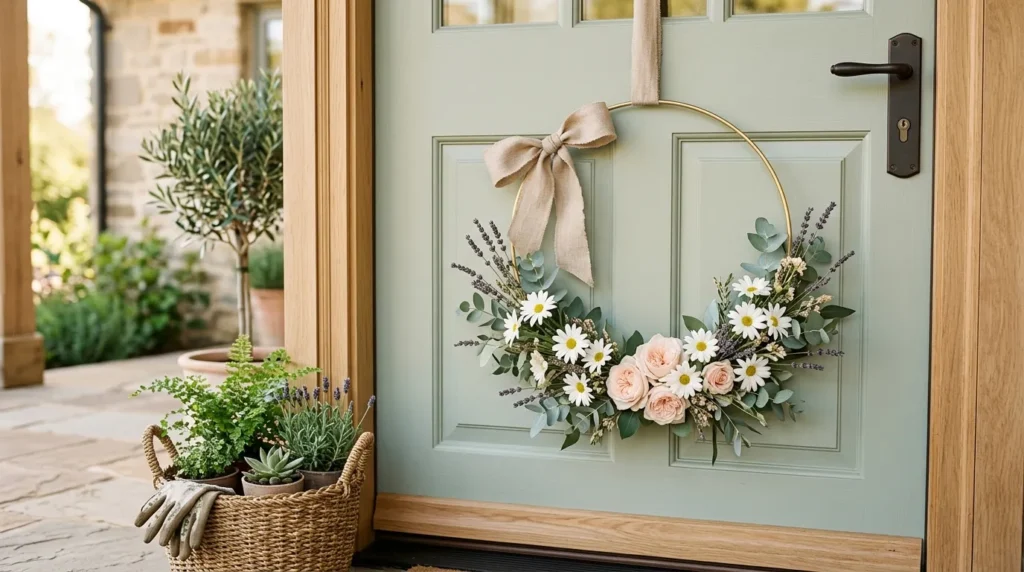
- A metal hoop creates a light, modern silhouette.
- Wildflowers add soft color and natural movement.
- Open space keeps the design airy and elegant.
- Linen ribbon adds a gentle finishing touch.
A wildflower hoop wreath brings an effortless spring look to the front door with a design that feels light and natural. Start with a thin metal hoop in gold, black, or natural wood, then attach small clusters of daisies, lavender, blush flowers, and eucalyptus along one side. Leaving much of the hoop exposed creates an open and contemporary appearance. This style works beautifully on neutral, sage, navy, or natural wood doors because the flowers provide color without overwhelming the entrance. The delicate arrangement feels welcoming while still maintaining a clean, modern aesthetic.
Keep the flower placement slightly uneven to create a more organic shape. I’ve noticed that hoop wreaths often look best when the flowers cover only one-third or half of the frame rather than the entire circle. Add a soft linen ribbon in cream or beige for extra texture, but avoid oversized bows. Use weather-resistant faux flowers if the wreath will stay outdoors for several weeks. When viewed from the street, the airy design catches attention without looking heavy. This simple style offers a fresh spring welcome that feels both relaxed and thoughtfully curated.
11. Carrot Patch Wreath
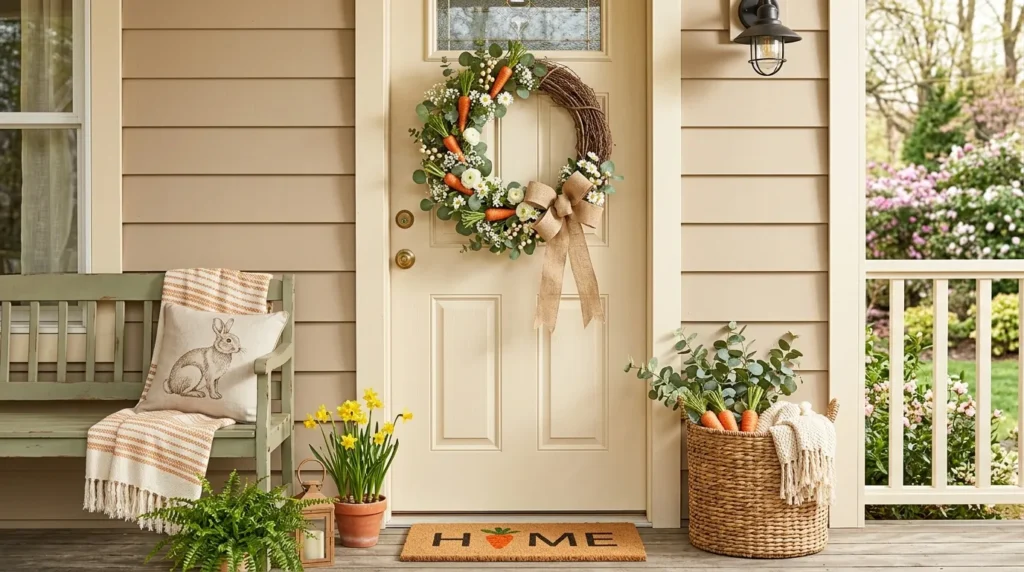
- Mini carrots create a fun seasonal focal point.
- Greenery balances the brighter orange accents.
- White flowers soften the overall palette.
- Natural textures keep the design tasteful.
Add a playful touch to your spring entry with a carrot patch wreath that feels cheerful without becoming overly colorful. Use a grapevine base layered with eucalyptus leaves and small white flowers, then place miniature carrots throughout the arrangement. The orange accents bring energy while the greenery keeps the look balanced and fresh. This design works especially well on white, cream, gray, and natural wood doors where the brighter details can stand out. It is a wonderful option for family homes that want a festive look while maintaining an organized, stylish appearance.
Distribute the carrots in small groups rather than spacing them evenly around the wreath. This creates a more natural arrangement and allows the greenery to remain visible. In my experience, playful wreath designs feel more sophisticated when paired with neutral ribbons and natural materials like burlap or grapevine. Keep the flowers simple and avoid adding too many extra decorations. A cream or beige ribbon is enough to finish the design beautifully. The result is a welcoming spring wreath that combines fun seasonal details with a balanced, polished appearance.
12. Olive Branch Circle
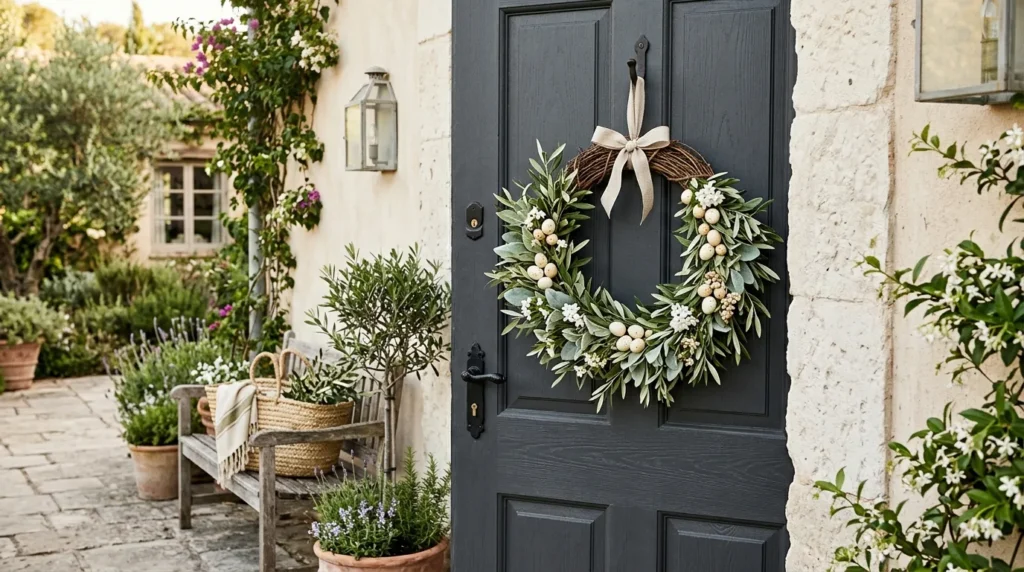
- Olive leaves create a calm and timeless appearance.
- Small eggs add subtle Easter detail.
- White blossoms brighten the greenery naturally.
- The muted palette suits many home styles.
An olive branch circle offers a timeless spring look that feels both peaceful and elegant. Use olive leaves as the main feature, weaving them around a natural vine base while adding a few white blossoms and tiny ivory eggs. The soft green tones work beautifully with stone, wood, white siding, and darker painted doors. Because the colors remain muted, this wreath can stay displayed beyond Easter and continue through the spring season. The natural foliage creates movement and texture while keeping the overall design clean and uncluttered.
Leave some open spaces between the branches so the wreath feels airy rather than dense. I’ve noticed that olive leaves look especially beautiful when their silvery-green tones are paired with simple cream accents. Avoid large bows or brightly colored decorations if you want a more sophisticated result. Use weather-resistant stems for outdoor durability and secure smaller pieces firmly before hanging. A narrow linen ribbon can provide a subtle finishing touch without distracting from the greenery. The finished wreath creates a warm, calming welcome and adds understated beauty to any front entrance.
13. Daisy Egg Wreath
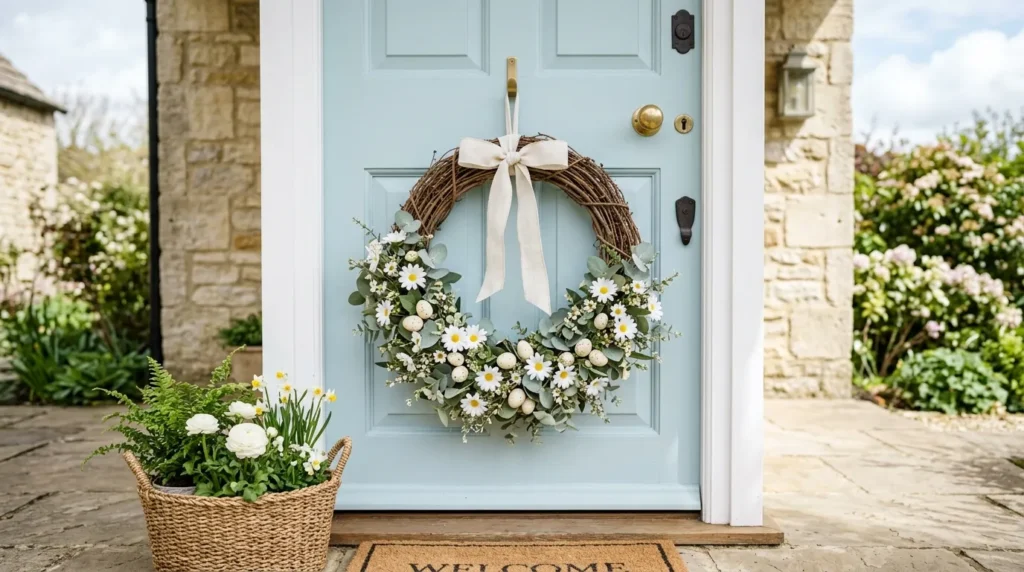
- White daisies create a cheerful spring focal point.
- Tiny eggs add Easter detail without visual clutter.
- Eucalyptus introduces soft green contrast.
- A neutral ribbon keeps the look polished.
Nothing says fresh spring decorating quite like a daisy wreath filled with crisp white blooms. Start with a natural grapevine base and arrange white daisies around most of the circle, leaving small areas of the base visible. Add a few tiny ivory eggs between the flowers for a subtle Easter connection, then weave eucalyptus leaves through the arrangement. The white and green palette feels bright against darker doors while remaining soft on white or cream surfaces. It is an easy choice when you want your entrance to look cheerful without using strong seasonal colors.
Choose daisies with slightly different flower sizes to make the wreath look more natural and dimensional. Keep the eggs small so they support the flowers rather than becoming the main attraction. I’ve noticed that white floral wreaths look especially fresh when paired with a simple cream ribbon instead of a colorful bow. If the wreath will remain outside, select weather-resistant materials and secure every decorative piece firmly. Position it at eye level and step back several feet to check the balance. The finished arrangement gives your front door a bright, welcoming spring personality.
14. Bunny Ear Wreath
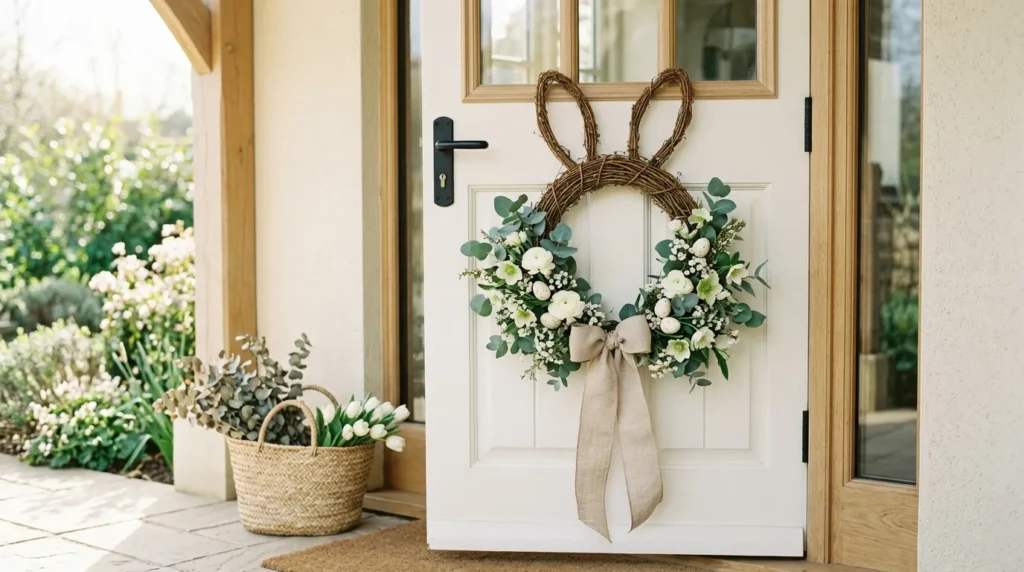
- Bunny ears make the Easter theme instantly recognizable.
- Greenery keeps the silhouette natural and fresh.
- White blossoms brighten the neutral palette.
- A simple bow adds softness without excess.
Create a playful Easter focal point with a wreath featuring a subtle bunny-ear silhouette. Use flexible grapevine branches to form two gentle ears above a round base, then add eucalyptus, small white flowers, and a few ivory eggs around the lower section. The design gives the front door an unmistakable Easter detail while keeping the overall palette natural and sophisticated. Warm wood, cream, beige, and muted green pair especially well with this style. It is a charming choice for family homes, cottages, or contemporary entrances that need a little seasonal personality.
Keep the bunny ears simple and proportional so the wreath does not become overly cartoon-like. Concentrate most of the decoration around the circular section and allow the ear shapes to remain visible. I’ve noticed that understated silhouettes tend to look more stylish when the supporting decorations are kept neutral. Finish with a small linen bow in beige or cream rather than a large colorful ribbon. Secure the grapevine and decorative elements carefully, especially if the entrance receives strong wind. The finished wreath feels cheerful and welcoming while still maintaining a refined spring appearance.
15. Fern And Egg Wreath
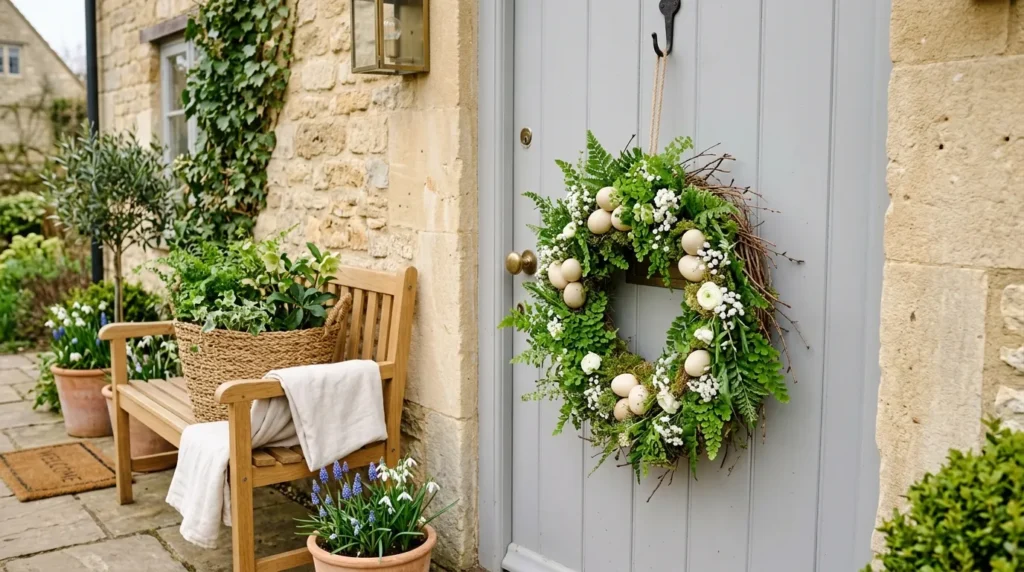
- Fern leaves create abundant natural texture.
- Cream eggs add understated seasonal character.
- White flowers brighten the deeper green tones.
- The organic shape feels relaxed and welcoming.
A fern and egg wreath brings lush greenery to the entrance while keeping Easter details subtle. Build the arrangement around a natural twig base using fern fronds with varied lengths and textures. Add a handful of matte cream eggs and a few tiny white flowers throughout the greenery. The layered leaves create a fuller appearance without needing many decorative elements. This design works particularly well on gray, white, cream, or natural wood doors because the rich green foliage creates a noticeable but calming contrast. It also suits homes surrounded by gardens or mature landscaping.
Arrange the longest fern leaves around the outer edge and shorter pieces toward the center to create a naturally rounded silhouette. Keep the eggs visible but partially tucked into the foliage so they feel integrated rather than randomly attached. In my experience, greenery-heavy wreaths look best when their natural shape is allowed to remain slightly imperfect. Use preserved or realistic faux ferns for easier maintenance and better outdoor durability. Avoid adding several competing colors; cream, green, and natural brown are enough. The finished wreath gives your doorway a fresh botanical character with a quiet Easter touch.
16. Hydrangea Spring Wreath
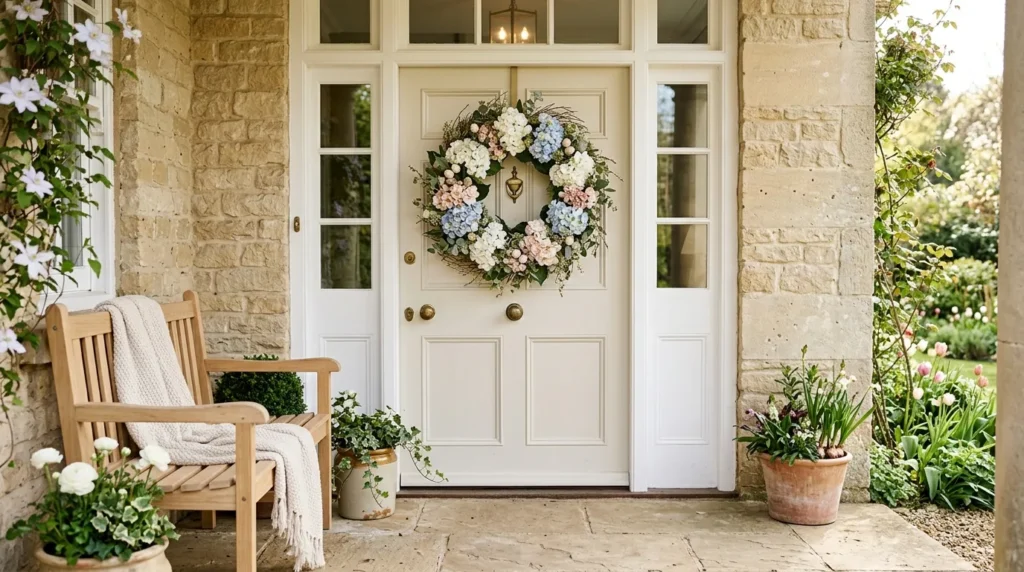
- Hydrangeas create a full, luxurious floral texture.
- Soft pastel colors keep the wreath spring-ready.
- Small eggs add a subtle Easter connection.
- Greenery breaks up the dense flower clusters.
Bring a fuller floral look to your entrance with a hydrangea spring wreath in soft, airy colors. Combine white, pale blue, blush, and muted green hydrangea clusters around a natural grapevine base, then tuck a few ivory eggs between the flowers. The large blooms create plenty of visual impact, so you do not need many additional decorations. This style works beautifully against white, cream, gray, or natural wood doors. The rounded flower clusters also give a traditional wreath shape a softer, more contemporary spring appearance.
Because hydrangeas can make a wreath look visually dense, leave small sections of greenery or vine visible between the blooms. Choose realistic faux flowers if the wreath will be exposed to rain or strong sunlight. I’ve noticed that pale blue and white hydrangeas look especially fresh when paired with natural wood and beige porch accessories. Keep ribbons narrow and understated so they do not compete with the flowers. Check the arrangement from several feet away before hanging it permanently. A balanced floral wreath can instantly make the entrance feel brighter, more welcoming, and ready for spring.
17. Natural Twig Wreath
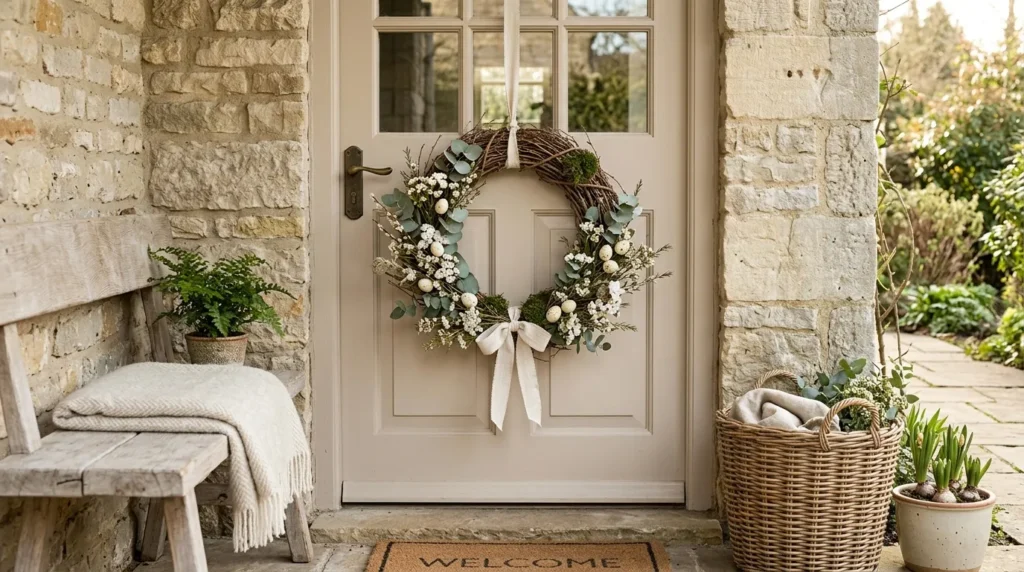
- Exposed twigs add natural architectural texture.
- Greenery brings a fresh spring element.
- Ivory eggs keep the Easter details subtle.
- A linen ribbon softens the rustic base.
Sometimes the simplest wreath creates the strongest entrance. A natural twig wreath uses an exposed branch base as the main visual feature, then adds small clusters of eucalyptus, white blossoms, moss, and ivory eggs. The open construction keeps the design light while the irregular branches provide plenty of texture. This look works especially well with neutral doors, stone exteriors, wooden porches, and contemporary organic homes. Because the base remains visible, the wreath feels connected to nature and does not require a large collection of decorative pieces.
Choose sturdy, naturally shaped branches and arrange the greenery asymmetrically around one side or the lower portion. I’ve noticed that exposed twig wreaths look more intentional when the decorative elements are grouped instead of scattered randomly across the entire circle. Add a narrow cream linen ribbon for softness, or leave it completely natural for a more minimalist finish. Secure every branch and ornament carefully before hanging. The open silhouette also makes this wreath easy to refresh throughout the season. Simply replace the Easter eggs with small flowers or greenery when you want a longer-lasting spring display.
18. Peony And Greenery
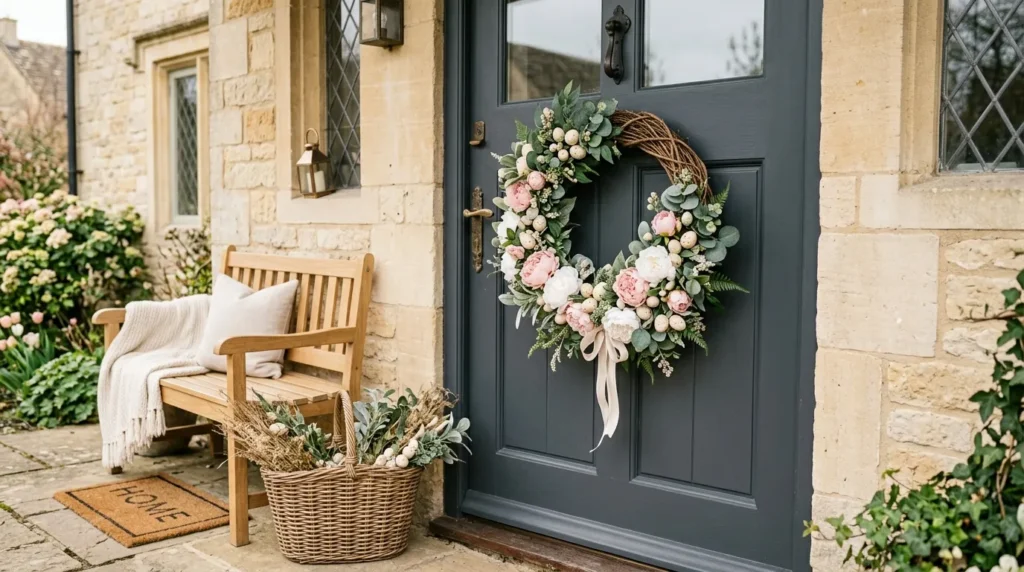
- Peonies create a soft, romantic floral focal point.
- Blush and white blooms feel elegant and fresh.
- Greenery adds structure between large flowers.
- Tiny eggs keep the design connected to Easter.
Large peony blooms can turn a simple front door into an elegant spring focal point. Combine blush and white peonies with eucalyptus and soft greenery on a natural vine base, then add a few tiny cream eggs for a gentle Easter accent. The large flowers provide fullness and visual softness, while the greenery creates structure around the rounded petals. This design looks especially striking against charcoal, navy, white, or natural wood doors. It is ideal when you want a wreath that feels festive but polished enough to complement a sophisticated exterior.
Keep the larger flowers slightly separated so each bloom remains visible instead of blending into one large mass. Use greenery to fill the spaces between flowers and create a more natural shape. In my experience, blush flowers look especially balanced when the surrounding accents stay neutral and understated. Choose weather-resistant faux peonies for an outdoor wreath that can be reused each year. Add a narrow cream ribbon if the design needs another layer of texture. The finished arrangement creates a graceful spring welcome while giving the front entrance a warm, floral personality.
19. Tulip Basket Wreath
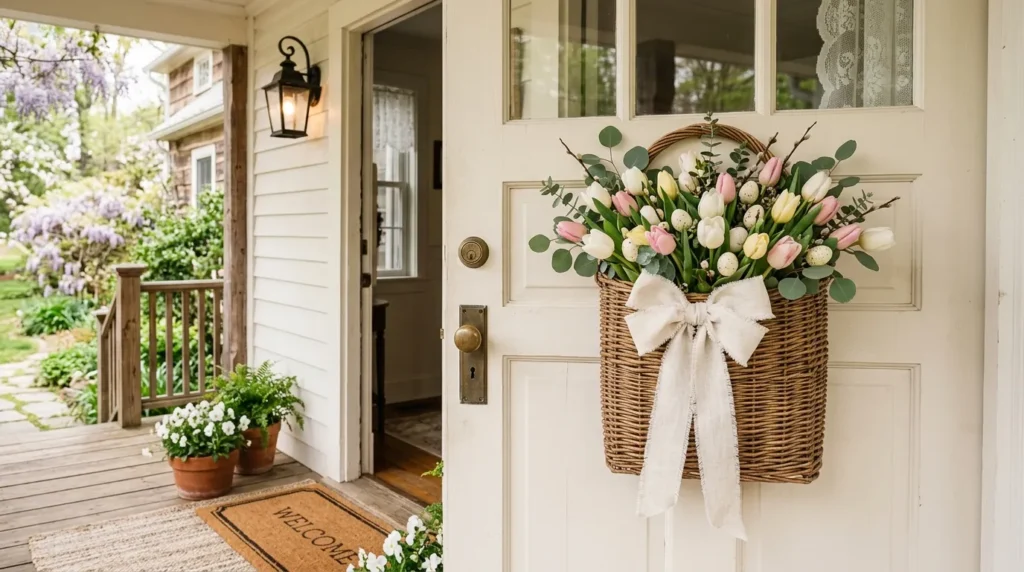
- A basket base creates a fresh alternative to round wreaths.
- Tulips bring instant spring color to the entrance.
- Eucalyptus adds texture and soft greenery.
- A neutral ribbon keeps the arrangement refined.
Give your front door a fresh twist by replacing the traditional circular base with a woven basket filled with spring tulips. Choose white, blush, pale yellow, or soft lavender blooms, then layer eucalyptus and small greenery around the stems. A few ivory eggs tucked between the flowers add an understated Easter detail. This arrangement works beautifully on neutral doors because the tulips provide gentle color without becoming overwhelming. The basket also introduces natural texture, making the entrance feel relaxed, welcoming, and thoughtfully decorated for the season.
Choose a shallow, lightweight basket so the arrangement does not become difficult to hang. I’ve noticed that tulips look most natural when their stems are allowed to vary slightly in height rather than being trimmed to one level. Use realistic faux tulips if you want the display to last throughout spring, especially in direct sunlight. Keep the basket mostly filled with greenery near the bottom to create a balanced silhouette. A simple linen ribbon can finish the arrangement without distracting from the flowers. The result feels cheerful, fresh, and distinctly spring-inspired.
20. Lemon And Blossom Wreath
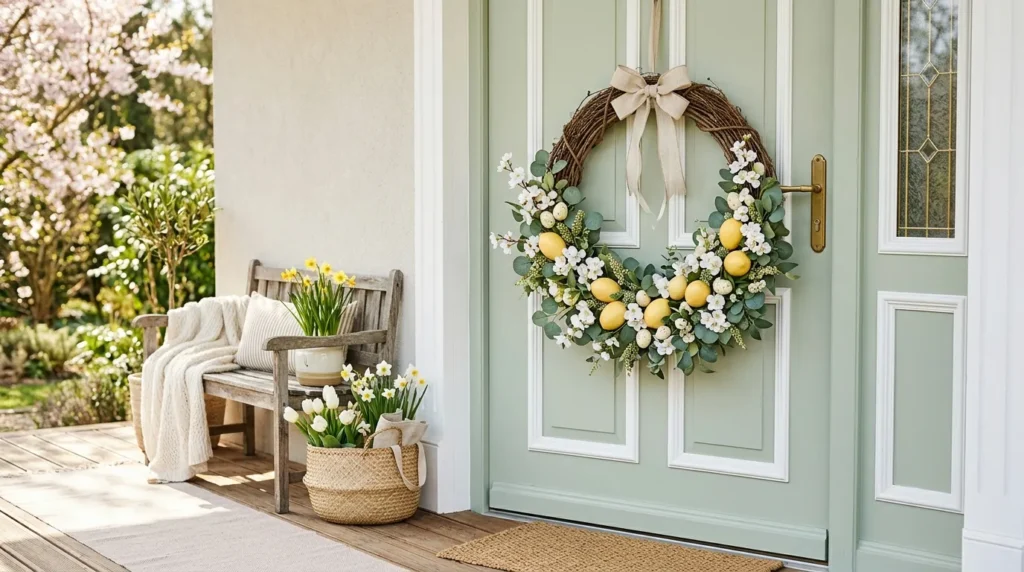
- Lemons add cheerful color without looking overly seasonal.
- White blossoms create a crisp floral contrast.
- Eucalyptus softens the brighter yellow accents.
- Small eggs provide a subtle Easter detail.
For a brighter spring entrance, combine fresh-looking lemons with delicate white blossoms and soft greenery. Build the wreath around a natural grapevine base, placing pale yellow faux lemons among white flowers, eucalyptus leaves, and a few tiny cream eggs. The yellow immediately catches attention while the white and green accents keep the arrangement balanced. This style works particularly well with sage, white, cream, and natural wood doors. It can also transition into general spring decorating after Easter because the lemon-and-blossom combination feels seasonal without being tied exclusively to one holiday.
Keep the lemons concentrated in small clusters instead of spreading them evenly around the wreath. This creates visual rhythm and allows the white blossoms to remain noticeable. I’ve noticed that yellow decorations look more sophisticated when the surrounding colors are muted and natural. Choose lightweight faux fruit for easier hanging, especially on glass or narrow doors. A small beige ribbon can add texture if needed, but the arrangement already has plenty of visual interest. The finished wreath feels sunny and welcoming, giving the entrance a fresh burst of spring energy.
21. Lavender Egg Wreath

- Lavender creates a calming color accent.
- Speckled eggs add natural Easter character.
- Eucalyptus gives the purple tones more balance.
- White flowers brighten the arrangement gently.
Soft lavender creates a peaceful alternative to brighter Easter colors. Build this wreath with lavender sprigs, eucalyptus leaves, tiny white flowers, and ivory speckled eggs arranged around a natural vine base. The muted purple tones add personality without overwhelming the entrance, while the greenery gives the design a fresh botanical quality. This look works especially well with cream, white, gray, pale blue, or natural wood doors. The combination feels elegant enough for a minimalist home while still providing a recognizable spring and Easter atmosphere.
Layer the lavender in small clusters so the delicate stems remain visible and do not become compressed. Place the eggs deeper within the greenery for a more natural appearance. In my experience, lavender looks particularly beautiful when paired with warm neutrals rather than strong competing colors. Use preserved or realistic faux lavender for an arrangement that can remain attractive throughout the season. A simple linen ribbon in cream or taupe can complete the look. The finished wreath brings gentle color, texture, and a calming spring presence to the front door without feeling overly decorated.
22. Forsythia Branch Wreath
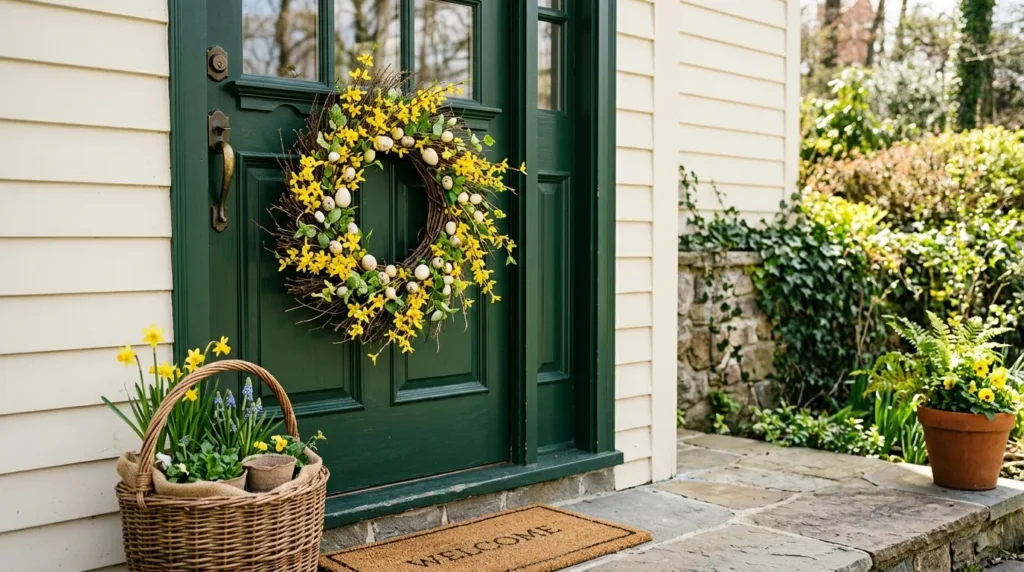
- Yellow branches create an instant spring focal point.
- The loose shape feels natural and airy.
- Tiny eggs add seasonal character without clutter.
- Green leaves balance the bright golden tones.
Bright yellow branches can make a front entrance feel instantly alive. A forsythia wreath uses long, delicate stems to create an airy circular shape, with tiny ivory eggs tucked between the branches for a subtle Easter touch. The golden blooms stand out beautifully against deep green, navy, charcoal, or white doors. Unlike dense floral wreaths, this design leaves plenty of open space, making the entrance feel lighter and more contemporary. It is especially useful when you want noticeable seasonal color without covering the entire door with decorations.
Arrange the branches in overlapping layers rather than forcing every stem into a perfect circle. I’ve noticed that the slightly irregular shape makes botanical wreaths feel more realistic and visually interesting. Use flexible faux branches if you want to recreate the arrangement every year, and secure the stems firmly around the twig base. Keep additional decorations minimal because the yellow flowers already provide strong color. A narrow natural ribbon can finish the display. The result is a cheerful spring accent that gives your doorway energy while maintaining a clean, uncluttered appearance.
23. Moss Egg Wreath
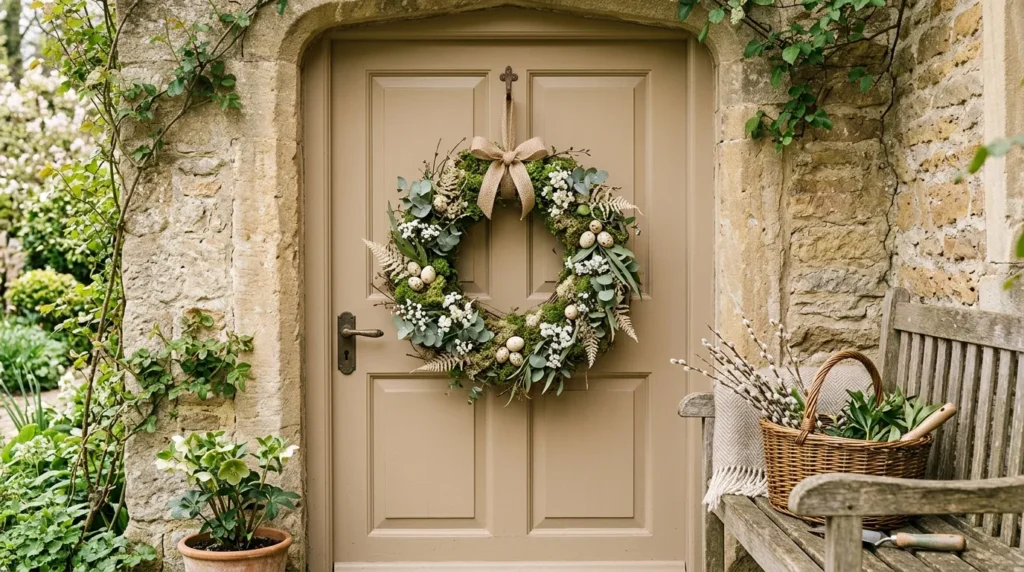
- Moss provides rich natural texture.
- Speckled eggs create an understated Easter detail.
- Small flowers add delicate contrast.
- Earthy colors work beautifully with natural exteriors.
A moss-covered wreath brings an earthy, garden-inspired feeling to the front entrance. Cover a natural twig base with preserved or realistic moss, then add cream speckled eggs, tiny white flowers, and a few eucalyptus leaves. The deep green texture creates a beautiful contrast against light-colored doors while blending naturally with stone, brick, and wood surroundings. This design feels connected to spring without relying on bright colors or elaborate decorations. It is a strong option for anyone who prefers organic textures and a quieter seasonal display.
Keep the moss texture slightly uneven so the wreath maintains a natural, garden-like appearance. Place the eggs in small groups and partially hide them beneath the foliage for a more realistic finish. In my experience, earthy wreaths look most polished when the palette stays limited to green, cream, white, and natural brown. Choose preserved materials when possible to reduce maintenance and keep the wreath looking fresh. Avoid adding too many flowers or ribbons because the moss already provides plenty of texture. The finished piece creates a peaceful, nature-inspired welcome that feels perfect for spring.
24. White Berry Wreath
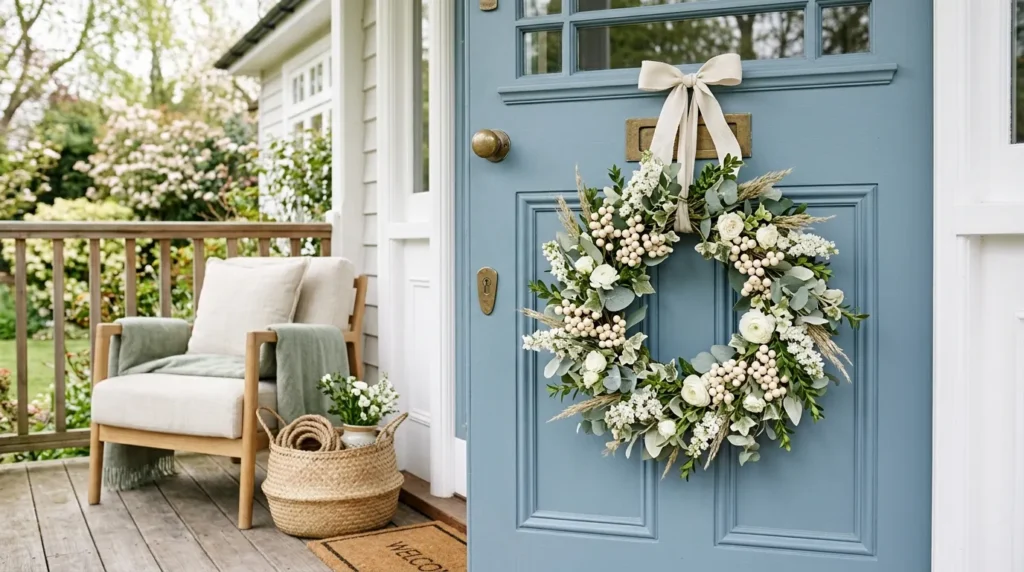
- White berries create a soft, clean appearance.
- Pale greenery adds gentle contrast.
- White blossoms make the wreath feel fuller.
- A cream ribbon keeps the palette cohesive.
For a crisp and elegant entrance, try a white berry wreath layered with pale greenery and delicate blossoms. Use ivory berries as the main texture, adding white flowers and eucalyptus leaves throughout a natural circular base. The monochromatic palette feels fresh and sophisticated while still fitting beautifully into Easter decorating. This design looks especially striking against muted blue, sage, charcoal, or natural wood doors. Because the colors are understated, the wreath can easily transition into general spring decor after Easter, making it a practical choice for longer seasonal use.
Vary the berry clusters so some areas look fuller while others remain slightly open. This gives the wreath dimension and prevents the white elements from appearing like one solid mass. I’ve noticed that adding just a small amount of pale greenery makes an all-white arrangement feel much more natural. Use a cream or soft beige ribbon rather than bright colors to preserve the calm aesthetic. If the door receives direct sunlight, choose UV-resistant faux berries and flowers. The finished design creates a polished spring welcome with subtle texture and a peaceful, contemporary character.
25. Carrot And Tulip Wreath
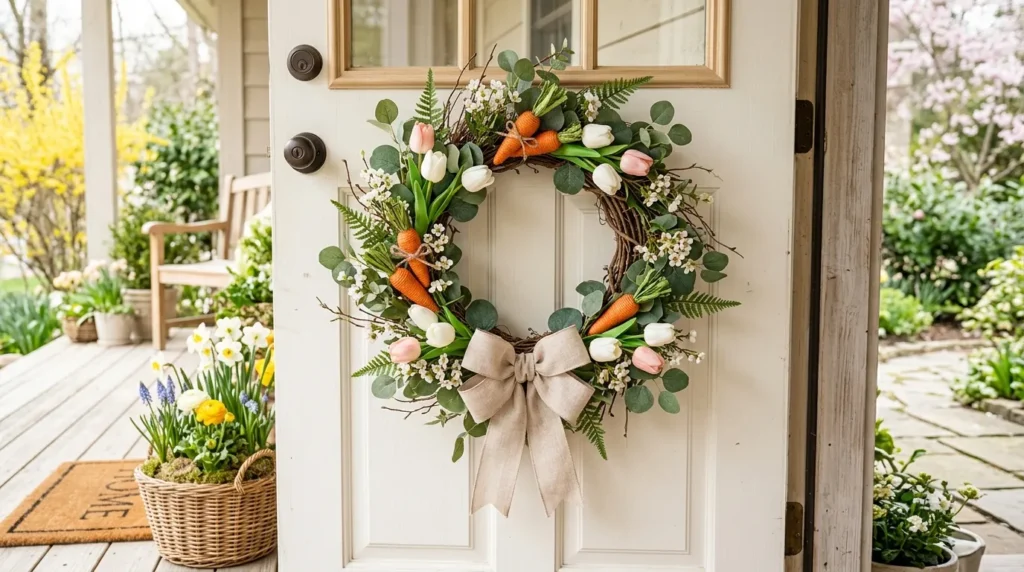
- Tulips soften the playful carrot details.
- Orange accents add cheerful Easter energy.
- Eucalyptus keeps the palette fresh and balanced.
- A beige ribbon provides a polished finish.
Mix playful Easter details with classic spring flowers by combining miniature carrots and colorful tulips. Start with a grapevine base and arrange white, blush, and pale yellow tulips throughout the circle. Add small orange carrots in grouped clusters, then weave eucalyptus leaves between the flowers for contrast. The combination works particularly well on white, cream, sage, or natural wood doors. Tulips provide a soft floral foundation while the carrots create an unmistakable Easter accent. The result feels festive without relying on excessive decorations or bright colors everywhere.
Keep the carrots concentrated around a few sections rather than distributing them evenly across the entire wreath. This makes the design feel more natural and lets the tulips remain visually important. I’ve noticed that mixed floral-and-seasonal wreaths look more refined when one decorative element clearly leads the composition. Use a neutral ribbon in beige or cream to connect the colors without adding another strong shade. Choose durable faux materials for outdoor use and secure the carrots firmly. This wreath creates a cheerful, welcoming entrance that works especially well for family-friendly spring decorating.
26. Minimalist Egg Circle
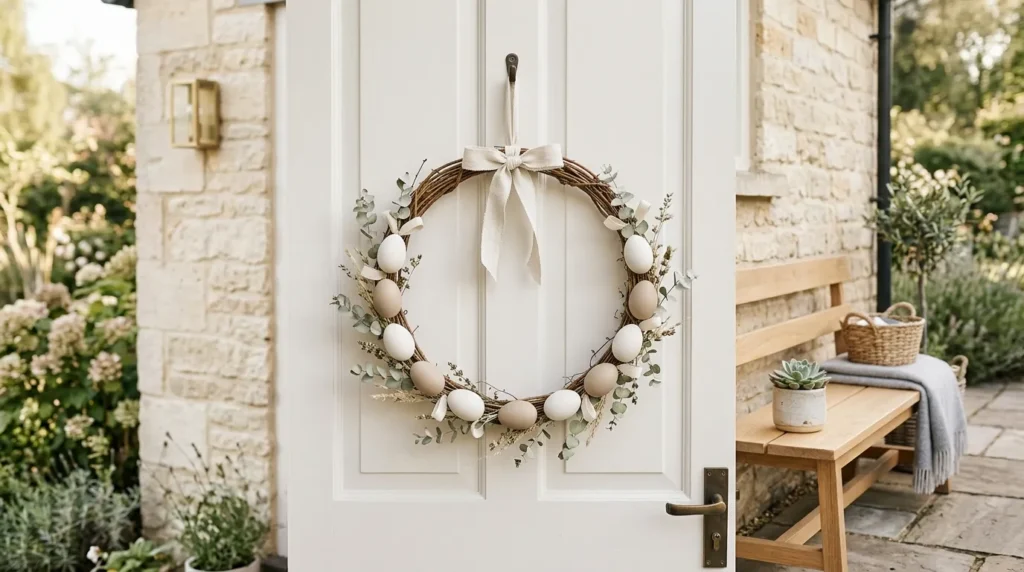
- A thin frame keeps the design visually light.
- Neutral eggs create a clean Easter focal point.
- Sparse greenery adds just enough natural texture.
- The open silhouette suits modern homes.
A minimalist egg circle proves that Easter decorating does not need to be elaborate to make an impact. Use a thin twig or metal frame and attach a small number of matte white, beige, or softly speckled eggs around the circle. Add just a few eucalyptus stems for greenery, leaving generous open space between each element. The restrained design works beautifully on modern white, gray, black, or natural wood doors. It creates a quiet seasonal accent that feels intentional rather than crowded, making it ideal for homes with minimalist or Scandinavian-inspired interiors.
Choose eggs in similar neutral tones to maintain a cohesive appearance. Position them with enough space between each piece so the circular structure remains easy to see. In my experience, minimal wreaths look best when every decorative element has room to breathe. A cream linen ribbon can add warmth without disturbing the clean silhouette. Use lightweight materials so the frame hangs securely and remains easy to remove after the holiday. The finished arrangement brings a subtle Easter touch to the entrance while preserving the simple lines and calm atmosphere of a modern home.
27. Cherry Blossom Wreath
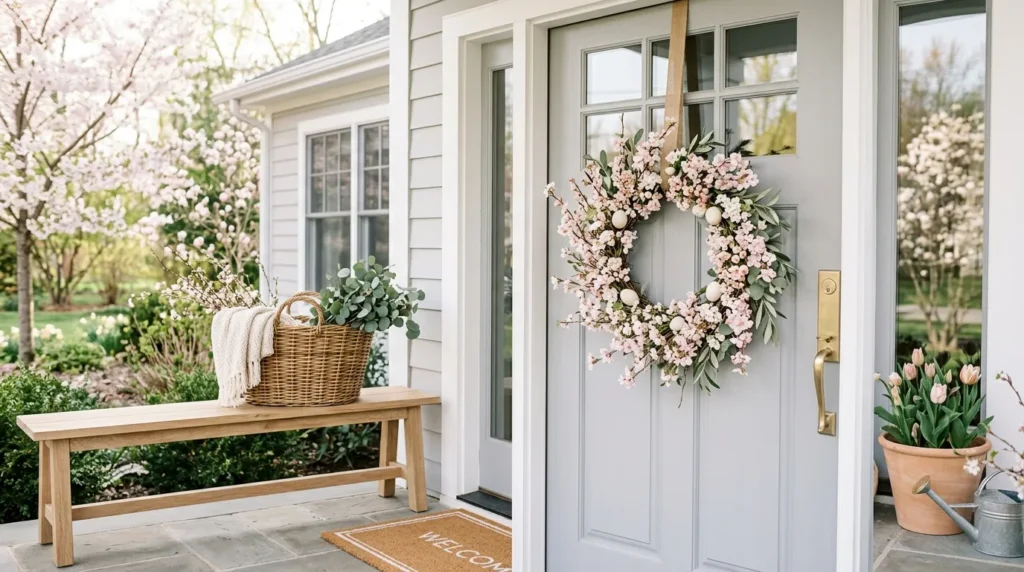
- Pink blossoms create an instant spring focal point.
- Delicate branches keep the arrangement airy.
- Ivory eggs connect the design to Easter.
- Soft greenery adds natural balance.
Delicate cherry blossoms bring a graceful spring feeling to the front door with their soft pink color and airy branches. Build the wreath around curved flowering stems, adding a few ivory eggs and small green leaves throughout the arrangement. The pale blush palette creates a gentle contrast against gray, cream, white, navy, and natural wood doors. Unlike dense floral wreaths, cherry blossom branches provide height and movement while leaving open areas around the frame. This makes the entrance feel brighter and more spacious without requiring a large amount of decoration.
Use branches with blossoms at different stages to create a more natural and dimensional appearance. Keep the eggs small and neutral so they complement rather than compete with the flowers. I’ve noticed that blush blossoms look particularly sophisticated when paired with cream and natural wood accents nearby. Choose realistic faux branches if you want the wreath to remain attractive throughout the season. Secure the longer stems carefully to prevent shifting outdoors. The finished wreath gives the doorway a soft, elegant spring update while adding just enough Easter detail to make the seasonal theme clear.
28. Daffodil Basket Wreath
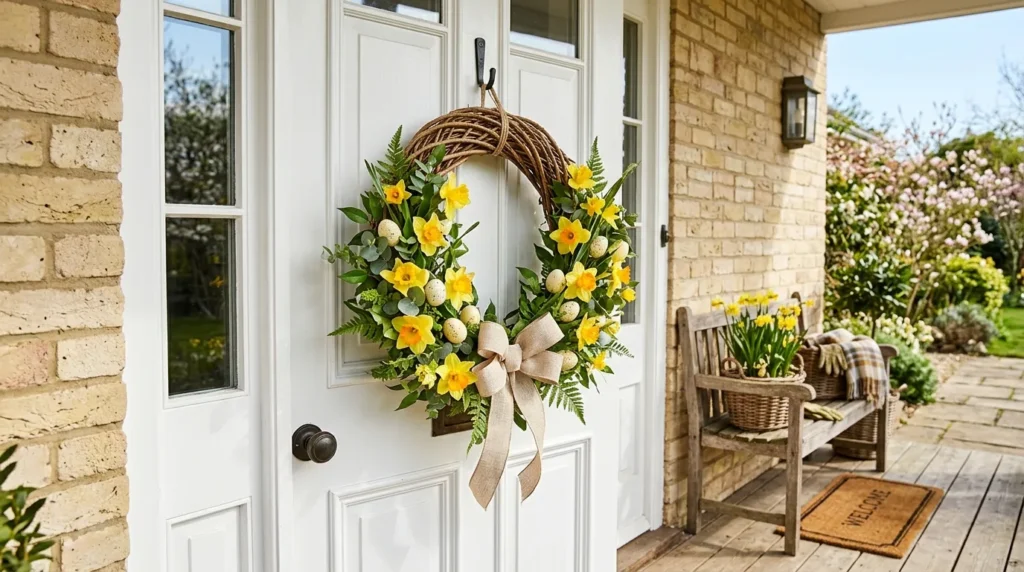
- Daffodils bring bright seasonal color to the entrance.
- A basket creates an unexpected wreath alternative.
- Green leaves add natural structure.
- Cream eggs keep the Easter theme understated.
Bright daffodils instantly bring the feeling of spring to a front entrance. Instead of a traditional circular wreath, arrange realistic yellow and white daffodils inside a shallow woven basket, adding green leaves and a few cream eggs among the stems. The basket introduces natural texture while the flowers provide a lively focal point. This design looks especially beautiful against white, cream, pale blue, and light gray doors. It is a practical choice when you want something cheerful and different from a standard wreath while still keeping the display easy to hang and remove.
Keep the tallest daffodils toward the center and let shorter stems frame the edges for a relaxed shape. I’ve noticed that yellow flowers look particularly fresh when paired with natural beige and green rather than several competing colors. Choose a lightweight basket and secure the arrangement carefully if it will hang outdoors. A simple linen ribbon can add a finished touch without overpowering the flowers. Once Easter passes, you can remove the eggs and continue using the same basket arrangement throughout spring. This makes the display both festive and reusable.
29. Monochrome White Wreath
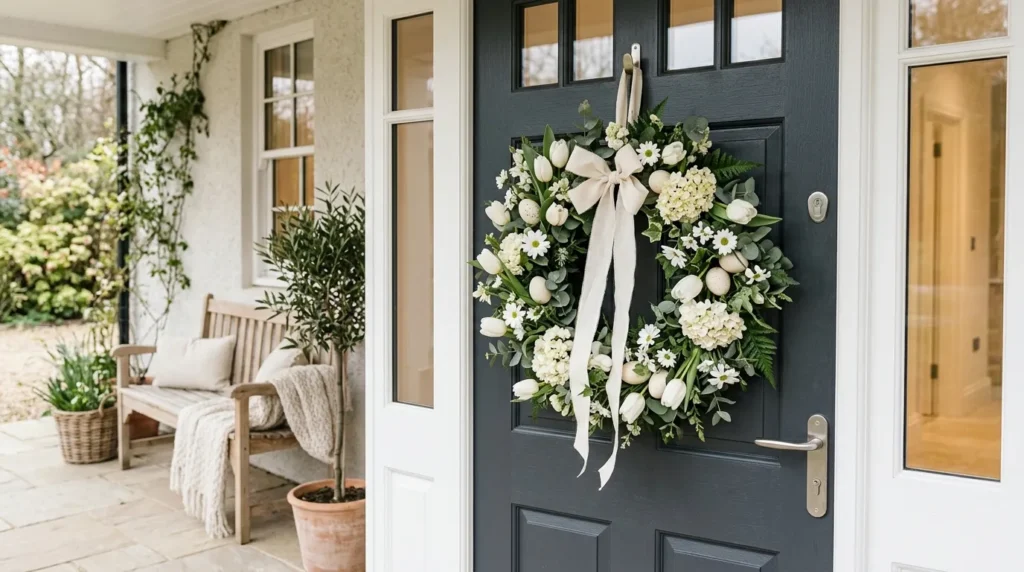
- White flowers create a clean, sophisticated focal point.
- Different flower shapes add visual depth.
- Ivory eggs blend naturally into the palette.
- A dark door creates beautiful contrast.
A monochrome white wreath can make an entrance feel instantly brighter and more refined. Combine white tulips, daisies, small hydrangeas, and delicate greenery around a natural or metal frame. Add ivory eggs that blend softly into the floral arrangement rather than introducing a contrasting color. The restrained palette works especially well against charcoal, navy, black, sage, or natural wood doors. Different flower shapes provide texture and dimension even though the colors remain nearly identical. This approach is ideal when you want Easter decorating to feel elegant, modern, and easy to coordinate.
Use flowers with varied petal shapes and sizes to prevent the monochrome arrangement from looking flat. In my experience, a white wreath becomes much more striking when the door provides strong contrast behind it. Keep the greenery limited to small sections so the white flowers remain the visual focus. A cream ribbon can add warmth while maintaining the neutral palette. For outdoor use, choose durable faux flowers that resist moisture and fading. The finished wreath creates a crisp spring statement that feels festive without looking overly themed or difficult to coordinate with the rest of the porch.
30. Bunny Tail Wreath
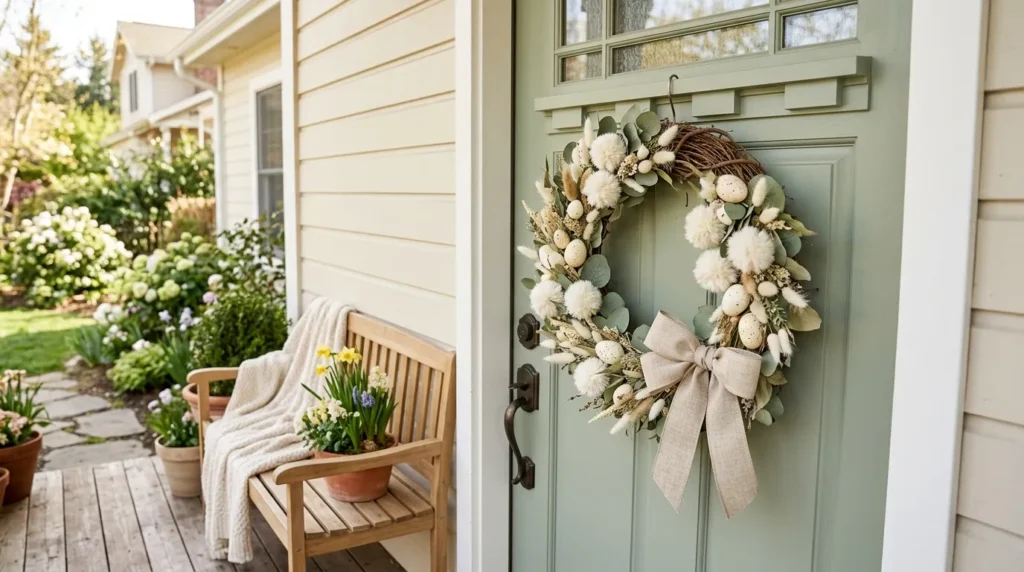
- Fluffy white blooms create a soft bunny-inspired texture.
- Eucalyptus adds natural green contrast.
- Ivory eggs reinforce the Easter theme gently.
- A linen bow keeps the design sophisticated.
Soft, fluffy textures can make an Easter wreath feel playful without looking childish. Create this bunny-inspired design with white bunny-tail flowers or realistic faux cotton stems arranged around a natural twig base. Add eucalyptus leaves and a few ivory eggs for subtle seasonal detail, then finish with a beige linen bow. The neutral palette works beautifully against sage, cream, white, gray, or natural wood doors. The rounded textures create visual softness while the greenery keeps the composition grounded. It is an especially lovely choice for homes that prefer gentle, neutral holiday decorating.
Keep the fluffy elements evenly distributed but avoid making every section identical. Slight differences in texture and height help the wreath feel more organic. I’ve noticed that soft white decorations look more sophisticated when paired with natural materials instead of bright plastic accents. Choose weather-resistant faux stems if the wreath will be displayed outside for several weeks. A narrow linen ribbon provides enough contrast without adding another strong color. The finished arrangement creates a welcoming spring accent with a subtle bunny influence, making the doorway feel festive, cozy, and thoughtfully styled.
31. Pussy Willow Wreath
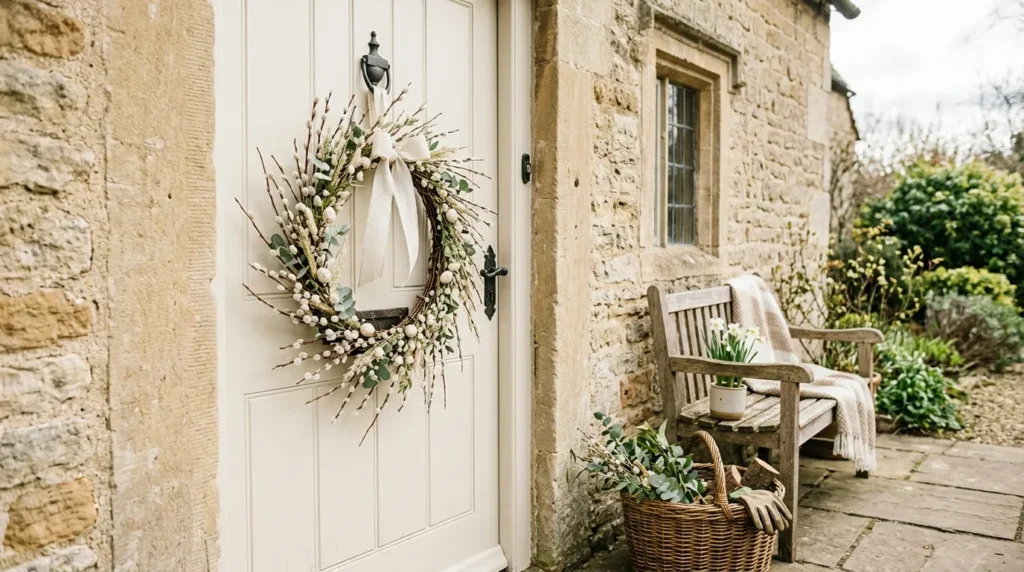
- Pussy willow branches add delicate natural texture.
- Soft catkins create subtle visual interest.
- Ivory eggs bring a quiet Easter detail.
- Earthy colors suit minimalist entrances beautifully.
Pussy willow branches create a delicate wreath that feels natural, airy, and quietly seasonal. Use flexible branches to form a loose circular shape, then add their soft white catkins, a few pale green leaves, and small ivory eggs. The earthy brown branches provide structure while the lighter details create contrast. This design works especially well with white, cream, beige, gray, or natural wood doors. Because the arrangement is not densely covered, it allows the door color and surrounding architecture to remain part of the overall composition.
Let the branches overlap naturally instead of forcing them into a perfectly symmetrical circle. I’ve noticed that pussy willow arrangements look especially elegant when decorative additions remain minimal. Place only a few eggs throughout the branches and use a simple cream ribbon if you want additional softness. For outdoor displays, choose preserved or realistic faux branches that can handle changing weather conditions. The neutral colors make this wreath easy to reuse throughout spring by removing the eggs after Easter. The result is an understated doorway accent with texture, movement, and a peaceful seasonal character.
32. Butterfly Spring Wreath
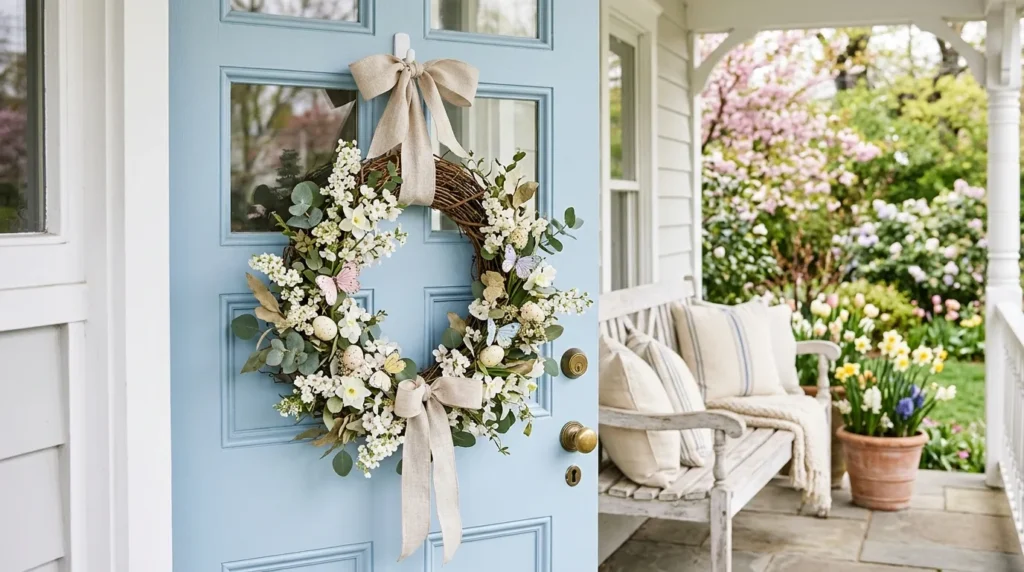
- Pastel butterflies add delicate spring movement.
- White flowers keep the design fresh and bright.
- Eucalyptus creates a natural botanical foundation.
- Small eggs connect the wreath to Easter.
Bring a gentle spring garden feeling to the front door with a wreath decorated with delicate pastel butterflies. Start with white blossoms and eucalyptus on a natural vine base, then add a few lightweight butterflies in blush, pale blue, lavender, or soft yellow. Small ivory eggs can be tucked between the greenery to keep the Easter connection subtle. The combination works beautifully against pale blue, cream, white, sage, or gray doors. The butterflies add visual interest and movement while the restrained floral palette keeps the arrangement elegant rather than overly decorative.
Use butterflies in only two or three complementary shades so the wreath remains visually cohesive. I’ve noticed that delicate seasonal accents look more sophisticated when they are spaced throughout the greenery rather than clustered together. Choose lightweight weather-resistant decorations and secure them firmly, especially if the door is exposed to wind. A beige or cream ribbon can complete the arrangement without competing with the pastel colors. After Easter, simply remove the eggs and keep the butterfly-and-flower design for the rest of spring. This makes the wreath versatile, cheerful, and easy to refresh.
33. Citrus Blossom Wreath
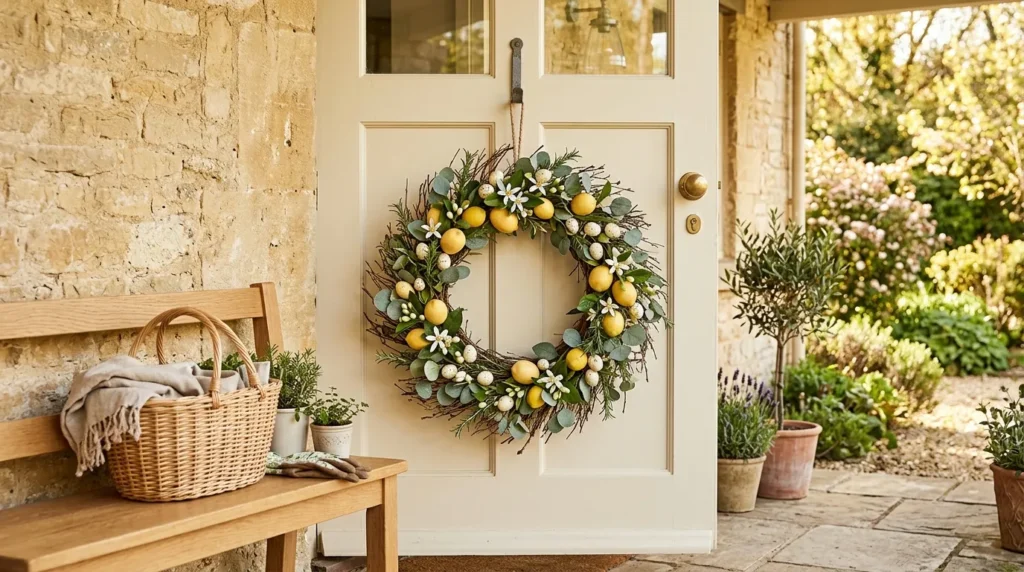
- Citrus accents bring cheerful spring color.
- White blossoms keep the arrangement soft.
- Eucalyptus adds natural depth and texture.
- Small eggs provide a subtle Easter touch.
Bright citrus accents can give a spring doorway an instantly cheerful personality. Combine small pale lemons with delicate white blossoms, eucalyptus leaves, and a few ivory eggs on a natural grapevine base. The yellow, green, and white palette feels fresh without becoming overly colorful, making it easy to coordinate with cream, white, sage, beige, or natural wood doors. The citrus elements provide a strong visual focal point while the flowers and greenery keep the composition soft. This design also transitions naturally into general spring decorating once Easter has passed.
Group the citrus pieces in small clusters so they create visual rhythm rather than appearing evenly scattered. I’ve noticed that fruit-inspired wreaths look more refined when the surrounding flowers and greenery remain understated. Choose lightweight faux lemons and weather-resistant foliage for an outdoor display that can be reused. Keep the eggs neutral and relatively small so they do not compete with the citrus accents. A narrow linen ribbon in cream or beige can add texture if desired. The finished wreath brings a sunny, garden-inspired feeling to the entrance while keeping the seasonal styling fresh and approachable.
34. Soft Pastel Wreath
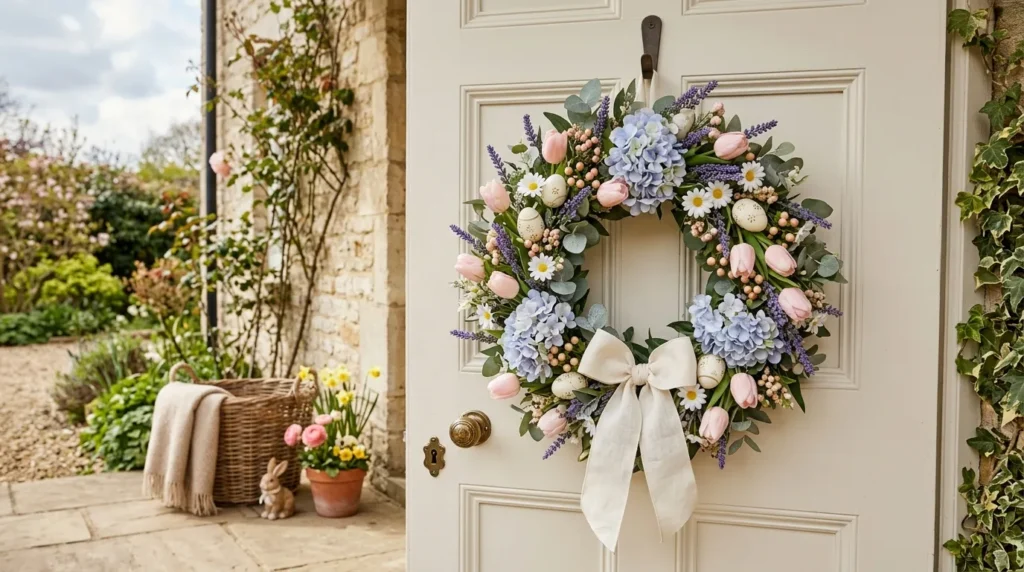
- Pastel flowers create a gentle spring palette.
- Multiple flower shapes add depth.
- Ivory eggs blend naturally with soft colors.
- Greenery keeps the arrangement from feeling too sweet.
A soft pastel wreath brings together several gentle spring shades for an entrance that feels bright, welcoming, and beautifully coordinated. Combine blush tulips, pale blue hydrangeas, lavender sprigs, white daisies, and eucalyptus leaves around a natural wreath base. Add a few ivory eggs between the flowers to reinforce the Easter theme without introducing harsh contrast. The mix of pastel colors works especially well against warm white, cream, pale gray, or natural wood doors. Each flower contributes a different texture, creating a fuller arrangement that still feels light and approachable.
Limit the palette to four or five closely related shades so the wreath remains cohesive. I’ve noticed that pastel arrangements look most polished when one color acts as the main accent while the others provide support. Place the largest blooms slightly apart and use smaller flowers and greenery to connect them visually. A cream ribbon can add a soft finishing detail without competing with the flowers. Choose durable faux materials if the wreath will remain outdoors. The finished display creates a cheerful spring welcome that feels festive, gentle, and easy to coordinate with surrounding porch decor.
Conclusion
A beautiful spring entrance does not need complicated decorations or expensive materials. The right combination of flowers, greenery, natural textures, and subtle Easter accents can completely refresh your doorway. Whether you prefer something playful, elegant, rustic, or minimalist, these easter wreath ideas front door designs offer plenty of inspiration to try. I’ve seen how one thoughtfully chosen wreath can make an ordinary entrance feel much more inviting. Save this post on Pinterest so you can return to your favorite ideas, try one in your own space, and share the inspiration with someone who loves spring decorating. Let your front door welcome the season beautifully!