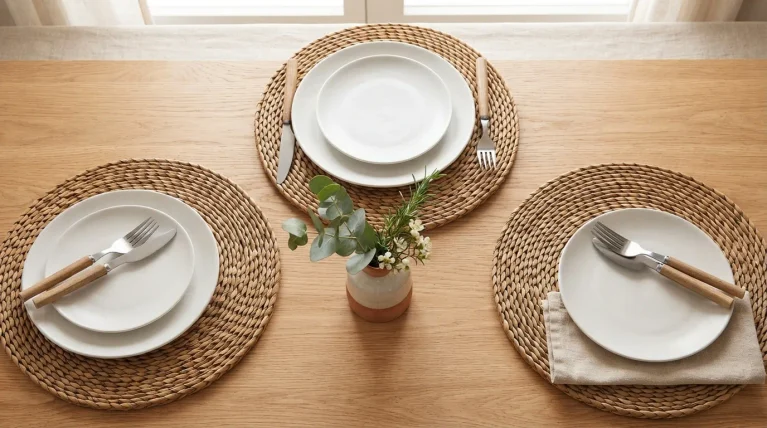
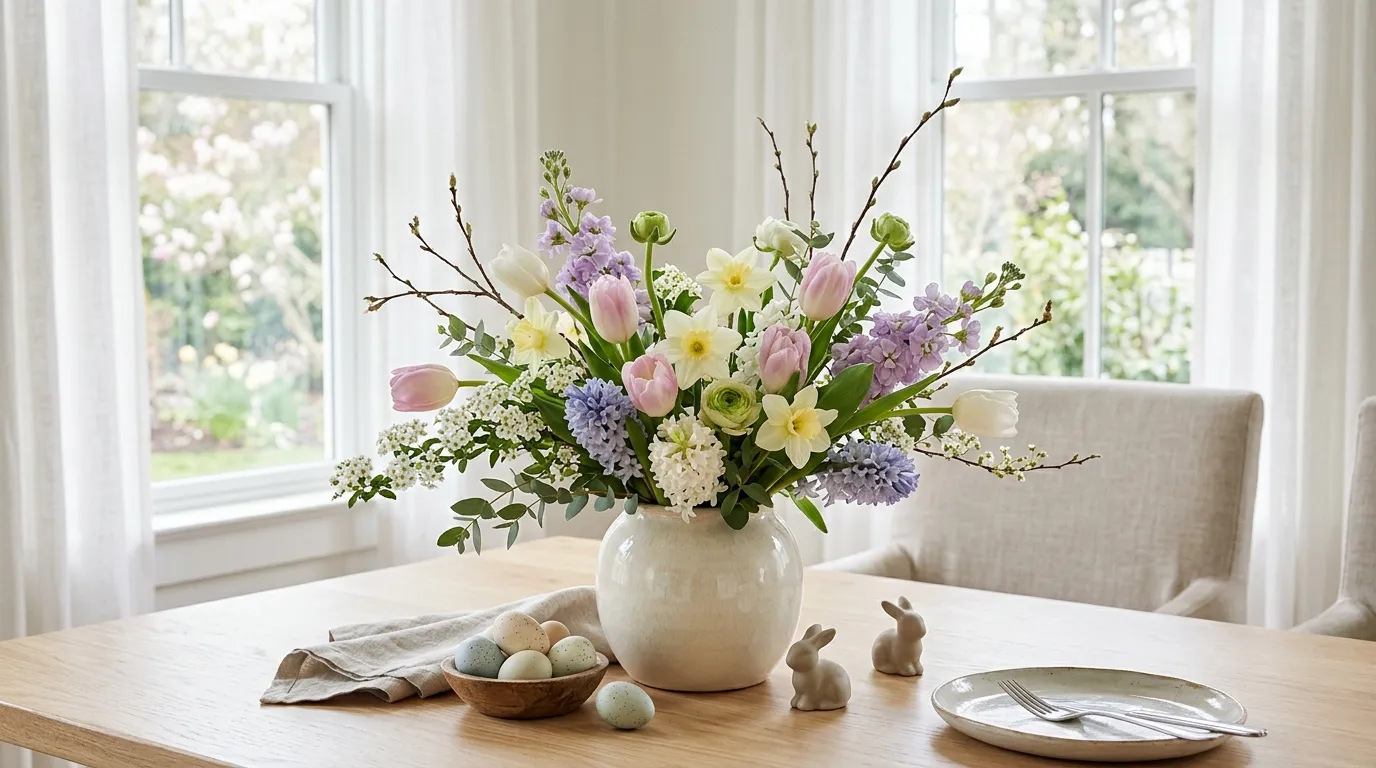
Your home can feel fresh for Easter without looking overly themed or cluttered. Modern Easter decor brings together clean lines, soft spring colors, natural textures, and simple seasonal accents to create a space that feels bright and inviting. Whether you are decorating a small apartment, refreshing your living room, or preparing your dining area for guests, the right details can make a noticeable difference. This collection shares practical ideas for adding Easter charm while keeping your existing style intact. In my experience, small changes such as fresh flowers, neutral ceramics, natural wood, and subtle pastel accents can completely change how a room feels. You will find easy inspiration for creating a polished spring atmosphere that feels personal, comfortable, and beautifully current.
1. White Ceramic Bunnies
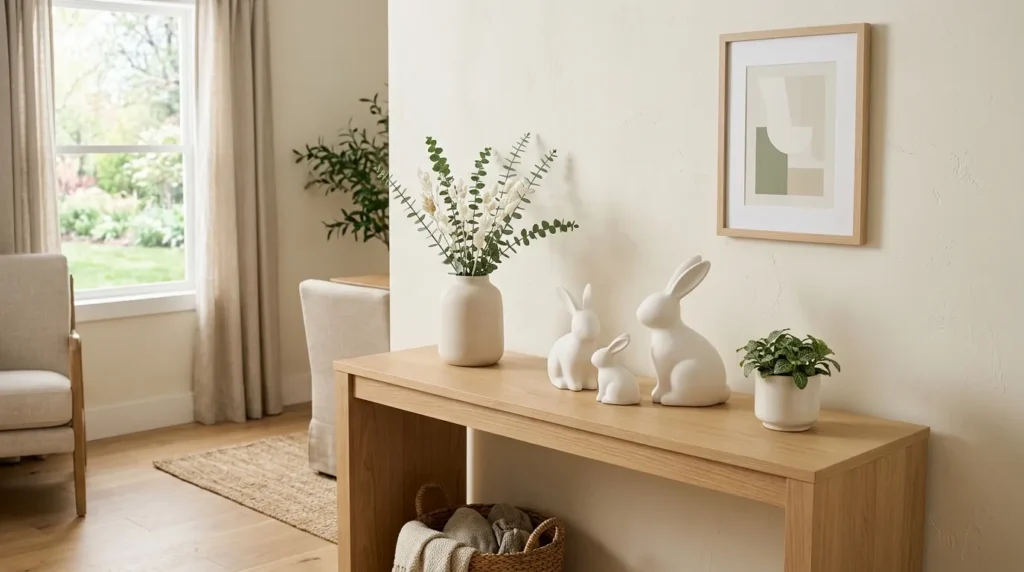
- White ceramic bunnies create a clean Easter focal point.
- Soft neutral tones blend easily with modern interiors.
- A few pieces add charm without visual clutter.
- Pairing them with greenery brings a fresh spring feel.
A few white ceramic bunnies can instantly give a modern room an Easter-ready touch without making the space feel overly themed. Choose matte or softly glazed pieces with simple silhouettes, then arrange two or three together on a console, shelf, or coffee table. Their clean shapes work beautifully with neutral interiors, especially rooms featuring white, beige, light wood, or soft gray. Add one small vase of eucalyptus or spring greenery nearby for a natural contrast. The result feels seasonal but still polished enough to blend with your everyday decorating style.
Keep the arrangement intentionally simple by varying the bunny sizes rather than adding many different Easter objects. Place the tallest piece slightly behind the smaller ones to create depth, then leave some empty surface around the grouping. I’ve noticed that modern seasonal displays often look more expensive when there is plenty of breathing room. Choose ceramics with subtle texture instead of shiny finishes if you prefer a softer appearance. A neutral linen runner or woven tray can provide additional warmth without competing with the bunnies. This setup is easy to rearrange and can transition naturally into spring decor after Easter.
2. Pastel Glass Vases
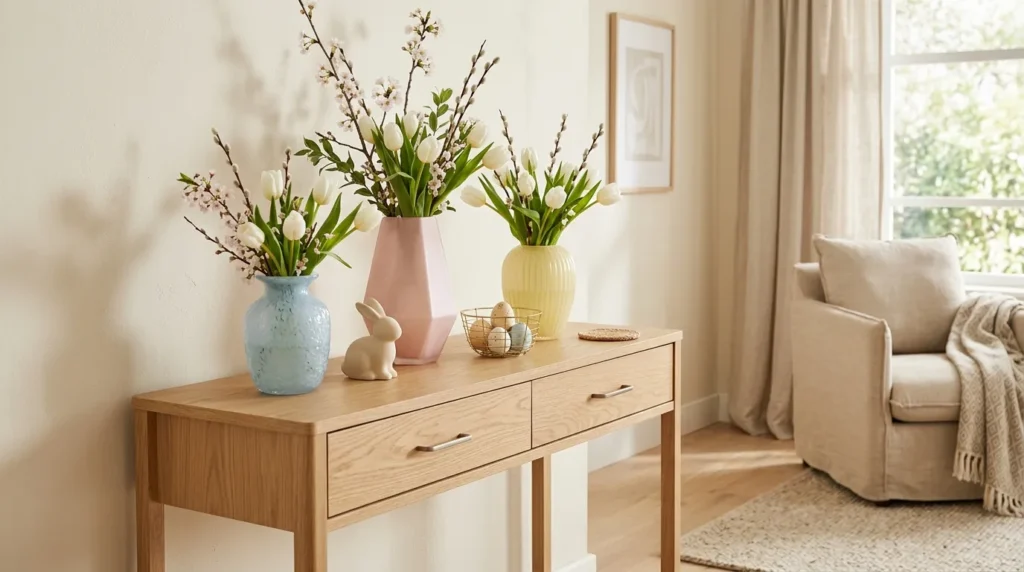
- Pastel glass adds delicate color without overwhelming the room.
- Different vase heights create a layered arrangement.
- Fresh flowers make the display feel lively.
- Soft colors complement modern neutral furniture beautifully.
Pastel glass vases are an easy way to introduce soft Easter color while keeping a contemporary look. Choose three vases in gentle shades such as blush, pale blue, butter yellow, or soft lavender, and place them at different heights along a console or dining table. Fill them with white tulips, delicate branches, or small spring blooms to create a light, airy display. The transparent glass catches natural light beautifully, making the colors appear subtle rather than overpowering. This works especially well when the rest of the room uses neutral furniture and simple modern finishes.
For a more cohesive arrangement, repeat one flower color across all three vases instead of mixing too many shades. Place the tallest vase toward the back and the shorter pieces toward the front to create visual depth. I’ve noticed that pastel glass looks particularly elegant when positioned near a window because daylight highlights its soft transparency. Keep nearby accessories minimal, using perhaps one small ceramic bunny or neutral candle. The finished display feels fresh and sophisticated while adding enough seasonal color to make your home feel ready for Easter without turning the room into a traditional holiday scene.
3. Minimal Bunny Centerpiece
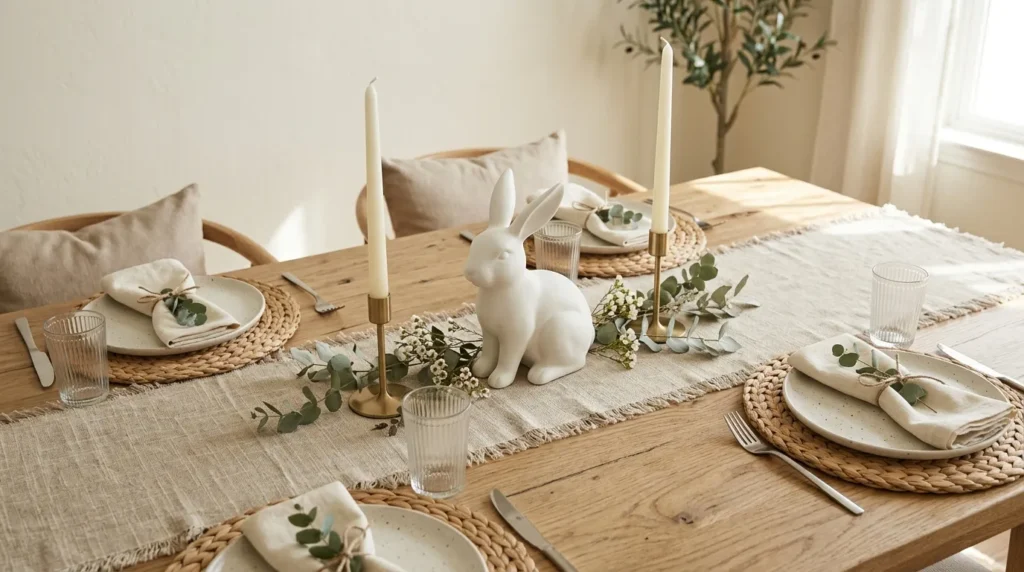
- A simple bunny creates an understated Easter focal point.
- Neutral ceramics keep the centerpiece contemporary.
- Greenery adds softness and natural texture.
- The low profile keeps dining conversations comfortable.
A single sculptural bunny can become a surprisingly striking centerpiece when the surrounding elements remain quiet and intentional. Choose one larger white, stone, or cream-colored bunny with a clean silhouette and place it on a natural linen runner. Surround it with a few eucalyptus stems, small white flowers, or two simple candles for texture. The low arrangement keeps sightlines open across the dining table, making it practical for family meals and gatherings. Its restrained styling also fits beautifully into modern homes where traditional holiday decorations may feel too colorful or elaborate.
Use a shallow wooden tray underneath the centerpiece if you want the arrangement to feel more contained and easier to move. Keep the bunny slightly off-center rather than placing every element in a perfectly symmetrical line. In my experience, asymmetry gives simple displays a more relaxed, designer-inspired appearance. Choose warm neutrals and muted greens to keep the palette connected to the rest of the room. Avoid adding several competing Easter symbols around the bunny. One thoughtful focal piece, supported by natural textures and gentle greenery, can make the entire table feel seasonal, fresh, and effortlessly modern.
Also Read: 23 Spring Home Decor Ideas for a Fresh Seasonal Look
4. Natural Egg Bowl
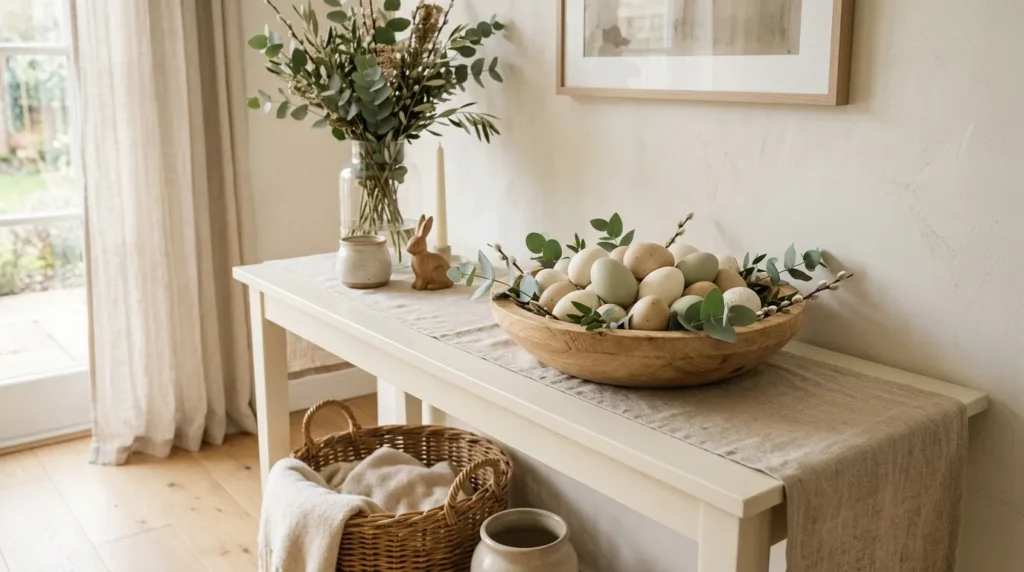
- A wooden bowl gives the display an organic foundation.
- Neutral eggs keep the palette modern and calm.
- Small branches add height and texture.
- The arrangement works well on tables and consoles.
A natural wooden bowl filled with decorative eggs creates an easy Easter accent that feels warm rather than overly traditional. Choose eggs in matte ivory, soft beige, muted sage, or pale blush, then arrange them loosely inside a light oak or woven bowl. Add a few delicate branches or eucalyptus stems for height and texture. The combination of natural wood, soft colors, and greenery works beautifully with contemporary furniture and neutral rooms. Place the bowl on a coffee table, kitchen island, console, or dining table where it can become a simple seasonal focal point.
Avoid filling the bowl completely because visible space helps each egg stand out. For added texture, mix smooth ceramic eggs with a few wooden or lightly speckled pieces. I’ve noticed that combining two or three finishes makes a small display look more considered without adding unnecessary color. Keep the branches slightly taller than the eggs, but trim them so they do not dominate the arrangement. If you have children, choose lightweight decorative eggs made from wood or another durable material. This setup is quick to refresh and can remain attractive throughout the spring season.
5. Soft Linen Bunny
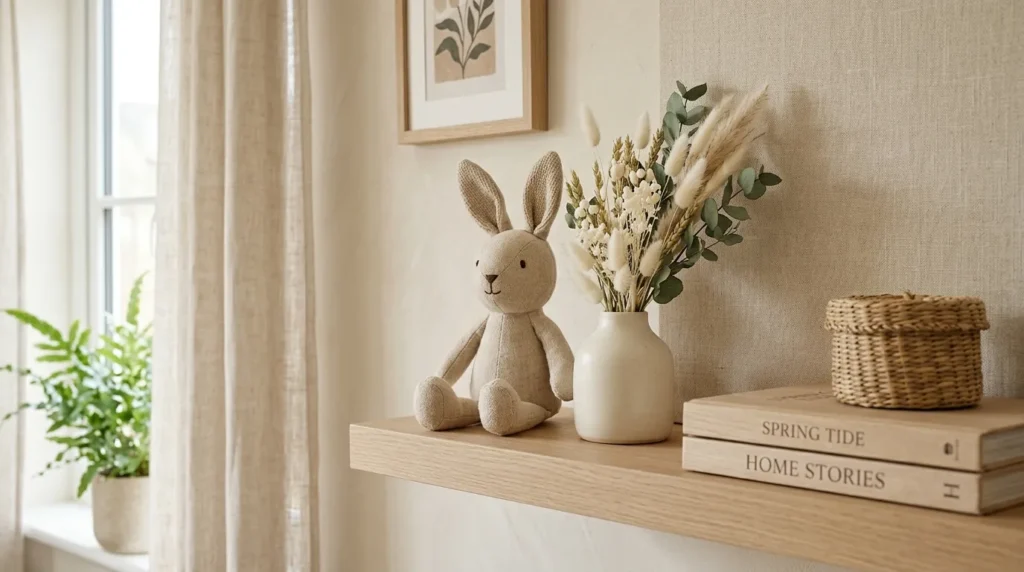
- Linen introduces a relaxed texture to Easter styling.
- Neutral bunny shapes suit contemporary interiors.
- Soft fabrics make hard surfaces feel warmer.
- A small arrangement works beautifully on shelves.
A soft linen bunny adds Easter character while keeping the look relaxed and sophisticated. Choose a fabric bunny in oatmeal, cream, taupe, or another muted neutral, then place it on a shelf, console, bedside table, or coffee table. Pair it with a small ceramic vase, dried flowers, or a stack of neutral books to create a layered arrangement. Linen works particularly well in modern spaces because its natural texture softens the clean lines of contemporary furniture. The result feels seasonal without relying on bright colors, shiny finishes, or overly playful decorations.
Choose a bunny with a simple silhouette and minimal embellishment for a cleaner appearance. Place it slightly forward from taller objects so its shape remains easy to see. In my experience, textured fabrics make neutral displays feel much more interesting because they add depth without requiring additional colors. Repeat the linen texture elsewhere in the room through a cushion, table runner, or throw for subtle continuity. Keep the surrounding accessories understated and let the bunny serve as the seasonal detail. After Easter, it can remain as a soft spring accent or be stored easily for next year.
6. Modern Egg Garland
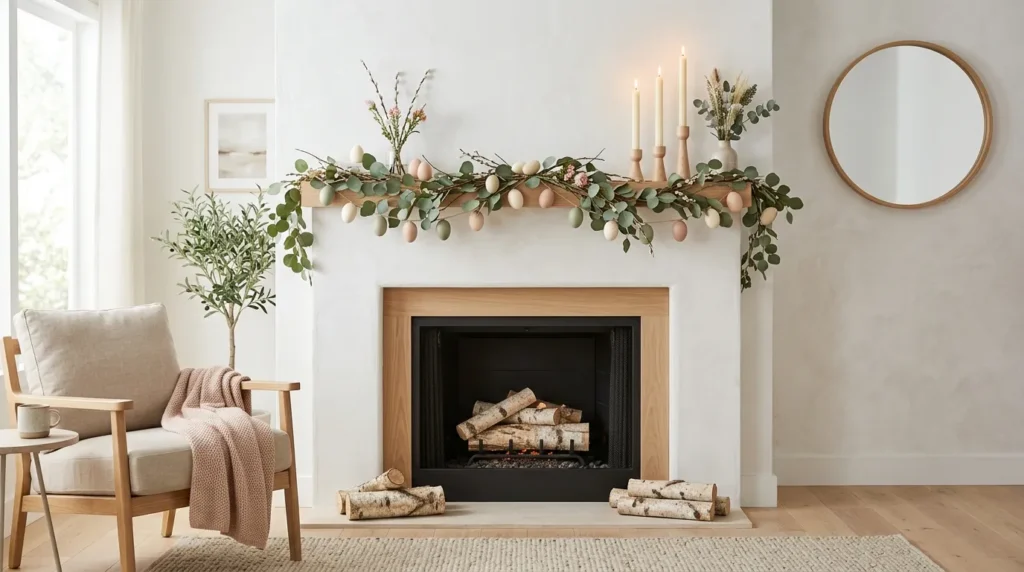
- A simple egg garland adds seasonal movement.
- Neutral colors keep the display visually clean.
- Natural materials complement modern furniture.
- Draping the garland saves valuable surface space.
A modern egg garland can add playful Easter detail without making a mantel or shelf feel crowded. Choose wooden, ceramic, or fabric eggs in muted shades such as ivory, sage, blush, and warm beige. Drape the garland loosely across a mantel, console, open shelf, or stair railing, allowing the eggs to hang naturally between sections of greenery. The repeated shapes create visual rhythm while the soft palette keeps the display sophisticated. This is especially useful when you want a seasonal update that takes up little space and works with existing contemporary furnishings.
Look for a garland with simple shapes and minimal patterns so it feels more refined. If the piece looks too colorful, combine it with neutral greenery or wrap sections loosely around a natural branch. I’ve noticed that garlands look more polished when they are not stretched completely straight. Letting the middle dip slightly creates a relaxed shape and gives the eye somewhere to pause. Secure the ends carefully, especially on stair rails or high shelves. Pair the garland with one or two simple accessories rather than adding another large centerpiece, keeping the overall display fresh and balanced.
7. Sculptural Egg Decor
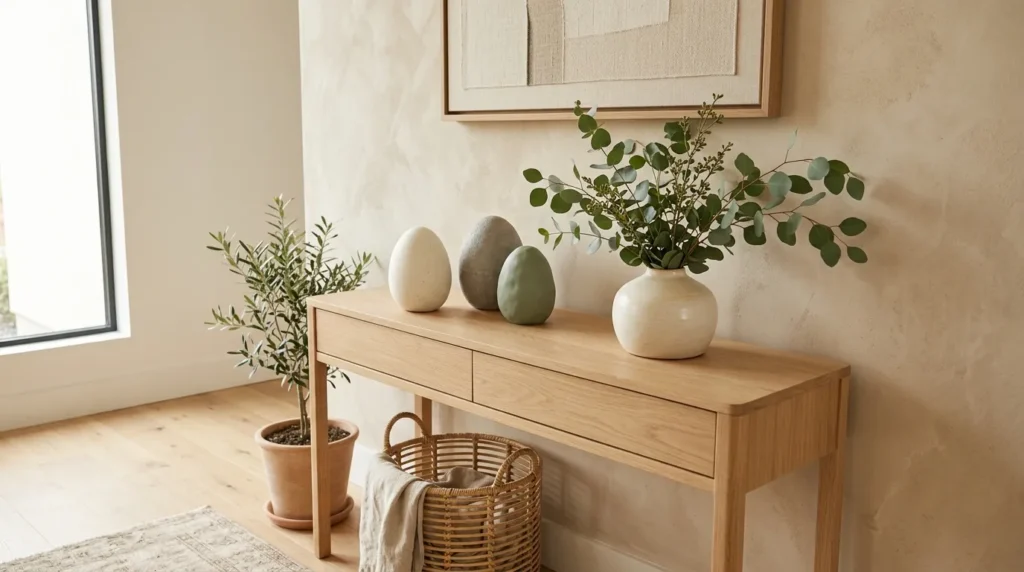
- Sculptural eggs add artistic interest to simple surfaces.
- Matte finishes keep the look sophisticated.
- Neutral colors make the pieces easy to style.
- Grouping varied shapes creates subtle visual depth.
Sculptural eggs can turn a simple Easter display into something that feels more like modern art. Choose ceramic, stone, wood, or plaster eggs with interesting shapes and matte finishes. Arrange two or three pieces together on a console, coffee table, shelf, or sideboard, using different sizes to create depth. Neutral shades such as ivory, sand, taupe, and muted green keep the arrangement sophisticated. The smooth organic forms also contrast beautifully with textured walls, woven baskets, and natural wood furniture, giving the space a layered appearance without adding visual clutter.
Think of each egg as a small decorative sculpture rather than a traditional Easter ornament. Leave enough space between the pieces so their individual shapes remain visible, and avoid placing too many accessories around them. I’ve noticed that odd-number groupings often create a more natural visual balance, especially when the objects vary slightly in height. Add one small branch or simple vase for softness, but keep the surrounding colors restrained. This approach is ideal if you want modern Easter decor that feels artistic and seasonal while still blending seamlessly into a contemporary home after the holiday.
8. Fresh Tulip Cluster
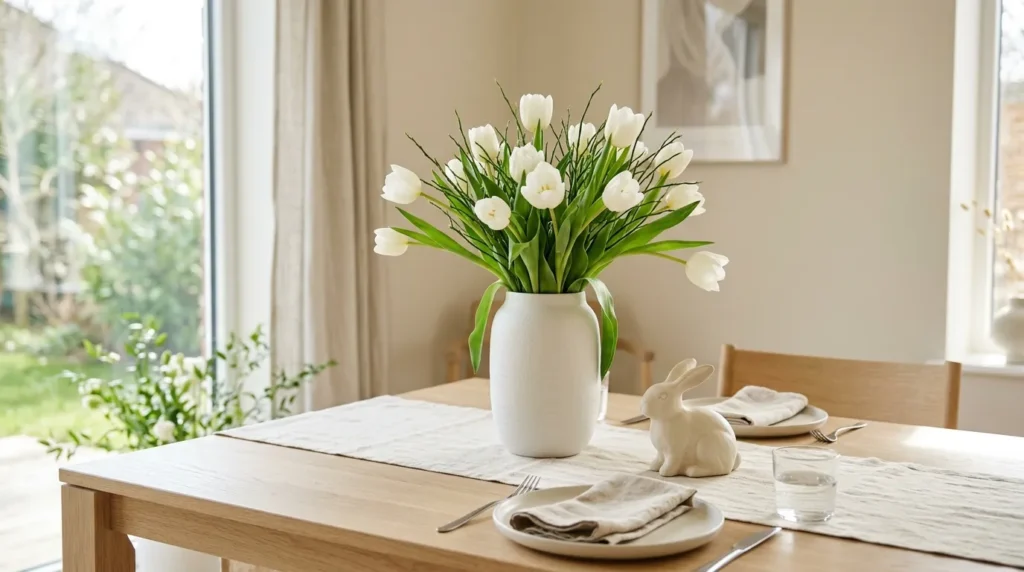
- White tulips create an instantly fresh spring feeling.
- A single vase keeps the display visually focused.
- Green stems provide natural contrast.
- Simple flowers work beautifully with modern interiors.
Few things make a room feel more like spring than a fresh cluster of tulips. Choose white, blush, pale yellow, or soft pink blooms and place them in a simple ceramic vase with a clean silhouette. White tulips are especially effective in modern spaces because their crisp petals contrast beautifully with natural wood, beige textiles, and soft neutral walls. Position the vase on a dining table, kitchen island, console, or coffee table where the flowers can become the main seasonal focal point. Their natural shape adds movement while keeping the overall styling light.
Give the tulips enough room to spread naturally instead of forcing the stems into a tight arrangement. Trim them at slightly different lengths and rotate the vase occasionally so the flowers remain balanced. I’ve noticed that a single generous floral arrangement often creates more impact than several small bouquets scattered around a room. Add one understated Easter accent, such as a ceramic bunny or decorative egg, if you want stronger seasonal character. Keep the rest of the surface clear so the flowers remain the star. Replace the water regularly to help fresh blooms stay attractive throughout the holiday.
9. Neutral Easter Mantel
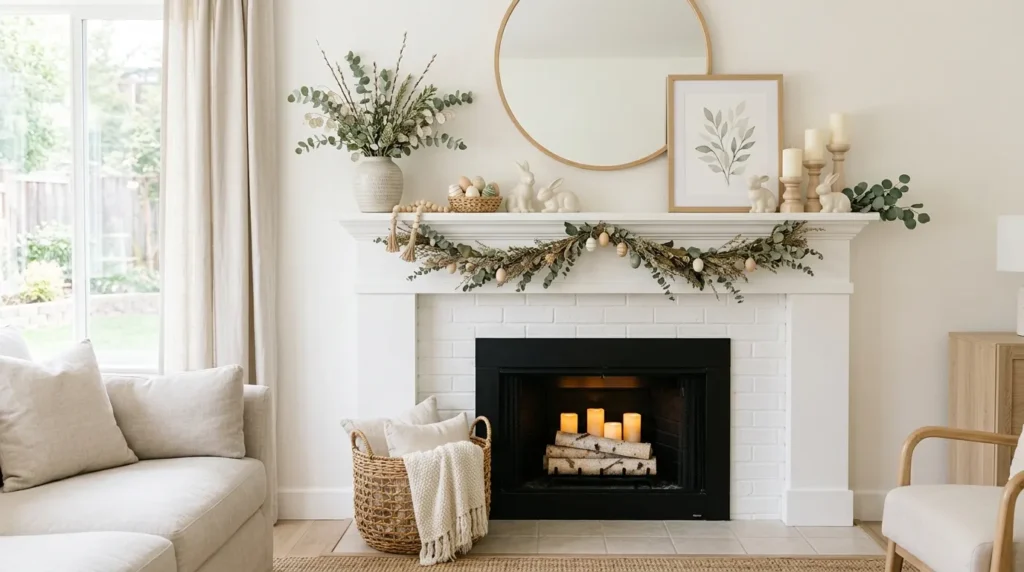
- Neutral colors create a calm seasonal backdrop.
- Layered greenery adds freshness and height.
- Ceramic pieces provide subtle Easter character.
- Open space keeps the mantel modern.
A neutral Easter mantel can refresh the entire living room while keeping the seasonal styling calm and contemporary. Start with a few eucalyptus branches or soft greenery, then layer in ivory ceramic bunnies, pale wooden eggs, and cream candles. Keep the palette centered around white, beige, light wood, and muted green so the mantel feels connected to the rest of the room. Vary the heights of the objects to create visual interest without overcrowding the surface. The result is festive enough for Easter while remaining polished and understated.
Begin by choosing one larger focal piece, such as a framed botanical print or tall vase, then build the arrangement around it. Keep smaller bunnies and eggs toward the front so they remain visible without competing for attention. In my experience, mantels look more balanced when one side has slightly more height and the other side has more visual weight. Use natural materials to prevent the neutral palette from feeling flat. A woven basket on the floor beside the fireplace can repeat the organic texture and complete the display without adding unnecessary decorations.
10. Easter Branch Arrangement
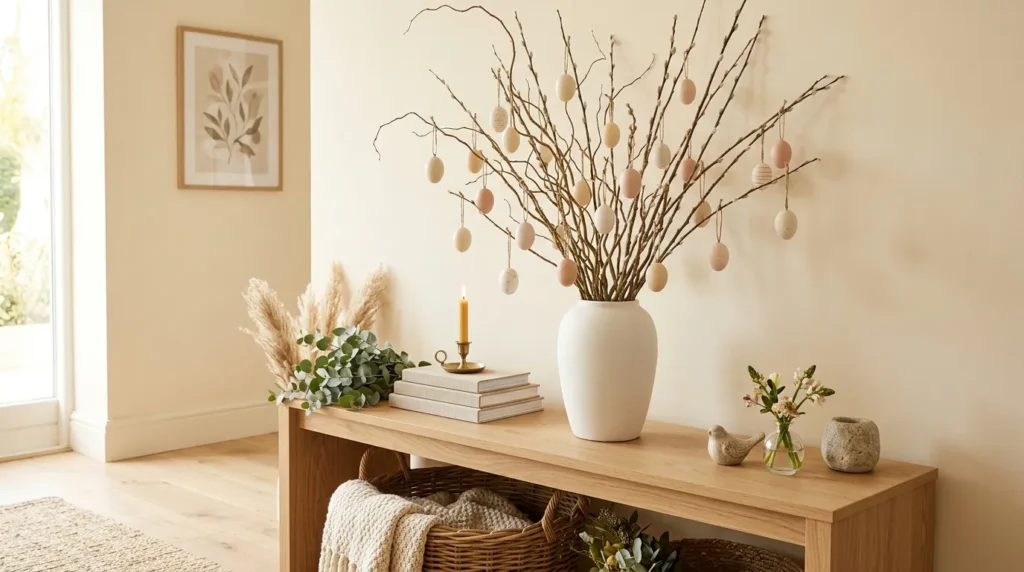
- Bare branches create an elegant sculptural focal point.
- Small eggs add subtle seasonal detail.
- Natural wood balances modern furniture.
- The arrangement brings vertical interest to low surfaces.
A tall branch arrangement gives Easter decorating a more sculptural, contemporary direction. Place several natural branches inside a simple white or stone-colored vase, then hang a small number of lightweight decorative eggs from selected stems. The branches create height and movement, while the eggs introduce seasonal detail without covering the entire arrangement. This idea works especially well on consoles, sideboards, entry tables, or dining buffets where vertical decoration can fill empty wall space. Keep the colors soft with ivory, blush, muted sage, and natural brown for a fresh spring palette.
Choose branches with interesting shapes and a few natural imperfections because those details make the arrangement feel organic. Secure the vase on a stable surface, especially if the branches are tall or placed in a busy area. I’ve noticed that hanging decorations look more sophisticated when they are spaced unevenly rather than lined up at identical heights. Use only a handful of eggs and let some branches remain completely bare. This creates visual breathing room and keeps the display from becoming too festive. Add a small ceramic bunny nearby if desired, but let the branches remain the main feature.
11. Monochrome Bunny Shelf
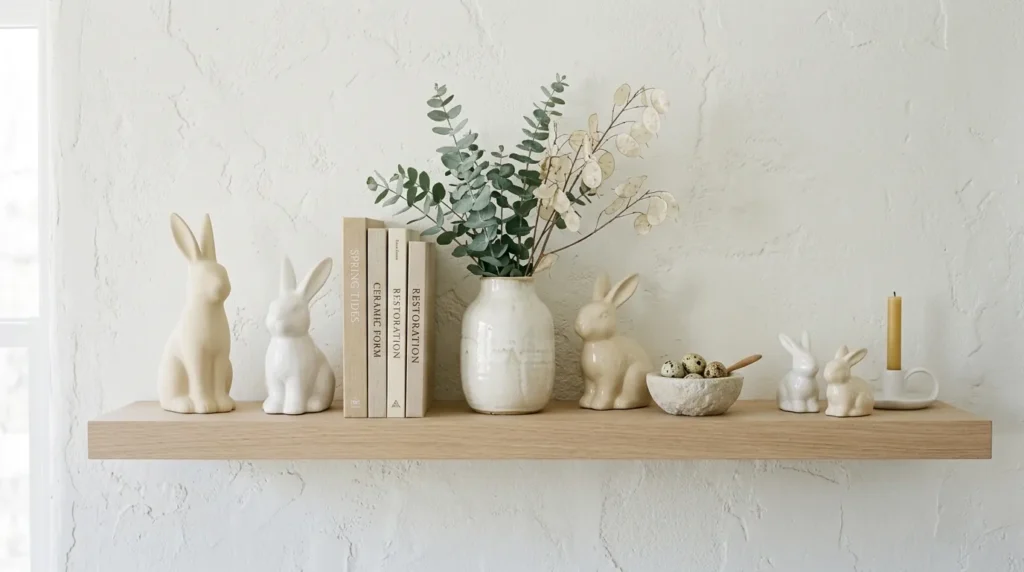
- One color family creates a polished appearance.
- Repeated bunny shapes add playful seasonal character.
- Layered heights keep the shelf visually interesting.
- Neutral tones work with almost any interior.
A monochrome bunny shelf can make Easter decorating feel playful while still looking refined. Choose ceramic or plaster bunnies in several shades of white, ivory, cream, or light beige, then arrange them at different heights across a floating shelf or bookcase. Add a simple vase of eucalyptus and a few pale wooden objects to introduce natural texture. Because everything stays within one color family, the repeated bunny shapes create interest without producing a busy appearance. This works particularly well in contemporary homes with neutral walls and streamlined furniture.
Use different bunny sizes to create a gentle visual rhythm, placing smaller pieces beside books or low bowls for variation. Avoid lining every bunny up at exactly the same height because the display can quickly feel rigid. I’ve noticed that monochrome styling becomes more interesting when textures vary, so mix smooth ceramic with woven baskets, matte stone, or natural wood. Leave some shelf space open to keep the arrangement airy. Once Easter passes, remove the bunnies and keep the remaining ceramics and greenery for a simple spring shelf that still feels fresh.
12. Spring Floral Wreath
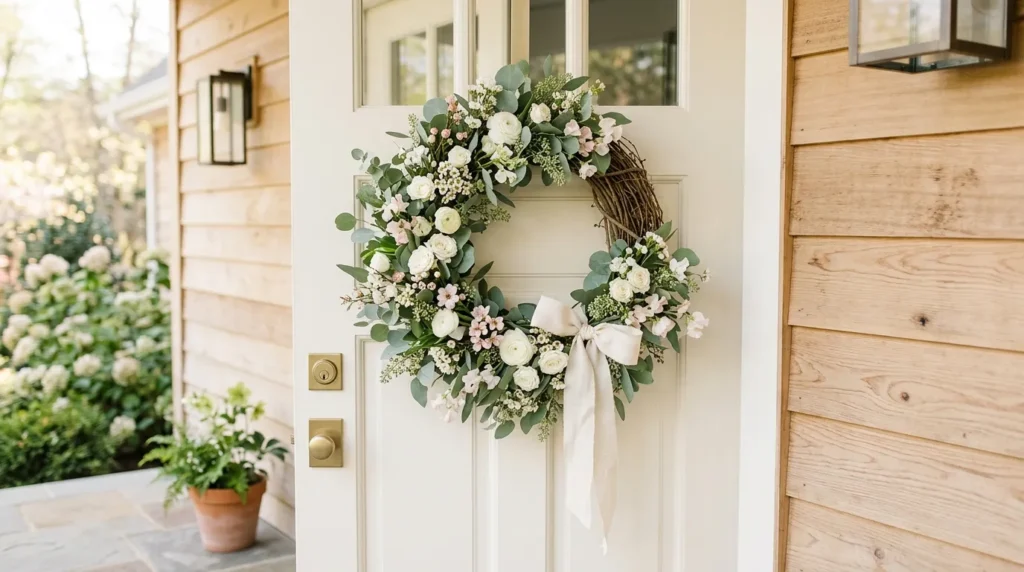
- A floral wreath instantly refreshes a plain wall or door.
- Soft blooms create a welcoming spring accent.
- Greenery keeps the arrangement connected to nature.
- Neutral flowers make the look feel contemporary.
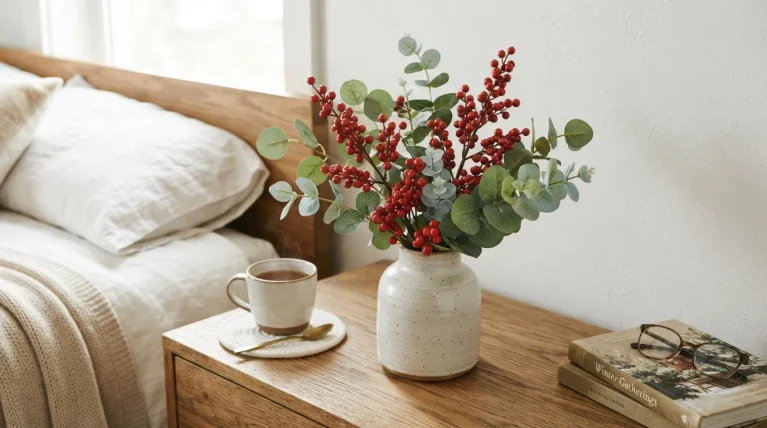
A spring floral wreath can bring Easter color to a wall, front door, or interior mirror without taking up valuable surface space. Choose a wreath built around white flowers, eucalyptus, pale green leaves, and a few soft blush blooms for a contemporary palette. A natural grapevine or simple twig base adds texture while keeping the design connected to the outdoors. Hang it on an interior door, entry wall, fireplace surround, or large mirror for a seasonal focal point. The gentle colors make the wreath feel appropriate beyond Easter as well.
Choose a wreath with plenty of visible greenery and open spaces between the flowers instead of one that is completely covered. This creates a lighter, more modern silhouette. I’ve noticed that asymmetrical wreath designs often feel especially fresh because they avoid the overly formal appearance of perfectly circular arrangements. Use a narrow neutral ribbon if you need additional detail, but avoid adding several decorative symbols. Position the wreath where natural light can highlight its textures. After Easter, remove any specifically themed elements and keep the floral design as a simple spring accent.
13. Modern Egg Tray
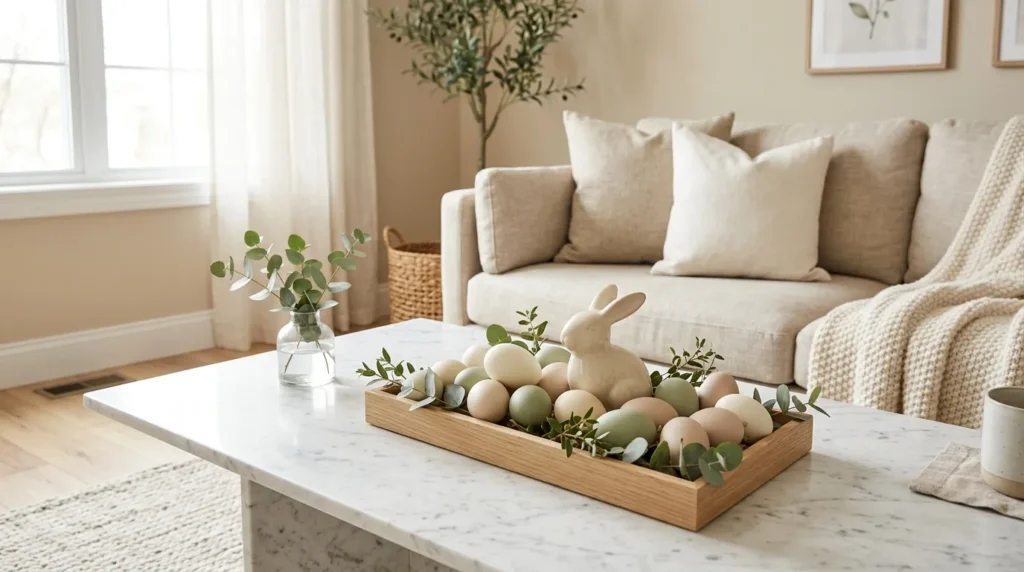
- A shallow tray keeps decorative eggs organized.
- Matte finishes create a sophisticated seasonal look.
- Natural wood adds warmth to contemporary surfaces.
- Small greenery pieces provide a fresh spring contrast.
A modern egg tray turns a simple collection of decorative eggs into a polished centerpiece. Choose a shallow tray in light oak, stone, ceramic, or woven material, then arrange matte eggs in soft shades such as ivory, sage, blush, and warm beige. Add a few short eucalyptus sprigs to introduce natural texture without making the display too busy. The contained arrangement works beautifully on coffee tables, kitchen islands, consoles, or dining surfaces. Because everything stays within one defined area, the seasonal details feel organized rather than scattered throughout the room.
Start by placing the largest eggs toward the center or back of the tray, then add smaller pieces around them. Avoid arranging every egg at the same angle because slight variation creates a more natural appearance. I’ve noticed that using three complementary colors is usually enough to make a small seasonal display feel intentional. Add one ceramic bunny if you want a stronger Easter connection, but leave some tray surface visible. This keeps the composition airy and contemporary. When Easter is over, the tray can easily be reused for candles, fruit, coffee-table accessories, or everyday decorative objects.
14. Blush Floral Centerpiece
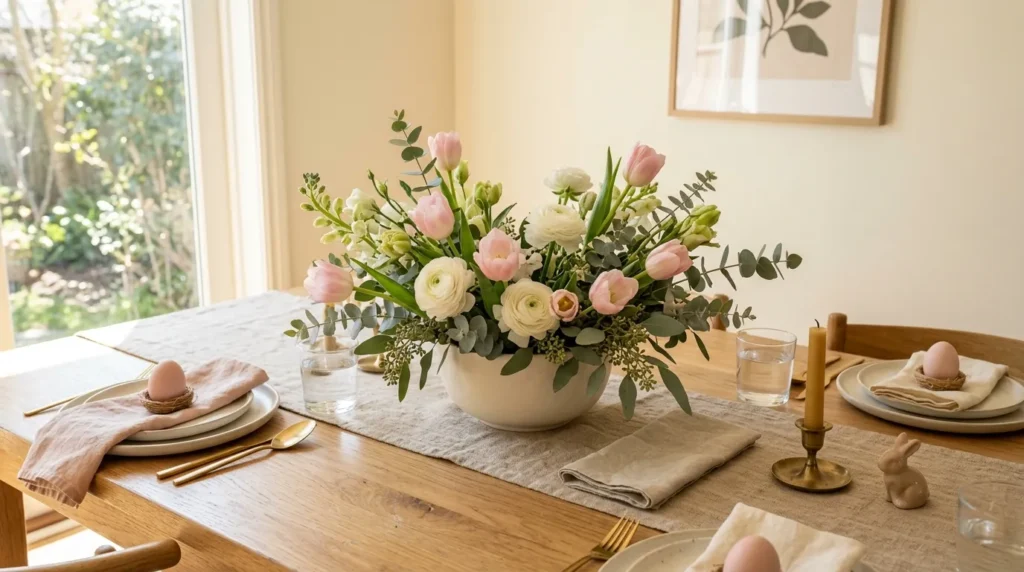
- Soft blush flowers add gentle seasonal color.
- White accents keep the palette balanced.
- A low centerpiece works well for dining spaces.
- Fresh blooms make the room feel instantly brighter.
A blush floral centerpiece can bring a soft spring glow to your dining table without relying on traditional Easter colors. Combine blush tulips, white flowers, eucalyptus, and pale green stems in a low ivory bowl or contemporary ceramic vessel. The gentle pink tones add warmth while the white blooms keep the arrangement fresh and sophisticated. Choose a low profile so guests can see comfortably across the table. This setup also works on a kitchen island or coffee table when placed inside a wide, shallow container that allows the flowers to spread naturally.
Keep the flower varieties limited to two or three types so the arrangement looks cohesive rather than overly elaborate. Trim the stems at different lengths and allow a few leaves to extend outward for a relaxed silhouette. In my experience, blush flowers look especially elegant when paired with warm wood and cream textiles rather than bright white surfaces alone. Add a few small decorative eggs around the base if you want stronger Easter character. Refresh the water regularly and remove wilted blooms promptly so the centerpiece remains crisp and attractive throughout the spring season.
15. Textured Easter Mantel
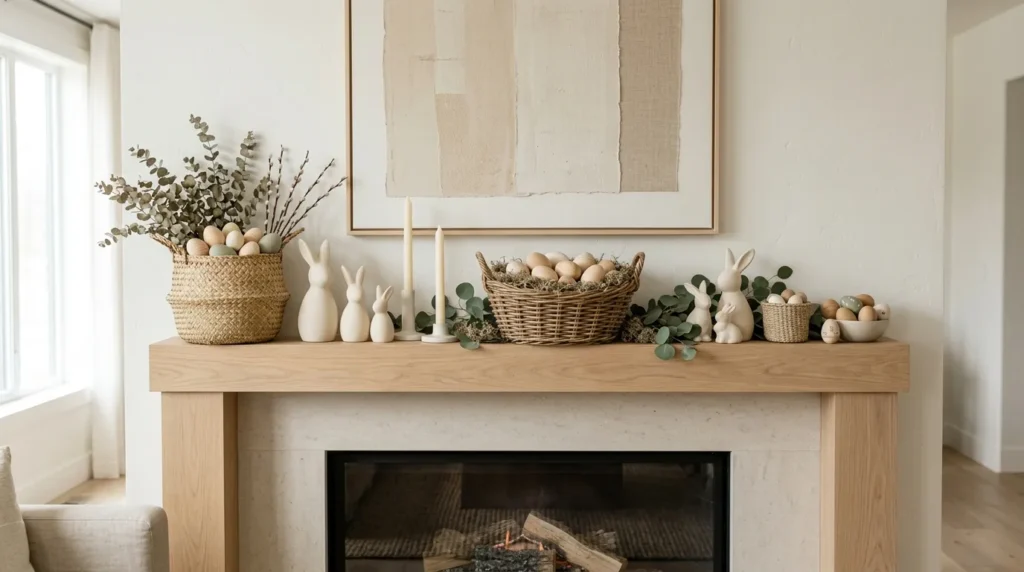
- Layered textures make a neutral mantel feel richer.
- Woven pieces add warmth beside ceramic accents.
- Soft greenery brings natural spring color.
- A restrained palette keeps everything visually connected.
Texture can make a neutral Easter mantel feel interesting without adding more colors or decorations. Start with a few eucalyptus branches or soft greenery, then layer ivory ceramic bunnies, pale wooden eggs, woven baskets, and cream candles across the mantel. Mix smooth ceramic with rough woven fibers and natural wood so each material contributes something different. The restrained palette of ivory, beige, sage, and warm brown keeps the display cohesive. This approach works especially well in contemporary rooms where clean architectural lines benefit from softer, organic details during spring.
Build the mantel from larger pieces first, then add smaller accents only where the arrangement needs balance. Place a woven basket or tall vase toward one side and repeat a smaller natural texture on the opposite side. I’ve noticed that mixing textures is often more effective than adding more objects when a neutral display feels flat. Keep enough open space around the focal pieces so the mantel does not look crowded. Choose flameless candles if greenery sits nearby, and secure taller decorations carefully. The finished display feels layered, warm, and seasonal while remaining sophisticated.
16. Eucalyptus Egg Wreath
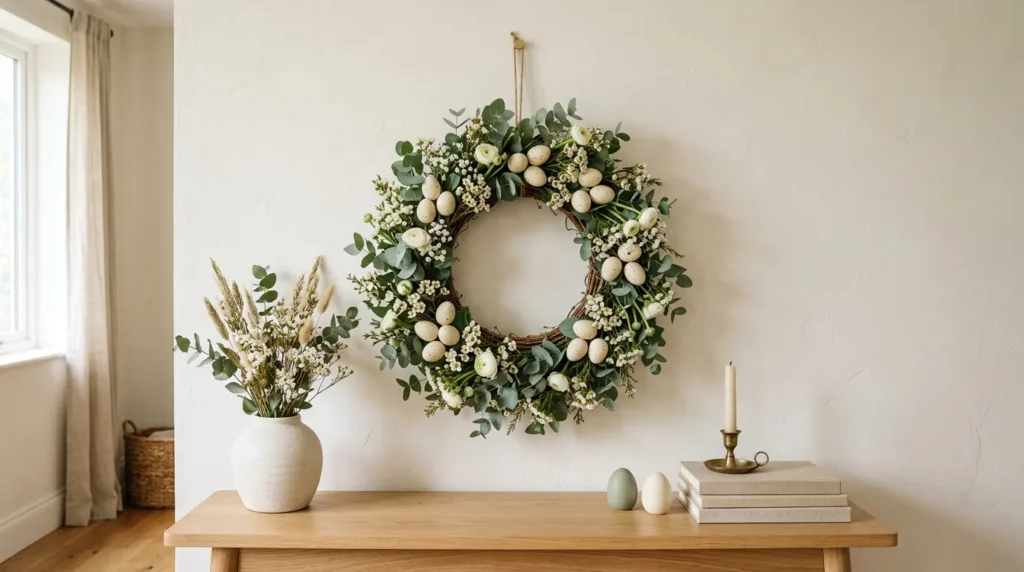
- Eucalyptus creates a fresh, understated spring base.
- Small eggs add recognizable Easter detail.
- Muted greens work beautifully with neutral interiors.
- The wreath can decorate doors or interior walls.
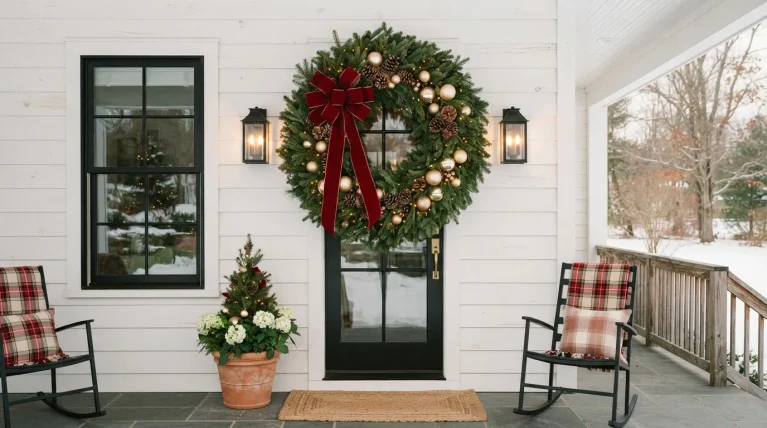
An eucalyptus egg wreath offers a fresh alternative to brightly colored Easter decorations. Start with a natural twig or grapevine base and layer eucalyptus leaves around part of the circle, leaving some of the base visible for an organic look. Add a few small matte ivory or pale blush eggs between the greenery rather than covering the entire wreath. The muted palette feels sophisticated and works beautifully with cream walls, natural wood, beige furniture, and soft spring textiles. Hang it on a front door, interior wall, pantry door, or large mirror.
Keep the greenery slightly asymmetrical so the wreath feels modern and relaxed. Use lightweight eggs and secure them firmly with floral wire or strong craft adhesive, especially if the wreath will hang on an exterior door. I’ve noticed that leaving part of the base exposed gives seasonal wreaths more texture and prevents them from looking too dense. Add a narrow linen ribbon if desired, but keep it neutral. After Easter, remove the eggs and retain the eucalyptus and twig base as a simple botanical wreath that can transition naturally through the rest of spring.
17. Wooden Bunny Collection
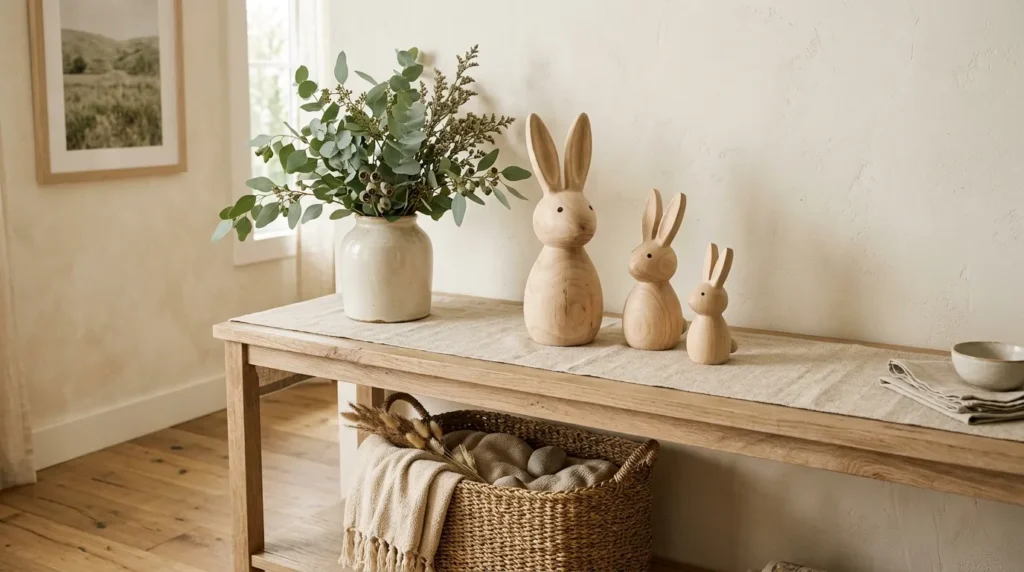
- Natural wood brings warmth to modern Easter styling.
- Varied silhouettes create a simple visual rhythm.
- Neutral materials complement contemporary furniture.
- A small collection feels intentional without clutter.
Natural wooden bunnies bring warmth and texture to Easter decorating while maintaining a clean, modern appearance. Choose three figures in different sizes or silhouettes, preferably with visible wood grain and simple shapes. Arrange them on a console, shelf, mantel, or sideboard alongside a cream ceramic vase filled with eucalyptus. The combination of warm wood and muted greenery feels fresh without relying on bright seasonal colors. This collection works especially well in contemporary homes where natural materials such as oak, rattan, linen, and stone already appear throughout the space.
Position the largest bunny slightly behind the smaller figures to create depth, then leave enough open space around the grouping. Avoid mixing too many wood tones because the collection will feel more cohesive when the finishes are similar. In my experience, natural wood decorations are especially versatile because they can remain displayed longer than obviously seasonal pieces. Add a neutral linen runner or small woven basket nearby to repeat the texture. Keep the rest of the surface simple so the bunny collection remains the focal point. The result feels warm, understated, and easy to blend into everyday spring decorating.
18. White And Green Table
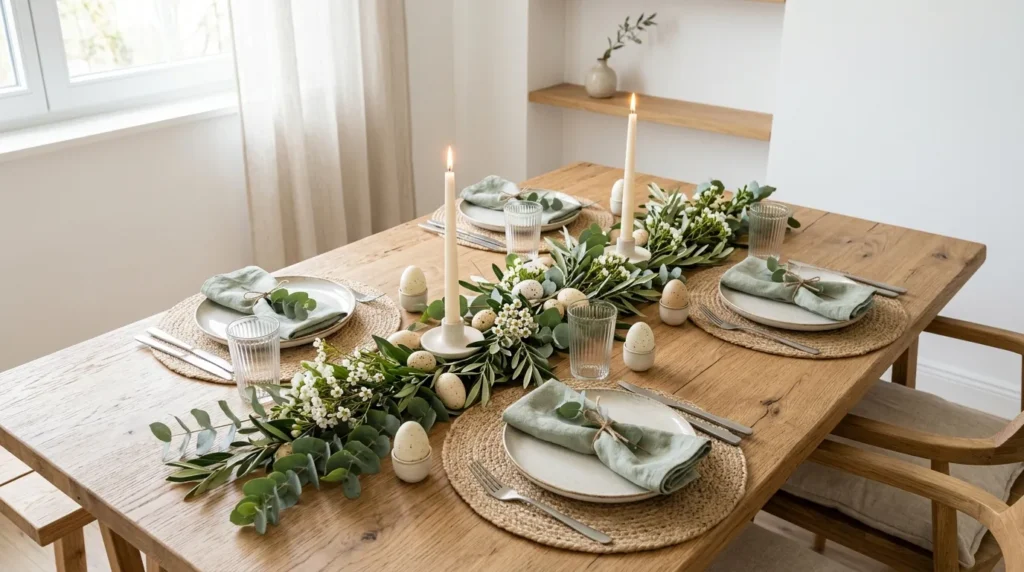
- White tableware creates a crisp seasonal foundation.
- Greenery adds freshness without strong color.
- Small Easter accents keep the setting personal.
- Natural textures prevent the table from feeling sterile.
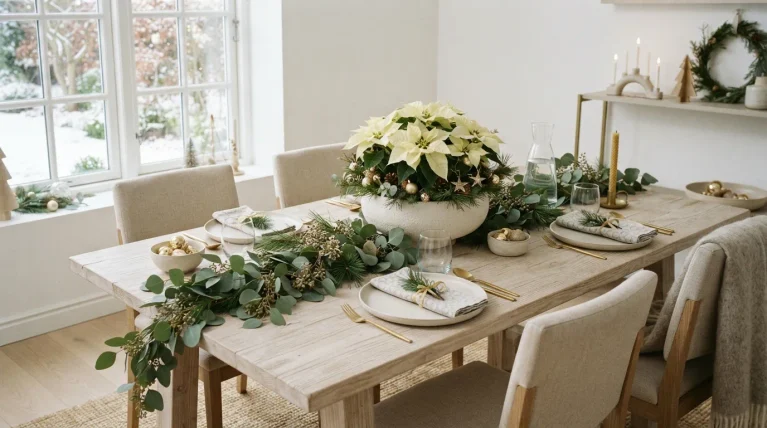
A white and green table setting creates a fresh Easter atmosphere with a palette that feels clean, natural, and timeless. Start with white ceramic plates and cream or sage linen napkins, then add eucalyptus branches or small palm-like greenery along the center. Introduce subtle seasonal details through ivory decorative eggs, simple candles, or tiny ceramic bunnies. Natural oak, woven placemats, and textured linens add warmth so the white tableware never feels too stark. This approach works for everyday family meals as easily as it does for a more carefully styled Easter gathering.
Keep the greenery low and spread it naturally along the table so guests can see across the setting. Use the same green tone in napkins or small accents to create visual continuity. I’ve noticed that repeating one accent color is an easy way to make mixed table pieces look coordinated. Avoid adding several bright pastel shades if your goal is a modern appearance. Choose matte finishes, natural fabrics, and simple silhouettes instead. The finished table feels bright and welcoming while remaining practical, comfortable, and easy to recreate with pieces you may already have at home.
19. Ceramic Egg Vignette
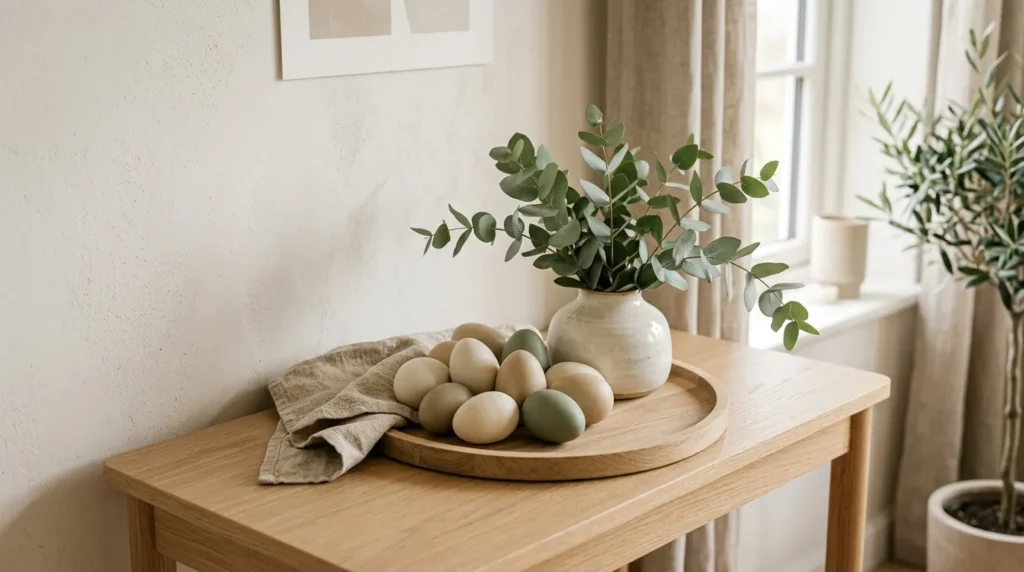
- Ceramic eggs create a refined seasonal accent.
- A shallow vignette works well on small surfaces.
- Neutral colors blend with modern interiors.
- Greenery adds softness and natural contrast.
A small ceramic egg vignette can add Easter character to even the smallest surface. Choose three or four matte ceramic eggs in ivory, beige, or muted sage, then arrange them on a shallow wooden or stone tray. Add a low cream vase with eucalyptus to soften the display and introduce natural color. This compact setup works beautifully on a bedside table, bathroom shelf, console, or coffee table where a larger centerpiece would feel excessive. The combination of smooth ceramic, warm wood, and greenery creates a simple seasonal detail with a polished contemporary finish.
Keep the eggs slightly different in size so the arrangement has natural variation without looking random. Position the tallest object toward the back, then place the smaller eggs closer to the front edge. I’ve noticed that a small tray helps separate seasonal pieces from everyday objects, making the display look more intentional. Avoid filling the tray completely; visible surface area creates breathing room and keeps the composition light. If you want additional color, introduce only one muted pastel shade. This makes the vignette easy to coordinate with existing furniture and simple enough to transition into general spring decorating.
20. Pastel Egg Tree
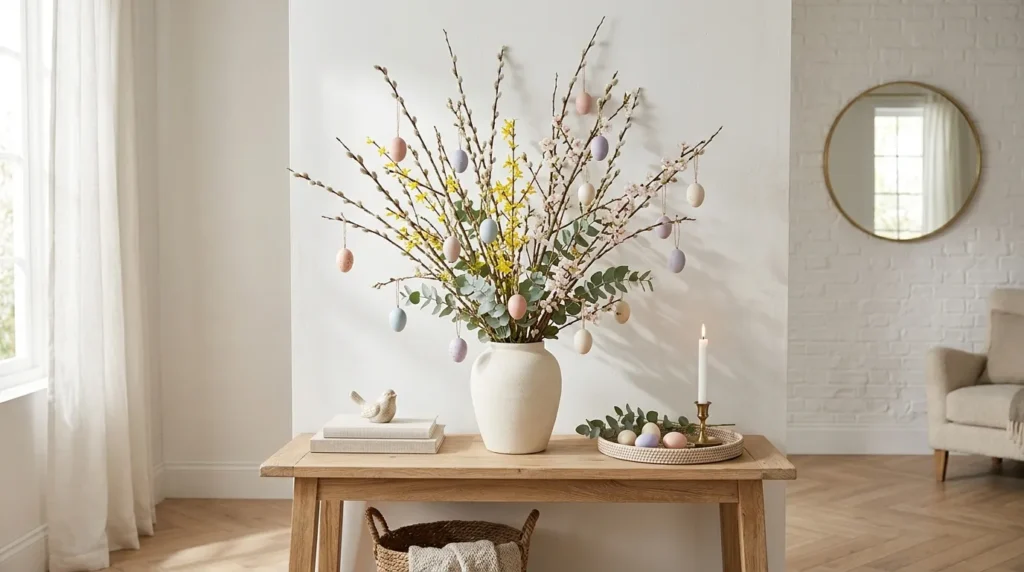
- A branch tree adds height to a seasonal display.
- Soft pastel eggs create gentle spring color.
- Natural branches keep the arrangement sophisticated.
- The vertical design works well on consoles.
A pastel egg tree creates a graceful vertical display that brings spring color into a modern room without overwhelming it. Place several naturally branching stems in a tall ivory or stone vase, then hang a small number of lightweight eggs from selected branches. Choose muted shades such as blush, pale blue, lavender, cream, and soft yellow rather than highly saturated colors. The open structure of the branches allows plenty of wall space to remain visible, making the arrangement feel airy. Place it on a console, sideboard, entry table, or kitchen counter for instant seasonal height.
Space the eggs unevenly across the branches so the arrangement feels natural and visually balanced. Keep several branches bare to preserve the sculptural quality of the display. I’ve noticed that pastel decorations look more sophisticated when the colors are repeated sparingly rather than used on every available surface. Choose eggs with matte finishes if you prefer a softer appearance. Secure each piece carefully with thin ribbon or floral wire, especially if the arrangement is placed in a high-traffic area. After Easter, remove the eggs and keep the branches as a simple natural centerpiece.
21. Minimal Easter Entryway
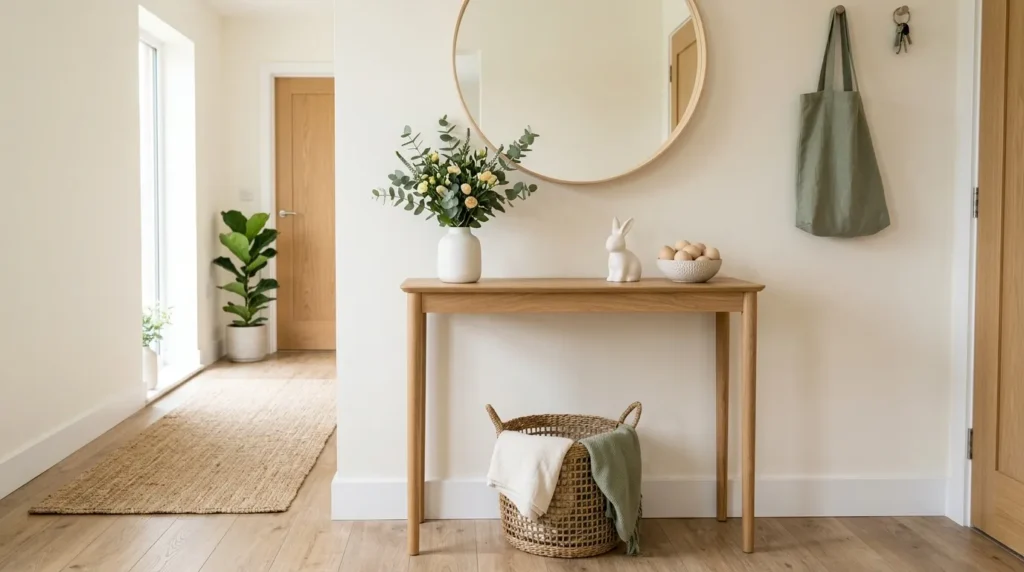
- A few seasonal pieces can transform an entryway.
- Natural wood adds warmth to clean surfaces.
- Greenery brings a fresh spring element.
- Limited accessories keep the area practical.
A minimal Easter entryway creates a welcoming first impression without filling a high-traffic area with decorations. Start with a slim light oak console or narrow shelf, then add one white ceramic bunny, a small vase of eucalyptus, and a few pale wooden eggs. A round neutral mirror above the surface can reflect natural light and make the entry feel more spacious. Keep the palette focused on ivory, beige, light wood, and muted green. The result feels seasonal and fresh while leaving enough room for practical everyday items such as keys, bags, and mail.
Choose only a few pieces that have different heights and textures so the arrangement feels layered without becoming crowded. Place the vase toward one side and the bunny slightly forward, then use the eggs as small supporting accents. I’ve noticed that entryways benefit most from decorations that are attractive but easy to move when cleaning or organizing. Store everyday clutter in a woven basket underneath the console or inside a drawer. A neutral runner can visually connect the space with nearby rooms. This simple setup creates a polished spring welcome while keeping the entryway functional.
22. Easter Coffee Corner
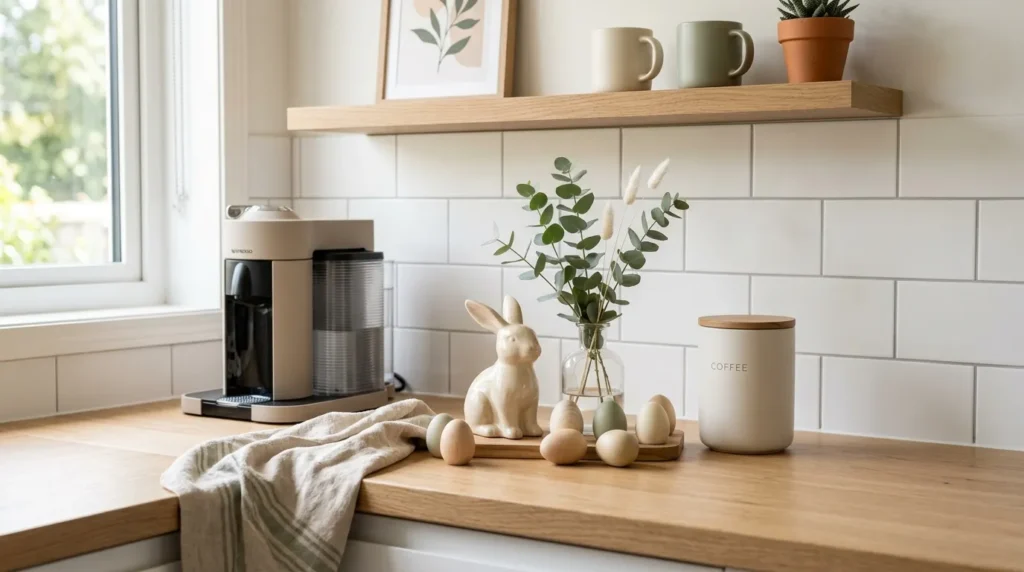
- A small coffee corner adds seasonal charm without clutter.
- Soft greenery keeps the display feeling fresh.
- Ceramic accents provide subtle Easter character.
- Natural textures make the arrangement feel warmer.
A small Easter coffee corner can bring seasonal personality to a kitchen without changing the entire room. Style a light oak counter or coffee station with one cream ceramic bunny, a small vase of eucalyptus, and a few pale wooden eggs. Keep everyday coffee essentials neatly grouped so the seasonal accents feel integrated rather than added on top. Warm wood, ivory ceramics, and muted greenery create a soft spring palette that works beautifully with contemporary kitchens. This idea is especially useful when you have limited decorating space but still want a visible Easter touch.
Keep the display practical by placing decorative pieces toward the back or beside your coffee equipment rather than directly around frequently used items. A small tray can contain mugs, spoons, or seasonal accents and make cleaning easier. I’ve noticed that kitchen decorations look best when they support the existing routine instead of getting in the way. Choose one repeated material, such as wood or ceramic, to connect the display visually with nearby cabinets and counters. After Easter, remove the bunny and eggs while leaving the greenery and neutral accessories for a simple spring-inspired coffee station.
23. Soft Candle Display
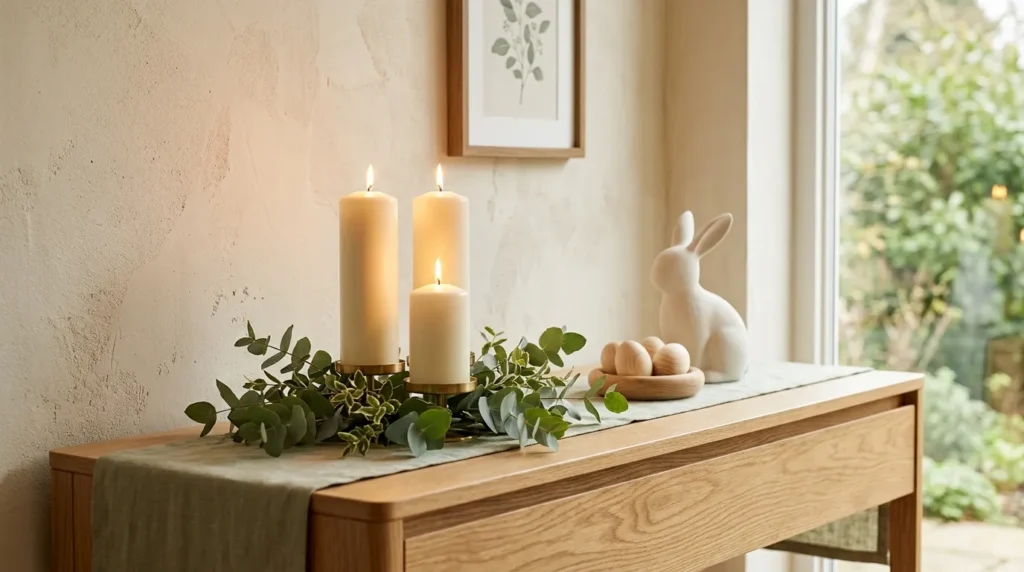
- Candles add warmth to neutral Easter decorations.
- Ivory tones create a soft evening glow.
- Greenery brings freshness beside smooth ceramics.
- Grouping different heights adds visual depth.
A soft candle display can make Easter decorating feel warm and refined, especially during evening meals or quiet gatherings. Arrange two or three ivory candles at different heights on a light wooden tray, then add a small ceramic bunny, eucalyptus branches, or pale decorative eggs nearby. The combination of warm candlelight and muted greenery creates a gentle contrast that feels inviting without becoming overly decorative. Use a console, dining table, mantel, or sideboard as the base, keeping the surrounding surface clear enough for the arrangement to remain the focal point.
Choose flameless candles when greenery or other flammable materials are positioned nearby, particularly in busy family spaces. If using real candles, keep leaves, ribbons, and textiles safely separated from the flames. I’ve noticed that varying candle heights creates more visual interest than using several identical candles in a straight row. Stick with unscented candles if the display will be used during meals so fragrance does not compete with food. Add one small Easter symbol rather than several, allowing the warm glow, natural textures, and simple shapes to create the finished atmosphere.
24. Modern Easter Basket
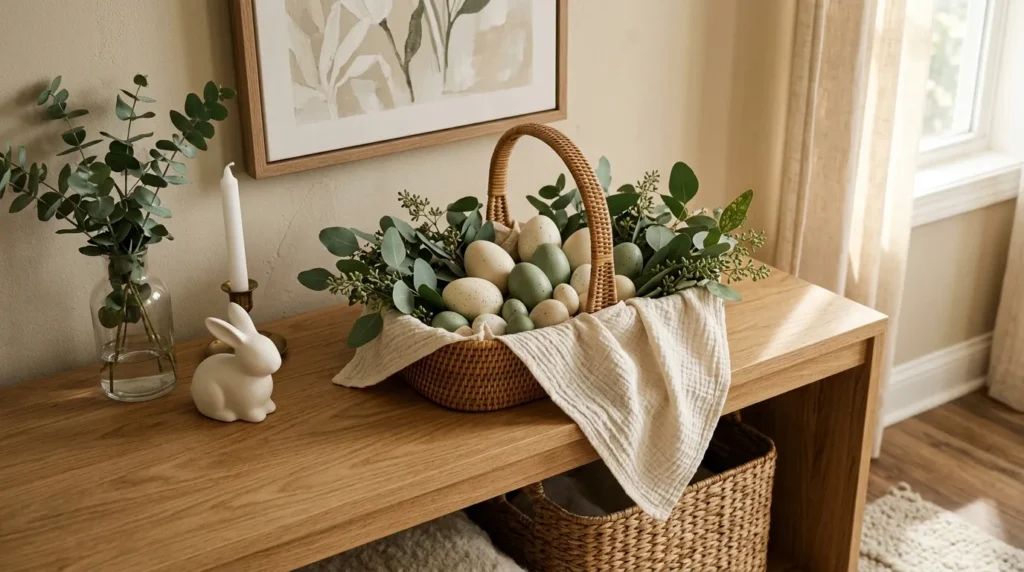
- A structured basket adds natural texture.
- Neutral eggs keep the display sophisticated.
- Greenery softens the basket’s shape.
- The arrangement works in living rooms and entryways.
A structured woven basket gives Easter decorations a natural foundation while adding useful texture to a modern room. Choose a basket in rattan, seagrass, or light natural fiber, then fill it loosely with matte ivory, beige, and muted sage eggs. Add several eucalyptus stems or soft greenery so a few leaves extend above the rim. The combination creates height and movement without requiring a large centerpiece. Place the basket beside a console, fireplace, entry bench, or open shelving where its warm texture can balance clean contemporary furniture and neutral walls.
Avoid packing the basket tightly because open space helps the eggs and greenery remain visible. Place a folded cream linen cloth inside if you want a softer layered effect, then arrange the largest eggs toward the back and smaller ones near the front. I’ve noticed that natural baskets make seasonal displays feel less temporary because they connect easily with everyday home textures. Keep nearby accessories minimal and repeat the basket material elsewhere through a smaller tray or woven cushion. After Easter, remove the eggs and reuse the basket for blankets, towels, pillows, or everyday storage.
25. Fresh Tulip Arrangement
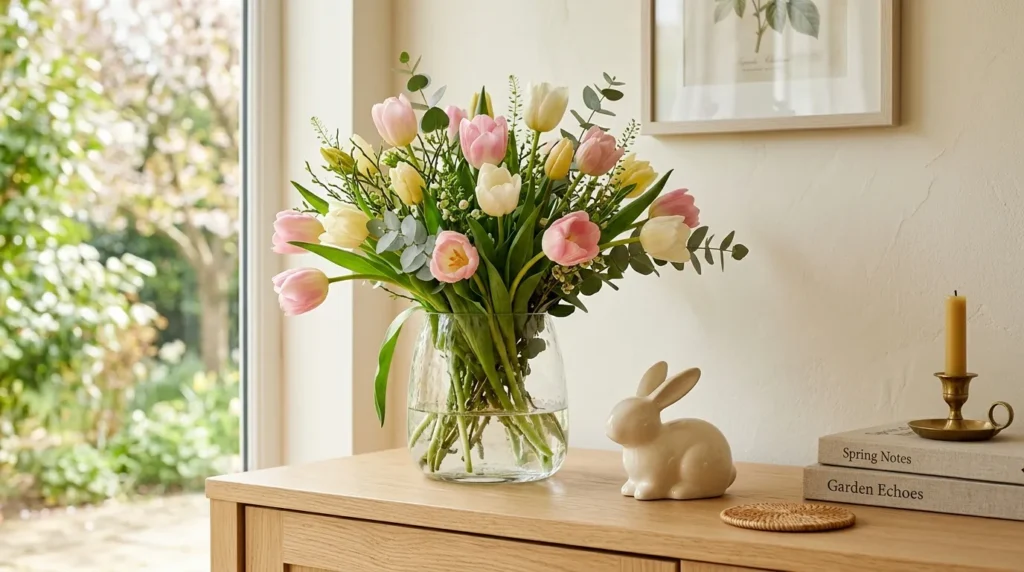
- Tulips bring instant spring color into the room.
- A simple vase keeps the display contemporary.
- Soft pastel shades complement neutral interiors.
- Fresh stems create movement and natural texture.
Fresh tulips are one of the easiest ways to give a room an instant spring refresh. Choose a simple glass, ceramic, or stone vase and fill it with tulips in soft shades such as white, blush, pale yellow, or lavender. Let several stems bend naturally instead of trimming everything to identical heights. This creates movement and makes the arrangement feel relaxed rather than overly styled. Place it on a dining table, coffee table, console, or kitchen island where the flowers can become a bright seasonal focal point without competing with the rest of your Easter decor.
For a fuller arrangement, remove a few lower leaves and gently spread the stems outward after placing them in fresh water. Keep the vase away from direct heat and refresh the water regularly to help the flowers last longer. I’ve noticed that tulips look especially beautiful against neutral backgrounds because their delicate colors become the main visual feature. Add one small ceramic bunny or a few ivory eggs nearby if you want a stronger Easter connection. Keep the surrounding area uncluttered so the natural shape and color of the flowers remain the star.
Conclusion
A beautiful Easter home does not need dozens of decorations. The ideas in this collection show how thoughtful color, natural materials, fresh flowers, and carefully chosen seasonal accents can create a welcoming spring atmosphere without overwhelming your space. Modern Easter decor works best when it complements what you already love rather than competing with it. I’ve seen how small changes can make an ordinary room feel noticeably fresher and more inviting. Choose one idea that fits your home, give it your own touch, and enjoy the transformation. Save this post on Pinterest, try your favorite idea, and share it with someone who loves spring decorating.