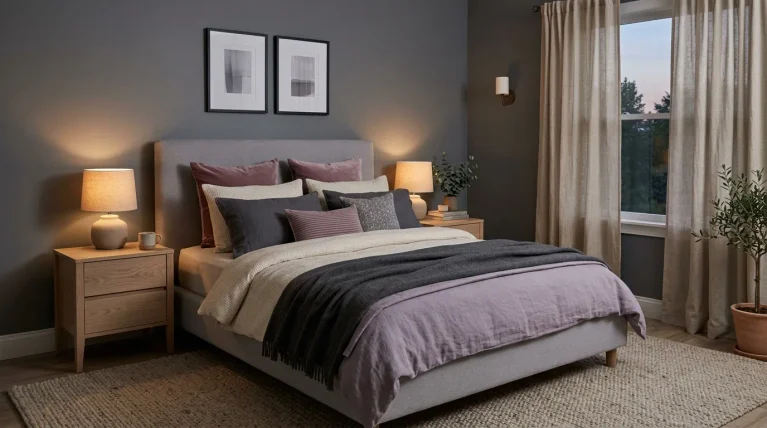
Ever walked into a room and instantly felt like you could exhale? That’s the magic of a moody living room ideas, a space that feels warm, rich, and quietly dramatic the moment you step inside. If your living room currently feels flat, overly bright, or a little forgettable, you’re not alone. Many homeowners want that cozy, editorial feeling they see online but aren’t sure where to start.
In my experience, the shift from ordinary to dramatic rarely requires a full renovation. It usually comes down to a handful of intentional choices, deeper wall colors, warmer lighting, richer textures, layered in the right order. I’ve noticed that even one or two changes from this list can completely shift how a room feels by evening.
This article walks through 24 practical, real-world ideas to help you build a cozy, dramatic retreat you’ll actually love spending time in. Whether you’re working with a rental, a full remodel, or just an afternoon of styling, there’s something here you can start today.
1. Deep Charcoal Walls
- Charcoal walls instantly add depth and drama without feeling too dark
- Pairs beautifully with warm brass or gold accents for balance
- Works well in rooms with good natural light or layered lamps
- Makes furniture and art pop against a rich backdrop
- Great for creating a cozy, intimate feel in larger rooms
.
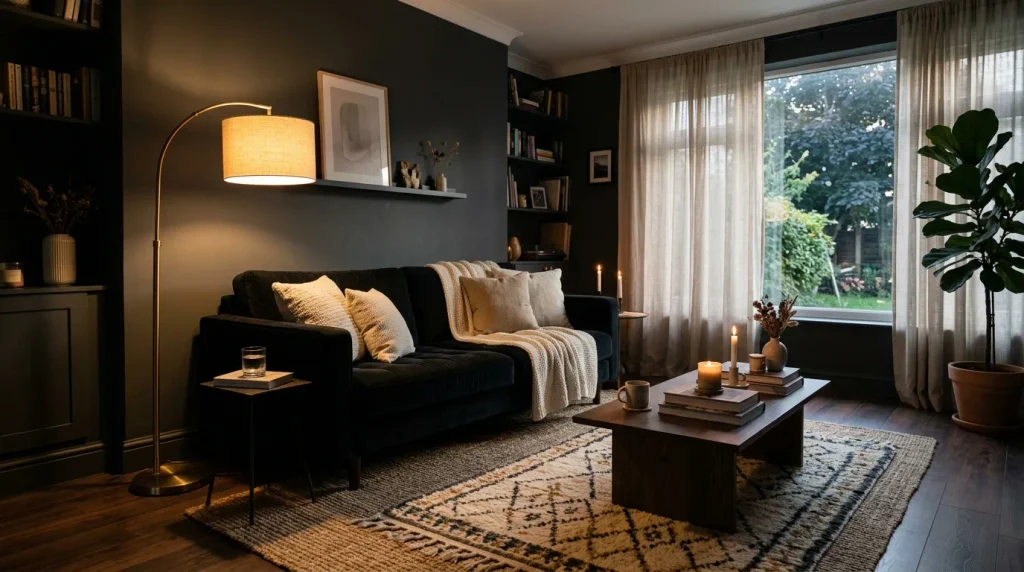
Charcoal walls change the entire feel of a living room the moment you walk in. Instead of the flat, safe look of light gray or beige, this shade brings depth, warmth, and a quiet sense of drama to the space. In my experience, charcoal works especially well in rooms with tall ceilings or big windows, since natural light keeps the color from feeling heavy. It also acts as the perfect backdrop for textured furniture, brass lighting, and layered art. If you want moody living room s that still feel welcoming, this is often the easiest place to start.
.
A charcoal accent wall behind the sofa or fireplace creates an instant focal point without overwhelming the room. Unlike an all-black space, charcoal keeps things soft and livable while still feeling rich and grounded. I’ve noticed that homeowners who try this shade rarely go back to lighter walls, because it hides scuffs better and photographs beautifully in low light. Pair it with cream or ivory furniture for contrast, or lean fully into the drama with black and walnut tones. Either way, the result feels intentional, elevated, and far from ordinary . exactly what a dramatic retreat should feel like.
Also Read : 24 Romantic Bedroom Ideas for Date Night at Home
2. Velvet Accent Sofa
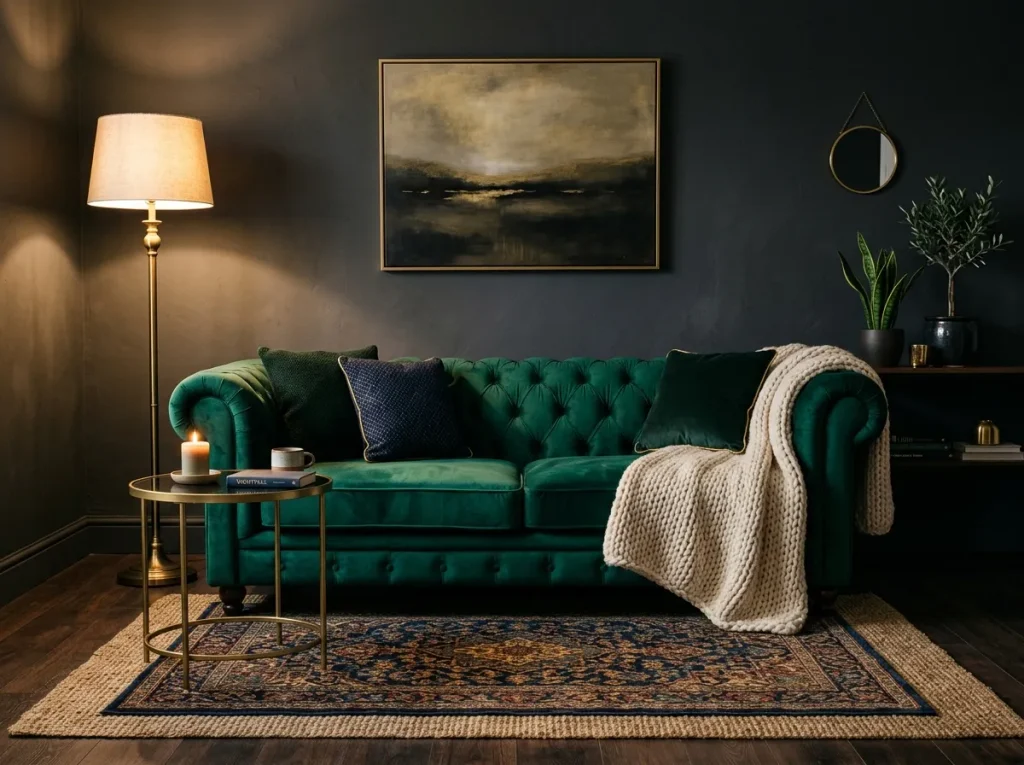
- Velvet instantly adds a soft, luxurious texture to the room
- Deep jewel tones like emerald or burgundy enhance the moody feel
- Reflects light beautifully, adding subtle shine without looking flashy
- Comfortable enough for everyday use while still feeling elevated
- A simple swap that upgrades the whole room’s mood
.
A velvet sofa does more than look expensive . it changes how a room feels to sit in. The soft texture catches light in a way flat fabrics can’t, adding richness to even a simple layout. I’ve seen this work well in smaller living rooms too, since one bold velvet piece can anchor the whole space without extra decor. Deep tones like emerald, navy, or burgundy pair beautifully with charcoal or dark walls, reinforcing that cozy, cinematic feel. It’s a practical upgrade that photographs well, feels warm in person, and instantly makes the room look considered and lived-in.
.
Choosing velvet over cotton or linen is one of the simplest ways to add drama without a full renovation. The fabric holds color more intensely, so even mid-tone shades look deeper and more saturated once styled in the room. That’s why many designers recommend velvet for accent pieces rather than an entire seating set . it keeps the look balanced instead of overwhelming. Add a few contrasting cushions in cream or mustard to soften the richness, and the sofa instantly becomes the centerpiece of the room. It’s a small change that makes the space feel curated and warm.
Also Read : 25 Jewel Tone Bedroom Ideas for a Rich Luxurious Look
3 . Warm Brass Lighting
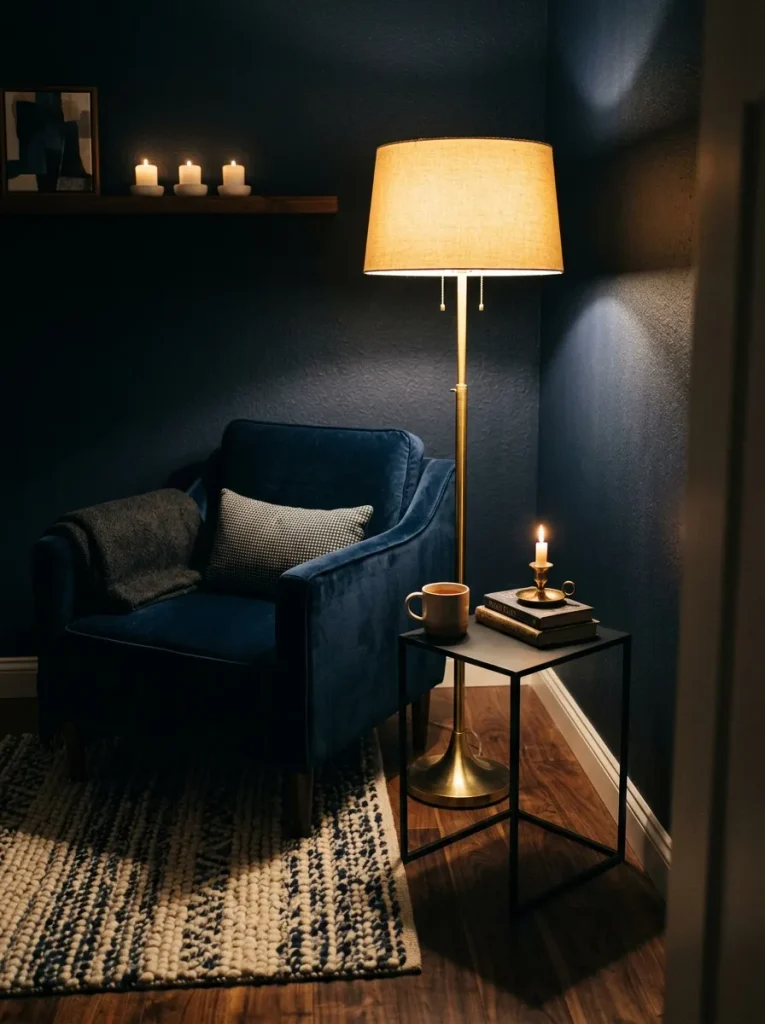
- Brass fixtures add warmth that balances darker wall colors
- Soft, warm-toned bulbs create a cozy glow instead of harsh light
- Layered lighting sources add depth and dimension after sunset
- A simple upgrade that instantly makes dark rooms feel inviting
- Works well with black, navy, or charcoal color schemes
.
Lighting can make or break a dark living room, and brass fixtures are one of the easiest fixes. Cool-toned bulbs can make deep colors feel cold and uninviting, but warm brass lighting softens everything instantly. I’ve tried this in rooms that felt too heavy with dark walls, and adding a single brass floor lamp completely changed the mood. The metal itself catches and reflects light, adding a subtle glow even during the day. Combined with warm bulbs, it creates that cozy, cinematic feeling people search for when they picture a relaxing evening space at home.
.
Choosing the right light temperature matters just as much as the fixture itself. Warm white bulbs, somewhere around 2700K, give off that golden glow associated with cozy, moody interiors, while bright white bulbs can feel clinical and flat in a dark space. Layer a floor lamp with a table lamp or wall sconce so the room never relies on a single overhead light. This creates depth, softens shadows, and gives every corner its own gentle glow after sunset. It’s a small detail, but it’s often the difference between a room that feels staged and one that feels lived-in and warm.
4 . Dark Accent Ceiling
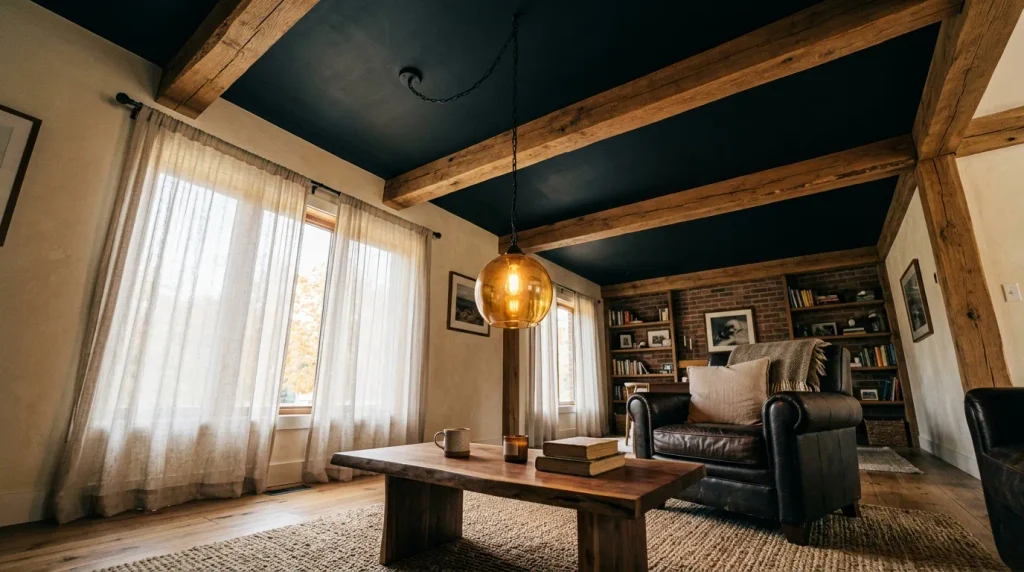
- A dark ceiling adds unexpected drama without darkening the whole room
- Draws the eye upward and makes spaces feel more architectural
- Works especially well with exposed beams or textured finishes
- Balances lighter walls while keeping the moody theme intact
- A bold move that photographs beautifully for a dramatic reveal
.
Painting the ceiling is one of the most underused tricks in moody design, yet it makes an enormous difference. Instead of leaving it plain white, a matte black or deep charcoal ceiling adds instant character and pulls the whole room together. In my experience, this works especially well in rooms with high ceilings, since the dark tone keeps the space from feeling too tall or empty. It also creates a cozy, enclosed feeling similar to sitting in a study or a cabin retreat. Paired with warm lighting below, the contrast becomes one of the most striking features in the room.
.
A dark ceiling doesn’t mean the entire room has to feel heavy or closed in. Keeping the walls a lighter shade, like cream or soft gray, balances the drama above while still letting the moody theme shine through. I’ve noticed that homeowners hesitant about an all-dark room often start here, since it’s a smaller commitment that still delivers a big visual impact. Add a statement pendant light or exposed beams to enhance the architectural feel even further. It’s a design choice that feels intentional, adds depth, and instantly separates a space from the typical all-white living room look.
Also Read : 21 Moody Dining Room Ideas for a Dramatic Cozy Space
5 . Layered Textured Rugs
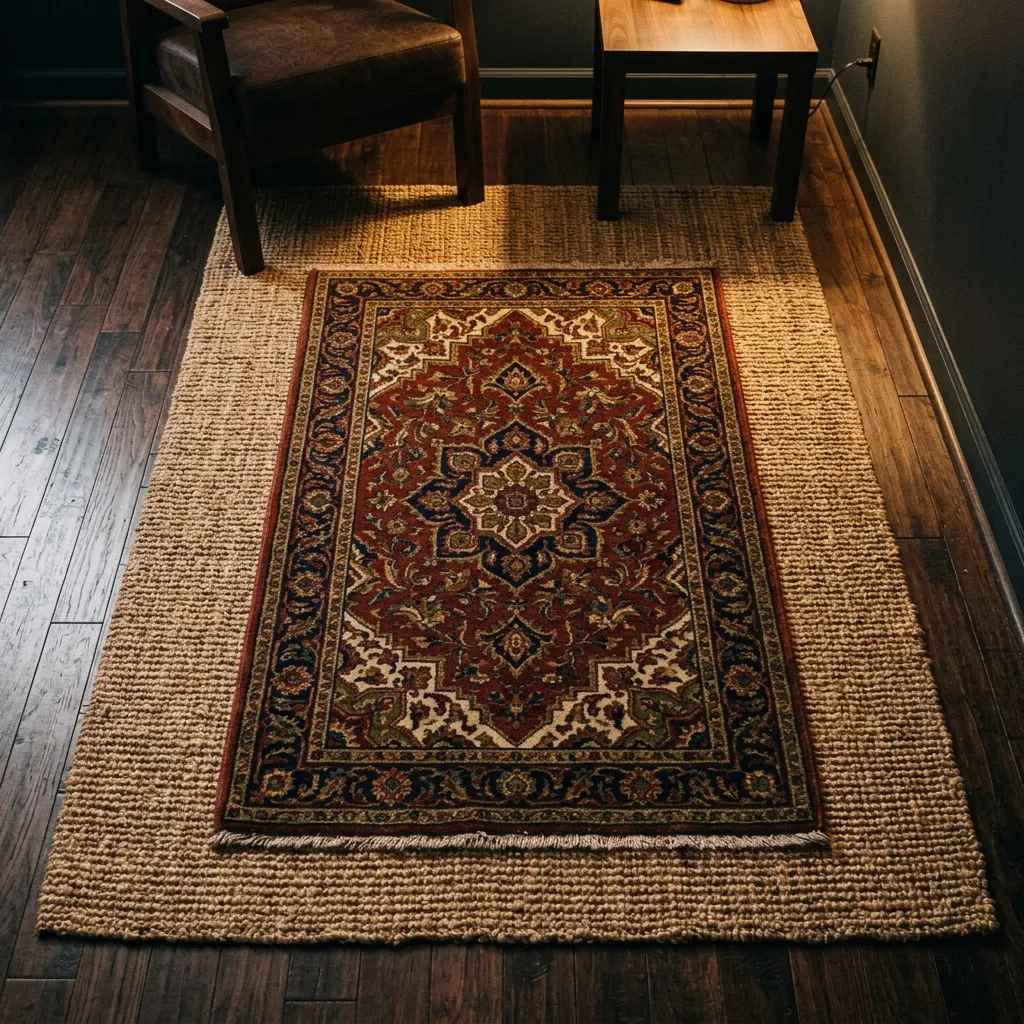
- Layering rugs adds texture and visual depth to the floor
- Helps define separate zones within an open living space
- Softens hard flooring while adding warmth underfoot
- Patterns add personality without overwhelming a dark color scheme
- An easy, affordable way to elevate the whole room instantly
.
Rugs often get overlooked, but layering two textures together is one of the fastest ways to add richness to a moody living room. A neutral base rug, like jute or a woven natural fiber, grounds the space, while a smaller patterned rug on top introduces color and personality. I’ve seen this work well in rooms that felt a little flat before, instantly making the floor feel intentional rather than an afterthought. The contrast in texture also adds a tactile, cozy quality that photographs beautifully and feels even better underfoot on a quiet evening at home.
.
Choosing the right rug combination depends on the room’s existing color palette and furniture tones. Darker rugs with subtle patterns work best against charcoal or black walls, since they continue the moody theme without competing for attention. That’s why many designers recommend sticking to two or three colors total when layering, keeping the look cohesive rather than chaotic. A slightly oversized base rug also makes the seating area feel larger and more grounded. It’s a simple styling trick, but it consistently transforms a plain floor into one of the room’s most inviting design details.
6 . Statement Fireplace Wall
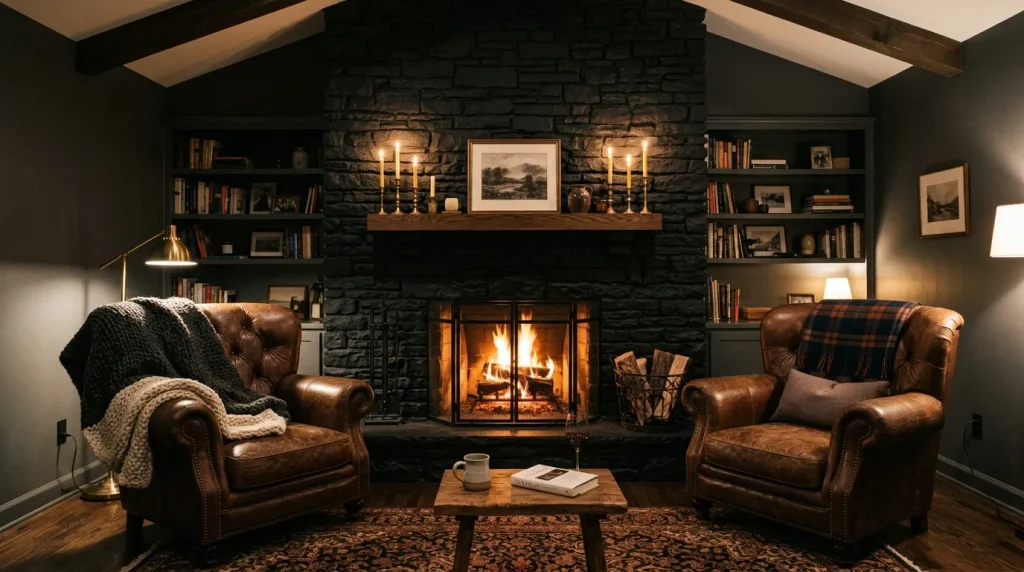
- A fireplace wall becomes the natural focal point of the room
- Dark stone or brick enhances the cozy, dramatic mood instantly
- Firelight adds warmth and movement that static lighting can’t replicate
- Symmetrical seating around it creates a balanced, inviting layout
- Perfect for cold evenings and creating a true retreat feeling
.
Nothing sets the tone for a moody living room quite like a statement fireplace wall. Dark stone, brick, or even a matte black surround instantly becomes the visual anchor of the space, drawing every eye toward it the moment you enter. In my experience, homeowners who invest in this feature rarely need much else to make the room feel finished, since the fireplace naturally does the heavy lifting. The flickering light adds movement and warmth that lamps simply can’t replicate. It’s the kind of detail that turns a living room into a genuine retreat rather than just another seating area.
.
Building the layout around the fireplace makes the whole room feel more intentional and balanced. Placing matching armchairs or a symmetrical sofa arrangement on either side creates a natural gathering space, perfect for quiet evenings or hosting guests. I’ve noticed that even a small fireplace feels more impactful when the surrounding wall color matches the room’s darker palette, since it removes visual breaks and keeps the eye moving smoothly. Adding a wooden mantel with candles or simple decor softens the stone’s hardness. Together, these details create a cozy focal point that feels both dramatic and deeply livable.
7 . Moody Gallery Wall
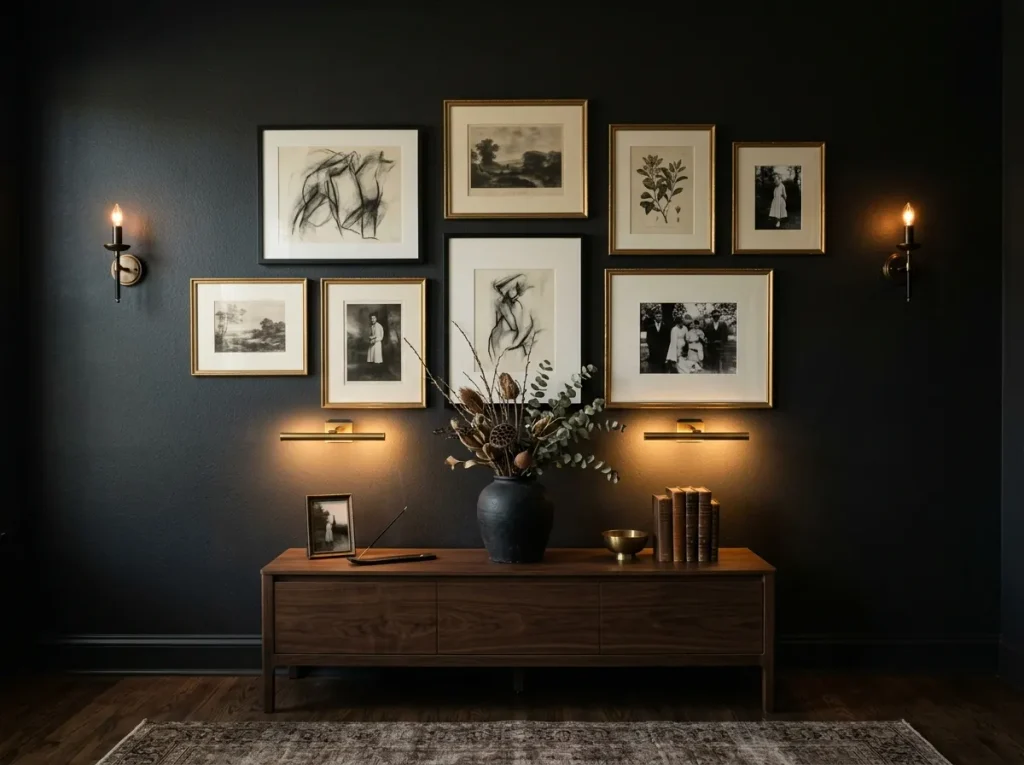
- A gallery wall adds personality without cluttering the space
- Dark or black frames blend seamlessly into moody color schemes
- Mixing textures and sizes keeps the arrangement visually interesting
- Works well above a console table, sofa, or fireplace mantel
- An easy way to personalize a rented or minimal living room
.
A gallery wall is one of the simplest ways to add character to a moody living room without repainting or buying new furniture. Choosing black or dark wood frames instead of white ones keeps the display blending into the room’s palette rather than standing out awkwardly. In my experience, mixing a few different frame sizes with one or two textured pieces, like a woven wall hanging or small mirror, adds depth without looking cluttered. This works especially well above a console table or sofa, filling empty wall space with intention. It instantly makes the room feel personal, curated, and far from generic.
.
Spacing and arrangement matter just as much as the artwork itself when building a moody gallery wall. Keeping two to three inches between frames creates a cohesive cluster instead of a scattered, disconnected look. I’ve seen this work particularly well when paired with warm accent lighting from a small picture light or nearby lamp, since it highlights texture and depth after dark. Sticking to a limited color palette, mostly black, gold, and deep tones, keeps everything feeling intentional rather than random. It’s a low-cost styling detail that consistently makes a strong first impression in photos and in person.
8 . Rich Wood Paneling
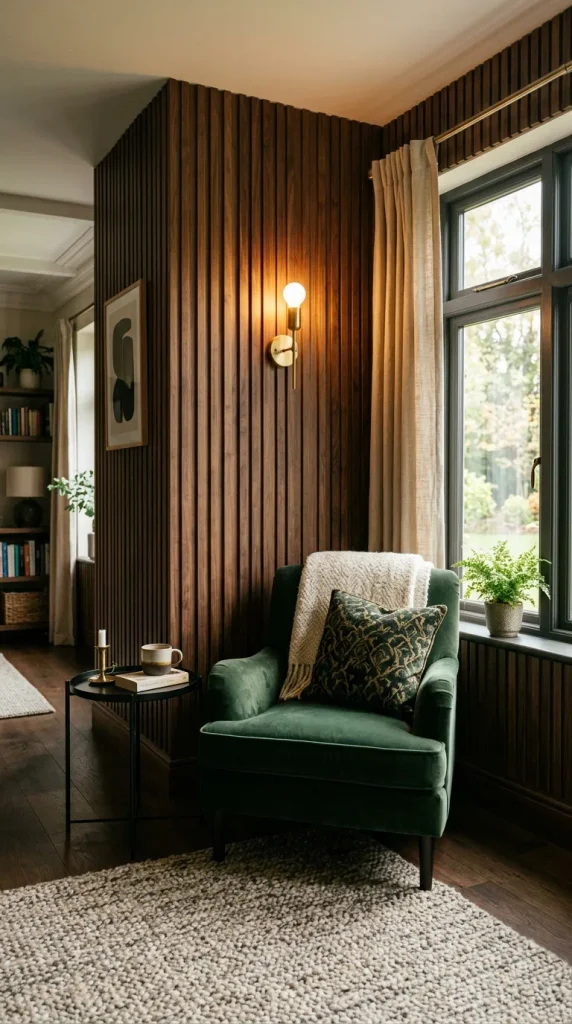
- Wood paneling adds warmth, texture, and architectural interest
- Vertical slats create a modern, high-end feel in any room
- Pairs beautifully with brass, velvet, and deep jewel tones
- Helps insulate sound while adding a cozy, enclosed feeling
- A durable upgrade that ages well and rarely goes out of style
.
Wood paneling brings a level of warmth and texture that paint alone can’t achieve. Dark walnut or espresso-toned panels, especially in a vertical slat style, add an architectural quality that makes a living room feel custom-built rather than standard. I’ve tried this in spaces that felt a little cold or unfinished, and the difference was immediate, the walls suddenly had depth, shadow, and a tactile quality you could feel just by looking at them. It also pairs beautifully with brass fixtures and velvet furniture, reinforcing that layered, moody retreat feeling that so many homeowners are chasing in their living spaces today.
.
Beyond the visual appeal, wood paneling offers a practical benefit that’s often overlooked: it helps soften sound and adds a sense of coziness that flat drywall simply can’t replicate. That’s why many designers recommend it for feature walls behind sofas or entertainment units, where it becomes both a design statement and a functional upgrade. Slatted paneling, in particular, creates subtle shadow lines that shift throughout the day as natural light changes. This adds a dynamic, ever-changing quality to the room. It’s an investment piece, but one that consistently elevates the entire space for years to come.
9 . Black Framed Windows
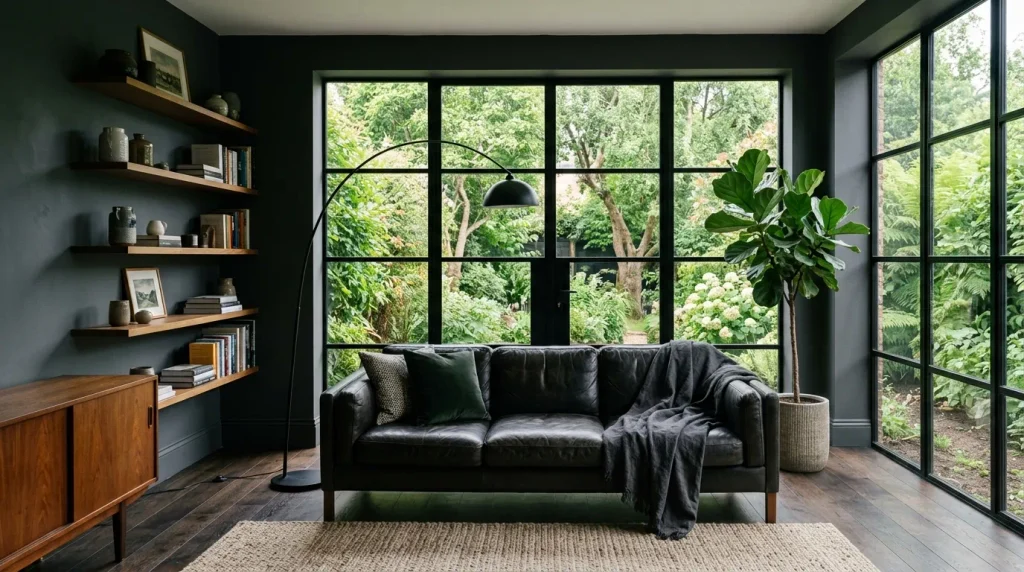
- Black window frames add a sharp, modern contrast to soft light
- Emphasizes the connection between indoor coziness and outdoor views
- Works beautifully with both minimalist and dramatic interior styles
- Draws attention to natural light without losing the moody tone
- A striking detail that elevates even a simple, undecorated room
.
Black-framed windows are a small architectural detail that make a surprisingly big difference in a moody living room. Instead of blending into the wall like traditional white frames, black trim creates a bold outline that frames the view outside like a piece of art. In my experience, this works especially well in rooms with limited natural light, since the contrast actually makes the daylight that does enter feel more intentional and dramatic rather than washed out. Paired with charcoal or deep-toned walls, the windows become a design feature in their own right, not just a functional opening in the room.
.
What makes black window frames so effective is the balance they create between light and darkness. During the day, natural light streams in and softens the room’s darker palette, while in the evening, the black trim disappears into the night sky outside, making the glass feel almost seamless with the wall. I’ve noticed that homeowners who add this detail often say it changes how the entire room feels, even without touching the furniture or paint color. It’s a subtle upgrade, but one that consistently adds architectural interest and a refined, modern edge to a cozy dramatic retreat.
10 . Curved Velvet Armchair
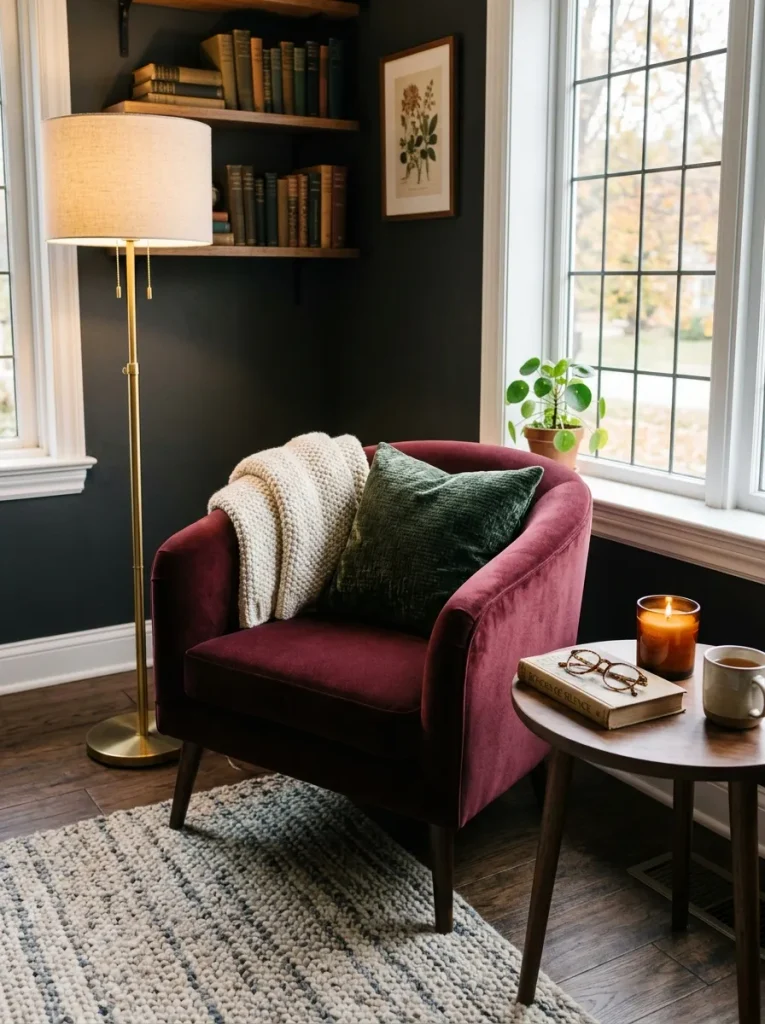
- A curved chair softens the sharp lines of a dark, moody room
- Deep tones like burgundy or forest green add richness and depth
- Creates a perfect reading nook or quiet corner in any layout
- The rounded shape adds visual interest without taking up much space
- A statement piece that works even in smaller living rooms
.
A curved velvet armchair does more than fill an empty corner, it softens the entire feel of a moody living room. Dark, angular furniture can start to feel heavy after a while, so introducing one rounded piece breaks up the sharpness and adds a sense of ease. In my experience, this works especially well in a quiet reading nook near a window, where the curved shape invites you to sit and stay a while. Choosing a deep jewel tone, like burgundy or emerald, keeps the piece connected to the room’s overall palette while still standing out as a defined statement.
.
Placement matters just as much as the chair itself when creating a cozy, functional corner. Angling it slightly toward a window or fireplace, rather than facing straight into the room, makes the space feel more intimate and purposeful. I’ve seen this small adjustment turn an unused corner into someone’s favorite spot in the house. Adding a side table for a candle or cup of tea, along with a soft throw blanket, completes the look without cluttering the space. It’s a simple addition, but one that consistently adds both comfort and quiet luxury to a dramatic living room retreat.
11 . Dark Bookshelf Styling
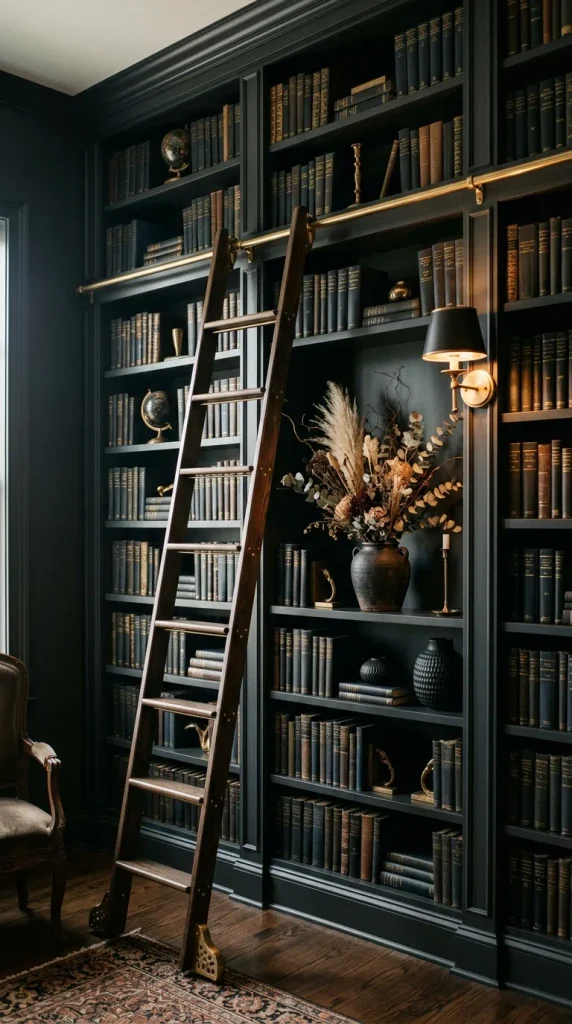
- Dark bookshelves add depth and a sense of quiet sophistication
- Styling with black, brass, and neutral tones keeps it cohesive
- Mixing books, decor, and negative space avoids a cluttered look
- Creates a cozy library-like atmosphere within the living room
- Perfect for showcasing personal items in an intentional, curated way
.
A dark bookshelf transforms an ordinary storage wall into one of the most personal, curated features in a moody living room. Painting the shelving black or deep charcoal, rather than leaving it a standard white, immediately shifts the mood toward something richer and more intentional. In my experience, the styling matters more than the shelf itself, grouping books by color, adding small brass objects, and leaving intentional gaps of empty space keeps the display from feeling overcrowded. This approach turns everyday items into a design feature, giving the room a lived-in, thoughtful quality that feels collected over time rather than staged all at once.
.
Balancing color, texture, and negative space is the key to styling a dark bookshelf well. Too many items packed together can make even a beautiful shelf feel chaotic, so I’ve noticed that leaving about a third of the space empty creates breathing room for the eye to rest. Mixing in a few larger decorative pieces, like a vase or small sculpture, alongside stacked books adds visual variety without losing cohesion. Warm lighting placed nearby, whether a lamp or small picture light, enhances the shadows and texture after dark. It’s a detail-oriented , but the payoff is a shelf that feels genuinely curated.
12 . Textured Throw Pillows
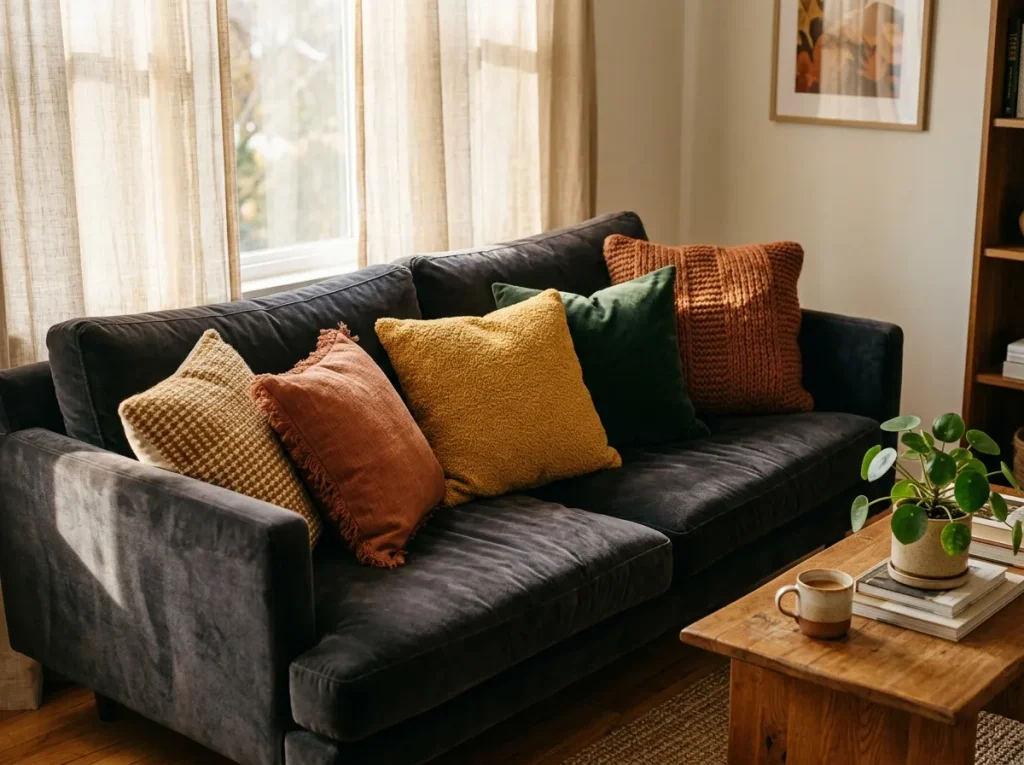
- Layered pillows add color, texture, and softness to dark furniture
- Mixing fabrics like boucle, velvet, and linen adds visual interest
- Warm tones such as mustard or rust complement moody palettes beautifully
- An affordable, low-commitment way to refresh the room seasonally
- Small styling detail that makes a sofa feel finished and inviting
.
Throw pillows are one of the easiest and most affordable ways to bring warmth into a moody living room without committing to anything permanent. A dark sofa can start to feel a little flat on its own, so layering in pillows with mixed textures, like boucle, linen, and velvet, adds dimension the eye naturally gravitates toward. In my experience, choosing two or three warm accent colors, such as mustard, rust, or deep green, keeps the look cohesive rather than random. This small styling choice softens the sofa’s sharper lines and makes the whole seating area feel finished, inviting, and considerably more comfortable to sink into.
.
What makes throw pillows so practical is how easily they can be refreshed without redesigning the entire room. Swapping in seasonal tones or new textures takes minutes but instantly changes the feel of the space. I’ve seen this work especially well heading into colder months, when richer, warmer shades naturally suit the moody aesthetic already in place. Sticking to an odd number, like three or five pillows, tends to look more intentional than an even, symmetrical arrangement. It’s a small detail, but one that consistently adds comfort, color, and a sense of thoughtful styling to any dark, dramatic living room.
13 . Moody Window Curtains
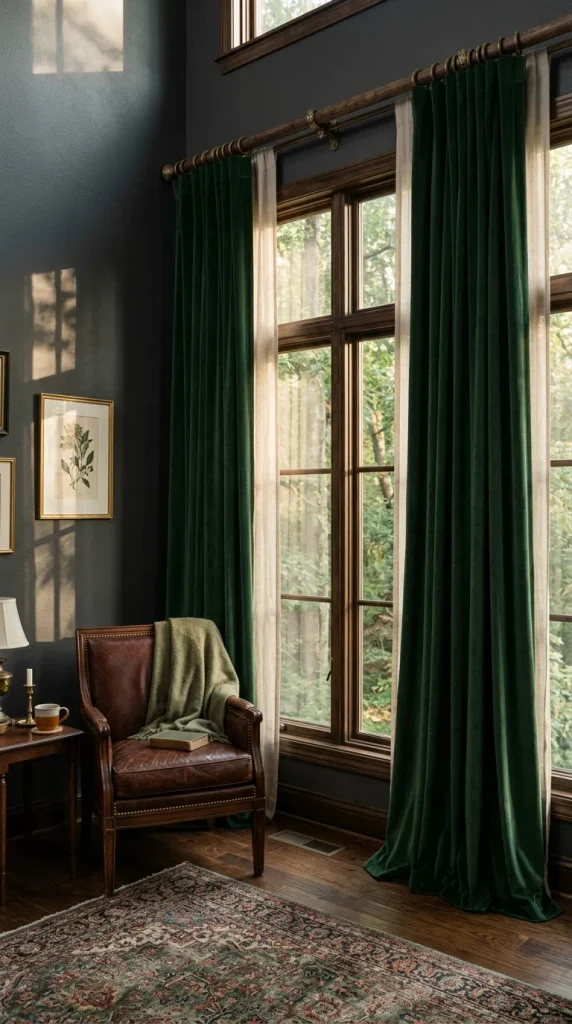
- Heavy curtains add drama and softness to bare windows instantly
- Deep tones like forest green or navy enhance a moody palette
- Floor-to-ceiling length makes rooms feel taller and more elegant
- Helps control light while maintaining a cozy, enclosed feeling
- A simple swap that upgrades the entire window area
.
Curtains are often the last thing people think about, but in a moody living room, they can completely change the atmosphere. Swapping thin, light fabric for heavy velvet in a deep tone like forest green or navy instantly adds richness and softens the hard edges of a window frame. In my experience, hanging curtains as close to the ceiling as possible, rather than just above the window itself, makes the entire room feel taller and more intentional. This small adjustment is often overlooked, yet it’s one of the fastest ways to make a space feel finished, elegant, and considerably more dramatic without touching the walls at all.
.
Beyond the visual impact, heavy curtains also serve a practical purpose in a moody living room by helping control natural light throughout the day. I’ve noticed that rooms styled around darker palettes often benefit from being able to soften harsh daylight, since too much bright light can clash with the cozy, enclosed feeling the space is going for. Choosing curtains with a slight texture, like velvet or a heavy weave, adds visual depth even when they’re fully open. It’s a simple styling choice, but one that consistently ties the whole room together while keeping the space functional and comfortable.
14 . Dark Coffee Table Styling
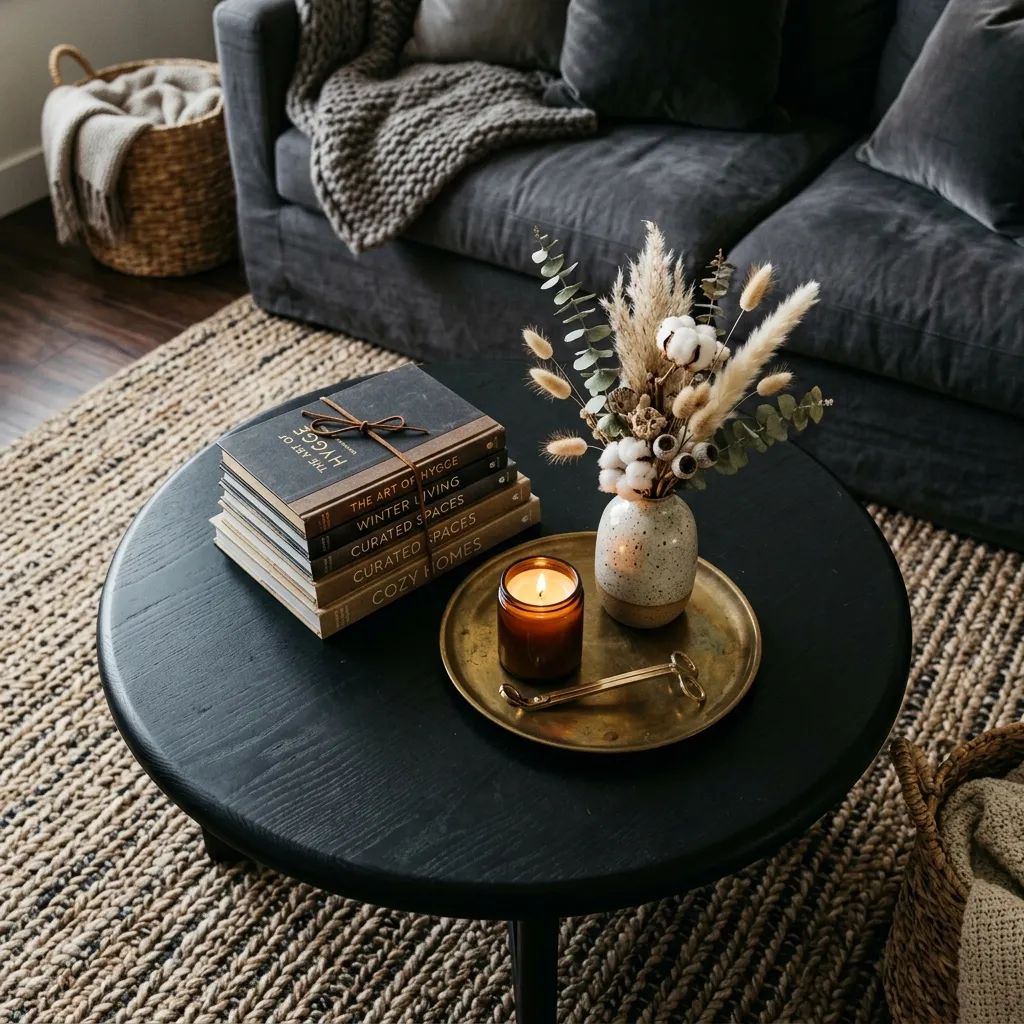
- Dark coffee tables anchor the room’s color palette at eye level
- Styling with trays, candles, and books adds an intentional look
- Small brass or gold accents add warmth against dark wood
- Keeps clutter minimal while still feeling personal and lived-in
- A finishing touch that ties the whole seating area together
.
The coffee table might be small, but it plays a big role in pulling a moody living room together. Choosing a dark wood or black finish keeps it visually connected to the rest of the room’s palette, rather than standing out as a mismatched piece. In my experience, styling it with just a few intentional items, a stack of books, a small tray, and a candle, works far better than filling every inch of surface space. This restraint actually makes the table feel more curated and thoughtful. It becomes a quiet focal point that reflects the overall mood of the room without demanding attention.
.
Layering height and texture on a coffee table adds visual interest without making it feel cluttered. I’ve seen this work well by placing a stack of two or three books as a base, then adding a small candle or brass tray on top for contrast. That’s why many designers recommend keeping the color palette limited here too, sticking to black, brass, and one accent tone keeps everything cohesive. Fresh or dried greenery adds a soft, organic touch against the darker materials. It’s a small detail, but one that consistently makes the seating area feel finished, warm, and genuinely lived-in.
15 . Black Accent Furniture
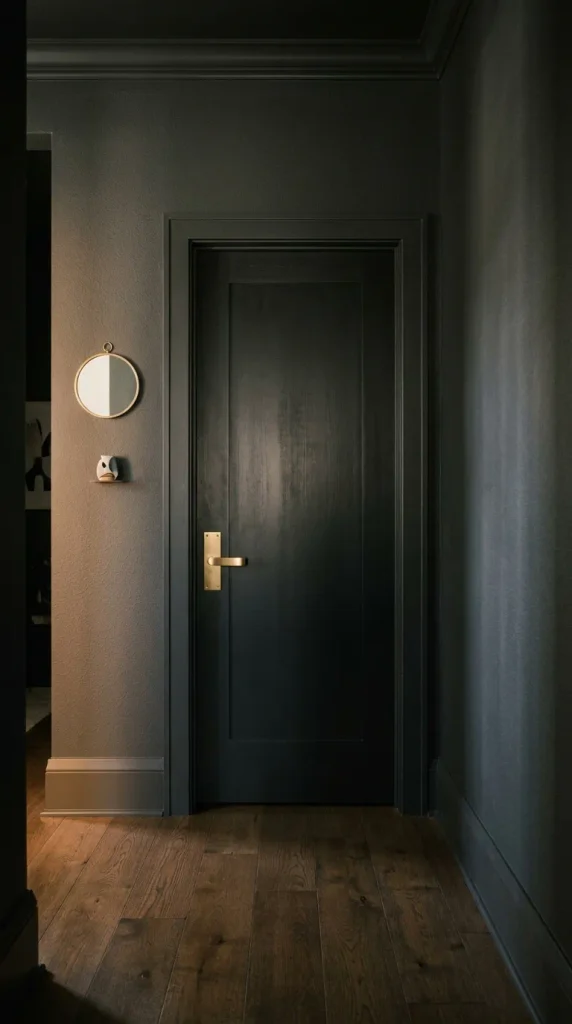
- Black furniture pieces add consistency across a moody color scheme
- Works well as console tables, side tables, or accent chairs
- Creates visual rhythm when repeated in small doses around the room
- Pairs beautifully with brass, wood, and deep jewel-toned fabrics
- A cohesive way to tie multiple furniture pieces together visually
.
Repeating black furniture throughout a living room creates a sense of rhythm that ties the entire space together. Instead of just one dark piece standing alone, adding a black console table, side table, or accent chair in a few different spots helps the eye move naturally around the room. In my experience, this approach works especially well in larger living rooms where furniture is spread out, since the repeated dark tone keeps everything feeling connected rather than scattered. It’s a subtle styling principle, but one that consistently makes a moody color scheme feel intentional and well-planned, rather than like separate pieces placed together by chance.
.
Balancing black furniture with warmer materials keeps the room from feeling too heavy or cold. Pairing dark wood or metal pieces with brass hardware, woven textures, or a leather sofa adds contrast that softens the overall look. I’ve noticed that homeowners who stick to a consistent material palette, like black wood paired with brass accents throughout, achieve a much more polished result than mixing too many finishes at once. This consistency doesn’t mean everything has to match exactly, just that the tones should feel like they belong to the same story. It’s a small design rule that makes a big difference in cohesion.
16 . Moody Accent Rugs
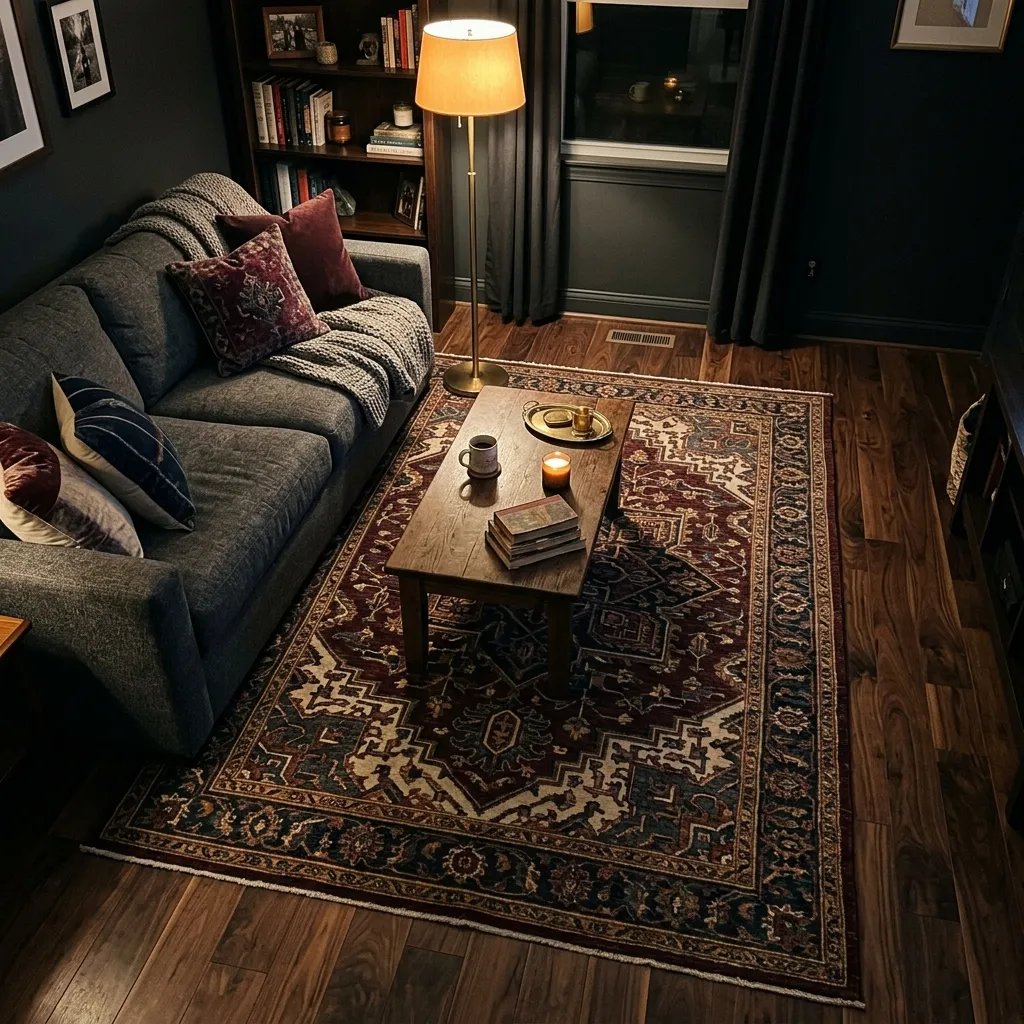
- Patterned rugs add color and personality to a dark room
- Deep tones like burgundy or navy keep the moody theme intact
- Anchors the seating area and defines the space visually
- Hides wear better than lighter rugs while still feeling elegant
- A simple way to add pattern without overwhelming the room
.
An accent rug does more than protect the floor, it sets the tone for the entire seating area in a moody living room. Choosing a patterned rug in deep burgundy, navy, or forest green adds a layer of richness that a plain neutral rug simply can’t achieve. In my experience, rooms with dark walls sometimes need that extra bit of pattern underfoot to keep the space from feeling one-dimensional. The rug becomes a grounding element, visually anchoring the sofa and coffee table together as one cohesive area rather than separate pieces floating in the room. It’s a detail that ties everything together beautifully.
.
Selecting the right size and placement makes a noticeable difference in how polished the room feels. I’ve seen many living rooms where the rug is simply too small, leaving furniture floating awkwardly at the edges rather than grounded within the space. As a general guide, front legs of the sofa and chairs should rest on the rug to create a connected, intentional layout. Darker, patterned designs also hide everyday wear better than light, solid-colored options, making them a practical choice for busy households. It’s a functional upgrade that adds both style and durability to a dramatic living room.
17 . Warm Candle Styling
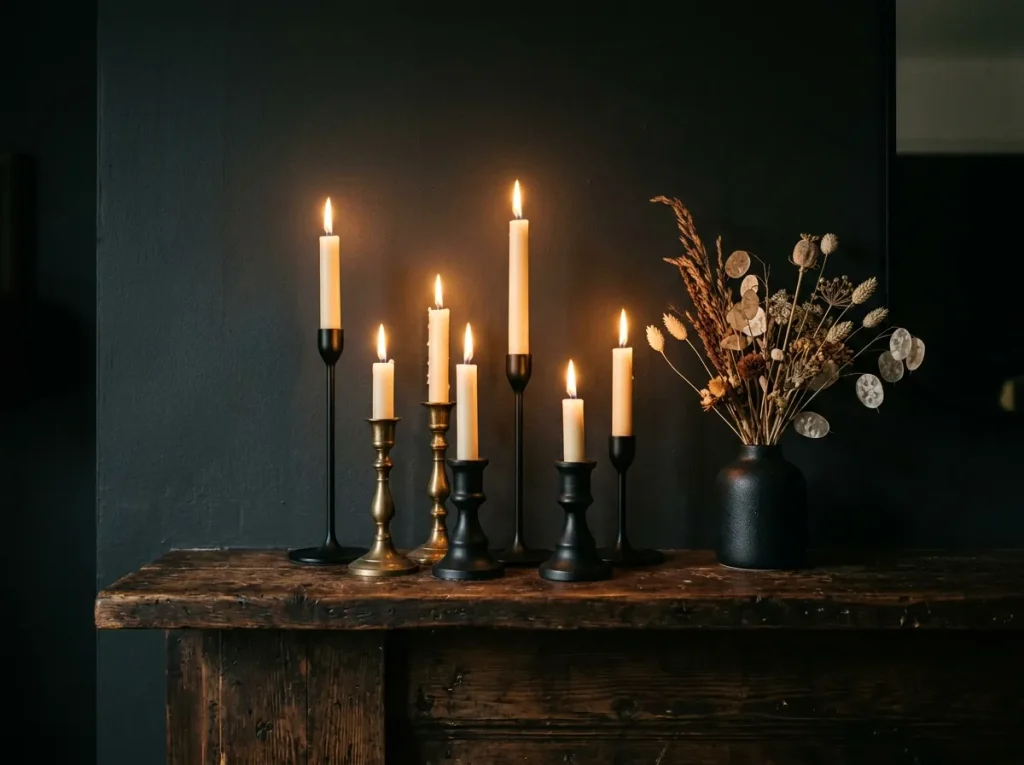
- Candles add warm, flickering light that complements moody interiors
- Clustering different heights creates visual interest on flat surfaces
- Black or brass holders blend seamlessly into dark color schemes
- An affordable styling detail that instantly boosts cozy ambiance
- Perfect for mantels, coffee tables, or bookshelves
.
Candles are one of the simplest, most affordable ways to add warmth and atmosphere to a moody living room. Unlike overhead lighting, candlelight flickers and shifts, creating soft shadows that make a dark room feel alive rather than static. In my experience, clustering three or four candles of varying heights on a mantel or coffee table creates far more visual interest than placing a single candle alone. Choosing black or brass holders keeps the styling cohesive with the room’s existing palette. It’s a small, low-cost detail, but one that consistently adds a sense of calm, intimacy, and quiet luxury to the space.
.
Scent and placement both play a role in how effective candle styling feels within a moody room. I’ve noticed that warm, woody fragrances, like sandalwood or amber, tend to complement dark, dramatic interiors far better than fresh or floral scents, which can feel mismatched with the aesthetic. Placing candles near seating areas, rather than tucked away in corners, ensures both the light and scent are actually experienced by anyone relaxing in the room. Grouping them with other small decor items, like books or a vase, avoids a scattered look. It’s a finishing touch that makes the space feel genuinely inviting.
18 . Dark Accent Doors
- Dark doors add a bold architectural detail between rooms
- Brass or gold hardware creates a striking contrast against black
- Helps transition spaces while maintaining a cohesive moody theme
- A budget-friendly update using just paint and new hardware
- Works well in hallways, entryways, and living room transitions
.
Painting an interior door black is one of the most affordable yet impactful updates for a moody living room. Standard white doors can feel out of place against darker walls, creating a visual break that disrupts the overall flow of the space. In my experience, swapping that white for matte black instantly makes the doorway feel intentional, like part of the design rather than an afterthought. Adding brass or gold hardware enhances the contrast even further, catching light in a way that feels elegant rather than harsh. It’s a small project, often completed in an afternoon, with a surprisingly large visual payoff.
.
Dark doors also help create a sense of continuity as you move between rooms in the home. I’ve seen this work particularly well in hallways or entryways leading into a moody living room, since the consistent dark tone signals a shift in atmosphere before you even step inside. That’s why many designers recommend carrying the color through connecting spaces rather than isolating it to just one room. This approach makes the whole home feel more cohesive and intentionally styled. It’s a budget-friendly detail, but one that consistently elevates the transition between spaces in a dramatic, memorable way.
19 . Sculptural Floor Lamp
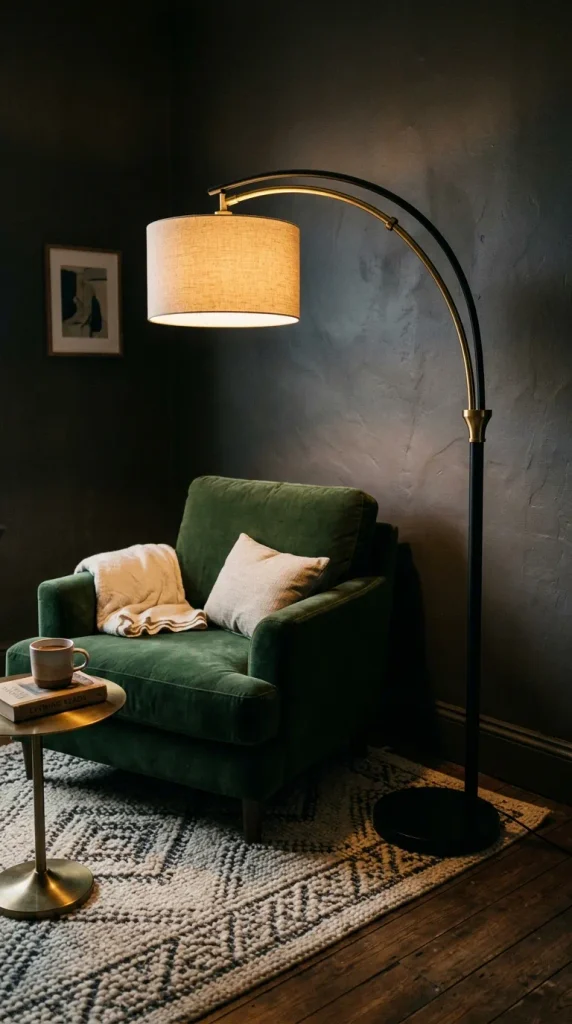
- A sculptural lamp adds height and visual interest to any corner
- Curved or arc designs soften the room’s darker, angular furniture
- Brass and black finishes complement moody color palettes beautifully
- Provides functional task lighting while doubling as a decor piece
- Works well beside reading chairs, sofas, or empty corners
.
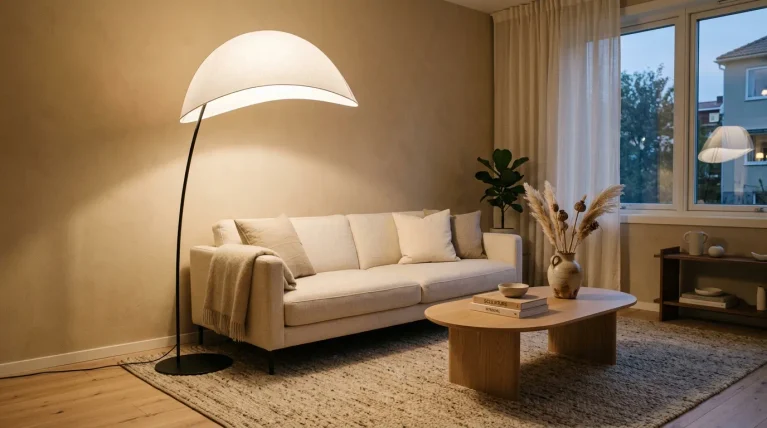
A sculptural floor lamp does double duty in a moody living room, offering both function and striking visual appeal. Instead of a plain, straight-lined lamp, choosing one with a curved arc or unique silhouette adds a sense of movement to the room’s design. In my experience, placing this kind of lamp beside a reading chair or empty corner instantly makes that spot feel purposeful rather than overlooked. The warm light it casts also softens the darker tones surrounding it, striking a balance between drama and comfort. It’s a piece that works as both a light source and a genuine design statement.
.
Choosing the right finish for a sculptural lamp helps it blend seamlessly into the room’s existing color story. Black lamps with brass or gold detailing tend to work especially well in moody interiors, since they echo the metal accents already used elsewhere, like on curtain rods or picture frames. I’ve noticed that taller lamps, positioned near seating areas rather than pushed against a wall, create better ambient lighting in the evening. This placement also adds height variation to the room, breaking up the visual weight of low furniture. It’s a small addition with a noticeably elevated effect.
20 . Moody Kitchen-Adjacent Nook
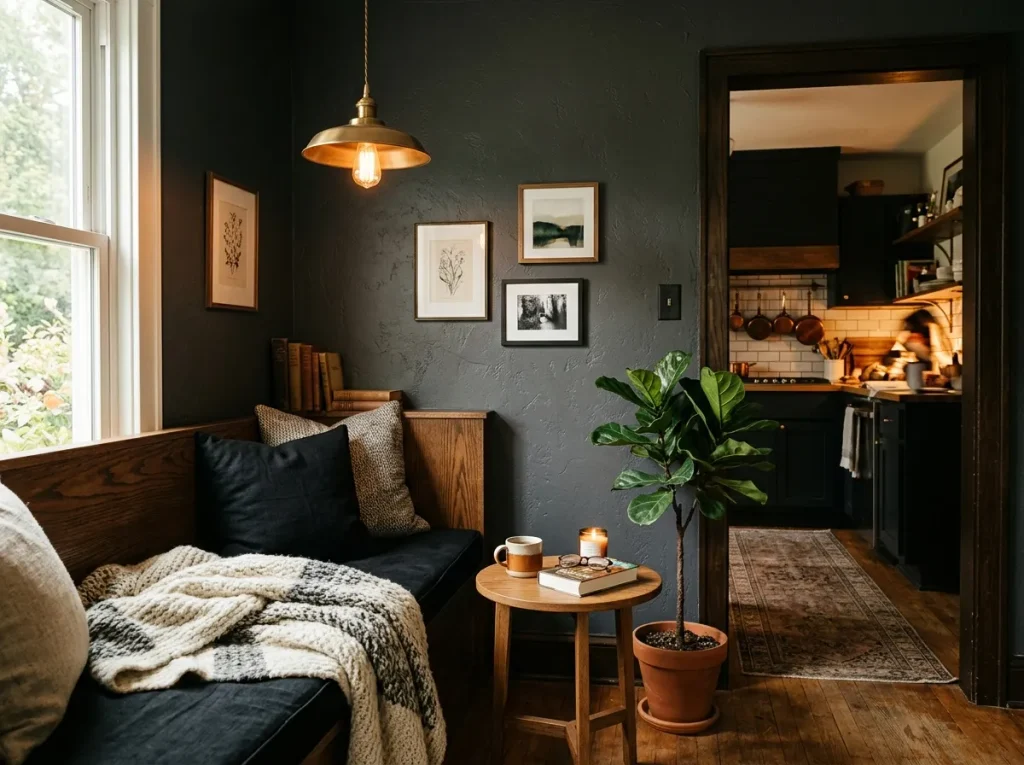
- A nook creates a quiet, functional space within an open layout
- Built-in seating maximizes small or awkward corners effectively
- Pendant lighting adds warmth without taking up floor space
- Bridges the living area and kitchen with a cohesive dark palette
- Perfect for morning coffee or a quiet reading spot
.
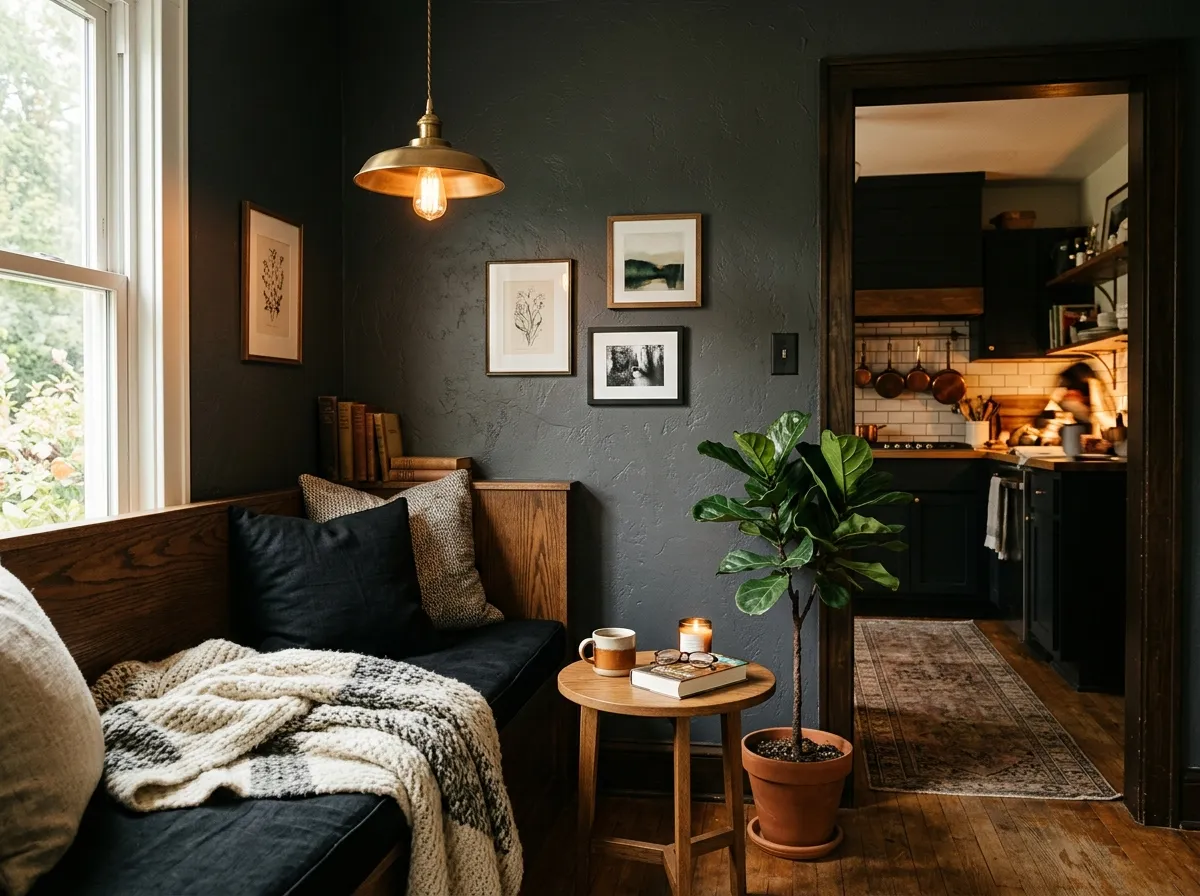
An overlooked corner near the kitchen can easily become one of the most charming spots in the home with the right styling. Adding a built-in bench with dark cushions instantly turns unused space into a cozy nook, perfect for morning coffee or a quiet moment alone. In my experience, keeping the color palette consistent with the adjoining living room, using the same charcoal or black tones, helps the nook feel like a natural extension of the space rather than a separate area. A small pendant light overhead adds warmth without cluttering the floor, making the corner both functional and visually inviting.
.
What makes a moody nook so effective is how it maximizes often-wasted space near transitional areas like doorways or hallways. I’ve seen homeowners transform awkward, unused corners into genuinely favorite spots simply by adding built-in seating and a small table. Choosing black cushions with a single textured throw keeps the styling simple without looking bare. This approach also allows natural light from a nearby window to interact with the darker tones, creating soft contrast throughout the day. It’s a practical, space-saving that adds both charm and function to a cozy dramatic retreat.
21 . Dark Ceiling Beams
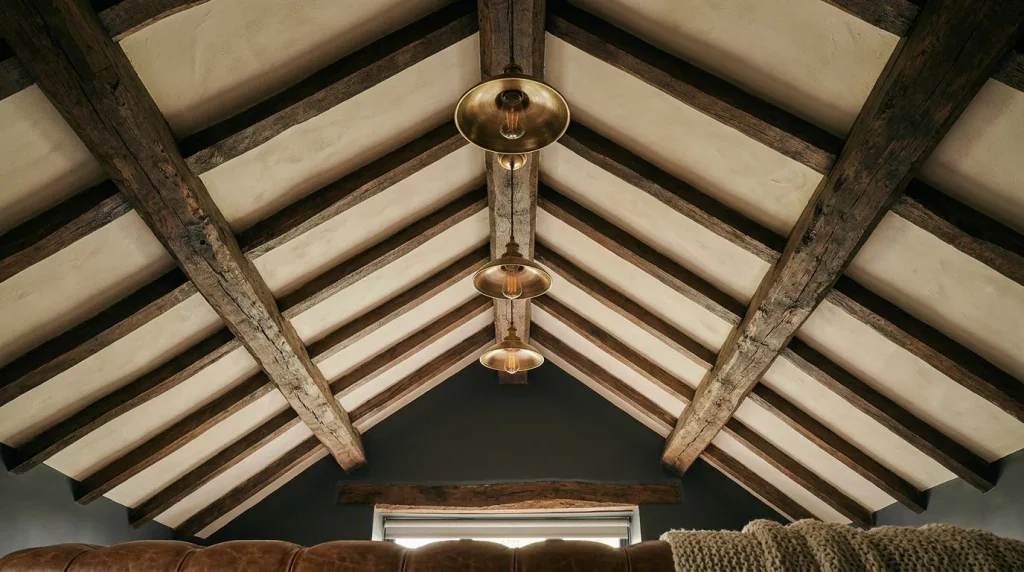
- Exposed beams add architectural texture and structural interest
- Dark wood tones contrast beautifully with lighter ceiling color
- Creates a rustic, cabin-like feeling within a modern living room
- Draws the eye upward, making the space feel more dynamic
- Pairs naturally with pendant lighting and wood-toned furniture
.
Exposed ceiling beams bring a rustic, architectural quality to a moody living room that flat ceilings simply can’t replicate. Staining or painting them a deep walnut or espresso tone, rather than leaving them a natural light wood, ties them into the room’s overall dark, dramatic palette. In my experience, this detail works especially well in rooms with vaulted or slightly higher ceilings, since the beams add structure and draw the eye upward without making the space feel smaller. Paired with warm pendant lighting hung between them, the beams become both a functional design feature and a striking visual centerpiece in the room.
.
Combining dark beams with a lighter ceiling color creates a balanced contrast that keeps the room from feeling too heavy overhead. I’ve noticed that homeowners often worry dark elements on the ceiling will make a room feel smaller, but when paired with a softer background tone, the opposite happens, the space feels layered and more dimensional instead. This detail also pairs naturally with wood-toned furniture and brass fixtures already common in moody interiors. It’s a more involved architectural choice, but one that consistently adds a cozy, cabin-like warmth to an otherwise sleek and dramatic living room design.
22 . Statement Mirror Wall
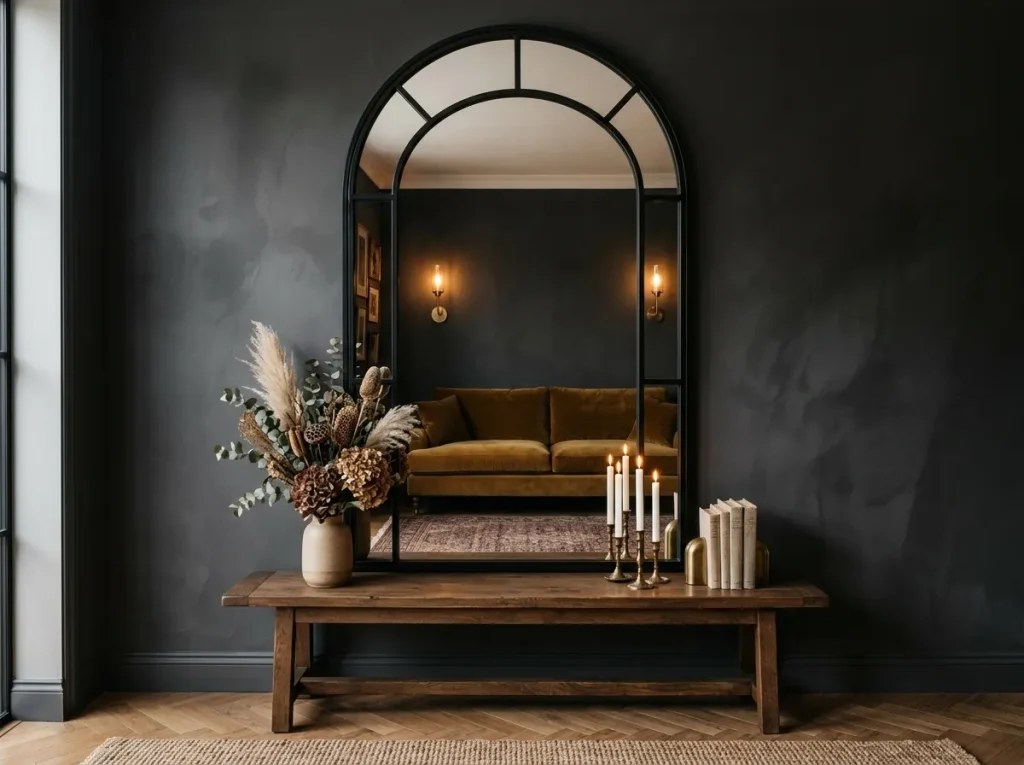
- A statement mirror adds depth and reflects warm ambient light
- Black frames blend seamlessly into a dark, dramatic color scheme
- Makes smaller or darker rooms feel more open and spacious
- Doubles as functional decor above consoles or mantels
- An easy way to visually double a room’s cozy styling details
.
A large statement mirror is one of the most effective tricks for making a moody living room feel more open, without adding a single extra square foot. Dark rooms can sometimes feel closed in, especially with limited natural light, but a well-placed mirror reflects both light and the room’s existing decor, effectively doubling the visual richness of the space. In my experience, an arched or uniquely shaped mirror adds even more character than a plain rectangular one, echoing the softer curves seen elsewhere in moody design, like curved chairs or rounded lighting fixtures. It’s a functional piece that also acts as art.
.
Placement determines how effective a mirror truly is within a dark, dramatic room. I’ve noticed that positioning it across from a window or a warm light source amplifies brightness throughout the space far more than hanging it on an unrelated wall. Choosing a black frame keeps the piece cohesive with other dark accents already present, like door hardware or furniture legs. Styled above a console table with candles or small decor, the mirror becomes a layered focal point rather than a purely practical addition. It’s a detail that consistently adds elegance, depth, and a sense of expanded space.
23 . Moody Plant Styling
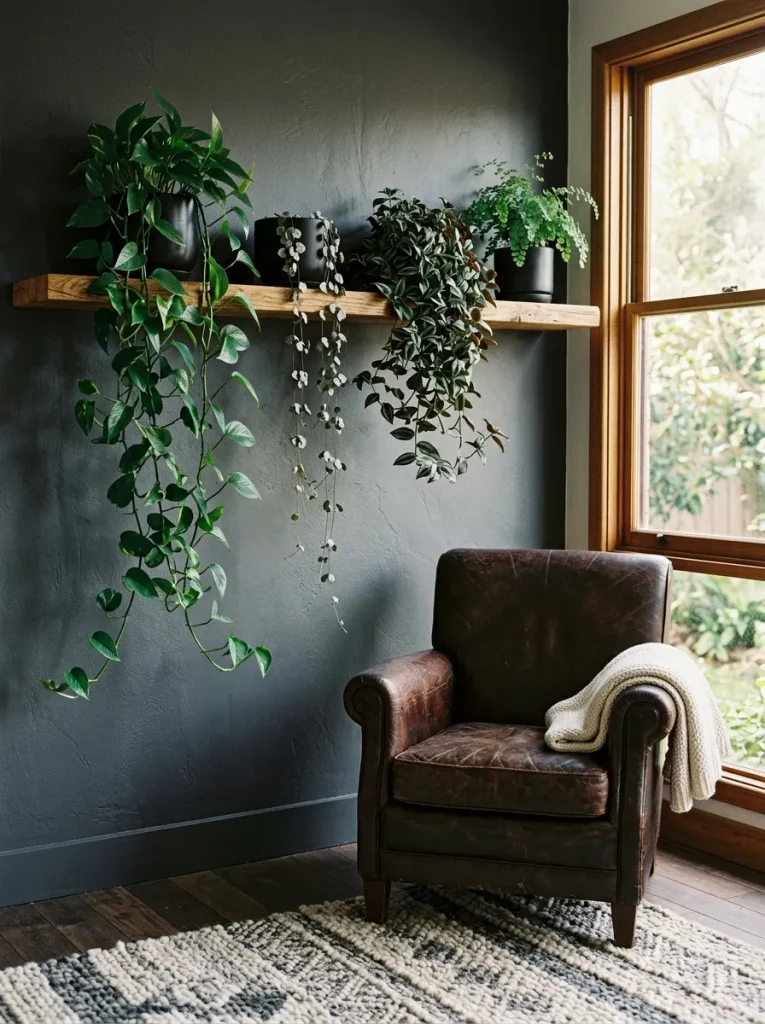
- Deep green plants add life and contrast to dark color palettes
- Black or matte pots keep the styling cohesive and intentional
- Trailing varieties add movement and texture to shelves or corners
- Brings a natural, organic softness to an otherwise dramatic room
- Low-maintenance option for adding warmth without extra furniture
.
Plants might seem like an unexpected addition to a dark, dramatic living room, but deep green varieties actually enhance the moody palette rather than clashing with it. Choosing plants with rich, dark green leaves, like a snake plant or pothos, keeps the styling cohesive while adding a soft, organic contrast against black walls or furniture. In my experience, black or matte ceramic pots work far better than bright white ones, since they blend into the room’s existing tones instead of standing out awkwardly. This small addition brings life and texture into the space without disrupting the overall dramatic, cozy atmosphere already established.
.
Placement and variety both matter when styling plants within a moody color scheme. I’ve seen trailing plants, like pothos or ivy, work especially well on shelves or plant stands, since their draping leaves add movement and soften the room’s harder edges. Grouping two or three plants of different heights creates a more layered, intentional look than a single isolated pot. Natural light near a window helps the plants thrive while also allowing sunlight to interact beautifully with the dark surrounding tones. It’s a simple, low-maintenance detail that consistently adds warmth, texture, and a touch of nature to the room.
24 . Dark Entryway Console
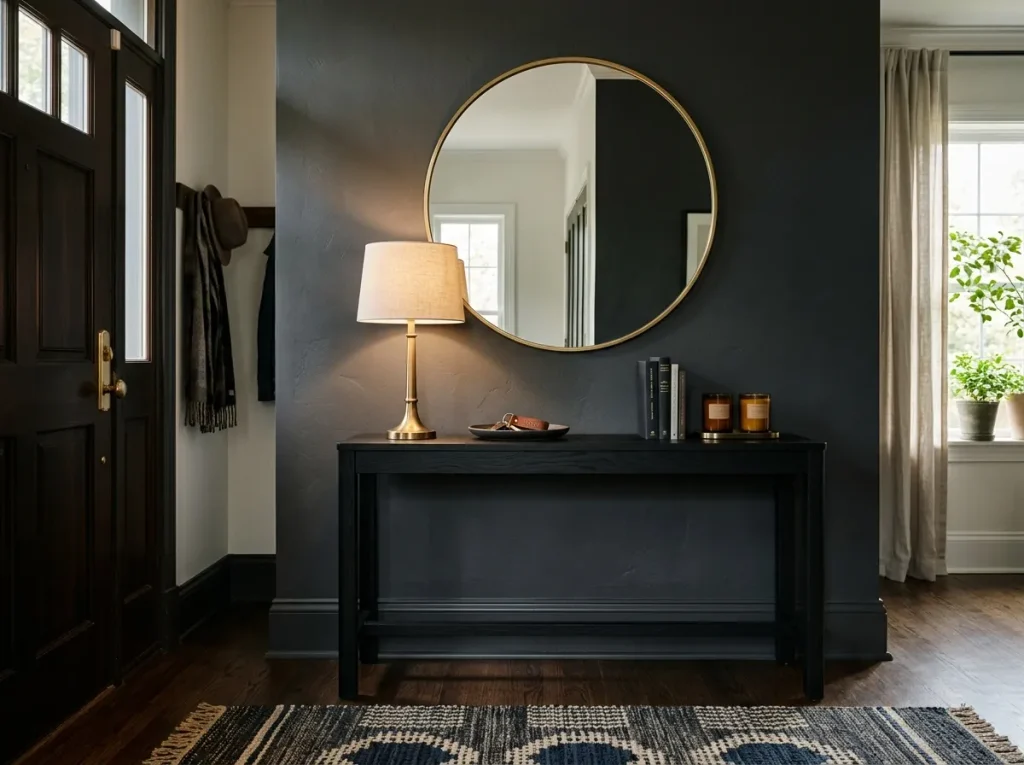
- A dark console sets the tone the moment guests walk in
- Combines function and style for keys, mail, and small decor
- Pairs naturally with a mirror and warm lamp above
- Creates a cohesive transition from entryway into the living room
- A small space that makes a strong first impression
.
The entryway often gets overlooked, but it’s the first space that sets expectations for the rest of the home. A dark wooden console table, styled simply with a lamp, tray, and small decor, immediately signals the moody, intentional design found throughout the living room beyond it. In my experience, keeping this space functional, with a spot for keys or mail, ensures it gets used daily rather than becoming purely decorative. Pairing the console with a round mirror above adds both practicality and visual balance. It’s a small area, but one that consistently makes a strong, cohesive first impression on anyone entering the home.
.
Consistency between the entryway and living room is what makes a moody design feel intentional rather than disjointed. I’ve noticed that carrying the same dark tones, black console, brass hardware, warm lighting, from the entryway straight into the living room creates a seamless visual transition guests notice immediately. A textured runner rug beneath the console adds warmth underfoot while tying into rugs used elsewhere in the home. This final detail completes the overall design story, reinforcing that cozy, dramatic retreat feeling from the very first step inside. It’s a finishing touch that ties the entire home together.
Conclusion
Creating a moody living room isn’t about following a trend, it’s about building a space that finally feels like you. From deep charcoal walls to layered candlelight and curved velvet chairs, every idea in this list is meant to bring warmth, depth, and a little drama into your everyday life. I’ve seen how small changes like these can completely transform a space, often faster and more affordably than people expect.
Save this post to Pinterest so you can return to it as you plan, and don’t be afraid to start small. Try one idea this weekend, then build from there. If someone in your life is dreaming of a cozier home too, share this with them, they’ll thank you for it.