Turn an ordinary bedroom into a beautiful date-night retreat without spending a fortune or planning an elaborate evening. Romantic bedroom ideas can completely change the mood of your space with simple lighting, soft bedding, flowers, cozy textures, and thoughtful details. Whether you have a spacious master bedroom or a small apartment room, the right combination of colors and decor can make the space feel warmer, more inviting, and intentionally styled. This guide brings together practical ideas you can easily recreate at home, from candlelit nightstands and floral accents to cozy seating and elegant bedding. In my experience, small visual changes often create the biggest difference, especially when several simple details work together.
1. Sheer Canopy Bed
- Creates an instant focal point without adding bulky furniture.
- Soft fabric makes the bed feel more defined and private.
- Warm lights behind the canopy add gentle evening illumination.
- Neutral fabrics keep the setup elegant and easy to refresh.
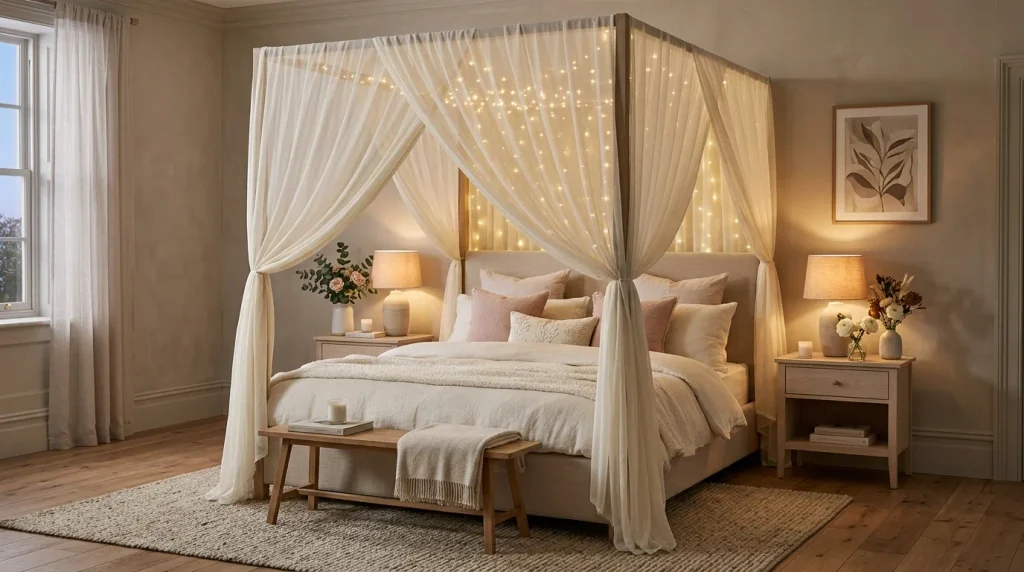
Turn an ordinary bedroom into an intimate retreat with a simple canopy arrangement that instantly changes the atmosphere. Drape lightweight white or ivory fabric from a ceiling-mounted frame or four-poster bed, allowing the material to fall softly around the sleeping area without making the room feel crowded. Add warm string lights behind the fabric for a gentle glow, then keep the bedding neutral with cream, beige, or blush accents. This setup works especially well in smaller homes because it creates a defined focal point while using vertical space rather than extra furniture.
A fabric canopy adds softness, privacy, and a polished focal point without requiring a major bedroom makeover. In my experience, the most attractive results come from choosing breathable fabric with a little movement instead of heavy curtains that can overwhelm the bed. Keep the surrounding decor simple, using two bedside lamps, fresh flowers, and a few textured cushions to support the look. For date night, warm lighting makes the fabric appear layered and dreamy, while neutral colors keep the space versatile enough to enjoy long after the occasion has ended.
Also Read : 22 Classy Man Cave Ideas for a Stylish Personal Space
2. Candlelit Nightstands
- Replaces harsh overhead lighting with softer layers of illumination.
- Matching lamps create balance on both sides of the bed.
- Flameless candles add candlelight without smoke or open flames.
- Warm bulbs make neutral bedding look richer in the evening.
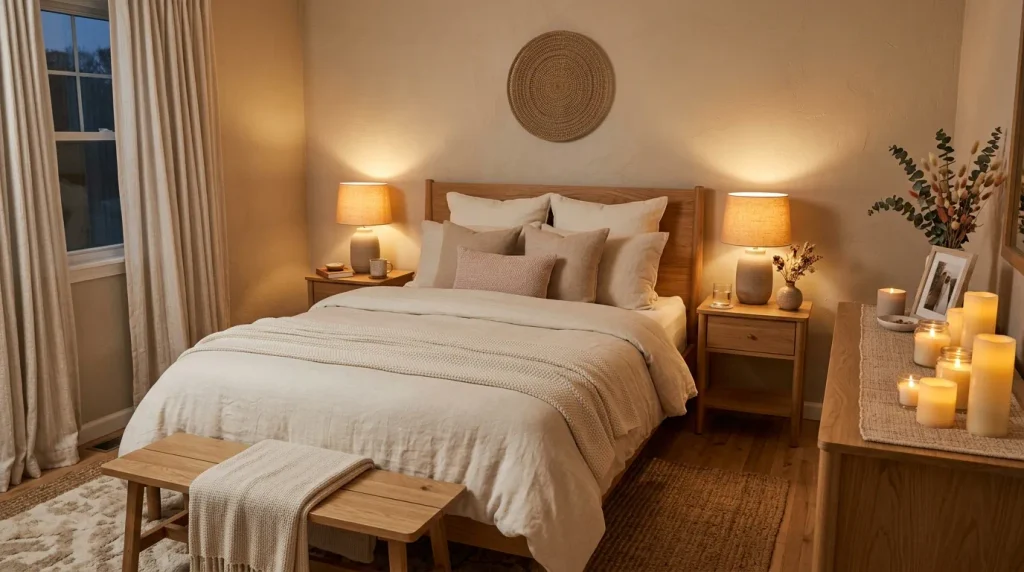
Few changes create instant atmosphere like replacing bright overhead lighting with a cluster of warm bedside lamps and candles. Position matching lamps on both nightstands, then add a few flameless candles across a dresser or shelf for layered illumination. Choose soft white, amber, or warm beige shades that complement the bedding and walls. The result is a cozy pool of light around the bed, making the room feel calmer and more intimate. This lighting strategy is also practical because each source can be adjusted or switched off independently when needed.
Layered lighting helps a bedroom look intentionally styled instead of simply dimmed, which makes a noticeable difference during an at-home date night. I’ve noticed that warm bulbs around 2200K to 2700K create a flattering glow while still providing enough visibility for reading, drinks, or conversation. Keep brighter task lighting available near the bed, but let decorative lamps and candles provide the main evening illumination. Using flameless candles is particularly useful in compact spaces, around children, or anywhere you want the candlelit appearance without open flames, smoke, or extra heat indoors.
Also Read : 23 Spring Tablescapes Ideas for a Fresh Beautiful Table
3. Hotel-Style Bedding
- Instantly makes the bed look more polished and inviting.
- Layered textures create depth without requiring bold colors.
- A folded throw adds a simple finishing detail.
- Neutral bedding keeps the arrangement useful beyond date night.
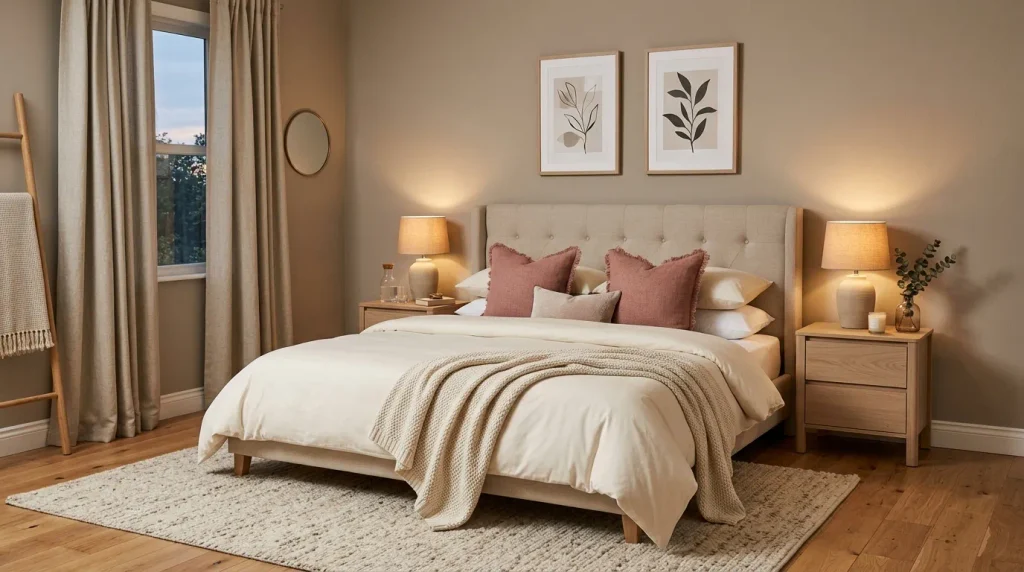
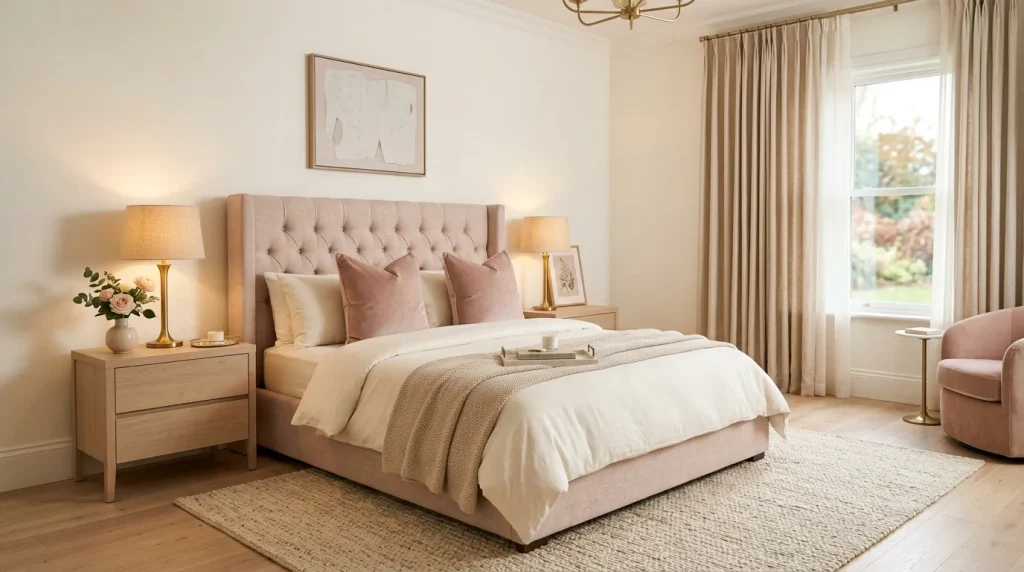
Create a hotel-inspired escape by dressing the bed with crisp sheets, layered pillows, and a plush throw folded neatly across the lower third. Start with breathable white or cream bedding, then introduce one accent shade such as dusty rose, taupe, sage, or muted burgundy through cushions and textiles. Keep pillow sizes varied so the arrangement looks full but remains comfortable. Add a slim bench or ottoman at the foot of the bed if space allows. This setup gives the room a polished centerpiece while making everyday bedding feel noticeably more special.
A thoughtfully layered bed can make the entire bedroom appear cleaner, richer, and more inviting without changing the walls or furniture. That’s why many designers recommend combining different textures rather than adding too many colors. Pair smooth cotton sheets with a knitted throw, velvet accent cushion, or lightly quilted coverlet for visual depth. Before date night, smooth the duvet, arrange pillows symmetrically, and remove unnecessary items from the bed. The finished look photographs beautifully for inspiration boards and remains practical because each layer can be removed, washed, or changed with the season.
Also Read : 25 Mermaid Home Decor Ideas for a Whimsical Coastal Home
4. Rose Petal Path
- Creates a decorative focal point without changing the furniture.
- A simple petal arrangement can make the floor feel intentionally styled.
- Soft pink and cream petals work beautifully with neutral interiors.
- Use a light scattering rather than a thick layer for easier cleanup.
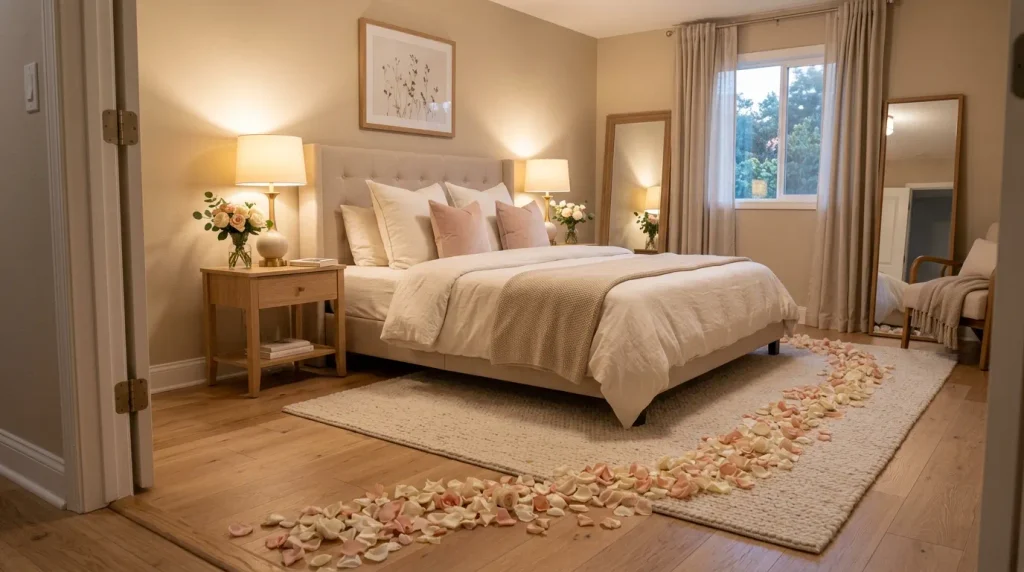
A carefully arranged rose petal path can turn the journey from the doorway to the bed into part of the room’s decoration. Instead of covering the entire floor, scatter petals lightly in a curved or gently winding line that naturally guides attention toward the bed. Choose blush, ivory, or deep red petals according to the existing color palette. Keep the arrangement symmetrical enough to look intentional while leaving clear walking space. This small detail works particularly well when the rest of the room has simple furniture and neutral colors that allow the petals to stand out.
The beauty of this setup is that it creates visual impact without requiring permanent changes or expensive accessories. I’ve seen this work well in many homes when the petals are used sparingly around a clear pathway rather than scattered randomly throughout the room. Place a few additional petals around the foot of the bed or beside a small tray, but avoid covering delicate fabrics where stains could become an issue. Artificial petals can provide the same decorative effect and are especially practical if you want an arrangement that can be reused for future evenings.
Also Read : 23 Summer Mantel Decor Ideas for a Fresh Seasonal Look
5. Warm String Lights
- Adds soft illumination to dark corners and plain walls.
- Creates depth when lights are placed behind sheer fabric.
- Battery-powered versions eliminate visible electrical cords.
- Warm-white bulbs coordinate easily with neutral bedroom decor.
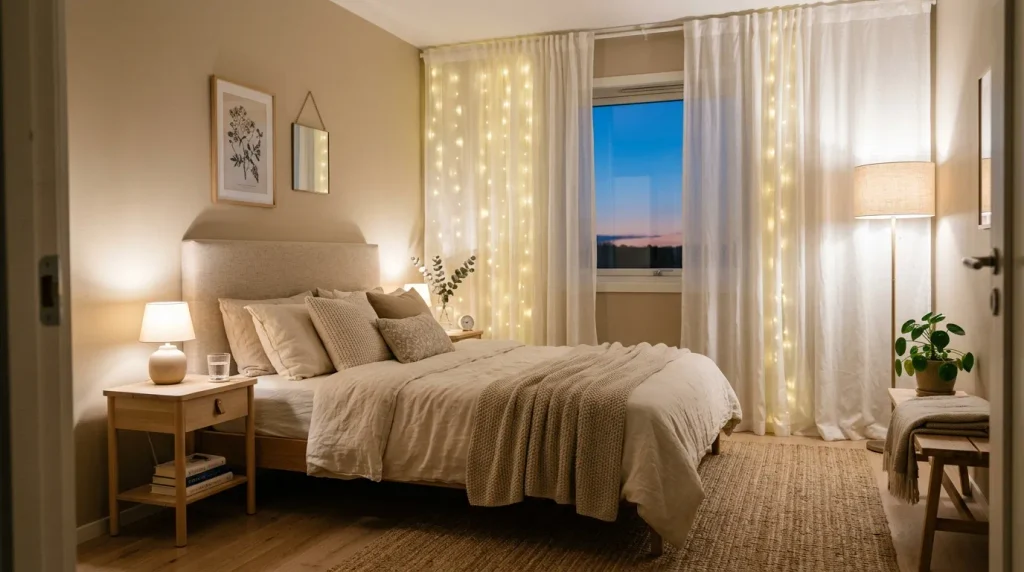
Warm string lights can completely change the appearance of a bedroom by adding a soft layer of illumination behind the main furniture. Hang them vertically along a wall, weave them around a headboard, or place them behind sheer curtains so the light becomes diffused instead of harsh. Choose warm-white bulbs rather than cool white for a softer appearance. Keep the arrangement neat by securing the cable along existing furniture lines. This approach is especially useful for renters because lightweight lights can add decorative character without painting walls or installing permanent fixtures.
For a more sophisticated result, treat string lights as accent lighting rather than the room’s only source of brightness. Place them behind translucent curtains or along the back edge of a headboard so the bulbs create a gentle halo instead of becoming the main visual feature. In my experience, fewer lights often look more elegant than covering every available surface. Combine the glow with one or two bedside lamps, neutral bedding, and uncluttered nightstands. The layered effect makes the room feel warmer while preserving enough practical lighting for movement and conversation.
Also Read : 21 Summer Front Porch Decor Ideas for a Welcoming Home
6. Breakfast Tray Setup
- Adds a functional centerpiece to the bed without permanent changes.
- A wooden tray brings warmth to soft bedding.
- Small glasses, fruit, and pastries create visual variety.
- Keep the arrangement compact so the bed remains comfortable.
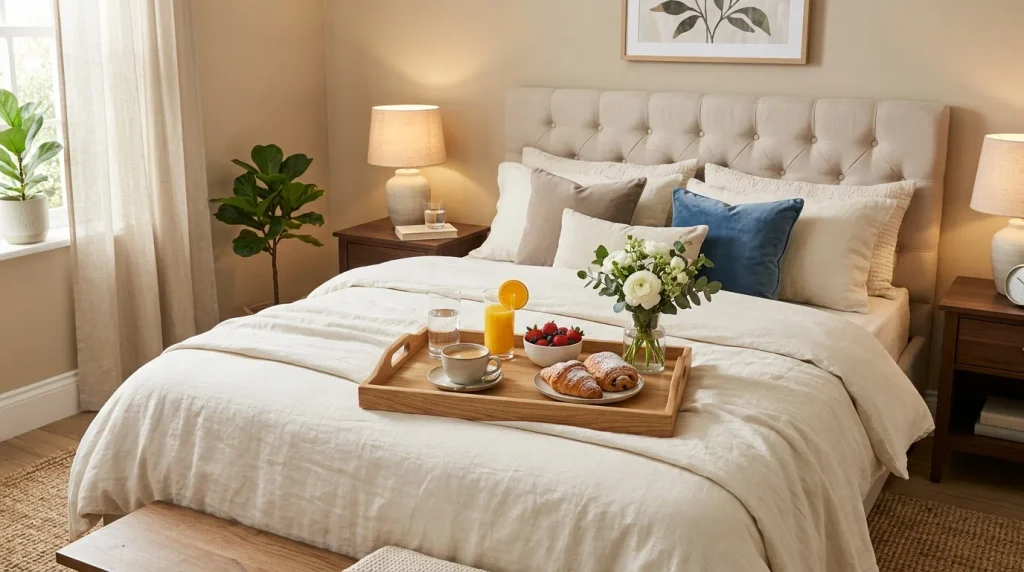
A beautifully arranged breakfast tray turns the bed into a practical centerpiece and gives the room an inviting hotel-suite feel. Choose a wooden or woven tray large enough to hold two cups, glasses, a small plate, and one decorative element such as flowers. Keep everything low and stable so the tray remains comfortable on the mattress. Cream linen, natural wood, and fresh fruit create an easy color palette that works with most interiors. Even if you are planning an evening date, a tray can hold desserts, sparkling water, chocolates, or small snacks instead.
The key is to make the tray look abundant without making it cluttered or difficult to move. Arrange the largest items toward the back, place smaller foods toward the front, and leave enough open space for comfortable handling. A small vase or single floral stem can provide height without taking over the composition. If the mattress is soft, place the tray on a firm breakfast board or use a bed tray with folding legs. This simple addition improves both the visual presentation and practical experience of enjoying food or drinks in the bedroom.
7. Velvet Accent Pillows
- Adds rich texture without replacing existing bedding.
- Deep colors create contrast against cream or white sheets.
- Different pillow shapes make the bed look more layered.
- Velvet works especially well with warm lamps and soft textiles.
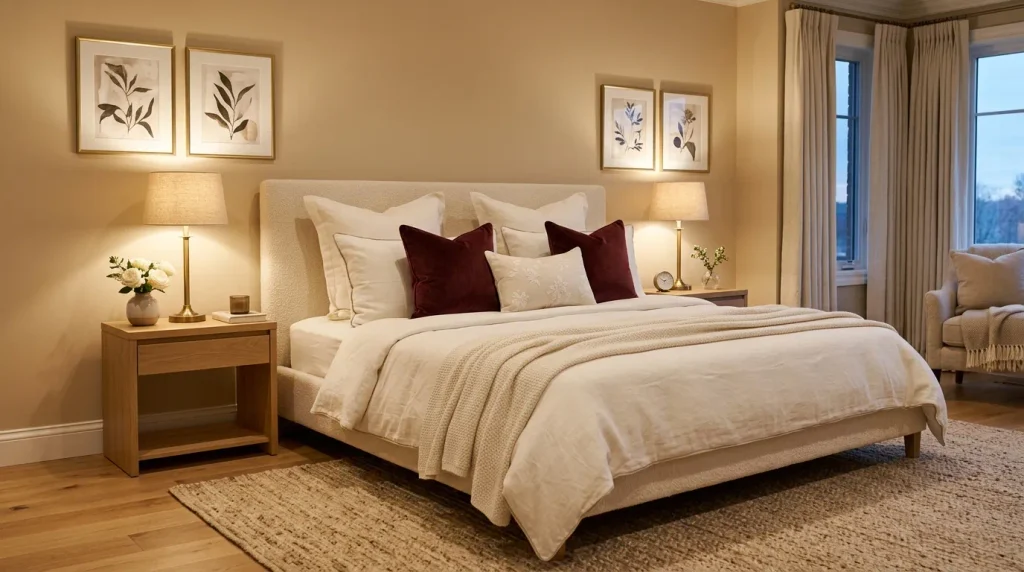
Velvet accent pillows can give a simple bed a richer, more sophisticated appearance without requiring a complete bedding change. Start with a neutral foundation of white, cream, beige, or soft gray, then introduce two or three velvet cushions in shades such as burgundy, dusty rose, chocolate brown, or muted emerald. Mix square and lumbar shapes to create dimension. The contrast between smooth velvet and crisp cotton or linen makes the bed look intentionally layered. This is one of the easiest upgrades when you want noticeable visual change without adding permanent decor.
The most effective arrangement usually comes from restraint rather than filling the entire bed with decorative pillows. Place larger sleeping pillows at the back, add one or two medium cushions in front, and finish with a single lumbar pillow for definition. I’ve noticed that velvet looks particularly polished when its color connects with another small detail in the room, such as a throw, artwork, or flower vase. This creates cohesion without making everything match. After the evening, simply remove the decorative cushions and keep the room comfortable for everyday use.
8. Floral Bedside Vases
- Brings natural color and freshness close to the bed.
- Small arrangements work well on narrow nightstands.
- Single-stem flowers create an elegant minimalist effect.
- Matching vases can make both sides of the room feel balanced.
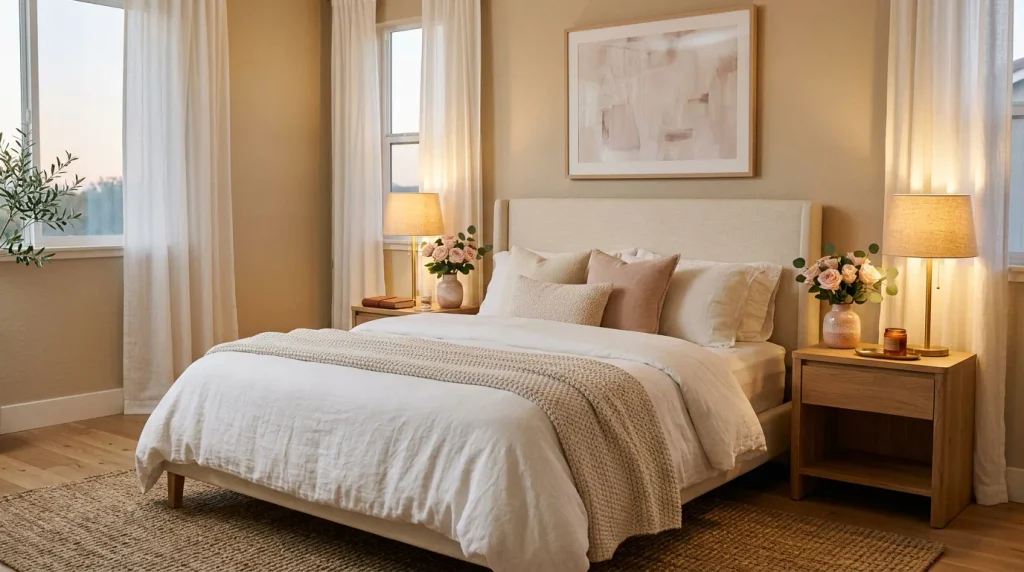
Small floral arrangements can add color, texture, and freshness while keeping the bedroom visually calm. Place one compact vase on each nightstand or create a single statement arrangement on a dresser. Roses, ranunculus, tulips, or eucalyptus can work beautifully depending on the season and existing decor. Choose flowers that repeat one of the room’s accent colors rather than introducing an unrelated shade. Ceramic, glass, or stoneware vessels can also contribute texture. The goal is a restrained arrangement that frames the bed without competing with the bedding or lighting.
For smaller bedrooms, a single-stem arrangement can be surprisingly effective because it introduces height without consuming valuable surface area. Choose narrow vases for compact nightstands and keep them away from electronics, books, or anything that could be damaged by spilled water. In my experience, asymmetrical flowers often feel more natural, while matching vases on both sides create a polished hotel-like appearance. If fresh flowers are inconvenient, high-quality dried stems or realistic artificial blooms can provide a similar visual effect and require almost no maintenance.
9. Soft Floor Rug
- Defines the sleeping area and makes hard flooring feel warmer.
- A large rug visually connects the bed and nightstands.
- Plush textures add comfort underfoot.
- Neutral patterns keep the room sophisticated rather than overly decorated.
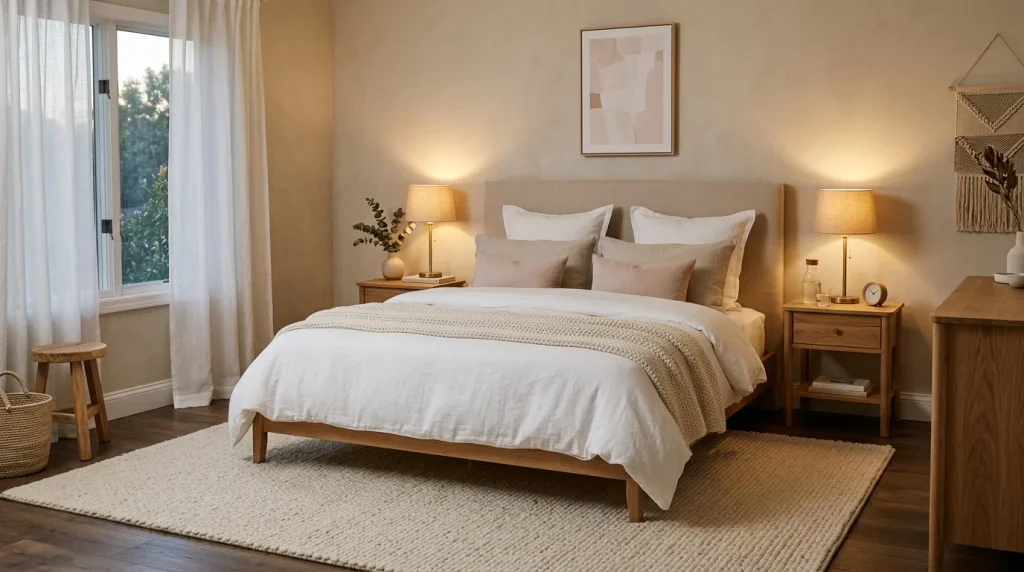
A soft floor rug can make the bedroom feel warmer, quieter, and more visually complete with one simple addition. Choose a large enough design to extend beyond both sides and the foot of the bed, creating a unified zone rather than a small floating rectangle. Cream, beige, taupe, or muted blush tones work especially well with romantic bedroom styling. Textured wool, cotton, or plush materials add another tactile layer while helping soften hard flooring. This approach is particularly useful in bedrooms with tile, laminate, or wood floors that can otherwise feel visually cold.
For the best proportions, position the rug so the lower portion of the bed and both nightstands sit comfortably within its boundaries. If a large rug is not practical, place two smaller runners along either side of the bed for a similar sense of softness. That’s why many designers recommend thinking about the rug as part of the furniture layout rather than simply an accessory. It can visually anchor the entire arrangement, reduce empty floor space, and provide a comfortable surface for bare feet when moving around the room.
10. Blush Color Palette
- Creates warmth without relying on bright pink decor.
- Blush pairs naturally with cream, beige, white, and warm wood.
- Small accents can refresh an existing neutral bedroom.
- Repeating one accent shade makes the space feel coordinated.
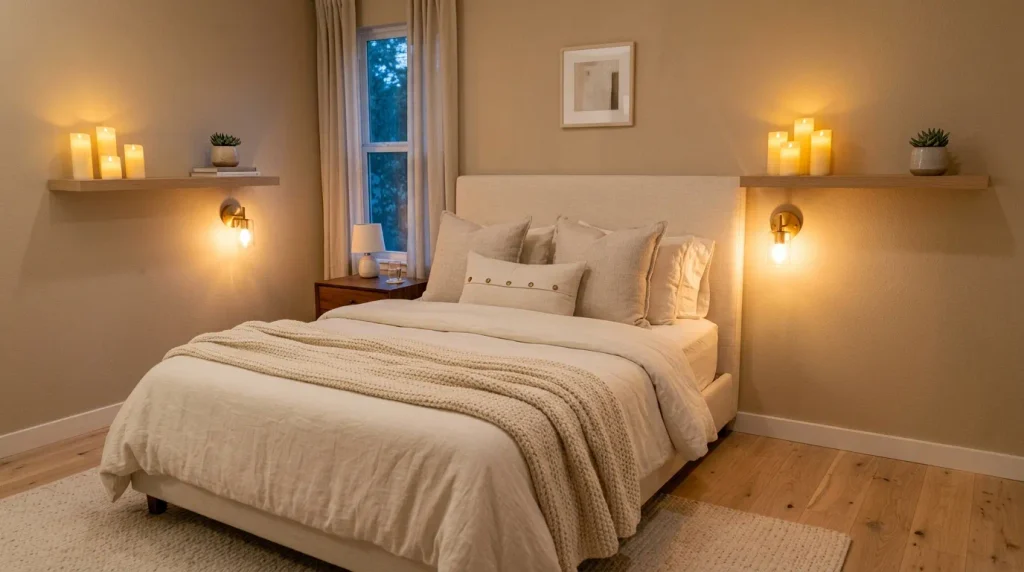
A soft blush palette can give a bedroom warmth and personality without making the space feel overly themed. Use blush through small details such as cushions, a throw blanket, flowers, artwork, or a bedside accessory rather than covering every surface in pink. Pair the color with cream, warm white, beige, and natural wood to keep the room sophisticated. If the existing bedroom is mostly neutral, even two or three blush accents can create a noticeable transformation. This makes the palette easy to introduce temporarily for a special evening.
The secret to making blush feel grown-up is choosing muted, dusty shades instead of highly saturated pink. Combine different textures so the color appears naturally throughout the room rather than looking like a matching set. In my experience, blush works particularly well beside warm metals such as brass or champagne finishes, which enhance the cozy evening atmosphere. If you prefer cooler interiors, pair blush with soft gray and white instead. The result remains visually inviting while giving you plenty of flexibility to reuse the same accessories in everyday bedroom styling.
11. Floating Bedside Candles
- Frees nightstand space while creating a decorative glow.
- Wall-mounted shelves can hold small flameless candles safely.
- Warm light highlights nearby textures and artwork.
- Minimal arrangements keep the bedside area visually clean.
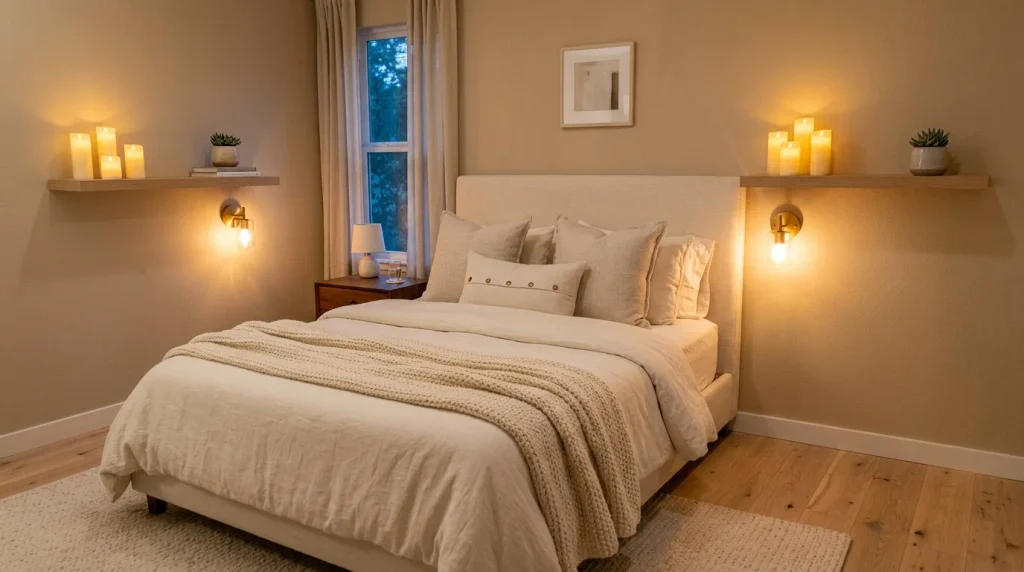
Floating bedside shelves provide a clever way to create candlelight while keeping the nightstands open and uncluttered. Install slim wooden shelves at a comfortable height beside the bed, then place small flameless candles, a tiny vase, or one decorative object on each surface. Choose natural oak, walnut, or painted finishes that complement the existing furniture. The open wall space beneath the shelves makes the room feel lighter, while the warm glow draws attention toward the bed. This arrangement is especially helpful when traditional nightstands offer very little usable surface area.
For safety and convenience, flameless candles are the easiest choice, particularly on elevated shelves or near curtains. Select warm amber LEDs that mimic candlelight and group two or three different heights together for a more natural display. I’ve noticed that repeating the same arrangement on both sides of the bed creates a calm sense of symmetry, while slightly different objects can make the room feel more relaxed and organic. Keep the shelves visually sparse so they remain functional and decorative without becoming another storage area filled with unnecessary items.
12. Satin Sheet Layers
- Adds a smooth, reflective texture to the bed.
- Works beautifully with matte linen or cotton layers.
- Soft neutral shades create an understated luxury effect.
- A satin pillowcase provides a smaller, budget-friendly update.
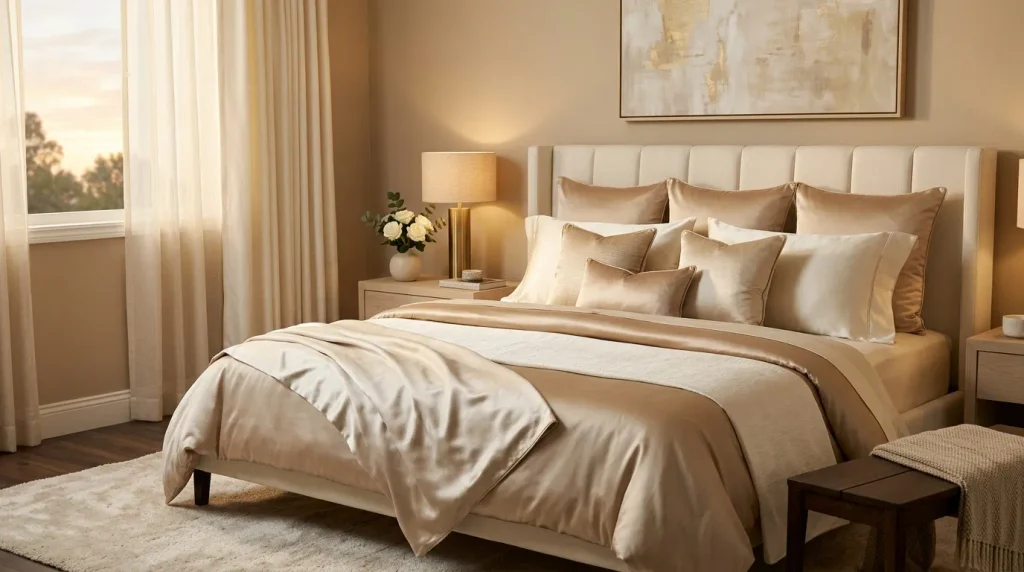
Satin bedding can instantly introduce a polished finish by adding subtle sheen to an otherwise matte bedroom. Choose champagne, ivory, soft taupe, dusty rose, or muted gray rather than highly reflective colors if you want a sophisticated appearance. Layer satin pillowcases or a lightweight satin coverlet over cotton or linen basics to create contrast between smooth and textured materials. The reflective surface catches warm lamp light beautifully, giving the bed a gentle glow. This is an especially useful update when you want a noticeable change without replacing larger furniture pieces.
Because satin has a naturally glossy appearance, balance it with matte textures elsewhere in the room. Pair smooth sheets with a knitted throw, woven rug, linen curtains, or textured cushions so the space does not become visually flat or excessively shiny. That’s why many designers recommend using satin as an accent rather than covering every textile in the same finish. Before the evening begins, smooth the bedding carefully because wrinkles can be more visible on reflective fabric. A neatly arranged satin layer creates an elegant focal point while remaining comfortable for everyday use.
13. Mirror Accent Wall
- Makes a smaller bedroom appear more spacious and open.
- Reflects warm lighting to increase the room’s glow.
- Adds a polished decorative element without extra furniture.
- A single oversized mirror can create enough visual impact.
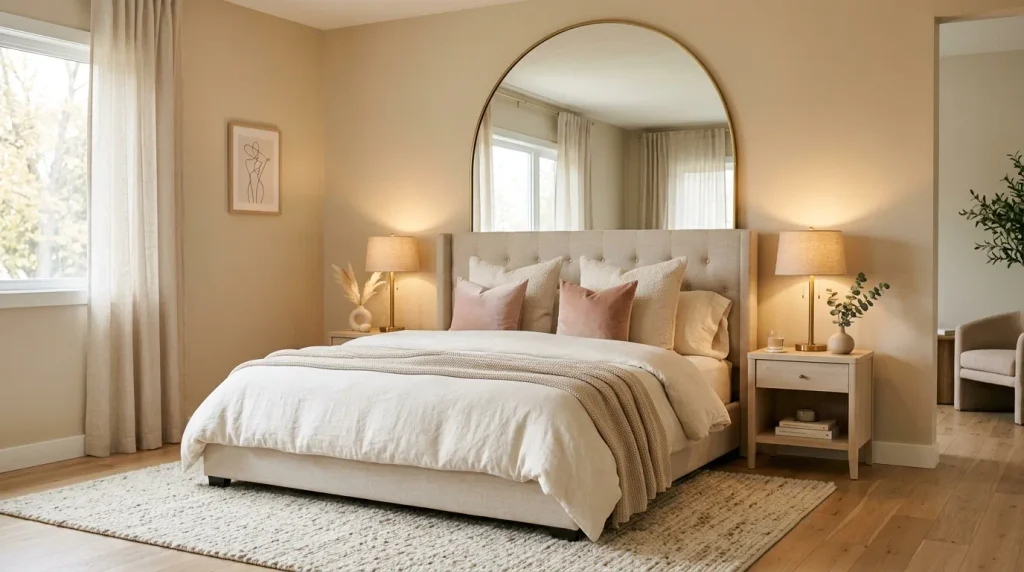
A strategically placed mirror can make a bedroom feel larger while adding a polished decorative feature. Instead of covering an entire wall, choose one oversized arched, round, or rectangular mirror and position it where it can reflect warm lighting or an attractive part of the room. Place it opposite a lamp, window, or softly decorated wall to maximize the visual effect. Mirrors with thin brass, wood, or black frames can complement different styles. This approach works particularly well in compact bedrooms where adding another decorative piece might make the space feel crowded.
The most important detail is what the mirror reflects, because an attractive reflection becomes part of the room’s design. Position it so it captures the bed, lighting, flowers, or a clean architectural feature rather than clutter or open storage. In my experience, oversized mirrors often create a stronger impression than several small ones because they simplify the wall visually. Keep the surrounding accessories restrained and allow the reflective surface to provide the drama. For date night, warm lamps or string lights reflected in the glass can add another layer of gentle illumination.
14. Draped Window Curtains
- Softens hard window lines and makes the room feel finished.
- Floor-length fabric adds height to the walls.
- Sheer layers provide privacy while preserving natural light.
- Warm neutral curtains complement most romantic bedroom palettes.

Floor-length curtains can transform a bedroom by adding softness, height, and movement around the windows. Choose sheer ivory panels for daytime light and layer them with heavier beige or taupe curtains if additional privacy is needed. Hang the curtain rod slightly above the window frame and extend it wider than the glass so the fabric frames the room rather than hiding part of the window. Natural linen blends, cotton, and lightweight textured fabrics create a relaxed appearance. This simple adjustment can make even basic windows feel more intentional and professionally styled.
Curtains are particularly useful when the bedroom contains many hard surfaces such as wood flooring, painted walls, or metal furniture because fabric introduces softness and visual balance. Let the panels reach the floor, with enough length to create a clean vertical line without excessive pooling. If natural light is available, sheer curtains can diffuse it beautifully during earlier evening hours. Later, warm lamps can create a layered glow against the fabric. The result is a more finished room that feels comfortable, private, and visually cohesive without needing extensive decorative changes.
15. Cozy Floor Seating
- Adds a relaxed secondary seating area without bulky furniture.
- Floor cushions can be stored easily after the evening.
- A small rug visually defines the seating zone.
- Low seating works especially well in compact bedrooms.
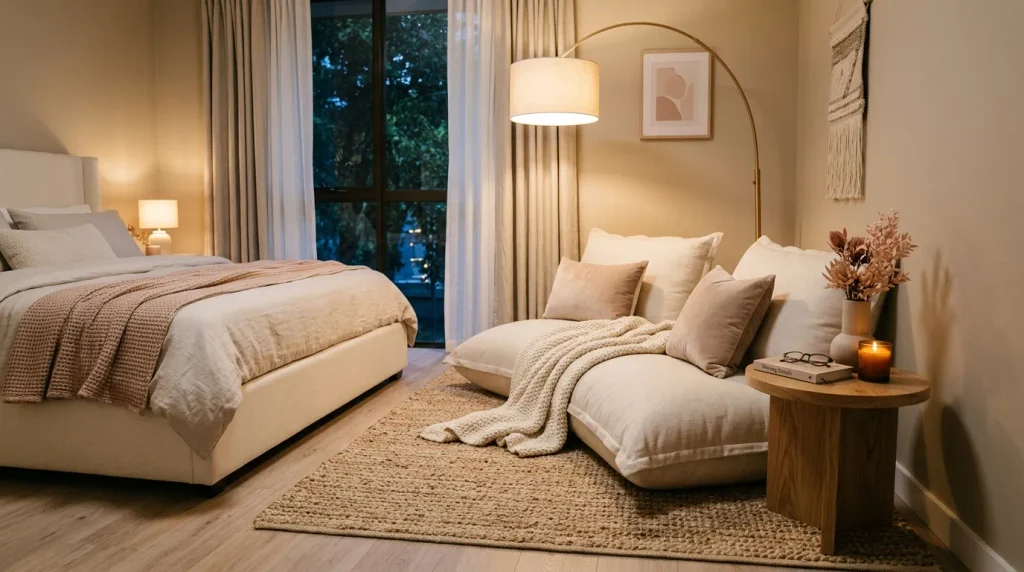
A small floor seating area can turn an unused bedroom corner into a comfortable place for conversation, snacks, or drinks. Choose two oversized cushions in cream, beige, muted rose, or warm gray and place them on a soft woven rug. Add a low wooden table between them for glasses, desserts, or a small vase. A floor lamp positioned behind the seating can provide gentle illumination without taking up much table space. This setup gives the room another functional zone while keeping the furniture footprint minimal and flexible.
Comfort matters more than quantity when creating low seating, so choose cushions with enough filling to support relaxed sitting. Keep the arrangement close to a wall or corner rather than placing it in the main walking path. I’ve seen this work especially well in bedrooms where a traditional chair would make the room feel crowded. After the evening, the cushions can move to a storage basket, closet, or bench. This flexibility makes floor seating practical for everyday use while still creating a distinctly styled area for an occasional at-home date.
16. Heart-Shaped Garland
- Adds a playful decorative detail without taking up floor space.
- Paper, fabric, or felt garlands are easy to customize.
- Hanging the garland above the bed creates a clear focal point.
- Neutral colors keep the design elegant rather than overly themed.
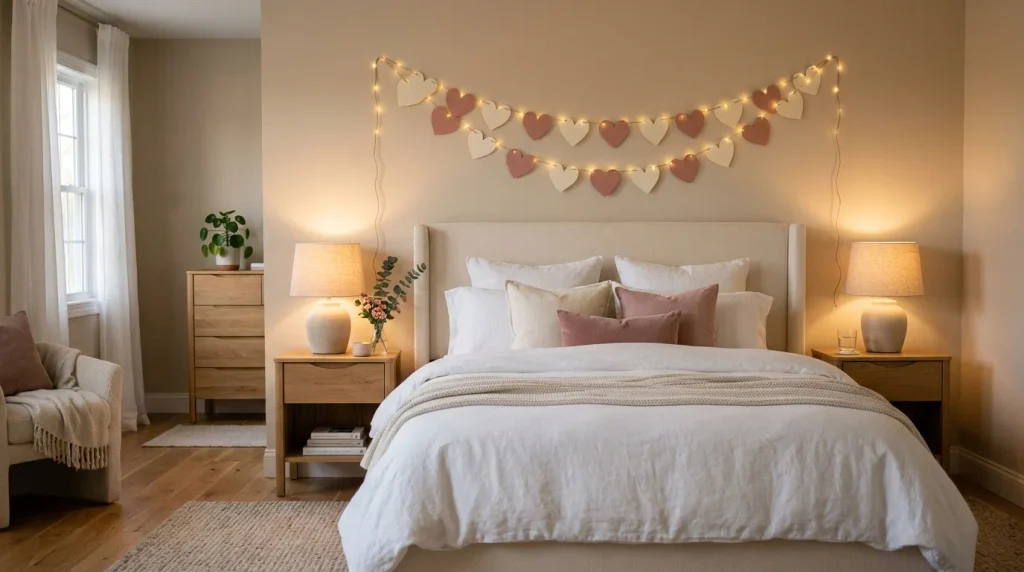
A heart-shaped garland can introduce a playful romantic detail while keeping the rest of the bedroom simple and uncluttered. Hang it above the headboard, along a blank wall, or across a curtain rod where it can become a visible focal point. Choose paper, felt, fabric, or lightweight wooden shapes in ivory, blush, burgundy, or muted red. Keep the spacing even for a cleaner appearance, or vary the lengths slightly for a relaxed handmade effect. Because the decoration uses vertical wall space, it adds personality without reducing valuable floor or furniture space.
The easiest way to keep a heart garland sophisticated is to coordinate it with the existing color palette instead of introducing several unrelated shades. For a neutral room, ivory and dusty rose create a subtle accent, while burgundy or deep red provides stronger contrast. Add tiny warm LEDs along the garland if extra evening illumination is needed, but avoid overcrowding the display. In my experience, one carefully positioned garland looks more intentional than several decorations competing for attention. Use removable hooks when possible to protect walls, especially in rental bedrooms.
17. Romantic Photo Display
- Personalizes the room without requiring major decorative changes.
- A small arrangement keeps memories visible without creating clutter.
- Matching frames create a more polished composition.
- Clip-style displays make photos easy to change afterward.
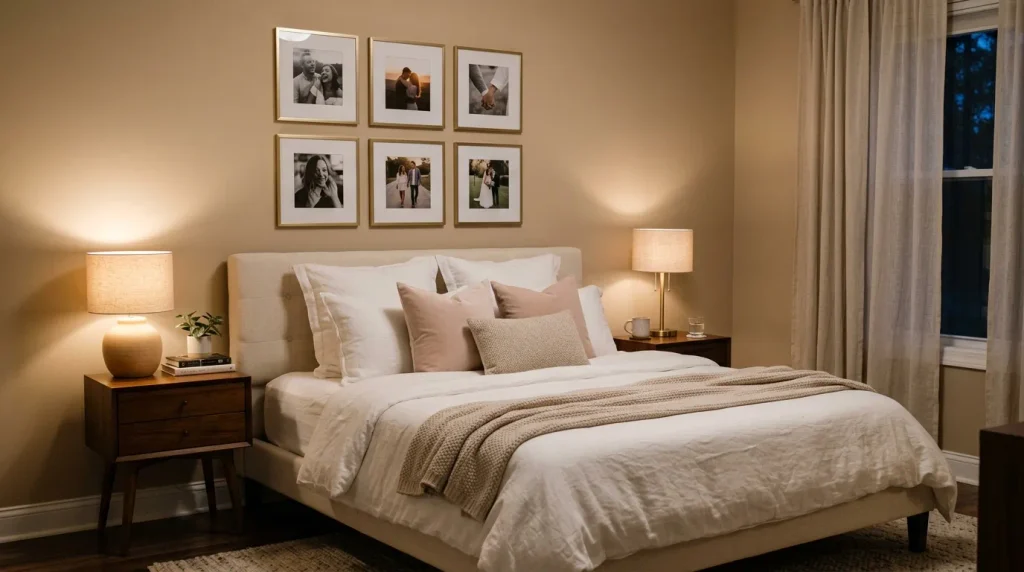
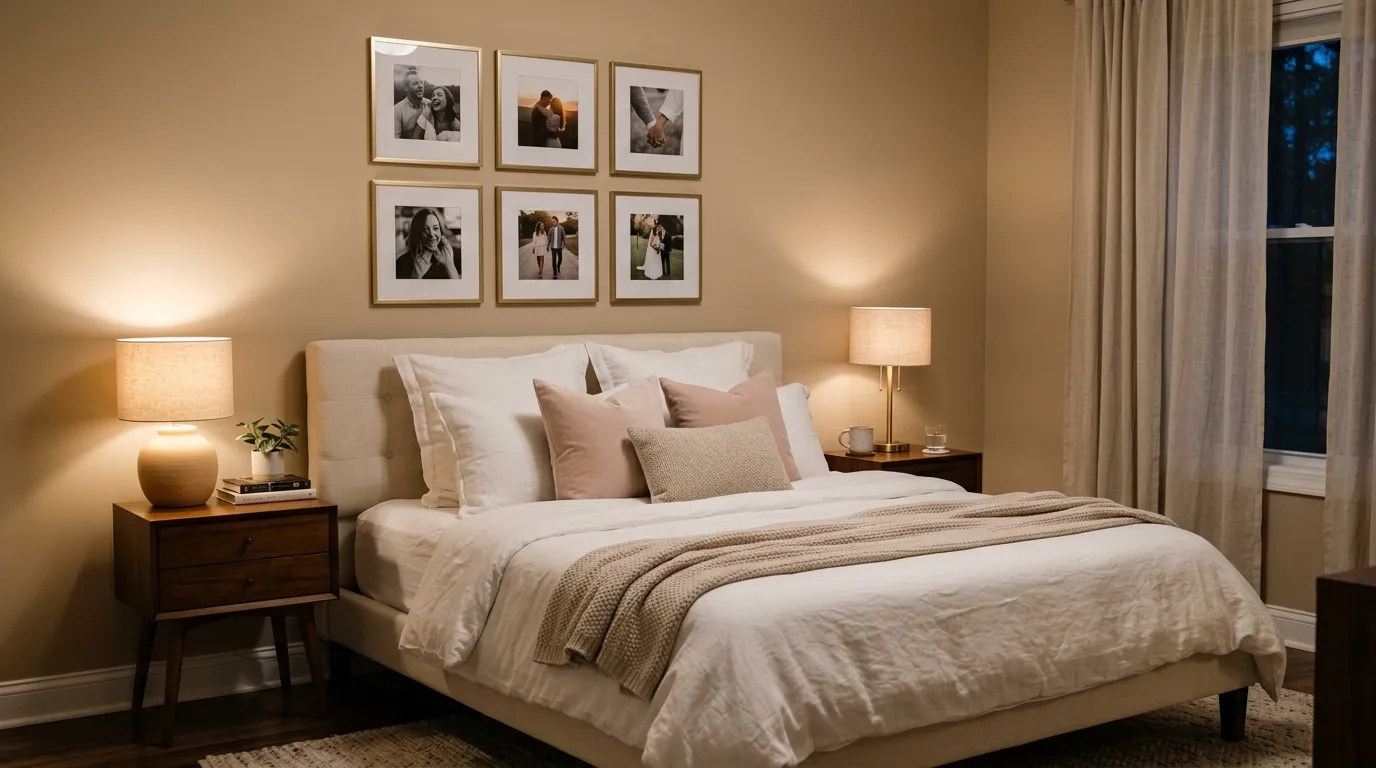
A curated photo display can make the bedroom feel personal while adding visual interest to an otherwise empty wall. Select four to six meaningful photographs and place them in matching or coordinating frames above a headboard, dresser, or small side wall. Black, white, natural wood, or brushed brass frames can work depending on the existing decor. Keep the arrangement symmetrical or use a simple gallery grid so the display feels intentional. This approach adds personality without requiring permanent furniture changes, making it especially useful for temporary decorating.
Choose photographs with similar tones or editing styles if you want a cohesive appearance rather than a busy collage. You can also use a minimalist wire grid with small clips, allowing the photographs to be replaced easily for different occasions. That’s why many designers recommend treating personal photographs like artwork by giving them consistent spacing and visual breathing room. Avoid covering every available wall because one focused display usually has more impact. Add warm lighting nearby to make the photographs visible after sunset without creating harsh glare on the frames.
18. Champagne Serving Cart
- Creates a dedicated area for drinks and small desserts.
- Wheels make the setup easy to reposition or remove.
- Glassware adds height and sparkle to the room.
- A compact cart works well beside a dresser or seating area.
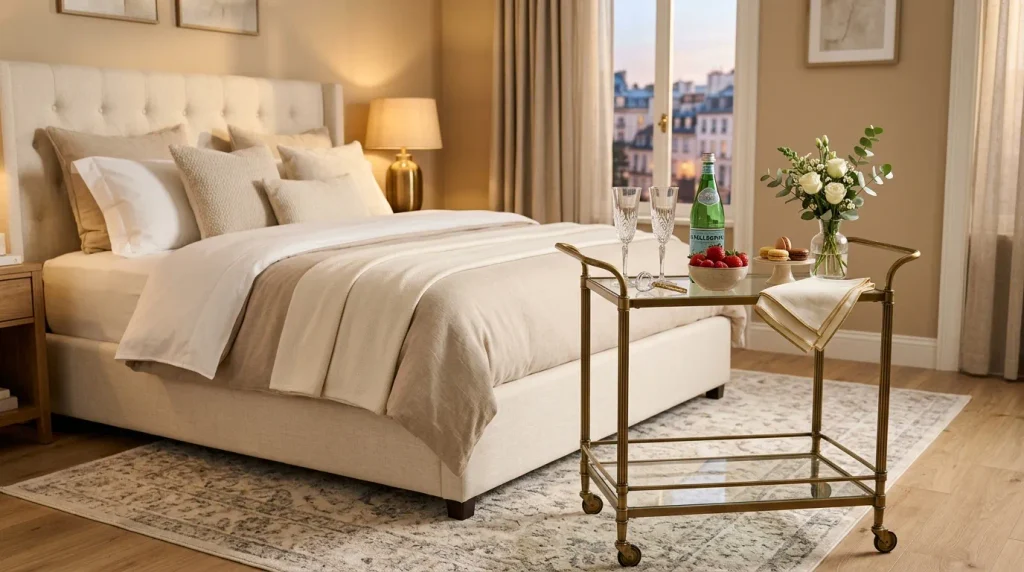
A compact serving cart can create a stylish hospitality station without turning the bedroom into a dining area. Choose a narrow brass, wood, or glass cart and position it beside a dresser, seating corner, or open wall. Arrange two glasses, bottled drinks, a small plate of fruit, chocolates, and folded napkins across the shelves. Keep decorative items limited so everything remains easy to reach. The cart itself becomes part of the room’s styling, especially when its finish complements nearby lighting, hardware, or furniture.
A serving cart is also practical because it can be rolled into position shortly before the evening and moved away afterward. Keep heavier bottles or dishes on the lower shelf and lighter glassware toward the top for better stability. I’ve noticed that adding one small vase or candle substitute can make the cart look styled rather than purely functional. If you prefer a non-alcoholic setup, sparkling water, flavored drinks, fruit, and desserts can create the same visual presentation. The result is organized, attractive, and easy to adapt for different occasions.
19. Fairy Light Headboard
- Creates a glowing focal point behind the bed.
- Works especially well with simple neutral furniture.
- Warm LEDs provide decorative light without harsh shadows.
- Sheer fabric can soften the brightness and add texture.
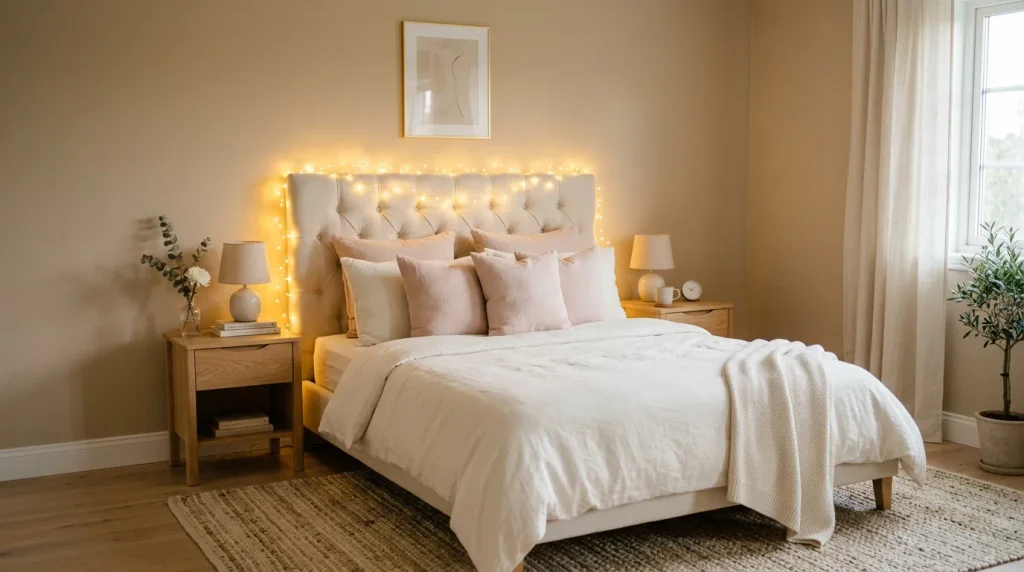
A softly illuminated headboard can become the main visual feature of the bedroom without requiring expensive furniture or complicated installation. Arrange warm fairy lights around the outer edge of the headboard or vertically behind it so the bulbs create a gentle halo. Keep the wires hidden as much as possible and choose warm-white LEDs for a softer appearance. If the headboard is upholstered in cream, beige, or gray, the light will blend naturally into the material. This creates a cozy backdrop while leaving the rest of the room visually uncluttered.
For a more polished arrangement, use a consistent pattern rather than randomly draping lights across the wall. You can frame the headboard, create two vertical lines, or place the lights behind sheer fabric for a diffused effect. In my experience, warm LEDs look most attractive when they provide accent lighting rather than trying to illuminate the entire room. Combine them with one or two bedside lamps for practical visibility. Battery-powered lights can also simplify installation, particularly when there are limited outlets near the bed or you want a temporary decorating solution.
20. Romantic Wall Art
- Gives empty walls a purposeful decorative focus.
- Large artwork can anchor the bed without adding furniture.
- Abstract florals and soft landscapes suit romantic interiors.
- Coordinated colors make the artwork feel integrated.
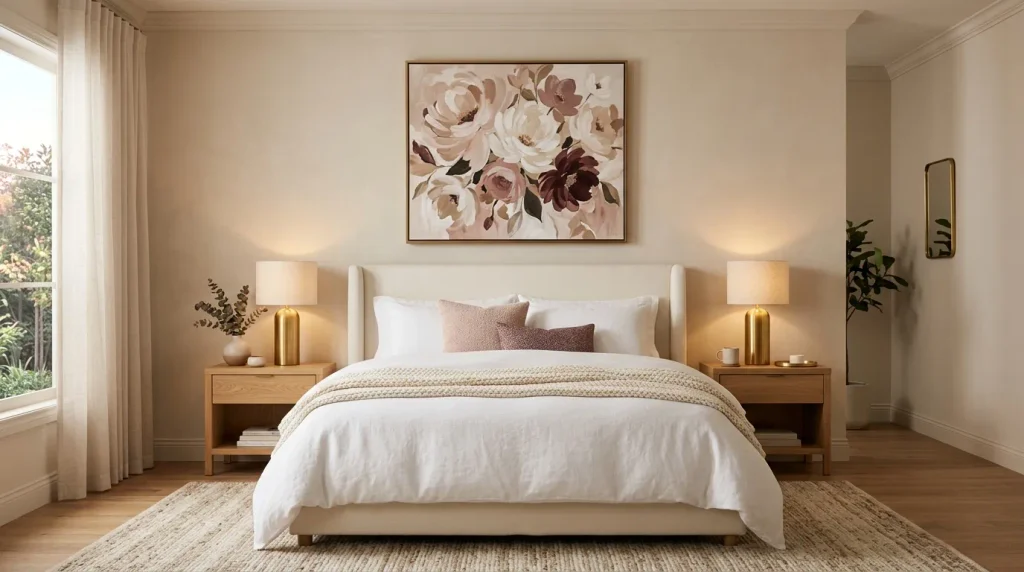
A carefully chosen artwork can change the personality of a bedroom while keeping the overall design sophisticated. Select one large canvas or a pair of coordinated prints and position them above the headboard or on the largest available wall. Abstract florals, soft landscapes, botanical illustrations, and understated line art can all complement a romantic setting. Look for artwork that repeats existing colors such as cream, blush, taupe, burgundy, or warm brown. This creates visual connection between the walls, bedding, lighting, and smaller accessories without making everything look overly coordinated.
Scale is one of the most important factors when choosing bedroom artwork. A piece that is too small can disappear above a large bed, while an oversized design may dominate the entire room. Aim for artwork that visually relates to the width of the headboard and leave comfortable breathing space around it. That’s why many designers recommend choosing the artwork before adding numerous small wall decorations. One strong piece usually creates a cleaner focal point. For evening styling, position warm lamps nearby so the artwork receives gentle illumination rather than direct, harsh light.
21. Cozy Reading Nook
- Turns an unused corner into a comfortable secondary zone.
- A compact chair works without overwhelming the bedroom.
- Soft textiles make the corner feel connected to the bed.
- A small side table provides space for drinks or books.
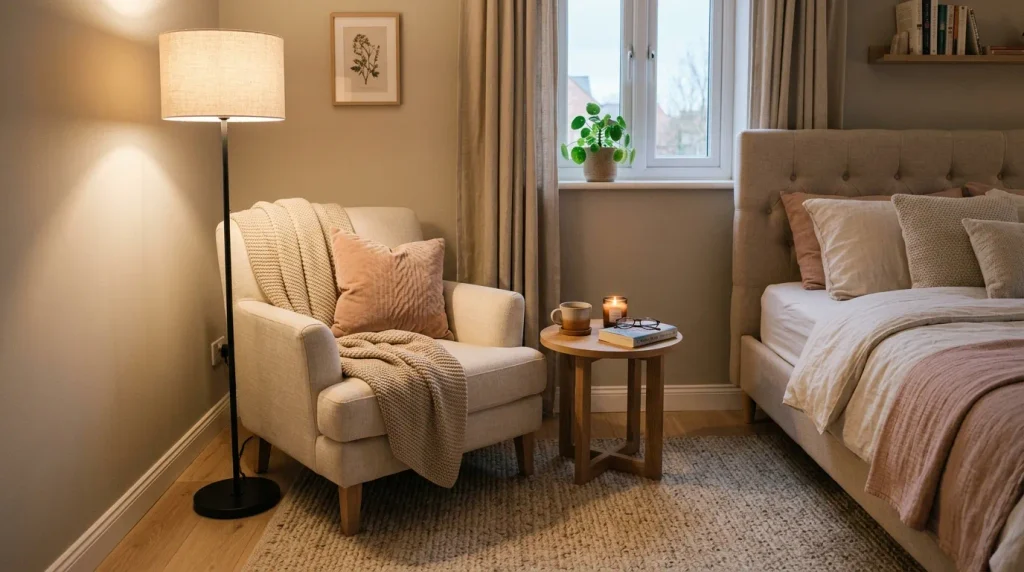
A cozy reading nook can give an otherwise unused bedroom corner a clear purpose while adding another comfortable place to sit. Choose a compact upholstered chair in cream, beige, taupe, or muted blush and position it near a window or empty corner. Add a small round side table for drinks, a book, or a decorative vase, then place a warm floor lamp beside the chair. A folded throw or small cushion can introduce texture. This arrangement works particularly well when you want the bedroom to feel more like a private retreat than simply a sleeping space.
Keep the nook visually connected to the rest of the room by repeating one or two materials or colors from the bed area. For example, pair a cream chair with a beige rug and wooden table if the bedroom already uses those finishes. I’ve seen small corners become much more useful simply by adding proper lighting and a comfortable seat. Avoid oversized chairs that restrict movement around the room. A compact silhouette leaves enough walking space while still creating a distinct little zone for conversation, reading, desserts, or quiet relaxation.
22. Scattered Rose Bouquets
- Adds fresh color to several areas without overwhelming the room.
- Small arrangements are easier to style than one oversized bouquet.
- Matching flowers create consistency across different surfaces.
- Place bouquets on nightstands, dressers, or a serving cart.
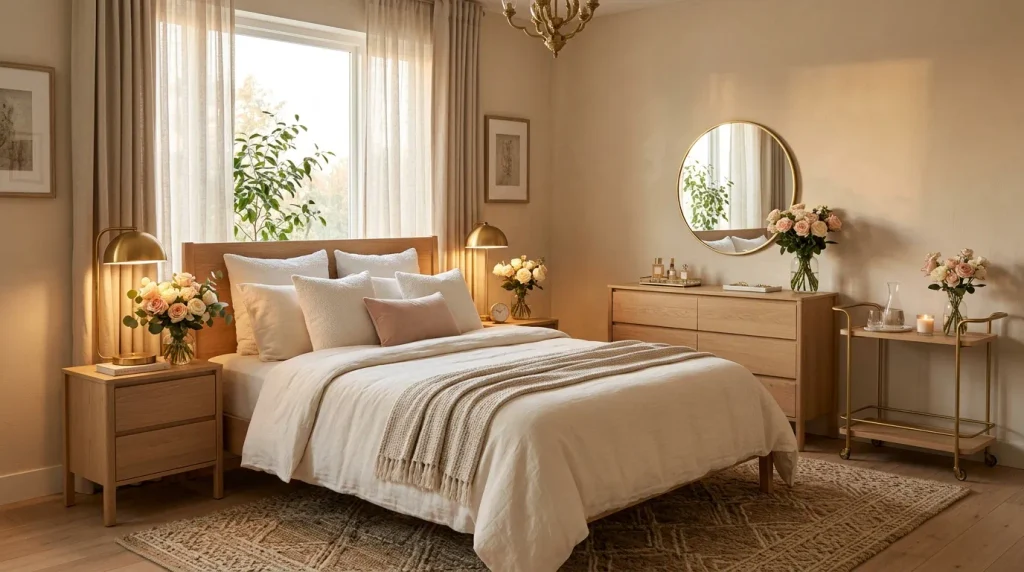
Small rose bouquets placed around the bedroom can create a cohesive floral theme without making one area feel overly decorated. Divide a larger bouquet into several compact arrangements and place them on nightstands, a dresser, or a serving cart. Blush, ivory, and soft peach roses work beautifully with neutral bedding, while deeper burgundy flowers can create stronger contrast. Use simple glass or ceramic vases so the flowers remain the visual focus. Keeping each arrangement small also leaves enough usable surface space for lamps, drinks, books, and other necessities.
The secret to making multiple floral arrangements look intentional is repeating the same flowers while varying their size and placement slightly. A larger group can sit on the dresser, while two or three stems can decorate each bedside table. In my experience, greenery should be used sparingly when the goal is a soft, romantic appearance because too much foliage can make the display feel more like a traditional centerpiece. Change the water before arranging fresh flowers and keep vases away from electronics. The finished room feels coordinated, fresh, and naturally decorated.
23. Soft Music Corner
- Adds a functional entertainment element without needing extra furniture.
- A compact speaker can fit neatly on a shelf or dresser.
- Soft lighting keeps the equipment from becoming the room’s focus.
- Hide visible cables to maintain a clean visual arrangement.
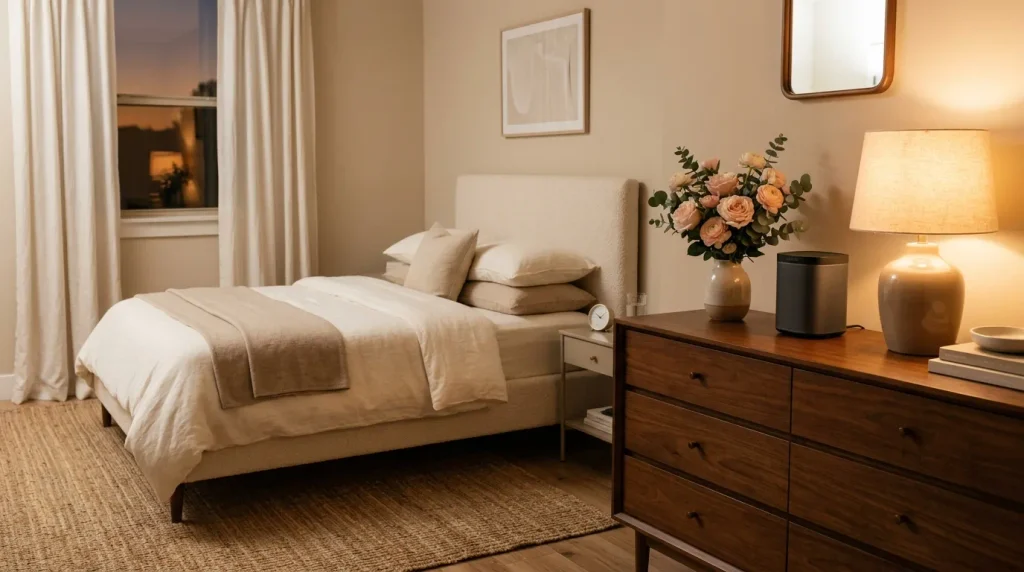
A dedicated music corner can make an at-home date night feel more thoughtfully planned while keeping technology visually understated. Place a compact wireless speaker on a dresser, floating shelf, or small side table where it is easy to access but does not dominate the room. Surround it with one or two decorative elements such as a small vase, framed print, or warm lamp. Choose equipment with a simple finish that blends with the furniture. Keeping the setup tidy ensures that the atmosphere comes from the overall room rather than from visible electronics.
Sound becomes especially effective when paired with the right lighting and furniture arrangement. Position the speaker where the sound can travel naturally through the room without being blocked by heavy curtains, bedding, or large furniture. Keep the volume moderate enough for conversation, particularly in smaller bedrooms where sound can quickly become overwhelming. I’ve noticed that a clean music setup feels much more intentional when cables are hidden and the device has a dedicated spot. After the evening, the speaker can remain useful for podcasts, relaxing playlists, or everyday listening.
24. Dessert Bed Tray
- Creates an attractive finishing touch for an evening setup.
- Small desserts add color and texture without requiring a full meal.
- A wooden or marble tray keeps everything organized.
- Portion-sized treats make the arrangement easy to enjoy in bed.
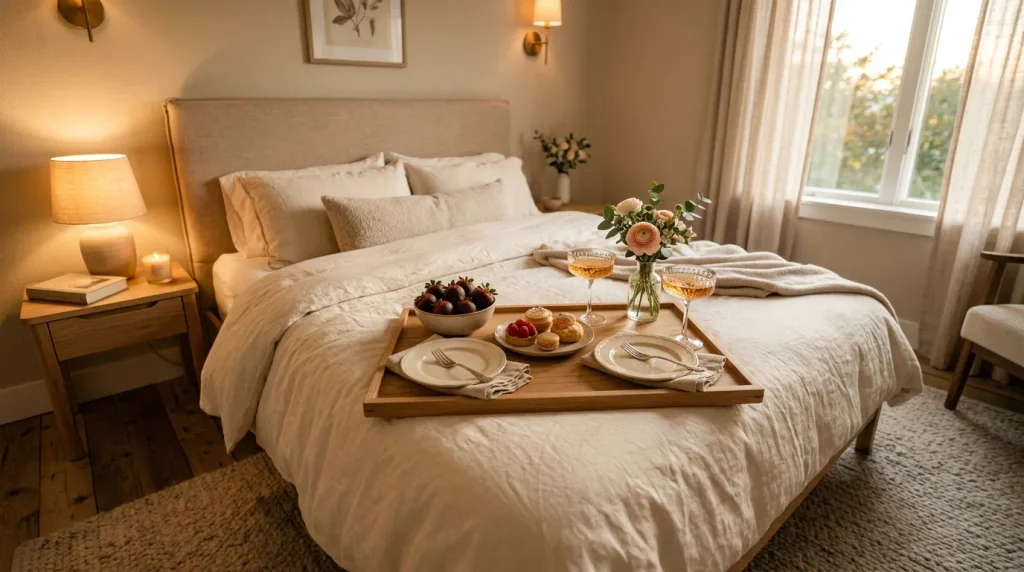
A beautifully arranged dessert tray can become the finishing detail that brings the entire bedroom setup together. Choose a compact wooden, marble, or woven tray and arrange bite-sized desserts such as chocolate-covered strawberries, macarons, mini pastries, or fruit. Add two small plates and glasses so everything remains organized and easy to reach. Keep the presentation simple by using one main dessert color with cream, blush, or chocolate accents. The tray should complement the bedding and decor rather than becoming an oversized centerpiece that takes over the bed.
For the most practical arrangement, place heavier dishes toward the center and keep delicate items toward the edges where they can be reached easily. Use napkins underneath plates to catch crumbs and protect the bedding, especially when enjoying desserts on a soft mattress. This is where romantic bedroom ideas become more useful when they combine appearance with real-life comfort. After the date night, the tray can return to everyday use for breakfast or snacks. A small amount of thoughtful presentation can make an ordinary bedroom feel polished, welcoming, and special.
Conclusion
Creating a memorable date night at home does not require expensive furniture or a complete bedroom makeover. The right romantic bedroom ideas can transform an everyday space into a cozy, stylish retreat using lighting, textures, flowers, colors, and thoughtful finishing touches. Start with one or two ideas that fit your existing decor, then build the atmosphere gradually. I’ve seen how small changes like warmer lighting or beautifully layered bedding can completely transform a space. Save this post on Pinterest for your next date night, try your favorite ideas, and share it with someone who could use a little inspiration. Your perfect evening can begin right at home.