A fresh table can change the entire feeling of your home. With these spring centerpiece ideas, you can turn an ordinary dining table into a bright, welcoming space filled with color, texture, and seasonal charm.
Whether you are planning a spring brunch, decorating for guests, or simply craving a small refresh after a long winter, the right centerpiece can make a noticeable difference. From cheerful tulips and delicate wildflowers to citrus, greenery, candles, and creative containers, these ideas offer inspiration for many different styles and budgets. In my experience, the most beautiful arrangements are often the ones that feel easy and personal rather than overly perfect. Explore the ideas ahead, save your favorites, and discover simple ways to create a table that feels fresh, inviting, and uniquely yours.
1. Tulip Glass Vase
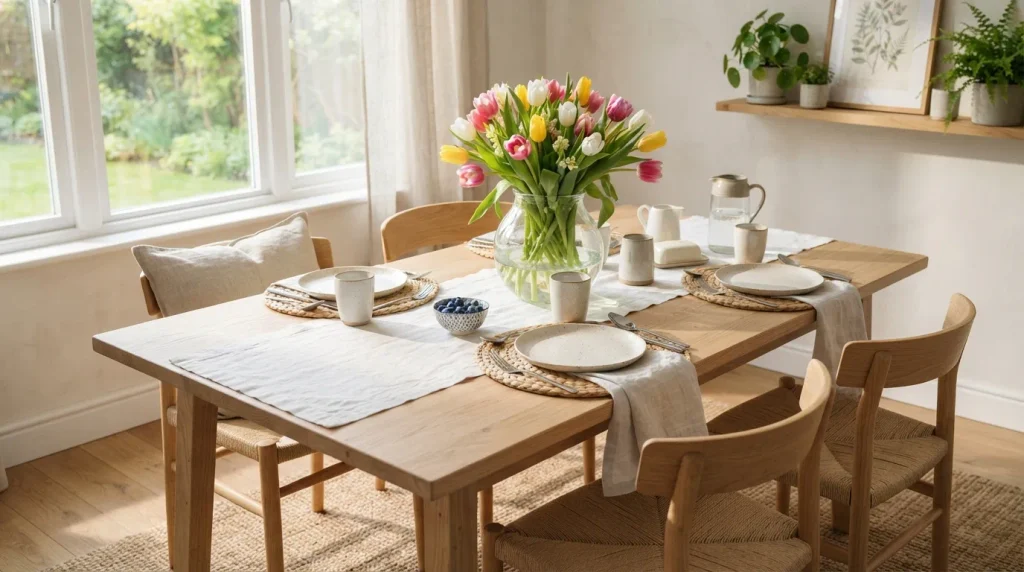
- Adds instant spring color without making the table feel crowded.
- A transparent vase keeps the arrangement light and visually clean.
- Mixed tulip colors create a cheerful focal point for everyday meals or guests.
- Trim the stems at different heights for a relaxed, natural look.
Few flowers capture the feeling of spring as effortlessly as fresh tulips. Their simple shape, soft movement, and naturally curved stems can make an ordinary dining table feel brighter within minutes. For spring centerpiece ideas that are easy to recreate, a clear glass vase is a practical choice because it works with almost any table setting. Mix two or three complementary colors, leaving enough open space around the stems so the arrangement does not look heavy. The transparent glass also lets the flowers remain the main visual feature.
A tulip arrangement works especially well when you want color without complicated styling. Choose a vase that is low enough for guests to see across the table comfortably, particularly for lunches and dinners. I’ve noticed that loosely arranged tulips often look more natural than perfectly structured bouquets, giving the table an effortless seasonal feel. Pair the vase with a simple linen runner, neutral plates, or small candles for balance. As the flowers open and gently bend, the centerpiece gains even more character, creating a table that feels fresh, relaxed, and beautifully lived-in.
Also Read : 21 Fantasy Medieval Bedroom Ideas for a Magical Royal Space
2. Lemon Blossom Bowl
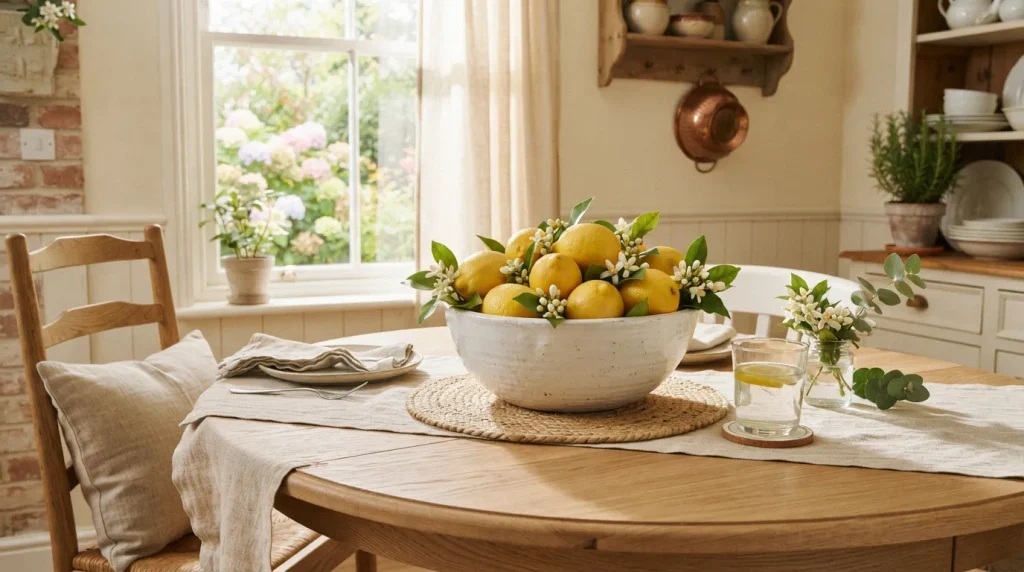
- Combines fresh fruit and flowers for a centerpiece with natural texture.
- Bright yellow tones instantly lift neutral or white table settings.
- The low bowl keeps the arrangement practical for conversation across the table.
- Replace the fruit or greenery easily to refresh the display throughout the season.
A bowl of lemons and blossoms can make the entire table feel sunnier before anyone even sits down. This low arrangement brings together bright color, soft florals, and organic texture without requiring advanced flower-arranging skills. Start with a wide ceramic or stone bowl, then layer whole lemons with a few branches of delicate spring blossoms and loose greenery. The combination feels fresh but still grounded, making it suitable for casual breakfasts, weekend brunches, or a simple seasonal refresh. A low centerpiece also keeps sightlines open, which is especially useful on smaller dining tables.
The beauty of this setup is its flexibility, because every element can be adjusted to match your home. Add more greenery for a garden-inspired look or keep the arrangement minimal for a cleaner, modern table. In my experience, real fruit makes a centerpiece feel less formal and more inviting, especially in kitchens and family dining spaces. Choose unwaxed lemons if you plan to use them later, reducing unnecessary waste after the display comes down. The result is cheerful, practical, and easy to recreate with materials that already feel familiar in everyday homes.
Also Read : 23 Spring Home Decor Ideas for a Fresh Seasonal Look
3. Wildflower Mason Jars
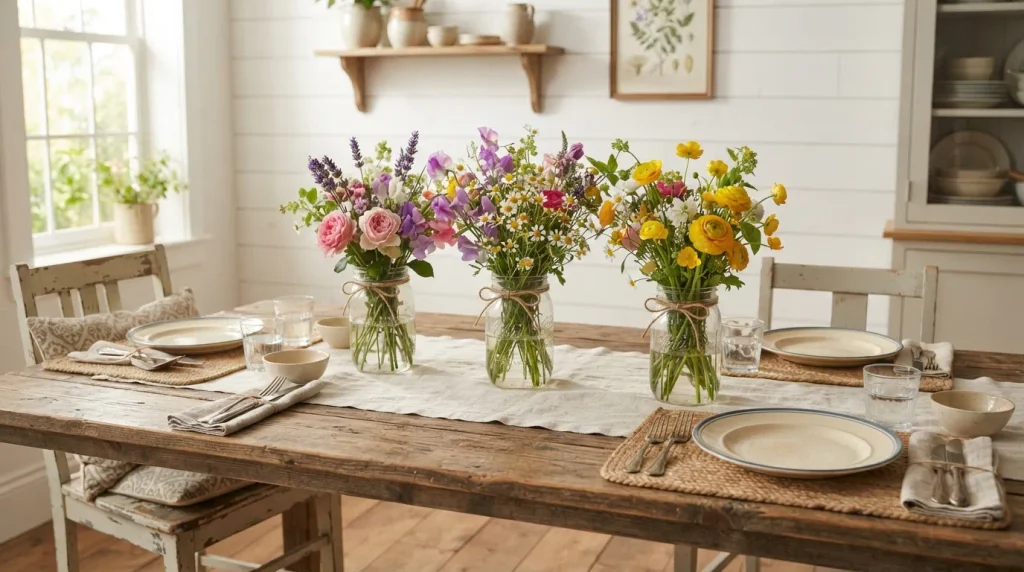
- Creates a relaxed, gathered-from-the-garden appearance.
- Small jars let you spread color along a long or narrow table.
- The casual style works beautifully with rustic, cottage, or vintage decor.
- Different flower heights add movement without needing a large arrangement.
Nothing feels more effortlessly springlike than a row of small jars filled with loose wildflowers. Instead of relying on one large bouquet, this arrangement spreads color across the table and creates several small points of interest. Use three or more glass jars with flowers in slightly different heights, mixing delicate blooms, leafy stems, and tiny filler flowers. This approach is especially useful when a single oversized arrangement would dominate the space. The separated jars also make decorating easier because you can move them around to create room for serving dishes.
Wildflower jars bring a charming, imperfect quality that can make a carefully styled table feel more approachable. I’ve seen this work well in many homes because the arrangement does not need matching flowers or expensive containers to look intentional. Recycled jars, garden clippings, or locally available stems can all contribute to the display. Keep the jars grouped closely for a fuller visual effect, or space them along the table for a softer look. Their smaller size also makes cleanup simple when the meal is over, adding beauty without creating unnecessary effort.
Also Read : 25 Modern Farmhouse Fireplace Ideas for a Cozy Living Room
4. Pastel Egg Nest
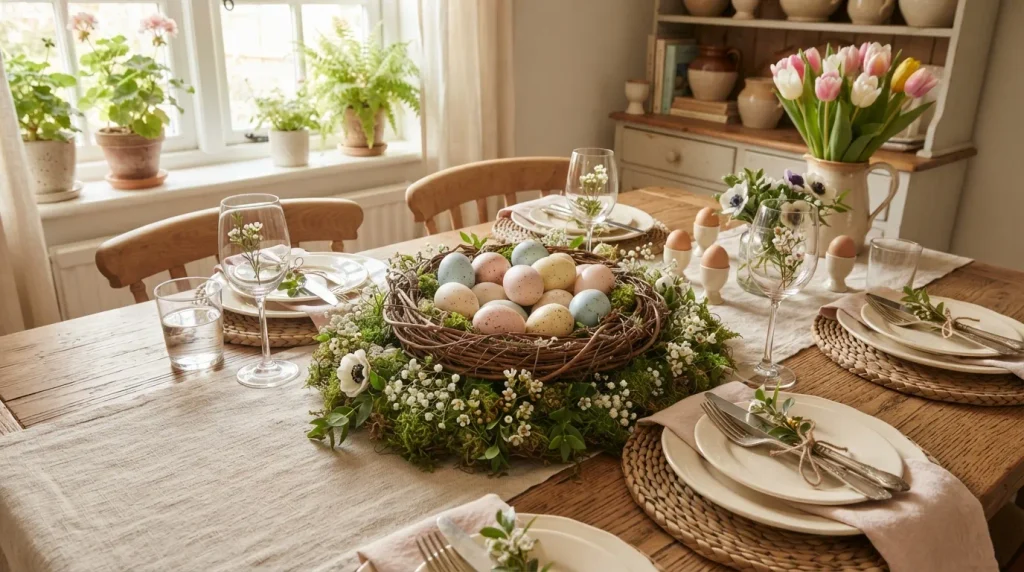
- Adds soft seasonal color without needing fresh flowers.
- Moss and woven textures make the display feel more layered and natural.
- Works well as a low centerpiece for easy conversation across the table.
- Faux eggs can be reused every spring with minimal effort.
A small nest filled with pastel eggs can bring an unmistakable spring touch to the table without feeling overly themed. Start with a shallow woven basket or natural twig nest, then layer soft moss around speckled eggs in muted shades of blue, pink, yellow, and cream. The low profile keeps the centerpiece practical while adding texture and color to the table. For spring centerpiece ideas that can last beyond a single weekend, reusable decorative eggs are especially convenient. A few tiny flowers tucked into the moss can soften the arrangement even further.
This idea works best when the surrounding table decor stays simple and lets the centerpiece stand out naturally. Pair it with neutral linens, ceramic dishes, and a few small candles for a balanced seasonal look. I’ve noticed that softer, slightly imperfect egg colors often look more elegant than bright, highly saturated shades. That subtle palette helps the arrangement blend easily into real homes rather than looking like a temporary party decoration. After the season ends, pack the eggs carefully and reuse the same base next year with different greenery or flowers.
Also Read : 34 Easter Wreath Ideas Front Door for a Spring Welcome
5. Daffodil Pitcher
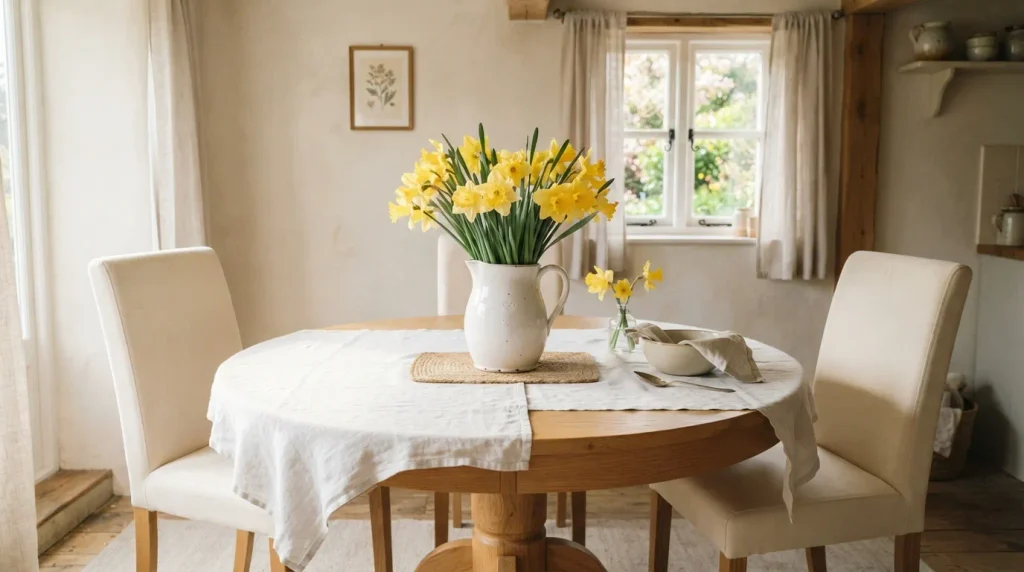
- Turns an everyday pitcher into an easy seasonal focal point.
- Bright yellow blooms add instant energy to a neutral table.
- The tall, simple shape creates visual height without complicated styling.
- Works beautifully for casual meals, brunches, and everyday spring decorating.
A pitcher filled with fresh daffodils proves that a beautiful centerpiece does not need complicated supplies or professional arranging skills. The cheerful yellow flowers instantly brighten a dining area and create a strong seasonal focal point against white, cream, or natural wood surroundings. Choose a ceramic or vintage-style pitcher with enough weight to support the stems, then allow the blooms to fan outward naturally. Their long green leaves add extra texture and height. This simple arrangement feels especially welcoming on breakfast tables, kitchen islands, or relaxed weekend brunch settings.
Daffodils have a naturally lively appearance, so there is little need to add extra decorative pieces around them. Keep the table balanced with a linen runner or a few neutral ceramic accents, allowing the flowers to provide most of the color. In my experience, slightly varied stem heights make the arrangement feel less rigid and more like freshly gathered garden flowers. Replace the water regularly to keep the blooms looking fresh for longer. The finished display feels bright, uncomplicated, and seasonal, making everyday meals feel a little more intentional without requiring hours of decorating.
Also Read : 23 Boho Coastal Bedroom Ideas for a Breezy Relaxed Retreat
6. Floating Flower Bowls
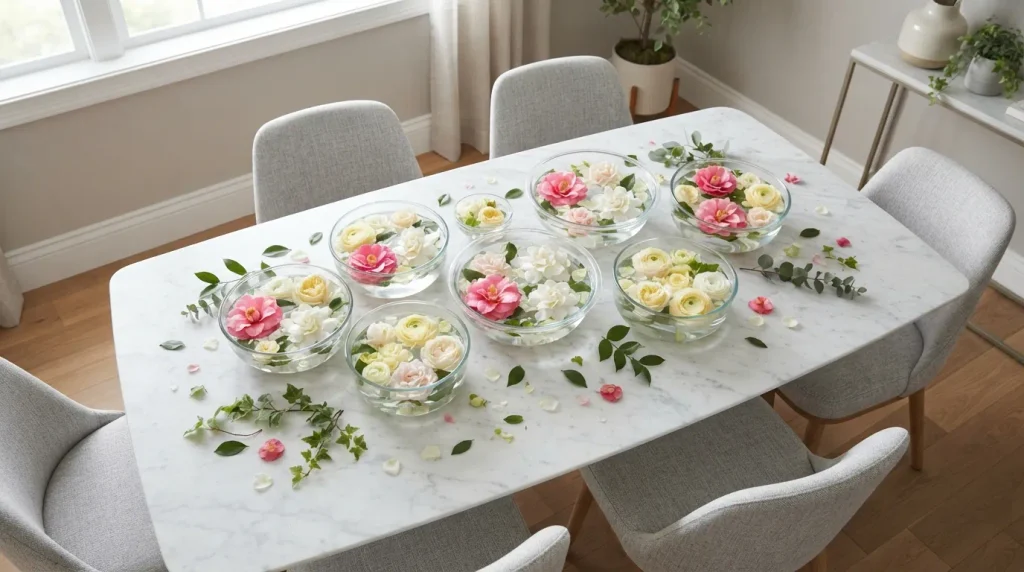
- Creates a soft, elegant look with very little height.
- Makes it easy to decorate around serving dishes and tableware.
- Uses individual blooms, so even a small amount of flowers can go further.
- Adds a reflective water surface that makes the table feel lighter and more polished.
A few flowers floating on water can create an elegant centerpiece with surprisingly little effort. Fill shallow bowls with clean water, then place individual flower heads gently on the surface for a calm, almost spa-like effect. Soft blooms such as camellias, gardenias, roses, or large daisies work particularly well because their shape remains visible from above. Arrange several bowls together instead of using one large container to create rhythm across the table. This low design is also ideal when you want guests to see one another easily during meals and conversations.
The simplicity of floating flowers makes this idea easy to adapt for both casual and more polished gatherings. Use matching bowls for a clean, coordinated look, or mix ceramic and glass containers for extra texture. I’ve seen this work well in many homes because it fills empty table space without making the setting feel crowded. Add a few leaves or tiny blossoms to connect the bowls visually, but avoid overfilling them. The water catches natural light beautifully, giving the entire arrangement a fresh, delicate appearance that feels peaceful and distinctly seasonal.
Also Read : 24 Cozy Reading Nook Ideas for a Warm Relaxing Retreat
7. Mossy Candle Tray
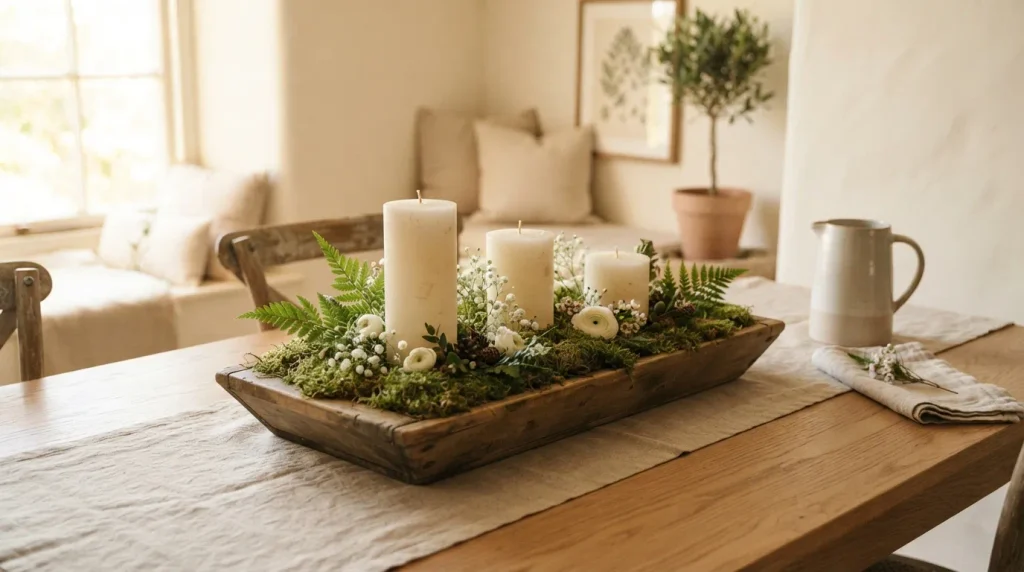
- Adds natural texture while keeping the table warm and inviting.
- Varied candle heights create depth without blocking conversation.
- A tray keeps every element contained and easy to move.
- Faux moss and battery candles make this setup simple to reuse.
A moss-covered tray can make a plain dining table feel instantly connected to the season. Begin with a shallow wooden or ceramic tray, then create a soft green base using preserved or faux moss. Add pillar candles in different heights, leaving enough space between them for small flowers or delicate fern sprigs. The layered arrangement creates depth without requiring a large bouquet. Among spring centerpiece ideas, this option is especially useful when you want a longer-lasting display that does not depend entirely on fresh flowers or frequent replacements.
The tray format also makes this arrangement practical for everyday use because the entire display can be moved at once. I’ve noticed that grouping candles in odd numbers often creates a more relaxed, balanced appearance than placing matching pieces in a straight line. Choose unscented candles for dining tables so they do not compete with the aroma of food. For extra safety and convenience, realistic battery-operated candles can provide a similar glow. The finished centerpiece brings together greenery, texture, and warm light, creating a table that feels cozy while still looking fresh and seasonal.
8. Hyacinth Bulb Basket
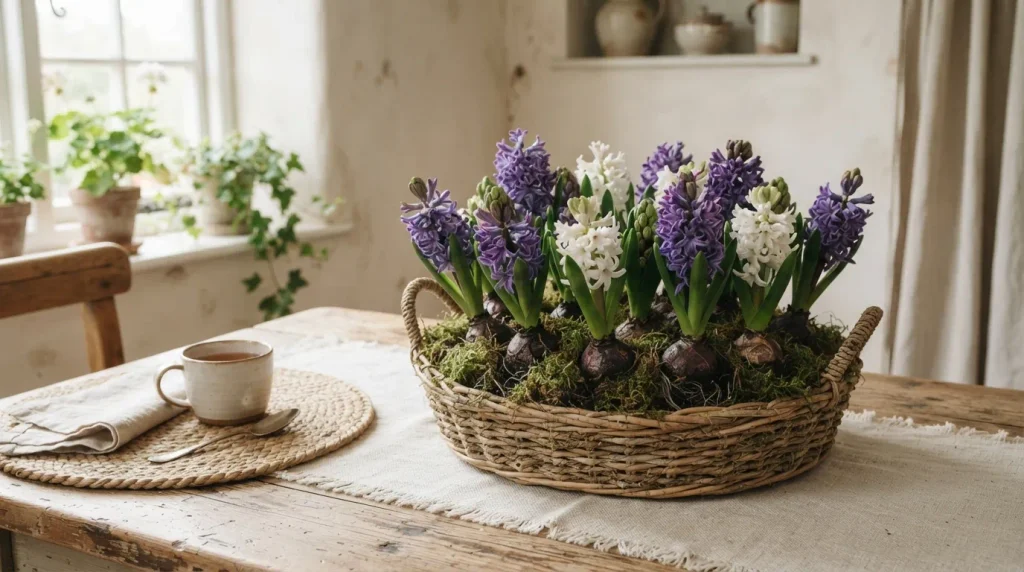
- Brings living greenery and seasonal blooms directly to the table.
- Visible bulbs and moss add texture beyond traditional cut flowers.
- The basket creates a casual garden-inspired appearance.
- Plants can often be moved outdoors after the display is finished.
A basket filled with blooming hyacinth bulbs brings the feeling of an early spring garden indoors. Unlike a standard cut-flower arrangement, the visible bulbs, roots, moss, and growing leaves add several layers of natural texture to the table. Choose a shallow basket or low container and group several bulbs closely together for a fuller appearance. Purple, white, pink, and blue varieties can be mixed or kept within one soft color palette. The result feels lively and organic, making the dining space look refreshed even before the flowers fully open.
This centerpiece is particularly appealing because it changes gradually as the plants grow and bloom. That natural progression gives the table a living element rather than a static decoration. In my experience, placing the basket on a small waterproof liner helps protect wooden surfaces while keeping the rustic appearance intact. Once the flowering period is finished, some bulbs may be planted outdoors depending on the variety and local conditions. This simple setup combines beauty with practicality, creating a fresh garden-inspired display that feels thoughtful without being overly formal.
9. Cherry Blossom Branches
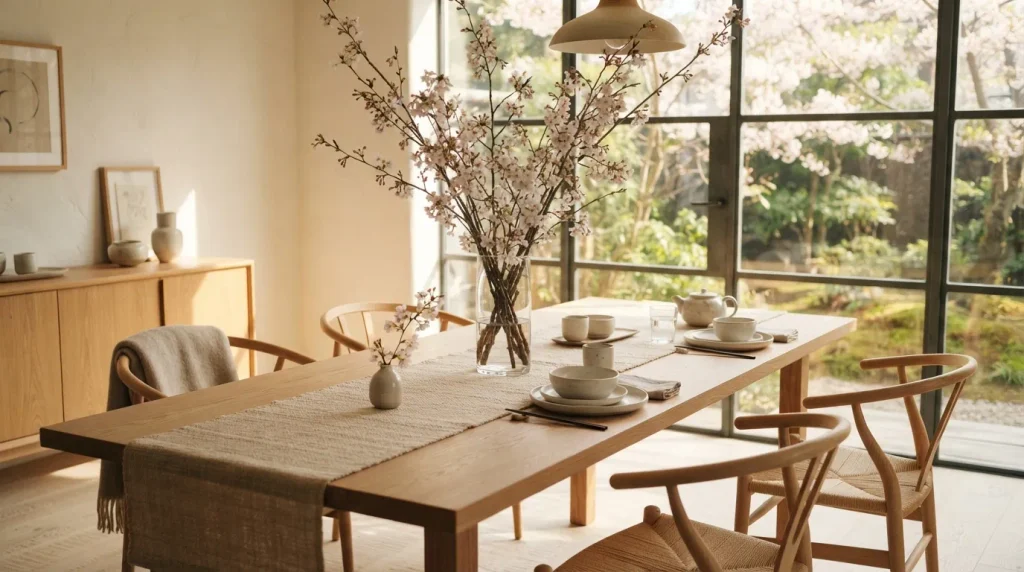
- Creates dramatic height with only a few natural branches.
- Pale blossoms add softness without overwhelming the room.
- Works beautifully in minimalist, modern, or traditional spaces.
- A simple vase keeps the branches as the main visual statement.
A few flowering branches can create a dramatic spring display without filling the table with dozens of decorative pieces. Cherry blossoms are especially effective because their delicate flowers add softness while the branches provide sculptural height and movement. Place several stems in a tall, sturdy vase and allow their natural shape to guide the arrangement. This approach works beautifully on longer tables where a single low centerpiece may disappear visually. Keep the surrounding decor minimal so the blossoms remain the strongest feature and the overall setting still feels open.
The key to making tall branches work is choosing the right placement and keeping the base visually simple. A clear or neutral ceramic vase allows the shape of the stems to stand out without competing for attention. I’ve seen this work well in many homes, especially when the table sits near natural light that highlights the soft petals. For smaller spaces, use fewer branches and trim them carefully to maintain proportion. The finished arrangement feels airy, elegant, and unmistakably seasonal while requiring far fewer individual flowers than a traditional bouquet.
10. Citrus Herb Runner
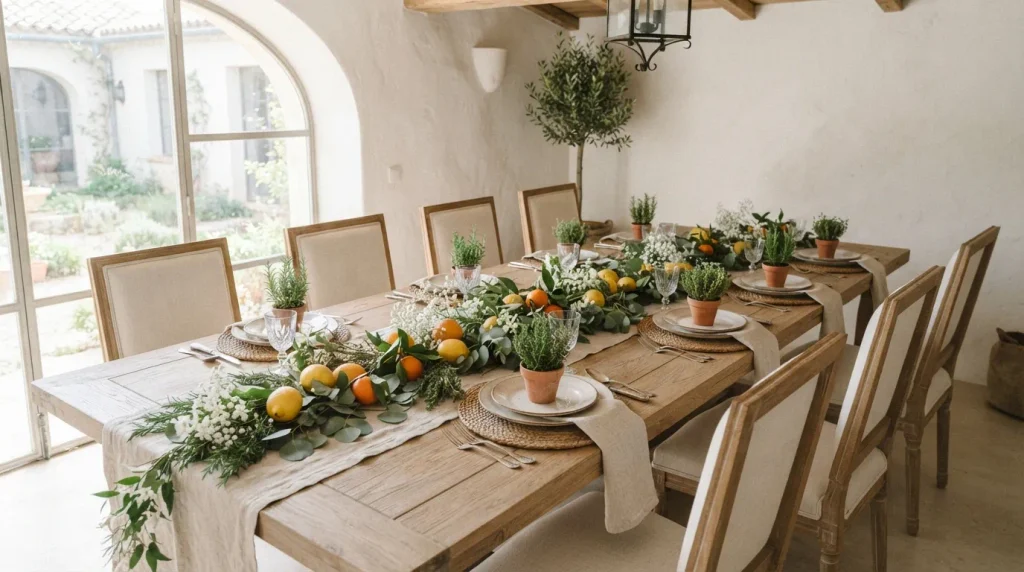
- Creates a full table display without relying on one large vase.
- Fresh herbs add texture and a naturally layered appearance.
- Citrus brings cheerful color that stands out against neutral linens.
- Individual ingredients can be shifted easily to make room for serving dishes.
A loose combination of citrus and fresh herbs can turn the center of a dining table into a colorful seasonal landscape. Instead of placing everything inside one container, arrange lemons, small oranges, rosemary, thyme, and leafy stems directly along a linen runner. The layered look feels abundant while remaining relaxed and approachable. For spring centerpiece ideas that work on longer tables, this style offers plenty of flexibility because the arrangement can stretch, curve, or stop wherever needed. Small clusters of white flowers can add softness between the brighter fruit and greenery.
This setup works particularly well for casual brunches and family meals because nothing is permanently fixed in place. Simply move individual pieces when you need extra room for dishes, drinks, or serving platters. I’ve noticed that using herbs with different leaf shapes creates more visual interest than relying on one type of greenery alone. Choose clean, fresh ingredients that still look attractive from every angle, especially on open dining tables. The final effect feels generous and fresh, combining natural color, texture, and an easygoing style that guests can appreciate without careful explanation.
11. Vintage Teacup Blooms

- Gives old or mismatched teacups a beautiful new purpose.
- Small floral arrangements add color without taking over the table.
- Each cup can hold a slightly different flower combination.
- The compact size makes this idea perfect for smaller tables.
Tiny floral arrangements inside vintage teacups can make a spring table feel personal, collected, and full of character. Use mismatched cups for a relaxed look, or choose similar patterns for a more coordinated display. Small roses, daisies, forget-me-nots, and other delicate blooms work well because they stay in proportion with the containers. Arrange several teacups together or spread them across the table for repeated touches of color. The result feels charming without requiring a large floral budget, and each individual cup becomes part of the overall decorative composition.
This idea is especially useful when decorating a smaller table where a traditional centerpiece would take up too much space. Place the cups on a tray or directly along a runner, leaving room between them for plates and glasses. In my experience, slightly different flower heights prevent the display from looking too uniform or overly arranged. You can also use inherited or thrifted cups to introduce personality and visual history into the setting. Their small scale makes the table feel detailed and thoughtfully styled while still keeping the atmosphere relaxed, practical, and easy to enjoy.
12. Greenery Lantern Cluster
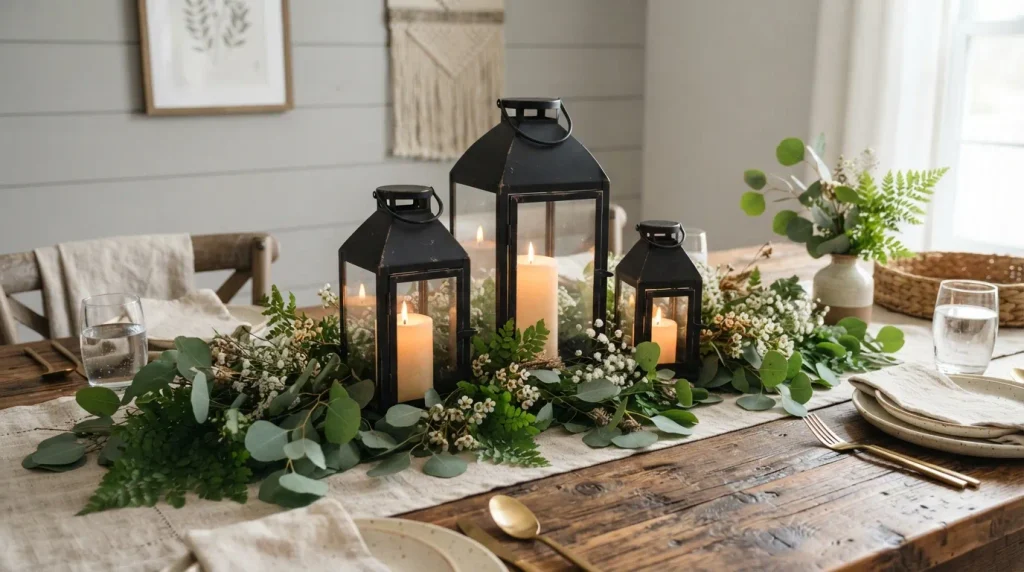
- Combines soft candlelight with fresh greenery for added depth.
- Different lantern sizes create an easy layered focal point.
- The sturdy containers can be reused throughout multiple seasons.
- Greenery softens the structure of metal or wooden lanterns.
A group of lanterns surrounded by fresh greenery can create a spring centerpiece with structure, texture, and a warm glow. Choose two or three lanterns in different sizes, then arrange them together rather than spacing them evenly across the table. Add eucalyptus, fern leaves, or other flexible greenery around the base to soften their shape. Small white flowers can provide a light seasonal contrast without overwhelming the arrangement. This combination works especially well when you want something more substantial than flowers alone but still fresh enough for spring decorating.
The layered design makes it easy to adjust the display according to the occasion or available table space. Use real candles for a traditional glow, or choose battery-operated versions when convenience is more important. I’ve seen this work well in many homes because the lanterns provide visual structure even after fresh greenery begins to fade. Replace the foliage, change the candles, or add seasonal accents to reuse the same pieces later. The finished arrangement feels grounded and inviting, balancing natural softness with a more defined decorative shape that works beautifully for everyday dining.
13. Lavender Stone Bowl
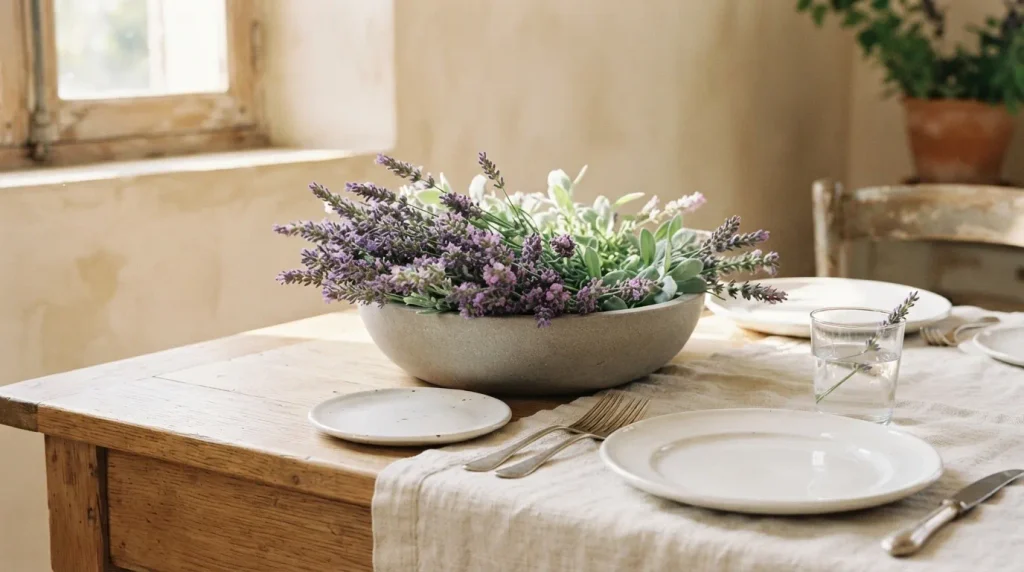
- Adds soft color without making the table feel overly bright.
- A low stone bowl creates a grounded, relaxed focal point.
- Lavender brings delicate texture and a naturally layered appearance.
- Dried stems can extend the life of the arrangement after fresh blooms fade.
A bowl filled with lavender can bring a calm, garden-inspired touch to a spring table. Its soft purple tones create gentle contrast against natural wood, cream linens, and simple white dinnerware without overwhelming the room. Choose a shallow stone, ceramic, or textured bowl, then loosely arrange the stems so they spread outward rather than standing perfectly upright. A few soft green leaves can add extra fullness around the edges. This understated design works especially well when you want the centerpiece to feel natural, simple, and easy to live with.
The low shape makes this arrangement practical for shared meals because it keeps the table visually open. I’ve noticed that lavender works beautifully with rustic materials such as linen, stoneware, and unfinished wood, creating a relaxed combination of color and texture. Fresh stems can be displayed in a small amount of water if needed, while dried lavender offers a longer-lasting alternative. Keep the surrounding accessories minimal so the soft purple remains noticeable. The finished table feels peaceful and seasonal, with enough detail to look styled without appearing overly decorated or carefully staged.
14. Spring Vegetable Crate
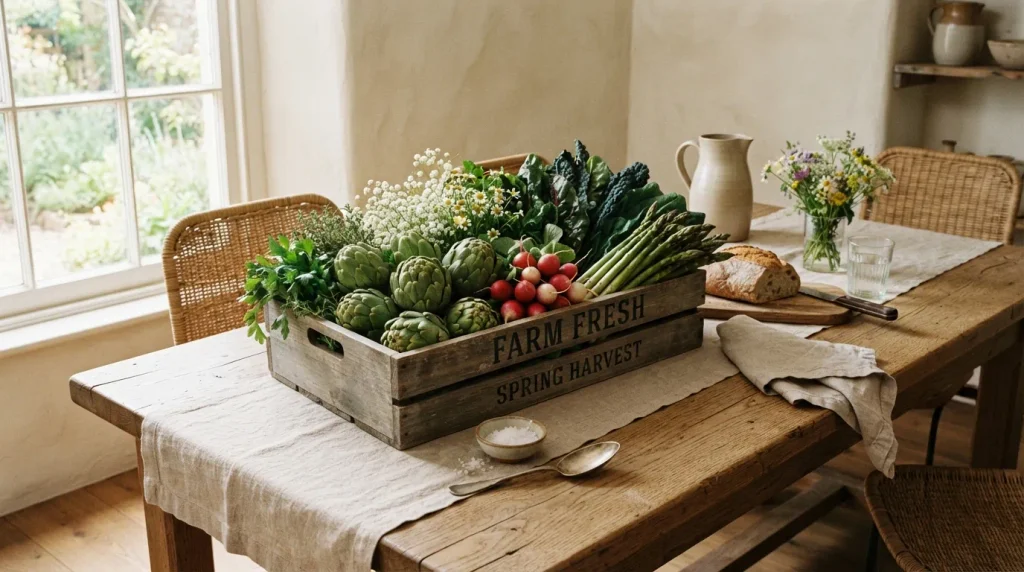
- Brings unexpected color and texture beyond traditional flowers.
- Fresh vegetables create a relaxed garden-to-table appearance.
- A wooden crate helps organize the display on a longer table.
- Individual ingredients can be removed or rearranged when needed.
Fresh spring vegetables can create a centerpiece that feels colorful, abundant, and refreshingly different from a standard bouquet. Fill a shallow wooden crate with artichokes, radishes, asparagus, leafy greens, and a few delicate white flowers to soften the arrangement. Focus on natural variations in shape, height, and color rather than creating perfectly even layers. The mix of purple, green, red, and cream tones gives the table visual interest from every angle. This approach works particularly well for farmhouse, rustic, and garden-inspired dining spaces where natural materials already play an important role.
The best part of this arrangement is that it can feel decorative while still remaining connected to everyday life. That’s why many designers recommend using food elements when creating seasonal tables: they add texture without looking overly formal. Line the crate with parchment or a washable cloth to keep cleanup simple and protect the wood. I’ve seen this work well for spring lunches and brunches, especially when similar ingredients appear on the menu. The result feels generous and welcoming, creating a centerpiece that encourages conversation while bringing a fresh market-inspired character to the table.
15. Daisy Candle Ring
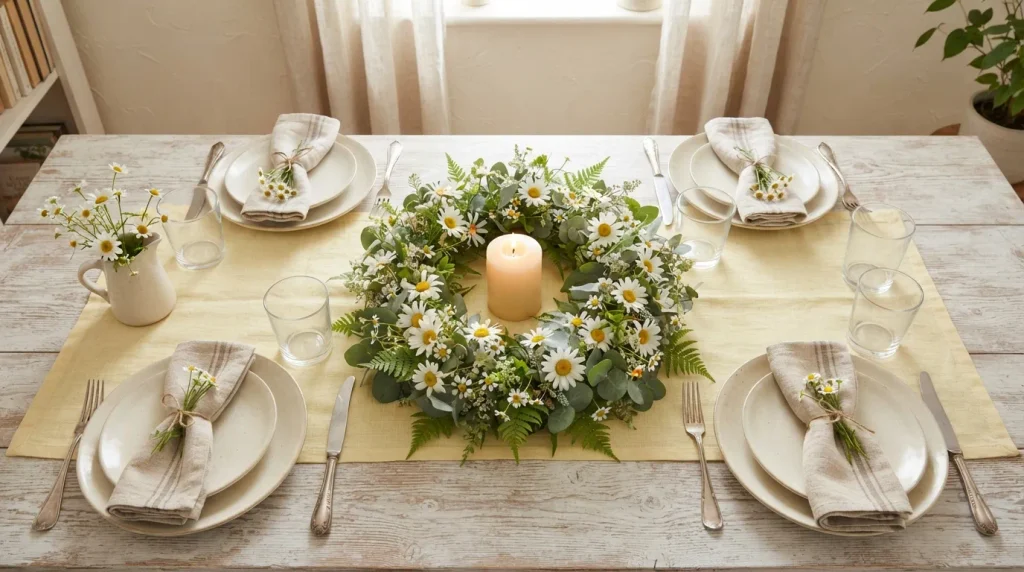
- Creates a bright, cheerful focal point with minimal materials.
- The circular shape makes a simple candle look more intentional.
- White petals work easily with almost any spring color palette.
- The low design keeps conversations and table views unobstructed.
A simple circle of daisies around a candle can make an ordinary table setting feel instantly more cheerful. Start with a low greenery ring or arrange loose stems in a circular shape, then place a sturdy pillar candle at the center. The white petals add brightness, while the yellow centers introduce a small pop of seasonal color. This design works beautifully on round or square tables because the circular arrangement naturally creates a clear focal point. Keep the overall styling loose and slightly imperfect for a fresh, garden-inspired appearance that feels welcoming.
This centerpiece proves that even a small decorative change can transform the atmosphere of a meal. Choose a wide, stable candle base and keep flowers at a safe distance from any open flame. For busy homes, a realistic flameless candle offers a practical alternative while maintaining the soft visual glow. In my experience, daisies look especially effective when paired with pale linens and natural wood because their simple shape stands out clearly. The finished arrangement feels light, friendly, and uncomplicated, bringing a recognizable touch of spring to everyday dining without requiring expensive materials.
16. Blue Hydrangea Basket
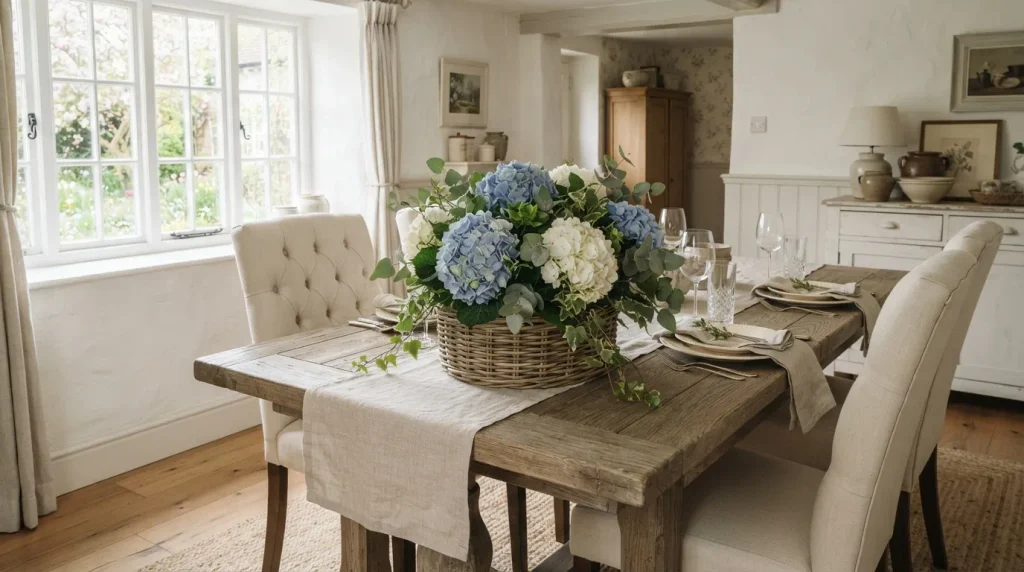
- Creates a fuller floral look without needing multiple separate arrangements.
- Blue and white blooms bring cool, calming contrast to warm wood tones.
- The woven basket adds texture and a relaxed seasonal feel.
- A low container keeps the display practical for shared meals.
A basket overflowing with blue and white hydrangeas can give a spring table an instantly full and polished appearance. Their large rounded blooms create visual impact quickly, so you do not need dozens of stems or complicated filler materials. Choose a low, wide basket with a hidden waterproof container inside, then arrange the flowers in loose clusters rather than one perfectly shaped mound. Add a few green leaves around the edges to soften the outline. This setup works beautifully when you want a generous floral centerpiece that still feels relaxed and natural.
Hydrangeas are especially effective on larger tables because their blooms hold visual weight without requiring extra decorative pieces. Keep the surrounding table setting simple with neutral linens, clear glassware, or plain ceramic dishes so the flowers remain the focal point. I’ve noticed that mixing blue with white blooms creates a softer result than using one solid color throughout. Check the water regularly because these flowers can wilt quickly when thirsty. With simple care and thoughtful placement, the arrangement can make an everyday dining space feel fresh, layered, and beautifully prepared.
17. Terracotta Pot Garden
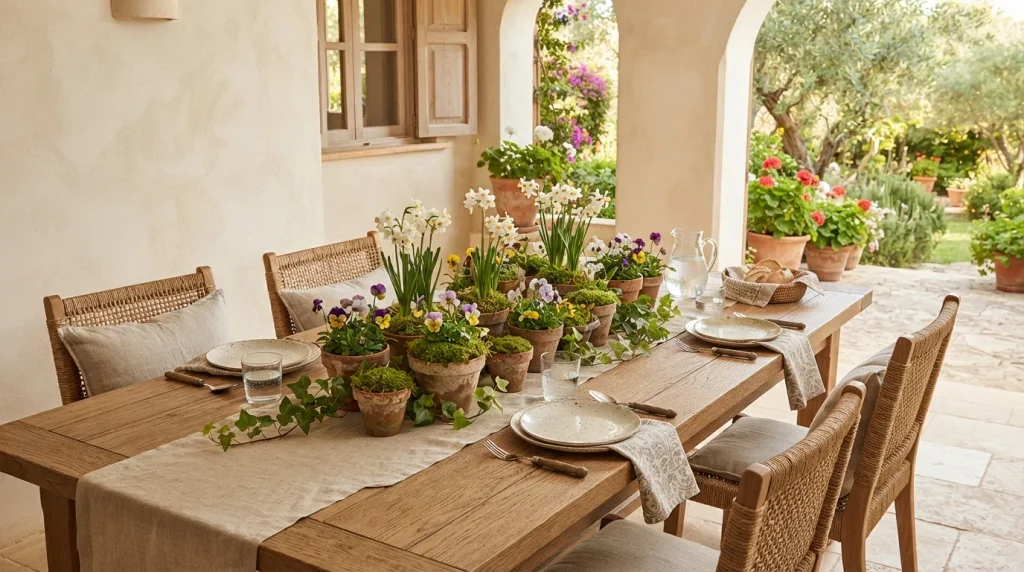
- Brings the look of a miniature spring garden indoors.
- Separate pots make the arrangement easy to adjust for different table sizes.
- Terracotta adds warm, earthy texture beneath colorful blooms.
- Individual plants can be replanted or reused after the display.
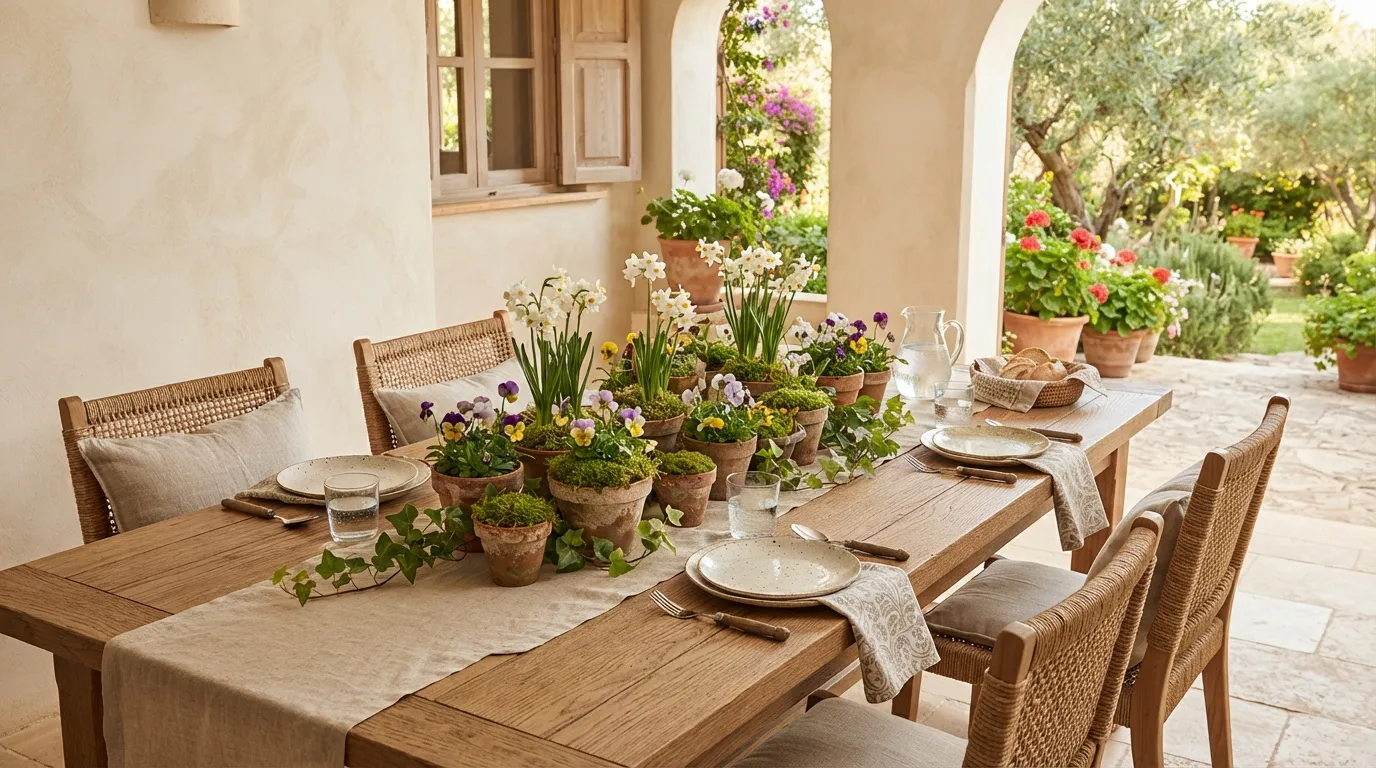
A row of tiny terracotta pots can turn the center of a dining table into a miniature spring garden. Fill each pot with a different seasonal plant, such as pansies, narcissus, small herbs, or trailing ivy, then group them closely for a collected appearance. Varying the heights and plant shapes creates movement while the matching terracotta keeps the display visually connected. This approach works particularly well for long tables because you can extend or shorten the arrangement as needed. The result feels lively, natural, and full of texture without requiring formal flower arranging skills.
This idea also offers a practical advantage because each pot can be moved independently during meals or gatherings. I’ve seen this work well in many homes where the dining table serves multiple purposes throughout the day. Place small saucers beneath the pots to protect the surface from moisture, especially when using freshly watered plants. Mix flowering plants with simple greenery so the colors do not become overwhelming. Once the season changes, move suitable plants outdoors or refresh the pots with new varieties, making this centerpiece flexible, reusable, and easy to adapt.
18. Peony Glass Cloche
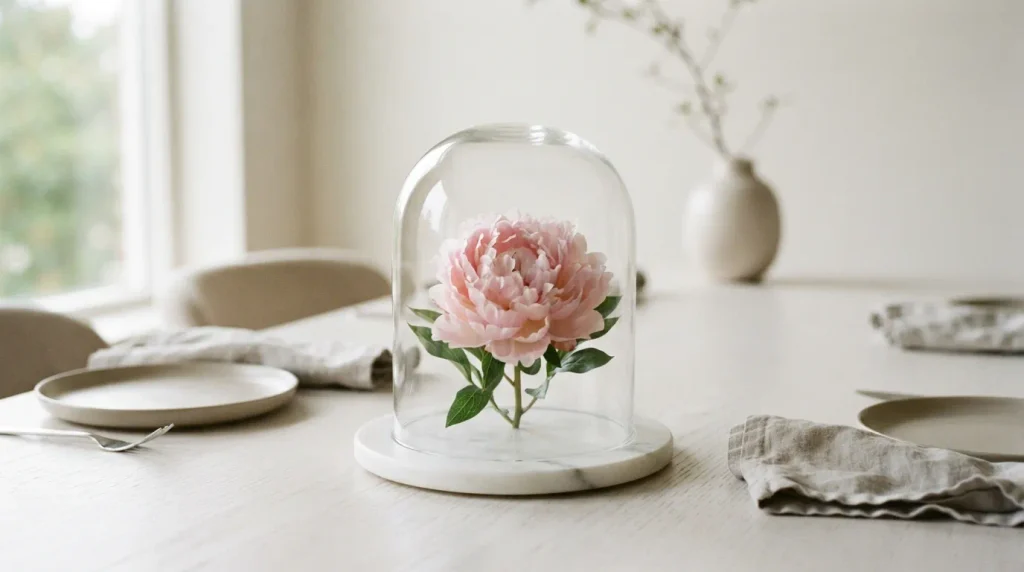
- Creates a refined focal point using only one statement bloom.
- The glass cover adds height and visual interest without clutter.
- Works beautifully for smaller tables or minimalist interiors.
- A single flower keeps the styling simple and easy to maintain.
One large peony displayed beneath a glass cloche can create a spring centerpiece that feels elegant without being complicated. The oversized bloom becomes the main visual feature, while the transparent cover adds structure and a subtle sense of occasion. Choose a flower that is partially open so its layered petals remain clearly visible from different angles. Place the cloche on a simple marble, wood, or ceramic base, then keep the surrounding table decor understated. This minimalist approach works especially well when you want one beautiful detail to make a stronger impression than many smaller accessories.
The simplicity of this arrangement makes it useful for intimate dining spaces where every decorative element matters. A single statement flower can also reduce visual clutter while still making the table feel intentionally styled. In my experience, peonies look best when the glass is kept completely clean because fingerprints or water marks can distract from the petals. Choose a cloche large enough to avoid crushing the bloom and remove it occasionally to allow air circulation. The finished display feels refined, fresh, and memorable while remaining surprisingly easy to recreate.
19. Forsythia Branch Vase
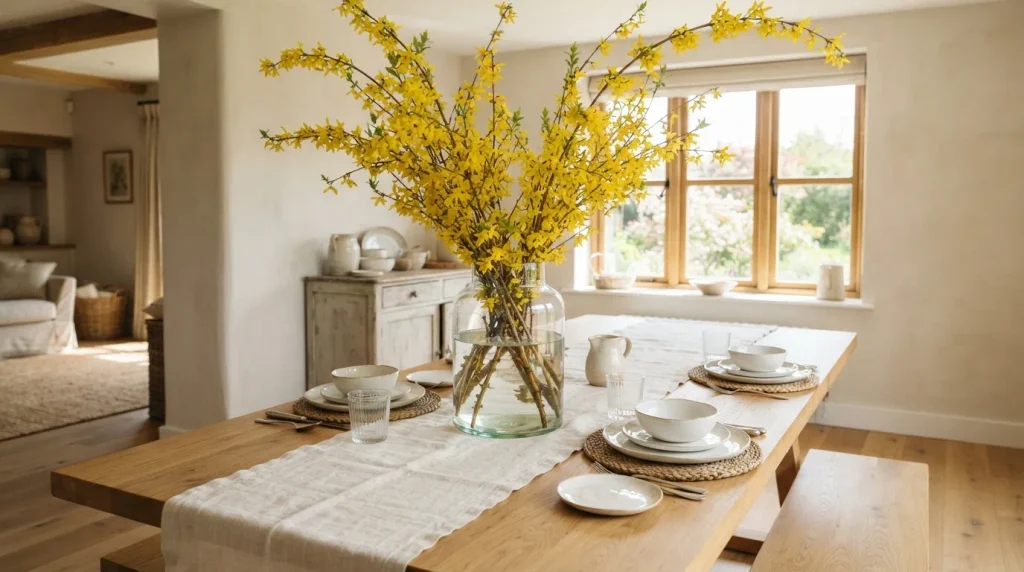
- Adds dramatic height with only a few flowering branches.
- Bright yellow blossoms create an instant seasonal focal point.
- The open branch structure keeps the arrangement visually light.
- A clear vase allows the natural stems to remain part of the design.
Few arrangements announce spring as boldly as a vase filled with bright yellow forsythia branches. Their arching shape creates instant height and movement, while the scattered blossoms keep the display from feeling dense or heavy. Place several branches in a tall, stable glass vase and let their natural direction guide the composition. This design works particularly well on a long dining table or entry table where vertical interest can make the space feel more alive. Keep nearby accessories minimal so the branches remain the strongest visual feature.
The airy structure of forsythia makes it easier to create impact without covering every inch of the table. I’ve noticed that slightly curved branches often look more natural when they are allowed to extend outward rather than being tightly arranged. Trim stems to different lengths and rotate the vase occasionally to check how the display looks from multiple seating positions. A sturdy base is important because flowering branches can become top-heavy. The finished arrangement brings bold color, sculptural movement, and a fresh garden feeling into the room with surprisingly simple materials.
20. Butterfly Flower Box
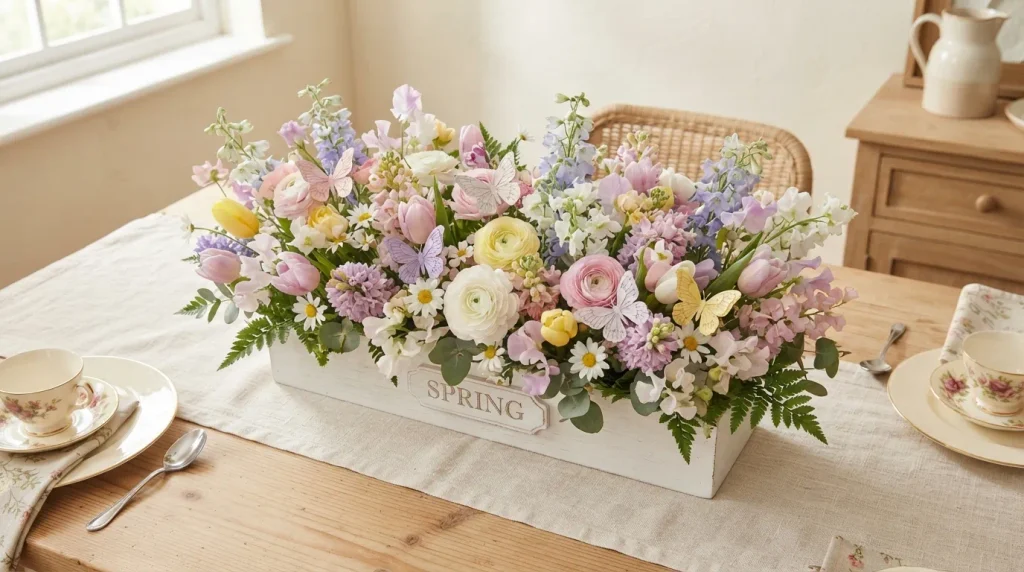
- Combines soft spring flowers with a subtle decorative accent.
- A rectangular box works well on narrow or rectangular tables.
- Lightweight butterflies add a playful detail without overwhelming the arrangement.
- The low profile keeps the centerpiece practical during meals.
A flower-filled box with delicate butterfly accents can bring a playful spring detail to the table while still looking polished. Use a low rectangular container and fill it with pastel blooms in pink, lavender, yellow, and white, allowing the flowers to spill gently over the edges. Add only a few lightweight decorative butterflies so they appear as small visual accents rather than the main attraction. The rectangular shape helps organize the display and works especially well on narrow dining tables. Keep the arrangement low enough to preserve clear views across the table during meals.
The key to making this idea feel stylish is using restraint with the decorative details. I’ve seen this work best when the flowers remain the primary focus and the butterflies simply add movement and seasonal personality. Choose realistic botanical colors or soft pastel shades that coordinate with your existing dishes and linens. A hidden floral foam insert can help keep fresh stems positioned neatly, while faux flowers offer a reusable alternative. The finished centerpiece feels cheerful and visually memorable, adding a lighthearted spring element without making the table look overly themed or crowded.
21. Ranunculus Bud Vase
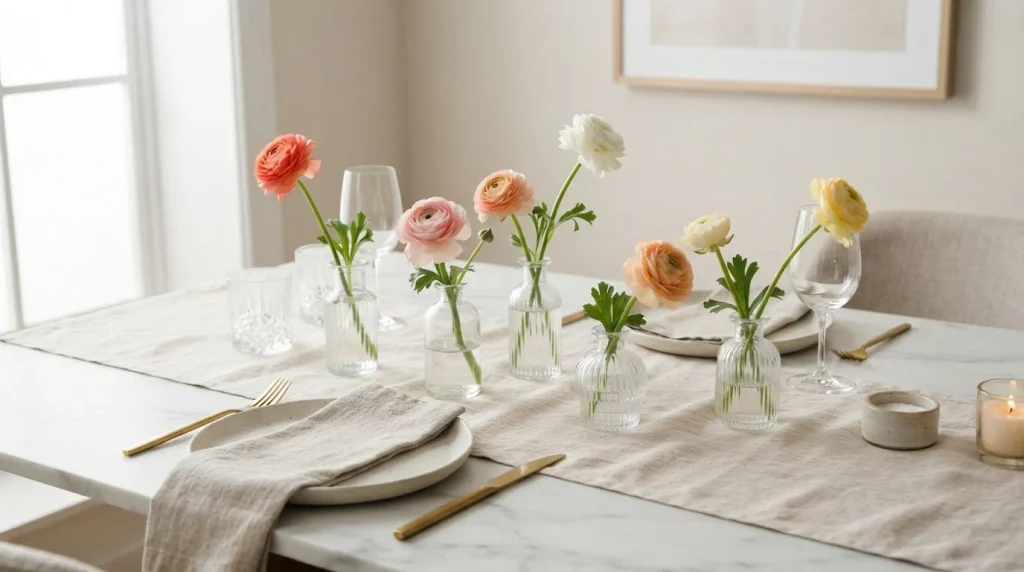
- Lets individual flowers create color across the entire table.
- Small vases are easy to rearrange around food and place settings.
- Mixed ranunculus shades add softness and variety without visual clutter.
- This setup works well when you only have a small number of premium blooms.
A collection of small bud vases can create a delicate spring display that feels more detailed than a single large bouquet. Place one or two ranunculus stems in each vase, then arrange the containers loosely along the center of the table. Their layered petals and curved stems provide plenty of visual interest, even when each vase contains only a small amount of flowers. Use a mix of blush, coral, peach, white, and soft yellow for gentle variation. The separated arrangement also allows the table to remain flexible for everyday meals and entertaining.
This approach is especially useful when you want to make a small flower purchase feel more generous. That’s why many designers recommend dividing premium blooms among several small vessels instead of placing every stem into one container. I’ve noticed that slightly uneven spacing gives the arrangement a more relaxed, natural appearance than perfectly measured rows. Choose clear vases for a light look or mix subtle ceramic containers for additional texture. The final result feels airy, colorful, and thoughtfully styled while remaining easy to adjust whenever you need extra table space.
22. Floral Birdcage Display
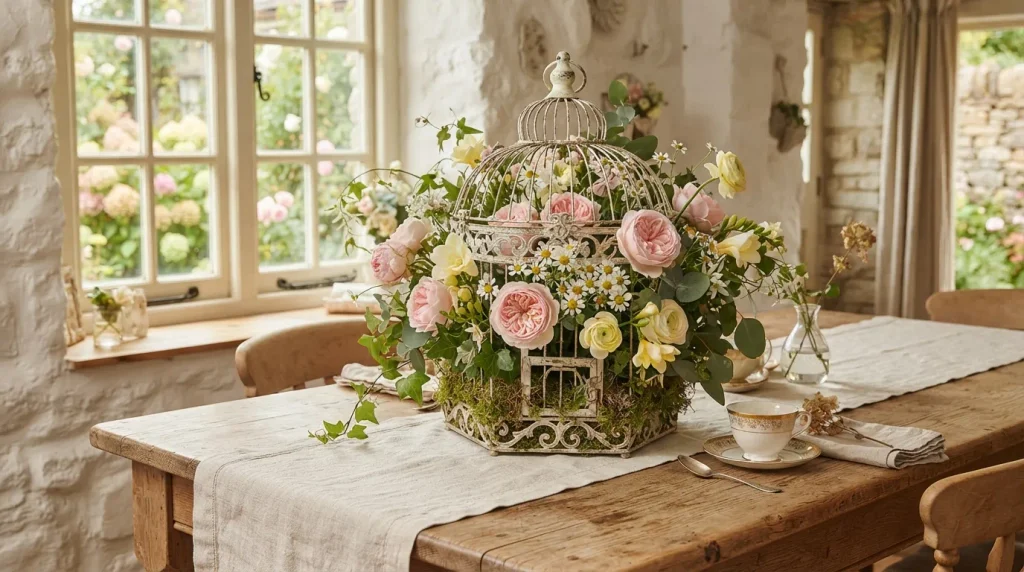
- Creates height and detail without needing a traditional vase.
- Flowers and greenery soften the structure of the metal birdcage.
- The open design keeps the arrangement visually light from different angles.
- A reusable cage can be restyled with different seasonal flowers each year.
A flower-filled birdcage can transform an ordinary table into a charming spring display with texture, height, and personality. Choose an open metal cage in white, cream, or an aged finish, then arrange flowers and greenery around the base and through the wider openings. Soft roses, daisies, tiny blossoms, and trailing leaves create a natural garden effect without hiding the shape of the cage. Keep the arrangement slightly loose rather than perfectly symmetrical. This design adds a decorative focal point while still allowing the flowers to feel fresh, organic, and connected to the season.
The open structure makes this centerpiece especially interesting because it looks different from every side of the table. I’ve seen this work well in many homes when the birdcage is paired with simple linens and neutral dinnerware, allowing the flowers to provide most of the seasonal color. Use a waterproof container inside if working with fresh stems, or choose faux flowers for a longer-lasting option. Add a small amount of moss near the base for extra texture. The finished arrangement feels detailed, memorable, and visually rich without making the table appear overcrowded.
Conclusion
You do not need an expensive arrangement or professional decorating skills to create a table that feels ready for spring. These spring centerpiece ideas show how flowers, greenery, fruit, candles, and everyday containers can add color, texture, and personality to your space. Choose the idea that fits your style, table size, and available materials, then make it your own. I’ve seen how small changes like these can completely transform an ordinary room. Save this post on Pinterest for later, try one or more ideas at home, and share it with someone who could use fresh seasonal inspiration.