A beautiful kitchen island can completely change how a kitchen looks, feels, and functions. Curved kitchen island ideas offer a softer alternative to the sharp lines of traditional rectangular islands, creating a space that feels more welcoming while improving movement around the room.
From warm wood curves and elegant stone surfaces to clever storage, seating, lighting, and compact layouts, these designs show how much personality a rounded island can bring. They can also solve common problems, such as awkward corners, limited seating, poor traffic flow, or a kitchen that feels too rigid. In my experience, the most successful designs balance beauty with everyday practicality. As you explore these ideas, look for details that fit your room, lifestyle, and budget. You may find one small change that inspires an entirely new kitchen layout.
1. Soft Oak Curve
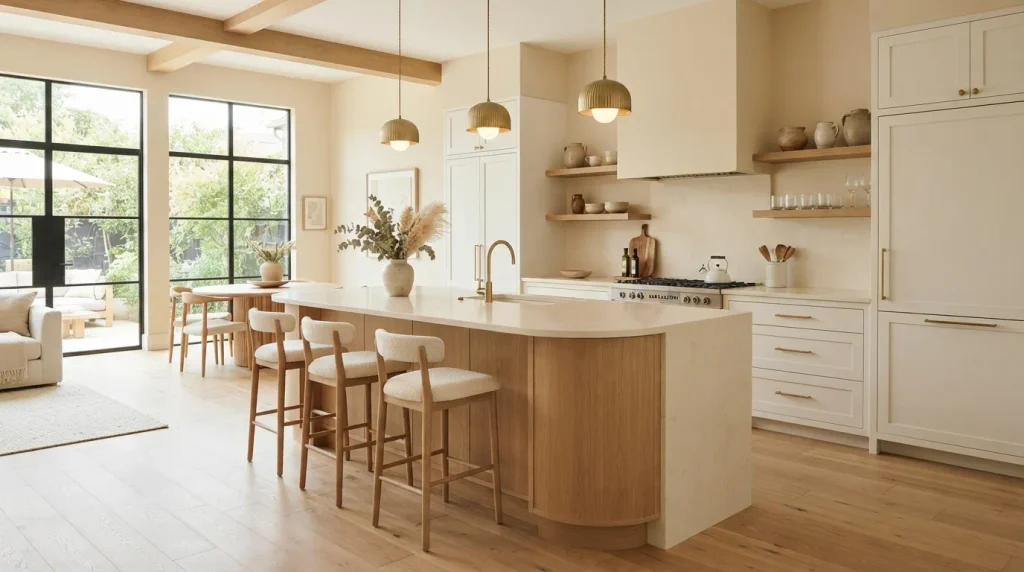
- Light oak brings warmth without making the kitchen feel heavy.
- A rounded countertop softens an otherwise straight-lined modern layout.
- Creamy stone keeps the island bright and visually spacious.
- Slim stools tuck neatly beneath the curved overhang.
- Generous clearance around the island keeps movement comfortable.
A gentle curve can make a kitchen island feel instantly more inviting, especially when sharp corners would interrupt the room’s natural flow. A rounded island softens sightlines while keeping plenty of useful counter space for meal prep, serving, and casual seating. In my experience, this shape works particularly well in open-plan kitchens because it creates a subtle transition between cooking and living areas. Pair the island with light oak cabinetry, creamy quartz, and simple counter stools for a calm modern look. Keep the surrounding walkways generous, so the beautiful shape also feels effortless to move around every day.
Soft curves bring more than visual appeal; they can make a busy kitchen feel calmer and easier to navigate. A rounded island creates smoother circulation around corners, which is especially helpful when several people are cooking, serving food, or moving between the kitchen and dining area. I’ve noticed that pairing curved cabinetry with a pale stone countertop keeps the design sophisticated without making it feel overly formal. Add upholstered stools, warm wood accents, and understated pendant lights to balance the sleek surfaces. The result is a modern centerpiece that feels welcoming, practical, and visually lighter than a traditional rectangular island.
Also Read : 23 Boho Coastal Bedroom Ideas for a Breezy Relaxed Retreat
2. Waterfall Stone Curve
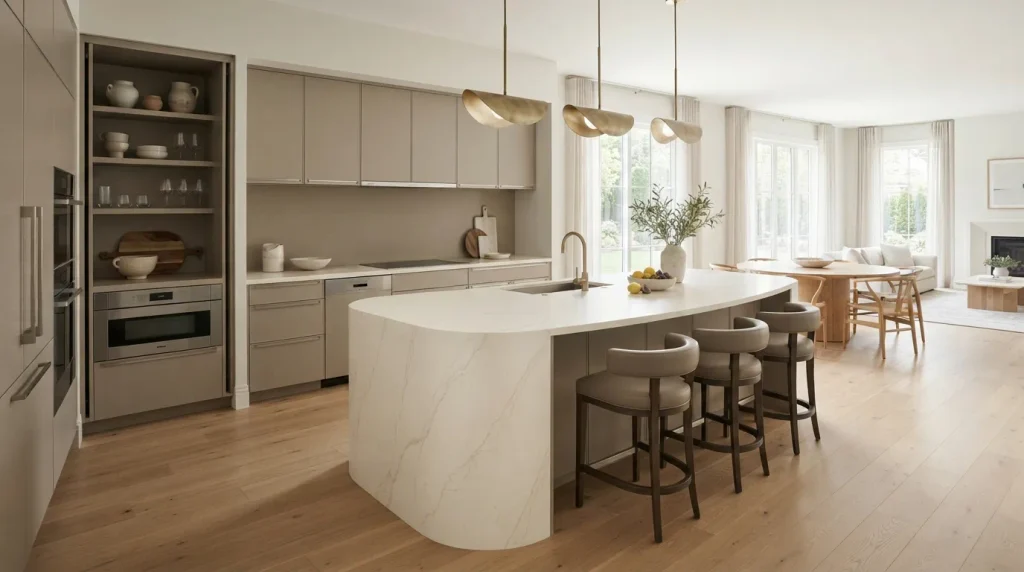
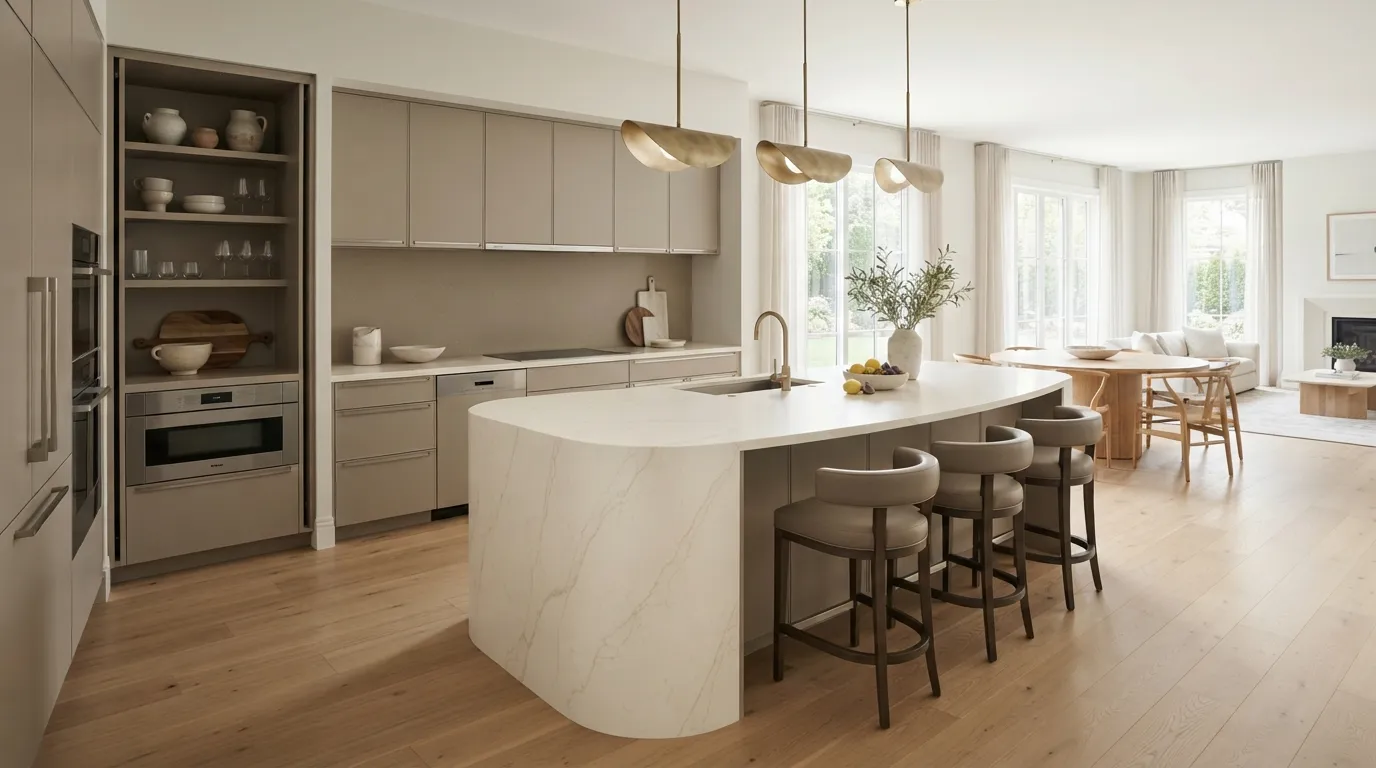
- Continuous stone creates a polished, sculptural focal point.
- A waterfall edge makes the curved profile feel seamless.
- Matte cabinetry balances the brightness of the countertop.
- Rounded seating keeps the design comfortable and cohesive.
- Minimal accessories let the stone remain the star.
Few details create a stronger statement than a curved island wrapped in continuous waterfall stone. The uninterrupted surface follows the rounded edge, giving the centerpiece a sculptural quality while hiding visual breaks between the countertop and base. This approach is especially effective in kitchens with simple cabinetry because the island becomes the main architectural feature without relying on excessive decoration. Choose soft white, warm greige, or lightly veined stone for a sophisticated finish. In my experience, keeping hardware and accessories minimal allows the curved profile to stand out beautifully while preserving the clean, modern character homeowners often want.
A waterfall countertop also makes the island easier to coordinate with surrounding finishes because the stone can visually connect several parts of the room. For example, subtle veining can echo backsplash tones, while a warm undertone can complement wood flooring or cabinetry. Place two or three rounded stools along the outer edge, leaving enough room for comfortable leg space. Soft pendant lighting above the island can emphasize its shape after sunset without creating harsh shadows. This is one of those curved kitchen island ideas that combines strong visual impact with practical seating, preparation space, and an easy-to-maintain surface.
Also Read : 23 Indoor Pond Ideas for a Peaceful Home Oasis
3. Two-Tone Rounded Island
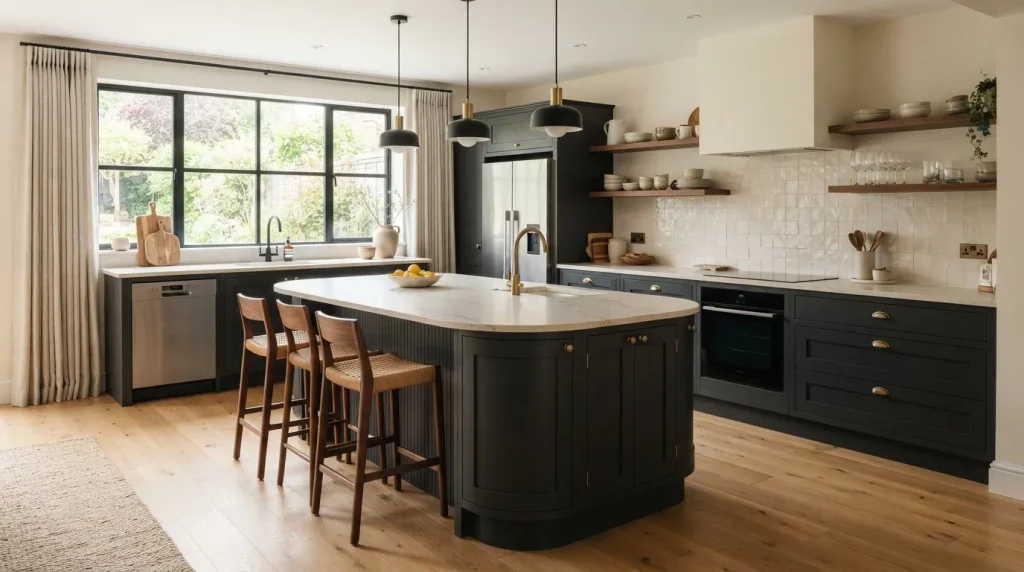
- Contrasting materials give the island more visual dimension.
- Dark cabinetry anchors the softer curved countertop.
- Light stone prevents the composition from feeling too heavy.
- Mixed finishes create interest without adding clutter.
- Matching accents throughout the room make the contrast intentional.
A two-tone island can turn a simple rounded shape into a more layered design statement. Use one finish for the curved base and another for the countertop to create clear visual separation without making the kitchen feel busy. Deep olive, charcoal, or walnut cabinetry can ground the lower section, while a pale quartz or marble-inspired surface keeps the upper area bright. That contrast helps define the island as a focal point. I’ve seen this work well in modern kitchens where homeowners want personality but still prefer a restrained palette. The key is repeating one or two finishes elsewhere for balance.
The rounded profile becomes even more interesting when the contrasting colors follow its shape instead of breaking it into separate visual blocks. Consider warm wood flooring with a dark curved base, then repeat the wood on nearby shelving or stools. Keep walls light and backsplash materials quiet so the island remains the strongest feature. Pendant lights with simple silhouettes can add another layer above without competing for attention. The result feels intentional and custom rather than overly decorated. For anyone collecting curved kitchen island ideas, this two-tone approach offers an easy way to introduce depth while maintaining a polished modern appearance.
Also Read : 24 Cozy Reading Nook Ideas for a Warm Relaxing Retreat
4. Curved Breakfast Bar
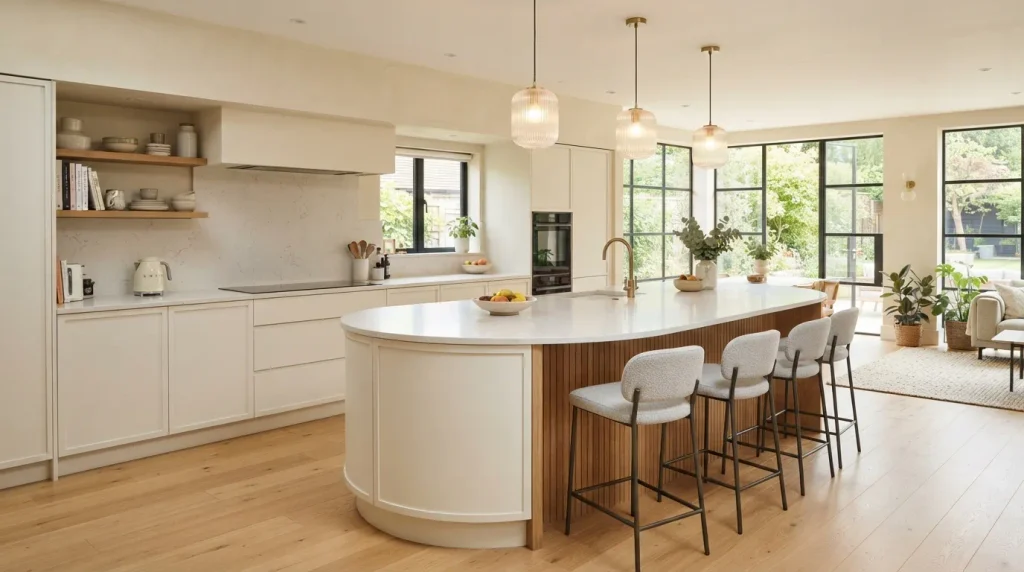
- A raised outer edge creates a cozy spot for quick meals.
- The rounded shape keeps seating visually connected to the kitchen.
- Slim stools preserve an airy, uncluttered appearance.
- A contrasting countertop edge can define the dining zone.
- Keep the curve wide enough for comfortable elbow room.
A curved breakfast bar gives the kitchen island a welcoming dining function without needing a separate breakfast table. The rounded edge creates a natural place for family members to sit, chat, eat, or enjoy coffee while someone works nearby. This setup is particularly useful in compact open-plan homes where every surface needs to serve more than one purpose. Choose a durable quartz countertop with a softly rounded overhang, then add slim stools that can slide underneath when not needed. The result feels relaxed and practical, while the curved profile helps the seating area blend naturally into the surrounding kitchen.
The height difference between the preparation surface and breakfast bar can also add subtle architectural interest. Keep the raised section visually light by using the same countertop material or a complementary wood finish. In my experience, generous knee space makes a noticeable difference when an island is used daily for meals rather than occasional seating. Add warm pendant lighting above the bar and keep decorative objects low so they do not obstruct conversation. This approach works beautifully with modern cabinetry, textured backsplashes, and natural flooring, creating a comfortable kitchen zone that feels polished without becoming overly formal or complicated.
Also Read : 25 Covered Patio Design Ideas for Stylish Outdoor Living
5. Walnut Sculptural Island
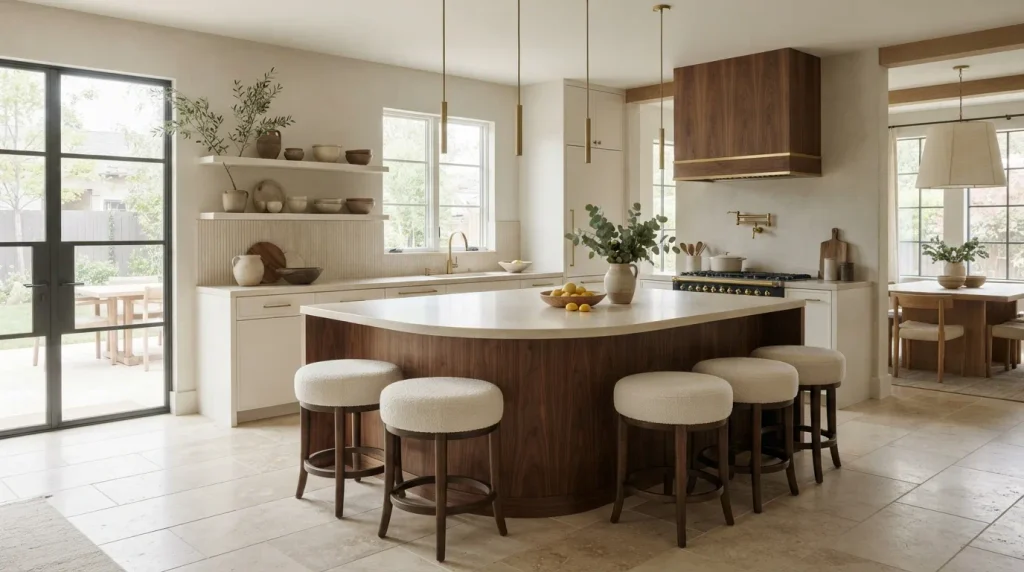
- Rich walnut adds warmth to a sleek modern kitchen.
- Vertical wood grain emphasizes the island’s flowing shape.
- Pale countertops keep the darker timber from overwhelming the room.
- Minimal hardware creates a refined, furniture-like appearance.
- Natural materials make the space feel warmer and more lived-in.
A sculptural walnut island can make a modern kitchen feel warmer, richer, and more distinctive without relying on bright colors or excessive decoration. The natural grain looks especially beautiful when it follows the rounded form, emphasizing the island’s smooth silhouette from every angle. Pair dark or medium walnut with a light stone countertop to create enough contrast for the wood to stand out. This approach works well when the surrounding cabinetry is simple and understated. I’ve noticed that natural timber also helps soften kitchens filled with hard surfaces, making the overall room feel more comfortable and visually balanced.
The island can function almost like a piece of custom furniture when the cabinetry has concealed storage and minimal visible hardware. Add a gently curved countertop overhang for seating, then choose stools with rounded backs to echo the island’s shape. Warm white walls, pale flooring, and soft lighting will prevent the walnut from making the room appear too dark. Small touches such as woven accessories, ceramic vessels, or greenery can reinforce the organic feeling. Among modern curved island designs, this option is especially effective for homeowners who want a sophisticated kitchen with warmth, character, and a strong natural focal point.
Also Read : 22 Scandinavian Kitchen Ideas for a Bright Modern Home
6. Compact Peninsula Curve
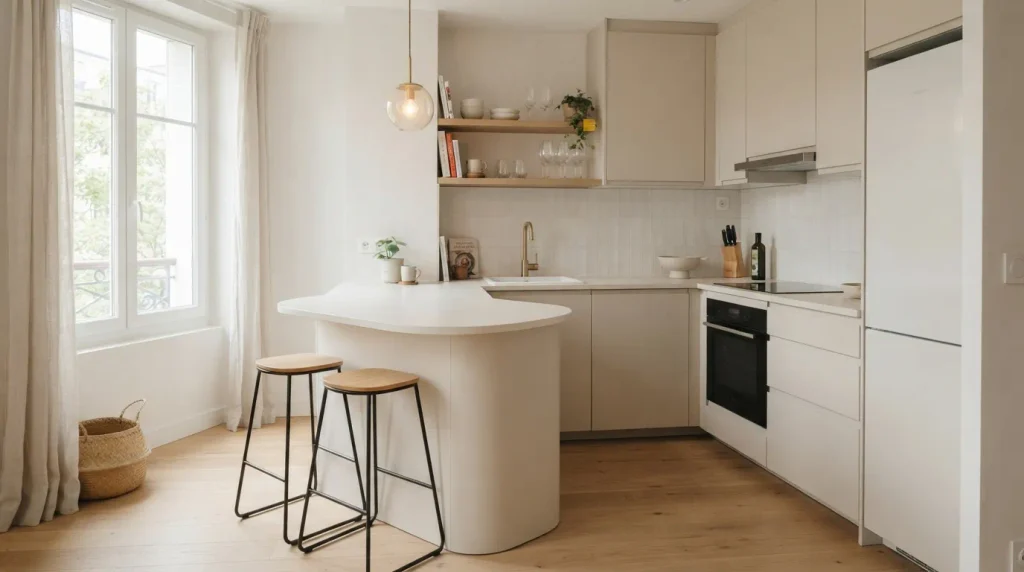
- A curved peninsula makes efficient use of limited floor space.
- Rounded corners improve movement through smaller kitchens.
- The attached layout can provide extra seating without a full island.
- Light finishes help compact rooms feel more open.
- Open shelving can add storage without visually crowding the area.
A compact curved peninsula is a smart alternative when a full freestanding island would leave too little walking space. Instead of extending into the center of the kitchen, the rounded counter connects to existing cabinetry while still creating a useful preparation and seating area. The softened outer corner makes circulation easier and removes the hard edge that can feel awkward in a narrow layout. This design is especially practical for apartments and smaller open-plan kitchens. For homeowners searching for curved kitchen island ideas, a peninsula can deliver much of the same visual softness while using the available floor area more efficiently.
The best compact designs keep the palette light and the storage carefully organized. Choose white, warm beige, pale oak, or soft gray cabinetry, then use a durable countertop with a gently rounded edge. A slim overhang can provide seating for two without requiring a large dining zone. I’ve seen small kitchens feel noticeably larger when bulky stools are replaced with lightweight designs that tuck completely underneath. Keep upper shelves simple and avoid overcrowding the counter. With thoughtful proportions, even a modest peninsula can become a stylish focal point while improving preparation space, seating, and everyday movement.
Also Read : 23 Cozy Modern Farmhouse Living Room Ideas for Your Home
7. Waterfall Wood Edge
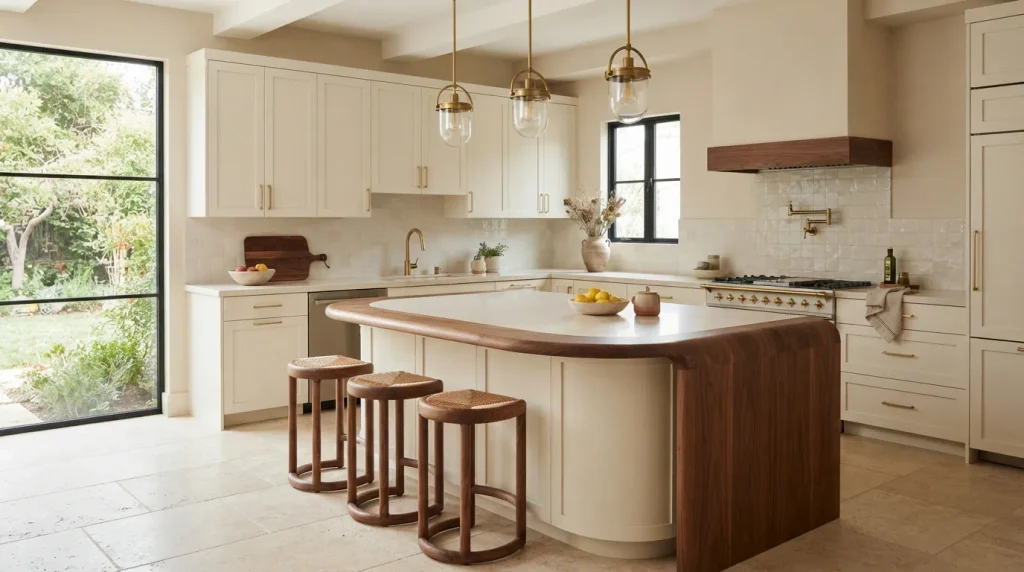
- A wood edge adds warmth to a sleek stone island.
- The rounded profile feels softer and more furniture-like.
- Natural timber creates contrast against pale cabinetry.
- A slim overhang provides comfortable everyday seating.
- Matching wood accents can visually connect the entire kitchen.
A waterfall wood edge can give a curved island a softer, more crafted appearance while keeping the overall kitchen distinctly modern. Instead of using stone across every surface, introduce warm timber along the outer edge or curved base, creating a natural transition between the countertop and cabinetry. This detail works particularly well with white, cream, or light gray kitchens because the wood adds depth without overpowering the room. The flowing grain can also emphasize the island’s rounded silhouette. For a Pinterest-worthy finish, choose simple stools, minimal accessories, and a restrained color palette that lets the materials remain the focus.
The combination of wood and stone is also practical because each material can serve a clear purpose. Use durable quartz or porcelain for the main work surface, then reserve wood for the decorative facing or seating edge where it can provide warmth and visual softness. In my experience, repeating the same timber on floating shelves, stools, or nearby cabinetry makes a mixed-material island feel intentional. Add warm pendant lights above the curve to highlight the grain after dark. The finished space feels sophisticated but approachable, with enough texture to prevent a minimalist kitchen from looking cold or overly uniform.
8. Fluted Cabinet Curve
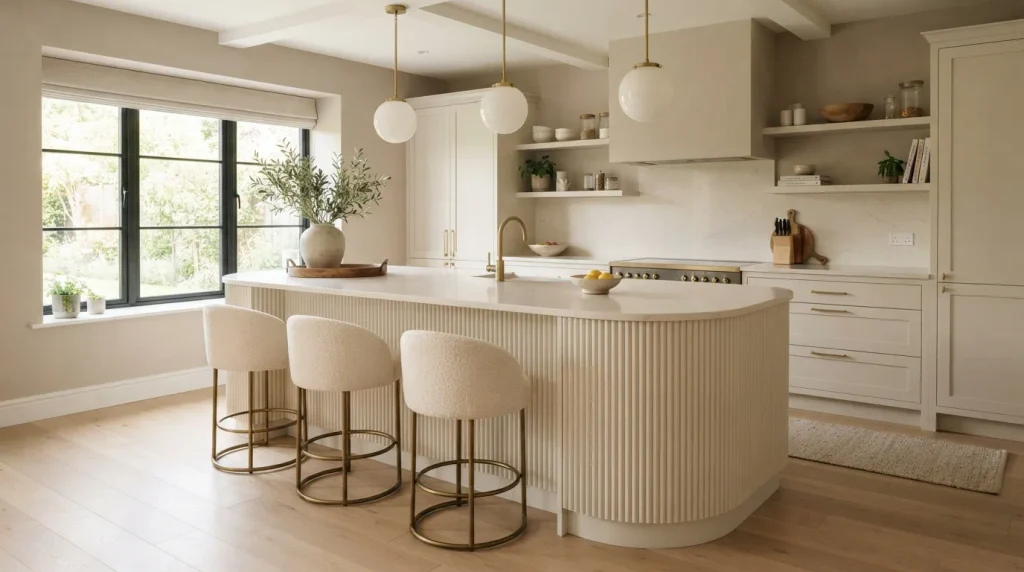
- Fluted detailing adds texture without relying on bold decoration.
- Vertical grooves emphasize the island’s graceful rounded profile.
- Neutral colors keep the textured surface sophisticated.
- Concealed storage maintains a clean, streamlined appearance.
- Soft lighting creates subtle shadows across the fluting.
Fluted cabinetry can make a rounded island feel more architectural without sacrificing the calm simplicity of a modern kitchen. Vertical grooves catch light and create delicate shadows across the curved surface, giving the island texture that changes throughout the day. This treatment works beautifully in warm neutrals such as ivory, taupe, sand, or muted sage because the detailing remains visible without becoming overwhelming. A smooth stone countertop provides a useful contrast against the textured base. I’ve noticed that fluting is especially effective when the rest of the kitchen stays relatively quiet, allowing the island to become the room’s strongest visual feature.
The curved form and vertical detailing should work together rather than compete. Keep the countertop edge simple, choose streamlined hardware, and avoid placing too many decorative objects around the island. Rounded stools can reinforce the soft geometry, while globe or linear pendant lights can provide balanced illumination above. If the kitchen has limited natural light, lighter cabinet colors will help preserve an airy feeling. This design also offers a useful way to introduce personality without bright finishes or complicated patterns. The finished island feels elegant, tactile, and custom, while still providing practical storage and generous workspace for everyday cooking.
9. Marble Accent Curve
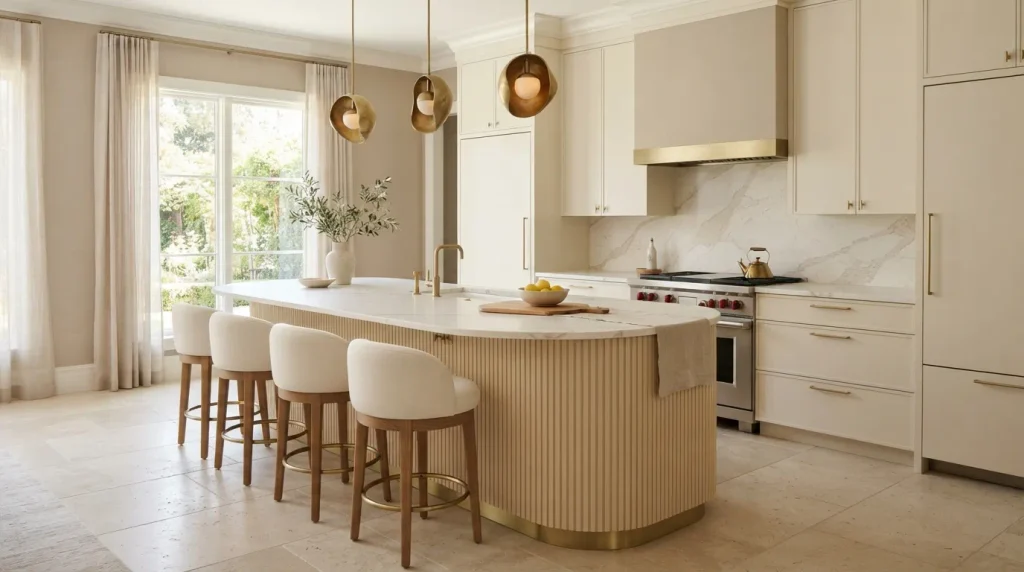
- Marble-look surfaces add instant visual sophistication.
- Soft veining gives the rounded island natural movement.
- Neutral cabinetry keeps dramatic stone from dominating.
- A curved edge makes the marble feel less formal.
- Simple lighting helps highlight the stone’s pattern.
A marble accent can transform a curved island into a striking centerpiece while keeping the rest of the kitchen understated. Rather than covering every surface with patterned stone, use marble or a convincing marble-look material on the countertop and let the rounded shape do the rest. Soft gray, beige, or taupe veining adds movement across the smooth surface, creating visual interest without introducing another color family. This is particularly effective in modern kitchens with plain cabinetry and minimal hardware. The curved edge also softens marble’s formal character, making the island feel more relaxed and approachable.
For everyday practicality, choose a countertop material suited to your cooking habits and maintenance preferences. Quartz can offer a similar veined appearance with straightforward care, while natural marble brings authentic variation and requires more attention. Keep the backsplash relatively quiet so the countertop remains the star. Add upholstered stools in cream or warm gray, then use understated pendant lighting to emphasize the island’s contour. Among stylish curved kitchen island ideas, this approach is ideal when you want a luxurious focal point without filling the entire room with elaborate finishes or decorative details.
10. Integrated Dining Curve
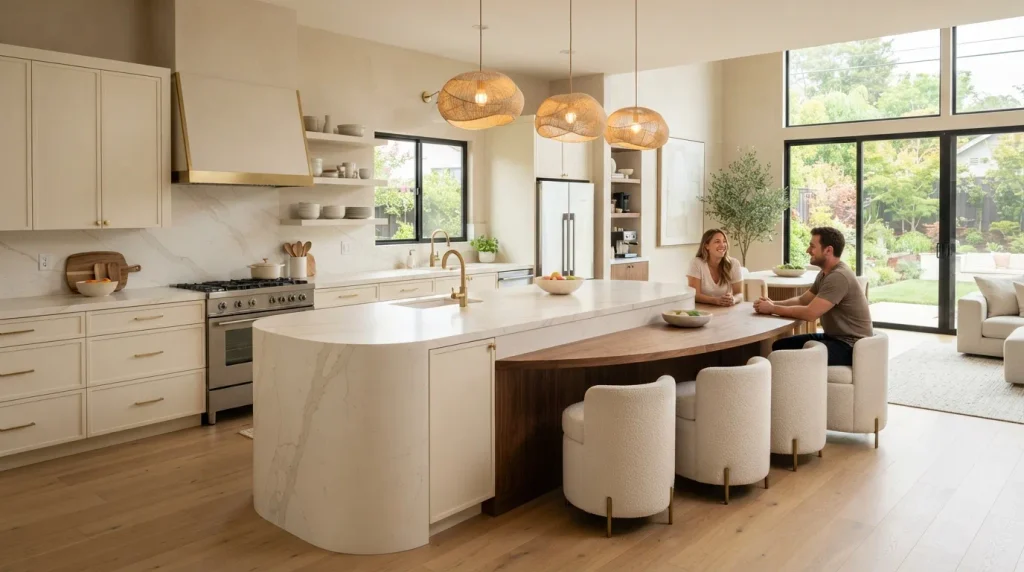
- A rounded dining extension creates a natural transition from cooking to eating.
- The integrated surface saves space in open-plan layouts.
- Matching materials make the two zones feel connected.
- Comfortable stools can replace a separate breakfast table.
- Keep the dining edge wide enough for relaxed everyday use.
An integrated dining curve turns the kitchen island into a flexible gathering space where cooking and eating happen naturally side by side. Instead of adding a separate table, extend the rounded countertop into a lower or slightly projecting dining surface. This layout works especially well in open-plan homes because it creates a gentle visual boundary without closing off the kitchen. Choose the same stone for a seamless look, or introduce warm wood for contrast. I’ve noticed that a dedicated dining edge often makes family kitchens feel more sociable because people can sit nearby without getting in the way of food preparation.
The proportions matter most when designing this type of island. Leave enough depth for plates, glasses, and comfortable arm movement, while keeping clear walking space around the curve. Rounded stools with supportive backs can make the area comfortable for longer meals, homework, or morning coffee. Soft pendant lights positioned above the dining section can visually distinguish it from the main work surface. Keep surrounding cabinetry streamlined so the island remains the central feature. This setup combines the convenience of an island with the comfort of a casual dining table, making it especially useful for busy modern households.
11. Minimal White Curve
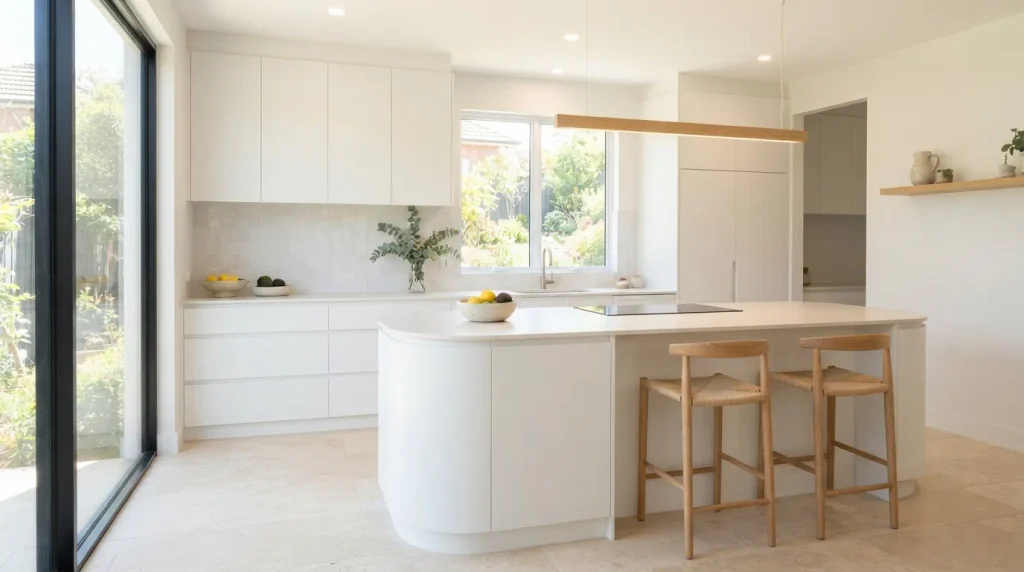
- An all-white palette makes the rounded form feel light and spacious.
- Seamless cabinetry creates a clean architectural appearance.
- Soft curves prevent minimalism from feeling too rigid.
- Natural wood stools introduce subtle warmth.
- Hidden storage keeps everyday clutter out of sight.
An all-white curved island can make a kitchen feel brighter, cleaner, and more spacious while allowing the unusual silhouette to provide visual interest. The lack of strong color shifts attention toward shape, proportion, and texture, making every curve easier to notice. This approach works particularly well in kitchens with generous natural light, where white surfaces can reflect daylight throughout the room. Pair a seamless white countertop with handleless cabinetry and simple stools for a refined appearance. In my experience, adding just a little natural wood prevents an all-white kitchen from feeling sterile while keeping the overall design calm and modern.
Texture becomes important when the color palette is intentionally restrained. Consider lightly veined quartz, matte cabinetry, ribbed stools, or a softly textured backsplash to create subtle variation without introducing visual clutter. Warm under-cabinet lighting can add depth in the evening, while concealed appliances help maintain the streamlined look. Keep decorative accessories limited to a few ceramics, a wooden tray, or fresh greenery. The result is one of those curved kitchen island ideas that feels timeless rather than trend-heavy. Its simple palette allows the architectural shape to remain the main attraction while providing a practical workspace and comfortable seating area.
12. Sage Green Curve
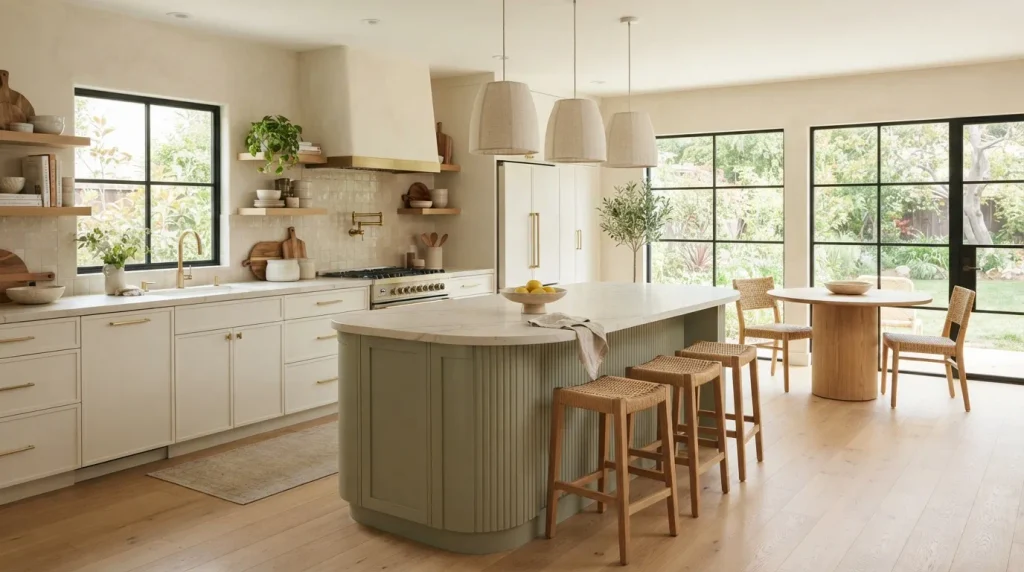
- Muted sage adds personality without overpowering the kitchen.
- The curved shape makes the color feel softer and more relaxed.
- Pale countertops create a fresh visual contrast.
- Brass hardware adds a warm finishing detail.
- Natural wood keeps the green palette grounded.
A muted sage-green island brings gentle color into a modern kitchen while keeping the overall atmosphere calm and sophisticated. The rounded shape makes the green cabinetry feel even softer, especially when paired with warm white walls and a pale stone countertop. Unlike a bright accent color, sage can blend comfortably with natural materials such as oak, rattan, linen, and stone. This makes it a versatile choice for homeowners who want more personality without committing to a dramatic color scheme. I’ve seen muted greens work particularly well when the rest of the kitchen stays neutral and uncluttered.
To keep the island looking contemporary, choose a dusty or gray-based sage rather than an overly saturated green. Add brushed brass or aged bronze hardware for warmth, then repeat the wood tone through stools or open shelving. A lightly veined countertop can connect the green cabinetry with the surrounding neutral finishes. Keep lighting soft and layered, using pendants above the island and warm illumination beneath cabinets. The result feels fresh during the day and cozy at night. This approach gives a modern kitchen a subtle color identity while preserving the practical benefits of generous counter space and integrated seating.
13. Hidden Storage Curve
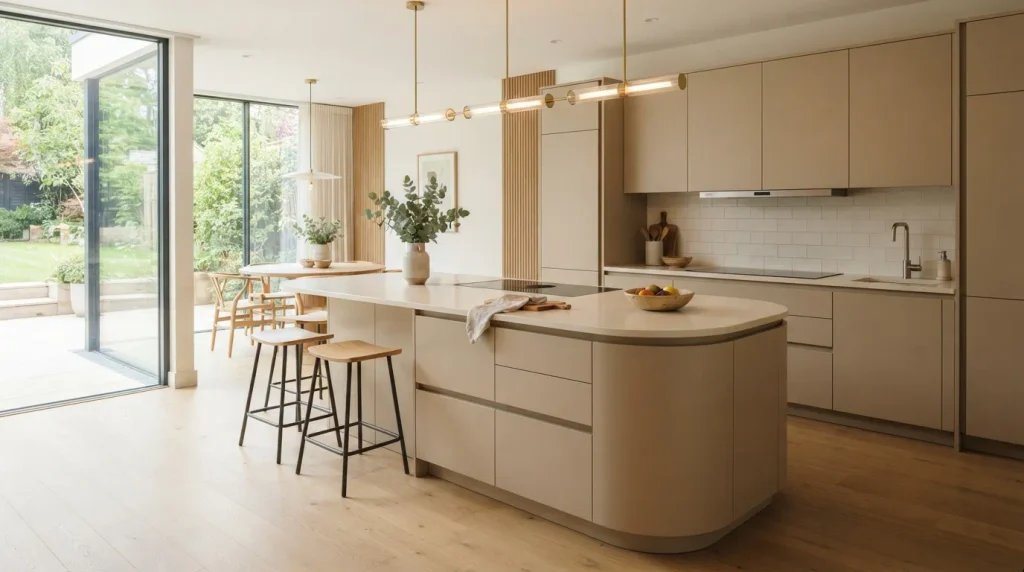
- Handleless doors keep the island looking sleek and uninterrupted.
- Rounded cabinetry creates useful storage without harsh visual lines.
- Deep drawers make cookware easier to organize.
- A clean exterior helps smaller kitchens feel less crowded.
- Integrated seating adds function without requiring extra furniture.
A beautifully curved island becomes even more useful when storage is hidden behind its smooth exterior. Handleless drawers and cabinets preserve the flowing silhouette while giving everyday cookware, serving pieces, and small appliances a dedicated home. This approach is especially valuable in busy kitchens where visible clutter can quickly distract from the room’s design. Use deep drawers for pots and pans, shallower compartments for utensils, and a concealed cabinet for larger items. In my experience, thoughtful storage planning makes a sculptural island feel far more practical because its beauty never comes at the expense of everyday convenience.
The interior organization deserves as much attention as the exterior finish. Pull-out drawers can make frequently used items easier to reach, while adjustable shelves allow storage to change as your needs evolve. Keep the outer surface simple with a matte finish, pale wood, or soft neutral cabinetry, then add a durable stone countertop for food preparation. If seating is included, leave the storage away from the knee space so guests can sit comfortably. A hidden-storage island creates a polished appearance throughout the day, helping the kitchen stay organized even when cooking, entertaining, and family routines happen simultaneously.
14. Black Base Curve
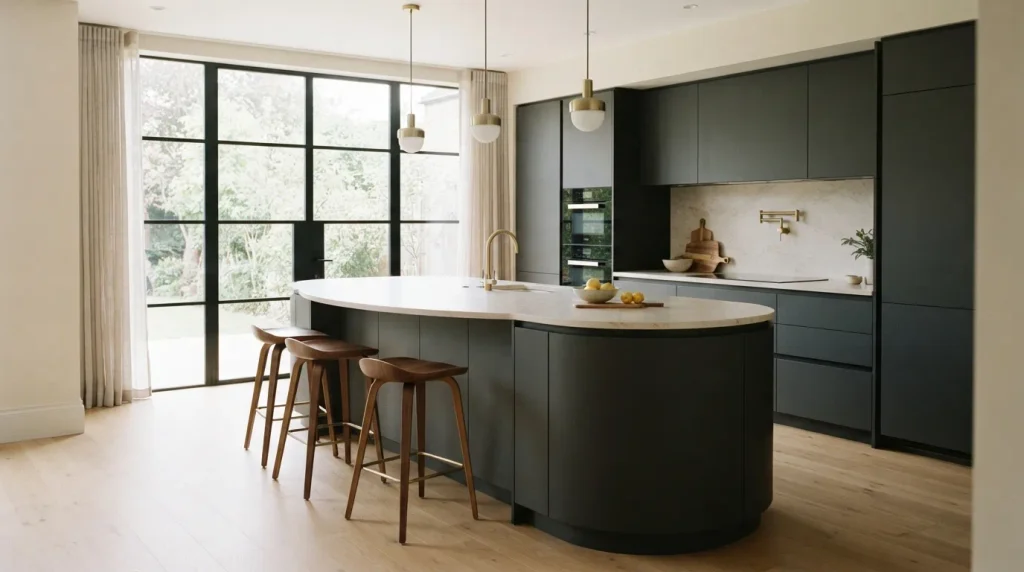
- A dark base gives the island stronger architectural presence.
- Light countertops prevent the lower cabinetry from feeling too heavy.
- Rounded edges soften the dramatic color contrast.
- Warm wood stools introduce a natural balancing element.
- Simple lighting keeps the composition sophisticated rather than stark.
A black or charcoal island base can give a modern kitchen an instant sense of structure and depth. When paired with a rounded silhouette, the dark finish feels less severe because the curved edges soften the visual weight. A pale quartz or marble-look countertop creates a crisp contrast above the darker cabinetry, making the island stand out without requiring elaborate decoration. This combination works especially well in kitchens with light walls and flooring. I’ve noticed that matte charcoal finishes are often easier to live with visually than glossy black because they create a quieter, more refined backdrop for everyday kitchen activity.
Balance is the key to making a dark curved island feel inviting rather than overpowering. Bring in warm materials through oak flooring, wooden stools, woven accessories, or subtle brass fixtures. Keep the backsplash light and use generous natural or layered lighting to prevent the lower section from disappearing into shadow. The countertop can remain visually simple so the curved outline stays clear from different viewpoints. This design gives the kitchen a confident focal point while preserving the softness that makes rounded islands appealing. It is especially effective in larger open-plan rooms where stronger contrast can anchor the space.
15. Open Shelf Curve
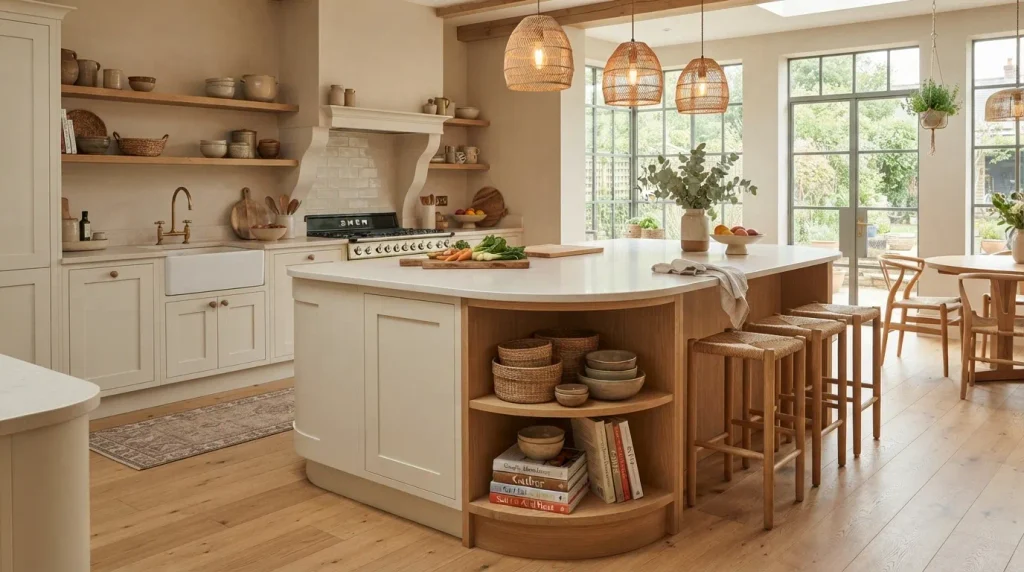
- Open shelving adds accessible storage without making the island feel bulky.
- Rounded ends keep the shelving visually connected to the island.
- Displayed ceramics can introduce color and texture.
- Closed cabinets below hide less attractive kitchen essentials.
- A restrained arrangement keeps the shelves practical and polished.
An open shelf built into a curved island adds personality while keeping frequently used pieces within easy reach. Instead of covering the entire base with closed cabinetry, reserve one section for rounded or gently recessed shelving that follows the island’s form. This creates a lighter appearance and provides space for cookbooks, bowls, wooden boards, or carefully chosen ceramics. The idea works particularly well when the shelves use a contrasting wood finish against painted cabinetry. For homeowners exploring curved kitchen island ideas, this small storage detail can make a large visual difference without adding complicated construction or unnecessary decoration.
The best open shelving looks collected rather than crowded, so choose only items that are useful or visually pleasing. Leave some empty space between pieces to let the curved architecture remain visible. Use baskets for smaller essentials and repeat materials already present elsewhere in the kitchen for a cohesive finish. Soft lighting beneath the countertop or inside the shelving can add a subtle glow after sunset. I’ve seen this approach work especially well in kitchens that need a little warmth and character because the displayed objects make the island feel more personal while the closed storage keeps everyday clutter controlled.
16. Brass Detail Curve
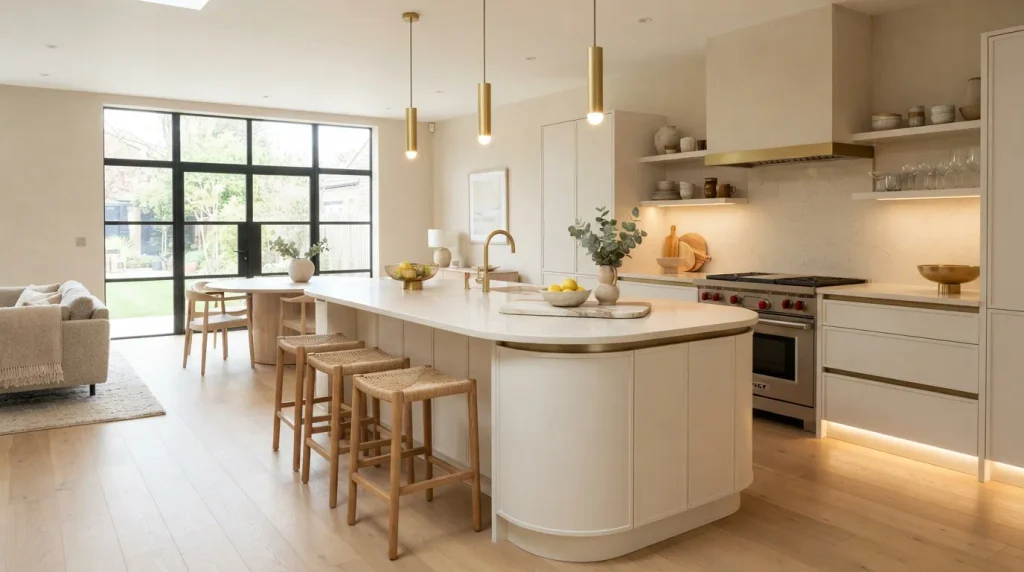
- A slim brass accent adds warmth without overwhelming the island.
- Metallic detailing can highlight the rounded profile beautifully.
- Brushed finishes feel softer and more contemporary than polished metal.
- Repeating the same brass tone elsewhere creates visual balance.
- Warm lighting helps the small details stand out after dark.
Bring a softer architectural rhythm to the kitchen with a rounded island that uses a slim brass accent as a finishing detail. A narrow brass strip along the cabinet edge, countertop junction, or integrated footrest can highlight the island’s curve without making the room feel ornate. This works especially well with creamy stone, warm white cabinetry, and natural wood because the metal adds just enough contrast to catch the eye. I’ve noticed that small metallic details often make a modern kitchen feel more finished, particularly when the same tone appears sparingly on lighting, faucets, or cabinet hardware nearby.
Keep the brass detail controlled so the island remains contemporary rather than decorative. Choose brushed or satin brass for a softer effect, then repeat it in one or two nearby fixtures for visual continuity. A curved overhang with simple stools can reinforce the relaxed geometry, while warm under-cabinet lighting makes the metal gently glow after sunset. Pair the island with pale flooring, textured walls, and understated accessories to maintain balance. The result is a refined focal point that feels polished from every angle, while the rounded shape continues to provide comfortable circulation and useful workspace for everyday kitchen routines.
17. Wood Seating Curve
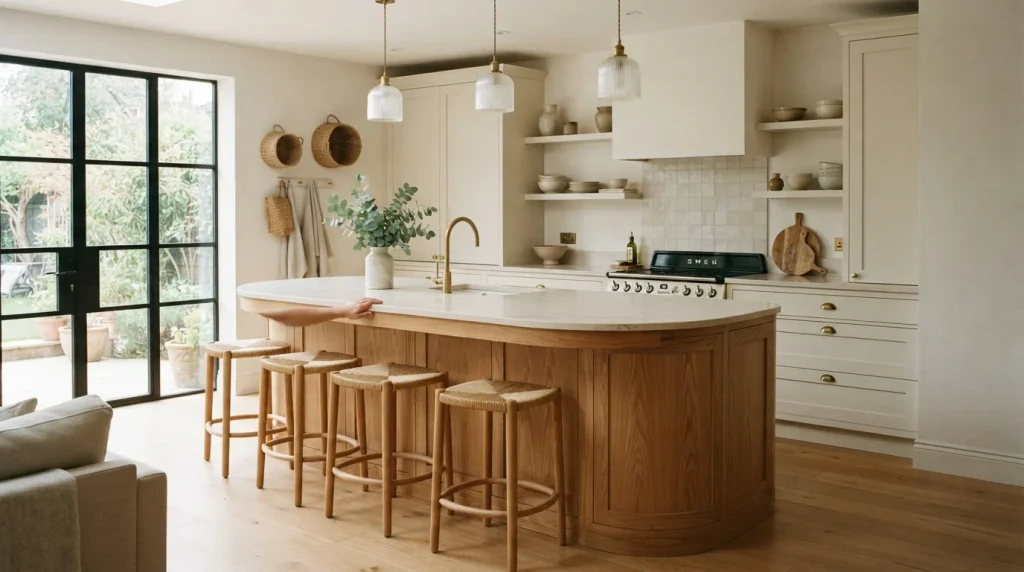
- Warm timber makes the seating area feel inviting and relaxed.
- Rounded stools reinforce the island’s flowing geometry.
- Natural materials soften sleek stone and cabinetry.
- A continuous wood tone can connect nearby kitchen features.
- Comfortable seating turns the island into a daily gathering place.
Make the island feel grounded and inviting with a curved seating area wrapped in warm natural wood. Rather than adding a separate dining table, extend the countertop around one side and use wooden stools with rounded backs to echo the island’s silhouette. This approach introduces organic texture while keeping the kitchen visually connected. The wood can be repeated through flooring, shelving, or nearby cabinetry for a cohesive palette. In my experience, natural timber helps large modern kitchens feel less clinical, especially when paired with smooth stone and simple cabinetry. The curved seating zone also creates an easy place for conversation.
Choose a wood tone that complements the existing kitchen rather than competing with it. Light oak creates an airy Scandinavian feeling, while walnut brings richer contrast and a more sophisticated mood. Keep the countertop pale and durable, then leave enough overhang for comfortable knees and movement around the stools. Soft pendant lights above the seating area can visually define the zone without adding walls. A few ceramics or a small bowl of fruit can finish the surface without clutter. The result is a practical gathering spot that makes the island feel like furniture, not simply another work surface.
18. Continuous Stone Sweep
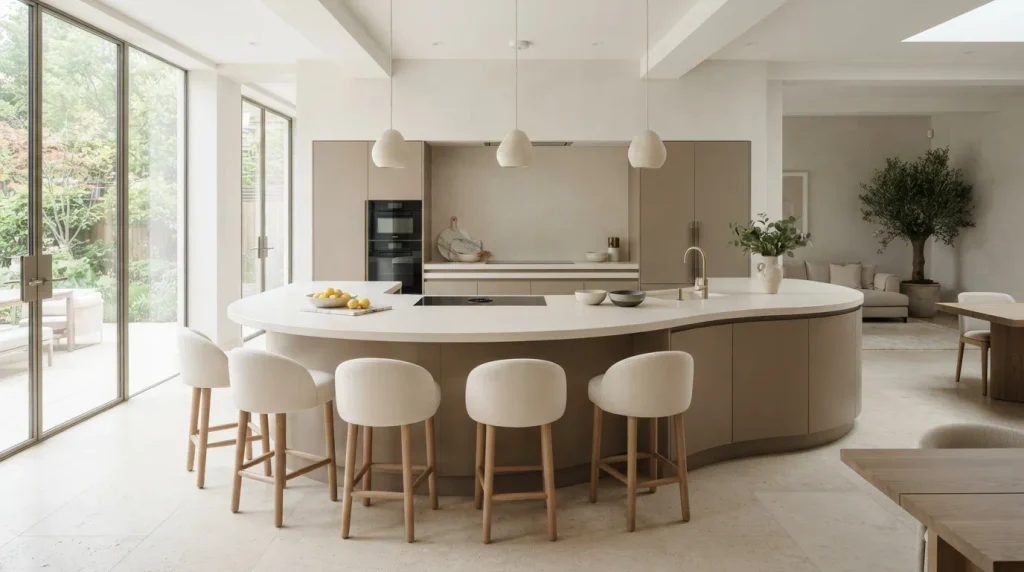
- A seamless countertop creates a strong sculptural effect.
- Continuous material makes the rounded profile easier to appreciate.
- Minimal cabinetry keeps attention on the flowing edge.
- Pale stone helps the island feel spacious and refined.
- The sweeping form improves visual flow across open-plan rooms.
A rounded island becomes especially striking when the countertop extends in a smooth continuous sweep, creating a clean sculptural outline from end to end. This uninterrupted profile works beautifully in minimalist kitchens because there are fewer visual breaks competing with the architecture. Use a single stone or solid-surface material across the counter, then pair it with understated cabinetry in warm white, taupe, or natural wood. The continuous curve can guide movement around the room and make the island feel generous without relying on excessive decoration. This is a strong choice when you want simplicity to create the visual impact.
Keep the rest of the kitchen deliberately quiet so the sweeping countertop remains the hero. Flat-front cabinets, a subtle backsplash, and minimal hardware allow the continuous edge to read clearly from the entryway and adjoining living spaces. Rounded stools can sit beneath one section without interrupting the overall line, while concealed storage keeps the surface tidy. I’ve seen continuous curves work particularly well in open-plan homes because they soften the transition between kitchen and lounge areas. The finished design feels calm and architectural, yet it still provides generous room for preparation, serving, seating, and everyday family activity.
19. Integrated Appliance Curve
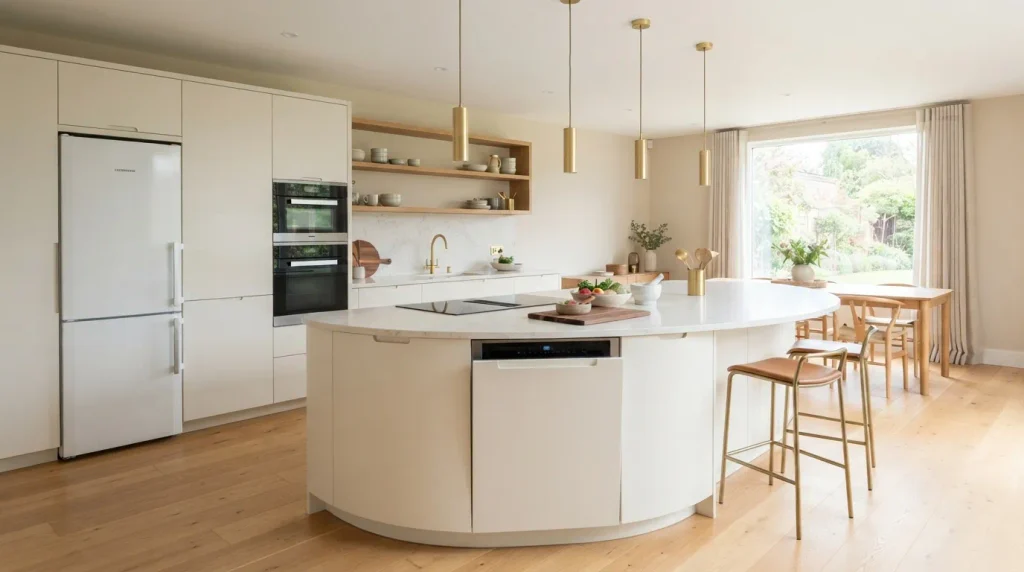
- Built-in appliances keep the island visually streamlined.
- Concealed panels help appliances blend with the cabinetry.
- A rounded layout can improve movement between work zones.
- Dedicated prep space keeps cooking tasks organized.
- Integrated storage preserves the clean exterior.
A curved island with integrated appliances keeps the kitchen looking seamless while making everyday tasks easier. By placing a cooktop, sink, or dishwasher within the rounded layout, you can reduce unnecessary movement between separate work zones. The curved countertop also softens the visual presence of appliances, especially when paired with handleless cabinetry and concealed storage. This arrangement is particularly useful in open-plan kitchens where the island is visible from dining and living areas. In my experience, the best results come from keeping frequently used appliances close together while preserving a clear section of countertop for serving, prep, and casual seating.
Function should guide the shape, so plan appliance placement before choosing the final curve. Keep the sink or cooktop positioned where it will not interfere with seating, and leave enough uninterrupted counter space for chopping or placing hot dishes. Integrated panels can conceal dishwashers and compact appliances, helping the island maintain a furniture-like appearance. Good lighting is equally important, with focused illumination over work areas and softer fixtures around the seating edge. The finished kitchen feels streamlined because the practical elements are built into the design rather than added afterward, creating a smooth balance between performance, storage, and visual simplicity.
20. Layered Island Lighting
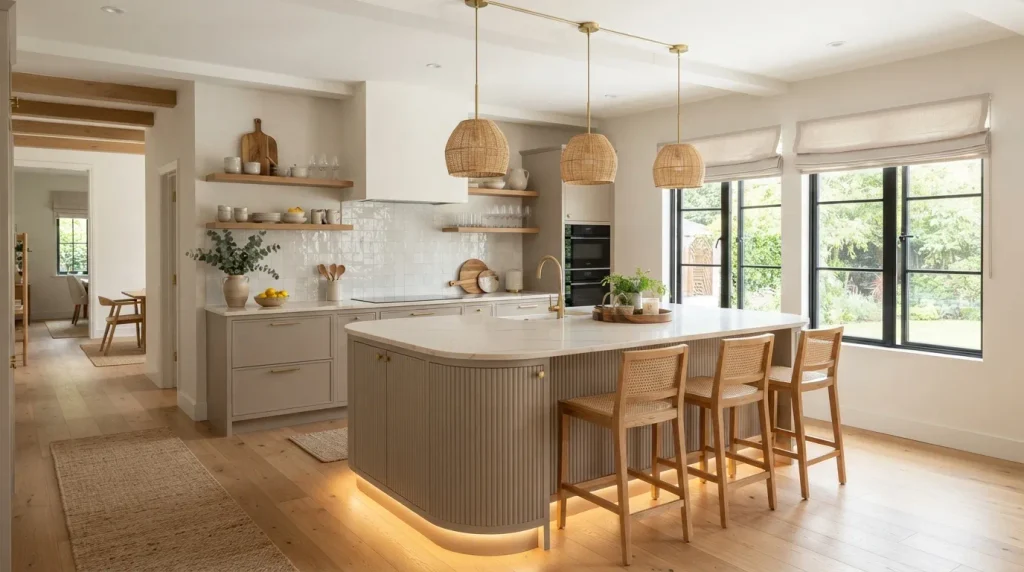
- Layered lighting makes the curved silhouette visible after dark.
- Pendant placement can follow the island’s natural movement.
- Warm illumination creates a softer evening atmosphere.
- Task lighting keeps food preparation practical.
- Subtle under-counter lighting adds depth without visual clutter.
A softly curved island can become the centerpiece of an open-plan kitchen when its lighting is designed to emphasize the shape. Instead of relying on one central fixture, layer pendant lights, recessed ceiling lighting, and subtle under-counter illumination to create depth. Warm light works particularly well with natural wood, cream stone, and neutral cabinetry because it highlights textures without making the space feel harsh. Position pendants carefully so they follow the island’s curve rather than forming a rigid straight line. The result is a welcoming focal point that remains practical for cooking while looking polished from nearby living areas.
Lighting should also change with the time of day, so combine bright task illumination with softer ambient sources. Adjustable recessed lights can brighten the work surface during meal preparation, while concealed LED strips can gently outline the island after sunset. Choose fixtures with simple silhouettes so the lighting supports the architecture instead of competing with it. In my experience, warm layered lighting makes rounded islands feel especially inviting because shadows follow the curved edges naturally. Add a few low-profile decorative pieces, keep the countertop uncluttered, and let the island’s shape remain visible from multiple viewpoints throughout the open-plan space.
21. Curved Beverage Station
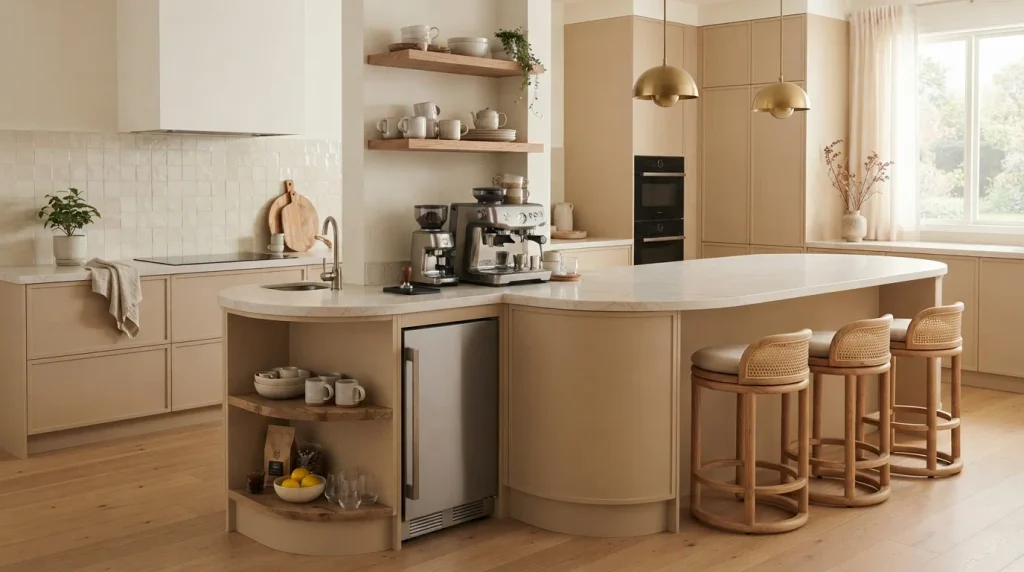
- A dedicated drink zone reduces traffic around the main prep area.
- Under-counter storage keeps supplies organized and hidden.
- Open shelving can display attractive mugs and glassware.
- The rounded counter creates an easy gathering spot.
- Matching finishes help the station blend into the island.
A curved island with a built-in beverage station can turn an unused section of countertop into a useful kitchen zone. Create a dedicated area for coffee, tea, water, or casual drinks with an under-counter refrigerator, concealed storage, and a small preparation surface. The rounded edge makes this station feel integrated rather than tacked on, while open shelving can display mugs or glassware. This setup is especially convenient for households where people gather in the kitchen daily. I’ve noticed that separating beverage preparation from the main cooking zone can also reduce congestion during busy mornings or entertaining.
Keep the beverage area compact and organized so it remains attractive between uses. A shallow cabinet can store coffee supplies, tea, napkins, and extra cups, while a small drawer keeps accessories close at hand. Choose materials that echo the main island, such as matching stone, warm wood, or the same cabinet color, so the station feels intentional. A softly curved counter edge can provide enough room for two people to gather without blocking the primary work zone. Add one attractive tray, a ceramic container, or a small plant for warmth, but avoid filling the surface with equipment that creates clutter.
Conclusion
The right curved island can make a kitchen feel softer, more spacious, and much more connected. Whether you love natural wood, bold dark cabinetry, elegant stone, hidden storage, or a cozy breakfast bar, these curved kitchen island ideas offer plenty of ways to create a space that works beautifully every day. Start with the shape, materials, and functions that suit your home, then build around those choices. I’ve seen how thoughtful details can completely transform a kitchen without making it feel overdesigned. Save this post on Pinterest for inspiration, try your favorite idea, and share it with someone planning their dream kitchen.