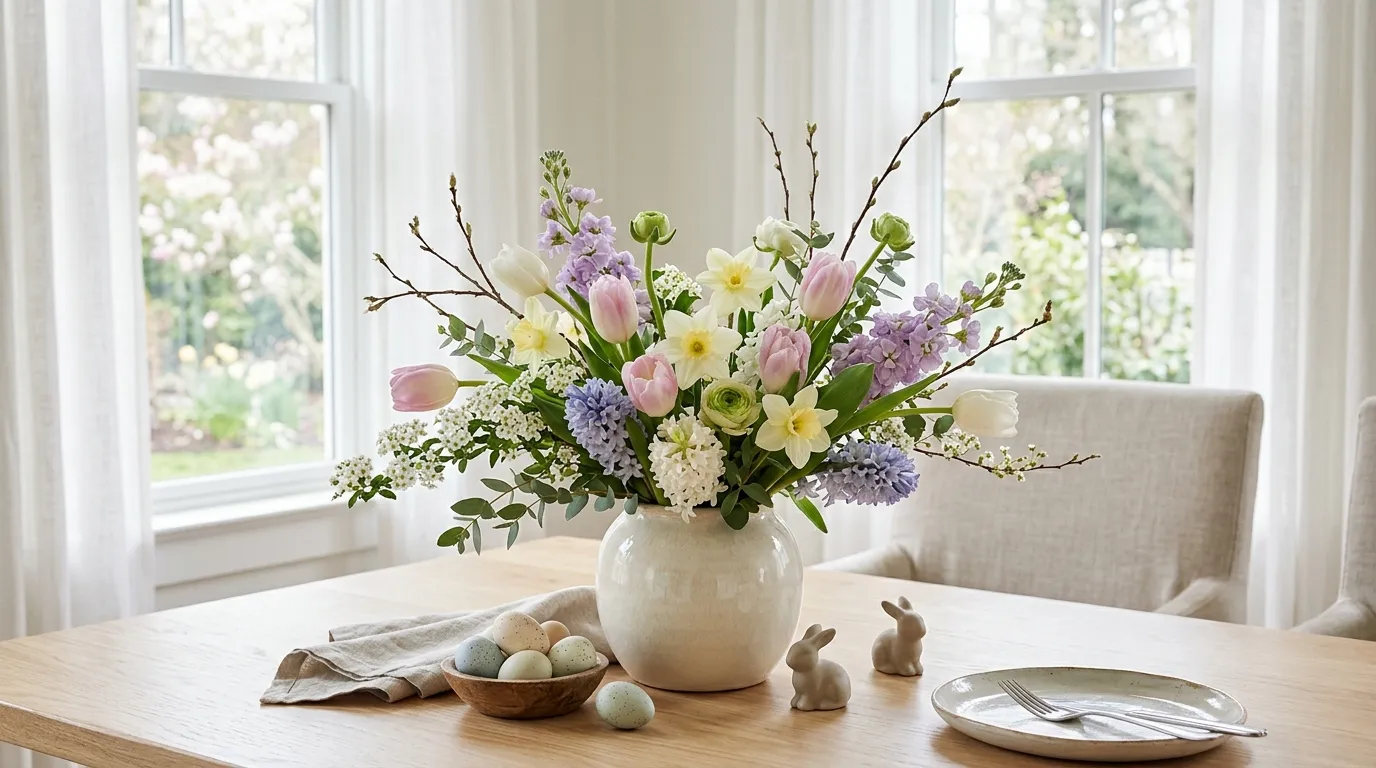
Spring is the perfect time to bring fresh color, texture, and natural beauty into your home.
A few flowers can completely change the feeling of a room.
These easter flower arrangements offer beautiful, practical ways to decorate your home for Easter while welcoming the freshness of spring. Whether you love soft pastels, cheerful yellow blooms, elegant white flowers, rustic baskets, or colorful mixed bouquets, there is an idea here for your style. You’ll find arrangements for dining tables, entryways, consoles, kitchen counters, and other everyday spaces. The goal is not to create complicated displays, but to make simple floral choices that feel intentional and inviting. In my experience, combining seasonal flowers with natural materials like glass, ceramic, wicker, and wood can make a room feel instantly warmer. Use these ideas to create a spring home that feels fresh, personal, and ready for Easter gatherings.
1. Tulip Table Centerpiece
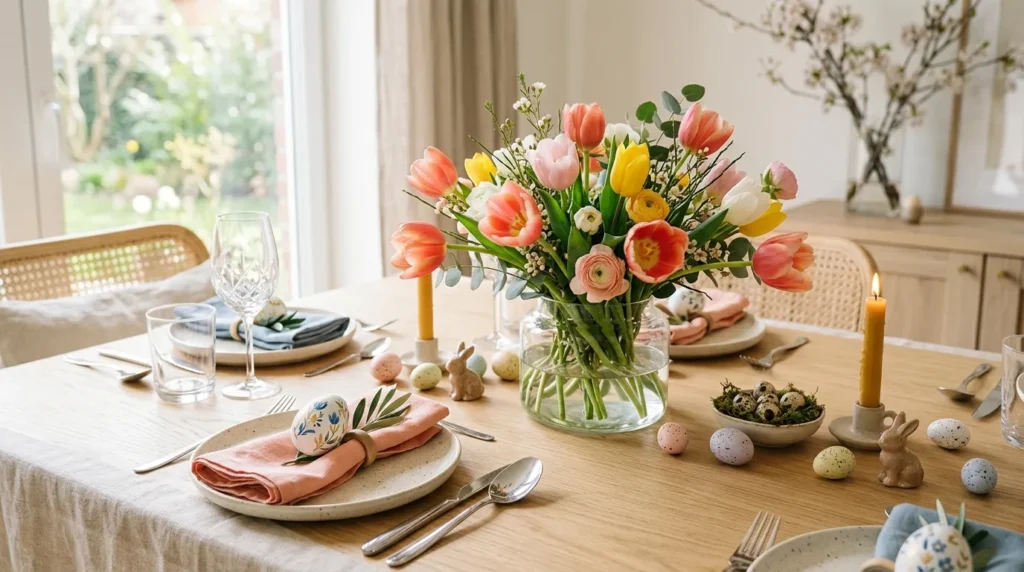
- Bright tulips instantly bring cheerful spring color to the table.
- A low vase keeps conversations comfortable during Easter meals.
- Mixed tulip shades create a relaxed, garden-inspired look.
- Slightly curved stems add natural movement and softness.
Nothing brightens a spring table faster than a cheerful tulip centerpiece. Choose a low glass vase and fill it with coral, blush, yellow, and white tulips for an easy arrangement that feels fresh without looking overly formal. Keeping the stems slightly varied creates a relaxed, gathered-from-the-garden appearance. This style works especially well on dining tables because the low profile keeps conversations open across the centerpiece. I’ve noticed that tulips also look beautiful when a few stems naturally bend outward, adding movement. Pair the flowers with pastel napkins, light ceramics, and simple Easter accents for a polished spring setting.
For longer-lasting color, trim the tulip stems at an angle and place them in clean, cool water before arranging. Refresh the water every day or two and remove fading blooms as needed. A transparent vase lets the green stems become part of the display, which makes the arrangement feel lighter and more contemporary. If your table is narrow, use two small matching vases instead of one large centerpiece. In my experience, repeating one flower color in nearby napkins or dishes helps the entire table feel coordinated. Add a few painted eggs sparingly, keeping the flowers as the main focal point.
2. Rustic Basket Blooms
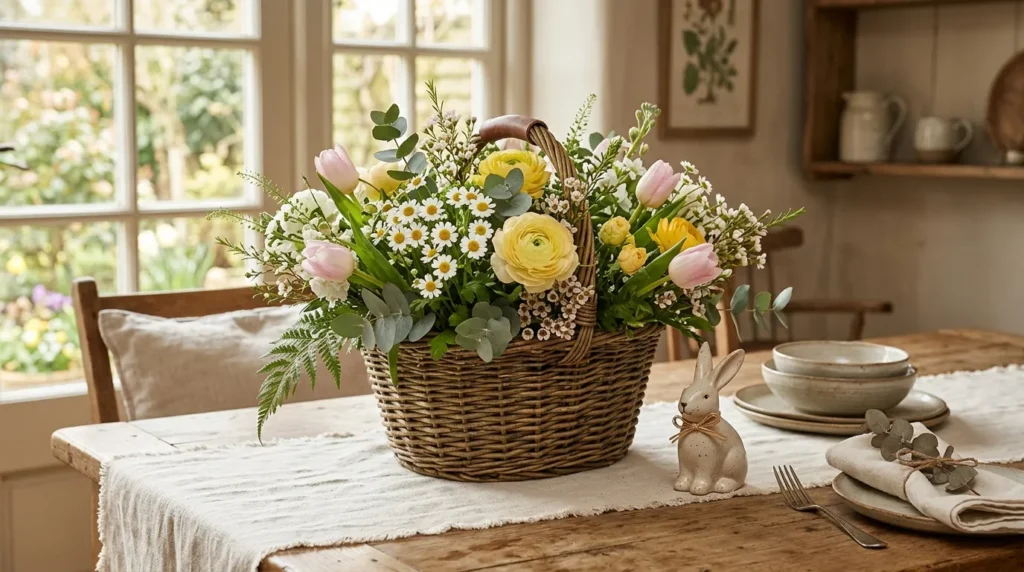
- A woven basket adds warmth and farmhouse texture.
- Mixed flowers create a full, abundant spring display.
- The low basket works on several surfaces around the home.
- Natural materials keep Easter decorating relaxed and inviting.
A rustic basket can turn simple spring flowers into a centerpiece with instant farmhouse charm. Use a shallow woven basket lined with a waterproof container, then arrange white daisies, pale pink tulips, yellow ranunculus, and fresh greenery inside. The varied shapes make the display feel abundant without requiring complicated floral skills. This idea works beautifully on an entry table, kitchen island, or dining room because the basket adds texture as well as color. For Easter flower arrangements, natural materials like wicker and unfinished wood create a warm seasonal feeling that feels collected rather than overly decorated.
Keep the arrangement slightly loose instead of packing every space with blooms. Place the tallest stems toward the center or back, then add shorter flowers around the edges to create a gentle dome shape. A few trailing leaves can soften the basket outline and make the display feel more organic. I’ve seen this work well in homes where neutral furniture needs a seasonal lift. Choose flowers that share two or three colors with your existing decor, then add one small Easter detail, such as a ceramic bunny or painted egg. The result feels cheerful while remaining easy to live with.
3. White Spring Pitcher
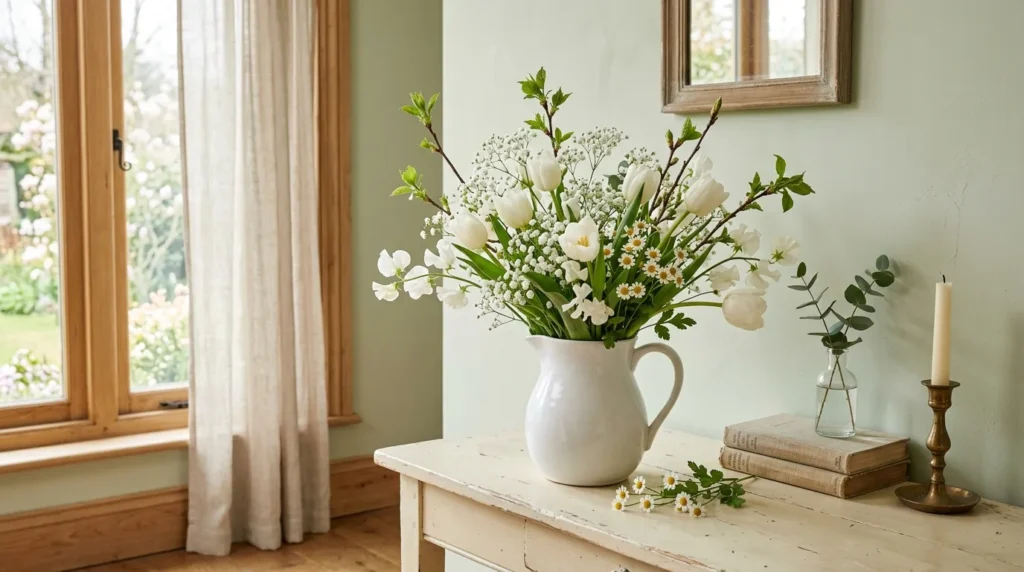
- White flowers create a clean, timeless spring display.
- Green branches add height and natural movement.
- A ceramic pitcher feels charming and effortlessly collected.
- The limited palette works with many interior styles.
For a softer spring display, combine delicate white flowers with fresh green branches in a simple ceramic pitcher. Baby’s breath, white tulips, sweet peas, or small daisies can create an airy arrangement, while budding branches provide height and structure. The limited palette feels elegant but still seasonal, making it suitable for both everyday decorating and Easter gatherings. Place the pitcher on a console, mantel, or dining table where natural light can highlight the flowers. This is one of those arrangements that proves you do not need many colors to create a noticeable spring transformation in a room.
Choose a pitcher with a slightly irregular shape or handmade finish to keep the arrangement from feeling too formal. Start with the branches, placing taller stems toward the back, then add white flowers at different heights around the base. Let a few stems extend beyond the main silhouette so the display feels natural. I’ve noticed that this approach works particularly well against soft beige, cream, or pale green walls because the greenery becomes more visible. Change the water regularly and remove fading stems, and the simple display can continue looking fresh while complementing other Easter decorations nearby.
4. Pastel Egg Vase
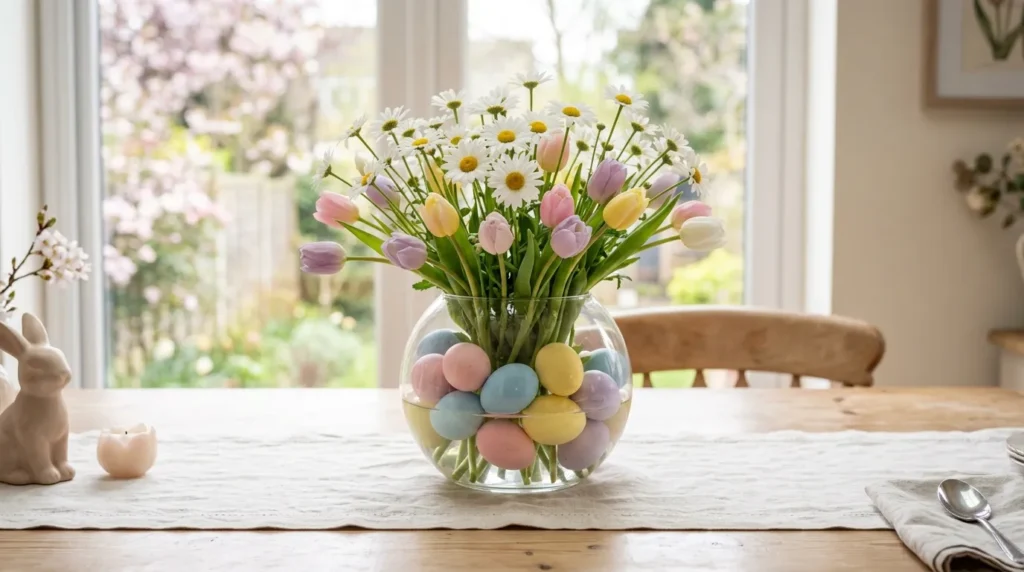
- Painted eggs add an unmistakable Easter detail.
- A clear vase keeps the arrangement light and playful.
- Pastel colors create a soft spring palette.
- Small blooms work beautifully with the delicate display.
A clear glass vase filled with pastel eggs can turn a simple bouquet into a playful Easter centerpiece. Place colorful painted eggs around the bottom of the vase, then add fresh flowers such as white daisies, tulips, or small ranunculus above them. The transparent glass lets the eggs remain visible while the flowers provide height and freshness. Choose a gentle mix of blush, pale yellow, lavender, and soft blue for a classic spring palette. This arrangement works especially well on dining tables, kitchen counters, or entry consoles where its cheerful details can be appreciated from several angles.
Use lightweight faux eggs if you want to reuse the centerpiece from year to year, or choose real decorated eggs for a temporary holiday display. Keep the bouquet relatively small so the eggs remain an important visual element rather than disappearing beneath the flowers. In my experience, a narrow glass vase works best because it creates enough vertical height while keeping the arrangement compact. Place the display on a neutral runner or wooden surface to let the pastel colors stand out. Add a few matching napkins or small ceramic accents nearby, but avoid overcrowding the arrangement.
5. Daffodil Mason Jar
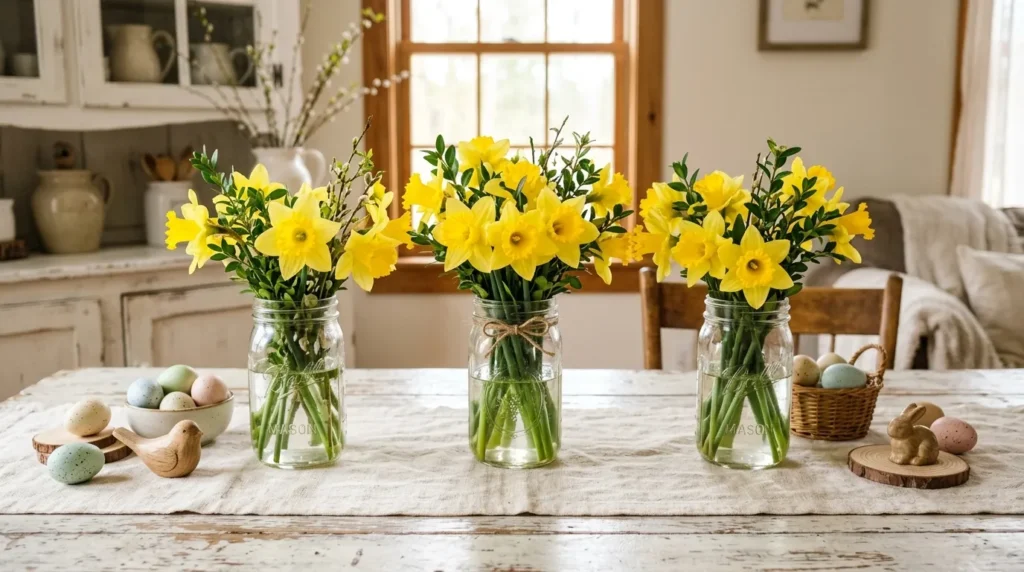
- Yellow daffodils instantly brighten darker corners.
- Mason jars create an affordable casual display.
- Several small jars can decorate a long table beautifully.
- Fresh greenery adds contrast to vivid yellow petals.
Bright yellow daffodils bring an instant burst of spring energy to any room. Instead of placing them in one large vase, divide a bouquet among several clear mason jars for a simple arrangement that feels casual and abundant. The small containers are especially useful along a dining table because they keep sightlines open while adding repeated pops of color. Pair the flowers with a cream linen runner, natural wood, and a few pastel Easter accents. This approach is inexpensive, easy to recreate, and flexible enough to work in kitchens, entryways, breakfast nooks, or living spaces.
Fill each jar with fresh water and trim the stems to slightly different heights so the group feels natural rather than perfectly uniform. You can also tie a thin ribbon or piece of twine around each jar for a subtle decorative detail. I’ve noticed that odd-numbered groupings often look more balanced when arranging small vessels, so three or five jars can create an easy rhythm. Keep the surrounding decor neutral to let the yellow flowers provide the visual energy. Once the blooms fade, replace them with another seasonal flower while keeping the same jars and arrangement style.
Also Read : 21 Contemporary Coastal Living Room Ideas to Try
6. Lavender Easter Bouquet
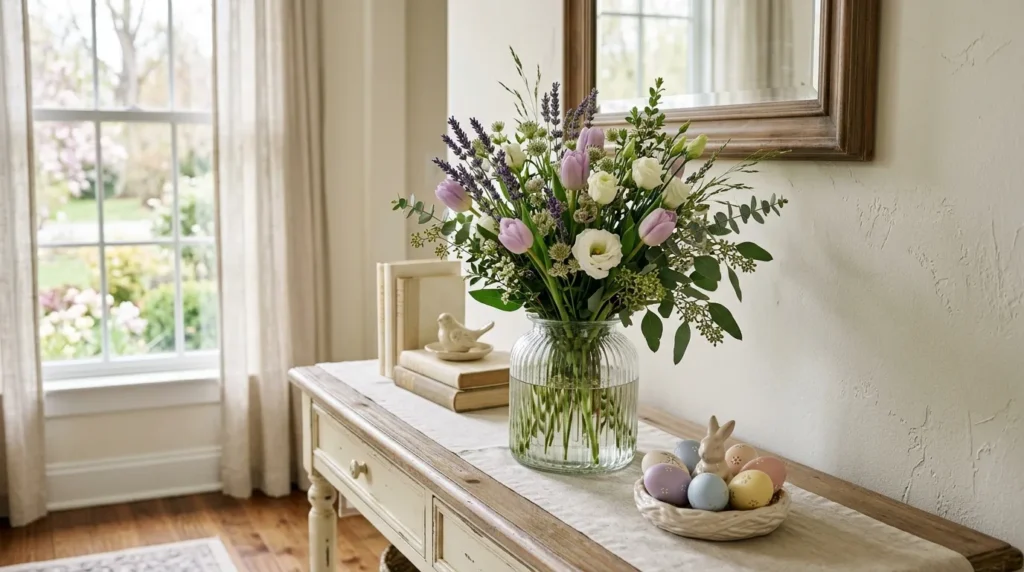
- Lavender tones create a calming spring atmosphere.
- Purple flowers add gentle contrast to pastel decor.
- A mixed bouquet feels fuller and more natural.
- Soft greenery prevents the arrangement from looking too monochromatic.
A lavender-toned bouquet brings a quieter, more sophisticated take on Easter decorating. Combine pale purple tulips, lavender stems, white lisianthus, and soft eucalyptus in a clear or lightly tinted vase. The cool purple shades create gentle contrast against cream walls and natural wood while still feeling unmistakably springlike. This arrangement is ideal when you prefer seasonal decor that looks elegant rather than overly colorful. Place it on a dining table, console, or bedside table where the delicate flowers can become a small focal point. The combination feels fresh, calming, and easy to incorporate into an existing neutral home.
To keep the bouquet visually interesting, mix flowers with different petal shapes and heights instead of using one variety throughout. Let some greenery extend beyond the main flower cluster for a more natural silhouette. A ribbed glass vase can add subtle texture without competing with the blooms. In my experience, lavender and ivory pair especially well with light oak, woven baskets, and warm white textiles. Add one or two pale purple Easter eggs nearby if desired, but keep the accessories restrained. The flowers should remain the main feature, creating a graceful seasonal update that can transition naturally into late spring.
7. Forsythia Branches
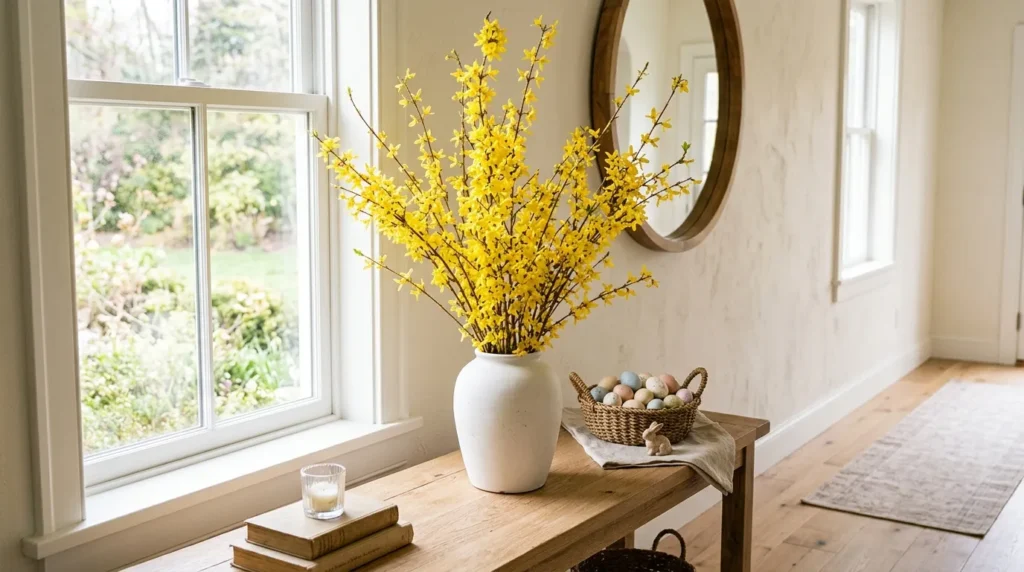
- Tall branches create dramatic spring height.
- Bright yellow blossoms add cheerful seasonal color.
- A simple vessel keeps the display contemporary.
- Bare stems provide an airy, sculptural effect.
Forsythia branches are perfect when you want a spring arrangement with height, movement, and plenty of visual impact. Their slender stems covered in tiny yellow blossoms create a naturally sculptural shape that needs very little styling. Place several branches in a tall ceramic vase and allow them to spread outward rather than forcing a perfectly symmetrical form. The bright yellow flowers bring cheerful energy to neutral rooms, while the bare sections of each branch keep the arrangement visually light. This look works especially well on consoles, entry tables, or dining surfaces where extra height can create balance.
Choose a sturdy vase with enough weight to support the branches, especially if you are using a large arrangement. A matte white or soft beige vessel keeps the focus on the yellow blossoms, while a darker ceramic option creates stronger contrast. Trim the stems at different lengths before arranging them, then rotate the vase as you work so the branches distribute naturally. I’ve noticed that these branches often look better with plenty of open space between stems. Keep nearby Easter decorations minimal, allowing the tall silhouette and bright blooms to provide most of the seasonal character.
8. Ranunculus Bowl
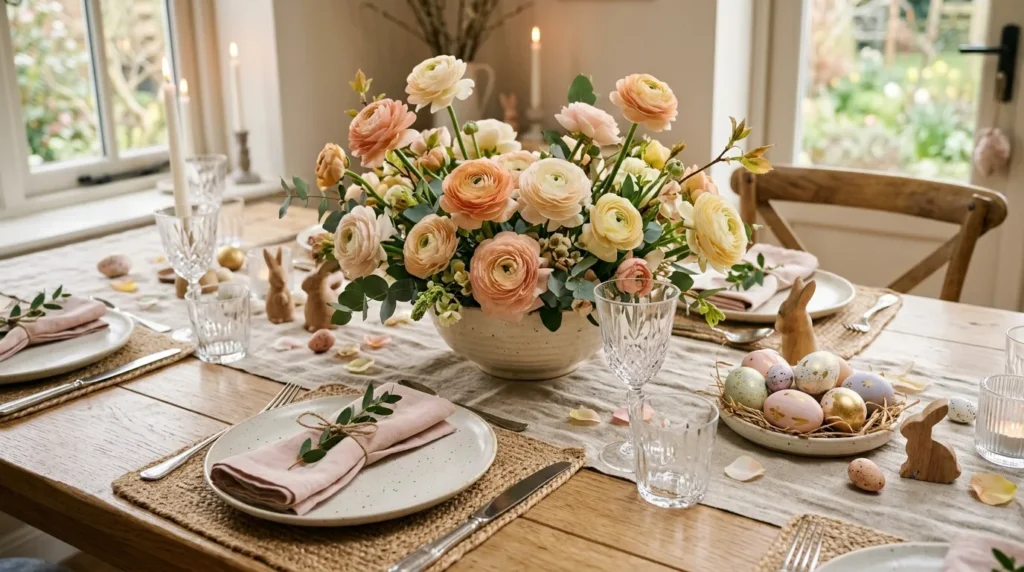
- Ranunculus creates a lush, layered floral display.
- A shallow bowl keeps the arrangement low and full.
- Mixed pastel colors add cheerful spring dimension.
- Compact sizing makes it practical for dining tables.
A shallow bowl filled with ranunculus creates a lush centerpiece that feels abundant without taking over the table. Choose flowers in peach, blush, cream, pale yellow, or soft coral, then arrange them closely so the layered petals create a rounded, garden-like shape. The low profile keeps the centerpiece practical for meals and conversations, while the full blooms provide plenty of visual impact. This style is especially beautiful when paired with natural wood, linen table runners, and simple ceramic dinnerware. It brings a romantic spring feeling to the table without requiring complicated floral design techniques.
Start by placing floral foam or a small water-filled container inside the bowl, depending on the vessel and flowers you choose. Arrange the outer flowers slightly lower, then build toward the center for a gentle dome shape. Add a few leaves around the edges to soften the transition between flowers and bowl. In my experience, ranunculus looks most elegant when the color palette stays limited to three or four shades. Add a few small painted eggs around the base rather than inside the arrangement. This keeps the centerpiece seasonal while allowing the flowers to remain the main attraction.
9. Tulip Wreath Vase
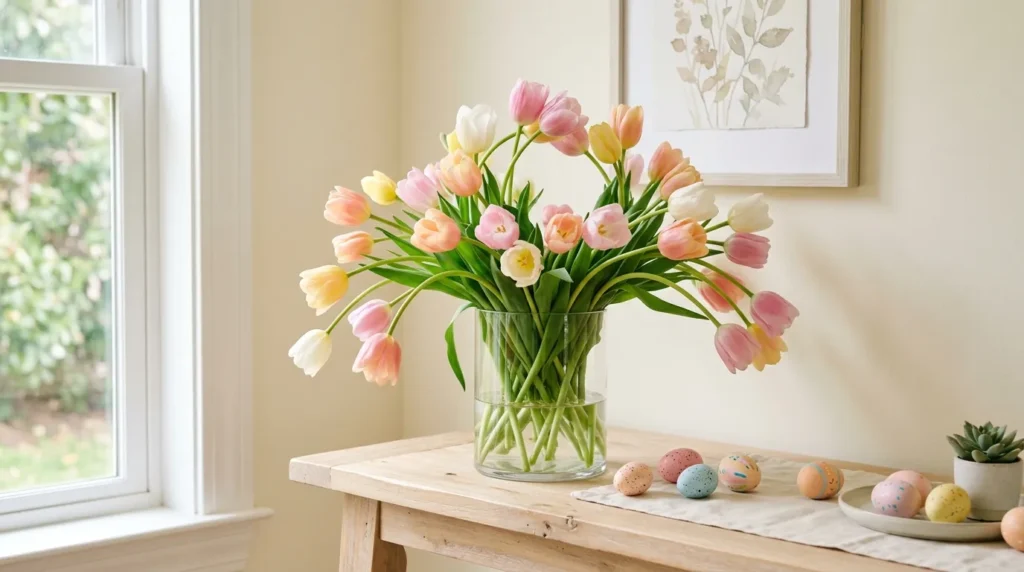
- A circular tulip arrangement creates a distinctive silhouette.
- Curved stems bring natural movement to the display.
- Soft pastel flowers reinforce the Easter palette.
- A simple vase keeps the design visually clean.
A loose circular tulip arrangement creates a playful silhouette that feels different from a traditional upright bouquet. Choose tulips in blush pink, peach, yellow, and white, then allow their naturally curved stems to bend outward around the vase. The result creates a soft wreath-like shape while keeping the flowers fresh and dimensional. A clear cylindrical vase works particularly well because it lets the green stems become part of the design. Place the arrangement on a console, dining table, or kitchen island where its rounded shape can be seen clearly from multiple angles.
The trick is working with the natural movement of the tulips rather than forcing every stem into place. Trim some stems shorter and leave others longer so the flowers create an uneven circular outline. Keep the vase filled with fresh water and turn the arrangement occasionally because tulips continue growing after they are cut. I’ve noticed that their gentle movement makes this style feel especially lively in bright rooms. Add only a few Easter accents nearby, such as ceramic eggs or a small bunny, so the unusual flower shape remains the centerpiece and the overall display stays refined.
10. Daisy Egg Basket
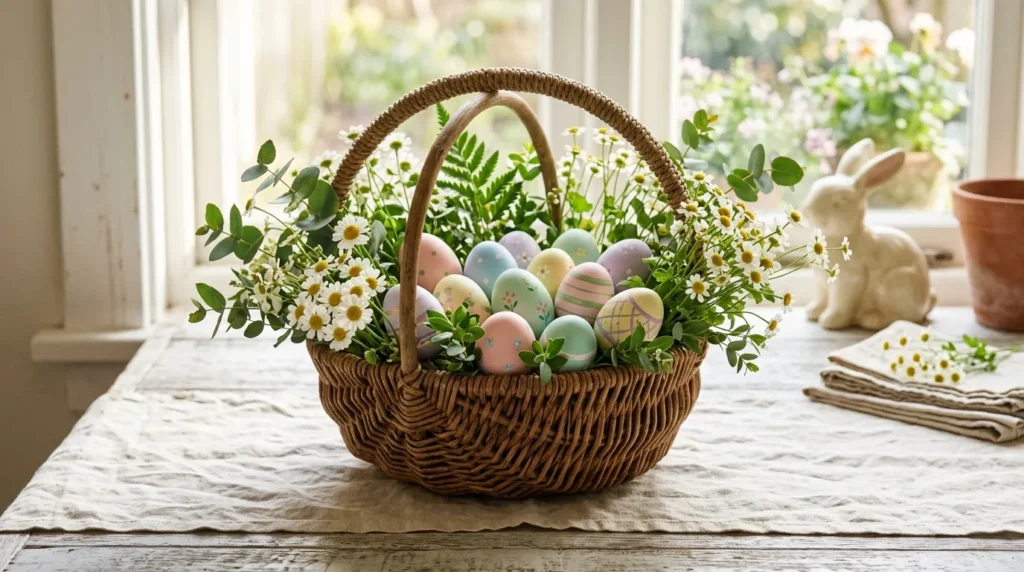
- White daisies create a fresh, cheerful focal point.
- A basket adds natural Easter character.
- Small eggs provide a playful seasonal detail.
- Green foliage keeps the arrangement looking lively.
A daisy-filled Easter basket brings together two classic spring elements in one easy display. Use a shallow woven basket and fill it with white daisies, small yellow flowers, fresh greenery, and a handful of pastel painted eggs. The combination feels cheerful without becoming overly themed, especially when the basket and surrounding furniture use natural materials. This arrangement works beautifully on a dining table, kitchen island, entry bench, or coffee table. The open basket shape also gives the flowers room to spread naturally, creating a relaxed garden-inspired look that feels welcoming from every angle.
For a fuller display, place a waterproof container inside the basket before adding fresh flowers and water. Arrange greenery first, then position larger blooms around the edges before filling open spaces with smaller flowers. Tuck a few lightweight eggs between the stems, keeping them visible without hiding the flowers. In my experience, white daisies are particularly versatile because they pair easily with almost any pastel color. Add a cream runner or light wood surface underneath, then keep other decorations simple. The finished display feels festive enough for Easter while remaining fresh and natural throughout the spring season.
11. Peach Blossom Display
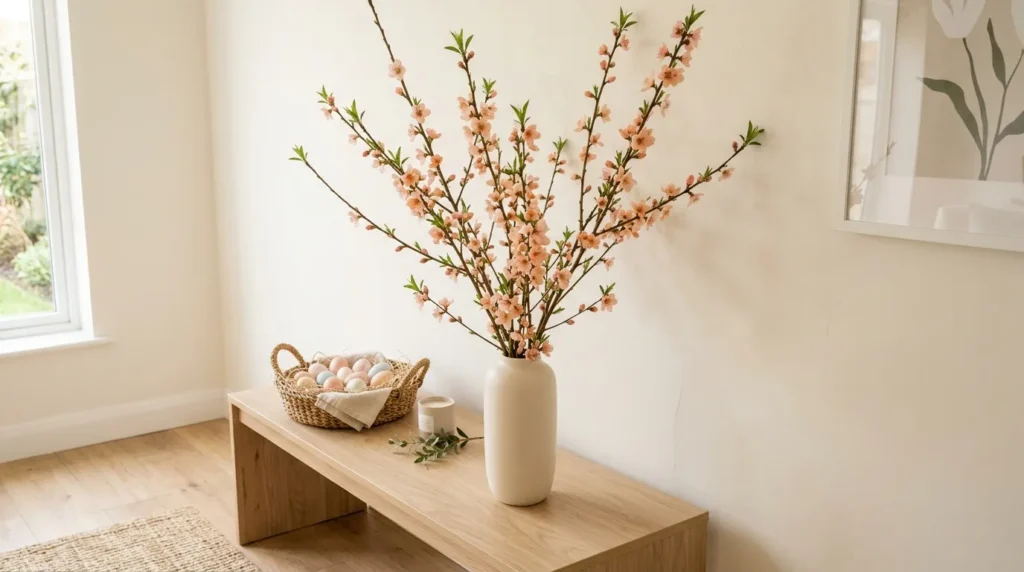
- Peach blossoms introduce delicate color and height.
- Branches create an elegant sculptural shape.
- Soft tones complement neutral spring interiors.
- A tall vase keeps the arrangement visually balanced.
Peach blossom branches can give a spring room an elegant sense of height without requiring a large collection of flowers. Place several flowering branches in a tall, narrow vase and allow their stems to fan naturally toward the ceiling. The soft blush and peach tones add warmth while remaining subtle enough for neutral interiors. This arrangement is particularly effective on entry consoles, mantels, or dining sideboards where vertical space can be used to create a stronger focal point. Its sculptural shape also makes it feel more sophisticated than a traditional compact bouquet.
Choose a vase with enough weight to keep tall branches stable, especially if the arrangement will sit in a busy area. Trim the branches at different lengths and remove a few lower buds so the upper blossoms remain visually open. A cream, beige, or pale stone vessel keeps the color palette soft and timeless. I’ve noticed that peach branches look especially beautiful against warm white walls because the delicate blossoms stand out without creating harsh contrast. Add a few small Easter eggs nearby rather than among the branches, allowing the natural silhouette to remain the main feature.
12. Wildflower Mason Jars
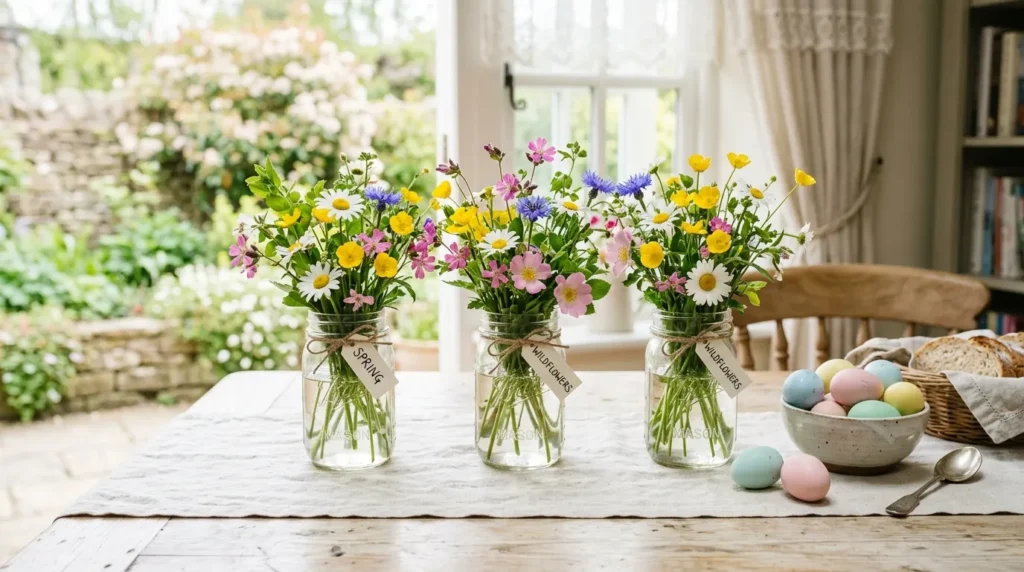
- Wildflowers create a relaxed garden-inspired feeling.
- Small jars make a flexible table arrangement.
- Mixed colors add natural spring variety.
- Repeated vessels create visual rhythm across a room.
Wildflower-filled mason jars create an effortless spring display that feels as though the flowers were gathered from a garden. Mix small daisies, yellow buttercups, pink blossoms, white flowers, and delicate greenery for an intentionally varied arrangement. Using several jars instead of one large vase makes the display flexible and easy to spread across a dining table, mantel, or kitchen counter. The informal shapes and mixed colors give the room a relaxed cottage feeling while still looking fresh and intentional. This approach is also budget-friendly because small jars can be reused for future seasonal arrangements.
Vary the flower heights slightly so each jar has its own shape while still looking connected to the others. You can use three jars for a compact centerpiece or five for a longer dining table. Keep the jars mostly clear so the green stems add another layer of color. In my experience, wildflower arrangements look best when you avoid making them too perfect. Let a few stems lean naturally and leave small gaps between blooms. Pair the jars with linen, light wood, and simple pastel Easter accents, creating a cheerful display that feels authentic, relaxed, and easy to recreate.
13. Lemon Floral Arrangement
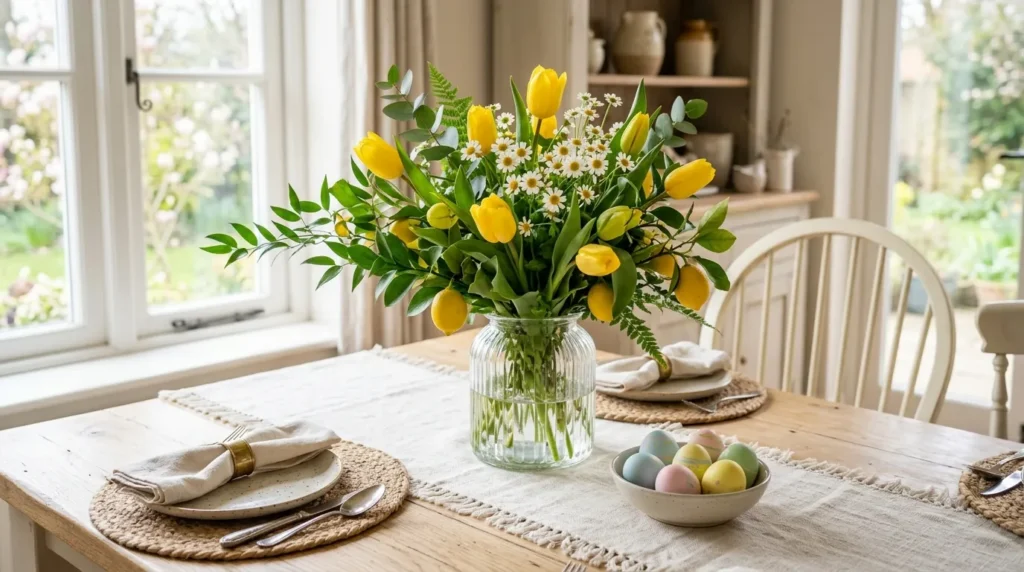
- Yellow flowers bring fresh, sunny energy indoors.
- Lemons add a playful seasonal accent.
- A clear vase keeps the display bright and light.
- Green foliage balances the warm yellow tones.
Bring a little sunshine to your Easter table with a cheerful combination of yellow flowers and fresh lemons. Arrange yellow tulips, white daisies, and leafy green stems in a clear glass vase, then place a few whole lemons around the base. The warm yellow tones instantly brighten neutral spaces and create a fresh spring feeling without requiring elaborate decoration. This idea works especially well in kitchens and dining areas because the citrus detail feels natural in those spaces. Keep the arrangement loose and airy so the flowers remain the main feature while the lemons add a playful seasonal touch.
Choose flowers with sturdy stems and a vase that gives them enough room to spread naturally. If you want the lemons visible inside the container, use a double-vase arrangement so the fruit does not sit directly in the flower water. Otherwise, simply arrange the lemons around the vase for an easier setup. I’ve noticed that yellow flowers look particularly striking against white walls and pale wood. Add a cream runner, simple ceramic dishes, and a few subtle Easter accents to keep the table balanced. The finished display feels sunny, welcoming, and appropriate throughout the spring season.
14. Vintage Blue Vase
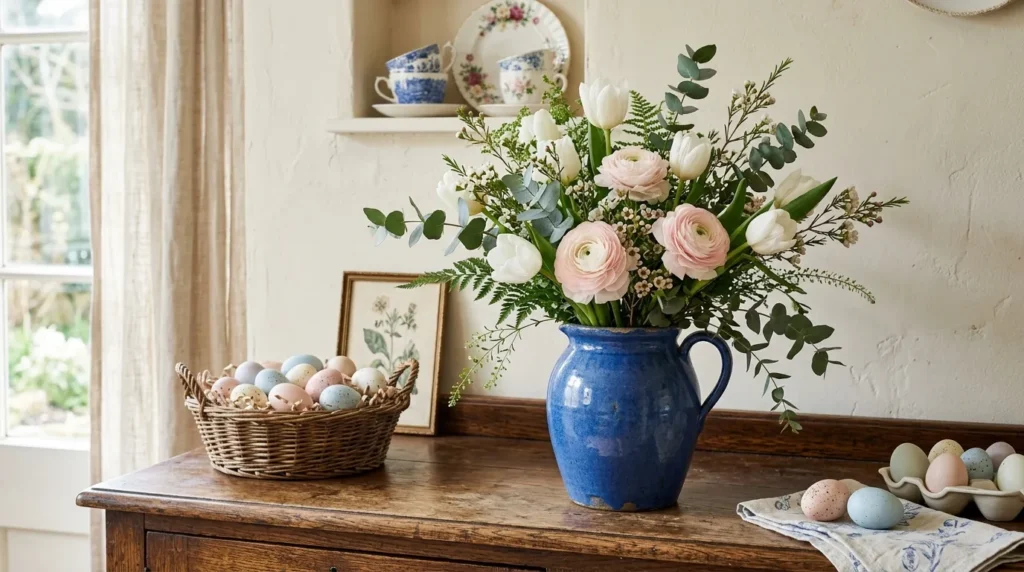
- Blue pottery adds instant character to spring flowers.
- Vintage finishes make a new arrangement feel collected.
- Soft florals balance stronger ceramic color.
- One statement vase can anchor a small display.
A vintage blue vase can become the star of a simple spring floral display. Choose a ceramic vessel with a softly aged finish, painted pattern, or slightly uneven handmade shape, then fill it with white tulips, blush ranunculus, eucalyptus, or delicate greenery. The blue container creates a beautiful contrast against pale flowers while adding depth to an otherwise neutral room. Place it on a dining sideboard, entry console, or kitchen shelf where the vase itself can remain visible. This combination feels charming and collected, making seasonal decorating look personal rather than overly coordinated.
Keep the flower colors soft so the blue vessel remains the strongest accent. White, cream, blush, and pale green work especially well because they complement both traditional and contemporary interiors. Trim the stems at different heights and allow a few leaves to extend beyond the vase for a relaxed silhouette. In my experience, vintage-inspired pieces look most convincing when they are not surrounded by too many matching accessories. Let the vase stand alone or pair it with one small ceramic Easter accent. The result is an elegant spring focal point that adds personality without overwhelming the room.
15. Gerbera Easter Mix
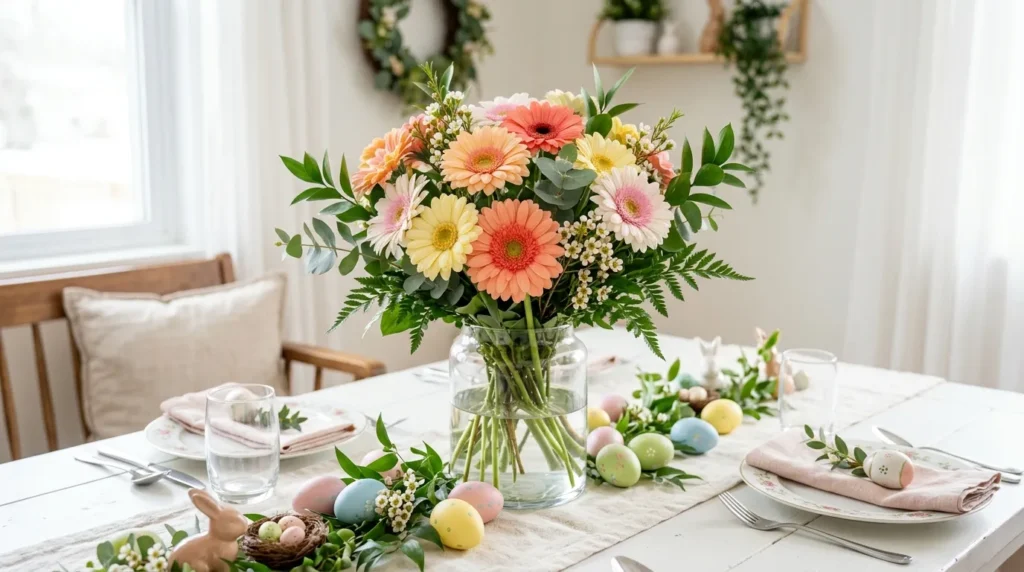
- Gerberas provide bold color and cheerful visual energy.
- Mixed pastel shades create a playful spring palette.
- Strong stems make them easy to arrange.
- A simple vase keeps bright flowers from feeling overwhelming.
Gerbera daisies are perfect when you want an Easter display with more color and personality. Combine peach, coral, pale yellow, soft pink, and white blooms in one bouquet, then add a little greenery to break up the bright petals. Their large flower heads create immediate visual impact, so you can achieve a full centerpiece with relatively few stems. A clear or white vase keeps the arrangement from becoming too busy. This colorful approach works especially well in homes with neutral furniture because the flowers become a temporary spring accent that can completely change the mood of the space.
Start with the tallest gerberas toward the center and gradually shorten the surrounding stems to create a rounded shape. Avoid overcrowding the vase because the individual flower heads need room to remain visible. If the colors feel too strong, use mostly white and peach flowers with only a few coral or yellow accents. I’ve noticed that this simple adjustment makes bright arrangements feel much more sophisticated. Add pastel eggs or a soft linen runner nearby, but keep additional decorations minimal. The result is cheerful and festive while still looking polished enough for everyday spring entertaining.
16. Hydrangea Easter Bowl
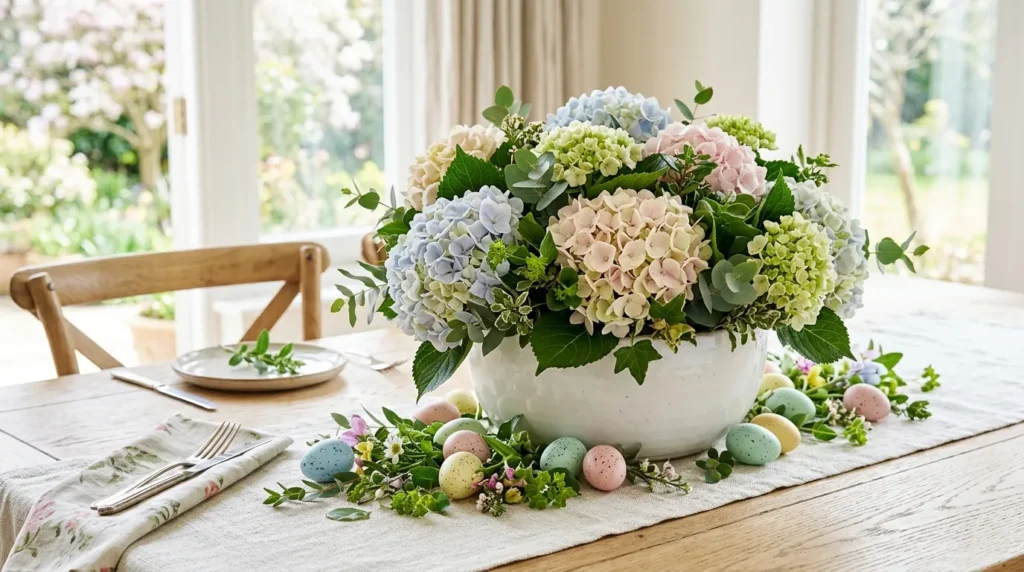
- Hydrangeas create a lush, generous centerpiece.
- Soft pastel shades keep the arrangement spring-focused.
- A low bowl works well for dining tables.
- Green leaves add natural contrast and fullness.
A hydrangea bowl creates an instantly full and elegant spring centerpiece with very little effort. Choose blooms in pale blue, blush, cream, or soft green, then arrange them closely inside a low ceramic bowl. Their naturally rounded flower heads create volume, making the display look abundant without needing many different varieties. The low shape keeps the centerpiece practical for dining and conversation, while the soft colors blend beautifully with neutral tableware. This idea is especially useful when you want your Easter table to feel polished and seasonal without relying on bright or heavily themed decorations.
Use a small water-filled container or floral foam inside the bowl to keep the stems secure and hydrated. Place the largest blooms around the outer edge first, then fill the center with smaller heads and greenery. A few pastel eggs can sit around the base for an understated Easter detail. In my experience, hydrangeas look particularly beautiful when the arrangement stays within two or three colors. Pair the bowl with linen napkins, light wood, and simple white dishes. The result is a soft, sophisticated centerpiece that can transition naturally from Easter celebrations into the rest of spring.
17. Cherry Blossom Branches
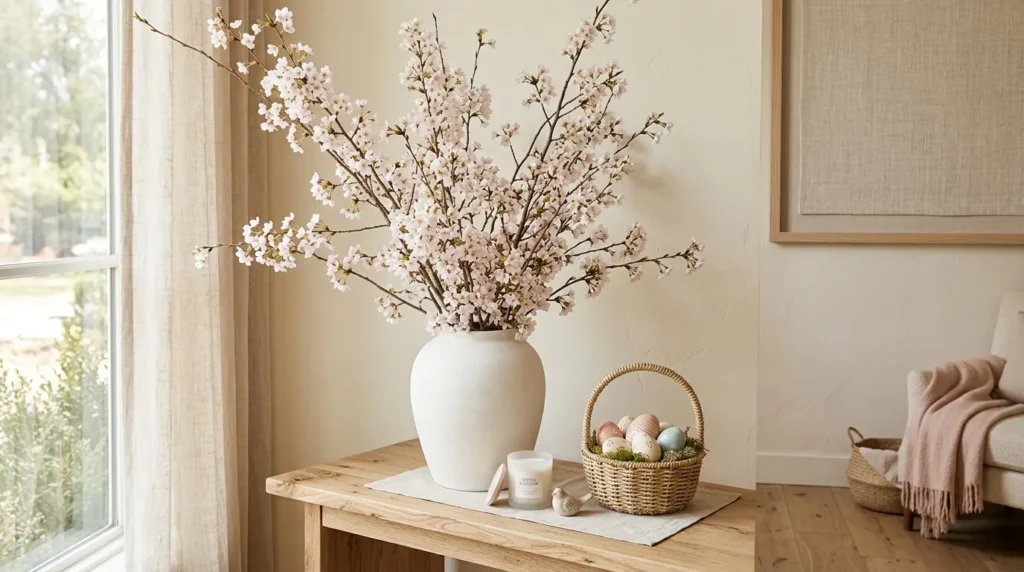
- Tall blossoms create an airy, elegant focal point.
- Pink flowers add gentle seasonal color.
- Bare branches provide sculptural interest.
- A simple vessel keeps the display sophisticated.
Cherry blossom branches can bring a graceful sense of spring indoors while creating impressive height with surprisingly little effort. Place several long branches in a tall ceramic or glass vase and allow their delicate pink flowers to spread naturally. The combination of bare wood and soft blossoms creates an airy, sculptural silhouette that works beautifully in entryways, dining rooms, or living areas. Pale pink pairs easily with cream, ivory, beige, and light wood, making the display versatile enough for different decorating styles. A few carefully placed Easter accents can make the arrangement feel festive without distracting from its natural beauty.
Choose a heavy-bottomed vase to support the branches and keep the arrangement stable. Trim the stems at different lengths before placing them in water, then rotate the vase as you work to create an open, balanced shape. Avoid forcing the branches into a perfectly symmetrical form because their natural angles provide much of the visual interest. I’ve noticed that cherry blossom displays often need fewer accessories than smaller bouquets because their height already creates a strong focal point. Add two or three pastel eggs or a small ceramic bunny nearby, keeping the surrounding space uncluttered and calm.
18. Spring Garden Centerpiece
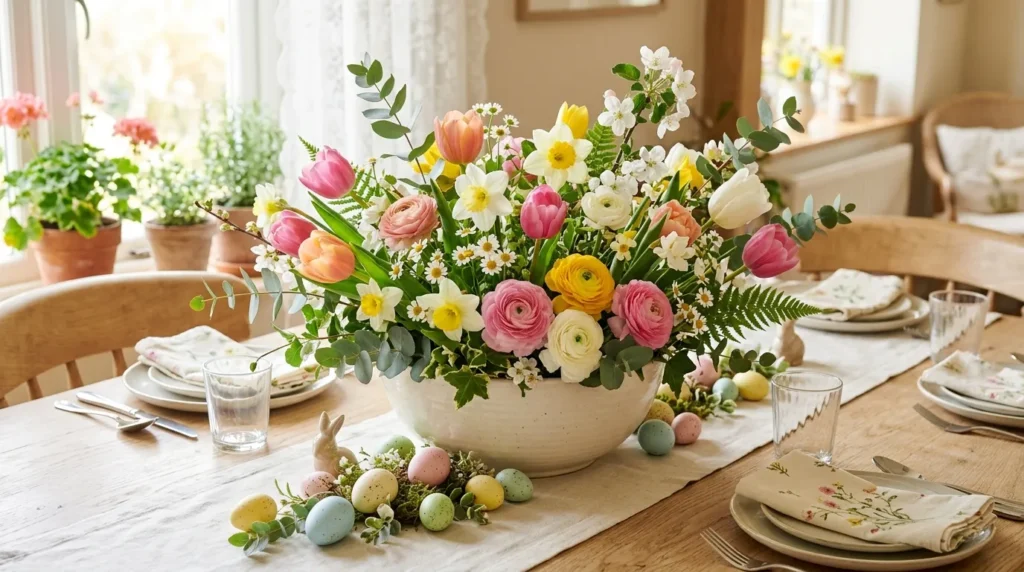
- Mixed flowers create a naturally abundant appearance.
- Several colors make the arrangement feel lively and fresh.
- Layered greenery adds depth between blooms.
- A wide centerpiece works beautifully for Easter gatherings.
A mixed spring garden centerpiece brings together the colors, textures, and relaxed feeling of a blooming garden. Combine tulips, daffodils, daisies, ranunculus, white blossoms, and fresh greenery in a wide ceramic bowl for a generous display. The variety of flower shapes makes the arrangement visually interesting from every side, while the natural color differences create a cheerful Easter atmosphere. This approach is ideal for larger dining tables where one compact bouquet might feel too small. It also gives you flexibility because you can work with whatever seasonal flowers are available locally.
Begin with greenery to establish the overall shape, then add the largest flowers at different heights before filling open areas with smaller blooms. Keep the color distribution balanced rather than placing every yellow or pink flower together. In my experience, mixed arrangements look most natural when some stems extend slightly beyond the main shape and others sit lower near the rim. Add a few pastel eggs around the bowl for a subtle holiday touch. Once Easter passes, remove the eggs and keep the same floral centerpiece for a beautiful spring display that still feels fresh and relevant.
19. Buttercup Glass Vase
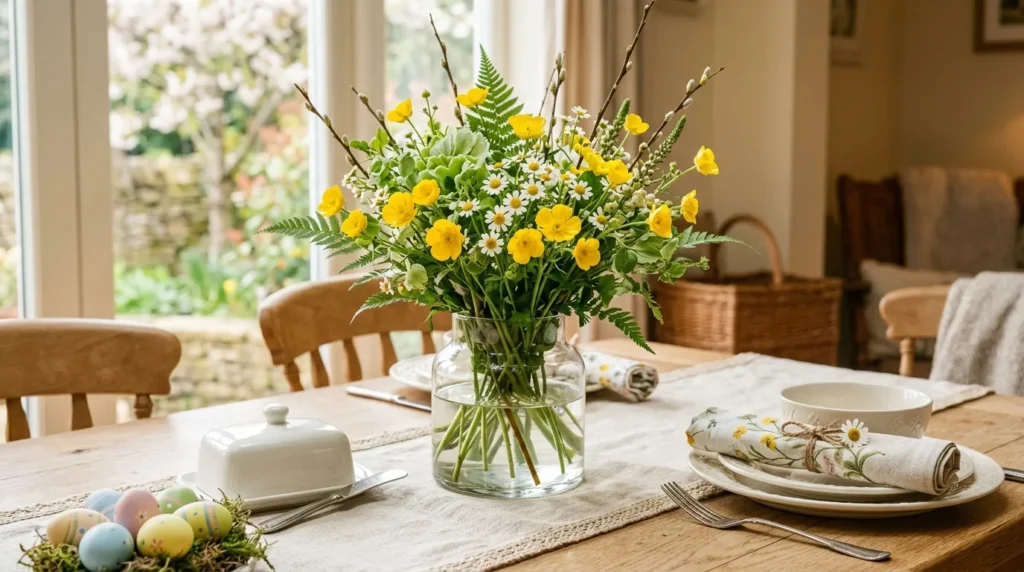
- Buttercups bring cheerful yellow color to spring interiors.
- A clear vase keeps the arrangement light and fresh.
- Fine stems create a delicate, airy silhouette.
- Green foliage adds natural contrast around the blooms.
Bright buttercups can make a simple spring display feel instantly cheerful and alive. Their small yellow blooms create a lighter, more delicate effect than larger flowers, making them ideal when you want color without visual heaviness. Arrange them in a clear glass vase with a few white daisies and slender green stems for added contrast. The transparent container keeps the composition airy and lets the graceful stems become part of the design. Place it on a dining table, kitchen island, or entry console where natural daylight can bring out the fresh yellow tones.
Trim the stems at different lengths so the flowers form a loose, natural shape rather than a perfectly rounded bouquet. Use cool, clean water and remove any leaves that would sit below the waterline. A narrow glass vase works particularly well because it supports the delicate stems while preserving their movement. I’ve noticed that small yellow arrangements look especially effective against cream walls and pale wood surfaces. Add a few pastel eggs nearby if you want stronger Easter character, but keep the surrounding accessories simple so the buttercups remain the brightest part of the display.
20. Pussy Willow Arrangement
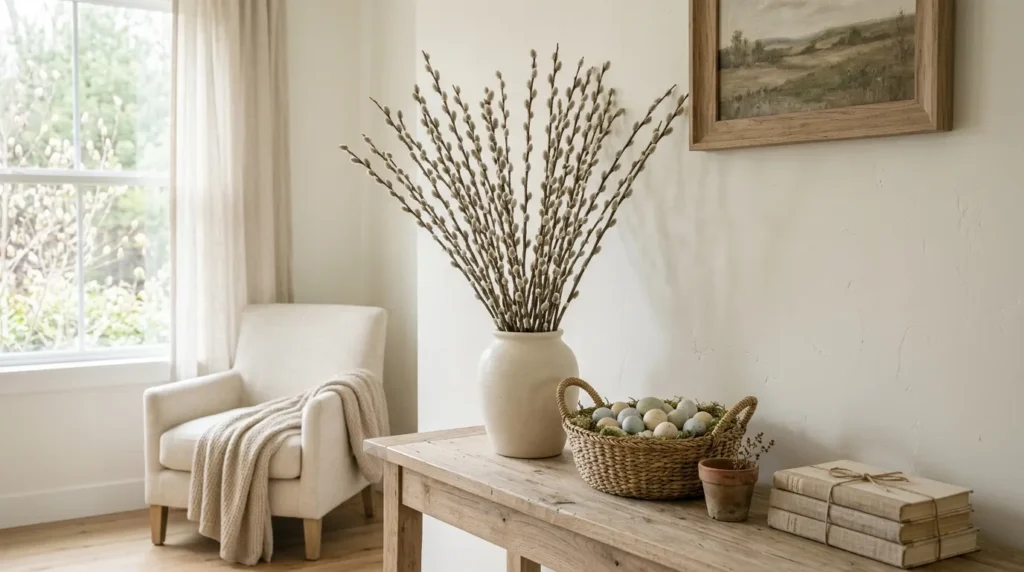
- Soft branches add texture and natural height.
- Neutral tones create an understated spring display.
- Fluffy buds provide tactile visual interest.
- Tall branches work beautifully in entryways and corners.
Pussy willow branches offer a beautiful option when you prefer subtle Easter decorating over bright floral color. Their soft, rounded buds add texture while the long branches create graceful height and movement. Place several stems in a tall cream, beige, or natural stone vase, then let the branches spread naturally toward the sides. The neutral palette works effortlessly with light wood, linen, rattan, and warm white walls. This arrangement is especially useful for entryways and living rooms where you want a seasonal update that feels elegant enough to remain in place beyond the Easter holiday.
Keep the arrangement slightly asymmetrical so the branches retain their natural character. Choose a heavy vase with a narrow opening to keep the stems secure, particularly if you are creating a tall display. You can add a few delicate spring flowers for more color, but the branches look striking even on their own. In my experience, neutral arrangements are particularly easy to reuse because they do not compete with changing seasonal accessories. Place a few pastel eggs or a small ceramic bunny beside the vase, then leave plenty of empty space around it so the branches remain the visual focus.
21. Easter Tulip Trio
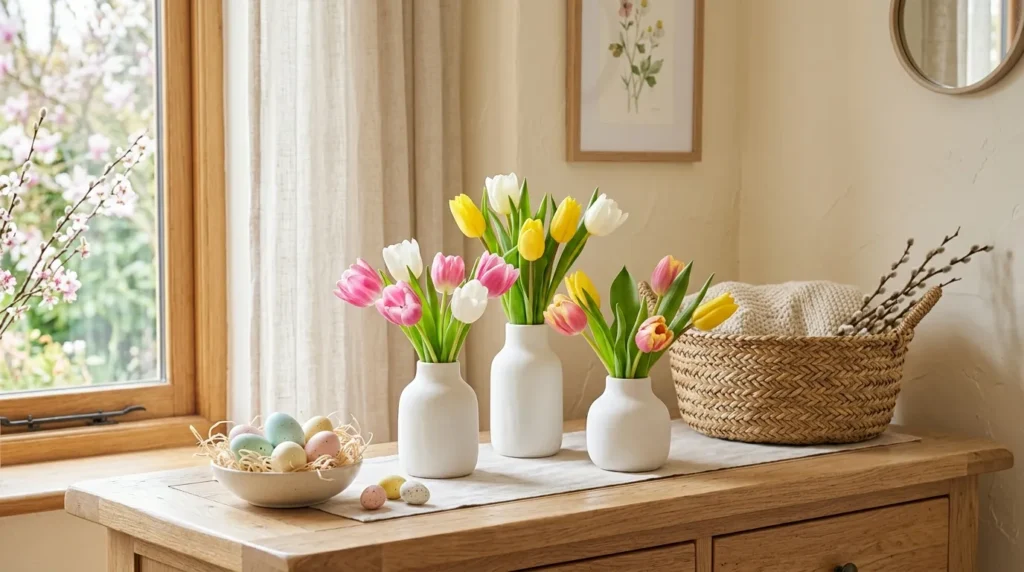
- Three matching vases create simple visual rhythm.
- Tulips provide classic spring color and freshness.
- Different heights make the display feel more dynamic.
- Small groupings work well on narrow surfaces.
A trio of small tulip vases can create a polished spring display without requiring one large centerpiece. Choose three similar ceramic or glass vessels, then fill each with tulips in complementary colors such as blush pink, sunny yellow, and crisp white. Arrange the vases at slightly different heights or stagger them across the surface to create natural visual rhythm. This compact setup works beautifully on narrow consoles, mantels, shelves, or dining tables where a larger arrangement might feel crowded. The repeated shapes make the display look intentional while the individual flowers keep it relaxed and fresh.
Use odd-numbered groupings when you want an easy arrangement that feels balanced without looking too symmetrical. Trim the tulips at different lengths and allow some stems to curve naturally over the edges of their vases. Keep the containers within the same color family so the flowers remain the main feature. I’ve noticed that this setup is particularly useful for small homes because each vase can be moved independently when you need extra table space. Add a few pastel Easter eggs around the trio, then keep other decorations minimal for a clean, cheerful spring look.
22. Eucalyptus Flower Bundle
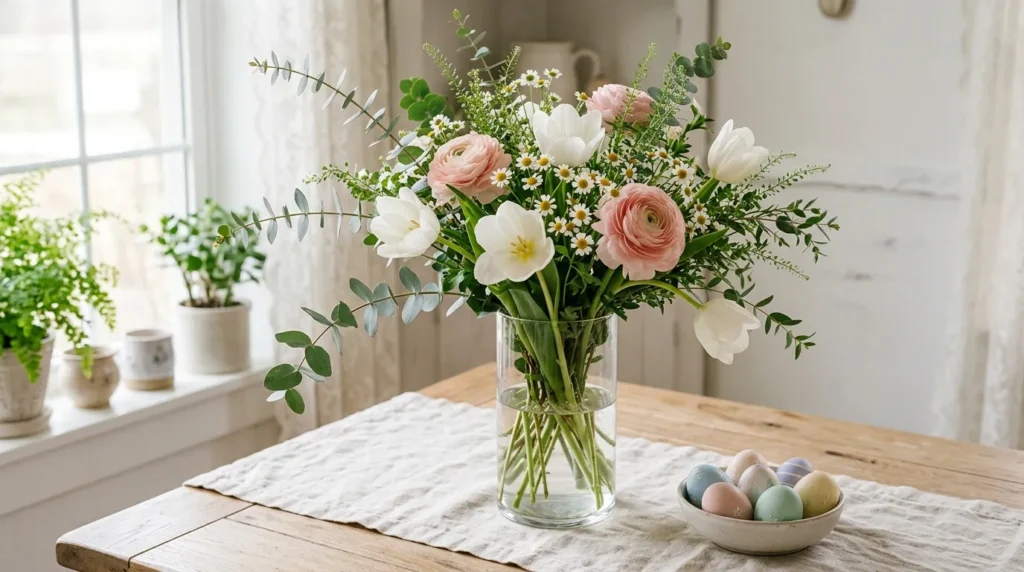
- Eucalyptus adds soft greenery and natural texture.
- White and blush flowers keep the palette fresh.
- Loose stems create an effortless gathered look.
- A simple vase lets the foliage stand out.
A eucalyptus flower bundle brings a soft, natural feeling to Easter decorating while keeping the arrangement simple and versatile. Combine silvery eucalyptus leaves with white tulips, blush ranunculus, small daisies, or other delicate spring blooms. The muted green foliage creates a gentle contrast against pale flowers and helps the bouquet look fuller without adding heavy color. Use a clear glass or simple ceramic vase so the natural shapes remain visible. This arrangement works beautifully on dining tables, consoles, kitchen counters, and shelves, especially when the rest of your home already uses warm neutrals and natural materials.
Start with eucalyptus stems to establish the height and overall shape, then add flowers at different levels throughout the foliage. Avoid making the bouquet too compact because the airy spaces between leaves and blooms are part of its charm. In my experience, eucalyptus is especially helpful when a flower arrangement feels too colorful or visually busy because its muted tone naturally softens the composition. Add a few pastel eggs around the vase for Easter, but keep them understated. The finished display feels fresh and sophisticated, while the greenery helps the bouquet transition easily into everyday spring decorating.
23. Dried Flower Easter Mix
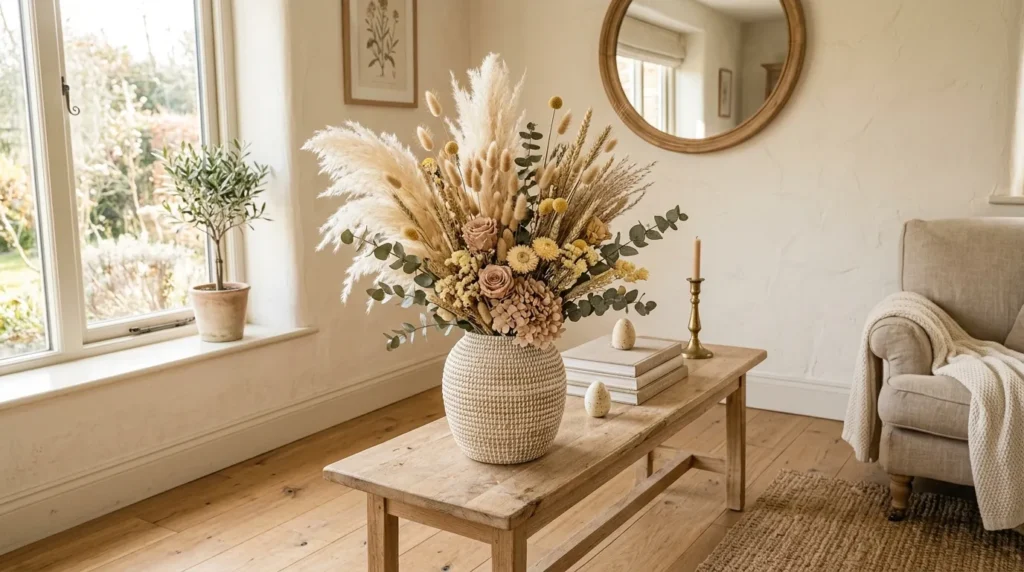
- Dried flowers provide a long-lasting seasonal display.
- Soft neutral colors suit modern and rustic interiors.
- Textured stems add depth without fresh-water maintenance.
- A woven vase enhances the natural spring feeling.
Dried flowers offer an easy way to create an Easter arrangement that lasts well beyond the holiday. Combine cream pampas grass, bunny tails, preserved eucalyptus, dried wheat, muted blush flowers, and a few pale yellow stems for a soft spring-inspired palette. The variety of textures gives the display plenty of visual interest even without fresh blooms. Place everything in a ceramic, rattan, or woven vase to reinforce the natural character. This idea works especially well for busy households because there is no water to replace, and the arrangement can remain attractive for weeks or even months.
Keep the colors soft and slightly varied rather than choosing a perfectly matching set of dried stems. Start with the tallest grasses, then layer shorter stems around them until the arrangement feels balanced from the front and sides. I’ve noticed that dried arrangements look more sophisticated when they include plenty of open space instead of being packed tightly together. Add a few pastel Easter eggs at the base for seasonal personality, then remove them when the holiday ends. The neutral bouquet can remain as spring decor, making it a practical choice for anyone who prefers low-maintenance decorating.
24. Peony Pastel Bouquet
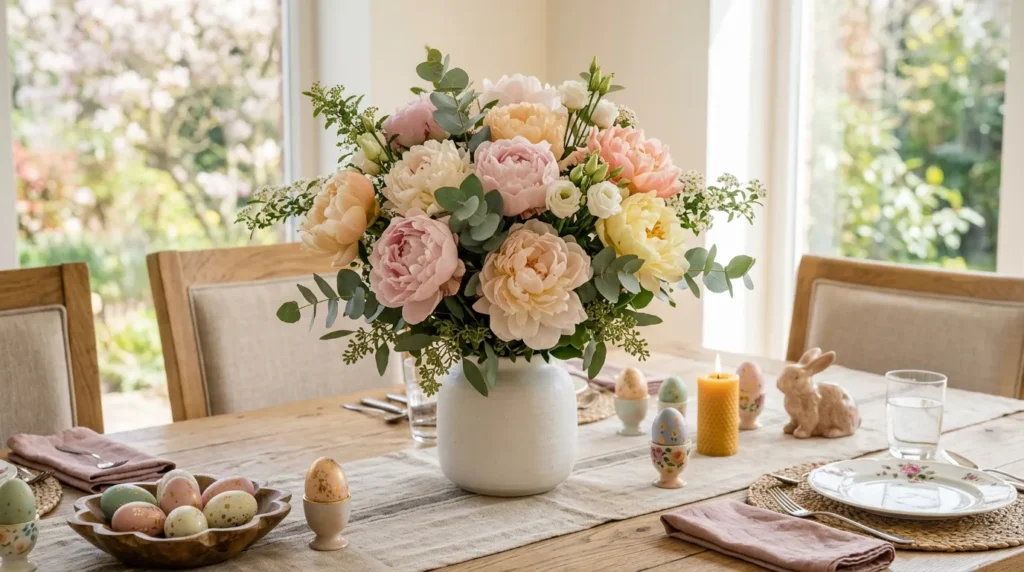
- Peonies create a luxurious, full spring centerpiece.
- Pastel colors feel elegant and Easter appropriate.
- Mixed greenery adds freshness between large blooms.
- A simple vase keeps the bouquet refined.
A pastel peony bouquet creates a romantic spring focal point with soft color and generous layers of petals. Combine blush pink, cream, peach, and pale yellow blooms with eucalyptus or other delicate greenery, then place them in a simple white ceramic vase. The large flowers naturally create fullness, so you do not need many additional varieties to make the arrangement feel abundant. This look is ideal for Easter dining tables, entry consoles, or living room surfaces where you want something elegant and noticeable. The gentle palette also pairs beautifully with neutral interiors and understated seasonal decorations.
Arrange the largest peonies slightly above the smaller supporting flowers, then allow a few stems to extend naturally around the edges. Avoid forcing the bouquet into a perfect dome because slight variation makes the flowers look more organic. Keep the vase simple so the layered petals remain the visual focus. In my experience, blush and cream flowers create a particularly versatile combination because they feel festive without becoming overly seasonal. Add a few pastel eggs or a soft linen runner nearby, then let the bouquet carry the display. It creates a polished spring atmosphere that feels welcoming, fresh, and timeless.
Conclusion
The right flowers can make Easter decorating feel simple, fresh, and incredibly inviting. From cheerful tulips and daffodils to delicate branches, pastel bouquets, rustic baskets, and long-lasting dried arrangements, these ideas offer plenty of ways to bring spring indoors. Easter flower arrangements can brighten a dining table, refresh an entryway, or add a beautiful seasonal touch to an everyday corner. Save this post on Pinterest so you can return to your favorite ideas when decorating. Try one arrangement in your own space, experiment with colors and textures, and share these ideas with someone who loves spring decorating. Small floral touches can create a beautiful transformation.