23 Jewel Tone Christmas Decor Ideas for a Luxe Holiday Look
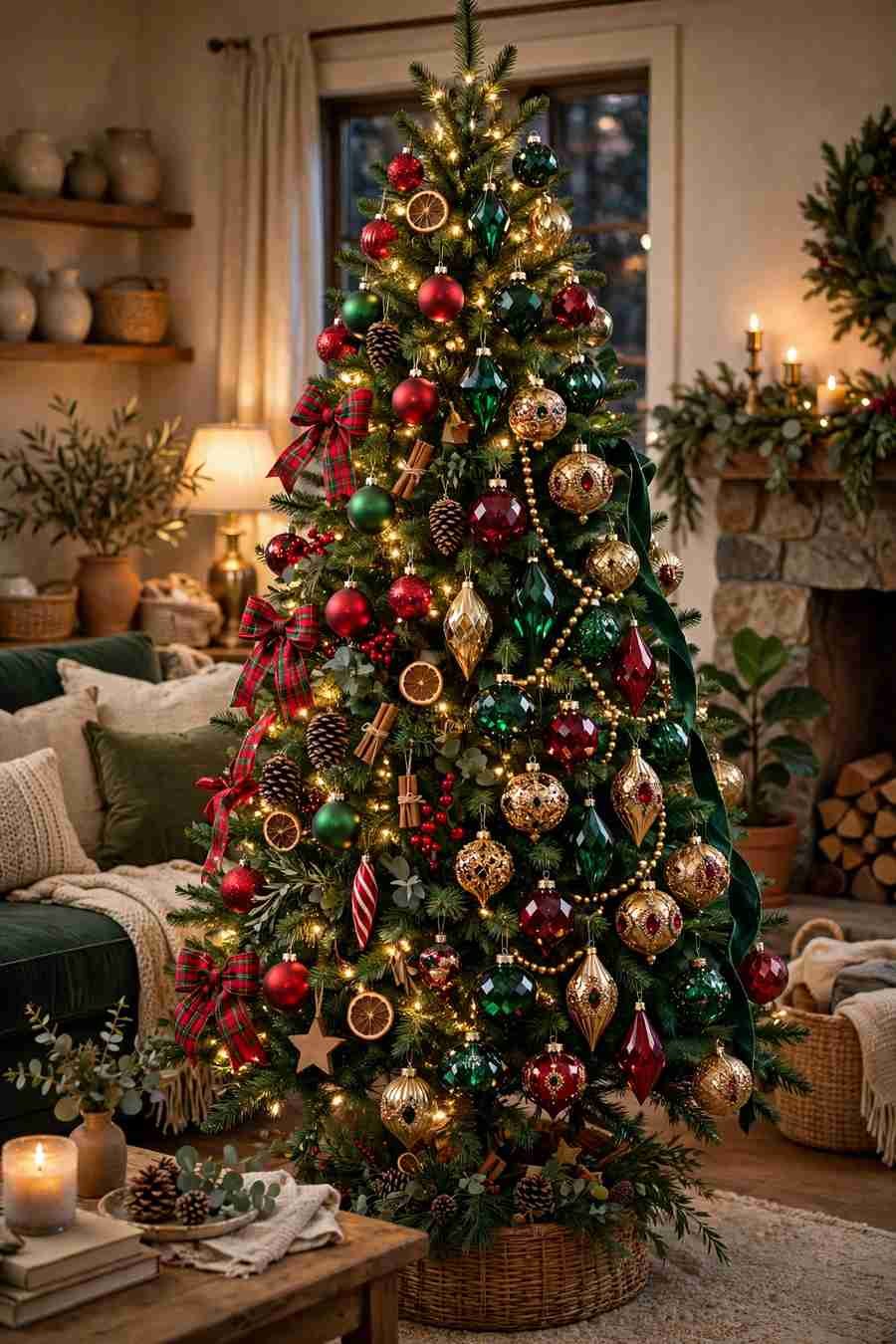
There is a reason a jewel box makes you catch your breath: deep emerald, glowing sapphire, rich ruby — colors so saturated they almost hum. Now imagine that same feeling spread across your Christmas tree and mantel. Jewel tones are the richest color story of the season, and they do not need a designer budget to work. A handful of deep-colored baubles, one velvet ribbon, and warm candlelight can turn an ordinary living room into a little treasure chest — cozy, glowing, and just a bit luxurious.
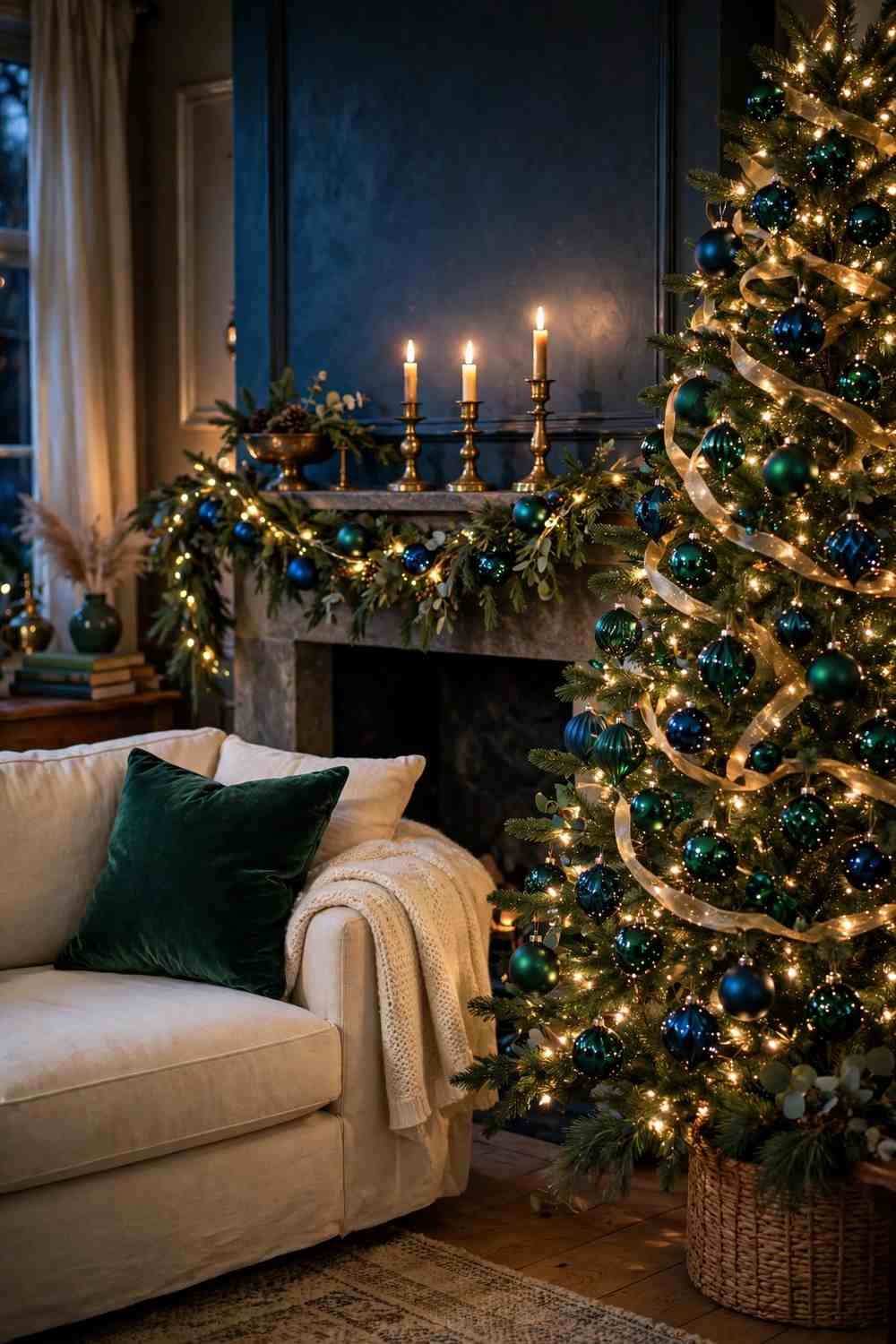
The secret is balance, not volume. Jewel tones are strong, so they shine brightest against breathing room — cream walls, warm white lights, natural greenery, and plenty of gold to catch the glow. The 21 ideas below are grouped by gem, so you can commit to one jewel or layer two with confidence. New to rich color at Christmas? Our guide to choosing Christmas tree colors shows how deep shades behave in real rooms before you spend a thing.
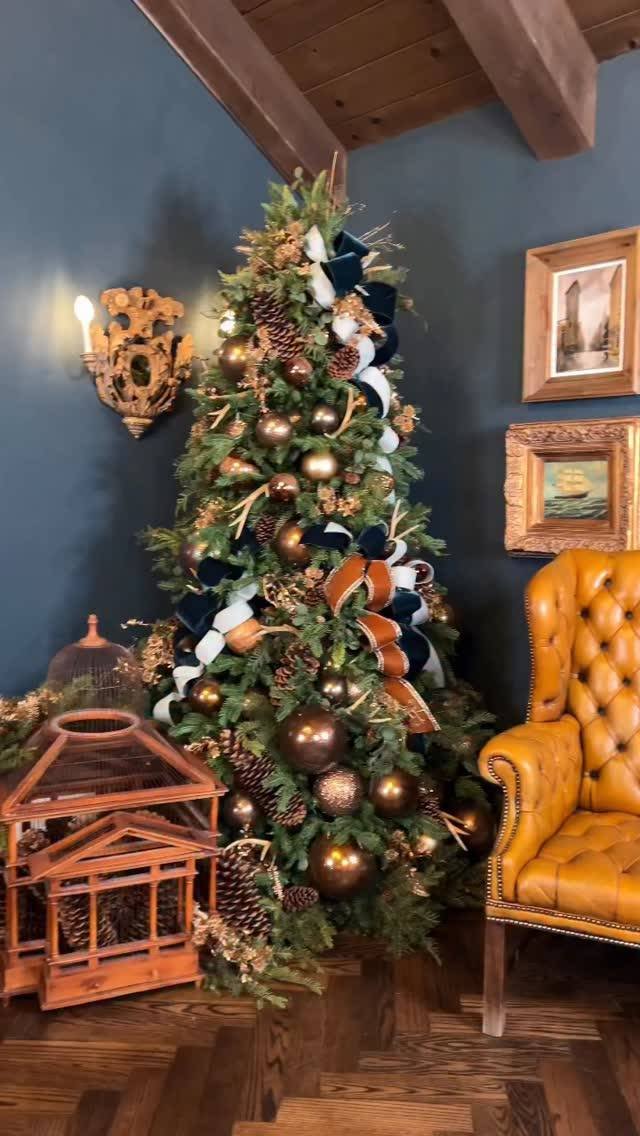
Photo: Jeanna Crawford (@jeannaloveschristmas) on Instagram
★ Quick Facts
| TIME One afternoon for the tree; most room accents take minutes each |
BUDGET Start with one set of jewel baubles and a velvet ribbon — build one gem at a time |
DIFFICULTY Beginner friendly — the 60-30-10 formula does the balancing for you |
BEST FOR Cozy evening glow and rooms that feel flat in plain red and green |
THE 60-30-10 JEWEL FORMULA
Every jewel-tone room in this list follows the same quiet math. 60 percent is your calm base: greenery, cream, warm white lights and the furniture you already own. 30 percent is one lead jewel — emerald, sapphire, amethyst or ruby — carried through ornaments, ribbon and one textile. 10 percent is gold plus small touches of a second jewel. Keep that ratio and even the richest colors stay balanced instead of overwhelming, and repeat each color at least three times in the room so it looks chosen, not accidental.
Emerald green: the jewel that loves Christmas most

1. Build the Whole Tree Around Emerald Baubles
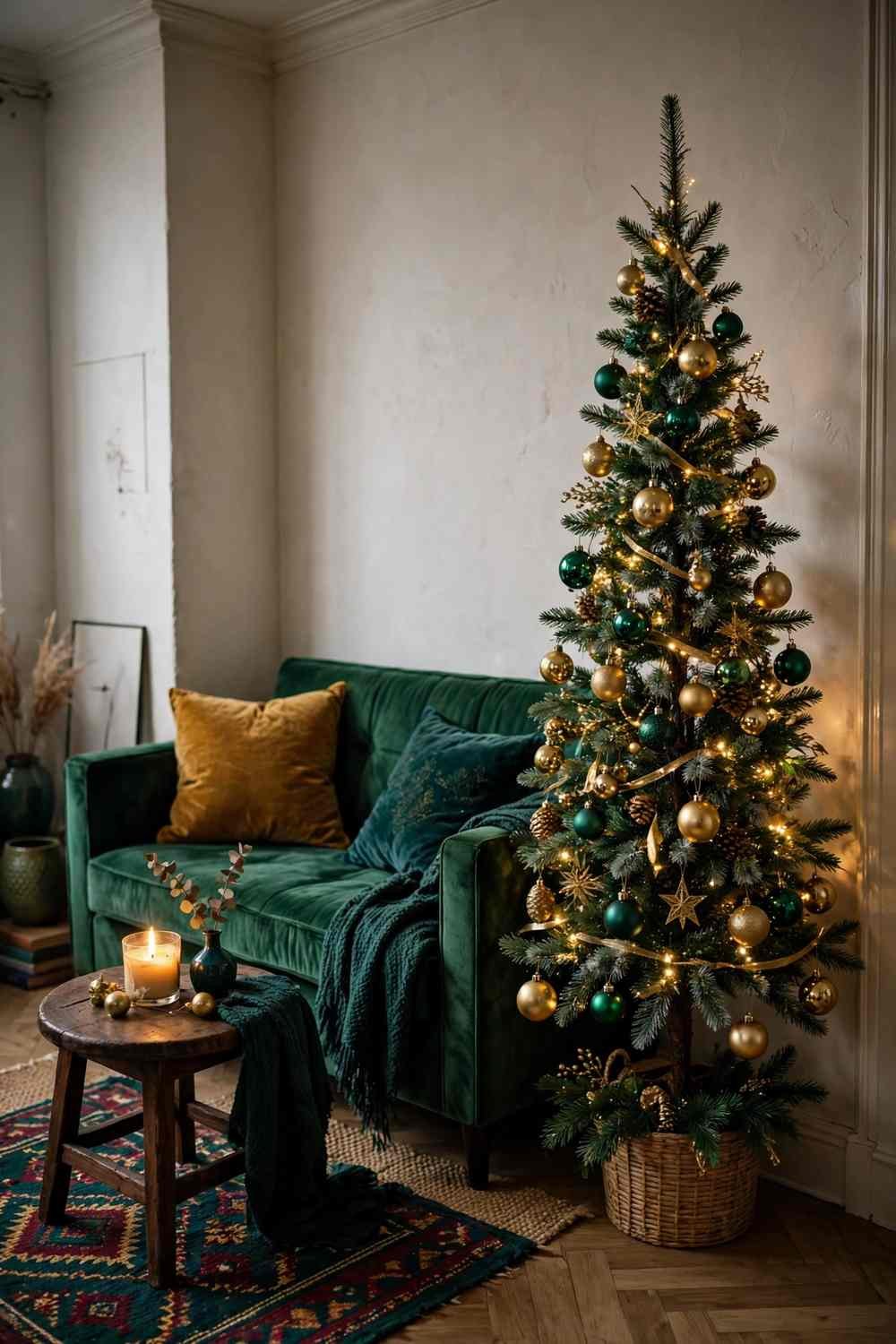
Emerald is the easiest jewel to start with because it is already Christmas green — just deeper and richer. Dress the tree in emerald baubles in mixed finishes, matte beside shiny beside a little glitter, and let warm white lights do the rest. The mixed finishes matter: all-shiny emerald can read flat, while the matte pieces give the color depth, like light moving across a real gemstone. A 6-foot tree needs roughly 30–40 emerald ornaments if emerald is your 30 percent — the rest of the tree stays greenery, gold and light. Work from the inside out: tuck the biggest matte baubles near the trunk, mid-size shiny ones mid-branch, and the smallest glitter pieces at the tips where they sparkle like frost.

2. Weave Emerald Velvet Ribbon Through Everything
If you buy one jewel-tone piece this year, make it a roll of emerald velvet ribbon. Velvet absorbs light instead of reflecting it, which is exactly why it looks expensive. Weave it through the tree in loose swirls, trail it along the mantel garland, and tie one generous bow on the wreath — that is your emerald repeated three times, the way the formula asks. Wired velvet ribbon holds its loops best; about 2½ yards dresses a tree, a mantel and a bow.
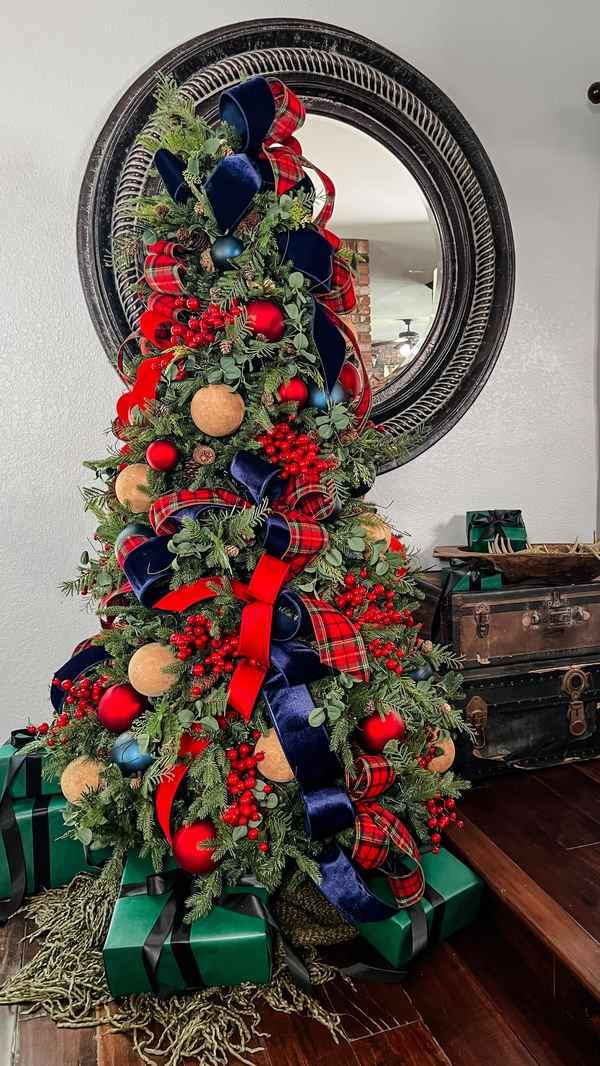
Photo: Jeanna Crawford (@jeannaloveschristmas) on Instagram
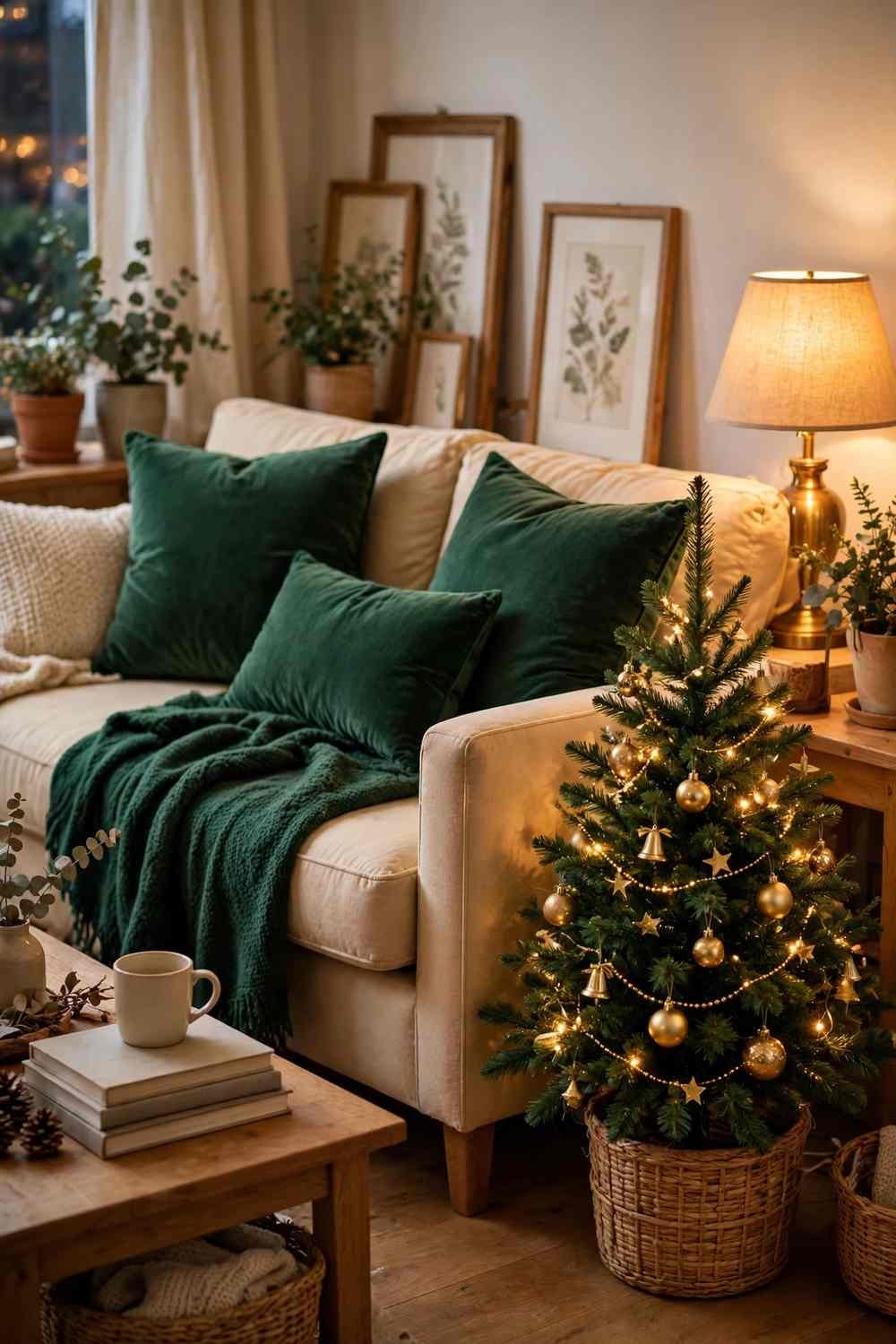
The same ribbon trick works in textiles. An emerald throw over the sofa arm and two emerald velvet cushion covers carry the color off the tree and into the room, so the tree stops looking like a lone green island. Velvet cushion covers are a renter’s best friend here — they dress the pillows you already own and fold flat in a drawer come January.
3. Dress the Mantel in Emerald and Gold Bells
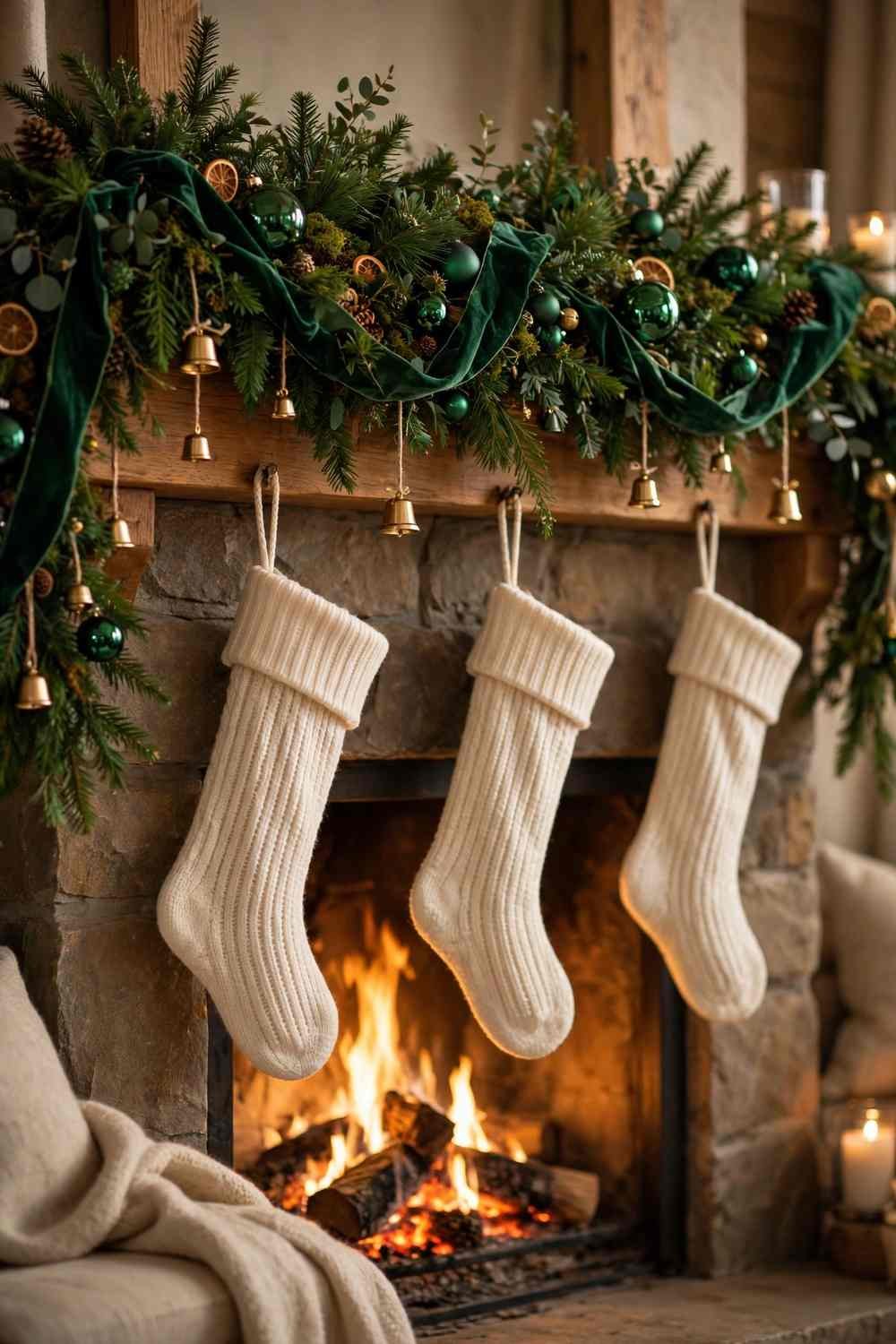
For the mantel, layer a lush greenery garland with emerald ribbon, a few emerald baubles tucked deep, and small gold bells that catch both light and sound. Cream or ivory stockings keep the scheme from tipping too dark — that cream is your 60 percent doing its job. Finish with gold candle holders at both ends; when the candles are lit, the emerald beside them glows like stained glass.
4. Take Emerald Into the Bedroom, Softly
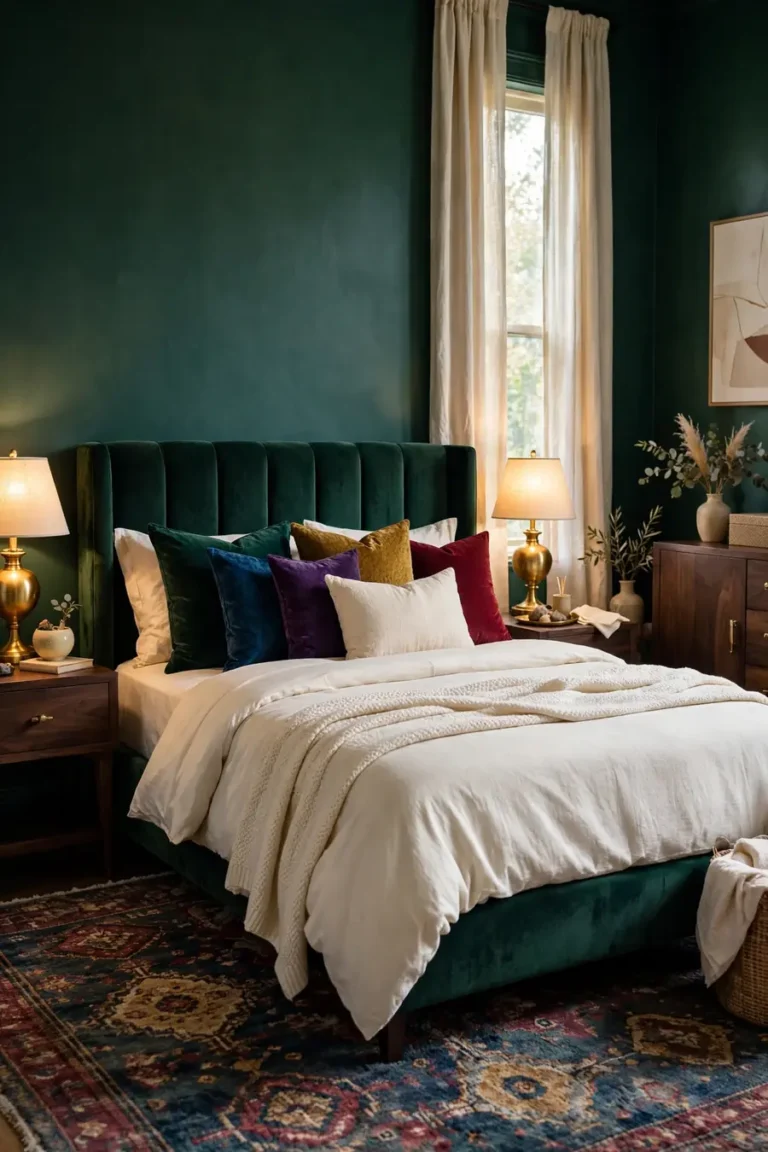
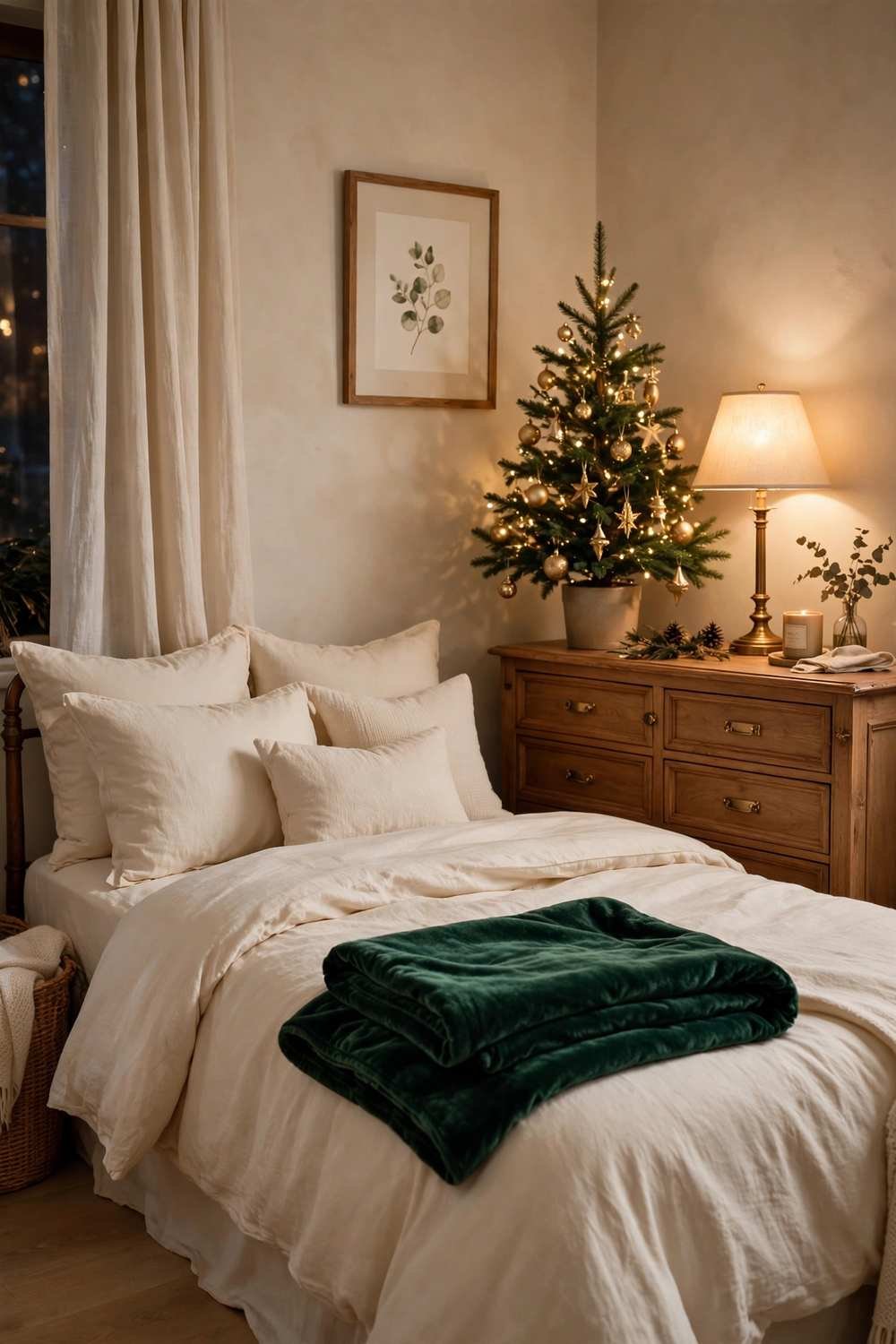
Bedrooms suit emerald beautifully because the color is restful as well as rich. You do not need much: an emerald throw folded at the foot of the bed, cream bedding underneath, and a small tabletop tree or a bowl of emerald and gold baubles on the dresser. Keep the lights warm and low. It should feel like falling asleep inside a jewelry box — in the nicest possible way.
The Jewel Tone Color Palette
| Emerald · #0F5B46 — The friendly jewel — baubles, velvet ribbon and throws that deepen natural greenery | |
| Sapphire · #1F3A6E — The calm jewel — ornaments, glassware and velvet cushions for a candlelit feel | |
| Amethyst · #5E2A6E — The surprise jewel — baubles, candles and one statement wreath | |
| Ruby · #8E1F2F — The warm jewel — stockings, runners and baubles, deeper than classic Christmas red | |
| Antique Gold · #C9A227 — The glue — ribbon, bells, candle holders and toppers that make every jewel glow |
Testing a pairing before you buy? Drop the shades into our Color Palette Generator and preview your two-jewel combination first.
Sapphire blue: deep, calm and candlelit
5. Dress a Sapphire and Gold Tree
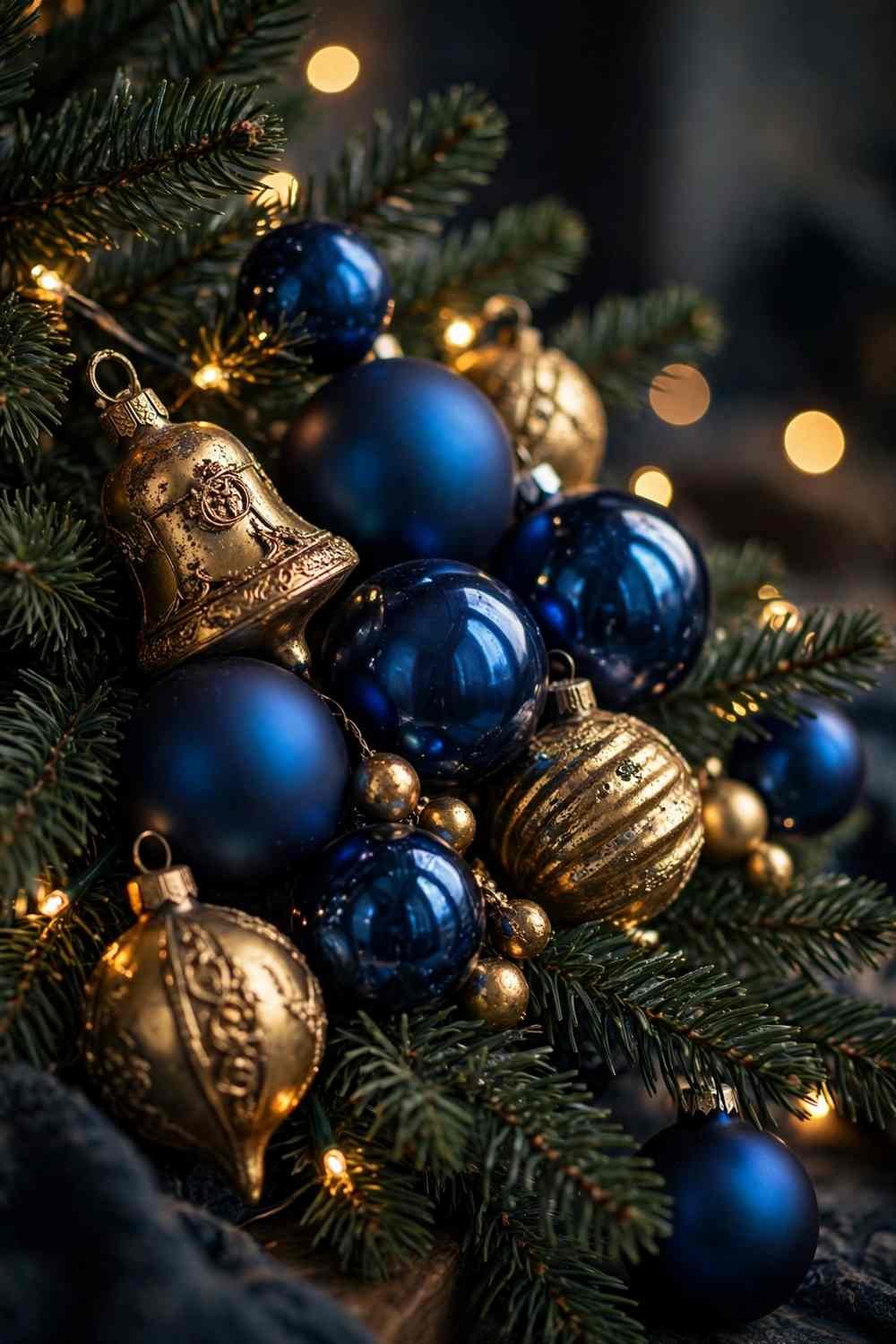
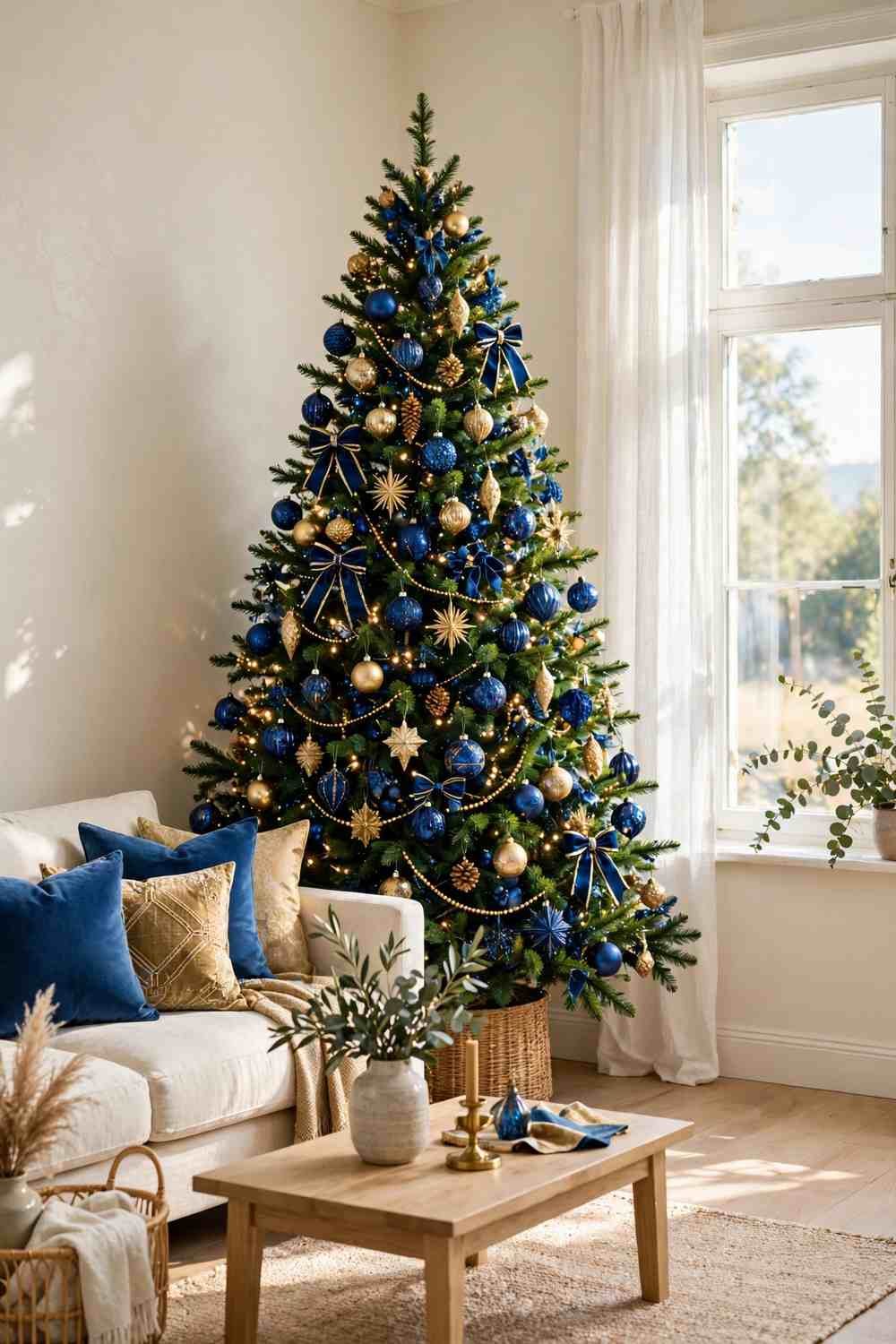
Sapphire is emerald’s calm evening cousin — the color of the sky just after sunset. On a tree it looks stunning against warm lights, because the blue deepens while the gold warms it up. Work to roughly 60 percent sapphire, 30 percent gold and 10 percent clear or crystal ornaments for sparkle. Hang the largest sapphire baubles deep in the branches and gold near the tips, where the lights catch them and throw the glow back onto the blue. Sapphire also flatters silver skin tones and cool rooms, which is why it photographs so calmly — if your living room runs warm and golden already, sapphire is the jewel that will balance it.

Photo: Jeanna Crawford (@jeannaloveschristmas) on Instagram
6. Set a Sapphire Tablescape with Cream and Gold
The dining table is where sapphire earns its keep. Try a cream tablecloth, sapphire napkins, blue drinking glasses, and gold candlesticks down the middle with a low line of greenery and a few sapphire baubles. Keep the centerpiece low so guests can see each other. It turns an ordinary weeknight dinner into an occasion, and chargers and napkins are the only per-guest pieces you need to own.

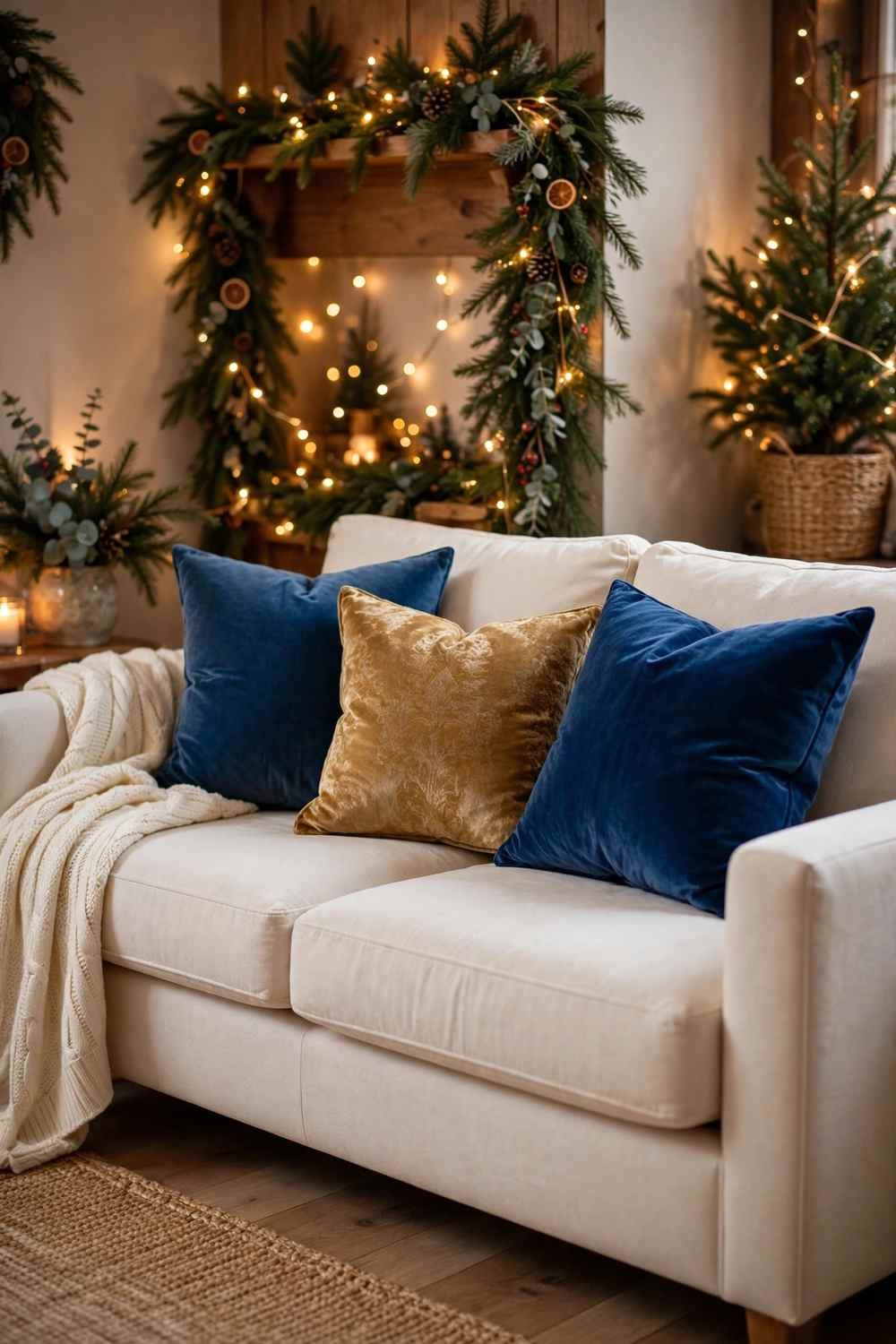
No blue glassware? Borrow the color another way: sapphire velvet cushions on the dining chairs or a deep blue throw over the bench seat. Textiles at sitting height put the jewel right where people spend the evening, and they photograph beautifully in candlelight. One textile plus the napkins is plenty — sapphire is a strong guest.
7. Glow With Sapphire Glass Votives
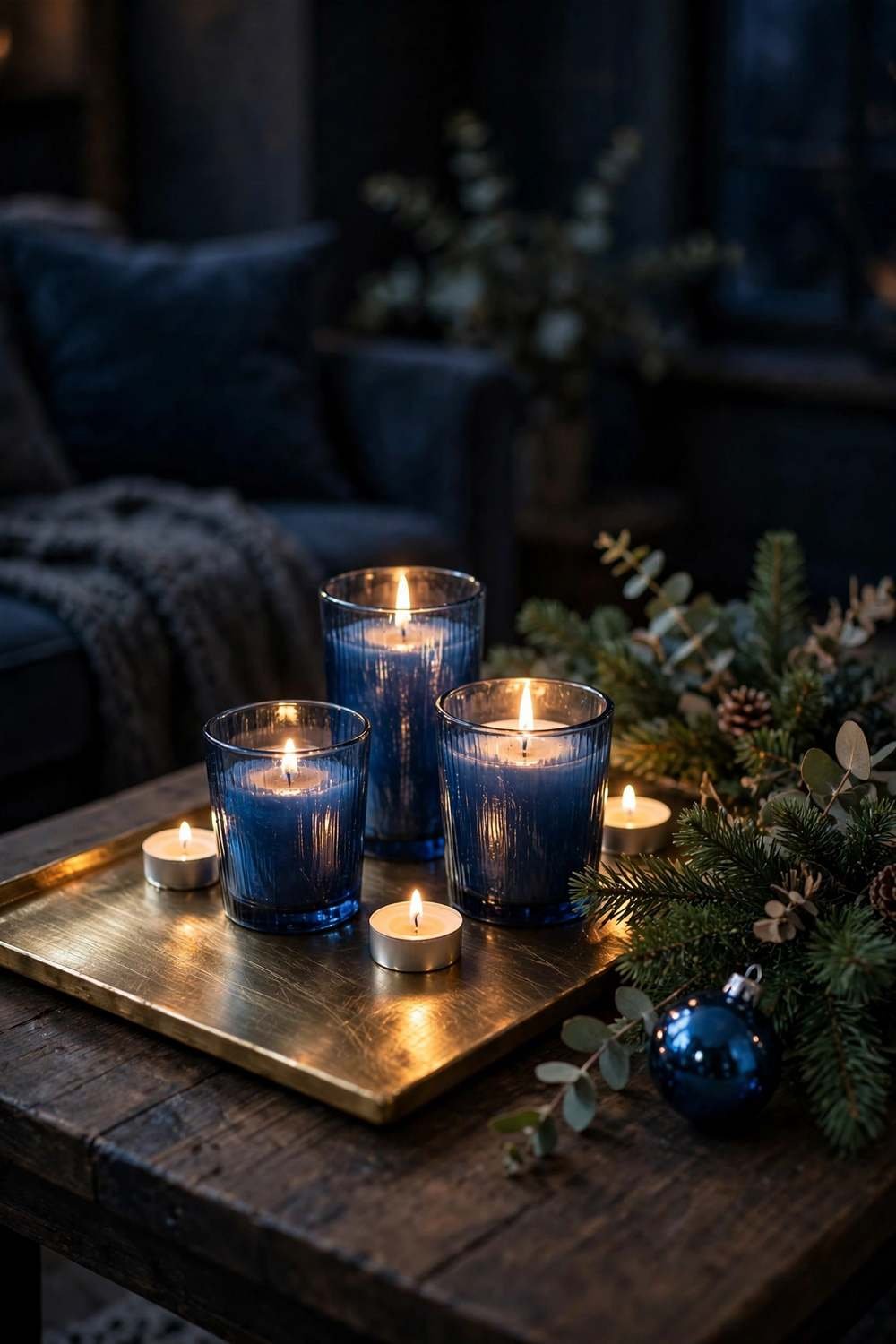
Group blue glass votives and tea-light holders on a gold tray across the coffee table or sideboard. Candlelight shining through colored glass throws the prettiest deep-blue glow after dark, and it costs almost nothing to try. Work in odd numbers — threes and fives — and mix two heights so the flames flicker at different levels. Flameless LED tea lights give the same look where little kids or curious pets rule the house.
8. Repeat Sapphire in Stockings and Throws
A jewel only feels intentional when it appears more than once. Navy-to-sapphire velvet stockings on the mantel, a deep blue throw over the reading chair, and your sapphire tree across the room — that is the same gem at three heights, and the whole space suddenly reads designed. If sapphire wins your heart completely, our blue Christmas decor ideas take this same jewel-blue palette through every room of the house.

PRO TIP: Judge jewel tones at night, never in the shop. Deep colors change completely after dark — sapphire can go nearly black and amethyst can turn muddy under the wrong light. Buy one bauble first, hang it on the tree with the lamps on and candles lit, and only then commit to the full set.
Amethyst purple: the jewel nobody expects

9. Try an Amethyst and Gold Tree
Amethyst is the brave choice, and it rewards the brave. Purple sits between blue and red, so it feels festive without borrowing anything from classic Christmas colors. Dress the tree in amethyst baubles in mixed finishes, weave in gold ribbon, and keep the lights warm white — cool lights push purple toward grey, warm lights keep it royal. Because amethyst is unusual, a smaller dose goes further: it can be your 10 percent accent jewel even more happily than your 30. A slim tree takes the color especially well, since the narrower silhouette keeps the purple concentrated and jewel-like instead of spread thin.

10. Soften Amethyst With Blush and Cream
If full-strength amethyst feels bold, soften it the way jewelers soften a stone — with lighter neighbors. Mix amethyst baubles with blush pink and cream ornaments at roughly equal parts, and the tree turns romantic instead of dramatic. This is the friendliest doorway into purple, and it suits bedrooms and softer, lighter living rooms especially well.

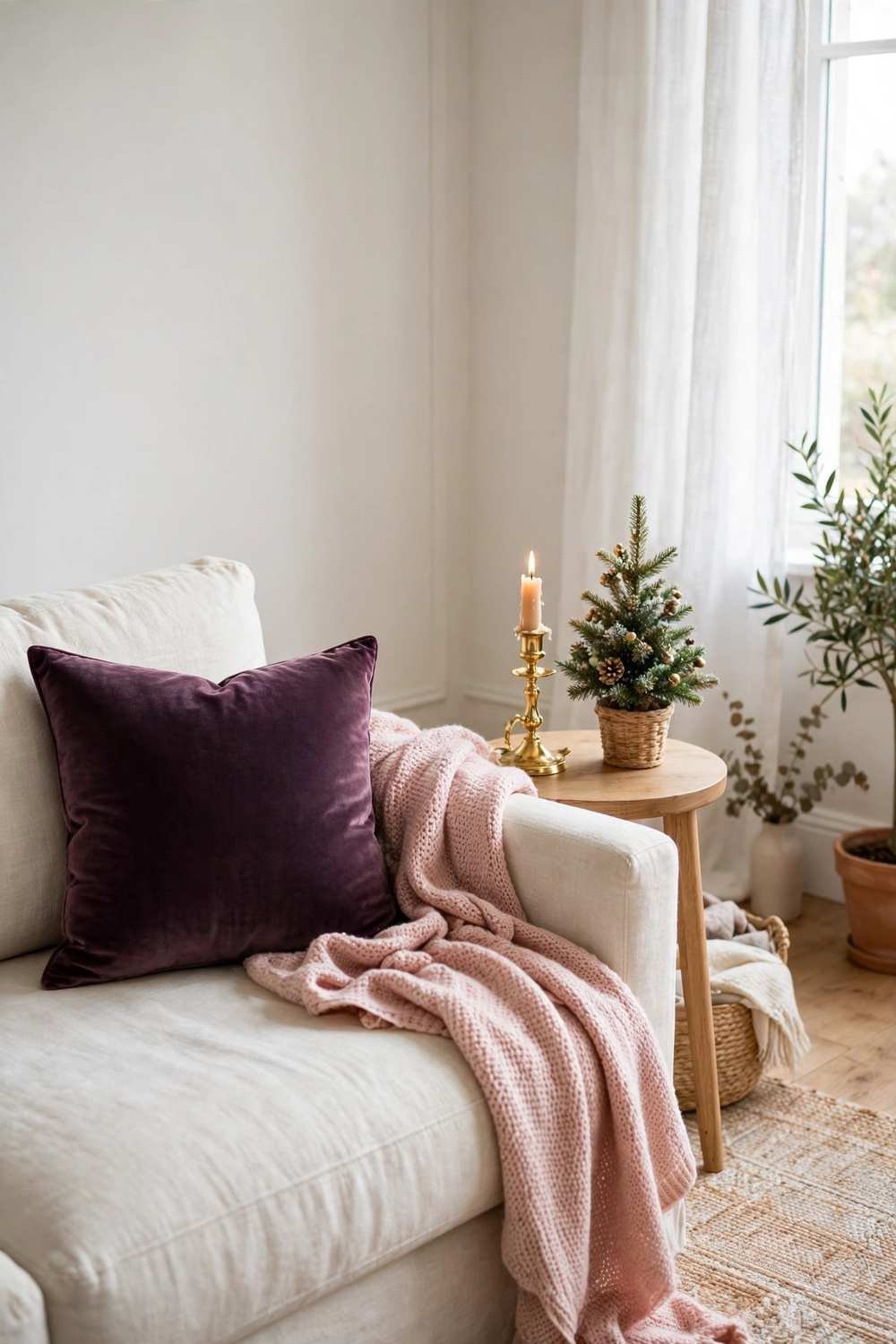
Carry the softer mix into one textile: a plum velvet cushion is usually enough, with a blush throw if the room runs pale. Resist matching everything purple — in this version, purple should feel like the jewelry on an outfit, not the whole outfit. One cushion, one tree, done.
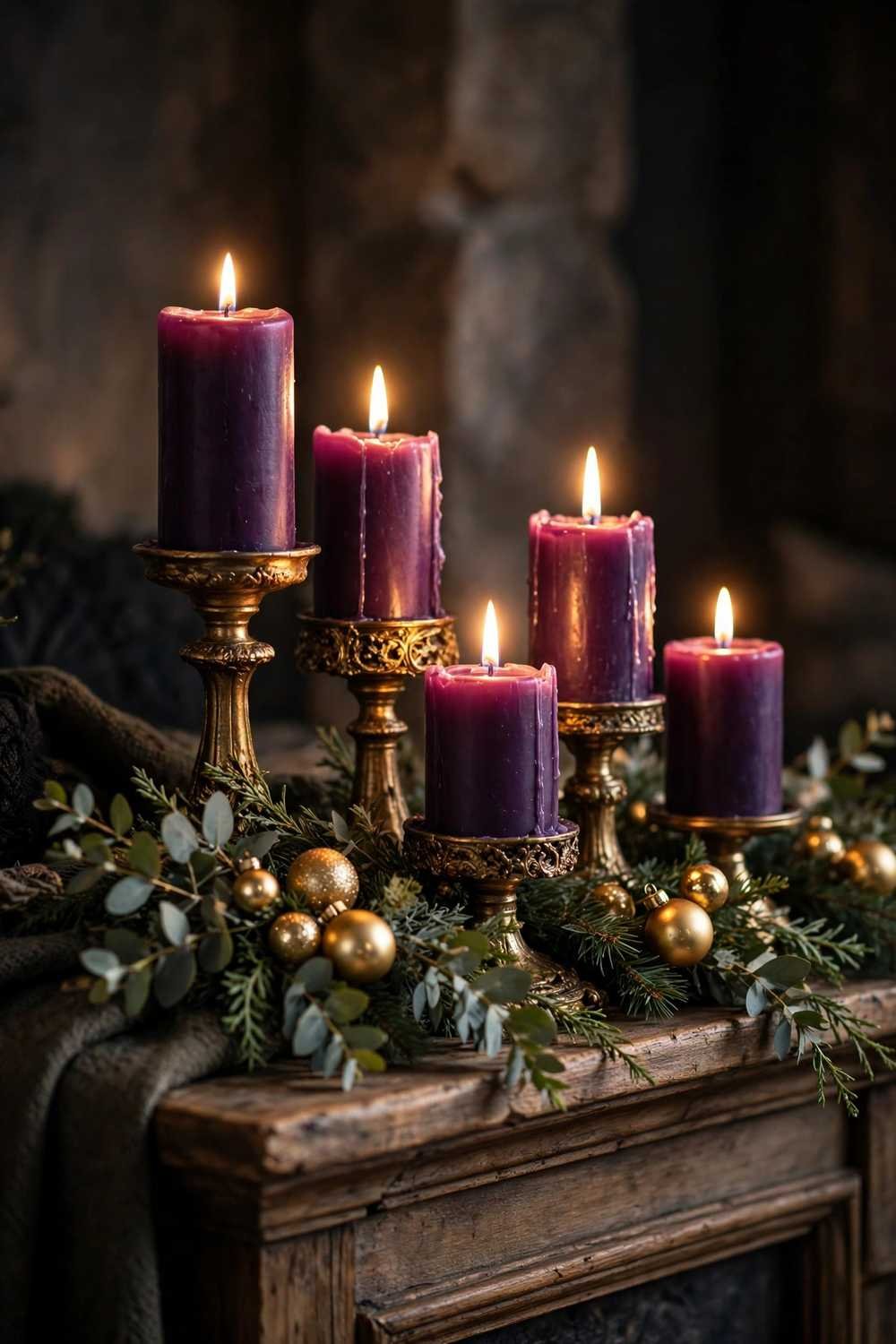
11. Burn Amethyst Candles in Gold Holders
Deep purple pillar candles are an underrated shortcut: they deliver the jewel in rooms where ornaments cannot go, like hallways and bathrooms. Stand them in antique gold holders at mixed heights on the mantel or a tray, tuck greenery around the bases, and light them at dusk. Purple flame-glow against gold is the single most luxurious-looking five minutes in this whole list.
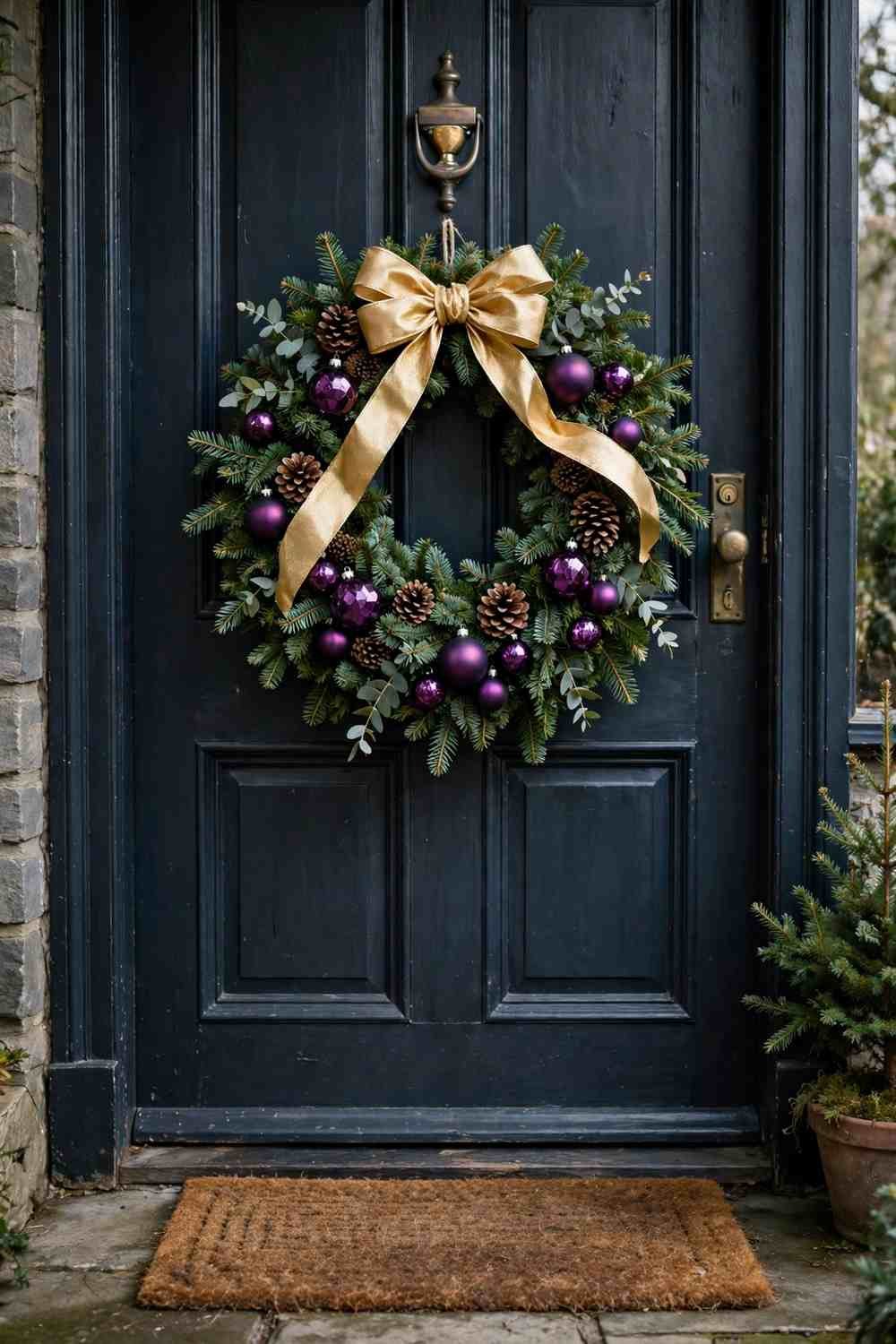
12. Hang an Amethyst Wreath on the Front Door
Give guests the jewel story before they even step inside: a greenery wreath dressed with amethyst baubles, pinecones and a gold ribbon bow. On a dark door it looks rich; on a pale door it looks like a brooch. Keep the door wreath to one jewel only — it is a first impression, and first impressions should be confident, not crowded.
! KEEP JEWEL TONES GLOWING, NOT DARK
✓ Warm white lights only (around 2700K) — cool bulbs drain the life out of deep colors
✓ Keep walls and big textiles cream or warm white so the jewels have light to sit against
✓ Add candlelight at low level — jewels were made to be seen by flame
✓ Let gold touch every jewel at least once, on the tree and in the room
✓ Step back at dusk and remove one thing — jewel schemes almost always need less, not more
Ruby red: jewel red, not Santa red

Photo: Jeanna Crawford (@jeannaloveschristmas) on Instagram
13. Choose Ruby Baubles, Deeper Than Classic Red
Ruby is classic Christmas red after it has grown up — same family, deeper voice. Swapping bright red baubles for ruby and garnet ones instantly makes a traditional tree feel richer and calmer, and the change costs one ornament set. Mix in antique gold and a little greenery showing through, and keep the lights warm. If your current tree is red and gold, this is the smallest upgrade with the biggest effect in the whole article. Ruby also hides its age gracefully — deep reds show dust and fading far less than bright reds do, so a ruby set tends to look newer for more seasons.
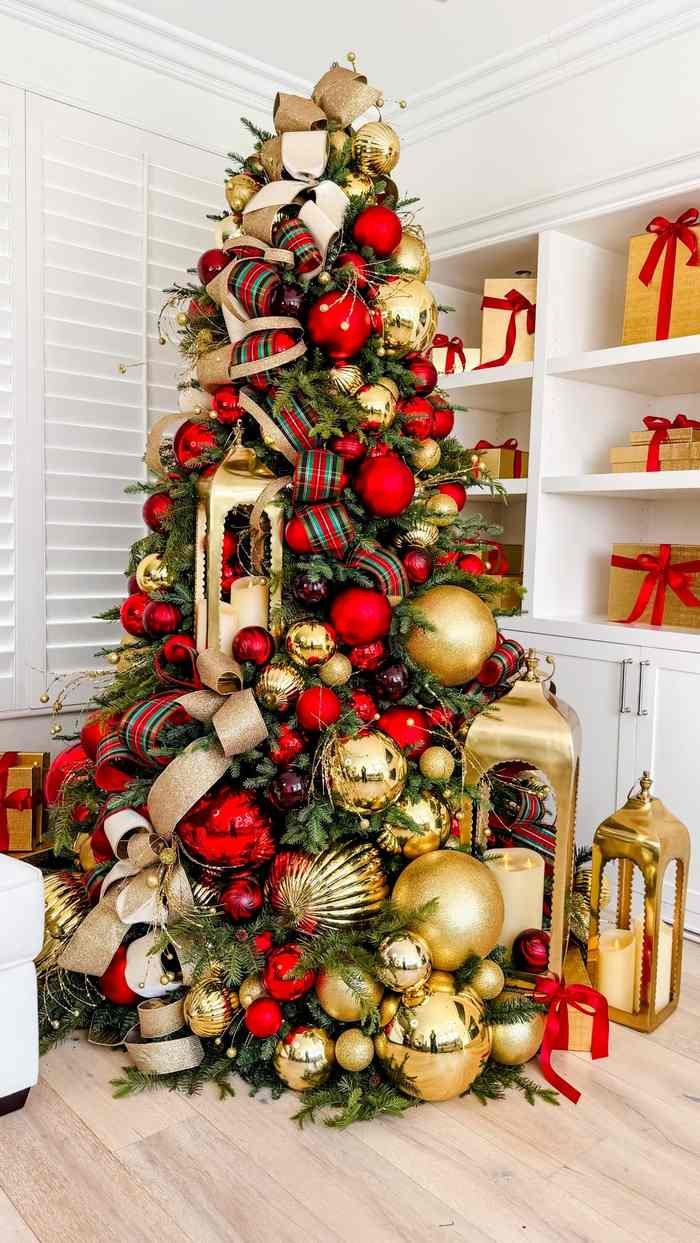
Photo: Jeanna Crawford (@jeannaloveschristmas) on Instagram
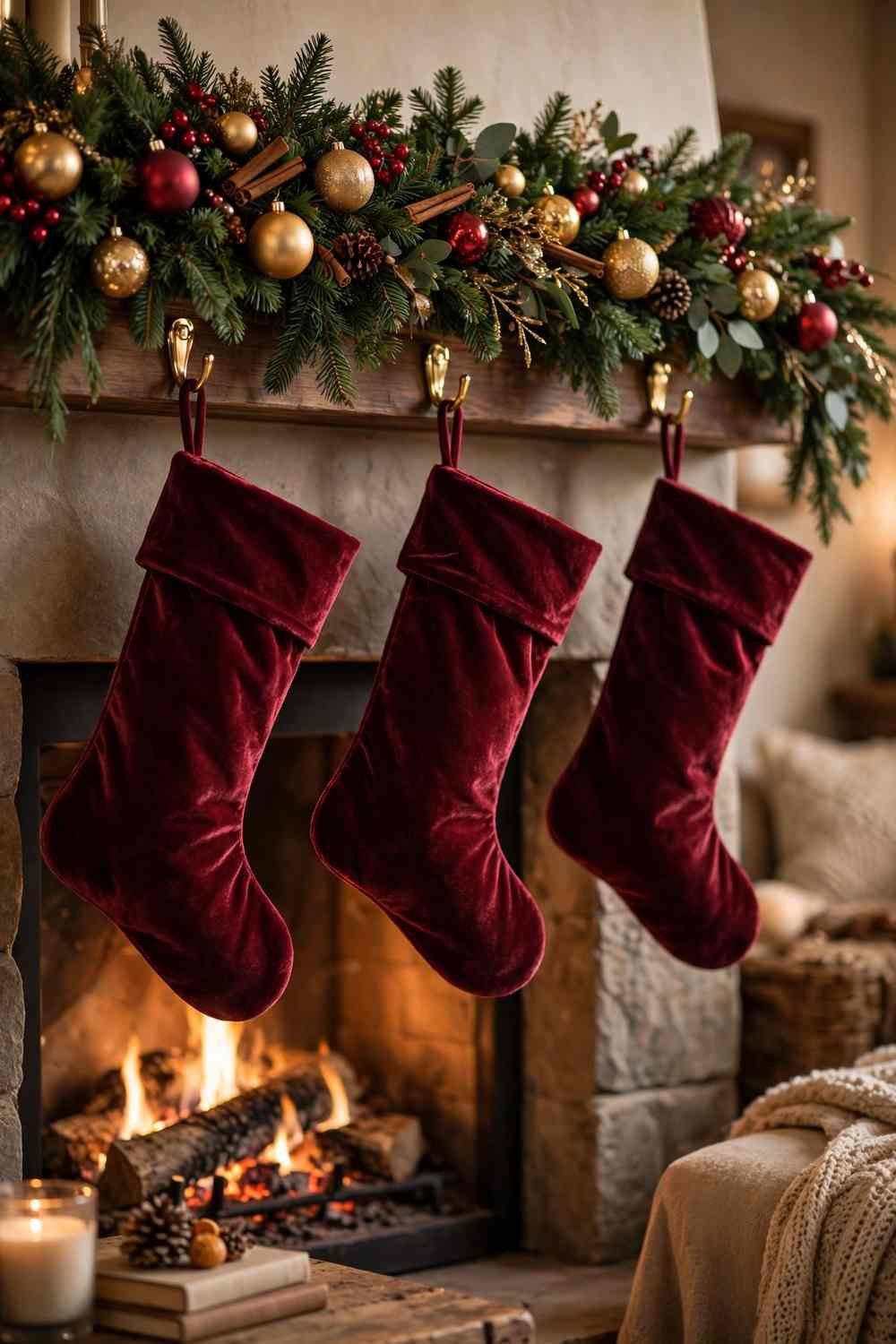
14. Hang Garnet Velvet Stockings
Garnet velvet stockings are ruby’s softest form. The velvet drinks the firelight, the color reads deep rather than bright, and gold hooks or name tags give them their sparkle. A set of four or six is an easy, renter-friendly buy, and garnet pairs with both emerald garlands and gold ones — it is the most flexible jewel you can own. Hang them where the fire or the lamps can reach them; garnet in shadow just looks brown.
15. Pair Ruby With Emerald, the Original Jewel Duo
Before jewel tones were a trend, they were simply rich Christmas: emerald and ruby together, tied with gold. This pairing works because the two colors sit opposite each other and make each other glow. Keep the split uneven — about 60 percent of one and 40 of the other — and let gold appear in both halves so the tree reads as one design. It is the most traditional jewel scheme there is, and somehow it still feels fresh every year.
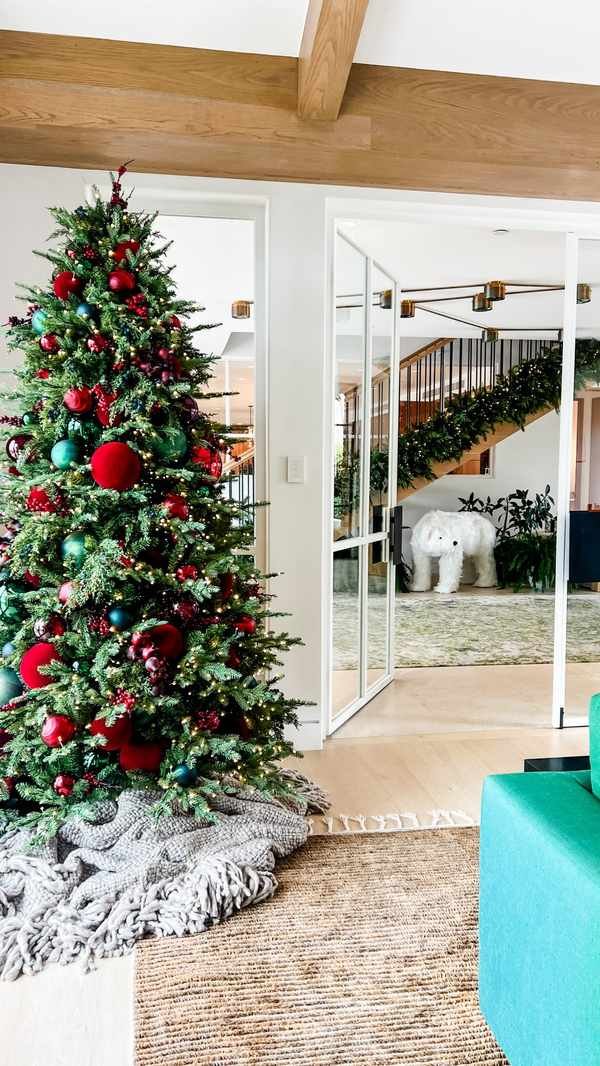
Photo: Jeanna Crawford (@jeannaloveschristmas) on Instagram
Echo the duo once more in the room: a bowl of ruby and emerald baubles with gold on the sideboard, or the two colors split across the mantel garland and the tree. One echo is enough. The pairing is strong, and like all strong things here, it stays elegant when it is slightly restrained.

16. Run a Garnet Runner Down the Table
A deep garnet runner over a cream cloth, gold candlesticks, and a scatter of emerald baubles along a greenery line — that is a jewel-tone table in three moves. The runner does the heavy lifting, so everything else can be things you already own. Love this deep-red family enough to build a whole room around it? Our burgundy Christmas decor ideas are ruby’s closest cousin, done wall to wall.
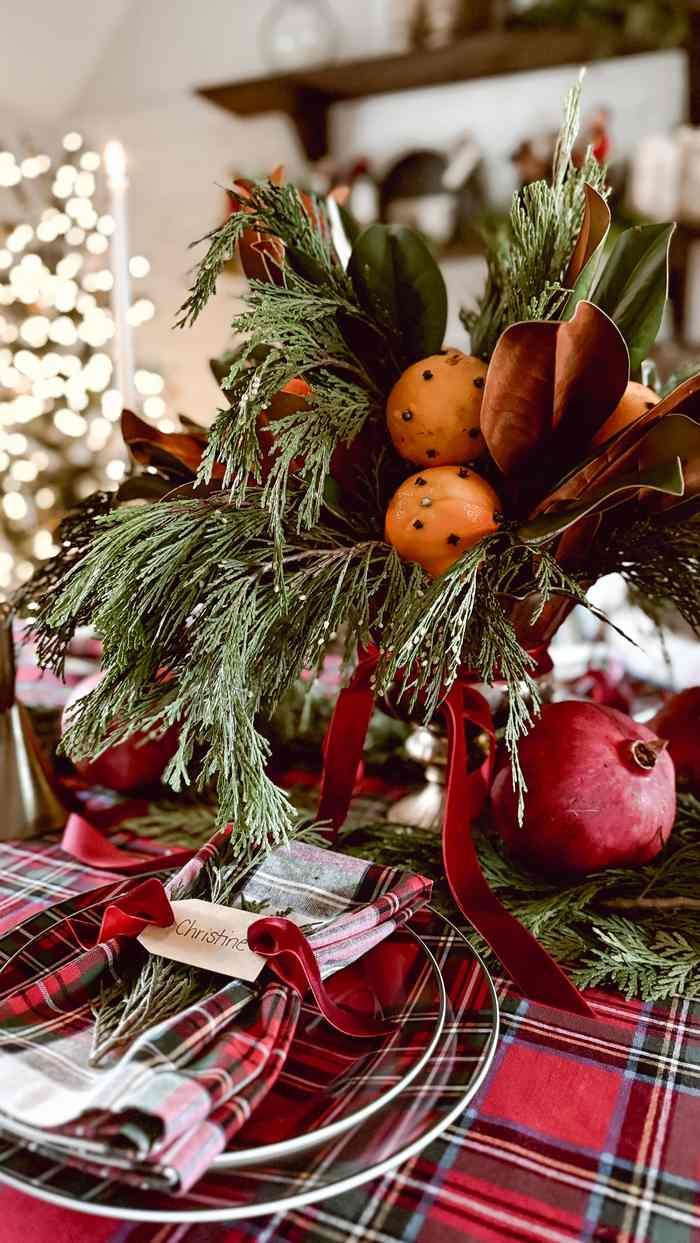
Photo: Cozy Cottage Home (@our.cozy.little.home) on Instagram
Gold: the jewel that glues it all together

17. Give Gold the Topper and the Ribbon
Gold is the only jewel that appears in every scheme in this article, and it earns its place at the top: a gold star, bow or burst topper pulls any jewel palette together in one move. Statement toppers are all over this year’s Christmas tree trends, and gold-over-jewels is the easiest way to wear the look. Cascade wide gold ribbon from the topper down through the branches so the eye travels the whole tree. A topper earns its keep in photos, too — it is the one piece visible in every full-tree shot, so if the budget stretches to only one gold upgrade, this is the one.
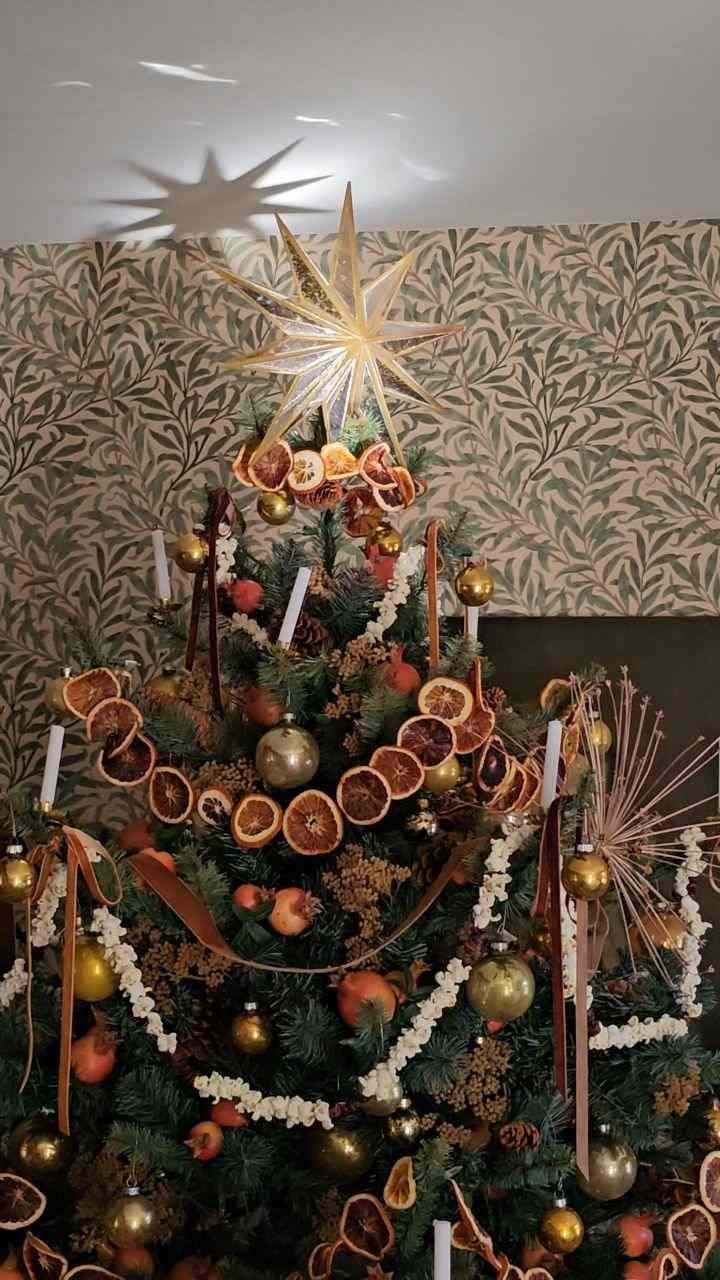
Photo: Leben Riebe (@vintageholiday) on Instagram
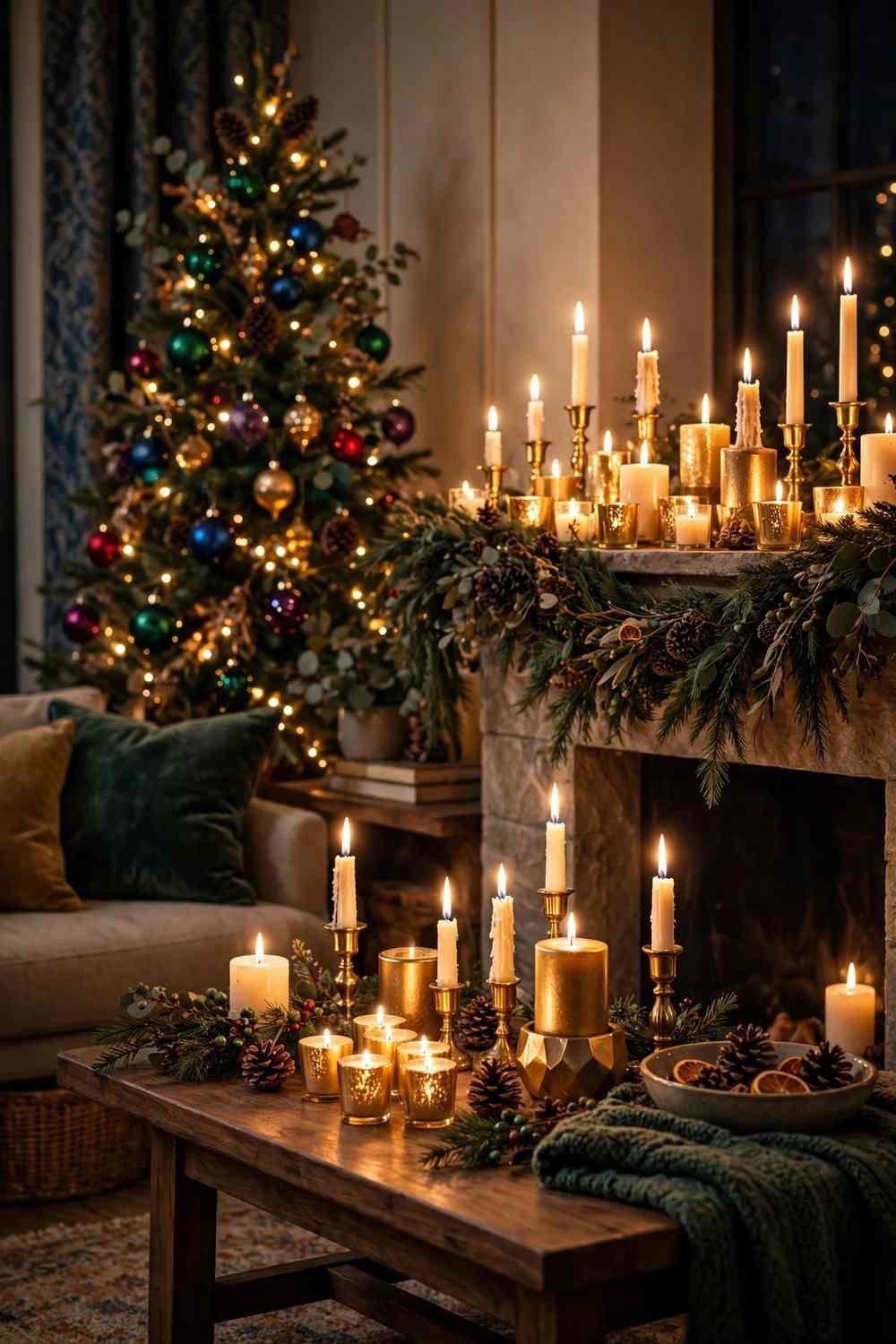
18. Let Candlelight Finish Every Jewel Room
Jewel tones were invented in a candlelit world, and they still look best there. Add candles — real ones in safe spots, flameless everywhere else — on the mantel, the coffee table, and beside the tree, always in gold or brass holders. When the overhead lights go off and the candles take over, emerald deepens, sapphire glows, and amethyst turns to wine. This is the moment the whole scheme was built for.
19. Mix Shiny Gold With Antique Gold
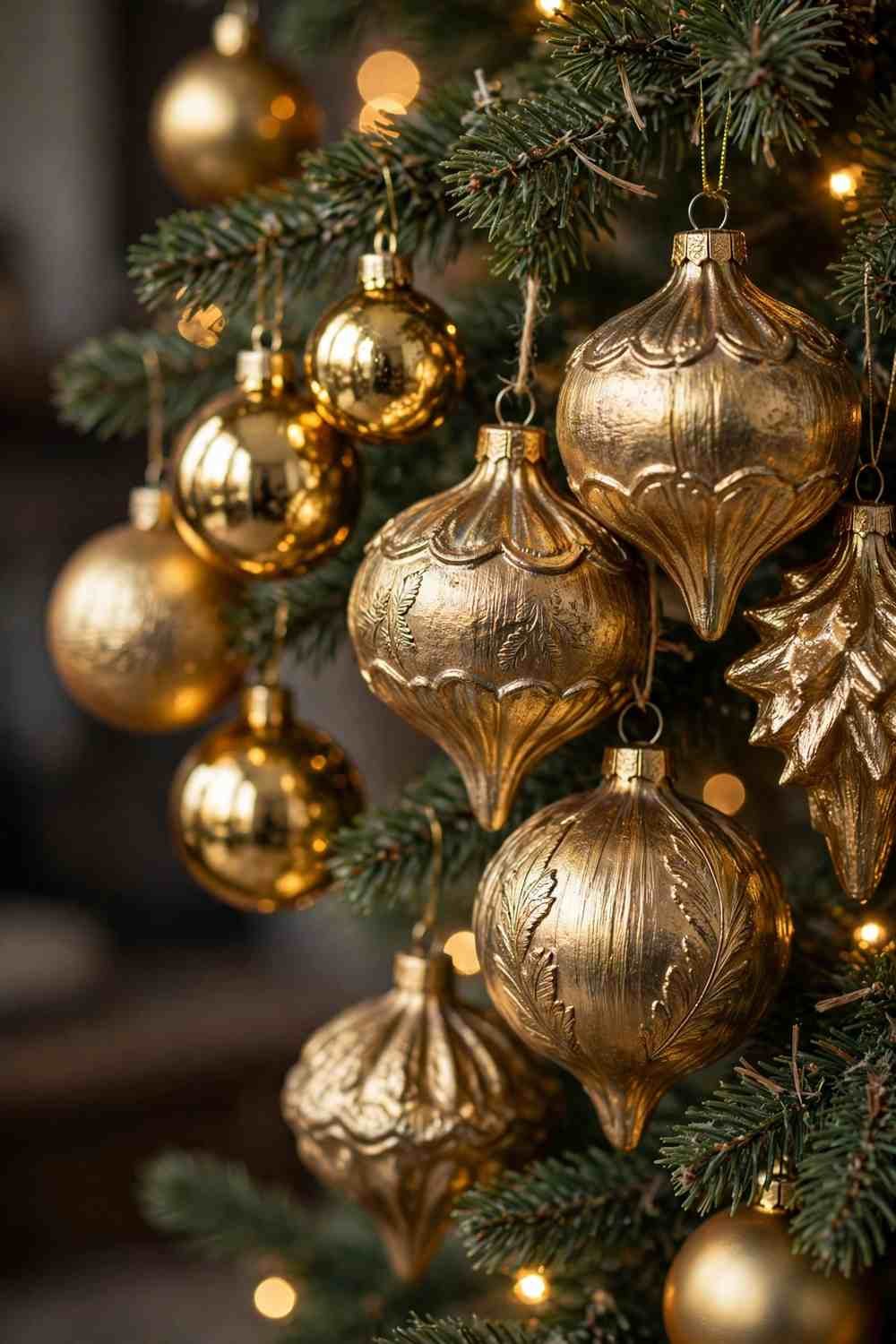
One gold can look flat; two golds look collected. Pair mirror-shiny gold baubles with brushed, antique-finish ones and the tree gains instant depth, the way real jewelry mixes polished and aged pieces. The antique pieces belong deeper in the branches as shadow and warmth; the shiny ones sit at the tips to catch light. The same mix works across holders, bells and ribbon — matching everything perfectly is what makes gold look cheap.
Mixing jewels without the clash

Photo: KariAnne Wood (@thistlewood) on Instagram
20. Pick Two Jewels, Max — the Peacock Rule
The difference between a jewel box and a candy shop is editing. Choose two jewels plus gold, and stop. The classic duos: emerald + sapphire (the peacock pairing, with teal as the bridge between them), emerald + ruby, sapphire + amethyst. A few peacock feather picks tucked into a teal-leaning tree nod to the inspiration without turning literal. Two jewels can share a room happily; three need the 60-30-10 formula handled with real discipline; four is a shop window, not a home.
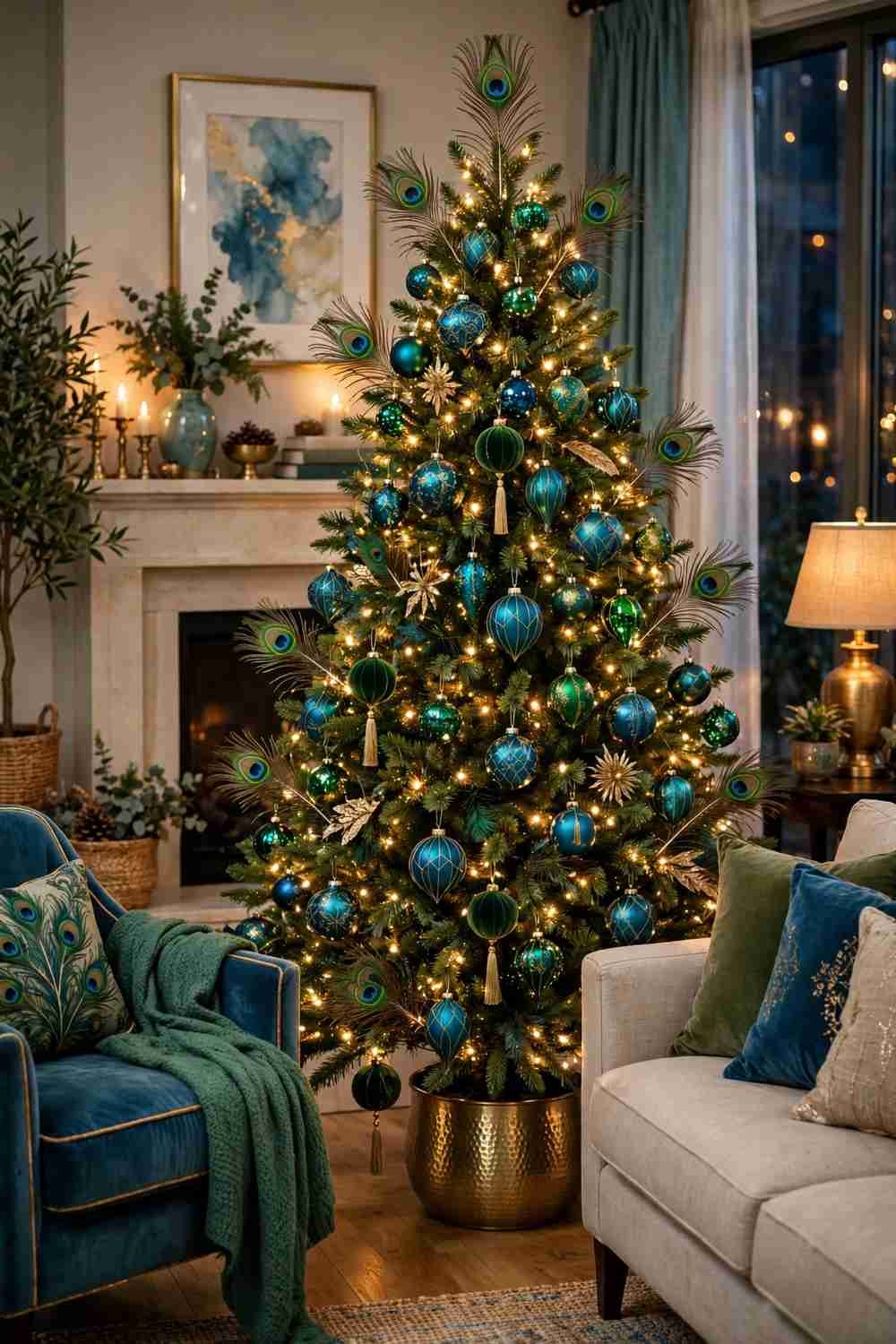
When you mix, group ornaments in same-color clusters of three to five instead of scattering them evenly. Clusters read as deliberate design; an even scatter reads as confetti. Leave pockets of plain greenery and gold between clusters so each jewel gets its own moment of light. Photograph the tree from the doorway when you think you are done — the camera is brutally honest about stray single ornaments, and moving three baubles is usually all it takes.

21. Build One Jewel Vignette Somewhere Small
Not ready to commit a whole room? Test the palette in one small, high-traffic spot: an entry console or a side table with a mini tree or a bowl of jewel baubles, a gold-framed mirror above, and one candle. A vignette is the jewel look in miniature — cheap to build, easy to change, and it tells you within a day whether you want the full scheme next year. Most people who try the vignette end up doing the tree too.

| ✓ DO | ✗ DON’T |
|---|---|
| Follow 60-30-10: mostly greenery and cream, one lead jewel, gold accents | Don’t use all four jewels at full strength — the room turns to confetti |
| Repeat each jewel at least three times in the room, at different heights | Don’t judge deep colors under shop lights or cool daylight bulbs |
| Mix finishes inside one color — matte, shiny and a touch of glitter | Don’t match every gold exactly — one flat gold looks cheap, two look collected |
| Test one bauble at home by lamplight before buying the whole set | Don’t let dark colors eat the light — keep walls and big textiles cream |
Conclusion
Jewel tones ask for a little courage and give back a lot of glow. Pick one gem, balance it with cream, greenery and gold, and let warm light — never more stuff — do the luxurious part. Start as small as a vignette or a single ribbon if you like; jewels have a way of convincing people. And if you are decorating the whole house, our ultimate Christmas decorating guide ties every room’s color story together.

FAQ
Are jewel tones too much for a small home?
No — small rooms often suit them best, because deep color makes a compact space feel intentional and cocoon-like rather than cramped. Keep the 60 percent base light, choose one jewel instead of two, and let mirrors and candlelight bounce the glow around. A slim tree in emerald and gold can be the whole scheme.

Which jewel tone is easiest for beginners?
Emerald. It is already a Christmas color, just deeper, so it forgives almost everything and pairs with the red and gold you may already own. Sapphire is a close second if your room has cream or pale walls to sit against. Start with baubles and one ribbon in a single jewel before layering a second.
How do I stop jewel tones from making the room feel dark?
It is almost always the light, not the color. Use warm white bulbs only, keep walls and large textiles cream, and add low candlelight so the deep colors glow instead of absorbing. If a corner still feels heavy, swap one dark piece for gold or cream and the balance comes straight back. A mirror hung where it can catch the tree lights quietly doubles your glow for free.
Can I mix jewel tones with my classic red and green decor?
Yes — they are the same family, one step deeper. Ruby is classic red enriched, emerald is classic green enriched, and gold already lives in both schemes. Swap your brightest reds for ruby pieces gradually, keep your gold, and the tree deepens without a single wasted ornament.
Do jewel tones work after Christmas, as winter decor?
Beautifully. Remove the tree and the obviously festive pieces, and keep the velvet cushions, throws, candles and a bowl of jewel baubles on the table. Emerald, sapphire and gold read as rich winter rather than leftover Christmas, and they carry a room gracefully through January.

💬 Join Our Decor Community
Decor Fern | Home Decor Ideas & Inspiration — share your rooms, get ideas, and chat with fellow decor lovers.
Join the Facebook GroupFollow on Facebook