How to Choose Christmas Tree Colors: Best Color Combos Guide
Colour is the decision that makes a tree look either pulled-together or slightly random, and it is usually made in a panic in the ornament aisle. Knowing how to choose christmas tree colors before you shop changes everything: you buy less, everything matches, and the finished tree looks like it was always meant to be that way.
The method is simple — read your room, pick a palette of two or three colours plus one metal, and test it in real light. Here is the process, and the combinations that never fail.
1. Start with the Room, Not the Ornaments

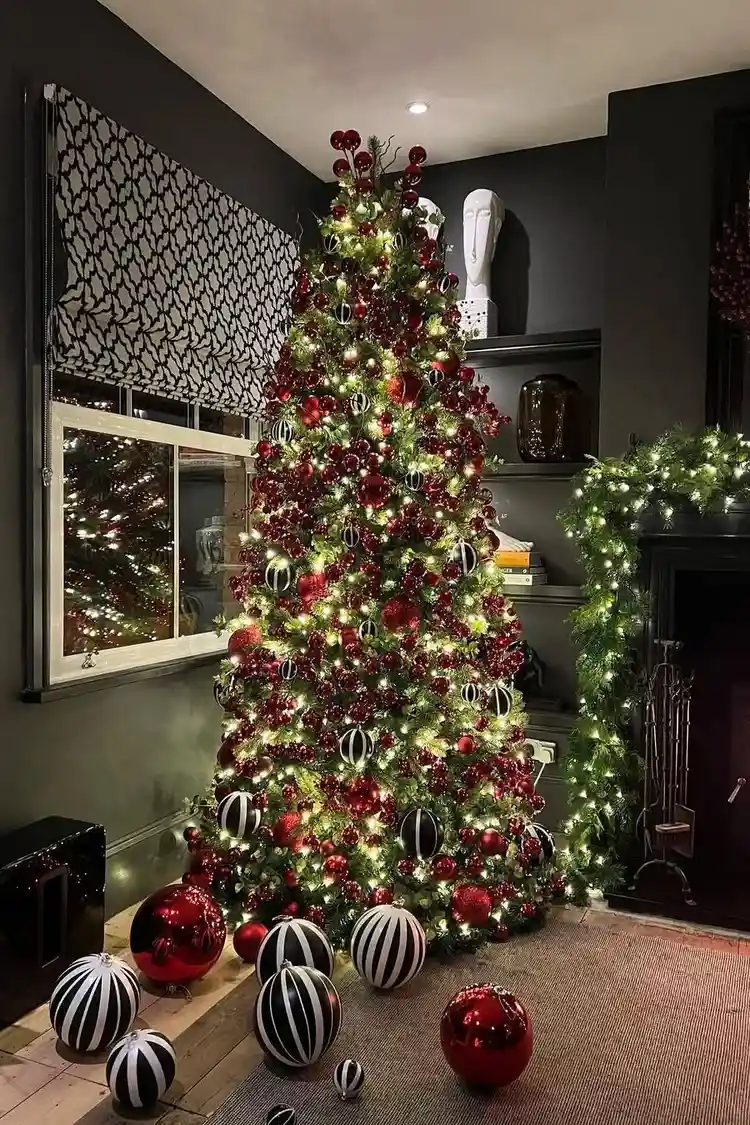
Photo credit: @christmastreeideas on Instagram
Your tree has to live in a real room with a real sofa, rug and wall colour, so start there. A grey-blue living room welcomes silver, white and icy blue ornaments; a warm beige room glows with gold, cream and burgundy. Pulling your palette from colours already in the room makes the tree look designed rather than dropped in.
Take a phone photo of the room in daylight and glance at it while you plan. The two or three dominant colours you see are your safest starting point — the tree should repeat them, not introduce a fourth competing scheme.
Colour note: If your room is mostly neutral, you have freedom — neutrals accept any tree palette, so choose by mood instead.
Budget note: Shopping from your room’s colours means existing cushions and throws already match the tree — free coordination.
2. Pick One Lead Colour and One Support
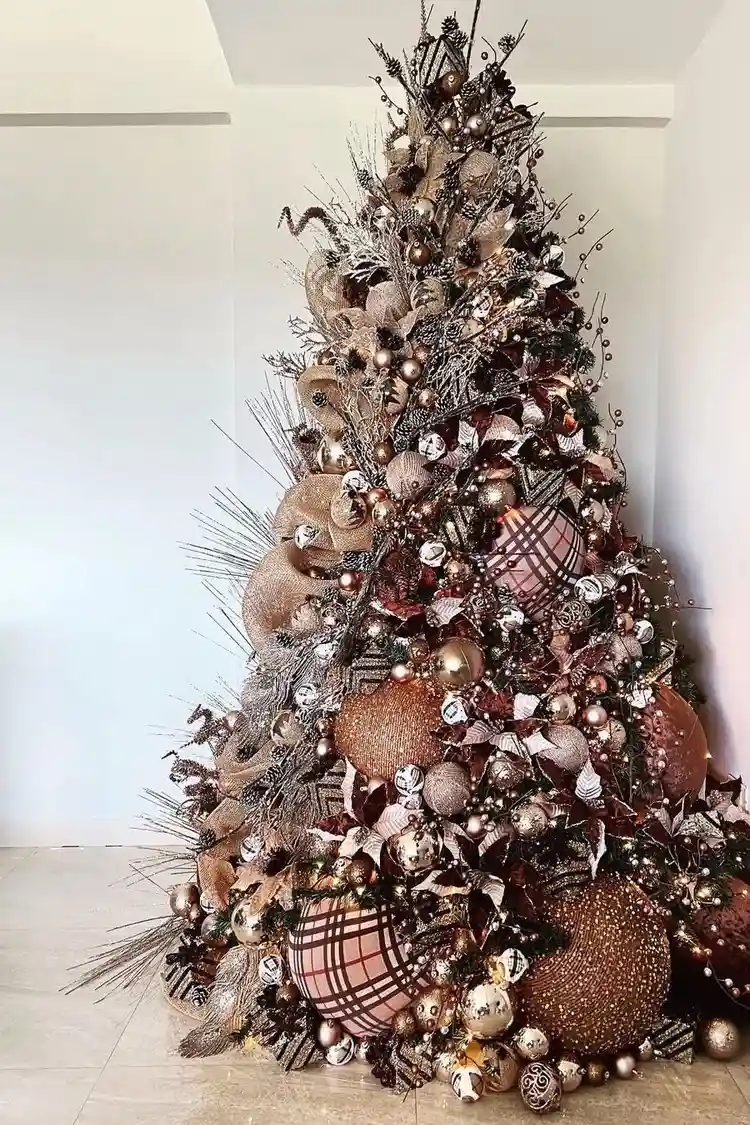
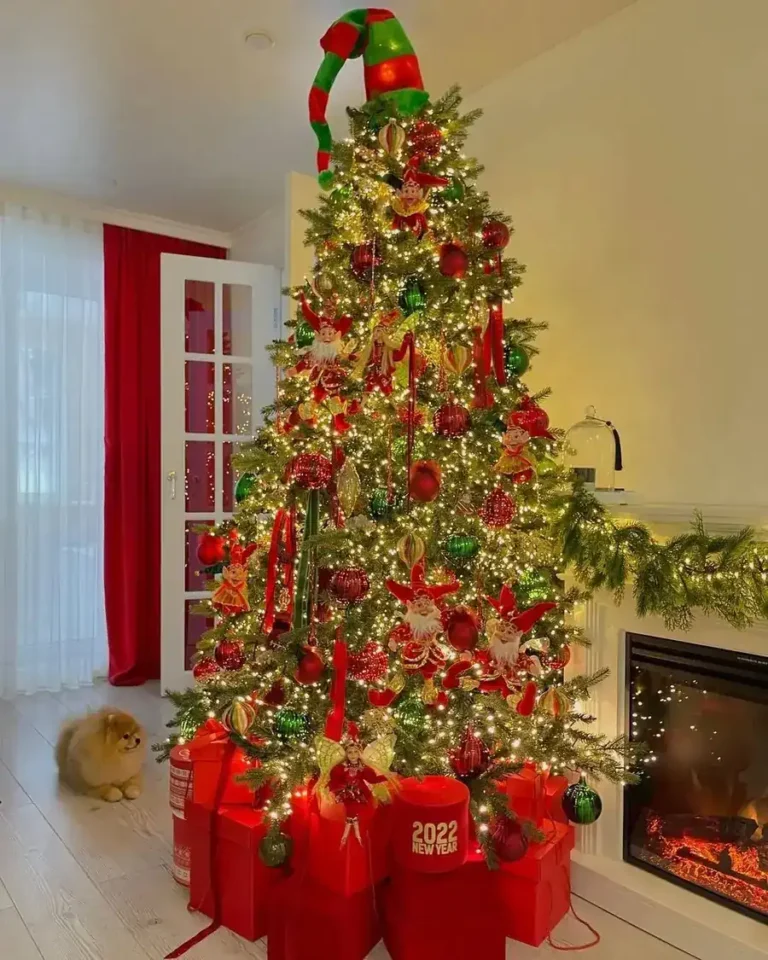
Photo credit: @christmastreeideas on Instagram
Successful palettes have a hierarchy. Choose one lead colour that takes about half the ornaments, one support colour for about a third, and let a metal or neutral fill the rest. Red lead with gold support is the classic; blush lead with cream support is the romantic version. Without a lead, equal amounts of everything compete and the tree looks busy.
If you love many colours, give them an order anyway — jewel tones work when emerald leads, sapphire supports and ruby accents appear in small numbers with gold tying them together.
Colour note: Write your ratio down before shopping (for example 50/30/20); it stops impulse ornaments sneaking into the basket.
Budget note: A lead-support palette lets you buy one big value pack in the lead colour instead of many small packs.
You May Also Like: 25 Christmas Tree Ideas for 2026
3. Choose Your Metal: Gold, Silver or Rose Gold

Photo credit: @christmastreeideas on Instagram
Metal is the glue of a tree palette, and mixing metals casually is the fastest way to look mismatched. Warm palettes (red, burgundy, blush, jewel tones) pair with gold or rose gold; cool palettes (blue, silver-white, purple) pair with silver. Champagne sits happily in the middle and is the peacemaker if you own a bit of both.
Match your metal to your light temperature too: warm white lights flatter gold, cool white lights flatter silver. If your tree is pre-lit, check which you have before choosing ornaments — this one match does more for cohesion than any ornament choice.
Lighting note: Warm lights + silver can look slightly yellowed; if your lights are warm and fixed, gold or champagne is the safer metal.
Colour note: One metal everywhere, including topper, picks and ribbon shimmer — consistency is what reads as expensive.
4. Test Colours in Daylight and Lamplight

Photo credit: @christmastreeideas on Instagram
Ornaments change personality under different light. Burgundy can read almost black at night, pale blue can vanish, and glitter gold can turn orange under warm bulbs. Before decorating, hang five or six test ornaments on the tree and look at them at noon, at dusk with tree lights on, and at night with lamps on.
This ten-minute test catches the two classic mistakes: colours that disappear after dark and colours that clash once warm light hits them. Swap the failures out now, while it is five ornaments and not fifty.
Lighting note: Judge your palette mainly in evening light — that is when the tree is on show for most of December.
Colour note: Photograph the test branch; your phone shows contrast clashes your eyes politely ignore.
You May Also Like: 23 Christmas Tree Trends 2026 for a Stylish Holiday Home
5. Use the Proven Combinations as a Shortcut
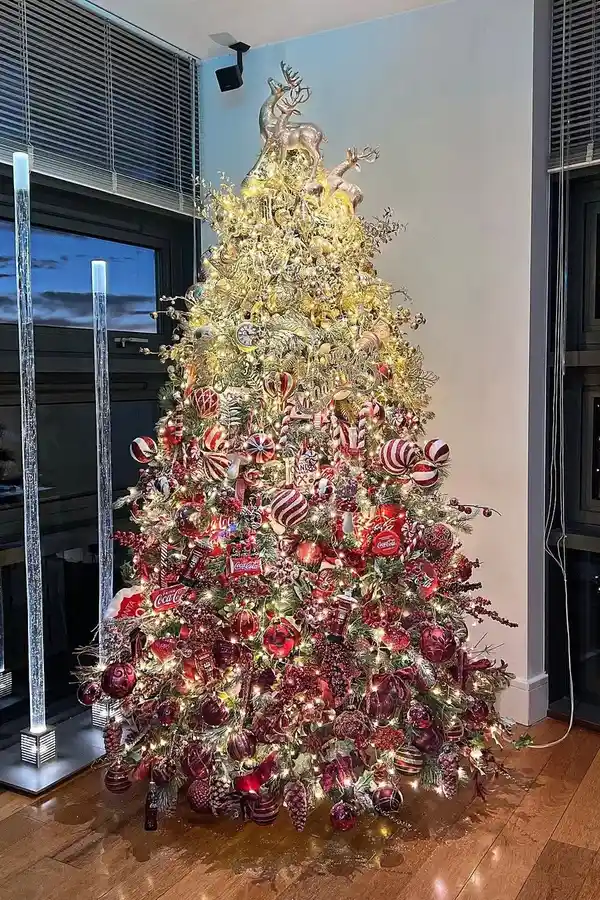
Photo credit: @christmastreeideas on Instagram
If choosing from scratch feels heavy, borrow a combination that stylists reuse because it always works. Red + gold + touches of green is timeless; white + silver + clear glass is winter-elegant; blush + cream + champagne is soft and romantic; navy + silver + white feels crisp and modern; emerald + gold + burgundy is rich and traditional without being plain red.
Each combination already contains a lead, a support and a metal, so you can shop it directly. Adjust only the proportions to your taste — more white calms any palette down, more metal turns the glamour up.
Colour note: Adding one neutral (cream, white or clear glass) to any two-colour palette gives the eye rest and prevents colour overload.
Budget note: Proven combinations are easy to top up in January sales because shops stock them every year.
6. Repeat the Palette Around the Room

Photo credit: @christmastreeideas on Instagram
A tree looks intentional when its colours appear two or three more times in the room. That does not mean matching everything — a ribbon on the wreath in your lead colour, cushions or a throw echoing the support colour, and gift wrap under the tree in the palette are enough to make the whole space feel composed.
Gift wrap is the easiest echo: wrap early in two palette papers with ribbon in your metal. The presents become part of the colour scheme for weeks before they are opened.
Colour note: Repeat each colour at least twice more in the room; single appearances look accidental, echoes look designed.
Budget note: Palette-coloured wrapping paper and one cushion cover cost little and multiply the tree’s effect across the room.
You May Also Like: 15 Brown Christmas Tree Ideas
7. Balance Colour with Texture and Finish
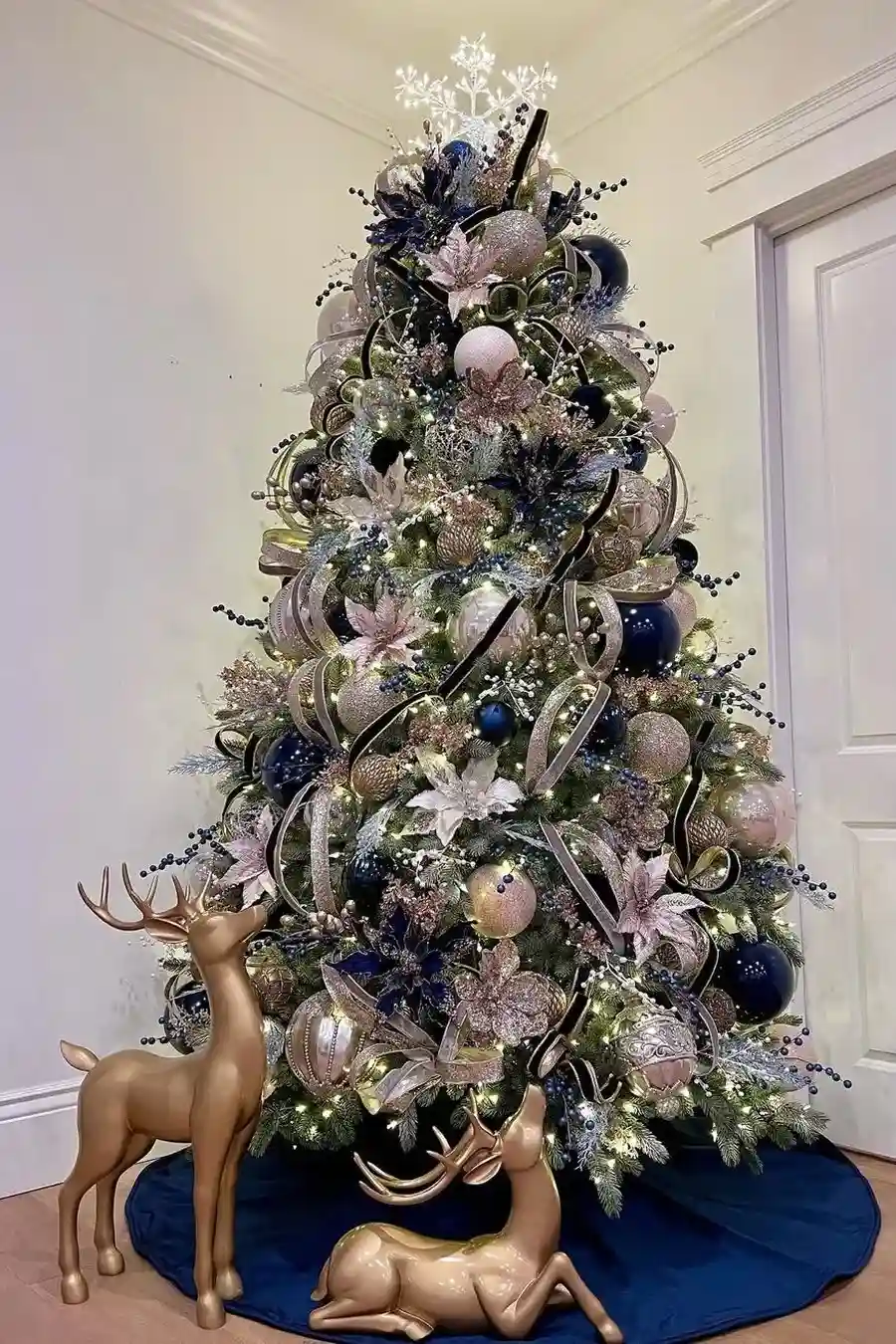
Photo credit: @christmastreeideas on Instagram
Two trees with identical colours can look completely different depending on finishes. All-shiny ornaments in one colour read flat and plasticky; the same colour split across matte, glossy and glitter finishes reads deep and rich. As a rule, buy every colour in at least two finishes.
Texture does similar work: velvet ribbon softens a bold palette, clear glass lightens a dark one, and natural wood or dried orange slices warm up a cool palette. When a tree feels "too much", it is usually a texture problem, not a colour problem — add matte before you remove colour.
Texture note: The matte-glossy-glitter rotation in each colour is the simplest habit that makes any palette look professional.
Colour note: If colours clash slightly, separating them with cream or clear glass ornaments usually fixes it without rebuying.
Best Christmas Tree Colour Combinations
| Combination | Lead | Support | Metal | Mood |
|---|---|---|---|---|
| Classic Christmas | Red | Green accents | Gold | Traditional, warm |
| Winter Elegance | White | Clear glass | Silver | Calm, snowy |
| Soft Romance | Blush pink | Cream | Champagne | Romantic, gentle |
| Modern Crisp | Navy | White | Silver | Clean, contemporary |
| Rich Heritage | Emerald | Burgundy | Gold | Luxurious, cosy |
| Rustic Natural | Cream | Wood tones | None or brass | Earthy, relaxed |
| Jewel Glam | Emerald | Sapphire and ruby accents | Gold | Bold, celebratory |
Frequently Asked Questions
How many colours should a Christmas tree have?
Two colours plus one metal (or neutral) is the sweet spot for most homes. One colour can look flat unless you vary finishes, and four or more colours need a clear lead-support order to avoid looking random. Green from the tree itself counts as a background, not one of your two.
What is the most popular Christmas tree colour scheme?
Red and gold remains the most loved classic, followed by white and silver winter themes. In recent years blush with champagne, and navy with silver, have become the popular modern alternatives — all four are safe, shop-friendly choices.
Should my tree match my living room?
It should harmonise rather than match exactly. Repeat one or two room colours on the tree, or choose a palette from the same temperature family (warm with warm, cool with cool). A tree that ignores the room entirely usually looks like it belongs to a different house.
Can I mix gold and silver on one tree?
Yes, if you do it deliberately: choose one as the main metal (about 70%) and the other as a small accent, and bridge them with champagne or clear glass pieces. A 50/50 mix with no bridge usually reads as two half-finished themes.
How do I change my tree colours without buying everything new?
Keep your metal and neutral ornaments, and replace only the lead colour — it is the smallest purchase with the biggest effect. New ribbon in the new lead colour plus one value pack of ornaments transforms last year's tree for a fraction of a full redo.
You Would Also Love
💬 Join Our Decor Community
Decor Fern | Home Decor Ideas & Inspiration — share your rooms, get ideas, and chat with fellow decor lovers.
Join the Facebook GroupFollow on Facebook

7 Comments